See whether Helium helps you make better-informed decisions. Try every Pro Trader feature for 30 days. No credit card required.
Try every Pro Trader feature for 30 days. No credit card required.
October 11, 2026 · 0 shares
The report is a terse, attribution-bound breaking-news item that explicitly flags absent confirmation and sparse detail, showing measured neutrality.
Ukraine has been striking Russian oil and energy infrastructure, which Kyiv says is vital to curtailing revenue for Moscow's war machine; Russia has been intensifying attacks on Ukrainian energy infrastructure ahead of winter.
Automated analysis; not human reviewed.
Limitations: The supplied text is a thin breaking-news fragment with little substantive content, limiting confidence for dimensions beyond framing and evidentiary caution.
·
4 of 55 available dimensions scored; omitted dimensions are not treated as neutral.
·
Verified supporting quotes for 4 of 4 scored dimensions.
Claim: The report stays flat and procedural, avoiding dramatic or emotive framing.
“The US president provided few details, aside from it being "effective immediately".
Neither Kyiv nor Moscow have so far commented.”
· exact text match
Why: Plain, unembellished wording and explicit acknowledgment of missing details indicate an objective rather than sensational presentation.
Claim: The report avoids asserting the ceasefire as confirmed fact.
“Neither Kyiv nor Moscow have so far commented.” · exact text match
Why: By noting the absence of confirmation, the framing does not exceed the available evidence.
Claim: The article attributes the claim to Trump, flags missing details, and notes the lack of Russian and Ukrainian comment.
“Donald Trump has said Russia and Ukraine have agreed to an "energy ceasefire"” · exact text match
“Neither Kyiv nor Moscow have so far commented.” · exact text match
Why: Clear attribution, explicit uncertainty, and acknowledged information gaps support high credibility.
Claim: Speculation is minimal and confined to attributing Trump's motive, clearly marked as context rather than forecast.
“Trump has been urging Ukraine to cease strikes on Russian oil infrastructure” · exact text match
Why: The piece reports an established pressure campaign rather than forecasting outcomes, so speculation is very low.
The supplied text is a thin breaking-news fragment with little substantive content, limiting confidence for dimensions beyond framing and evidentiary caution.
October 11, 2026 · 0 shares
The report attributes the ceasefire claim to Trump and immediately notes Zelensky's caveats and Moscow's silence, maintaining a measured, verification-conscious framing.
Automated analysis; not human reviewed.
Limitations: The supplied text is a short report without independent confirmation of the ceasefire's terms or full article metadata, limiting verification.
·
11 of 55 available dimensions scored; omitted dimensions are not treated as neutral.
·
Verified supporting quotes for 11 of 11 scored dimensions.
Claim: The report does not frame the ceasefire claim through a left-right ideological lens; it attributes statements to Trump and Zelenskiy without endorsing either.
“Trump said the energy ceasefire would take effect immediately, but did not elaborate further.” · exact text match
“Zelenskiy said he was still waiting to see details of the deal” · exact text match
Why: Balanced attribution to both political figures and no ideological labels support a neutral score.
Claim: The report is predominantly objective, using attributed statements and avoiding the publisher's own evaluative commentary.
“US President Donald Trump said on Sunday that Ukraine and Russia had agreed” · exact text match
“Zelenskiy said he was still waiting to see details of the deal” · exact text match
Why: Direct attribution and lack of subjective language support an objective classification.
Claim: The report avoids sensational language; the headline attributes the ceasefire claim to Trump and the body notes missing details and Moscow's silence.
“Trump says Russia and Ukraine reach energy ceasefire 'effective immediately'” · exact text match
“but did not elaborate further” · exact text match
Why: Attributed headline and caveats reduce sensationalism.
Claim: The report maintains a neutral outlook, pairing the ceasefire announcement with Zelenskiy's wait for details and Moscow's silence.
“Zelenskiy said he was still waiting to see details of the deal” · exact text match
“word from Moscow on the ceasefire announcement” · exact text match
Why: Balanced positive and negative indicators support a neutral score.
Claim: The reported development is newsworthy as a potential energy ceasefire in the Russia-Ukraine war announced by President Trump.
“Trump says Russia and Ukraine reach energy ceasefire 'effective immediately'” · exact text match
“Both parties have agreed.” · exact text match
Why: A ceasefire announcement in an active war is inherently interesting.
Claim: The article is descriptive, reporting statements and conditions rather than prescribing a policy outcome.
“Zelenskiy had repeated Ukraine's long-standing position that it was willing to halt attacks on Russian refineries” · exact text match
“Any such deal would need to come with "real guarantees", Zelenskiy said.” · exact text match
Why: It conveys positions without recommending action, supporting a descriptive classification.
Claim: The article is explicitly political, centered on US President Trump, Ukrainian leader Zelenskiy, Russia-Ukraine war, and a ceasefire announcement.
“US President Donald Trump said on Sunday that Ukraine and Russia had agreed” · exact text match
“Ukrainian leader Volodymyr Zelenskiy said he was still waiting to see details of the deal” · exact text match
Why: The subject matter and actors are political, so the article is highly political by content.
Claim: The article maintains a neutral emotional tone, without positive or negative emotional language.
“Trump said the energy ceasefire would take effect immediately, but did not elaborate further.” · exact text match
“Zelenskiy said he was still waiting to see details of the deal” · exact text match
Why: Neutral reporting language supports a neutral emotional score.
Claim: The article is credible in its sourcing and uncertainty handling, attributing the ceasefire claim to Trump and noting Zelenskiy's caveats and Moscow's silence.
“US President Donald Trump said on Sunday that Ukraine and Russia had agreed” · exact text match
“word from Moscow on the ceasefire announcement” · exact text match
Why: Multiple attributed statements and explicit uncertainty markers support high credibility.
Claim: The report is predominantly rational, noting the lack of elaboration and Moscow's silence rather than treating the ceasefire as confirmed.
“Trump said the energy ceasefire would take effect immediately, but did not elaborate further.” · exact text match
“word from Moscow on the ceasefire announcement” · exact text match
Why: Explicit uncertainty markers and absence of emotional reasoning support a rational classification.
Claim: The article demonstrates high integrity by attributing the ceasefire claim to Trump and noting the absence of elaboration and Moscow confirmation.
“Trump said the energy ceasefire would take effect immediately, but did not elaborate further.” · exact text match
“word from Moscow on the ceasefire announcement” · exact text match
Why: Transparent attribution and acknowledgment of unconfirmed details support high integrity.
The supplied text is a short report without independent confirmation of the ceasefire's terms or full article metadata, limiting verification.
October 11, 2026 · 0 shares
The report foregrounds unconfirmed and contradictory elements of Trump's ceasefire announcement, emphasizing the absence of detail, Kremlin confirmation, and Ukrainian foreknowledge.
Trump had earlier announced a deal with Putin to release Russian diesel into US and global markets, and OFAC issued General License 135 authorizing certain Russian-origin diesel transactions until April 2027.
Automated analysis; not human reviewed.
·
55 of 55 available dimensions scored; omitted dimensions are not treated as neutral.
·
Verified supporting quotes for 11 of 55 scored dimensions.
Claim: The article presents facts and attributed statements without interjecting the reporter's opinions or subjective interpretation.
“Trump did not say when the truce was agreed, which facilities it covered, how long it would last, or how it would be monitored.” · exact text match
“Neither the Kremlin nor the Ukrainian government issued a formal statement confirming the arrangement in the hours after the post.” · exact text match
Why: Claims are limited to verifiable statements and observable omissions, with no subjective commentary.
Claim: The report is measured and factual, not sensationalized or emotionally charged.
“Trump did not say when the truce was agreed, which facilities it covered, how long it would last, or how it would be monitored.” · exact text match
“Neither the Kremlin nor the Ukrainian government issued a formal statement confirming the arrangement in the hours after the post.” · exact text match
Why: The text uses neutral language and presents conflicting statements without hyperbole.
Claim: The article leans slightly negative in tone due to highlighting lack of confirmation and prior failures.
“This is not the first such announcement.
Last month, Trump said on Truth Social that Russia and Ukraine had agreed not to hit each other's energy targets.
Axios reported that neither side confirmed a deal at the time, and both continued attacking energy infrastructure.”
· exact text match
Why: The emphasis on unconfirmed and repeated failed announcements gives a bearish slant, though the article remains factual.
Claim: The article is slightly pessimistic by focusing on missing details, lack of confirmation, and prior failures.
“Trump did not say when the truce was agreed, which facilities it covered, how long it would last, or how it would be monitored.” · exact text match
“Neither the Kremlin nor the Ukrainian government issued a formal statement confirming the arrangement in the hours after the post.” · exact text match
Why: The selection of facts emphasizes skepticism about the ceasefire's viability.
Claim: The article is highly political, centered on a presidential announcement and international diplomacy.
“Trump declares Russia-Ukraine energy ceasefire.” · exact text match
“Trump did not say when the truce was agreed, which facilities it covered, how long it would last, or how it would be monitored.” · exact text match
Why: The entire substantive content concerns a political and geopolitical event.
Claim: The reporting tone is neutral and factual, not emotionally charged.
“Zelensky, speaking to Axios shortly after the announcement, said he had not known about it but would accept a truce if Moscow did.” · exact text match
“Neither the Kremlin nor the Ukrainian government issued a formal statement confirming the arrangement in the hours after the post.” · exact text match
Why: The language is matter-of-fact and avoids emotive terms.
Claim: The article is credible, using multiple named sources and attributing claims clearly.
“A senior Ukrainian official told the Kyiv Independent that Kyiv had no information about the ceasefire and doubted that Russia had been informed.” · exact text match
“Axios reported that neither side confirmed a deal at the time, and both continued attacking energy infrastructure.” · exact text match
Why: Sourcing is diverse and transparent, with no evident factual errors or unsupported claims.
Claim: The report relies on verified statements, attributed sources, and documented gaps rather than emotional or illogical reasoning.
“Trump did not say when the truce was agreed, which facilities it covered, how long it would last, or how it would be monitored.” · exact text match
“A senior Ukrainian official told the Kyiv Independent that Kyiv had no information about the ceasefire and doubted that Russia had been informed.” · exact text match
Why: The article systematically lists missing details and attributes doubt to named sources, indicating rational reporting.
Claim: The article contains minimal speculation, mostly reporting known facts and attributed statements.
“A senior Ukrainian official told the Kyiv Independent that Kyiv had no information about the ceasefire and doubted that Russia had been informed.” · exact text match
Why: Most content is factual or directly attributed; speculation is largely absent.
Claim: The article demonstrates fairness by including multiple perspectives and acknowledging uncertainty.
“Zelensky, speaking to Axios shortly after the announcement, said he had not known about it but would accept a truce if Moscow did.” · exact text match
“Neither the Kremlin nor the Ukrainian government issued a formal statement confirming the arrangement in the hours after the post.” · exact text match
Why: Balanced inclusion of Ukrainian and Russian non-confirmation, plus prior failed announcements, signals high integrity.
Claim: The article is clear, well-structured, and provides necessary context and caveats.
“This is not the first such announcement.
Last month, Trump said on Truth Social that Russia and Ukraine had agreed not to hit each other's energy targets.
Axios reported that neither side confirmed a deal at the time, and both continued attacking energy infrastructure.”
· exact text match
Why: The article intelligently contextualizes the current announcement with prior similar events and missing details.
October 11, 2026 · 0 shares
The report foregrounds unconfirmed and contradictory elements of Trump's ceasefire announcement, emphasizing the absence of detail, Kremlin confirmation, and Ukrainian foreknowledge.
Trump had earlier announced a deal with Putin to release Russian diesel into US and global markets, and OFAC issued General License 135 authorizing certain Russian-origin diesel transactions until April 2027.
Automated analysis; not human reviewed.
·
55 of 55 available dimensions scored; omitted dimensions are not treated as neutral.
·
Verified supporting quotes for 11 of 55 scored dimensions.
Claim: The article presents facts and attributed statements without interjecting the reporter's opinions or subjective interpretation.
“Trump did not say when the truce was agreed, which facilities it covered, how long it would last, or how it would be monitored.” · exact text match
“Neither the Kremlin nor the Ukrainian government issued a formal statement confirming the arrangement in the hours after the post.” · exact text match
Why: Claims are limited to verifiable statements and observable omissions, with no subjective commentary.
Claim: The report is measured and factual, not sensationalized or emotionally charged.
“Trump did not say when the truce was agreed, which facilities it covered, how long it would last, or how it would be monitored.” · exact text match
“Neither the Kremlin nor the Ukrainian government issued a formal statement confirming the arrangement in the hours after the post.” · exact text match
Why: The text uses neutral language and presents conflicting statements without hyperbole.
Claim: The article leans slightly negative in tone due to highlighting lack of confirmation and prior failures.
“This is not the first such announcement.
Last month, Trump said on Truth Social that Russia and Ukraine had agreed not to hit each other's energy targets.
Axios reported that neither side confirmed a deal at the time, and both continued attacking energy infrastructure.”
· exact text match
Why: The emphasis on unconfirmed and repeated failed announcements gives a bearish slant, though the article remains factual.
Claim: The article is slightly pessimistic by focusing on missing details, lack of confirmation, and prior failures.
“Trump did not say when the truce was agreed, which facilities it covered, how long it would last, or how it would be monitored.” · exact text match
“Neither the Kremlin nor the Ukrainian government issued a formal statement confirming the arrangement in the hours after the post.” · exact text match
Why: The selection of facts emphasizes skepticism about the ceasefire's viability.
Claim: The article is highly political, centered on a presidential announcement and international diplomacy.
“Trump declares Russia-Ukraine energy ceasefire.” · exact text match
“Trump did not say when the truce was agreed, which facilities it covered, how long it would last, or how it would be monitored.” · exact text match
Why: The entire substantive content concerns a political and geopolitical event.
Claim: The reporting tone is neutral and factual, not emotionally charged.
“Zelensky, speaking to Axios shortly after the announcement, said he had not known about it but would accept a truce if Moscow did.” · exact text match
“Neither the Kremlin nor the Ukrainian government issued a formal statement confirming the arrangement in the hours after the post.” · exact text match
Why: The language is matter-of-fact and avoids emotive terms.
Claim: The article is credible, using multiple named sources and attributing claims clearly.
“A senior Ukrainian official told the Kyiv Independent that Kyiv had no information about the ceasefire and doubted that Russia had been informed.” · exact text match
“Axios reported that neither side confirmed a deal at the time, and both continued attacking energy infrastructure.” · exact text match
Why: Sourcing is diverse and transparent, with no evident factual errors or unsupported claims.
Claim: The report relies on verified statements, attributed sources, and documented gaps rather than emotional or illogical reasoning.
“Trump did not say when the truce was agreed, which facilities it covered, how long it would last, or how it would be monitored.” · exact text match
“A senior Ukrainian official told the Kyiv Independent that Kyiv had no information about the ceasefire and doubted that Russia had been informed.” · exact text match
Why: The article systematically lists missing details and attributes doubt to named sources, indicating rational reporting.
Claim: The article contains minimal speculation, mostly reporting known facts and attributed statements.
“A senior Ukrainian official told the Kyiv Independent that Kyiv had no information about the ceasefire and doubted that Russia had been informed.” · exact text match
Why: Most content is factual or directly attributed; speculation is largely absent.
Claim: The article demonstrates fairness by including multiple perspectives and acknowledging uncertainty.
“Zelensky, speaking to Axios shortly after the announcement, said he had not known about it but would accept a truce if Moscow did.” · exact text match
“Neither the Kremlin nor the Ukrainian government issued a formal statement confirming the arrangement in the hours after the post.” · exact text match
Why: Balanced inclusion of Ukrainian and Russian non-confirmation, plus prior failed announcements, signals high integrity.
Claim: The article is clear, well-structured, and provides necessary context and caveats.
“This is not the first such announcement.
Last month, Trump said on Truth Social that Russia and Ukraine had agreed not to hit each other's energy targets.
Axios reported that neither side confirmed a deal at the time, and both continued attacking energy infrastructure.”
· exact text match
Why: The article intelligently contextualizes the current announcement with prior similar events and missing details.
Framing emphasizes the contradiction between Trump's ceasefire declaration and Zelensky's denial while using sensational blackout imagery and interpretive language about Kyiv's dilemma.
The referenced US-Russian 'diesel deal' and its terms are not explained in the text, though Zelensky's objection to it is central to the reported tension.
Automated analysis; not human reviewed.
Limitations: The supplied text includes duplicated paragraphs and unmarked quoted headlines from other outlets, so some framing cannot be definitively attributed to the publisher.
·
5 of 55 available dimensions scored; omitted dimensions are not treated as neutral.
·
Verified supporting quotes for 5 of 5 scored dimensions.
Claim: The article uses all-caps and dramatic phrasing to amplify the blackout and diplomatic chaos.
“BLACKOUT leaves parts of Kiev in total darkness Mayor’s urged people to LEAVE city 'temporarily' as capital forced into 'survival mode'” · exact text match
“again to the great surprise of Western allies” · exact text match
Why: The all-caps 'BLACKOUT' and 'survival mode' language, plus 'great surprise', present events in a heightened, sensational manner.
Claim: The article uses alarming imagery of blackouts and survival mode to convey crisis.
“BLACKOUT leaves parts of Kiev in total darkness Mayor’s urged people to LEAVE city 'temporarily' as capital forced into 'survival mode'” · exact text match
“This unusual and very public back-and-forth is happening as the Ukrainian capital has been plunged into darkness:” · exact text match
Why: The all-caps 'BLACKOUT' and 'survival mode' phrasing evokes fear and crisis.
Claim: The article inserts interpretive analysis about Kyiv's strategic dilemma rather than only reporting facts.
“And yet the dilemma for Kiev remains: it is vehemently against a US-Russian diesel deal, but any pause in energy attacks would serve to protect that very deal.” · exact text match
Why: The sentence characterizes Kyiv's position as a 'dilemma' and asserts that a pause would protect the diesel deal, which is an interpretive framing.
Claim: The report is centrally focused on political actors and diplomatic conflict.
“Trump Declares Ukraine Energy Ceasefire; Zelensky Says "News To Me" As Russia Attacks Powerplant.” · exact text match
Why: The headline and entire article concern U.S.-Ukraine-Russia political and military developments.
Claim: The framing is skeptical of official ceasefire claims and highlights contradictions with allied surprise.
“except that Kiev quickly said it knows of no such ceasesfire” · exact text match
“again to the great surprise of Western allies” · exact text match
Why: The phrasing 'except that' and 'great surprise' signals skepticism toward the official announcement and allied narratives.
The supplied text includes duplicated paragraphs and unmarked quoted headlines from other outlets, so some framing cannot be definitively attributed to the publisher.
October 11, 2026 · 0 shares
Framing centers on bipartisan backlash and skepticism toward Trump's Russia diesel deal, while including supportive GOP defenses.
Automated analysis; not human reviewed.
Limitations: Article text is duplicated and includes a truncated sentence plus page chrome; extracted facts rely on the repeated substantive passages.
·
12 of 55 available dimensions scored; omitted dimensions are not treated as neutral.
·
Verified supporting quotes for 12 of 12 scored dimensions.
Claim: Headline and lede foreground opposition to Trump’s Russia diesel deal and use skeptical wording about his ceasefire announcement.
“Backlash grows against Russia diesel deal as Trump claims Ukraine energy ceasefire” · exact text match
“Trump’s deal with Russia to permit the country’s diesel into the U.S. and global marketplace saw growing backlash Sunday” · exact text match
Counterevidence:
““He is the president of peace.”” · exact text match
Why: Skeptical “claims” and backlash framing tilt against Trump’s deal, but bipartisan criticism and later GOP support limit the direction.
Claim: Reactions and framing center on federal lawmakers, Cabinet officials, and national-security elites rather than grassroots actors.
“Lawmakers on both sides of the aisle decried the deal” · exact text match
“Senate Majority Whip John Barrasso (R-Wyo.) told CBS News’s Margaret Brennan on “Face the Nation”” · exact text match
Counterevidence:
““You know, he’s listening to the American people.
The American people are hurting,” Emmer told host Jonathan Karl.”
· exact text match
Why: The article’s central voices are institutional officials, indicating an elite-source orientation.
Claim: The report attributes claims and reactions to named speakers rather than presenting them as the publisher’s own judgments.
“The president said that the deal came into existence after “a highly successful discussion” with Russian President Vladimir Putin.” · exact text match
“the Ukrainian leader called the energy ceasefire good news for everyone but cautioned for Moscow’s response.” · exact text match
Why: Direct attribution and quoted statements keep the framing predominantly objective.
Claim: The headline emphasizes growing backlash and the article includes vivid conflict language, though most content is attributed reporting.
“Backlash grows against Russia diesel deal as Trump claims Ukraine energy ceasefire” · exact text match
“Ukrainian President Volodymyr Zelensky called the deal a “birthday gift” to Putin to “kill us, kill our children.“” · exact text match
Why: Backlash framing and dramatic quoted language raise mild sensationalism, but attribution keeps it limited.
Claim: The article covers a high-stakes geopolitical and domestic political controversy with dramatic quotes.
“Backlash grows against Russia diesel deal as Trump claims Ukraine energy ceasefire” · exact text match
“Ukrainian President Volodymyr Zelensky called the deal a “birthday gift” to Putin to “kill us, kill our children.“” · exact text match
Why: Conflict, sanctions, and Ukraine-war stakes make the report notably interesting.
Claim: The publisher’s own text describes events and quoted positions rather than issuing its own policy prescriptions.
““immediately release 300,000 tons of diesel to address concerns over rising energy costs due to the global fuel shortage,” Trump announced Friday.” · exact text match
“A bipartisan group of lawmakers — including Sen. Jeanne Shaheen (D-N.H.), the ranking member of the Senate Foreign Relations Committee — slammed the deal Sunday.” · exact text match
Why: Prescriptions appear only in quoted lawmaker statements, not in the publisher’s own voice.
Claim: The article includes many evaluative statements, but they are attributed to quoted officials rather than presented as the publisher’s own opinion.
“Ukrainian President Volodymyr Zelensky called the deal a “birthday gift” to Putin to “kill us, kill our children.“” · exact text match
“Rep.
Bill Keating (D-Mass.) called the deal “a disturbing capitulation” to Putin and the Kremlin by “rewarding” him”
· exact text match
Why: Opinionated language is present but framed as quoted reaction, making publisher-level opinion bias low.
Claim: The article is entirely about U.S. political and national-security conflict over a presidential deal and congressional sanctions.
“Backlash grows against Russia diesel deal as Trump claims Ukraine energy ceasefire” · exact text match
“Lawmakers on both sides of the aisle decried the deal” · exact text match
Why: The subject, actors, and framing are political, so the dimension is maximally present.
Claim: Central reactions and assessments are conveyed through official authorities and congressional leaders.
“Lawmakers on both sides of the aisle decried the deal, with the Treasury Department stating it will lift sanctions on Russia to allow the fuel to be released” · exact text match
“Sen.
Lisa Murkowski (R-Alaska) was one GOP voice against the deal”
· exact text match
Why: The article relies heavily on official voices to establish the significance and nature of the backlash.
Claim: The report uses named officials, direct quotations, and attributed statements from multiple sides.
“Senate Majority Whip John Barrasso (R-Wyo.) told CBS News’s Margaret Brennan on “Face the Nation”” · exact text match
“A bipartisan group of lawmakers — including Sen. Jeanne Shaheen (D-N.H.), the ranking member of the Senate Foreign Relations Committee — slammed the deal Sunday.” · exact text match
Why: Visible sourcing and attribution support high credibility within the supplied text.
Claim: The report includes critics and defenders from both parties and attributes statements to named sources.
“Lawmakers on both sides of the aisle decried the deal” · exact text match
“House Majority Whip Tom Emmer (R-Minn.) said Sunday on ABC New’s “This Week” that it was “another example of our president thinking out of the box.”” · exact text match
Why: Fair inclusion of opposing viewpoints and named attribution supports high internal integrity.
Claim: The report supplies specific quantities, named actors, and multiple institutional viewpoints.
“Trump added that, along with the 300,000 tons of diesel, Russia will allow for “another 500,000 Tons during the month of November, and 1,000,000 Tons immediately thereafter.”” · exact text match
“Sen.
Lisa Murkowski (R-Alaska) was one GOP voice against the deal, calling on Trump to use the law to increase sanctions and tariffs on Russia “instead of allowing Russia to export diesel, rake in revenues, and continue its catastrophic war in Ukraine.””
· exact text match
Why: Concrete data, attribution, and inclusion of diverse official reactions indicate a relatively intelligent article.
Article text is duplicated and includes a truncated sentence plus page chrome; extracted facts rely on the repeated substantive passages.
Publisher frames the Kharkiv strike as a dramatic Russian breach of Trump's announced energy ceasefire, using sensational timing and loaded language while amplifying Ukrainian and UK official condemnation.
The Russia-Ukraine war has involved repeated attacks on energy infrastructure and Western military and intelligence support for Kyiv.
Automated analysis; not human reviewed.
Limitations: Author byline absent; some claims rely on unnamed officials or vague 'some reports'; supplied text includes truncated trending/navigation elements.
·
6 of 55 available dimensions scored; omitted dimensions are not treated as neutral.
·
Verified supporting quotes for 6 of 6 scored dimensions.
Claim: The headline uses dramatic, sensational wording to emphasize the speed and severity of Russia's strike after Trump's ceasefire.
“Russia blitzes Ukrainian power plant in bombing raid just hours after Donald Trump declared ceasefire.” · exact text match
Why: The terms 'blitzes,' 'bombing raid,' and 'just hours after' dramatize the event and its timing.
Claim: The publisher leans hawkish by foregrounding Russia's breach and amplifying UK official language that Putin is the aggressor who started the war.
“We are in no doubt that the aggressor here was Vladimir Putin.
He is the person who chose to start this war.”
· exact text match
Why: Highlighting this official condemnation frames Russia as the guilty aggressor and aligns with Ukraine's defense, a hawkish orientation.
Claim: The article foregrounds civilian deaths and dramatic attack language, creating an alarming tone.
“which killed at least three civilians in Kharkiv alone, officials say” · exact text match
Why: Emphasis on civilian casualties and the word 'blitzes' in the headline heightens fear.
Claim: The report is centrally framed around political leaders, international diplomacy, and a ceasefire announcement.
“Russia has breached the conditions of a ceasefire announced by President Trump by bombing a power plant in Ukraine.” · exact text match
Why: The core subject is political/military conflict involving heads of state and international diplomacy.
Claim: Visible attribution is present but includes vague sourcing, supporting moderate rather than high credibility.
“The US also threatened to withhold intelligence from Ukraine, some reports suggest.” · exact text match
Why: The phrase 'some reports suggest' is vague and reduces full sourcing transparency.
Claim: The article includes speculative forecasting about future tensions between Trump and Zelensky.
“The row suggests a rekindling of the tensions that led to the pair having an extraordinary clash in the Oval Office in 2025 in front of the cameras could be in the offing.” · exact text match
Why: The phrasing 'suggests' and 'could be in the offing' forecasts future conflict without direct evidence.
Author byline absent; some claims rely on unnamed officials or vague 'some reports'; supplied text includes truncated trending/navigation elements.
October 11, 2026 · 0 shares
The report's strongest framing feature is skeptical attribution toward Trump's announced energy ceasefire, pairing his unverified claim and lack of details with criticism from Ukrainian, European, and bipartisan U.S. officials.
Automated analysis; not human reviewed.
Limitations: The supplied text contains unrelated headlines and anomalous role attributions (e.g., "UK Prime Minister Andy Burnham"), so some details may be noisy or synthetic.
·
10 of 55 available dimensions scored; omitted dimensions are not treated as neutral.
·
Verified supporting quotes for 8 of 10 scored dimensions.
Claim: The report balances criticism of Trump's deal from both major U.S. parties with Trump's own countercriticism of Zelensky, without adopting a clear ideological line.
“Seven senators, including three Democrats and four Republicans, have published a statement saying Trump's deal "runs directly counter" to a law that had explicitly banned Russian energy imports.” · not found in supplied text
“The US president suggested that it was "time for Ukraine to get a new president".” · exact text match
Why: Inclusion of bipartisan criticism and Trump's counterclaim supports measured neutrality on the liberal-conservative axis.
Claim: The report presents competing official characterizations of strikes without adopting either side's framing.
“Moscow said the installations it hits were legitimate targets because they supported Ukraine's military operation, while Zelensky has characterised Ukrainian attacks deep inside Russian territory as part of an effort to "reduce Russia's ability to finance the war".” · not found in supplied text
Why: Balanced attribution of both sides' justifications supports an objective classification.
Claim: The tone is largely factual and restrained, using official statements and verification requests rather than sensational language.
“The BBC has asked the White House for further details.” · exact text match
Why: A verification request and measured reporting indicate low sensationalism.
Claim: The report describes official statements and events without prescribing a policy outcome.
“Zelensky pledged to hold elections - despite them being suspended by the Ukrainian constitution during wartime - if Russia agreed to a 60-day total ceasefire.” · exact text match
Why: Reporting pledges and actions without advocacy supports a descriptive classification.
Claim: The report is centrally focused on political actors, diplomacy, sanctions, elections, and war policy.
“Donald Trump has claimed that Russia and Ukraine have agreed to an "energy ceasefire"” · exact text match
Why: The subject matter and framing are inherently political.
Claim: The report uses multiple named and attributed sources and acknowledges unanswered questions.
“The BBC has asked the White House for further details.” · exact text match
“Moscow yet to comment.” · exact text match
Why: Sourcing and transparency signals support high credibility.
Claim: The report attributes disputed claims to named officials and flags missing confirmation rather than asserting them as established fact.
“Trump has claimed that Russia and Ukraine have agreed to an "energy ceasefire"” · exact text match
“Moscow yet to comment.” · exact text match
Why: Attribution and explicit uncertainty markers indicate rational, evidence-bound reporting.
Claim: The report asserts a political motive for Trump's diesel deal without providing direct evidence of intent.
“The deal is Trump's latest effort to lower domestic fuel prices ahead of the midterm elections” · exact text match
Why: Attributing an electoral motive as fact rather than quoting an official indicates mild speculation.
Claim: The report discloses uncertainty and seeks additional details from the White House, indicating fair verification practices.
“The BBC has asked the White House for further details.” · exact text match
“Moscow yet to comment.” · exact text match
Why: Explicit uncertainty and follow-up requests support high integrity.
Claim: The report distinguishes claims, accusations, and official statements, showing nuanced political comprehension.
“Trump has claimed that Russia and Ukraine have agreed to an "energy ceasefire"” · exact text match
“He also accused Russia of striking Ukrainian energy facilities after Trump's post.” · exact text match
Why: Clear attribution and contextual layering support high article intelligence.
The supplied text contains unrelated headlines and anomalous role attributions (e.g., "UK Prime Minister Andy Burnham"), so some details may be noisy or synthetic.
The framing uses a contrastive 'despite' construction and scare quotes around 'energy ceasefire' to emphasize Russia's continued strikes on Ukraine's power plants as a contradiction of Trump's announced ceasefire.
Automated analysis; not human reviewed.
Limitations: The supplied text is a very short, grammatically incomplete headline/snippet with no full article body or sourcing, limiting framing analysis.
·
1 of 55 available dimensions scored; omitted dimensions are not treated as neutral.
·
Verified supporting quotes for 1 of 1 scored dimensions.
Claim: The report centers on a political/military conflict and a US presidential ceasefire announcement.
“Russian continues to strike Ukraine despite Trump's announcement of an 'energy ceasefire' Russia attacks multiple power plants in Ukraine including.” · exact text match
Why: The subject is Russia's war in Ukraine and Trump's diplomatic announcement, making the content inherently political.
The supplied text is a very short, grammatically incomplete headline/snippet with no full article body or sourcing, limiting framing analysis.
October 11, 2026 · 0 shares
Framing centers on bipartisan backlash and skepticism toward Trump's Russia diesel deal, while including supportive GOP defenses.
Automated analysis; not human reviewed.
Limitations: Article text is duplicated and includes a truncated sentence plus page chrome; extracted facts rely on the repeated substantive passages.
·
12 of 55 available dimensions scored; omitted dimensions are not treated as neutral.
·
Verified supporting quotes for 12 of 12 scored dimensions.
Claim: Headline and lede foreground opposition to Trump’s Russia diesel deal and use skeptical wording about his ceasefire announcement.
“Backlash grows against Russia diesel deal as Trump claims Ukraine energy ceasefire” · exact text match
“Trump’s deal with Russia to permit the country’s diesel into the U.S. and global marketplace saw growing backlash Sunday” · exact text match
Counterevidence:
““He is the president of peace.”” · exact text match
Why: Skeptical “claims” and backlash framing tilt against Trump’s deal, but bipartisan criticism and later GOP support limit the direction.
Claim: Reactions and framing center on federal lawmakers, Cabinet officials, and national-security elites rather than grassroots actors.
“Lawmakers on both sides of the aisle decried the deal” · exact text match
“Senate Majority Whip John Barrasso (R-Wyo.) told CBS News’s Margaret Brennan on “Face the Nation”” · exact text match
Counterevidence:
““You know, he’s listening to the American people.
The American people are hurting,” Emmer told host Jonathan Karl.”
· exact text match
Why: The article’s central voices are institutional officials, indicating an elite-source orientation.
Claim: The report attributes claims and reactions to named speakers rather than presenting them as the publisher’s own judgments.
“The president said that the deal came into existence after “a highly successful discussion” with Russian President Vladimir Putin.” · exact text match
“the Ukrainian leader called the energy ceasefire good news for everyone but cautioned for Moscow’s response.” · exact text match
Why: Direct attribution and quoted statements keep the framing predominantly objective.
Claim: The headline emphasizes growing backlash and the article includes vivid conflict language, though most content is attributed reporting.
“Backlash grows against Russia diesel deal as Trump claims Ukraine energy ceasefire” · exact text match
“Ukrainian President Volodymyr Zelensky called the deal a “birthday gift” to Putin to “kill us, kill our children.“” · exact text match
Why: Backlash framing and dramatic quoted language raise mild sensationalism, but attribution keeps it limited.
Claim: The article covers a high-stakes geopolitical and domestic political controversy with dramatic quotes.
“Backlash grows against Russia diesel deal as Trump claims Ukraine energy ceasefire” · exact text match
“Ukrainian President Volodymyr Zelensky called the deal a “birthday gift” to Putin to “kill us, kill our children.“” · exact text match
Why: Conflict, sanctions, and Ukraine-war stakes make the report notably interesting.
Claim: The publisher’s own text describes events and quoted positions rather than issuing its own policy prescriptions.
““immediately release 300,000 tons of diesel to address concerns over rising energy costs due to the global fuel shortage,” Trump announced Friday.” · exact text match
“A bipartisan group of lawmakers — including Sen. Jeanne Shaheen (D-N.H.), the ranking member of the Senate Foreign Relations Committee — slammed the deal Sunday.” · exact text match
Why: Prescriptions appear only in quoted lawmaker statements, not in the publisher’s own voice.
Claim: The article includes many evaluative statements, but they are attributed to quoted officials rather than presented as the publisher’s own opinion.
“Ukrainian President Volodymyr Zelensky called the deal a “birthday gift” to Putin to “kill us, kill our children.“” · exact text match
“Rep.
Bill Keating (D-Mass.) called the deal “a disturbing capitulation” to Putin and the Kremlin by “rewarding” him”
· exact text match
Why: Opinionated language is present but framed as quoted reaction, making publisher-level opinion bias low.
Claim: The article is entirely about U.S. political and national-security conflict over a presidential deal and congressional sanctions.
“Backlash grows against Russia diesel deal as Trump claims Ukraine energy ceasefire” · exact text match
“Lawmakers on both sides of the aisle decried the deal” · exact text match
Why: The subject, actors, and framing are political, so the dimension is maximally present.
Claim: Central reactions and assessments are conveyed through official authorities and congressional leaders.
“Lawmakers on both sides of the aisle decried the deal, with the Treasury Department stating it will lift sanctions on Russia to allow the fuel to be released” · exact text match
“Sen.
Lisa Murkowski (R-Alaska) was one GOP voice against the deal”
· exact text match
Why: The article relies heavily on official voices to establish the significance and nature of the backlash.
Claim: The report uses named officials, direct quotations, and attributed statements from multiple sides.
“Senate Majority Whip John Barrasso (R-Wyo.) told CBS News’s Margaret Brennan on “Face the Nation”” · exact text match
“A bipartisan group of lawmakers — including Sen. Jeanne Shaheen (D-N.H.), the ranking member of the Senate Foreign Relations Committee — slammed the deal Sunday.” · exact text match
Why: Visible sourcing and attribution support high credibility within the supplied text.
Claim: The report includes critics and defenders from both parties and attributes statements to named sources.
“Lawmakers on both sides of the aisle decried the deal” · exact text match
“House Majority Whip Tom Emmer (R-Minn.) said Sunday on ABC New’s “This Week” that it was “another example of our president thinking out of the box.”” · exact text match
Why: Fair inclusion of opposing viewpoints and named attribution supports high internal integrity.
Claim: The report supplies specific quantities, named actors, and multiple institutional viewpoints.
“Trump added that, along with the 300,000 tons of diesel, Russia will allow for “another 500,000 Tons during the month of November, and 1,000,000 Tons immediately thereafter.”” · exact text match
“Sen.
Lisa Murkowski (R-Alaska) was one GOP voice against the deal, calling on Trump to use the law to increase sanctions and tariffs on Russia “instead of allowing Russia to export diesel, rake in revenues, and continue its catastrophic war in Ukraine.””
· exact text match
Why: Concrete data, attribution, and inclusion of diverse official reactions indicate a relatively intelligent article.
Article text is duplicated and includes a truncated sentence plus page chrome; extracted facts rely on the repeated substantive passages.
October 12, 2026 · 0 shares
Factual, well-attributed strike reporting is framed within an editorially critical stance toward Trump's Russia policy, presenting the diesel deal and 'energy ceasefire' as failures to pressure Moscow.
The report sits within the Russia-Ukraine war (full-scale Russian invasion since February 2022), in which Kyiv has sought sustained Western sanctions and pressure on Moscow; this war context is presupposed rather than explained.
Automated analysis; not human reviewed.
Limitations: All reported events are dated October 2026, with instruments such as the 'Sanctioning Russia and Iran Act of 2026' and sanction relief 'until April 7, 2027', so developments cannot be corroborated against verifiable records; Kharkiv casualty figures appear only in headline-level references the body does not detail.
·
15 of 55 available dimensions scored; omitted dimensions are not treated as neutral.
·
Verified supporting quotes for 15 of 15 scored dimensions.
Claim: The publisher's own framing casts the Republican administration's Russia policy negatively, leaning against Trump's approach.
“Rather than using the law’s tools to pressure Moscow” · exact text match
Counterevidence:
“condemnation from both US parties, European allies and Ukraine” · exact text match
Why: The wording frames Trump's sanction easing as a failure to pressure Russia, a critical editorial stance toward the US administration's policy, though the criticism is not purely partisan.
Claim: Mostly attributed factual reporting with occasional editorial characterization of Trump's policy choices.
“Instead of increasing pressure on Moscow, as Kyiv has urged, Trump on Oct. 9 announced a diesel arrangement” · exact text match
Why: The 'instead of' construction editorializes by framing the deal as a substitute for pressure rather than reporting it neutrally.
Claim: Casualty and strike details are reported with measured attribution rather than dramatic language.
“Two people were killed and at least nine others injured, according to local authorities.” · exact text match
Why: Attributed, quantified casualty figures without emotive embellishment indicate a non-sensational register.
Claim: The item combines immediate strike reporting with a consequential US-Russia policy controversy.
“Trump on Oct. 9 announced a diesel arrangement with Russian President Vladimir Putin” · exact text match
Why: The intersection of battlefield events with a sanctions reversal and a disputed ceasefire raises the report's interest value above a routine war update.
Claim: Primarily descriptive reporting with mild prescriptive framing implying Trump should have pressured Moscow.
“Instead of increasing pressure on Moscow, as Kyiv has urged, Trump on Oct. 9 announced a diesel arrangement” · exact text match
Why: Framing the deal as occurring 'instead of' pressure presupposes pressure was the appropriate course.
Claim: The publisher's framing treats reduced pressure on Russia as a problem, aligning with a firmer line toward Moscow.
“Rather than using the law’s tools to pressure Moscow” · exact text match
Why: Criticizing sanction relief for insufficient pressure implies a mildly hawkish editorial stance, though the most forceful statements are quoted from Zelensky rather than made by the publisher.
Claim: Predominantly factual reporting with light editorial coloring in the US-policy passage.
“which may violate the law” · exact text match
Why: A hedged editorial judgment is embedded in news copy, though most content remains attributed fact.
Claim: The content centers on war and US-Russia policy, inherently political subject matter.
“Trump on Oct. 9 announced a diesel arrangement with Russian President Vladimir Putin” · exact text match
Why: The report's core developments are governmental and geopolitical decisions by heads of state.
Claim: The framing adopts the pro-Ukraine, pressure-on-Moscow position as the implied norm.
“Instead of increasing pressure on Moscow, as Kyiv has urged” · exact text match
Why: Kyiv's stated preference is treated as the benchmark against which Trump's action is measured, reflecting an aligned perspective rather than fully neutral framing.
Claim: Reporting rests on official government sources and frames policy against the sanctions-law framework.
“according to Ukrainian prosecutors” · exact text match
Why: Reliance on named state officials and deference to the enacted legal framework reflect a mildly pro-establishment news practice.
Claim: Multiple named official sources with hedged, attributed claims support above-average credibility in the supplied text.
“Ukraine’s Air Force reported that approximately six ballistic missiles targeted several districts of the capital at around 10:10 p.m. local time.” · exact text match
Why: Specific attribution with quantified hedging ('approximately') and acknowledgment of unconfirmed claims indicates careful sourcing practice.
Claim: The report distinguishes confirmed facts from open questions and attributes claims to named officials.
“The Air Force said the circumstances were under investigation, while the missile types had not yet been identified.” · exact text match
Why: Explicit acknowledgment of unresolved details reflects evidence-bound reasoning rather than assertion.
Claim: The report includes self-promotional boilerplate describing the outlet.
“Kyiv Post is Ukraine’s first and oldest English news organization, reporting since 1995.” · exact text match
Why: Standard outlet branding appended to the report is mildly promotional but not advertorial.
Claim: The report flags unconfirmed and unresolved elements rather than presenting them as settled.
“although neither Moscow nor Kyiv had confirmed the agreement beforehand” · exact text match
Why: Acknowledging that neither party had confirmed the ceasefire protects readers from an overstated claim.
Claim: The report integrates battlefield events with specific legal and quantitative policy detail.
“The US Treasury then temporarily lifted sanctions on Russian diesel until April 7, 2027.” · exact text match
Why: Specific dates, tonnages, and legal references give the piece above-average informational density and coherent structure.
All reported events are dated October 2026, with instruments such as the 'Sanctioning Russia and Iran Act of 2026' and sanction relief 'until April 7, 2027', so developments cannot be corroborated against verifiable records; Kharkiv casualty figures appear only in headline-level references the body does not detail.
Heavily attributed war reporting from a pro-Ukraine outlet frames the barrage as a Russian breach of Trump's unconfirmed energy truce while flagging a US launch-warning gap and disclosing conflicting casualty counts.
Automated analysis; not human reviewed.
Limitations: Nearly all figures and claims come from Ukrainian government sources with no independent verification or Russian-side response in the text, so casualty, interception, and intent details cannot be cross-checked; the reported dates also carry no year.
·
12 of 55 available dimensions scored; omitted dimensions are not treated as neutral.
·
Verified supporting quotes for 12 of 12 scored dimensions.
Claim: Substantive claims are consistently attributed to named officials, and conflicting figures are presented side by side.
“killed four people and injured 25, the prosecutor’s office said, while Suspilne counted 32 injured” · exact text match
Why: Reporting rival tallies with attribution keeps the account factual rather than the publisher's own view.
Claim: Casualties and outages are stated as plain figures without dramatic embellishment.
“At least 600,000 people lost power, and four died in Kyiv.” · exact text match
Counterevidence:
“gap that lands hard amid fears that Washington could cut data that warns of launches” · exact text match
Why: Restrained factual phrasing dominates; the one evaluative subheading slightly tempers full objectivity.
Claim: The story combines high-stakes timing, mass casualties, and an intelligence-warning gap.
“Three days after Washington announced an energy ceasefire, Russia fires 39 ballistic missiles at Ukraine’s grid” · exact text match
Why: A large strike testing an unconfirmed truce days into it is a consequential, attention-worthy development.
Claim: Policy demands appear only as Zelenskyy's attributed requests, not as the publisher's own prescriptions.
“He asked Trump for strong sanctions under the Lindsey Graham sanctions law” · exact text match
Why: The sanctions and interceptor calls are framed as Zelenskyy's requests, keeping the report descriptive.
Claim: The body is almost entirely attributed fact, with mild editorializing confined to a section heading.
“gap that lands hard amid fears that Washington could cut data that warns of launches” · exact text match
Why: 'Lands hard' is evaluative phrasing not attributable to a source, but it is isolated and mild.
Claim: The strike is framed through US-Russia-Ukraine ceasefire diplomacy and the risk to US intelligence support.
“Three days after Washington announced an energy ceasefire, Russia fires 39 ballistic missiles at Ukraine’s grid” · exact text match
Why: Sequencing a military attack directly against Trump's ceasefire announcement makes US-Ukraine relations the story's axis.
Claim: A pro-Ukraine perspective shows in emphasis and story selection, though claims remain attributed.
“Zelenskyy says Russia has never shown America such disrespect” · exact text match
Why: The lead foregrounds Zelenskyy's accusatory framing of the breach; the tilt is in emphasis rather than assertion.
Claim: Named agencies, specific figures, disclosed discrepancies, and a corrections channel mark transparent sourcing.
“The Air Force described one massive combined strike that began at 18:00 on 13 October.” · exact text match
“To suggest a correction or clarification, write to us here” · exact text match
Why: Visible attribution practices and a public corrections route support high credibility within the supplied text.
Claim: The report uses precise counts, timestamps, and named official sources rather than emotive or unsupported assertion.
“By 09:00 the next day, it had counted 39 missiles on ballistic trajectories and 128 drones” · exact text match
Why: Systematic tallies tied to a named agency and timeframe place the reporting on the rational end of the scale.
Claim: The report is mostly past-tense, with forward-looking content limited to attributed warnings and one subheading.
“amid fears that Washington could cut data that warns of launches” · exact text match
Why: A conditional future scenario about US intelligence cuts is raised, though flagged as fear rather than fact.
Claim: The report discloses that the announced ceasefire was never confirmed and presents conflicting casualty counts.
“which the Kremlin never confirmed, saying on 12 October only that contacts were continuing” · exact text match
“while Suspilne counted 32 injured” · exact text match
Why: Flagging unconfirmed claims and rival tallies instead of asserting a clean narrative signals honesty.
Claim: The report is granular, well-structured, and careful to separate claims from confirmed facts.
“The prosecutor’s office counted 19 injured in the building, including a girl officials described as seven or eight” · exact text match
Why: Fine-grained, attributed detail with epistemic qualifiers reflects competent reporting craft.
Nearly all figures and claims come from Ukrainian government sources with no independent verification or Russian-side response in the text, so casualty, interception, and intent details cannot be cross-checked; the reported dates also carry no year.
October 14, 2026 · 0 shares
Framing is bare headline-level aggregation: Zelenskyy's strike and ceasefire claims are relayed through CNBC and CBS News attributions with only a vivid headline verb and no independent comment or verification.
The 'energy ceasefire' refers to a US-brokered pause on strikes against energy infrastructure between Russia and Ukraine during the ongoing Russia-Ukraine war, negotiated under President Trump.
Automated analysis; not human reviewed.
Limitations: Supplied text is a minimal aggregator snippet (headline plus two attributed one-liners); all figures are Zelenskyy-attributed and cannot be verified from the text alone.
·
8 of 55 available dimensions scored; omitted dimensions are not treated as neutral.
·
Verified supporting quotes for 8 of 8 scored dimensions.
Claim: Every substantive claim is attributed rather than asserted by the publisher.
“President Volodymyr Zelenskyy said on Wednesday,” CNBC reports.” · exact text match
“CBS News: Zelenskyy says Russia isn’t honoring Trump’s energy ceasefire.” · exact text match
Why: Both items credit Zelenskyy via named outlets; no editorial assertion is added.
Claim: The only sensational element is the publisher's headline verb; the relayed content is plain.
“Russia Pounds Ukraine's Energy Infrastructure.” · exact text match
“Russia unleashed an attack on Ukrainian energy infrastructure overnight” · exact text match
Why: 'Pounds' is dramatic, but the body quotes are neutral wire-style statements of attribution and figures.
Claim: The large-scale outage and alleged ceasefire breach are moderately newsworthy despite the thin snippet format.
“leaving at least 600,000 people without power in the Kyiv and Kharkiv regions” · exact text match
Why: Consequential conflict developments, but the snippet supplies little depth beyond two attributed one-liners.
Claim: The item reports events and allegations without advocating any action.
“Russia unleashed an attack on Ukrainian energy infrastructure overnight” · exact text match
Why: The text contains only descriptive reporting; no policy recommendation or normative language appears.
Claim: Content is attributed factual relay with no publisher opinion.
“CNBC reports.” · exact text match
“CBS News: Zelenskyy says Russia isn’t honoring Trump’s energy ceasefire.” · exact text match
Why: No evaluative or editorial language from the publisher appears; both items are sourced news summaries.
Claim: The item is inherently political via the Trump-brokered ceasefire dispute, though not partisan.
“Zelenskyy says Russia isn’t honoring Trump’s energy ceasefire.” · exact text match
Why: The compliance claim directly involves the US president's negotiated ceasefire, tying the conflict report to political actors.
Claim: Certainty is bounded by attribution and hedged figures.
“at least 600,000 people without power” · exact text match
“President Volodymyr Zelenskyy said on Wednesday,” CNBC reports.” · exact text match
Why: The scale claim uses an 'at least' hedge and is explicitly sourced to Zelenskyy via CNBC, not stated as independently verified fact.
Claim: Sourcing is transparent but verification is absent in a thin aggregator item.
“CNBC reports.” · exact text match
“CBS News: Zelenskyy says Russia isn’t honoring Trump’s energy ceasefire.” · exact text match
Why: The originating speaker and outlets are named, yet no corroborating detail, context, or independent check is offered.
Supplied text is a minimal aggregator snippet (headline plus two attributed one-liners); all figures are Zelenskyy-attributed and cannot be verified from the text alone.
October 14, 2026 · 0 shares
Framing foregrounds Ukrainian official characterizations — 'wilfully flouting,' 'batters,' 'blasts' — while hedging the ceasefire itself as merely 'purported,' leaving the violation narrative resting on Kyiv's account.
Automated analysis; not human reviewed.
Limitations: Supplied text is a truncated snippet with duplicated headline variants; attribution to 'Prime Minister Sergiy Koretsky' and Kyiv's Starlink/early-warning claims cannot be verified from the supplied text alone, and any Russian-side response is invisible.
·
8 of 55 available dimensions scored; omitted dimensions are not treated as neutral.
·
Verified supporting quotes for 8 of 8 scored dimensions.
Claim: Contested claims are tied to named sources rather than presented as the publisher's own conclusions.
“Ukraine on Wednesday accused Russia of wilfully flouting Donald Trump’s purported “energy ceasefire”” · exact text match
“Prime Minister Sergiy Koretsky said.” · exact text match
Why: Attribution of the accusation to Ukraine and of Kharkiv damage to a named official keeps claims evidence-tied, though the lead and headline still foreground Kyiv's framing.
Claim: Emotive headline verbs add mild drama beyond the measured body text.
“Russia batters Ukraine’s power facilities amid Kyiv’s growing strain with US” · exact text match
“Zelensky blasts Moscow for ignoring Trump’s truce” · exact text match
Why: 'Batters' and 'blasts' are punchy framing verbs, but the body remains largely factual, so sensationalism is slight.
Claim: The event combines military escalation, civilian impact, and friction between allies.
“amid Kyiv’s growing strain with US” · exact text match
“Four people were killed in the city and power to at least 600,000 people was cut” · exact text match
Why: The convergence of strikes, mass power loss, and US-Ukraine tension gives the report broad significance.
Claim: The report describes events and quoted positions without advocating any course of action.
“Four people were killed in the city and power to at least 600,000 people was cut after significant damage was reported to power facilities and equipment.” · exact text match
Why: The supplied text is straightforward event reporting with no policy prescriptions or recommendations.
Claim: The subject matter is interstate war and US presidential diplomacy rather than partisan advocacy.
“amid Kyiv’s growing strain with US” · exact text match
“the US president’s surprise weekend announcement” · exact text match
Why: The content centers on a US-brokered ceasefire initiative and wartime diplomacy, making it substantially political in topic without taking a partisan side.
Claim: Named officials and explicit attribution support moderate credibility within the supplied text.
“Ukraine on Wednesday accused Russia of wilfully flouting Donald Trump’s purported “energy ceasefire”” · exact text match
“Prime Minister Sergiy Koretsky said.” · exact text match
Why: Claims are sourced to identifiable officials and hedged, but the snippet offers no independent verification and shows only one side's statements.
Claim: The reporting hedges the ceasefire's status and attributes the violation charge rather than asserting it.
“Donald Trump’s purported “energy ceasefire”” · exact text match
“Ukraine on Wednesday accused Russia of wilfully flouting” · exact text match
Why: The qualifier 'purported' and explicit attribution to Ukrainian officials show calibrated, source-bound reasoning rather than unsupported assertion.
Claim: Accusations are marked as accusations and the ceasefire's existence is hedged.
“accused Russia of wilfully flouting” · exact text match
“purported “energy ceasefire”” · exact text match
Why: Visible attribution and hedging are internal honesty signals, though the snippet shows no independent verification or corrections.
Supplied text is a truncated snippet with duplicated headline variants; attribution to 'Prime Minister Sergiy Koretsky' and Kyiv's Starlink/early-warning claims cannot be verified from the supplied text alone, and any Russian-side response is invisible.
October 14, 2026 · 0 shares
Attribution-led war reporting gives prominence to Ukrainian officials' claims of a politically motivated SpaceX speed cap and juxtaposes continued Russian strikes with Trump's declared energy ceasefire, while noting denials and SpaceX's silence.
Automated analysis; not human reviewed.
Limitations: Outlet name and byline are stripped from the supplied text and the copyright line is dated 2026, so publication details and officeholders cannot be checked beyond the text; trailing related-story links were treated as navigation.
·
13 of 55 available dimensions scored; omitted dimensions are not treated as neutral.
·
Verified supporting quotes for 8 of 13 scored dimensions.
Claim: Nearly all factual assertions are attributed to named or institutional sources with minimal unattributed publisher assertion.
“According to Ukraine's air force, Russia launched 39 ballistic and cruise missiles and 128 drones overnight.” · exact text match
“Russia said its "massive" strikes had hit communications and energy facilities used by Ukraine's military.” · not found in supplied text
Counterevidence:
“Without peace Ukraine is reliant on its air defences, but this wrecked neighbourhood is evidence of how ineffective they are without the right data.” · exact text match
Why: Systematic attribution of even contested claims, including loaded wording, indicates a strongly objective register; one closing analytic inference qualifies it.
Claim: Coverage is predominantly sober and attribution-based with limited emotive imagery.
“Russia said its "massive" strikes had hit communications and energy facilities used by Ukraine's military.” · not found in supplied text
Counterevidence:
“Pictures from Kyiv showed residents, some dressed in their pajamas, with bloodied faces.” · exact text match
Why: Loaded language is quoted and attributed rather than adopted, though graphic civilian detail adds mild emotional color.
Claim: Story selection emphasizes disruption, casualties, and failure over counterbalancing positive developments.
“at least 600,000 people across Ukraine were left without electricity after deadly overnight Russian missile and drone strikes” · exact text match
“this wrecked neighbourhood is evidence of how ineffective they are without the right data” · exact text match
Counterevidence:
“Zelensky has since repeatedly said that Ukraine is ready to halt its strikes on Russian oil refineries and other energy facilities if Moscow does the same.” · exact text match
Why: The account foregrounds degraded capability, deaths, blackouts, and a faltering ceasefire, with the ceasefire-readiness note the main mitigating element.
Claim: A claimed politically motivated throttling of infrastructure critical to Ukraine's battlefield operations is a distinctive, high-stakes development.
“Beskrestnov said SpaceX's move "cannot be a coincidence and is related to the current political situation".” · not found in supplied text
Why: A purported deliberate restriction of key battlefield connectivity amid ceasefire diplomacy is an unusual and consequential claim.
Claim: Mild fear framing appears through civilian-peril imagery and an unattributed fear statement.
“For residents of Kyiv, the past two nights have been frightening.” · exact text match
“Pictures from Kyiv showed residents, some dressed in their pajamas, with bloodied faces.” · exact text match
Why: Emotive wording and graphic detail are present but proportionate to documented strikes, well short of rage-baiting.
Claim: Content is almost entirely reported fact with one short analytic inference.
“Without peace Ukraine is reliant on its air defences, but this wrecked neighbourhood is evidence of how ineffective they are without the right data.” · exact text match
Why: A single unattributed causal linkage appears amid otherwise attributed reporting.
Claim: The narrative centers on wartime diplomacy and US-Ukraine political relations.
“Zelensky has said that the US threatened to restrict intelligence sharing if he did not sign up to Trump's energy ceasefire.” · exact text match
“"Effective immediately, there is an ENERGY CEASEFIRE in the War between Russia and Ukraine.
Both parties have agreed.
Do not break it!"”
· exact text match
Why: Ceasefire politics, an intelligence-sharing dispute, and statements by Trump, Zelensky, and Russian officials dominate the content.
Claim: The central unverified claim rests on government and military officials without independent verification.
“President Volodymyr Zelensky's adviser has warned.” · not found in supplied text
Why: The lead claim is sourced to a presidential adviser and anonymous ministry sources, reflecting mild deference to official authority typical of institutional reporting.
Claim: Emotional tone skews negative through death, destruction, and personal-loss content.
“"It all happened in a fraction of a second.
In that moment I lost everything"”
· exact text match
Counterevidence:
“Zelensky has since repeatedly said that Ukraine is ready to halt its strikes on Russian oil refineries and other energy facilities if Moscow does the same.” · exact text match
Why: Grief quotation and casualty focus dominate the closing section, with the possible reciprocal ceasefire the main softening note.
Claim: Sourcing is dense, with attribution for contested claims and explicit acknowledgment of unresolved questions.
“The firm has not commented.” · exact text match
“The source added that the "root cause" of the issue was being investigated.” · exact text match
Why: Consistent attribution, no-comment notes, and flagged uncertainty reflect trustworthy reporting practice within the supplied text.
Claim: Motive claims are carried as attributed allegations alongside noted silence and an open investigation rather than asserted conclusions.
“Beskrestnov said SpaceX's move "cannot be a coincidence and is related to the current political situation".
The firm has not commented.”
· not found in supplied text
“The source added that the "root cause" of the issue was being investigated.” · exact text match
Why: Speculative intent claims are framed as the aide's statements with SpaceX's non-response and unresolved cause acknowledged, reflecting measured reasoning.
Claim: The report flags exculpatory silences and carries denials from the parties criticized.
“The firm has not commented.” · exact text match
“On Tuesday, Trump denied that Washington was withholding intelligence.” · exact text match
Why: Noting SpaceX's silence and carrying the US president's denial alongside Ukrainian claims signals fairness rather than one-sided advocacy.
Claim: Technical mechanism, military consequences, casualty data, and diplomatic context are integrated with attribution.
“Defence ministry sources later explained that "once a vehicle or asset exceeds this [160km/h] threshold speed, the terminal loses its connection".” · exact text match
Why: The report connects mechanism, operational effects, strike data, and political context coherently, showing above-average synthesis.
Outlet name and byline are stripped from the supplied text and the copyright line is dated 2026, so publication details and officeholders cannot be checked beyond the text; trailing related-story links were treated as navigation.
October 14, 2026 · 0 shares
Plain-language, attributed wire reporting whose one framing accent is timing the strike days after Trump's energy-ceasefire announcement, implicitly questioning whether the halt on infrastructure strikes is holding.
Russian strikes on Ukrainian energy infrastructure have recurred throughout the war that began with Russia's full-scale invasion in February 2022; the energy ceasefire referenced is the halt on strikes against energy facilities announced by Trump in March 2025.
Automated analysis; not human reviewed.
Limitations: The supplied text is a roughly 70-word brief: the strike attribution, casualty figures, and no-warning claim rest solely on Zelensky's statement, with no independent verification, Russian response, or exact date provided.
·
13 of 55 available dimensions scored; omitted dimensions are not treated as neutral.
·
Verified supporting quotes for 13 of 13 scored dimensions.
Claim: Reporting names both the Ukrainian and US presidents without evaluative or partisan framing.
“The attack came days after US President Donald Trump announced an energy ceasefire between Moscow and Kyiv” · exact text match
Why: Both leaders appear only as actors or sources; no ideological or partisan language favors either political side.
Claim: The report stays descriptive and source-attributed, with only a mild closing analytic note.
“Zelensky said Tuesday that a Russian ballistic missile struck a Kyiv power plant” · exact text match
“raising questions over efforts to halt strikes on critical infrastructure” · exact text match
Counterevidence:
“Kyiv power plant hit by Russian missile without warning from allies” · exact text match
Why: Claims are attributed to a named official and framed factually; the counterevidence shows the headline states Zelensky's no-warning claim as unattributed fact.
Claim: The deadly strike is described in plain factual language without emotive intensifiers.
“killing at least two people and wounding around 20” · exact text match
Why: Hedged, flatly stated casualty figures with no dramatic adjectives or imagery.
Claim: A deadly strike days after an announced energy ceasefire is a high-salience development.
“The attack came days after US President Donald Trump announced an energy ceasefire between Moscow and Kyiv” · exact text match
“killing at least two people and wounding around 20” · exact text match
Why: Potential collapse of a declared ceasefire plus casualties gives the item strong news value.
Claim: The report only describes events and raises questions, issuing no recommendations or judgments on what should be done.
“raising questions over efforts to halt strikes on critical infrastructure” · exact text match
Why: Even the closing analytic note stops at posing questions rather than prescribing policy.
Claim: No fear-amplifying or rage-baiting language despite the deadly attack.
“Kyiv power plant hit by Russian missile without warning from allies” · exact text match
Why: The headline and lead state the attack in neutral declarative terms without threat amplification or emotive triggers.
Claim: The subject matter is inherently political (war, presidents, ceasefire) but the framing contains no partisan advocacy.
“US President Donald Trump announced an energy ceasefire between Moscow and Kyiv” · exact text match
Why: Scored slightly above zero because the content concerns war diplomacy involving heads of state, while the presentation remains non-partisan.
Claim: Certainty is calibrated to the evidence via attribution and hedged figures.
“Zelensky said Tuesday” · exact text match
“at least two people and wounding around 20” · exact text match
Why: The strike and warning claims are attributed, and casualty counts carry at-least and around hedges rather than asserted precision.
Claim: Tone is flat and unemotional; grim facts are conveyed without emotive wording.
“killing at least two people and wounding around 20” · exact text match
Why: Neutral verbs and hedged numbers report deaths and injuries without lament, outrage, or celebratory coloring.
Claim: Attribution to a named senior official with hedged figures supports moderate credibility, limited by single sourcing and brevity.
“Ukraine's President Volodymyr Zelensky said Tuesday that a Russian ballistic missile struck a Kyiv power plant” · exact text match
“killing at least two people and wounding around 20” · exact text match
Why: Named-source attribution and hedged figures are credibility positives; no independent verification, Russian response, or precise date appears in the supplied text.
Claim: Body text transparently attributes the key claim to Zelensky, though the headline presents it without attribution.
“Volodymyr Zelensky said Tuesday that a Russian ballistic missile struck a Kyiv power plant without advance warning from Western allies” · exact text match
Counterevidence:
“Kyiv power plant hit by Russian missile without warning from allies” · exact text match
Why: Attribution in the lead is an honesty signal; the unattributed headline phrasing of the same claim is a minor deduction.
Claim: A concise brief that efficiently links the strike to the just-announced ceasefire, though with minimal depth.
“The attack came days after US President Donald Trump announced an energy ceasefire between Moscow and Kyiv” · exact text match
Why: The timing link is the key contextual connection and is made in a single clause; analytical depth beyond that is absent in the supplied text.
The supplied text is a roughly 70-word brief: the strike attribution, casualty figures, and no-warning claim rest solely on Zelensky's statement, with no independent verification, Russian response, or exact date provided.
Heavily attributed war reporting from a pro-Ukraine outlet frames the barrage as a Russian breach of Trump's unconfirmed energy truce while flagging a US launch-warning gap and disclosing conflicting casualty counts.
Automated analysis; not human reviewed.
Limitations: Nearly all figures and claims come from Ukrainian government sources with no independent verification or Russian-side response in the text, so casualty, interception, and intent details cannot be cross-checked; the reported dates also carry no year.
·
12 of 55 available dimensions scored; omitted dimensions are not treated as neutral.
·
Verified supporting quotes for 12 of 12 scored dimensions.
Claim: Substantive claims are consistently attributed to named officials, and conflicting figures are presented side by side.
“killed four people and injured 25, the prosecutor’s office said, while Suspilne counted 32 injured” · exact text match
Why: Reporting rival tallies with attribution keeps the account factual rather than the publisher's own view.
Claim: Casualties and outages are stated as plain figures without dramatic embellishment.
“At least 600,000 people lost power, and four died in Kyiv.” · exact text match
Counterevidence:
“gap that lands hard amid fears that Washington could cut data that warns of launches” · exact text match
Why: Restrained factual phrasing dominates; the one evaluative subheading slightly tempers full objectivity.
Claim: The story combines high-stakes timing, mass casualties, and an intelligence-warning gap.
“Three days after Washington announced an energy ceasefire, Russia fires 39 ballistic missiles at Ukraine’s grid” · exact text match
Why: A large strike testing an unconfirmed truce days into it is a consequential, attention-worthy development.
Claim: Policy demands appear only as Zelenskyy's attributed requests, not as the publisher's own prescriptions.
“He asked Trump for strong sanctions under the Lindsey Graham sanctions law” · exact text match
Why: The sanctions and interceptor calls are framed as Zelenskyy's requests, keeping the report descriptive.
Claim: The body is almost entirely attributed fact, with mild editorializing confined to a section heading.
“gap that lands hard amid fears that Washington could cut data that warns of launches” · exact text match
Why: 'Lands hard' is evaluative phrasing not attributable to a source, but it is isolated and mild.
Claim: The strike is framed through US-Russia-Ukraine ceasefire diplomacy and the risk to US intelligence support.
“Three days after Washington announced an energy ceasefire, Russia fires 39 ballistic missiles at Ukraine’s grid” · exact text match
Why: Sequencing a military attack directly against Trump's ceasefire announcement makes US-Ukraine relations the story's axis.
Claim: A pro-Ukraine perspective shows in emphasis and story selection, though claims remain attributed.
“Zelenskyy says Russia has never shown America such disrespect” · exact text match
Why: The lead foregrounds Zelenskyy's accusatory framing of the breach; the tilt is in emphasis rather than assertion.
Claim: Named agencies, specific figures, disclosed discrepancies, and a corrections channel mark transparent sourcing.
“The Air Force described one massive combined strike that began at 18:00 on 13 October.” · exact text match
“To suggest a correction or clarification, write to us here” · exact text match
Why: Visible attribution practices and a public corrections route support high credibility within the supplied text.
Claim: The report uses precise counts, timestamps, and named official sources rather than emotive or unsupported assertion.
“By 09:00 the next day, it had counted 39 missiles on ballistic trajectories and 128 drones” · exact text match
Why: Systematic tallies tied to a named agency and timeframe place the reporting on the rational end of the scale.
Claim: The report is mostly past-tense, with forward-looking content limited to attributed warnings and one subheading.
“amid fears that Washington could cut data that warns of launches” · exact text match
Why: A conditional future scenario about US intelligence cuts is raised, though flagged as fear rather than fact.
Claim: The report discloses that the announced ceasefire was never confirmed and presents conflicting casualty counts.
“which the Kremlin never confirmed, saying on 12 October only that contacts were continuing” · exact text match
“while Suspilne counted 32 injured” · exact text match
Why: Flagging unconfirmed claims and rival tallies instead of asserting a clean narrative signals honesty.
Claim: The report is granular, well-structured, and careful to separate claims from confirmed facts.
“The prosecutor’s office counted 19 injured in the building, including a girl officials described as seven or eight” · exact text match
Why: Fine-grained, attributed detail with epistemic qualifiers reflects competent reporting craft.
Nearly all figures and claims come from Ukrainian government sources with no independent verification or Russian-side response in the text, so casualty, interception, and intent details cannot be cross-checked; the reported dates also carry no year.
October 13, 2026 · 0 shares
Framing is a bare two-source juxtaposition that sets Trump's blanket assurance of continued intelligence sharing against Ukraine's leader's claim of no advance warning before one specific strike, leaving the apparent conflict unadjudicated and unexamined.
Ukraine's leader referenced is President Volodymyr Zelensky.
The "energy ceasefire" refers to the U.S.-brokered March 2025 agreement under which Russia and Ukraine paused strikes on energy infrastructure.
Automated analysis; not human reviewed.
Limitations: The item omits the date, the Ukrainian leader's name, and the underlying Semafor reporting, so whether Trump's general statement and the specific no-warning claim actually conflict cannot be determined from the supplied text.
·
10 of 55 available dimensions scored; omitted dimensions are not treated as neutral.
·
Verified supporting quotes for 10 of 10 scored dimensions.
Claim: Opposing claims from the Semafor report and Trump's denial are presented side by side with no evaluative language favoring either side.
“Ukraine’s leader said he received no advance warnings from Western partners before a Russian missile strike on Tuesday” · exact text match
“However, President Donald Trump said Tuesday: “We are sharing intel.”” · exact text match
Why: Both sides appear only as attributed quotations; the headline merely states Trump's claim and no slanted wording appears.
Claim: The item consists almost entirely of attributed quotations with essentially no authorial commentary.
“Semafor reports” · exact text match
“However, President Donald Trump said Tuesday: “We are sharing intel.”” · exact text match
Why: The only editorial insertion is the connective 'However'; all substantive content is quoted or attributed.
Claim: Wording stays flat and factual even when describing a missile strike and an intelligence-sharing cutoff threat.
“Ukraine’s leader said he received no advance warnings from Western partners before a Russian missile strike on Tuesday” · exact text match
“days after Washington threatened to stop intelligence sharing in a bid to force Kyiv to abide by an energy ceasefire” · exact text match
Why: The strike and the threat appear inside neutral attributed sentences with no alarmist or loaded language.
Claim: The subject — a president's assurance set against an ally's no-warning complaint during an active war — carries inherent interest despite the item's minimal depth.
“However, President Donald Trump said Tuesday: “We are sharing intel.”” · exact text match
“Ukraine’s leader said he received no advance warnings from Western partners before a Russian missile strike on Tuesday” · exact text match
Why: The direct tension between a head-of-state denial and a wartime complaint is newsworthy, though the brief adds no analysis.
Claim: The item contains only reported statements, with no recommendation, judgment, or call to action.
“Semafor reports” · exact text match
“However, President Donald Trump said Tuesday: “We are sharing intel.”” · exact text match
Why: Content is purely reportage of what officials said, with no prescriptive framing.
Claim: The subject is inherently political — a US-Ukraine intelligence and ceasefire dispute — but is presented without partisan slant.
“days after Washington threatened to stop intelligence sharing in a bid to force Kyiv to abide by an energy ceasefire” · exact text match
Why: Government-to-government policy is the topic, yet the framing stays on the factual disagreement rather than party politics, yielding only mild political content.
Claim: Tone is unemotional throughout, limited to neutral reporting verbs.
“Trump Says U.S. Is Still Sharing Intel with Ukraine.” · exact text match
“Semafor reports” · exact text match
Why: No charged or affective words appear; the item reads as a plain wire-style note.
Claim: Sourcing is transparent but thin: one secondhand media report and the president's own words, with no independent verification, named officials, or dates.
“Semafor reports” · exact text match
“However, President Donald Trump said Tuesday: “We are sharing intel.”” · exact text match
Why: Attribution is clear, but nothing corroborates either claim, limiting the trustworthiness of the presentation.
Claim: Each claim is attributed to its source and the criticized party's denial is included rather than omitted.
“Semafor reports” · exact text match
“However, President Donald Trump said Tuesday: “We are sharing intel.”” · exact text match
Why: Attribution of the critical report and inclusion of Trump's contrary statement are basic fairness and honesty signals; no unattributed assertion appears.
Claim: The brief conveys the dispute accurately but offers no dates, context, or reconciliation of the two claims.
“Semafor reports” · exact text match
“However, President Donald Trump said Tuesday: “We are sharing intel.”” · exact text match
Why: A two-sentence aggregation whose entire substantive content is these attributed quotes sits slightly below average depth.
The item omits the date, the Ukrainian leader's name, and the underlying Semafor reporting, so whether Trump's general statement and the specific no-warning claim actually conflict cannot be determined from the supplied text.
October 12, 2026 · 0 shares
Mild skepticism toward Trump's announced energy ceasefire — signaled by wording like 'claim' and 'purported' — sits inside otherwise multi-sourced, correction-disciplined reporting that weights the European pressure camp's argument more heavily than the easing camp's.
Automated analysis; not human reviewed.
Limitations: Key motive analysis rests on unnamed officials, and events cited (a U.S.-Israeli war with Iran, a newly signed sanctions law, next month's midterms) cannot be verified from the supplied text; the trailing list of unrelated headlines was treated as page chrome, and no author byline appears in the supplied text.
·
17 of 55 available dimensions scored; omitted dimensions are not treated as neutral.
·
Verified supporting quotes for 17 of 17 scored dimensions.
Claim: Publisher wording treats Trump's ceasefire announcement with skepticism while presenting European officials' positions as the factual baseline.
“EU governments reject Trump's claim to have secured an energy ceasefire between Russia and Ukraine” · exact text match
“whether Putin intends to honor Trump's purported energy ceasefire” · exact text match
Counterevidence:
“Republican Representative Dan Crenshaw told the Warsaw conference” · exact text match
Why: The qualifiers 'claim' and 'purported' are the publisher's own characterizations of the U.S. president's announcement, while the European sanctions push is reported as factual plans; Republican support for sanctions partially offsets the lean.
Claim: Framing centers closed-door diplomats and senior officials rather than public or non-elite perspectives.
“Behind closed doors, many European diplomats see Trump's abrupt shift toward easing restrictions on Russian energy as driven primarily by domestic political concerns” · exact text match
Why: Reliance on anonymous 'senior officials' and insider diplomatic sentiment reflects establishment-style sourcing conventions.
Claim: Contested claims are attributed and the publisher publicly corrects its own error.
“CORRECTION: This article was updated on Oct. 13 to correct the number of individuals and entities targeted by the sanctions.” · exact text match
“granted anonymity to speak frankly on the sensitive negotiations” · exact text match
Counterevidence:
“Trump's purported energy ceasefire” · exact text match
Why: Attribution discipline, disclosed anonymity terms, and a published correction indicate objective practice despite mild framing word choices.
Claim: Framing stays in measured news register, presenting both camps' rationales without alarmist language.
“Trump seeks to lower U.S. fuel prices by allowing more Russian diesel onto global markets” · exact text match
Why: The easing side's stated rationale is presented alongside critics' arguments; the body remains procedural and sourced.
Claim: Selection foregrounds doubts, risks, and failure scenarios around the ceasefire deal.
“The officials also question whether Putin intends to honor Trump's purported energy ceasefire.” · exact text match
Why: The framing emphasizes continued strikes, minimal projected impact, and dependence risks rather than prospective benefits of the deal.
Claim: A consequential transatlantic dispute is reported with specific, quantified stakes.
“His agreement with Putin is intended to release an additional 4.8 million tons of Russian diesel onto global markets over the coming months” · exact text match
Why: Concrete volumes, a large sanctions expansion, and a direct leader-level conflict make the report substantively engaging.
Claim: The publisher reports positions and events without prescribing policy outcomes.
“European leaders are preparing to demand tougher sanctions on Russia at a summit on Thursday” · exact text match
Why: Policy prescriptions appear only within quoted officials' statements, not in the publisher's own voice.
Claim: Skeptical qualifiers attach to the de-escalation/easing position while the pressure-maximizing position is framed as factual planning.
“Trump's claim to have secured an energy ceasefire between Russia and Ukraine” · exact text match
Counterevidence:
“Trump seeks to lower U.S. fuel prices by allowing more Russian diesel onto global markets” · exact text match
Why: The framing lends more credence to the sanctions-hardening camp than to the easing camp, a mild hawkish lean in the sanctions debate.
Claim: Mild editorial word choices appear within otherwise fact-focused reporting.
“Trump's purported energy ceasefire” · exact text match
Why: Characterizations like 'claim' and 'purported' inject light judgment beyond pure factual statement, though the reporting is largely attributed.
Claim: The report is centered on intergovernmental and electoral politics.
“with Republicans at risk of losing control of Congress” · exact text match
Why: The subject matter and stakes are overtly political, spanning EU-Russia policy and U.S. domestic electoral calculations.
Claim: The narrative is built almost entirely from EU, NATO, and national-government institutional perspectives.
“The European Commission is also preparing a 23rd package of sectoral sanctions” · exact text match
“a NATO official told POLITICO” · exact text match
Why: Sources and framing revolve around official institutional processes and diplomatic positions.
Claim: Sourcing is layered with named officials, disclosed anonymity, and an error correction.
“CORRECTION: This article was updated on Oct. 13 to correct the number of individuals and entities targeted by the sanctions.” · exact text match
“Victor Jack and Sebastian Starcevic contributed reporting from Brussels” · exact text match
Why: Multiple attribution layers, named and anonymous sources with reasons, and visible correction practice indicate high visible credibility.
Claim: The reporting grounds its skepticism in quantified, sourced comparisons rather than rhetoric.
“the total volume promised amounts to only around 10 days of U.S. demand” · exact text match
Why: Quantified analysis, attributed estimates, and disclosed uncertainty mark reasoned argumentation.
Claim: A portion of the report relays attributed speculation about motives and future behavior.
“Behind closed doors, many European diplomats see Trump's abrupt shift toward easing restrictions on Russian energy as driven primarily by domestic political concerns ahead of next month's U.S. midterm elections.” · exact text match
Why: Motive attribution and forward-looking predictions are speculative content, though clearly sourced and hedged.
Claim: The text shows human newsroom features: contributor credits across cities and a correction notice.
“Victor Jack and Sebastian Starcevic contributed reporting from Brussels, James Angelos contributed reporting from Berlin, Esther Webber contributed reporting from London.” · exact text match
“CORRECTION: This article was updated on Oct. 13 to correct the number of individuals and entities targeted by the sanctions.” · exact text match
Why: Correction notices, multi-bureau contributor credits, and specific reported detail are hallmarks of human editorial practice.
Claim: Visible fairness practices include a published correction and noted balance across camps.
“CORRECTION: This article was updated on Oct. 13 to correct the number of individuals and entities targeted by the sanctions.” · exact text match
“Some Republicans are also calling for tougher action.” · exact text match
Why: Owning a factual error and including same-side (Republican) support for the European position are internal honesty and fairness signals.
Claim: Dense, specific policy detail with document-based sourcing and quantified analysis.
“targeting almost 1,600 individuals and entities” · exact text match
“according to a recent draft joint statement obtained by POLITICO” · exact text match
Why: Precise figures, a obtained draft document, and structured multi-country context indicate a sophisticated report.
Key motive analysis rests on unnamed officials, and events cited (a U.S.-Israeli war with Iran, a newly signed sanctions law, next month's midterms) cannot be verified from the supplied text; the trailing list of unrelated headlines was treated as page chrome, and no author byline appears in the supplied text.
October 11, 2026 · 0 shares
The report foregrounds unconfirmed and contradictory elements of Trump's ceasefire announcement, emphasizing the absence of detail, Kremlin confirmation, and Ukrainian foreknowledge.
Trump had earlier announced a deal with Putin to release Russian diesel into US and global markets, and OFAC issued General License 135 authorizing certain Russian-origin diesel transactions until April 2027.
Automated analysis; not human reviewed. · 55 of 55 available dimensions scored; omitted dimensions are not treated as neutral. · Verified supporting quotes for 11 of 55 scored dimensions.
Claim: The article presents facts and attributed statements without interjecting the reporter's opinions or subjective interpretation.
“Trump did not say when the truce was agreed, which facilities it covered, how long it would last, or how it would be monitored.” · exact text match
“Neither the Kremlin nor the Ukrainian government issued a formal statement confirming the arrangement in the hours after the post.” · exact text match
Why: Claims are limited to verifiable statements and observable omissions, with no subjective commentary.
Claim: The report is measured and factual, not sensationalized or emotionally charged.
“Trump did not say when the truce was agreed, which facilities it covered, how long it would last, or how it would be monitored.” · exact text match
“Neither the Kremlin nor the Ukrainian government issued a formal statement confirming the arrangement in the hours after the post.” · exact text match
Why: The text uses neutral language and presents conflicting statements without hyperbole.
Claim: The article leans slightly negative in tone due to highlighting lack of confirmation and prior failures.
“This is not the first such announcement. Last month, Trump said on Truth Social that Russia and Ukraine had agreed not to hit each other's energy targets. Axios reported that neither side confirmed a deal at the time, and both continued attacking energy infrastructure.” · exact text match
Why: The emphasis on unconfirmed and repeated failed announcements gives a bearish slant, though the article remains factual.
Claim: The article is slightly pessimistic by focusing on missing details, lack of confirmation, and prior failures.
“Trump did not say when the truce was agreed, which facilities it covered, how long it would last, or how it would be monitored.” · exact text match
“Neither the Kremlin nor the Ukrainian government issued a formal statement confirming the arrangement in the hours after the post.” · exact text match
Why: The selection of facts emphasizes skepticism about the ceasefire's viability.
Claim: The article is highly political, centered on a presidential announcement and international diplomacy.
“Trump declares Russia-Ukraine energy ceasefire.” · exact text match
“Trump did not say when the truce was agreed, which facilities it covered, how long it would last, or how it would be monitored.” · exact text match
Why: The entire substantive content concerns a political and geopolitical event.
Claim: The reporting tone is neutral and factual, not emotionally charged.
“Zelensky, speaking to Axios shortly after the announcement, said he had not known about it but would accept a truce if Moscow did.” · exact text match
“Neither the Kremlin nor the Ukrainian government issued a formal statement confirming the arrangement in the hours after the post.” · exact text match
Why: The language is matter-of-fact and avoids emotive terms.
Claim: The article is credible, using multiple named sources and attributing claims clearly.
“A senior Ukrainian official told the Kyiv Independent that Kyiv had no information about the ceasefire and doubted that Russia had been informed.” · exact text match
“Axios reported that neither side confirmed a deal at the time, and both continued attacking energy infrastructure.” · exact text match
Why: Sourcing is diverse and transparent, with no evident factual errors or unsupported claims.
Claim: The report relies on verified statements, attributed sources, and documented gaps rather than emotional or illogical reasoning.
“Trump did not say when the truce was agreed, which facilities it covered, how long it would last, or how it would be monitored.” · exact text match
“A senior Ukrainian official told the Kyiv Independent that Kyiv had no information about the ceasefire and doubted that Russia had been informed.” · exact text match
Why: The article systematically lists missing details and attributes doubt to named sources, indicating rational reporting.
Claim: The article contains minimal speculation, mostly reporting known facts and attributed statements.
“A senior Ukrainian official told the Kyiv Independent that Kyiv had no information about the ceasefire and doubted that Russia had been informed.” · exact text match
Why: Most content is factual or directly attributed; speculation is largely absent.
Claim: The article demonstrates fairness by including multiple perspectives and acknowledging uncertainty.
“Zelensky, speaking to Axios shortly after the announcement, said he had not known about it but would accept a truce if Moscow did.” · exact text match
“Neither the Kremlin nor the Ukrainian government issued a formal statement confirming the arrangement in the hours after the post.” · exact text match
Why: Balanced inclusion of Ukrainian and Russian non-confirmation, plus prior failed announcements, signals high integrity.
Claim: The article is clear, well-structured, and provides necessary context and caveats.
“This is not the first such announcement. Last month, Trump said on Truth Social that Russia and Ukraine had agreed not to hit each other's energy targets. Axios reported that neither side confirmed a deal at the time, and both continued attacking energy infrastructure.” · exact text match
Why: The article intelligently contextualizes the current announcement with prior similar events and missing details.
October 11, 2026 · 0 shares
The report attributes the ceasefire claim to Trump and immediately notes Zelensky's caveats and Moscow's silence, maintaining a measured, verification-conscious framing.
Automated analysis; not human reviewed. Limitations: The supplied text is a short report without independent confirmation of the ceasefire's terms or full article metadata, limiting verification. · 11 of 55 available dimensions scored; omitted dimensions are not treated as neutral. · Verified supporting quotes for 11 of 11 scored dimensions.
Claim: The report does not frame the ceasefire claim through a left-right ideological lens; it attributes statements to Trump and Zelenskiy without endorsing either.
“Trump said the energy ceasefire would take effect immediately, but did not elaborate further.” · exact text match
“Zelenskiy said he was still waiting to see details of the deal” · exact text match
Why: Balanced attribution to both political figures and no ideological labels support a neutral score.
Claim: The report is predominantly objective, using attributed statements and avoiding the publisher's own evaluative commentary.
“US President Donald Trump said on Sunday that Ukraine and Russia had agreed” · exact text match
“Zelenskiy said he was still waiting to see details of the deal” · exact text match
Why: Direct attribution and lack of subjective language support an objective classification.
Claim: The report avoids sensational language; the headline attributes the ceasefire claim to Trump and the body notes missing details and Moscow's silence.
“Trump says Russia and Ukraine reach energy ceasefire 'effective immediately'” · exact text match
“but did not elaborate further” · exact text match
Why: Attributed headline and caveats reduce sensationalism.
Claim: The report maintains a neutral outlook, pairing the ceasefire announcement with Zelenskiy's wait for details and Moscow's silence.
“Zelenskiy said he was still waiting to see details of the deal” · exact text match
“word from Moscow on the ceasefire announcement” · exact text match
Why: Balanced positive and negative indicators support a neutral score.
Claim: The reported development is newsworthy as a potential energy ceasefire in the Russia-Ukraine war announced by President Trump.
“Trump says Russia and Ukraine reach energy ceasefire 'effective immediately'” · exact text match
“Both parties have agreed.” · exact text match
Why: A ceasefire announcement in an active war is inherently interesting.
Claim: The article is descriptive, reporting statements and conditions rather than prescribing a policy outcome.
“Zelenskiy had repeated Ukraine's long-standing position that it was willing to halt attacks on Russian refineries” · exact text match
“Any such deal would need to come with "real guarantees", Zelenskiy said.” · exact text match
Why: It conveys positions without recommending action, supporting a descriptive classification.
Claim: The article is explicitly political, centered on US President Trump, Ukrainian leader Zelenskiy, Russia-Ukraine war, and a ceasefire announcement.
“US President Donald Trump said on Sunday that Ukraine and Russia had agreed” · exact text match
“Ukrainian leader Volodymyr Zelenskiy said he was still waiting to see details of the deal” · exact text match
Why: The subject matter and actors are political, so the article is highly political by content.
Claim: The article maintains a neutral emotional tone, without positive or negative emotional language.
“Trump said the energy ceasefire would take effect immediately, but did not elaborate further.” · exact text match
“Zelenskiy said he was still waiting to see details of the deal” · exact text match
Why: Neutral reporting language supports a neutral emotional score.
Claim: The article is credible in its sourcing and uncertainty handling, attributing the ceasefire claim to Trump and noting Zelenskiy's caveats and Moscow's silence.
“US President Donald Trump said on Sunday that Ukraine and Russia had agreed” · exact text match
“word from Moscow on the ceasefire announcement” · exact text match
Why: Multiple attributed statements and explicit uncertainty markers support high credibility.
Claim: The report is predominantly rational, noting the lack of elaboration and Moscow's silence rather than treating the ceasefire as confirmed.
“Trump said the energy ceasefire would take effect immediately, but did not elaborate further.” · exact text match
“word from Moscow on the ceasefire announcement” · exact text match
Why: Explicit uncertainty markers and absence of emotional reasoning support a rational classification.
Claim: The article demonstrates high integrity by attributing the ceasefire claim to Trump and noting the absence of elaboration and Moscow confirmation.
“Trump said the energy ceasefire would take effect immediately, but did not elaborate further.” · exact text match
“word from Moscow on the ceasefire announcement” · exact text match
Why: Transparent attribution and acknowledgment of unconfirmed details support high integrity.
The supplied text is a short report without independent confirmation of the ceasefire's terms or full article metadata, limiting verification.
October 11, 2026 · 0 shares
The report is a terse, attribution-bound breaking-news item that explicitly flags absent confirmation and sparse detail, showing measured neutrality.
Ukraine has been striking Russian oil and energy infrastructure, which Kyiv says is vital to curtailing revenue for Moscow's war machine; Russia has been intensifying attacks on Ukrainian energy infrastructure ahead of winter.
Automated analysis; not human reviewed. Limitations: The supplied text is a thin breaking-news fragment with little substantive content, limiting confidence for dimensions beyond framing and evidentiary caution. · 4 of 55 available dimensions scored; omitted dimensions are not treated as neutral. · Verified supporting quotes for 4 of 4 scored dimensions.
Claim: The report stays flat and procedural, avoiding dramatic or emotive framing.
“The US president provided few details, aside from it being "effective immediately". Neither Kyiv nor Moscow have so far commented.” · exact text match
Why: Plain, unembellished wording and explicit acknowledgment of missing details indicate an objective rather than sensational presentation.
Claim: The report avoids asserting the ceasefire as confirmed fact.
“Neither Kyiv nor Moscow have so far commented.” · exact text match
Why: By noting the absence of confirmation, the framing does not exceed the available evidence.
Claim: The article attributes the claim to Trump, flags missing details, and notes the lack of Russian and Ukrainian comment.
“Donald Trump has said Russia and Ukraine have agreed to an "energy ceasefire"” · exact text match
“Neither Kyiv nor Moscow have so far commented.” · exact text match
Why: Clear attribution, explicit uncertainty, and acknowledged information gaps support high credibility.
Claim: Speculation is minimal and confined to attributing Trump's motive, clearly marked as context rather than forecast.
“Trump has been urging Ukraine to cease strikes on Russian oil infrastructure” · exact text match
Why: The piece reports an established pressure campaign rather than forecasting outcomes, so speculation is very low.
The supplied text is a thin breaking-news fragment with little substantive content, limiting confidence for dimensions beyond framing and evidentiary caution.
Heavily attributed war reporting from a pro-Ukraine outlet frames the barrage as a Russian breach of Trump's unconfirmed energy truce while flagging a US launch-warning gap and disclosing conflicting casualty counts.
Automated analysis; not human reviewed. Limitations: Nearly all figures and claims come from Ukrainian government sources with no independent verification or Russian-side response in the text, so casualty, interception, and intent details cannot be cross-checked; the reported dates also carry no year. · 12 of 55 available dimensions scored; omitted dimensions are not treated as neutral. · Verified supporting quotes for 12 of 12 scored dimensions.
Claim: Substantive claims are consistently attributed to named officials, and conflicting figures are presented side by side.
“killed four people and injured 25, the prosecutor’s office said, while Suspilne counted 32 injured” · exact text match
Why: Reporting rival tallies with attribution keeps the account factual rather than the publisher's own view.
Claim: Casualties and outages are stated as plain figures without dramatic embellishment.
“At least 600,000 people lost power, and four died in Kyiv.” · exact text match
Counterevidence:
“gap that lands hard amid fears that Washington could cut data that warns of launches” · exact text match
Why: Restrained factual phrasing dominates; the one evaluative subheading slightly tempers full objectivity.
Claim: The story combines high-stakes timing, mass casualties, and an intelligence-warning gap.
“Three days after Washington announced an energy ceasefire, Russia fires 39 ballistic missiles at Ukraine’s grid” · exact text match
Why: A large strike testing an unconfirmed truce days into it is a consequential, attention-worthy development.
Claim: Policy demands appear only as Zelenskyy's attributed requests, not as the publisher's own prescriptions.
“He asked Trump for strong sanctions under the Lindsey Graham sanctions law” · exact text match
Why: The sanctions and interceptor calls are framed as Zelenskyy's requests, keeping the report descriptive.
Claim: The body is almost entirely attributed fact, with mild editorializing confined to a section heading.
“gap that lands hard amid fears that Washington could cut data that warns of launches” · exact text match
Why: 'Lands hard' is evaluative phrasing not attributable to a source, but it is isolated and mild.
Claim: The strike is framed through US-Russia-Ukraine ceasefire diplomacy and the risk to US intelligence support.
“Three days after Washington announced an energy ceasefire, Russia fires 39 ballistic missiles at Ukraine’s grid” · exact text match
Why: Sequencing a military attack directly against Trump's ceasefire announcement makes US-Ukraine relations the story's axis.
Claim: A pro-Ukraine perspective shows in emphasis and story selection, though claims remain attributed.
“Zelenskyy says Russia has never shown America such disrespect” · exact text match
Why: The lead foregrounds Zelenskyy's accusatory framing of the breach; the tilt is in emphasis rather than assertion.
Claim: Named agencies, specific figures, disclosed discrepancies, and a corrections channel mark transparent sourcing.
“The Air Force described one massive combined strike that began at 18:00 on 13 October.” · exact text match
“To suggest a correction or clarification, write to us here” · exact text match
Why: Visible attribution practices and a public corrections route support high credibility within the supplied text.
Claim: The report uses precise counts, timestamps, and named official sources rather than emotive or unsupported assertion.
“By 09:00 the next day, it had counted 39 missiles on ballistic trajectories and 128 drones” · exact text match
Why: Systematic tallies tied to a named agency and timeframe place the reporting on the rational end of the scale.
Claim: The report is mostly past-tense, with forward-looking content limited to attributed warnings and one subheading.
“amid fears that Washington could cut data that warns of launches” · exact text match
Why: A conditional future scenario about US intelligence cuts is raised, though flagged as fear rather than fact.
Claim: The report discloses that the announced ceasefire was never confirmed and presents conflicting casualty counts.
“which the Kremlin never confirmed, saying on 12 October only that contacts were continuing” · exact text match
“while Suspilne counted 32 injured” · exact text match
Why: Flagging unconfirmed claims and rival tallies instead of asserting a clean narrative signals honesty.
Claim: The report is granular, well-structured, and careful to separate claims from confirmed facts.
“The prosecutor’s office counted 19 injured in the building, including a girl officials described as seven or eight” · exact text match
Why: Fine-grained, attributed detail with epistemic qualifiers reflects competent reporting craft.
Nearly all figures and claims come from Ukrainian government sources with no independent verification or Russian-side response in the text, so casualty, interception, and intent details cannot be cross-checked; the reported dates also carry no year.
October 14, 2026 · 0 shares
Framing is bare headline-level aggregation: Zelenskyy's strike and ceasefire claims are relayed through CNBC and CBS News attributions with only a vivid headline verb and no independent comment or verification.
The 'energy ceasefire' refers to a US-brokered pause on strikes against energy infrastructure between Russia and Ukraine during the ongoing Russia-Ukraine war, negotiated under President Trump.
Automated analysis; not human reviewed. Limitations: Supplied text is a minimal aggregator snippet (headline plus two attributed one-liners); all figures are Zelenskyy-attributed and cannot be verified from the text alone. · 8 of 55 available dimensions scored; omitted dimensions are not treated as neutral. · Verified supporting quotes for 8 of 8 scored dimensions.
Claim: Every substantive claim is attributed rather than asserted by the publisher.
“President Volodymyr Zelenskyy said on Wednesday,” CNBC reports.” · exact text match
“CBS News: Zelenskyy says Russia isn’t honoring Trump’s energy ceasefire.” · exact text match
Why: Both items credit Zelenskyy via named outlets; no editorial assertion is added.
Claim: The only sensational element is the publisher's headline verb; the relayed content is plain.
“Russia Pounds Ukraine's Energy Infrastructure.” · exact text match
“Russia unleashed an attack on Ukrainian energy infrastructure overnight” · exact text match
Why: 'Pounds' is dramatic, but the body quotes are neutral wire-style statements of attribution and figures.
Claim: The large-scale outage and alleged ceasefire breach are moderately newsworthy despite the thin snippet format.
“leaving at least 600,000 people without power in the Kyiv and Kharkiv regions” · exact text match
Why: Consequential conflict developments, but the snippet supplies little depth beyond two attributed one-liners.
Claim: The item reports events and allegations without advocating any action.
“Russia unleashed an attack on Ukrainian energy infrastructure overnight” · exact text match
Why: The text contains only descriptive reporting; no policy recommendation or normative language appears.
Claim: Content is attributed factual relay with no publisher opinion.
“CNBC reports.” · exact text match
“CBS News: Zelenskyy says Russia isn’t honoring Trump’s energy ceasefire.” · exact text match
Why: No evaluative or editorial language from the publisher appears; both items are sourced news summaries.
Claim: The item is inherently political via the Trump-brokered ceasefire dispute, though not partisan.
“Zelenskyy says Russia isn’t honoring Trump’s energy ceasefire.” · exact text match
Why: The compliance claim directly involves the US president's negotiated ceasefire, tying the conflict report to political actors.
Claim: Certainty is bounded by attribution and hedged figures.
“at least 600,000 people without power” · exact text match
“President Volodymyr Zelenskyy said on Wednesday,” CNBC reports.” · exact text match
Why: The scale claim uses an 'at least' hedge and is explicitly sourced to Zelenskyy via CNBC, not stated as independently verified fact.
Claim: Sourcing is transparent but verification is absent in a thin aggregator item.
“CNBC reports.” · exact text match
“CBS News: Zelenskyy says Russia isn’t honoring Trump’s energy ceasefire.” · exact text match
Why: The originating speaker and outlets are named, yet no corroborating detail, context, or independent check is offered.
Supplied text is a minimal aggregator snippet (headline plus two attributed one-liners); all figures are Zelenskyy-attributed and cannot be verified from the text alone.
October 14, 2026 · 0 shares
Framing foregrounds Ukrainian official characterizations — 'wilfully flouting,' 'batters,' 'blasts' — while hedging the ceasefire itself as merely 'purported,' leaving the violation narrative resting on Kyiv's account.
Automated analysis; not human reviewed. Limitations: Supplied text is a truncated snippet with duplicated headline variants; attribution to 'Prime Minister Sergiy Koretsky' and Kyiv's Starlink/early-warning claims cannot be verified from the supplied text alone, and any Russian-side response is invisible. · 8 of 55 available dimensions scored; omitted dimensions are not treated as neutral. · Verified supporting quotes for 8 of 8 scored dimensions.
Claim: Contested claims are tied to named sources rather than presented as the publisher's own conclusions.
“Ukraine on Wednesday accused Russia of wilfully flouting Donald Trump’s purported “energy ceasefire”” · exact text match
“Prime Minister Sergiy Koretsky said.” · exact text match
Why: Attribution of the accusation to Ukraine and of Kharkiv damage to a named official keeps claims evidence-tied, though the lead and headline still foreground Kyiv's framing.
Claim: Emotive headline verbs add mild drama beyond the measured body text.
“Russia batters Ukraine’s power facilities amid Kyiv’s growing strain with US” · exact text match
“Zelensky blasts Moscow for ignoring Trump’s truce” · exact text match
Why: 'Batters' and 'blasts' are punchy framing verbs, but the body remains largely factual, so sensationalism is slight.
Claim: The event combines military escalation, civilian impact, and friction between allies.
“amid Kyiv’s growing strain with US” · exact text match
“Four people were killed in the city and power to at least 600,000 people was cut” · exact text match
Why: The convergence of strikes, mass power loss, and US-Ukraine tension gives the report broad significance.
Claim: The report describes events and quoted positions without advocating any course of action.
“Four people were killed in the city and power to at least 600,000 people was cut after significant damage was reported to power facilities and equipment.” · exact text match
Why: The supplied text is straightforward event reporting with no policy prescriptions or recommendations.
Claim: The subject matter is interstate war and US presidential diplomacy rather than partisan advocacy.
“amid Kyiv’s growing strain with US” · exact text match
“the US president’s surprise weekend announcement” · exact text match
Why: The content centers on a US-brokered ceasefire initiative and wartime diplomacy, making it substantially political in topic without taking a partisan side.
Claim: Named officials and explicit attribution support moderate credibility within the supplied text.
“Ukraine on Wednesday accused Russia of wilfully flouting Donald Trump’s purported “energy ceasefire”” · exact text match
“Prime Minister Sergiy Koretsky said.” · exact text match
Why: Claims are sourced to identifiable officials and hedged, but the snippet offers no independent verification and shows only one side's statements.
Claim: The reporting hedges the ceasefire's status and attributes the violation charge rather than asserting it.
“Donald Trump’s purported “energy ceasefire”” · exact text match
“Ukraine on Wednesday accused Russia of wilfully flouting” · exact text match
Why: The qualifier 'purported' and explicit attribution to Ukrainian officials show calibrated, source-bound reasoning rather than unsupported assertion.
Claim: Accusations are marked as accusations and the ceasefire's existence is hedged.
“accused Russia of wilfully flouting” · exact text match
“purported “energy ceasefire”” · exact text match
Why: Visible attribution and hedging are internal honesty signals, though the snippet shows no independent verification or corrections.
Supplied text is a truncated snippet with duplicated headline variants; attribution to 'Prime Minister Sergiy Koretsky' and Kyiv's Starlink/early-warning claims cannot be verified from the supplied text alone, and any Russian-side response is invisible.
October 11, 2026 · 0 shares
Framing centers on US pressure and Ukrainian defiance via attributed leaks from European officials and a single anonymous quote, without independent confirmation.
Automated analysis; not human reviewed. Limitations: The supplied text contains duplicated/misordered snippets and related headlines; the core report is brief and heavily reliant on Financial Times and Axios attributions. · 55 of 55 available dimensions scored; omitted dimensions are not treated as neutral. · Verified supporting quotes for 8 of 55 scored dimensions.
Claim: The report is predominantly objective, attributing claims to named or anonymous sources and noting a non-response.
“the Financial Times reported on Sunday, citing European officials” · exact text match
“The White House did not immediately respond to a request for comment.” · exact text match
Why: Attribution to external reporting and officials, plus disclosure of non-response, supports an objective classification.
Claim: The report avoids sensational language and presents developments in measured, factual terms.
“Officials who received calls from US officials or were briefed on them said Washington was pressing Kyiv and European capitals to stop Ukrainian attacks on Russian oil refineries.” · exact text match
“NATO said allies had committed more than $6 billion to US-sourced military equipment through PURL as of June 2026, with deliveries underway.” · exact text match
Why: The language is declarative and sourced, without hyperbolic or emotive phrasing.
Claim: The article is descriptive, reporting what officials said and did without prescribing policy.
“Washington was pressing Kyiv and European capitals to stop Ukrainian attacks on Russian oil refineries.” · exact text match
Why: It describes a policy pressure campaign rather than advocating a course of action.
Claim: The report is highly political because it centers on US-Ukraine military aid, intelligence sharing, and energy policy.
“The United States has threatened to suspend a NATO-coordinated weapons procurement mechanism for Ukraine and cut intelligence sharing” · exact text match
Why: The subject is a geopolitical and military policy dispute, making the article inherently political.
Claim: The article is credible, relying on attributed reporting from Financial Times and Axios and noting the White House did not respond.
“the Financial Times reported on Sunday, citing European officials” · exact text match
“A US official told Axios that Trump wanted the refinery attacks halted” · exact text match
Why: Multiple attributed outlets and official sourcing increase credibility, though sources remain anonymous.
Claim: The report is rational, grounding claims in attributed sourcing and avoiding emotional reasoning.
“Officials who received calls from US officials or were briefed on them said Washington was pressing Kyiv and European capitals to stop Ukrainian attacks on Russian oil refineries.” · exact text match
“A US official told Axios that Trump wanted the refinery attacks halted because he believed they were contributing to high gasoline prices in the United States.” · exact text match
Why: It presents claims through official sources and avoids unsupported assertions.
Claim: The report shows high integrity through multiple attributions, clear sourcing, and acknowledgment of a non-response.
“the Financial Times reported on Sunday, citing European officials” · exact text match
“The White House did not immediately respond to a request for comment.” · exact text match
Why: Transparent sourcing and non-response disclosure signal fair reporting practice.
Claim: The article demonstrates above-average intelligence by synthesizing official statements and policy details without editorializing.
“The threatened procurement mechanism is the Prioritised Ukraine Requirements List (PURL), through which NATO coordinates purchases of US military equipment funded by allies and partners for Ukraine.” · exact text match
Why: It explains a technical procurement mechanism and distinguishes claims from facts.
The supplied text contains duplicated/misordered snippets and related headlines; the core report is brief and heavily reliant on Financial Times and Axios attributions.
Framing emphasizes the contradiction between Trump's ceasefire declaration and Zelensky's denial while using sensational blackout imagery and interpretive language about Kyiv's dilemma.
The referenced US-Russian 'diesel deal' and its terms are not explained in the text, though Zelensky's objection to it is central to the reported tension.
Automated analysis; not human reviewed. Limitations: The supplied text includes duplicated paragraphs and unmarked quoted headlines from other outlets, so some framing cannot be definitively attributed to the publisher. · 5 of 55 available dimensions scored; omitted dimensions are not treated as neutral. · Verified supporting quotes for 5 of 5 scored dimensions.
Claim: The article uses all-caps and dramatic phrasing to amplify the blackout and diplomatic chaos.
“BLACKOUT leaves parts of Kiev in total darkness Mayor’s urged people to LEAVE city 'temporarily' as capital forced into 'survival mode'” · exact text match
“again to the great surprise of Western allies” · exact text match
Why: The all-caps 'BLACKOUT' and 'survival mode' language, plus 'great surprise', present events in a heightened, sensational manner.
Claim: The article uses alarming imagery of blackouts and survival mode to convey crisis.
“BLACKOUT leaves parts of Kiev in total darkness Mayor’s urged people to LEAVE city 'temporarily' as capital forced into 'survival mode'” · exact text match
“This unusual and very public back-and-forth is happening as the Ukrainian capital has been plunged into darkness:” · exact text match
Why: The all-caps 'BLACKOUT' and 'survival mode' phrasing evokes fear and crisis.
Claim: The article inserts interpretive analysis about Kyiv's strategic dilemma rather than only reporting facts.
“And yet the dilemma for Kiev remains: it is vehemently against a US-Russian diesel deal, but any pause in energy attacks would serve to protect that very deal.” · exact text match
Why: The sentence characterizes Kyiv's position as a 'dilemma' and asserts that a pause would protect the diesel deal, which is an interpretive framing.
Claim: The report is centrally focused on political actors and diplomatic conflict.
“Trump Declares Ukraine Energy Ceasefire; Zelensky Says "News To Me" As Russia Attacks Powerplant.” · exact text match
Why: The headline and entire article concern U.S.-Ukraine-Russia political and military developments.
Claim: The framing is skeptical of official ceasefire claims and highlights contradictions with allied surprise.
“except that Kiev quickly said it knows of no such ceasesfire” · exact text match
“again to the great surprise of Western allies” · exact text match
Why: The phrasing 'except that' and 'great surprise' signals skepticism toward the official announcement and allied narratives.
The supplied text includes duplicated paragraphs and unmarked quoted headlines from other outlets, so some framing cannot be definitively attributed to the publisher.
October 13, 2026 · 0 shares
Framing is a bare two-source juxtaposition that sets Trump's blanket assurance of continued intelligence sharing against Ukraine's leader's claim of no advance warning before one specific strike, leaving the apparent conflict unadjudicated and unexamined.
Ukraine's leader referenced is President Volodymyr Zelensky. The "energy ceasefire" refers to the U.S.-brokered March 2025 agreement under which Russia and Ukraine paused strikes on energy infrastructure.
Automated analysis; not human reviewed. Limitations: The item omits the date, the Ukrainian leader's name, and the underlying Semafor reporting, so whether Trump's general statement and the specific no-warning claim actually conflict cannot be determined from the supplied text. · 10 of 55 available dimensions scored; omitted dimensions are not treated as neutral. · Verified supporting quotes for 10 of 10 scored dimensions.
Claim: Opposing claims from the Semafor report and Trump's denial are presented side by side with no evaluative language favoring either side.
“Ukraine’s leader said he received no advance warnings from Western partners before a Russian missile strike on Tuesday” · exact text match
“However, President Donald Trump said Tuesday: “We are sharing intel.”” · exact text match
Why: Both sides appear only as attributed quotations; the headline merely states Trump's claim and no slanted wording appears.
Claim: The item consists almost entirely of attributed quotations with essentially no authorial commentary.
“Semafor reports” · exact text match
“However, President Donald Trump said Tuesday: “We are sharing intel.”” · exact text match
Why: The only editorial insertion is the connective 'However'; all substantive content is quoted or attributed.
Claim: Wording stays flat and factual even when describing a missile strike and an intelligence-sharing cutoff threat.
“Ukraine’s leader said he received no advance warnings from Western partners before a Russian missile strike on Tuesday” · exact text match
“days after Washington threatened to stop intelligence sharing in a bid to force Kyiv to abide by an energy ceasefire” · exact text match
Why: The strike and the threat appear inside neutral attributed sentences with no alarmist or loaded language.
Claim: The subject — a president's assurance set against an ally's no-warning complaint during an active war — carries inherent interest despite the item's minimal depth.
“However, President Donald Trump said Tuesday: “We are sharing intel.”” · exact text match
“Ukraine’s leader said he received no advance warnings from Western partners before a Russian missile strike on Tuesday” · exact text match
Why: The direct tension between a head-of-state denial and a wartime complaint is newsworthy, though the brief adds no analysis.
Claim: The item contains only reported statements, with no recommendation, judgment, or call to action.
“Semafor reports” · exact text match
“However, President Donald Trump said Tuesday: “We are sharing intel.”” · exact text match
Why: Content is purely reportage of what officials said, with no prescriptive framing.
Claim: The subject is inherently political — a US-Ukraine intelligence and ceasefire dispute — but is presented without partisan slant.
“days after Washington threatened to stop intelligence sharing in a bid to force Kyiv to abide by an energy ceasefire” · exact text match
Why: Government-to-government policy is the topic, yet the framing stays on the factual disagreement rather than party politics, yielding only mild political content.
Claim: Tone is unemotional throughout, limited to neutral reporting verbs.
“Trump Says U.S. Is Still Sharing Intel with Ukraine.” · exact text match
“Semafor reports” · exact text match
Why: No charged or affective words appear; the item reads as a plain wire-style note.
Claim: Sourcing is transparent but thin: one secondhand media report and the president's own words, with no independent verification, named officials, or dates.
“Semafor reports” · exact text match
“However, President Donald Trump said Tuesday: “We are sharing intel.”” · exact text match
Why: Attribution is clear, but nothing corroborates either claim, limiting the trustworthiness of the presentation.
Claim: Each claim is attributed to its source and the criticized party's denial is included rather than omitted.
“Semafor reports” · exact text match
“However, President Donald Trump said Tuesday: “We are sharing intel.”” · exact text match
Why: Attribution of the critical report and inclusion of Trump's contrary statement are basic fairness and honesty signals; no unattributed assertion appears.
Claim: The brief conveys the dispute accurately but offers no dates, context, or reconciliation of the two claims.
“Semafor reports” · exact text match
“However, President Donald Trump said Tuesday: “We are sharing intel.”” · exact text match
Why: A two-sentence aggregation whose entire substantive content is these attributed quotes sits slightly below average depth.
The item omits the date, the Ukrainian leader's name, and the underlying Semafor reporting, so whether Trump's general statement and the specific no-warning claim actually conflict cannot be determined from the supplied text.
October 14, 2026 · 0 shares
Attribution-led war reporting gives prominence to Ukrainian officials' claims of a politically motivated SpaceX speed cap and juxtaposes continued Russian strikes with Trump's declared energy ceasefire, while noting denials and SpaceX's silence.
Automated analysis; not human reviewed. Limitations: Outlet name and byline are stripped from the supplied text and the copyright line is dated 2026, so publication details and officeholders cannot be checked beyond the text; trailing related-story links were treated as navigation. · 13 of 55 available dimensions scored; omitted dimensions are not treated as neutral. · Verified supporting quotes for 8 of 13 scored dimensions.
Claim: Nearly all factual assertions are attributed to named or institutional sources with minimal unattributed publisher assertion.
“According to Ukraine's air force, Russia launched 39 ballistic and cruise missiles and 128 drones overnight.” · exact text match
“Russia said its "massive" strikes had hit communications and energy facilities used by Ukraine's military.” · not found in supplied text
Counterevidence:
“Without peace Ukraine is reliant on its air defences, but this wrecked neighbourhood is evidence of how ineffective they are without the right data.” · exact text match
Why: Systematic attribution of even contested claims, including loaded wording, indicates a strongly objective register; one closing analytic inference qualifies it.
Claim: Coverage is predominantly sober and attribution-based with limited emotive imagery.
“Russia said its "massive" strikes had hit communications and energy facilities used by Ukraine's military.” · not found in supplied text
Counterevidence:
“Pictures from Kyiv showed residents, some dressed in their pajamas, with bloodied faces.” · exact text match
Why: Loaded language is quoted and attributed rather than adopted, though graphic civilian detail adds mild emotional color.
Claim: Story selection emphasizes disruption, casualties, and failure over counterbalancing positive developments.
“at least 600,000 people across Ukraine were left without electricity after deadly overnight Russian missile and drone strikes” · exact text match
“this wrecked neighbourhood is evidence of how ineffective they are without the right data” · exact text match
Counterevidence:
“Zelensky has since repeatedly said that Ukraine is ready to halt its strikes on Russian oil refineries and other energy facilities if Moscow does the same.” · exact text match
Why: The account foregrounds degraded capability, deaths, blackouts, and a faltering ceasefire, with the ceasefire-readiness note the main mitigating element.
Claim: A claimed politically motivated throttling of infrastructure critical to Ukraine's battlefield operations is a distinctive, high-stakes development.
“Beskrestnov said SpaceX's move "cannot be a coincidence and is related to the current political situation".” · not found in supplied text
Why: A purported deliberate restriction of key battlefield connectivity amid ceasefire diplomacy is an unusual and consequential claim.
Claim: Mild fear framing appears through civilian-peril imagery and an unattributed fear statement.
“For residents of Kyiv, the past two nights have been frightening.” · exact text match
“Pictures from Kyiv showed residents, some dressed in their pajamas, with bloodied faces.” · exact text match
Why: Emotive wording and graphic detail are present but proportionate to documented strikes, well short of rage-baiting.
Claim: Content is almost entirely reported fact with one short analytic inference.
“Without peace Ukraine is reliant on its air defences, but this wrecked neighbourhood is evidence of how ineffective they are without the right data.” · exact text match
Why: A single unattributed causal linkage appears amid otherwise attributed reporting.
Claim: The narrative centers on wartime diplomacy and US-Ukraine political relations.
“Zelensky has said that the US threatened to restrict intelligence sharing if he did not sign up to Trump's energy ceasefire.” · exact text match
“"Effective immediately, there is an ENERGY CEASEFIRE in the War between Russia and Ukraine. Both parties have agreed. Do not break it!"” · exact text match
Why: Ceasefire politics, an intelligence-sharing dispute, and statements by Trump, Zelensky, and Russian officials dominate the content.
Claim: The central unverified claim rests on government and military officials without independent verification.
“President Volodymyr Zelensky's adviser has warned.” · not found in supplied text
Why: The lead claim is sourced to a presidential adviser and anonymous ministry sources, reflecting mild deference to official authority typical of institutional reporting.
Claim: Emotional tone skews negative through death, destruction, and personal-loss content.
“"It all happened in a fraction of a second. In that moment I lost everything"” · exact text match
Counterevidence:
“Zelensky has since repeatedly said that Ukraine is ready to halt its strikes on Russian oil refineries and other energy facilities if Moscow does the same.” · exact text match
Why: Grief quotation and casualty focus dominate the closing section, with the possible reciprocal ceasefire the main softening note.
Claim: Sourcing is dense, with attribution for contested claims and explicit acknowledgment of unresolved questions.
“The firm has not commented.” · exact text match
“The source added that the "root cause" of the issue was being investigated.” · exact text match
Why: Consistent attribution, no-comment notes, and flagged uncertainty reflect trustworthy reporting practice within the supplied text.
Claim: Motive claims are carried as attributed allegations alongside noted silence and an open investigation rather than asserted conclusions.
“Beskrestnov said SpaceX's move "cannot be a coincidence and is related to the current political situation". The firm has not commented.” · not found in supplied text
“The source added that the "root cause" of the issue was being investigated.” · exact text match
Why: Speculative intent claims are framed as the aide's statements with SpaceX's non-response and unresolved cause acknowledged, reflecting measured reasoning.
Claim: The report flags exculpatory silences and carries denials from the parties criticized.
“The firm has not commented.” · exact text match
“On Tuesday, Trump denied that Washington was withholding intelligence.” · exact text match
Why: Noting SpaceX's silence and carrying the US president's denial alongside Ukrainian claims signals fairness rather than one-sided advocacy.
Claim: Technical mechanism, military consequences, casualty data, and diplomatic context are integrated with attribution.
“Defence ministry sources later explained that "once a vehicle or asset exceeds this [160km/h] threshold speed, the terminal loses its connection".” · exact text match
Why: The report connects mechanism, operational effects, strike data, and political context coherently, showing above-average synthesis.
Outlet name and byline are stripped from the supplied text and the copyright line is dated 2026, so publication details and officeholders cannot be checked beyond the text; trailing related-story links were treated as navigation.
October 12, 2026 · 0 shares
Mild skepticism toward Trump's announced energy ceasefire — signaled by wording like 'claim' and 'purported' — sits inside otherwise multi-sourced, correction-disciplined reporting that weights the European pressure camp's argument more heavily than the easing camp's.
Automated analysis; not human reviewed. Limitations: Key motive analysis rests on unnamed officials, and events cited (a U.S.-Israeli war with Iran, a newly signed sanctions law, next month's midterms) cannot be verified from the supplied text; the trailing list of unrelated headlines was treated as page chrome, and no author byline appears in the supplied text. · 17 of 55 available dimensions scored; omitted dimensions are not treated as neutral. · Verified supporting quotes for 17 of 17 scored dimensions.
Claim: Publisher wording treats Trump's ceasefire announcement with skepticism while presenting European officials' positions as the factual baseline.
“EU governments reject Trump's claim to have secured an energy ceasefire between Russia and Ukraine” · exact text match
“whether Putin intends to honor Trump's purported energy ceasefire” · exact text match
Counterevidence:
“Republican Representative Dan Crenshaw told the Warsaw conference” · exact text match
Why: The qualifiers 'claim' and 'purported' are the publisher's own characterizations of the U.S. president's announcement, while the European sanctions push is reported as factual plans; Republican support for sanctions partially offsets the lean.
Claim: Framing centers closed-door diplomats and senior officials rather than public or non-elite perspectives.
“Behind closed doors, many European diplomats see Trump's abrupt shift toward easing restrictions on Russian energy as driven primarily by domestic political concerns” · exact text match
Why: Reliance on anonymous 'senior officials' and insider diplomatic sentiment reflects establishment-style sourcing conventions.
Claim: Contested claims are attributed and the publisher publicly corrects its own error.
“CORRECTION: This article was updated on Oct. 13 to correct the number of individuals and entities targeted by the sanctions.” · exact text match
“granted anonymity to speak frankly on the sensitive negotiations” · exact text match
Counterevidence:
“Trump's purported energy ceasefire” · exact text match
Why: Attribution discipline, disclosed anonymity terms, and a published correction indicate objective practice despite mild framing word choices.
Claim: Framing stays in measured news register, presenting both camps' rationales without alarmist language.
“Trump seeks to lower U.S. fuel prices by allowing more Russian diesel onto global markets” · exact text match
Why: The easing side's stated rationale is presented alongside critics' arguments; the body remains procedural and sourced.
Claim: Selection foregrounds doubts, risks, and failure scenarios around the ceasefire deal.
“The officials also question whether Putin intends to honor Trump's purported energy ceasefire.” · exact text match
Why: The framing emphasizes continued strikes, minimal projected impact, and dependence risks rather than prospective benefits of the deal.
Claim: A consequential transatlantic dispute is reported with specific, quantified stakes.
“His agreement with Putin is intended to release an additional 4.8 million tons of Russian diesel onto global markets over the coming months” · exact text match
Why: Concrete volumes, a large sanctions expansion, and a direct leader-level conflict make the report substantively engaging.
Claim: The publisher reports positions and events without prescribing policy outcomes.
“European leaders are preparing to demand tougher sanctions on Russia at a summit on Thursday” · exact text match
Why: Policy prescriptions appear only within quoted officials' statements, not in the publisher's own voice.
Claim: Skeptical qualifiers attach to the de-escalation/easing position while the pressure-maximizing position is framed as factual planning.
“Trump's claim to have secured an energy ceasefire between Russia and Ukraine” · exact text match
Counterevidence:
“Trump seeks to lower U.S. fuel prices by allowing more Russian diesel onto global markets” · exact text match
Why: The framing lends more credence to the sanctions-hardening camp than to the easing camp, a mild hawkish lean in the sanctions debate.
Claim: Mild editorial word choices appear within otherwise fact-focused reporting.
“Trump's purported energy ceasefire” · exact text match
Why: Characterizations like 'claim' and 'purported' inject light judgment beyond pure factual statement, though the reporting is largely attributed.
Claim: The report is centered on intergovernmental and electoral politics.
“with Republicans at risk of losing control of Congress” · exact text match
Why: The subject matter and stakes are overtly political, spanning EU-Russia policy and U.S. domestic electoral calculations.
Claim: The narrative is built almost entirely from EU, NATO, and national-government institutional perspectives.
“The European Commission is also preparing a 23rd package of sectoral sanctions” · exact text match
“a NATO official told POLITICO” · exact text match
Why: Sources and framing revolve around official institutional processes and diplomatic positions.
Claim: Sourcing is layered with named officials, disclosed anonymity, and an error correction.
“CORRECTION: This article was updated on Oct. 13 to correct the number of individuals and entities targeted by the sanctions.” · exact text match
“Victor Jack and Sebastian Starcevic contributed reporting from Brussels” · exact text match
Why: Multiple attribution layers, named and anonymous sources with reasons, and visible correction practice indicate high visible credibility.
Claim: The reporting grounds its skepticism in quantified, sourced comparisons rather than rhetoric.
“the total volume promised amounts to only around 10 days of U.S. demand” · exact text match
Why: Quantified analysis, attributed estimates, and disclosed uncertainty mark reasoned argumentation.
Claim: A portion of the report relays attributed speculation about motives and future behavior.
“Behind closed doors, many European diplomats see Trump's abrupt shift toward easing restrictions on Russian energy as driven primarily by domestic political concerns ahead of next month's U.S. midterm elections.” · exact text match
Why: Motive attribution and forward-looking predictions are speculative content, though clearly sourced and hedged.
Claim: The text shows human newsroom features: contributor credits across cities and a correction notice.
“Victor Jack and Sebastian Starcevic contributed reporting from Brussels, James Angelos contributed reporting from Berlin, Esther Webber contributed reporting from London.” · exact text match
“CORRECTION: This article was updated on Oct. 13 to correct the number of individuals and entities targeted by the sanctions.” · exact text match
Why: Correction notices, multi-bureau contributor credits, and specific reported detail are hallmarks of human editorial practice.
Claim: Visible fairness practices include a published correction and noted balance across camps.
“CORRECTION: This article was updated on Oct. 13 to correct the number of individuals and entities targeted by the sanctions.” · exact text match
“Some Republicans are also calling for tougher action.” · exact text match
Why: Owning a factual error and including same-side (Republican) support for the European position are internal honesty and fairness signals.
Claim: Dense, specific policy detail with document-based sourcing and quantified analysis.
“targeting almost 1,600 individuals and entities” · exact text match
“according to a recent draft joint statement obtained by POLITICO” · exact text match
Why: Precise figures, a obtained draft document, and structured multi-country context indicate a sophisticated report.
Key motive analysis rests on unnamed officials, and events cited (a U.S.-Israeli war with Iran, a newly signed sanctions law, next month's midterms) cannot be verified from the supplied text; the trailing list of unrelated headlines was treated as page chrome, and no author byline appears in the supplied text.
Trump Administration / Pro-Ceasefire
October 12, 2026 · 0 shares
Factual, well-attributed strike reporting is framed within an editorially critical stance toward Trump's Russia policy, presenting the diesel deal and 'energy ceasefire' as failures to pressure Moscow.
The report sits within the Russia-Ukraine war (full-scale Russian invasion since February 2022), in which Kyiv has sought sustained Western sanctions and pressure on Moscow; this war context is presupposed rather than explained.
Automated analysis; not human reviewed. Limitations: All reported events are dated October 2026, with instruments such as the 'Sanctioning Russia and Iran Act of 2026' and sanction relief 'until April 7, 2027', so developments cannot be corroborated against verifiable records; Kharkiv casualty figures appear only in headline-level references the body does not detail. · 15 of 55 available dimensions scored; omitted dimensions are not treated as neutral. · Verified supporting quotes for 15 of 15 scored dimensions.
Claim: The publisher's own framing casts the Republican administration's Russia policy negatively, leaning against Trump's approach.
“Rather than using the law’s tools to pressure Moscow” · exact text match
Counterevidence:
“condemnation from both US parties, European allies and Ukraine” · exact text match
Why: The wording frames Trump's sanction easing as a failure to pressure Russia, a critical editorial stance toward the US administration's policy, though the criticism is not purely partisan.
Claim: Mostly attributed factual reporting with occasional editorial characterization of Trump's policy choices.
“Instead of increasing pressure on Moscow, as Kyiv has urged, Trump on Oct. 9 announced a diesel arrangement” · exact text match
Why: The 'instead of' construction editorializes by framing the deal as a substitute for pressure rather than reporting it neutrally.
Claim: Casualty and strike details are reported with measured attribution rather than dramatic language.
“Two people were killed and at least nine others injured, according to local authorities.” · exact text match
Why: Attributed, quantified casualty figures without emotive embellishment indicate a non-sensational register.
Claim: The item combines immediate strike reporting with a consequential US-Russia policy controversy.
“Trump on Oct. 9 announced a diesel arrangement with Russian President Vladimir Putin” · exact text match
Why: The intersection of battlefield events with a sanctions reversal and a disputed ceasefire raises the report's interest value above a routine war update.
Claim: Primarily descriptive reporting with mild prescriptive framing implying Trump should have pressured Moscow.
“Instead of increasing pressure on Moscow, as Kyiv has urged, Trump on Oct. 9 announced a diesel arrangement” · exact text match
Why: Framing the deal as occurring 'instead of' pressure presupposes pressure was the appropriate course.
Claim: The publisher's framing treats reduced pressure on Russia as a problem, aligning with a firmer line toward Moscow.
“Rather than using the law’s tools to pressure Moscow” · exact text match
Why: Criticizing sanction relief for insufficient pressure implies a mildly hawkish editorial stance, though the most forceful statements are quoted from Zelensky rather than made by the publisher.
Claim: Predominantly factual reporting with light editorial coloring in the US-policy passage.
“which may violate the law” · exact text match
Why: A hedged editorial judgment is embedded in news copy, though most content remains attributed fact.
Claim: The content centers on war and US-Russia policy, inherently political subject matter.
“Trump on Oct. 9 announced a diesel arrangement with Russian President Vladimir Putin” · exact text match
Why: The report's core developments are governmental and geopolitical decisions by heads of state.
Claim: The framing adopts the pro-Ukraine, pressure-on-Moscow position as the implied norm.
“Instead of increasing pressure on Moscow, as Kyiv has urged” · exact text match
Why: Kyiv's stated preference is treated as the benchmark against which Trump's action is measured, reflecting an aligned perspective rather than fully neutral framing.
Claim: Reporting rests on official government sources and frames policy against the sanctions-law framework.
“according to Ukrainian prosecutors” · exact text match
Why: Reliance on named state officials and deference to the enacted legal framework reflect a mildly pro-establishment news practice.
Claim: Multiple named official sources with hedged, attributed claims support above-average credibility in the supplied text.
“Ukraine’s Air Force reported that approximately six ballistic missiles targeted several districts of the capital at around 10:10 p.m. local time.” · exact text match
Why: Specific attribution with quantified hedging ('approximately') and acknowledgment of unconfirmed claims indicates careful sourcing practice.
Claim: The report distinguishes confirmed facts from open questions and attributes claims to named officials.
“The Air Force said the circumstances were under investigation, while the missile types had not yet been identified.” · exact text match
Why: Explicit acknowledgment of unresolved details reflects evidence-bound reasoning rather than assertion.
Claim: The report includes self-promotional boilerplate describing the outlet.
“Kyiv Post is Ukraine’s first and oldest English news organization, reporting since 1995.” · exact text match
Why: Standard outlet branding appended to the report is mildly promotional but not advertorial.
Claim: The report flags unconfirmed and unresolved elements rather than presenting them as settled.
“although neither Moscow nor Kyiv had confirmed the agreement beforehand” · exact text match
Why: Acknowledging that neither party had confirmed the ceasefire protects readers from an overstated claim.
Claim: The report integrates battlefield events with specific legal and quantitative policy detail.
“The US Treasury then temporarily lifted sanctions on Russian diesel until April 7, 2027.” · exact text match
Why: Specific dates, tonnages, and legal references give the piece above-average informational density and coherent structure.
All reported events are dated October 2026, with instruments such as the 'Sanctioning Russia and Iran Act of 2026' and sanction relief 'until April 7, 2027', so developments cannot be corroborated against verifiable records; Kharkiv casualty figures appear only in headline-level references the body does not detail.
October 11, 2026 · 0 shares
Framing centers on bipartisan backlash and skepticism toward Trump's Russia diesel deal, while including supportive GOP defenses.
Automated analysis; not human reviewed. Limitations: Article text is duplicated and includes a truncated sentence plus page chrome; extracted facts rely on the repeated substantive passages. · 12 of 55 available dimensions scored; omitted dimensions are not treated as neutral. · Verified supporting quotes for 12 of 12 scored dimensions.
Claim: Headline and lede foreground opposition to Trump’s Russia diesel deal and use skeptical wording about his ceasefire announcement.
“Backlash grows against Russia diesel deal as Trump claims Ukraine energy ceasefire” · exact text match
“Trump’s deal with Russia to permit the country’s diesel into the U.S. and global marketplace saw growing backlash Sunday” · exact text match
Counterevidence:
““He is the president of peace.”” · exact text match
Why: Skeptical “claims” and backlash framing tilt against Trump’s deal, but bipartisan criticism and later GOP support limit the direction.
Claim: Reactions and framing center on federal lawmakers, Cabinet officials, and national-security elites rather than grassroots actors.
“Lawmakers on both sides of the aisle decried the deal” · exact text match
“Senate Majority Whip John Barrasso (R-Wyo.) told CBS News’s Margaret Brennan on “Face the Nation”” · exact text match
Counterevidence:
““You know, he’s listening to the American people. The American people are hurting,” Emmer told host Jonathan Karl.” · exact text match
Why: The article’s central voices are institutional officials, indicating an elite-source orientation.
Claim: The report attributes claims and reactions to named speakers rather than presenting them as the publisher’s own judgments.
“The president said that the deal came into existence after “a highly successful discussion” with Russian President Vladimir Putin.” · exact text match
“the Ukrainian leader called the energy ceasefire good news for everyone but cautioned for Moscow’s response.” · exact text match
Why: Direct attribution and quoted statements keep the framing predominantly objective.
Claim: The headline emphasizes growing backlash and the article includes vivid conflict language, though most content is attributed reporting.
“Backlash grows against Russia diesel deal as Trump claims Ukraine energy ceasefire” · exact text match
“Ukrainian President Volodymyr Zelensky called the deal a “birthday gift” to Putin to “kill us, kill our children.“” · exact text match
Why: Backlash framing and dramatic quoted language raise mild sensationalism, but attribution keeps it limited.
Claim: The article covers a high-stakes geopolitical and domestic political controversy with dramatic quotes.
“Backlash grows against Russia diesel deal as Trump claims Ukraine energy ceasefire” · exact text match
“Ukrainian President Volodymyr Zelensky called the deal a “birthday gift” to Putin to “kill us, kill our children.“” · exact text match
Why: Conflict, sanctions, and Ukraine-war stakes make the report notably interesting.
Claim: The publisher’s own text describes events and quoted positions rather than issuing its own policy prescriptions.
““immediately release 300,000 tons of diesel to address concerns over rising energy costs due to the global fuel shortage,” Trump announced Friday.” · exact text match
“A bipartisan group of lawmakers — including Sen. Jeanne Shaheen (D-N.H.), the ranking member of the Senate Foreign Relations Committee — slammed the deal Sunday.” · exact text match
Why: Prescriptions appear only in quoted lawmaker statements, not in the publisher’s own voice.
Claim: The article includes many evaluative statements, but they are attributed to quoted officials rather than presented as the publisher’s own opinion.
“Ukrainian President Volodymyr Zelensky called the deal a “birthday gift” to Putin to “kill us, kill our children.“” · exact text match
“Rep. Bill Keating (D-Mass.) called the deal “a disturbing capitulation” to Putin and the Kremlin by “rewarding” him” · exact text match
Why: Opinionated language is present but framed as quoted reaction, making publisher-level opinion bias low.
Claim: The article is entirely about U.S. political and national-security conflict over a presidential deal and congressional sanctions.
“Backlash grows against Russia diesel deal as Trump claims Ukraine energy ceasefire” · exact text match
“Lawmakers on both sides of the aisle decried the deal” · exact text match
Why: The subject, actors, and framing are political, so the dimension is maximally present.
Claim: Central reactions and assessments are conveyed through official authorities and congressional leaders.
“Lawmakers on both sides of the aisle decried the deal, with the Treasury Department stating it will lift sanctions on Russia to allow the fuel to be released” · exact text match
“Sen. Lisa Murkowski (R-Alaska) was one GOP voice against the deal” · exact text match
Why: The article relies heavily on official voices to establish the significance and nature of the backlash.
Claim: The report uses named officials, direct quotations, and attributed statements from multiple sides.
“Senate Majority Whip John Barrasso (R-Wyo.) told CBS News’s Margaret Brennan on “Face the Nation”” · exact text match
“A bipartisan group of lawmakers — including Sen. Jeanne Shaheen (D-N.H.), the ranking member of the Senate Foreign Relations Committee — slammed the deal Sunday.” · exact text match
Why: Visible sourcing and attribution support high credibility within the supplied text.
Claim: The report includes critics and defenders from both parties and attributes statements to named sources.
“Lawmakers on both sides of the aisle decried the deal” · exact text match
“House Majority Whip Tom Emmer (R-Minn.) said Sunday on ABC New’s “This Week” that it was “another example of our president thinking out of the box.”” · exact text match
Why: Fair inclusion of opposing viewpoints and named attribution supports high internal integrity.
Claim: The report supplies specific quantities, named actors, and multiple institutional viewpoints.
“Trump added that, along with the 300,000 tons of diesel, Russia will allow for “another 500,000 Tons during the month of November, and 1,000,000 Tons immediately thereafter.”” · exact text match
“Sen. Lisa Murkowski (R-Alaska) was one GOP voice against the deal, calling on Trump to use the law to increase sanctions and tariffs on Russia “instead of allowing Russia to export diesel, rake in revenues, and continue its catastrophic war in Ukraine.”” · exact text match
Why: Concrete data, attribution, and inclusion of diverse official reactions indicate a relatively intelligent article.
Article text is duplicated and includes a truncated sentence plus page chrome; extracted facts rely on the repeated substantive passages.
October 11, 2026 · 0 shares
Framing centers on US pressure and Ukrainian defiance via attributed leaks from European officials and a single anonymous quote, without independent confirmation.
Automated analysis; not human reviewed. Limitations: The supplied text contains duplicated/misordered snippets and related headlines; the core report is brief and heavily reliant on Financial Times and Axios attributions. · 55 of 55 available dimensions scored; omitted dimensions are not treated as neutral. · Verified supporting quotes for 8 of 55 scored dimensions.
Claim: The report is predominantly objective, attributing claims to named or anonymous sources and noting a non-response.
“the Financial Times reported on Sunday, citing European officials” · exact text match
“The White House did not immediately respond to a request for comment.” · exact text match
Why: Attribution to external reporting and officials, plus disclosure of non-response, supports an objective classification.
Claim: The report avoids sensational language and presents developments in measured, factual terms.
“Officials who received calls from US officials or were briefed on them said Washington was pressing Kyiv and European capitals to stop Ukrainian attacks on Russian oil refineries.” · exact text match
“NATO said allies had committed more than $6 billion to US-sourced military equipment through PURL as of June 2026, with deliveries underway.” · exact text match
Why: The language is declarative and sourced, without hyperbolic or emotive phrasing.
Claim: The article is descriptive, reporting what officials said and did without prescribing policy.
“Washington was pressing Kyiv and European capitals to stop Ukrainian attacks on Russian oil refineries.” · exact text match
Why: It describes a policy pressure campaign rather than advocating a course of action.
Claim: The report is highly political because it centers on US-Ukraine military aid, intelligence sharing, and energy policy.
“The United States has threatened to suspend a NATO-coordinated weapons procurement mechanism for Ukraine and cut intelligence sharing” · exact text match
Why: The subject is a geopolitical and military policy dispute, making the article inherently political.
Claim: The article is credible, relying on attributed reporting from Financial Times and Axios and noting the White House did not respond.
“the Financial Times reported on Sunday, citing European officials” · exact text match
“A US official told Axios that Trump wanted the refinery attacks halted” · exact text match
Why: Multiple attributed outlets and official sourcing increase credibility, though sources remain anonymous.
Claim: The report is rational, grounding claims in attributed sourcing and avoiding emotional reasoning.
“Officials who received calls from US officials or were briefed on them said Washington was pressing Kyiv and European capitals to stop Ukrainian attacks on Russian oil refineries.” · exact text match
“A US official told Axios that Trump wanted the refinery attacks halted because he believed they were contributing to high gasoline prices in the United States.” · exact text match
Why: It presents claims through official sources and avoids unsupported assertions.
Claim: The report shows high integrity through multiple attributions, clear sourcing, and acknowledgment of a non-response.
“the Financial Times reported on Sunday, citing European officials” · exact text match
“The White House did not immediately respond to a request for comment.” · exact text match
Why: Transparent sourcing and non-response disclosure signal fair reporting practice.
Claim: The article demonstrates above-average intelligence by synthesizing official statements and policy details without editorializing.
“The threatened procurement mechanism is the Prioritised Ukraine Requirements List (PURL), through which NATO coordinates purchases of US military equipment funded by allies and partners for Ukraine.” · exact text match
Why: It explains a technical procurement mechanism and distinguishes claims from facts.
The supplied text contains duplicated/misordered snippets and related headlines; the core report is brief and heavily reliant on Financial Times and Axios attributions.
October 12, 2026 · 0 shares
Mild skepticism toward Trump's announced energy ceasefire — signaled by wording like 'claim' and 'purported' — sits inside otherwise multi-sourced, correction-disciplined reporting that weights the European pressure camp's argument more heavily than the easing camp's.
Automated analysis; not human reviewed. Limitations: Key motive analysis rests on unnamed officials, and events cited (a U.S.-Israeli war with Iran, a newly signed sanctions law, next month's midterms) cannot be verified from the supplied text; the trailing list of unrelated headlines was treated as page chrome, and no author byline appears in the supplied text. · 17 of 55 available dimensions scored; omitted dimensions are not treated as neutral. · Verified supporting quotes for 17 of 17 scored dimensions.
Claim: Publisher wording treats Trump's ceasefire announcement with skepticism while presenting European officials' positions as the factual baseline.
“EU governments reject Trump's claim to have secured an energy ceasefire between Russia and Ukraine” · exact text match
“whether Putin intends to honor Trump's purported energy ceasefire” · exact text match
Counterevidence:
“Republican Representative Dan Crenshaw told the Warsaw conference” · exact text match
Why: The qualifiers 'claim' and 'purported' are the publisher's own characterizations of the U.S. president's announcement, while the European sanctions push is reported as factual plans; Republican support for sanctions partially offsets the lean.
Claim: Framing centers closed-door diplomats and senior officials rather than public or non-elite perspectives.
“Behind closed doors, many European diplomats see Trump's abrupt shift toward easing restrictions on Russian energy as driven primarily by domestic political concerns” · exact text match
Why: Reliance on anonymous 'senior officials' and insider diplomatic sentiment reflects establishment-style sourcing conventions.
Claim: Contested claims are attributed and the publisher publicly corrects its own error.
“CORRECTION: This article was updated on Oct. 13 to correct the number of individuals and entities targeted by the sanctions.” · exact text match
“granted anonymity to speak frankly on the sensitive negotiations” · exact text match
Counterevidence:
“Trump's purported energy ceasefire” · exact text match
Why: Attribution discipline, disclosed anonymity terms, and a published correction indicate objective practice despite mild framing word choices.
Claim: Framing stays in measured news register, presenting both camps' rationales without alarmist language.
“Trump seeks to lower U.S. fuel prices by allowing more Russian diesel onto global markets” · exact text match
Why: The easing side's stated rationale is presented alongside critics' arguments; the body remains procedural and sourced.
Claim: Selection foregrounds doubts, risks, and failure scenarios around the ceasefire deal.
“The officials also question whether Putin intends to honor Trump's purported energy ceasefire.” · exact text match
Why: The framing emphasizes continued strikes, minimal projected impact, and dependence risks rather than prospective benefits of the deal.
Claim: A consequential transatlantic dispute is reported with specific, quantified stakes.
“His agreement with Putin is intended to release an additional 4.8 million tons of Russian diesel onto global markets over the coming months” · exact text match
Why: Concrete volumes, a large sanctions expansion, and a direct leader-level conflict make the report substantively engaging.
Claim: The publisher reports positions and events without prescribing policy outcomes.
“European leaders are preparing to demand tougher sanctions on Russia at a summit on Thursday” · exact text match
Why: Policy prescriptions appear only within quoted officials' statements, not in the publisher's own voice.
Claim: Skeptical qualifiers attach to the de-escalation/easing position while the pressure-maximizing position is framed as factual planning.
“Trump's claim to have secured an energy ceasefire between Russia and Ukraine” · exact text match
Counterevidence:
“Trump seeks to lower U.S. fuel prices by allowing more Russian diesel onto global markets” · exact text match
Why: The framing lends more credence to the sanctions-hardening camp than to the easing camp, a mild hawkish lean in the sanctions debate.
Claim: Mild editorial word choices appear within otherwise fact-focused reporting.
“Trump's purported energy ceasefire” · exact text match
Why: Characterizations like 'claim' and 'purported' inject light judgment beyond pure factual statement, though the reporting is largely attributed.
Claim: The report is centered on intergovernmental and electoral politics.
“with Republicans at risk of losing control of Congress” · exact text match
Why: The subject matter and stakes are overtly political, spanning EU-Russia policy and U.S. domestic electoral calculations.
Claim: The narrative is built almost entirely from EU, NATO, and national-government institutional perspectives.
“The European Commission is also preparing a 23rd package of sectoral sanctions” · exact text match
“a NATO official told POLITICO” · exact text match
Why: Sources and framing revolve around official institutional processes and diplomatic positions.
Claim: Sourcing is layered with named officials, disclosed anonymity, and an error correction.
“CORRECTION: This article was updated on Oct. 13 to correct the number of individuals and entities targeted by the sanctions.” · exact text match
“Victor Jack and Sebastian Starcevic contributed reporting from Brussels” · exact text match
Why: Multiple attribution layers, named and anonymous sources with reasons, and visible correction practice indicate high visible credibility.
Claim: The reporting grounds its skepticism in quantified, sourced comparisons rather than rhetoric.
“the total volume promised amounts to only around 10 days of U.S. demand” · exact text match
Why: Quantified analysis, attributed estimates, and disclosed uncertainty mark reasoned argumentation.
Claim: A portion of the report relays attributed speculation about motives and future behavior.
“Behind closed doors, many European diplomats see Trump's abrupt shift toward easing restrictions on Russian energy as driven primarily by domestic political concerns ahead of next month's U.S. midterm elections.” · exact text match
Why: Motive attribution and forward-looking predictions are speculative content, though clearly sourced and hedged.
Claim: The text shows human newsroom features: contributor credits across cities and a correction notice.
“Victor Jack and Sebastian Starcevic contributed reporting from Brussels, James Angelos contributed reporting from Berlin, Esther Webber contributed reporting from London.” · exact text match
“CORRECTION: This article was updated on Oct. 13 to correct the number of individuals and entities targeted by the sanctions.” · exact text match
Why: Correction notices, multi-bureau contributor credits, and specific reported detail are hallmarks of human editorial practice.
Claim: Visible fairness practices include a published correction and noted balance across camps.
“CORRECTION: This article was updated on Oct. 13 to correct the number of individuals and entities targeted by the sanctions.” · exact text match
“Some Republicans are also calling for tougher action.” · exact text match
Why: Owning a factual error and including same-side (Republican) support for the European position are internal honesty and fairness signals.
Claim: Dense, specific policy detail with document-based sourcing and quantified analysis.
“targeting almost 1,600 individuals and entities” · exact text match
“according to a recent draft joint statement obtained by POLITICO” · exact text match
Why: Precise figures, a obtained draft document, and structured multi-country context indicate a sophisticated report.
Key motive analysis rests on unnamed officials, and events cited (a U.S.-Israeli war with Iran, a newly signed sanctions law, next month's midterms) cannot be verified from the supplied text; the trailing list of unrelated headlines was treated as page chrome, and no author byline appears in the supplied text.
October 13, 2026 · 0 shares
Framing is a bare two-source juxtaposition that sets Trump's blanket assurance of continued intelligence sharing against Ukraine's leader's claim of no advance warning before one specific strike, leaving the apparent conflict unadjudicated and unexamined.
Ukraine's leader referenced is President Volodymyr Zelensky. The "energy ceasefire" refers to the U.S.-brokered March 2025 agreement under which Russia and Ukraine paused strikes on energy infrastructure.
Automated analysis; not human reviewed. Limitations: The item omits the date, the Ukrainian leader's name, and the underlying Semafor reporting, so whether Trump's general statement and the specific no-warning claim actually conflict cannot be determined from the supplied text. · 10 of 55 available dimensions scored; omitted dimensions are not treated as neutral. · Verified supporting quotes for 10 of 10 scored dimensions.
Claim: Opposing claims from the Semafor report and Trump's denial are presented side by side with no evaluative language favoring either side.
“Ukraine’s leader said he received no advance warnings from Western partners before a Russian missile strike on Tuesday” · exact text match
“However, President Donald Trump said Tuesday: “We are sharing intel.”” · exact text match
Why: Both sides appear only as attributed quotations; the headline merely states Trump's claim and no slanted wording appears.
Claim: The item consists almost entirely of attributed quotations with essentially no authorial commentary.
“Semafor reports” · exact text match
“However, President Donald Trump said Tuesday: “We are sharing intel.”” · exact text match
Why: The only editorial insertion is the connective 'However'; all substantive content is quoted or attributed.
Claim: Wording stays flat and factual even when describing a missile strike and an intelligence-sharing cutoff threat.
“Ukraine’s leader said he received no advance warnings from Western partners before a Russian missile strike on Tuesday” · exact text match
“days after Washington threatened to stop intelligence sharing in a bid to force Kyiv to abide by an energy ceasefire” · exact text match
Why: The strike and the threat appear inside neutral attributed sentences with no alarmist or loaded language.
Claim: The subject — a president's assurance set against an ally's no-warning complaint during an active war — carries inherent interest despite the item's minimal depth.
“However, President Donald Trump said Tuesday: “We are sharing intel.”” · exact text match
“Ukraine’s leader said he received no advance warnings from Western partners before a Russian missile strike on Tuesday” · exact text match
Why: The direct tension between a head-of-state denial and a wartime complaint is newsworthy, though the brief adds no analysis.
Claim: The item contains only reported statements, with no recommendation, judgment, or call to action.
“Semafor reports” · exact text match
“However, President Donald Trump said Tuesday: “We are sharing intel.”” · exact text match
Why: Content is purely reportage of what officials said, with no prescriptive framing.
Claim: The subject is inherently political — a US-Ukraine intelligence and ceasefire dispute — but is presented without partisan slant.
“days after Washington threatened to stop intelligence sharing in a bid to force Kyiv to abide by an energy ceasefire” · exact text match
Why: Government-to-government policy is the topic, yet the framing stays on the factual disagreement rather than party politics, yielding only mild political content.
Claim: Tone is unemotional throughout, limited to neutral reporting verbs.
“Trump Says U.S. Is Still Sharing Intel with Ukraine.” · exact text match
“Semafor reports” · exact text match
Why: No charged or affective words appear; the item reads as a plain wire-style note.
Claim: Sourcing is transparent but thin: one secondhand media report and the president's own words, with no independent verification, named officials, or dates.
“Semafor reports” · exact text match
“However, President Donald Trump said Tuesday: “We are sharing intel.”” · exact text match
Why: Attribution is clear, but nothing corroborates either claim, limiting the trustworthiness of the presentation.
Claim: Each claim is attributed to its source and the criticized party's denial is included rather than omitted.
“Semafor reports” · exact text match
“However, President Donald Trump said Tuesday: “We are sharing intel.”” · exact text match
Why: Attribution of the critical report and inclusion of Trump's contrary statement are basic fairness and honesty signals; no unattributed assertion appears.
Claim: The brief conveys the dispute accurately but offers no dates, context, or reconciliation of the two claims.
“Semafor reports” · exact text match
“However, President Donald Trump said Tuesday: “We are sharing intel.”” · exact text match
Why: A two-sentence aggregation whose entire substantive content is these attributed quotes sits slightly below average depth.
The item omits the date, the Ukrainian leader's name, and the underlying Semafor reporting, so whether Trump's general statement and the specific no-warning claim actually conflict cannot be determined from the supplied text.
Heavily attributed war reporting from a pro-Ukraine outlet frames the barrage as a Russian breach of Trump's unconfirmed energy truce while flagging a US launch-warning gap and disclosing conflicting casualty counts.
Automated analysis; not human reviewed. Limitations: Nearly all figures and claims come from Ukrainian government sources with no independent verification or Russian-side response in the text, so casualty, interception, and intent details cannot be cross-checked; the reported dates also carry no year. · 12 of 55 available dimensions scored; omitted dimensions are not treated as neutral. · Verified supporting quotes for 12 of 12 scored dimensions.
Claim: Substantive claims are consistently attributed to named officials, and conflicting figures are presented side by side.
“killed four people and injured 25, the prosecutor’s office said, while Suspilne counted 32 injured” · exact text match
Why: Reporting rival tallies with attribution keeps the account factual rather than the publisher's own view.
Claim: Casualties and outages are stated as plain figures without dramatic embellishment.
“At least 600,000 people lost power, and four died in Kyiv.” · exact text match
Counterevidence:
“gap that lands hard amid fears that Washington could cut data that warns of launches” · exact text match
Why: Restrained factual phrasing dominates; the one evaluative subheading slightly tempers full objectivity.
Claim: The story combines high-stakes timing, mass casualties, and an intelligence-warning gap.
“Three days after Washington announced an energy ceasefire, Russia fires 39 ballistic missiles at Ukraine’s grid” · exact text match
Why: A large strike testing an unconfirmed truce days into it is a consequential, attention-worthy development.
Claim: Policy demands appear only as Zelenskyy's attributed requests, not as the publisher's own prescriptions.
“He asked Trump for strong sanctions under the Lindsey Graham sanctions law” · exact text match
Why: The sanctions and interceptor calls are framed as Zelenskyy's requests, keeping the report descriptive.
Claim: The body is almost entirely attributed fact, with mild editorializing confined to a section heading.
“gap that lands hard amid fears that Washington could cut data that warns of launches” · exact text match
Why: 'Lands hard' is evaluative phrasing not attributable to a source, but it is isolated and mild.
Claim: The strike is framed through US-Russia-Ukraine ceasefire diplomacy and the risk to US intelligence support.
“Three days after Washington announced an energy ceasefire, Russia fires 39 ballistic missiles at Ukraine’s grid” · exact text match
Why: Sequencing a military attack directly against Trump's ceasefire announcement makes US-Ukraine relations the story's axis.
Claim: A pro-Ukraine perspective shows in emphasis and story selection, though claims remain attributed.
“Zelenskyy says Russia has never shown America such disrespect” · exact text match
Why: The lead foregrounds Zelenskyy's accusatory framing of the breach; the tilt is in emphasis rather than assertion.
Claim: Named agencies, specific figures, disclosed discrepancies, and a corrections channel mark transparent sourcing.
“The Air Force described one massive combined strike that began at 18:00 on 13 October.” · exact text match
“To suggest a correction or clarification, write to us here” · exact text match
Why: Visible attribution practices and a public corrections route support high credibility within the supplied text.
Claim: The report uses precise counts, timestamps, and named official sources rather than emotive or unsupported assertion.
“By 09:00 the next day, it had counted 39 missiles on ballistic trajectories and 128 drones” · exact text match
Why: Systematic tallies tied to a named agency and timeframe place the reporting on the rational end of the scale.
Claim: The report is mostly past-tense, with forward-looking content limited to attributed warnings and one subheading.
“amid fears that Washington could cut data that warns of launches” · exact text match
Why: A conditional future scenario about US intelligence cuts is raised, though flagged as fear rather than fact.
Claim: The report discloses that the announced ceasefire was never confirmed and presents conflicting casualty counts.
“which the Kremlin never confirmed, saying on 12 October only that contacts were continuing” · exact text match
“while Suspilne counted 32 injured” · exact text match
Why: Flagging unconfirmed claims and rival tallies instead of asserting a clean narrative signals honesty.
Claim: The report is granular, well-structured, and careful to separate claims from confirmed facts.
“The prosecutor’s office counted 19 injured in the building, including a girl officials described as seven or eight” · exact text match
Why: Fine-grained, attributed detail with epistemic qualifiers reflects competent reporting craft.
Nearly all figures and claims come from Ukrainian government sources with no independent verification or Russian-side response in the text, so casualty, interception, and intent details cannot be cross-checked; the reported dates also carry no year.
Ukrainian Government
October 11, 2026 · 0 shares
The report's strongest framing feature is skeptical attribution toward Trump's announced energy ceasefire, pairing his unverified claim and lack of details with criticism from Ukrainian, European, and bipartisan U.S. officials.
Automated analysis; not human reviewed. Limitations: The supplied text contains unrelated headlines and anomalous role attributions (e.g., "UK Prime Minister Andy Burnham"), so some details may be noisy or synthetic. · 10 of 55 available dimensions scored; omitted dimensions are not treated as neutral. · Verified supporting quotes for 8 of 10 scored dimensions.
Claim: The report balances criticism of Trump's deal from both major U.S. parties with Trump's own countercriticism of Zelensky, without adopting a clear ideological line.
“Seven senators, including three Democrats and four Republicans, have published a statement saying Trump's deal "runs directly counter" to a law that had explicitly banned Russian energy imports.” · not found in supplied text
“The US president suggested that it was "time for Ukraine to get a new president".” · exact text match
Why: Inclusion of bipartisan criticism and Trump's counterclaim supports measured neutrality on the liberal-conservative axis.
Claim: The report presents competing official characterizations of strikes without adopting either side's framing.
“Moscow said the installations it hits were legitimate targets because they supported Ukraine's military operation, while Zelensky has characterised Ukrainian attacks deep inside Russian territory as part of an effort to "reduce Russia's ability to finance the war".” · not found in supplied text
Why: Balanced attribution of both sides' justifications supports an objective classification.
Claim: The tone is largely factual and restrained, using official statements and verification requests rather than sensational language.
“The BBC has asked the White House for further details.” · exact text match
Why: A verification request and measured reporting indicate low sensationalism.
Claim: The report describes official statements and events without prescribing a policy outcome.
“Zelensky pledged to hold elections - despite them being suspended by the Ukrainian constitution during wartime - if Russia agreed to a 60-day total ceasefire.” · exact text match
Why: Reporting pledges and actions without advocacy supports a descriptive classification.
Claim: The report is centrally focused on political actors, diplomacy, sanctions, elections, and war policy.
“Donald Trump has claimed that Russia and Ukraine have agreed to an "energy ceasefire"” · exact text match
Why: The subject matter and framing are inherently political.
Claim: The report uses multiple named and attributed sources and acknowledges unanswered questions.
“The BBC has asked the White House for further details.” · exact text match
“Moscow yet to comment.” · exact text match
Why: Sourcing and transparency signals support high credibility.
Claim: The report attributes disputed claims to named officials and flags missing confirmation rather than asserting them as established fact.
“Trump has claimed that Russia and Ukraine have agreed to an "energy ceasefire"” · exact text match
“Moscow yet to comment.” · exact text match
Why: Attribution and explicit uncertainty markers indicate rational, evidence-bound reporting.
Claim: The report asserts a political motive for Trump's diesel deal without providing direct evidence of intent.
“The deal is Trump's latest effort to lower domestic fuel prices ahead of the midterm elections” · exact text match
Why: Attributing an electoral motive as fact rather than quoting an official indicates mild speculation.
Claim: The report discloses uncertainty and seeks additional details from the White House, indicating fair verification practices.
“The BBC has asked the White House for further details.” · exact text match
“Moscow yet to comment.” · exact text match
Why: Explicit uncertainty and follow-up requests support high integrity.
Claim: The report distinguishes claims, accusations, and official statements, showing nuanced political comprehension.
“Trump has claimed that Russia and Ukraine have agreed to an "energy ceasefire"” · exact text match
“He also accused Russia of striking Ukrainian energy facilities after Trump's post.” · exact text match
Why: Clear attribution and contextual layering support high article intelligence.
The supplied text contains unrelated headlines and anomalous role attributions (e.g., "UK Prime Minister Andy Burnham"), so some details may be noisy or synthetic.
The strongest observable framing feature is a pro-establishment, politically focused presentation that reports elite statements with mild sensational and victim-focused language.
Automated analysis; not human reviewed. Limitations: The supplied text includes extraneous related-content strings and refers to Andy Burnham as Prime Minister, an unusual attribution that may affect interpretation. · 10 of 55 available dimensions scored; omitted dimensions are not treated as neutral. · Verified supporting quotes for 8 of 10 scored dimensions.
Claim: The article presents political views from across the spectrum without adopting a clear partisan line.
“French President Emmanuel Macron, EU Chief Ursula Von der Leyen, and Canadian Prime Minister Mark Carney have all also backed the proposed ceasefire.” · exact text match
“Conservative Party leader Kemi Badenoch said Mr Trump was "wrong to ease sanctions on Russian diesel, wrong to blame President Zelensky for prolonging Putin’s war and wrong to undermine a nation fighting for its right to exist".” · exact text match
Why: Quotes from both liberal-leaning and conservative figures are included without publisher endorsement, supporting a neutral classification.
Claim: The article is framed around statements from established political elites.
“French President Emmanuel Macron, EU Chief Ursula Von der Leyen, and Canadian Prime Minister Mark Carney have all also backed the proposed ceasefire.” · exact text match
Why: The article relies on elite voices and does not include populist or grassroots perspectives.
Claim: The article is mostly objective but contains a mild subjective characterization.
“the announcement of a shock diesel deal with Vladimir Putin.” · exact text match
Why: The word "shock" is a subjective descriptor, but most content is direct quotes and factual reporting.
Claim: The article uses mildly vivid language that adds sensational tone.
“Moscow did not publicly comment on the development but projectiles rained down on a power plant in Kyiv and energy facilities in Kharkiv just hours after the announcement.” · exact text match
Why: The phrase "projectiles rained down" is more vivid than necessary for neutral reporting.
Claim: The article primarily describes events and statements without prescribing actions.
“The President on Sunday claimed to have negotiated an immediate energy ceasefire between Ukraine and Russia.” · not found in supplied text
Why: The sentence reports a claim without urging a course of action.
Claim: The article includes language that may evoke fear about civilian harm.
“This is an attack on Ukrainian civilians, plunging them into cold and darkness.” · exact text match
Why: The vivid image of civilians in cold and darkness may induce fear, though it is attributed to a quoted official.
Claim: The article is entirely focused on political figures and diplomatic/military developments.
“Andy Burnham has offered "complete solidarity" with Ukraine as he backed Donald Trump's claims of an energy ceasefire.” · not found in supplied text
Why: The content is about political leaders, war, and elections, making it highly political.
Claim: The article emphasizes Ukrainian civilians as victims of Russian attacks.
“This is an attack on Ukrainian civilians, plunging them into cold and darkness.” · exact text match
Why: The framing highlights victimhood of Ukrainians, though through a quote.
Claim: The article relies heavily on official political voices and establishment figures.
“French President Emmanuel Macron, EU Chief Ursula Von der Leyen, and Canadian Prime Minister Mark Carney have all also backed the proposed ceasefire.” · exact text match
Why: The article presents the issue through statements from established leaders, indicating a pro-establishment framing.
Claim: The article cites multiple named sources and includes direct quotes from across the political spectrum.
“Seven senators, including three Democrats and four Republicans, have condemned the deal as it "runs directly counter" to a law banning Russian energy imports.” · exact text match
Why: The inclusion of specific bipartisan sources and direct quotations supports credibility.
The supplied text includes extraneous related-content strings and refers to Andy Burnham as Prime Minister, an unusual attribution that may affect interpretation.
October 11, 2026 · 0 shares
Framing centers on bipartisan backlash and skepticism toward Trump's Russia diesel deal, while including supportive GOP defenses.
Automated analysis; not human reviewed. Limitations: Article text is duplicated and includes a truncated sentence plus page chrome; extracted facts rely on the repeated substantive passages. · 12 of 55 available dimensions scored; omitted dimensions are not treated as neutral. · Verified supporting quotes for 12 of 12 scored dimensions.
Claim: Headline and lede foreground opposition to Trump’s Russia diesel deal and use skeptical wording about his ceasefire announcement.
“Backlash grows against Russia diesel deal as Trump claims Ukraine energy ceasefire” · exact text match
“Trump’s deal with Russia to permit the country’s diesel into the U.S. and global marketplace saw growing backlash Sunday” · exact text match
Counterevidence:
““He is the president of peace.”” · exact text match
Why: Skeptical “claims” and backlash framing tilt against Trump’s deal, but bipartisan criticism and later GOP support limit the direction.
Claim: Reactions and framing center on federal lawmakers, Cabinet officials, and national-security elites rather than grassroots actors.
“Lawmakers on both sides of the aisle decried the deal” · exact text match
“Senate Majority Whip John Barrasso (R-Wyo.) told CBS News’s Margaret Brennan on “Face the Nation”” · exact text match
Counterevidence:
““You know, he’s listening to the American people. The American people are hurting,” Emmer told host Jonathan Karl.” · exact text match
Why: The article’s central voices are institutional officials, indicating an elite-source orientation.
Claim: The report attributes claims and reactions to named speakers rather than presenting them as the publisher’s own judgments.
“The president said that the deal came into existence after “a highly successful discussion” with Russian President Vladimir Putin.” · exact text match
“the Ukrainian leader called the energy ceasefire good news for everyone but cautioned for Moscow’s response.” · exact text match
Why: Direct attribution and quoted statements keep the framing predominantly objective.
Claim: The headline emphasizes growing backlash and the article includes vivid conflict language, though most content is attributed reporting.
“Backlash grows against Russia diesel deal as Trump claims Ukraine energy ceasefire” · exact text match
“Ukrainian President Volodymyr Zelensky called the deal a “birthday gift” to Putin to “kill us, kill our children.“” · exact text match
Why: Backlash framing and dramatic quoted language raise mild sensationalism, but attribution keeps it limited.
Claim: The article covers a high-stakes geopolitical and domestic political controversy with dramatic quotes.
“Backlash grows against Russia diesel deal as Trump claims Ukraine energy ceasefire” · exact text match
“Ukrainian President Volodymyr Zelensky called the deal a “birthday gift” to Putin to “kill us, kill our children.“” · exact text match
Why: Conflict, sanctions, and Ukraine-war stakes make the report notably interesting.
Claim: The publisher’s own text describes events and quoted positions rather than issuing its own policy prescriptions.
““immediately release 300,000 tons of diesel to address concerns over rising energy costs due to the global fuel shortage,” Trump announced Friday.” · exact text match
“A bipartisan group of lawmakers — including Sen. Jeanne Shaheen (D-N.H.), the ranking member of the Senate Foreign Relations Committee — slammed the deal Sunday.” · exact text match
Why: Prescriptions appear only in quoted lawmaker statements, not in the publisher’s own voice.
Claim: The article includes many evaluative statements, but they are attributed to quoted officials rather than presented as the publisher’s own opinion.
“Ukrainian President Volodymyr Zelensky called the deal a “birthday gift” to Putin to “kill us, kill our children.“” · exact text match
“Rep. Bill Keating (D-Mass.) called the deal “a disturbing capitulation” to Putin and the Kremlin by “rewarding” him” · exact text match
Why: Opinionated language is present but framed as quoted reaction, making publisher-level opinion bias low.
Claim: The article is entirely about U.S. political and national-security conflict over a presidential deal and congressional sanctions.
“Backlash grows against Russia diesel deal as Trump claims Ukraine energy ceasefire” · exact text match
“Lawmakers on both sides of the aisle decried the deal” · exact text match
Why: The subject, actors, and framing are political, so the dimension is maximally present.
Claim: Central reactions and assessments are conveyed through official authorities and congressional leaders.
“Lawmakers on both sides of the aisle decried the deal, with the Treasury Department stating it will lift sanctions on Russia to allow the fuel to be released” · exact text match
“Sen. Lisa Murkowski (R-Alaska) was one GOP voice against the deal” · exact text match
Why: The article relies heavily on official voices to establish the significance and nature of the backlash.
Claim: The report uses named officials, direct quotations, and attributed statements from multiple sides.
“Senate Majority Whip John Barrasso (R-Wyo.) told CBS News’s Margaret Brennan on “Face the Nation”” · exact text match
“A bipartisan group of lawmakers — including Sen. Jeanne Shaheen (D-N.H.), the ranking member of the Senate Foreign Relations Committee — slammed the deal Sunday.” · exact text match
Why: Visible sourcing and attribution support high credibility within the supplied text.
Claim: The report includes critics and defenders from both parties and attributes statements to named sources.
“Lawmakers on both sides of the aisle decried the deal” · exact text match
“House Majority Whip Tom Emmer (R-Minn.) said Sunday on ABC New’s “This Week” that it was “another example of our president thinking out of the box.”” · exact text match
Why: Fair inclusion of opposing viewpoints and named attribution supports high internal integrity.
Claim: The report supplies specific quantities, named actors, and multiple institutional viewpoints.
“Trump added that, along with the 300,000 tons of diesel, Russia will allow for “another 500,000 Tons during the month of November, and 1,000,000 Tons immediately thereafter.”” · exact text match
“Sen. Lisa Murkowski (R-Alaska) was one GOP voice against the deal, calling on Trump to use the law to increase sanctions and tariffs on Russia “instead of allowing Russia to export diesel, rake in revenues, and continue its catastrophic war in Ukraine.”” · exact text match
Why: Concrete data, attribution, and inclusion of diverse official reactions indicate a relatively intelligent article.
Article text is duplicated and includes a truncated sentence plus page chrome; extracted facts rely on the repeated substantive passages.
October 14, 2026 · 0 shares
Plain-language, attributed wire reporting whose one framing accent is timing the strike days after Trump's energy-ceasefire announcement, implicitly questioning whether the halt on infrastructure strikes is holding.
Russian strikes on Ukrainian energy infrastructure have recurred throughout the war that began with Russia's full-scale invasion in February 2022; the energy ceasefire referenced is the halt on strikes against energy facilities announced by Trump in March 2025.
Automated analysis; not human reviewed. Limitations: The supplied text is a roughly 70-word brief: the strike attribution, casualty figures, and no-warning claim rest solely on Zelensky's statement, with no independent verification, Russian response, or exact date provided. · 13 of 55 available dimensions scored; omitted dimensions are not treated as neutral. · Verified supporting quotes for 13 of 13 scored dimensions.
Claim: Reporting names both the Ukrainian and US presidents without evaluative or partisan framing.
“The attack came days after US President Donald Trump announced an energy ceasefire between Moscow and Kyiv” · exact text match
Why: Both leaders appear only as actors or sources; no ideological or partisan language favors either political side.
Claim: The report stays descriptive and source-attributed, with only a mild closing analytic note.
“Zelensky said Tuesday that a Russian ballistic missile struck a Kyiv power plant” · exact text match
“raising questions over efforts to halt strikes on critical infrastructure” · exact text match
Counterevidence:
“Kyiv power plant hit by Russian missile without warning from allies” · exact text match
Why: Claims are attributed to a named official and framed factually; the counterevidence shows the headline states Zelensky's no-warning claim as unattributed fact.
Claim: The deadly strike is described in plain factual language without emotive intensifiers.
“killing at least two people and wounding around 20” · exact text match
Why: Hedged, flatly stated casualty figures with no dramatic adjectives or imagery.
Claim: A deadly strike days after an announced energy ceasefire is a high-salience development.
“The attack came days after US President Donald Trump announced an energy ceasefire between Moscow and Kyiv” · exact text match
“killing at least two people and wounding around 20” · exact text match
Why: Potential collapse of a declared ceasefire plus casualties gives the item strong news value.
Claim: The report only describes events and raises questions, issuing no recommendations or judgments on what should be done.
“raising questions over efforts to halt strikes on critical infrastructure” · exact text match
Why: Even the closing analytic note stops at posing questions rather than prescribing policy.
Claim: No fear-amplifying or rage-baiting language despite the deadly attack.
“Kyiv power plant hit by Russian missile without warning from allies” · exact text match
Why: The headline and lead state the attack in neutral declarative terms without threat amplification or emotive triggers.
Claim: The subject matter is inherently political (war, presidents, ceasefire) but the framing contains no partisan advocacy.
“US President Donald Trump announced an energy ceasefire between Moscow and Kyiv” · exact text match
Why: Scored slightly above zero because the content concerns war diplomacy involving heads of state, while the presentation remains non-partisan.
Claim: Certainty is calibrated to the evidence via attribution and hedged figures.
“Zelensky said Tuesday” · exact text match
“at least two people and wounding around 20” · exact text match
Why: The strike and warning claims are attributed, and casualty counts carry at-least and around hedges rather than asserted precision.
Claim: Tone is flat and unemotional; grim facts are conveyed without emotive wording.
“killing at least two people and wounding around 20” · exact text match
Why: Neutral verbs and hedged numbers report deaths and injuries without lament, outrage, or celebratory coloring.
Claim: Attribution to a named senior official with hedged figures supports moderate credibility, limited by single sourcing and brevity.
“Ukraine's President Volodymyr Zelensky said Tuesday that a Russian ballistic missile struck a Kyiv power plant” · exact text match
“killing at least two people and wounding around 20” · exact text match
Why: Named-source attribution and hedged figures are credibility positives; no independent verification, Russian response, or precise date appears in the supplied text.
Claim: Body text transparently attributes the key claim to Zelensky, though the headline presents it without attribution.
“Volodymyr Zelensky said Tuesday that a Russian ballistic missile struck a Kyiv power plant without advance warning from Western allies” · exact text match
Counterevidence:
“Kyiv power plant hit by Russian missile without warning from allies” · exact text match
Why: Attribution in the lead is an honesty signal; the unattributed headline phrasing of the same claim is a minor deduction.
Claim: A concise brief that efficiently links the strike to the just-announced ceasefire, though with minimal depth.
“The attack came days after US President Donald Trump announced an energy ceasefire between Moscow and Kyiv” · exact text match
Why: The timing link is the key contextual connection and is made in a single clause; analytical depth beyond that is absent in the supplied text.
The supplied text is a roughly 70-word brief: the strike attribution, casualty figures, and no-warning claim rest solely on Zelensky's statement, with no independent verification, Russian response, or exact date provided.
Heavily attributed war reporting from a pro-Ukraine outlet frames the barrage as a Russian breach of Trump's unconfirmed energy truce while flagging a US launch-warning gap and disclosing conflicting casualty counts.
Automated analysis; not human reviewed. Limitations: Nearly all figures and claims come from Ukrainian government sources with no independent verification or Russian-side response in the text, so casualty, interception, and intent details cannot be cross-checked; the reported dates also carry no year. · 12 of 55 available dimensions scored; omitted dimensions are not treated as neutral. · Verified supporting quotes for 12 of 12 scored dimensions.
Claim: Substantive claims are consistently attributed to named officials, and conflicting figures are presented side by side.
“killed four people and injured 25, the prosecutor’s office said, while Suspilne counted 32 injured” · exact text match
Why: Reporting rival tallies with attribution keeps the account factual rather than the publisher's own view.
Claim: Casualties and outages are stated as plain figures without dramatic embellishment.
“At least 600,000 people lost power, and four died in Kyiv.” · exact text match
Counterevidence:
“gap that lands hard amid fears that Washington could cut data that warns of launches” · exact text match
Why: Restrained factual phrasing dominates; the one evaluative subheading slightly tempers full objectivity.
Claim: The story combines high-stakes timing, mass casualties, and an intelligence-warning gap.
“Three days after Washington announced an energy ceasefire, Russia fires 39 ballistic missiles at Ukraine’s grid” · exact text match
Why: A large strike testing an unconfirmed truce days into it is a consequential, attention-worthy development.
Claim: Policy demands appear only as Zelenskyy's attributed requests, not as the publisher's own prescriptions.
“He asked Trump for strong sanctions under the Lindsey Graham sanctions law” · exact text match
Why: The sanctions and interceptor calls are framed as Zelenskyy's requests, keeping the report descriptive.
Claim: The body is almost entirely attributed fact, with mild editorializing confined to a section heading.
“gap that lands hard amid fears that Washington could cut data that warns of launches” · exact text match
Why: 'Lands hard' is evaluative phrasing not attributable to a source, but it is isolated and mild.
Claim: The strike is framed through US-Russia-Ukraine ceasefire diplomacy and the risk to US intelligence support.
“Three days after Washington announced an energy ceasefire, Russia fires 39 ballistic missiles at Ukraine’s grid” · exact text match
Why: Sequencing a military attack directly against Trump's ceasefire announcement makes US-Ukraine relations the story's axis.
Claim: A pro-Ukraine perspective shows in emphasis and story selection, though claims remain attributed.
“Zelenskyy says Russia has never shown America such disrespect” · exact text match
Why: The lead foregrounds Zelenskyy's accusatory framing of the breach; the tilt is in emphasis rather than assertion.
Claim: Named agencies, specific figures, disclosed discrepancies, and a corrections channel mark transparent sourcing.
“The Air Force described one massive combined strike that began at 18:00 on 13 October.” · exact text match
“To suggest a correction or clarification, write to us here” · exact text match
Why: Visible attribution practices and a public corrections route support high credibility within the supplied text.
Claim: The report uses precise counts, timestamps, and named official sources rather than emotive or unsupported assertion.
“By 09:00 the next day, it had counted 39 missiles on ballistic trajectories and 128 drones” · exact text match
Why: Systematic tallies tied to a named agency and timeframe place the reporting on the rational end of the scale.
Claim: The report is mostly past-tense, with forward-looking content limited to attributed warnings and one subheading.
“amid fears that Washington could cut data that warns of launches” · exact text match
Why: A conditional future scenario about US intelligence cuts is raised, though flagged as fear rather than fact.
Claim: The report discloses that the announced ceasefire was never confirmed and presents conflicting casualty counts.
“which the Kremlin never confirmed, saying on 12 October only that contacts were continuing” · exact text match
“while Suspilne counted 32 injured” · exact text match
Why: Flagging unconfirmed claims and rival tallies instead of asserting a clean narrative signals honesty.
Claim: The report is granular, well-structured, and careful to separate claims from confirmed facts.
“The prosecutor’s office counted 19 injured in the building, including a girl officials described as seven or eight” · exact text match
Why: Fine-grained, attributed detail with epistemic qualifiers reflects competent reporting craft.
Nearly all figures and claims come from Ukrainian government sources with no independent verification or Russian-side response in the text, so casualty, interception, and intent details cannot be cross-checked; the reported dates also carry no year.
October 14, 2026 · 0 shares
Attribution-led war reporting gives prominence to Ukrainian officials' claims of a politically motivated SpaceX speed cap and juxtaposes continued Russian strikes with Trump's declared energy ceasefire, while noting denials and SpaceX's silence.
Automated analysis; not human reviewed. Limitations: Outlet name and byline are stripped from the supplied text and the copyright line is dated 2026, so publication details and officeholders cannot be checked beyond the text; trailing related-story links were treated as navigation. · 13 of 55 available dimensions scored; omitted dimensions are not treated as neutral. · Verified supporting quotes for 8 of 13 scored dimensions.
Claim: Nearly all factual assertions are attributed to named or institutional sources with minimal unattributed publisher assertion.
“According to Ukraine's air force, Russia launched 39 ballistic and cruise missiles and 128 drones overnight.” · exact text match
“Russia said its "massive" strikes had hit communications and energy facilities used by Ukraine's military.” · not found in supplied text
Counterevidence:
“Without peace Ukraine is reliant on its air defences, but this wrecked neighbourhood is evidence of how ineffective they are without the right data.” · exact text match
Why: Systematic attribution of even contested claims, including loaded wording, indicates a strongly objective register; one closing analytic inference qualifies it.
Claim: Coverage is predominantly sober and attribution-based with limited emotive imagery.
“Russia said its "massive" strikes had hit communications and energy facilities used by Ukraine's military.” · not found in supplied text
Counterevidence:
“Pictures from Kyiv showed residents, some dressed in their pajamas, with bloodied faces.” · exact text match
Why: Loaded language is quoted and attributed rather than adopted, though graphic civilian detail adds mild emotional color.
Claim: Story selection emphasizes disruption, casualties, and failure over counterbalancing positive developments.
“at least 600,000 people across Ukraine were left without electricity after deadly overnight Russian missile and drone strikes” · exact text match
“this wrecked neighbourhood is evidence of how ineffective they are without the right data” · exact text match
Counterevidence:
“Zelensky has since repeatedly said that Ukraine is ready to halt its strikes on Russian oil refineries and other energy facilities if Moscow does the same.” · exact text match
Why: The account foregrounds degraded capability, deaths, blackouts, and a faltering ceasefire, with the ceasefire-readiness note the main mitigating element.
Claim: A claimed politically motivated throttling of infrastructure critical to Ukraine's battlefield operations is a distinctive, high-stakes development.
“Beskrestnov said SpaceX's move "cannot be a coincidence and is related to the current political situation".” · not found in supplied text
Why: A purported deliberate restriction of key battlefield connectivity amid ceasefire diplomacy is an unusual and consequential claim.
Claim: Mild fear framing appears through civilian-peril imagery and an unattributed fear statement.
“For residents of Kyiv, the past two nights have been frightening.” · exact text match
“Pictures from Kyiv showed residents, some dressed in their pajamas, with bloodied faces.” · exact text match
Why: Emotive wording and graphic detail are present but proportionate to documented strikes, well short of rage-baiting.
Claim: Content is almost entirely reported fact with one short analytic inference.
“Without peace Ukraine is reliant on its air defences, but this wrecked neighbourhood is evidence of how ineffective they are without the right data.” · exact text match
Why: A single unattributed causal linkage appears amid otherwise attributed reporting.
Claim: The narrative centers on wartime diplomacy and US-Ukraine political relations.
“Zelensky has said that the US threatened to restrict intelligence sharing if he did not sign up to Trump's energy ceasefire.” · exact text match
“"Effective immediately, there is an ENERGY CEASEFIRE in the War between Russia and Ukraine. Both parties have agreed. Do not break it!"” · exact text match
Why: Ceasefire politics, an intelligence-sharing dispute, and statements by Trump, Zelensky, and Russian officials dominate the content.
Claim: The central unverified claim rests on government and military officials without independent verification.
“President Volodymyr Zelensky's adviser has warned.” · not found in supplied text
Why: The lead claim is sourced to a presidential adviser and anonymous ministry sources, reflecting mild deference to official authority typical of institutional reporting.
Claim: Emotional tone skews negative through death, destruction, and personal-loss content.
“"It all happened in a fraction of a second. In that moment I lost everything"” · exact text match
Counterevidence:
“Zelensky has since repeatedly said that Ukraine is ready to halt its strikes on Russian oil refineries and other energy facilities if Moscow does the same.” · exact text match
Why: Grief quotation and casualty focus dominate the closing section, with the possible reciprocal ceasefire the main softening note.
Claim: Sourcing is dense, with attribution for contested claims and explicit acknowledgment of unresolved questions.
“The firm has not commented.” · exact text match
“The source added that the "root cause" of the issue was being investigated.” · exact text match
Why: Consistent attribution, no-comment notes, and flagged uncertainty reflect trustworthy reporting practice within the supplied text.
Claim: Motive claims are carried as attributed allegations alongside noted silence and an open investigation rather than asserted conclusions.
“Beskrestnov said SpaceX's move "cannot be a coincidence and is related to the current political situation". The firm has not commented.” · not found in supplied text
“The source added that the "root cause" of the issue was being investigated.” · exact text match
Why: Speculative intent claims are framed as the aide's statements with SpaceX's non-response and unresolved cause acknowledged, reflecting measured reasoning.
Claim: The report flags exculpatory silences and carries denials from the parties criticized.
“The firm has not commented.” · exact text match
“On Tuesday, Trump denied that Washington was withholding intelligence.” · exact text match
Why: Noting SpaceX's silence and carrying the US president's denial alongside Ukrainian claims signals fairness rather than one-sided advocacy.
Claim: Technical mechanism, military consequences, casualty data, and diplomatic context are integrated with attribution.
“Defence ministry sources later explained that "once a vehicle or asset exceeds this [160km/h] threshold speed, the terminal loses its connection".” · exact text match
Why: The report connects mechanism, operational effects, strike data, and political context coherently, showing above-average synthesis.
Outlet name and byline are stripped from the supplied text and the copyright line is dated 2026, so publication details and officeholders cannot be checked beyond the text; trailing related-story links were treated as navigation.
October 11, 2026 · 0 shares
Framing centers on US pressure and Ukrainian defiance via attributed leaks from European officials and a single anonymous quote, without independent confirmation.
Automated analysis; not human reviewed. Limitations: The supplied text contains duplicated/misordered snippets and related headlines; the core report is brief and heavily reliant on Financial Times and Axios attributions. · 55 of 55 available dimensions scored; omitted dimensions are not treated as neutral. · Verified supporting quotes for 8 of 55 scored dimensions.
Claim: The report is predominantly objective, attributing claims to named or anonymous sources and noting a non-response.
“the Financial Times reported on Sunday, citing European officials” · exact text match
“The White House did not immediately respond to a request for comment.” · exact text match
Why: Attribution to external reporting and officials, plus disclosure of non-response, supports an objective classification.
Claim: The report avoids sensational language and presents developments in measured, factual terms.
“Officials who received calls from US officials or were briefed on them said Washington was pressing Kyiv and European capitals to stop Ukrainian attacks on Russian oil refineries.” · exact text match
“NATO said allies had committed more than $6 billion to US-sourced military equipment through PURL as of June 2026, with deliveries underway.” · exact text match
Why: The language is declarative and sourced, without hyperbolic or emotive phrasing.
Claim: The article is descriptive, reporting what officials said and did without prescribing policy.
“Washington was pressing Kyiv and European capitals to stop Ukrainian attacks on Russian oil refineries.” · exact text match
Why: It describes a policy pressure campaign rather than advocating a course of action.
Claim: The report is highly political because it centers on US-Ukraine military aid, intelligence sharing, and energy policy.
“The United States has threatened to suspend a NATO-coordinated weapons procurement mechanism for Ukraine and cut intelligence sharing” · exact text match
Why: The subject is a geopolitical and military policy dispute, making the article inherently political.
Claim: The article is credible, relying on attributed reporting from Financial Times and Axios and noting the White House did not respond.
“the Financial Times reported on Sunday, citing European officials” · exact text match
“A US official told Axios that Trump wanted the refinery attacks halted” · exact text match
Why: Multiple attributed outlets and official sourcing increase credibility, though sources remain anonymous.
Claim: The report is rational, grounding claims in attributed sourcing and avoiding emotional reasoning.
“Officials who received calls from US officials or were briefed on them said Washington was pressing Kyiv and European capitals to stop Ukrainian attacks on Russian oil refineries.” · exact text match
“A US official told Axios that Trump wanted the refinery attacks halted because he believed they were contributing to high gasoline prices in the United States.” · exact text match
Why: It presents claims through official sources and avoids unsupported assertions.
Claim: The report shows high integrity through multiple attributions, clear sourcing, and acknowledgment of a non-response.
“the Financial Times reported on Sunday, citing European officials” · exact text match
“The White House did not immediately respond to a request for comment.” · exact text match
Why: Transparent sourcing and non-response disclosure signal fair reporting practice.
Claim: The article demonstrates above-average intelligence by synthesizing official statements and policy details without editorializing.
“The threatened procurement mechanism is the Prioritised Ukraine Requirements List (PURL), through which NATO coordinates purchases of US military equipment funded by allies and partners for Ukraine.” · exact text match
Why: It explains a technical procurement mechanism and distinguishes claims from facts.
The supplied text contains duplicated/misordered snippets and related headlines; the core report is brief and heavily reliant on Financial Times and Axios attributions.
Framing emphasizes the contradiction between Trump's ceasefire declaration and Zelensky's denial while using sensational blackout imagery and interpretive language about Kyiv's dilemma.
The referenced US-Russian 'diesel deal' and its terms are not explained in the text, though Zelensky's objection to it is central to the reported tension.
Automated analysis; not human reviewed. Limitations: The supplied text includes duplicated paragraphs and unmarked quoted headlines from other outlets, so some framing cannot be definitively attributed to the publisher. · 5 of 55 available dimensions scored; omitted dimensions are not treated as neutral. · Verified supporting quotes for 5 of 5 scored dimensions.
Claim: The article uses all-caps and dramatic phrasing to amplify the blackout and diplomatic chaos.
“BLACKOUT leaves parts of Kiev in total darkness Mayor’s urged people to LEAVE city 'temporarily' as capital forced into 'survival mode'” · exact text match
“again to the great surprise of Western allies” · exact text match
Why: The all-caps 'BLACKOUT' and 'survival mode' language, plus 'great surprise', present events in a heightened, sensational manner.
Claim: The article uses alarming imagery of blackouts and survival mode to convey crisis.
“BLACKOUT leaves parts of Kiev in total darkness Mayor’s urged people to LEAVE city 'temporarily' as capital forced into 'survival mode'” · exact text match
“This unusual and very public back-and-forth is happening as the Ukrainian capital has been plunged into darkness:” · exact text match
Why: The all-caps 'BLACKOUT' and 'survival mode' phrasing evokes fear and crisis.
Claim: The article inserts interpretive analysis about Kyiv's strategic dilemma rather than only reporting facts.
“And yet the dilemma for Kiev remains: it is vehemently against a US-Russian diesel deal, but any pause in energy attacks would serve to protect that very deal.” · exact text match
Why: The sentence characterizes Kyiv's position as a 'dilemma' and asserts that a pause would protect the diesel deal, which is an interpretive framing.
Claim: The report is centrally focused on political actors and diplomatic conflict.
“Trump Declares Ukraine Energy Ceasefire; Zelensky Says "News To Me" As Russia Attacks Powerplant.” · exact text match
Why: The headline and entire article concern U.S.-Ukraine-Russia political and military developments.
Claim: The framing is skeptical of official ceasefire claims and highlights contradictions with allied surprise.
“except that Kiev quickly said it knows of no such ceasesfire” · exact text match
“again to the great surprise of Western allies” · exact text match
Why: The phrasing 'except that' and 'great surprise' signals skepticism toward the official announcement and allied narratives.
The supplied text includes duplicated paragraphs and unmarked quoted headlines from other outlets, so some framing cannot be definitively attributed to the publisher.
Heavily attributed war reporting from a pro-Ukraine outlet frames the barrage as a Russian breach of Trump's unconfirmed energy truce while flagging a US launch-warning gap and disclosing conflicting casualty counts.
Automated analysis; not human reviewed. Limitations: Nearly all figures and claims come from Ukrainian government sources with no independent verification or Russian-side response in the text, so casualty, interception, and intent details cannot be cross-checked; the reported dates also carry no year. · 12 of 55 available dimensions scored; omitted dimensions are not treated as neutral. · Verified supporting quotes for 12 of 12 scored dimensions.
Claim: Substantive claims are consistently attributed to named officials, and conflicting figures are presented side by side.
“killed four people and injured 25, the prosecutor’s office said, while Suspilne counted 32 injured” · exact text match
Why: Reporting rival tallies with attribution keeps the account factual rather than the publisher's own view.
Claim: Casualties and outages are stated as plain figures without dramatic embellishment.
“At least 600,000 people lost power, and four died in Kyiv.” · exact text match
Counterevidence:
“gap that lands hard amid fears that Washington could cut data that warns of launches” · exact text match
Why: Restrained factual phrasing dominates; the one evaluative subheading slightly tempers full objectivity.
Claim: The story combines high-stakes timing, mass casualties, and an intelligence-warning gap.
“Three days after Washington announced an energy ceasefire, Russia fires 39 ballistic missiles at Ukraine’s grid” · exact text match
Why: A large strike testing an unconfirmed truce days into it is a consequential, attention-worthy development.
Claim: Policy demands appear only as Zelenskyy's attributed requests, not as the publisher's own prescriptions.
“He asked Trump for strong sanctions under the Lindsey Graham sanctions law” · exact text match
Why: The sanctions and interceptor calls are framed as Zelenskyy's requests, keeping the report descriptive.
Claim: The body is almost entirely attributed fact, with mild editorializing confined to a section heading.
“gap that lands hard amid fears that Washington could cut data that warns of launches” · exact text match
Why: 'Lands hard' is evaluative phrasing not attributable to a source, but it is isolated and mild.
Claim: The strike is framed through US-Russia-Ukraine ceasefire diplomacy and the risk to US intelligence support.
“Three days after Washington announced an energy ceasefire, Russia fires 39 ballistic missiles at Ukraine’s grid” · exact text match
Why: Sequencing a military attack directly against Trump's ceasefire announcement makes US-Ukraine relations the story's axis.
Claim: A pro-Ukraine perspective shows in emphasis and story selection, though claims remain attributed.
“Zelenskyy says Russia has never shown America such disrespect” · exact text match
Why: The lead foregrounds Zelenskyy's accusatory framing of the breach; the tilt is in emphasis rather than assertion.
Claim: Named agencies, specific figures, disclosed discrepancies, and a corrections channel mark transparent sourcing.
“The Air Force described one massive combined strike that began at 18:00 on 13 October.” · exact text match
“To suggest a correction or clarification, write to us here” · exact text match
Why: Visible attribution practices and a public corrections route support high credibility within the supplied text.
Claim: The report uses precise counts, timestamps, and named official sources rather than emotive or unsupported assertion.
“By 09:00 the next day, it had counted 39 missiles on ballistic trajectories and 128 drones” · exact text match
Why: Systematic tallies tied to a named agency and timeframe place the reporting on the rational end of the scale.
Claim: The report is mostly past-tense, with forward-looking content limited to attributed warnings and one subheading.
“amid fears that Washington could cut data that warns of launches” · exact text match
Why: A conditional future scenario about US intelligence cuts is raised, though flagged as fear rather than fact.
Claim: The report discloses that the announced ceasefire was never confirmed and presents conflicting casualty counts.
“which the Kremlin never confirmed, saying on 12 October only that contacts were continuing” · exact text match
“while Suspilne counted 32 injured” · exact text match
Why: Flagging unconfirmed claims and rival tallies instead of asserting a clean narrative signals honesty.
Claim: The report is granular, well-structured, and careful to separate claims from confirmed facts.
“The prosecutor’s office counted 19 injured in the building, including a girl officials described as seven or eight” · exact text match
Why: Fine-grained, attributed detail with epistemic qualifiers reflects competent reporting craft.
Nearly all figures and claims come from Ukrainian government sources with no independent verification or Russian-side response in the text, so casualty, interception, and intent details cannot be cross-checked; the reported dates also carry no year.
European Establishment
October 12, 2026 · 0 shares
Mild skepticism toward Trump's announced energy ceasefire — signaled by wording like 'claim' and 'purported' — sits inside otherwise multi-sourced, correction-disciplined reporting that weights the European pressure camp's argument more heavily than the easing camp's.
Automated analysis; not human reviewed. Limitations: Key motive analysis rests on unnamed officials, and events cited (a U.S.-Israeli war with Iran, a newly signed sanctions law, next month's midterms) cannot be verified from the supplied text; the trailing list of unrelated headlines was treated as page chrome, and no author byline appears in the supplied text. · 17 of 55 available dimensions scored; omitted dimensions are not treated as neutral. · Verified supporting quotes for 17 of 17 scored dimensions.
Claim: Publisher wording treats Trump's ceasefire announcement with skepticism while presenting European officials' positions as the factual baseline.
“EU governments reject Trump's claim to have secured an energy ceasefire between Russia and Ukraine” · exact text match
“whether Putin intends to honor Trump's purported energy ceasefire” · exact text match
Counterevidence:
“Republican Representative Dan Crenshaw told the Warsaw conference” · exact text match
Why: The qualifiers 'claim' and 'purported' are the publisher's own characterizations of the U.S. president's announcement, while the European sanctions push is reported as factual plans; Republican support for sanctions partially offsets the lean.
Claim: Framing centers closed-door diplomats and senior officials rather than public or non-elite perspectives.
“Behind closed doors, many European diplomats see Trump's abrupt shift toward easing restrictions on Russian energy as driven primarily by domestic political concerns” · exact text match
Why: Reliance on anonymous 'senior officials' and insider diplomatic sentiment reflects establishment-style sourcing conventions.
Claim: Contested claims are attributed and the publisher publicly corrects its own error.
“CORRECTION: This article was updated on Oct. 13 to correct the number of individuals and entities targeted by the sanctions.” · exact text match
“granted anonymity to speak frankly on the sensitive negotiations” · exact text match
Counterevidence:
“Trump's purported energy ceasefire” · exact text match
Why: Attribution discipline, disclosed anonymity terms, and a published correction indicate objective practice despite mild framing word choices.
Claim: Framing stays in measured news register, presenting both camps' rationales without alarmist language.
“Trump seeks to lower U.S. fuel prices by allowing more Russian diesel onto global markets” · exact text match
Why: The easing side's stated rationale is presented alongside critics' arguments; the body remains procedural and sourced.
Claim: Selection foregrounds doubts, risks, and failure scenarios around the ceasefire deal.
“The officials also question whether Putin intends to honor Trump's purported energy ceasefire.” · exact text match
Why: The framing emphasizes continued strikes, minimal projected impact, and dependence risks rather than prospective benefits of the deal.
Claim: A consequential transatlantic dispute is reported with specific, quantified stakes.
“His agreement with Putin is intended to release an additional 4.8 million tons of Russian diesel onto global markets over the coming months” · exact text match
Why: Concrete volumes, a large sanctions expansion, and a direct leader-level conflict make the report substantively engaging.
Claim: The publisher reports positions and events without prescribing policy outcomes.
“European leaders are preparing to demand tougher sanctions on Russia at a summit on Thursday” · exact text match
Why: Policy prescriptions appear only within quoted officials' statements, not in the publisher's own voice.
Claim: Skeptical qualifiers attach to the de-escalation/easing position while the pressure-maximizing position is framed as factual planning.
“Trump's claim to have secured an energy ceasefire between Russia and Ukraine” · exact text match
Counterevidence:
“Trump seeks to lower U.S. fuel prices by allowing more Russian diesel onto global markets” · exact text match
Why: The framing lends more credence to the sanctions-hardening camp than to the easing camp, a mild hawkish lean in the sanctions debate.
Claim: Mild editorial word choices appear within otherwise fact-focused reporting.
“Trump's purported energy ceasefire” · exact text match
Why: Characterizations like 'claim' and 'purported' inject light judgment beyond pure factual statement, though the reporting is largely attributed.
Claim: The report is centered on intergovernmental and electoral politics.
“with Republicans at risk of losing control of Congress” · exact text match
Why: The subject matter and stakes are overtly political, spanning EU-Russia policy and U.S. domestic electoral calculations.
Claim: The narrative is built almost entirely from EU, NATO, and national-government institutional perspectives.
“The European Commission is also preparing a 23rd package of sectoral sanctions” · exact text match
“a NATO official told POLITICO” · exact text match
Why: Sources and framing revolve around official institutional processes and diplomatic positions.
Claim: Sourcing is layered with named officials, disclosed anonymity, and an error correction.
“CORRECTION: This article was updated on Oct. 13 to correct the number of individuals and entities targeted by the sanctions.” · exact text match
“Victor Jack and Sebastian Starcevic contributed reporting from Brussels” · exact text match
Why: Multiple attribution layers, named and anonymous sources with reasons, and visible correction practice indicate high visible credibility.
Claim: The reporting grounds its skepticism in quantified, sourced comparisons rather than rhetoric.
“the total volume promised amounts to only around 10 days of U.S. demand” · exact text match
Why: Quantified analysis, attributed estimates, and disclosed uncertainty mark reasoned argumentation.
Claim: A portion of the report relays attributed speculation about motives and future behavior.
“Behind closed doors, many European diplomats see Trump's abrupt shift toward easing restrictions on Russian energy as driven primarily by domestic political concerns ahead of next month's U.S. midterm elections.” · exact text match
Why: Motive attribution and forward-looking predictions are speculative content, though clearly sourced and hedged.
Claim: The text shows human newsroom features: contributor credits across cities and a correction notice.
“Victor Jack and Sebastian Starcevic contributed reporting from Brussels, James Angelos contributed reporting from Berlin, Esther Webber contributed reporting from London.” · exact text match
“CORRECTION: This article was updated on Oct. 13 to correct the number of individuals and entities targeted by the sanctions.” · exact text match
Why: Correction notices, multi-bureau contributor credits, and specific reported detail are hallmarks of human editorial practice.
Claim: Visible fairness practices include a published correction and noted balance across camps.
“CORRECTION: This article was updated on Oct. 13 to correct the number of individuals and entities targeted by the sanctions.” · exact text match
“Some Republicans are also calling for tougher action.” · exact text match
Why: Owning a factual error and including same-side (Republican) support for the European position are internal honesty and fairness signals.
Claim: Dense, specific policy detail with document-based sourcing and quantified analysis.
“targeting almost 1,600 individuals and entities” · exact text match
“according to a recent draft joint statement obtained by POLITICO” · exact text match
Why: Precise figures, a obtained draft document, and structured multi-country context indicate a sophisticated report.
Key motive analysis rests on unnamed officials, and events cited (a U.S.-Israeli war with Iran, a newly signed sanctions law, next month's midterms) cannot be verified from the supplied text; the trailing list of unrelated headlines was treated as page chrome, and no author byline appears in the supplied text.
October 12, 2026 · 0 shares
Mild skepticism toward Trump's announced energy ceasefire — signaled by wording like 'claim' and 'purported' — sits inside otherwise multi-sourced, correction-disciplined reporting that weights the European pressure camp's argument more heavily than the easing camp's.
Automated analysis; not human reviewed. Limitations: Key motive analysis rests on unnamed officials, and events cited (a U.S.-Israeli war with Iran, a newly signed sanctions law, next month's midterms) cannot be verified from the supplied text; the trailing list of unrelated headlines was treated as page chrome, and no author byline appears in the supplied text. · 17 of 55 available dimensions scored; omitted dimensions are not treated as neutral. · Verified supporting quotes for 17 of 17 scored dimensions.
Claim: Publisher wording treats Trump's ceasefire announcement with skepticism while presenting European officials' positions as the factual baseline.
“EU governments reject Trump's claim to have secured an energy ceasefire between Russia and Ukraine” · exact text match
“whether Putin intends to honor Trump's purported energy ceasefire” · exact text match
Counterevidence:
“Republican Representative Dan Crenshaw told the Warsaw conference” · exact text match
Why: The qualifiers 'claim' and 'purported' are the publisher's own characterizations of the U.S. president's announcement, while the European sanctions push is reported as factual plans; Republican support for sanctions partially offsets the lean.
Claim: Framing centers closed-door diplomats and senior officials rather than public or non-elite perspectives.
“Behind closed doors, many European diplomats see Trump's abrupt shift toward easing restrictions on Russian energy as driven primarily by domestic political concerns” · exact text match
Why: Reliance on anonymous 'senior officials' and insider diplomatic sentiment reflects establishment-style sourcing conventions.
Claim: Contested claims are attributed and the publisher publicly corrects its own error.
“CORRECTION: This article was updated on Oct. 13 to correct the number of individuals and entities targeted by the sanctions.” · exact text match
“granted anonymity to speak frankly on the sensitive negotiations” · exact text match
Counterevidence:
“Trump's purported energy ceasefire” · exact text match
Why: Attribution discipline, disclosed anonymity terms, and a published correction indicate objective practice despite mild framing word choices.
Claim: Framing stays in measured news register, presenting both camps' rationales without alarmist language.
“Trump seeks to lower U.S. fuel prices by allowing more Russian diesel onto global markets” · exact text match
Why: The easing side's stated rationale is presented alongside critics' arguments; the body remains procedural and sourced.
Claim: Selection foregrounds doubts, risks, and failure scenarios around the ceasefire deal.
“The officials also question whether Putin intends to honor Trump's purported energy ceasefire.” · exact text match
Why: The framing emphasizes continued strikes, minimal projected impact, and dependence risks rather than prospective benefits of the deal.
Claim: A consequential transatlantic dispute is reported with specific, quantified stakes.
“His agreement with Putin is intended to release an additional 4.8 million tons of Russian diesel onto global markets over the coming months” · exact text match
Why: Concrete volumes, a large sanctions expansion, and a direct leader-level conflict make the report substantively engaging.
Claim: The publisher reports positions and events without prescribing policy outcomes.
“European leaders are preparing to demand tougher sanctions on Russia at a summit on Thursday” · exact text match
Why: Policy prescriptions appear only within quoted officials' statements, not in the publisher's own voice.
Claim: Skeptical qualifiers attach to the de-escalation/easing position while the pressure-maximizing position is framed as factual planning.
“Trump's claim to have secured an energy ceasefire between Russia and Ukraine” · exact text match
Counterevidence:
“Trump seeks to lower U.S. fuel prices by allowing more Russian diesel onto global markets” · exact text match
Why: The framing lends more credence to the sanctions-hardening camp than to the easing camp, a mild hawkish lean in the sanctions debate.
Claim: Mild editorial word choices appear within otherwise fact-focused reporting.
“Trump's purported energy ceasefire” · exact text match
Why: Characterizations like 'claim' and 'purported' inject light judgment beyond pure factual statement, though the reporting is largely attributed.
Claim: The report is centered on intergovernmental and electoral politics.
“with Republicans at risk of losing control of Congress” · exact text match
Why: The subject matter and stakes are overtly political, spanning EU-Russia policy and U.S. domestic electoral calculations.
Claim: The narrative is built almost entirely from EU, NATO, and national-government institutional perspectives.
“The European Commission is also preparing a 23rd package of sectoral sanctions” · exact text match
“a NATO official told POLITICO” · exact text match
Why: Sources and framing revolve around official institutional processes and diplomatic positions.
Claim: Sourcing is layered with named officials, disclosed anonymity, and an error correction.
“CORRECTION: This article was updated on Oct. 13 to correct the number of individuals and entities targeted by the sanctions.” · exact text match
“Victor Jack and Sebastian Starcevic contributed reporting from Brussels” · exact text match
Why: Multiple attribution layers, named and anonymous sources with reasons, and visible correction practice indicate high visible credibility.
Claim: The reporting grounds its skepticism in quantified, sourced comparisons rather than rhetoric.
“the total volume promised amounts to only around 10 days of U.S. demand” · exact text match
Why: Quantified analysis, attributed estimates, and disclosed uncertainty mark reasoned argumentation.
Claim: A portion of the report relays attributed speculation about motives and future behavior.
“Behind closed doors, many European diplomats see Trump's abrupt shift toward easing restrictions on Russian energy as driven primarily by domestic political concerns ahead of next month's U.S. midterm elections.” · exact text match
Why: Motive attribution and forward-looking predictions are speculative content, though clearly sourced and hedged.
Claim: The text shows human newsroom features: contributor credits across cities and a correction notice.
“Victor Jack and Sebastian Starcevic contributed reporting from Brussels, James Angelos contributed reporting from Berlin, Esther Webber contributed reporting from London.” · exact text match
“CORRECTION: This article was updated on Oct. 13 to correct the number of individuals and entities targeted by the sanctions.” · exact text match
Why: Correction notices, multi-bureau contributor credits, and specific reported detail are hallmarks of human editorial practice.
Claim: Visible fairness practices include a published correction and noted balance across camps.
“CORRECTION: This article was updated on Oct. 13 to correct the number of individuals and entities targeted by the sanctions.” · exact text match
“Some Republicans are also calling for tougher action.” · exact text match
Why: Owning a factual error and including same-side (Republican) support for the European position are internal honesty and fairness signals.
Claim: Dense, specific policy detail with document-based sourcing and quantified analysis.
“targeting almost 1,600 individuals and entities” · exact text match
“according to a recent draft joint statement obtained by POLITICO” · exact text match
Why: Precise figures, a obtained draft document, and structured multi-country context indicate a sophisticated report.
Key motive analysis rests on unnamed officials, and events cited (a U.S.-Israeli war with Iran, a newly signed sanctions law, next month's midterms) cannot be verified from the supplied text; the trailing list of unrelated headlines was treated as page chrome, and no author byline appears in the supplied text.
October 14, 2026 · 0 shares
Official UK-government advocacy that frames Russia as an existential hybrid aggressor 'weaponising winter', pairing emotive civilian-hardship imagery with prescriptive calls for European mobilisation and no opposing perspective.
Russia's full-scale invasion of Ukraine, ongoing since 2022, has repeatedly targeted power infrastructure, causing recurring winter blackouts; 'energy ceasefire' refers to halting strikes on energy infrastructure but is not defined in the text.
Automated analysis; not human reviewed. Limitations: Input limitations: cookie/navigation artifacts are interleaved with the press-release text; all strike counts and attack attributions are UK-government claims unverifiable within the supplied text; 'energy ceasefire' is undefined; and no publication year is stated (a 'Tuesday 13 October' dateline with a past December 2025 event implies 2026). · 24 of 55 available dimensions scored; omitted dimensions are not treated as neutral. · Verified supporting quotes for 24 of 24 scored dimensions.
Claim: The release speaks from official ministerial channels and centres elite institutions rather than populist appeals.
“will speak alongside Foreign Ministers of Poland, Germany and Norway” · exact text match
Why: Framing revolves around ministers, treaties and a security forum, with no anti-elite or people-versus-elites rhetoric.
Claim: Characterizations of Russian intent are asserted in the publisher's own voice rather than attributed.
“Russia once again looks to weaponise winter and plunge communities into darkness” · exact text match
Why: Loaded metaphor presenting hostile intent as fact marks an advocacy voice over neutral reporting.
Claim: Dramatic war imagery heightens the threat picture.
“plunge communities into darkness” · exact text match
Counterevidence:
“Russia has mounted 200 attacks against Ukraine’s energy infrastructure” · exact text match
Why: Metaphorical escalation language dramatizes events, while concrete figures partially anchor the reporting.
Claim: Threat escalation and enduring-war framing dominate the outlook.
“As Putin’s war drags on” · exact text match
“another freezing winter” · exact text match
Why: Emphasis on prolongation, escalation and winter hardship outweighs positive notes, yielding a mildly grim register.
Claim: Specific war statistics and hybrid-attack incidents give the routine press release moderate interest.
“In December 2025, a Russian attack on Poland’s energy grid came close to leaving half a million people without power” · exact text match
Why: Concrete, less-known incidents add substance beyond boilerplate, though the piece remains an official announcement.
Claim: The release explicitly urges specific actions rather than merely describing events.
“We need to back President Zelenskyy and support Ukraine with an energy ceasefire” · exact text match
Why: Direct first-person prescriptions ('we need to', 'our answer must be') make the text advocacy, not description.
Claim: The framing prioritizes rearmament and confronting Russia over de-escalation.
“the largest sustained increase in defence spending since the Cold War” · exact text match
“mobilise economic, industrial and political strength” · exact text match
Counterevidence:
“support Ukraine with an energy ceasefire” · exact text match
Why: Record military spending and mobilization language dominate, tempered by endorsement of a de-escalatory energy ceasefire.
Claim: The release stresses urgent threats to ordinary British life.
“pose an immediate and urgent threat to the British way of life” · exact text match
Why: Repeated urgent-threat messaging aimed at domestic readers induces alarm, though anchored to cited incidents rather than pure rage-bait.
Claim: Adversarial intent is presupposed as premise rather than established.
“Russia once again looks to weaponise winter” · exact text match
Why: Deliberate-hostile-intent claims function as presupposed premises supporting the call for mobilization.
Claim: First-person prescriptive advocacy pervades the release.
“We cannot allow Russian strikes to dictate whether the Ukrainian people can keep their lights on” · exact text match
Why: Normative 'we cannot allow' framing is opinion interleaved with reported facts.
Claim: Content centres on war, national security and foreign policy.
“The Foreign Secretary attends Warsaw Security Forum today” · exact text match
Why: The entire subject matter is intergovernmental security policy and the Russia-Ukraine war.
Claim: A complex geopolitical conflict is reduced to a unity-versus-division binary.
“Those who seek to weaken our democracies thrive on division, so our answer must be unity” · exact text match
Why: Slogan-like compression of diverse threats and responses into a single dichotomy.
Claim: Key factual claims rest on official standing rather than cited independent evidence.
“the Kremlin firing 1,450 bombs and 1,600 drones at Ukraine in the same time period” · exact text match
Why: Strike statistics and threat assessments are presented without any source beyond the issuing government itself.
Claim: Assertions about Russian intent and UK-wide impact exceed in-text substantiation.
“Russia’s tactics have the real potential to impact British daily life” · exact text match
Why: Confident claims about adversary intent and domestic consequences rest solely on the issuing government's assertion.
Claim: Self-promotional filler typical of PR copy is present.
“The Foreign Secretary’s approach to foreign policy is driven by his values, values rooted in his family’s history” · exact text match
Why: Ministerial-profile padding adds promotional fluff to the announcement.
Claim: The release is official state communication defending and promoting government policy.
“These steps are being matched by the largest sustained increase in defence spending since the Cold War” · exact text match
Why: The publisher is the UK government presenting its own policies, treaties and institutions favourably throughout.
Claim: Emotive imagery of suffering civilians drives the negative register.
“I met children who have only known winters marked by strikes, blackouts and the freezing cold” · exact text match
Why: Affect-laden vignettes of children facing cold and darkness push the tone negative and urgent.
Claim: Named official attribution and specific dates/figures support credibility, but all evidence is government-sourced.
“Ahead of the Forum, Foreign Secretary Ed Miliband said:” · exact text match
“the Kremlin firing 1,450 bombs and 1,600 drones at Ukraine in the same time period” · exact text match
Why: Visible attribution and precise figures raise trust, yet the absence of independent sourcing within the text keeps it modest.
Claim: The release supports its case with quantified, dated claims and named policy measures.
“Russia has mounted 200 attacks against Ukraine’s energy infrastructure” · exact text match
“more than £300 billion over the next four years” · exact text match
Why: Concrete figures and specific policies give the argument an evidence-based structure, though all figures are government-sourced.
Claim: The release showcases the government's spending and achievements.
“with the UK investing more than £300 billion over the next four years” · exact text match
Why: Record defence investment and new institutions are presented as accomplishments to be promoted, characteristic of advertorial government communication.
Claim: Emotive vignettes, loaded threat framing and omission of context steer the reader.
“Last week in Kyiv, I met children who have only known winters marked by strikes, blackouts and the freezing cold” · exact text match
Why: Emotional vignette plus unexplained 'weaponise winter' framing and no counterpoint constitute observable steering techniques.
Claim: Government characterizations are presented one-sidedly without independent sourcing or counterpoint.
“As Ukraine continues to take steps towards peace, Russia once again looks to weaponise winter” · exact text match
Why: Asymmetric framing of the two belligerents and absence of independent verification or opposing views lower observable fairness.
Claim: The release integrates statistics, dates, treaties and policy detail in a structured way.
“deepened cooperation across defence, security and economic resilience” · exact text match
Why: Coherent multi-topic organization with specific detail shows above-average craft for an official announcement.
Claim: Personal-values framing burnishes the minister's moral credentials.
“values rooted in his family’s history” · exact text match
Why: Linking policy stance to family history and a heritage-site visit serves image-building rather than the reported development.
Input limitations: cookie/navigation artifacts are interleaved with the press-release text; all strike counts and attack attributions are UK-government claims unverifiable within the supplied text; 'energy ceasefire' is undefined; and no publication year is stated (a 'Tuesday 13 October' dateline with a past December 2025 event implies 2026).
Bipartisan US Congressional Critics
October 11, 2026 · 0 shares
Framing centers on bipartisan backlash and skepticism toward Trump's Russia diesel deal, while including supportive GOP defenses.
Automated analysis; not human reviewed. Limitations: Article text is duplicated and includes a truncated sentence plus page chrome; extracted facts rely on the repeated substantive passages. · 12 of 55 available dimensions scored; omitted dimensions are not treated as neutral. · Verified supporting quotes for 12 of 12 scored dimensions.
Claim: Headline and lede foreground opposition to Trump’s Russia diesel deal and use skeptical wording about his ceasefire announcement.
“Backlash grows against Russia diesel deal as Trump claims Ukraine energy ceasefire” · exact text match
“Trump’s deal with Russia to permit the country’s diesel into the U.S. and global marketplace saw growing backlash Sunday” · exact text match
Counterevidence:
““He is the president of peace.”” · exact text match
Why: Skeptical “claims” and backlash framing tilt against Trump’s deal, but bipartisan criticism and later GOP support limit the direction.
Claim: Reactions and framing center on federal lawmakers, Cabinet officials, and national-security elites rather than grassroots actors.
“Lawmakers on both sides of the aisle decried the deal” · exact text match
“Senate Majority Whip John Barrasso (R-Wyo.) told CBS News’s Margaret Brennan on “Face the Nation”” · exact text match
Counterevidence:
““You know, he’s listening to the American people. The American people are hurting,” Emmer told host Jonathan Karl.” · exact text match
Why: The article’s central voices are institutional officials, indicating an elite-source orientation.
Claim: The report attributes claims and reactions to named speakers rather than presenting them as the publisher’s own judgments.
“The president said that the deal came into existence after “a highly successful discussion” with Russian President Vladimir Putin.” · exact text match
“the Ukrainian leader called the energy ceasefire good news for everyone but cautioned for Moscow’s response.” · exact text match
Why: Direct attribution and quoted statements keep the framing predominantly objective.
Claim: The headline emphasizes growing backlash and the article includes vivid conflict language, though most content is attributed reporting.
“Backlash grows against Russia diesel deal as Trump claims Ukraine energy ceasefire” · exact text match
“Ukrainian President Volodymyr Zelensky called the deal a “birthday gift” to Putin to “kill us, kill our children.“” · exact text match
Why: Backlash framing and dramatic quoted language raise mild sensationalism, but attribution keeps it limited.
Claim: The article covers a high-stakes geopolitical and domestic political controversy with dramatic quotes.
“Backlash grows against Russia diesel deal as Trump claims Ukraine energy ceasefire” · exact text match
“Ukrainian President Volodymyr Zelensky called the deal a “birthday gift” to Putin to “kill us, kill our children.“” · exact text match
Why: Conflict, sanctions, and Ukraine-war stakes make the report notably interesting.
Claim: The publisher’s own text describes events and quoted positions rather than issuing its own policy prescriptions.
““immediately release 300,000 tons of diesel to address concerns over rising energy costs due to the global fuel shortage,” Trump announced Friday.” · exact text match
“A bipartisan group of lawmakers — including Sen. Jeanne Shaheen (D-N.H.), the ranking member of the Senate Foreign Relations Committee — slammed the deal Sunday.” · exact text match
Why: Prescriptions appear only in quoted lawmaker statements, not in the publisher’s own voice.
Claim: The article includes many evaluative statements, but they are attributed to quoted officials rather than presented as the publisher’s own opinion.
“Ukrainian President Volodymyr Zelensky called the deal a “birthday gift” to Putin to “kill us, kill our children.“” · exact text match
“Rep. Bill Keating (D-Mass.) called the deal “a disturbing capitulation” to Putin and the Kremlin by “rewarding” him” · exact text match
Why: Opinionated language is present but framed as quoted reaction, making publisher-level opinion bias low.
Claim: The article is entirely about U.S. political and national-security conflict over a presidential deal and congressional sanctions.
“Backlash grows against Russia diesel deal as Trump claims Ukraine energy ceasefire” · exact text match
“Lawmakers on both sides of the aisle decried the deal” · exact text match
Why: The subject, actors, and framing are political, so the dimension is maximally present.
Claim: Central reactions and assessments are conveyed through official authorities and congressional leaders.
“Lawmakers on both sides of the aisle decried the deal, with the Treasury Department stating it will lift sanctions on Russia to allow the fuel to be released” · exact text match
“Sen. Lisa Murkowski (R-Alaska) was one GOP voice against the deal” · exact text match
Why: The article relies heavily on official voices to establish the significance and nature of the backlash.
Claim: The report uses named officials, direct quotations, and attributed statements from multiple sides.
“Senate Majority Whip John Barrasso (R-Wyo.) told CBS News’s Margaret Brennan on “Face the Nation”” · exact text match
“A bipartisan group of lawmakers — including Sen. Jeanne Shaheen (D-N.H.), the ranking member of the Senate Foreign Relations Committee — slammed the deal Sunday.” · exact text match
Why: Visible sourcing and attribution support high credibility within the supplied text.
Claim: The report includes critics and defenders from both parties and attributes statements to named sources.
“Lawmakers on both sides of the aisle decried the deal” · exact text match
“House Majority Whip Tom Emmer (R-Minn.) said Sunday on ABC New’s “This Week” that it was “another example of our president thinking out of the box.”” · exact text match
Why: Fair inclusion of opposing viewpoints and named attribution supports high internal integrity.
Claim: The report supplies specific quantities, named actors, and multiple institutional viewpoints.
“Trump added that, along with the 300,000 tons of diesel, Russia will allow for “another 500,000 Tons during the month of November, and 1,000,000 Tons immediately thereafter.”” · exact text match
“Sen. Lisa Murkowski (R-Alaska) was one GOP voice against the deal, calling on Trump to use the law to increase sanctions and tariffs on Russia “instead of allowing Russia to export diesel, rake in revenues, and continue its catastrophic war in Ukraine.”” · exact text match
Why: Concrete data, attribution, and inclusion of diverse official reactions indicate a relatively intelligent article.
Article text is duplicated and includes a truncated sentence plus page chrome; extracted facts rely on the repeated substantive passages.
October 12, 2026 · 0 shares
Factual, well-attributed strike reporting is framed within an editorially critical stance toward Trump's Russia policy, presenting the diesel deal and 'energy ceasefire' as failures to pressure Moscow.
The report sits within the Russia-Ukraine war (full-scale Russian invasion since February 2022), in which Kyiv has sought sustained Western sanctions and pressure on Moscow; this war context is presupposed rather than explained.
Automated analysis; not human reviewed. Limitations: All reported events are dated October 2026, with instruments such as the 'Sanctioning Russia and Iran Act of 2026' and sanction relief 'until April 7, 2027', so developments cannot be corroborated against verifiable records; Kharkiv casualty figures appear only in headline-level references the body does not detail. · 15 of 55 available dimensions scored; omitted dimensions are not treated as neutral. · Verified supporting quotes for 15 of 15 scored dimensions.
Claim: The publisher's own framing casts the Republican administration's Russia policy negatively, leaning against Trump's approach.
“Rather than using the law’s tools to pressure Moscow” · exact text match
Counterevidence:
“condemnation from both US parties, European allies and Ukraine” · exact text match
Why: The wording frames Trump's sanction easing as a failure to pressure Russia, a critical editorial stance toward the US administration's policy, though the criticism is not purely partisan.
Claim: Mostly attributed factual reporting with occasional editorial characterization of Trump's policy choices.
“Instead of increasing pressure on Moscow, as Kyiv has urged, Trump on Oct. 9 announced a diesel arrangement” · exact text match
Why: The 'instead of' construction editorializes by framing the deal as a substitute for pressure rather than reporting it neutrally.
Claim: Casualty and strike details are reported with measured attribution rather than dramatic language.
“Two people were killed and at least nine others injured, according to local authorities.” · exact text match
Why: Attributed, quantified casualty figures without emotive embellishment indicate a non-sensational register.
Claim: The item combines immediate strike reporting with a consequential US-Russia policy controversy.
“Trump on Oct. 9 announced a diesel arrangement with Russian President Vladimir Putin” · exact text match
Why: The intersection of battlefield events with a sanctions reversal and a disputed ceasefire raises the report's interest value above a routine war update.
Claim: Primarily descriptive reporting with mild prescriptive framing implying Trump should have pressured Moscow.
“Instead of increasing pressure on Moscow, as Kyiv has urged, Trump on Oct. 9 announced a diesel arrangement” · exact text match
Why: Framing the deal as occurring 'instead of' pressure presupposes pressure was the appropriate course.
Claim: The publisher's framing treats reduced pressure on Russia as a problem, aligning with a firmer line toward Moscow.
“Rather than using the law’s tools to pressure Moscow” · exact text match
Why: Criticizing sanction relief for insufficient pressure implies a mildly hawkish editorial stance, though the most forceful statements are quoted from Zelensky rather than made by the publisher.
Claim: Predominantly factual reporting with light editorial coloring in the US-policy passage.
“which may violate the law” · exact text match
Why: A hedged editorial judgment is embedded in news copy, though most content remains attributed fact.
Claim: The content centers on war and US-Russia policy, inherently political subject matter.
“Trump on Oct. 9 announced a diesel arrangement with Russian President Vladimir Putin” · exact text match
Why: The report's core developments are governmental and geopolitical decisions by heads of state.
Claim: The framing adopts the pro-Ukraine, pressure-on-Moscow position as the implied norm.
“Instead of increasing pressure on Moscow, as Kyiv has urged” · exact text match
Why: Kyiv's stated preference is treated as the benchmark against which Trump's action is measured, reflecting an aligned perspective rather than fully neutral framing.
Claim: Reporting rests on official government sources and frames policy against the sanctions-law framework.
“according to Ukrainian prosecutors” · exact text match
Why: Reliance on named state officials and deference to the enacted legal framework reflect a mildly pro-establishment news practice.
Claim: Multiple named official sources with hedged, attributed claims support above-average credibility in the supplied text.
“Ukraine’s Air Force reported that approximately six ballistic missiles targeted several districts of the capital at around 10:10 p.m. local time.” · exact text match
Why: Specific attribution with quantified hedging ('approximately') and acknowledgment of unconfirmed claims indicates careful sourcing practice.
Claim: The report distinguishes confirmed facts from open questions and attributes claims to named officials.
“The Air Force said the circumstances were under investigation, while the missile types had not yet been identified.” · exact text match
Why: Explicit acknowledgment of unresolved details reflects evidence-bound reasoning rather than assertion.
Claim: The report includes self-promotional boilerplate describing the outlet.
“Kyiv Post is Ukraine’s first and oldest English news organization, reporting since 1995.” · exact text match
Why: Standard outlet branding appended to the report is mildly promotional but not advertorial.
Claim: The report flags unconfirmed and unresolved elements rather than presenting them as settled.
“although neither Moscow nor Kyiv had confirmed the agreement beforehand” · exact text match
Why: Acknowledging that neither party had confirmed the ceasefire protects readers from an overstated claim.
Claim: The report integrates battlefield events with specific legal and quantitative policy detail.
“The US Treasury then temporarily lifted sanctions on Russian diesel until April 7, 2027.” · exact text match
Why: Specific dates, tonnages, and legal references give the piece above-average informational density and coherent structure.
All reported events are dated October 2026, with instruments such as the 'Sanctioning Russia and Iran Act of 2026' and sanction relief 'until April 7, 2027', so developments cannot be corroborated against verifiable records; Kharkiv casualty figures appear only in headline-level references the body does not detail.
The strongest observable framing feature is a pro-establishment, politically focused presentation that reports elite statements with mild sensational and victim-focused language.
Automated analysis; not human reviewed. Limitations: The supplied text includes extraneous related-content strings and refers to Andy Burnham as Prime Minister, an unusual attribution that may affect interpretation. · 10 of 55 available dimensions scored; omitted dimensions are not treated as neutral. · Verified supporting quotes for 8 of 10 scored dimensions.
Claim: The article presents political views from across the spectrum without adopting a clear partisan line.
“French President Emmanuel Macron, EU Chief Ursula Von der Leyen, and Canadian Prime Minister Mark Carney have all also backed the proposed ceasefire.” · exact text match
“Conservative Party leader Kemi Badenoch said Mr Trump was "wrong to ease sanctions on Russian diesel, wrong to blame President Zelensky for prolonging Putin’s war and wrong to undermine a nation fighting for its right to exist".” · exact text match
Why: Quotes from both liberal-leaning and conservative figures are included without publisher endorsement, supporting a neutral classification.
Claim: The article is framed around statements from established political elites.
“French President Emmanuel Macron, EU Chief Ursula Von der Leyen, and Canadian Prime Minister Mark Carney have all also backed the proposed ceasefire.” · exact text match
Why: The article relies on elite voices and does not include populist or grassroots perspectives.
Claim: The article is mostly objective but contains a mild subjective characterization.
“the announcement of a shock diesel deal with Vladimir Putin.” · exact text match
Why: The word "shock" is a subjective descriptor, but most content is direct quotes and factual reporting.
Claim: The article uses mildly vivid language that adds sensational tone.
“Moscow did not publicly comment on the development but projectiles rained down on a power plant in Kyiv and energy facilities in Kharkiv just hours after the announcement.” · exact text match
Why: The phrase "projectiles rained down" is more vivid than necessary for neutral reporting.
Claim: The article primarily describes events and statements without prescribing actions.
“The President on Sunday claimed to have negotiated an immediate energy ceasefire between Ukraine and Russia.” · not found in supplied text
Why: The sentence reports a claim without urging a course of action.
Claim: The article includes language that may evoke fear about civilian harm.
“This is an attack on Ukrainian civilians, plunging them into cold and darkness.” · exact text match
Why: The vivid image of civilians in cold and darkness may induce fear, though it is attributed to a quoted official.
Claim: The article is entirely focused on political figures and diplomatic/military developments.
“Andy Burnham has offered "complete solidarity" with Ukraine as he backed Donald Trump's claims of an energy ceasefire.” · not found in supplied text
Why: The content is about political leaders, war, and elections, making it highly political.
Claim: The article emphasizes Ukrainian civilians as victims of Russian attacks.
“This is an attack on Ukrainian civilians, plunging them into cold and darkness.” · exact text match
Why: The framing highlights victimhood of Ukrainians, though through a quote.
Claim: The article relies heavily on official political voices and establishment figures.
“French President Emmanuel Macron, EU Chief Ursula Von der Leyen, and Canadian Prime Minister Mark Carney have all also backed the proposed ceasefire.” · exact text match
Why: The article presents the issue through statements from established leaders, indicating a pro-establishment framing.
Claim: The article cites multiple named sources and includes direct quotes from across the political spectrum.
“Seven senators, including three Democrats and four Republicans, have condemned the deal as it "runs directly counter" to a law banning Russian energy imports.” · exact text match
Why: The inclusion of specific bipartisan sources and direct quotations supports credibility.
The supplied text includes extraneous related-content strings and refers to Andy Burnham as Prime Minister, an unusual attribution that may affect interpretation.
Russian / Kremlin Position
Heavily attributed war reporting from a pro-Ukraine outlet frames the barrage as a Russian breach of Trump's unconfirmed energy truce while flagging a US launch-warning gap and disclosing conflicting casualty counts.
Automated analysis; not human reviewed. Limitations: Nearly all figures and claims come from Ukrainian government sources with no independent verification or Russian-side response in the text, so casualty, interception, and intent details cannot be cross-checked; the reported dates also carry no year. · 12 of 55 available dimensions scored; omitted dimensions are not treated as neutral. · Verified supporting quotes for 12 of 12 scored dimensions.
Claim: Substantive claims are consistently attributed to named officials, and conflicting figures are presented side by side.
“killed four people and injured 25, the prosecutor’s office said, while Suspilne counted 32 injured” · exact text match
Why: Reporting rival tallies with attribution keeps the account factual rather than the publisher's own view.
Claim: Casualties and outages are stated as plain figures without dramatic embellishment.
“At least 600,000 people lost power, and four died in Kyiv.” · exact text match
Counterevidence:
“gap that lands hard amid fears that Washington could cut data that warns of launches” · exact text match
Why: Restrained factual phrasing dominates; the one evaluative subheading slightly tempers full objectivity.
Claim: The story combines high-stakes timing, mass casualties, and an intelligence-warning gap.
“Three days after Washington announced an energy ceasefire, Russia fires 39 ballistic missiles at Ukraine’s grid” · exact text match
Why: A large strike testing an unconfirmed truce days into it is a consequential, attention-worthy development.
Claim: Policy demands appear only as Zelenskyy's attributed requests, not as the publisher's own prescriptions.
“He asked Trump for strong sanctions under the Lindsey Graham sanctions law” · exact text match
Why: The sanctions and interceptor calls are framed as Zelenskyy's requests, keeping the report descriptive.
Claim: The body is almost entirely attributed fact, with mild editorializing confined to a section heading.
“gap that lands hard amid fears that Washington could cut data that warns of launches” · exact text match
Why: 'Lands hard' is evaluative phrasing not attributable to a source, but it is isolated and mild.
Claim: The strike is framed through US-Russia-Ukraine ceasefire diplomacy and the risk to US intelligence support.
“Three days after Washington announced an energy ceasefire, Russia fires 39 ballistic missiles at Ukraine’s grid” · exact text match
Why: Sequencing a military attack directly against Trump's ceasefire announcement makes US-Ukraine relations the story's axis.
Claim: A pro-Ukraine perspective shows in emphasis and story selection, though claims remain attributed.
“Zelenskyy says Russia has never shown America such disrespect” · exact text match
Why: The lead foregrounds Zelenskyy's accusatory framing of the breach; the tilt is in emphasis rather than assertion.
Claim: Named agencies, specific figures, disclosed discrepancies, and a corrections channel mark transparent sourcing.
“The Air Force described one massive combined strike that began at 18:00 on 13 October.” · exact text match
“To suggest a correction or clarification, write to us here” · exact text match
Why: Visible attribution practices and a public corrections route support high credibility within the supplied text.
Claim: The report uses precise counts, timestamps, and named official sources rather than emotive or unsupported assertion.
“By 09:00 the next day, it had counted 39 missiles on ballistic trajectories and 128 drones” · exact text match
Why: Systematic tallies tied to a named agency and timeframe place the reporting on the rational end of the scale.
Claim: The report is mostly past-tense, with forward-looking content limited to attributed warnings and one subheading.
“amid fears that Washington could cut data that warns of launches” · exact text match
Why: A conditional future scenario about US intelligence cuts is raised, though flagged as fear rather than fact.
Claim: The report discloses that the announced ceasefire was never confirmed and presents conflicting casualty counts.
“which the Kremlin never confirmed, saying on 12 October only that contacts were continuing” · exact text match
“while Suspilne counted 32 injured” · exact text match
Why: Flagging unconfirmed claims and rival tallies instead of asserting a clean narrative signals honesty.
Claim: The report is granular, well-structured, and careful to separate claims from confirmed facts.
“The prosecutor’s office counted 19 injured in the building, including a girl officials described as seven or eight” · exact text match
Why: Fine-grained, attributed detail with epistemic qualifiers reflects competent reporting craft.
Nearly all figures and claims come from Ukrainian government sources with no independent verification or Russian-side response in the text, so casualty, interception, and intent details cannot be cross-checked; the reported dates also carry no year.
October 11, 2026 · 0 shares
The report is a brief, attribution-heavy news item that avoids partisan or sensational framing and repeatedly flags uncertainty.
The ongoing Russia-Ukraine war has involved attacks on energy infrastructure, so an 'energy ceasefire' would concern such strikes.
Automated analysis; not human reviewed. Limitations: The supplied text is a very short news snippet without publisher identity, byline, or named sources for casualty figures, limiting a fuller framing assessment. · 8 of 55 available dimensions scored; omitted dimensions are not treated as neutral. · Verified supporting quotes for 8 of 8 scored dimensions.
Claim: The report avoids partisan framing in describing Trump's announcement and the Russia-Ukraine conflict.
“US President Trump said Sunday via social media platform Truth Social that Russia and Ukraine had agreed to an energy ceasefire.” · exact text match
Why: No left-right ideological labels or partisan cues appear; the item attributes claims and notes non-confirmation.
Claim: The report is framed objectively through attribution and avoidance of evaluative language.
“Zelensky later confirmed new Russian strikes to a Ukrainian powerplant.” · exact text match
“Additional reports suggest” · exact text match
Why: It reports verifiable statements and labels uncertainty instead of offering subjective commentary.
Claim: The report avoids sensationalism despite covering deadly strikes.
“Additional reports suggest at least 5 have been killed and other civilians injured in strikes in the cities of Kharkiv and Ivano-Frankivsk.” · exact text match
Why: Casualties are stated with attribution and without emotive or alarmist language.
Claim: The report describes events without prescribing policy or action.
“New Russian strikes follow Trump's announcement of Russia-Ukraine energy ceasefire.” · exact text match
Why: No recommendations, moral judgments, or calls to action appear.
Claim: The report is highly political in subject matter, centered on heads of state and war diplomacy.
“US President Trump said Sunday via social media platform Truth Social that Russia and Ukraine had agreed to an energy ceasefire.” · exact text match
“Zelensky later confirmed new Russian strikes to a Ukrainian powerplant.” · exact text match
Why: It concerns U.S. presidential diplomacy, Russia-Ukraine war, and Ukrainian leadership.
Claim: The report provides attribution, flags uncertainty, and avoids unsupported assertions.
“Neither Kyiv nor Moscow confirmed the agreement” · exact text match
“Additional reports suggest” · exact text match
Why: It separates Trump's announcement, lack of confirmation, Zelensky's confirmation, and reported casualty figures.
Claim: The report uses cautious attribution and uncertainty rather than irrational assertion.
“Neither Kyiv nor Moscow confirmed the agreement” · exact text match
“Additional reports suggest” · exact text match
Why: It distinguishes announced, unconfirmed, and reported claims.
Claim: The report shows honesty about unconfirmed diplomatic claims and relies on named confirmations.
“Neither Kyiv nor Moscow confirmed the agreement” · exact text match
“Zelensky later confirmed new Russian strikes to a Ukrainian powerplant.” · exact text match
Why: It explicitly flags lack of confirmation and distinguishes Zelensky's confirmation from unconfirmed claims.
The supplied text is a very short news snippet without publisher identity, byline, or named sources for casualty figures, limiting a fuller framing assessment.
October 14, 2026 · 0 shares
Attribution-led war reporting gives prominence to Ukrainian officials' claims of a politically motivated SpaceX speed cap and juxtaposes continued Russian strikes with Trump's declared energy ceasefire, while noting denials and SpaceX's silence.
Automated analysis; not human reviewed. Limitations: Outlet name and byline are stripped from the supplied text and the copyright line is dated 2026, so publication details and officeholders cannot be checked beyond the text; trailing related-story links were treated as navigation. · 13 of 55 available dimensions scored; omitted dimensions are not treated as neutral. · Verified supporting quotes for 8 of 13 scored dimensions.
Claim: Nearly all factual assertions are attributed to named or institutional sources with minimal unattributed publisher assertion.
“According to Ukraine's air force, Russia launched 39 ballistic and cruise missiles and 128 drones overnight.” · exact text match
“Russia said its "massive" strikes had hit communications and energy facilities used by Ukraine's military.” · not found in supplied text
Counterevidence:
“Without peace Ukraine is reliant on its air defences, but this wrecked neighbourhood is evidence of how ineffective they are without the right data.” · exact text match
Why: Systematic attribution of even contested claims, including loaded wording, indicates a strongly objective register; one closing analytic inference qualifies it.
Claim: Coverage is predominantly sober and attribution-based with limited emotive imagery.
“Russia said its "massive" strikes had hit communications and energy facilities used by Ukraine's military.” · not found in supplied text
Counterevidence:
“Pictures from Kyiv showed residents, some dressed in their pajamas, with bloodied faces.” · exact text match
Why: Loaded language is quoted and attributed rather than adopted, though graphic civilian detail adds mild emotional color.
Claim: Story selection emphasizes disruption, casualties, and failure over counterbalancing positive developments.
“at least 600,000 people across Ukraine were left without electricity after deadly overnight Russian missile and drone strikes” · exact text match
“this wrecked neighbourhood is evidence of how ineffective they are without the right data” · exact text match
Counterevidence:
“Zelensky has since repeatedly said that Ukraine is ready to halt its strikes on Russian oil refineries and other energy facilities if Moscow does the same.” · exact text match
Why: The account foregrounds degraded capability, deaths, blackouts, and a faltering ceasefire, with the ceasefire-readiness note the main mitigating element.
Claim: A claimed politically motivated throttling of infrastructure critical to Ukraine's battlefield operations is a distinctive, high-stakes development.
“Beskrestnov said SpaceX's move "cannot be a coincidence and is related to the current political situation".” · not found in supplied text
Why: A purported deliberate restriction of key battlefield connectivity amid ceasefire diplomacy is an unusual and consequential claim.
Claim: Mild fear framing appears through civilian-peril imagery and an unattributed fear statement.
“For residents of Kyiv, the past two nights have been frightening.” · exact text match
“Pictures from Kyiv showed residents, some dressed in their pajamas, with bloodied faces.” · exact text match
Why: Emotive wording and graphic detail are present but proportionate to documented strikes, well short of rage-baiting.
Claim: Content is almost entirely reported fact with one short analytic inference.
“Without peace Ukraine is reliant on its air defences, but this wrecked neighbourhood is evidence of how ineffective they are without the right data.” · exact text match
Why: A single unattributed causal linkage appears amid otherwise attributed reporting.
Claim: The narrative centers on wartime diplomacy and US-Ukraine political relations.
“Zelensky has said that the US threatened to restrict intelligence sharing if he did not sign up to Trump's energy ceasefire.” · exact text match
“"Effective immediately, there is an ENERGY CEASEFIRE in the War between Russia and Ukraine. Both parties have agreed. Do not break it!"” · exact text match
Why: Ceasefire politics, an intelligence-sharing dispute, and statements by Trump, Zelensky, and Russian officials dominate the content.
Claim: The central unverified claim rests on government and military officials without independent verification.
“President Volodymyr Zelensky's adviser has warned.” · not found in supplied text
Why: The lead claim is sourced to a presidential adviser and anonymous ministry sources, reflecting mild deference to official authority typical of institutional reporting.
Claim: Emotional tone skews negative through death, destruction, and personal-loss content.
“"It all happened in a fraction of a second. In that moment I lost everything"” · exact text match
Counterevidence:
“Zelensky has since repeatedly said that Ukraine is ready to halt its strikes on Russian oil refineries and other energy facilities if Moscow does the same.” · exact text match
Why: Grief quotation and casualty focus dominate the closing section, with the possible reciprocal ceasefire the main softening note.
Claim: Sourcing is dense, with attribution for contested claims and explicit acknowledgment of unresolved questions.
“The firm has not commented.” · exact text match
“The source added that the "root cause" of the issue was being investigated.” · exact text match
Why: Consistent attribution, no-comment notes, and flagged uncertainty reflect trustworthy reporting practice within the supplied text.
Claim: Motive claims are carried as attributed allegations alongside noted silence and an open investigation rather than asserted conclusions.
“Beskrestnov said SpaceX's move "cannot be a coincidence and is related to the current political situation". The firm has not commented.” · not found in supplied text
“The source added that the "root cause" of the issue was being investigated.” · exact text match
Why: Speculative intent claims are framed as the aide's statements with SpaceX's non-response and unresolved cause acknowledged, reflecting measured reasoning.
Claim: The report flags exculpatory silences and carries denials from the parties criticized.
“The firm has not commented.” · exact text match
“On Tuesday, Trump denied that Washington was withholding intelligence.” · exact text match
Why: Noting SpaceX's silence and carrying the US president's denial alongside Ukrainian claims signals fairness rather than one-sided advocacy.
Claim: Technical mechanism, military consequences, casualty data, and diplomatic context are integrated with attribution.
“Defence ministry sources later explained that "once a vehicle or asset exceeds this [160km/h] threshold speed, the terminal loses its connection".” · exact text match
Why: The report connects mechanism, operational effects, strike data, and political context coherently, showing above-average synthesis.
Outlet name and byline are stripped from the supplied text and the copyright line is dated 2026, so publication details and officeholders cannot be checked beyond the text; trailing related-story links were treated as navigation.
October 14, 2026 · 0 shares
Attribution-led war reporting gives prominence to Ukrainian officials' claims of a politically motivated SpaceX speed cap and juxtaposes continued Russian strikes with Trump's declared energy ceasefire, while noting denials and SpaceX's silence.
Automated analysis; not human reviewed. Limitations: Outlet name and byline are stripped from the supplied text and the copyright line is dated 2026, so publication details and officeholders cannot be checked beyond the text; trailing related-story links were treated as navigation. · 13 of 55 available dimensions scored; omitted dimensions are not treated as neutral. · Verified supporting quotes for 8 of 13 scored dimensions.
Claim: Nearly all factual assertions are attributed to named or institutional sources with minimal unattributed publisher assertion.
“According to Ukraine's air force, Russia launched 39 ballistic and cruise missiles and 128 drones overnight.” · exact text match
“Russia said its "massive" strikes had hit communications and energy facilities used by Ukraine's military.” · not found in supplied text
Counterevidence:
“Without peace Ukraine is reliant on its air defences, but this wrecked neighbourhood is evidence of how ineffective they are without the right data.” · exact text match
Why: Systematic attribution of even contested claims, including loaded wording, indicates a strongly objective register; one closing analytic inference qualifies it.
Claim: Coverage is predominantly sober and attribution-based with limited emotive imagery.
“Russia said its "massive" strikes had hit communications and energy facilities used by Ukraine's military.” · not found in supplied text
Counterevidence:
“Pictures from Kyiv showed residents, some dressed in their pajamas, with bloodied faces.” · exact text match
Why: Loaded language is quoted and attributed rather than adopted, though graphic civilian detail adds mild emotional color.
Claim: Story selection emphasizes disruption, casualties, and failure over counterbalancing positive developments.
“at least 600,000 people across Ukraine were left without electricity after deadly overnight Russian missile and drone strikes” · exact text match
“this wrecked neighbourhood is evidence of how ineffective they are without the right data” · exact text match
Counterevidence:
“Zelensky has since repeatedly said that Ukraine is ready to halt its strikes on Russian oil refineries and other energy facilities if Moscow does the same.” · exact text match
Why: The account foregrounds degraded capability, deaths, blackouts, and a faltering ceasefire, with the ceasefire-readiness note the main mitigating element.
Claim: A claimed politically motivated throttling of infrastructure critical to Ukraine's battlefield operations is a distinctive, high-stakes development.
“Beskrestnov said SpaceX's move "cannot be a coincidence and is related to the current political situation".” · not found in supplied text
Why: A purported deliberate restriction of key battlefield connectivity amid ceasefire diplomacy is an unusual and consequential claim.
Claim: Mild fear framing appears through civilian-peril imagery and an unattributed fear statement.
“For residents of Kyiv, the past two nights have been frightening.” · exact text match
“Pictures from Kyiv showed residents, some dressed in their pajamas, with bloodied faces.” · exact text match
Why: Emotive wording and graphic detail are present but proportionate to documented strikes, well short of rage-baiting.
Claim: Content is almost entirely reported fact with one short analytic inference.
“Without peace Ukraine is reliant on its air defences, but this wrecked neighbourhood is evidence of how ineffective they are without the right data.” · exact text match
Why: A single unattributed causal linkage appears amid otherwise attributed reporting.
Claim: The narrative centers on wartime diplomacy and US-Ukraine political relations.
“Zelensky has said that the US threatened to restrict intelligence sharing if he did not sign up to Trump's energy ceasefire.” · exact text match
“"Effective immediately, there is an ENERGY CEASEFIRE in the War between Russia and Ukraine. Both parties have agreed. Do not break it!"” · exact text match
Why: Ceasefire politics, an intelligence-sharing dispute, and statements by Trump, Zelensky, and Russian officials dominate the content.
Claim: The central unverified claim rests on government and military officials without independent verification.
“President Volodymyr Zelensky's adviser has warned.” · not found in supplied text
Why: The lead claim is sourced to a presidential adviser and anonymous ministry sources, reflecting mild deference to official authority typical of institutional reporting.
Claim: Emotional tone skews negative through death, destruction, and personal-loss content.
“"It all happened in a fraction of a second. In that moment I lost everything"” · exact text match
Counterevidence:
“Zelensky has since repeatedly said that Ukraine is ready to halt its strikes on Russian oil refineries and other energy facilities if Moscow does the same.” · exact text match
Why: Grief quotation and casualty focus dominate the closing section, with the possible reciprocal ceasefire the main softening note.
Claim: Sourcing is dense, with attribution for contested claims and explicit acknowledgment of unresolved questions.
“The firm has not commented.” · exact text match
“The source added that the "root cause" of the issue was being investigated.” · exact text match
Why: Consistent attribution, no-comment notes, and flagged uncertainty reflect trustworthy reporting practice within the supplied text.
Claim: Motive claims are carried as attributed allegations alongside noted silence and an open investigation rather than asserted conclusions.
“Beskrestnov said SpaceX's move "cannot be a coincidence and is related to the current political situation". The firm has not commented.” · not found in supplied text
“The source added that the "root cause" of the issue was being investigated.” · exact text match
Why: Speculative intent claims are framed as the aide's statements with SpaceX's non-response and unresolved cause acknowledged, reflecting measured reasoning.
Claim: The report flags exculpatory silences and carries denials from the parties criticized.
“The firm has not commented.” · exact text match
“On Tuesday, Trump denied that Washington was withholding intelligence.” · exact text match
Why: Noting SpaceX's silence and carrying the US president's denial alongside Ukrainian claims signals fairness rather than one-sided advocacy.
Claim: Technical mechanism, military consequences, casualty data, and diplomatic context are integrated with attribution.
“Defence ministry sources later explained that "once a vehicle or asset exceeds this [160km/h] threshold speed, the terminal loses its connection".” · exact text match
Why: The report connects mechanism, operational effects, strike data, and political context coherently, showing above-average synthesis.
Outlet name and byline are stripped from the supplied text and the copyright line is dated 2026, so publication details and officeholders cannot be checked beyond the text; trailing related-story links were treated as navigation.
Helium Bias
October 12, 2026 · 0 shares
A neutral, data-driven Reuters-style market wrap that uses attributed analyst commentary and quantitative market moves rather than ideological or sensational framing.
Automated analysis; not human reviewed. Limitations: The supplied text includes appended related headlines and zero-width characters; only the main Reuters-style report was analyzed. · 10 of 55 available dimensions scored; omitted dimensions are not treated as neutral. · Verified supporting quotes for 10 of 10 scored dimensions.
Claim: The report does not adopt a left-right ideological position and notes cross-party opposition to Trump's diesel proposal.
“though it also drew opposition from Republican and Democratic senators as potentially illegal” · exact text match
Why: The framing treats opposition from both parties symmetrically, indicating no discernible liberal or conservative slant.
Claim: Market moves are reported with specific numerical levels and percentages.
“slipped 1.3% to $103.38 a barrel, below a recent top of $109.97” · exact text match
Why: Concrete price data anchors the report in objective observation rather than subjective interpretation.
Claim: Equity moves are stated in measured percentages without dramatic language.
“South Korean stocks fell 3.1% and Taiwanese shares eased 0.2%” · exact text match
Why: Neutral verbs and precise figures indicate low sensationalism.
Claim: The report describes upcoming data and market expectations rather than prescribing policy or action.
“The market faces fresh challenges this week from US data on consumer and producer prices and retail sales.” · exact text match
Why: It outlines expected events without recommending what investors or officials should do.
Claim: Political developments are included because of their market impact, not as ideological advocacy.
“President Donald Trump's announcement of an energy ceasefire between Ukraine and Russia” · exact text match
Why: Political content is present but framed through market consequences, yielding low political bias.
Claim: The report uses named sources, attributed forecasts, and transparent editing credits.
“My Bui, an economist at AMP, said all the gains in the S&P 500 since mid-September had been in tech” · exact text match
Why: Sourcing and attribution are consistently visible, supporting high credibility.
Claim: The report relies on quantitative market-implied probabilities and analyst reasoning rather than emotive or irrational appeals.
“rising to an 85% chance of a hike in December” · exact text match
Why: Use of explicit probability figures is a rational, evidence-oriented presentation.
Claim: The report centers on forward-looking earnings, inflation, and rate expectations.
“S&P 500 earnings are expected to jump by more than 30%” · exact text match
Why: Multiple attributed forecasts and market-implied probabilities make the report moderately speculative, though they are clearly labeled as expectations.
Claim: The report names its reporter and editors and attributes analyst commentary.
“Reporting by Wayne Cole; Editing by Sam Holmes and Thomas Derpinghaus” · exact text match
Why: Transparent bylines and named sources are visible integrity signals.
Claim: The report connects tech earnings, AI borrowing, credit spreads, and rate expectations in a coherent market analysis.
“investors were demanding higher yields to fund the massive borrowing for AI” · exact text match
Why: The linkage of multiple market variables shows above-average financial intelligence.
The supplied text includes appended related headlines and zero-width characters; only the main Reuters-style report was analyzed.
October 11, 2026 · 0 shares
Framing centers on US pressure and Ukrainian defiance via attributed leaks from European officials and a single anonymous quote, without independent confirmation.
Automated analysis; not human reviewed. Limitations: The supplied text contains duplicated/misordered snippets and related headlines; the core report is brief and heavily reliant on Financial Times and Axios attributions. · 55 of 55 available dimensions scored; omitted dimensions are not treated as neutral. · Verified supporting quotes for 8 of 55 scored dimensions.
Claim: The report is predominantly objective, attributing claims to named or anonymous sources and noting a non-response.
“the Financial Times reported on Sunday, citing European officials” · exact text match
“The White House did not immediately respond to a request for comment.” · exact text match
Why: Attribution to external reporting and officials, plus disclosure of non-response, supports an objective classification.
Claim: The report avoids sensational language and presents developments in measured, factual terms.
“Officials who received calls from US officials or were briefed on them said Washington was pressing Kyiv and European capitals to stop Ukrainian attacks on Russian oil refineries.” · exact text match
“NATO said allies had committed more than $6 billion to US-sourced military equipment through PURL as of June 2026, with deliveries underway.” · exact text match
Why: The language is declarative and sourced, without hyperbolic or emotive phrasing.
Claim: The article is descriptive, reporting what officials said and did without prescribing policy.
“Washington was pressing Kyiv and European capitals to stop Ukrainian attacks on Russian oil refineries.” · exact text match
Why: It describes a policy pressure campaign rather than advocating a course of action.
Claim: The report is highly political because it centers on US-Ukraine military aid, intelligence sharing, and energy policy.
“The United States has threatened to suspend a NATO-coordinated weapons procurement mechanism for Ukraine and cut intelligence sharing” · exact text match
Why: The subject is a geopolitical and military policy dispute, making the article inherently political.
Claim: The article is credible, relying on attributed reporting from Financial Times and Axios and noting the White House did not respond.
“the Financial Times reported on Sunday, citing European officials” · exact text match
“A US official told Axios that Trump wanted the refinery attacks halted” · exact text match
Why: Multiple attributed outlets and official sourcing increase credibility, though sources remain anonymous.
Claim: The report is rational, grounding claims in attributed sourcing and avoiding emotional reasoning.
“Officials who received calls from US officials or were briefed on them said Washington was pressing Kyiv and European capitals to stop Ukrainian attacks on Russian oil refineries.” · exact text match
“A US official told Axios that Trump wanted the refinery attacks halted because he believed they were contributing to high gasoline prices in the United States.” · exact text match
Why: It presents claims through official sources and avoids unsupported assertions.
Claim: The report shows high integrity through multiple attributions, clear sourcing, and acknowledgment of a non-response.
“the Financial Times reported on Sunday, citing European officials” · exact text match
“The White House did not immediately respond to a request for comment.” · exact text match
Why: Transparent sourcing and non-response disclosure signal fair reporting practice.
Claim: The article demonstrates above-average intelligence by synthesizing official statements and policy details without editorializing.
“The threatened procurement mechanism is the Prioritised Ukraine Requirements List (PURL), through which NATO coordinates purchases of US military equipment funded by allies and partners for Ukraine.” · exact text match
Why: It explains a technical procurement mechanism and distinguishes claims from facts.
The supplied text contains duplicated/misordered snippets and related headlines; the core report is brief and heavily reliant on Financial Times and Axios attributions.
October 11, 2026 · 0 shares
The report is a terse, attribution-bound breaking-news item that explicitly flags absent confirmation and sparse detail, showing measured neutrality.
Ukraine has been striking Russian oil and energy infrastructure, which Kyiv says is vital to curtailing revenue for Moscow's war machine; Russia has been intensifying attacks on Ukrainian energy infrastructure ahead of winter.
Automated analysis; not human reviewed. Limitations: The supplied text is a thin breaking-news fragment with little substantive content, limiting confidence for dimensions beyond framing and evidentiary caution. · 4 of 55 available dimensions scored; omitted dimensions are not treated as neutral. · Verified supporting quotes for 4 of 4 scored dimensions.
Claim: The report stays flat and procedural, avoiding dramatic or emotive framing.
“The US president provided few details, aside from it being "effective immediately". Neither Kyiv nor Moscow have so far commented.” · exact text match
Why: Plain, unembellished wording and explicit acknowledgment of missing details indicate an objective rather than sensational presentation.
Claim: The report avoids asserting the ceasefire as confirmed fact.
“Neither Kyiv nor Moscow have so far commented.” · exact text match
Why: By noting the absence of confirmation, the framing does not exceed the available evidence.
Claim: The article attributes the claim to Trump, flags missing details, and notes the lack of Russian and Ukrainian comment.
“Donald Trump has said Russia and Ukraine have agreed to an "energy ceasefire"” · exact text match
“Neither Kyiv nor Moscow have so far commented.” · exact text match
Why: Clear attribution, explicit uncertainty, and acknowledged information gaps support high credibility.
Claim: Speculation is minimal and confined to attributing Trump's motive, clearly marked as context rather than forecast.
“Trump has been urging Ukraine to cease strikes on Russian oil infrastructure” · exact text match
Why: The piece reports an established pressure campaign rather than forecasting outcomes, so speculation is very low.
The supplied text is a thin breaking-news fragment with little substantive content, limiting confidence for dimensions beyond framing and evidentiary caution.
Story Blindspots
October 11, 2026 · 0 shares
The report foregrounds unconfirmed and contradictory elements of Trump's ceasefire announcement, emphasizing the absence of detail, Kremlin confirmation, and Ukrainian foreknowledge.
Trump had earlier announced a deal with Putin to release Russian diesel into US and global markets, and OFAC issued General License 135 authorizing certain Russian-origin diesel transactions until April 2027.
Automated analysis; not human reviewed. · 55 of 55 available dimensions scored; omitted dimensions are not treated as neutral. · Verified supporting quotes for 11 of 55 scored dimensions.
Claim: The article presents facts and attributed statements without interjecting the reporter's opinions or subjective interpretation.
“Trump did not say when the truce was agreed, which facilities it covered, how long it would last, or how it would be monitored.” · exact text match
“Neither the Kremlin nor the Ukrainian government issued a formal statement confirming the arrangement in the hours after the post.” · exact text match
Why: Claims are limited to verifiable statements and observable omissions, with no subjective commentary.
Claim: The report is measured and factual, not sensationalized or emotionally charged.
“Trump did not say when the truce was agreed, which facilities it covered, how long it would last, or how it would be monitored.” · exact text match
“Neither the Kremlin nor the Ukrainian government issued a formal statement confirming the arrangement in the hours after the post.” · exact text match
Why: The text uses neutral language and presents conflicting statements without hyperbole.
Claim: The article leans slightly negative in tone due to highlighting lack of confirmation and prior failures.
“This is not the first such announcement. Last month, Trump said on Truth Social that Russia and Ukraine had agreed not to hit each other's energy targets. Axios reported that neither side confirmed a deal at the time, and both continued attacking energy infrastructure.” · exact text match
Why: The emphasis on unconfirmed and repeated failed announcements gives a bearish slant, though the article remains factual.
Claim: The article is slightly pessimistic by focusing on missing details, lack of confirmation, and prior failures.
“Trump did not say when the truce was agreed, which facilities it covered, how long it would last, or how it would be monitored.” · exact text match
“Neither the Kremlin nor the Ukrainian government issued a formal statement confirming the arrangement in the hours after the post.” · exact text match
Why: The selection of facts emphasizes skepticism about the ceasefire's viability.
Claim: The article is highly political, centered on a presidential announcement and international diplomacy.
“Trump declares Russia-Ukraine energy ceasefire.” · exact text match
“Trump did not say when the truce was agreed, which facilities it covered, how long it would last, or how it would be monitored.” · exact text match
Why: The entire substantive content concerns a political and geopolitical event.
Claim: The reporting tone is neutral and factual, not emotionally charged.
“Zelensky, speaking to Axios shortly after the announcement, said he had not known about it but would accept a truce if Moscow did.” · exact text match
“Neither the Kremlin nor the Ukrainian government issued a formal statement confirming the arrangement in the hours after the post.” · exact text match
Why: The language is matter-of-fact and avoids emotive terms.
Claim: The article is credible, using multiple named sources and attributing claims clearly.
“A senior Ukrainian official told the Kyiv Independent that Kyiv had no information about the ceasefire and doubted that Russia had been informed.” · exact text match
“Axios reported that neither side confirmed a deal at the time, and both continued attacking energy infrastructure.” · exact text match
Why: Sourcing is diverse and transparent, with no evident factual errors or unsupported claims.
Claim: The report relies on verified statements, attributed sources, and documented gaps rather than emotional or illogical reasoning.
“Trump did not say when the truce was agreed, which facilities it covered, how long it would last, or how it would be monitored.” · exact text match
“A senior Ukrainian official told the Kyiv Independent that Kyiv had no information about the ceasefire and doubted that Russia had been informed.” · exact text match
Why: The article systematically lists missing details and attributes doubt to named sources, indicating rational reporting.
Claim: The article contains minimal speculation, mostly reporting known facts and attributed statements.
“A senior Ukrainian official told the Kyiv Independent that Kyiv had no information about the ceasefire and doubted that Russia had been informed.” · exact text match
Why: Most content is factual or directly attributed; speculation is largely absent.
Claim: The article demonstrates fairness by including multiple perspectives and acknowledging uncertainty.
“Zelensky, speaking to Axios shortly after the announcement, said he had not known about it but would accept a truce if Moscow did.” · exact text match
“Neither the Kremlin nor the Ukrainian government issued a formal statement confirming the arrangement in the hours after the post.” · exact text match
Why: Balanced inclusion of Ukrainian and Russian non-confirmation, plus prior failed announcements, signals high integrity.
Claim: The article is clear, well-structured, and provides necessary context and caveats.
“This is not the first such announcement. Last month, Trump said on Truth Social that Russia and Ukraine had agreed not to hit each other's energy targets. Axios reported that neither side confirmed a deal at the time, and both continued attacking energy infrastructure.” · exact text match
Why: The article intelligently contextualizes the current announcement with prior similar events and missing details.
October 11, 2026 · 0 shares
The report is a terse, attribution-bound breaking-news item that explicitly flags absent confirmation and sparse detail, showing measured neutrality.
Ukraine has been striking Russian oil and energy infrastructure, which Kyiv says is vital to curtailing revenue for Moscow's war machine; Russia has been intensifying attacks on Ukrainian energy infrastructure ahead of winter.
Automated analysis; not human reviewed. Limitations: The supplied text is a thin breaking-news fragment with little substantive content, limiting confidence for dimensions beyond framing and evidentiary caution. · 4 of 55 available dimensions scored; omitted dimensions are not treated as neutral. · Verified supporting quotes for 4 of 4 scored dimensions.
Claim: The report stays flat and procedural, avoiding dramatic or emotive framing.
“The US president provided few details, aside from it being "effective immediately". Neither Kyiv nor Moscow have so far commented.” · exact text match
Why: Plain, unembellished wording and explicit acknowledgment of missing details indicate an objective rather than sensational presentation.
Claim: The report avoids asserting the ceasefire as confirmed fact.
“Neither Kyiv nor Moscow have so far commented.” · exact text match
Why: By noting the absence of confirmation, the framing does not exceed the available evidence.
Claim: The article attributes the claim to Trump, flags missing details, and notes the lack of Russian and Ukrainian comment.
“Donald Trump has said Russia and Ukraine have agreed to an "energy ceasefire"” · exact text match
“Neither Kyiv nor Moscow have so far commented.” · exact text match
Why: Clear attribution, explicit uncertainty, and acknowledged information gaps support high credibility.
Claim: Speculation is minimal and confined to attributing Trump's motive, clearly marked as context rather than forecast.
“Trump has been urging Ukraine to cease strikes on Russian oil infrastructure” · exact text match
Why: The piece reports an established pressure campaign rather than forecasting outcomes, so speculation is very low.
The supplied text is a thin breaking-news fragment with little substantive content, limiting confidence for dimensions beyond framing and evidentiary caution.
Heavily attributed war reporting from a pro-Ukraine outlet frames the barrage as a Russian breach of Trump's unconfirmed energy truce while flagging a US launch-warning gap and disclosing conflicting casualty counts.
Automated analysis; not human reviewed. Limitations: Nearly all figures and claims come from Ukrainian government sources with no independent verification or Russian-side response in the text, so casualty, interception, and intent details cannot be cross-checked; the reported dates also carry no year. · 12 of 55 available dimensions scored; omitted dimensions are not treated as neutral. · Verified supporting quotes for 12 of 12 scored dimensions.
Claim: Substantive claims are consistently attributed to named officials, and conflicting figures are presented side by side.
“killed four people and injured 25, the prosecutor’s office said, while Suspilne counted 32 injured” · exact text match
Why: Reporting rival tallies with attribution keeps the account factual rather than the publisher's own view.
Claim: Casualties and outages are stated as plain figures without dramatic embellishment.
“At least 600,000 people lost power, and four died in Kyiv.” · exact text match
Counterevidence:
“gap that lands hard amid fears that Washington could cut data that warns of launches” · exact text match
Why: Restrained factual phrasing dominates; the one evaluative subheading slightly tempers full objectivity.
Claim: The story combines high-stakes timing, mass casualties, and an intelligence-warning gap.
“Three days after Washington announced an energy ceasefire, Russia fires 39 ballistic missiles at Ukraine’s grid” · exact text match
Why: A large strike testing an unconfirmed truce days into it is a consequential, attention-worthy development.
Claim: Policy demands appear only as Zelenskyy's attributed requests, not as the publisher's own prescriptions.
“He asked Trump for strong sanctions under the Lindsey Graham sanctions law” · exact text match
Why: The sanctions and interceptor calls are framed as Zelenskyy's requests, keeping the report descriptive.
Claim: The body is almost entirely attributed fact, with mild editorializing confined to a section heading.
“gap that lands hard amid fears that Washington could cut data that warns of launches” · exact text match
Why: 'Lands hard' is evaluative phrasing not attributable to a source, but it is isolated and mild.
Claim: The strike is framed through US-Russia-Ukraine ceasefire diplomacy and the risk to US intelligence support.
“Three days after Washington announced an energy ceasefire, Russia fires 39 ballistic missiles at Ukraine’s grid” · exact text match
Why: Sequencing a military attack directly against Trump's ceasefire announcement makes US-Ukraine relations the story's axis.
Claim: A pro-Ukraine perspective shows in emphasis and story selection, though claims remain attributed.
“Zelenskyy says Russia has never shown America such disrespect” · exact text match
Why: The lead foregrounds Zelenskyy's accusatory framing of the breach; the tilt is in emphasis rather than assertion.
Claim: Named agencies, specific figures, disclosed discrepancies, and a corrections channel mark transparent sourcing.
“The Air Force described one massive combined strike that began at 18:00 on 13 October.” · exact text match
“To suggest a correction or clarification, write to us here” · exact text match
Why: Visible attribution practices and a public corrections route support high credibility within the supplied text.
Claim: The report uses precise counts, timestamps, and named official sources rather than emotive or unsupported assertion.
“By 09:00 the next day, it had counted 39 missiles on ballistic trajectories and 128 drones” · exact text match
Why: Systematic tallies tied to a named agency and timeframe place the reporting on the rational end of the scale.
Claim: The report is mostly past-tense, with forward-looking content limited to attributed warnings and one subheading.
“amid fears that Washington could cut data that warns of launches” · exact text match
Why: A conditional future scenario about US intelligence cuts is raised, though flagged as fear rather than fact.
Claim: The report discloses that the announced ceasefire was never confirmed and presents conflicting casualty counts.
“which the Kremlin never confirmed, saying on 12 October only that contacts were continuing” · exact text match
“while Suspilne counted 32 injured” · exact text match
Why: Flagging unconfirmed claims and rival tallies instead of asserting a clean narrative signals honesty.
Claim: The report is granular, well-structured, and careful to separate claims from confirmed facts.
“The prosecutor’s office counted 19 injured in the building, including a girl officials described as seven or eight” · exact text match
Why: Fine-grained, attributed detail with epistemic qualifiers reflects competent reporting craft.
Nearly all figures and claims come from Ukrainian government sources with no independent verification or Russian-side response in the text, so casualty, interception, and intent details cannot be cross-checked; the reported dates also carry no year.
October 14, 2026 · 0 shares
Framing is bare headline-level aggregation: Zelenskyy's strike and ceasefire claims are relayed through CNBC and CBS News attributions with only a vivid headline verb and no independent comment or verification.
The 'energy ceasefire' refers to a US-brokered pause on strikes against energy infrastructure between Russia and Ukraine during the ongoing Russia-Ukraine war, negotiated under President Trump.
Automated analysis; not human reviewed. Limitations: Supplied text is a minimal aggregator snippet (headline plus two attributed one-liners); all figures are Zelenskyy-attributed and cannot be verified from the text alone. · 8 of 55 available dimensions scored; omitted dimensions are not treated as neutral. · Verified supporting quotes for 8 of 8 scored dimensions.
Claim: Every substantive claim is attributed rather than asserted by the publisher.
“President Volodymyr Zelenskyy said on Wednesday,” CNBC reports.” · exact text match
“CBS News: Zelenskyy says Russia isn’t honoring Trump’s energy ceasefire.” · exact text match
Why: Both items credit Zelenskyy via named outlets; no editorial assertion is added.
Claim: The only sensational element is the publisher's headline verb; the relayed content is plain.
“Russia Pounds Ukraine's Energy Infrastructure.” · exact text match
“Russia unleashed an attack on Ukrainian energy infrastructure overnight” · exact text match
Why: 'Pounds' is dramatic, but the body quotes are neutral wire-style statements of attribution and figures.
Claim: The large-scale outage and alleged ceasefire breach are moderately newsworthy despite the thin snippet format.
“leaving at least 600,000 people without power in the Kyiv and Kharkiv regions” · exact text match
Why: Consequential conflict developments, but the snippet supplies little depth beyond two attributed one-liners.
Claim: The item reports events and allegations without advocating any action.
“Russia unleashed an attack on Ukrainian energy infrastructure overnight” · exact text match
Why: The text contains only descriptive reporting; no policy recommendation or normative language appears.
Claim: Content is attributed factual relay with no publisher opinion.
“CNBC reports.” · exact text match
“CBS News: Zelenskyy says Russia isn’t honoring Trump’s energy ceasefire.” · exact text match
Why: No evaluative or editorial language from the publisher appears; both items are sourced news summaries.
Claim: The item is inherently political via the Trump-brokered ceasefire dispute, though not partisan.
“Zelenskyy says Russia isn’t honoring Trump’s energy ceasefire.” · exact text match
Why: The compliance claim directly involves the US president's negotiated ceasefire, tying the conflict report to political actors.
Claim: Certainty is bounded by attribution and hedged figures.
“at least 600,000 people without power” · exact text match
“President Volodymyr Zelenskyy said on Wednesday,” CNBC reports.” · exact text match
Why: The scale claim uses an 'at least' hedge and is explicitly sourced to Zelenskyy via CNBC, not stated as independently verified fact.
Claim: Sourcing is transparent but verification is absent in a thin aggregator item.
“CNBC reports.” · exact text match
“CBS News: Zelenskyy says Russia isn’t honoring Trump’s energy ceasefire.” · exact text match
Why: The originating speaker and outlets are named, yet no corroborating detail, context, or independent check is offered.
Supplied text is a minimal aggregator snippet (headline plus two attributed one-liners); all figures are Zelenskyy-attributed and cannot be verified from the text alone.
October 14, 2026 · 0 shares
Attribution-led war reporting gives prominence to Ukrainian officials' claims of a politically motivated SpaceX speed cap and juxtaposes continued Russian strikes with Trump's declared energy ceasefire, while noting denials and SpaceX's silence.
Automated analysis; not human reviewed. Limitations: Outlet name and byline are stripped from the supplied text and the copyright line is dated 2026, so publication details and officeholders cannot be checked beyond the text; trailing related-story links were treated as navigation. · 13 of 55 available dimensions scored; omitted dimensions are not treated as neutral. · Verified supporting quotes for 8 of 13 scored dimensions.
Claim: Nearly all factual assertions are attributed to named or institutional sources with minimal unattributed publisher assertion.
“According to Ukraine's air force, Russia launched 39 ballistic and cruise missiles and 128 drones overnight.” · exact text match
“Russia said its "massive" strikes had hit communications and energy facilities used by Ukraine's military.” · not found in supplied text
Counterevidence:
“Without peace Ukraine is reliant on its air defences, but this wrecked neighbourhood is evidence of how ineffective they are without the right data.” · exact text match
Why: Systematic attribution of even contested claims, including loaded wording, indicates a strongly objective register; one closing analytic inference qualifies it.
Claim: Coverage is predominantly sober and attribution-based with limited emotive imagery.
“Russia said its "massive" strikes had hit communications and energy facilities used by Ukraine's military.” · not found in supplied text
Counterevidence:
“Pictures from Kyiv showed residents, some dressed in their pajamas, with bloodied faces.” · exact text match
Why: Loaded language is quoted and attributed rather than adopted, though graphic civilian detail adds mild emotional color.
Claim: Story selection emphasizes disruption, casualties, and failure over counterbalancing positive developments.
“at least 600,000 people across Ukraine were left without electricity after deadly overnight Russian missile and drone strikes” · exact text match
“this wrecked neighbourhood is evidence of how ineffective they are without the right data” · exact text match
Counterevidence:
“Zelensky has since repeatedly said that Ukraine is ready to halt its strikes on Russian oil refineries and other energy facilities if Moscow does the same.” · exact text match
Why: The account foregrounds degraded capability, deaths, blackouts, and a faltering ceasefire, with the ceasefire-readiness note the main mitigating element.
Claim: A claimed politically motivated throttling of infrastructure critical to Ukraine's battlefield operations is a distinctive, high-stakes development.
“Beskrestnov said SpaceX's move "cannot be a coincidence and is related to the current political situation".” · not found in supplied text
Why: A purported deliberate restriction of key battlefield connectivity amid ceasefire diplomacy is an unusual and consequential claim.
Claim: Mild fear framing appears through civilian-peril imagery and an unattributed fear statement.
“For residents of Kyiv, the past two nights have been frightening.” · exact text match
“Pictures from Kyiv showed residents, some dressed in their pajamas, with bloodied faces.” · exact text match
Why: Emotive wording and graphic detail are present but proportionate to documented strikes, well short of rage-baiting.
Claim: Content is almost entirely reported fact with one short analytic inference.
“Without peace Ukraine is reliant on its air defences, but this wrecked neighbourhood is evidence of how ineffective they are without the right data.” · exact text match
Why: A single unattributed causal linkage appears amid otherwise attributed reporting.
Claim: The narrative centers on wartime diplomacy and US-Ukraine political relations.
“Zelensky has said that the US threatened to restrict intelligence sharing if he did not sign up to Trump's energy ceasefire.” · exact text match
“"Effective immediately, there is an ENERGY CEASEFIRE in the War between Russia and Ukraine. Both parties have agreed. Do not break it!"” · exact text match
Why: Ceasefire politics, an intelligence-sharing dispute, and statements by Trump, Zelensky, and Russian officials dominate the content.
Claim: The central unverified claim rests on government and military officials without independent verification.
“President Volodymyr Zelensky's adviser has warned.” · not found in supplied text
Why: The lead claim is sourced to a presidential adviser and anonymous ministry sources, reflecting mild deference to official authority typical of institutional reporting.
Claim: Emotional tone skews negative through death, destruction, and personal-loss content.
“"It all happened in a fraction of a second. In that moment I lost everything"” · exact text match
Counterevidence:
“Zelensky has since repeatedly said that Ukraine is ready to halt its strikes on Russian oil refineries and other energy facilities if Moscow does the same.” · exact text match
Why: Grief quotation and casualty focus dominate the closing section, with the possible reciprocal ceasefire the main softening note.
Claim: Sourcing is dense, with attribution for contested claims and explicit acknowledgment of unresolved questions.
“The firm has not commented.” · exact text match
“The source added that the "root cause" of the issue was being investigated.” · exact text match
Why: Consistent attribution, no-comment notes, and flagged uncertainty reflect trustworthy reporting practice within the supplied text.
Claim: Motive claims are carried as attributed allegations alongside noted silence and an open investigation rather than asserted conclusions.
“Beskrestnov said SpaceX's move "cannot be a coincidence and is related to the current political situation". The firm has not commented.” · not found in supplied text
“The source added that the "root cause" of the issue was being investigated.” · exact text match
Why: Speculative intent claims are framed as the aide's statements with SpaceX's non-response and unresolved cause acknowledged, reflecting measured reasoning.
Claim: The report flags exculpatory silences and carries denials from the parties criticized.
“The firm has not commented.” · exact text match
“On Tuesday, Trump denied that Washington was withholding intelligence.” · exact text match
Why: Noting SpaceX's silence and carrying the US president's denial alongside Ukrainian claims signals fairness rather than one-sided advocacy.
Claim: Technical mechanism, military consequences, casualty data, and diplomatic context are integrated with attribution.
“Defence ministry sources later explained that "once a vehicle or asset exceeds this [160km/h] threshold speed, the terminal loses its connection".” · exact text match
Why: The report connects mechanism, operational effects, strike data, and political context coherently, showing above-average synthesis.
Outlet name and byline are stripped from the supplied text and the copyright line is dated 2026, so publication details and officeholders cannot be checked beyond the text; trailing related-story links were treated as navigation.
October 12, 2026 · 0 shares
Factual, well-attributed strike reporting is framed within an editorially critical stance toward Trump's Russia policy, presenting the diesel deal and 'energy ceasefire' as failures to pressure Moscow.
The report sits within the Russia-Ukraine war (full-scale Russian invasion since February 2022), in which Kyiv has sought sustained Western sanctions and pressure on Moscow; this war context is presupposed rather than explained.
Automated analysis; not human reviewed. Limitations: All reported events are dated October 2026, with instruments such as the 'Sanctioning Russia and Iran Act of 2026' and sanction relief 'until April 7, 2027', so developments cannot be corroborated against verifiable records; Kharkiv casualty figures appear only in headline-level references the body does not detail. · 15 of 55 available dimensions scored; omitted dimensions are not treated as neutral. · Verified supporting quotes for 15 of 15 scored dimensions.
Claim: The publisher's own framing casts the Republican administration's Russia policy negatively, leaning against Trump's approach.
“Rather than using the law’s tools to pressure Moscow” · exact text match
Counterevidence:
“condemnation from both US parties, European allies and Ukraine” · exact text match
Why: The wording frames Trump's sanction easing as a failure to pressure Russia, a critical editorial stance toward the US administration's policy, though the criticism is not purely partisan.
Claim: Mostly attributed factual reporting with occasional editorial characterization of Trump's policy choices.
“Instead of increasing pressure on Moscow, as Kyiv has urged, Trump on Oct. 9 announced a diesel arrangement” · exact text match
Why: The 'instead of' construction editorializes by framing the deal as a substitute for pressure rather than reporting it neutrally.
Claim: Casualty and strike details are reported with measured attribution rather than dramatic language.
“Two people were killed and at least nine others injured, according to local authorities.” · exact text match
Why: Attributed, quantified casualty figures without emotive embellishment indicate a non-sensational register.
Claim: The item combines immediate strike reporting with a consequential US-Russia policy controversy.
“Trump on Oct. 9 announced a diesel arrangement with Russian President Vladimir Putin” · exact text match
Why: The intersection of battlefield events with a sanctions reversal and a disputed ceasefire raises the report's interest value above a routine war update.
Claim: Primarily descriptive reporting with mild prescriptive framing implying Trump should have pressured Moscow.
“Instead of increasing pressure on Moscow, as Kyiv has urged, Trump on Oct. 9 announced a diesel arrangement” · exact text match
Why: Framing the deal as occurring 'instead of' pressure presupposes pressure was the appropriate course.
Claim: The publisher's framing treats reduced pressure on Russia as a problem, aligning with a firmer line toward Moscow.
“Rather than using the law’s tools to pressure Moscow” · exact text match
Why: Criticizing sanction relief for insufficient pressure implies a mildly hawkish editorial stance, though the most forceful statements are quoted from Zelensky rather than made by the publisher.
Claim: Predominantly factual reporting with light editorial coloring in the US-policy passage.
“which may violate the law” · exact text match
Why: A hedged editorial judgment is embedded in news copy, though most content remains attributed fact.
Claim: The content centers on war and US-Russia policy, inherently political subject matter.
“Trump on Oct. 9 announced a diesel arrangement with Russian President Vladimir Putin” · exact text match
Why: The report's core developments are governmental and geopolitical decisions by heads of state.
Claim: The framing adopts the pro-Ukraine, pressure-on-Moscow position as the implied norm.
“Instead of increasing pressure on Moscow, as Kyiv has urged” · exact text match
Why: Kyiv's stated preference is treated as the benchmark against which Trump's action is measured, reflecting an aligned perspective rather than fully neutral framing.
Claim: Reporting rests on official government sources and frames policy against the sanctions-law framework.
“according to Ukrainian prosecutors” · exact text match
Why: Reliance on named state officials and deference to the enacted legal framework reflect a mildly pro-establishment news practice.
Claim: Multiple named official sources with hedged, attributed claims support above-average credibility in the supplied text.
“Ukraine’s Air Force reported that approximately six ballistic missiles targeted several districts of the capital at around 10:10 p.m. local time.” · exact text match
Why: Specific attribution with quantified hedging ('approximately') and acknowledgment of unconfirmed claims indicates careful sourcing practice.
Claim: The report distinguishes confirmed facts from open questions and attributes claims to named officials.
“The Air Force said the circumstances were under investigation, while the missile types had not yet been identified.” · exact text match
Why: Explicit acknowledgment of unresolved details reflects evidence-bound reasoning rather than assertion.
Claim: The report includes self-promotional boilerplate describing the outlet.
“Kyiv Post is Ukraine’s first and oldest English news organization, reporting since 1995.” · exact text match
Why: Standard outlet branding appended to the report is mildly promotional but not advertorial.
Claim: The report flags unconfirmed and unresolved elements rather than presenting them as settled.
“although neither Moscow nor Kyiv had confirmed the agreement beforehand” · exact text match
Why: Acknowledging that neither party had confirmed the ceasefire protects readers from an overstated claim.
Claim: The report integrates battlefield events with specific legal and quantitative policy detail.
“The US Treasury then temporarily lifted sanctions on Russian diesel until April 7, 2027.” · exact text match
Why: Specific dates, tonnages, and legal references give the piece above-average informational density and coherent structure.
All reported events are dated October 2026, with instruments such as the 'Sanctioning Russia and Iran Act of 2026' and sanction relief 'until April 7, 2027', so developments cannot be corroborated against verifiable records; Kharkiv casualty figures appear only in headline-level references the body does not detail.
October 11, 2026 · 0 shares
The report attributes the ceasefire claim to Trump and immediately notes Zelensky's caveats and Moscow's silence, maintaining a measured, verification-conscious framing.
Automated analysis; not human reviewed. Limitations: The supplied text is a short report without independent confirmation of the ceasefire's terms or full article metadata, limiting verification. · 11 of 55 available dimensions scored; omitted dimensions are not treated as neutral. · Verified supporting quotes for 11 of 11 scored dimensions.
Claim: The report does not frame the ceasefire claim through a left-right ideological lens; it attributes statements to Trump and Zelenskiy without endorsing either.
“Trump said the energy ceasefire would take effect immediately, but did not elaborate further.” · exact text match
“Zelenskiy said he was still waiting to see details of the deal” · exact text match
Why: Balanced attribution to both political figures and no ideological labels support a neutral score.
Claim: The report is predominantly objective, using attributed statements and avoiding the publisher's own evaluative commentary.
“US President Donald Trump said on Sunday that Ukraine and Russia had agreed” · exact text match
“Zelenskiy said he was still waiting to see details of the deal” · exact text match
Why: Direct attribution and lack of subjective language support an objective classification.
Claim: The report avoids sensational language; the headline attributes the ceasefire claim to Trump and the body notes missing details and Moscow's silence.
“Trump says Russia and Ukraine reach energy ceasefire 'effective immediately'” · exact text match
“but did not elaborate further” · exact text match
Why: Attributed headline and caveats reduce sensationalism.
Claim: The report maintains a neutral outlook, pairing the ceasefire announcement with Zelenskiy's wait for details and Moscow's silence.
“Zelenskiy said he was still waiting to see details of the deal” · exact text match
“word from Moscow on the ceasefire announcement” · exact text match
Why: Balanced positive and negative indicators support a neutral score.
Claim: The reported development is newsworthy as a potential energy ceasefire in the Russia-Ukraine war announced by President Trump.
“Trump says Russia and Ukraine reach energy ceasefire 'effective immediately'” · exact text match
“Both parties have agreed.” · exact text match
Why: A ceasefire announcement in an active war is inherently interesting.
Claim: The article is descriptive, reporting statements and conditions rather than prescribing a policy outcome.
“Zelenskiy had repeated Ukraine's long-standing position that it was willing to halt attacks on Russian refineries” · exact text match
“Any such deal would need to come with "real guarantees", Zelenskiy said.” · exact text match
Why: It conveys positions without recommending action, supporting a descriptive classification.
Claim: The article is explicitly political, centered on US President Trump, Ukrainian leader Zelenskiy, Russia-Ukraine war, and a ceasefire announcement.
“US President Donald Trump said on Sunday that Ukraine and Russia had agreed” · exact text match
“Ukrainian leader Volodymyr Zelenskiy said he was still waiting to see details of the deal” · exact text match
Why: The subject matter and actors are political, so the article is highly political by content.
Claim: The article maintains a neutral emotional tone, without positive or negative emotional language.
“Trump said the energy ceasefire would take effect immediately, but did not elaborate further.” · exact text match
“Zelenskiy said he was still waiting to see details of the deal” · exact text match
Why: Neutral reporting language supports a neutral emotional score.
Claim: The article is credible in its sourcing and uncertainty handling, attributing the ceasefire claim to Trump and noting Zelenskiy's caveats and Moscow's silence.
“US President Donald Trump said on Sunday that Ukraine and Russia had agreed” · exact text match
“word from Moscow on the ceasefire announcement” · exact text match
Why: Multiple attributed statements and explicit uncertainty markers support high credibility.
Claim: The report is predominantly rational, noting the lack of elaboration and Moscow's silence rather than treating the ceasefire as confirmed.
“Trump said the energy ceasefire would take effect immediately, but did not elaborate further.” · exact text match
“word from Moscow on the ceasefire announcement” · exact text match
Why: Explicit uncertainty markers and absence of emotional reasoning support a rational classification.
Claim: The article demonstrates high integrity by attributing the ceasefire claim to Trump and noting the absence of elaboration and Moscow confirmation.
“Trump said the energy ceasefire would take effect immediately, but did not elaborate further.” · exact text match
“word from Moscow on the ceasefire announcement” · exact text match
Why: Transparent attribution and acknowledgment of unconfirmed details support high integrity.
The supplied text is a short report without independent confirmation of the ceasefire's terms or full article metadata, limiting verification.
October 11, 2026 · 0 shares
The report is a terse, attribution-bound breaking-news item that explicitly flags absent confirmation and sparse detail, showing measured neutrality.
Ukraine has been striking Russian oil and energy infrastructure, which Kyiv says is vital to curtailing revenue for Moscow's war machine; Russia has been intensifying attacks on Ukrainian energy infrastructure ahead of winter.
Automated analysis; not human reviewed. Limitations: The supplied text is a thin breaking-news fragment with little substantive content, limiting confidence for dimensions beyond framing and evidentiary caution. · 4 of 55 available dimensions scored; omitted dimensions are not treated as neutral. · Verified supporting quotes for 4 of 4 scored dimensions.
Claim: The report stays flat and procedural, avoiding dramatic or emotive framing.
“The US president provided few details, aside from it being "effective immediately". Neither Kyiv nor Moscow have so far commented.” · exact text match
Why: Plain, unembellished wording and explicit acknowledgment of missing details indicate an objective rather than sensational presentation.
Claim: The report avoids asserting the ceasefire as confirmed fact.
“Neither Kyiv nor Moscow have so far commented.” · exact text match
Why: By noting the absence of confirmation, the framing does not exceed the available evidence.
Claim: The article attributes the claim to Trump, flags missing details, and notes the lack of Russian and Ukrainian comment.
“Donald Trump has said Russia and Ukraine have agreed to an "energy ceasefire"” · exact text match
“Neither Kyiv nor Moscow have so far commented.” · exact text match
Why: Clear attribution, explicit uncertainty, and acknowledged information gaps support high credibility.
Claim: Speculation is minimal and confined to attributing Trump's motive, clearly marked as context rather than forecast.
“Trump has been urging Ukraine to cease strikes on Russian oil infrastructure” · exact text match
Why: The piece reports an established pressure campaign rather than forecasting outcomes, so speculation is very low.
The supplied text is a thin breaking-news fragment with little substantive content, limiting confidence for dimensions beyond framing and evidentiary caution.
October 11, 2026 · 0 shares
The report is a brief, attribution-heavy news item that avoids partisan or sensational framing and repeatedly flags uncertainty.
The ongoing Russia-Ukraine war has involved attacks on energy infrastructure, so an 'energy ceasefire' would concern such strikes.
Automated analysis; not human reviewed. Limitations: The supplied text is a very short news snippet without publisher identity, byline, or named sources for casualty figures, limiting a fuller framing assessment. · 8 of 55 available dimensions scored; omitted dimensions are not treated as neutral. · Verified supporting quotes for 8 of 8 scored dimensions.
Claim: The report avoids partisan framing in describing Trump's announcement and the Russia-Ukraine conflict.
“US President Trump said Sunday via social media platform Truth Social that Russia and Ukraine had agreed to an energy ceasefire.” · exact text match
Why: No left-right ideological labels or partisan cues appear; the item attributes claims and notes non-confirmation.
Claim: The report is framed objectively through attribution and avoidance of evaluative language.
“Zelensky later confirmed new Russian strikes to a Ukrainian powerplant.” · exact text match
“Additional reports suggest” · exact text match
Why: It reports verifiable statements and labels uncertainty instead of offering subjective commentary.
Claim: The report avoids sensationalism despite covering deadly strikes.
“Additional reports suggest at least 5 have been killed and other civilians injured in strikes in the cities of Kharkiv and Ivano-Frankivsk.” · exact text match
Why: Casualties are stated with attribution and without emotive or alarmist language.
Claim: The report describes events without prescribing policy or action.
“New Russian strikes follow Trump's announcement of Russia-Ukraine energy ceasefire.” · exact text match
Why: No recommendations, moral judgments, or calls to action appear.
Claim: The report is highly political in subject matter, centered on heads of state and war diplomacy.
“US President Trump said Sunday via social media platform Truth Social that Russia and Ukraine had agreed to an energy ceasefire.” · exact text match
“Zelensky later confirmed new Russian strikes to a Ukrainian powerplant.” · exact text match
Why: It concerns U.S. presidential diplomacy, Russia-Ukraine war, and Ukrainian leadership.
Claim: The report provides attribution, flags uncertainty, and avoids unsupported assertions.
“Neither Kyiv nor Moscow confirmed the agreement” · exact text match
“Additional reports suggest” · exact text match
Why: It separates Trump's announcement, lack of confirmation, Zelensky's confirmation, and reported casualty figures.
Claim: The report uses cautious attribution and uncertainty rather than irrational assertion.
“Neither Kyiv nor Moscow confirmed the agreement” · exact text match
“Additional reports suggest” · exact text match
Why: It distinguishes announced, unconfirmed, and reported claims.
Claim: The report shows honesty about unconfirmed diplomatic claims and relies on named confirmations.
“Neither Kyiv nor Moscow confirmed the agreement” · exact text match
“Zelensky later confirmed new Russian strikes to a Ukrainian powerplant.” · exact text match
Why: It explicitly flags lack of confirmation and distinguishes Zelensky's confirmation from unconfirmed claims.
The supplied text is a very short news snippet without publisher identity, byline, or named sources for casualty figures, limiting a fuller framing assessment.
Framing emphasizes the contradiction between Trump's ceasefire declaration and Zelensky's denial while using sensational blackout imagery and interpretive language about Kyiv's dilemma.
The referenced US-Russian 'diesel deal' and its terms are not explained in the text, though Zelensky's objection to it is central to the reported tension.
Automated analysis; not human reviewed. Limitations: The supplied text includes duplicated paragraphs and unmarked quoted headlines from other outlets, so some framing cannot be definitively attributed to the publisher. · 5 of 55 available dimensions scored; omitted dimensions are not treated as neutral. · Verified supporting quotes for 5 of 5 scored dimensions.
Claim: The article uses all-caps and dramatic phrasing to amplify the blackout and diplomatic chaos.
“BLACKOUT leaves parts of Kiev in total darkness Mayor’s urged people to LEAVE city 'temporarily' as capital forced into 'survival mode'” · exact text match
“again to the great surprise of Western allies” · exact text match
Why: The all-caps 'BLACKOUT' and 'survival mode' language, plus 'great surprise', present events in a heightened, sensational manner.
Claim: The article uses alarming imagery of blackouts and survival mode to convey crisis.
“BLACKOUT leaves parts of Kiev in total darkness Mayor’s urged people to LEAVE city 'temporarily' as capital forced into 'survival mode'” · exact text match
“This unusual and very public back-and-forth is happening as the Ukrainian capital has been plunged into darkness:” · exact text match
Why: The all-caps 'BLACKOUT' and 'survival mode' phrasing evokes fear and crisis.
Claim: The article inserts interpretive analysis about Kyiv's strategic dilemma rather than only reporting facts.
“And yet the dilemma for Kiev remains: it is vehemently against a US-Russian diesel deal, but any pause in energy attacks would serve to protect that very deal.” · exact text match
Why: The sentence characterizes Kyiv's position as a 'dilemma' and asserts that a pause would protect the diesel deal, which is an interpretive framing.
Claim: The report is centrally focused on political actors and diplomatic conflict.
“Trump Declares Ukraine Energy Ceasefire; Zelensky Says "News To Me" As Russia Attacks Powerplant.” · exact text match
Why: The headline and entire article concern U.S.-Ukraine-Russia political and military developments.
Claim: The framing is skeptical of official ceasefire claims and highlights contradictions with allied surprise.
“except that Kiev quickly said it knows of no such ceasesfire” · exact text match
“again to the great surprise of Western allies” · exact text match
Why: The phrasing 'except that' and 'great surprise' signals skepticism toward the official announcement and allied narratives.
The supplied text includes duplicated paragraphs and unmarked quoted headlines from other outlets, so some framing cannot be definitively attributed to the publisher.
October 11, 2026 · 0 shares
The report foregrounds unconfirmed and contradictory elements of Trump's ceasefire announcement, emphasizing the absence of detail, Kremlin confirmation, and Ukrainian foreknowledge.
Trump had earlier announced a deal with Putin to release Russian diesel into US and global markets, and OFAC issued General License 135 authorizing certain Russian-origin diesel transactions until April 2027.
Automated analysis; not human reviewed. · 55 of 55 available dimensions scored; omitted dimensions are not treated as neutral. · Verified supporting quotes for 11 of 55 scored dimensions.
Claim: The article presents facts and attributed statements without interjecting the reporter's opinions or subjective interpretation.
“Trump did not say when the truce was agreed, which facilities it covered, how long it would last, or how it would be monitored.” · exact text match
“Neither the Kremlin nor the Ukrainian government issued a formal statement confirming the arrangement in the hours after the post.” · exact text match
Why: Claims are limited to verifiable statements and observable omissions, with no subjective commentary.
Claim: The report is measured and factual, not sensationalized or emotionally charged.
“Trump did not say when the truce was agreed, which facilities it covered, how long it would last, or how it would be monitored.” · exact text match
“Neither the Kremlin nor the Ukrainian government issued a formal statement confirming the arrangement in the hours after the post.” · exact text match
Why: The text uses neutral language and presents conflicting statements without hyperbole.
Claim: The article leans slightly negative in tone due to highlighting lack of confirmation and prior failures.
“This is not the first such announcement. Last month, Trump said on Truth Social that Russia and Ukraine had agreed not to hit each other's energy targets. Axios reported that neither side confirmed a deal at the time, and both continued attacking energy infrastructure.” · exact text match
Why: The emphasis on unconfirmed and repeated failed announcements gives a bearish slant, though the article remains factual.
Claim: The article is slightly pessimistic by focusing on missing details, lack of confirmation, and prior failures.
“Trump did not say when the truce was agreed, which facilities it covered, how long it would last, or how it would be monitored.” · exact text match
“Neither the Kremlin nor the Ukrainian government issued a formal statement confirming the arrangement in the hours after the post.” · exact text match
Why: The selection of facts emphasizes skepticism about the ceasefire's viability.
Claim: The article is highly political, centered on a presidential announcement and international diplomacy.
“Trump declares Russia-Ukraine energy ceasefire.” · exact text match
“Trump did not say when the truce was agreed, which facilities it covered, how long it would last, or how it would be monitored.” · exact text match
Why: The entire substantive content concerns a political and geopolitical event.
Claim: The reporting tone is neutral and factual, not emotionally charged.
“Zelensky, speaking to Axios shortly after the announcement, said he had not known about it but would accept a truce if Moscow did.” · exact text match
“Neither the Kremlin nor the Ukrainian government issued a formal statement confirming the arrangement in the hours after the post.” · exact text match
Why: The language is matter-of-fact and avoids emotive terms.
Claim: The article is credible, using multiple named sources and attributing claims clearly.
“A senior Ukrainian official told the Kyiv Independent that Kyiv had no information about the ceasefire and doubted that Russia had been informed.” · exact text match
“Axios reported that neither side confirmed a deal at the time, and both continued attacking energy infrastructure.” · exact text match
Why: Sourcing is diverse and transparent, with no evident factual errors or unsupported claims.
Claim: The report relies on verified statements, attributed sources, and documented gaps rather than emotional or illogical reasoning.
“Trump did not say when the truce was agreed, which facilities it covered, how long it would last, or how it would be monitored.” · exact text match
“A senior Ukrainian official told the Kyiv Independent that Kyiv had no information about the ceasefire and doubted that Russia had been informed.” · exact text match
Why: The article systematically lists missing details and attributes doubt to named sources, indicating rational reporting.
Claim: The article contains minimal speculation, mostly reporting known facts and attributed statements.
“A senior Ukrainian official told the Kyiv Independent that Kyiv had no information about the ceasefire and doubted that Russia had been informed.” · exact text match
Why: Most content is factual or directly attributed; speculation is largely absent.
Claim: The article demonstrates fairness by including multiple perspectives and acknowledging uncertainty.
“Zelensky, speaking to Axios shortly after the announcement, said he had not known about it but would accept a truce if Moscow did.” · exact text match
“Neither the Kremlin nor the Ukrainian government issued a formal statement confirming the arrangement in the hours after the post.” · exact text match
Why: Balanced inclusion of Ukrainian and Russian non-confirmation, plus prior failed announcements, signals high integrity.
Claim: The article is clear, well-structured, and provides necessary context and caveats.
“This is not the first such announcement. Last month, Trump said on Truth Social that Russia and Ukraine had agreed not to hit each other's energy targets. Axios reported that neither side confirmed a deal at the time, and both continued attacking energy infrastructure.” · exact text match
Why: The article intelligently contextualizes the current announcement with prior similar events and missing details.
Heavily attributed war reporting from a pro-Ukraine outlet frames the barrage as a Russian breach of Trump's unconfirmed energy truce while flagging a US launch-warning gap and disclosing conflicting casualty counts.
Automated analysis; not human reviewed. Limitations: Nearly all figures and claims come from Ukrainian government sources with no independent verification or Russian-side response in the text, so casualty, interception, and intent details cannot be cross-checked; the reported dates also carry no year. · 12 of 55 available dimensions scored; omitted dimensions are not treated as neutral. · Verified supporting quotes for 12 of 12 scored dimensions.
Claim: Substantive claims are consistently attributed to named officials, and conflicting figures are presented side by side.
“killed four people and injured 25, the prosecutor’s office said, while Suspilne counted 32 injured” · exact text match
Why: Reporting rival tallies with attribution keeps the account factual rather than the publisher's own view.
Claim: Casualties and outages are stated as plain figures without dramatic embellishment.
“At least 600,000 people lost power, and four died in Kyiv.” · exact text match
Counterevidence:
“gap that lands hard amid fears that Washington could cut data that warns of launches” · exact text match
Why: Restrained factual phrasing dominates; the one evaluative subheading slightly tempers full objectivity.
Claim: The story combines high-stakes timing, mass casualties, and an intelligence-warning gap.
“Three days after Washington announced an energy ceasefire, Russia fires 39 ballistic missiles at Ukraine’s grid” · exact text match
Why: A large strike testing an unconfirmed truce days into it is a consequential, attention-worthy development.
Claim: Policy demands appear only as Zelenskyy's attributed requests, not as the publisher's own prescriptions.
“He asked Trump for strong sanctions under the Lindsey Graham sanctions law” · exact text match
Why: The sanctions and interceptor calls are framed as Zelenskyy's requests, keeping the report descriptive.
Claim: The body is almost entirely attributed fact, with mild editorializing confined to a section heading.
“gap that lands hard amid fears that Washington could cut data that warns of launches” · exact text match
Why: 'Lands hard' is evaluative phrasing not attributable to a source, but it is isolated and mild.
Claim: The strike is framed through US-Russia-Ukraine ceasefire diplomacy and the risk to US intelligence support.
“Three days after Washington announced an energy ceasefire, Russia fires 39 ballistic missiles at Ukraine’s grid” · exact text match
Why: Sequencing a military attack directly against Trump's ceasefire announcement makes US-Ukraine relations the story's axis.
Claim: A pro-Ukraine perspective shows in emphasis and story selection, though claims remain attributed.
“Zelenskyy says Russia has never shown America such disrespect” · exact text match
Why: The lead foregrounds Zelenskyy's accusatory framing of the breach; the tilt is in emphasis rather than assertion.
Claim: Named agencies, specific figures, disclosed discrepancies, and a corrections channel mark transparent sourcing.
“The Air Force described one massive combined strike that began at 18:00 on 13 October.” · exact text match
“To suggest a correction or clarification, write to us here” · exact text match
Why: Visible attribution practices and a public corrections route support high credibility within the supplied text.
Claim: The report uses precise counts, timestamps, and named official sources rather than emotive or unsupported assertion.
“By 09:00 the next day, it had counted 39 missiles on ballistic trajectories and 128 drones” · exact text match
Why: Systematic tallies tied to a named agency and timeframe place the reporting on the rational end of the scale.
Claim: The report is mostly past-tense, with forward-looking content limited to attributed warnings and one subheading.
“amid fears that Washington could cut data that warns of launches” · exact text match
Why: A conditional future scenario about US intelligence cuts is raised, though flagged as fear rather than fact.
Claim: The report discloses that the announced ceasefire was never confirmed and presents conflicting casualty counts.
“which the Kremlin never confirmed, saying on 12 October only that contacts were continuing” · exact text match
“while Suspilne counted 32 injured” · exact text match
Why: Flagging unconfirmed claims and rival tallies instead of asserting a clean narrative signals honesty.
Claim: The report is granular, well-structured, and careful to separate claims from confirmed facts.
“The prosecutor’s office counted 19 injured in the building, including a girl officials described as seven or eight” · exact text match
Why: Fine-grained, attributed detail with epistemic qualifiers reflects competent reporting craft.
Nearly all figures and claims come from Ukrainian government sources with no independent verification or Russian-side response in the text, so casualty, interception, and intent details cannot be cross-checked; the reported dates also carry no year.
Publisher frames the Kharkiv strike as a dramatic Russian breach of Trump's announced energy ceasefire, using sensational timing and loaded language while amplifying Ukrainian and UK official condemnation.
The Russia-Ukraine war has involved repeated attacks on energy infrastructure and Western military and intelligence support for Kyiv.
Automated analysis; not human reviewed. Limitations: Author byline absent; some claims rely on unnamed officials or vague 'some reports'; supplied text includes truncated trending/navigation elements. · 6 of 55 available dimensions scored; omitted dimensions are not treated as neutral. · Verified supporting quotes for 6 of 6 scored dimensions.
Claim: The headline uses dramatic, sensational wording to emphasize the speed and severity of Russia's strike after Trump's ceasefire.
“Russia blitzes Ukrainian power plant in bombing raid just hours after Donald Trump declared ceasefire.” · exact text match
Why: The terms 'blitzes,' 'bombing raid,' and 'just hours after' dramatize the event and its timing.
Claim: The publisher leans hawkish by foregrounding Russia's breach and amplifying UK official language that Putin is the aggressor who started the war.
“We are in no doubt that the aggressor here was Vladimir Putin. He is the person who chose to start this war.” · exact text match
Why: Highlighting this official condemnation frames Russia as the guilty aggressor and aligns with Ukraine's defense, a hawkish orientation.
Claim: The article foregrounds civilian deaths and dramatic attack language, creating an alarming tone.
“which killed at least three civilians in Kharkiv alone, officials say” · exact text match
Why: Emphasis on civilian casualties and the word 'blitzes' in the headline heightens fear.
Claim: The report is centrally framed around political leaders, international diplomacy, and a ceasefire announcement.
“Russia has breached the conditions of a ceasefire announced by President Trump by bombing a power plant in Ukraine.” · exact text match
Why: The core subject is political/military conflict involving heads of state and international diplomacy.
Claim: Visible attribution is present but includes vague sourcing, supporting moderate rather than high credibility.
“The US also threatened to withhold intelligence from Ukraine, some reports suggest.” · exact text match
Why: The phrase 'some reports suggest' is vague and reduces full sourcing transparency.
Claim: The article includes speculative forecasting about future tensions between Trump and Zelensky.
“The row suggests a rekindling of the tensions that led to the pair having an extraordinary clash in the Oval Office in 2025 in front of the cameras could be in the offing.” · exact text match
Why: The phrasing 'suggests' and 'could be in the offing' forecasts future conflict without direct evidence.
Author byline absent; some claims rely on unnamed officials or vague 'some reports'; supplied text includes truncated trending/navigation elements.
Heavily attributed war reporting from a pro-Ukraine outlet frames the barrage as a Russian breach of Trump's unconfirmed energy truce while flagging a US launch-warning gap and disclosing conflicting casualty counts.
Automated analysis; not human reviewed. Limitations: Nearly all figures and claims come from Ukrainian government sources with no independent verification or Russian-side response in the text, so casualty, interception, and intent details cannot be cross-checked; the reported dates also carry no year. · 12 of 55 available dimensions scored; omitted dimensions are not treated as neutral. · Verified supporting quotes for 12 of 12 scored dimensions.
Claim: Substantive claims are consistently attributed to named officials, and conflicting figures are presented side by side.
“killed four people and injured 25, the prosecutor’s office said, while Suspilne counted 32 injured” · exact text match
Why: Reporting rival tallies with attribution keeps the account factual rather than the publisher's own view.
Claim: Casualties and outages are stated as plain figures without dramatic embellishment.
“At least 600,000 people lost power, and four died in Kyiv.” · exact text match
Counterevidence:
“gap that lands hard amid fears that Washington could cut data that warns of launches” · exact text match
Why: Restrained factual phrasing dominates; the one evaluative subheading slightly tempers full objectivity.
Claim: The story combines high-stakes timing, mass casualties, and an intelligence-warning gap.
“Three days after Washington announced an energy ceasefire, Russia fires 39 ballistic missiles at Ukraine’s grid” · exact text match
Why: A large strike testing an unconfirmed truce days into it is a consequential, attention-worthy development.
Claim: Policy demands appear only as Zelenskyy's attributed requests, not as the publisher's own prescriptions.
“He asked Trump for strong sanctions under the Lindsey Graham sanctions law” · exact text match
Why: The sanctions and interceptor calls are framed as Zelenskyy's requests, keeping the report descriptive.
Claim: The body is almost entirely attributed fact, with mild editorializing confined to a section heading.
“gap that lands hard amid fears that Washington could cut data that warns of launches” · exact text match
Why: 'Lands hard' is evaluative phrasing not attributable to a source, but it is isolated and mild.
Claim: The strike is framed through US-Russia-Ukraine ceasefire diplomacy and the risk to US intelligence support.
“Three days after Washington announced an energy ceasefire, Russia fires 39 ballistic missiles at Ukraine’s grid” · exact text match
Why: Sequencing a military attack directly against Trump's ceasefire announcement makes US-Ukraine relations the story's axis.
Claim: A pro-Ukraine perspective shows in emphasis and story selection, though claims remain attributed.
“Zelenskyy says Russia has never shown America such disrespect” · exact text match
Why: The lead foregrounds Zelenskyy's accusatory framing of the breach; the tilt is in emphasis rather than assertion.
Claim: Named agencies, specific figures, disclosed discrepancies, and a corrections channel mark transparent sourcing.
“The Air Force described one massive combined strike that began at 18:00 on 13 October.” · exact text match
“To suggest a correction or clarification, write to us here” · exact text match
Why: Visible attribution practices and a public corrections route support high credibility within the supplied text.
Claim: The report uses precise counts, timestamps, and named official sources rather than emotive or unsupported assertion.
“By 09:00 the next day, it had counted 39 missiles on ballistic trajectories and 128 drones” · exact text match
Why: Systematic tallies tied to a named agency and timeframe place the reporting on the rational end of the scale.
Claim: The report is mostly past-tense, with forward-looking content limited to attributed warnings and one subheading.
“amid fears that Washington could cut data that warns of launches” · exact text match
Why: A conditional future scenario about US intelligence cuts is raised, though flagged as fear rather than fact.
Claim: The report discloses that the announced ceasefire was never confirmed and presents conflicting casualty counts.
“which the Kremlin never confirmed, saying on 12 October only that contacts were continuing” · exact text match
“while Suspilne counted 32 injured” · exact text match
Why: Flagging unconfirmed claims and rival tallies instead of asserting a clean narrative signals honesty.
Claim: The report is granular, well-structured, and careful to separate claims from confirmed facts.
“The prosecutor’s office counted 19 injured in the building, including a girl officials described as seven or eight” · exact text match
Why: Fine-grained, attributed detail with epistemic qualifiers reflects competent reporting craft.
Nearly all figures and claims come from Ukrainian government sources with no independent verification or Russian-side response in the text, so casualty, interception, and intent details cannot be cross-checked; the reported dates also carry no year.
October 14, 2026 · 0 shares
Framing is bare headline-level aggregation: Zelenskyy's strike and ceasefire claims are relayed through CNBC and CBS News attributions with only a vivid headline verb and no independent comment or verification.
The 'energy ceasefire' refers to a US-brokered pause on strikes against energy infrastructure between Russia and Ukraine during the ongoing Russia-Ukraine war, negotiated under President Trump.
Automated analysis; not human reviewed. Limitations: Supplied text is a minimal aggregator snippet (headline plus two attributed one-liners); all figures are Zelenskyy-attributed and cannot be verified from the text alone. · 8 of 55 available dimensions scored; omitted dimensions are not treated as neutral. · Verified supporting quotes for 8 of 8 scored dimensions.
Claim: Every substantive claim is attributed rather than asserted by the publisher.
“President Volodymyr Zelenskyy said on Wednesday,” CNBC reports.” · exact text match
“CBS News: Zelenskyy says Russia isn’t honoring Trump’s energy ceasefire.” · exact text match
Why: Both items credit Zelenskyy via named outlets; no editorial assertion is added.
Claim: The only sensational element is the publisher's headline verb; the relayed content is plain.
“Russia Pounds Ukraine's Energy Infrastructure.” · exact text match
“Russia unleashed an attack on Ukrainian energy infrastructure overnight” · exact text match
Why: 'Pounds' is dramatic, but the body quotes are neutral wire-style statements of attribution and figures.
Claim: The large-scale outage and alleged ceasefire breach are moderately newsworthy despite the thin snippet format.
“leaving at least 600,000 people without power in the Kyiv and Kharkiv regions” · exact text match
Why: Consequential conflict developments, but the snippet supplies little depth beyond two attributed one-liners.
Claim: The item reports events and allegations without advocating any action.
“Russia unleashed an attack on Ukrainian energy infrastructure overnight” · exact text match
Why: The text contains only descriptive reporting; no policy recommendation or normative language appears.
Claim: Content is attributed factual relay with no publisher opinion.
“CNBC reports.” · exact text match
“CBS News: Zelenskyy says Russia isn’t honoring Trump’s energy ceasefire.” · exact text match
Why: No evaluative or editorial language from the publisher appears; both items are sourced news summaries.
Claim: The item is inherently political via the Trump-brokered ceasefire dispute, though not partisan.
“Zelenskyy says Russia isn’t honoring Trump’s energy ceasefire.” · exact text match
Why: The compliance claim directly involves the US president's negotiated ceasefire, tying the conflict report to political actors.
Claim: Certainty is bounded by attribution and hedged figures.
“at least 600,000 people without power” · exact text match
“President Volodymyr Zelenskyy said on Wednesday,” CNBC reports.” · exact text match
Why: The scale claim uses an 'at least' hedge and is explicitly sourced to Zelenskyy via CNBC, not stated as independently verified fact.
Claim: Sourcing is transparent but verification is absent in a thin aggregator item.
“CNBC reports.” · exact text match
“CBS News: Zelenskyy says Russia isn’t honoring Trump’s energy ceasefire.” · exact text match
Why: The originating speaker and outlets are named, yet no corroborating detail, context, or independent check is offered.
Supplied text is a minimal aggregator snippet (headline plus two attributed one-liners); all figures are Zelenskyy-attributed and cannot be verified from the text alone.
October 11, 2026 · 0 shares
Framing centers on US pressure and Ukrainian defiance via attributed leaks from European officials and a single anonymous quote, without independent confirmation.
Automated analysis; not human reviewed. Limitations: The supplied text contains duplicated/misordered snippets and related headlines; the core report is brief and heavily reliant on Financial Times and Axios attributions. · 55 of 55 available dimensions scored; omitted dimensions are not treated as neutral. · Verified supporting quotes for 8 of 55 scored dimensions.
Claim: The report is predominantly objective, attributing claims to named or anonymous sources and noting a non-response.
“the Financial Times reported on Sunday, citing European officials” · exact text match
“The White House did not immediately respond to a request for comment.” · exact text match
Why: Attribution to external reporting and officials, plus disclosure of non-response, supports an objective classification.
Claim: The report avoids sensational language and presents developments in measured, factual terms.
“Officials who received calls from US officials or were briefed on them said Washington was pressing Kyiv and European capitals to stop Ukrainian attacks on Russian oil refineries.” · exact text match
“NATO said allies had committed more than $6 billion to US-sourced military equipment through PURL as of June 2026, with deliveries underway.” · exact text match
Why: The language is declarative and sourced, without hyperbolic or emotive phrasing.
Claim: The article is descriptive, reporting what officials said and did without prescribing policy.
“Washington was pressing Kyiv and European capitals to stop Ukrainian attacks on Russian oil refineries.” · exact text match
Why: It describes a policy pressure campaign rather than advocating a course of action.
Claim: The report is highly political because it centers on US-Ukraine military aid, intelligence sharing, and energy policy.
“The United States has threatened to suspend a NATO-coordinated weapons procurement mechanism for Ukraine and cut intelligence sharing” · exact text match
Why: The subject is a geopolitical and military policy dispute, making the article inherently political.
Claim: The article is credible, relying on attributed reporting from Financial Times and Axios and noting the White House did not respond.
“the Financial Times reported on Sunday, citing European officials” · exact text match
“A US official told Axios that Trump wanted the refinery attacks halted” · exact text match
Why: Multiple attributed outlets and official sourcing increase credibility, though sources remain anonymous.
Claim: The report is rational, grounding claims in attributed sourcing and avoiding emotional reasoning.
“Officials who received calls from US officials or were briefed on them said Washington was pressing Kyiv and European capitals to stop Ukrainian attacks on Russian oil refineries.” · exact text match
“A US official told Axios that Trump wanted the refinery attacks halted because he believed they were contributing to high gasoline prices in the United States.” · exact text match
Why: It presents claims through official sources and avoids unsupported assertions.
Claim: The report shows high integrity through multiple attributions, clear sourcing, and acknowledgment of a non-response.
“the Financial Times reported on Sunday, citing European officials” · exact text match
“The White House did not immediately respond to a request for comment.” · exact text match
Why: Transparent sourcing and non-response disclosure signal fair reporting practice.
Claim: The article demonstrates above-average intelligence by synthesizing official statements and policy details without editorializing.
“The threatened procurement mechanism is the Prioritised Ukraine Requirements List (PURL), through which NATO coordinates purchases of US military equipment funded by allies and partners for Ukraine.” · exact text match
Why: It explains a technical procurement mechanism and distinguishes claims from facts.
The supplied text contains duplicated/misordered snippets and related headlines; the core report is brief and heavily reliant on Financial Times and Axios attributions.
October 11, 2026 · 0 shares
Framing centers on bipartisan backlash and skepticism toward Trump's Russia diesel deal, while including supportive GOP defenses.
Automated analysis; not human reviewed. Limitations: Article text is duplicated and includes a truncated sentence plus page chrome; extracted facts rely on the repeated substantive passages. · 12 of 55 available dimensions scored; omitted dimensions are not treated as neutral. · Verified supporting quotes for 12 of 12 scored dimensions.
Claim: Headline and lede foreground opposition to Trump’s Russia diesel deal and use skeptical wording about his ceasefire announcement.
“Backlash grows against Russia diesel deal as Trump claims Ukraine energy ceasefire” · exact text match
“Trump’s deal with Russia to permit the country’s diesel into the U.S. and global marketplace saw growing backlash Sunday” · exact text match
Counterevidence:
““He is the president of peace.”” · exact text match
Why: Skeptical “claims” and backlash framing tilt against Trump’s deal, but bipartisan criticism and later GOP support limit the direction.
Claim: Reactions and framing center on federal lawmakers, Cabinet officials, and national-security elites rather than grassroots actors.
“Lawmakers on both sides of the aisle decried the deal” · exact text match
“Senate Majority Whip John Barrasso (R-Wyo.) told CBS News’s Margaret Brennan on “Face the Nation”” · exact text match
Counterevidence:
““You know, he’s listening to the American people. The American people are hurting,” Emmer told host Jonathan Karl.” · exact text match
Why: The article’s central voices are institutional officials, indicating an elite-source orientation.
Claim: The report attributes claims and reactions to named speakers rather than presenting them as the publisher’s own judgments.
“The president said that the deal came into existence after “a highly successful discussion” with Russian President Vladimir Putin.” · exact text match
“the Ukrainian leader called the energy ceasefire good news for everyone but cautioned for Moscow’s response.” · exact text match
Why: Direct attribution and quoted statements keep the framing predominantly objective.
Claim: The headline emphasizes growing backlash and the article includes vivid conflict language, though most content is attributed reporting.
“Backlash grows against Russia diesel deal as Trump claims Ukraine energy ceasefire” · exact text match
“Ukrainian President Volodymyr Zelensky called the deal a “birthday gift” to Putin to “kill us, kill our children.“” · exact text match
Why: Backlash framing and dramatic quoted language raise mild sensationalism, but attribution keeps it limited.
Claim: The article covers a high-stakes geopolitical and domestic political controversy with dramatic quotes.
“Backlash grows against Russia diesel deal as Trump claims Ukraine energy ceasefire” · exact text match
“Ukrainian President Volodymyr Zelensky called the deal a “birthday gift” to Putin to “kill us, kill our children.“” · exact text match
Why: Conflict, sanctions, and Ukraine-war stakes make the report notably interesting.
Claim: The publisher’s own text describes events and quoted positions rather than issuing its own policy prescriptions.
““immediately release 300,000 tons of diesel to address concerns over rising energy costs due to the global fuel shortage,” Trump announced Friday.” · exact text match
“A bipartisan group of lawmakers — including Sen. Jeanne Shaheen (D-N.H.), the ranking member of the Senate Foreign Relations Committee — slammed the deal Sunday.” · exact text match
Why: Prescriptions appear only in quoted lawmaker statements, not in the publisher’s own voice.
Claim: The article includes many evaluative statements, but they are attributed to quoted officials rather than presented as the publisher’s own opinion.
“Ukrainian President Volodymyr Zelensky called the deal a “birthday gift” to Putin to “kill us, kill our children.“” · exact text match
“Rep. Bill Keating (D-Mass.) called the deal “a disturbing capitulation” to Putin and the Kremlin by “rewarding” him” · exact text match
Why: Opinionated language is present but framed as quoted reaction, making publisher-level opinion bias low.
Claim: The article is entirely about U.S. political and national-security conflict over a presidential deal and congressional sanctions.
“Backlash grows against Russia diesel deal as Trump claims Ukraine energy ceasefire” · exact text match
“Lawmakers on both sides of the aisle decried the deal” · exact text match
Why: The subject, actors, and framing are political, so the dimension is maximally present.
Claim: Central reactions and assessments are conveyed through official authorities and congressional leaders.
“Lawmakers on both sides of the aisle decried the deal, with the Treasury Department stating it will lift sanctions on Russia to allow the fuel to be released” · exact text match
“Sen. Lisa Murkowski (R-Alaska) was one GOP voice against the deal” · exact text match
Why: The article relies heavily on official voices to establish the significance and nature of the backlash.
Claim: The report uses named officials, direct quotations, and attributed statements from multiple sides.
“Senate Majority Whip John Barrasso (R-Wyo.) told CBS News’s Margaret Brennan on “Face the Nation”” · exact text match
“A bipartisan group of lawmakers — including Sen. Jeanne Shaheen (D-N.H.), the ranking member of the Senate Foreign Relations Committee — slammed the deal Sunday.” · exact text match
Why: Visible sourcing and attribution support high credibility within the supplied text.
Claim: The report includes critics and defenders from both parties and attributes statements to named sources.
“Lawmakers on both sides of the aisle decried the deal” · exact text match
“House Majority Whip Tom Emmer (R-Minn.) said Sunday on ABC New’s “This Week” that it was “another example of our president thinking out of the box.”” · exact text match
Why: Fair inclusion of opposing viewpoints and named attribution supports high internal integrity.
Claim: The report supplies specific quantities, named actors, and multiple institutional viewpoints.
“Trump added that, along with the 300,000 tons of diesel, Russia will allow for “another 500,000 Tons during the month of November, and 1,000,000 Tons immediately thereafter.”” · exact text match
“Sen. Lisa Murkowski (R-Alaska) was one GOP voice against the deal, calling on Trump to use the law to increase sanctions and tariffs on Russia “instead of allowing Russia to export diesel, rake in revenues, and continue its catastrophic war in Ukraine.”” · exact text match
Why: Concrete data, attribution, and inclusion of diverse official reactions indicate a relatively intelligent article.
Article text is duplicated and includes a truncated sentence plus page chrome; extracted facts rely on the repeated substantive passages.
October 12, 2026 · 0 shares
Mild skepticism toward Trump's announced energy ceasefire — signaled by wording like 'claim' and 'purported' — sits inside otherwise multi-sourced, correction-disciplined reporting that weights the European pressure camp's argument more heavily than the easing camp's.
Automated analysis; not human reviewed. Limitations: Key motive analysis rests on unnamed officials, and events cited (a U.S.-Israeli war with Iran, a newly signed sanctions law, next month's midterms) cannot be verified from the supplied text; the trailing list of unrelated headlines was treated as page chrome, and no author byline appears in the supplied text. · 17 of 55 available dimensions scored; omitted dimensions are not treated as neutral. · Verified supporting quotes for 17 of 17 scored dimensions.
Claim: Publisher wording treats Trump's ceasefire announcement with skepticism while presenting European officials' positions as the factual baseline.
“EU governments reject Trump's claim to have secured an energy ceasefire between Russia and Ukraine” · exact text match
“whether Putin intends to honor Trump's purported energy ceasefire” · exact text match
Counterevidence:
“Republican Representative Dan Crenshaw told the Warsaw conference” · exact text match
Why: The qualifiers 'claim' and 'purported' are the publisher's own characterizations of the U.S. president's announcement, while the European sanctions push is reported as factual plans; Republican support for sanctions partially offsets the lean.
Claim: Framing centers closed-door diplomats and senior officials rather than public or non-elite perspectives.
“Behind closed doors, many European diplomats see Trump's abrupt shift toward easing restrictions on Russian energy as driven primarily by domestic political concerns” · exact text match
Why: Reliance on anonymous 'senior officials' and insider diplomatic sentiment reflects establishment-style sourcing conventions.
Claim: Contested claims are attributed and the publisher publicly corrects its own error.
“CORRECTION: This article was updated on Oct. 13 to correct the number of individuals and entities targeted by the sanctions.” · exact text match
“granted anonymity to speak frankly on the sensitive negotiations” · exact text match
Counterevidence:
“Trump's purported energy ceasefire” · exact text match
Why: Attribution discipline, disclosed anonymity terms, and a published correction indicate objective practice despite mild framing word choices.
Claim: Framing stays in measured news register, presenting both camps' rationales without alarmist language.
“Trump seeks to lower U.S. fuel prices by allowing more Russian diesel onto global markets” · exact text match
Why: The easing side's stated rationale is presented alongside critics' arguments; the body remains procedural and sourced.
Claim: Selection foregrounds doubts, risks, and failure scenarios around the ceasefire deal.
“The officials also question whether Putin intends to honor Trump's purported energy ceasefire.” · exact text match
Why: The framing emphasizes continued strikes, minimal projected impact, and dependence risks rather than prospective benefits of the deal.
Claim: A consequential transatlantic dispute is reported with specific, quantified stakes.
“His agreement with Putin is intended to release an additional 4.8 million tons of Russian diesel onto global markets over the coming months” · exact text match
Why: Concrete volumes, a large sanctions expansion, and a direct leader-level conflict make the report substantively engaging.
Claim: The publisher reports positions and events without prescribing policy outcomes.
“European leaders are preparing to demand tougher sanctions on Russia at a summit on Thursday” · exact text match
Why: Policy prescriptions appear only within quoted officials' statements, not in the publisher's own voice.
Claim: Skeptical qualifiers attach to the de-escalation/easing position while the pressure-maximizing position is framed as factual planning.
“Trump's claim to have secured an energy ceasefire between Russia and Ukraine” · exact text match
Counterevidence:
“Trump seeks to lower U.S. fuel prices by allowing more Russian diesel onto global markets” · exact text match
Why: The framing lends more credence to the sanctions-hardening camp than to the easing camp, a mild hawkish lean in the sanctions debate.
Claim: Mild editorial word choices appear within otherwise fact-focused reporting.
“Trump's purported energy ceasefire” · exact text match
Why: Characterizations like 'claim' and 'purported' inject light judgment beyond pure factual statement, though the reporting is largely attributed.
Claim: The report is centered on intergovernmental and electoral politics.
“with Republicans at risk of losing control of Congress” · exact text match
Why: The subject matter and stakes are overtly political, spanning EU-Russia policy and U.S. domestic electoral calculations.
Claim: The narrative is built almost entirely from EU, NATO, and national-government institutional perspectives.
“The European Commission is also preparing a 23rd package of sectoral sanctions” · exact text match
“a NATO official told POLITICO” · exact text match
Why: Sources and framing revolve around official institutional processes and diplomatic positions.
Claim: Sourcing is layered with named officials, disclosed anonymity, and an error correction.
“CORRECTION: This article was updated on Oct. 13 to correct the number of individuals and entities targeted by the sanctions.” · exact text match
“Victor Jack and Sebastian Starcevic contributed reporting from Brussels” · exact text match
Why: Multiple attribution layers, named and anonymous sources with reasons, and visible correction practice indicate high visible credibility.
Claim: The reporting grounds its skepticism in quantified, sourced comparisons rather than rhetoric.
“the total volume promised amounts to only around 10 days of U.S. demand” · exact text match
Why: Quantified analysis, attributed estimates, and disclosed uncertainty mark reasoned argumentation.
Claim: A portion of the report relays attributed speculation about motives and future behavior.
“Behind closed doors, many European diplomats see Trump's abrupt shift toward easing restrictions on Russian energy as driven primarily by domestic political concerns ahead of next month's U.S. midterm elections.” · exact text match
Why: Motive attribution and forward-looking predictions are speculative content, though clearly sourced and hedged.
Claim: The text shows human newsroom features: contributor credits across cities and a correction notice.
“Victor Jack and Sebastian Starcevic contributed reporting from Brussels, James Angelos contributed reporting from Berlin, Esther Webber contributed reporting from London.” · exact text match
“CORRECTION: This article was updated on Oct. 13 to correct the number of individuals and entities targeted by the sanctions.” · exact text match
Why: Correction notices, multi-bureau contributor credits, and specific reported detail are hallmarks of human editorial practice.
Claim: Visible fairness practices include a published correction and noted balance across camps.
“CORRECTION: This article was updated on Oct. 13 to correct the number of individuals and entities targeted by the sanctions.” · exact text match
“Some Republicans are also calling for tougher action.” · exact text match
Why: Owning a factual error and including same-side (Republican) support for the European position are internal honesty and fairness signals.
Claim: Dense, specific policy detail with document-based sourcing and quantified analysis.
“targeting almost 1,600 individuals and entities” · exact text match
“according to a recent draft joint statement obtained by POLITICO” · exact text match
Why: Precise figures, a obtained draft document, and structured multi-country context indicate a sophisticated report.
Key motive analysis rests on unnamed officials, and events cited (a U.S.-Israeli war with Iran, a newly signed sanctions law, next month's midterms) cannot be verified from the supplied text; the trailing list of unrelated headlines was treated as page chrome, and no author byline appears in the supplied text.
October 11, 2026 · 0 shares
Framing centers on bipartisan backlash and skepticism toward Trump's Russia diesel deal, while including supportive GOP defenses.
Automated analysis; not human reviewed. Limitations: Article text is duplicated and includes a truncated sentence plus page chrome; extracted facts rely on the repeated substantive passages. · 12 of 55 available dimensions scored; omitted dimensions are not treated as neutral. · Verified supporting quotes for 12 of 12 scored dimensions.
Claim: Headline and lede foreground opposition to Trump’s Russia diesel deal and use skeptical wording about his ceasefire announcement.
“Backlash grows against Russia diesel deal as Trump claims Ukraine energy ceasefire” · exact text match
“Trump’s deal with Russia to permit the country’s diesel into the U.S. and global marketplace saw growing backlash Sunday” · exact text match
Counterevidence:
““He is the president of peace.”” · exact text match
Why: Skeptical “claims” and backlash framing tilt against Trump’s deal, but bipartisan criticism and later GOP support limit the direction.
Claim: Reactions and framing center on federal lawmakers, Cabinet officials, and national-security elites rather than grassroots actors.
“Lawmakers on both sides of the aisle decried the deal” · exact text match
“Senate Majority Whip John Barrasso (R-Wyo.) told CBS News’s Margaret Brennan on “Face the Nation”” · exact text match
Counterevidence:
““You know, he’s listening to the American people. The American people are hurting,” Emmer told host Jonathan Karl.” · exact text match
Why: The article’s central voices are institutional officials, indicating an elite-source orientation.
Claim: The report attributes claims and reactions to named speakers rather than presenting them as the publisher’s own judgments.
“The president said that the deal came into existence after “a highly successful discussion” with Russian President Vladimir Putin.” · exact text match
“the Ukrainian leader called the energy ceasefire good news for everyone but cautioned for Moscow’s response.” · exact text match
Why: Direct attribution and quoted statements keep the framing predominantly objective.
Claim: The headline emphasizes growing backlash and the article includes vivid conflict language, though most content is attributed reporting.
“Backlash grows against Russia diesel deal as Trump claims Ukraine energy ceasefire” · exact text match
“Ukrainian President Volodymyr Zelensky called the deal a “birthday gift” to Putin to “kill us, kill our children.“” · exact text match
Why: Backlash framing and dramatic quoted language raise mild sensationalism, but attribution keeps it limited.
Claim: The article covers a high-stakes geopolitical and domestic political controversy with dramatic quotes.
“Backlash grows against Russia diesel deal as Trump claims Ukraine energy ceasefire” · exact text match
“Ukrainian President Volodymyr Zelensky called the deal a “birthday gift” to Putin to “kill us, kill our children.“” · exact text match
Why: Conflict, sanctions, and Ukraine-war stakes make the report notably interesting.
Claim: The publisher’s own text describes events and quoted positions rather than issuing its own policy prescriptions.
““immediately release 300,000 tons of diesel to address concerns over rising energy costs due to the global fuel shortage,” Trump announced Friday.” · exact text match
“A bipartisan group of lawmakers — including Sen. Jeanne Shaheen (D-N.H.), the ranking member of the Senate Foreign Relations Committee — slammed the deal Sunday.” · exact text match
Why: Prescriptions appear only in quoted lawmaker statements, not in the publisher’s own voice.
Claim: The article includes many evaluative statements, but they are attributed to quoted officials rather than presented as the publisher’s own opinion.
“Ukrainian President Volodymyr Zelensky called the deal a “birthday gift” to Putin to “kill us, kill our children.“” · exact text match
“Rep. Bill Keating (D-Mass.) called the deal “a disturbing capitulation” to Putin and the Kremlin by “rewarding” him” · exact text match
Why: Opinionated language is present but framed as quoted reaction, making publisher-level opinion bias low.
Claim: The article is entirely about U.S. political and national-security conflict over a presidential deal and congressional sanctions.
“Backlash grows against Russia diesel deal as Trump claims Ukraine energy ceasefire” · exact text match
“Lawmakers on both sides of the aisle decried the deal” · exact text match
Why: The subject, actors, and framing are political, so the dimension is maximally present.
Claim: Central reactions and assessments are conveyed through official authorities and congressional leaders.
“Lawmakers on both sides of the aisle decried the deal, with the Treasury Department stating it will lift sanctions on Russia to allow the fuel to be released” · exact text match
“Sen. Lisa Murkowski (R-Alaska) was one GOP voice against the deal” · exact text match
Why: The article relies heavily on official voices to establish the significance and nature of the backlash.
Claim: The report uses named officials, direct quotations, and attributed statements from multiple sides.
“Senate Majority Whip John Barrasso (R-Wyo.) told CBS News’s Margaret Brennan on “Face the Nation”” · exact text match
“A bipartisan group of lawmakers — including Sen. Jeanne Shaheen (D-N.H.), the ranking member of the Senate Foreign Relations Committee — slammed the deal Sunday.” · exact text match
Why: Visible sourcing and attribution support high credibility within the supplied text.
Claim: The report includes critics and defenders from both parties and attributes statements to named sources.
“Lawmakers on both sides of the aisle decried the deal” · exact text match
“House Majority Whip Tom Emmer (R-Minn.) said Sunday on ABC New’s “This Week” that it was “another example of our president thinking out of the box.”” · exact text match
Why: Fair inclusion of opposing viewpoints and named attribution supports high internal integrity.
Claim: The report supplies specific quantities, named actors, and multiple institutional viewpoints.
“Trump added that, along with the 300,000 tons of diesel, Russia will allow for “another 500,000 Tons during the month of November, and 1,000,000 Tons immediately thereafter.”” · exact text match
“Sen. Lisa Murkowski (R-Alaska) was one GOP voice against the deal, calling on Trump to use the law to increase sanctions and tariffs on Russia “instead of allowing Russia to export diesel, rake in revenues, and continue its catastrophic war in Ukraine.”” · exact text match
Why: Concrete data, attribution, and inclusion of diverse official reactions indicate a relatively intelligent article.
Article text is duplicated and includes a truncated sentence plus page chrome; extracted facts rely on the repeated substantive passages.
October 12, 2026 · 0 shares
Factual, well-attributed strike reporting is framed within an editorially critical stance toward Trump's Russia policy, presenting the diesel deal and 'energy ceasefire' as failures to pressure Moscow.
The report sits within the Russia-Ukraine war (full-scale Russian invasion since February 2022), in which Kyiv has sought sustained Western sanctions and pressure on Moscow; this war context is presupposed rather than explained.
Automated analysis; not human reviewed. Limitations: All reported events are dated October 2026, with instruments such as the 'Sanctioning Russia and Iran Act of 2026' and sanction relief 'until April 7, 2027', so developments cannot be corroborated against verifiable records; Kharkiv casualty figures appear only in headline-level references the body does not detail. · 15 of 55 available dimensions scored; omitted dimensions are not treated as neutral. · Verified supporting quotes for 15 of 15 scored dimensions.
Claim: The publisher's own framing casts the Republican administration's Russia policy negatively, leaning against Trump's approach.
“Rather than using the law’s tools to pressure Moscow” · exact text match
Counterevidence:
“condemnation from both US parties, European allies and Ukraine” · exact text match
Why: The wording frames Trump's sanction easing as a failure to pressure Russia, a critical editorial stance toward the US administration's policy, though the criticism is not purely partisan.
Claim: Mostly attributed factual reporting with occasional editorial characterization of Trump's policy choices.
“Instead of increasing pressure on Moscow, as Kyiv has urged, Trump on Oct. 9 announced a diesel arrangement” · exact text match
Why: The 'instead of' construction editorializes by framing the deal as a substitute for pressure rather than reporting it neutrally.
Claim: Casualty and strike details are reported with measured attribution rather than dramatic language.
“Two people were killed and at least nine others injured, according to local authorities.” · exact text match
Why: Attributed, quantified casualty figures without emotive embellishment indicate a non-sensational register.
Claim: The item combines immediate strike reporting with a consequential US-Russia policy controversy.
“Trump on Oct. 9 announced a diesel arrangement with Russian President Vladimir Putin” · exact text match
Why: The intersection of battlefield events with a sanctions reversal and a disputed ceasefire raises the report's interest value above a routine war update.
Claim: Primarily descriptive reporting with mild prescriptive framing implying Trump should have pressured Moscow.
“Instead of increasing pressure on Moscow, as Kyiv has urged, Trump on Oct. 9 announced a diesel arrangement” · exact text match
Why: Framing the deal as occurring 'instead of' pressure presupposes pressure was the appropriate course.
Claim: The publisher's framing treats reduced pressure on Russia as a problem, aligning with a firmer line toward Moscow.
“Rather than using the law’s tools to pressure Moscow” · exact text match
Why: Criticizing sanction relief for insufficient pressure implies a mildly hawkish editorial stance, though the most forceful statements are quoted from Zelensky rather than made by the publisher.
Claim: Predominantly factual reporting with light editorial coloring in the US-policy passage.
“which may violate the law” · exact text match
Why: A hedged editorial judgment is embedded in news copy, though most content remains attributed fact.
Claim: The content centers on war and US-Russia policy, inherently political subject matter.
“Trump on Oct. 9 announced a diesel arrangement with Russian President Vladimir Putin” · exact text match
Why: The report's core developments are governmental and geopolitical decisions by heads of state.
Claim: The framing adopts the pro-Ukraine, pressure-on-Moscow position as the implied norm.
“Instead of increasing pressure on Moscow, as Kyiv has urged” · exact text match
Why: Kyiv's stated preference is treated as the benchmark against which Trump's action is measured, reflecting an aligned perspective rather than fully neutral framing.
Claim: Reporting rests on official government sources and frames policy against the sanctions-law framework.
“according to Ukrainian prosecutors” · exact text match
Why: Reliance on named state officials and deference to the enacted legal framework reflect a mildly pro-establishment news practice.
Claim: Multiple named official sources with hedged, attributed claims support above-average credibility in the supplied text.
“Ukraine’s Air Force reported that approximately six ballistic missiles targeted several districts of the capital at around 10:10 p.m. local time.” · exact text match
Why: Specific attribution with quantified hedging ('approximately') and acknowledgment of unconfirmed claims indicates careful sourcing practice.
Claim: The report distinguishes confirmed facts from open questions and attributes claims to named officials.
“The Air Force said the circumstances were under investigation, while the missile types had not yet been identified.” · exact text match
Why: Explicit acknowledgment of unresolved details reflects evidence-bound reasoning rather than assertion.
Claim: The report includes self-promotional boilerplate describing the outlet.
“Kyiv Post is Ukraine’s first and oldest English news organization, reporting since 1995.” · exact text match
Why: Standard outlet branding appended to the report is mildly promotional but not advertorial.
Claim: The report flags unconfirmed and unresolved elements rather than presenting them as settled.
“although neither Moscow nor Kyiv had confirmed the agreement beforehand” · exact text match
Why: Acknowledging that neither party had confirmed the ceasefire protects readers from an overstated claim.
Claim: The report integrates battlefield events with specific legal and quantitative policy detail.
“The US Treasury then temporarily lifted sanctions on Russian diesel until April 7, 2027.” · exact text match
Why: Specific dates, tonnages, and legal references give the piece above-average informational density and coherent structure.
All reported events are dated October 2026, with instruments such as the 'Sanctioning Russia and Iran Act of 2026' and sanction relief 'until April 7, 2027', so developments cannot be corroborated against verifiable records; Kharkiv casualty figures appear only in headline-level references the body does not detail.
Heavily attributed war reporting from a pro-Ukraine outlet frames the barrage as a Russian breach of Trump's unconfirmed energy truce while flagging a US launch-warning gap and disclosing conflicting casualty counts.
Automated analysis; not human reviewed. Limitations: Nearly all figures and claims come from Ukrainian government sources with no independent verification or Russian-side response in the text, so casualty, interception, and intent details cannot be cross-checked; the reported dates also carry no year. · 12 of 55 available dimensions scored; omitted dimensions are not treated as neutral. · Verified supporting quotes for 12 of 12 scored dimensions.
Claim: Substantive claims are consistently attributed to named officials, and conflicting figures are presented side by side.
“killed four people and injured 25, the prosecutor’s office said, while Suspilne counted 32 injured” · exact text match
Why: Reporting rival tallies with attribution keeps the account factual rather than the publisher's own view.
Claim: Casualties and outages are stated as plain figures without dramatic embellishment.
“At least 600,000 people lost power, and four died in Kyiv.” · exact text match
Counterevidence:
“gap that lands hard amid fears that Washington could cut data that warns of launches” · exact text match
Why: Restrained factual phrasing dominates; the one evaluative subheading slightly tempers full objectivity.
Claim: The story combines high-stakes timing, mass casualties, and an intelligence-warning gap.
“Three days after Washington announced an energy ceasefire, Russia fires 39 ballistic missiles at Ukraine’s grid” · exact text match
Why: A large strike testing an unconfirmed truce days into it is a consequential, attention-worthy development.
Claim: Policy demands appear only as Zelenskyy's attributed requests, not as the publisher's own prescriptions.
“He asked Trump for strong sanctions under the Lindsey Graham sanctions law” · exact text match
Why: The sanctions and interceptor calls are framed as Zelenskyy's requests, keeping the report descriptive.
Claim: The body is almost entirely attributed fact, with mild editorializing confined to a section heading.
“gap that lands hard amid fears that Washington could cut data that warns of launches” · exact text match
Why: 'Lands hard' is evaluative phrasing not attributable to a source, but it is isolated and mild.
Claim: The strike is framed through US-Russia-Ukraine ceasefire diplomacy and the risk to US intelligence support.
“Three days after Washington announced an energy ceasefire, Russia fires 39 ballistic missiles at Ukraine’s grid” · exact text match
Why: Sequencing a military attack directly against Trump's ceasefire announcement makes US-Ukraine relations the story's axis.
Claim: A pro-Ukraine perspective shows in emphasis and story selection, though claims remain attributed.
“Zelenskyy says Russia has never shown America such disrespect” · exact text match
Why: The lead foregrounds Zelenskyy's accusatory framing of the breach; the tilt is in emphasis rather than assertion.
Claim: Named agencies, specific figures, disclosed discrepancies, and a corrections channel mark transparent sourcing.
“The Air Force described one massive combined strike that began at 18:00 on 13 October.” · exact text match
“To suggest a correction or clarification, write to us here” · exact text match
Why: Visible attribution practices and a public corrections route support high credibility within the supplied text.
Claim: The report uses precise counts, timestamps, and named official sources rather than emotive or unsupported assertion.
“By 09:00 the next day, it had counted 39 missiles on ballistic trajectories and 128 drones” · exact text match
Why: Systematic tallies tied to a named agency and timeframe place the reporting on the rational end of the scale.
Claim: The report is mostly past-tense, with forward-looking content limited to attributed warnings and one subheading.
“amid fears that Washington could cut data that warns of launches” · exact text match
Why: A conditional future scenario about US intelligence cuts is raised, though flagged as fear rather than fact.
Claim: The report discloses that the announced ceasefire was never confirmed and presents conflicting casualty counts.
“which the Kremlin never confirmed, saying on 12 October only that contacts were continuing” · exact text match
“while Suspilne counted 32 injured” · exact text match
Why: Flagging unconfirmed claims and rival tallies instead of asserting a clean narrative signals honesty.
Claim: The report is granular, well-structured, and careful to separate claims from confirmed facts.
“The prosecutor’s office counted 19 injured in the building, including a girl officials described as seven or eight” · exact text match
Why: Fine-grained, attributed detail with epistemic qualifiers reflects competent reporting craft.
Nearly all figures and claims come from Ukrainian government sources with no independent verification or Russian-side response in the text, so casualty, interception, and intent details cannot be cross-checked; the reported dates also carry no year.
October 11, 2026 · 0 shares
Framing centers on US pressure and Ukrainian defiance via attributed leaks from European officials and a single anonymous quote, without independent confirmation.
Automated analysis; not human reviewed. Limitations: The supplied text contains duplicated/misordered snippets and related headlines; the core report is brief and heavily reliant on Financial Times and Axios attributions. · 55 of 55 available dimensions scored; omitted dimensions are not treated as neutral. · Verified supporting quotes for 8 of 55 scored dimensions.
Claim: The report is predominantly objective, attributing claims to named or anonymous sources and noting a non-response.
“the Financial Times reported on Sunday, citing European officials” · exact text match
“The White House did not immediately respond to a request for comment.” · exact text match
Why: Attribution to external reporting and officials, plus disclosure of non-response, supports an objective classification.
Claim: The report avoids sensational language and presents developments in measured, factual terms.
“Officials who received calls from US officials or were briefed on them said Washington was pressing Kyiv and European capitals to stop Ukrainian attacks on Russian oil refineries.” · exact text match
“NATO said allies had committed more than $6 billion to US-sourced military equipment through PURL as of June 2026, with deliveries underway.” · exact text match
Why: The language is declarative and sourced, without hyperbolic or emotive phrasing.
Claim: The article is descriptive, reporting what officials said and did without prescribing policy.
“Washington was pressing Kyiv and European capitals to stop Ukrainian attacks on Russian oil refineries.” · exact text match
Why: It describes a policy pressure campaign rather than advocating a course of action.
Claim: The report is highly political because it centers on US-Ukraine military aid, intelligence sharing, and energy policy.
“The United States has threatened to suspend a NATO-coordinated weapons procurement mechanism for Ukraine and cut intelligence sharing” · exact text match
Why: The subject is a geopolitical and military policy dispute, making the article inherently political.
Claim: The article is credible, relying on attributed reporting from Financial Times and Axios and noting the White House did not respond.
“the Financial Times reported on Sunday, citing European officials” · exact text match
“A US official told Axios that Trump wanted the refinery attacks halted” · exact text match
Why: Multiple attributed outlets and official sourcing increase credibility, though sources remain anonymous.
Claim: The report is rational, grounding claims in attributed sourcing and avoiding emotional reasoning.
“Officials who received calls from US officials or were briefed on them said Washington was pressing Kyiv and European capitals to stop Ukrainian attacks on Russian oil refineries.” · exact text match
“A US official told Axios that Trump wanted the refinery attacks halted because he believed they were contributing to high gasoline prices in the United States.” · exact text match
Why: It presents claims through official sources and avoids unsupported assertions.
Claim: The report shows high integrity through multiple attributions, clear sourcing, and acknowledgment of a non-response.
“the Financial Times reported on Sunday, citing European officials” · exact text match
“The White House did not immediately respond to a request for comment.” · exact text match
Why: Transparent sourcing and non-response disclosure signal fair reporting practice.
Claim: The article demonstrates above-average intelligence by synthesizing official statements and policy details without editorializing.
“The threatened procurement mechanism is the Prioritised Ukraine Requirements List (PURL), through which NATO coordinates purchases of US military equipment funded by allies and partners for Ukraine.” · exact text match
Why: It explains a technical procurement mechanism and distinguishes claims from facts.
The supplied text contains duplicated/misordered snippets and related headlines; the core report is brief and heavily reliant on Financial Times and Axios attributions.
October 13, 2026 · 0 shares
Framing is a bare two-source juxtaposition that sets Trump's blanket assurance of continued intelligence sharing against Ukraine's leader's claim of no advance warning before one specific strike, leaving the apparent conflict unadjudicated and unexamined.
Ukraine's leader referenced is President Volodymyr Zelensky. The "energy ceasefire" refers to the U.S.-brokered March 2025 agreement under which Russia and Ukraine paused strikes on energy infrastructure.
Automated analysis; not human reviewed. Limitations: The item omits the date, the Ukrainian leader's name, and the underlying Semafor reporting, so whether Trump's general statement and the specific no-warning claim actually conflict cannot be determined from the supplied text. · 10 of 55 available dimensions scored; omitted dimensions are not treated as neutral. · Verified supporting quotes for 10 of 10 scored dimensions.
Claim: Opposing claims from the Semafor report and Trump's denial are presented side by side with no evaluative language favoring either side.
“Ukraine’s leader said he received no advance warnings from Western partners before a Russian missile strike on Tuesday” · exact text match
“However, President Donald Trump said Tuesday: “We are sharing intel.”” · exact text match
Why: Both sides appear only as attributed quotations; the headline merely states Trump's claim and no slanted wording appears.
Claim: The item consists almost entirely of attributed quotations with essentially no authorial commentary.
“Semafor reports” · exact text match
“However, President Donald Trump said Tuesday: “We are sharing intel.”” · exact text match
Why: The only editorial insertion is the connective 'However'; all substantive content is quoted or attributed.
Claim: Wording stays flat and factual even when describing a missile strike and an intelligence-sharing cutoff threat.
“Ukraine’s leader said he received no advance warnings from Western partners before a Russian missile strike on Tuesday” · exact text match
“days after Washington threatened to stop intelligence sharing in a bid to force Kyiv to abide by an energy ceasefire” · exact text match
Why: The strike and the threat appear inside neutral attributed sentences with no alarmist or loaded language.
Claim: The subject — a president's assurance set against an ally's no-warning complaint during an active war — carries inherent interest despite the item's minimal depth.
“However, President Donald Trump said Tuesday: “We are sharing intel.”” · exact text match
“Ukraine’s leader said he received no advance warnings from Western partners before a Russian missile strike on Tuesday” · exact text match
Why: The direct tension between a head-of-state denial and a wartime complaint is newsworthy, though the brief adds no analysis.
Claim: The item contains only reported statements, with no recommendation, judgment, or call to action.
“Semafor reports” · exact text match
“However, President Donald Trump said Tuesday: “We are sharing intel.”” · exact text match
Why: Content is purely reportage of what officials said, with no prescriptive framing.
Claim: The subject is inherently political — a US-Ukraine intelligence and ceasefire dispute — but is presented without partisan slant.
“days after Washington threatened to stop intelligence sharing in a bid to force Kyiv to abide by an energy ceasefire” · exact text match
Why: Government-to-government policy is the topic, yet the framing stays on the factual disagreement rather than party politics, yielding only mild political content.
Claim: Tone is unemotional throughout, limited to neutral reporting verbs.
“Trump Says U.S. Is Still Sharing Intel with Ukraine.” · exact text match
“Semafor reports” · exact text match
Why: No charged or affective words appear; the item reads as a plain wire-style note.
Claim: Sourcing is transparent but thin: one secondhand media report and the president's own words, with no independent verification, named officials, or dates.
“Semafor reports” · exact text match
“However, President Donald Trump said Tuesday: “We are sharing intel.”” · exact text match
Why: Attribution is clear, but nothing corroborates either claim, limiting the trustworthiness of the presentation.
Claim: Each claim is attributed to its source and the criticized party's denial is included rather than omitted.
“Semafor reports” · exact text match
“However, President Donald Trump said Tuesday: “We are sharing intel.”” · exact text match
Why: Attribution of the critical report and inclusion of Trump's contrary statement are basic fairness and honesty signals; no unattributed assertion appears.
Claim: The brief conveys the dispute accurately but offers no dates, context, or reconciliation of the two claims.
“Semafor reports” · exact text match
“However, President Donald Trump said Tuesday: “We are sharing intel.”” · exact text match
Why: A two-sentence aggregation whose entire substantive content is these attributed quotes sits slightly below average depth.
The item omits the date, the Ukrainian leader's name, and the underlying Semafor reporting, so whether Trump's general statement and the specific no-warning claim actually conflict cannot be determined from the supplied text.
October 13, 2026 · 0 shares
Framing is a bare two-source juxtaposition that sets Trump's blanket assurance of continued intelligence sharing against Ukraine's leader's claim of no advance warning before one specific strike, leaving the apparent conflict unadjudicated and unexamined.
Ukraine's leader referenced is President Volodymyr Zelensky. The "energy ceasefire" refers to the U.S.-brokered March 2025 agreement under which Russia and Ukraine paused strikes on energy infrastructure.
Automated analysis; not human reviewed. Limitations: The item omits the date, the Ukrainian leader's name, and the underlying Semafor reporting, so whether Trump's general statement and the specific no-warning claim actually conflict cannot be determined from the supplied text. · 10 of 55 available dimensions scored; omitted dimensions are not treated as neutral. · Verified supporting quotes for 10 of 10 scored dimensions.
Claim: Opposing claims from the Semafor report and Trump's denial are presented side by side with no evaluative language favoring either side.
“Ukraine’s leader said he received no advance warnings from Western partners before a Russian missile strike on Tuesday” · exact text match
“However, President Donald Trump said Tuesday: “We are sharing intel.”” · exact text match
Why: Both sides appear only as attributed quotations; the headline merely states Trump's claim and no slanted wording appears.
Claim: The item consists almost entirely of attributed quotations with essentially no authorial commentary.
“Semafor reports” · exact text match
“However, President Donald Trump said Tuesday: “We are sharing intel.”” · exact text match
Why: The only editorial insertion is the connective 'However'; all substantive content is quoted or attributed.
Claim: Wording stays flat and factual even when describing a missile strike and an intelligence-sharing cutoff threat.
“Ukraine’s leader said he received no advance warnings from Western partners before a Russian missile strike on Tuesday” · exact text match
“days after Washington threatened to stop intelligence sharing in a bid to force Kyiv to abide by an energy ceasefire” · exact text match
Why: The strike and the threat appear inside neutral attributed sentences with no alarmist or loaded language.
Claim: The subject — a president's assurance set against an ally's no-warning complaint during an active war — carries inherent interest despite the item's minimal depth.
“However, President Donald Trump said Tuesday: “We are sharing intel.”” · exact text match
“Ukraine’s leader said he received no advance warnings from Western partners before a Russian missile strike on Tuesday” · exact text match
Why: The direct tension between a head-of-state denial and a wartime complaint is newsworthy, though the brief adds no analysis.
Claim: The item contains only reported statements, with no recommendation, judgment, or call to action.
“Semafor reports” · exact text match
“However, President Donald Trump said Tuesday: “We are sharing intel.”” · exact text match
Why: Content is purely reportage of what officials said, with no prescriptive framing.
Claim: The subject is inherently political — a US-Ukraine intelligence and ceasefire dispute — but is presented without partisan slant.
“days after Washington threatened to stop intelligence sharing in a bid to force Kyiv to abide by an energy ceasefire” · exact text match
Why: Government-to-government policy is the topic, yet the framing stays on the factual disagreement rather than party politics, yielding only mild political content.
Claim: Tone is unemotional throughout, limited to neutral reporting verbs.
“Trump Says U.S. Is Still Sharing Intel with Ukraine.” · exact text match
“Semafor reports” · exact text match
Why: No charged or affective words appear; the item reads as a plain wire-style note.
Claim: Sourcing is transparent but thin: one secondhand media report and the president's own words, with no independent verification, named officials, or dates.
“Semafor reports” · exact text match
“However, President Donald Trump said Tuesday: “We are sharing intel.”” · exact text match
Why: Attribution is clear, but nothing corroborates either claim, limiting the trustworthiness of the presentation.
Claim: Each claim is attributed to its source and the criticized party's denial is included rather than omitted.
“Semafor reports” · exact text match
“However, President Donald Trump said Tuesday: “We are sharing intel.”” · exact text match
Why: Attribution of the critical report and inclusion of Trump's contrary statement are basic fairness and honesty signals; no unattributed assertion appears.
Claim: The brief conveys the dispute accurately but offers no dates, context, or reconciliation of the two claims.
“Semafor reports” · exact text match
“However, President Donald Trump said Tuesday: “We are sharing intel.”” · exact text match
Why: A two-sentence aggregation whose entire substantive content is these attributed quotes sits slightly below average depth.
The item omits the date, the Ukrainian leader's name, and the underlying Semafor reporting, so whether Trump's general statement and the specific no-warning claim actually conflict cannot be determined from the supplied text.
Publisher frames the Kharkiv strike as a dramatic Russian breach of Trump's announced energy ceasefire, using sensational timing and loaded language while amplifying Ukrainian and UK official condemnation.
The Russia-Ukraine war has involved repeated attacks on energy infrastructure and Western military and intelligence support for Kyiv.
Automated analysis; not human reviewed.
Limitations: Author byline absent; some claims rely on unnamed officials or vague 'some reports'; supplied text includes truncated trending/navigation elements.
·
6 of 55 available dimensions scored; omitted dimensions are not treated as neutral.
·
Verified supporting quotes for 6 of 6 scored dimensions.
Claim: The headline uses dramatic, sensational wording to emphasize the speed and severity of Russia's strike after Trump's ceasefire.
“Russia blitzes Ukrainian power plant in bombing raid just hours after Donald Trump declared ceasefire.” · exact text match
Why: The terms 'blitzes,' 'bombing raid,' and 'just hours after' dramatize the event and its timing.
Claim: The publisher leans hawkish by foregrounding Russia's breach and amplifying UK official language that Putin is the aggressor who started the war.
“We are in no doubt that the aggressor here was Vladimir Putin.
He is the person who chose to start this war.”
· exact text match
Why: Highlighting this official condemnation frames Russia as the guilty aggressor and aligns with Ukraine's defense, a hawkish orientation.
Claim: The article foregrounds civilian deaths and dramatic attack language, creating an alarming tone.
“which killed at least three civilians in Kharkiv alone, officials say” · exact text match
Why: Emphasis on civilian casualties and the word 'blitzes' in the headline heightens fear.
Claim: The report is centrally framed around political leaders, international diplomacy, and a ceasefire announcement.
“Russia has breached the conditions of a ceasefire announced by President Trump by bombing a power plant in Ukraine.” · exact text match
Why: The core subject is political/military conflict involving heads of state and international diplomacy.
Claim: Visible attribution is present but includes vague sourcing, supporting moderate rather than high credibility.
“The US also threatened to withhold intelligence from Ukraine, some reports suggest.” · exact text match
Why: The phrase 'some reports suggest' is vague and reduces full sourcing transparency.
Claim: The article includes speculative forecasting about future tensions between Trump and Zelensky.
“The row suggests a rekindling of the tensions that led to the pair having an extraordinary clash in the Oval Office in 2025 in front of the cameras could be in the offing.” · exact text match
Why: The phrasing 'suggests' and 'could be in the offing' forecasts future conflict without direct evidence.
Author byline absent; some claims rely on unnamed officials or vague 'some reports'; supplied text includes truncated trending/navigation elements.
October 11, 2026 · 0 shares
Framing centers on a single analyst's dire, pessimistic assessment that Trump's ceasefire is 'dead in the water,' emphasizing failure and skepticism without a counterbalancing response.
Automated analysis; not human reviewed.
Limitations: Single-source analyst commentary and no counterbalancing response limits assessment of publisher framing.
·
13 of 55 available dimensions scored; omitted dimensions are not treated as neutral.
·
Verified supporting quotes for 11 of 13 scored dimensions.
Claim: The article frames Trump's ceasefire negatively and relies on a CNN analyst, with no conservative or administration perspective.
“cracks appear in Trump's oil ceasefire” · exact text match
“dead in the water” · exact text match
Why: Critical framing of a Republican president's policy and reliance on a CNN analyst suggest a left-leaning viewpoint.
Claim: The central assessment of the ceasefire is presented as one analyst's opinion rather than a verifiable fact.
“according to one political analyst” · exact text match
“sounds 'dire' alarm” · exact text match
Why: The article foregrounds a political analyst's alarm and subjective judgment.
Claim: The headline uses dramatic, alarmist language to frame the ceasefire.
“Dead in the water” · exact text match
“dire alarm” · not found in supplied text
Why: Loaded terms like 'dead in the water' and 'dire alarm' are sensational.
Claim: The article emphasizes failure and pessimism about the ceasefire and peace talks.
“seem truly dead in the water” · exact text match
“quite dire” · exact text match
Why: Repeated 'dead in the water' framing indicates a pessimistic outlook.
Claim: The article takes a skeptical view of a ceasefire with Russia and highlights Russian aggression.
“Russia's war of aggression against Ukraine” · exact text match
“give Putin more money that he can use to escalate” · exact text match
Why: Sympathy for Ukraine and criticism of dealings with Putin suggest a hawkish tilt.
Claim: The article uses alarmist language to describe the situation.
“sounds 'dire' alarm” · exact text match
“quite dire” · exact text match
Why: Explicit 'alarm' and 'dire' language heightens fear.
Claim: The article relies heavily on quoted opinions and analyst commentary.
“according to one political analyst” · exact text match
“Dougherty said” · exact text match
Why: Central claims are attributed to an analyst's opinion.
Claim: The article is entirely focused on a political and military conflict involving national leaders.
“President Donald Trump's announced ceasefire between Ukraine and Russia” · exact text match
“consequential midterms” · exact text match
Why: Subject matter is political and electoral.
Claim: The article relies on an expert's authority to support its assessment.
“journalist and expert on Russia” · exact text match
“according to one political analyst” · exact text match
Why: The central critique is validated through an expert's credentials and CNN interview.
Claim: The article uses negative emotional language about the ceasefire.
“dire” · exact text match
“dead in the water” · exact text match
Why: Negative terms convey a pessimistic emotional tone.
Claim: The article names sources and attributes quotes but lacks a counterbalancing perspective.
“Jill Dougherty, a journalist and expert on Russia” · exact text match
“Trump wrote on Truth Social” · exact text match
Why: Named sourcing and direct attribution support credibility, though one-sidedness limits it.
Claim: The article speculates that the ceasefire and peace talks are failing.
“may be "dead in the water,"” · exact text match
“seem truly dead in the water” · exact text match
Why: Future-oriented assessments about the ceasefire's failure are speculative.
Claim: The article uses loaded framing and omits the administration's response.
“Dead in the water” · exact text match
“dire alarm” · not found in supplied text
Why: Dramatic language and one-sided selection can manipulate reader perception.
Single-source analyst commentary and no counterbalancing response limits assessment of publisher framing.
October 13, 2026 · 0 shares
A pro-Ukraine advocacy column presents Putin's rejection of Trump's ceasefire and his intent to bomb Ukrainian civilians into submission as established fact, urgently pressing Western governments for more military aid.
Russia's full-scale invasion of Ukraine began in February 2022, which is the baseline for the article's references to more than four years of fighting and to prior winter bombing campaigns.
Automated analysis; not human reviewed.
Limitations: Key events are dated 2026 (Operation Vivaldi, October 2026 image caption) and central evidentiary claims — intercepted Russian documents and Putin's intentions — cannot be verified from the supplied text, limiting fact-level assessment of an opinion commentary.
·
18 of 55 available dimensions scored; omitted dimensions are not treated as neutral.
·
Verified supporting quotes for 18 of 18 scored dimensions.
Claim: Interpretive claims about Russian motives are asserted as confirmed fact.
“confirms Russian dictator Vladimir Putin’s determination to escalate his invasion” · exact text match
Why: A subjective inference about intent is packaged as confirmation, marking a subjective lean.
Claim: Dramatic catastrophe framing heightens emotional intensity beyond neutral reporting.
“Russia’s overall objective is to render much of Ukraine unlivable and cause a humanitarian disaster” · exact text match
“revealing chilling details of a planned bombardment” · exact text match
Why: Apocalyptic stakes and emotive descriptors ('chilling') amplify drama beyond plain description.
Claim: The forward-looking outlook centers on deepening humanitarian catastrophe.
“Ukraine faces the most difficult wartime winter since the start of the full-scale invasion” · exact text match
Why: Warnings of worsening disaster dominate the outlook, with only brief counterpoints about past allied aid surges.
Claim: Substantive specifics give the analysis notable interest.
“Ukrainian forces have regained territory in parts of the Donetsk region through the ongoing Operation Vivaldi” · exact text match
Why: Named operations, missile stockpile figures, and claimed intercepted documents make the content substantive.
Claim: The column issues explicit should/must directives to Western governments rather than merely describing events.
“Western leaders must act now to strengthen Ukrainian resilience” · exact text match
“Ukraine’s partners should prioritize items including additional air defenses” · exact text match
Why: Direct policy prescriptions ('must act now,' 'should prioritize') make the framing strongly prescriptive.
Claim: Publisher framing urges expanded Western military assistance and urgent wartime action, a hawkish pro-intervention stance.
“Western leaders must act now to strengthen Ukrainian resilience and not wait until the crisis deepens in the months ahead.” · exact text match
“Ukraine’s partners should prioritize items including additional air defenses” · exact text match
Why: Open, urgent advocacy for more weapons and infrastructure aid to sustain Ukraine's war effort is characteristically hawkish.
Claim: Urgent countdown framing pushes readers toward alarm and immediate action.
“there was now a “race against the clock” to repair Ukraine’s power network before temperatures plummet” · exact text match
Counterevidence:
“Many continue to question whether Russia’s bombing campaign will actually work” · exact text match
Why: Time-pressure and act-now urgency framing is present, though acknowledged counterarguments limit its intensity.
Claim: Argument-driven commentary with strong authorial judgments dominates over neutral news reporting.
“This very public snub underlines the Kremlin’s lack of interest in US-led peace efforts” · exact text match
Why: The central framing assigns motives and meanings to events, characteristic of opinion writing.
Claim: The content is policy advocacy on an international conflict with assigned blame and demands for government action.
“Western leaders must act now to strengthen Ukrainian resilience” · exact text match
Why: War-policy advocacy directed at governments is inherently and overtly political.
Claim: Putin's private beliefs and intentions are stated as known certainties.
“Putin believes he can break Ukraine during the coming winter and has no intention of agreeing to any temporary pauses” · exact text match
Why: Unverifiable inner intentions are asserted without hedging beyond what the supplied evidence can support.
Claim: Framing treats Western governmental and institutional action as the remedy and leans on official sources.
“Increased international support will now be crucial before the winter season starts in earnest” · exact text match
“United Nations officials are already warning” · exact text match
Why: Solutions are addressed to establishment institutions (governments, NATO-oriented aid, UN-cited warnings), indicating a mild pro-establishment orientation.
Claim: The framing carries an alarm-laden negative emotional tone.
“Russia’s tactics are a recipe for a humanitarian catastrophe that could force millions of Ukrainians to flee their homes” · exact text match
Why: Catastrophe and displacement imagery gives the framing a strongly negative emotional cast.
Claim: Named credentialed authors, attributed sourcing, and disclosure practices support moderately above-average credibility.
“He specializes in cyber and international security issues.” · exact text match
“Alexander De Croo stated recently that there was now a “race against the clock”” · exact text match
Why: Visible author credentials, attributed sourcing, and disclosure of opinion status raise credibility despite the advocacy framing.
Claim: The argument engages counterarguments and historical precedent despite unhedged intent claims.
“Skeptics have pointed to numerous historical precedents as proof that the bombardment of civilian populations and critical infrastructure often proves counterproductive and stiffens resistance” · exact text match
Why: Structured reasoning and acknowledgment of opposing views support a rational lean, tempered by asserted motive claims.
Claim: The piece makes specific forecasts about future Russian operations and their consequences.
“he is planning what is likely to be the largest bombing campaign of the entire war” · exact text match
Why: Predictions about upcoming campaign scale and refugee flows go beyond documented events.
Claim: Loaded labeling and urgency framing steer interpretation while some balance is retained.
“Putin snubs Trump’s ceasefire as Russia aims to make Ukraine unlivable” · exact text match
“confirms Russian dictator Vladimir Putin’s determination to escalate his invasion” · exact text match
Why: Emotive labels ('snubs,' 'dictator') present contested interpretations as settled, though acknowledged counterarguments limit the score.
Claim: Contested claims are attributed and opinion status disclosed, though motive assertions are stated as fact.
“Ukrainian officials claim to have intercepted Russian documents” · exact text match
“The views expressed in UkraineAlert are solely those of the authors and do not necessarily reflect the views of the Atlantic Council” · exact text match
Why: Attribution and disclosure are honesty signals, partially offset by confident assertions about Putin's intentions.
Claim: Coherent strategic analysis links battlefield trends, enemy strategy, and concrete policy remedies.
“Over the past four years, Russia’s winter bombing campaigns have acted as a catalyst for further allied aid” · exact text match
“industrial-scale power generators for municipalities to maintain critical public services during extended energy blackouts” · exact text match
Why: Multi-layered argument with historical context and specific recommendations indicates above-average analytical sophistication.
Key events are dated 2026 (Operation Vivaldi, October 2026 image caption) and central evidentiary claims — intercepted Russian documents and Putin's intentions — cannot be verified from the supplied text, limiting fact-level assessment of an opinion commentary.
October 12, 2026 · 0 shares
Factual, well-attributed strike reporting is framed within an editorially critical stance toward Trump's Russia policy, presenting the diesel deal and 'energy ceasefire' as failures to pressure Moscow.
The report sits within the Russia-Ukraine war (full-scale Russian invasion since February 2022), in which Kyiv has sought sustained Western sanctions and pressure on Moscow; this war context is presupposed rather than explained.
Automated analysis; not human reviewed.
Limitations: All reported events are dated October 2026, with instruments such as the 'Sanctioning Russia and Iran Act of 2026' and sanction relief 'until April 7, 2027', so developments cannot be corroborated against verifiable records; Kharkiv casualty figures appear only in headline-level references the body does not detail.
·
15 of 55 available dimensions scored; omitted dimensions are not treated as neutral.
·
Verified supporting quotes for 15 of 15 scored dimensions.
Claim: The publisher's own framing casts the Republican administration's Russia policy negatively, leaning against Trump's approach.
“Rather than using the law’s tools to pressure Moscow” · exact text match
Counterevidence:
“condemnation from both US parties, European allies and Ukraine” · exact text match
Why: The wording frames Trump's sanction easing as a failure to pressure Russia, a critical editorial stance toward the US administration's policy, though the criticism is not purely partisan.
Claim: Mostly attributed factual reporting with occasional editorial characterization of Trump's policy choices.
“Instead of increasing pressure on Moscow, as Kyiv has urged, Trump on Oct. 9 announced a diesel arrangement” · exact text match
Why: The 'instead of' construction editorializes by framing the deal as a substitute for pressure rather than reporting it neutrally.
Claim: Casualty and strike details are reported with measured attribution rather than dramatic language.
“Two people were killed and at least nine others injured, according to local authorities.” · exact text match
Why: Attributed, quantified casualty figures without emotive embellishment indicate a non-sensational register.
Claim: The item combines immediate strike reporting with a consequential US-Russia policy controversy.
“Trump on Oct. 9 announced a diesel arrangement with Russian President Vladimir Putin” · exact text match
Why: The intersection of battlefield events with a sanctions reversal and a disputed ceasefire raises the report's interest value above a routine war update.
Claim: Primarily descriptive reporting with mild prescriptive framing implying Trump should have pressured Moscow.
“Instead of increasing pressure on Moscow, as Kyiv has urged, Trump on Oct. 9 announced a diesel arrangement” · exact text match
Why: Framing the deal as occurring 'instead of' pressure presupposes pressure was the appropriate course.
Claim: The publisher's framing treats reduced pressure on Russia as a problem, aligning with a firmer line toward Moscow.
“Rather than using the law’s tools to pressure Moscow” · exact text match
Why: Criticizing sanction relief for insufficient pressure implies a mildly hawkish editorial stance, though the most forceful statements are quoted from Zelensky rather than made by the publisher.
Claim: Predominantly factual reporting with light editorial coloring in the US-policy passage.
“which may violate the law” · exact text match
Why: A hedged editorial judgment is embedded in news copy, though most content remains attributed fact.
Claim: The content centers on war and US-Russia policy, inherently political subject matter.
“Trump on Oct. 9 announced a diesel arrangement with Russian President Vladimir Putin” · exact text match
Why: The report's core developments are governmental and geopolitical decisions by heads of state.
Claim: The framing adopts the pro-Ukraine, pressure-on-Moscow position as the implied norm.
“Instead of increasing pressure on Moscow, as Kyiv has urged” · exact text match
Why: Kyiv's stated preference is treated as the benchmark against which Trump's action is measured, reflecting an aligned perspective rather than fully neutral framing.
Claim: Reporting rests on official government sources and frames policy against the sanctions-law framework.
“according to Ukrainian prosecutors” · exact text match
Why: Reliance on named state officials and deference to the enacted legal framework reflect a mildly pro-establishment news practice.
Claim: Multiple named official sources with hedged, attributed claims support above-average credibility in the supplied text.
“Ukraine’s Air Force reported that approximately six ballistic missiles targeted several districts of the capital at around 10:10 p.m. local time.” · exact text match
Why: Specific attribution with quantified hedging ('approximately') and acknowledgment of unconfirmed claims indicates careful sourcing practice.
Claim: The report distinguishes confirmed facts from open questions and attributes claims to named officials.
“The Air Force said the circumstances were under investigation, while the missile types had not yet been identified.” · exact text match
Why: Explicit acknowledgment of unresolved details reflects evidence-bound reasoning rather than assertion.
Claim: The report includes self-promotional boilerplate describing the outlet.
“Kyiv Post is Ukraine’s first and oldest English news organization, reporting since 1995.” · exact text match
Why: Standard outlet branding appended to the report is mildly promotional but not advertorial.
Claim: The report flags unconfirmed and unresolved elements rather than presenting them as settled.
“although neither Moscow nor Kyiv had confirmed the agreement beforehand” · exact text match
Why: Acknowledging that neither party had confirmed the ceasefire protects readers from an overstated claim.
Claim: The report integrates battlefield events with specific legal and quantitative policy detail.
“The US Treasury then temporarily lifted sanctions on Russian diesel until April 7, 2027.” · exact text match
Why: Specific dates, tonnages, and legal references give the piece above-average informational density and coherent structure.
All reported events are dated October 2026, with instruments such as the 'Sanctioning Russia and Iran Act of 2026' and sanction relief 'until April 7, 2027', so developments cannot be corroborated against verifiable records; Kharkiv casualty figures appear only in headline-level references the body does not detail.
Heavily attributed war reporting from a pro-Ukraine outlet frames the barrage as a Russian breach of Trump's unconfirmed energy truce while flagging a US launch-warning gap and disclosing conflicting casualty counts.
Automated analysis; not human reviewed.
Limitations: Nearly all figures and claims come from Ukrainian government sources with no independent verification or Russian-side response in the text, so casualty, interception, and intent details cannot be cross-checked; the reported dates also carry no year.
·
12 of 55 available dimensions scored; omitted dimensions are not treated as neutral.
·
Verified supporting quotes for 12 of 12 scored dimensions.
Claim: Substantive claims are consistently attributed to named officials, and conflicting figures are presented side by side.
“killed four people and injured 25, the prosecutor’s office said, while Suspilne counted 32 injured” · exact text match
Why: Reporting rival tallies with attribution keeps the account factual rather than the publisher's own view.
Claim: Casualties and outages are stated as plain figures without dramatic embellishment.
“At least 600,000 people lost power, and four died in Kyiv.” · exact text match
Counterevidence:
“gap that lands hard amid fears that Washington could cut data that warns of launches” · exact text match
Why: Restrained factual phrasing dominates; the one evaluative subheading slightly tempers full objectivity.
Claim: The story combines high-stakes timing, mass casualties, and an intelligence-warning gap.
“Three days after Washington announced an energy ceasefire, Russia fires 39 ballistic missiles at Ukraine’s grid” · exact text match
Why: A large strike testing an unconfirmed truce days into it is a consequential, attention-worthy development.
Claim: Policy demands appear only as Zelenskyy's attributed requests, not as the publisher's own prescriptions.
“He asked Trump for strong sanctions under the Lindsey Graham sanctions law” · exact text match
Why: The sanctions and interceptor calls are framed as Zelenskyy's requests, keeping the report descriptive.
Claim: The body is almost entirely attributed fact, with mild editorializing confined to a section heading.
“gap that lands hard amid fears that Washington could cut data that warns of launches” · exact text match
Why: 'Lands hard' is evaluative phrasing not attributable to a source, but it is isolated and mild.
Claim: The strike is framed through US-Russia-Ukraine ceasefire diplomacy and the risk to US intelligence support.
“Three days after Washington announced an energy ceasefire, Russia fires 39 ballistic missiles at Ukraine’s grid” · exact text match
Why: Sequencing a military attack directly against Trump's ceasefire announcement makes US-Ukraine relations the story's axis.
Claim: A pro-Ukraine perspective shows in emphasis and story selection, though claims remain attributed.
“Zelenskyy says Russia has never shown America such disrespect” · exact text match
Why: The lead foregrounds Zelenskyy's accusatory framing of the breach; the tilt is in emphasis rather than assertion.
Claim: Named agencies, specific figures, disclosed discrepancies, and a corrections channel mark transparent sourcing.
“The Air Force described one massive combined strike that began at 18:00 on 13 October.” · exact text match
“To suggest a correction or clarification, write to us here” · exact text match
Why: Visible attribution practices and a public corrections route support high credibility within the supplied text.
Claim: The report uses precise counts, timestamps, and named official sources rather than emotive or unsupported assertion.
“By 09:00 the next day, it had counted 39 missiles on ballistic trajectories and 128 drones” · exact text match
Why: Systematic tallies tied to a named agency and timeframe place the reporting on the rational end of the scale.
Claim: The report is mostly past-tense, with forward-looking content limited to attributed warnings and one subheading.
“amid fears that Washington could cut data that warns of launches” · exact text match
Why: A conditional future scenario about US intelligence cuts is raised, though flagged as fear rather than fact.
Claim: The report discloses that the announced ceasefire was never confirmed and presents conflicting casualty counts.
“which the Kremlin never confirmed, saying on 12 October only that contacts were continuing” · exact text match
“while Suspilne counted 32 injured” · exact text match
Why: Flagging unconfirmed claims and rival tallies instead of asserting a clean narrative signals honesty.
Claim: The report is granular, well-structured, and careful to separate claims from confirmed facts.
“The prosecutor’s office counted 19 injured in the building, including a girl officials described as seven or eight” · exact text match
Why: Fine-grained, attributed detail with epistemic qualifiers reflects competent reporting craft.
Nearly all figures and claims come from Ukrainian government sources with no independent verification or Russian-side response in the text, so casualty, interception, and intent details cannot be cross-checked; the reported dates also carry no year.
October 13, 2026 · 0 shares
A pro-Ukraine advocacy column presents Putin's rejection of Trump's ceasefire and his intent to bomb Ukrainian civilians into submission as established fact, urgently pressing Western governments for more military aid.
Russia's full-scale invasion of Ukraine began in February 2022, which is the baseline for the article's references to more than four years of fighting and to prior winter bombing campaigns.
Automated analysis; not human reviewed.
Limitations: Key events are dated 2026 (Operation Vivaldi, October 2026 image caption) and central evidentiary claims — intercepted Russian documents and Putin's intentions — cannot be verified from the supplied text, limiting fact-level assessment of an opinion commentary.
·
18 of 55 available dimensions scored; omitted dimensions are not treated as neutral.
·
Verified supporting quotes for 18 of 18 scored dimensions.
Claim: Interpretive claims about Russian motives are asserted as confirmed fact.
“confirms Russian dictator Vladimir Putin’s determination to escalate his invasion” · exact text match
Why: A subjective inference about intent is packaged as confirmation, marking a subjective lean.
Claim: Dramatic catastrophe framing heightens emotional intensity beyond neutral reporting.
“Russia’s overall objective is to render much of Ukraine unlivable and cause a humanitarian disaster” · exact text match
“revealing chilling details of a planned bombardment” · exact text match
Why: Apocalyptic stakes and emotive descriptors ('chilling') amplify drama beyond plain description.
Claim: The forward-looking outlook centers on deepening humanitarian catastrophe.
“Ukraine faces the most difficult wartime winter since the start of the full-scale invasion” · exact text match
Why: Warnings of worsening disaster dominate the outlook, with only brief counterpoints about past allied aid surges.
Claim: Substantive specifics give the analysis notable interest.
“Ukrainian forces have regained territory in parts of the Donetsk region through the ongoing Operation Vivaldi” · exact text match
Why: Named operations, missile stockpile figures, and claimed intercepted documents make the content substantive.
Claim: The column issues explicit should/must directives to Western governments rather than merely describing events.
“Western leaders must act now to strengthen Ukrainian resilience” · exact text match
“Ukraine’s partners should prioritize items including additional air defenses” · exact text match
Why: Direct policy prescriptions ('must act now,' 'should prioritize') make the framing strongly prescriptive.
Claim: Publisher framing urges expanded Western military assistance and urgent wartime action, a hawkish pro-intervention stance.
“Western leaders must act now to strengthen Ukrainian resilience and not wait until the crisis deepens in the months ahead.” · exact text match
“Ukraine’s partners should prioritize items including additional air defenses” · exact text match
Why: Open, urgent advocacy for more weapons and infrastructure aid to sustain Ukraine's war effort is characteristically hawkish.
Claim: Urgent countdown framing pushes readers toward alarm and immediate action.
“there was now a “race against the clock” to repair Ukraine’s power network before temperatures plummet” · exact text match
Counterevidence:
“Many continue to question whether Russia’s bombing campaign will actually work” · exact text match
Why: Time-pressure and act-now urgency framing is present, though acknowledged counterarguments limit its intensity.
Claim: Argument-driven commentary with strong authorial judgments dominates over neutral news reporting.
“This very public snub underlines the Kremlin’s lack of interest in US-led peace efforts” · exact text match
Why: The central framing assigns motives and meanings to events, characteristic of opinion writing.
Claim: The content is policy advocacy on an international conflict with assigned blame and demands for government action.
“Western leaders must act now to strengthen Ukrainian resilience” · exact text match
Why: War-policy advocacy directed at governments is inherently and overtly political.
Claim: Putin's private beliefs and intentions are stated as known certainties.
“Putin believes he can break Ukraine during the coming winter and has no intention of agreeing to any temporary pauses” · exact text match
Why: Unverifiable inner intentions are asserted without hedging beyond what the supplied evidence can support.
Claim: Framing treats Western governmental and institutional action as the remedy and leans on official sources.
“Increased international support will now be crucial before the winter season starts in earnest” · exact text match
“United Nations officials are already warning” · exact text match
Why: Solutions are addressed to establishment institutions (governments, NATO-oriented aid, UN-cited warnings), indicating a mild pro-establishment orientation.
Claim: The framing carries an alarm-laden negative emotional tone.
“Russia’s tactics are a recipe for a humanitarian catastrophe that could force millions of Ukrainians to flee their homes” · exact text match
Why: Catastrophe and displacement imagery gives the framing a strongly negative emotional cast.
Claim: Named credentialed authors, attributed sourcing, and disclosure practices support moderately above-average credibility.
“He specializes in cyber and international security issues.” · exact text match
“Alexander De Croo stated recently that there was now a “race against the clock”” · exact text match
Why: Visible author credentials, attributed sourcing, and disclosure of opinion status raise credibility despite the advocacy framing.
Claim: The argument engages counterarguments and historical precedent despite unhedged intent claims.
“Skeptics have pointed to numerous historical precedents as proof that the bombardment of civilian populations and critical infrastructure often proves counterproductive and stiffens resistance” · exact text match
Why: Structured reasoning and acknowledgment of opposing views support a rational lean, tempered by asserted motive claims.
Claim: The piece makes specific forecasts about future Russian operations and their consequences.
“he is planning what is likely to be the largest bombing campaign of the entire war” · exact text match
Why: Predictions about upcoming campaign scale and refugee flows go beyond documented events.
Claim: Loaded labeling and urgency framing steer interpretation while some balance is retained.
“Putin snubs Trump’s ceasefire as Russia aims to make Ukraine unlivable” · exact text match
“confirms Russian dictator Vladimir Putin’s determination to escalate his invasion” · exact text match
Why: Emotive labels ('snubs,' 'dictator') present contested interpretations as settled, though acknowledged counterarguments limit the score.
Claim: Contested claims are attributed and opinion status disclosed, though motive assertions are stated as fact.
“Ukrainian officials claim to have intercepted Russian documents” · exact text match
“The views expressed in UkraineAlert are solely those of the authors and do not necessarily reflect the views of the Atlantic Council” · exact text match
Why: Attribution and disclosure are honesty signals, partially offset by confident assertions about Putin's intentions.
Claim: Coherent strategic analysis links battlefield trends, enemy strategy, and concrete policy remedies.
“Over the past four years, Russia’s winter bombing campaigns have acted as a catalyst for further allied aid” · exact text match
“industrial-scale power generators for municipalities to maintain critical public services during extended energy blackouts” · exact text match
Why: Multi-layered argument with historical context and specific recommendations indicates above-average analytical sophistication.
Key events are dated 2026 (Operation Vivaldi, October 2026 image caption) and central evidentiary claims — intercepted Russian documents and Putin's intentions — cannot be verified from the supplied text, limiting fact-level assessment of an opinion commentary.
October 13, 2026 · 0 shares
Pervasive anti-Trump advocacy framing presents evaluative labels like 'racist lies' and 'bizarre and disturbing' as established fact while explicitly rejecting even-handed balance as phony.
The 'Epstein files' refers to Justice Department documents from the Jeffrey Epstein investigation whose release some have demanded; Trump's 2024 claims about Haitian migrants in Springfield, Ohio centered on rumors that migrants were eating pets and were widely debunked as false.
Automated analysis; not human reviewed.
Limitations: The full report is paywalled; only the headline and a promotional podcast-episode summary are visible, so all scoring reflects that brief summary rather than complete reporting.
·
20 of 55 available dimensions scored; omitted dimensions are not treated as neutral.
·
Verified supporting quotes for 20 of 20 scored dimensions.
Claim: Framing is uniformly hostile toward Trump and Republican figures, aligning with left-of-center anti-Trump positioning.
“his racist lies about Haitian immigrants in Springfield” · exact text match
“embattled Republican Rep. Max Miller” · exact text match
Why: One-sided negative characterization of Trump and Republicans pushes framing toward the liberal pole despite the outlet's conservative origins.
Claim: Interpretive judgments are presented as fact within a news summary.
“bizarre and disturbing Ohio rally” · exact text match
“his racist lies about Haitian immigrants in Springfield” · exact text match
Why: Evaluative adjectives and moral labels are asserted in the publisher's own voice without hedging or attribution.
Claim: Headline and description amplify emotional stakes through dramatic pairing and alarm language.
“Trump Jokes as a Woman Is Beaten at His Rally.” · exact text match
“the disturbing implications of a president who seems willing to declare reality into existence” · exact text match
Why: Juxtaposing 'jokes' with 'beaten' and repeated 'disturbing' framing heightens outrage beyond plain reporting.
Claim: Outlook on Trump's political conduct is framed darkly.
“the disturbing implications of a president who seems willing to declare reality into existence” · exact text match
Why: Emphasis on disturbing implications signals a negative trajectory rather than a neutral outlook.
Claim: Content centers on a striking, unusual incident with multiple notable angles.
“Trump Jokes as a Woman Is Beaten at His Rally.” · exact text match
Why: A president allegedly joking while a rallygoer assaults a woman is a high-attention, unusual event.
Claim: The visible content reports and evaluates without advocating actions or remedies.
“Sam and Andrew discuss Trump's increasingly grievance-driven rallies, his lack of a positive vision for voters” · verified after text normalization
Why: The framing stays at characterization of what is occurring, with no policy prescriptions in the supplied text.
Claim: Alarm-oriented language frames Trump's conduct as threatening.
“the disturbing implications of a president who seems willing to declare reality into existence” · exact text match
“bizarre and disturbing Ohio rally” · exact text match
Why: Repeated 'disturbing' framing and ominous implications language stokes alarm.
Claim: Sustained editorial judgment dominates the factual summary.
“bizarre and disturbing Ohio rally” · exact text match
“his lack of a positive vision for voters” · exact text match
Why: The publisher's voice delivers assessments like 'bizarre' and 'lack of a positive vision' as conclusions rather than attributed opinions.
Claim: Content is entirely about the sitting president, his rally, and partisan figures.
“Donald Trump's bizarre and disturbing Ohio rally” · verified after text normalization
Why: Every substantive element concerns Trump, Republican politicians, and campaign-style politics.
Claim: Complex political behavior is reduced to single-phrase diagnoses.
“Trump's increasingly grievance-driven rallies, his lack of a positive vision for voters” · verified after text normalization
Why: Broad motivational claims about a president are compressed into slogans without supporting detail in the visible text.
Claim: Publisher asserts definitive interpretations beyond what the visible evidence shows.
“We call out the lies and explain what's actually happening.” · verified after text normalization
“Trump claims Russia and Ukraine have agreed to an energy ceasefire that neither side says exists” · exact text match
Why: Claiming to explain 'what's actually happening' and flatly denying the ceasefire assert certainty beyond the summary's demonstration.
Claim: Publisher explicitly commits to a side rather than neutral adjudication.
“The Bulwark doesn't believe in phony balance that gives liars the benefit of the doubt or treats bad-faith arguments as legitimate debate.” · verified after text normalization
Why: A declared stance against even-handed treatment of the opposing camp indicates a fixed ideological frame.
Claim: Negative affective language permeates the framing.
“bizarre and disturbing Ohio rally” · exact text match
“mocking a woman who was assaulted by a fellow rallygoer” · exact text match
Why: Consistently dark, condemnatory word choices push the tone toward the negative pole.
Claim: Publisher declares it will not extend the benefit of the doubt to those it deems liars.
“phony balance that gives liars the benefit of the doubt” · exact text match
Why: An explicit asymmetric evidentiary standard toward political actors is a double standard, even if defended as avoiding false balance.
Claim: Visible attribution practices support moderate trustworthiness despite editorializing.
“despite allegations of abuse” · exact text match
“Trump claims Russia and Ukraine have agreed to an energy ceasefire that neither side says exists” · exact text match
Why: Claims are sourced to the speaker and allegations labeled as such, but no sourcing depth is visible and the full report is paywalled.
Claim: Criticism rests on checkable claims and attributed allegations rather than pure invective.
“Trump claims Russia and Ukraine have agreed to an energy ceasefire that neither side says exists” · exact text match
“despite allegations of abuse” · exact text match
Why: The description tests the ceasefire claim against both parties' statements and preserves allegation status for abuse claims, indicating evidence-based argument.
Claim: Forward-looking interpretation about the presidency is offered.
“the disturbing implications of a president who seems willing to declare reality into existence” · exact text match
Why: Projecting 'implications' of a president's behavior extrapolates beyond the reported events.
Claim: Loaded framing and a declared refusal of symmetric treatment are observable techniques.
“Trump Jokes as a Woman Is Beaten at His Rally.” · exact text match
“The Bulwark doesn't believe in phony balance that gives liars the benefit of the doubt or treats bad-faith arguments as legitimate debate.” · verified after text normalization
Why: The headline's emotive juxtaposition and the stated policy of denying one side the benefit of the doubt are observable loaded and asymmetric framing techniques.
Claim: Allegations and contested claims are attributed rather than asserted, a positive honesty signal despite charged language.
“despite allegations of abuse” · exact text match
“Trump claims Russia and Ukraine have agreed to an energy ceasefire that neither side says exists” · exact text match
Why: Abuse claims are marked as allegations and the ceasefire claim is attributed to Trump with its stated contradiction.
Claim: The summary packs several distinct, verifiable claims and analytic angles into few sentences.
“Trump claims Russia and Ukraine have agreed to an energy ceasefire that neither side says exists” · exact text match
Why: Multi-issue coverage with a fact-check angle indicates above-average analytical density for the visible text.
The full report is paywalled; only the headline and a promotional podcast-episode summary are visible, so all scoring reflects that brief summary rather than complete reporting.
October 11, 2026 · 0 shares
Framing centers on a single analyst's dire, pessimistic assessment that Trump's ceasefire is 'dead in the water,' emphasizing failure and skepticism without a counterbalancing response.
Automated analysis; not human reviewed.
Limitations: Single-source analyst commentary and no counterbalancing response limits assessment of publisher framing.
·
13 of 55 available dimensions scored; omitted dimensions are not treated as neutral.
·
Verified supporting quotes for 11 of 13 scored dimensions.
Claim: The article frames Trump's ceasefire negatively and relies on a CNN analyst, with no conservative or administration perspective.
“cracks appear in Trump's oil ceasefire” · exact text match
“dead in the water” · exact text match
Why: Critical framing of a Republican president's policy and reliance on a CNN analyst suggest a left-leaning viewpoint.
Claim: The central assessment of the ceasefire is presented as one analyst's opinion rather than a verifiable fact.
“according to one political analyst” · exact text match
“sounds 'dire' alarm” · exact text match
Why: The article foregrounds a political analyst's alarm and subjective judgment.
Claim: The headline uses dramatic, alarmist language to frame the ceasefire.
“Dead in the water” · exact text match
“dire alarm” · not found in supplied text
Why: Loaded terms like 'dead in the water' and 'dire alarm' are sensational.
Claim: The article emphasizes failure and pessimism about the ceasefire and peace talks.
“seem truly dead in the water” · exact text match
“quite dire” · exact text match
Why: Repeated 'dead in the water' framing indicates a pessimistic outlook.
Claim: The article takes a skeptical view of a ceasefire with Russia and highlights Russian aggression.
“Russia's war of aggression against Ukraine” · exact text match
“give Putin more money that he can use to escalate” · exact text match
Why: Sympathy for Ukraine and criticism of dealings with Putin suggest a hawkish tilt.
Claim: The article uses alarmist language to describe the situation.
“sounds 'dire' alarm” · exact text match
“quite dire” · exact text match
Why: Explicit 'alarm' and 'dire' language heightens fear.
Claim: The article relies heavily on quoted opinions and analyst commentary.
“according to one political analyst” · exact text match
“Dougherty said” · exact text match
Why: Central claims are attributed to an analyst's opinion.
Claim: The article is entirely focused on a political and military conflict involving national leaders.
“President Donald Trump's announced ceasefire between Ukraine and Russia” · exact text match
“consequential midterms” · exact text match
Why: Subject matter is political and electoral.
Claim: The article relies on an expert's authority to support its assessment.
“journalist and expert on Russia” · exact text match
“according to one political analyst” · exact text match
Why: The central critique is validated through an expert's credentials and CNN interview.
Claim: The article uses negative emotional language about the ceasefire.
“dire” · exact text match
“dead in the water” · exact text match
Why: Negative terms convey a pessimistic emotional tone.
Claim: The article names sources and attributes quotes but lacks a counterbalancing perspective.
“Jill Dougherty, a journalist and expert on Russia” · exact text match
“Trump wrote on Truth Social” · exact text match
Why: Named sourcing and direct attribution support credibility, though one-sidedness limits it.
Claim: The article speculates that the ceasefire and peace talks are failing.
“may be "dead in the water,"” · exact text match
“seem truly dead in the water” · exact text match
Why: Future-oriented assessments about the ceasefire's failure are speculative.
Claim: The article uses loaded framing and omits the administration's response.
“Dead in the water” · exact text match
“dire alarm” · not found in supplied text
Why: Dramatic language and one-sided selection can manipulate reader perception.
Single-source analyst commentary and no counterbalancing response limits assessment of publisher framing.
October 11, 2026 · 0 shares
The report is a terse, attribution-bound breaking-news item that explicitly flags absent confirmation and sparse detail, showing measured neutrality.
Ukraine has been striking Russian oil and energy infrastructure, which Kyiv says is vital to curtailing revenue for Moscow's war machine; Russia has been intensifying attacks on Ukrainian energy infrastructure ahead of winter.
Automated analysis; not human reviewed.
Limitations: The supplied text is a thin breaking-news fragment with little substantive content, limiting confidence for dimensions beyond framing and evidentiary caution.
·
4 of 55 available dimensions scored; omitted dimensions are not treated as neutral.
·
Verified supporting quotes for 4 of 4 scored dimensions.
Claim: The report stays flat and procedural, avoiding dramatic or emotive framing.
“The US president provided few details, aside from it being "effective immediately".
Neither Kyiv nor Moscow have so far commented.”
· exact text match
Why: Plain, unembellished wording and explicit acknowledgment of missing details indicate an objective rather than sensational presentation.
Claim: The report avoids asserting the ceasefire as confirmed fact.
“Neither Kyiv nor Moscow have so far commented.” · exact text match
Why: By noting the absence of confirmation, the framing does not exceed the available evidence.
Claim: The article attributes the claim to Trump, flags missing details, and notes the lack of Russian and Ukrainian comment.
“Donald Trump has said Russia and Ukraine have agreed to an "energy ceasefire"” · exact text match
“Neither Kyiv nor Moscow have so far commented.” · exact text match
Why: Clear attribution, explicit uncertainty, and acknowledged information gaps support high credibility.
Claim: Speculation is minimal and confined to attributing Trump's motive, clearly marked as context rather than forecast.
“Trump has been urging Ukraine to cease strikes on Russian oil infrastructure” · exact text match
Why: The piece reports an established pressure campaign rather than forecasting outcomes, so speculation is very low.
The supplied text is a thin breaking-news fragment with little substantive content, limiting confidence for dimensions beyond framing and evidentiary caution.
October 11, 2026 · 0 shares
The report is a brief, attribution-heavy news item that avoids partisan or sensational framing and repeatedly flags uncertainty.
The ongoing Russia-Ukraine war has involved attacks on energy infrastructure, so an 'energy ceasefire' would concern such strikes.
Automated analysis; not human reviewed.
Limitations: The supplied text is a very short news snippet without publisher identity, byline, or named sources for casualty figures, limiting a fuller framing assessment.
·
8 of 55 available dimensions scored; omitted dimensions are not treated as neutral.
·
Verified supporting quotes for 8 of 8 scored dimensions.
Claim: The report avoids partisan framing in describing Trump's announcement and the Russia-Ukraine conflict.
“US President Trump said Sunday via social media platform Truth Social that Russia and Ukraine had agreed to an energy ceasefire.” · exact text match
Why: No left-right ideological labels or partisan cues appear; the item attributes claims and notes non-confirmation.
Claim: The report is framed objectively through attribution and avoidance of evaluative language.
“Zelensky later confirmed new Russian strikes to a Ukrainian powerplant.” · exact text match
“Additional reports suggest” · exact text match
Why: It reports verifiable statements and labels uncertainty instead of offering subjective commentary.
Claim: The report avoids sensationalism despite covering deadly strikes.
“Additional reports suggest at least 5 have been killed and other civilians injured in strikes in the cities of Kharkiv and Ivano-Frankivsk.” · exact text match
Why: Casualties are stated with attribution and without emotive or alarmist language.
Claim: The report describes events without prescribing policy or action.
“New Russian strikes follow Trump's announcement of Russia-Ukraine energy ceasefire.” · exact text match
Why: No recommendations, moral judgments, or calls to action appear.
Claim: The report is highly political in subject matter, centered on heads of state and war diplomacy.
“US President Trump said Sunday via social media platform Truth Social that Russia and Ukraine had agreed to an energy ceasefire.” · exact text match
“Zelensky later confirmed new Russian strikes to a Ukrainian powerplant.” · exact text match
Why: It concerns U.S. presidential diplomacy, Russia-Ukraine war, and Ukrainian leadership.
Claim: The report provides attribution, flags uncertainty, and avoids unsupported assertions.
“Neither Kyiv nor Moscow confirmed the agreement” · exact text match
“Additional reports suggest” · exact text match
Why: It separates Trump's announcement, lack of confirmation, Zelensky's confirmation, and reported casualty figures.
Claim: The report uses cautious attribution and uncertainty rather than irrational assertion.
“Neither Kyiv nor Moscow confirmed the agreement” · exact text match
“Additional reports suggest” · exact text match
Why: It distinguishes announced, unconfirmed, and reported claims.
Claim: The report shows honesty about unconfirmed diplomatic claims and relies on named confirmations.
“Neither Kyiv nor Moscow confirmed the agreement” · exact text match
“Zelensky later confirmed new Russian strikes to a Ukrainian powerplant.” · exact text match
Why: It explicitly flags lack of confirmation and distinguishes Zelensky's confirmation from unconfirmed claims.
The supplied text is a very short news snippet without publisher identity, byline, or named sources for casualty figures, limiting a fuller framing assessment.
October 12, 2026 · 0 shares
A neutral, data-driven Reuters-style market wrap that uses attributed analyst commentary and quantitative market moves rather than ideological or sensational framing.
Automated analysis; not human reviewed.
Limitations: The supplied text includes appended related headlines and zero-width characters; only the main Reuters-style report was analyzed.
·
10 of 55 available dimensions scored; omitted dimensions are not treated as neutral.
·
Verified supporting quotes for 10 of 10 scored dimensions.
Claim: The report does not adopt a left-right ideological position and notes cross-party opposition to Trump's diesel proposal.
“though it also drew opposition from Republican and Democratic senators as potentially illegal” · exact text match
Why: The framing treats opposition from both parties symmetrically, indicating no discernible liberal or conservative slant.
Claim: Market moves are reported with specific numerical levels and percentages.
“slipped 1.3% to $103.38 a barrel, below a recent top of $109.97” · exact text match
Why: Concrete price data anchors the report in objective observation rather than subjective interpretation.
Claim: Equity moves are stated in measured percentages without dramatic language.
“South Korean stocks fell 3.1% and Taiwanese shares eased 0.2%” · exact text match
Why: Neutral verbs and precise figures indicate low sensationalism.
Claim: The report describes upcoming data and market expectations rather than prescribing policy or action.
“The market faces fresh challenges this week from US data on consumer and producer prices and retail sales.” · exact text match
Why: It outlines expected events without recommending what investors or officials should do.
Claim: Political developments are included because of their market impact, not as ideological advocacy.
“President Donald Trump's announcement of an energy ceasefire between Ukraine and Russia” · exact text match
Why: Political content is present but framed through market consequences, yielding low political bias.
Claim: The report uses named sources, attributed forecasts, and transparent editing credits.
“My Bui, an economist at AMP, said all the gains in the S&P 500 since mid-September had been in tech” · exact text match
Why: Sourcing and attribution are consistently visible, supporting high credibility.
Claim: The report relies on quantitative market-implied probabilities and analyst reasoning rather than emotive or irrational appeals.
“rising to an 85% chance of a hike in December” · exact text match
Why: Use of explicit probability figures is a rational, evidence-oriented presentation.
Claim: The report centers on forward-looking earnings, inflation, and rate expectations.
“S&P 500 earnings are expected to jump by more than 30%” · exact text match
Why: Multiple attributed forecasts and market-implied probabilities make the report moderately speculative, though they are clearly labeled as expectations.
Claim: The report names its reporter and editors and attributes analyst commentary.
“Reporting by Wayne Cole; Editing by Sam Holmes and Thomas Derpinghaus” · exact text match
Why: Transparent bylines and named sources are visible integrity signals.
Claim: The report connects tech earnings, AI borrowing, credit spreads, and rate expectations in a coherent market analysis.
“investors were demanding higher yields to fund the massive borrowing for AI” · exact text match
Why: The linkage of multiple market variables shows above-average financial intelligence.
The supplied text includes appended related headlines and zero-width characters; only the main Reuters-style report was analyzed.
October 13, 2026 · 0 shares
Framing is a bare two-source juxtaposition that sets Trump's blanket assurance of continued intelligence sharing against Ukraine's leader's claim of no advance warning before one specific strike, leaving the apparent conflict unadjudicated and unexamined.
Ukraine's leader referenced is President Volodymyr Zelensky.
The "energy ceasefire" refers to the U.S.-brokered March 2025 agreement under which Russia and Ukraine paused strikes on energy infrastructure.
Automated analysis; not human reviewed.
Limitations: The item omits the date, the Ukrainian leader's name, and the underlying Semafor reporting, so whether Trump's general statement and the specific no-warning claim actually conflict cannot be determined from the supplied text.
·
10 of 55 available dimensions scored; omitted dimensions are not treated as neutral.
·
Verified supporting quotes for 10 of 10 scored dimensions.
Claim: Opposing claims from the Semafor report and Trump's denial are presented side by side with no evaluative language favoring either side.
“Ukraine’s leader said he received no advance warnings from Western partners before a Russian missile strike on Tuesday” · exact text match
“However, President Donald Trump said Tuesday: “We are sharing intel.”” · exact text match
Why: Both sides appear only as attributed quotations; the headline merely states Trump's claim and no slanted wording appears.
Claim: The item consists almost entirely of attributed quotations with essentially no authorial commentary.
“Semafor reports” · exact text match
“However, President Donald Trump said Tuesday: “We are sharing intel.”” · exact text match
Why: The only editorial insertion is the connective 'However'; all substantive content is quoted or attributed.
Claim: Wording stays flat and factual even when describing a missile strike and an intelligence-sharing cutoff threat.
“Ukraine’s leader said he received no advance warnings from Western partners before a Russian missile strike on Tuesday” · exact text match
“days after Washington threatened to stop intelligence sharing in a bid to force Kyiv to abide by an energy ceasefire” · exact text match
Why: The strike and the threat appear inside neutral attributed sentences with no alarmist or loaded language.
Claim: The subject — a president's assurance set against an ally's no-warning complaint during an active war — carries inherent interest despite the item's minimal depth.
“However, President Donald Trump said Tuesday: “We are sharing intel.”” · exact text match
“Ukraine’s leader said he received no advance warnings from Western partners before a Russian missile strike on Tuesday” · exact text match
Why: The direct tension between a head-of-state denial and a wartime complaint is newsworthy, though the brief adds no analysis.
Claim: The item contains only reported statements, with no recommendation, judgment, or call to action.
“Semafor reports” · exact text match
“However, President Donald Trump said Tuesday: “We are sharing intel.”” · exact text match
Why: Content is purely reportage of what officials said, with no prescriptive framing.
Claim: The subject is inherently political — a US-Ukraine intelligence and ceasefire dispute — but is presented without partisan slant.
“days after Washington threatened to stop intelligence sharing in a bid to force Kyiv to abide by an energy ceasefire” · exact text match
Why: Government-to-government policy is the topic, yet the framing stays on the factual disagreement rather than party politics, yielding only mild political content.
Claim: Tone is unemotional throughout, limited to neutral reporting verbs.
“Trump Says U.S. Is Still Sharing Intel with Ukraine.” · exact text match
“Semafor reports” · exact text match
Why: No charged or affective words appear; the item reads as a plain wire-style note.
Claim: Sourcing is transparent but thin: one secondhand media report and the president's own words, with no independent verification, named officials, or dates.
“Semafor reports” · exact text match
“However, President Donald Trump said Tuesday: “We are sharing intel.”” · exact text match
Why: Attribution is clear, but nothing corroborates either claim, limiting the trustworthiness of the presentation.
Claim: Each claim is attributed to its source and the criticized party's denial is included rather than omitted.
“Semafor reports” · exact text match
“However, President Donald Trump said Tuesday: “We are sharing intel.”” · exact text match
Why: Attribution of the critical report and inclusion of Trump's contrary statement are basic fairness and honesty signals; no unattributed assertion appears.
Claim: The brief conveys the dispute accurately but offers no dates, context, or reconciliation of the two claims.
“Semafor reports” · exact text match
“However, President Donald Trump said Tuesday: “We are sharing intel.”” · exact text match
Why: A two-sentence aggregation whose entire substantive content is these attributed quotes sits slightly below average depth.
The item omits the date, the Ukrainian leader's name, and the underlying Semafor reporting, so whether Trump's general statement and the specific no-warning claim actually conflict cannot be determined from the supplied text.
The strongest observable framing feature is a pro-establishment, politically focused presentation that reports elite statements with mild sensational and victim-focused language.
Automated analysis; not human reviewed.
Limitations: The supplied text includes extraneous related-content strings and refers to Andy Burnham as Prime Minister, an unusual attribution that may affect interpretation.
·
10 of 55 available dimensions scored; omitted dimensions are not treated as neutral.
·
Verified supporting quotes for 8 of 10 scored dimensions.
Claim: The article presents political views from across the spectrum without adopting a clear partisan line.
“French President Emmanuel Macron, EU Chief Ursula Von der Leyen, and Canadian Prime Minister Mark Carney have all also backed the proposed ceasefire.” · exact text match
“Conservative Party leader Kemi Badenoch said Mr Trump was "wrong to ease sanctions on Russian diesel, wrong to blame President Zelensky for prolonging Putin’s war and wrong to undermine a nation fighting for its right to exist".” · exact text match
Why: Quotes from both liberal-leaning and conservative figures are included without publisher endorsement, supporting a neutral classification.
Claim: The article is framed around statements from established political elites.
“French President Emmanuel Macron, EU Chief Ursula Von der Leyen, and Canadian Prime Minister Mark Carney have all also backed the proposed ceasefire.” · exact text match
Why: The article relies on elite voices and does not include populist or grassroots perspectives.
Claim: The article is mostly objective but contains a mild subjective characterization.
“the announcement of a shock diesel deal with Vladimir Putin.” · exact text match
Why: The word "shock" is a subjective descriptor, but most content is direct quotes and factual reporting.
Claim: The article uses mildly vivid language that adds sensational tone.
“Moscow did not publicly comment on the development but projectiles rained down on a power plant in Kyiv and energy facilities in Kharkiv just hours after the announcement.” · exact text match
Why: The phrase "projectiles rained down" is more vivid than necessary for neutral reporting.
Claim: The article primarily describes events and statements without prescribing actions.
“The President on Sunday claimed to have negotiated an immediate energy ceasefire between Ukraine and Russia.” · not found in supplied text
Why: The sentence reports a claim without urging a course of action.
Claim: The article includes language that may evoke fear about civilian harm.
“This is an attack on Ukrainian civilians, plunging them into cold and darkness.” · exact text match
Why: The vivid image of civilians in cold and darkness may induce fear, though it is attributed to a quoted official.
Claim: The article is entirely focused on political figures and diplomatic/military developments.
“Andy Burnham has offered "complete solidarity" with Ukraine as he backed Donald Trump's claims of an energy ceasefire.” · not found in supplied text
Why: The content is about political leaders, war, and elections, making it highly political.
Claim: The article emphasizes Ukrainian civilians as victims of Russian attacks.
“This is an attack on Ukrainian civilians, plunging them into cold and darkness.” · exact text match
Why: The framing highlights victimhood of Ukrainians, though through a quote.
Claim: The article relies heavily on official political voices and establishment figures.
“French President Emmanuel Macron, EU Chief Ursula Von der Leyen, and Canadian Prime Minister Mark Carney have all also backed the proposed ceasefire.” · exact text match
Why: The article presents the issue through statements from established leaders, indicating a pro-establishment framing.
Claim: The article cites multiple named sources and includes direct quotes from across the political spectrum.
“Seven senators, including three Democrats and four Republicans, have condemned the deal as it "runs directly counter" to a law banning Russian energy imports.” · exact text match
Why: The inclusion of specific bipartisan sources and direct quotations supports credibility.
The supplied text includes extraneous related-content strings and refers to Andy Burnham as Prime Minister, an unusual attribution that may affect interpretation.
Publisher frames the Kharkiv strike as a dramatic Russian breach of Trump's announced energy ceasefire, using sensational timing and loaded language while amplifying Ukrainian and UK official condemnation.
The Russia-Ukraine war has involved repeated attacks on energy infrastructure and Western military and intelligence support for Kyiv.
Automated analysis; not human reviewed.
Limitations: Author byline absent; some claims rely on unnamed officials or vague 'some reports'; supplied text includes truncated trending/navigation elements.
·
6 of 55 available dimensions scored; omitted dimensions are not treated as neutral.
·
Verified supporting quotes for 6 of 6 scored dimensions.
Claim: The headline uses dramatic, sensational wording to emphasize the speed and severity of Russia's strike after Trump's ceasefire.
“Russia blitzes Ukrainian power plant in bombing raid just hours after Donald Trump declared ceasefire.” · exact text match
Why: The terms 'blitzes,' 'bombing raid,' and 'just hours after' dramatize the event and its timing.
Claim: The publisher leans hawkish by foregrounding Russia's breach and amplifying UK official language that Putin is the aggressor who started the war.
“We are in no doubt that the aggressor here was Vladimir Putin.
He is the person who chose to start this war.”
· exact text match
Why: Highlighting this official condemnation frames Russia as the guilty aggressor and aligns with Ukraine's defense, a hawkish orientation.
Claim: The article foregrounds civilian deaths and dramatic attack language, creating an alarming tone.
“which killed at least three civilians in Kharkiv alone, officials say” · exact text match
Why: Emphasis on civilian casualties and the word 'blitzes' in the headline heightens fear.
Claim: The report is centrally framed around political leaders, international diplomacy, and a ceasefire announcement.
“Russia has breached the conditions of a ceasefire announced by President Trump by bombing a power plant in Ukraine.” · exact text match
Why: The core subject is political/military conflict involving heads of state and international diplomacy.
Claim: Visible attribution is present but includes vague sourcing, supporting moderate rather than high credibility.
“The US also threatened to withhold intelligence from Ukraine, some reports suggest.” · exact text match
Why: The phrase 'some reports suggest' is vague and reduces full sourcing transparency.
Claim: The article includes speculative forecasting about future tensions between Trump and Zelensky.
“The row suggests a rekindling of the tensions that led to the pair having an extraordinary clash in the Oval Office in 2025 in front of the cameras could be in the offing.” · exact text match
Why: The phrasing 'suggests' and 'could be in the offing' forecasts future conflict without direct evidence.
Author byline absent; some claims rely on unnamed officials or vague 'some reports'; supplied text includes truncated trending/navigation elements.
October 11, 2026 · 0 shares
Framing centers on bipartisan backlash and skepticism toward Trump's Russia diesel deal, while including supportive GOP defenses.
Automated analysis; not human reviewed.
Limitations: Article text is duplicated and includes a truncated sentence plus page chrome; extracted facts rely on the repeated substantive passages.
·
12 of 55 available dimensions scored; omitted dimensions are not treated as neutral.
·
Verified supporting quotes for 12 of 12 scored dimensions.
Claim: Headline and lede foreground opposition to Trump’s Russia diesel deal and use skeptical wording about his ceasefire announcement.
“Backlash grows against Russia diesel deal as Trump claims Ukraine energy ceasefire” · exact text match
“Trump’s deal with Russia to permit the country’s diesel into the U.S. and global marketplace saw growing backlash Sunday” · exact text match
Counterevidence:
““He is the president of peace.”” · exact text match
Why: Skeptical “claims” and backlash framing tilt against Trump’s deal, but bipartisan criticism and later GOP support limit the direction.
Claim: Reactions and framing center on federal lawmakers, Cabinet officials, and national-security elites rather than grassroots actors.
“Lawmakers on both sides of the aisle decried the deal” · exact text match
“Senate Majority Whip John Barrasso (R-Wyo.) told CBS News’s Margaret Brennan on “Face the Nation”” · exact text match
Counterevidence:
““You know, he’s listening to the American people.
The American people are hurting,” Emmer told host Jonathan Karl.”
· exact text match
Why: The article’s central voices are institutional officials, indicating an elite-source orientation.
Claim: The report attributes claims and reactions to named speakers rather than presenting them as the publisher’s own judgments.
“The president said that the deal came into existence after “a highly successful discussion” with Russian President Vladimir Putin.” · exact text match
“the Ukrainian leader called the energy ceasefire good news for everyone but cautioned for Moscow’s response.” · exact text match
Why: Direct attribution and quoted statements keep the framing predominantly objective.
Claim: The headline emphasizes growing backlash and the article includes vivid conflict language, though most content is attributed reporting.
“Backlash grows against Russia diesel deal as Trump claims Ukraine energy ceasefire” · exact text match
“Ukrainian President Volodymyr Zelensky called the deal a “birthday gift” to Putin to “kill us, kill our children.“” · exact text match
Why: Backlash framing and dramatic quoted language raise mild sensationalism, but attribution keeps it limited.
Claim: The article covers a high-stakes geopolitical and domestic political controversy with dramatic quotes.
“Backlash grows against Russia diesel deal as Trump claims Ukraine energy ceasefire” · exact text match
“Ukrainian President Volodymyr Zelensky called the deal a “birthday gift” to Putin to “kill us, kill our children.“” · exact text match
Why: Conflict, sanctions, and Ukraine-war stakes make the report notably interesting.
Claim: The publisher’s own text describes events and quoted positions rather than issuing its own policy prescriptions.
““immediately release 300,000 tons of diesel to address concerns over rising energy costs due to the global fuel shortage,” Trump announced Friday.” · exact text match
“A bipartisan group of lawmakers — including Sen. Jeanne Shaheen (D-N.H.), the ranking member of the Senate Foreign Relations Committee — slammed the deal Sunday.” · exact text match
Why: Prescriptions appear only in quoted lawmaker statements, not in the publisher’s own voice.
Claim: The article includes many evaluative statements, but they are attributed to quoted officials rather than presented as the publisher’s own opinion.
“Ukrainian President Volodymyr Zelensky called the deal a “birthday gift” to Putin to “kill us, kill our children.“” · exact text match
“Rep.
Bill Keating (D-Mass.) called the deal “a disturbing capitulation” to Putin and the Kremlin by “rewarding” him”
· exact text match
Why: Opinionated language is present but framed as quoted reaction, making publisher-level opinion bias low.
Claim: The article is entirely about U.S. political and national-security conflict over a presidential deal and congressional sanctions.
“Backlash grows against Russia diesel deal as Trump claims Ukraine energy ceasefire” · exact text match
“Lawmakers on both sides of the aisle decried the deal” · exact text match
Why: The subject, actors, and framing are political, so the dimension is maximally present.
Claim: Central reactions and assessments are conveyed through official authorities and congressional leaders.
“Lawmakers on both sides of the aisle decried the deal, with the Treasury Department stating it will lift sanctions on Russia to allow the fuel to be released” · exact text match
“Sen.
Lisa Murkowski (R-Alaska) was one GOP voice against the deal”
· exact text match
Why: The article relies heavily on official voices to establish the significance and nature of the backlash.
Claim: The report uses named officials, direct quotations, and attributed statements from multiple sides.
“Senate Majority Whip John Barrasso (R-Wyo.) told CBS News’s Margaret Brennan on “Face the Nation”” · exact text match
“A bipartisan group of lawmakers — including Sen. Jeanne Shaheen (D-N.H.), the ranking member of the Senate Foreign Relations Committee — slammed the deal Sunday.” · exact text match
Why: Visible sourcing and attribution support high credibility within the supplied text.
Claim: The report includes critics and defenders from both parties and attributes statements to named sources.
“Lawmakers on both sides of the aisle decried the deal” · exact text match
“House Majority Whip Tom Emmer (R-Minn.) said Sunday on ABC New’s “This Week” that it was “another example of our president thinking out of the box.”” · exact text match
Why: Fair inclusion of opposing viewpoints and named attribution supports high internal integrity.
Claim: The report supplies specific quantities, named actors, and multiple institutional viewpoints.
“Trump added that, along with the 300,000 tons of diesel, Russia will allow for “another 500,000 Tons during the month of November, and 1,000,000 Tons immediately thereafter.”” · exact text match
“Sen.
Lisa Murkowski (R-Alaska) was one GOP voice against the deal, calling on Trump to use the law to increase sanctions and tariffs on Russia “instead of allowing Russia to export diesel, rake in revenues, and continue its catastrophic war in Ukraine.””
· exact text match
Why: Concrete data, attribution, and inclusion of diverse official reactions indicate a relatively intelligent article.
Article text is duplicated and includes a truncated sentence plus page chrome; extracted facts rely on the repeated substantive passages.
October 12, 2026 · 0 shares
Mild skepticism toward Trump's announced energy ceasefire — signaled by wording like 'claim' and 'purported' — sits inside otherwise multi-sourced, correction-disciplined reporting that weights the European pressure camp's argument more heavily than the easing camp's.
Automated analysis; not human reviewed.
Limitations: Key motive analysis rests on unnamed officials, and events cited (a U.S.-Israeli war with Iran, a newly signed sanctions law, next month's midterms) cannot be verified from the supplied text; the trailing list of unrelated headlines was treated as page chrome, and no author byline appears in the supplied text.
·
17 of 55 available dimensions scored; omitted dimensions are not treated as neutral.
·
Verified supporting quotes for 17 of 17 scored dimensions.
Claim: Publisher wording treats Trump's ceasefire announcement with skepticism while presenting European officials' positions as the factual baseline.
“EU governments reject Trump's claim to have secured an energy ceasefire between Russia and Ukraine” · exact text match
“whether Putin intends to honor Trump's purported energy ceasefire” · exact text match
Counterevidence:
“Republican Representative Dan Crenshaw told the Warsaw conference” · exact text match
Why: The qualifiers 'claim' and 'purported' are the publisher's own characterizations of the U.S. president's announcement, while the European sanctions push is reported as factual plans; Republican support for sanctions partially offsets the lean.
Claim: Framing centers closed-door diplomats and senior officials rather than public or non-elite perspectives.
“Behind closed doors, many European diplomats see Trump's abrupt shift toward easing restrictions on Russian energy as driven primarily by domestic political concerns” · exact text match
Why: Reliance on anonymous 'senior officials' and insider diplomatic sentiment reflects establishment-style sourcing conventions.
Claim: Contested claims are attributed and the publisher publicly corrects its own error.
“CORRECTION: This article was updated on Oct. 13 to correct the number of individuals and entities targeted by the sanctions.” · exact text match
“granted anonymity to speak frankly on the sensitive negotiations” · exact text match
Counterevidence:
“Trump's purported energy ceasefire” · exact text match
Why: Attribution discipline, disclosed anonymity terms, and a published correction indicate objective practice despite mild framing word choices.
Claim: Framing stays in measured news register, presenting both camps' rationales without alarmist language.
“Trump seeks to lower U.S. fuel prices by allowing more Russian diesel onto global markets” · exact text match
Why: The easing side's stated rationale is presented alongside critics' arguments; the body remains procedural and sourced.
Claim: Selection foregrounds doubts, risks, and failure scenarios around the ceasefire deal.
“The officials also question whether Putin intends to honor Trump's purported energy ceasefire.” · exact text match
Why: The framing emphasizes continued strikes, minimal projected impact, and dependence risks rather than prospective benefits of the deal.
Claim: A consequential transatlantic dispute is reported with specific, quantified stakes.
“His agreement with Putin is intended to release an additional 4.8 million tons of Russian diesel onto global markets over the coming months” · exact text match
Why: Concrete volumes, a large sanctions expansion, and a direct leader-level conflict make the report substantively engaging.
Claim: The publisher reports positions and events without prescribing policy outcomes.
“European leaders are preparing to demand tougher sanctions on Russia at a summit on Thursday” · exact text match
Why: Policy prescriptions appear only within quoted officials' statements, not in the publisher's own voice.
Claim: Skeptical qualifiers attach to the de-escalation/easing position while the pressure-maximizing position is framed as factual planning.
“Trump's claim to have secured an energy ceasefire between Russia and Ukraine” · exact text match
Counterevidence:
“Trump seeks to lower U.S. fuel prices by allowing more Russian diesel onto global markets” · exact text match
Why: The framing lends more credence to the sanctions-hardening camp than to the easing camp, a mild hawkish lean in the sanctions debate.
Claim: Mild editorial word choices appear within otherwise fact-focused reporting.
“Trump's purported energy ceasefire” · exact text match
Why: Characterizations like 'claim' and 'purported' inject light judgment beyond pure factual statement, though the reporting is largely attributed.
Claim: The report is centered on intergovernmental and electoral politics.
“with Republicans at risk of losing control of Congress” · exact text match
Why: The subject matter and stakes are overtly political, spanning EU-Russia policy and U.S. domestic electoral calculations.
Claim: The narrative is built almost entirely from EU, NATO, and national-government institutional perspectives.
“The European Commission is also preparing a 23rd package of sectoral sanctions” · exact text match
“a NATO official told POLITICO” · exact text match
Why: Sources and framing revolve around official institutional processes and diplomatic positions.
Claim: Sourcing is layered with named officials, disclosed anonymity, and an error correction.
“CORRECTION: This article was updated on Oct. 13 to correct the number of individuals and entities targeted by the sanctions.” · exact text match
“Victor Jack and Sebastian Starcevic contributed reporting from Brussels” · exact text match
Why: Multiple attribution layers, named and anonymous sources with reasons, and visible correction practice indicate high visible credibility.
Claim: The reporting grounds its skepticism in quantified, sourced comparisons rather than rhetoric.
“the total volume promised amounts to only around 10 days of U.S. demand” · exact text match
Why: Quantified analysis, attributed estimates, and disclosed uncertainty mark reasoned argumentation.
Claim: A portion of the report relays attributed speculation about motives and future behavior.
“Behind closed doors, many European diplomats see Trump's abrupt shift toward easing restrictions on Russian energy as driven primarily by domestic political concerns ahead of next month's U.S. midterm elections.” · exact text match
Why: Motive attribution and forward-looking predictions are speculative content, though clearly sourced and hedged.
Claim: The text shows human newsroom features: contributor credits across cities and a correction notice.
“Victor Jack and Sebastian Starcevic contributed reporting from Brussels, James Angelos contributed reporting from Berlin, Esther Webber contributed reporting from London.” · exact text match
“CORRECTION: This article was updated on Oct. 13 to correct the number of individuals and entities targeted by the sanctions.” · exact text match
Why: Correction notices, multi-bureau contributor credits, and specific reported detail are hallmarks of human editorial practice.
Claim: Visible fairness practices include a published correction and noted balance across camps.
“CORRECTION: This article was updated on Oct. 13 to correct the number of individuals and entities targeted by the sanctions.” · exact text match
“Some Republicans are also calling for tougher action.” · exact text match
Why: Owning a factual error and including same-side (Republican) support for the European position are internal honesty and fairness signals.
Claim: Dense, specific policy detail with document-based sourcing and quantified analysis.
“targeting almost 1,600 individuals and entities” · exact text match
“according to a recent draft joint statement obtained by POLITICO” · exact text match
Why: Precise figures, a obtained draft document, and structured multi-country context indicate a sophisticated report.
Key motive analysis rests on unnamed officials, and events cited (a U.S.-Israeli war with Iran, a newly signed sanctions law, next month's midterms) cannot be verified from the supplied text; the trailing list of unrelated headlines was treated as page chrome, and no author byline appears in the supplied text.
October 11, 2026 · 0 shares
The report foregrounds unconfirmed and contradictory elements of Trump's ceasefire announcement, emphasizing the absence of detail, Kremlin confirmation, and Ukrainian foreknowledge.
Trump had earlier announced a deal with Putin to release Russian diesel into US and global markets, and OFAC issued General License 135 authorizing certain Russian-origin diesel transactions until April 2027.
Automated analysis; not human reviewed.
·
55 of 55 available dimensions scored; omitted dimensions are not treated as neutral.
·
Verified supporting quotes for 11 of 55 scored dimensions.
Claim: The article presents facts and attributed statements without interjecting the reporter's opinions or subjective interpretation.
“Trump did not say when the truce was agreed, which facilities it covered, how long it would last, or how it would be monitored.” · exact text match
“Neither the Kremlin nor the Ukrainian government issued a formal statement confirming the arrangement in the hours after the post.” · exact text match
Why: Claims are limited to verifiable statements and observable omissions, with no subjective commentary.
Claim: The report is measured and factual, not sensationalized or emotionally charged.
“Trump did not say when the truce was agreed, which facilities it covered, how long it would last, or how it would be monitored.” · exact text match
“Neither the Kremlin nor the Ukrainian government issued a formal statement confirming the arrangement in the hours after the post.” · exact text match
Why: The text uses neutral language and presents conflicting statements without hyperbole.
Claim: The article leans slightly negative in tone due to highlighting lack of confirmation and prior failures.
“This is not the first such announcement.
Last month, Trump said on Truth Social that Russia and Ukraine had agreed not to hit each other's energy targets.
Axios reported that neither side confirmed a deal at the time, and both continued attacking energy infrastructure.”
· exact text match
Why: The emphasis on unconfirmed and repeated failed announcements gives a bearish slant, though the article remains factual.
Claim: The article is slightly pessimistic by focusing on missing details, lack of confirmation, and prior failures.
“Trump did not say when the truce was agreed, which facilities it covered, how long it would last, or how it would be monitored.” · exact text match
“Neither the Kremlin nor the Ukrainian government issued a formal statement confirming the arrangement in the hours after the post.” · exact text match
Why: The selection of facts emphasizes skepticism about the ceasefire's viability.
Claim: The article is highly political, centered on a presidential announcement and international diplomacy.
“Trump declares Russia-Ukraine energy ceasefire.” · exact text match
“Trump did not say when the truce was agreed, which facilities it covered, how long it would last, or how it would be monitored.” · exact text match
Why: The entire substantive content concerns a political and geopolitical event.
Claim: The reporting tone is neutral and factual, not emotionally charged.
“Zelensky, speaking to Axios shortly after the announcement, said he had not known about it but would accept a truce if Moscow did.” · exact text match
“Neither the Kremlin nor the Ukrainian government issued a formal statement confirming the arrangement in the hours after the post.” · exact text match
Why: The language is matter-of-fact and avoids emotive terms.
Claim: The article is credible, using multiple named sources and attributing claims clearly.
“A senior Ukrainian official told the Kyiv Independent that Kyiv had no information about the ceasefire and doubted that Russia had been informed.” · exact text match
“Axios reported that neither side confirmed a deal at the time, and both continued attacking energy infrastructure.” · exact text match
Why: Sourcing is diverse and transparent, with no evident factual errors or unsupported claims.
Claim: The report relies on verified statements, attributed sources, and documented gaps rather than emotional or illogical reasoning.
“Trump did not say when the truce was agreed, which facilities it covered, how long it would last, or how it would be monitored.” · exact text match
“A senior Ukrainian official told the Kyiv Independent that Kyiv had no information about the ceasefire and doubted that Russia had been informed.” · exact text match
Why: The article systematically lists missing details and attributes doubt to named sources, indicating rational reporting.
Claim: The article contains minimal speculation, mostly reporting known facts and attributed statements.
“A senior Ukrainian official told the Kyiv Independent that Kyiv had no information about the ceasefire and doubted that Russia had been informed.” · exact text match
Why: Most content is factual or directly attributed; speculation is largely absent.
Claim: The article demonstrates fairness by including multiple perspectives and acknowledging uncertainty.
“Zelensky, speaking to Axios shortly after the announcement, said he had not known about it but would accept a truce if Moscow did.” · exact text match
“Neither the Kremlin nor the Ukrainian government issued a formal statement confirming the arrangement in the hours after the post.” · exact text match
Why: Balanced inclusion of Ukrainian and Russian non-confirmation, plus prior failed announcements, signals high integrity.
Claim: The article is clear, well-structured, and provides necessary context and caveats.
“This is not the first such announcement.
Last month, Trump said on Truth Social that Russia and Ukraine had agreed not to hit each other's energy targets.
Axios reported that neither side confirmed a deal at the time, and both continued attacking energy infrastructure.”
· exact text match
Why: The article intelligently contextualizes the current announcement with prior similar events and missing details.
October 11, 2026 · 0 shares
The report is a terse, attribution-bound breaking-news item that explicitly flags absent confirmation and sparse detail, showing measured neutrality.
Ukraine has been striking Russian oil and energy infrastructure, which Kyiv says is vital to curtailing revenue for Moscow's war machine; Russia has been intensifying attacks on Ukrainian energy infrastructure ahead of winter.
Automated analysis; not human reviewed.
Limitations: The supplied text is a thin breaking-news fragment with little substantive content, limiting confidence for dimensions beyond framing and evidentiary caution.
·
4 of 55 available dimensions scored; omitted dimensions are not treated as neutral.
·
Verified supporting quotes for 4 of 4 scored dimensions.
Claim: The report stays flat and procedural, avoiding dramatic or emotive framing.
“The US president provided few details, aside from it being "effective immediately".
Neither Kyiv nor Moscow have so far commented.”
· exact text match
Why: Plain, unembellished wording and explicit acknowledgment of missing details indicate an objective rather than sensational presentation.
Claim: The report avoids asserting the ceasefire as confirmed fact.
“Neither Kyiv nor Moscow have so far commented.” · exact text match
Why: By noting the absence of confirmation, the framing does not exceed the available evidence.
Claim: The article attributes the claim to Trump, flags missing details, and notes the lack of Russian and Ukrainian comment.
“Donald Trump has said Russia and Ukraine have agreed to an "energy ceasefire"” · exact text match
“Neither Kyiv nor Moscow have so far commented.” · exact text match
Why: Clear attribution, explicit uncertainty, and acknowledged information gaps support high credibility.
Claim: Speculation is minimal and confined to attributing Trump's motive, clearly marked as context rather than forecast.
“Trump has been urging Ukraine to cease strikes on Russian oil infrastructure” · exact text match
Why: The piece reports an established pressure campaign rather than forecasting outcomes, so speculation is very low.
The supplied text is a thin breaking-news fragment with little substantive content, limiting confidence for dimensions beyond framing and evidentiary caution.
October 11, 2026 · 0 shares
Framing centers on US pressure and Ukrainian defiance via attributed leaks from European officials and a single anonymous quote, without independent confirmation.
Automated analysis; not human reviewed.
Limitations: The supplied text contains duplicated/misordered snippets and related headlines; the core report is brief and heavily reliant on Financial Times and Axios attributions.
·
55 of 55 available dimensions scored; omitted dimensions are not treated as neutral.
·
Verified supporting quotes for 8 of 55 scored dimensions.
Claim: The report is predominantly objective, attributing claims to named or anonymous sources and noting a non-response.
“the Financial Times reported on Sunday, citing European officials” · exact text match
“The White House did not immediately respond to a request for comment.” · exact text match
Why: Attribution to external reporting and officials, plus disclosure of non-response, supports an objective classification.
Claim: The report avoids sensational language and presents developments in measured, factual terms.
“Officials who received calls from US officials or were briefed on them said Washington was pressing Kyiv and European capitals to stop Ukrainian attacks on Russian oil refineries.” · exact text match
“NATO said allies had committed more than $6 billion to US-sourced military equipment through PURL as of June 2026, with deliveries underway.” · exact text match
Why: The language is declarative and sourced, without hyperbolic or emotive phrasing.
Claim: The article is descriptive, reporting what officials said and did without prescribing policy.
“Washington was pressing Kyiv and European capitals to stop Ukrainian attacks on Russian oil refineries.” · exact text match
Why: It describes a policy pressure campaign rather than advocating a course of action.
Claim: The report is highly political because it centers on US-Ukraine military aid, intelligence sharing, and energy policy.
“The United States has threatened to suspend a NATO-coordinated weapons procurement mechanism for Ukraine and cut intelligence sharing” · exact text match
Why: The subject is a geopolitical and military policy dispute, making the article inherently political.
Claim: The article is credible, relying on attributed reporting from Financial Times and Axios and noting the White House did not respond.
“the Financial Times reported on Sunday, citing European officials” · exact text match
“A US official told Axios that Trump wanted the refinery attacks halted” · exact text match
Why: Multiple attributed outlets and official sourcing increase credibility, though sources remain anonymous.
Claim: The report is rational, grounding claims in attributed sourcing and avoiding emotional reasoning.
“Officials who received calls from US officials or were briefed on them said Washington was pressing Kyiv and European capitals to stop Ukrainian attacks on Russian oil refineries.” · exact text match
“A US official told Axios that Trump wanted the refinery attacks halted because he believed they were contributing to high gasoline prices in the United States.” · exact text match
Why: It presents claims through official sources and avoids unsupported assertions.
Claim: The report shows high integrity through multiple attributions, clear sourcing, and acknowledgment of a non-response.
“the Financial Times reported on Sunday, citing European officials” · exact text match
“The White House did not immediately respond to a request for comment.” · exact text match
Why: Transparent sourcing and non-response disclosure signal fair reporting practice.
Claim: The article demonstrates above-average intelligence by synthesizing official statements and policy details without editorializing.
“The threatened procurement mechanism is the Prioritised Ukraine Requirements List (PURL), through which NATO coordinates purchases of US military equipment funded by allies and partners for Ukraine.” · exact text match
Why: It explains a technical procurement mechanism and distinguishes claims from facts.
The supplied text contains duplicated/misordered snippets and related headlines; the core report is brief and heavily reliant on Financial Times and Axios attributions.
October 14, 2026 · 0 shares
The framing stacks negative developments—Starlink restrictions, intelligence gaps, Moscow ignoring Trump's 'energy ceasefire', and Ukrainian connectivity failures—and leads with the unsourced evaluative term 'blindsided', emphasizing Ukrainian victimization.
Automated analysis; not human reviewed.
Limitations: Only the headline and subscription boilerplate are supplied; the article body is absent, so verification and framing analysis are limited to headline-level claims without the body's sourcing or nuance.
·
8 of 55 available dimensions scored; omitted dimensions are not treated as neutral.
·
Verified supporting quotes for 8 of 8 scored dimensions.
Claim: The headline presents the evaluative characterization 'blindsided' as established fact without visible attribution in the supplied text.
“Ukraine blindsided by Starlink restrictions and intelligence gaps during Russian attack” · exact text match
Why: An unsourced interpretive term in an otherwise factual headline introduces mild subjectivity.
Claim: The headline stacks multiple adverse developments for Ukraine with no counterbalancing element.
“Ukraine blindsided by Starlink restrictions and intelligence gaps during Russian attack” · exact text match
“Moscow ignores Donald Trump's 'energy ceasefire' while Kyiv's forces experience connectivity problems on Elon Musk's satellite network” · verified after text normalization
Why: Blindsiding, intelligence gaps, ceasefire defiance, and connectivity failures are stacked without any mitigating context.
Claim: The headline combines an active war, dependency on a satellite network, and failed ceasefire diplomacy.
“Ukraine blindsided by Starlink restrictions and intelligence gaps during Russian attack” · exact text match
“Moscow ignores Donald Trump's 'energy ceasefire' while Kyiv's forces experience connectivity problems on Elon Musk's satellite network” · verified after text normalization
Why: The conjunction of military, technological, and diplomatic stakes makes the development broadly compelling.
Claim: The headline only reports events and contains no prescriptions, recommendations, or advocacy.
“Ukraine blindsided by Starlink restrictions and intelligence gaps during Russian attack” · exact text match
“Moscow ignores Donald Trump's 'energy ceasefire'” · verified after text normalization
Why: Every clause describes occurrences; nothing urges action or policy.
Claim: The reported development centers on war policy involving Russia, Ukraine, and a named US president's ceasefire initiative.
“Moscow ignores Donald Trump's 'energy ceasefire'” · verified after text normalization
Why: The core subject is interstate war conduct and a US presidential initiative, making the content inherently political.
Claim: The headline leads by framing Ukraine as a surprised victim of restrictions and gaps during an attack.
“Ukraine blindsided by Starlink restrictions and intelligence gaps during Russian attack” · exact text match
Why: 'Blindsided' foregrounds Ukraine's passive disadvantage rather than a neutral description of events.
Claim: The headline carries a uniformly negative valence, led by the emotive characterization 'blindsided'.
“Ukraine blindsided by Starlink restrictions and intelligence gaps during Russian attack” · exact text match
Why: The evaluative term plus exclusively adverse developments gives the framing a negative emotional tone.
Claim: The headline is information-dense, naming specific actors, mechanisms, and outcomes in concise phrasing.
“Moscow ignores Donald Trump's 'energy ceasefire' while Kyiv's forces experience connectivity problems on Elon Musk's satellite network” · verified after text normalization
Why: Multiple specific, checkable claims are packed into a single sentence, indicating competent editorial construction.
Only the headline and subscription boilerplate are supplied; the article body is absent, so verification and framing analysis are limited to headline-level claims without the body's sourcing or nuance.
October 11, 2026 · 0 shares
The report foregrounds unconfirmed and contradictory elements of Trump's ceasefire announcement, emphasizing the absence of detail, Kremlin confirmation, and Ukrainian foreknowledge.
Trump had earlier announced a deal with Putin to release Russian diesel into US and global markets, and OFAC issued General License 135 authorizing certain Russian-origin diesel transactions until April 2027.
Automated analysis; not human reviewed. · 55 of 55 available dimensions scored; omitted dimensions are not treated as neutral. · Verified supporting quotes for 11 of 55 scored dimensions.
Claim: The article presents facts and attributed statements without interjecting the reporter's opinions or subjective interpretation.
“Trump did not say when the truce was agreed, which facilities it covered, how long it would last, or how it would be monitored.” · exact text match
“Neither the Kremlin nor the Ukrainian government issued a formal statement confirming the arrangement in the hours after the post.” · exact text match
Why: Claims are limited to verifiable statements and observable omissions, with no subjective commentary.
Claim: The report is measured and factual, not sensationalized or emotionally charged.
“Trump did not say when the truce was agreed, which facilities it covered, how long it would last, or how it would be monitored.” · exact text match
“Neither the Kremlin nor the Ukrainian government issued a formal statement confirming the arrangement in the hours after the post.” · exact text match
Why: The text uses neutral language and presents conflicting statements without hyperbole.
Claim: The article leans slightly negative in tone due to highlighting lack of confirmation and prior failures.
“This is not the first such announcement. Last month, Trump said on Truth Social that Russia and Ukraine had agreed not to hit each other's energy targets. Axios reported that neither side confirmed a deal at the time, and both continued attacking energy infrastructure.” · exact text match
Why: The emphasis on unconfirmed and repeated failed announcements gives a bearish slant, though the article remains factual.
Claim: The article is slightly pessimistic by focusing on missing details, lack of confirmation, and prior failures.
“Trump did not say when the truce was agreed, which facilities it covered, how long it would last, or how it would be monitored.” · exact text match
“Neither the Kremlin nor the Ukrainian government issued a formal statement confirming the arrangement in the hours after the post.” · exact text match
Why: The selection of facts emphasizes skepticism about the ceasefire's viability.
Claim: The article is highly political, centered on a presidential announcement and international diplomacy.
“Trump declares Russia-Ukraine energy ceasefire.” · exact text match
“Trump did not say when the truce was agreed, which facilities it covered, how long it would last, or how it would be monitored.” · exact text match
Why: The entire substantive content concerns a political and geopolitical event.
Claim: The reporting tone is neutral and factual, not emotionally charged.
“Zelensky, speaking to Axios shortly after the announcement, said he had not known about it but would accept a truce if Moscow did.” · exact text match
“Neither the Kremlin nor the Ukrainian government issued a formal statement confirming the arrangement in the hours after the post.” · exact text match
Why: The language is matter-of-fact and avoids emotive terms.
Claim: The article is credible, using multiple named sources and attributing claims clearly.
“A senior Ukrainian official told the Kyiv Independent that Kyiv had no information about the ceasefire and doubted that Russia had been informed.” · exact text match
“Axios reported that neither side confirmed a deal at the time, and both continued attacking energy infrastructure.” · exact text match
Why: Sourcing is diverse and transparent, with no evident factual errors or unsupported claims.
Claim: The report relies on verified statements, attributed sources, and documented gaps rather than emotional or illogical reasoning.
“Trump did not say when the truce was agreed, which facilities it covered, how long it would last, or how it would be monitored.” · exact text match
“A senior Ukrainian official told the Kyiv Independent that Kyiv had no information about the ceasefire and doubted that Russia had been informed.” · exact text match
Why: The article systematically lists missing details and attributes doubt to named sources, indicating rational reporting.
Claim: The article contains minimal speculation, mostly reporting known facts and attributed statements.
“A senior Ukrainian official told the Kyiv Independent that Kyiv had no information about the ceasefire and doubted that Russia had been informed.” · exact text match
Why: Most content is factual or directly attributed; speculation is largely absent.
Claim: The article demonstrates fairness by including multiple perspectives and acknowledging uncertainty.
“Zelensky, speaking to Axios shortly after the announcement, said he had not known about it but would accept a truce if Moscow did.” · exact text match
“Neither the Kremlin nor the Ukrainian government issued a formal statement confirming the arrangement in the hours after the post.” · exact text match
Why: Balanced inclusion of Ukrainian and Russian non-confirmation, plus prior failed announcements, signals high integrity.
Claim: The article is clear, well-structured, and provides necessary context and caveats.
“This is not the first such announcement. Last month, Trump said on Truth Social that Russia and Ukraine had agreed not to hit each other's energy targets. Axios reported that neither side confirmed a deal at the time, and both continued attacking energy infrastructure.” · exact text match
Why: The article intelligently contextualizes the current announcement with prior similar events and missing details.
October 11, 2026 · 0 shares
Framing centers on US pressure and Ukrainian defiance via attributed leaks from European officials and a single anonymous quote, without independent confirmation.
Automated analysis; not human reviewed. Limitations: The supplied text contains duplicated/misordered snippets and related headlines; the core report is brief and heavily reliant on Financial Times and Axios attributions. · 55 of 55 available dimensions scored; omitted dimensions are not treated as neutral. · Verified supporting quotes for 8 of 55 scored dimensions.
Claim: The report is predominantly objective, attributing claims to named or anonymous sources and noting a non-response.
“the Financial Times reported on Sunday, citing European officials” · exact text match
“The White House did not immediately respond to a request for comment.” · exact text match
Why: Attribution to external reporting and officials, plus disclosure of non-response, supports an objective classification.
Claim: The report avoids sensational language and presents developments in measured, factual terms.
“Officials who received calls from US officials or were briefed on them said Washington was pressing Kyiv and European capitals to stop Ukrainian attacks on Russian oil refineries.” · exact text match
“NATO said allies had committed more than $6 billion to US-sourced military equipment through PURL as of June 2026, with deliveries underway.” · exact text match
Why: The language is declarative and sourced, without hyperbolic or emotive phrasing.
Claim: The article is descriptive, reporting what officials said and did without prescribing policy.
“Washington was pressing Kyiv and European capitals to stop Ukrainian attacks on Russian oil refineries.” · exact text match
Why: It describes a policy pressure campaign rather than advocating a course of action.
Claim: The report is highly political because it centers on US-Ukraine military aid, intelligence sharing, and energy policy.
“The United States has threatened to suspend a NATO-coordinated weapons procurement mechanism for Ukraine and cut intelligence sharing” · exact text match
Why: The subject is a geopolitical and military policy dispute, making the article inherently political.
Claim: The article is credible, relying on attributed reporting from Financial Times and Axios and noting the White House did not respond.
“the Financial Times reported on Sunday, citing European officials” · exact text match
“A US official told Axios that Trump wanted the refinery attacks halted” · exact text match
Why: Multiple attributed outlets and official sourcing increase credibility, though sources remain anonymous.
Claim: The report is rational, grounding claims in attributed sourcing and avoiding emotional reasoning.
“Officials who received calls from US officials or were briefed on them said Washington was pressing Kyiv and European capitals to stop Ukrainian attacks on Russian oil refineries.” · exact text match
“A US official told Axios that Trump wanted the refinery attacks halted because he believed they were contributing to high gasoline prices in the United States.” · exact text match
Why: It presents claims through official sources and avoids unsupported assertions.
Claim: The report shows high integrity through multiple attributions, clear sourcing, and acknowledgment of a non-response.
“the Financial Times reported on Sunday, citing European officials” · exact text match
“The White House did not immediately respond to a request for comment.” · exact text match
Why: Transparent sourcing and non-response disclosure signal fair reporting practice.
Claim: The article demonstrates above-average intelligence by synthesizing official statements and policy details without editorializing.
“The threatened procurement mechanism is the Prioritised Ukraine Requirements List (PURL), through which NATO coordinates purchases of US military equipment funded by allies and partners for Ukraine.” · exact text match
Why: It explains a technical procurement mechanism and distinguishes claims from facts.
The supplied text contains duplicated/misordered snippets and related headlines; the core report is brief and heavily reliant on Financial Times and Axios attributions.
October 14, 2026 · 0 shares
Attribution-led war reporting gives prominence to Ukrainian officials' claims of a politically motivated SpaceX speed cap and juxtaposes continued Russian strikes with Trump's declared energy ceasefire, while noting denials and SpaceX's silence.
Automated analysis; not human reviewed. Limitations: Outlet name and byline are stripped from the supplied text and the copyright line is dated 2026, so publication details and officeholders cannot be checked beyond the text; trailing related-story links were treated as navigation. · 13 of 55 available dimensions scored; omitted dimensions are not treated as neutral. · Verified supporting quotes for 8 of 13 scored dimensions.
Claim: Nearly all factual assertions are attributed to named or institutional sources with minimal unattributed publisher assertion.
“According to Ukraine's air force, Russia launched 39 ballistic and cruise missiles and 128 drones overnight.” · exact text match
“Russia said its "massive" strikes had hit communications and energy facilities used by Ukraine's military.” · not found in supplied text
Counterevidence:
“Without peace Ukraine is reliant on its air defences, but this wrecked neighbourhood is evidence of how ineffective they are without the right data.” · exact text match
Why: Systematic attribution of even contested claims, including loaded wording, indicates a strongly objective register; one closing analytic inference qualifies it.
Claim: Coverage is predominantly sober and attribution-based with limited emotive imagery.
“Russia said its "massive" strikes had hit communications and energy facilities used by Ukraine's military.” · not found in supplied text
Counterevidence:
“Pictures from Kyiv showed residents, some dressed in their pajamas, with bloodied faces.” · exact text match
Why: Loaded language is quoted and attributed rather than adopted, though graphic civilian detail adds mild emotional color.
Claim: Story selection emphasizes disruption, casualties, and failure over counterbalancing positive developments.
“at least 600,000 people across Ukraine were left without electricity after deadly overnight Russian missile and drone strikes” · exact text match
“this wrecked neighbourhood is evidence of how ineffective they are without the right data” · exact text match
Counterevidence:
“Zelensky has since repeatedly said that Ukraine is ready to halt its strikes on Russian oil refineries and other energy facilities if Moscow does the same.” · exact text match
Why: The account foregrounds degraded capability, deaths, blackouts, and a faltering ceasefire, with the ceasefire-readiness note the main mitigating element.
Claim: A claimed politically motivated throttling of infrastructure critical to Ukraine's battlefield operations is a distinctive, high-stakes development.
“Beskrestnov said SpaceX's move "cannot be a coincidence and is related to the current political situation".” · not found in supplied text
Why: A purported deliberate restriction of key battlefield connectivity amid ceasefire diplomacy is an unusual and consequential claim.
Claim: Mild fear framing appears through civilian-peril imagery and an unattributed fear statement.
“For residents of Kyiv, the past two nights have been frightening.” · exact text match
“Pictures from Kyiv showed residents, some dressed in their pajamas, with bloodied faces.” · exact text match
Why: Emotive wording and graphic detail are present but proportionate to documented strikes, well short of rage-baiting.
Claim: Content is almost entirely reported fact with one short analytic inference.
“Without peace Ukraine is reliant on its air defences, but this wrecked neighbourhood is evidence of how ineffective they are without the right data.” · exact text match
Why: A single unattributed causal linkage appears amid otherwise attributed reporting.
Claim: The narrative centers on wartime diplomacy and US-Ukraine political relations.
“Zelensky has said that the US threatened to restrict intelligence sharing if he did not sign up to Trump's energy ceasefire.” · exact text match
“"Effective immediately, there is an ENERGY CEASEFIRE in the War between Russia and Ukraine. Both parties have agreed. Do not break it!"” · exact text match
Why: Ceasefire politics, an intelligence-sharing dispute, and statements by Trump, Zelensky, and Russian officials dominate the content.
Claim: The central unverified claim rests on government and military officials without independent verification.
“President Volodymyr Zelensky's adviser has warned.” · not found in supplied text
Why: The lead claim is sourced to a presidential adviser and anonymous ministry sources, reflecting mild deference to official authority typical of institutional reporting.
Claim: Emotional tone skews negative through death, destruction, and personal-loss content.
“"It all happened in a fraction of a second. In that moment I lost everything"” · exact text match
Counterevidence:
“Zelensky has since repeatedly said that Ukraine is ready to halt its strikes on Russian oil refineries and other energy facilities if Moscow does the same.” · exact text match
Why: Grief quotation and casualty focus dominate the closing section, with the possible reciprocal ceasefire the main softening note.
Claim: Sourcing is dense, with attribution for contested claims and explicit acknowledgment of unresolved questions.
“The firm has not commented.” · exact text match
“The source added that the "root cause" of the issue was being investigated.” · exact text match
Why: Consistent attribution, no-comment notes, and flagged uncertainty reflect trustworthy reporting practice within the supplied text.
Claim: Motive claims are carried as attributed allegations alongside noted silence and an open investigation rather than asserted conclusions.
“Beskrestnov said SpaceX's move "cannot be a coincidence and is related to the current political situation". The firm has not commented.” · not found in supplied text
“The source added that the "root cause" of the issue was being investigated.” · exact text match
Why: Speculative intent claims are framed as the aide's statements with SpaceX's non-response and unresolved cause acknowledged, reflecting measured reasoning.
Claim: The report flags exculpatory silences and carries denials from the parties criticized.
“The firm has not commented.” · exact text match
“On Tuesday, Trump denied that Washington was withholding intelligence.” · exact text match
Why: Noting SpaceX's silence and carrying the US president's denial alongside Ukrainian claims signals fairness rather than one-sided advocacy.
Claim: Technical mechanism, military consequences, casualty data, and diplomatic context are integrated with attribution.
“Defence ministry sources later explained that "once a vehicle or asset exceeds this [160km/h] threshold speed, the terminal loses its connection".” · exact text match
Why: The report connects mechanism, operational effects, strike data, and political context coherently, showing above-average synthesis.
Outlet name and byline are stripped from the supplied text and the copyright line is dated 2026, so publication details and officeholders cannot be checked beyond the text; trailing related-story links were treated as navigation.
October 12, 2026 · 0 shares
Mild skepticism toward Trump's announced energy ceasefire — signaled by wording like 'claim' and 'purported' — sits inside otherwise multi-sourced, correction-disciplined reporting that weights the European pressure camp's argument more heavily than the easing camp's.
Automated analysis; not human reviewed. Limitations: Key motive analysis rests on unnamed officials, and events cited (a U.S.-Israeli war with Iran, a newly signed sanctions law, next month's midterms) cannot be verified from the supplied text; the trailing list of unrelated headlines was treated as page chrome, and no author byline appears in the supplied text. · 17 of 55 available dimensions scored; omitted dimensions are not treated as neutral. · Verified supporting quotes for 17 of 17 scored dimensions.
Claim: Publisher wording treats Trump's ceasefire announcement with skepticism while presenting European officials' positions as the factual baseline.
“EU governments reject Trump's claim to have secured an energy ceasefire between Russia and Ukraine” · exact text match
“whether Putin intends to honor Trump's purported energy ceasefire” · exact text match
Counterevidence:
“Republican Representative Dan Crenshaw told the Warsaw conference” · exact text match
Why: The qualifiers 'claim' and 'purported' are the publisher's own characterizations of the U.S. president's announcement, while the European sanctions push is reported as factual plans; Republican support for sanctions partially offsets the lean.
Claim: Framing centers closed-door diplomats and senior officials rather than public or non-elite perspectives.
“Behind closed doors, many European diplomats see Trump's abrupt shift toward easing restrictions on Russian energy as driven primarily by domestic political concerns” · exact text match
Why: Reliance on anonymous 'senior officials' and insider diplomatic sentiment reflects establishment-style sourcing conventions.
Claim: Contested claims are attributed and the publisher publicly corrects its own error.
“CORRECTION: This article was updated on Oct. 13 to correct the number of individuals and entities targeted by the sanctions.” · exact text match
“granted anonymity to speak frankly on the sensitive negotiations” · exact text match
Counterevidence:
“Trump's purported energy ceasefire” · exact text match
Why: Attribution discipline, disclosed anonymity terms, and a published correction indicate objective practice despite mild framing word choices.
Claim: Framing stays in measured news register, presenting both camps' rationales without alarmist language.
“Trump seeks to lower U.S. fuel prices by allowing more Russian diesel onto global markets” · exact text match
Why: The easing side's stated rationale is presented alongside critics' arguments; the body remains procedural and sourced.
Claim: Selection foregrounds doubts, risks, and failure scenarios around the ceasefire deal.
“The officials also question whether Putin intends to honor Trump's purported energy ceasefire.” · exact text match
Why: The framing emphasizes continued strikes, minimal projected impact, and dependence risks rather than prospective benefits of the deal.
Claim: A consequential transatlantic dispute is reported with specific, quantified stakes.
“His agreement with Putin is intended to release an additional 4.8 million tons of Russian diesel onto global markets over the coming months” · exact text match
Why: Concrete volumes, a large sanctions expansion, and a direct leader-level conflict make the report substantively engaging.
Claim: The publisher reports positions and events without prescribing policy outcomes.
“European leaders are preparing to demand tougher sanctions on Russia at a summit on Thursday” · exact text match
Why: Policy prescriptions appear only within quoted officials' statements, not in the publisher's own voice.
Claim: Skeptical qualifiers attach to the de-escalation/easing position while the pressure-maximizing position is framed as factual planning.
“Trump's claim to have secured an energy ceasefire between Russia and Ukraine” · exact text match
Counterevidence:
“Trump seeks to lower U.S. fuel prices by allowing more Russian diesel onto global markets” · exact text match
Why: The framing lends more credence to the sanctions-hardening camp than to the easing camp, a mild hawkish lean in the sanctions debate.
Claim: Mild editorial word choices appear within otherwise fact-focused reporting.
“Trump's purported energy ceasefire” · exact text match
Why: Characterizations like 'claim' and 'purported' inject light judgment beyond pure factual statement, though the reporting is largely attributed.
Claim: The report is centered on intergovernmental and electoral politics.
“with Republicans at risk of losing control of Congress” · exact text match
Why: The subject matter and stakes are overtly political, spanning EU-Russia policy and U.S. domestic electoral calculations.
Claim: The narrative is built almost entirely from EU, NATO, and national-government institutional perspectives.
“The European Commission is also preparing a 23rd package of sectoral sanctions” · exact text match
“a NATO official told POLITICO” · exact text match
Why: Sources and framing revolve around official institutional processes and diplomatic positions.
Claim: Sourcing is layered with named officials, disclosed anonymity, and an error correction.
“CORRECTION: This article was updated on Oct. 13 to correct the number of individuals and entities targeted by the sanctions.” · exact text match
“Victor Jack and Sebastian Starcevic contributed reporting from Brussels” · exact text match
Why: Multiple attribution layers, named and anonymous sources with reasons, and visible correction practice indicate high visible credibility.
Claim: The reporting grounds its skepticism in quantified, sourced comparisons rather than rhetoric.
“the total volume promised amounts to only around 10 days of U.S. demand” · exact text match
Why: Quantified analysis, attributed estimates, and disclosed uncertainty mark reasoned argumentation.
Claim: A portion of the report relays attributed speculation about motives and future behavior.
“Behind closed doors, many European diplomats see Trump's abrupt shift toward easing restrictions on Russian energy as driven primarily by domestic political concerns ahead of next month's U.S. midterm elections.” · exact text match
Why: Motive attribution and forward-looking predictions are speculative content, though clearly sourced and hedged.
Claim: The text shows human newsroom features: contributor credits across cities and a correction notice.
“Victor Jack and Sebastian Starcevic contributed reporting from Brussels, James Angelos contributed reporting from Berlin, Esther Webber contributed reporting from London.” · exact text match
“CORRECTION: This article was updated on Oct. 13 to correct the number of individuals and entities targeted by the sanctions.” · exact text match
Why: Correction notices, multi-bureau contributor credits, and specific reported detail are hallmarks of human editorial practice.
Claim: Visible fairness practices include a published correction and noted balance across camps.
“CORRECTION: This article was updated on Oct. 13 to correct the number of individuals and entities targeted by the sanctions.” · exact text match
“Some Republicans are also calling for tougher action.” · exact text match
Why: Owning a factual error and including same-side (Republican) support for the European position are internal honesty and fairness signals.
Claim: Dense, specific policy detail with document-based sourcing and quantified analysis.
“targeting almost 1,600 individuals and entities” · exact text match
“according to a recent draft joint statement obtained by POLITICO” · exact text match
Why: Precise figures, a obtained draft document, and structured multi-country context indicate a sophisticated report.
Key motive analysis rests on unnamed officials, and events cited (a U.S.-Israeli war with Iran, a newly signed sanctions law, next month's midterms) cannot be verified from the supplied text; the trailing list of unrelated headlines was treated as page chrome, and no author byline appears in the supplied text.
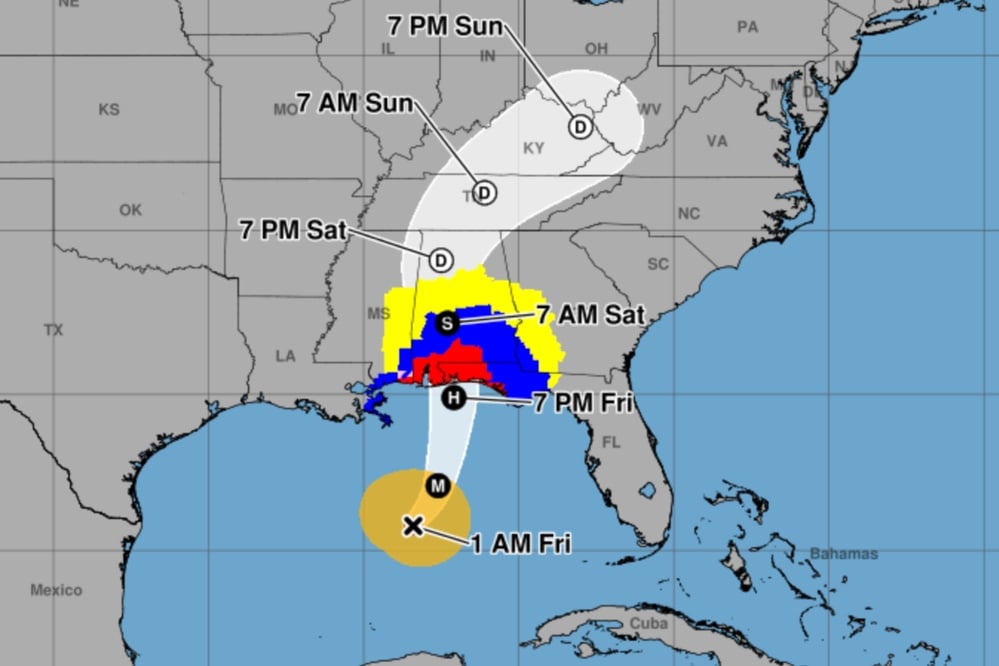
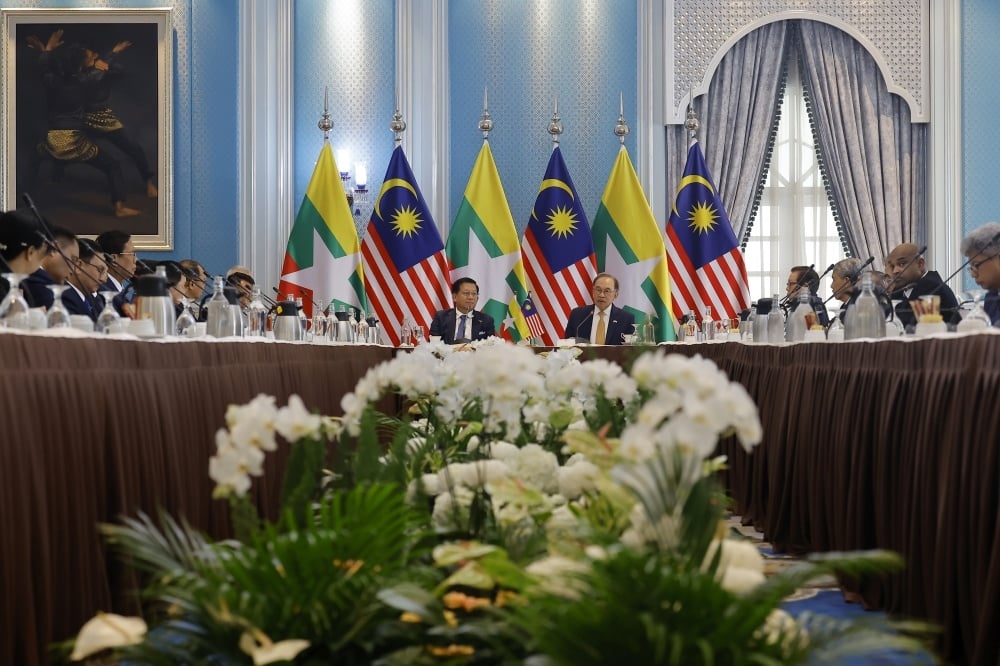
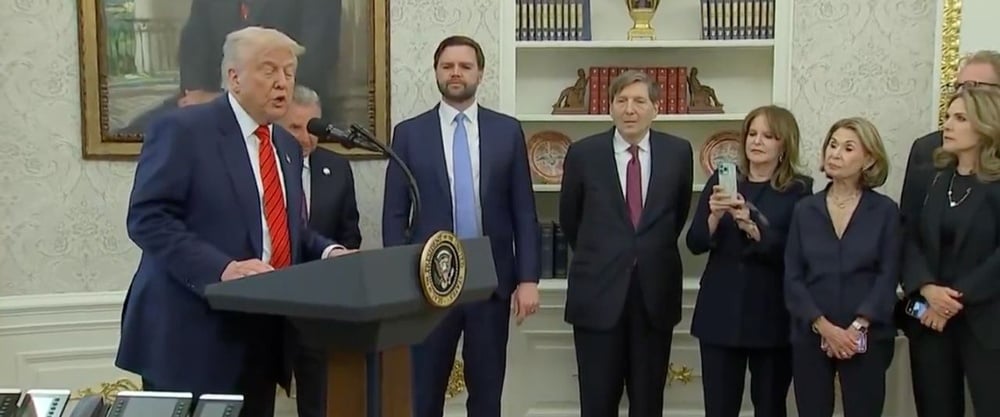
2026 © Helium Trades
Privacy Policy & Disclosure
* Disclaimer: Nothing on this website constitutes investment advice, performance data or any recommendation that any particular security, portfolio of securities, transaction or investment strategy is suitable for any specific person. Helium Trades is not responsible in any way for the accuracy
of any model predictions or price data. Any mention of a particular security and related prediction data is not a recommendation to buy or sell that security. Investments in securities involve the risk of loss. Past performance is no guarantee of future results. Helium Trades is not responsible for any of your investment decisions,
you should consult a financial expert before engaging in any transaction.
Helium Research Assistant

How can I help you today?
Ask any question about this page.


