See whether Helium helps you make better-informed decisions. Try every Pro Trader feature for 30 days. No credit card required.
Try every Pro Trader feature for 30 days. No credit card required.
Publisher framing emphasizes the rarity and controversy of kin-based Senate succession, weighing continuity and name recognition against nepotism concerns and democratic legitimacy.
This piece analyzes a recent appointment to the U.S. Senate by a governor to fill a vacancy with a family member, set against a long history of 'widow's succession' and debates over nepotism.
Automated analysis; not human reviewed.
Limitations: Case-specific; relies on a single article's framing and quoted sources; alternative interpretations could emphasize tradition or political pragmatism more heavily.
·
47 of 52 available dimensions scored; omitted dimensions are not treated as neutral.
·
Verified supporting quotes for 3 of 47 scored dimensions.
Claim: The article frames kin-based Senate succession with normative caution, signaling skepticism toward hereditary power.
“the practice itself is controversial and undemocratic” · exact text match
“It is, frankly, a throwback to — not necessarily feudalism — but power by hereditary rule and the British crown.” · not found in supplied text
Counterevidence:
“Upsides: continuity, name recognition and the sympathy factor” · exact text match
“Relatives often arrive with built-in name recognition, familiarity with staffers and access to the same donor networks.” · exact text match
Why: Explicit negative framing is present, but the piece also catalogs benefits, showing mixed framing.
Claim: The piece critiques dynastic succession as anti-egalitarian, challenging elite power concentration.
“the practice itself is controversial and undemocratic” · exact text match
“We think the government should flow from the people” · exact text match
Counterevidence:
“Upsides: continuity, name recognition and the sympathy factor” · exact text match
“Relatives often arrive with built-in name recognition, familiarity with staffers and access to the same donor networks.” · exact text match
Why: Leans against hereditary power while acknowledging practical advantages, signaling tension with elite dynastic norms.
Claim: The piece critiques centralized appointment power as undemocratic and supports preventing concentration by lineage.
“The practice itself is controversial and undemocratic” · not found in supplied text
“We think the government should flow from the people” · exact text match
Counterevidence:
“Upsides: continuity, name recognition and the sympathy factor” · exact text match
Why: Normative statements emphasize popular sovereignty over hereditary power.
Claim: The article mixes factual reporting with quoted opinions to present a balanced account.
“"Relatives often arrive with built-in name recognition, familiarity with staffers and access to the same donor networks."” · not found in supplied text
“"Widows, or a sister in this case, often make pretty handy substitutes because they are objects of sympathy."” · not found in supplied text
Counterevidence:
“"the practice itself is controversial and undemocratic"” · not found in supplied text
“"It is, frankly, a throwback to — not necessarily feudalism — but power by hereditary rule"” · not found in supplied text
Why: Both descriptive facts and evaluative quotes appear, indicating mixed objectivity.
Claim: The text avoids sensational framing, sticking to contextual history and expert quotes.
“Over the last century, only a handful of deceased or departing members have been replaced by kin” · exact text match
“The 17th Amendment ...” · not found in supplied text
Counterevidence:
“It is, frankly, a throwback to — not necessarily feudalism — but power by hereditary rule and the British crown.” · not found in supplied text
Why: Descriptive history and expert views keep tone measured.
Claim: The piece presents both upsides and downsides, avoiding a one-sided market-like prediction.
“Upsides: continuity, name recognition and the sympathy factor” · exact text match
“But the practice also carries a whiff of the Old World.” · exact text match
Counterevidence:
“"If you're, if you're the spouse of a politician, you are going to all the same political events... you get known"” · not found in supplied text
Why: Balanced presentation rather than a directional forecast.
Claim: The topic of political dynasties and kin-based succession is presented with historical precedents and contemporary debates.
“"From the earliest days of the republic, America has embraced the concept of politics as a family business"” · not found in supplied text
“"The special primary will be held on August 11"” · not found in supplied text
Why: Moderate level of historical insight and contemporary relevance.
Claim: The article describes the phenomenon and then implicitly prescribes scrutiny of such appointments.
“"The practice itself is controversial and undemocratic"” · not found in supplied text
“"it is attractive to people"” · not found in supplied text
Counterevidence:
“"Upsides: continuity, name recognition and the sympathy factor"” · exact text match
Why: Describes but also hints at normative judgments about legitimacy.
Claim: No explicit foreign policy stance; framing centers on domestic democratic norms.
“"lindsey graham’s influence is visible in death"” · not found in supplied text
“"world leaders" expected at funeral” · not found in supplied text
Why: Policy stance not applicable; context is domestic governance.
Claim: Not designed to elicit fear; presents procedural and democratic concerns neutrally.
“controversy and undemocratic perceptions” · not found in supplied text
Why: Fear-based framing not prominent; analysis is issue-focused.
Claim: No clear circular reasoning; presents data and quotes to support claims.
“"Since 1913, 12 vacancies"” · not found in supplied text
“"The 17th Amendment"” · not found in supplied text
Why: No evident circular reasoning in text.
Claim: Not gossipy; relies on historical precedents and expert commentary.
“experts say” · exact text match
“Trump endorsement” · not found in supplied text
Why: Factual reporting, not tabloid-style gossip.
Claim: The piece expresses normative judgments about dynastic politics.
“"throwback to hereditary rule"” · not found in supplied text
“"undemocratic"” · not found in supplied text
Counterevidence:
“"Upsides: continuity..."” · not found in supplied text
“"Relatives often arrive with built-in name recognition..."” · not found in supplied text
Why: Balanced but includes explicit critical language.
Claim: The framing aligns with anti-establishment critiques of hereditary power in governance.
“the practice itself is controversial and undemocratic” · exact text match
“power by hereditary rule” · exact text match
Counterevidence:
“Upsides: continuity, name recognition and the sympathy factor” · exact text match
Why: Negative framing of dynastic power suggests skepticism toward establishment norms.
Claim: The reporting uses verifiable historical data to ground claims about dynastic appointments.
“Since 1913, only 12 Senate vacancies have gone to family members.” · not found in supplied text
“The Seventeenth Amendment (1913) ...” · not found in supplied text
Counterevidence:
“Upsides: continuity, name recognition and the sympathy factor” · exact text match
Why: Data-grounded framing supports rational analysis, though some evaluative language remains.
Claim: The reporting cites multiple sources and anchors claims in historical data.
“"Rob Richie, founder of the non-profit Expand Democracy"” · not found in supplied text
“"Koger said"” · not found in supplied text
Counterevidence:
“"Despite skepticism, Trump endorsement"” · not found in supplied text
Why: Citing multiple sources supports apparent fairness, though scope is limited.
Ambiguities and data gaps (year of August 11; scope of quotes) could tilt interpretation.
July 24, 2026 · 0 shares
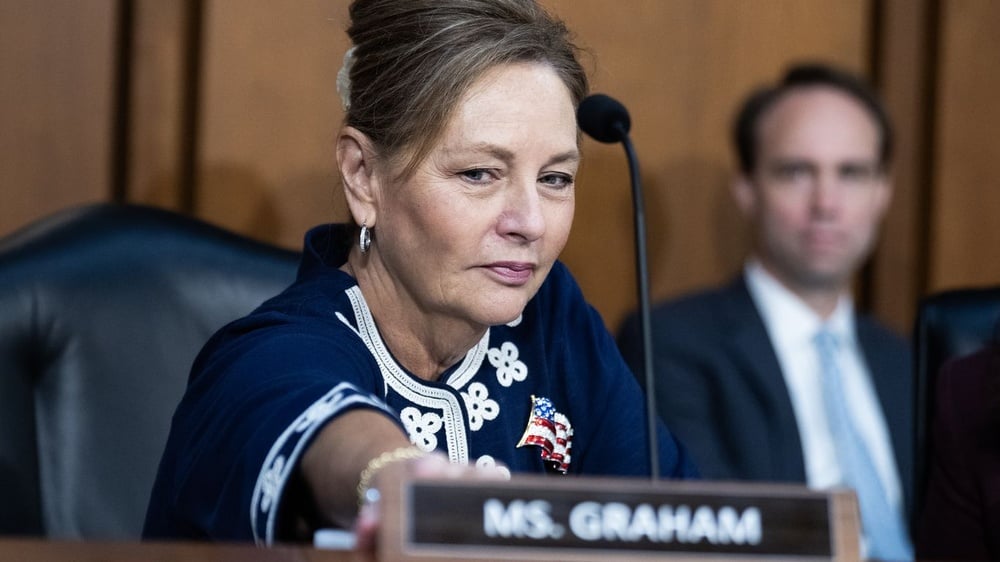
Publisher framing emphasizes Darline Graham as a Trump-endorsed Lindsey Graham successor, presenting her uphill race and GOP skepticism as central, with some countervailing voices included.
Darline Graham, a Republican replacement for Lindsey Graham in the South Carolina Senate race, is positioned as the party's continuing brand face but faces skepticism about securing a full term.
Automated analysis; not human reviewed.
Limitations: Concise, case-specific limitations and plausible alternative interpretations.
·
40 of 52 available dimensions scored; omitted dimensions are not treated as neutral.
·
Verified supporting quotes for 0 of 40 scored dimensions.
Claim: The article frames the subject's prospects as unlikely to win a full term, indicating a bearish framing.
“Driving the news: Even so, Darline Graham faces an uphill battle to win a full Senate term in November, Republicans in D.C. and her home state of South Carolina tell.” · not found in supplied text
“A half-dozen GOP operatives pointed to three reasons why all those advantages may not be enough for Darline Graham to get elected.” · not found in supplied text
Counterevidence:
“The other side: For all their doubts about Graham, many Republicans caution against writing her off.” · exact text match
Why: Direct phrasing and operative quotes indicate skepticism about electability; some voices suggest doubts are not universal.
Claim: The report includes notable but not sensational details that frame a competitive race.
“"She has a lot of work to do to win over the constituents... through a grassroots effort"” · not found in supplied text
“Video circulated of staffers shielding her from a reporter over a policy question.” · not found in supplied text
Counterevidence:
“The piece also includes a counterpoint that cautions against writing her off.” · not found in supplied text
Why: Use of specific anecdotes and quotes adds interest without sensational framing.
Claim: The text is primarily descriptive rather than prescriptive.
“Driving the news: Even so, Darline Graham faces an uphill battle to win a full Senate term in November.” · not found in supplied text
“The article states who is saying what and describes events (endorsement, voting legislation, staff interaction) without prescribing a course of action.” · not found in supplied text
Counterevidence:
“The piece notes the existence of a political strategy narrative (three reasons why advantages may not be enough) which has prescriptive-like implications for perception.” · not found in supplied text
Why: The content centers on description of events and opinions rather than directives or recommendations.
Claim: The piece centers on political dynamics, endorsements, and intra-party skepticism.
“She has President Trump's endorsement.” · not found in supplied text
“The SAVE America Act is Trump-backed and stalled in the Senate.” · not found in supplied text
Counterevidence:
“The article notes that some Republicans caution against writing her off.” · not found in supplied text
Why: Content is inherently political, focusing on party dynamics and endorsements.
Claim: The article uses quotes from named authorities to support its framing.
“"She has a lot of work to do to win over the constituents that she hasn't had the time [to meet] through a grassroots effort," Chad Connelly said.” · not found in supplied text
Counterevidence:
“"The other side: For all their doubts about Graham, many Republicans caution against writing her off."” · exact text match
Why: Quotations from named sources provide perceived authority and balance.
Claim: The piece appears moderately credible, relying on named sources and explicit quotes.
“Chad Connelly quote.” · not found in supplied text
“Video circulated of staffers shielding her from a reporter.” · not found in supplied text
“A Graham spokesperson didn't respond to a request for comment.” · exact text match
Counterevidence:
“The excerpt provided is limited and may not reflect the full context.” · not found in supplied text
Why: Multiple named sources and direct quotes support credibility; limited scope may constrain interpretation.
Ambiguity due to limited context; quotes present; risk of misinterpretation.
Publisher frames Sanford’s bid as a debt-focused, credentialed run in a crowded South Carolina Senate special primary, balancing his long political resume with past controversy to provide contextual framing.
Sanford's entry comes in a crowded South Carolina GOP Senate primary to replace the late Lindsey Graham, with Darline Graham (the late senator’s sister) running and endorsed by Trump, and opponents including Reps.
Russell Fry, Ralph Norman, and Mark Lynch.
Automated analysis; not human reviewed. Limitations: Concise, case-specific limitations and plausible alternative interpretations.
Publisher framing foregrounds residency controversy and party vetting in an open South Carolina Senate race, using neutral, detail-focused language that emphasizes procedural rules and candidate backgrounds without editorializing.
Lindsey Graham's death opens an SC Senate race, drawing multiple Republican contenders and focusing on residency eligibility for a candidate who lists a North Carolina address.
Automated analysis; not human reviewed.
Limitations: Concise, case-specific limitations and plausible alternative interpretations.
·
1 of 52 available dimensions scored; omitted dimensions are not treated as neutral.
·
Verified supporting quotes for 1 of 1 scored dimensions.
Claim: The article presents residency and vetting details in a neutral, procedural frame with no evident ideological tilt.
“The state party pulls candidates’ South Carolina voter registration files to confirm residency and eligibility, Short said.” · exact text match
“The U.S. Constitution only has three qualifications for the Senate: they must be 30 years or older, a citizen of the U.S. for at least nine years and an “inhabitant” of the state when elected.” · exact text match
Why: Procedural framing and direct constitutional references indicate neutrality rather than ideological slant.
July 24, 2026 · 0 shares
Framing is neutral and informational, naming Mark Sanford as a Republican candidate for the South Carolina U.S. Senate seat and attributing details to reporter Zak Hudak.
The report previews Republican contenders for South Carolina's U.S. Senate seat to replace Lindsey Graham, noting Sanford's background as a former governor and congressman.
Automated analysis; not human reviewed. Limitations: Text is brief and descriptive; broader framing cues may appear in fuller coverage and cannot be assessed from this fragment.
Neutral, descriptive reporting that presents Darline Graham's emphasis on domestic economic issues as a differentiation from Lindsey Graham, using quotes from Hannity and Graham without evident editorializing.
A concise, factual report on Darline Graham's Hannity appearance emphasizing domestic economic issues as a differentiator from her brother.
Automated analysis; not human reviewed.
Limitations: Concise, case-specific limitations and plausible alternative interpretations.
·
2 of 52 available dimensions scored; omitted dimensions are not treated as neutral.
·
Verified supporting quotes for 0 of 2 scored dimensions.
Claim: Neutral framing with no evident political slant; article quotes and describes policy emphasis without advocacy.
“According to Darline Graham, she would focus more on “what matters to the average person” and offered examples of economic issues.” · exact text match
“Graham replied, “No, it’s fair.
And, you know, I understand.
I used to see him on the talk shows.
I would watch him, and I’d be like, Lindsey, you’re just talking about national security all the time.
And I understand that’s important — protecting our borders, national security, absolutely.
I said, but, you know, talk about also what matters to the average person.
You know, the price of groceries, the price of gas, health care, insurance, those kinds of things.””
· not found in supplied text
Why: Framing centers on topics and quotes without overt opinion; descriptive rather than evaluative.
Ambiguity about publisher; limited excerpt; avoid overreach.
Publisher frames Sanford’s bid as a debt-focused, credentialed run in a crowded South Carolina Senate special primary, balancing his long political resume with past controversy to provide contextual framing.
Sanford's entry comes in a crowded South Carolina GOP Senate primary to replace the late Lindsey Graham, with Darline Graham (the late senator’s sister) running and endorsed by Trump, and opponents including Reps.
Russell Fry, Ralph Norman, and Mark Lynch.
Automated analysis; not human reviewed. Limitations: Concise, case-specific limitations and plausible alternative interpretations.
July 23, 2026 · 0 shares
Publisher framing centers Sanford's Senate bid around debt and fiscal policy, foregrounding his 'financial tipping point' quote to tie the race to Washington's spending with minimal contextual background.
South Carolina Republican Mark Sanford announced a bid for the U.S. Senate seat left vacant by the death of Sen. Lindsey Graham.
Automated analysis; not human reviewed. Limitations: Concise, case-specific limitations and plausible alternative interpretations.
July 24, 2026 · 0 shares
Publisher framing emphasizes Darline Graham as a Trump-endorsed Lindsey Graham successor, presenting her uphill race and GOP skepticism as central, with some countervailing voices included.
Darline Graham, a Republican replacement for Lindsey Graham in the South Carolina Senate race, is positioned as the party's continuing brand face but faces skepticism about securing a full term.
Automated analysis; not human reviewed.
Limitations: Concise, case-specific limitations and plausible alternative interpretations.
·
40 of 52 available dimensions scored; omitted dimensions are not treated as neutral.
·
Verified supporting quotes for 0 of 40 scored dimensions.
Claim: The article frames the subject's prospects as unlikely to win a full term, indicating a bearish framing.
“Driving the news: Even so, Darline Graham faces an uphill battle to win a full Senate term in November, Republicans in D.C. and her home state of South Carolina tell.” · not found in supplied text
“A half-dozen GOP operatives pointed to three reasons why all those advantages may not be enough for Darline Graham to get elected.” · not found in supplied text
Counterevidence:
“The other side: For all their doubts about Graham, many Republicans caution against writing her off.” · exact text match
Why: Direct phrasing and operative quotes indicate skepticism about electability; some voices suggest doubts are not universal.
Claim: The report includes notable but not sensational details that frame a competitive race.
“"She has a lot of work to do to win over the constituents... through a grassroots effort"” · not found in supplied text
“Video circulated of staffers shielding her from a reporter over a policy question.” · not found in supplied text
Counterevidence:
“The piece also includes a counterpoint that cautions against writing her off.” · not found in supplied text
Why: Use of specific anecdotes and quotes adds interest without sensational framing.
Claim: The text is primarily descriptive rather than prescriptive.
“Driving the news: Even so, Darline Graham faces an uphill battle to win a full Senate term in November.” · not found in supplied text
“The article states who is saying what and describes events (endorsement, voting legislation, staff interaction) without prescribing a course of action.” · not found in supplied text
Counterevidence:
“The piece notes the existence of a political strategy narrative (three reasons why advantages may not be enough) which has prescriptive-like implications for perception.” · not found in supplied text
Why: The content centers on description of events and opinions rather than directives or recommendations.
Claim: The piece centers on political dynamics, endorsements, and intra-party skepticism.
“She has President Trump's endorsement.” · not found in supplied text
“The SAVE America Act is Trump-backed and stalled in the Senate.” · not found in supplied text
Counterevidence:
“The article notes that some Republicans caution against writing her off.” · not found in supplied text
Why: Content is inherently political, focusing on party dynamics and endorsements.
Claim: The article uses quotes from named authorities to support its framing.
“"She has a lot of work to do to win over the constituents that she hasn't had the time [to meet] through a grassroots effort," Chad Connelly said.” · not found in supplied text
Counterevidence:
“"The other side: For all their doubts about Graham, many Republicans caution against writing her off."” · exact text match
Why: Quotations from named sources provide perceived authority and balance.
Claim: The piece appears moderately credible, relying on named sources and explicit quotes.
“Chad Connelly quote.” · not found in supplied text
“Video circulated of staffers shielding her from a reporter.” · not found in supplied text
“A Graham spokesperson didn't respond to a request for comment.” · exact text match
Counterevidence:
“The excerpt provided is limited and may not reflect the full context.” · not found in supplied text
Why: Multiple named sources and direct quotes support credibility; limited scope may constrain interpretation.
Ambiguity due to limited context; quotes present; risk of misinterpretation.
July 24, 2026 · 0 shares
Publisher framing emphasizes Darline Graham as a Trump-endorsed Lindsey Graham successor, presenting her uphill race and GOP skepticism as central, with some countervailing voices included.
Darline Graham, a Republican replacement for Lindsey Graham in the South Carolina Senate race, is positioned as the party's continuing brand face but faces skepticism about securing a full term.
Automated analysis; not human reviewed.
Limitations: Concise, case-specific limitations and plausible alternative interpretations.
·
40 of 52 available dimensions scored; omitted dimensions are not treated as neutral.
·
Verified supporting quotes for 0 of 40 scored dimensions.
Claim: The article frames the subject's prospects as unlikely to win a full term, indicating a bearish framing.
“Driving the news: Even so, Darline Graham faces an uphill battle to win a full Senate term in November, Republicans in D.C. and her home state of South Carolina tell.” · not found in supplied text
“A half-dozen GOP operatives pointed to three reasons why all those advantages may not be enough for Darline Graham to get elected.” · not found in supplied text
Counterevidence:
“The other side: For all their doubts about Graham, many Republicans caution against writing her off.” · exact text match
Why: Direct phrasing and operative quotes indicate skepticism about electability; some voices suggest doubts are not universal.
Claim: The report includes notable but not sensational details that frame a competitive race.
“"She has a lot of work to do to win over the constituents... through a grassroots effort"” · not found in supplied text
“Video circulated of staffers shielding her from a reporter over a policy question.” · not found in supplied text
Counterevidence:
“The piece also includes a counterpoint that cautions against writing her off.” · not found in supplied text
Why: Use of specific anecdotes and quotes adds interest without sensational framing.
Claim: The text is primarily descriptive rather than prescriptive.
“Driving the news: Even so, Darline Graham faces an uphill battle to win a full Senate term in November.” · not found in supplied text
“The article states who is saying what and describes events (endorsement, voting legislation, staff interaction) without prescribing a course of action.” · not found in supplied text
Counterevidence:
“The piece notes the existence of a political strategy narrative (three reasons why advantages may not be enough) which has prescriptive-like implications for perception.” · not found in supplied text
Why: The content centers on description of events and opinions rather than directives or recommendations.
Claim: The piece centers on political dynamics, endorsements, and intra-party skepticism.
“She has President Trump's endorsement.” · not found in supplied text
“The SAVE America Act is Trump-backed and stalled in the Senate.” · not found in supplied text
Counterevidence:
“The article notes that some Republicans caution against writing her off.” · not found in supplied text
Why: Content is inherently political, focusing on party dynamics and endorsements.
Claim: The article uses quotes from named authorities to support its framing.
“"She has a lot of work to do to win over the constituents that she hasn't had the time [to meet] through a grassroots effort," Chad Connelly said.” · not found in supplied text
Counterevidence:
“"The other side: For all their doubts about Graham, many Republicans caution against writing her off."” · exact text match
Why: Quotations from named sources provide perceived authority and balance.
Claim: The piece appears moderately credible, relying on named sources and explicit quotes.
“Chad Connelly quote.” · not found in supplied text
“Video circulated of staffers shielding her from a reporter.” · not found in supplied text
“A Graham spokesperson didn't respond to a request for comment.” · exact text match
Counterevidence:
“The excerpt provided is limited and may not reflect the full context.” · not found in supplied text
Why: Multiple named sources and direct quotes support credibility; limited scope may constrain interpretation.
Ambiguity due to limited context; quotes present; risk of misinterpretation.
Publisher frames Sanford’s bid as a debt-focused, credentialed run in a crowded South Carolina Senate special primary, balancing his long political resume with past controversy to provide contextual framing.
Sanford's entry comes in a crowded South Carolina GOP Senate primary to replace the late Lindsey Graham, with Darline Graham (the late senator’s sister) running and endorsed by Trump, and opponents including Reps.
Russell Fry, Ralph Norman, and Mark Lynch.
Automated analysis; not human reviewed. Limitations: Concise, case-specific limitations and plausible alternative interpretations.
July 23, 2026 · 0 shares
The publisher frames Sanford's Senate bid as debt-centered and fiscally conservative, foregrounding his personal narrative and past controversy while presenting rival establishment framing as contextual commentary.
The article reports Mark Sanford's bid for Lindsey Graham's Senate seat in South Carolina, framing debt-reduction and fiscal restraint as central themes while noting Sanford's past scandals and the involvement of Darline Graham and other GOP candidates.
Automated analysis; not human reviewed.
Limitations: Concise, case-specific limitations and plausible alternative interpretations.
·
43 of 52 available dimensions scored; omitted dimensions are not treated as neutral.
·
Verified supporting quotes for 3 of 43 scored dimensions.
Claim: The article presents debt-framed messaging without a clear liberal or conservative tilt.
“get its finances back in order.” · exact text match
“Lindsey’s death is a reminder of how short and precious life is.” · exact text match
“we’re at a tipping point, and that’s why I have decided to run for U.S. Senate.” · not found in supplied text
Counterevidence:
“Trump, at the time, referred to Sanford as 'nothing but trouble.' It was the first time the president had gone after a Republican incumbent in a midterm primary.” · not found in supplied text
Why: Debt framing is present, but the article also runs past scandals and opposition framing, allowing mixed signals.
Claim: The piece primarily reports facts and quotes without injecting explicit opinion, maintaining a reporting posture.
“We’re at a tipping point, and that’s why I have decided to run for U.S. Senate.” · exact text match
Counterevidence:
“The piece frames Sanford’s debt focus through quotes and references that could be read as supportive, depending on reader interpretation.” · not found in supplied text
Why: The article leans on quotes and context rather than editorializing; some phrases imply persuasion but remain attributed.
Claim: The article includes an adversarial claim that Sanford's entry would protect establishment candidates, indicating contextual framing rather than publisher endorsement.
“Mark Lynch already took a shot at Sanford’s announcement in a post on X, writing, “Mark Sanford’s entrance into the race for Senate only serves to protect Establishment candidates Darline Nordone, Ralph Norman, and Russell Fry.”” · exact text match
Counterevidence:
“Hannity noted that Trump urged Darline Graham to run, which could be seen as external influence but not endorsement of establishment politics.” · not found in supplied text
Why: The establishment framing is attributed to an external critic, not the publisher, indicating contextual framing rather than endorsement.
Claim: The reporting shows integrity by citing multiple sources and including both positive and negative details about Sanford.
“according to a report from The Hill” · exact text match
“Hannity noted during an interview that President Donald Trump had publicly urged Darline Graham to run for a full Senate term, a request she acknowledged carried significant weight.” · exact text match
“In 2009, while serving as governor, Sanford disappeared from the state for nearly a week.” · exact text match
Counterevidence:
“Trump’s insult in 2018 ('nothing but trouble') is included, which could color perceptions of credibility depending on perspective.” · not found in supplied text
Why: The piece uses diverse sources but also includes the candidate’s own quotes and past scandals.
Ambiguities: limited article scope; quotes chosen; may not reflect full context.
Publisher framing emphasizes the rarity and controversy of kin-based Senate succession, weighing continuity and name recognition against nepotism concerns and democratic legitimacy.
This piece analyzes a recent appointment to the U.S. Senate by a governor to fill a vacancy with a family member, set against a long history of 'widow's succession' and debates over nepotism.
Automated analysis; not human reviewed. Limitations: Case-specific; relies on a single article's framing and quoted sources; alternative interpretations could emphasize tradition or political pragmatism more heavily. · 47 of 52 available dimensions scored; omitted dimensions are not treated as neutral. · Verified supporting quotes for 3 of 47 scored dimensions.
Claim: The article frames kin-based Senate succession with normative caution, signaling skepticism toward hereditary power.
“the practice itself is controversial and undemocratic” · exact text match
“It is, frankly, a throwback to — not necessarily feudalism — but power by hereditary rule and the British crown.” · not found in supplied text
Counterevidence:
“Upsides: continuity, name recognition and the sympathy factor” · exact text match
“Relatives often arrive with built-in name recognition, familiarity with staffers and access to the same donor networks.” · exact text match
Why: Explicit negative framing is present, but the piece also catalogs benefits, showing mixed framing.
Claim: The piece critiques dynastic succession as anti-egalitarian, challenging elite power concentration.
“the practice itself is controversial and undemocratic” · exact text match
“We think the government should flow from the people” · exact text match
Counterevidence:
“Upsides: continuity, name recognition and the sympathy factor” · exact text match
“Relatives often arrive with built-in name recognition, familiarity with staffers and access to the same donor networks.” · exact text match
Why: Leans against hereditary power while acknowledging practical advantages, signaling tension with elite dynastic norms.
Claim: The piece critiques centralized appointment power as undemocratic and supports preventing concentration by lineage.
“The practice itself is controversial and undemocratic” · not found in supplied text
“We think the government should flow from the people” · exact text match
Counterevidence:
“Upsides: continuity, name recognition and the sympathy factor” · exact text match
Why: Normative statements emphasize popular sovereignty over hereditary power.
Claim: The article mixes factual reporting with quoted opinions to present a balanced account.
“"Relatives often arrive with built-in name recognition, familiarity with staffers and access to the same donor networks."” · not found in supplied text
“"Widows, or a sister in this case, often make pretty handy substitutes because they are objects of sympathy."” · not found in supplied text
Counterevidence:
“"the practice itself is controversial and undemocratic"” · not found in supplied text
“"It is, frankly, a throwback to — not necessarily feudalism — but power by hereditary rule"” · not found in supplied text
Why: Both descriptive facts and evaluative quotes appear, indicating mixed objectivity.
Claim: The text avoids sensational framing, sticking to contextual history and expert quotes.
“Over the last century, only a handful of deceased or departing members have been replaced by kin” · exact text match
“The 17th Amendment ...” · not found in supplied text
Counterevidence:
“It is, frankly, a throwback to — not necessarily feudalism — but power by hereditary rule and the British crown.” · not found in supplied text
Why: Descriptive history and expert views keep tone measured.
Claim: The piece presents both upsides and downsides, avoiding a one-sided market-like prediction.
“Upsides: continuity, name recognition and the sympathy factor” · exact text match
“But the practice also carries a whiff of the Old World.” · exact text match
Counterevidence:
“"If you're, if you're the spouse of a politician, you are going to all the same political events... you get known"” · not found in supplied text
Why: Balanced presentation rather than a directional forecast.
Claim: The topic of political dynasties and kin-based succession is presented with historical precedents and contemporary debates.
“"From the earliest days of the republic, America has embraced the concept of politics as a family business"” · not found in supplied text
“"The special primary will be held on August 11"” · not found in supplied text
Why: Moderate level of historical insight and contemporary relevance.
Claim: The article describes the phenomenon and then implicitly prescribes scrutiny of such appointments.
“"The practice itself is controversial and undemocratic"” · not found in supplied text
“"it is attractive to people"” · not found in supplied text
Counterevidence:
“"Upsides: continuity, name recognition and the sympathy factor"” · exact text match
Why: Describes but also hints at normative judgments about legitimacy.
Claim: No explicit foreign policy stance; framing centers on domestic democratic norms.
“"lindsey graham’s influence is visible in death"” · not found in supplied text
“"world leaders" expected at funeral” · not found in supplied text
Why: Policy stance not applicable; context is domestic governance.
Claim: Not designed to elicit fear; presents procedural and democratic concerns neutrally.
“controversy and undemocratic perceptions” · not found in supplied text
Why: Fear-based framing not prominent; analysis is issue-focused.
Claim: No clear circular reasoning; presents data and quotes to support claims.
“"Since 1913, 12 vacancies"” · not found in supplied text
“"The 17th Amendment"” · not found in supplied text
Why: No evident circular reasoning in text.
Claim: Not gossipy; relies on historical precedents and expert commentary.
“experts say” · exact text match
“Trump endorsement” · not found in supplied text
Why: Factual reporting, not tabloid-style gossip.
Claim: The piece expresses normative judgments about dynastic politics.
“"throwback to hereditary rule"” · not found in supplied text
“"undemocratic"” · not found in supplied text
Counterevidence:
“"Upsides: continuity..."” · not found in supplied text
“"Relatives often arrive with built-in name recognition..."” · not found in supplied text
Why: Balanced but includes explicit critical language.
Claim: The framing aligns with anti-establishment critiques of hereditary power in governance.
“the practice itself is controversial and undemocratic” · exact text match
“power by hereditary rule” · exact text match
Counterevidence:
“Upsides: continuity, name recognition and the sympathy factor” · exact text match
Why: Negative framing of dynastic power suggests skepticism toward establishment norms.
Claim: The reporting uses verifiable historical data to ground claims about dynastic appointments.
“Since 1913, only 12 Senate vacancies have gone to family members.” · not found in supplied text
“The Seventeenth Amendment (1913) ...” · not found in supplied text
Counterevidence:
“Upsides: continuity, name recognition and the sympathy factor” · exact text match
Why: Data-grounded framing supports rational analysis, though some evaluative language remains.
Claim: The reporting cites multiple sources and anchors claims in historical data.
“"Rob Richie, founder of the non-profit Expand Democracy"” · not found in supplied text
“"Koger said"” · not found in supplied text
Counterevidence:
“"Despite skepticism, Trump endorsement"” · not found in supplied text
Why: Citing multiple sources supports apparent fairness, though scope is limited.
Ambiguities and data gaps (year of August 11; scope of quotes) could tilt interpretation.
July 24, 2026 · 0 shares
Publisher framing emphasizes Darline Graham as a Trump-endorsed Lindsey Graham successor, presenting her uphill race and GOP skepticism as central, with some countervailing voices included.
Darline Graham, a Republican replacement for Lindsey Graham in the South Carolina Senate race, is positioned as the party's continuing brand face but faces skepticism about securing a full term.
Automated analysis; not human reviewed. Limitations: Concise, case-specific limitations and plausible alternative interpretations. · 40 of 52 available dimensions scored; omitted dimensions are not treated as neutral. · Verified supporting quotes for 0 of 40 scored dimensions.
Claim: The article frames the subject's prospects as unlikely to win a full term, indicating a bearish framing.
“Driving the news: Even so, Darline Graham faces an uphill battle to win a full Senate term in November, Republicans in D.C. and her home state of South Carolina tell.” · not found in supplied text
“A half-dozen GOP operatives pointed to three reasons why all those advantages may not be enough for Darline Graham to get elected.” · not found in supplied text
Counterevidence:
“The other side: For all their doubts about Graham, many Republicans caution against writing her off.” · exact text match
Why: Direct phrasing and operative quotes indicate skepticism about electability; some voices suggest doubts are not universal.
Claim: The report includes notable but not sensational details that frame a competitive race.
“"She has a lot of work to do to win over the constituents... through a grassroots effort"” · not found in supplied text
“Video circulated of staffers shielding her from a reporter over a policy question.” · not found in supplied text
Counterevidence:
“The piece also includes a counterpoint that cautions against writing her off.” · not found in supplied text
Why: Use of specific anecdotes and quotes adds interest without sensational framing.
Claim: The text is primarily descriptive rather than prescriptive.
“Driving the news: Even so, Darline Graham faces an uphill battle to win a full Senate term in November.” · not found in supplied text
“The article states who is saying what and describes events (endorsement, voting legislation, staff interaction) without prescribing a course of action.” · not found in supplied text
Counterevidence:
“The piece notes the existence of a political strategy narrative (three reasons why advantages may not be enough) which has prescriptive-like implications for perception.” · not found in supplied text
Why: The content centers on description of events and opinions rather than directives or recommendations.
Claim: The piece centers on political dynamics, endorsements, and intra-party skepticism.
“She has President Trump's endorsement.” · not found in supplied text
“The SAVE America Act is Trump-backed and stalled in the Senate.” · not found in supplied text
Counterevidence:
“The article notes that some Republicans caution against writing her off.” · not found in supplied text
Why: Content is inherently political, focusing on party dynamics and endorsements.
Claim: The article uses quotes from named authorities to support its framing.
“"She has a lot of work to do to win over the constituents that she hasn't had the time [to meet] through a grassroots effort," Chad Connelly said.” · not found in supplied text
Counterevidence:
“"The other side: For all their doubts about Graham, many Republicans caution against writing her off."” · exact text match
Why: Quotations from named sources provide perceived authority and balance.
Claim: The piece appears moderately credible, relying on named sources and explicit quotes.
“Chad Connelly quote.” · not found in supplied text
“Video circulated of staffers shielding her from a reporter.” · not found in supplied text
“A Graham spokesperson didn't respond to a request for comment.” · exact text match
Counterevidence:
“The excerpt provided is limited and may not reflect the full context.” · not found in supplied text
Why: Multiple named sources and direct quotes support credibility; limited scope may constrain interpretation.
Ambiguity due to limited context; quotes present; risk of misinterpretation.
Publisher framing foregrounds residency controversy and party vetting in an open South Carolina Senate race, using neutral, detail-focused language that emphasizes procedural rules and candidate backgrounds without editorializing.
Lindsey Graham's death opens an SC Senate race, drawing multiple Republican contenders and focusing on residency eligibility for a candidate who lists a North Carolina address.
Automated analysis; not human reviewed. Limitations: Concise, case-specific limitations and plausible alternative interpretations. · 1 of 52 available dimensions scored; omitted dimensions are not treated as neutral. · Verified supporting quotes for 1 of 1 scored dimensions.
Claim: The article presents residency and vetting details in a neutral, procedural frame with no evident ideological tilt.
“The state party pulls candidates’ South Carolina voter registration files to confirm residency and eligibility, Short said.” · exact text match
“The U.S. Constitution only has three qualifications for the Senate: they must be 30 years or older, a citizen of the U.S. for at least nine years and an “inhabitant” of the state when elected.” · exact text match
Why: Procedural framing and direct constitutional references indicate neutrality rather than ideological slant.
Publisher frames Sanford’s bid as a debt-focused, credentialed run in a crowded South Carolina Senate special primary, balancing his long political resume with past controversy to provide contextual framing.
Sanford's entry comes in a crowded South Carolina GOP Senate primary to replace the late Lindsey Graham, with Darline Graham (the late senator’s sister) running and endorsed by Trump, and opponents including Reps. Russell Fry, Ralph Norman, and Mark Lynch.
Automated analysis; not human reviewed. Limitations: Concise, case-specific limitations and plausible alternative interpretations.
July 24, 2026 · 0 shares
Framing is neutral and informational, naming Mark Sanford as a Republican candidate for the South Carolina U.S. Senate seat and attributing details to reporter Zak Hudak.
The report previews Republican contenders for South Carolina's U.S. Senate seat to replace Lindsey Graham, noting Sanford's background as a former governor and congressman.
Automated analysis; not human reviewed. Limitations: Text is brief and descriptive; broader framing cues may appear in fuller coverage and cannot be assessed from this fragment.
Neutral, descriptive reporting that presents Darline Graham's emphasis on domestic economic issues as a differentiation from Lindsey Graham, using quotes from Hannity and Graham without evident editorializing.
A concise, factual report on Darline Graham's Hannity appearance emphasizing domestic economic issues as a differentiator from her brother.
Automated analysis; not human reviewed. Limitations: Concise, case-specific limitations and plausible alternative interpretations. · 2 of 52 available dimensions scored; omitted dimensions are not treated as neutral. · Verified supporting quotes for 0 of 2 scored dimensions.
Claim: Neutral framing with no evident political slant; article quotes and describes policy emphasis without advocacy.
“According to Darline Graham, she would focus more on “what matters to the average person” and offered examples of economic issues.” · exact text match
“Graham replied, “No, it’s fair. And, you know, I understand. I used to see him on the talk shows. I would watch him, and I’d be like, Lindsey, you’re just talking about national security all the time. And I understand that’s important — protecting our borders, national security, absolutely. I said, but, you know, talk about also what matters to the average person. You know, the price of groceries, the price of gas, health care, insurance, those kinds of things.”” · not found in supplied text
Why: Framing centers on topics and quotes without overt opinion; descriptive rather than evaluative.
Ambiguity about publisher; limited excerpt; avoid overreach.
Publisher frames Sanford’s bid as a debt-focused, credentialed run in a crowded South Carolina Senate special primary, balancing his long political resume with past controversy to provide contextual framing.
Sanford's entry comes in a crowded South Carolina GOP Senate primary to replace the late Lindsey Graham, with Darline Graham (the late senator’s sister) running and endorsed by Trump, and opponents including Reps. Russell Fry, Ralph Norman, and Mark Lynch.
Automated analysis; not human reviewed. Limitations: Concise, case-specific limitations and plausible alternative interpretations.
July 23, 2026 · 0 shares
Publisher framing centers Sanford's Senate bid around debt and fiscal policy, foregrounding his 'financial tipping point' quote to tie the race to Washington's spending with minimal contextual background.
South Carolina Republican Mark Sanford announced a bid for the U.S. Senate seat left vacant by the death of Sen. Lindsey Graham.
Automated analysis; not human reviewed. Limitations: Concise, case-specific limitations and plausible alternative interpretations.
July 24, 2026 · 0 shares
Publisher framing emphasizes Darline Graham as a Trump-endorsed Lindsey Graham successor, presenting her uphill race and GOP skepticism as central, with some countervailing voices included.
Darline Graham, a Republican replacement for Lindsey Graham in the South Carolina Senate race, is positioned as the party's continuing brand face but faces skepticism about securing a full term.
Automated analysis; not human reviewed. Limitations: Concise, case-specific limitations and plausible alternative interpretations. · 40 of 52 available dimensions scored; omitted dimensions are not treated as neutral. · Verified supporting quotes for 0 of 40 scored dimensions.
Claim: The article frames the subject's prospects as unlikely to win a full term, indicating a bearish framing.
“Driving the news: Even so, Darline Graham faces an uphill battle to win a full Senate term in November, Republicans in D.C. and her home state of South Carolina tell.” · not found in supplied text
“A half-dozen GOP operatives pointed to three reasons why all those advantages may not be enough for Darline Graham to get elected.” · not found in supplied text
Counterevidence:
“The other side: For all their doubts about Graham, many Republicans caution against writing her off.” · exact text match
Why: Direct phrasing and operative quotes indicate skepticism about electability; some voices suggest doubts are not universal.
Claim: The report includes notable but not sensational details that frame a competitive race.
“"She has a lot of work to do to win over the constituents... through a grassroots effort"” · not found in supplied text
“Video circulated of staffers shielding her from a reporter over a policy question.” · not found in supplied text
Counterevidence:
“The piece also includes a counterpoint that cautions against writing her off.” · not found in supplied text
Why: Use of specific anecdotes and quotes adds interest without sensational framing.
Claim: The text is primarily descriptive rather than prescriptive.
“Driving the news: Even so, Darline Graham faces an uphill battle to win a full Senate term in November.” · not found in supplied text
“The article states who is saying what and describes events (endorsement, voting legislation, staff interaction) without prescribing a course of action.” · not found in supplied text
Counterevidence:
“The piece notes the existence of a political strategy narrative (three reasons why advantages may not be enough) which has prescriptive-like implications for perception.” · not found in supplied text
Why: The content centers on description of events and opinions rather than directives or recommendations.
Claim: The piece centers on political dynamics, endorsements, and intra-party skepticism.
“She has President Trump's endorsement.” · not found in supplied text
“The SAVE America Act is Trump-backed and stalled in the Senate.” · not found in supplied text
Counterevidence:
“The article notes that some Republicans caution against writing her off.” · not found in supplied text
Why: Content is inherently political, focusing on party dynamics and endorsements.
Claim: The article uses quotes from named authorities to support its framing.
“"She has a lot of work to do to win over the constituents that she hasn't had the time [to meet] through a grassroots effort," Chad Connelly said.” · not found in supplied text
Counterevidence:
“"The other side: For all their doubts about Graham, many Republicans caution against writing her off."” · exact text match
Why: Quotations from named sources provide perceived authority and balance.
Claim: The piece appears moderately credible, relying on named sources and explicit quotes.
“Chad Connelly quote.” · not found in supplied text
“Video circulated of staffers shielding her from a reporter.” · not found in supplied text
“A Graham spokesperson didn't respond to a request for comment.” · exact text match
Counterevidence:
“The excerpt provided is limited and may not reflect the full context.” · not found in supplied text
Why: Multiple named sources and direct quotes support credibility; limited scope may constrain interpretation.
Ambiguity due to limited context; quotes present; risk of misinterpretation.
July 24, 2026 · 0 shares
Publisher framing emphasizes Darline Graham as a Trump-endorsed Lindsey Graham successor, presenting her uphill race and GOP skepticism as central, with some countervailing voices included.
Darline Graham, a Republican replacement for Lindsey Graham in the South Carolina Senate race, is positioned as the party's continuing brand face but faces skepticism about securing a full term.
Automated analysis; not human reviewed. Limitations: Concise, case-specific limitations and plausible alternative interpretations. · 40 of 52 available dimensions scored; omitted dimensions are not treated as neutral. · Verified supporting quotes for 0 of 40 scored dimensions.
Claim: The article frames the subject's prospects as unlikely to win a full term, indicating a bearish framing.
“Driving the news: Even so, Darline Graham faces an uphill battle to win a full Senate term in November, Republicans in D.C. and her home state of South Carolina tell.” · not found in supplied text
“A half-dozen GOP operatives pointed to three reasons why all those advantages may not be enough for Darline Graham to get elected.” · not found in supplied text
Counterevidence:
“The other side: For all their doubts about Graham, many Republicans caution against writing her off.” · exact text match
Why: Direct phrasing and operative quotes indicate skepticism about electability; some voices suggest doubts are not universal.
Claim: The report includes notable but not sensational details that frame a competitive race.
“"She has a lot of work to do to win over the constituents... through a grassroots effort"” · not found in supplied text
“Video circulated of staffers shielding her from a reporter over a policy question.” · not found in supplied text
Counterevidence:
“The piece also includes a counterpoint that cautions against writing her off.” · not found in supplied text
Why: Use of specific anecdotes and quotes adds interest without sensational framing.
Claim: The text is primarily descriptive rather than prescriptive.
“Driving the news: Even so, Darline Graham faces an uphill battle to win a full Senate term in November.” · not found in supplied text
“The article states who is saying what and describes events (endorsement, voting legislation, staff interaction) without prescribing a course of action.” · not found in supplied text
Counterevidence:
“The piece notes the existence of a political strategy narrative (three reasons why advantages may not be enough) which has prescriptive-like implications for perception.” · not found in supplied text
Why: The content centers on description of events and opinions rather than directives or recommendations.
Claim: The piece centers on political dynamics, endorsements, and intra-party skepticism.
“She has President Trump's endorsement.” · not found in supplied text
“The SAVE America Act is Trump-backed and stalled in the Senate.” · not found in supplied text
Counterevidence:
“The article notes that some Republicans caution against writing her off.” · not found in supplied text
Why: Content is inherently political, focusing on party dynamics and endorsements.
Claim: The article uses quotes from named authorities to support its framing.
“"She has a lot of work to do to win over the constituents that she hasn't had the time [to meet] through a grassroots effort," Chad Connelly said.” · not found in supplied text
Counterevidence:
“"The other side: For all their doubts about Graham, many Republicans caution against writing her off."” · exact text match
Why: Quotations from named sources provide perceived authority and balance.
Claim: The piece appears moderately credible, relying on named sources and explicit quotes.
“Chad Connelly quote.” · not found in supplied text
“Video circulated of staffers shielding her from a reporter.” · not found in supplied text
“A Graham spokesperson didn't respond to a request for comment.” · exact text match
Counterevidence:
“The excerpt provided is limited and may not reflect the full context.” · not found in supplied text
Why: Multiple named sources and direct quotes support credibility; limited scope may constrain interpretation.
Ambiguity due to limited context; quotes present; risk of misinterpretation.
Neutral, descriptive reporting that presents Darline Graham's emphasis on domestic economic issues as a differentiation from Lindsey Graham, using quotes from Hannity and Graham without evident editorializing.
A concise, factual report on Darline Graham's Hannity appearance emphasizing domestic economic issues as a differentiator from her brother.
Automated analysis; not human reviewed. Limitations: Concise, case-specific limitations and plausible alternative interpretations. · 2 of 52 available dimensions scored; omitted dimensions are not treated as neutral. · Verified supporting quotes for 0 of 2 scored dimensions.
Claim: Neutral framing with no evident political slant; article quotes and describes policy emphasis without advocacy.
“According to Darline Graham, she would focus more on “what matters to the average person” and offered examples of economic issues.” · exact text match
“Graham replied, “No, it’s fair. And, you know, I understand. I used to see him on the talk shows. I would watch him, and I’d be like, Lindsey, you’re just talking about national security all the time. And I understand that’s important — protecting our borders, national security, absolutely. I said, but, you know, talk about also what matters to the average person. You know, the price of groceries, the price of gas, health care, insurance, those kinds of things.”” · not found in supplied text
Why: Framing centers on topics and quotes without overt opinion; descriptive rather than evaluative.
Ambiguity about publisher; limited excerpt; avoid overreach.
July 24, 2026 · 0 shares
Publisher framing emphasizes Darline Graham as a Trump-endorsed Lindsey Graham successor, presenting her uphill race and GOP skepticism as central, with some countervailing voices included.
Darline Graham, a Republican replacement for Lindsey Graham in the South Carolina Senate race, is positioned as the party's continuing brand face but faces skepticism about securing a full term.
Automated analysis; not human reviewed. Limitations: Concise, case-specific limitations and plausible alternative interpretations. · 40 of 52 available dimensions scored; omitted dimensions are not treated as neutral. · Verified supporting quotes for 0 of 40 scored dimensions.
Claim: The article frames the subject's prospects as unlikely to win a full term, indicating a bearish framing.
“Driving the news: Even so, Darline Graham faces an uphill battle to win a full Senate term in November, Republicans in D.C. and her home state of South Carolina tell.” · not found in supplied text
“A half-dozen GOP operatives pointed to three reasons why all those advantages may not be enough for Darline Graham to get elected.” · not found in supplied text
Counterevidence:
“The other side: For all their doubts about Graham, many Republicans caution against writing her off.” · exact text match
Why: Direct phrasing and operative quotes indicate skepticism about electability; some voices suggest doubts are not universal.
Claim: The report includes notable but not sensational details that frame a competitive race.
“"She has a lot of work to do to win over the constituents... through a grassroots effort"” · not found in supplied text
“Video circulated of staffers shielding her from a reporter over a policy question.” · not found in supplied text
Counterevidence:
“The piece also includes a counterpoint that cautions against writing her off.” · not found in supplied text
Why: Use of specific anecdotes and quotes adds interest without sensational framing.
Claim: The text is primarily descriptive rather than prescriptive.
“Driving the news: Even so, Darline Graham faces an uphill battle to win a full Senate term in November.” · not found in supplied text
“The article states who is saying what and describes events (endorsement, voting legislation, staff interaction) without prescribing a course of action.” · not found in supplied text
Counterevidence:
“The piece notes the existence of a political strategy narrative (three reasons why advantages may not be enough) which has prescriptive-like implications for perception.” · not found in supplied text
Why: The content centers on description of events and opinions rather than directives or recommendations.
Claim: The piece centers on political dynamics, endorsements, and intra-party skepticism.
“She has President Trump's endorsement.” · not found in supplied text
“The SAVE America Act is Trump-backed and stalled in the Senate.” · not found in supplied text
Counterevidence:
“The article notes that some Republicans caution against writing her off.” · not found in supplied text
Why: Content is inherently political, focusing on party dynamics and endorsements.
Claim: The article uses quotes from named authorities to support its framing.
“"She has a lot of work to do to win over the constituents that she hasn't had the time [to meet] through a grassroots effort," Chad Connelly said.” · not found in supplied text
Counterevidence:
“"The other side: For all their doubts about Graham, many Republicans caution against writing her off."” · exact text match
Why: Quotations from named sources provide perceived authority and balance.
Claim: The piece appears moderately credible, relying on named sources and explicit quotes.
“Chad Connelly quote.” · not found in supplied text
“Video circulated of staffers shielding her from a reporter.” · not found in supplied text
“A Graham spokesperson didn't respond to a request for comment.” · exact text match
Counterevidence:
“The excerpt provided is limited and may not reflect the full context.” · not found in supplied text
Why: Multiple named sources and direct quotes support credibility; limited scope may constrain interpretation.
Ambiguity due to limited context; quotes present; risk of misinterpretation.
July 23, 2026 · 0 shares
The publisher frames Sanford's Senate bid as debt-centered and fiscally conservative, foregrounding his personal narrative and past controversy while presenting rival establishment framing as contextual commentary.
The article reports Mark Sanford's bid for Lindsey Graham's Senate seat in South Carolina, framing debt-reduction and fiscal restraint as central themes while noting Sanford's past scandals and the involvement of Darline Graham and other GOP candidates.
Automated analysis; not human reviewed. Limitations: Concise, case-specific limitations and plausible alternative interpretations. · 43 of 52 available dimensions scored; omitted dimensions are not treated as neutral. · Verified supporting quotes for 3 of 43 scored dimensions.
Claim: The article presents debt-framed messaging without a clear liberal or conservative tilt.
“get its finances back in order.” · exact text match
“Lindsey’s death is a reminder of how short and precious life is.” · exact text match
“we’re at a tipping point, and that’s why I have decided to run for U.S. Senate.” · not found in supplied text
Counterevidence:
“Trump, at the time, referred to Sanford as 'nothing but trouble.' It was the first time the president had gone after a Republican incumbent in a midterm primary.” · not found in supplied text
Why: Debt framing is present, but the article also runs past scandals and opposition framing, allowing mixed signals.
Claim: The piece primarily reports facts and quotes without injecting explicit opinion, maintaining a reporting posture.
“We’re at a tipping point, and that’s why I have decided to run for U.S. Senate.” · exact text match
Counterevidence:
“The piece frames Sanford’s debt focus through quotes and references that could be read as supportive, depending on reader interpretation.” · not found in supplied text
Why: The article leans on quotes and context rather than editorializing; some phrases imply persuasion but remain attributed.
Claim: The article includes an adversarial claim that Sanford's entry would protect establishment candidates, indicating contextual framing rather than publisher endorsement.
“Mark Lynch already took a shot at Sanford’s announcement in a post on X, writing, “Mark Sanford’s entrance into the race for Senate only serves to protect Establishment candidates Darline Nordone, Ralph Norman, and Russell Fry.”” · exact text match
Counterevidence:
“Hannity noted that Trump urged Darline Graham to run, which could be seen as external influence but not endorsement of establishment politics.” · not found in supplied text
Why: The establishment framing is attributed to an external critic, not the publisher, indicating contextual framing rather than endorsement.
Claim: The reporting shows integrity by citing multiple sources and including both positive and negative details about Sanford.
“according to a report from The Hill” · exact text match
“Hannity noted during an interview that President Donald Trump had publicly urged Darline Graham to run for a full Senate term, a request she acknowledged carried significant weight.” · exact text match
“In 2009, while serving as governor, Sanford disappeared from the state for nearly a week.” · exact text match
Counterevidence:
“Trump’s insult in 2018 ('nothing but trouble') is included, which could color perceptions of credibility depending on perspective.” · not found in supplied text
Why: The piece uses diverse sources but also includes the candidate’s own quotes and past scandals.
Ambiguities: limited article scope; quotes chosen; may not reflect full context.
Trump-aligned continuity
Publisher framing emphasizes the rarity and controversy of kin-based Senate succession, weighing continuity and name recognition against nepotism concerns and democratic legitimacy.
This piece analyzes a recent appointment to the U.S. Senate by a governor to fill a vacancy with a family member, set against a long history of 'widow's succession' and debates over nepotism.
Automated analysis; not human reviewed. Limitations: Case-specific; relies on a single article's framing and quoted sources; alternative interpretations could emphasize tradition or political pragmatism more heavily. · 47 of 52 available dimensions scored; omitted dimensions are not treated as neutral. · Verified supporting quotes for 3 of 47 scored dimensions.
Claim: The article frames kin-based Senate succession with normative caution, signaling skepticism toward hereditary power.
“the practice itself is controversial and undemocratic” · exact text match
“It is, frankly, a throwback to — not necessarily feudalism — but power by hereditary rule and the British crown.” · not found in supplied text
Counterevidence:
“Upsides: continuity, name recognition and the sympathy factor” · exact text match
“Relatives often arrive with built-in name recognition, familiarity with staffers and access to the same donor networks.” · exact text match
Why: Explicit negative framing is present, but the piece also catalogs benefits, showing mixed framing.
Claim: The piece critiques dynastic succession as anti-egalitarian, challenging elite power concentration.
“the practice itself is controversial and undemocratic” · exact text match
“We think the government should flow from the people” · exact text match
Counterevidence:
“Upsides: continuity, name recognition and the sympathy factor” · exact text match
“Relatives often arrive with built-in name recognition, familiarity with staffers and access to the same donor networks.” · exact text match
Why: Leans against hereditary power while acknowledging practical advantages, signaling tension with elite dynastic norms.
Claim: The piece critiques centralized appointment power as undemocratic and supports preventing concentration by lineage.
“The practice itself is controversial and undemocratic” · not found in supplied text
“We think the government should flow from the people” · exact text match
Counterevidence:
“Upsides: continuity, name recognition and the sympathy factor” · exact text match
Why: Normative statements emphasize popular sovereignty over hereditary power.
Claim: The article mixes factual reporting with quoted opinions to present a balanced account.
“"Relatives often arrive with built-in name recognition, familiarity with staffers and access to the same donor networks."” · not found in supplied text
“"Widows, or a sister in this case, often make pretty handy substitutes because they are objects of sympathy."” · not found in supplied text
Counterevidence:
“"the practice itself is controversial and undemocratic"” · not found in supplied text
“"It is, frankly, a throwback to — not necessarily feudalism — but power by hereditary rule"” · not found in supplied text
Why: Both descriptive facts and evaluative quotes appear, indicating mixed objectivity.
Claim: The text avoids sensational framing, sticking to contextual history and expert quotes.
“Over the last century, only a handful of deceased or departing members have been replaced by kin” · exact text match
“The 17th Amendment ...” · not found in supplied text
Counterevidence:
“It is, frankly, a throwback to — not necessarily feudalism — but power by hereditary rule and the British crown.” · not found in supplied text
Why: Descriptive history and expert views keep tone measured.
Claim: The piece presents both upsides and downsides, avoiding a one-sided market-like prediction.
“Upsides: continuity, name recognition and the sympathy factor” · exact text match
“But the practice also carries a whiff of the Old World.” · exact text match
Counterevidence:
“"If you're, if you're the spouse of a politician, you are going to all the same political events... you get known"” · not found in supplied text
Why: Balanced presentation rather than a directional forecast.
Claim: The topic of political dynasties and kin-based succession is presented with historical precedents and contemporary debates.
“"From the earliest days of the republic, America has embraced the concept of politics as a family business"” · not found in supplied text
“"The special primary will be held on August 11"” · not found in supplied text
Why: Moderate level of historical insight and contemporary relevance.
Claim: The article describes the phenomenon and then implicitly prescribes scrutiny of such appointments.
“"The practice itself is controversial and undemocratic"” · not found in supplied text
“"it is attractive to people"” · not found in supplied text
Counterevidence:
“"Upsides: continuity, name recognition and the sympathy factor"” · exact text match
Why: Describes but also hints at normative judgments about legitimacy.
Claim: No explicit foreign policy stance; framing centers on domestic democratic norms.
“"lindsey graham’s influence is visible in death"” · not found in supplied text
“"world leaders" expected at funeral” · not found in supplied text
Why: Policy stance not applicable; context is domestic governance.
Claim: Not designed to elicit fear; presents procedural and democratic concerns neutrally.
“controversy and undemocratic perceptions” · not found in supplied text
Why: Fear-based framing not prominent; analysis is issue-focused.
Claim: No clear circular reasoning; presents data and quotes to support claims.
“"Since 1913, 12 vacancies"” · not found in supplied text
“"The 17th Amendment"” · not found in supplied text
Why: No evident circular reasoning in text.
Claim: Not gossipy; relies on historical precedents and expert commentary.
“experts say” · exact text match
“Trump endorsement” · not found in supplied text
Why: Factual reporting, not tabloid-style gossip.
Claim: The piece expresses normative judgments about dynastic politics.
“"throwback to hereditary rule"” · not found in supplied text
“"undemocratic"” · not found in supplied text
Counterevidence:
“"Upsides: continuity..."” · not found in supplied text
“"Relatives often arrive with built-in name recognition..."” · not found in supplied text
Why: Balanced but includes explicit critical language.
Claim: The framing aligns with anti-establishment critiques of hereditary power in governance.
“the practice itself is controversial and undemocratic” · exact text match
“power by hereditary rule” · exact text match
Counterevidence:
“Upsides: continuity, name recognition and the sympathy factor” · exact text match
Why: Negative framing of dynastic power suggests skepticism toward establishment norms.
Claim: The reporting uses verifiable historical data to ground claims about dynastic appointments.
“Since 1913, only 12 Senate vacancies have gone to family members.” · not found in supplied text
“The Seventeenth Amendment (1913) ...” · not found in supplied text
Counterevidence:
“Upsides: continuity, name recognition and the sympathy factor” · exact text match
Why: Data-grounded framing supports rational analysis, though some evaluative language remains.
Claim: The reporting cites multiple sources and anchors claims in historical data.
“"Rob Richie, founder of the non-profit Expand Democracy"” · not found in supplied text
“"Koger said"” · not found in supplied text
Counterevidence:
“"Despite skepticism, Trump endorsement"” · not found in supplied text
Why: Citing multiple sources supports apparent fairness, though scope is limited.
Ambiguities and data gaps (year of August 11; scope of quotes) could tilt interpretation.
July 24, 2026 · 0 shares
Publisher framing emphasizes Darline Graham as a Trump-endorsed Lindsey Graham successor, presenting her uphill race and GOP skepticism as central, with some countervailing voices included.
Darline Graham, a Republican replacement for Lindsey Graham in the South Carolina Senate race, is positioned as the party's continuing brand face but faces skepticism about securing a full term.
Automated analysis; not human reviewed. Limitations: Concise, case-specific limitations and plausible alternative interpretations. · 40 of 52 available dimensions scored; omitted dimensions are not treated as neutral. · Verified supporting quotes for 0 of 40 scored dimensions.
Claim: The article frames the subject's prospects as unlikely to win a full term, indicating a bearish framing.
“Driving the news: Even so, Darline Graham faces an uphill battle to win a full Senate term in November, Republicans in D.C. and her home state of South Carolina tell.” · not found in supplied text
“A half-dozen GOP operatives pointed to three reasons why all those advantages may not be enough for Darline Graham to get elected.” · not found in supplied text
Counterevidence:
“The other side: For all their doubts about Graham, many Republicans caution against writing her off.” · exact text match
Why: Direct phrasing and operative quotes indicate skepticism about electability; some voices suggest doubts are not universal.
Claim: The report includes notable but not sensational details that frame a competitive race.
“"She has a lot of work to do to win over the constituents... through a grassroots effort"” · not found in supplied text
“Video circulated of staffers shielding her from a reporter over a policy question.” · not found in supplied text
Counterevidence:
“The piece also includes a counterpoint that cautions against writing her off.” · not found in supplied text
Why: Use of specific anecdotes and quotes adds interest without sensational framing.
Claim: The text is primarily descriptive rather than prescriptive.
“Driving the news: Even so, Darline Graham faces an uphill battle to win a full Senate term in November.” · not found in supplied text
“The article states who is saying what and describes events (endorsement, voting legislation, staff interaction) without prescribing a course of action.” · not found in supplied text
Counterevidence:
“The piece notes the existence of a political strategy narrative (three reasons why advantages may not be enough) which has prescriptive-like implications for perception.” · not found in supplied text
Why: The content centers on description of events and opinions rather than directives or recommendations.
Claim: The piece centers on political dynamics, endorsements, and intra-party skepticism.
“She has President Trump's endorsement.” · not found in supplied text
“The SAVE America Act is Trump-backed and stalled in the Senate.” · not found in supplied text
Counterevidence:
“The article notes that some Republicans caution against writing her off.” · not found in supplied text
Why: Content is inherently political, focusing on party dynamics and endorsements.
Claim: The article uses quotes from named authorities to support its framing.
“"She has a lot of work to do to win over the constituents that she hasn't had the time [to meet] through a grassroots effort," Chad Connelly said.” · not found in supplied text
Counterevidence:
“"The other side: For all their doubts about Graham, many Republicans caution against writing her off."” · exact text match
Why: Quotations from named sources provide perceived authority and balance.
Claim: The piece appears moderately credible, relying on named sources and explicit quotes.
“Chad Connelly quote.” · not found in supplied text
“Video circulated of staffers shielding her from a reporter.” · not found in supplied text
“A Graham spokesperson didn't respond to a request for comment.” · exact text match
Counterevidence:
“The excerpt provided is limited and may not reflect the full context.” · not found in supplied text
Why: Multiple named sources and direct quotes support credibility; limited scope may constrain interpretation.
Ambiguity due to limited context; quotes present; risk of misinterpretation.
July 24, 2026 · 0 shares
Publisher framing emphasizes Darline Graham as a Trump-endorsed Lindsey Graham successor, presenting her uphill race and GOP skepticism as central, with some countervailing voices included.
Darline Graham, a Republican replacement for Lindsey Graham in the South Carolina Senate race, is positioned as the party's continuing brand face but faces skepticism about securing a full term.
Automated analysis; not human reviewed. Limitations: Concise, case-specific limitations and plausible alternative interpretations. · 40 of 52 available dimensions scored; omitted dimensions are not treated as neutral. · Verified supporting quotes for 0 of 40 scored dimensions.
Claim: The article frames the subject's prospects as unlikely to win a full term, indicating a bearish framing.
“Driving the news: Even so, Darline Graham faces an uphill battle to win a full Senate term in November, Republicans in D.C. and her home state of South Carolina tell.” · not found in supplied text
“A half-dozen GOP operatives pointed to three reasons why all those advantages may not be enough for Darline Graham to get elected.” · not found in supplied text
Counterevidence:
“The other side: For all their doubts about Graham, many Republicans caution against writing her off.” · exact text match
Why: Direct phrasing and operative quotes indicate skepticism about electability; some voices suggest doubts are not universal.
Claim: The report includes notable but not sensational details that frame a competitive race.
“"She has a lot of work to do to win over the constituents... through a grassroots effort"” · not found in supplied text
“Video circulated of staffers shielding her from a reporter over a policy question.” · not found in supplied text
Counterevidence:
“The piece also includes a counterpoint that cautions against writing her off.” · not found in supplied text
Why: Use of specific anecdotes and quotes adds interest without sensational framing.
Claim: The text is primarily descriptive rather than prescriptive.
“Driving the news: Even so, Darline Graham faces an uphill battle to win a full Senate term in November.” · not found in supplied text
“The article states who is saying what and describes events (endorsement, voting legislation, staff interaction) without prescribing a course of action.” · not found in supplied text
Counterevidence:
“The piece notes the existence of a political strategy narrative (three reasons why advantages may not be enough) which has prescriptive-like implications for perception.” · not found in supplied text
Why: The content centers on description of events and opinions rather than directives or recommendations.
Claim: The piece centers on political dynamics, endorsements, and intra-party skepticism.
“She has President Trump's endorsement.” · not found in supplied text
“The SAVE America Act is Trump-backed and stalled in the Senate.” · not found in supplied text
Counterevidence:
“The article notes that some Republicans caution against writing her off.” · not found in supplied text
Why: Content is inherently political, focusing on party dynamics and endorsements.
Claim: The article uses quotes from named authorities to support its framing.
“"She has a lot of work to do to win over the constituents that she hasn't had the time [to meet] through a grassroots effort," Chad Connelly said.” · not found in supplied text
Counterevidence:
“"The other side: For all their doubts about Graham, many Republicans caution against writing her off."” · exact text match
Why: Quotations from named sources provide perceived authority and balance.
Claim: The piece appears moderately credible, relying on named sources and explicit quotes.
“Chad Connelly quote.” · not found in supplied text
“Video circulated of staffers shielding her from a reporter.” · not found in supplied text
“A Graham spokesperson didn't respond to a request for comment.” · exact text match
Counterevidence:
“The excerpt provided is limited and may not reflect the full context.” · not found in supplied text
Why: Multiple named sources and direct quotes support credibility; limited scope may constrain interpretation.
Ambiguity due to limited context; quotes present; risk of misinterpretation.
July 24, 2026 · 0 shares
Publisher framing emphasizes Darline Graham as a Trump-endorsed Lindsey Graham successor, presenting her uphill race and GOP skepticism as central, with some countervailing voices included.
Darline Graham, a Republican replacement for Lindsey Graham in the South Carolina Senate race, is positioned as the party's continuing brand face but faces skepticism about securing a full term.
Automated analysis; not human reviewed. Limitations: Concise, case-specific limitations and plausible alternative interpretations. · 40 of 52 available dimensions scored; omitted dimensions are not treated as neutral. · Verified supporting quotes for 0 of 40 scored dimensions.
Claim: The article frames the subject's prospects as unlikely to win a full term, indicating a bearish framing.
“Driving the news: Even so, Darline Graham faces an uphill battle to win a full Senate term in November, Republicans in D.C. and her home state of South Carolina tell.” · not found in supplied text
“A half-dozen GOP operatives pointed to three reasons why all those advantages may not be enough for Darline Graham to get elected.” · not found in supplied text
Counterevidence:
“The other side: For all their doubts about Graham, many Republicans caution against writing her off.” · exact text match
Why: Direct phrasing and operative quotes indicate skepticism about electability; some voices suggest doubts are not universal.
Claim: The report includes notable but not sensational details that frame a competitive race.
“"She has a lot of work to do to win over the constituents... through a grassroots effort"” · not found in supplied text
“Video circulated of staffers shielding her from a reporter over a policy question.” · not found in supplied text
Counterevidence:
“The piece also includes a counterpoint that cautions against writing her off.” · not found in supplied text
Why: Use of specific anecdotes and quotes adds interest without sensational framing.
Claim: The text is primarily descriptive rather than prescriptive.
“Driving the news: Even so, Darline Graham faces an uphill battle to win a full Senate term in November.” · not found in supplied text
“The article states who is saying what and describes events (endorsement, voting legislation, staff interaction) without prescribing a course of action.” · not found in supplied text
Counterevidence:
“The piece notes the existence of a political strategy narrative (three reasons why advantages may not be enough) which has prescriptive-like implications for perception.” · not found in supplied text
Why: The content centers on description of events and opinions rather than directives or recommendations.
Claim: The piece centers on political dynamics, endorsements, and intra-party skepticism.
“She has President Trump's endorsement.” · not found in supplied text
“The SAVE America Act is Trump-backed and stalled in the Senate.” · not found in supplied text
Counterevidence:
“The article notes that some Republicans caution against writing her off.” · not found in supplied text
Why: Content is inherently political, focusing on party dynamics and endorsements.
Claim: The article uses quotes from named authorities to support its framing.
“"She has a lot of work to do to win over the constituents that she hasn't had the time [to meet] through a grassroots effort," Chad Connelly said.” · not found in supplied text
Counterevidence:
“"The other side: For all their doubts about Graham, many Republicans caution against writing her off."” · exact text match
Why: Quotations from named sources provide perceived authority and balance.
Claim: The piece appears moderately credible, relying on named sources and explicit quotes.
“Chad Connelly quote.” · not found in supplied text
“Video circulated of staffers shielding her from a reporter.” · not found in supplied text
“A Graham spokesperson didn't respond to a request for comment.” · exact text match
Counterevidence:
“The excerpt provided is limited and may not reflect the full context.” · not found in supplied text
Why: Multiple named sources and direct quotes support credibility; limited scope may constrain interpretation.
Ambiguity due to limited context; quotes present; risk of misinterpretation.
July 24, 2026 · 0 shares
Headline uses emotional framing by describing Trump as 'grieving' and portrays the endorsement as a narrative shift, highlighting personal contacts (Gov. Henry McMaster and Ms. Graham) as part of the epistemic process.
The piece describes Trump's endorsement of Lindsey Graham's sister for the Senate and notes an initial backing of a little-known congressman, with consultations including Gov. Henry McMaster and Ms. Graham.
Automated analysis; not human reviewed. Limitations: Concise, case-specific limitations and plausible alternative interpretations. · 2 of 52 available dimensions scored; omitted dimensions are not treated as neutral. · Verified supporting quotes for 2 of 2 scored dimensions.
Claim: The framing is primarily descriptive, presenting the decision process rather than prescribing action.
“How a Grieving Trump Decided to Back Lindsey Graham's Sister for Senate.” · exact text match
Why: The title suggests a narrative explanation rather than normative instruction; no explicit calls to action are present in the excerpt.
Claim: The article uses negative emotional framing by describing Trump as 'grieving', shaping perception of the endorsement as emotionally driven.
“Grieving” · exact text match
Why: The descriptor 'Grieving' signals emotional framing accompanying the narrative.
July 23, 2026 · 0 shares
The publisher frames a crowded Republican primary for Lindsey Graham's Senate seat with emphasis on Trump-aligned rivals, Sanford's scandal-plagued past, and a White House endorsement of Graham's sister to shape readers' perceptions of viability and allegiance.
Mark Sanford's Senate bid is framed within a crowded South Carolina race to replace Lindsey Graham, highlighting rivals, endorsements, and his controversial past as context for readers.
Automated analysis; not human reviewed. Limitations: Case-specific; quotes reflect short excerpt; missing full context; misreported elements may exist in the article itself. · 47 of 52 available dimensions scored; omitted dimensions are not treated as neutral. · Verified supporting quotes for 2 of 47 scored dimensions.
Claim: The coverage tilts slightly liberal by foregrounding Sanford's scandals and portraying Trump-aligned opponents as the dominant voice in the race.
“But he also has an long list of scandals to contend with.” · exact text match
“The tabloid-ready story took on a new life after Sanford attempted to cover his tracks by telling reporters that he was hiking the Appalachian trail. In reality, he had been in Argentina with his mistress for five days.” · exact text match
“While the Grahams — and Sanford’s other two challengers for the Senate seat, Fry and Norman — have been staunch allies of President Donald Trump, Sanford has been a critic, even launching a short-lived presidential bid against him in 2020.” · exact text match
Counterevidence:
“The president met with Darline and thought she will be a great representative for the great people of South Carolina.” · not found in supplied text
“The Grahams — and Sanford’s other two challengers ... have been staunch allies of Donald Trump, Sanford has been a critic.” · not found in supplied text
Why: Mixed framing: negatives about Sanford appear alongside White House endorsement and Trump-aligned rival framing, not a uniform liberal tilt.
Claim: The piece uses sensational, personal detail about Sanford to attract readers.
“The tabloid-ready story took on a new life after Sanford attempted to cover his tracks by telling reporters that he was hiking the Appalachian trail.” · exact text match
“In reality, he had been in Argentina with his mistress for five days.” · exact text match
Counterevidence:
“Grahams and Sanford’s challengers are described in policy terms (rivals) and endorsements, not just gossip.” · not found in supplied text
“The piece quotes him and others verbatim, offering multiple viewpoints and cautious language about outcomes.” · not found in supplied text
Why: Personal life details suggest gossip-oriented framing, especially with explicit scandal descriptions.
Claim: Some normative language hints at evaluation of Sanford through scandal-laden narrative.
“tabloid-ready story” · exact text match
“long list of scandals” · exact text match
“the reality that he had been in Argentina with his mistress for five days” · not found in supplied text
Counterevidence:
“The piece quotes him and others verbatim, offering multiple viewpoints and cautious language about outcomes.” · not found in supplied text
Why: Sensational terms indicate some opinionated framing, though balanced with quotes.
Claim: The text reflects establishment-friendly signals by detailing White House involvement and official endorsements.
“The president met with Darline and thought she will be a great representative for the great people of South Carolina” · exact text match
“Trump’s endorsement after meeting with him at the White House” · not found in supplied text
Counterevidence:
“Sanford’s own critical stance toward Trump is noted in the Guardian interview quotes.” · not found in supplied text
“The article presents Sanford’s resume and official positions rather than only endorsements.” · not found in supplied text
Why: Inclusion of White House quotes and endorsements signals alignment with entrenched political power.
Claim: The article signals potential credibility concerns by foregrounding personal scandals.
“But he also has an long list of scandals to contend with.” · exact text match
“The tabloid-ready story took on a new life after Sanford attempted to cover his tracks...” · not found in supplied text
Counterevidence:
“The article also cites formal biographical details and official positions.” · not found in supplied text
“It includes quotes from multiple actors (Sanford, White House) and neutral phrasing.” · not found in supplied text
Why: Disclosures on scandals cast doubt on integrity but are balanced with official info.
Date/claims ambiguity; Lindsey Graham timeline potential misreporting.
Democratic legitimacy and anti-nepotism
Publisher framing emphasizes the rarity and controversy of kin-based Senate succession, weighing continuity and name recognition against nepotism concerns and democratic legitimacy.
This piece analyzes a recent appointment to the U.S. Senate by a governor to fill a vacancy with a family member, set against a long history of 'widow's succession' and debates over nepotism.
Automated analysis; not human reviewed. Limitations: Case-specific; relies on a single article's framing and quoted sources; alternative interpretations could emphasize tradition or political pragmatism more heavily. · 47 of 52 available dimensions scored; omitted dimensions are not treated as neutral. · Verified supporting quotes for 3 of 47 scored dimensions.
Claim: The article frames kin-based Senate succession with normative caution, signaling skepticism toward hereditary power.
“the practice itself is controversial and undemocratic” · exact text match
“It is, frankly, a throwback to — not necessarily feudalism — but power by hereditary rule and the British crown.” · not found in supplied text
Counterevidence:
“Upsides: continuity, name recognition and the sympathy factor” · exact text match
“Relatives often arrive with built-in name recognition, familiarity with staffers and access to the same donor networks.” · exact text match
Why: Explicit negative framing is present, but the piece also catalogs benefits, showing mixed framing.
Claim: The piece critiques dynastic succession as anti-egalitarian, challenging elite power concentration.
“the practice itself is controversial and undemocratic” · exact text match
“We think the government should flow from the people” · exact text match
Counterevidence:
“Upsides: continuity, name recognition and the sympathy factor” · exact text match
“Relatives often arrive with built-in name recognition, familiarity with staffers and access to the same donor networks.” · exact text match
Why: Leans against hereditary power while acknowledging practical advantages, signaling tension with elite dynastic norms.
Claim: The piece critiques centralized appointment power as undemocratic and supports preventing concentration by lineage.
“The practice itself is controversial and undemocratic” · not found in supplied text
“We think the government should flow from the people” · exact text match
Counterevidence:
“Upsides: continuity, name recognition and the sympathy factor” · exact text match
Why: Normative statements emphasize popular sovereignty over hereditary power.
Claim: The article mixes factual reporting with quoted opinions to present a balanced account.
“"Relatives often arrive with built-in name recognition, familiarity with staffers and access to the same donor networks."” · not found in supplied text
“"Widows, or a sister in this case, often make pretty handy substitutes because they are objects of sympathy."” · not found in supplied text
Counterevidence:
“"the practice itself is controversial and undemocratic"” · not found in supplied text
“"It is, frankly, a throwback to — not necessarily feudalism — but power by hereditary rule"” · not found in supplied text
Why: Both descriptive facts and evaluative quotes appear, indicating mixed objectivity.
Claim: The text avoids sensational framing, sticking to contextual history and expert quotes.
“Over the last century, only a handful of deceased or departing members have been replaced by kin” · exact text match
“The 17th Amendment ...” · not found in supplied text
Counterevidence:
“It is, frankly, a throwback to — not necessarily feudalism — but power by hereditary rule and the British crown.” · not found in supplied text
Why: Descriptive history and expert views keep tone measured.
Claim: The piece presents both upsides and downsides, avoiding a one-sided market-like prediction.
“Upsides: continuity, name recognition and the sympathy factor” · exact text match
“But the practice also carries a whiff of the Old World.” · exact text match
Counterevidence:
“"If you're, if you're the spouse of a politician, you are going to all the same political events... you get known"” · not found in supplied text
Why: Balanced presentation rather than a directional forecast.
Claim: The topic of political dynasties and kin-based succession is presented with historical precedents and contemporary debates.
“"From the earliest days of the republic, America has embraced the concept of politics as a family business"” · not found in supplied text
“"The special primary will be held on August 11"” · not found in supplied text
Why: Moderate level of historical insight and contemporary relevance.
Claim: The article describes the phenomenon and then implicitly prescribes scrutiny of such appointments.
“"The practice itself is controversial and undemocratic"” · not found in supplied text
“"it is attractive to people"” · not found in supplied text
Counterevidence:
“"Upsides: continuity, name recognition and the sympathy factor"” · exact text match
Why: Describes but also hints at normative judgments about legitimacy.
Claim: No explicit foreign policy stance; framing centers on domestic democratic norms.
“"lindsey graham’s influence is visible in death"” · not found in supplied text
“"world leaders" expected at funeral” · not found in supplied text
Why: Policy stance not applicable; context is domestic governance.
Claim: Not designed to elicit fear; presents procedural and democratic concerns neutrally.
“controversy and undemocratic perceptions” · not found in supplied text
Why: Fear-based framing not prominent; analysis is issue-focused.
Claim: No clear circular reasoning; presents data and quotes to support claims.
“"Since 1913, 12 vacancies"” · not found in supplied text
“"The 17th Amendment"” · not found in supplied text
Why: No evident circular reasoning in text.
Claim: Not gossipy; relies on historical precedents and expert commentary.
“experts say” · exact text match
“Trump endorsement” · not found in supplied text
Why: Factual reporting, not tabloid-style gossip.
Claim: The piece expresses normative judgments about dynastic politics.
“"throwback to hereditary rule"” · not found in supplied text
“"undemocratic"” · not found in supplied text
Counterevidence:
“"Upsides: continuity..."” · not found in supplied text
“"Relatives often arrive with built-in name recognition..."” · not found in supplied text
Why: Balanced but includes explicit critical language.
Claim: The framing aligns with anti-establishment critiques of hereditary power in governance.
“the practice itself is controversial and undemocratic” · exact text match
“power by hereditary rule” · exact text match
Counterevidence:
“Upsides: continuity, name recognition and the sympathy factor” · exact text match
Why: Negative framing of dynastic power suggests skepticism toward establishment norms.
Claim: The reporting uses verifiable historical data to ground claims about dynastic appointments.
“Since 1913, only 12 Senate vacancies have gone to family members.” · not found in supplied text
“The Seventeenth Amendment (1913) ...” · not found in supplied text
Counterevidence:
“Upsides: continuity, name recognition and the sympathy factor” · exact text match
Why: Data-grounded framing supports rational analysis, though some evaluative language remains.
Claim: The reporting cites multiple sources and anchors claims in historical data.
“"Rob Richie, founder of the non-profit Expand Democracy"” · not found in supplied text
“"Koger said"” · not found in supplied text
Counterevidence:
“"Despite skepticism, Trump endorsement"” · not found in supplied text
Why: Citing multiple sources supports apparent fairness, though scope is limited.
Ambiguities and data gaps (year of August 11; scope of quotes) could tilt interpretation.
Publisher framing emphasizes the rarity and controversy of kin-based Senate succession, weighing continuity and name recognition against nepotism concerns and democratic legitimacy.
This piece analyzes a recent appointment to the U.S. Senate by a governor to fill a vacancy with a family member, set against a long history of 'widow's succession' and debates over nepotism.
Automated analysis; not human reviewed. Limitations: Case-specific; relies on a single article's framing and quoted sources; alternative interpretations could emphasize tradition or political pragmatism more heavily. · 47 of 52 available dimensions scored; omitted dimensions are not treated as neutral. · Verified supporting quotes for 3 of 47 scored dimensions.
Claim: The article frames kin-based Senate succession with normative caution, signaling skepticism toward hereditary power.
“the practice itself is controversial and undemocratic” · exact text match
“It is, frankly, a throwback to — not necessarily feudalism — but power by hereditary rule and the British crown.” · not found in supplied text
Counterevidence:
“Upsides: continuity, name recognition and the sympathy factor” · exact text match
“Relatives often arrive with built-in name recognition, familiarity with staffers and access to the same donor networks.” · exact text match
Why: Explicit negative framing is present, but the piece also catalogs benefits, showing mixed framing.
Claim: The piece critiques dynastic succession as anti-egalitarian, challenging elite power concentration.
“the practice itself is controversial and undemocratic” · exact text match
“We think the government should flow from the people” · exact text match
Counterevidence:
“Upsides: continuity, name recognition and the sympathy factor” · exact text match
“Relatives often arrive with built-in name recognition, familiarity with staffers and access to the same donor networks.” · exact text match
Why: Leans against hereditary power while acknowledging practical advantages, signaling tension with elite dynastic norms.
Claim: The piece critiques centralized appointment power as undemocratic and supports preventing concentration by lineage.
“The practice itself is controversial and undemocratic” · not found in supplied text
“We think the government should flow from the people” · exact text match
Counterevidence:
“Upsides: continuity, name recognition and the sympathy factor” · exact text match
Why: Normative statements emphasize popular sovereignty over hereditary power.
Claim: The article mixes factual reporting with quoted opinions to present a balanced account.
“"Relatives often arrive with built-in name recognition, familiarity with staffers and access to the same donor networks."” · not found in supplied text
“"Widows, or a sister in this case, often make pretty handy substitutes because they are objects of sympathy."” · not found in supplied text
Counterevidence:
“"the practice itself is controversial and undemocratic"” · not found in supplied text
“"It is, frankly, a throwback to — not necessarily feudalism — but power by hereditary rule"” · not found in supplied text
Why: Both descriptive facts and evaluative quotes appear, indicating mixed objectivity.
Claim: The text avoids sensational framing, sticking to contextual history and expert quotes.
“Over the last century, only a handful of deceased or departing members have been replaced by kin” · exact text match
“The 17th Amendment ...” · not found in supplied text
Counterevidence:
“It is, frankly, a throwback to — not necessarily feudalism — but power by hereditary rule and the British crown.” · not found in supplied text
Why: Descriptive history and expert views keep tone measured.
Claim: The piece presents both upsides and downsides, avoiding a one-sided market-like prediction.
“Upsides: continuity, name recognition and the sympathy factor” · exact text match
“But the practice also carries a whiff of the Old World.” · exact text match
Counterevidence:
“"If you're, if you're the spouse of a politician, you are going to all the same political events... you get known"” · not found in supplied text
Why: Balanced presentation rather than a directional forecast.
Claim: The topic of political dynasties and kin-based succession is presented with historical precedents and contemporary debates.
“"From the earliest days of the republic, America has embraced the concept of politics as a family business"” · not found in supplied text
“"The special primary will be held on August 11"” · not found in supplied text
Why: Moderate level of historical insight and contemporary relevance.
Claim: The article describes the phenomenon and then implicitly prescribes scrutiny of such appointments.
“"The practice itself is controversial and undemocratic"” · not found in supplied text
“"it is attractive to people"” · not found in supplied text
Counterevidence:
“"Upsides: continuity, name recognition and the sympathy factor"” · exact text match
Why: Describes but also hints at normative judgments about legitimacy.
Claim: No explicit foreign policy stance; framing centers on domestic democratic norms.
“"lindsey graham’s influence is visible in death"” · not found in supplied text
“"world leaders" expected at funeral” · not found in supplied text
Why: Policy stance not applicable; context is domestic governance.
Claim: Not designed to elicit fear; presents procedural and democratic concerns neutrally.
“controversy and undemocratic perceptions” · not found in supplied text
Why: Fear-based framing not prominent; analysis is issue-focused.
Claim: No clear circular reasoning; presents data and quotes to support claims.
“"Since 1913, 12 vacancies"” · not found in supplied text
“"The 17th Amendment"” · not found in supplied text
Why: No evident circular reasoning in text.
Claim: Not gossipy; relies on historical precedents and expert commentary.
“experts say” · exact text match
“Trump endorsement” · not found in supplied text
Why: Factual reporting, not tabloid-style gossip.
Claim: The piece expresses normative judgments about dynastic politics.
“"throwback to hereditary rule"” · not found in supplied text
“"undemocratic"” · not found in supplied text
Counterevidence:
“"Upsides: continuity..."” · not found in supplied text
“"Relatives often arrive with built-in name recognition..."” · not found in supplied text
Why: Balanced but includes explicit critical language.
Claim: The framing aligns with anti-establishment critiques of hereditary power in governance.
“the practice itself is controversial and undemocratic” · exact text match
“power by hereditary rule” · exact text match
Counterevidence:
“Upsides: continuity, name recognition and the sympathy factor” · exact text match
Why: Negative framing of dynastic power suggests skepticism toward establishment norms.
Claim: The reporting uses verifiable historical data to ground claims about dynastic appointments.
“Since 1913, only 12 Senate vacancies have gone to family members.” · not found in supplied text
“The Seventeenth Amendment (1913) ...” · not found in supplied text
Counterevidence:
“Upsides: continuity, name recognition and the sympathy factor” · exact text match
Why: Data-grounded framing supports rational analysis, though some evaluative language remains.
Claim: The reporting cites multiple sources and anchors claims in historical data.
“"Rob Richie, founder of the non-profit Expand Democracy"” · not found in supplied text
“"Koger said"” · not found in supplied text
Counterevidence:
“"Despite skepticism, Trump endorsement"” · not found in supplied text
Why: Citing multiple sources supports apparent fairness, though scope is limited.
Ambiguities and data gaps (year of August 11; scope of quotes) could tilt interpretation.
Publisher framing emphasizes the rarity and controversy of kin-based Senate succession, weighing continuity and name recognition against nepotism concerns and democratic legitimacy.
This piece analyzes a recent appointment to the U.S. Senate by a governor to fill a vacancy with a family member, set against a long history of 'widow's succession' and debates over nepotism.
Automated analysis; not human reviewed. Limitations: Case-specific; relies on a single article's framing and quoted sources; alternative interpretations could emphasize tradition or political pragmatism more heavily. · 47 of 52 available dimensions scored; omitted dimensions are not treated as neutral. · Verified supporting quotes for 3 of 47 scored dimensions.
Claim: The article frames kin-based Senate succession with normative caution, signaling skepticism toward hereditary power.
“the practice itself is controversial and undemocratic” · exact text match
“It is, frankly, a throwback to — not necessarily feudalism — but power by hereditary rule and the British crown.” · not found in supplied text
Counterevidence:
“Upsides: continuity, name recognition and the sympathy factor” · exact text match
“Relatives often arrive with built-in name recognition, familiarity with staffers and access to the same donor networks.” · exact text match
Why: Explicit negative framing is present, but the piece also catalogs benefits, showing mixed framing.
Claim: The piece critiques dynastic succession as anti-egalitarian, challenging elite power concentration.
“the practice itself is controversial and undemocratic” · exact text match
“We think the government should flow from the people” · exact text match
Counterevidence:
“Upsides: continuity, name recognition and the sympathy factor” · exact text match
“Relatives often arrive with built-in name recognition, familiarity with staffers and access to the same donor networks.” · exact text match
Why: Leans against hereditary power while acknowledging practical advantages, signaling tension with elite dynastic norms.
Claim: The piece critiques centralized appointment power as undemocratic and supports preventing concentration by lineage.
“The practice itself is controversial and undemocratic” · not found in supplied text
“We think the government should flow from the people” · exact text match
Counterevidence:
“Upsides: continuity, name recognition and the sympathy factor” · exact text match
Why: Normative statements emphasize popular sovereignty over hereditary power.
Claim: The article mixes factual reporting with quoted opinions to present a balanced account.
“"Relatives often arrive with built-in name recognition, familiarity with staffers and access to the same donor networks."” · not found in supplied text
“"Widows, or a sister in this case, often make pretty handy substitutes because they are objects of sympathy."” · not found in supplied text
Counterevidence:
“"the practice itself is controversial and undemocratic"” · not found in supplied text
“"It is, frankly, a throwback to — not necessarily feudalism — but power by hereditary rule"” · not found in supplied text
Why: Both descriptive facts and evaluative quotes appear, indicating mixed objectivity.
Claim: The text avoids sensational framing, sticking to contextual history and expert quotes.
“Over the last century, only a handful of deceased or departing members have been replaced by kin” · exact text match
“The 17th Amendment ...” · not found in supplied text
Counterevidence:
“It is, frankly, a throwback to — not necessarily feudalism — but power by hereditary rule and the British crown.” · not found in supplied text
Why: Descriptive history and expert views keep tone measured.
Claim: The piece presents both upsides and downsides, avoiding a one-sided market-like prediction.
“Upsides: continuity, name recognition and the sympathy factor” · exact text match
“But the practice also carries a whiff of the Old World.” · exact text match
Counterevidence:
“"If you're, if you're the spouse of a politician, you are going to all the same political events... you get known"” · not found in supplied text
Why: Balanced presentation rather than a directional forecast.
Claim: The topic of political dynasties and kin-based succession is presented with historical precedents and contemporary debates.
“"From the earliest days of the republic, America has embraced the concept of politics as a family business"” · not found in supplied text
“"The special primary will be held on August 11"” · not found in supplied text
Why: Moderate level of historical insight and contemporary relevance.
Claim: The article describes the phenomenon and then implicitly prescribes scrutiny of such appointments.
“"The practice itself is controversial and undemocratic"” · not found in supplied text
“"it is attractive to people"” · not found in supplied text
Counterevidence:
“"Upsides: continuity, name recognition and the sympathy factor"” · exact text match
Why: Describes but also hints at normative judgments about legitimacy.
Claim: No explicit foreign policy stance; framing centers on domestic democratic norms.
“"lindsey graham’s influence is visible in death"” · not found in supplied text
“"world leaders" expected at funeral” · not found in supplied text
Why: Policy stance not applicable; context is domestic governance.
Claim: Not designed to elicit fear; presents procedural and democratic concerns neutrally.
“controversy and undemocratic perceptions” · not found in supplied text
Why: Fear-based framing not prominent; analysis is issue-focused.
Claim: No clear circular reasoning; presents data and quotes to support claims.
“"Since 1913, 12 vacancies"” · not found in supplied text
“"The 17th Amendment"” · not found in supplied text
Why: No evident circular reasoning in text.
Claim: Not gossipy; relies on historical precedents and expert commentary.
“experts say” · exact text match
“Trump endorsement” · not found in supplied text
Why: Factual reporting, not tabloid-style gossip.
Claim: The piece expresses normative judgments about dynastic politics.
“"throwback to hereditary rule"” · not found in supplied text
“"undemocratic"” · not found in supplied text
Counterevidence:
“"Upsides: continuity..."” · not found in supplied text
“"Relatives often arrive with built-in name recognition..."” · not found in supplied text
Why: Balanced but includes explicit critical language.
Claim: The framing aligns with anti-establishment critiques of hereditary power in governance.
“the practice itself is controversial and undemocratic” · exact text match
“power by hereditary rule” · exact text match
Counterevidence:
“Upsides: continuity, name recognition and the sympathy factor” · exact text match
Why: Negative framing of dynastic power suggests skepticism toward establishment norms.
Claim: The reporting uses verifiable historical data to ground claims about dynastic appointments.
“Since 1913, only 12 Senate vacancies have gone to family members.” · not found in supplied text
“The Seventeenth Amendment (1913) ...” · not found in supplied text
Counterevidence:
“Upsides: continuity, name recognition and the sympathy factor” · exact text match
Why: Data-grounded framing supports rational analysis, though some evaluative language remains.
Claim: The reporting cites multiple sources and anchors claims in historical data.
“"Rob Richie, founder of the non-profit Expand Democracy"” · not found in supplied text
“"Koger said"” · not found in supplied text
Counterevidence:
“"Despite skepticism, Trump endorsement"” · not found in supplied text
Why: Citing multiple sources supports apparent fairness, though scope is limited.
Ambiguities and data gaps (year of August 11; scope of quotes) could tilt interpretation.
Publisher frames Sanford’s bid as a debt-focused, credentialed run in a crowded South Carolina Senate special primary, balancing his long political resume with past controversy to provide contextual framing.
Sanford's entry comes in a crowded South Carolina GOP Senate primary to replace the late Lindsey Graham, with Darline Graham (the late senator’s sister) running and endorsed by Trump, and opponents including Reps. Russell Fry, Ralph Norman, and Mark Lynch.
Automated analysis; not human reviewed. Limitations: Concise, case-specific limitations and plausible alternative interpretations.
Prediction calibration
Publisher frames Sanford’s bid as a debt-focused, credentialed run in a crowded South Carolina Senate special primary, balancing his long political resume with past controversy to provide contextual framing.
Sanford's entry comes in a crowded South Carolina GOP Senate primary to replace the late Lindsey Graham, with Darline Graham (the late senator’s sister) running and endorsed by Trump, and opponents including Reps. Russell Fry, Ralph Norman, and Mark Lynch.
Automated analysis; not human reviewed. Limitations: Concise, case-specific limitations and plausible alternative interpretations.
Publisher frames Sanford’s bid as a debt-focused, credentialed run in a crowded South Carolina Senate special primary, balancing his long political resume with past controversy to provide contextual framing.
Sanford's entry comes in a crowded South Carolina GOP Senate primary to replace the late Lindsey Graham, with Darline Graham (the late senator’s sister) running and endorsed by Trump, and opponents including Reps. Russell Fry, Ralph Norman, and Mark Lynch.
Automated analysis; not human reviewed. Limitations: Concise, case-specific limitations and plausible alternative interpretations.
July 24, 2026 · 0 shares
Publisher framing emphasizes Darline Graham as a Trump-endorsed Lindsey Graham successor, presenting her uphill race and GOP skepticism as central, with some countervailing voices included.
Darline Graham, a Republican replacement for Lindsey Graham in the South Carolina Senate race, is positioned as the party's continuing brand face but faces skepticism about securing a full term.
Automated analysis; not human reviewed. Limitations: Concise, case-specific limitations and plausible alternative interpretations. · 40 of 52 available dimensions scored; omitted dimensions are not treated as neutral. · Verified supporting quotes for 0 of 40 scored dimensions.
Claim: The article frames the subject's prospects as unlikely to win a full term, indicating a bearish framing.
“Driving the news: Even so, Darline Graham faces an uphill battle to win a full Senate term in November, Republicans in D.C. and her home state of South Carolina tell.” · not found in supplied text
“A half-dozen GOP operatives pointed to three reasons why all those advantages may not be enough for Darline Graham to get elected.” · not found in supplied text
Counterevidence:
“The other side: For all their doubts about Graham, many Republicans caution against writing her off.” · exact text match
Why: Direct phrasing and operative quotes indicate skepticism about electability; some voices suggest doubts are not universal.
Claim: The report includes notable but not sensational details that frame a competitive race.
“"She has a lot of work to do to win over the constituents... through a grassroots effort"” · not found in supplied text
“Video circulated of staffers shielding her from a reporter over a policy question.” · not found in supplied text
Counterevidence:
“The piece also includes a counterpoint that cautions against writing her off.” · not found in supplied text
Why: Use of specific anecdotes and quotes adds interest without sensational framing.
Claim: The text is primarily descriptive rather than prescriptive.
“Driving the news: Even so, Darline Graham faces an uphill battle to win a full Senate term in November.” · not found in supplied text
“The article states who is saying what and describes events (endorsement, voting legislation, staff interaction) without prescribing a course of action.” · not found in supplied text
Counterevidence:
“The piece notes the existence of a political strategy narrative (three reasons why advantages may not be enough) which has prescriptive-like implications for perception.” · not found in supplied text
Why: The content centers on description of events and opinions rather than directives or recommendations.
Claim: The piece centers on political dynamics, endorsements, and intra-party skepticism.
“She has President Trump's endorsement.” · not found in supplied text
“The SAVE America Act is Trump-backed and stalled in the Senate.” · not found in supplied text
Counterevidence:
“The article notes that some Republicans caution against writing her off.” · not found in supplied text
Why: Content is inherently political, focusing on party dynamics and endorsements.
Claim: The article uses quotes from named authorities to support its framing.
“"She has a lot of work to do to win over the constituents that she hasn't had the time [to meet] through a grassroots effort," Chad Connelly said.” · not found in supplied text
Counterevidence:
“"The other side: For all their doubts about Graham, many Republicans caution against writing her off."” · exact text match
Why: Quotations from named sources provide perceived authority and balance.
Claim: The piece appears moderately credible, relying on named sources and explicit quotes.
“Chad Connelly quote.” · not found in supplied text
“Video circulated of staffers shielding her from a reporter.” · not found in supplied text
“A Graham spokesperson didn't respond to a request for comment.” · exact text match
Counterevidence:
“The excerpt provided is limited and may not reflect the full context.” · not found in supplied text
Why: Multiple named sources and direct quotes support credibility; limited scope may constrain interpretation.
Ambiguity due to limited context; quotes present; risk of misinterpretation.
Neutral, descriptive reporting that presents Darline Graham's emphasis on domestic economic issues as a differentiation from Lindsey Graham, using quotes from Hannity and Graham without evident editorializing.
A concise, factual report on Darline Graham's Hannity appearance emphasizing domestic economic issues as a differentiator from her brother.
Automated analysis; not human reviewed. Limitations: Concise, case-specific limitations and plausible alternative interpretations. · 2 of 52 available dimensions scored; omitted dimensions are not treated as neutral. · Verified supporting quotes for 0 of 2 scored dimensions.
Claim: Neutral framing with no evident political slant; article quotes and describes policy emphasis without advocacy.
“According to Darline Graham, she would focus more on “what matters to the average person” and offered examples of economic issues.” · exact text match
“Graham replied, “No, it’s fair. And, you know, I understand. I used to see him on the talk shows. I would watch him, and I’d be like, Lindsey, you’re just talking about national security all the time. And I understand that’s important — protecting our borders, national security, absolutely. I said, but, you know, talk about also what matters to the average person. You know, the price of groceries, the price of gas, health care, insurance, those kinds of things.”” · not found in supplied text
Why: Framing centers on topics and quotes without overt opinion; descriptive rather than evaluative.
Ambiguity about publisher; limited excerpt; avoid overreach.
July 24, 2026 · 0 shares
Publisher framing emphasizes Darline Graham as a Trump-endorsed Lindsey Graham successor, presenting her uphill race and GOP skepticism as central, with some countervailing voices included.
Darline Graham, a Republican replacement for Lindsey Graham in the South Carolina Senate race, is positioned as the party's continuing brand face but faces skepticism about securing a full term.
Automated analysis; not human reviewed. Limitations: Concise, case-specific limitations and plausible alternative interpretations. · 40 of 52 available dimensions scored; omitted dimensions are not treated as neutral. · Verified supporting quotes for 0 of 40 scored dimensions.
Claim: The article frames the subject's prospects as unlikely to win a full term, indicating a bearish framing.
“Driving the news: Even so, Darline Graham faces an uphill battle to win a full Senate term in November, Republicans in D.C. and her home state of South Carolina tell.” · not found in supplied text
“A half-dozen GOP operatives pointed to three reasons why all those advantages may not be enough for Darline Graham to get elected.” · not found in supplied text
Counterevidence:
“The other side: For all their doubts about Graham, many Republicans caution against writing her off.” · exact text match
Why: Direct phrasing and operative quotes indicate skepticism about electability; some voices suggest doubts are not universal.
Claim: The report includes notable but not sensational details that frame a competitive race.
“"She has a lot of work to do to win over the constituents... through a grassroots effort"” · not found in supplied text
“Video circulated of staffers shielding her from a reporter over a policy question.” · not found in supplied text
Counterevidence:
“The piece also includes a counterpoint that cautions against writing her off.” · not found in supplied text
Why: Use of specific anecdotes and quotes adds interest without sensational framing.
Claim: The text is primarily descriptive rather than prescriptive.
“Driving the news: Even so, Darline Graham faces an uphill battle to win a full Senate term in November.” · not found in supplied text
“The article states who is saying what and describes events (endorsement, voting legislation, staff interaction) without prescribing a course of action.” · not found in supplied text
Counterevidence:
“The piece notes the existence of a political strategy narrative (three reasons why advantages may not be enough) which has prescriptive-like implications for perception.” · not found in supplied text
Why: The content centers on description of events and opinions rather than directives or recommendations.
Claim: The piece centers on political dynamics, endorsements, and intra-party skepticism.
“She has President Trump's endorsement.” · not found in supplied text
“The SAVE America Act is Trump-backed and stalled in the Senate.” · not found in supplied text
Counterevidence:
“The article notes that some Republicans caution against writing her off.” · not found in supplied text
Why: Content is inherently political, focusing on party dynamics and endorsements.
Claim: The article uses quotes from named authorities to support its framing.
“"She has a lot of work to do to win over the constituents that she hasn't had the time [to meet] through a grassroots effort," Chad Connelly said.” · not found in supplied text
Counterevidence:
“"The other side: For all their doubts about Graham, many Republicans caution against writing her off."” · exact text match
Why: Quotations from named sources provide perceived authority and balance.
Claim: The piece appears moderately credible, relying on named sources and explicit quotes.
“Chad Connelly quote.” · not found in supplied text
“Video circulated of staffers shielding her from a reporter.” · not found in supplied text
“A Graham spokesperson didn't respond to a request for comment.” · exact text match
Counterevidence:
“The excerpt provided is limited and may not reflect the full context.” · not found in supplied text
Why: Multiple named sources and direct quotes support credibility; limited scope may constrain interpretation.
Ambiguity due to limited context; quotes present; risk of misinterpretation.
July 23, 2026 · 0 shares
The publisher frames Sanford's Senate bid as debt-centered and fiscally conservative, foregrounding his personal narrative and past controversy while presenting rival establishment framing as contextual commentary.
The article reports Mark Sanford's bid for Lindsey Graham's Senate seat in South Carolina, framing debt-reduction and fiscal restraint as central themes while noting Sanford's past scandals and the involvement of Darline Graham and other GOP candidates.
Automated analysis; not human reviewed. Limitations: Concise, case-specific limitations and plausible alternative interpretations. · 43 of 52 available dimensions scored; omitted dimensions are not treated as neutral. · Verified supporting quotes for 3 of 43 scored dimensions.
Claim: The article presents debt-framed messaging without a clear liberal or conservative tilt.
“get its finances back in order.” · exact text match
“Lindsey’s death is a reminder of how short and precious life is.” · exact text match
“we’re at a tipping point, and that’s why I have decided to run for U.S. Senate.” · not found in supplied text
Counterevidence:
“Trump, at the time, referred to Sanford as 'nothing but trouble.' It was the first time the president had gone after a Republican incumbent in a midterm primary.” · not found in supplied text
Why: Debt framing is present, but the article also runs past scandals and opposition framing, allowing mixed signals.
Claim: The piece primarily reports facts and quotes without injecting explicit opinion, maintaining a reporting posture.
“We’re at a tipping point, and that’s why I have decided to run for U.S. Senate.” · exact text match
Counterevidence:
“The piece frames Sanford’s debt focus through quotes and references that could be read as supportive, depending on reader interpretation.” · not found in supplied text
Why: The article leans on quotes and context rather than editorializing; some phrases imply persuasion but remain attributed.
Claim: The article includes an adversarial claim that Sanford's entry would protect establishment candidates, indicating contextual framing rather than publisher endorsement.
“Mark Lynch already took a shot at Sanford’s announcement in a post on X, writing, “Mark Sanford’s entrance into the race for Senate only serves to protect Establishment candidates Darline Nordone, Ralph Norman, and Russell Fry.”” · exact text match
Counterevidence:
“Hannity noted that Trump urged Darline Graham to run, which could be seen as external influence but not endorsement of establishment politics.” · not found in supplied text
Why: The establishment framing is attributed to an external critic, not the publisher, indicating contextual framing rather than endorsement.
Claim: The reporting shows integrity by citing multiple sources and including both positive and negative details about Sanford.
“according to a report from The Hill” · exact text match
“Hannity noted during an interview that President Donald Trump had publicly urged Darline Graham to run for a full Senate term, a request she acknowledged carried significant weight.” · exact text match
“In 2009, while serving as governor, Sanford disappeared from the state for nearly a week.” · exact text match
Counterevidence:
“Trump’s insult in 2018 ('nothing but trouble') is included, which could color perceptions of credibility depending on perspective.” · not found in supplied text
Why: The piece uses diverse sources but also includes the candidate’s own quotes and past scandals.
Ambiguities: limited article scope; quotes chosen; may not reflect full context.
Helium Bias
July 24, 2026 · 0 shares
Publisher framing emphasizes Darline Graham as a Trump-endorsed Lindsey Graham successor, presenting her uphill race and GOP skepticism as central, with some countervailing voices included.
Darline Graham, a Republican replacement for Lindsey Graham in the South Carolina Senate race, is positioned as the party's continuing brand face but faces skepticism about securing a full term.
Automated analysis; not human reviewed. Limitations: Concise, case-specific limitations and plausible alternative interpretations. · 40 of 52 available dimensions scored; omitted dimensions are not treated as neutral. · Verified supporting quotes for 0 of 40 scored dimensions.
Claim: The article frames the subject's prospects as unlikely to win a full term, indicating a bearish framing.
“Driving the news: Even so, Darline Graham faces an uphill battle to win a full Senate term in November, Republicans in D.C. and her home state of South Carolina tell.” · not found in supplied text
“A half-dozen GOP operatives pointed to three reasons why all those advantages may not be enough for Darline Graham to get elected.” · not found in supplied text
Counterevidence:
“The other side: For all their doubts about Graham, many Republicans caution against writing her off.” · exact text match
Why: Direct phrasing and operative quotes indicate skepticism about electability; some voices suggest doubts are not universal.
Claim: The report includes notable but not sensational details that frame a competitive race.
“"She has a lot of work to do to win over the constituents... through a grassroots effort"” · not found in supplied text
“Video circulated of staffers shielding her from a reporter over a policy question.” · not found in supplied text
Counterevidence:
“The piece also includes a counterpoint that cautions against writing her off.” · not found in supplied text
Why: Use of specific anecdotes and quotes adds interest without sensational framing.
Claim: The text is primarily descriptive rather than prescriptive.
“Driving the news: Even so, Darline Graham faces an uphill battle to win a full Senate term in November.” · not found in supplied text
“The article states who is saying what and describes events (endorsement, voting legislation, staff interaction) without prescribing a course of action.” · not found in supplied text
Counterevidence:
“The piece notes the existence of a political strategy narrative (three reasons why advantages may not be enough) which has prescriptive-like implications for perception.” · not found in supplied text
Why: The content centers on description of events and opinions rather than directives or recommendations.
Claim: The piece centers on political dynamics, endorsements, and intra-party skepticism.
“She has President Trump's endorsement.” · not found in supplied text
“The SAVE America Act is Trump-backed and stalled in the Senate.” · not found in supplied text
Counterevidence:
“The article notes that some Republicans caution against writing her off.” · not found in supplied text
Why: Content is inherently political, focusing on party dynamics and endorsements.
Claim: The article uses quotes from named authorities to support its framing.
“"She has a lot of work to do to win over the constituents that she hasn't had the time [to meet] through a grassroots effort," Chad Connelly said.” · not found in supplied text
Counterevidence:
“"The other side: For all their doubts about Graham, many Republicans caution against writing her off."” · exact text match
Why: Quotations from named sources provide perceived authority and balance.
Claim: The piece appears moderately credible, relying on named sources and explicit quotes.
“Chad Connelly quote.” · not found in supplied text
“Video circulated of staffers shielding her from a reporter.” · not found in supplied text
“A Graham spokesperson didn't respond to a request for comment.” · exact text match
Counterevidence:
“The excerpt provided is limited and may not reflect the full context.” · not found in supplied text
Why: Multiple named sources and direct quotes support credibility; limited scope may constrain interpretation.
Ambiguity due to limited context; quotes present; risk of misinterpretation.
Publisher framing emphasizes the rarity and controversy of kin-based Senate succession, weighing continuity and name recognition against nepotism concerns and democratic legitimacy.
This piece analyzes a recent appointment to the U.S. Senate by a governor to fill a vacancy with a family member, set against a long history of 'widow's succession' and debates over nepotism.
Automated analysis; not human reviewed. Limitations: Case-specific; relies on a single article's framing and quoted sources; alternative interpretations could emphasize tradition or political pragmatism more heavily. · 47 of 52 available dimensions scored; omitted dimensions are not treated as neutral. · Verified supporting quotes for 3 of 47 scored dimensions.
Claim: The article frames kin-based Senate succession with normative caution, signaling skepticism toward hereditary power.
“the practice itself is controversial and undemocratic” · exact text match
“It is, frankly, a throwback to — not necessarily feudalism — but power by hereditary rule and the British crown.” · not found in supplied text
Counterevidence:
“Upsides: continuity, name recognition and the sympathy factor” · exact text match
“Relatives often arrive with built-in name recognition, familiarity with staffers and access to the same donor networks.” · exact text match
Why: Explicit negative framing is present, but the piece also catalogs benefits, showing mixed framing.
Claim: The piece critiques dynastic succession as anti-egalitarian, challenging elite power concentration.
“the practice itself is controversial and undemocratic” · exact text match
“We think the government should flow from the people” · exact text match
Counterevidence:
“Upsides: continuity, name recognition and the sympathy factor” · exact text match
“Relatives often arrive with built-in name recognition, familiarity with staffers and access to the same donor networks.” · exact text match
Why: Leans against hereditary power while acknowledging practical advantages, signaling tension with elite dynastic norms.
Claim: The piece critiques centralized appointment power as undemocratic and supports preventing concentration by lineage.
“The practice itself is controversial and undemocratic” · not found in supplied text
“We think the government should flow from the people” · exact text match
Counterevidence:
“Upsides: continuity, name recognition and the sympathy factor” · exact text match
Why: Normative statements emphasize popular sovereignty over hereditary power.
Claim: The article mixes factual reporting with quoted opinions to present a balanced account.
“"Relatives often arrive with built-in name recognition, familiarity with staffers and access to the same donor networks."” · not found in supplied text
“"Widows, or a sister in this case, often make pretty handy substitutes because they are objects of sympathy."” · not found in supplied text
Counterevidence:
“"the practice itself is controversial and undemocratic"” · not found in supplied text
“"It is, frankly, a throwback to — not necessarily feudalism — but power by hereditary rule"” · not found in supplied text
Why: Both descriptive facts and evaluative quotes appear, indicating mixed objectivity.
Claim: The text avoids sensational framing, sticking to contextual history and expert quotes.
“Over the last century, only a handful of deceased or departing members have been replaced by kin” · exact text match
“The 17th Amendment ...” · not found in supplied text
Counterevidence:
“It is, frankly, a throwback to — not necessarily feudalism — but power by hereditary rule and the British crown.” · not found in supplied text
Why: Descriptive history and expert views keep tone measured.
Claim: The piece presents both upsides and downsides, avoiding a one-sided market-like prediction.
“Upsides: continuity, name recognition and the sympathy factor” · exact text match
“But the practice also carries a whiff of the Old World.” · exact text match
Counterevidence:
“"If you're, if you're the spouse of a politician, you are going to all the same political events... you get known"” · not found in supplied text
Why: Balanced presentation rather than a directional forecast.
Claim: The topic of political dynasties and kin-based succession is presented with historical precedents and contemporary debates.
“"From the earliest days of the republic, America has embraced the concept of politics as a family business"” · not found in supplied text
“"The special primary will be held on August 11"” · not found in supplied text
Why: Moderate level of historical insight and contemporary relevance.
Claim: The article describes the phenomenon and then implicitly prescribes scrutiny of such appointments.
“"The practice itself is controversial and undemocratic"” · not found in supplied text
“"it is attractive to people"” · not found in supplied text
Counterevidence:
“"Upsides: continuity, name recognition and the sympathy factor"” · exact text match
Why: Describes but also hints at normative judgments about legitimacy.
Claim: No explicit foreign policy stance; framing centers on domestic democratic norms.
“"lindsey graham’s influence is visible in death"” · not found in supplied text
“"world leaders" expected at funeral” · not found in supplied text
Why: Policy stance not applicable; context is domestic governance.
Claim: Not designed to elicit fear; presents procedural and democratic concerns neutrally.
“controversy and undemocratic perceptions” · not found in supplied text
Why: Fear-based framing not prominent; analysis is issue-focused.
Claim: No clear circular reasoning; presents data and quotes to support claims.
“"Since 1913, 12 vacancies"” · not found in supplied text
“"The 17th Amendment"” · not found in supplied text
Why: No evident circular reasoning in text.
Claim: Not gossipy; relies on historical precedents and expert commentary.
“experts say” · exact text match
“Trump endorsement” · not found in supplied text
Why: Factual reporting, not tabloid-style gossip.
Claim: The piece expresses normative judgments about dynastic politics.
“"throwback to hereditary rule"” · not found in supplied text
“"undemocratic"” · not found in supplied text
Counterevidence:
“"Upsides: continuity..."” · not found in supplied text
“"Relatives often arrive with built-in name recognition..."” · not found in supplied text
Why: Balanced but includes explicit critical language.
Claim: The framing aligns with anti-establishment critiques of hereditary power in governance.
“the practice itself is controversial and undemocratic” · exact text match
“power by hereditary rule” · exact text match
Counterevidence:
“Upsides: continuity, name recognition and the sympathy factor” · exact text match
Why: Negative framing of dynastic power suggests skepticism toward establishment norms.
Claim: The reporting uses verifiable historical data to ground claims about dynastic appointments.
“Since 1913, only 12 Senate vacancies have gone to family members.” · not found in supplied text
“The Seventeenth Amendment (1913) ...” · not found in supplied text
Counterevidence:
“Upsides: continuity, name recognition and the sympathy factor” · exact text match
Why: Data-grounded framing supports rational analysis, though some evaluative language remains.
Claim: The reporting cites multiple sources and anchors claims in historical data.
“"Rob Richie, founder of the non-profit Expand Democracy"” · not found in supplied text
“"Koger said"” · not found in supplied text
Counterevidence:
“"Despite skepticism, Trump endorsement"” · not found in supplied text
Why: Citing multiple sources supports apparent fairness, though scope is limited.
Ambiguities and data gaps (year of August 11; scope of quotes) could tilt interpretation.
July 24, 2026 · 0 shares
Headline uses emotional framing by describing Trump as 'grieving' and portrays the endorsement as a narrative shift, highlighting personal contacts (Gov. Henry McMaster and Ms. Graham) as part of the epistemic process.
The piece describes Trump's endorsement of Lindsey Graham's sister for the Senate and notes an initial backing of a little-known congressman, with consultations including Gov. Henry McMaster and Ms. Graham.
Automated analysis; not human reviewed. Limitations: Concise, case-specific limitations and plausible alternative interpretations. · 2 of 52 available dimensions scored; omitted dimensions are not treated as neutral. · Verified supporting quotes for 2 of 2 scored dimensions.
Claim: The framing is primarily descriptive, presenting the decision process rather than prescribing action.
“How a Grieving Trump Decided to Back Lindsey Graham's Sister for Senate.” · exact text match
Why: The title suggests a narrative explanation rather than normative instruction; no explicit calls to action are present in the excerpt.
Claim: The article uses negative emotional framing by describing Trump as 'grieving', shaping perception of the endorsement as emotionally driven.
“Grieving” · exact text match
Why: The descriptor 'Grieving' signals emotional framing accompanying the narrative.
July 24, 2026 · 0 shares
Publisher framing emphasizes Darline Graham as a Trump-endorsed Lindsey Graham successor, presenting her uphill race and GOP skepticism as central, with some countervailing voices included.
Darline Graham, a Republican replacement for Lindsey Graham in the South Carolina Senate race, is positioned as the party's continuing brand face but faces skepticism about securing a full term.
Automated analysis; not human reviewed. Limitations: Concise, case-specific limitations and plausible alternative interpretations. · 40 of 52 available dimensions scored; omitted dimensions are not treated as neutral. · Verified supporting quotes for 0 of 40 scored dimensions.
Claim: The article frames the subject's prospects as unlikely to win a full term, indicating a bearish framing.
“Driving the news: Even so, Darline Graham faces an uphill battle to win a full Senate term in November, Republicans in D.C. and her home state of South Carolina tell.” · not found in supplied text
“A half-dozen GOP operatives pointed to three reasons why all those advantages may not be enough for Darline Graham to get elected.” · not found in supplied text
Counterevidence:
“The other side: For all their doubts about Graham, many Republicans caution against writing her off.” · exact text match
Why: Direct phrasing and operative quotes indicate skepticism about electability; some voices suggest doubts are not universal.
Claim: The report includes notable but not sensational details that frame a competitive race.
“"She has a lot of work to do to win over the constituents... through a grassroots effort"” · not found in supplied text
“Video circulated of staffers shielding her from a reporter over a policy question.” · not found in supplied text
Counterevidence:
“The piece also includes a counterpoint that cautions against writing her off.” · not found in supplied text
Why: Use of specific anecdotes and quotes adds interest without sensational framing.
Claim: The text is primarily descriptive rather than prescriptive.
“Driving the news: Even so, Darline Graham faces an uphill battle to win a full Senate term in November.” · not found in supplied text
“The article states who is saying what and describes events (endorsement, voting legislation, staff interaction) without prescribing a course of action.” · not found in supplied text
Counterevidence:
“The piece notes the existence of a political strategy narrative (three reasons why advantages may not be enough) which has prescriptive-like implications for perception.” · not found in supplied text
Why: The content centers on description of events and opinions rather than directives or recommendations.
Claim: The piece centers on political dynamics, endorsements, and intra-party skepticism.
“She has President Trump's endorsement.” · not found in supplied text
“The SAVE America Act is Trump-backed and stalled in the Senate.” · not found in supplied text
Counterevidence:
“The article notes that some Republicans caution against writing her off.” · not found in supplied text
Why: Content is inherently political, focusing on party dynamics and endorsements.
Claim: The article uses quotes from named authorities to support its framing.
“"She has a lot of work to do to win over the constituents that she hasn't had the time [to meet] through a grassroots effort," Chad Connelly said.” · not found in supplied text
Counterevidence:
“"The other side: For all their doubts about Graham, many Republicans caution against writing her off."” · exact text match
Why: Quotations from named sources provide perceived authority and balance.
Claim: The piece appears moderately credible, relying on named sources and explicit quotes.
“Chad Connelly quote.” · not found in supplied text
“Video circulated of staffers shielding her from a reporter.” · not found in supplied text
“A Graham spokesperson didn't respond to a request for comment.” · exact text match
Counterevidence:
“The excerpt provided is limited and may not reflect the full context.” · not found in supplied text
Why: Multiple named sources and direct quotes support credibility; limited scope may constrain interpretation.
Ambiguity due to limited context; quotes present; risk of misinterpretation.
Publisher frames Sanford’s bid as a debt-focused, credentialed run in a crowded South Carolina Senate special primary, balancing his long political resume with past controversy to provide contextual framing.
Sanford's entry comes in a crowded South Carolina GOP Senate primary to replace the late Lindsey Graham, with Darline Graham (the late senator’s sister) running and endorsed by Trump, and opponents including Reps. Russell Fry, Ralph Norman, and Mark Lynch.
Automated analysis; not human reviewed. Limitations: Concise, case-specific limitations and plausible alternative interpretations.
July 24, 2026 · 0 shares
Publisher framing emphasizes Darline Graham as a Trump-endorsed Lindsey Graham successor, presenting her uphill race and GOP skepticism as central, with some countervailing voices included.
Darline Graham, a Republican replacement for Lindsey Graham in the South Carolina Senate race, is positioned as the party's continuing brand face but faces skepticism about securing a full term.
Automated analysis; not human reviewed. Limitations: Concise, case-specific limitations and plausible alternative interpretations. · 40 of 52 available dimensions scored; omitted dimensions are not treated as neutral. · Verified supporting quotes for 0 of 40 scored dimensions.
Claim: The article frames the subject's prospects as unlikely to win a full term, indicating a bearish framing.
“Driving the news: Even so, Darline Graham faces an uphill battle to win a full Senate term in November, Republicans in D.C. and her home state of South Carolina tell.” · not found in supplied text
“A half-dozen GOP operatives pointed to three reasons why all those advantages may not be enough for Darline Graham to get elected.” · not found in supplied text
Counterevidence:
“The other side: For all their doubts about Graham, many Republicans caution against writing her off.” · exact text match
Why: Direct phrasing and operative quotes indicate skepticism about electability; some voices suggest doubts are not universal.
Claim: The report includes notable but not sensational details that frame a competitive race.
“"She has a lot of work to do to win over the constituents... through a grassroots effort"” · not found in supplied text
“Video circulated of staffers shielding her from a reporter over a policy question.” · not found in supplied text
Counterevidence:
“The piece also includes a counterpoint that cautions against writing her off.” · not found in supplied text
Why: Use of specific anecdotes and quotes adds interest without sensational framing.
Claim: The text is primarily descriptive rather than prescriptive.
“Driving the news: Even so, Darline Graham faces an uphill battle to win a full Senate term in November.” · not found in supplied text
“The article states who is saying what and describes events (endorsement, voting legislation, staff interaction) without prescribing a course of action.” · not found in supplied text
Counterevidence:
“The piece notes the existence of a political strategy narrative (three reasons why advantages may not be enough) which has prescriptive-like implications for perception.” · not found in supplied text
Why: The content centers on description of events and opinions rather than directives or recommendations.
Claim: The piece centers on political dynamics, endorsements, and intra-party skepticism.
“She has President Trump's endorsement.” · not found in supplied text
“The SAVE America Act is Trump-backed and stalled in the Senate.” · not found in supplied text
Counterevidence:
“The article notes that some Republicans caution against writing her off.” · not found in supplied text
Why: Content is inherently political, focusing on party dynamics and endorsements.
Claim: The article uses quotes from named authorities to support its framing.
“"She has a lot of work to do to win over the constituents that she hasn't had the time [to meet] through a grassroots effort," Chad Connelly said.” · not found in supplied text
Counterevidence:
“"The other side: For all their doubts about Graham, many Republicans caution against writing her off."” · exact text match
Why: Quotations from named sources provide perceived authority and balance.
Claim: The piece appears moderately credible, relying on named sources and explicit quotes.
“Chad Connelly quote.” · not found in supplied text
“Video circulated of staffers shielding her from a reporter.” · not found in supplied text
“A Graham spokesperson didn't respond to a request for comment.” · exact text match
Counterevidence:
“The excerpt provided is limited and may not reflect the full context.” · not found in supplied text
Why: Multiple named sources and direct quotes support credibility; limited scope may constrain interpretation.
Ambiguity due to limited context; quotes present; risk of misinterpretation.
Story Blindspots
July 24, 2026 · 0 shares
Publisher framing emphasizes Darline Graham as a Trump-endorsed Lindsey Graham successor, presenting her uphill race and GOP skepticism as central, with some countervailing voices included.
Darline Graham, a Republican replacement for Lindsey Graham in the South Carolina Senate race, is positioned as the party's continuing brand face but faces skepticism about securing a full term.
Automated analysis; not human reviewed. Limitations: Concise, case-specific limitations and plausible alternative interpretations. · 40 of 52 available dimensions scored; omitted dimensions are not treated as neutral. · Verified supporting quotes for 0 of 40 scored dimensions.
Claim: The article frames the subject's prospects as unlikely to win a full term, indicating a bearish framing.
“Driving the news: Even so, Darline Graham faces an uphill battle to win a full Senate term in November, Republicans in D.C. and her home state of South Carolina tell.” · not found in supplied text
“A half-dozen GOP operatives pointed to three reasons why all those advantages may not be enough for Darline Graham to get elected.” · not found in supplied text
Counterevidence:
“The other side: For all their doubts about Graham, many Republicans caution against writing her off.” · exact text match
Why: Direct phrasing and operative quotes indicate skepticism about electability; some voices suggest doubts are not universal.
Claim: The report includes notable but not sensational details that frame a competitive race.
“"She has a lot of work to do to win over the constituents... through a grassroots effort"” · not found in supplied text
“Video circulated of staffers shielding her from a reporter over a policy question.” · not found in supplied text
Counterevidence:
“The piece also includes a counterpoint that cautions against writing her off.” · not found in supplied text
Why: Use of specific anecdotes and quotes adds interest without sensational framing.
Claim: The text is primarily descriptive rather than prescriptive.
“Driving the news: Even so, Darline Graham faces an uphill battle to win a full Senate term in November.” · not found in supplied text
“The article states who is saying what and describes events (endorsement, voting legislation, staff interaction) without prescribing a course of action.” · not found in supplied text
Counterevidence:
“The piece notes the existence of a political strategy narrative (three reasons why advantages may not be enough) which has prescriptive-like implications for perception.” · not found in supplied text
Why: The content centers on description of events and opinions rather than directives or recommendations.
Claim: The piece centers on political dynamics, endorsements, and intra-party skepticism.
“She has President Trump's endorsement.” · not found in supplied text
“The SAVE America Act is Trump-backed and stalled in the Senate.” · not found in supplied text
Counterevidence:
“The article notes that some Republicans caution against writing her off.” · not found in supplied text
Why: Content is inherently political, focusing on party dynamics and endorsements.
Claim: The article uses quotes from named authorities to support its framing.
“"She has a lot of work to do to win over the constituents that she hasn't had the time [to meet] through a grassroots effort," Chad Connelly said.” · not found in supplied text
Counterevidence:
“"The other side: For all their doubts about Graham, many Republicans caution against writing her off."” · exact text match
Why: Quotations from named sources provide perceived authority and balance.
Claim: The piece appears moderately credible, relying on named sources and explicit quotes.
“Chad Connelly quote.” · not found in supplied text
“Video circulated of staffers shielding her from a reporter.” · not found in supplied text
“A Graham spokesperson didn't respond to a request for comment.” · exact text match
Counterevidence:
“The excerpt provided is limited and may not reflect the full context.” · not found in supplied text
Why: Multiple named sources and direct quotes support credibility; limited scope may constrain interpretation.
Ambiguity due to limited context; quotes present; risk of misinterpretation.
Publisher framing foregrounds residency controversy and party vetting in an open South Carolina Senate race, using neutral, detail-focused language that emphasizes procedural rules and candidate backgrounds without editorializing.
Lindsey Graham's death opens an SC Senate race, drawing multiple Republican contenders and focusing on residency eligibility for a candidate who lists a North Carolina address.
Automated analysis; not human reviewed. Limitations: Concise, case-specific limitations and plausible alternative interpretations. · 1 of 52 available dimensions scored; omitted dimensions are not treated as neutral. · Verified supporting quotes for 1 of 1 scored dimensions.
Claim: The article presents residency and vetting details in a neutral, procedural frame with no evident ideological tilt.
“The state party pulls candidates’ South Carolina voter registration files to confirm residency and eligibility, Short said.” · exact text match
“The U.S. Constitution only has three qualifications for the Senate: they must be 30 years or older, a citizen of the U.S. for at least nine years and an “inhabitant” of the state when elected.” · exact text match
Why: Procedural framing and direct constitutional references indicate neutrality rather than ideological slant.
Publisher frames Sanford’s bid as a debt-focused, credentialed run in a crowded South Carolina Senate special primary, balancing his long political resume with past controversy to provide contextual framing.
Sanford's entry comes in a crowded South Carolina GOP Senate primary to replace the late Lindsey Graham, with Darline Graham (the late senator’s sister) running and endorsed by Trump, and opponents including Reps. Russell Fry, Ralph Norman, and Mark Lynch.
Automated analysis; not human reviewed. Limitations: Concise, case-specific limitations and plausible alternative interpretations.
July 24, 2026 · 0 shares
Framing is neutral and informational, naming Mark Sanford as a Republican candidate for the South Carolina U.S. Senate seat and attributing details to reporter Zak Hudak.
The report previews Republican contenders for South Carolina's U.S. Senate seat to replace Lindsey Graham, noting Sanford's background as a former governor and congressman.
Automated analysis; not human reviewed. Limitations: Text is brief and descriptive; broader framing cues may appear in fuller coverage and cannot be assessed from this fragment.
Publisher framing foregrounds residency controversy and party vetting in an open South Carolina Senate race, using neutral, detail-focused language that emphasizes procedural rules and candidate backgrounds without editorializing.
Lindsey Graham's death opens an SC Senate race, drawing multiple Republican contenders and focusing on residency eligibility for a candidate who lists a North Carolina address.
Automated analysis; not human reviewed. Limitations: Concise, case-specific limitations and plausible alternative interpretations. · 1 of 52 available dimensions scored; omitted dimensions are not treated as neutral. · Verified supporting quotes for 1 of 1 scored dimensions.
Claim: The article presents residency and vetting details in a neutral, procedural frame with no evident ideological tilt.
“The state party pulls candidates’ South Carolina voter registration files to confirm residency and eligibility, Short said.” · exact text match
“The U.S. Constitution only has three qualifications for the Senate: they must be 30 years or older, a citizen of the U.S. for at least nine years and an “inhabitant” of the state when elected.” · exact text match
Why: Procedural framing and direct constitutional references indicate neutrality rather than ideological slant.
Publisher frames Sanford’s bid as a debt-focused, credentialed run in a crowded South Carolina Senate special primary, balancing his long political resume with past controversy to provide contextual framing.
Sanford's entry comes in a crowded South Carolina GOP Senate primary to replace the late Lindsey Graham, with Darline Graham (the late senator’s sister) running and endorsed by Trump, and opponents including Reps. Russell Fry, Ralph Norman, and Mark Lynch.
Automated analysis; not human reviewed. Limitations: Concise, case-specific limitations and plausible alternative interpretations.
July 23, 2026 · 0 shares
The publisher frames Sanford's Senate bid as debt-centered and fiscally conservative, foregrounding his personal narrative and past controversy while presenting rival establishment framing as contextual commentary.
The article reports Mark Sanford's bid for Lindsey Graham's Senate seat in South Carolina, framing debt-reduction and fiscal restraint as central themes while noting Sanford's past scandals and the involvement of Darline Graham and other GOP candidates.
Automated analysis; not human reviewed. Limitations: Concise, case-specific limitations and plausible alternative interpretations. · 43 of 52 available dimensions scored; omitted dimensions are not treated as neutral. · Verified supporting quotes for 3 of 43 scored dimensions.
Claim: The article presents debt-framed messaging without a clear liberal or conservative tilt.
“get its finances back in order.” · exact text match
“Lindsey’s death is a reminder of how short and precious life is.” · exact text match
“we’re at a tipping point, and that’s why I have decided to run for U.S. Senate.” · not found in supplied text
Counterevidence:
“Trump, at the time, referred to Sanford as 'nothing but trouble.' It was the first time the president had gone after a Republican incumbent in a midterm primary.” · not found in supplied text
Why: Debt framing is present, but the article also runs past scandals and opposition framing, allowing mixed signals.
Claim: The piece primarily reports facts and quotes without injecting explicit opinion, maintaining a reporting posture.
“We’re at a tipping point, and that’s why I have decided to run for U.S. Senate.” · exact text match
Counterevidence:
“The piece frames Sanford’s debt focus through quotes and references that could be read as supportive, depending on reader interpretation.” · not found in supplied text
Why: The article leans on quotes and context rather than editorializing; some phrases imply persuasion but remain attributed.
Claim: The article includes an adversarial claim that Sanford's entry would protect establishment candidates, indicating contextual framing rather than publisher endorsement.
“Mark Lynch already took a shot at Sanford’s announcement in a post on X, writing, “Mark Sanford’s entrance into the race for Senate only serves to protect Establishment candidates Darline Nordone, Ralph Norman, and Russell Fry.”” · exact text match
Counterevidence:
“Hannity noted that Trump urged Darline Graham to run, which could be seen as external influence but not endorsement of establishment politics.” · not found in supplied text
Why: The establishment framing is attributed to an external critic, not the publisher, indicating contextual framing rather than endorsement.
Claim: The reporting shows integrity by citing multiple sources and including both positive and negative details about Sanford.
“according to a report from The Hill” · exact text match
“Hannity noted during an interview that President Donald Trump had publicly urged Darline Graham to run for a full Senate term, a request she acknowledged carried significant weight.” · exact text match
“In 2009, while serving as governor, Sanford disappeared from the state for nearly a week.” · exact text match
Counterevidence:
“Trump’s insult in 2018 ('nothing but trouble') is included, which could color perceptions of credibility depending on perspective.” · not found in supplied text
Why: The piece uses diverse sources but also includes the candidate’s own quotes and past scandals.
Ambiguities: limited article scope; quotes chosen; may not reflect full context.
Publisher framing emphasizes the rarity and controversy of kin-based Senate succession, weighing continuity and name recognition against nepotism concerns and democratic legitimacy.
This piece analyzes a recent appointment to the U.S. Senate by a governor to fill a vacancy with a family member, set against a long history of 'widow's succession' and debates over nepotism.
Automated analysis; not human reviewed. Limitations: Case-specific; relies on a single article's framing and quoted sources; alternative interpretations could emphasize tradition or political pragmatism more heavily. · 47 of 52 available dimensions scored; omitted dimensions are not treated as neutral. · Verified supporting quotes for 3 of 47 scored dimensions.
Claim: The article frames kin-based Senate succession with normative caution, signaling skepticism toward hereditary power.
“the practice itself is controversial and undemocratic” · exact text match
“It is, frankly, a throwback to — not necessarily feudalism — but power by hereditary rule and the British crown.” · not found in supplied text
Counterevidence:
“Upsides: continuity, name recognition and the sympathy factor” · exact text match
“Relatives often arrive with built-in name recognition, familiarity with staffers and access to the same donor networks.” · exact text match
Why: Explicit negative framing is present, but the piece also catalogs benefits, showing mixed framing.
Claim: The piece critiques dynastic succession as anti-egalitarian, challenging elite power concentration.
“the practice itself is controversial and undemocratic” · exact text match
“We think the government should flow from the people” · exact text match
Counterevidence:
“Upsides: continuity, name recognition and the sympathy factor” · exact text match
“Relatives often arrive with built-in name recognition, familiarity with staffers and access to the same donor networks.” · exact text match
Why: Leans against hereditary power while acknowledging practical advantages, signaling tension with elite dynastic norms.
Claim: The piece critiques centralized appointment power as undemocratic and supports preventing concentration by lineage.
“The practice itself is controversial and undemocratic” · not found in supplied text
“We think the government should flow from the people” · exact text match
Counterevidence:
“Upsides: continuity, name recognition and the sympathy factor” · exact text match
Why: Normative statements emphasize popular sovereignty over hereditary power.
Claim: The article mixes factual reporting with quoted opinions to present a balanced account.
“"Relatives often arrive with built-in name recognition, familiarity with staffers and access to the same donor networks."” · not found in supplied text
“"Widows, or a sister in this case, often make pretty handy substitutes because they are objects of sympathy."” · not found in supplied text
Counterevidence:
“"the practice itself is controversial and undemocratic"” · not found in supplied text
“"It is, frankly, a throwback to — not necessarily feudalism — but power by hereditary rule"” · not found in supplied text
Why: Both descriptive facts and evaluative quotes appear, indicating mixed objectivity.
Claim: The text avoids sensational framing, sticking to contextual history and expert quotes.
“Over the last century, only a handful of deceased or departing members have been replaced by kin” · exact text match
“The 17th Amendment ...” · not found in supplied text
Counterevidence:
“It is, frankly, a throwback to — not necessarily feudalism — but power by hereditary rule and the British crown.” · not found in supplied text
Why: Descriptive history and expert views keep tone measured.
Claim: The piece presents both upsides and downsides, avoiding a one-sided market-like prediction.
“Upsides: continuity, name recognition and the sympathy factor” · exact text match
“But the practice also carries a whiff of the Old World.” · exact text match
Counterevidence:
“"If you're, if you're the spouse of a politician, you are going to all the same political events... you get known"” · not found in supplied text
Why: Balanced presentation rather than a directional forecast.
Claim: The topic of political dynasties and kin-based succession is presented with historical precedents and contemporary debates.
“"From the earliest days of the republic, America has embraced the concept of politics as a family business"” · not found in supplied text
“"The special primary will be held on August 11"” · not found in supplied text
Why: Moderate level of historical insight and contemporary relevance.
Claim: The article describes the phenomenon and then implicitly prescribes scrutiny of such appointments.
“"The practice itself is controversial and undemocratic"” · not found in supplied text
“"it is attractive to people"” · not found in supplied text
Counterevidence:
“"Upsides: continuity, name recognition and the sympathy factor"” · exact text match
Why: Describes but also hints at normative judgments about legitimacy.
Claim: No explicit foreign policy stance; framing centers on domestic democratic norms.
“"lindsey graham’s influence is visible in death"” · not found in supplied text
“"world leaders" expected at funeral” · not found in supplied text
Why: Policy stance not applicable; context is domestic governance.
Claim: Not designed to elicit fear; presents procedural and democratic concerns neutrally.
“controversy and undemocratic perceptions” · not found in supplied text
Why: Fear-based framing not prominent; analysis is issue-focused.
Claim: No clear circular reasoning; presents data and quotes to support claims.
“"Since 1913, 12 vacancies"” · not found in supplied text
“"The 17th Amendment"” · not found in supplied text
Why: No evident circular reasoning in text.
Claim: Not gossipy; relies on historical precedents and expert commentary.
“experts say” · exact text match
“Trump endorsement” · not found in supplied text
Why: Factual reporting, not tabloid-style gossip.
Claim: The piece expresses normative judgments about dynastic politics.
“"throwback to hereditary rule"” · not found in supplied text
“"undemocratic"” · not found in supplied text
Counterevidence:
“"Upsides: continuity..."” · not found in supplied text
“"Relatives often arrive with built-in name recognition..."” · not found in supplied text
Why: Balanced but includes explicit critical language.
Claim: The framing aligns with anti-establishment critiques of hereditary power in governance.
“the practice itself is controversial and undemocratic” · exact text match
“power by hereditary rule” · exact text match
Counterevidence:
“Upsides: continuity, name recognition and the sympathy factor” · exact text match
Why: Negative framing of dynastic power suggests skepticism toward establishment norms.
Claim: The reporting uses verifiable historical data to ground claims about dynastic appointments.
“Since 1913, only 12 Senate vacancies have gone to family members.” · not found in supplied text
“The Seventeenth Amendment (1913) ...” · not found in supplied text
Counterevidence:
“Upsides: continuity, name recognition and the sympathy factor” · exact text match
Why: Data-grounded framing supports rational analysis, though some evaluative language remains.
Claim: The reporting cites multiple sources and anchors claims in historical data.
“"Rob Richie, founder of the non-profit Expand Democracy"” · not found in supplied text
“"Koger said"” · not found in supplied text
Counterevidence:
“"Despite skepticism, Trump endorsement"” · not found in supplied text
Why: Citing multiple sources supports apparent fairness, though scope is limited.
Ambiguities and data gaps (year of August 11; scope of quotes) could tilt interpretation.
July 24, 2026 · 0 shares
Publisher framing emphasizes Darline Graham as a Trump-endorsed Lindsey Graham successor, presenting her uphill race and GOP skepticism as central, with some countervailing voices included.
Darline Graham, a Republican replacement for Lindsey Graham in the South Carolina Senate race, is positioned as the party's continuing brand face but faces skepticism about securing a full term.
Automated analysis; not human reviewed. Limitations: Concise, case-specific limitations and plausible alternative interpretations. · 40 of 52 available dimensions scored; omitted dimensions are not treated as neutral. · Verified supporting quotes for 0 of 40 scored dimensions.
Claim: The article frames the subject's prospects as unlikely to win a full term, indicating a bearish framing.
“Driving the news: Even so, Darline Graham faces an uphill battle to win a full Senate term in November, Republicans in D.C. and her home state of South Carolina tell.” · not found in supplied text
“A half-dozen GOP operatives pointed to three reasons why all those advantages may not be enough for Darline Graham to get elected.” · not found in supplied text
Counterevidence:
“The other side: For all their doubts about Graham, many Republicans caution against writing her off.” · exact text match
Why: Direct phrasing and operative quotes indicate skepticism about electability; some voices suggest doubts are not universal.
Claim: The report includes notable but not sensational details that frame a competitive race.
“"She has a lot of work to do to win over the constituents... through a grassroots effort"” · not found in supplied text
“Video circulated of staffers shielding her from a reporter over a policy question.” · not found in supplied text
Counterevidence:
“The piece also includes a counterpoint that cautions against writing her off.” · not found in supplied text
Why: Use of specific anecdotes and quotes adds interest without sensational framing.
Claim: The text is primarily descriptive rather than prescriptive.
“Driving the news: Even so, Darline Graham faces an uphill battle to win a full Senate term in November.” · not found in supplied text
“The article states who is saying what and describes events (endorsement, voting legislation, staff interaction) without prescribing a course of action.” · not found in supplied text
Counterevidence:
“The piece notes the existence of a political strategy narrative (three reasons why advantages may not be enough) which has prescriptive-like implications for perception.” · not found in supplied text
Why: The content centers on description of events and opinions rather than directives or recommendations.
Claim: The piece centers on political dynamics, endorsements, and intra-party skepticism.
“She has President Trump's endorsement.” · not found in supplied text
“The SAVE America Act is Trump-backed and stalled in the Senate.” · not found in supplied text
Counterevidence:
“The article notes that some Republicans caution against writing her off.” · not found in supplied text
Why: Content is inherently political, focusing on party dynamics and endorsements.
Claim: The article uses quotes from named authorities to support its framing.
“"She has a lot of work to do to win over the constituents that she hasn't had the time [to meet] through a grassroots effort," Chad Connelly said.” · not found in supplied text
Counterevidence:
“"The other side: For all their doubts about Graham, many Republicans caution against writing her off."” · exact text match
Why: Quotations from named sources provide perceived authority and balance.
Claim: The piece appears moderately credible, relying on named sources and explicit quotes.
“Chad Connelly quote.” · not found in supplied text
“Video circulated of staffers shielding her from a reporter.” · not found in supplied text
“A Graham spokesperson didn't respond to a request for comment.” · exact text match
Counterevidence:
“The excerpt provided is limited and may not reflect the full context.” · not found in supplied text
Why: Multiple named sources and direct quotes support credibility; limited scope may constrain interpretation.
Ambiguity due to limited context; quotes present; risk of misinterpretation.
Publisher frames Sanford’s bid as a debt-focused, credentialed run in a crowded South Carolina Senate special primary, balancing his long political resume with past controversy to provide contextual framing.
Sanford's entry comes in a crowded South Carolina GOP Senate primary to replace the late Lindsey Graham, with Darline Graham (the late senator’s sister) running and endorsed by Trump, and opponents including Reps. Russell Fry, Ralph Norman, and Mark Lynch.
Automated analysis; not human reviewed. Limitations: Concise, case-specific limitations and plausible alternative interpretations.
Publisher framing foregrounds residency controversy and party vetting in an open South Carolina Senate race, using neutral, detail-focused language that emphasizes procedural rules and candidate backgrounds without editorializing.
Lindsey Graham's death opens an SC Senate race, drawing multiple Republican contenders and focusing on residency eligibility for a candidate who lists a North Carolina address.
Automated analysis; not human reviewed. Limitations: Concise, case-specific limitations and plausible alternative interpretations. · 1 of 52 available dimensions scored; omitted dimensions are not treated as neutral. · Verified supporting quotes for 1 of 1 scored dimensions.
Claim: The article presents residency and vetting details in a neutral, procedural frame with no evident ideological tilt.
“The state party pulls candidates’ South Carolina voter registration files to confirm residency and eligibility, Short said.” · exact text match
“The U.S. Constitution only has three qualifications for the Senate: they must be 30 years or older, a citizen of the U.S. for at least nine years and an “inhabitant” of the state when elected.” · exact text match
Why: Procedural framing and direct constitutional references indicate neutrality rather than ideological slant.
Publisher frames Sanford’s bid as a debt-focused, credentialed run in a crowded South Carolina Senate special primary, balancing his long political resume with past controversy to provide contextual framing.
Sanford's entry comes in a crowded South Carolina GOP Senate primary to replace the late Lindsey Graham, with Darline Graham (the late senator’s sister) running and endorsed by Trump, and opponents including Reps. Russell Fry, Ralph Norman, and Mark Lynch.
Automated analysis; not human reviewed. Limitations: Concise, case-specific limitations and plausible alternative interpretations.
July 24, 2026 · 0 shares
Framing is neutral and informational, naming Mark Sanford as a Republican candidate for the South Carolina U.S. Senate seat and attributing details to reporter Zak Hudak.
The report previews Republican contenders for South Carolina's U.S. Senate seat to replace Lindsey Graham, noting Sanford's background as a former governor and congressman.
Automated analysis; not human reviewed. Limitations: Text is brief and descriptive; broader framing cues may appear in fuller coverage and cannot be assessed from this fragment.
July 24, 2026 · 0 shares
Publisher framing emphasizes Darline Graham as a Trump-endorsed Lindsey Graham successor, presenting her uphill race and GOP skepticism as central, with some countervailing voices included.
Darline Graham, a Republican replacement for Lindsey Graham in the South Carolina Senate race, is positioned as the party's continuing brand face but faces skepticism about securing a full term.
Automated analysis; not human reviewed. Limitations: Concise, case-specific limitations and plausible alternative interpretations. · 40 of 52 available dimensions scored; omitted dimensions are not treated as neutral. · Verified supporting quotes for 0 of 40 scored dimensions.
Claim: The article frames the subject's prospects as unlikely to win a full term, indicating a bearish framing.
“Driving the news: Even so, Darline Graham faces an uphill battle to win a full Senate term in November, Republicans in D.C. and her home state of South Carolina tell.” · not found in supplied text
“A half-dozen GOP operatives pointed to three reasons why all those advantages may not be enough for Darline Graham to get elected.” · not found in supplied text
Counterevidence:
“The other side: For all their doubts about Graham, many Republicans caution against writing her off.” · exact text match
Why: Direct phrasing and operative quotes indicate skepticism about electability; some voices suggest doubts are not universal.
Claim: The report includes notable but not sensational details that frame a competitive race.
“"She has a lot of work to do to win over the constituents... through a grassroots effort"” · not found in supplied text
“Video circulated of staffers shielding her from a reporter over a policy question.” · not found in supplied text
Counterevidence:
“The piece also includes a counterpoint that cautions against writing her off.” · not found in supplied text
Why: Use of specific anecdotes and quotes adds interest without sensational framing.
Claim: The text is primarily descriptive rather than prescriptive.
“Driving the news: Even so, Darline Graham faces an uphill battle to win a full Senate term in November.” · not found in supplied text
“The article states who is saying what and describes events (endorsement, voting legislation, staff interaction) without prescribing a course of action.” · not found in supplied text
Counterevidence:
“The piece notes the existence of a political strategy narrative (three reasons why advantages may not be enough) which has prescriptive-like implications for perception.” · not found in supplied text
Why: The content centers on description of events and opinions rather than directives or recommendations.
Claim: The piece centers on political dynamics, endorsements, and intra-party skepticism.
“She has President Trump's endorsement.” · not found in supplied text
“The SAVE America Act is Trump-backed and stalled in the Senate.” · not found in supplied text
Counterevidence:
“The article notes that some Republicans caution against writing her off.” · not found in supplied text
Why: Content is inherently political, focusing on party dynamics and endorsements.
Claim: The article uses quotes from named authorities to support its framing.
“"She has a lot of work to do to win over the constituents that she hasn't had the time [to meet] through a grassroots effort," Chad Connelly said.” · not found in supplied text
Counterevidence:
“"The other side: For all their doubts about Graham, many Republicans caution against writing her off."” · exact text match
Why: Quotations from named sources provide perceived authority and balance.
Claim: The piece appears moderately credible, relying on named sources and explicit quotes.
“Chad Connelly quote.” · not found in supplied text
“Video circulated of staffers shielding her from a reporter.” · not found in supplied text
“A Graham spokesperson didn't respond to a request for comment.” · exact text match
Counterevidence:
“The excerpt provided is limited and may not reflect the full context.” · not found in supplied text
Why: Multiple named sources and direct quotes support credibility; limited scope may constrain interpretation.
Ambiguity due to limited context; quotes present; risk of misinterpretation.
Publisher frames Sanford’s bid as a debt-focused, credentialed run in a crowded South Carolina Senate special primary, balancing his long political resume with past controversy to provide contextual framing.
Sanford's entry comes in a crowded South Carolina GOP Senate primary to replace the late Lindsey Graham, with Darline Graham (the late senator’s sister) running and endorsed by Trump, and opponents including Reps. Russell Fry, Ralph Norman, and Mark Lynch.
Automated analysis; not human reviewed. Limitations: Concise, case-specific limitations and plausible alternative interpretations.
July 24, 2026 · 0 shares
Framing is neutral and informational, naming Mark Sanford as a Republican candidate for the South Carolina U.S. Senate seat and attributing details to reporter Zak Hudak.
The report previews Republican contenders for South Carolina's U.S. Senate seat to replace Lindsey Graham, noting Sanford's background as a former governor and congressman.
Automated analysis; not human reviewed. Limitations: Text is brief and descriptive; broader framing cues may appear in fuller coverage and cannot be assessed from this fragment.
Publisher frames Sanford’s bid as a debt-focused, credentialed run in a crowded South Carolina Senate special primary, balancing his long political resume with past controversy to provide contextual framing.
Sanford's entry comes in a crowded South Carolina GOP Senate primary to replace the late Lindsey Graham, with Darline Graham (the late senator’s sister) running and endorsed by Trump, and opponents including Reps. Russell Fry, Ralph Norman, and Mark Lynch.
Automated analysis; not human reviewed. Limitations: Concise, case-specific limitations and plausible alternative interpretations.
July 24, 2026 · 0 shares
Publisher framing emphasizes Darline Graham as a Trump-endorsed Lindsey Graham successor, presenting her uphill race and GOP skepticism as central, with some countervailing voices included.
Darline Graham, a Republican replacement for Lindsey Graham in the South Carolina Senate race, is positioned as the party's continuing brand face but faces skepticism about securing a full term.
Automated analysis; not human reviewed. Limitations: Concise, case-specific limitations and plausible alternative interpretations. · 40 of 52 available dimensions scored; omitted dimensions are not treated as neutral. · Verified supporting quotes for 0 of 40 scored dimensions.
Claim: The article frames the subject's prospects as unlikely to win a full term, indicating a bearish framing.
“Driving the news: Even so, Darline Graham faces an uphill battle to win a full Senate term in November, Republicans in D.C. and her home state of South Carolina tell.” · not found in supplied text
“A half-dozen GOP operatives pointed to three reasons why all those advantages may not be enough for Darline Graham to get elected.” · not found in supplied text
Counterevidence:
“The other side: For all their doubts about Graham, many Republicans caution against writing her off.” · exact text match
Why: Direct phrasing and operative quotes indicate skepticism about electability; some voices suggest doubts are not universal.
Claim: The report includes notable but not sensational details that frame a competitive race.
“"She has a lot of work to do to win over the constituents... through a grassroots effort"” · not found in supplied text
“Video circulated of staffers shielding her from a reporter over a policy question.” · not found in supplied text
Counterevidence:
“The piece also includes a counterpoint that cautions against writing her off.” · not found in supplied text
Why: Use of specific anecdotes and quotes adds interest without sensational framing.
Claim: The text is primarily descriptive rather than prescriptive.
“Driving the news: Even so, Darline Graham faces an uphill battle to win a full Senate term in November.” · not found in supplied text
“The article states who is saying what and describes events (endorsement, voting legislation, staff interaction) without prescribing a course of action.” · not found in supplied text
Counterevidence:
“The piece notes the existence of a political strategy narrative (three reasons why advantages may not be enough) which has prescriptive-like implications for perception.” · not found in supplied text
Why: The content centers on description of events and opinions rather than directives or recommendations.
Claim: The piece centers on political dynamics, endorsements, and intra-party skepticism.
“She has President Trump's endorsement.” · not found in supplied text
“The SAVE America Act is Trump-backed and stalled in the Senate.” · not found in supplied text
Counterevidence:
“The article notes that some Republicans caution against writing her off.” · not found in supplied text
Why: Content is inherently political, focusing on party dynamics and endorsements.
Claim: The article uses quotes from named authorities to support its framing.
“"She has a lot of work to do to win over the constituents that she hasn't had the time [to meet] through a grassroots effort," Chad Connelly said.” · not found in supplied text
Counterevidence:
“"The other side: For all their doubts about Graham, many Republicans caution against writing her off."” · exact text match
Why: Quotations from named sources provide perceived authority and balance.
Claim: The piece appears moderately credible, relying on named sources and explicit quotes.
“Chad Connelly quote.” · not found in supplied text
“Video circulated of staffers shielding her from a reporter.” · not found in supplied text
“A Graham spokesperson didn't respond to a request for comment.” · exact text match
Counterevidence:
“The excerpt provided is limited and may not reflect the full context.” · not found in supplied text
Why: Multiple named sources and direct quotes support credibility; limited scope may constrain interpretation.
Ambiguity due to limited context; quotes present; risk of misinterpretation.
July 24, 2026 · 0 shares
Publisher framing emphasizes Darline Graham as a Trump-endorsed Lindsey Graham successor, presenting her uphill race and GOP skepticism as central, with some countervailing voices included.
Darline Graham, a Republican replacement for Lindsey Graham in the South Carolina Senate race, is positioned as the party's continuing brand face but faces skepticism about securing a full term.
Automated analysis; not human reviewed. Limitations: Concise, case-specific limitations and plausible alternative interpretations. · 40 of 52 available dimensions scored; omitted dimensions are not treated as neutral. · Verified supporting quotes for 0 of 40 scored dimensions.
Claim: The article frames the subject's prospects as unlikely to win a full term, indicating a bearish framing.
“Driving the news: Even so, Darline Graham faces an uphill battle to win a full Senate term in November, Republicans in D.C. and her home state of South Carolina tell.” · not found in supplied text
“A half-dozen GOP operatives pointed to three reasons why all those advantages may not be enough for Darline Graham to get elected.” · not found in supplied text
Counterevidence:
“The other side: For all their doubts about Graham, many Republicans caution against writing her off.” · exact text match
Why: Direct phrasing and operative quotes indicate skepticism about electability; some voices suggest doubts are not universal.
Claim: The report includes notable but not sensational details that frame a competitive race.
“"She has a lot of work to do to win over the constituents... through a grassroots effort"” · not found in supplied text
“Video circulated of staffers shielding her from a reporter over a policy question.” · not found in supplied text
Counterevidence:
“The piece also includes a counterpoint that cautions against writing her off.” · not found in supplied text
Why: Use of specific anecdotes and quotes adds interest without sensational framing.
Claim: The text is primarily descriptive rather than prescriptive.
“Driving the news: Even so, Darline Graham faces an uphill battle to win a full Senate term in November.” · not found in supplied text
“The article states who is saying what and describes events (endorsement, voting legislation, staff interaction) without prescribing a course of action.” · not found in supplied text
Counterevidence:
“The piece notes the existence of a political strategy narrative (three reasons why advantages may not be enough) which has prescriptive-like implications for perception.” · not found in supplied text
Why: The content centers on description of events and opinions rather than directives or recommendations.
Claim: The piece centers on political dynamics, endorsements, and intra-party skepticism.
“She has President Trump's endorsement.” · not found in supplied text
“The SAVE America Act is Trump-backed and stalled in the Senate.” · not found in supplied text
Counterevidence:
“The article notes that some Republicans caution against writing her off.” · not found in supplied text
Why: Content is inherently political, focusing on party dynamics and endorsements.
Claim: The article uses quotes from named authorities to support its framing.
“"She has a lot of work to do to win over the constituents that she hasn't had the time [to meet] through a grassroots effort," Chad Connelly said.” · not found in supplied text
Counterevidence:
“"The other side: For all their doubts about Graham, many Republicans caution against writing her off."” · exact text match
Why: Quotations from named sources provide perceived authority and balance.
Claim: The piece appears moderately credible, relying on named sources and explicit quotes.
“Chad Connelly quote.” · not found in supplied text
“Video circulated of staffers shielding her from a reporter.” · not found in supplied text
“A Graham spokesperson didn't respond to a request for comment.” · exact text match
Counterevidence:
“The excerpt provided is limited and may not reflect the full context.” · not found in supplied text
Why: Multiple named sources and direct quotes support credibility; limited scope may constrain interpretation.
Ambiguity due to limited context; quotes present; risk of misinterpretation.
Publisher frames Sanford’s bid as a debt-focused, credentialed run in a crowded South Carolina Senate special primary, balancing his long political resume with past controversy to provide contextual framing.
Sanford's entry comes in a crowded South Carolina GOP Senate primary to replace the late Lindsey Graham, with Darline Graham (the late senator’s sister) running and endorsed by Trump, and opponents including Reps. Russell Fry, Ralph Norman, and Mark Lynch.
Automated analysis; not human reviewed. Limitations: Concise, case-specific limitations and plausible alternative interpretations.
July 23, 2026 · 0 shares
The publisher frames Sanford's Senate bid as debt-centered and fiscally conservative, foregrounding his personal narrative and past controversy while presenting rival establishment framing as contextual commentary.
The article reports Mark Sanford's bid for Lindsey Graham's Senate seat in South Carolina, framing debt-reduction and fiscal restraint as central themes while noting Sanford's past scandals and the involvement of Darline Graham and other GOP candidates.
Automated analysis; not human reviewed. Limitations: Concise, case-specific limitations and plausible alternative interpretations. · 43 of 52 available dimensions scored; omitted dimensions are not treated as neutral. · Verified supporting quotes for 3 of 43 scored dimensions.
Claim: The article presents debt-framed messaging without a clear liberal or conservative tilt.
“get its finances back in order.” · exact text match
“Lindsey’s death is a reminder of how short and precious life is.” · exact text match
“we’re at a tipping point, and that’s why I have decided to run for U.S. Senate.” · not found in supplied text
Counterevidence:
“Trump, at the time, referred to Sanford as 'nothing but trouble.' It was the first time the president had gone after a Republican incumbent in a midterm primary.” · not found in supplied text
Why: Debt framing is present, but the article also runs past scandals and opposition framing, allowing mixed signals.
Claim: The piece primarily reports facts and quotes without injecting explicit opinion, maintaining a reporting posture.
“We’re at a tipping point, and that’s why I have decided to run for U.S. Senate.” · exact text match
Counterevidence:
“The piece frames Sanford’s debt focus through quotes and references that could be read as supportive, depending on reader interpretation.” · not found in supplied text
Why: The article leans on quotes and context rather than editorializing; some phrases imply persuasion but remain attributed.
Claim: The article includes an adversarial claim that Sanford's entry would protect establishment candidates, indicating contextual framing rather than publisher endorsement.
“Mark Lynch already took a shot at Sanford’s announcement in a post on X, writing, “Mark Sanford’s entrance into the race for Senate only serves to protect Establishment candidates Darline Nordone, Ralph Norman, and Russell Fry.”” · exact text match
Counterevidence:
“Hannity noted that Trump urged Darline Graham to run, which could be seen as external influence but not endorsement of establishment politics.” · not found in supplied text
Why: The establishment framing is attributed to an external critic, not the publisher, indicating contextual framing rather than endorsement.
Claim: The reporting shows integrity by citing multiple sources and including both positive and negative details about Sanford.
“according to a report from The Hill” · exact text match
“Hannity noted during an interview that President Donald Trump had publicly urged Darline Graham to run for a full Senate term, a request she acknowledged carried significant weight.” · exact text match
“In 2009, while serving as governor, Sanford disappeared from the state for nearly a week.” · exact text match
Counterevidence:
“Trump’s insult in 2018 ('nothing but trouble') is included, which could color perceptions of credibility depending on perspective.” · not found in supplied text
Why: The piece uses diverse sources but also includes the candidate’s own quotes and past scandals.
Ambiguities: limited article scope; quotes chosen; may not reflect full context.
July 24, 2026 · 0 shares
Publisher framing emphasizes Darline Graham as a Trump-endorsed Lindsey Graham successor, presenting her uphill race and GOP skepticism as central, with some countervailing voices included.
Darline Graham, a Republican replacement for Lindsey Graham in the South Carolina Senate race, is positioned as the party's continuing brand face but faces skepticism about securing a full term.
Automated analysis; not human reviewed. Limitations: Concise, case-specific limitations and plausible alternative interpretations. · 40 of 52 available dimensions scored; omitted dimensions are not treated as neutral. · Verified supporting quotes for 0 of 40 scored dimensions.
Claim: The article frames the subject's prospects as unlikely to win a full term, indicating a bearish framing.
“Driving the news: Even so, Darline Graham faces an uphill battle to win a full Senate term in November, Republicans in D.C. and her home state of South Carolina tell.” · not found in supplied text
“A half-dozen GOP operatives pointed to three reasons why all those advantages may not be enough for Darline Graham to get elected.” · not found in supplied text
Counterevidence:
“The other side: For all their doubts about Graham, many Republicans caution against writing her off.” · exact text match
Why: Direct phrasing and operative quotes indicate skepticism about electability; some voices suggest doubts are not universal.
Claim: The report includes notable but not sensational details that frame a competitive race.
“"She has a lot of work to do to win over the constituents... through a grassroots effort"” · not found in supplied text
“Video circulated of staffers shielding her from a reporter over a policy question.” · not found in supplied text
Counterevidence:
“The piece also includes a counterpoint that cautions against writing her off.” · not found in supplied text
Why: Use of specific anecdotes and quotes adds interest without sensational framing.
Claim: The text is primarily descriptive rather than prescriptive.
“Driving the news: Even so, Darline Graham faces an uphill battle to win a full Senate term in November.” · not found in supplied text
“The article states who is saying what and describes events (endorsement, voting legislation, staff interaction) without prescribing a course of action.” · not found in supplied text
Counterevidence:
“The piece notes the existence of a political strategy narrative (three reasons why advantages may not be enough) which has prescriptive-like implications for perception.” · not found in supplied text
Why: The content centers on description of events and opinions rather than directives or recommendations.
Claim: The piece centers on political dynamics, endorsements, and intra-party skepticism.
“She has President Trump's endorsement.” · not found in supplied text
“The SAVE America Act is Trump-backed and stalled in the Senate.” · not found in supplied text
Counterevidence:
“The article notes that some Republicans caution against writing her off.” · not found in supplied text
Why: Content is inherently political, focusing on party dynamics and endorsements.
Claim: The article uses quotes from named authorities to support its framing.
“"She has a lot of work to do to win over the constituents that she hasn't had the time [to meet] through a grassroots effort," Chad Connelly said.” · not found in supplied text
Counterevidence:
“"The other side: For all their doubts about Graham, many Republicans caution against writing her off."” · exact text match
Why: Quotations from named sources provide perceived authority and balance.
Claim: The piece appears moderately credible, relying on named sources and explicit quotes.
“Chad Connelly quote.” · not found in supplied text
“Video circulated of staffers shielding her from a reporter.” · not found in supplied text
“A Graham spokesperson didn't respond to a request for comment.” · exact text match
Counterevidence:
“The excerpt provided is limited and may not reflect the full context.” · not found in supplied text
Why: Multiple named sources and direct quotes support credibility; limited scope may constrain interpretation.
Ambiguity due to limited context; quotes present; risk of misinterpretation.
Publisher frames Sanford’s bid as a debt-focused, credentialed run in a crowded South Carolina Senate special primary, balancing his long political resume with past controversy to provide contextual framing.
Sanford's entry comes in a crowded South Carolina GOP Senate primary to replace the late Lindsey Graham, with Darline Graham (the late senator’s sister) running and endorsed by Trump, and opponents including Reps. Russell Fry, Ralph Norman, and Mark Lynch.
Automated analysis; not human reviewed. Limitations: Concise, case-specific limitations and plausible alternative interpretations.
July 24, 2026 · 0 shares
Publisher framing emphasizes Darline Graham as a Trump-endorsed Lindsey Graham successor, presenting her uphill race and GOP skepticism as central, with some countervailing voices included.
Darline Graham, a Republican replacement for Lindsey Graham in the South Carolina Senate race, is positioned as the party's continuing brand face but faces skepticism about securing a full term.
Automated analysis; not human reviewed. Limitations: Concise, case-specific limitations and plausible alternative interpretations. · 40 of 52 available dimensions scored; omitted dimensions are not treated as neutral. · Verified supporting quotes for 0 of 40 scored dimensions.
Claim: The article frames the subject's prospects as unlikely to win a full term, indicating a bearish framing.
“Driving the news: Even so, Darline Graham faces an uphill battle to win a full Senate term in November, Republicans in D.C. and her home state of South Carolina tell.” · not found in supplied text
“A half-dozen GOP operatives pointed to three reasons why all those advantages may not be enough for Darline Graham to get elected.” · not found in supplied text
Counterevidence:
“The other side: For all their doubts about Graham, many Republicans caution against writing her off.” · exact text match
Why: Direct phrasing and operative quotes indicate skepticism about electability; some voices suggest doubts are not universal.
Claim: The report includes notable but not sensational details that frame a competitive race.
“"She has a lot of work to do to win over the constituents... through a grassroots effort"” · not found in supplied text
“Video circulated of staffers shielding her from a reporter over a policy question.” · not found in supplied text
Counterevidence:
“The piece also includes a counterpoint that cautions against writing her off.” · not found in supplied text
Why: Use of specific anecdotes and quotes adds interest without sensational framing.
Claim: The text is primarily descriptive rather than prescriptive.
“Driving the news: Even so, Darline Graham faces an uphill battle to win a full Senate term in November.” · not found in supplied text
“The article states who is saying what and describes events (endorsement, voting legislation, staff interaction) without prescribing a course of action.” · not found in supplied text
Counterevidence:
“The piece notes the existence of a political strategy narrative (three reasons why advantages may not be enough) which has prescriptive-like implications for perception.” · not found in supplied text
Why: The content centers on description of events and opinions rather than directives or recommendations.
Claim: The piece centers on political dynamics, endorsements, and intra-party skepticism.
“She has President Trump's endorsement.” · not found in supplied text
“The SAVE America Act is Trump-backed and stalled in the Senate.” · not found in supplied text
Counterevidence:
“The article notes that some Republicans caution against writing her off.” · not found in supplied text
Why: Content is inherently political, focusing on party dynamics and endorsements.
Claim: The article uses quotes from named authorities to support its framing.
“"She has a lot of work to do to win over the constituents that she hasn't had the time [to meet] through a grassroots effort," Chad Connelly said.” · not found in supplied text
Counterevidence:
“"The other side: For all their doubts about Graham, many Republicans caution against writing her off."” · exact text match
Why: Quotations from named sources provide perceived authority and balance.
Claim: The piece appears moderately credible, relying on named sources and explicit quotes.
“Chad Connelly quote.” · not found in supplied text
“Video circulated of staffers shielding her from a reporter.” · not found in supplied text
“A Graham spokesperson didn't respond to a request for comment.” · exact text match
Counterevidence:
“The excerpt provided is limited and may not reflect the full context.” · not found in supplied text
Why: Multiple named sources and direct quotes support credibility; limited scope may constrain interpretation.
Ambiguity due to limited context; quotes present; risk of misinterpretation.
Publisher framing foregrounds residency controversy and party vetting in an open South Carolina Senate race, using neutral, detail-focused language that emphasizes procedural rules and candidate backgrounds without editorializing.
Lindsey Graham's death opens an SC Senate race, drawing multiple Republican contenders and focusing on residency eligibility for a candidate who lists a North Carolina address.
Automated analysis; not human reviewed. Limitations: Concise, case-specific limitations and plausible alternative interpretations. · 1 of 52 available dimensions scored; omitted dimensions are not treated as neutral. · Verified supporting quotes for 1 of 1 scored dimensions.
Claim: The article presents residency and vetting details in a neutral, procedural frame with no evident ideological tilt.
“The state party pulls candidates’ South Carolina voter registration files to confirm residency and eligibility, Short said.” · exact text match
“The U.S. Constitution only has three qualifications for the Senate: they must be 30 years or older, a citizen of the U.S. for at least nine years and an “inhabitant” of the state when elected.” · exact text match
Why: Procedural framing and direct constitutional references indicate neutrality rather than ideological slant.
Publisher frames Sanford’s bid as a debt-focused, credentialed run in a crowded South Carolina Senate special primary, balancing his long political resume with past controversy to provide contextual framing.
Sanford's entry comes in a crowded South Carolina GOP Senate primary to replace the late Lindsey Graham, with Darline Graham (the late senator’s sister) running and endorsed by Trump, and opponents including Reps. Russell Fry, Ralph Norman, and Mark Lynch.
Automated analysis; not human reviewed. Limitations: Concise, case-specific limitations and plausible alternative interpretations.
Neutral, descriptive reporting that presents Darline Graham's emphasis on domestic economic issues as a differentiation from Lindsey Graham, using quotes from Hannity and Graham without evident editorializing.
A concise, factual report on Darline Graham's Hannity appearance emphasizing domestic economic issues as a differentiator from her brother.
Automated analysis; not human reviewed. Limitations: Concise, case-specific limitations and plausible alternative interpretations. · 2 of 52 available dimensions scored; omitted dimensions are not treated as neutral. · Verified supporting quotes for 0 of 2 scored dimensions.
Claim: Neutral framing with no evident political slant; article quotes and describes policy emphasis without advocacy.
“According to Darline Graham, she would focus more on “what matters to the average person” and offered examples of economic issues.” · exact text match
“Graham replied, “No, it’s fair. And, you know, I understand. I used to see him on the talk shows. I would watch him, and I’d be like, Lindsey, you’re just talking about national security all the time. And I understand that’s important — protecting our borders, national security, absolutely. I said, but, you know, talk about also what matters to the average person. You know, the price of groceries, the price of gas, health care, insurance, those kinds of things.”” · not found in supplied text
Why: Framing centers on topics and quotes without overt opinion; descriptive rather than evaluative.
Ambiguity about publisher; limited excerpt; avoid overreach.
Publisher frames Sanford’s bid as a debt-focused, credentialed run in a crowded South Carolina Senate special primary, balancing his long political resume with past controversy to provide contextual framing.
Sanford's entry comes in a crowded South Carolina GOP Senate primary to replace the late Lindsey Graham, with Darline Graham (the late senator’s sister) running and endorsed by Trump, and opponents including Reps. Russell Fry, Ralph Norman, and Mark Lynch.
Automated analysis; not human reviewed. Limitations: Concise, case-specific limitations and plausible alternative interpretations.
July 23, 2026 · 0 shares
Publisher framing centers Sanford's Senate bid around debt and fiscal policy, foregrounding his 'financial tipping point' quote to tie the race to Washington's spending with minimal contextual background.
South Carolina Republican Mark Sanford announced a bid for the U.S. Senate seat left vacant by the death of Sen. Lindsey Graham.
Automated analysis; not human reviewed. Limitations: Concise, case-specific limitations and plausible alternative interpretations.
Publisher frames Sanford’s bid as a debt-focused, credentialed run in a crowded South Carolina Senate special primary, balancing his long political resume with past controversy to provide contextual framing.
Sanford's entry comes in a crowded South Carolina GOP Senate primary to replace the late Lindsey Graham, with Darline Graham (the late senator’s sister) running and endorsed by Trump, and opponents including Reps. Russell Fry, Ralph Norman, and Mark Lynch.
Automated analysis; not human reviewed. Limitations: Concise, case-specific limitations and plausible alternative interpretations.
July 24, 2026 · 0 shares
Framing is neutral and informational, naming Mark Sanford as a Republican candidate for the South Carolina U.S. Senate seat and attributing details to reporter Zak Hudak.
The report previews Republican contenders for South Carolina's U.S. Senate seat to replace Lindsey Graham, noting Sanford's background as a former governor and congressman.
Automated analysis; not human reviewed. Limitations: Text is brief and descriptive; broader framing cues may appear in fuller coverage and cannot be assessed from this fragment.
Publisher framing emphasizes the rarity and controversy of kin-based Senate succession, weighing continuity and name recognition against nepotism concerns and democratic legitimacy.
This piece analyzes a recent appointment to the U.S. Senate by a governor to fill a vacancy with a family member, set against a long history of 'widow's succession' and debates over nepotism.
Automated analysis; not human reviewed.
Limitations: Case-specific; relies on a single article's framing and quoted sources; alternative interpretations could emphasize tradition or political pragmatism more heavily.
·
47 of 52 available dimensions scored; omitted dimensions are not treated as neutral.
·
Verified supporting quotes for 3 of 47 scored dimensions.
Claim: The article frames kin-based Senate succession with normative caution, signaling skepticism toward hereditary power.
“the practice itself is controversial and undemocratic” · exact text match
“It is, frankly, a throwback to — not necessarily feudalism — but power by hereditary rule and the British crown.” · not found in supplied text
Counterevidence:
“Upsides: continuity, name recognition and the sympathy factor” · exact text match
“Relatives often arrive with built-in name recognition, familiarity with staffers and access to the same donor networks.” · exact text match
Why: Explicit negative framing is present, but the piece also catalogs benefits, showing mixed framing.
Claim: The piece critiques dynastic succession as anti-egalitarian, challenging elite power concentration.
“the practice itself is controversial and undemocratic” · exact text match
“We think the government should flow from the people” · exact text match
Counterevidence:
“Upsides: continuity, name recognition and the sympathy factor” · exact text match
“Relatives often arrive with built-in name recognition, familiarity with staffers and access to the same donor networks.” · exact text match
Why: Leans against hereditary power while acknowledging practical advantages, signaling tension with elite dynastic norms.
Claim: The piece critiques centralized appointment power as undemocratic and supports preventing concentration by lineage.
“The practice itself is controversial and undemocratic” · not found in supplied text
“We think the government should flow from the people” · exact text match
Counterevidence:
“Upsides: continuity, name recognition and the sympathy factor” · exact text match
Why: Normative statements emphasize popular sovereignty over hereditary power.
Claim: The article mixes factual reporting with quoted opinions to present a balanced account.
“"Relatives often arrive with built-in name recognition, familiarity with staffers and access to the same donor networks."” · not found in supplied text
“"Widows, or a sister in this case, often make pretty handy substitutes because they are objects of sympathy."” · not found in supplied text
Counterevidence:
“"the practice itself is controversial and undemocratic"” · not found in supplied text
“"It is, frankly, a throwback to — not necessarily feudalism — but power by hereditary rule"” · not found in supplied text
Why: Both descriptive facts and evaluative quotes appear, indicating mixed objectivity.
Claim: The text avoids sensational framing, sticking to contextual history and expert quotes.
“Over the last century, only a handful of deceased or departing members have been replaced by kin” · exact text match
“The 17th Amendment ...” · not found in supplied text
Counterevidence:
“It is, frankly, a throwback to — not necessarily feudalism — but power by hereditary rule and the British crown.” · not found in supplied text
Why: Descriptive history and expert views keep tone measured.
Claim: The piece presents both upsides and downsides, avoiding a one-sided market-like prediction.
“Upsides: continuity, name recognition and the sympathy factor” · exact text match
“But the practice also carries a whiff of the Old World.” · exact text match
Counterevidence:
“"If you're, if you're the spouse of a politician, you are going to all the same political events... you get known"” · not found in supplied text
Why: Balanced presentation rather than a directional forecast.
Claim: The topic of political dynasties and kin-based succession is presented with historical precedents and contemporary debates.
“"From the earliest days of the republic, America has embraced the concept of politics as a family business"” · not found in supplied text
“"The special primary will be held on August 11"” · not found in supplied text
Why: Moderate level of historical insight and contemporary relevance.
Claim: The article describes the phenomenon and then implicitly prescribes scrutiny of such appointments.
“"The practice itself is controversial and undemocratic"” · not found in supplied text
“"it is attractive to people"” · not found in supplied text
Counterevidence:
“"Upsides: continuity, name recognition and the sympathy factor"” · exact text match
Why: Describes but also hints at normative judgments about legitimacy.
Claim: No explicit foreign policy stance; framing centers on domestic democratic norms.
“"lindsey graham’s influence is visible in death"” · not found in supplied text
“"world leaders" expected at funeral” · not found in supplied text
Why: Policy stance not applicable; context is domestic governance.
Claim: Not designed to elicit fear; presents procedural and democratic concerns neutrally.
“controversy and undemocratic perceptions” · not found in supplied text
Why: Fear-based framing not prominent; analysis is issue-focused.
Claim: No clear circular reasoning; presents data and quotes to support claims.
“"Since 1913, 12 vacancies"” · not found in supplied text
“"The 17th Amendment"” · not found in supplied text
Why: No evident circular reasoning in text.
Claim: Not gossipy; relies on historical precedents and expert commentary.
“experts say” · exact text match
“Trump endorsement” · not found in supplied text
Why: Factual reporting, not tabloid-style gossip.
Claim: The piece expresses normative judgments about dynastic politics.
“"throwback to hereditary rule"” · not found in supplied text
“"undemocratic"” · not found in supplied text
Counterevidence:
“"Upsides: continuity..."” · not found in supplied text
“"Relatives often arrive with built-in name recognition..."” · not found in supplied text
Why: Balanced but includes explicit critical language.
Claim: The framing aligns with anti-establishment critiques of hereditary power in governance.
“the practice itself is controversial and undemocratic” · exact text match
“power by hereditary rule” · exact text match
Counterevidence:
“Upsides: continuity, name recognition and the sympathy factor” · exact text match
Why: Negative framing of dynastic power suggests skepticism toward establishment norms.
Claim: The reporting uses verifiable historical data to ground claims about dynastic appointments.
“Since 1913, only 12 Senate vacancies have gone to family members.” · not found in supplied text
“The Seventeenth Amendment (1913) ...” · not found in supplied text
Counterevidence:
“Upsides: continuity, name recognition and the sympathy factor” · exact text match
Why: Data-grounded framing supports rational analysis, though some evaluative language remains.
Claim: The reporting cites multiple sources and anchors claims in historical data.
“"Rob Richie, founder of the non-profit Expand Democracy"” · not found in supplied text
“"Koger said"” · not found in supplied text
Counterevidence:
“"Despite skepticism, Trump endorsement"” · not found in supplied text
Why: Citing multiple sources supports apparent fairness, though scope is limited.
Ambiguities and data gaps (year of August 11; scope of quotes) could tilt interpretation.
July 24, 2026 · 0 shares
Publisher framing emphasizes Darline Graham as a Trump-endorsed Lindsey Graham successor, presenting her uphill race and GOP skepticism as central, with some countervailing voices included.
Darline Graham, a Republican replacement for Lindsey Graham in the South Carolina Senate race, is positioned as the party's continuing brand face but faces skepticism about securing a full term.
Automated analysis; not human reviewed.
Limitations: Concise, case-specific limitations and plausible alternative interpretations.
·
40 of 52 available dimensions scored; omitted dimensions are not treated as neutral.
·
Verified supporting quotes for 0 of 40 scored dimensions.
Claim: The article frames the subject's prospects as unlikely to win a full term, indicating a bearish framing.
“Driving the news: Even so, Darline Graham faces an uphill battle to win a full Senate term in November, Republicans in D.C. and her home state of South Carolina tell.” · not found in supplied text
“A half-dozen GOP operatives pointed to three reasons why all those advantages may not be enough for Darline Graham to get elected.” · not found in supplied text
Counterevidence:
“The other side: For all their doubts about Graham, many Republicans caution against writing her off.” · exact text match
Why: Direct phrasing and operative quotes indicate skepticism about electability; some voices suggest doubts are not universal.
Claim: The report includes notable but not sensational details that frame a competitive race.
“"She has a lot of work to do to win over the constituents... through a grassroots effort"” · not found in supplied text
“Video circulated of staffers shielding her from a reporter over a policy question.” · not found in supplied text
Counterevidence:
“The piece also includes a counterpoint that cautions against writing her off.” · not found in supplied text
Why: Use of specific anecdotes and quotes adds interest without sensational framing.
Claim: The text is primarily descriptive rather than prescriptive.
“Driving the news: Even so, Darline Graham faces an uphill battle to win a full Senate term in November.” · not found in supplied text
“The article states who is saying what and describes events (endorsement, voting legislation, staff interaction) without prescribing a course of action.” · not found in supplied text
Counterevidence:
“The piece notes the existence of a political strategy narrative (three reasons why advantages may not be enough) which has prescriptive-like implications for perception.” · not found in supplied text
Why: The content centers on description of events and opinions rather than directives or recommendations.
Claim: The piece centers on political dynamics, endorsements, and intra-party skepticism.
“She has President Trump's endorsement.” · not found in supplied text
“The SAVE America Act is Trump-backed and stalled in the Senate.” · not found in supplied text
Counterevidence:
“The article notes that some Republicans caution against writing her off.” · not found in supplied text
Why: Content is inherently political, focusing on party dynamics and endorsements.
Claim: The article uses quotes from named authorities to support its framing.
“"She has a lot of work to do to win over the constituents that she hasn't had the time [to meet] through a grassroots effort," Chad Connelly said.” · not found in supplied text
Counterevidence:
“"The other side: For all their doubts about Graham, many Republicans caution against writing her off."” · exact text match
Why: Quotations from named sources provide perceived authority and balance.
Claim: The piece appears moderately credible, relying on named sources and explicit quotes.
“Chad Connelly quote.” · not found in supplied text
“Video circulated of staffers shielding her from a reporter.” · not found in supplied text
“A Graham spokesperson didn't respond to a request for comment.” · exact text match
Counterevidence:
“The excerpt provided is limited and may not reflect the full context.” · not found in supplied text
Why: Multiple named sources and direct quotes support credibility; limited scope may constrain interpretation.
Ambiguity due to limited context; quotes present; risk of misinterpretation.
July 24, 2026 · 0 shares
Publisher framing emphasizes Darline Graham as a Trump-endorsed Lindsey Graham successor, presenting her uphill race and GOP skepticism as central, with some countervailing voices included.
Darline Graham, a Republican replacement for Lindsey Graham in the South Carolina Senate race, is positioned as the party's continuing brand face but faces skepticism about securing a full term.
Automated analysis; not human reviewed.
Limitations: Concise, case-specific limitations and plausible alternative interpretations.
·
40 of 52 available dimensions scored; omitted dimensions are not treated as neutral.
·
Verified supporting quotes for 0 of 40 scored dimensions.
Claim: The article frames the subject's prospects as unlikely to win a full term, indicating a bearish framing.
“Driving the news: Even so, Darline Graham faces an uphill battle to win a full Senate term in November, Republicans in D.C. and her home state of South Carolina tell.” · not found in supplied text
“A half-dozen GOP operatives pointed to three reasons why all those advantages may not be enough for Darline Graham to get elected.” · not found in supplied text
Counterevidence:
“The other side: For all their doubts about Graham, many Republicans caution against writing her off.” · exact text match
Why: Direct phrasing and operative quotes indicate skepticism about electability; some voices suggest doubts are not universal.
Claim: The report includes notable but not sensational details that frame a competitive race.
“"She has a lot of work to do to win over the constituents... through a grassroots effort"” · not found in supplied text
“Video circulated of staffers shielding her from a reporter over a policy question.” · not found in supplied text
Counterevidence:
“The piece also includes a counterpoint that cautions against writing her off.” · not found in supplied text
Why: Use of specific anecdotes and quotes adds interest without sensational framing.
Claim: The text is primarily descriptive rather than prescriptive.
“Driving the news: Even so, Darline Graham faces an uphill battle to win a full Senate term in November.” · not found in supplied text
“The article states who is saying what and describes events (endorsement, voting legislation, staff interaction) without prescribing a course of action.” · not found in supplied text
Counterevidence:
“The piece notes the existence of a political strategy narrative (three reasons why advantages may not be enough) which has prescriptive-like implications for perception.” · not found in supplied text
Why: The content centers on description of events and opinions rather than directives or recommendations.
Claim: The piece centers on political dynamics, endorsements, and intra-party skepticism.
“She has President Trump's endorsement.” · not found in supplied text
“The SAVE America Act is Trump-backed and stalled in the Senate.” · not found in supplied text
Counterevidence:
“The article notes that some Republicans caution against writing her off.” · not found in supplied text
Why: Content is inherently political, focusing on party dynamics and endorsements.
Claim: The article uses quotes from named authorities to support its framing.
“"She has a lot of work to do to win over the constituents that she hasn't had the time [to meet] through a grassroots effort," Chad Connelly said.” · not found in supplied text
Counterevidence:
“"The other side: For all their doubts about Graham, many Republicans caution against writing her off."” · exact text match
Why: Quotations from named sources provide perceived authority and balance.
Claim: The piece appears moderately credible, relying on named sources and explicit quotes.
“Chad Connelly quote.” · not found in supplied text
“Video circulated of staffers shielding her from a reporter.” · not found in supplied text
“A Graham spokesperson didn't respond to a request for comment.” · exact text match
Counterevidence:
“The excerpt provided is limited and may not reflect the full context.” · not found in supplied text
Why: Multiple named sources and direct quotes support credibility; limited scope may constrain interpretation.
Ambiguity due to limited context; quotes present; risk of misinterpretation.
July 24, 2026 · 0 shares
Headline uses emotional framing by describing Trump as 'grieving' and portrays the endorsement as a narrative shift, highlighting personal contacts (Gov.
Henry McMaster and Ms. Graham) as part of the epistemic process.
The piece describes Trump's endorsement of Lindsey Graham's sister for the Senate and notes an initial backing of a little-known congressman, with consultations including Gov. Henry McMaster and Ms. Graham.
Automated analysis; not human reviewed.
Limitations: Concise, case-specific limitations and plausible alternative interpretations.
·
2 of 52 available dimensions scored; omitted dimensions are not treated as neutral.
·
Verified supporting quotes for 2 of 2 scored dimensions.
Claim: The framing is primarily descriptive, presenting the decision process rather than prescribing action.
“How a Grieving Trump Decided to Back Lindsey Graham's Sister for Senate.” · exact text match
Why: The title suggests a narrative explanation rather than normative instruction; no explicit calls to action are present in the excerpt.
Claim: The article uses negative emotional framing by describing Trump as 'grieving', shaping perception of the endorsement as emotionally driven.
“Grieving” · exact text match
Why: The descriptor 'Grieving' signals emotional framing accompanying the narrative.
July 23, 2026 · 0 shares
Publisher framing centers Sanford's Senate bid around debt and fiscal policy, foregrounding his 'financial tipping point' quote to tie the race to Washington's spending with minimal contextual background.
South Carolina Republican Mark Sanford announced a bid for the U.S. Senate seat left vacant by the death of Sen. Lindsey Graham.
Automated analysis; not human reviewed. Limitations: Concise, case-specific limitations and plausible alternative interpretations.
Publisher frames Sanford’s bid as a debt-focused, credentialed run in a crowded South Carolina Senate special primary, balancing his long political resume with past controversy to provide contextual framing.
Sanford's entry comes in a crowded South Carolina GOP Senate primary to replace the late Lindsey Graham, with Darline Graham (the late senator’s sister) running and endorsed by Trump, and opponents including Reps.
Russell Fry, Ralph Norman, and Mark Lynch.
Automated analysis; not human reviewed. Limitations: Concise, case-specific limitations and plausible alternative interpretations.
July 24, 2026 · 0 shares
Framing is neutral and informational, naming Mark Sanford as a Republican candidate for the South Carolina U.S. Senate seat and attributing details to reporter Zak Hudak.
The report previews Republican contenders for South Carolina's U.S. Senate seat to replace Lindsey Graham, noting Sanford's background as a former governor and congressman.
Automated analysis; not human reviewed. Limitations: Text is brief and descriptive; broader framing cues may appear in fuller coverage and cannot be assessed from this fragment.
July 23, 2026 · 0 shares
The publisher frames a crowded Republican primary for Lindsey Graham's Senate seat with emphasis on Trump-aligned rivals, Sanford's scandal-plagued past, and a White House endorsement of Graham's sister to shape readers' perceptions of viability and allegiance.
Mark Sanford's Senate bid is framed within a crowded South Carolina race to replace Lindsey Graham, highlighting rivals, endorsements, and his controversial past as context for readers.
Automated analysis; not human reviewed.
Limitations: Case-specific; quotes reflect short excerpt; missing full context; misreported elements may exist in the article itself.
·
47 of 52 available dimensions scored; omitted dimensions are not treated as neutral.
·
Verified supporting quotes for 2 of 47 scored dimensions.
Claim: The coverage tilts slightly liberal by foregrounding Sanford's scandals and portraying Trump-aligned opponents as the dominant voice in the race.
“But he also has an long list of scandals to contend with.” · exact text match
“The tabloid-ready story took on a new life after Sanford attempted to cover his tracks by telling reporters that he was hiking the Appalachian trail.
In reality, he had been in Argentina with his mistress for five days.”
· exact text match
“While the Grahams — and Sanford’s other two challengers for the Senate seat, Fry and Norman — have been staunch allies of President Donald Trump, Sanford has been a critic, even launching a short-lived presidential bid against him in 2020.” · exact text match
Counterevidence:
“The president met with Darline and thought she will be a great representative for the great people of South Carolina.” · not found in supplied text
“The Grahams — and Sanford’s other two challengers ... have been staunch allies of Donald Trump, Sanford has been a critic.” · not found in supplied text
Why: Mixed framing: negatives about Sanford appear alongside White House endorsement and Trump-aligned rival framing, not a uniform liberal tilt.
Claim: The piece uses sensational, personal detail about Sanford to attract readers.
“The tabloid-ready story took on a new life after Sanford attempted to cover his tracks by telling reporters that he was hiking the Appalachian trail.” · exact text match
“In reality, he had been in Argentina with his mistress for five days.” · exact text match
Counterevidence:
“Grahams and Sanford’s challengers are described in policy terms (rivals) and endorsements, not just gossip.” · not found in supplied text
“The piece quotes him and others verbatim, offering multiple viewpoints and cautious language about outcomes.” · not found in supplied text
Why: Personal life details suggest gossip-oriented framing, especially with explicit scandal descriptions.
Claim: Some normative language hints at evaluation of Sanford through scandal-laden narrative.
“tabloid-ready story” · exact text match
“long list of scandals” · exact text match
“the reality that he had been in Argentina with his mistress for five days” · not found in supplied text
Counterevidence:
“The piece quotes him and others verbatim, offering multiple viewpoints and cautious language about outcomes.” · not found in supplied text
Why: Sensational terms indicate some opinionated framing, though balanced with quotes.
Claim: The text reflects establishment-friendly signals by detailing White House involvement and official endorsements.
“The president met with Darline and thought she will be a great representative for the great people of South Carolina” · exact text match
“Trump’s endorsement after meeting with him at the White House” · not found in supplied text
Counterevidence:
“Sanford’s own critical stance toward Trump is noted in the Guardian interview quotes.” · not found in supplied text
“The article presents Sanford’s resume and official positions rather than only endorsements.” · not found in supplied text
Why: Inclusion of White House quotes and endorsements signals alignment with entrenched political power.
Claim: The article signals potential credibility concerns by foregrounding personal scandals.
“But he also has an long list of scandals to contend with.” · exact text match
“The tabloid-ready story took on a new life after Sanford attempted to cover his tracks...” · not found in supplied text
Counterevidence:
“The article also cites formal biographical details and official positions.” · not found in supplied text
“It includes quotes from multiple actors (Sanford, White House) and neutral phrasing.” · not found in supplied text
Why: Disclosures on scandals cast doubt on integrity but are balanced with official info.
Date/claims ambiguity; Lindsey Graham timeline potential misreporting.
Promotional political newsletter fragment with anti-elite populist framing, a conspiratorial headline about Lindsey Graham, and embedded advertising/promo prompts.
Promotional political newsletter excerpt with a Graham-related conspiratorial framing and author background notes.
Automated analysis; not human reviewed. Limitations: Concise, case-specific limitations and plausible alternative interpretations.
Ambiguities: sparse context; promotional content; potential framing bias.
July 23, 2026 · 0 shares
The publisher frames Sanford's Senate bid as debt-centered and fiscally conservative, foregrounding his personal narrative and past controversy while presenting rival establishment framing as contextual commentary.
The article reports Mark Sanford's bid for Lindsey Graham's Senate seat in South Carolina, framing debt-reduction and fiscal restraint as central themes while noting Sanford's past scandals and the involvement of Darline Graham and other GOP candidates.
Automated analysis; not human reviewed.
Limitations: Concise, case-specific limitations and plausible alternative interpretations.
·
43 of 52 available dimensions scored; omitted dimensions are not treated as neutral.
·
Verified supporting quotes for 3 of 43 scored dimensions.
Claim: The article presents debt-framed messaging without a clear liberal or conservative tilt.
“get its finances back in order.” · exact text match
“Lindsey’s death is a reminder of how short and precious life is.” · exact text match
“we’re at a tipping point, and that’s why I have decided to run for U.S. Senate.” · not found in supplied text
Counterevidence:
“Trump, at the time, referred to Sanford as 'nothing but trouble.' It was the first time the president had gone after a Republican incumbent in a midterm primary.” · not found in supplied text
Why: Debt framing is present, but the article also runs past scandals and opposition framing, allowing mixed signals.
Claim: The piece primarily reports facts and quotes without injecting explicit opinion, maintaining a reporting posture.
“We’re at a tipping point, and that’s why I have decided to run for U.S. Senate.” · exact text match
Counterevidence:
“The piece frames Sanford’s debt focus through quotes and references that could be read as supportive, depending on reader interpretation.” · not found in supplied text
Why: The article leans on quotes and context rather than editorializing; some phrases imply persuasion but remain attributed.
Claim: The article includes an adversarial claim that Sanford's entry would protect establishment candidates, indicating contextual framing rather than publisher endorsement.
“Mark Lynch already took a shot at Sanford’s announcement in a post on X, writing, “Mark Sanford’s entrance into the race for Senate only serves to protect Establishment candidates Darline Nordone, Ralph Norman, and Russell Fry.”” · exact text match
Counterevidence:
“Hannity noted that Trump urged Darline Graham to run, which could be seen as external influence but not endorsement of establishment politics.” · not found in supplied text
Why: The establishment framing is attributed to an external critic, not the publisher, indicating contextual framing rather than endorsement.
Claim: The reporting shows integrity by citing multiple sources and including both positive and negative details about Sanford.
“according to a report from The Hill” · exact text match
“Hannity noted during an interview that President Donald Trump had publicly urged Darline Graham to run for a full Senate term, a request she acknowledged carried significant weight.” · exact text match
“In 2009, while serving as governor, Sanford disappeared from the state for nearly a week.” · exact text match
Counterevidence:
“Trump’s insult in 2018 ('nothing but trouble') is included, which could color perceptions of credibility depending on perspective.” · not found in supplied text
Why: The piece uses diverse sources but also includes the candidate’s own quotes and past scandals.
Ambiguities: limited article scope; quotes chosen; may not reflect full context.
Neutral, descriptive reporting that presents Darline Graham's emphasis on domestic economic issues as a differentiation from Lindsey Graham, using quotes from Hannity and Graham without evident editorializing.
A concise, factual report on Darline Graham's Hannity appearance emphasizing domestic economic issues as a differentiator from her brother.
Automated analysis; not human reviewed.
Limitations: Concise, case-specific limitations and plausible alternative interpretations.
·
2 of 52 available dimensions scored; omitted dimensions are not treated as neutral.
·
Verified supporting quotes for 0 of 2 scored dimensions.
Claim: Neutral framing with no evident political slant; article quotes and describes policy emphasis without advocacy.
“According to Darline Graham, she would focus more on “what matters to the average person” and offered examples of economic issues.” · exact text match
“Graham replied, “No, it’s fair.
And, you know, I understand.
I used to see him on the talk shows.
I would watch him, and I’d be like, Lindsey, you’re just talking about national security all the time.
And I understand that’s important — protecting our borders, national security, absolutely.
I said, but, you know, talk about also what matters to the average person.
You know, the price of groceries, the price of gas, health care, insurance, those kinds of things.””
· not found in supplied text
Why: Framing centers on topics and quotes without overt opinion; descriptive rather than evaluative.
Ambiguity about publisher; limited excerpt; avoid overreach.
July 24, 2026 · 0 shares
Publisher framing emphasizes Darline Graham as a Trump-endorsed Lindsey Graham successor, presenting her uphill race and GOP skepticism as central, with some countervailing voices included.
Darline Graham, a Republican replacement for Lindsey Graham in the South Carolina Senate race, is positioned as the party's continuing brand face but faces skepticism about securing a full term.
Automated analysis; not human reviewed.
Limitations: Concise, case-specific limitations and plausible alternative interpretations.
·
40 of 52 available dimensions scored; omitted dimensions are not treated as neutral.
·
Verified supporting quotes for 0 of 40 scored dimensions.
Claim: The article frames the subject's prospects as unlikely to win a full term, indicating a bearish framing.
“Driving the news: Even so, Darline Graham faces an uphill battle to win a full Senate term in November, Republicans in D.C. and her home state of South Carolina tell.” · not found in supplied text
“A half-dozen GOP operatives pointed to three reasons why all those advantages may not be enough for Darline Graham to get elected.” · not found in supplied text
Counterevidence:
“The other side: For all their doubts about Graham, many Republicans caution against writing her off.” · exact text match
Why: Direct phrasing and operative quotes indicate skepticism about electability; some voices suggest doubts are not universal.
Claim: The report includes notable but not sensational details that frame a competitive race.
“"She has a lot of work to do to win over the constituents... through a grassroots effort"” · not found in supplied text
“Video circulated of staffers shielding her from a reporter over a policy question.” · not found in supplied text
Counterevidence:
“The piece also includes a counterpoint that cautions against writing her off.” · not found in supplied text
Why: Use of specific anecdotes and quotes adds interest without sensational framing.
Claim: The text is primarily descriptive rather than prescriptive.
“Driving the news: Even so, Darline Graham faces an uphill battle to win a full Senate term in November.” · not found in supplied text
“The article states who is saying what and describes events (endorsement, voting legislation, staff interaction) without prescribing a course of action.” · not found in supplied text
Counterevidence:
“The piece notes the existence of a political strategy narrative (three reasons why advantages may not be enough) which has prescriptive-like implications for perception.” · not found in supplied text
Why: The content centers on description of events and opinions rather than directives or recommendations.
Claim: The piece centers on political dynamics, endorsements, and intra-party skepticism.
“She has President Trump's endorsement.” · not found in supplied text
“The SAVE America Act is Trump-backed and stalled in the Senate.” · not found in supplied text
Counterevidence:
“The article notes that some Republicans caution against writing her off.” · not found in supplied text
Why: Content is inherently political, focusing on party dynamics and endorsements.
Claim: The article uses quotes from named authorities to support its framing.
“"She has a lot of work to do to win over the constituents that she hasn't had the time [to meet] through a grassroots effort," Chad Connelly said.” · not found in supplied text
Counterevidence:
“"The other side: For all their doubts about Graham, many Republicans caution against writing her off."” · exact text match
Why: Quotations from named sources provide perceived authority and balance.
Claim: The piece appears moderately credible, relying on named sources and explicit quotes.
“Chad Connelly quote.” · not found in supplied text
“Video circulated of staffers shielding her from a reporter.” · not found in supplied text
“A Graham spokesperson didn't respond to a request for comment.” · exact text match
Counterevidence:
“The excerpt provided is limited and may not reflect the full context.” · not found in supplied text
Why: Multiple named sources and direct quotes support credibility; limited scope may constrain interpretation.
Ambiguity due to limited context; quotes present; risk of misinterpretation.
Publisher framing emphasizes the rarity and controversy of kin-based Senate succession, weighing continuity and name recognition against nepotism concerns and democratic legitimacy.
This piece analyzes a recent appointment to the U.S. Senate by a governor to fill a vacancy with a family member, set against a long history of 'widow's succession' and debates over nepotism.
Automated analysis; not human reviewed.
Limitations: Case-specific; relies on a single article's framing and quoted sources; alternative interpretations could emphasize tradition or political pragmatism more heavily.
·
47 of 52 available dimensions scored; omitted dimensions are not treated as neutral.
·
Verified supporting quotes for 3 of 47 scored dimensions.
Claim: The article frames kin-based Senate succession with normative caution, signaling skepticism toward hereditary power.
“the practice itself is controversial and undemocratic” · exact text match
“It is, frankly, a throwback to — not necessarily feudalism — but power by hereditary rule and the British crown.” · not found in supplied text
Counterevidence:
“Upsides: continuity, name recognition and the sympathy factor” · exact text match
“Relatives often arrive with built-in name recognition, familiarity with staffers and access to the same donor networks.” · exact text match
Why: Explicit negative framing is present, but the piece also catalogs benefits, showing mixed framing.
Claim: The piece critiques dynastic succession as anti-egalitarian, challenging elite power concentration.
“the practice itself is controversial and undemocratic” · exact text match
“We think the government should flow from the people” · exact text match
Counterevidence:
“Upsides: continuity, name recognition and the sympathy factor” · exact text match
“Relatives often arrive with built-in name recognition, familiarity with staffers and access to the same donor networks.” · exact text match
Why: Leans against hereditary power while acknowledging practical advantages, signaling tension with elite dynastic norms.
Claim: The piece critiques centralized appointment power as undemocratic and supports preventing concentration by lineage.
“The practice itself is controversial and undemocratic” · not found in supplied text
“We think the government should flow from the people” · exact text match
Counterevidence:
“Upsides: continuity, name recognition and the sympathy factor” · exact text match
Why: Normative statements emphasize popular sovereignty over hereditary power.
Claim: The article mixes factual reporting with quoted opinions to present a balanced account.
“"Relatives often arrive with built-in name recognition, familiarity with staffers and access to the same donor networks."” · not found in supplied text
“"Widows, or a sister in this case, often make pretty handy substitutes because they are objects of sympathy."” · not found in supplied text
Counterevidence:
“"the practice itself is controversial and undemocratic"” · not found in supplied text
“"It is, frankly, a throwback to — not necessarily feudalism — but power by hereditary rule"” · not found in supplied text
Why: Both descriptive facts and evaluative quotes appear, indicating mixed objectivity.
Claim: The text avoids sensational framing, sticking to contextual history and expert quotes.
“Over the last century, only a handful of deceased or departing members have been replaced by kin” · exact text match
“The 17th Amendment ...” · not found in supplied text
Counterevidence:
“It is, frankly, a throwback to — not necessarily feudalism — but power by hereditary rule and the British crown.” · not found in supplied text
Why: Descriptive history and expert views keep tone measured.
Claim: The piece presents both upsides and downsides, avoiding a one-sided market-like prediction.
“Upsides: continuity, name recognition and the sympathy factor” · exact text match
“But the practice also carries a whiff of the Old World.” · exact text match
Counterevidence:
“"If you're, if you're the spouse of a politician, you are going to all the same political events... you get known"” · not found in supplied text
Why: Balanced presentation rather than a directional forecast.
Claim: The topic of political dynasties and kin-based succession is presented with historical precedents and contemporary debates.
“"From the earliest days of the republic, America has embraced the concept of politics as a family business"” · not found in supplied text
“"The special primary will be held on August 11"” · not found in supplied text
Why: Moderate level of historical insight and contemporary relevance.
Claim: The article describes the phenomenon and then implicitly prescribes scrutiny of such appointments.
“"The practice itself is controversial and undemocratic"” · not found in supplied text
“"it is attractive to people"” · not found in supplied text
Counterevidence:
“"Upsides: continuity, name recognition and the sympathy factor"” · exact text match
Why: Describes but also hints at normative judgments about legitimacy.
Claim: No explicit foreign policy stance; framing centers on domestic democratic norms.
“"lindsey graham’s influence is visible in death"” · not found in supplied text
“"world leaders" expected at funeral” · not found in supplied text
Why: Policy stance not applicable; context is domestic governance.
Claim: Not designed to elicit fear; presents procedural and democratic concerns neutrally.
“controversy and undemocratic perceptions” · not found in supplied text
Why: Fear-based framing not prominent; analysis is issue-focused.
Claim: No clear circular reasoning; presents data and quotes to support claims.
“"Since 1913, 12 vacancies"” · not found in supplied text
“"The 17th Amendment"” · not found in supplied text
Why: No evident circular reasoning in text.
Claim: Not gossipy; relies on historical precedents and expert commentary.
“experts say” · exact text match
“Trump endorsement” · not found in supplied text
Why: Factual reporting, not tabloid-style gossip.
Claim: The piece expresses normative judgments about dynastic politics.
“"throwback to hereditary rule"” · not found in supplied text
“"undemocratic"” · not found in supplied text
Counterevidence:
“"Upsides: continuity..."” · not found in supplied text
“"Relatives often arrive with built-in name recognition..."” · not found in supplied text
Why: Balanced but includes explicit critical language.
Claim: The framing aligns with anti-establishment critiques of hereditary power in governance.
“the practice itself is controversial and undemocratic” · exact text match
“power by hereditary rule” · exact text match
Counterevidence:
“Upsides: continuity, name recognition and the sympathy factor” · exact text match
Why: Negative framing of dynastic power suggests skepticism toward establishment norms.
Claim: The reporting uses verifiable historical data to ground claims about dynastic appointments.
“Since 1913, only 12 Senate vacancies have gone to family members.” · not found in supplied text
“The Seventeenth Amendment (1913) ...” · not found in supplied text
Counterevidence:
“Upsides: continuity, name recognition and the sympathy factor” · exact text match
Why: Data-grounded framing supports rational analysis, though some evaluative language remains.
Claim: The reporting cites multiple sources and anchors claims in historical data.
“"Rob Richie, founder of the non-profit Expand Democracy"” · not found in supplied text
“"Koger said"” · not found in supplied text
Counterevidence:
“"Despite skepticism, Trump endorsement"” · not found in supplied text
Why: Citing multiple sources supports apparent fairness, though scope is limited.
Ambiguities and data gaps (year of August 11; scope of quotes) could tilt interpretation.
Publisher frames Sanford’s bid as a debt-focused, credentialed run in a crowded South Carolina Senate special primary, balancing his long political resume with past controversy to provide contextual framing.
Sanford's entry comes in a crowded South Carolina GOP Senate primary to replace the late Lindsey Graham, with Darline Graham (the late senator’s sister) running and endorsed by Trump, and opponents including Reps.
Russell Fry, Ralph Norman, and Mark Lynch.
Automated analysis; not human reviewed. Limitations: Concise, case-specific limitations and plausible alternative interpretations.
July 24, 2026 · 0 shares
Publisher framing emphasizes Darline Graham as a Trump-endorsed Lindsey Graham successor, presenting her uphill race and GOP skepticism as central, with some countervailing voices included.
Darline Graham, a Republican replacement for Lindsey Graham in the South Carolina Senate race, is positioned as the party's continuing brand face but faces skepticism about securing a full term.
Automated analysis; not human reviewed. Limitations: Concise, case-specific limitations and plausible alternative interpretations. · 40 of 52 available dimensions scored; omitted dimensions are not treated as neutral. · Verified supporting quotes for 0 of 40 scored dimensions.
Claim: The article frames the subject's prospects as unlikely to win a full term, indicating a bearish framing.
“Driving the news: Even so, Darline Graham faces an uphill battle to win a full Senate term in November, Republicans in D.C. and her home state of South Carolina tell.” · not found in supplied text
“A half-dozen GOP operatives pointed to three reasons why all those advantages may not be enough for Darline Graham to get elected.” · not found in supplied text
Counterevidence:
“The other side: For all their doubts about Graham, many Republicans caution against writing her off.” · exact text match
Why: Direct phrasing and operative quotes indicate skepticism about electability; some voices suggest doubts are not universal.
Claim: The report includes notable but not sensational details that frame a competitive race.
“"She has a lot of work to do to win over the constituents... through a grassroots effort"” · not found in supplied text
“Video circulated of staffers shielding her from a reporter over a policy question.” · not found in supplied text
Counterevidence:
“The piece also includes a counterpoint that cautions against writing her off.” · not found in supplied text
Why: Use of specific anecdotes and quotes adds interest without sensational framing.
Claim: The text is primarily descriptive rather than prescriptive.
“Driving the news: Even so, Darline Graham faces an uphill battle to win a full Senate term in November.” · not found in supplied text
“The article states who is saying what and describes events (endorsement, voting legislation, staff interaction) without prescribing a course of action.” · not found in supplied text
Counterevidence:
“The piece notes the existence of a political strategy narrative (three reasons why advantages may not be enough) which has prescriptive-like implications for perception.” · not found in supplied text
Why: The content centers on description of events and opinions rather than directives or recommendations.
Claim: The piece centers on political dynamics, endorsements, and intra-party skepticism.
“She has President Trump's endorsement.” · not found in supplied text
“The SAVE America Act is Trump-backed and stalled in the Senate.” · not found in supplied text
Counterevidence:
“The article notes that some Republicans caution against writing her off.” · not found in supplied text
Why: Content is inherently political, focusing on party dynamics and endorsements.
Claim: The article uses quotes from named authorities to support its framing.
“"She has a lot of work to do to win over the constituents that she hasn't had the time [to meet] through a grassroots effort," Chad Connelly said.” · not found in supplied text
Counterevidence:
“"The other side: For all their doubts about Graham, many Republicans caution against writing her off."” · exact text match
Why: Quotations from named sources provide perceived authority and balance.
Claim: The piece appears moderately credible, relying on named sources and explicit quotes.
“Chad Connelly quote.” · not found in supplied text
“Video circulated of staffers shielding her from a reporter.” · not found in supplied text
“A Graham spokesperson didn't respond to a request for comment.” · exact text match
Counterevidence:
“The excerpt provided is limited and may not reflect the full context.” · not found in supplied text
Why: Multiple named sources and direct quotes support credibility; limited scope may constrain interpretation.
Ambiguity due to limited context; quotes present; risk of misinterpretation.
Publisher framing emphasizes the rarity and controversy of kin-based Senate succession, weighing continuity and name recognition against nepotism concerns and democratic legitimacy.
This piece analyzes a recent appointment to the U.S. Senate by a governor to fill a vacancy with a family member, set against a long history of 'widow's succession' and debates over nepotism.
Automated analysis; not human reviewed. Limitations: Case-specific; relies on a single article's framing and quoted sources; alternative interpretations could emphasize tradition or political pragmatism more heavily. · 47 of 52 available dimensions scored; omitted dimensions are not treated as neutral. · Verified supporting quotes for 3 of 47 scored dimensions.
Claim: The article frames kin-based Senate succession with normative caution, signaling skepticism toward hereditary power.
“the practice itself is controversial and undemocratic” · exact text match
“It is, frankly, a throwback to — not necessarily feudalism — but power by hereditary rule and the British crown.” · not found in supplied text
Counterevidence:
“Upsides: continuity, name recognition and the sympathy factor” · exact text match
“Relatives often arrive with built-in name recognition, familiarity with staffers and access to the same donor networks.” · exact text match
Why: Explicit negative framing is present, but the piece also catalogs benefits, showing mixed framing.
Claim: The piece critiques dynastic succession as anti-egalitarian, challenging elite power concentration.
“the practice itself is controversial and undemocratic” · exact text match
“We think the government should flow from the people” · exact text match
Counterevidence:
“Upsides: continuity, name recognition and the sympathy factor” · exact text match
“Relatives often arrive with built-in name recognition, familiarity with staffers and access to the same donor networks.” · exact text match
Why: Leans against hereditary power while acknowledging practical advantages, signaling tension with elite dynastic norms.
Claim: The piece critiques centralized appointment power as undemocratic and supports preventing concentration by lineage.
“The practice itself is controversial and undemocratic” · not found in supplied text
“We think the government should flow from the people” · exact text match
Counterevidence:
“Upsides: continuity, name recognition and the sympathy factor” · exact text match
Why: Normative statements emphasize popular sovereignty over hereditary power.
Claim: The article mixes factual reporting with quoted opinions to present a balanced account.
“"Relatives often arrive with built-in name recognition, familiarity with staffers and access to the same donor networks."” · not found in supplied text
“"Widows, or a sister in this case, often make pretty handy substitutes because they are objects of sympathy."” · not found in supplied text
Counterevidence:
“"the practice itself is controversial and undemocratic"” · not found in supplied text
“"It is, frankly, a throwback to — not necessarily feudalism — but power by hereditary rule"” · not found in supplied text
Why: Both descriptive facts and evaluative quotes appear, indicating mixed objectivity.
Claim: The text avoids sensational framing, sticking to contextual history and expert quotes.
“Over the last century, only a handful of deceased or departing members have been replaced by kin” · exact text match
“The 17th Amendment ...” · not found in supplied text
Counterevidence:
“It is, frankly, a throwback to — not necessarily feudalism — but power by hereditary rule and the British crown.” · not found in supplied text
Why: Descriptive history and expert views keep tone measured.
Claim: The piece presents both upsides and downsides, avoiding a one-sided market-like prediction.
“Upsides: continuity, name recognition and the sympathy factor” · exact text match
“But the practice also carries a whiff of the Old World.” · exact text match
Counterevidence:
“"If you're, if you're the spouse of a politician, you are going to all the same political events... you get known"” · not found in supplied text
Why: Balanced presentation rather than a directional forecast.
Claim: The topic of political dynasties and kin-based succession is presented with historical precedents and contemporary debates.
“"From the earliest days of the republic, America has embraced the concept of politics as a family business"” · not found in supplied text
“"The special primary will be held on August 11"” · not found in supplied text
Why: Moderate level of historical insight and contemporary relevance.
Claim: The article describes the phenomenon and then implicitly prescribes scrutiny of such appointments.
“"The practice itself is controversial and undemocratic"” · not found in supplied text
“"it is attractive to people"” · not found in supplied text
Counterevidence:
“"Upsides: continuity, name recognition and the sympathy factor"” · exact text match
Why: Describes but also hints at normative judgments about legitimacy.
Claim: No explicit foreign policy stance; framing centers on domestic democratic norms.
“"lindsey graham’s influence is visible in death"” · not found in supplied text
“"world leaders" expected at funeral” · not found in supplied text
Why: Policy stance not applicable; context is domestic governance.
Claim: Not designed to elicit fear; presents procedural and democratic concerns neutrally.
“controversy and undemocratic perceptions” · not found in supplied text
Why: Fear-based framing not prominent; analysis is issue-focused.
Claim: No clear circular reasoning; presents data and quotes to support claims.
“"Since 1913, 12 vacancies"” · not found in supplied text
“"The 17th Amendment"” · not found in supplied text
Why: No evident circular reasoning in text.
Claim: Not gossipy; relies on historical precedents and expert commentary.
“experts say” · exact text match
“Trump endorsement” · not found in supplied text
Why: Factual reporting, not tabloid-style gossip.
Claim: The piece expresses normative judgments about dynastic politics.
“"throwback to hereditary rule"” · not found in supplied text
“"undemocratic"” · not found in supplied text
Counterevidence:
“"Upsides: continuity..."” · not found in supplied text
“"Relatives often arrive with built-in name recognition..."” · not found in supplied text
Why: Balanced but includes explicit critical language.
Claim: The framing aligns with anti-establishment critiques of hereditary power in governance.
“the practice itself is controversial and undemocratic” · exact text match
“power by hereditary rule” · exact text match
Counterevidence:
“Upsides: continuity, name recognition and the sympathy factor” · exact text match
Why: Negative framing of dynastic power suggests skepticism toward establishment norms.
Claim: The reporting uses verifiable historical data to ground claims about dynastic appointments.
“Since 1913, only 12 Senate vacancies have gone to family members.” · not found in supplied text
“The Seventeenth Amendment (1913) ...” · not found in supplied text
Counterevidence:
“Upsides: continuity, name recognition and the sympathy factor” · exact text match
Why: Data-grounded framing supports rational analysis, though some evaluative language remains.
Claim: The reporting cites multiple sources and anchors claims in historical data.
“"Rob Richie, founder of the non-profit Expand Democracy"” · not found in supplied text
“"Koger said"” · not found in supplied text
Counterevidence:
“"Despite skepticism, Trump endorsement"” · not found in supplied text
Why: Citing multiple sources supports apparent fairness, though scope is limited.
Ambiguities and data gaps (year of August 11; scope of quotes) could tilt interpretation.
Neutral, descriptive reporting that presents Darline Graham's emphasis on domestic economic issues as a differentiation from Lindsey Graham, using quotes from Hannity and Graham without evident editorializing.
A concise, factual report on Darline Graham's Hannity appearance emphasizing domestic economic issues as a differentiator from her brother.
Automated analysis; not human reviewed. Limitations: Concise, case-specific limitations and plausible alternative interpretations. · 2 of 52 available dimensions scored; omitted dimensions are not treated as neutral. · Verified supporting quotes for 0 of 2 scored dimensions.
Claim: Neutral framing with no evident political slant; article quotes and describes policy emphasis without advocacy.
“According to Darline Graham, she would focus more on “what matters to the average person” and offered examples of economic issues.” · exact text match
“Graham replied, “No, it’s fair. And, you know, I understand. I used to see him on the talk shows. I would watch him, and I’d be like, Lindsey, you’re just talking about national security all the time. And I understand that’s important — protecting our borders, national security, absolutely. I said, but, you know, talk about also what matters to the average person. You know, the price of groceries, the price of gas, health care, insurance, those kinds of things.”” · not found in supplied text
Why: Framing centers on topics and quotes without overt opinion; descriptive rather than evaluative.
Ambiguity about publisher; limited excerpt; avoid overreach.
Publisher frames Sanford’s bid as a debt-focused, credentialed run in a crowded South Carolina Senate special primary, balancing his long political resume with past controversy to provide contextual framing.
Sanford's entry comes in a crowded South Carolina GOP Senate primary to replace the late Lindsey Graham, with Darline Graham (the late senator’s sister) running and endorsed by Trump, and opponents including Reps. Russell Fry, Ralph Norman, and Mark Lynch.
Automated analysis; not human reviewed. Limitations: Concise, case-specific limitations and plausible alternative interpretations.
July 24, 2026 · 0 shares
Publisher framing emphasizes Darline Graham as a Trump-endorsed Lindsey Graham successor, presenting her uphill race and GOP skepticism as central, with some countervailing voices included.
Darline Graham, a Republican replacement for Lindsey Graham in the South Carolina Senate race, is positioned as the party's continuing brand face but faces skepticism about securing a full term.
Automated analysis; not human reviewed. Limitations: Concise, case-specific limitations and plausible alternative interpretations. · 40 of 52 available dimensions scored; omitted dimensions are not treated as neutral. · Verified supporting quotes for 0 of 40 scored dimensions.
Claim: The article frames the subject's prospects as unlikely to win a full term, indicating a bearish framing.
“Driving the news: Even so, Darline Graham faces an uphill battle to win a full Senate term in November, Republicans in D.C. and her home state of South Carolina tell.” · not found in supplied text
“A half-dozen GOP operatives pointed to three reasons why all those advantages may not be enough for Darline Graham to get elected.” · not found in supplied text
Counterevidence:
“The other side: For all their doubts about Graham, many Republicans caution against writing her off.” · exact text match
Why: Direct phrasing and operative quotes indicate skepticism about electability; some voices suggest doubts are not universal.
Claim: The report includes notable but not sensational details that frame a competitive race.
“"She has a lot of work to do to win over the constituents... through a grassroots effort"” · not found in supplied text
“Video circulated of staffers shielding her from a reporter over a policy question.” · not found in supplied text
Counterevidence:
“The piece also includes a counterpoint that cautions against writing her off.” · not found in supplied text
Why: Use of specific anecdotes and quotes adds interest without sensational framing.
Claim: The text is primarily descriptive rather than prescriptive.
“Driving the news: Even so, Darline Graham faces an uphill battle to win a full Senate term in November.” · not found in supplied text
“The article states who is saying what and describes events (endorsement, voting legislation, staff interaction) without prescribing a course of action.” · not found in supplied text
Counterevidence:
“The piece notes the existence of a political strategy narrative (three reasons why advantages may not be enough) which has prescriptive-like implications for perception.” · not found in supplied text
Why: The content centers on description of events and opinions rather than directives or recommendations.
Claim: The piece centers on political dynamics, endorsements, and intra-party skepticism.
“She has President Trump's endorsement.” · not found in supplied text
“The SAVE America Act is Trump-backed and stalled in the Senate.” · not found in supplied text
Counterevidence:
“The article notes that some Republicans caution against writing her off.” · not found in supplied text
Why: Content is inherently political, focusing on party dynamics and endorsements.
Claim: The article uses quotes from named authorities to support its framing.
“"She has a lot of work to do to win over the constituents that she hasn't had the time [to meet] through a grassroots effort," Chad Connelly said.” · not found in supplied text
Counterevidence:
“"The other side: For all their doubts about Graham, many Republicans caution against writing her off."” · exact text match
Why: Quotations from named sources provide perceived authority and balance.
Claim: The piece appears moderately credible, relying on named sources and explicit quotes.
“Chad Connelly quote.” · not found in supplied text
“Video circulated of staffers shielding her from a reporter.” · not found in supplied text
“A Graham spokesperson didn't respond to a request for comment.” · exact text match
Counterevidence:
“The excerpt provided is limited and may not reflect the full context.” · not found in supplied text
Why: Multiple named sources and direct quotes support credibility; limited scope may constrain interpretation.
Ambiguity due to limited context; quotes present; risk of misinterpretation.



2026 © Helium Trades
Privacy Policy & Disclosure
* Disclaimer: Nothing on this website constitutes investment advice, performance data or any recommendation that any particular security, portfolio of securities, transaction or investment strategy is suitable for any specific person. Helium Trades is not responsible in any way for the accuracy
of any model predictions or price data. Any mention of a particular security and related prediction data is not a recommendation to buy or sell that security. Investments in securities involve the risk of loss. Past performance is no guarantee of future results. Helium Trades is not responsible for any of your investment decisions,
you should consult a financial expert before engaging in any transaction.
Helium Research Assistant

How can I help you today?
Ask any question about this page.