See whether Helium helps you make better-informed decisions. Try every Pro Trader feature for 30 days. No credit card required.
Try every Pro Trader feature for 30 days. No credit card required.
September 19, 2026 · 0 shares
Framing treats the credential revocations as an escalation of White House press restrictions while relying on named sources and exact quotes to advance the account.
Automated analysis; not human reviewed.
Limitations: The supplied article is produced by the Associated Press, which discloses that it is also a party to a related access dispute; that disclosed relationship is the main interpretive caveat, along with apparent text formatting artifacts.
·
3 of 55 available dimensions scored; omitted dimensions are not treated as neutral.
·
Verified supporting quotes for 3 of 3 scored dimensions.
Claim: Reporting is objective and distinguishes between events, statements, and attributed opinion.
“White House reporters from the two cable networks — Betsy Klein of CNN and Akayla Gardner of MS NOW — both went live to report they’d been turned away, their press badges deactivated, when arriving for their jobs at the White House.” · exact text match
Why: The lead and body rely on named reporters, direct statements, and identified experts, with the AP's own analytical characterization kept minimal.
Claim: The article's tone is measured and non-sensational.
“NEW YORK () — Reporters from three major news organizations — CNN, MS NOW and Politico — were denied access to the White House on Saturday, a day after President Donald Trump said he was barring them because of reporting he found to be “fake news.”” · exact text match
Why: The lede states the event and quoted rationale plainly without exaggerated or fear-based language despite the high-conflict political subject.
Claim: The account is credible because sources are named and quotations are attributed.
““We will vigorously defend our First Amendment rights,” Politico Editor-in-Chief Jonathan Greenberger said in a statement to the Politico newsroom.” · exact text match
“Amy Kristin Sanders, a professor at Penn State University and an expert in media law, said it has “become pretty clear that this administration is not interested in playing by traditional First Amendment rules and norms.”” · exact text match
Why: The article names the journalists, outlets, WHCA president, legal expert, and media analyst, includes direct quotations, and also discloses the AP's own related access dispute.
The supplied article is produced by the Associated Press, which discloses that it is also a party to a related access dispute; that disclosed relationship is the main interpretive caveat, along with apparent text formatting artifacts.
September 19, 2026 · 0 shares
Framing treats the access denials as a First Amendment confrontation, foregrounding press objections and using mildly negative Trump descriptors.
Automated analysis; not human reviewed.
Limitations: The article text contains a possible typo ('without fear our favor'), a future-dated photo, and no clearly identified publication date, which adds interpretive uncertainty.
·
5 of 55 available dimensions scored; omitted dimensions are not treated as neutral.
·
Verified supporting quotes for 5 of 5 scored dimensions.
Claim: The report frames Trump and his policies in mildly negative terms while foregrounding press advocates' legal objections.
“Trump has faced pushback over his unpopular war in the Middle East, a looming affordability crisis, and threats to demolish the John F. Kennedy Performing Arts Center.” · exact text match
Why: This un-attributed evaluation characterizes Trump's war as 'unpopular' and his actions as 'threats,' tilting the framing against Trump beyond neutral relay of claims.
Claim: The report portrays the White House access denial as government overreach and emphasizes press-freedom objections.
“denying access to journalists violates the First Amendment” · exact text match
“Courts have backed the media both times” · exact text match
Why: The selection of First Amendment objections and court rulings in favor of media supports a pro-press-liberty, anti-government-restriction frame.
Claim: The report includes evaluative characterization beyond straight factual reporting.
“It's Trump's latest move in an ongoing battle against the media.” · exact text match
Why: 'Battle' and 'latest move' are interpretive metaphors, though the surrounding story is largely attributed news reporting.
Claim: The report is explicitly political and set in electoral context.
“Trump's announcement comes amid a midterm election season where Democrats have an edge” · exact text match
Why: The subject matter and explicit reference to midterm elections make the piece highly political.
Claim: The report attributes key claims to named reporters, news organizations, and the president, increasing apparent credibility.
“On Saturday morning, MS NOW, formerly MSNBC, said in a statement on X that their journalists were unable to access the White House grounds.” · exact text match
Counterevidence:
“Trump has faced pushback over his unpopular war in the Middle East, a looming affordability crisis, and threats to demolish the John F. Kennedy Performing Arts Center.” · exact text match
Why: Most claims are attributed and quoted, but the unattributed contextual sentence on Trump's 'unpopular war' weakens otherwise strong sourcing.
The article text contains a possible typo ('without fear our favor'), a future-dated photo, and no clearly identified publication date, which adds interpretive uncertainty.
September 19, 2026 · 0 shares
Framing treats the credential revocations as an escalation of White House press restrictions while relying on named sources and exact quotes to advance the account.
Automated analysis; not human reviewed.
Limitations: The supplied article is produced by the Associated Press, which discloses that it is also a party to a related access dispute; that disclosed relationship is the main interpretive caveat, along with apparent text formatting artifacts.
·
3 of 55 available dimensions scored; omitted dimensions are not treated as neutral.
·
Verified supporting quotes for 3 of 3 scored dimensions.
Claim: Reporting is objective and distinguishes between events, statements, and attributed opinion.
“White House reporters from the two cable networks — Betsy Klein of CNN and Akayla Gardner of MS NOW — both went live to report they’d been turned away, their press badges deactivated, when arriving for their jobs at the White House.” · exact text match
Why: The lead and body rely on named reporters, direct statements, and identified experts, with the AP's own analytical characterization kept minimal.
Claim: The article's tone is measured and non-sensational.
“NEW YORK () — Reporters from three major news organizations — CNN, MS NOW and Politico — were denied access to the White House on Saturday, a day after President Donald Trump said he was barring them because of reporting he found to be “fake news.”” · exact text match
Why: The lede states the event and quoted rationale plainly without exaggerated or fear-based language despite the high-conflict political subject.
Claim: The account is credible because sources are named and quotations are attributed.
““We will vigorously defend our First Amendment rights,” Politico Editor-in-Chief Jonathan Greenberger said in a statement to the Politico newsroom.” · exact text match
“Amy Kristin Sanders, a professor at Penn State University and an expert in media law, said it has “become pretty clear that this administration is not interested in playing by traditional First Amendment rules and norms.”” · exact text match
Why: The article names the journalists, outlets, WHCA president, legal expert, and media analyst, includes direct quotations, and also discloses the AP's own related access dispute.
The supplied article is produced by the Associated Press, which discloses that it is also a party to a related access dispute; that disclosed relationship is the main interpretive caveat, along with apparent text formatting artifacts.
September 19, 2026 · 0 shares
The framing is flatly procedural, presenting the access denial and pass confiscation as an attributed, event-based report without commentary.
Automated analysis; not human reviewed.
Limitations: The supplied text is a three-sentence brief; the outlet name 'MS NOW' is preserved as printed, and framing scores rely on minimal wording.
·
5 of 55 available dimensions scored; omitted dimensions are not treated as neutral.
·
Verified supporting quotes for 5 of 5 scored dimensions.
Claim: The report does not favor either the administration or the affected outlets.
“President Donald Trump said that he had banned the news outlets” · exact text match
Why: The president's statement is directly attributed, the outlets are named without characterization, and no evaluative language appears.
Claim: The coverage is objective rather than interpretive.
“Journalists from MS NOW, CNN and Politico were barred from accessing the White House grounds and had their passes confiscated on Saturday” · exact text match
Why: The account is limited to observable actions and outcomes, without adjectives, commentary, or editorial judgment.
Claim: The report avoids sensational phrasing.
“Journalists from MS NOW, CNN and Politico were barred from accessing the White House grounds and had their passes confiscated on Saturday” · exact text match
Why: The wording is concrete and administrative; it states the action without alarmist or dramatic descriptors.
Claim: The brief is credible on its face because it gives a specific event, a named reporter, and direct attribution.
“Journalists from MS NOW, CNN and Politico were barred from accessing the White House grounds and had their passes confiscated on Saturday” · exact text match
“News’ Julie Tsirkin reports.” · exact text match
Why: The text names the affected outlets, states a concrete date and action, attributes the ban statement, and includes a reporter byline, though it is a short brief with no independent verification.
Claim: The text signals fair reporting by separating Trump's stated ban from the reported action and by naming the reporter.
“a day after President Donald Trump said that he had banned the news outlets” · exact text match
“News’ Julie Tsirkin reports.” · exact text match
Why: The ban is attributed to Trump and the action is reported with a visible reporter attribution, showing observable care and transparency.
The supplied text is a three-sentence brief; the outlet name 'MS NOW' is preserved as printed, and framing scores rely on minimal wording.
September 19, 2026 · 0 shares
Framing treats the access denials as a First Amendment confrontation, foregrounding press objections and using mildly negative Trump descriptors.
Automated analysis; not human reviewed.
Limitations: The article text contains a possible typo ('without fear our favor'), a future-dated photo, and no clearly identified publication date, which adds interpretive uncertainty.
·
5 of 55 available dimensions scored; omitted dimensions are not treated as neutral.
·
Verified supporting quotes for 5 of 5 scored dimensions.
Claim: The report frames Trump and his policies in mildly negative terms while foregrounding press advocates' legal objections.
“Trump has faced pushback over his unpopular war in the Middle East, a looming affordability crisis, and threats to demolish the John F. Kennedy Performing Arts Center.” · exact text match
Why: This un-attributed evaluation characterizes Trump's war as 'unpopular' and his actions as 'threats,' tilting the framing against Trump beyond neutral relay of claims.
Claim: The report portrays the White House access denial as government overreach and emphasizes press-freedom objections.
“denying access to journalists violates the First Amendment” · exact text match
“Courts have backed the media both times” · exact text match
Why: The selection of First Amendment objections and court rulings in favor of media supports a pro-press-liberty, anti-government-restriction frame.
Claim: The report includes evaluative characterization beyond straight factual reporting.
“It's Trump's latest move in an ongoing battle against the media.” · exact text match
Why: 'Battle' and 'latest move' are interpretive metaphors, though the surrounding story is largely attributed news reporting.
Claim: The report is explicitly political and set in electoral context.
“Trump's announcement comes amid a midterm election season where Democrats have an edge” · exact text match
Why: The subject matter and explicit reference to midterm elections make the piece highly political.
Claim: The report attributes key claims to named reporters, news organizations, and the president, increasing apparent credibility.
“On Saturday morning, MS NOW, formerly MSNBC, said in a statement on X that their journalists were unable to access the White House grounds.” · exact text match
Counterevidence:
“Trump has faced pushback over his unpopular war in the Middle East, a looming affordability crisis, and threats to demolish the John F. Kennedy Performing Arts Center.” · exact text match
Why: Most claims are attributed and quoted, but the unattributed contextual sentence on Trump's 'unpopular war' weakens otherwise strong sourcing.
The article text contains a possible typo ('without fear our favor'), a future-dated photo, and no clearly identified publication date, which adds interpretive uncertainty.
September 21, 2026 · 0 shares
Framing characterizes CNN's omission from the White House press-pool rotation as a unilateral government block and centers the challengers' First-Amendment objection, while noting other pool networks have not commented.
Automated analysis; not human reviewed.
Limitations: The supplied text is truncated and contains repeated fragments; the named plaintiffs and the White House's response are not available, limiting classification confidence.
·
1 of 55 available dimensions scored; omitted dimensions are not treated as neutral.
·
Verified supporting quotes for 1 of 1 scored dimensions.
Claim: Characterizes the White House's omission of CNN from the press-pool rotation as a government block on a news outlet.
“none have gone so far as to unilaterally block them” · exact text match
“That means there will be no video coverage of the president today, and perhaps longer, depending on whether the court grants the plaintiffs in the case an injunction.” · exact text match
Why: The verb phrase 'unilaterally block' frames the schedule decision as a government restriction on the press, and the predicted absence of video coverage emphasizes the restriction's consequence.
The supplied text is truncated and contains repeated fragments; the named plaintiffs and the White House's response are not available, limiting classification confidence.
September 21, 2026 · 0 shares
Framing is attributive rather than declarative: the constitutional claim appears as a lawsuit allegation and direct quote, not as the publisher's own finding.
Automated analysis; not human reviewed.
Limitations: The supplied text is a truncated excerpt with headline-like fragments and an ellipsis, so full publisher wording and surrounding context are unavailable.
·
2 of 55 available dimensions scored; omitted dimensions are not treated as neutral.
·
Verified supporting quotes for 2 of 2 scored dimensions.
Claim: The publisher reports the First Amendment violation as an allegation and quote rather than asserting it as fact.
“Lawsuit alleges First Amendment violations as major TV networks suspend presidential pool coverage in protest” · exact text match
“"This ban could not be a more direct assault on the First Amendment nor a more blatant violation of our most fundamental constitutional principles," the lawsuit stated.” · verified after text normalization
Why: The words 'Lawsuit alleges' and 'the lawsuit stated' attribute the constitutional claim to the litigation, creating distance from the publisher.
Claim: The supplied text shows transparent sourcing by attributing legal claims and quotations to the lawsuit.
“Lawsuit alleges First Amendment violations as major TV networks suspend presidential pool coverage in protest” · exact text match
“"This ban could not be a more direct assault on the First Amendment nor a more blatant violation of our most fundamental constitutional principles," the lawsuit stated.” · verified after text normalization
Why: Visible attribution to a lawsuit and direct quotation support credibility; no publisher assertion of the challenged ban's unconstitutionality appears.
The supplied text is a truncated excerpt with headline-like fragments and an ellipsis, so full publisher wording and surrounding context are unavailable.
September 21, 2026 · 0 shares
A brief, attributed legal report that frames the lawsuit around the plaintiffs' First-Amendment rationale without including the administration's response.
Automated analysis; not human reviewed.
Limitations: The supplied text is only a two-sentence excerpt, so the assessment is limited to this lede and cannot account for omitted responses, corrections, or broader context.
·
1 of 55 available dimensions scored; omitted dimensions are not treated as neutral.
·
Verified supporting quotes for 1 of 1 scored dimensions.
Claim: The report is written in an attributed, non-evaluative register rather than taking a side on the lawsuit's merits.
“the three organizations say in a joint statement” · exact text match
Why: The only characterizations of the lawsuit's purpose are explicitly attributed to the organizations, while the surrounding wording reports the filing as a fact.
The supplied text is only a two-sentence excerpt, so the assessment is limited to this lede and cannot account for omitted responses, corrections, or broader context.
September 21, 2026 · 0 shares
Framing characterizes CNN's omission from the White House press-pool rotation as a unilateral government block and centers the challengers' First-Amendment objection, while noting other pool networks have not commented.
Automated analysis; not human reviewed.
Limitations: The supplied text is truncated and contains repeated fragments; the named plaintiffs and the White House's response are not available, limiting classification confidence.
·
1 of 55 available dimensions scored; omitted dimensions are not treated as neutral.
·
Verified supporting quotes for 1 of 1 scored dimensions.
Claim: Characterizes the White House's omission of CNN from the press-pool rotation as a government block on a news outlet.
“none have gone so far as to unilaterally block them” · exact text match
“That means there will be no video coverage of the president today, and perhaps longer, depending on whether the court grants the plaintiffs in the case an injunction.” · exact text match
Why: The verb phrase 'unilaterally block' frames the schedule decision as a government restriction on the press, and the predicted absence of video coverage emphasizes the restriction's consequence.
The supplied text is truncated and contains repeated fragments; the named plaintiffs and the White House's response are not available, limiting classification confidence.
September 20, 2026 · 0 shares
A leading question frames the administration’s press-access restrictions as a U.S. backsliding on press freedoms, while Waltz’s defense is preserved at length.
Automated analysis; not human reviewed.
Limitations: The supplied text is an excerpt with ellipses and no publication metadata, so the overall publisher framing may be less clear than the quoted question suggests.
·
8 of 55 available dimensions scored; omitted dimensions are not treated as neutral.
·
Verified supporting quotes for 7 of 8 scored dimensions.
Claim: The framing criticizes Trump from a press-freedom standpoint associated with liberal political criticism.
“Now President Trump is the one backsliding on these rights.” · exact text match
Why: The line uses the evaluative term “backsliding” to describe a Trump administration policy, a standard liberal critique of presidential press restrictions.
Claim: The interviewer’s question injects an evaluative judgment rather than remaining neutral.
“Now President Trump is the one backsliding on these rights.” · exact text match
“Are you comfortable with this?” · exact text match
Why: The question asserts a negative characterization and asks for a moral response.
Claim: The wording frames current press freedom as deteriorating from a better historical baseline.
“Now President Trump is the one backsliding on these rights.” · exact text match
Why: “Backsliding” indicates a negative trend, which is pessimistic framing.
Claim: The question assumes the contested conclusion that Trump is backsliding on press rights.
“Now President Trump is the one backsliding on these rights.
Are you comfortable with this?”
· exact text match
Why: Rather than presenting evidence, the question embeds the evaluation in its premise.
Claim: The publisher’s representative expresses an opinion in the form of a question.
“Now President Trump is the one backsliding on these rights.” · exact text match
“Are you comfortable with this?” · exact text match
Why: The statements convey an evaluative position on Trump’s press policy rather than purely factual reporting.
Claim: The framing is topically and rhetorically political, implicating the president and press freedom.
“Now President Trump is the one backsliding on these rights.” · exact text match
Why: The question directly addresses a contested political issue and criticizes the incumbent president’s conduct.
Claim: The reported claims are attributed to named speakers and presented as interview statements.
“Waltz said, "The president is absolutely within his rights to limit journalists to government facilities"” · not found in supplied text
“Waltz said, "Dana, the prior administration limited all kinds of journalistic outfits and journalists themselves that they deemed as right-wing."” · not found in supplied text
Why: Direct quotations and named attribution support credibility, though the editorializing question lowers neutrality.
Claim: The question uses loaded framing by presenting an unproven conclusion as the basis for a comfort check.
“Now President Trump is the one backsliding on these rights.” · exact text match
“Are you comfortable with this?” · exact text match
Why: Asking whether the audience is comfortable with an asserted “backsliding” is a loaded-framing technique.
The supplied text is an excerpt with ellipses and no publication metadata, so the overall publisher framing may be less clear than the quoted question suggests.
September 19, 2026 · 0 shares
Framing treats the credential revocations as an escalation of White House press restrictions while relying on named sources and exact quotes to advance the account.
Automated analysis; not human reviewed.
Limitations: The supplied article is produced by the Associated Press, which discloses that it is also a party to a related access dispute; that disclosed relationship is the main interpretive caveat, along with apparent text formatting artifacts.
·
3 of 55 available dimensions scored; omitted dimensions are not treated as neutral.
·
Verified supporting quotes for 3 of 3 scored dimensions.
Claim: Reporting is objective and distinguishes between events, statements, and attributed opinion.
“White House reporters from the two cable networks — Betsy Klein of CNN and Akayla Gardner of MS NOW — both went live to report they’d been turned away, their press badges deactivated, when arriving for their jobs at the White House.” · exact text match
Why: The lead and body rely on named reporters, direct statements, and identified experts, with the AP's own analytical characterization kept minimal.
Claim: The article's tone is measured and non-sensational.
“NEW YORK () — Reporters from three major news organizations — CNN, MS NOW and Politico — were denied access to the White House on Saturday, a day after President Donald Trump said he was barring them because of reporting he found to be “fake news.”” · exact text match
Why: The lede states the event and quoted rationale plainly without exaggerated or fear-based language despite the high-conflict political subject.
Claim: The account is credible because sources are named and quotations are attributed.
““We will vigorously defend our First Amendment rights,” Politico Editor-in-Chief Jonathan Greenberger said in a statement to the Politico newsroom.” · exact text match
“Amy Kristin Sanders, a professor at Penn State University and an expert in media law, said it has “become pretty clear that this administration is not interested in playing by traditional First Amendment rules and norms.”” · exact text match
Why: The article names the journalists, outlets, WHCA president, legal expert, and media analyst, includes direct quotations, and also discloses the AP's own related access dispute.
The supplied article is produced by the Associated Press, which discloses that it is also a party to a related access dispute; that disclosed relationship is the main interpretive caveat, along with apparent text formatting artifacts.
September 19, 2026 · 0 shares
Framing treats the access denials as a First Amendment confrontation, foregrounding press objections and using mildly negative Trump descriptors.
Automated analysis; not human reviewed.
Limitations: The article text contains a possible typo ('without fear our favor'), a future-dated photo, and no clearly identified publication date, which adds interpretive uncertainty.
·
5 of 55 available dimensions scored; omitted dimensions are not treated as neutral.
·
Verified supporting quotes for 5 of 5 scored dimensions.
Claim: The report frames Trump and his policies in mildly negative terms while foregrounding press advocates' legal objections.
“Trump has faced pushback over his unpopular war in the Middle East, a looming affordability crisis, and threats to demolish the John F. Kennedy Performing Arts Center.” · exact text match
Why: This un-attributed evaluation characterizes Trump's war as 'unpopular' and his actions as 'threats,' tilting the framing against Trump beyond neutral relay of claims.
Claim: The report portrays the White House access denial as government overreach and emphasizes press-freedom objections.
“denying access to journalists violates the First Amendment” · exact text match
“Courts have backed the media both times” · exact text match
Why: The selection of First Amendment objections and court rulings in favor of media supports a pro-press-liberty, anti-government-restriction frame.
Claim: The report includes evaluative characterization beyond straight factual reporting.
“It's Trump's latest move in an ongoing battle against the media.” · exact text match
Why: 'Battle' and 'latest move' are interpretive metaphors, though the surrounding story is largely attributed news reporting.
Claim: The report is explicitly political and set in electoral context.
“Trump's announcement comes amid a midterm election season where Democrats have an edge” · exact text match
Why: The subject matter and explicit reference to midterm elections make the piece highly political.
Claim: The report attributes key claims to named reporters, news organizations, and the president, increasing apparent credibility.
“On Saturday morning, MS NOW, formerly MSNBC, said in a statement on X that their journalists were unable to access the White House grounds.” · exact text match
Counterevidence:
“Trump has faced pushback over his unpopular war in the Middle East, a looming affordability crisis, and threats to demolish the John F. Kennedy Performing Arts Center.” · exact text match
Why: Most claims are attributed and quoted, but the unattributed contextual sentence on Trump's 'unpopular war' weakens otherwise strong sourcing.
The article text contains a possible typo ('without fear our favor'), a future-dated photo, and no clearly identified publication date, which adds interpretive uncertainty.
September 21, 2026 · 0 shares
Frames the White House's selective news ban as a retaliatory assault on press freedom while portraying Trump as reflexively hostile to accurate reporting.
Automated analysis; not human reviewed.
Limitations: Supplied text is truncated and interleaved with unrelated headlines, so the publisher's full framing and attribution context may be incomplete.
·
7 of 55 available dimensions scored; omitted dimensions are not treated as neutral.
·
Verified supporting quotes for 6 of 7 scored dimensions.
Claim: Editorialized criticism of Trump's treatment of the press.
“You can always count on President Trump to bash the media, whether or not the reporting is accurate.” · exact text match
Why: Presents Trump's press criticism as reflexive and unfounded, a framing aligned with liberal media criticism.
Claim: Mixes factual reporting with a snarky opinion and a legal prediction.
“You can always count on President Trump to bash the media, whether or not the reporting is accurate.” · exact text match
“His statements are likely to be used against him in court.” · exact text match
Why: Two sentences break from straight-news attribution by asserting a general truth and offering a prediction.
Claim: The piece is centered on a partisan political confrontation.
“Trump announced the ban Friday in a Truth Social post, describing CNN, MS NOW and Politico as 'fake news.'” · not found in supplied text
Why: The story's selection and framing emphasize a politically charged dispute between the president and major news organizations.
Claim: Uses an absolute 'always' claim about Trump's behavior.
“You can always count on President Trump to bash the media, whether or not the reporting is accurate.” · exact text match
Why: 'Always' overgeneralizes beyond the support of the reported events.
Claim: The tone is mildly contemptuous toward Trump.
“You can always count on President Trump to bash the media, whether or not the reporting is accurate.” · exact text match
Why: The sardonic 'You can always count on' construction conveys negative emotion.
Claim: Reporting is sourced but includes an opinionated aside.
“District Judge Timothy Kelly, a Trump appointee who delivered the 2018 ruling in favor of Acosta.” · exact text match
“You can always count on President Trump to bash the media, whether or not the reporting is accurate.” · exact text match
Why: The first quote shows specific judicial sourcing; the second shows an opinionated aside that detracts from impartiality.
Claim: Contains a forward-looking prediction about the lawsuit.
“His statements are likely to be used against him in court.” · exact text match
Why: Forecasts a future legal development without attribution to an expert or court.
Supplied text is truncated and interleaved with unrelated headlines, so the publisher's full framing and attribution context may be incomplete.
September 19, 2026 · 0 shares
Framing treats the credential revocations as an escalation of White House press restrictions while relying on named sources and exact quotes to advance the account.
Automated analysis; not human reviewed. Limitations: The supplied article is produced by the Associated Press, which discloses that it is also a party to a related access dispute; that disclosed relationship is the main interpretive caveat, along with apparent text formatting artifacts. · 3 of 55 available dimensions scored; omitted dimensions are not treated as neutral. · Verified supporting quotes for 3 of 3 scored dimensions.
Claim: Reporting is objective and distinguishes between events, statements, and attributed opinion.
“White House reporters from the two cable networks — Betsy Klein of CNN and Akayla Gardner of MS NOW — both went live to report they’d been turned away, their press badges deactivated, when arriving for their jobs at the White House.” · exact text match
Why: The lead and body rely on named reporters, direct statements, and identified experts, with the AP's own analytical characterization kept minimal.
Claim: The article's tone is measured and non-sensational.
“NEW YORK () — Reporters from three major news organizations — CNN, MS NOW and Politico — were denied access to the White House on Saturday, a day after President Donald Trump said he was barring them because of reporting he found to be “fake news.”” · exact text match
Why: The lede states the event and quoted rationale plainly without exaggerated or fear-based language despite the high-conflict political subject.
Claim: The account is credible because sources are named and quotations are attributed.
““We will vigorously defend our First Amendment rights,” Politico Editor-in-Chief Jonathan Greenberger said in a statement to the Politico newsroom.” · exact text match
“Amy Kristin Sanders, a professor at Penn State University and an expert in media law, said it has “become pretty clear that this administration is not interested in playing by traditional First Amendment rules and norms.”” · exact text match
Why: The article names the journalists, outlets, WHCA president, legal expert, and media analyst, includes direct quotations, and also discloses the AP's own related access dispute.
The supplied article is produced by the Associated Press, which discloses that it is also a party to a related access dispute; that disclosed relationship is the main interpretive caveat, along with apparent text formatting artifacts.
September 19, 2026 · 0 shares
Framing treats the access denials as a First Amendment confrontation, foregrounding press objections and using mildly negative Trump descriptors.
Automated analysis; not human reviewed. Limitations: The article text contains a possible typo ('without fear our favor'), a future-dated photo, and no clearly identified publication date, which adds interpretive uncertainty. · 5 of 55 available dimensions scored; omitted dimensions are not treated as neutral. · Verified supporting quotes for 5 of 5 scored dimensions.
Claim: The report frames Trump and his policies in mildly negative terms while foregrounding press advocates' legal objections.
“Trump has faced pushback over his unpopular war in the Middle East, a looming affordability crisis, and threats to demolish the John F. Kennedy Performing Arts Center.” · exact text match
Why: This un-attributed evaluation characterizes Trump's war as 'unpopular' and his actions as 'threats,' tilting the framing against Trump beyond neutral relay of claims.
Claim: The report portrays the White House access denial as government overreach and emphasizes press-freedom objections.
“denying access to journalists violates the First Amendment” · exact text match
“Courts have backed the media both times” · exact text match
Why: The selection of First Amendment objections and court rulings in favor of media supports a pro-press-liberty, anti-government-restriction frame.
Claim: The report includes evaluative characterization beyond straight factual reporting.
“It's Trump's latest move in an ongoing battle against the media.” · exact text match
Why: 'Battle' and 'latest move' are interpretive metaphors, though the surrounding story is largely attributed news reporting.
Claim: The report is explicitly political and set in electoral context.
“Trump's announcement comes amid a midterm election season where Democrats have an edge” · exact text match
Why: The subject matter and explicit reference to midterm elections make the piece highly political.
Claim: The report attributes key claims to named reporters, news organizations, and the president, increasing apparent credibility.
“On Saturday morning, MS NOW, formerly MSNBC, said in a statement on X that their journalists were unable to access the White House grounds.” · exact text match
Counterevidence:
“Trump has faced pushback over his unpopular war in the Middle East, a looming affordability crisis, and threats to demolish the John F. Kennedy Performing Arts Center.” · exact text match
Why: Most claims are attributed and quoted, but the unattributed contextual sentence on Trump's 'unpopular war' weakens otherwise strong sourcing.
The article text contains a possible typo ('without fear our favor'), a future-dated photo, and no clearly identified publication date, which adds interpretive uncertainty.
September 19, 2026 · 0 shares
The framing is flatly procedural, presenting the access denial and pass confiscation as an attributed, event-based report without commentary.
Automated analysis; not human reviewed. Limitations: The supplied text is a three-sentence brief; the outlet name 'MS NOW' is preserved as printed, and framing scores rely on minimal wording. · 5 of 55 available dimensions scored; omitted dimensions are not treated as neutral. · Verified supporting quotes for 5 of 5 scored dimensions.
Claim: The report does not favor either the administration or the affected outlets.
“President Donald Trump said that he had banned the news outlets” · exact text match
Why: The president's statement is directly attributed, the outlets are named without characterization, and no evaluative language appears.
Claim: The coverage is objective rather than interpretive.
“Journalists from MS NOW, CNN and Politico were barred from accessing the White House grounds and had their passes confiscated on Saturday” · exact text match
Why: The account is limited to observable actions and outcomes, without adjectives, commentary, or editorial judgment.
Claim: The report avoids sensational phrasing.
“Journalists from MS NOW, CNN and Politico were barred from accessing the White House grounds and had their passes confiscated on Saturday” · exact text match
Why: The wording is concrete and administrative; it states the action without alarmist or dramatic descriptors.
Claim: The brief is credible on its face because it gives a specific event, a named reporter, and direct attribution.
“Journalists from MS NOW, CNN and Politico were barred from accessing the White House grounds and had their passes confiscated on Saturday” · exact text match
“News’ Julie Tsirkin reports.” · exact text match
Why: The text names the affected outlets, states a concrete date and action, attributes the ban statement, and includes a reporter byline, though it is a short brief with no independent verification.
Claim: The text signals fair reporting by separating Trump's stated ban from the reported action and by naming the reporter.
“a day after President Donald Trump said that he had banned the news outlets” · exact text match
“News’ Julie Tsirkin reports.” · exact text match
Why: The ban is attributed to Trump and the action is reported with a visible reporter attribution, showing observable care and transparency.
The supplied text is a three-sentence brief; the outlet name 'MS NOW' is preserved as printed, and framing scores rely on minimal wording.
September 21, 2026 · 0 shares
Framing characterizes CNN's omission from the White House press-pool rotation as a unilateral government block and centers the challengers' First-Amendment objection, while noting other pool networks have not commented.
Automated analysis; not human reviewed. Limitations: The supplied text is truncated and contains repeated fragments; the named plaintiffs and the White House's response are not available, limiting classification confidence. · 1 of 55 available dimensions scored; omitted dimensions are not treated as neutral. · Verified supporting quotes for 1 of 1 scored dimensions.
Claim: Characterizes the White House's omission of CNN from the press-pool rotation as a government block on a news outlet.
“none have gone so far as to unilaterally block them” · exact text match
“That means there will be no video coverage of the president today, and perhaps longer, depending on whether the court grants the plaintiffs in the case an injunction.” · exact text match
Why: The verb phrase 'unilaterally block' frames the schedule decision as a government restriction on the press, and the predicted absence of video coverage emphasizes the restriction's consequence.
The supplied text is truncated and contains repeated fragments; the named plaintiffs and the White House's response are not available, limiting classification confidence.
September 21, 2026 · 0 shares
Framing is attributive rather than declarative: the constitutional claim appears as a lawsuit allegation and direct quote, not as the publisher's own finding.
Automated analysis; not human reviewed. Limitations: The supplied text is a truncated excerpt with headline-like fragments and an ellipsis, so full publisher wording and surrounding context are unavailable. · 2 of 55 available dimensions scored; omitted dimensions are not treated as neutral. · Verified supporting quotes for 2 of 2 scored dimensions.
Claim: The publisher reports the First Amendment violation as an allegation and quote rather than asserting it as fact.
“Lawsuit alleges First Amendment violations as major TV networks suspend presidential pool coverage in protest” · exact text match
“"This ban could not be a more direct assault on the First Amendment nor a more blatant violation of our most fundamental constitutional principles," the lawsuit stated.” · verified after text normalization
Why: The words 'Lawsuit alleges' and 'the lawsuit stated' attribute the constitutional claim to the litigation, creating distance from the publisher.
Claim: The supplied text shows transparent sourcing by attributing legal claims and quotations to the lawsuit.
“Lawsuit alleges First Amendment violations as major TV networks suspend presidential pool coverage in protest” · exact text match
“"This ban could not be a more direct assault on the First Amendment nor a more blatant violation of our most fundamental constitutional principles," the lawsuit stated.” · verified after text normalization
Why: Visible attribution to a lawsuit and direct quotation support credibility; no publisher assertion of the challenged ban's unconstitutionality appears.
The supplied text is a truncated excerpt with headline-like fragments and an ellipsis, so full publisher wording and surrounding context are unavailable.
September 21, 2026 · 0 shares
A brief, attributed legal report that frames the lawsuit around the plaintiffs' First-Amendment rationale without including the administration's response.
Automated analysis; not human reviewed. Limitations: The supplied text is only a two-sentence excerpt, so the assessment is limited to this lede and cannot account for omitted responses, corrections, or broader context. · 1 of 55 available dimensions scored; omitted dimensions are not treated as neutral. · Verified supporting quotes for 1 of 1 scored dimensions.
Claim: The report is written in an attributed, non-evaluative register rather than taking a side on the lawsuit's merits.
“the three organizations say in a joint statement” · exact text match
Why: The only characterizations of the lawsuit's purpose are explicitly attributed to the organizations, while the surrounding wording reports the filing as a fact.
The supplied text is only a two-sentence excerpt, so the assessment is limited to this lede and cannot account for omitted responses, corrections, or broader context.
September 21, 2026 · 0 shares
The framing depicts Trump's response as angry and involuntary, using the charged verb 'railed' and the phrase 'might be forced' rather than neutrally describing the legal development.
Automated analysis; not human reviewed. Limitations: The supplied text is truncated and the surviving clauses are repetitive, so the classification rests on limited wording and cannot account for the full article's sourcing or context. · 3 of 55 available dimensions scored; omitted dimensions are not treated as neutral. · Verified supporting quotes for 3 of 3 scored dimensions.
Claim: The publisher uses emotionally charged and interpretive language rather than neutral attribution.
“President Trump railed against the judge” · exact text match
“telegraphed he might be forced to let the journalists working for the trio back in the building” · exact text match
Why: The verb 'railed' characterizes Trump's tone as angry and 'telegraphed' attributes strategic signaling, making the framing subjective.
Claim: The reported event is a political and institutional conflict involving the president, courts, and media access.
“President Trump railed against the judge who has been assigned to a case seeking to challenge his ban on three media outlets from covering the White House” · exact text match
Why: The entire reported event is a president's response to a court challenge over White House press access, an inherently political conflict.
Claim: The lead carries a negative emotional valence by choosing 'railed' to describe Trump's response.
“President Trump railed against the judge” · exact text match
Why: 'Railed' is a negatively connoted verb that attributes anger, so the reporting is not affectively neutral.
The supplied text is truncated and the surviving clauses are repetitive, so the classification rests on limited wording and cannot account for the full article's sourcing or context.
Helium Bias
Story Blindspots
September 21, 2026 · 0 shares
Frames the White House's selective news ban as a retaliatory assault on press freedom while portraying Trump as reflexively hostile to accurate reporting.
Automated analysis; not human reviewed. Limitations: Supplied text is truncated and interleaved with unrelated headlines, so the publisher's full framing and attribution context may be incomplete. · 7 of 55 available dimensions scored; omitted dimensions are not treated as neutral. · Verified supporting quotes for 6 of 7 scored dimensions.
Claim: Editorialized criticism of Trump's treatment of the press.
“You can always count on President Trump to bash the media, whether or not the reporting is accurate.” · exact text match
Why: Presents Trump's press criticism as reflexive and unfounded, a framing aligned with liberal media criticism.
Claim: Mixes factual reporting with a snarky opinion and a legal prediction.
“You can always count on President Trump to bash the media, whether or not the reporting is accurate.” · exact text match
“His statements are likely to be used against him in court.” · exact text match
Why: Two sentences break from straight-news attribution by asserting a general truth and offering a prediction.
Claim: The piece is centered on a partisan political confrontation.
“Trump announced the ban Friday in a Truth Social post, describing CNN, MS NOW and Politico as 'fake news.'” · not found in supplied text
Why: The story's selection and framing emphasize a politically charged dispute between the president and major news organizations.
Claim: Uses an absolute 'always' claim about Trump's behavior.
“You can always count on President Trump to bash the media, whether or not the reporting is accurate.” · exact text match
Why: 'Always' overgeneralizes beyond the support of the reported events.
Claim: The tone is mildly contemptuous toward Trump.
“You can always count on President Trump to bash the media, whether or not the reporting is accurate.” · exact text match
Why: The sardonic 'You can always count on' construction conveys negative emotion.
Claim: Reporting is sourced but includes an opinionated aside.
“District Judge Timothy Kelly, a Trump appointee who delivered the 2018 ruling in favor of Acosta.” · exact text match
“You can always count on President Trump to bash the media, whether or not the reporting is accurate.” · exact text match
Why: The first quote shows specific judicial sourcing; the second shows an opinionated aside that detracts from impartiality.
Claim: Contains a forward-looking prediction about the lawsuit.
“His statements are likely to be used against him in court.” · exact text match
Why: Forecasts a future legal development without attribution to an expert or court.
Supplied text is truncated and interleaved with unrelated headlines, so the publisher's full framing and attribution context may be incomplete.
September 19, 2026 · 0 shares
Framing treats the credential revocations as an escalation of White House press restrictions while relying on named sources and exact quotes to advance the account.
Automated analysis; not human reviewed. Limitations: The supplied article is produced by the Associated Press, which discloses that it is also a party to a related access dispute; that disclosed relationship is the main interpretive caveat, along with apparent text formatting artifacts. · 3 of 55 available dimensions scored; omitted dimensions are not treated as neutral. · Verified supporting quotes for 3 of 3 scored dimensions.
Claim: Reporting is objective and distinguishes between events, statements, and attributed opinion.
“White House reporters from the two cable networks — Betsy Klein of CNN and Akayla Gardner of MS NOW — both went live to report they’d been turned away, their press badges deactivated, when arriving for their jobs at the White House.” · exact text match
Why: The lead and body rely on named reporters, direct statements, and identified experts, with the AP's own analytical characterization kept minimal.
Claim: The article's tone is measured and non-sensational.
“NEW YORK () — Reporters from three major news organizations — CNN, MS NOW and Politico — were denied access to the White House on Saturday, a day after President Donald Trump said he was barring them because of reporting he found to be “fake news.”” · exact text match
Why: The lede states the event and quoted rationale plainly without exaggerated or fear-based language despite the high-conflict political subject.
Claim: The account is credible because sources are named and quotations are attributed.
““We will vigorously defend our First Amendment rights,” Politico Editor-in-Chief Jonathan Greenberger said in a statement to the Politico newsroom.” · exact text match
“Amy Kristin Sanders, a professor at Penn State University and an expert in media law, said it has “become pretty clear that this administration is not interested in playing by traditional First Amendment rules and norms.”” · exact text match
Why: The article names the journalists, outlets, WHCA president, legal expert, and media analyst, includes direct quotations, and also discloses the AP's own related access dispute.
The supplied article is produced by the Associated Press, which discloses that it is also a party to a related access dispute; that disclosed relationship is the main interpretive caveat, along with apparent text formatting artifacts.
September 19, 2026 · 0 shares
Framing treats the credential revocations as an escalation of White House press restrictions while relying on named sources and exact quotes to advance the account.
Automated analysis; not human reviewed. Limitations: The supplied article is produced by the Associated Press, which discloses that it is also a party to a related access dispute; that disclosed relationship is the main interpretive caveat, along with apparent text formatting artifacts. · 3 of 55 available dimensions scored; omitted dimensions are not treated as neutral. · Verified supporting quotes for 3 of 3 scored dimensions.
Claim: Reporting is objective and distinguishes between events, statements, and attributed opinion.
“White House reporters from the two cable networks — Betsy Klein of CNN and Akayla Gardner of MS NOW — both went live to report they’d been turned away, their press badges deactivated, when arriving for their jobs at the White House.” · exact text match
Why: The lead and body rely on named reporters, direct statements, and identified experts, with the AP's own analytical characterization kept minimal.
Claim: The article's tone is measured and non-sensational.
“NEW YORK () — Reporters from three major news organizations — CNN, MS NOW and Politico — were denied access to the White House on Saturday, a day after President Donald Trump said he was barring them because of reporting he found to be “fake news.”” · exact text match
Why: The lede states the event and quoted rationale plainly without exaggerated or fear-based language despite the high-conflict political subject.
Claim: The account is credible because sources are named and quotations are attributed.
““We will vigorously defend our First Amendment rights,” Politico Editor-in-Chief Jonathan Greenberger said in a statement to the Politico newsroom.” · exact text match
“Amy Kristin Sanders, a professor at Penn State University and an expert in media law, said it has “become pretty clear that this administration is not interested in playing by traditional First Amendment rules and norms.”” · exact text match
Why: The article names the journalists, outlets, WHCA president, legal expert, and media analyst, includes direct quotations, and also discloses the AP's own related access dispute.
The supplied article is produced by the Associated Press, which discloses that it is also a party to a related access dispute; that disclosed relationship is the main interpretive caveat, along with apparent text formatting artifacts.
September 19, 2026 · 0 shares
The framing is flatly procedural, presenting the access denial and pass confiscation as an attributed, event-based report without commentary.
Automated analysis; not human reviewed. Limitations: The supplied text is a three-sentence brief; the outlet name 'MS NOW' is preserved as printed, and framing scores rely on minimal wording. · 5 of 55 available dimensions scored; omitted dimensions are not treated as neutral. · Verified supporting quotes for 5 of 5 scored dimensions.
Claim: The report does not favor either the administration or the affected outlets.
“President Donald Trump said that he had banned the news outlets” · exact text match
Why: The president's statement is directly attributed, the outlets are named without characterization, and no evaluative language appears.
Claim: The coverage is objective rather than interpretive.
“Journalists from MS NOW, CNN and Politico were barred from accessing the White House grounds and had their passes confiscated on Saturday” · exact text match
Why: The account is limited to observable actions and outcomes, without adjectives, commentary, or editorial judgment.
Claim: The report avoids sensational phrasing.
“Journalists from MS NOW, CNN and Politico were barred from accessing the White House grounds and had their passes confiscated on Saturday” · exact text match
Why: The wording is concrete and administrative; it states the action without alarmist or dramatic descriptors.
Claim: The brief is credible on its face because it gives a specific event, a named reporter, and direct attribution.
“Journalists from MS NOW, CNN and Politico were barred from accessing the White House grounds and had their passes confiscated on Saturday” · exact text match
“News’ Julie Tsirkin reports.” · exact text match
Why: The text names the affected outlets, states a concrete date and action, attributes the ban statement, and includes a reporter byline, though it is a short brief with no independent verification.
Claim: The text signals fair reporting by separating Trump's stated ban from the reported action and by naming the reporter.
“a day after President Donald Trump said that he had banned the news outlets” · exact text match
“News’ Julie Tsirkin reports.” · exact text match
Why: The ban is attributed to Trump and the action is reported with a visible reporter attribution, showing observable care and transparency.
The supplied text is a three-sentence brief; the outlet name 'MS NOW' is preserved as printed, and framing scores rely on minimal wording.
September 21, 2026 · 0 shares
Framing characterizes CNN's omission from the White House press-pool rotation as a unilateral government block and centers the challengers' First-Amendment objection, while noting other pool networks have not commented.
Automated analysis; not human reviewed. Limitations: The supplied text is truncated and contains repeated fragments; the named plaintiffs and the White House's response are not available, limiting classification confidence. · 1 of 55 available dimensions scored; omitted dimensions are not treated as neutral. · Verified supporting quotes for 1 of 1 scored dimensions.
Claim: Characterizes the White House's omission of CNN from the press-pool rotation as a government block on a news outlet.
“none have gone so far as to unilaterally block them” · exact text match
“That means there will be no video coverage of the president today, and perhaps longer, depending on whether the court grants the plaintiffs in the case an injunction.” · exact text match
Why: The verb phrase 'unilaterally block' frames the schedule decision as a government restriction on the press, and the predicted absence of video coverage emphasizes the restriction's consequence.
The supplied text is truncated and contains repeated fragments; the named plaintiffs and the White House's response are not available, limiting classification confidence.
September 21, 2026 · 0 shares
Framing characterizes CNN's omission from the White House press-pool rotation as a unilateral government block and centers the challengers' First-Amendment objection, while noting other pool networks have not commented.
Automated analysis; not human reviewed. Limitations: The supplied text is truncated and contains repeated fragments; the named plaintiffs and the White House's response are not available, limiting classification confidence. · 1 of 55 available dimensions scored; omitted dimensions are not treated as neutral. · Verified supporting quotes for 1 of 1 scored dimensions.
Claim: Characterizes the White House's omission of CNN from the press-pool rotation as a government block on a news outlet.
“none have gone so far as to unilaterally block them” · exact text match
“That means there will be no video coverage of the president today, and perhaps longer, depending on whether the court grants the plaintiffs in the case an injunction.” · exact text match
Why: The verb phrase 'unilaterally block' frames the schedule decision as a government restriction on the press, and the predicted absence of video coverage emphasizes the restriction's consequence.
The supplied text is truncated and contains repeated fragments; the named plaintiffs and the White House's response are not available, limiting classification confidence.
September 21, 2026 · 0 shares
Framing is attributive rather than declarative: the constitutional claim appears as a lawsuit allegation and direct quote, not as the publisher's own finding.
Automated analysis; not human reviewed. Limitations: The supplied text is a truncated excerpt with headline-like fragments and an ellipsis, so full publisher wording and surrounding context are unavailable. · 2 of 55 available dimensions scored; omitted dimensions are not treated as neutral. · Verified supporting quotes for 2 of 2 scored dimensions.
Claim: The publisher reports the First Amendment violation as an allegation and quote rather than asserting it as fact.
“Lawsuit alleges First Amendment violations as major TV networks suspend presidential pool coverage in protest” · exact text match
“"This ban could not be a more direct assault on the First Amendment nor a more blatant violation of our most fundamental constitutional principles," the lawsuit stated.” · verified after text normalization
Why: The words 'Lawsuit alleges' and 'the lawsuit stated' attribute the constitutional claim to the litigation, creating distance from the publisher.
Claim: The supplied text shows transparent sourcing by attributing legal claims and quotations to the lawsuit.
“Lawsuit alleges First Amendment violations as major TV networks suspend presidential pool coverage in protest” · exact text match
“"This ban could not be a more direct assault on the First Amendment nor a more blatant violation of our most fundamental constitutional principles," the lawsuit stated.” · verified after text normalization
Why: Visible attribution to a lawsuit and direct quotation support credibility; no publisher assertion of the challenged ban's unconstitutionality appears.
The supplied text is a truncated excerpt with headline-like fragments and an ellipsis, so full publisher wording and surrounding context are unavailable.
September 21, 2026 · 0 shares
Frames the White House's selective news ban as a retaliatory assault on press freedom while portraying Trump as reflexively hostile to accurate reporting.
Automated analysis; not human reviewed. Limitations: Supplied text is truncated and interleaved with unrelated headlines, so the publisher's full framing and attribution context may be incomplete. · 7 of 55 available dimensions scored; omitted dimensions are not treated as neutral. · Verified supporting quotes for 6 of 7 scored dimensions.
Claim: Editorialized criticism of Trump's treatment of the press.
“You can always count on President Trump to bash the media, whether or not the reporting is accurate.” · exact text match
Why: Presents Trump's press criticism as reflexive and unfounded, a framing aligned with liberal media criticism.
Claim: Mixes factual reporting with a snarky opinion and a legal prediction.
“You can always count on President Trump to bash the media, whether or not the reporting is accurate.” · exact text match
“His statements are likely to be used against him in court.” · exact text match
Why: Two sentences break from straight-news attribution by asserting a general truth and offering a prediction.
Claim: The piece is centered on a partisan political confrontation.
“Trump announced the ban Friday in a Truth Social post, describing CNN, MS NOW and Politico as 'fake news.'” · not found in supplied text
Why: The story's selection and framing emphasize a politically charged dispute between the president and major news organizations.
Claim: Uses an absolute 'always' claim about Trump's behavior.
“You can always count on President Trump to bash the media, whether or not the reporting is accurate.” · exact text match
Why: 'Always' overgeneralizes beyond the support of the reported events.
Claim: The tone is mildly contemptuous toward Trump.
“You can always count on President Trump to bash the media, whether or not the reporting is accurate.” · exact text match
Why: The sardonic 'You can always count on' construction conveys negative emotion.
Claim: Reporting is sourced but includes an opinionated aside.
“District Judge Timothy Kelly, a Trump appointee who delivered the 2018 ruling in favor of Acosta.” · exact text match
“You can always count on President Trump to bash the media, whether or not the reporting is accurate.” · exact text match
Why: The first quote shows specific judicial sourcing; the second shows an opinionated aside that detracts from impartiality.
Claim: Contains a forward-looking prediction about the lawsuit.
“His statements are likely to be used against him in court.” · exact text match
Why: Forecasts a future legal development without attribution to an expert or court.
Supplied text is truncated and interleaved with unrelated headlines, so the publisher's full framing and attribution context may be incomplete.
September 19, 2026 · 0 shares
Framing treats the access denials as a First Amendment confrontation, foregrounding press objections and using mildly negative Trump descriptors.
Automated analysis; not human reviewed. Limitations: The article text contains a possible typo ('without fear our favor'), a future-dated photo, and no clearly identified publication date, which adds interpretive uncertainty. · 5 of 55 available dimensions scored; omitted dimensions are not treated as neutral. · Verified supporting quotes for 5 of 5 scored dimensions.
Claim: The report frames Trump and his policies in mildly negative terms while foregrounding press advocates' legal objections.
“Trump has faced pushback over his unpopular war in the Middle East, a looming affordability crisis, and threats to demolish the John F. Kennedy Performing Arts Center.” · exact text match
Why: This un-attributed evaluation characterizes Trump's war as 'unpopular' and his actions as 'threats,' tilting the framing against Trump beyond neutral relay of claims.
Claim: The report portrays the White House access denial as government overreach and emphasizes press-freedom objections.
“denying access to journalists violates the First Amendment” · exact text match
“Courts have backed the media both times” · exact text match
Why: The selection of First Amendment objections and court rulings in favor of media supports a pro-press-liberty, anti-government-restriction frame.
Claim: The report includes evaluative characterization beyond straight factual reporting.
“It's Trump's latest move in an ongoing battle against the media.” · exact text match
Why: 'Battle' and 'latest move' are interpretive metaphors, though the surrounding story is largely attributed news reporting.
Claim: The report is explicitly political and set in electoral context.
“Trump's announcement comes amid a midterm election season where Democrats have an edge” · exact text match
Why: The subject matter and explicit reference to midterm elections make the piece highly political.
Claim: The report attributes key claims to named reporters, news organizations, and the president, increasing apparent credibility.
“On Saturday morning, MS NOW, formerly MSNBC, said in a statement on X that their journalists were unable to access the White House grounds.” · exact text match
Counterevidence:
“Trump has faced pushback over his unpopular war in the Middle East, a looming affordability crisis, and threats to demolish the John F. Kennedy Performing Arts Center.” · exact text match
Why: Most claims are attributed and quoted, but the unattributed contextual sentence on Trump's 'unpopular war' weakens otherwise strong sourcing.
The article text contains a possible typo ('without fear our favor'), a future-dated photo, and no clearly identified publication date, which adds interpretive uncertainty.
September 21, 2026 · 0 shares
Frames the White House's selective news ban as a retaliatory assault on press freedom while portraying Trump as reflexively hostile to accurate reporting.
Automated analysis; not human reviewed. Limitations: Supplied text is truncated and interleaved with unrelated headlines, so the publisher's full framing and attribution context may be incomplete. · 7 of 55 available dimensions scored; omitted dimensions are not treated as neutral. · Verified supporting quotes for 6 of 7 scored dimensions.
Claim: Editorialized criticism of Trump's treatment of the press.
“You can always count on President Trump to bash the media, whether or not the reporting is accurate.” · exact text match
Why: Presents Trump's press criticism as reflexive and unfounded, a framing aligned with liberal media criticism.
Claim: Mixes factual reporting with a snarky opinion and a legal prediction.
“You can always count on President Trump to bash the media, whether or not the reporting is accurate.” · exact text match
“His statements are likely to be used against him in court.” · exact text match
Why: Two sentences break from straight-news attribution by asserting a general truth and offering a prediction.
Claim: The piece is centered on a partisan political confrontation.
“Trump announced the ban Friday in a Truth Social post, describing CNN, MS NOW and Politico as 'fake news.'” · not found in supplied text
Why: The story's selection and framing emphasize a politically charged dispute between the president and major news organizations.
Claim: Uses an absolute 'always' claim about Trump's behavior.
“You can always count on President Trump to bash the media, whether or not the reporting is accurate.” · exact text match
Why: 'Always' overgeneralizes beyond the support of the reported events.
Claim: The tone is mildly contemptuous toward Trump.
“You can always count on President Trump to bash the media, whether or not the reporting is accurate.” · exact text match
Why: The sardonic 'You can always count on' construction conveys negative emotion.
Claim: Reporting is sourced but includes an opinionated aside.
“District Judge Timothy Kelly, a Trump appointee who delivered the 2018 ruling in favor of Acosta.” · exact text match
“You can always count on President Trump to bash the media, whether or not the reporting is accurate.” · exact text match
Why: The first quote shows specific judicial sourcing; the second shows an opinionated aside that detracts from impartiality.
Claim: Contains a forward-looking prediction about the lawsuit.
“His statements are likely to be used against him in court.” · exact text match
Why: Forecasts a future legal development without attribution to an expert or court.
Supplied text is truncated and interleaved with unrelated headlines, so the publisher's full framing and attribution context may be incomplete.
September 21, 2026 · 0 shares
The framing depicts Trump's response as angry and involuntary, using the charged verb 'railed' and the phrase 'might be forced' rather than neutrally describing the legal development.
Automated analysis; not human reviewed. Limitations: The supplied text is truncated and the surviving clauses are repetitive, so the classification rests on limited wording and cannot account for the full article's sourcing or context. · 3 of 55 available dimensions scored; omitted dimensions are not treated as neutral. · Verified supporting quotes for 3 of 3 scored dimensions.
Claim: The publisher uses emotionally charged and interpretive language rather than neutral attribution.
“President Trump railed against the judge” · exact text match
“telegraphed he might be forced to let the journalists working for the trio back in the building” · exact text match
Why: The verb 'railed' characterizes Trump's tone as angry and 'telegraphed' attributes strategic signaling, making the framing subjective.
Claim: The reported event is a political and institutional conflict involving the president, courts, and media access.
“President Trump railed against the judge who has been assigned to a case seeking to challenge his ban on three media outlets from covering the White House” · exact text match
Why: The entire reported event is a president's response to a court challenge over White House press access, an inherently political conflict.
Claim: The lead carries a negative emotional valence by choosing 'railed' to describe Trump's response.
“President Trump railed against the judge” · exact text match
Why: 'Railed' is a negatively connoted verb that attributes anger, so the reporting is not affectively neutral.
The supplied text is truncated and the surviving clauses are repetitive, so the classification rests on limited wording and cannot account for the full article's sourcing or context.
September 19, 2026 · 0 shares
Framing treats the credential revocations as an escalation of White House press restrictions while relying on named sources and exact quotes to advance the account.
Automated analysis; not human reviewed.
Limitations: The supplied article is produced by the Associated Press, which discloses that it is also a party to a related access dispute; that disclosed relationship is the main interpretive caveat, along with apparent text formatting artifacts.
·
3 of 55 available dimensions scored; omitted dimensions are not treated as neutral.
·
Verified supporting quotes for 3 of 3 scored dimensions.
Claim: Reporting is objective and distinguishes between events, statements, and attributed opinion.
“White House reporters from the two cable networks — Betsy Klein of CNN and Akayla Gardner of MS NOW — both went live to report they’d been turned away, their press badges deactivated, when arriving for their jobs at the White House.” · exact text match
Why: The lead and body rely on named reporters, direct statements, and identified experts, with the AP's own analytical characterization kept minimal.
Claim: The article's tone is measured and non-sensational.
“NEW YORK () — Reporters from three major news organizations — CNN, MS NOW and Politico — were denied access to the White House on Saturday, a day after President Donald Trump said he was barring them because of reporting he found to be “fake news.”” · exact text match
Why: The lede states the event and quoted rationale plainly without exaggerated or fear-based language despite the high-conflict political subject.
Claim: The account is credible because sources are named and quotations are attributed.
““We will vigorously defend our First Amendment rights,” Politico Editor-in-Chief Jonathan Greenberger said in a statement to the Politico newsroom.” · exact text match
“Amy Kristin Sanders, a professor at Penn State University and an expert in media law, said it has “become pretty clear that this administration is not interested in playing by traditional First Amendment rules and norms.”” · exact text match
Why: The article names the journalists, outlets, WHCA president, legal expert, and media analyst, includes direct quotations, and also discloses the AP's own related access dispute.
The supplied article is produced by the Associated Press, which discloses that it is also a party to a related access dispute; that disclosed relationship is the main interpretive caveat, along with apparent text formatting artifacts.
September 19, 2026 · 0 shares
Framing treats the access denials as a First Amendment confrontation, foregrounding press objections and using mildly negative Trump descriptors.
Automated analysis; not human reviewed.
Limitations: The article text contains a possible typo ('without fear our favor'), a future-dated photo, and no clearly identified publication date, which adds interpretive uncertainty.
·
5 of 55 available dimensions scored; omitted dimensions are not treated as neutral.
·
Verified supporting quotes for 5 of 5 scored dimensions.
Claim: The report frames Trump and his policies in mildly negative terms while foregrounding press advocates' legal objections.
“Trump has faced pushback over his unpopular war in the Middle East, a looming affordability crisis, and threats to demolish the John F. Kennedy Performing Arts Center.” · exact text match
Why: This un-attributed evaluation characterizes Trump's war as 'unpopular' and his actions as 'threats,' tilting the framing against Trump beyond neutral relay of claims.
Claim: The report portrays the White House access denial as government overreach and emphasizes press-freedom objections.
“denying access to journalists violates the First Amendment” · exact text match
“Courts have backed the media both times” · exact text match
Why: The selection of First Amendment objections and court rulings in favor of media supports a pro-press-liberty, anti-government-restriction frame.
Claim: The report includes evaluative characterization beyond straight factual reporting.
“It's Trump's latest move in an ongoing battle against the media.” · exact text match
Why: 'Battle' and 'latest move' are interpretive metaphors, though the surrounding story is largely attributed news reporting.
Claim: The report is explicitly political and set in electoral context.
“Trump's announcement comes amid a midterm election season where Democrats have an edge” · exact text match
Why: The subject matter and explicit reference to midterm elections make the piece highly political.
Claim: The report attributes key claims to named reporters, news organizations, and the president, increasing apparent credibility.
“On Saturday morning, MS NOW, formerly MSNBC, said in a statement on X that their journalists were unable to access the White House grounds.” · exact text match
Counterevidence:
“Trump has faced pushback over his unpopular war in the Middle East, a looming affordability crisis, and threats to demolish the John F. Kennedy Performing Arts Center.” · exact text match
Why: Most claims are attributed and quoted, but the unattributed contextual sentence on Trump's 'unpopular war' weakens otherwise strong sourcing.
The article text contains a possible typo ('without fear our favor'), a future-dated photo, and no clearly identified publication date, which adds interpretive uncertainty.
September 19, 2026 · 0 shares
The framing is flatly procedural, presenting the access denial and pass confiscation as an attributed, event-based report without commentary.
Automated analysis; not human reviewed.
Limitations: The supplied text is a three-sentence brief; the outlet name 'MS NOW' is preserved as printed, and framing scores rely on minimal wording.
·
5 of 55 available dimensions scored; omitted dimensions are not treated as neutral.
·
Verified supporting quotes for 5 of 5 scored dimensions.
Claim: The report does not favor either the administration or the affected outlets.
“President Donald Trump said that he had banned the news outlets” · exact text match
Why: The president's statement is directly attributed, the outlets are named without characterization, and no evaluative language appears.
Claim: The coverage is objective rather than interpretive.
“Journalists from MS NOW, CNN and Politico were barred from accessing the White House grounds and had their passes confiscated on Saturday” · exact text match
Why: The account is limited to observable actions and outcomes, without adjectives, commentary, or editorial judgment.
Claim: The report avoids sensational phrasing.
“Journalists from MS NOW, CNN and Politico were barred from accessing the White House grounds and had their passes confiscated on Saturday” · exact text match
Why: The wording is concrete and administrative; it states the action without alarmist or dramatic descriptors.
Claim: The brief is credible on its face because it gives a specific event, a named reporter, and direct attribution.
“Journalists from MS NOW, CNN and Politico were barred from accessing the White House grounds and had their passes confiscated on Saturday” · exact text match
“News’ Julie Tsirkin reports.” · exact text match
Why: The text names the affected outlets, states a concrete date and action, attributes the ban statement, and includes a reporter byline, though it is a short brief with no independent verification.
Claim: The text signals fair reporting by separating Trump's stated ban from the reported action and by naming the reporter.
“a day after President Donald Trump said that he had banned the news outlets” · exact text match
“News’ Julie Tsirkin reports.” · exact text match
Why: The ban is attributed to Trump and the action is reported with a visible reporter attribution, showing observable care and transparency.
The supplied text is a three-sentence brief; the outlet name 'MS NOW' is preserved as printed, and framing scores rely on minimal wording.
September 19, 2026 · 0 shares
The framing is flatly procedural, presenting the access denial and pass confiscation as an attributed, event-based report without commentary.
Automated analysis; not human reviewed.
Limitations: The supplied text is a three-sentence brief; the outlet name 'MS NOW' is preserved as printed, and framing scores rely on minimal wording.
·
5 of 55 available dimensions scored; omitted dimensions are not treated as neutral.
·
Verified supporting quotes for 5 of 5 scored dimensions.
Claim: The report does not favor either the administration or the affected outlets.
“President Donald Trump said that he had banned the news outlets” · exact text match
Why: The president's statement is directly attributed, the outlets are named without characterization, and no evaluative language appears.
Claim: The coverage is objective rather than interpretive.
“Journalists from MS NOW, CNN and Politico were barred from accessing the White House grounds and had their passes confiscated on Saturday” · exact text match
Why: The account is limited to observable actions and outcomes, without adjectives, commentary, or editorial judgment.
Claim: The report avoids sensational phrasing.
“Journalists from MS NOW, CNN and Politico were barred from accessing the White House grounds and had their passes confiscated on Saturday” · exact text match
Why: The wording is concrete and administrative; it states the action without alarmist or dramatic descriptors.
Claim: The brief is credible on its face because it gives a specific event, a named reporter, and direct attribution.
“Journalists from MS NOW, CNN and Politico were barred from accessing the White House grounds and had their passes confiscated on Saturday” · exact text match
“News’ Julie Tsirkin reports.” · exact text match
Why: The text names the affected outlets, states a concrete date and action, attributes the ban statement, and includes a reporter byline, though it is a short brief with no independent verification.
Claim: The text signals fair reporting by separating Trump's stated ban from the reported action and by naming the reporter.
“a day after President Donald Trump said that he had banned the news outlets” · exact text match
“News’ Julie Tsirkin reports.” · exact text match
Why: The ban is attributed to Trump and the action is reported with a visible reporter attribution, showing observable care and transparency.
The supplied text is a three-sentence brief; the outlet name 'MS NOW' is preserved as printed, and framing scores rely on minimal wording.
September 19, 2026 · 0 shares
Frames the White House access ban as a punitive press-freedom conflict while preserving Trump's 'fake news' rationale in quotes.
Automated analysis; not human reviewed.
Limitations: The supplied text lacks a publication date and reports some political-context claims without named sources, so temporal and causal assertions are not independently verifiable.
·
6 of 55 available dimensions scored; omitted dimensions are not treated as neutral.
·
Verified supporting quotes for 3 of 6 scored dimensions.
Claim: The publisher's own narration uses evaluative and mental-state language rather than purely neutral description.
“"Trump expands his battle against mainstream news outlets that he detests and routinely slams as crooked."” · not found in supplied text
“"verbally assaulted several reporters, notably women, including CNN anchor Kaitlan Collins."” · not found in supplied text
Why: These passages characterize Trump's motives and behavior with subjective descriptors embedded in the news narration, not in quoted material.
Claim: The article includes un-attributed analytical judgments about political consequences.
“"The war in Iran and rising prices, particularly at the gas pump, are among the factors that have contributed to his sinking political fortunes."” · exact text match
Why: This is causal political analysis presented as the article's own conclusion rather than as a sourced forecast.
Claim: The report explicitly connects the White House press ban to partisan electoral stakes.
“"Trump’s surprise announcement on Friday comes at a time when his approval ratings are at record lows and his Republican Party risks losing control of Congress in November’s midterm elections."” · exact text match
Why: The sentence places the event inside a partisan political context, making the report overtly political.
Claim: The report relies on named attribution and direct quotations for most contested assertions.
“"CNN said it has 'a right under the US Constitution to do our reporting without hindrance or interference from the government, and this ban is an illegal assault on this fundamental right.'"” · not found in supplied text
“"editor-in-chief Jonathan Greenberger said in a note sent to AFP."” · not found in supplied text
Why: Legal and factual claims are mostly attributed to named parties, though some political-context statements appear without explicit sourcing.
Claim: The article includes the White House's and Trump's own stated rationale rather than only outlet criticisms.
“"Trump did not detail what prompted the ban but said 'media Outlets shouldn’t be able to constantly write or report FICTION and LIES when they’re covering the President of the United States.'"” · not found in supplied text
“"The White House declined to issue any new statements on the matter on Saturday, referring AFP to Trump’s comments Friday announcing the bans."” · exact text match
Why: Including Trump's rationale and the White House's response signal procedural fairness, even though the surrounding narration is critical.
Claim: The report supplies historical legal context for the ban rather than only the immediate dispute.
“"But it is rare for US presidents to outright bar news outlets from the White House - although Trump in his first term banned CNN reporter Jim Acosta, an action which a court subsequently overturned."” · exact text match
Why: The context adds comparative legal history that helps interpret the significance of the current action.
The supplied text lacks a publication date and reports some political-context claims without named sources, so temporal and causal assertions are not independently verifiable.
September 21, 2026 · 0 shares
Framing characterizes CNN's omission from the White House press-pool rotation as a unilateral government block and centers the challengers' First-Amendment objection, while noting other pool networks have not commented.
Automated analysis; not human reviewed.
Limitations: The supplied text is truncated and contains repeated fragments; the named plaintiffs and the White House's response are not available, limiting classification confidence.
·
1 of 55 available dimensions scored; omitted dimensions are not treated as neutral.
·
Verified supporting quotes for 1 of 1 scored dimensions.
Claim: Characterizes the White House's omission of CNN from the press-pool rotation as a government block on a news outlet.
“none have gone so far as to unilaterally block them” · exact text match
“That means there will be no video coverage of the president today, and perhaps longer, depending on whether the court grants the plaintiffs in the case an injunction.” · exact text match
Why: The verb phrase 'unilaterally block' frames the schedule decision as a government restriction on the press, and the predicted absence of video coverage emphasizes the restriction's consequence.
The supplied text is truncated and contains repeated fragments; the named plaintiffs and the White House's response are not available, limiting classification confidence.
September 19, 2026 · 0 shares
Framing treats the credential revocations as an escalation of White House press restrictions while relying on named sources and exact quotes to advance the account.
Automated analysis; not human reviewed.
Limitations: The supplied article is produced by the Associated Press, which discloses that it is also a party to a related access dispute; that disclosed relationship is the main interpretive caveat, along with apparent text formatting artifacts.
·
3 of 55 available dimensions scored; omitted dimensions are not treated as neutral.
·
Verified supporting quotes for 3 of 3 scored dimensions.
Claim: Reporting is objective and distinguishes between events, statements, and attributed opinion.
“White House reporters from the two cable networks — Betsy Klein of CNN and Akayla Gardner of MS NOW — both went live to report they’d been turned away, their press badges deactivated, when arriving for their jobs at the White House.” · exact text match
Why: The lead and body rely on named reporters, direct statements, and identified experts, with the AP's own analytical characterization kept minimal.
Claim: The article's tone is measured and non-sensational.
“NEW YORK () — Reporters from three major news organizations — CNN, MS NOW and Politico — were denied access to the White House on Saturday, a day after President Donald Trump said he was barring them because of reporting he found to be “fake news.”” · exact text match
Why: The lede states the event and quoted rationale plainly without exaggerated or fear-based language despite the high-conflict political subject.
Claim: The account is credible because sources are named and quotations are attributed.
““We will vigorously defend our First Amendment rights,” Politico Editor-in-Chief Jonathan Greenberger said in a statement to the Politico newsroom.” · exact text match
“Amy Kristin Sanders, a professor at Penn State University and an expert in media law, said it has “become pretty clear that this administration is not interested in playing by traditional First Amendment rules and norms.”” · exact text match
Why: The article names the journalists, outlets, WHCA president, legal expert, and media analyst, includes direct quotations, and also discloses the AP's own related access dispute.
The supplied article is produced by the Associated Press, which discloses that it is also a party to a related access dispute; that disclosed relationship is the main interpretive caveat, along with apparent text formatting artifacts.
September 21, 2026 · 0 shares
Framing is attributive rather than declarative: the constitutional claim appears as a lawsuit allegation and direct quote, not as the publisher's own finding.
Automated analysis; not human reviewed.
Limitations: The supplied text is a truncated excerpt with headline-like fragments and an ellipsis, so full publisher wording and surrounding context are unavailable.
·
2 of 55 available dimensions scored; omitted dimensions are not treated as neutral.
·
Verified supporting quotes for 2 of 2 scored dimensions.
Claim: The publisher reports the First Amendment violation as an allegation and quote rather than asserting it as fact.
“Lawsuit alleges First Amendment violations as major TV networks suspend presidential pool coverage in protest” · exact text match
“"This ban could not be a more direct assault on the First Amendment nor a more blatant violation of our most fundamental constitutional principles," the lawsuit stated.” · verified after text normalization
Why: The words 'Lawsuit alleges' and 'the lawsuit stated' attribute the constitutional claim to the litigation, creating distance from the publisher.
Claim: The supplied text shows transparent sourcing by attributing legal claims and quotations to the lawsuit.
“Lawsuit alleges First Amendment violations as major TV networks suspend presidential pool coverage in protest” · exact text match
“"This ban could not be a more direct assault on the First Amendment nor a more blatant violation of our most fundamental constitutional principles," the lawsuit stated.” · verified after text normalization
Why: Visible attribution to a lawsuit and direct quotation support credibility; no publisher assertion of the challenged ban's unconstitutionality appears.
The supplied text is a truncated excerpt with headline-like fragments and an ellipsis, so full publisher wording and surrounding context are unavailable.
September 21, 2026 · 0 shares
Frames the White House's selective news ban as a retaliatory assault on press freedom while portraying Trump as reflexively hostile to accurate reporting.
Automated analysis; not human reviewed.
Limitations: Supplied text is truncated and interleaved with unrelated headlines, so the publisher's full framing and attribution context may be incomplete.
·
7 of 55 available dimensions scored; omitted dimensions are not treated as neutral.
·
Verified supporting quotes for 6 of 7 scored dimensions.
Claim: Editorialized criticism of Trump's treatment of the press.
“You can always count on President Trump to bash the media, whether or not the reporting is accurate.” · exact text match
Why: Presents Trump's press criticism as reflexive and unfounded, a framing aligned with liberal media criticism.
Claim: Mixes factual reporting with a snarky opinion and a legal prediction.
“You can always count on President Trump to bash the media, whether or not the reporting is accurate.” · exact text match
“His statements are likely to be used against him in court.” · exact text match
Why: Two sentences break from straight-news attribution by asserting a general truth and offering a prediction.
Claim: The piece is centered on a partisan political confrontation.
“Trump announced the ban Friday in a Truth Social post, describing CNN, MS NOW and Politico as 'fake news.'” · not found in supplied text
Why: The story's selection and framing emphasize a politically charged dispute between the president and major news organizations.
Claim: Uses an absolute 'always' claim about Trump's behavior.
“You can always count on President Trump to bash the media, whether or not the reporting is accurate.” · exact text match
Why: 'Always' overgeneralizes beyond the support of the reported events.
Claim: The tone is mildly contemptuous toward Trump.
“You can always count on President Trump to bash the media, whether or not the reporting is accurate.” · exact text match
Why: The sardonic 'You can always count on' construction conveys negative emotion.
Claim: Reporting is sourced but includes an opinionated aside.
“District Judge Timothy Kelly, a Trump appointee who delivered the 2018 ruling in favor of Acosta.” · exact text match
“You can always count on President Trump to bash the media, whether or not the reporting is accurate.” · exact text match
Why: The first quote shows specific judicial sourcing; the second shows an opinionated aside that detracts from impartiality.
Claim: Contains a forward-looking prediction about the lawsuit.
“His statements are likely to be used against him in court.” · exact text match
Why: Forecasts a future legal development without attribution to an expert or court.
Supplied text is truncated and interleaved with unrelated headlines, so the publisher's full framing and attribution context may be incomplete.
September 20, 2026 · 0 shares
Framing treats the White House access denials as a retaliatory escalation against press freedom, using mildly critical language about the president.
White House press credentials are administered by the executive branch, so the government can physically exclude journalists even though the First Amendment protects press freedom; the White House Correspondents’ Association represents journalists covering the presidency and negotiates access.
Automated analysis; not human reviewed.
Limitations: The supplied text includes duplicated promotional blocks and apparent transcription errors (e.g., 'MS NOW', 'Trump kicks his antics'), so exact outlet names and some wording may be imperfect.
·
5 of 55 available dimensions scored; omitted dimensions are not treated as neutral.
·
Verified supporting quotes for 5 of 5 scored dimensions.
Claim: The publisher frames Trump's denial of White House access as a retaliatory escalation against press freedom.
“The actions were a clear escalation of Trump’s long-running efforts — in the courts and through administrative action — to restrict news coverage by journalists he finds objectionable, and the latest test of First Amendment protections in the United States.” · exact text match
“Trump kicks his antics up a notch, regularly mocking their reporters and lambasting their authenticity.” · exact text match
Why: The article uses critical, interpretive language about a conservative president and characterizes the access bans as an escalation; this is a liberal-leaning framing, though it still attributes statements to the outlets and WHCA.
Claim: The report mixes factual attribution with evaluative and informal judgments about the president's conduct.
“The actions were a clear escalation of Trump’s long-running efforts — in the courts and through administrative action — to restrict news coverage by journalists he finds objectionable, and the latest test of First Amendment protections in the United States.” · exact text match
“Trump kicks his antics up a notch, regularly mocking their reporters and lambasting their authenticity.” · exact text match
Why: Phrases such as 'clear escalation' and 'antics' are editorial judgments, while the surrounding report includes attributed statements and specific facts.
Claim: The article injects editorial characterizations into a news report.
“The actions were a clear escalation of Trump’s long-running efforts — in the courts and through administrative action — to restrict news coverage by journalists he finds objectionable” · exact text match
“Trump kicks his antics up a notch, regularly mocking their reporters and lambasting their authenticity.” · exact text match
Why: The chosen wording conveys interpretation and disapproval rather than purely neutral description.
Claim: The tone is mildly negative toward the president's actions.
“The actions were a clear escalation of Trump’s long-running efforts — in the courts and through administrative action — to restrict news coverage by journalists he finds objectionable” · exact text match
“Trump kicks his antics up a notch, regularly mocking their reporters and lambasting their authenticity.” · exact text match
Why: These phrases signal disapproval but are not highly charged or alarmist, so the negative emotional loading is moderate.
Claim: The report attributes specific claims to named people and organizations and notes pending legal status.
“Politico said its White House reporter Cheyenne Haslett was also denied entry and had her badge confiscated.” · exact text match
“will not be deflected from our duty to hold the government and other public bodies to account.” · exact text match
Why: The piece grounds its assertions in named reporters, organizations, direct statements, and an ongoing lawsuit; however, unlabeled editorializing lowers the credibility score slightly.
The supplied text includes duplicated promotional blocks and apparent transcription errors (e.g., 'MS NOW', 'Trump kicks his antics'), so exact outlet names and some wording may be imperfect.
September 20, 2026 · 0 shares
A leading question frames the administration’s press-access restrictions as a U.S. backsliding on press freedoms, while Waltz’s defense is preserved at length.
Automated analysis; not human reviewed.
Limitations: The supplied text is an excerpt with ellipses and no publication metadata, so the overall publisher framing may be less clear than the quoted question suggests.
·
8 of 55 available dimensions scored; omitted dimensions are not treated as neutral.
·
Verified supporting quotes for 7 of 8 scored dimensions.
Claim: The framing criticizes Trump from a press-freedom standpoint associated with liberal political criticism.
“Now President Trump is the one backsliding on these rights.” · exact text match
Why: The line uses the evaluative term “backsliding” to describe a Trump administration policy, a standard liberal critique of presidential press restrictions.
Claim: The interviewer’s question injects an evaluative judgment rather than remaining neutral.
“Now President Trump is the one backsliding on these rights.” · exact text match
“Are you comfortable with this?” · exact text match
Why: The question asserts a negative characterization and asks for a moral response.
Claim: The wording frames current press freedom as deteriorating from a better historical baseline.
“Now President Trump is the one backsliding on these rights.” · exact text match
Why: “Backsliding” indicates a negative trend, which is pessimistic framing.
Claim: The question assumes the contested conclusion that Trump is backsliding on press rights.
“Now President Trump is the one backsliding on these rights.
Are you comfortable with this?”
· exact text match
Why: Rather than presenting evidence, the question embeds the evaluation in its premise.
Claim: The publisher’s representative expresses an opinion in the form of a question.
“Now President Trump is the one backsliding on these rights.” · exact text match
“Are you comfortable with this?” · exact text match
Why: The statements convey an evaluative position on Trump’s press policy rather than purely factual reporting.
Claim: The framing is topically and rhetorically political, implicating the president and press freedom.
“Now President Trump is the one backsliding on these rights.” · exact text match
Why: The question directly addresses a contested political issue and criticizes the incumbent president’s conduct.
Claim: The reported claims are attributed to named speakers and presented as interview statements.
“Waltz said, "The president is absolutely within his rights to limit journalists to government facilities"” · not found in supplied text
“Waltz said, "Dana, the prior administration limited all kinds of journalistic outfits and journalists themselves that they deemed as right-wing."” · not found in supplied text
Why: Direct quotations and named attribution support credibility, though the editorializing question lowers neutrality.
Claim: The question uses loaded framing by presenting an unproven conclusion as the basis for a comfort check.
“Now President Trump is the one backsliding on these rights.” · exact text match
“Are you comfortable with this?” · exact text match
Why: Asking whether the audience is comfortable with an asserted “backsliding” is a loaded-framing technique.
The supplied text is an excerpt with ellipses and no publication metadata, so the overall publisher framing may be less clear than the quoted question suggests.
September 20, 2026 · 0 shares
Framing treats Salazar's reply to Brennan as a decisive rebuttal and asserts as fact that no reporters are being banned.
Automated analysis; not human reviewed. Limitations: The supplied excerpt is truncated and mixed with embedded quotes, so the exact boundary between the publisher's voice and quoted material is uncertain.
The supplied excerpt is truncated and mixed with embedded quotes, so the exact boundary between the publisher's voice and quoted material is uncertain.
September 21, 2026 · 0 shares
The visible framing foregrounds a quoted legal objection that viewpoint-based exclusion from White House grounds is not allowed, while offering no stated rationale for the credential action.
Automated analysis; not human reviewed. Limitations: The supplied text is fragmentary and may omit surrounding context; the publisher's overall framing cannot be confidently scored from this material.
The supplied text is fragmentary and may omit surrounding context; the publisher's overall framing cannot be confidently scored from this material.
September 21, 2026 · 0 shares
No substantive article content was available; publisher framing could not be assessed.
Automated analysis; not human reviewed. Limitations: No substantive article text was supplied; only a placeholder remained, so all bias classifications were omitted.
No substantive article text was supplied; only a placeholder remained, so all bias classifications were omitted.
September 21, 2026 · 0 shares
Frames the White House's selective news ban as a retaliatory assault on press freedom while portraying Trump as reflexively hostile to accurate reporting.
Automated analysis; not human reviewed. Limitations: Supplied text is truncated and interleaved with unrelated headlines, so the publisher's full framing and attribution context may be incomplete. · 7 of 55 available dimensions scored; omitted dimensions are not treated as neutral. · Verified supporting quotes for 6 of 7 scored dimensions.
Claim: Editorialized criticism of Trump's treatment of the press.
“You can always count on President Trump to bash the media, whether or not the reporting is accurate.” · exact text match
Why: Presents Trump's press criticism as reflexive and unfounded, a framing aligned with liberal media criticism.
Claim: Mixes factual reporting with a snarky opinion and a legal prediction.
“You can always count on President Trump to bash the media, whether or not the reporting is accurate.” · exact text match
“His statements are likely to be used against him in court.” · exact text match
Why: Two sentences break from straight-news attribution by asserting a general truth and offering a prediction.
Claim: The piece is centered on a partisan political confrontation.
“Trump announced the ban Friday in a Truth Social post, describing CNN, MS NOW and Politico as 'fake news.'” · not found in supplied text
Why: The story's selection and framing emphasize a politically charged dispute between the president and major news organizations.
Claim: Uses an absolute 'always' claim about Trump's behavior.
“You can always count on President Trump to bash the media, whether or not the reporting is accurate.” · exact text match
Why: 'Always' overgeneralizes beyond the support of the reported events.
Claim: The tone is mildly contemptuous toward Trump.
“You can always count on President Trump to bash the media, whether or not the reporting is accurate.” · exact text match
Why: The sardonic 'You can always count on' construction conveys negative emotion.
Claim: Reporting is sourced but includes an opinionated aside.
“District Judge Timothy Kelly, a Trump appointee who delivered the 2018 ruling in favor of Acosta.” · exact text match
“You can always count on President Trump to bash the media, whether or not the reporting is accurate.” · exact text match
Why: The first quote shows specific judicial sourcing; the second shows an opinionated aside that detracts from impartiality.
Claim: Contains a forward-looking prediction about the lawsuit.
“His statements are likely to be used against him in court.” · exact text match
Why: Forecasts a future legal development without attribution to an expert or court.
Supplied text is truncated and interleaved with unrelated headlines, so the publisher's full framing and attribution context may be incomplete.
September 19, 2026 · 0 shares
Frames the White House access ban as a punitive press-freedom conflict while preserving Trump's 'fake news' rationale in quotes.
Automated analysis; not human reviewed. Limitations: The supplied text lacks a publication date and reports some political-context claims without named sources, so temporal and causal assertions are not independently verifiable. · 6 of 55 available dimensions scored; omitted dimensions are not treated as neutral. · Verified supporting quotes for 3 of 6 scored dimensions.
Claim: The publisher's own narration uses evaluative and mental-state language rather than purely neutral description.
“"Trump expands his battle against mainstream news outlets that he detests and routinely slams as crooked."” · not found in supplied text
“"verbally assaulted several reporters, notably women, including CNN anchor Kaitlan Collins."” · not found in supplied text
Why: These passages characterize Trump's motives and behavior with subjective descriptors embedded in the news narration, not in quoted material.
Claim: The article includes un-attributed analytical judgments about political consequences.
“"The war in Iran and rising prices, particularly at the gas pump, are among the factors that have contributed to his sinking political fortunes."” · exact text match
Why: This is causal political analysis presented as the article's own conclusion rather than as a sourced forecast.
Claim: The report explicitly connects the White House press ban to partisan electoral stakes.
“"Trump’s surprise announcement on Friday comes at a time when his approval ratings are at record lows and his Republican Party risks losing control of Congress in November’s midterm elections."” · exact text match
Why: The sentence places the event inside a partisan political context, making the report overtly political.
Claim: The report relies on named attribution and direct quotations for most contested assertions.
“"CNN said it has 'a right under the US Constitution to do our reporting without hindrance or interference from the government, and this ban is an illegal assault on this fundamental right.'"” · not found in supplied text
“"editor-in-chief Jonathan Greenberger said in a note sent to AFP."” · not found in supplied text
Why: Legal and factual claims are mostly attributed to named parties, though some political-context statements appear without explicit sourcing.
Claim: The article includes the White House's and Trump's own stated rationale rather than only outlet criticisms.
“"Trump did not detail what prompted the ban but said 'media Outlets shouldn’t be able to constantly write or report FICTION and LIES when they’re covering the President of the United States.'"” · not found in supplied text
“"The White House declined to issue any new statements on the matter on Saturday, referring AFP to Trump’s comments Friday announcing the bans."” · exact text match
Why: Including Trump's rationale and the White House's response signal procedural fairness, even though the surrounding narration is critical.
Claim: The report supplies historical legal context for the ban rather than only the immediate dispute.
“"But it is rare for US presidents to outright bar news outlets from the White House - although Trump in his first term banned CNN reporter Jim Acosta, an action which a court subsequently overturned."” · exact text match
Why: The context adds comparative legal history that helps interpret the significance of the current action.
The supplied text lacks a publication date and reports some political-context claims without named sources, so temporal and causal assertions are not independently verifiable.
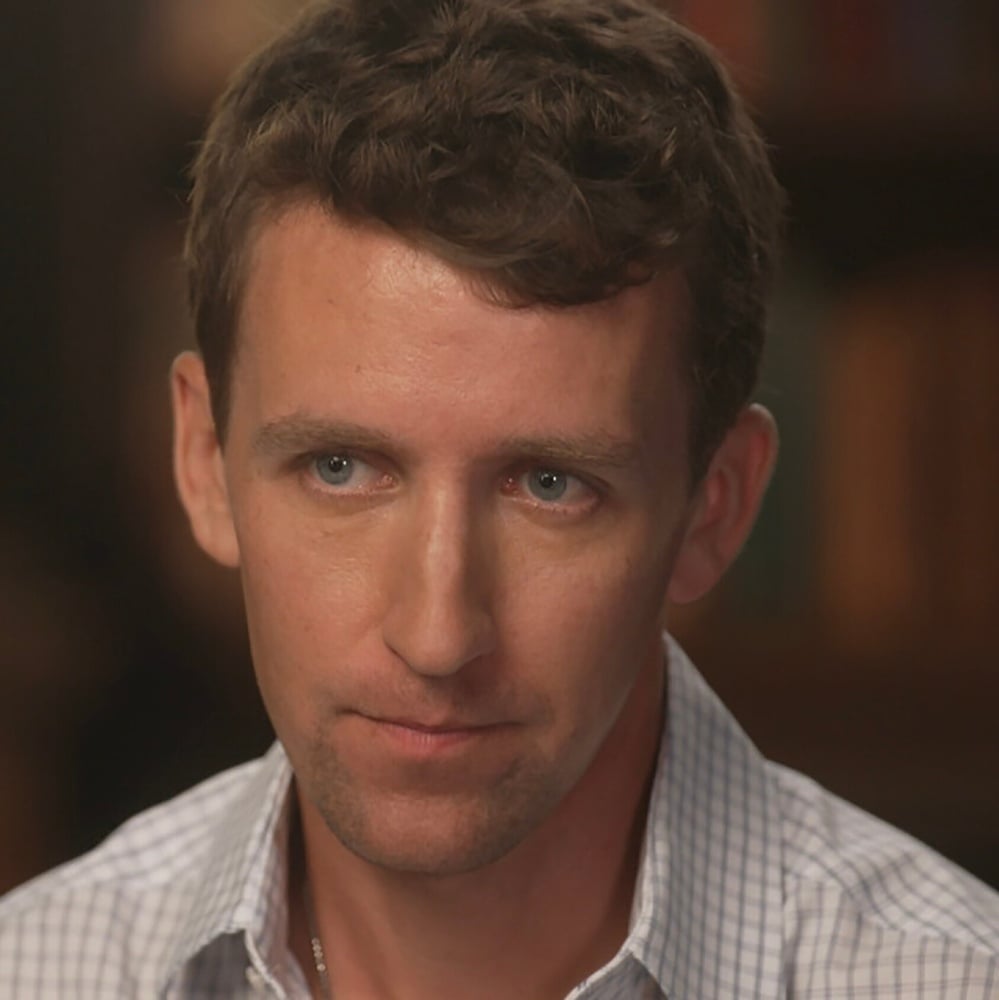
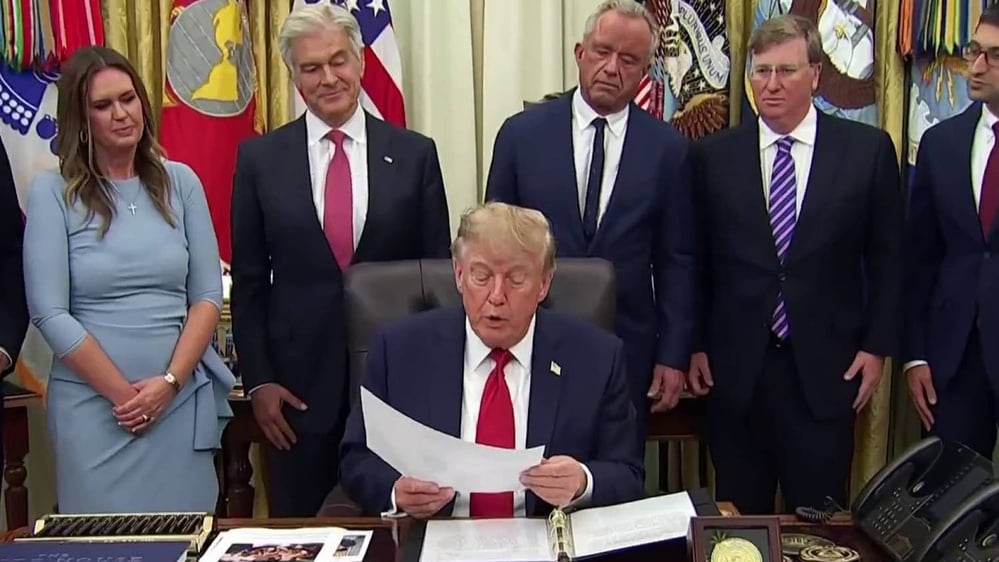
2026 © Helium Trades
Privacy Policy & Disclosure
* Disclaimer: Nothing on this website constitutes investment advice, performance data or any recommendation that any particular security, portfolio of securities, transaction or investment strategy is suitable for any specific person. Helium Trades is not responsible in any way for the accuracy
of any model predictions or price data. Any mention of a particular security and related prediction data is not a recommendation to buy or sell that security. Investments in securities involve the risk of loss. Past performance is no guarantee of future results. Helium Trades is not responsible for any of your investment decisions,
you should consult a financial expert before engaging in any transaction.
Helium Research Assistant

How can I help you today?
Ask any question about this page.


