See whether Helium helps you make better-informed decisions. Try every Pro Trader feature for 30 days. No credit card required.
Try every Pro Trader feature for 30 days. No credit card required.
August 22, 2026 · 0 shares
Framed as a decisive U.S. response to Canadian discriminatory trade practices, attributing the breakdown to Canada's refusal to finalize a deal and including a leading poll on foreign land ownership.
Automated analysis; not human reviewed.
Limitations: Limited to a single news source with a clear editorial slant; no independent verification or Canadian perspective included.
·
10 of 54 available dimensions scored; omitted dimensions are not treated as neutral.
·
Verified supporting quotes for 5 of 10 scored dimensions.
Claim: The article frames the U.S. tariff action as a justified response to Canadian discrimination, aligning with conservative/nationalist perspectives.
“Tonight, Canada declined to finalize the trade deal under the terms agreed this week.” · not found in supplied text
“Canada is continuing to maintain its prolonged retaliation against the United States, including, among other things, flat out prohibitions on certain American goods and services.” · not found in supplied text
Why: The quotes attribute the breakdown to Canada's intransigence and highlight U.S. offers, while the poll question further signals conservative nationalist concerns.
Claim: The article appeals to populist sentiment through a leading poll on foreign land ownership.
“POLL: Should Foreigners Be Banned From Buying American Farmland?” · exact text match
Why: The poll question directly taps into anti-foreign, populist sentiment, implying a distrust of international ownership.
Claim: The article endorses a government-imposed tariff regime and a restrictive immigration/land ownership stance, leaning authoritarian.
“The United States on Saturday evening implemented 50 percent tariffs on a range of Canadian goods” · exact text match
“POLL: Should Foreigners Be Banned From Buying American Farmland?” · exact text match
Why: The tariffs are an authoritarian state intervention, and the poll suggests support for restricting foreign purchases.
Claim: The report is one-sided, presenting only the U.S. perspective and omitting any Canadian response.
“Tonight, Canada declined to finalize the trade deal under the terms agreed this week.” · not found in supplied text
Why: The USTR statement is quoted without counterpoint, and no Canadian officials are cited, indicating subjective framing.
Claim: The article injects opinion through a leading poll and the framing of Canada as the culprit.
“POLL: Should Foreigners Be Banned From Buying American Farmland?” · exact text match
Why: The poll question is a provocative opinion prompt rather than neutral factual reporting.
Claim: The article is heavily political, covering a partisan trade dispute and including a politically charged poll.
“Tonight, Canada declined to finalize the trade deal under the terms agreed this week.” · not found in supplied text
Why: The content revolves around presidential actions and trade negotiations, with explicit political commentary from the USTR.
Claim: The breakdown is reduced to Canada's refusal, ignoring complexity or potential mutual fault.
“Tonight, Canada declined to finalize the trade deal under the terms agreed this week.” · not found in supplied text
Why: This statement presents a single cause without acknowledging other factors or nuances in the negotiations.
Claim: The article covers only the U.S. response, omitting any Canadian government perspective or reaction.
“In addition, Canada is continuing to maintain its prolonged retaliation against the United States, including, among other things, flat out prohibitions on certain American goods and services.” · not found in supplied text
Why: The USTR's statement is the only response quoted; no Canadian official is cited, showing an asymmetric focus.
Claim: The article reflects a nationalist, protectionist ideology through its framing and poll.
“POLL: Should Foreigners Be Banned From Buying American Farmland?” · exact text match
Why: The poll's premise and the emphasis on U.S. sacrifice suggest a specific ideological lens.
Claim: The article uses a leading poll question to shape reader opinion, a manipulative technique.
“POLL: Should Foreigners Be Banned From Buying American Farmland?” · exact text match
Why: The poll is framed with a biased 'should be banned' question, likely intended to influence rather than inform.
Limited to a single news source with a clear editorial slant; no independent verification or Canadian perspective included.
August 24, 2026 · 0 shares
The framing casts the tariffs as a narrowly targeted trade action with modest price effects, relying on trade-expert and official-source attribution rather than independent analysis.
Automated analysis; not human reviewed.
Limitations: Analysis is based solely on the supplied article text; the cited statistics and legal interpretations were not independently verified.
·
4 of 54 available dimensions scored; omitted dimensions are not treated as neutral.
·
Verified supporting quotes for 4 of 4 scored dimensions.
Claim: The report is largely objective, attributing claims and forecasts to named experts and institutional sources rather than presenting them as the publisher's own assertions.
“trade experts said” · exact text match
“research by the nonpartisan Tax Foundation found” · exact text match
“according to the White House” · exact text match
Counterevidence:
“Why Trump's Canada tariffs are likely to have a modest impact on U.S. prices” · exact text match
Why: Most substantive claims are attributed, but the headline frames the tariffs' impact as modest before the body attributes that expectation to experts.
Claim: The article uses cautious, non-alarming language and notes limiting conditions rather than dramatizing the tariffs.
“unlikely to trigger a broader spike in inflation” · exact text match
“would cause immediate, economy-wide upheaval” · exact text match
Why: The central forecast is hedged with 'likely' and 'could,' and the scope is explicitly narrowed as a share of exports.
Claim: The report demonstrates strong attribution, named expert sourcing, and reference to institutional research and official documents.
“trade attorney Patrick Childress, a partner at law firm Holland & Knight” · exact text match
“research by the nonpartisan Tax Foundation found” · exact text match
“The White House stated in a document published to the Federal Register” · exact text match
Why: Claims are attributed to specific experts and institutions, and the article includes uncertainty and qualification, supporting high observable credibility.
Claim: The article's central content is a forecast about the likely price and inflation effects of the tariffs, even though attributed to trade experts.
“likely to have a modest impact on U.S. prices” · exact text match
“could raise their prices” · exact text match
“unlikely to trigger a broader spike in inflation” · exact text match
Why: The headline and subhead present a predicted outcome rather than a confirmed result, with conditional and probability language.
Analysis is based solely on the supplied article text; the cited statistics and legal interpretations were not independently verified.
Uses a flippant, mocking tone and an extended dating metaphor to portray the U.S.-Canada trade talks as arbitrary and coercive, minimizing the reported deal and asserting that Canada is unified in resisting.
The US had threatened major tariffs on Canadian imports, escalating a trade dispute between the two countries.
Automated analysis; not human reviewed.
Limitations: Everything is based on the content of this single column, which is an opinion piece; thus, no independent verification was possible.
·
27 of 54 available dimensions scored; omitted dimensions are not treated as neutral.
·
Verified supporting quotes for 20 of 27 scored dimensions.
Claim: The article uses a critical and mocking tone towards former President Trump and his administration.
“He’s also called China cheats, rip-off artists, and a “total disaster” in past remarks.” · not found in supplied text
“It’s like a departure board for a flight in hurricane season.” · exact text match
Why: The writing consistently frames Trump's actions and statements in a negative, unflattering light.
Claim: The article employs a populist, anti-elite tone, mocking both political leaders and the 'pro-US' Canadian establishment.
“No wonder Canadians are willing to wait out the drama and honestly don’t even care if a deal is ever made.” · exact text match
“It’s like telling a woman that she must date you and not anyone else because you’re the safest choice.” · not found in supplied text
Why: It positions ordinary Canadians as victims unified against an arrogant US elite and their own out-of-touch leaders.
Claim: The piece is a subjective, opinion-driven commentary rather than an objective news report.
“So, yes: Canada and Trump have a deal.
Unless something changes.
Like the direction of the wind.”
· exact text match
“That’s like telling a woman that she must date you and not anyone else because you’re the safest choice.” · exact text match
Why: The language is openly opinionated, hyperbolic, and focuses on interpretation over dispassionate fact-telling.
Claim: The article conveys a pessimistic and cynical view of the US administration's approach and the deal's integrity.
“and the frustration over being denied, as repeatedly exhibited by his Ambassador to Ottawa, Pete Hoekstra – has also served to draw Canadians’ attention to the potential ways that American and other foreign interests have been actively supporting separatist groups” · not found in supplied text
“It’s actually more like a three-day free trial that can be cancelled anytime before it ends.
Or even after.”
· exact text match
Why: The language suggests deep distrust and inevitable breakdown, framing the truce as futile.
Claim: The article uses vivid and sarcastic metaphors to engage the reader on the subject of the trade deal.
“It’s like a departure board for a flight in hurricane season.” · exact text match
“It’s like telling a woman that she must date you and not anyone else because you’re the safest choice.” · not found in supplied text
Why: The writing is designed to be compelling and engaging through satirical language.
Claim: The article is critical of US coercive measures and frames trade as a matter of bullying, rather than a standard security issue.
“Why even negotiate with Canada if that’s the case.” · exact text match
“Does Mr. Security threaten to violate you against your multiple attempts to rebuff his advances” · exact text match
Why: It portrays US actions as aggressive and coercive, contrasting its demands with a more reasonable Canadian position.
Claim: The article uses manipulative language about sovereignty being 'hang[ing]' in the balance to create a sense of threat.
“Trump's three-day Canada tariff truce leaves trade, USMCA, F-35s, critical minerals and sovereignty hanging on his next mood swing” · verified after text normalization
Why: While it criticizes the situation as alarming, the tone is more cynical than overtly fearful or scary.
Claim: The article's analysis relies on a characterization of US motivations and Canadian victimhood without foundational support.
“It’s like the guy blowing up your phone asking for a date while insisting that he has better offers on the table than you.” · exact text match
Why: It presumes an underlying, manipulative motivation for US actions that aligns with a particular interpretation of events.
Claim: The article discusses the trade dispute through the personal and character-focused lens of a relationship spat.
“Does Mr. Security threaten to violate you against your multiple attempts to rebuff his advances” · exact text match
Why: Focuses on the personal 'mood swing' and relationship dynamics of the leaders rather than policy specifics.
Claim: The article is prominently an opinion piece, relying on satirical commentary and personal interpretation rather than objective reporting.
“Whoops, here we go already.
Canada has already disputed the existence of any deal.”
· exact text match
“So, yes: Canada and Trump have a deal.
Unless something changes.
Like the direction of the wind.”
· exact text match
Why: Use of first-person plural ('we') and overt sarcasm clearly marks this as opinion content.
Claim: The article is inherently political, focusing extensively on trade policy and national sovereignty.
“The trade spat with the US was also the catalyst needed for the various Canadian provinces to do away with their own provincial protectionist barriers” · exact text match
“Canadian petition on the parliamentary website states.” · exact text match
Why: Central topics include dealings with the US president, trade policy, and domestic Canadian political unity.
Claim: The article simplifies complex geopolitical and trade negotiations into a binary dynamic of US aggression versus Canadian resilience.
“No wonder Canadians are willing to wait out the drama and honestly don’t even care if a deal is ever made.” · exact text match
Why: It dismisses the possibility of good faith or strategic rationales for the trade negotiations.
Claim: The article makes definitive predictions about Canadian public sentiment and the outcome of the talks.
“No wonder Canadians are willing to wait out the drama and honestly don’t even care if a deal is ever made.” · exact text match
Why: The claim that 'no wonder' applies to the whole Canadian population overreaches the available data.
Claim: The article's content is not spam or advertising.
“Does Mr. Security threaten to violate you against your multiple attempts to rebuff his advances, as Trump did in repeatedly riffing about making Canada the “51st state”” · exact text match
Why: The text is primarily original content.
Claim: The article is infused with a specific ideological perspective on national sovereignty and the exploitation of smaller nations by the US
“What’s stopping you? If you’re still camping out on the lawn, then there must be something that you really want and need – regardless of the accompanying rhetoric suggesting otherwise.” · exact text match
Why: It applies a consistent ideological lens that casts the US and its actions as inherently dominant and exploitative.
Claim: The article is strongly anti-establishment and critical of the pro-US Canadian political elite.
“It’s finally awoken even the most sycophantic pro-US Canadians to its vassal status reality through historical kowtowing to Washington’s demands.” · exact text match
“just a few years ago, anyone talking about diversifying interests away from US over-dependence and speaking publicly about how the US-centric world is over, would have immediately been branded some kind of foreign agent” · not found in supplied text
Why: It frames Canada's past leadership as servile enablers and critiques the US-led order from an outsider perspective.
Claim: The article serves to reinforce an in-group (victimized Canada) versus out-group (bullying US) dynamic.
“No wonder Canadians are willing to wait out the drama and honestly don’t even care if a deal is ever made.” · exact text match
“It’s actually more like a three-day free trial that can be cancelled anytime before it ends.
Or even after.”
· exact text match
Why: The strong 'us vs. them' framing with distinct negative connotations for the out-group illustrates this bias.
Claim: The article's credibility is undermined by its heavy use of opinion and sarcasm but references specific facts and polls.
“A total of 66% certain that Trump wouldn’t honor it anyway, according to an Abacus poll.” · not found in supplied text
“according to the Globe and Mail.” · exact text match
Why: The use of citations to major publications and polling helps ground the article in facts, despite its strong opinionated tone.
Claim: The article presents the US trade policy as capricious and irrational, driven by mood rather than reason.
“The reality is that most exports to the US from Canada are already covered under a North American free trade agreement” · exact text match
“Trump's three-day Canada tariff truce leaves trade, USMCA, F-35s, critical minerals and sovereignty hanging on his next mood swing” · verified after text normalization
Why: It characterizes negotiations as a 'mood swing' and suggests US actions are arbitrary and without logical basis.
Claim: The article criticizes US individualism and isolationist policies, and appreciates Canada's collective spirit.
“In fact, this entire charade has made Canada more unified and stronger than ever.” · exact text match
Why: The focus is on the collective strength and unity of Canada as a nation against US pressure.
Claim: The article speculates on the strategic motivations and outcomes of the trade dispute.
“Best to check that reservation again before leaving the house, though.” · exact text match
“It’s actually more like a three-day free trial that can be cancelled anytime before it ends.
Or even after.”
· exact text match
Why: The piece is largely speculative and predictive about the future of the deal.
Claim: The article is written by a human.
“By Rachel Marsden, a columnist, political strategist, and host of independently produced talk-shows in French and English.” · exact text match
Why: The writing style is highly idiosyncratic and irreverent, making AI authorship a very low probability.
Claim: The article contains thoughtful analysis of US-Canada relations and political dynamics, despite its satirical style.
“In fact, this entire charade has made Canada more unified and stronger than ever.” · exact text match
Why: The author demonstrates knowledge of trade and sovereignty issues, but the reasoning is often undercut by a mocking, one-sided tone.
Claim: The piece frames a particular narrative of Canadian invulnerability and unity that might simplify a more complex reality.
“It’s finally awoken even the most sycophantic pro-US Canadians to its vassal status reality through historical kowtowing to Washington’s demands.” · exact text match
Why: It sets up a very black-and-white narrative that might not fully account for all perspectives.
Claim: The article's use of an extended and belittling dating metaphor trivializes the stakes of the trade negotiations.
“It’s like telling a woman that she must date you and not anyone else because you’re the safest choice.” · not found in supplied text
Why: This metaphor reduces a serious geopolitical and economic negotiation to a coercive personal relationship.
Claim: The article signals a morally admirable 'Canada is united and strong' stance.
“In fact, this entire charade has made Canada more unified and stronger than ever.” · exact text match
Why: The framing may be seen as virtue signaling a strong Canadian identity against an American bully.
Claim: The article scapegoats a U.S.-led campaign for Canadian issues, framing the U.S. as the prime instigator.
“Trump’s desire for Canadian assets – and the frustration over being denied, as repeatedly exhibited by his Ambassador to Ottawa, Pete Hoekstra – has also served to draw Canadians’ attention to the various potential ways that American and other foreign interests have been actively supporting separatist groups” · exact text match
Why: Assigns blame for Canadian domestic political issues to US interference.
Everything is based on the content of this single column, which is an opinion piece; thus, no independent verification was possible.
August 22, 2026 · 0 shares
Framed as a decisive U.S. response to Canadian discriminatory trade practices, attributing the breakdown to Canada's refusal to finalize a deal and including a leading poll on foreign land ownership.
Automated analysis; not human reviewed.
Limitations: Limited to a single news source with a clear editorial slant; no independent verification or Canadian perspective included.
·
10 of 54 available dimensions scored; omitted dimensions are not treated as neutral.
·
Verified supporting quotes for 5 of 10 scored dimensions.
Claim: The article frames the U.S. tariff action as a justified response to Canadian discrimination, aligning with conservative/nationalist perspectives.
“Tonight, Canada declined to finalize the trade deal under the terms agreed this week.” · not found in supplied text
“Canada is continuing to maintain its prolonged retaliation against the United States, including, among other things, flat out prohibitions on certain American goods and services.” · not found in supplied text
Why: The quotes attribute the breakdown to Canada's intransigence and highlight U.S. offers, while the poll question further signals conservative nationalist concerns.
Claim: The article appeals to populist sentiment through a leading poll on foreign land ownership.
“POLL: Should Foreigners Be Banned From Buying American Farmland?” · exact text match
Why: The poll question directly taps into anti-foreign, populist sentiment, implying a distrust of international ownership.
Claim: The article endorses a government-imposed tariff regime and a restrictive immigration/land ownership stance, leaning authoritarian.
“The United States on Saturday evening implemented 50 percent tariffs on a range of Canadian goods” · exact text match
“POLL: Should Foreigners Be Banned From Buying American Farmland?” · exact text match
Why: The tariffs are an authoritarian state intervention, and the poll suggests support for restricting foreign purchases.
Claim: The report is one-sided, presenting only the U.S. perspective and omitting any Canadian response.
“Tonight, Canada declined to finalize the trade deal under the terms agreed this week.” · not found in supplied text
Why: The USTR statement is quoted without counterpoint, and no Canadian officials are cited, indicating subjective framing.
Claim: The article injects opinion through a leading poll and the framing of Canada as the culprit.
“POLL: Should Foreigners Be Banned From Buying American Farmland?” · exact text match
Why: The poll question is a provocative opinion prompt rather than neutral factual reporting.
Claim: The article is heavily political, covering a partisan trade dispute and including a politically charged poll.
“Tonight, Canada declined to finalize the trade deal under the terms agreed this week.” · not found in supplied text
Why: The content revolves around presidential actions and trade negotiations, with explicit political commentary from the USTR.
Claim: The breakdown is reduced to Canada's refusal, ignoring complexity or potential mutual fault.
“Tonight, Canada declined to finalize the trade deal under the terms agreed this week.” · not found in supplied text
Why: This statement presents a single cause without acknowledging other factors or nuances in the negotiations.
Claim: The article covers only the U.S. response, omitting any Canadian government perspective or reaction.
“In addition, Canada is continuing to maintain its prolonged retaliation against the United States, including, among other things, flat out prohibitions on certain American goods and services.” · not found in supplied text
Why: The USTR's statement is the only response quoted; no Canadian official is cited, showing an asymmetric focus.
Claim: The article reflects a nationalist, protectionist ideology through its framing and poll.
“POLL: Should Foreigners Be Banned From Buying American Farmland?” · exact text match
Why: The poll's premise and the emphasis on U.S. sacrifice suggest a specific ideological lens.
Claim: The article uses a leading poll question to shape reader opinion, a manipulative technique.
“POLL: Should Foreigners Be Banned From Buying American Farmland?” · exact text match
Why: The poll is framed with a biased 'should be banned' question, likely intended to influence rather than inform.
Limited to a single news source with a clear editorial slant; no independent verification or Canadian perspective included.
August 23, 2026 · 0 shares
The text presents a neutral factual announcement of Canada's retaliatory tariffs without editorializing.
Automated analysis; not human reviewed.
Limitations: The article text is extremely brief, consisting only of a headline and a single sentence, limiting analysis.
·
1 of 54 available dimensions scored; omitted dimensions are not treated as neutral.
·
Verified supporting quotes for 1 of 1 scored dimensions.
Claim: The report is objectively neutral in tone and presentation.
“Canada announces retaliatory tariffs on U.S. after negotiations collapse.” · exact text match
Why: The sentence is a factual, unopinionated statement of an event, with no evaluative language.
The article text is extremely brief, consisting only of a headline and a single sentence, limiting analysis.
August 22, 2026 · 0 shares
The report uses balanced, attributed sourcing but frames the tariff dispute as a sharp, historically unusual rupture driven by Trump administration policy.
The U.S. and Canada are close allies and major trading partners, with nearly $880 billion in two-way goods and services trade last year; Trump has made tariffs central to his second-term economic agenda, and the two countries are also dealing with USMCA renewal and recent Supreme Court limits on tariff authority.
Automated analysis; not human reviewed. Limitations: The supplied text is a wire report rather than original editorial content; the analysis cannot assess the publisher's selection or framing beyond this single article.
The supplied text is a wire report rather than original editorial content; the analysis cannot assess the publisher's selection or framing beyond this single article.
August 22, 2026 · 0 shares
The coverage adopts an explanatory, nonpartisan stance, attributing effects to expert and official sources and using hedged language such as "could" and "isn't clear yet" rather than taking sides.
Automated analysis; not human reviewed.
Limitations: No absolute publication date is given, so "Saturday" and "Sept.
8" cannot be anchored to a calendar year.
·
4 of 54 available dimensions scored; omitted dimensions are not treated as neutral.
·
Verified supporting quotes for 2 of 4 scored dimensions.
Claim: No partisan preference; reports costs on both U.S. and Canadian sides.
“In the short run, it’s not good for U.S. consumers and North Carolina consumers who are buying some Canadian products, and it’s not good for North Carolina producers who are selling things to Canada," Walden said.” · verified after text normalization
“It's a lose-lose situation... It’s a lose for, in this case, the U.S., and it’s a lose for Canada," Walden said.” · not found in supplied text
Why: The selection presents a balanced economic impact without endorsing a party or ideology.
Claim: Uses attributed expert and official sources with conditional language rather than injecting opinion.
“Countries impose a tariff in order to try to make foreign products more expensive and thereby allow people, or motivate people in their country, to buy those products here," N.C. State Economist Mike Walden said.” · verified after text normalization
“Canada is expected to release a full list of tariffed products in the coming days, so the full impact on North Carolina isn't clear yet.” · exact text match
Why: The report relies on economist quotations and official data, and explicitly notes uncertainty, showing no subjective editorializing.
Claim: Neutral, unemotional tone throughout.
“So the full impact on North Carolina isn't clear yet.” · not found in supplied text
“The affected goods account for about 5% of Canada’s exports to the United States.” · exact text match
Why: Statements are factual and hedged; no emotional or charged language observed.
Claim: Strong visible sourcing, attribution, and acknowledgment of uncertainty.
“according to 2025 data from the Office of the United States Trade Representative (USTR)” · exact text match
“according to the Economic Development Partnership of North Carolina.” · exact text match
Why: Named institutions, attributed statistics, and hedged future impact increase credibility.
No absolute publication date is given, so "Saturday" and "Sept.
8" cannot be anchored to a calendar year.
August 22, 2026 · 0 shares
The report uses balanced, attributed sourcing but frames the tariff dispute as a sharp, historically unusual rupture driven by Trump administration policy.
The U.S. and Canada are close allies and major trading partners, with nearly $880 billion in two-way goods and services trade last year; Trump has made tariffs central to his second-term economic agenda, and the two countries are also dealing with USMCA renewal and recent Supreme Court limits on tariff authority.
Automated analysis; not human reviewed. Limitations: The supplied text is a wire report rather than original editorial content; the analysis cannot assess the publisher's selection or framing beyond this single article.
The supplied text is a wire report rather than original editorial content; the analysis cannot assess the publisher's selection or framing beyond this single article.
August 24, 2026 · 0 shares
The framing casts the tariffs as a narrowly targeted trade action with modest price effects, relying on trade-expert and official-source attribution rather than independent analysis.
Automated analysis; not human reviewed.
Limitations: Analysis is based solely on the supplied article text; the cited statistics and legal interpretations were not independently verified.
·
4 of 54 available dimensions scored; omitted dimensions are not treated as neutral.
·
Verified supporting quotes for 4 of 4 scored dimensions.
Claim: The report is largely objective, attributing claims and forecasts to named experts and institutional sources rather than presenting them as the publisher's own assertions.
“trade experts said” · exact text match
“research by the nonpartisan Tax Foundation found” · exact text match
“according to the White House” · exact text match
Counterevidence:
“Why Trump's Canada tariffs are likely to have a modest impact on U.S. prices” · exact text match
Why: Most substantive claims are attributed, but the headline frames the tariffs' impact as modest before the body attributes that expectation to experts.
Claim: The article uses cautious, non-alarming language and notes limiting conditions rather than dramatizing the tariffs.
“unlikely to trigger a broader spike in inflation” · exact text match
“would cause immediate, economy-wide upheaval” · exact text match
Why: The central forecast is hedged with 'likely' and 'could,' and the scope is explicitly narrowed as a share of exports.
Claim: The report demonstrates strong attribution, named expert sourcing, and reference to institutional research and official documents.
“trade attorney Patrick Childress, a partner at law firm Holland & Knight” · exact text match
“research by the nonpartisan Tax Foundation found” · exact text match
“The White House stated in a document published to the Federal Register” · exact text match
Why: Claims are attributed to specific experts and institutions, and the article includes uncertainty and qualification, supporting high observable credibility.
Claim: The article's central content is a forecast about the likely price and inflation effects of the tariffs, even though attributed to trade experts.
“likely to have a modest impact on U.S. prices” · exact text match
“could raise their prices” · exact text match
“unlikely to trigger a broader spike in inflation” · exact text match
Why: The headline and subhead present a predicted outcome rather than a confirmed result, with conditional and probability language.
Analysis is based solely on the supplied article text; the cited statistics and legal interpretations were not independently verified.
August 24, 2026 · 0 shares
The framing casts the tariffs as a narrowly targeted trade action with modest price effects, relying on trade-expert and official-source attribution rather than independent analysis.
Automated analysis; not human reviewed.
Limitations: Analysis is based solely on the supplied article text; the cited statistics and legal interpretations were not independently verified.
·
4 of 54 available dimensions scored; omitted dimensions are not treated as neutral.
·
Verified supporting quotes for 4 of 4 scored dimensions.
Claim: The report is largely objective, attributing claims and forecasts to named experts and institutional sources rather than presenting them as the publisher's own assertions.
“trade experts said” · exact text match
“research by the nonpartisan Tax Foundation found” · exact text match
“according to the White House” · exact text match
Counterevidence:
“Why Trump's Canada tariffs are likely to have a modest impact on U.S. prices” · exact text match
Why: Most substantive claims are attributed, but the headline frames the tariffs' impact as modest before the body attributes that expectation to experts.
Claim: The article uses cautious, non-alarming language and notes limiting conditions rather than dramatizing the tariffs.
“unlikely to trigger a broader spike in inflation” · exact text match
“would cause immediate, economy-wide upheaval” · exact text match
Why: The central forecast is hedged with 'likely' and 'could,' and the scope is explicitly narrowed as a share of exports.
Claim: The report demonstrates strong attribution, named expert sourcing, and reference to institutional research and official documents.
“trade attorney Patrick Childress, a partner at law firm Holland & Knight” · exact text match
“research by the nonpartisan Tax Foundation found” · exact text match
“The White House stated in a document published to the Federal Register” · exact text match
Why: Claims are attributed to specific experts and institutions, and the article includes uncertainty and qualification, supporting high observable credibility.
Claim: The article's central content is a forecast about the likely price and inflation effects of the tariffs, even though attributed to trade experts.
“likely to have a modest impact on U.S. prices” · exact text match
“could raise their prices” · exact text match
“unlikely to trigger a broader spike in inflation” · exact text match
Why: The headline and subhead present a predicted outcome rather than a confirmed result, with conditional and probability language.
Analysis is based solely on the supplied article text; the cited statistics and legal interpretations were not independently verified.
August 24, 2026 · 0 shares
Presents the tariff dispute as an inflation risk that could politically damage the Trump administration, while attributing claims to analysts and polls.
Automated analysis; not human reviewed.
Limitations: Only a brief snippet was provided.
·
5 of 54 available dimensions scored; omitted dimensions are not treated as neutral.
·
Verified supporting quotes for 5 of 5 scored dimensions.
Claim: The article maintains an objective tone, reporting events and attributed analysis without editorializing.
“Though the US levies only apply to a subset of Canadian goods, the move could add to price rises sparked by the war in Iran.” · exact text match
Why: The sentence presents a conditional economic consequence factually.
Claim: The article does not employ sensationalist language or exaggeration.
“The moves come as US President Donald Trump’s approval on the economy plummets: A recent poll showed more than half of respondents said they felt “worse off” financially since the start of his second term.” · exact text match
Why: The poll result is stated plainly without dramatic embellishment.
Claim: The article engages in rational, evidence-based reporting rather than emotional or fallacious reasoning.
“Canada vowed to match 50% US tariffs after talks broke down over the weekend.” · exact text match
Why: The statement is factual and straightforward without emotional language.
Claim: The article contains speculative forecasting about inflation effects.
“could stoke inflation” · exact text match
Why: The use of 'could' explicitly indicates uncertainty and speculation about future outcomes.
Claim: The article shows high integrity by attributing claims to sources and referencing a poll.
“an analyst at the libertarian Cato Institute argued” · exact text match
“A recent poll showed more than half of respondents said they felt “worse off” financially” · exact text match
Why: Attribution and poll referencing demonstrate transparency and honesty.
Only a brief snippet was provided.
August 22, 2026 · 0 shares
Framed as a decisive U.S. response to Canadian discriminatory trade practices, attributing the breakdown to Canada's refusal to finalize a deal and including a leading poll on foreign land ownership.
Automated analysis; not human reviewed. Limitations: Limited to a single news source with a clear editorial slant; no independent verification or Canadian perspective included. · 10 of 54 available dimensions scored; omitted dimensions are not treated as neutral. · Verified supporting quotes for 5 of 10 scored dimensions.
Claim: The article frames the U.S. tariff action as a justified response to Canadian discrimination, aligning with conservative/nationalist perspectives.
“Tonight, Canada declined to finalize the trade deal under the terms agreed this week.” · not found in supplied text
“Canada is continuing to maintain its prolonged retaliation against the United States, including, among other things, flat out prohibitions on certain American goods and services.” · not found in supplied text
Why: The quotes attribute the breakdown to Canada's intransigence and highlight U.S. offers, while the poll question further signals conservative nationalist concerns.
Claim: The article appeals to populist sentiment through a leading poll on foreign land ownership.
“POLL: Should Foreigners Be Banned From Buying American Farmland?” · exact text match
Why: The poll question directly taps into anti-foreign, populist sentiment, implying a distrust of international ownership.
Claim: The article endorses a government-imposed tariff regime and a restrictive immigration/land ownership stance, leaning authoritarian.
“The United States on Saturday evening implemented 50 percent tariffs on a range of Canadian goods” · exact text match
“POLL: Should Foreigners Be Banned From Buying American Farmland?” · exact text match
Why: The tariffs are an authoritarian state intervention, and the poll suggests support for restricting foreign purchases.
Claim: The report is one-sided, presenting only the U.S. perspective and omitting any Canadian response.
“Tonight, Canada declined to finalize the trade deal under the terms agreed this week.” · not found in supplied text
Why: The USTR statement is quoted without counterpoint, and no Canadian officials are cited, indicating subjective framing.
Claim: The article injects opinion through a leading poll and the framing of Canada as the culprit.
“POLL: Should Foreigners Be Banned From Buying American Farmland?” · exact text match
Why: The poll question is a provocative opinion prompt rather than neutral factual reporting.
Claim: The article is heavily political, covering a partisan trade dispute and including a politically charged poll.
“Tonight, Canada declined to finalize the trade deal under the terms agreed this week.” · not found in supplied text
Why: The content revolves around presidential actions and trade negotiations, with explicit political commentary from the USTR.
Claim: The breakdown is reduced to Canada's refusal, ignoring complexity or potential mutual fault.
“Tonight, Canada declined to finalize the trade deal under the terms agreed this week.” · not found in supplied text
Why: This statement presents a single cause without acknowledging other factors or nuances in the negotiations.
Claim: The article covers only the U.S. response, omitting any Canadian government perspective or reaction.
“In addition, Canada is continuing to maintain its prolonged retaliation against the United States, including, among other things, flat out prohibitions on certain American goods and services.” · not found in supplied text
Why: The USTR's statement is the only response quoted; no Canadian official is cited, showing an asymmetric focus.
Claim: The article reflects a nationalist, protectionist ideology through its framing and poll.
“POLL: Should Foreigners Be Banned From Buying American Farmland?” · exact text match
Why: The poll's premise and the emphasis on U.S. sacrifice suggest a specific ideological lens.
Claim: The article uses a leading poll question to shape reader opinion, a manipulative technique.
“POLL: Should Foreigners Be Banned From Buying American Farmland?” · exact text match
Why: The poll is framed with a biased 'should be banned' question, likely intended to influence rather than inform.
Limited to a single news source with a clear editorial slant; no independent verification or Canadian perspective included.
August 23, 2026 · 0 shares
The text presents a neutral factual announcement of Canada's retaliatory tariffs without editorializing.
Automated analysis; not human reviewed. Limitations: The article text is extremely brief, consisting only of a headline and a single sentence, limiting analysis. · 1 of 54 available dimensions scored; omitted dimensions are not treated as neutral. · Verified supporting quotes for 1 of 1 scored dimensions.
Claim: The report is objectively neutral in tone and presentation.
“Canada announces retaliatory tariffs on U.S. after negotiations collapse.” · exact text match
Why: The sentence is a factual, unopinionated statement of an event, with no evaluative language.
The article text is extremely brief, consisting only of a headline and a single sentence, limiting analysis.
August 22, 2026 · 0 shares
The report uses balanced, attributed sourcing but frames the tariff dispute as a sharp, historically unusual rupture driven by Trump administration policy.
The U.S. and Canada are close allies and major trading partners, with nearly $880 billion in two-way goods and services trade last year; Trump has made tariffs central to his second-term economic agenda, and the two countries are also dealing with USMCA renewal and recent Supreme Court limits on tariff authority.
Automated analysis; not human reviewed. Limitations: The supplied text is a wire report rather than original editorial content; the analysis cannot assess the publisher's selection or framing beyond this single article.
The supplied text is a wire report rather than original editorial content; the analysis cannot assess the publisher's selection or framing beyond this single article.
August 22, 2026 · 0 shares
The report uses balanced, attributed sourcing but frames the tariff dispute as a sharp, historically unusual rupture driven by Trump administration policy.
The U.S. and Canada are close allies and major trading partners, with nearly $880 billion in two-way goods and services trade last year; Trump has made tariffs central to his second-term economic agenda, and the two countries are also dealing with USMCA renewal and recent Supreme Court limits on tariff authority.
Automated analysis; not human reviewed. Limitations: The supplied text is a wire report rather than original editorial content; the analysis cannot assess the publisher's selection or framing beyond this single article.
The supplied text is a wire report rather than original editorial content; the analysis cannot assess the publisher's selection or framing beyond this single article.
August 22, 2026 · 0 shares
The coverage adopts an explanatory, nonpartisan stance, attributing effects to expert and official sources and using hedged language such as "could" and "isn't clear yet" rather than taking sides.
Automated analysis; not human reviewed. Limitations: No absolute publication date is given, so "Saturday" and "Sept. 8" cannot be anchored to a calendar year. · 4 of 54 available dimensions scored; omitted dimensions are not treated as neutral. · Verified supporting quotes for 2 of 4 scored dimensions.
Claim: No partisan preference; reports costs on both U.S. and Canadian sides.
“In the short run, it’s not good for U.S. consumers and North Carolina consumers who are buying some Canadian products, and it’s not good for North Carolina producers who are selling things to Canada," Walden said.” · verified after text normalization
“It's a lose-lose situation... It’s a lose for, in this case, the U.S., and it’s a lose for Canada," Walden said.” · not found in supplied text
Why: The selection presents a balanced economic impact without endorsing a party or ideology.
Claim: Uses attributed expert and official sources with conditional language rather than injecting opinion.
“Countries impose a tariff in order to try to make foreign products more expensive and thereby allow people, or motivate people in their country, to buy those products here," N.C. State Economist Mike Walden said.” · verified after text normalization
“Canada is expected to release a full list of tariffed products in the coming days, so the full impact on North Carolina isn't clear yet.” · exact text match
Why: The report relies on economist quotations and official data, and explicitly notes uncertainty, showing no subjective editorializing.
Claim: Neutral, unemotional tone throughout.
“So the full impact on North Carolina isn't clear yet.” · not found in supplied text
“The affected goods account for about 5% of Canada’s exports to the United States.” · exact text match
Why: Statements are factual and hedged; no emotional or charged language observed.
Claim: Strong visible sourcing, attribution, and acknowledgment of uncertainty.
“according to 2025 data from the Office of the United States Trade Representative (USTR)” · exact text match
“according to the Economic Development Partnership of North Carolina.” · exact text match
Why: Named institutions, attributed statistics, and hedged future impact increase credibility.
No absolute publication date is given, so "Saturday" and "Sept. 8" cannot be anchored to a calendar year.
August 24, 2026 · 0 shares
The framing casts the tariffs as a narrowly targeted trade action with modest price effects, relying on trade-expert and official-source attribution rather than independent analysis.
Automated analysis; not human reviewed. Limitations: Analysis is based solely on the supplied article text; the cited statistics and legal interpretations were not independently verified. · 4 of 54 available dimensions scored; omitted dimensions are not treated as neutral. · Verified supporting quotes for 4 of 4 scored dimensions.
Claim: The report is largely objective, attributing claims and forecasts to named experts and institutional sources rather than presenting them as the publisher's own assertions.
“trade experts said” · exact text match
“research by the nonpartisan Tax Foundation found” · exact text match
“according to the White House” · exact text match
Counterevidence:
“Why Trump's Canada tariffs are likely to have a modest impact on U.S. prices” · exact text match
Why: Most substantive claims are attributed, but the headline frames the tariffs' impact as modest before the body attributes that expectation to experts.
Claim: The article uses cautious, non-alarming language and notes limiting conditions rather than dramatizing the tariffs.
“unlikely to trigger a broader spike in inflation” · exact text match
“would cause immediate, economy-wide upheaval” · exact text match
Why: The central forecast is hedged with 'likely' and 'could,' and the scope is explicitly narrowed as a share of exports.
Claim: The report demonstrates strong attribution, named expert sourcing, and reference to institutional research and official documents.
“trade attorney Patrick Childress, a partner at law firm Holland & Knight” · exact text match
“research by the nonpartisan Tax Foundation found” · exact text match
“The White House stated in a document published to the Federal Register” · exact text match
Why: Claims are attributed to specific experts and institutions, and the article includes uncertainty and qualification, supporting high observable credibility.
Claim: The article's central content is a forecast about the likely price and inflation effects of the tariffs, even though attributed to trade experts.
“likely to have a modest impact on U.S. prices” · exact text match
“could raise their prices” · exact text match
“unlikely to trigger a broader spike in inflation” · exact text match
Why: The headline and subhead present a predicted outcome rather than a confirmed result, with conditional and probability language.
Analysis is based solely on the supplied article text; the cited statistics and legal interpretations were not independently verified.
U.S. administration and tariff proponents
August 22, 2026 · 0 shares
Framed as a decisive U.S. response to Canadian discriminatory trade practices, attributing the breakdown to Canada's refusal to finalize a deal and including a leading poll on foreign land ownership.
Automated analysis; not human reviewed. Limitations: Limited to a single news source with a clear editorial slant; no independent verification or Canadian perspective included. · 10 of 54 available dimensions scored; omitted dimensions are not treated as neutral. · Verified supporting quotes for 5 of 10 scored dimensions.
Claim: The article frames the U.S. tariff action as a justified response to Canadian discrimination, aligning with conservative/nationalist perspectives.
“Tonight, Canada declined to finalize the trade deal under the terms agreed this week.” · not found in supplied text
“Canada is continuing to maintain its prolonged retaliation against the United States, including, among other things, flat out prohibitions on certain American goods and services.” · not found in supplied text
Why: The quotes attribute the breakdown to Canada's intransigence and highlight U.S. offers, while the poll question further signals conservative nationalist concerns.
Claim: The article appeals to populist sentiment through a leading poll on foreign land ownership.
“POLL: Should Foreigners Be Banned From Buying American Farmland?” · exact text match
Why: The poll question directly taps into anti-foreign, populist sentiment, implying a distrust of international ownership.
Claim: The article endorses a government-imposed tariff regime and a restrictive immigration/land ownership stance, leaning authoritarian.
“The United States on Saturday evening implemented 50 percent tariffs on a range of Canadian goods” · exact text match
“POLL: Should Foreigners Be Banned From Buying American Farmland?” · exact text match
Why: The tariffs are an authoritarian state intervention, and the poll suggests support for restricting foreign purchases.
Claim: The report is one-sided, presenting only the U.S. perspective and omitting any Canadian response.
“Tonight, Canada declined to finalize the trade deal under the terms agreed this week.” · not found in supplied text
Why: The USTR statement is quoted without counterpoint, and no Canadian officials are cited, indicating subjective framing.
Claim: The article injects opinion through a leading poll and the framing of Canada as the culprit.
“POLL: Should Foreigners Be Banned From Buying American Farmland?” · exact text match
Why: The poll question is a provocative opinion prompt rather than neutral factual reporting.
Claim: The article is heavily political, covering a partisan trade dispute and including a politically charged poll.
“Tonight, Canada declined to finalize the trade deal under the terms agreed this week.” · not found in supplied text
Why: The content revolves around presidential actions and trade negotiations, with explicit political commentary from the USTR.
Claim: The breakdown is reduced to Canada's refusal, ignoring complexity or potential mutual fault.
“Tonight, Canada declined to finalize the trade deal under the terms agreed this week.” · not found in supplied text
Why: This statement presents a single cause without acknowledging other factors or nuances in the negotiations.
Claim: The article covers only the U.S. response, omitting any Canadian government perspective or reaction.
“In addition, Canada is continuing to maintain its prolonged retaliation against the United States, including, among other things, flat out prohibitions on certain American goods and services.” · not found in supplied text
Why: The USTR's statement is the only response quoted; no Canadian official is cited, showing an asymmetric focus.
Claim: The article reflects a nationalist, protectionist ideology through its framing and poll.
“POLL: Should Foreigners Be Banned From Buying American Farmland?” · exact text match
Why: The poll's premise and the emphasis on U.S. sacrifice suggest a specific ideological lens.
Claim: The article uses a leading poll question to shape reader opinion, a manipulative technique.
“POLL: Should Foreigners Be Banned From Buying American Farmland?” · exact text match
Why: The poll is framed with a biased 'should be banned' question, likely intended to influence rather than inform.
Limited to a single news source with a clear editorial slant; no independent verification or Canadian perspective included.
August 24, 2026 · 0 shares
A conservative polemic that defends Trump's tariffs as the overdue correction of 'asymmetrical' trade terms while dismissing Canada's betrayal narrative as a self-interested myth.
The US and Canada were attempting to reach a trade agreement in 2025 but talks broke down after the US demanded changes to Canadian trade terms, including its agricultural protectionism. The US then imposed new tariffs on Canadian goods, Canada retaliated, and the two countries have traded tariff threats since the collapse of negotiations.
Automated analysis; not human reviewed. Limitations: I cannot independently verify the accuracy of the article's claims beyond the supplied text, so my scoring reflects only the internal logic and presentation of the article itself. · 9 of 54 available dimensions scored; omitted dimensions are not treated as neutral. · Verified supporting quotes for 7 of 9 scored dimensions.
Claim: The article advances a conservative perspective on US-Canada trade, consistently framing President Trump's tariff policy as a justified response to Canadian protectionism rather than an act of aggression.
“Trump’s tariffs are not an act of aggression against an ally. They are the predictable consequence of a negotiation in which one side finally stopped accepting asymmetrical terms it had tolerated for years.” · exact text match
“Trump did not manufacture this grievance. He inherited it and, unlike his predecessors, chose to act on it rather than manage it quietly.” · exact text match
Why: The repeated characterization of Canada's protections as the root cause, combined with exoneration of Trump's tactics, marks a conservative-aligned position on the political spectrum for trade policy.
Claim: The piece shows slight elitist leanings by dismissing the Canadian position as merely political narrative and domestic calculation rather than acknowledging a substantive dispute.
“It is a good story. It is also incomplete.” · exact text match
“That is an argument about Canadian domestic politics, not about whether the American complaint is legitimate.” · exact text match
Why: The author positions himself as seeing beyond the 'story' and political calculation, suggesting a privileged analytical vantage point while directing condescension at the competing view.
Claim: The text is an opinion/commentary piece that argues strongly for one side of the trade dispute while acknowledging some counterarguments.
“Every diplomatic breakup produces two stories, and the one Ottawa is telling that Washington ambushed a trusted partner at the negotiating table has already won the sympathy of most of the press.” · exact text match
“Alliances endure disagreement. What they cannot survive indefinitely is one partner mistaking the other’s patience for permanent policy.” · exact text match
Why: The tropes, tone (first-person plural, rhetorical flourishes), and structure (assertion-led, argumentative) clearly mark this as subjective opinion writing rather than objective reporting.
Claim: The piece is strongly opinionated, offering evaluative judgments on nearly every aspect of the situation without pretense of neutrality.
“Carney blinked first, then called it an attack.” · exact text match
“A negotiating partner who breaks off talks from the weaker hand is making a statement, not a strategy.” · exact text match
Why: The text is riddled with pointed, value-laden language and judgments, clearly placing it in the opinion/editorial genre.
Claim: The piece is highly political, weighing in explicitly on a contested policy issue and political leadership, and repeatedly framing events through a partisan lens.
“Donald Trump’s blunt framing on social media, 'Canada wants the benefits of being a State, without being one,' is crude. It is not wrong.” · not found in supplied text
“Trump’s tariffs are not an act of aggression against an ally. They are the predictable consequence of a negotiation in which one side finally stopped accepting asymmetrical terms it had tolerated for years.” · exact text match
Why: The article explicitly references the President, endorses his position, and applies obviously political analysis to the situation.
Claim: The piece asserts its conclusions about trade and Canadian motivations with more confidence than the evidence in the text supports.
“Trade relationships built on one side’s permanent tolerance of the other’s protections were never going to last forever, and someone was eventually going to test whether Canada’s dairy walls and Washington’s patience could coexist indefinitely. Trump tested it. Carney blinked first, then called it an attack.” · exact text match
Why: The article presents a definitive reading of a complex negotiation with strong certainty about what would or wouldn't have happened otherwise, without presenting evidence from both sides or considering alternative explanations.
Claim: The text has moderate credibility for an opinion piece, acknowledging some costs of its position while still offering strong, one-sided analysis.
“The escalating tariffs on both sides will likely raise costs for consumers in both countries, and the U.S. Chamber of Commerce is not wrong that supply chains built over 30 years under NAFTA and its successor don’t unwind painlessly.” · exact text match
Why: The piece concredits the other side on costs to consumers and supply chain pain, but consistently undercuts this by framing all other criticism as merely political or strategic. Within its genre, it is relatively honest about trade-offs, though it offers minimal examination of the flaws in the US negotiating position.
Claim: The article engages in speculation about the trajectory of trade wars and the future of US-Canada relations.
“Canada is about to find out how much of that patience is left.” · exact text match
Why: This is a forecast disguised as a conclusion, predicting consequence without evidence.
I cannot independently verify the accuracy of the article's claims beyond the supplied text, so my scoring reflects only the internal logic and presentation of the article itself.
August 24, 2026 · 0 shares
A conservative polemic that defends Trump's tariffs as the overdue correction of 'asymmetrical' trade terms while dismissing Canada's betrayal narrative as a self-interested myth.
The US and Canada were attempting to reach a trade agreement in 2025 but talks broke down after the US demanded changes to Canadian trade terms, including its agricultural protectionism. The US then imposed new tariffs on Canadian goods, Canada retaliated, and the two countries have traded tariff threats since the collapse of negotiations.
Automated analysis; not human reviewed. Limitations: I cannot independently verify the accuracy of the article's claims beyond the supplied text, so my scoring reflects only the internal logic and presentation of the article itself. · 9 of 54 available dimensions scored; omitted dimensions are not treated as neutral. · Verified supporting quotes for 7 of 9 scored dimensions.
Claim: The article advances a conservative perspective on US-Canada trade, consistently framing President Trump's tariff policy as a justified response to Canadian protectionism rather than an act of aggression.
“Trump’s tariffs are not an act of aggression against an ally. They are the predictable consequence of a negotiation in which one side finally stopped accepting asymmetrical terms it had tolerated for years.” · exact text match
“Trump did not manufacture this grievance. He inherited it and, unlike his predecessors, chose to act on it rather than manage it quietly.” · exact text match
Why: The repeated characterization of Canada's protections as the root cause, combined with exoneration of Trump's tactics, marks a conservative-aligned position on the political spectrum for trade policy.
Claim: The piece shows slight elitist leanings by dismissing the Canadian position as merely political narrative and domestic calculation rather than acknowledging a substantive dispute.
“It is a good story. It is also incomplete.” · exact text match
“That is an argument about Canadian domestic politics, not about whether the American complaint is legitimate.” · exact text match
Why: The author positions himself as seeing beyond the 'story' and political calculation, suggesting a privileged analytical vantage point while directing condescension at the competing view.
Claim: The text is an opinion/commentary piece that argues strongly for one side of the trade dispute while acknowledging some counterarguments.
“Every diplomatic breakup produces two stories, and the one Ottawa is telling that Washington ambushed a trusted partner at the negotiating table has already won the sympathy of most of the press.” · exact text match
“Alliances endure disagreement. What they cannot survive indefinitely is one partner mistaking the other’s patience for permanent policy.” · exact text match
Why: The tropes, tone (first-person plural, rhetorical flourishes), and structure (assertion-led, argumentative) clearly mark this as subjective opinion writing rather than objective reporting.
Claim: The piece is strongly opinionated, offering evaluative judgments on nearly every aspect of the situation without pretense of neutrality.
“Carney blinked first, then called it an attack.” · exact text match
“A negotiating partner who breaks off talks from the weaker hand is making a statement, not a strategy.” · exact text match
Why: The text is riddled with pointed, value-laden language and judgments, clearly placing it in the opinion/editorial genre.
Claim: The piece is highly political, weighing in explicitly on a contested policy issue and political leadership, and repeatedly framing events through a partisan lens.
“Donald Trump’s blunt framing on social media, 'Canada wants the benefits of being a State, without being one,' is crude. It is not wrong.” · not found in supplied text
“Trump’s tariffs are not an act of aggression against an ally. They are the predictable consequence of a negotiation in which one side finally stopped accepting asymmetrical terms it had tolerated for years.” · exact text match
Why: The article explicitly references the President, endorses his position, and applies obviously political analysis to the situation.
Claim: The piece asserts its conclusions about trade and Canadian motivations with more confidence than the evidence in the text supports.
“Trade relationships built on one side’s permanent tolerance of the other’s protections were never going to last forever, and someone was eventually going to test whether Canada’s dairy walls and Washington’s patience could coexist indefinitely. Trump tested it. Carney blinked first, then called it an attack.” · exact text match
Why: The article presents a definitive reading of a complex negotiation with strong certainty about what would or wouldn't have happened otherwise, without presenting evidence from both sides or considering alternative explanations.
Claim: The text has moderate credibility for an opinion piece, acknowledging some costs of its position while still offering strong, one-sided analysis.
“The escalating tariffs on both sides will likely raise costs for consumers in both countries, and the U.S. Chamber of Commerce is not wrong that supply chains built over 30 years under NAFTA and its successor don’t unwind painlessly.” · exact text match
Why: The piece concredits the other side on costs to consumers and supply chain pain, but consistently undercuts this by framing all other criticism as merely political or strategic. Within its genre, it is relatively honest about trade-offs, though it offers minimal examination of the flaws in the US negotiating position.
Claim: The article engages in speculation about the trajectory of trade wars and the future of US-Canada relations.
“Canada is about to find out how much of that patience is left.” · exact text match
Why: This is a forecast disguised as a conclusion, predicting consequence without evidence.
I cannot independently verify the accuracy of the article's claims beyond the supplied text, so my scoring reflects only the internal logic and presentation of the article itself.
August 22, 2026 · 0 shares
Framed as a decisive U.S. response to Canadian discriminatory trade practices, attributing the breakdown to Canada's refusal to finalize a deal and including a leading poll on foreign land ownership.
Automated analysis; not human reviewed. Limitations: Limited to a single news source with a clear editorial slant; no independent verification or Canadian perspective included. · 10 of 54 available dimensions scored; omitted dimensions are not treated as neutral. · Verified supporting quotes for 5 of 10 scored dimensions.
Claim: The article frames the U.S. tariff action as a justified response to Canadian discrimination, aligning with conservative/nationalist perspectives.
“Tonight, Canada declined to finalize the trade deal under the terms agreed this week.” · not found in supplied text
“Canada is continuing to maintain its prolonged retaliation against the United States, including, among other things, flat out prohibitions on certain American goods and services.” · not found in supplied text
Why: The quotes attribute the breakdown to Canada's intransigence and highlight U.S. offers, while the poll question further signals conservative nationalist concerns.
Claim: The article appeals to populist sentiment through a leading poll on foreign land ownership.
“POLL: Should Foreigners Be Banned From Buying American Farmland?” · exact text match
Why: The poll question directly taps into anti-foreign, populist sentiment, implying a distrust of international ownership.
Claim: The article endorses a government-imposed tariff regime and a restrictive immigration/land ownership stance, leaning authoritarian.
“The United States on Saturday evening implemented 50 percent tariffs on a range of Canadian goods” · exact text match
“POLL: Should Foreigners Be Banned From Buying American Farmland?” · exact text match
Why: The tariffs are an authoritarian state intervention, and the poll suggests support for restricting foreign purchases.
Claim: The report is one-sided, presenting only the U.S. perspective and omitting any Canadian response.
“Tonight, Canada declined to finalize the trade deal under the terms agreed this week.” · not found in supplied text
Why: The USTR statement is quoted without counterpoint, and no Canadian officials are cited, indicating subjective framing.
Claim: The article injects opinion through a leading poll and the framing of Canada as the culprit.
“POLL: Should Foreigners Be Banned From Buying American Farmland?” · exact text match
Why: The poll question is a provocative opinion prompt rather than neutral factual reporting.
Claim: The article is heavily political, covering a partisan trade dispute and including a politically charged poll.
“Tonight, Canada declined to finalize the trade deal under the terms agreed this week.” · not found in supplied text
Why: The content revolves around presidential actions and trade negotiations, with explicit political commentary from the USTR.
Claim: The breakdown is reduced to Canada's refusal, ignoring complexity or potential mutual fault.
“Tonight, Canada declined to finalize the trade deal under the terms agreed this week.” · not found in supplied text
Why: This statement presents a single cause without acknowledging other factors or nuances in the negotiations.
Claim: The article covers only the U.S. response, omitting any Canadian government perspective or reaction.
“In addition, Canada is continuing to maintain its prolonged retaliation against the United States, including, among other things, flat out prohibitions on certain American goods and services.” · not found in supplied text
Why: The USTR's statement is the only response quoted; no Canadian official is cited, showing an asymmetric focus.
Claim: The article reflects a nationalist, protectionist ideology through its framing and poll.
“POLL: Should Foreigners Be Banned From Buying American Farmland?” · exact text match
Why: The poll's premise and the emphasis on U.S. sacrifice suggest a specific ideological lens.
Claim: The article uses a leading poll question to shape reader opinion, a manipulative technique.
“POLL: Should Foreigners Be Banned From Buying American Farmland?” · exact text match
Why: The poll is framed with a biased 'should be banned' question, likely intended to influence rather than inform.
Limited to a single news source with a clear editorial slant; no independent verification or Canadian perspective included.
August 24, 2026 · 0 shares
A conservative polemic that defends Trump's tariffs as the overdue correction of 'asymmetrical' trade terms while dismissing Canada's betrayal narrative as a self-interested myth.
The US and Canada were attempting to reach a trade agreement in 2025 but talks broke down after the US demanded changes to Canadian trade terms, including its agricultural protectionism. The US then imposed new tariffs on Canadian goods, Canada retaliated, and the two countries have traded tariff threats since the collapse of negotiations.
Automated analysis; not human reviewed. Limitations: I cannot independently verify the accuracy of the article's claims beyond the supplied text, so my scoring reflects only the internal logic and presentation of the article itself. · 9 of 54 available dimensions scored; omitted dimensions are not treated as neutral. · Verified supporting quotes for 7 of 9 scored dimensions.
Claim: The article advances a conservative perspective on US-Canada trade, consistently framing President Trump's tariff policy as a justified response to Canadian protectionism rather than an act of aggression.
“Trump’s tariffs are not an act of aggression against an ally. They are the predictable consequence of a negotiation in which one side finally stopped accepting asymmetrical terms it had tolerated for years.” · exact text match
“Trump did not manufacture this grievance. He inherited it and, unlike his predecessors, chose to act on it rather than manage it quietly.” · exact text match
Why: The repeated characterization of Canada's protections as the root cause, combined with exoneration of Trump's tactics, marks a conservative-aligned position on the political spectrum for trade policy.
Claim: The piece shows slight elitist leanings by dismissing the Canadian position as merely political narrative and domestic calculation rather than acknowledging a substantive dispute.
“It is a good story. It is also incomplete.” · exact text match
“That is an argument about Canadian domestic politics, not about whether the American complaint is legitimate.” · exact text match
Why: The author positions himself as seeing beyond the 'story' and political calculation, suggesting a privileged analytical vantage point while directing condescension at the competing view.
Claim: The text is an opinion/commentary piece that argues strongly for one side of the trade dispute while acknowledging some counterarguments.
“Every diplomatic breakup produces two stories, and the one Ottawa is telling that Washington ambushed a trusted partner at the negotiating table has already won the sympathy of most of the press.” · exact text match
“Alliances endure disagreement. What they cannot survive indefinitely is one partner mistaking the other’s patience for permanent policy.” · exact text match
Why: The tropes, tone (first-person plural, rhetorical flourishes), and structure (assertion-led, argumentative) clearly mark this as subjective opinion writing rather than objective reporting.
Claim: The piece is strongly opinionated, offering evaluative judgments on nearly every aspect of the situation without pretense of neutrality.
“Carney blinked first, then called it an attack.” · exact text match
“A negotiating partner who breaks off talks from the weaker hand is making a statement, not a strategy.” · exact text match
Why: The text is riddled with pointed, value-laden language and judgments, clearly placing it in the opinion/editorial genre.
Claim: The piece is highly political, weighing in explicitly on a contested policy issue and political leadership, and repeatedly framing events through a partisan lens.
“Donald Trump’s blunt framing on social media, 'Canada wants the benefits of being a State, without being one,' is crude. It is not wrong.” · not found in supplied text
“Trump’s tariffs are not an act of aggression against an ally. They are the predictable consequence of a negotiation in which one side finally stopped accepting asymmetrical terms it had tolerated for years.” · exact text match
Why: The article explicitly references the President, endorses his position, and applies obviously political analysis to the situation.
Claim: The piece asserts its conclusions about trade and Canadian motivations with more confidence than the evidence in the text supports.
“Trade relationships built on one side’s permanent tolerance of the other’s protections were never going to last forever, and someone was eventually going to test whether Canada’s dairy walls and Washington’s patience could coexist indefinitely. Trump tested it. Carney blinked first, then called it an attack.” · exact text match
Why: The article presents a definitive reading of a complex negotiation with strong certainty about what would or wouldn't have happened otherwise, without presenting evidence from both sides or considering alternative explanations.
Claim: The text has moderate credibility for an opinion piece, acknowledging some costs of its position while still offering strong, one-sided analysis.
“The escalating tariffs on both sides will likely raise costs for consumers in both countries, and the U.S. Chamber of Commerce is not wrong that supply chains built over 30 years under NAFTA and its successor don’t unwind painlessly.” · exact text match
Why: The piece concredits the other side on costs to consumers and supply chain pain, but consistently undercuts this by framing all other criticism as merely political or strategic. Within its genre, it is relatively honest about trade-offs, though it offers minimal examination of the flaws in the US negotiating position.
Claim: The article engages in speculation about the trajectory of trade wars and the future of US-Canada relations.
“Canada is about to find out how much of that patience is left.” · exact text match
Why: This is a forecast disguised as a conclusion, predicting consequence without evidence.
I cannot independently verify the accuracy of the article's claims beyond the supplied text, so my scoring reflects only the internal logic and presentation of the article itself.
U.S. businesses, consumers, and regional economies
August 24, 2026 · 0 shares
The framing casts the tariffs as a narrowly targeted trade action with modest price effects, relying on trade-expert and official-source attribution rather than independent analysis.
Automated analysis; not human reviewed. Limitations: Analysis is based solely on the supplied article text; the cited statistics and legal interpretations were not independently verified. · 4 of 54 available dimensions scored; omitted dimensions are not treated as neutral. · Verified supporting quotes for 4 of 4 scored dimensions.
Claim: The report is largely objective, attributing claims and forecasts to named experts and institutional sources rather than presenting them as the publisher's own assertions.
“trade experts said” · exact text match
“research by the nonpartisan Tax Foundation found” · exact text match
“according to the White House” · exact text match
Counterevidence:
“Why Trump's Canada tariffs are likely to have a modest impact on U.S. prices” · exact text match
Why: Most substantive claims are attributed, but the headline frames the tariffs' impact as modest before the body attributes that expectation to experts.
Claim: The article uses cautious, non-alarming language and notes limiting conditions rather than dramatizing the tariffs.
“unlikely to trigger a broader spike in inflation” · exact text match
“would cause immediate, economy-wide upheaval” · exact text match
Why: The central forecast is hedged with 'likely' and 'could,' and the scope is explicitly narrowed as a share of exports.
Claim: The report demonstrates strong attribution, named expert sourcing, and reference to institutional research and official documents.
“trade attorney Patrick Childress, a partner at law firm Holland & Knight” · exact text match
“research by the nonpartisan Tax Foundation found” · exact text match
“The White House stated in a document published to the Federal Register” · exact text match
Why: Claims are attributed to specific experts and institutions, and the article includes uncertainty and qualification, supporting high observable credibility.
Claim: The article's central content is a forecast about the likely price and inflation effects of the tariffs, even though attributed to trade experts.
“likely to have a modest impact on U.S. prices” · exact text match
“could raise their prices” · exact text match
“unlikely to trigger a broader spike in inflation” · exact text match
Why: The headline and subhead present a predicted outcome rather than a confirmed result, with conditional and probability language.
Analysis is based solely on the supplied article text; the cited statistics and legal interpretations were not independently verified.
August 22, 2026 · 0 shares
The coverage adopts an explanatory, nonpartisan stance, attributing effects to expert and official sources and using hedged language such as "could" and "isn't clear yet" rather than taking sides.
Automated analysis; not human reviewed. Limitations: No absolute publication date is given, so "Saturday" and "Sept. 8" cannot be anchored to a calendar year. · 4 of 54 available dimensions scored; omitted dimensions are not treated as neutral. · Verified supporting quotes for 2 of 4 scored dimensions.
Claim: No partisan preference; reports costs on both U.S. and Canadian sides.
“In the short run, it’s not good for U.S. consumers and North Carolina consumers who are buying some Canadian products, and it’s not good for North Carolina producers who are selling things to Canada," Walden said.” · verified after text normalization
“It's a lose-lose situation... It’s a lose for, in this case, the U.S., and it’s a lose for Canada," Walden said.” · not found in supplied text
Why: The selection presents a balanced economic impact without endorsing a party or ideology.
Claim: Uses attributed expert and official sources with conditional language rather than injecting opinion.
“Countries impose a tariff in order to try to make foreign products more expensive and thereby allow people, or motivate people in their country, to buy those products here," N.C. State Economist Mike Walden said.” · verified after text normalization
“Canada is expected to release a full list of tariffed products in the coming days, so the full impact on North Carolina isn't clear yet.” · exact text match
Why: The report relies on economist quotations and official data, and explicitly notes uncertainty, showing no subjective editorializing.
Claim: Neutral, unemotional tone throughout.
“So the full impact on North Carolina isn't clear yet.” · not found in supplied text
“The affected goods account for about 5% of Canada’s exports to the United States.” · exact text match
Why: Statements are factual and hedged; no emotional or charged language observed.
Claim: Strong visible sourcing, attribution, and acknowledgment of uncertainty.
“according to 2025 data from the Office of the United States Trade Representative (USTR)” · exact text match
“according to the Economic Development Partnership of North Carolina.” · exact text match
Why: Named institutions, attributed statistics, and hedged future impact increase credibility.
No absolute publication date is given, so "Saturday" and "Sept. 8" cannot be anchored to a calendar year.
August 24, 2026 · 0 shares
The report relays Senator Collins's criticism of the tariffs through direct quotes without editorial comment, leaving the policy debate unexamined.
Automated analysis; not human reviewed. Limitations: The supplied text is a short excerpt with embedded JSON metadata; the full article, responses from other parties, and the source's broader editorial context are unavailable. · 4 of 54 available dimensions scored; omitted dimensions are not treated as neutral. · Verified supporting quotes for 3 of 4 scored dimensions.
Claim: No partisan slant is evident; the report attributes the 'mistake' judgment to Collins and does not frame the tariff dispute in liberal or conservative terms.
“Monday on CSPAN’s “Campaign 2026,” Sen. Susan Collins (R-ME) told reporters at the Madison-Anson Days Parade that President Donald Trump’s tariffs on Canada are a “mistake.”” · exact text match
Why: The lead sentence presents the event with attribution and no evaluative phrasing from the publisher.
Claim: The report is objective rather than subjective; it attributes all policy views to Collins and offers no editorial assessment.
“Monday on CSPAN’s “Campaign 2026,” Sen. Susan Collins (R-ME) told reporters at the Madison-Anson Days Parade that President Donald Trump’s tariffs on Canada are a “mistake.”” · exact text match
Why: The sentence reports an event and attributes the characterization 'mistake' to Collins with 'told reporters,' rather than stating it as the publisher's own judgment.
Claim: The report is descriptive; it recounts what Collins said and does not issue policy direction.
“She added, “So I have voted repeatedly against the Canadian tariffs.”” · not found in supplied text
Why: The publisher uses neutral quotative framing and does not tell readers what policy should be adopted.
Claim: The report is credible in its sourcing and attribution.
“Monday on CSPAN’s “Campaign 2026,” Sen. Susan Collins (R-ME) told reporters at the Madison-Anson Days Parade that President Donald Trump’s tariffs on Canada are a “mistake.”” · exact text match
Why: It names the senator, the event, and the venue, and uses direct quotes, providing internally verifiable attribution.
The supplied text is a short excerpt with embedded JSON metadata; the full article, responses from other parties, and the source's broader editorial context are unavailable.
August 22, 2026 · 0 shares
The coverage adopts an explanatory, nonpartisan stance, attributing effects to expert and official sources and using hedged language such as "could" and "isn't clear yet" rather than taking sides.
Automated analysis; not human reviewed. Limitations: No absolute publication date is given, so "Saturday" and "Sept. 8" cannot be anchored to a calendar year. · 4 of 54 available dimensions scored; omitted dimensions are not treated as neutral. · Verified supporting quotes for 2 of 4 scored dimensions.
Claim: No partisan preference; reports costs on both U.S. and Canadian sides.
“In the short run, it’s not good for U.S. consumers and North Carolina consumers who are buying some Canadian products, and it’s not good for North Carolina producers who are selling things to Canada," Walden said.” · verified after text normalization
“It's a lose-lose situation... It’s a lose for, in this case, the U.S., and it’s a lose for Canada," Walden said.” · not found in supplied text
Why: The selection presents a balanced economic impact without endorsing a party or ideology.
Claim: Uses attributed expert and official sources with conditional language rather than injecting opinion.
“Countries impose a tariff in order to try to make foreign products more expensive and thereby allow people, or motivate people in their country, to buy those products here," N.C. State Economist Mike Walden said.” · verified after text normalization
“Canada is expected to release a full list of tariffed products in the coming days, so the full impact on North Carolina isn't clear yet.” · exact text match
Why: The report relies on economist quotations and official data, and explicitly notes uncertainty, showing no subjective editorializing.
Claim: Neutral, unemotional tone throughout.
“So the full impact on North Carolina isn't clear yet.” · not found in supplied text
“The affected goods account for about 5% of Canada’s exports to the United States.” · exact text match
Why: Statements are factual and hedged; no emotional or charged language observed.
Claim: Strong visible sourcing, attribution, and acknowledgment of uncertainty.
“according to 2025 data from the Office of the United States Trade Representative (USTR)” · exact text match
“according to the Economic Development Partnership of North Carolina.” · exact text match
Why: Named institutions, attributed statistics, and hedged future impact increase credibility.
No absolute publication date is given, so "Saturday" and "Sept. 8" cannot be anchored to a calendar year.
August 24, 2026 · 0 shares
The framing casts the tariffs as a narrowly targeted trade action with modest price effects, relying on trade-expert and official-source attribution rather than independent analysis.
Automated analysis; not human reviewed. Limitations: Analysis is based solely on the supplied article text; the cited statistics and legal interpretations were not independently verified. · 4 of 54 available dimensions scored; omitted dimensions are not treated as neutral. · Verified supporting quotes for 4 of 4 scored dimensions.
Claim: The report is largely objective, attributing claims and forecasts to named experts and institutional sources rather than presenting them as the publisher's own assertions.
“trade experts said” · exact text match
“research by the nonpartisan Tax Foundation found” · exact text match
“according to the White House” · exact text match
Counterevidence:
“Why Trump's Canada tariffs are likely to have a modest impact on U.S. prices” · exact text match
Why: Most substantive claims are attributed, but the headline frames the tariffs' impact as modest before the body attributes that expectation to experts.
Claim: The article uses cautious, non-alarming language and notes limiting conditions rather than dramatizing the tariffs.
“unlikely to trigger a broader spike in inflation” · exact text match
“would cause immediate, economy-wide upheaval” · exact text match
Why: The central forecast is hedged with 'likely' and 'could,' and the scope is explicitly narrowed as a share of exports.
Claim: The report demonstrates strong attribution, named expert sourcing, and reference to institutional research and official documents.
“trade attorney Patrick Childress, a partner at law firm Holland & Knight” · exact text match
“research by the nonpartisan Tax Foundation found” · exact text match
“The White House stated in a document published to the Federal Register” · exact text match
Why: Claims are attributed to specific experts and institutions, and the article includes uncertainty and qualification, supporting high observable credibility.
Claim: The article's central content is a forecast about the likely price and inflation effects of the tariffs, even though attributed to trade experts.
“likely to have a modest impact on U.S. prices” · exact text match
“could raise their prices” · exact text match
“unlikely to trigger a broader spike in inflation” · exact text match
Why: The headline and subhead present a predicted outcome rather than a confirmed result, with conditional and probability language.
Analysis is based solely on the supplied article text; the cited statistics and legal interpretations were not independently verified.
August 24, 2026 · 0 shares
The report relays Senator Collins's criticism of the tariffs through direct quotes without editorial comment, leaving the policy debate unexamined.
Automated analysis; not human reviewed. Limitations: The supplied text is a short excerpt with embedded JSON metadata; the full article, responses from other parties, and the source's broader editorial context are unavailable. · 4 of 54 available dimensions scored; omitted dimensions are not treated as neutral. · Verified supporting quotes for 3 of 4 scored dimensions.
Claim: No partisan slant is evident; the report attributes the 'mistake' judgment to Collins and does not frame the tariff dispute in liberal or conservative terms.
“Monday on CSPAN’s “Campaign 2026,” Sen. Susan Collins (R-ME) told reporters at the Madison-Anson Days Parade that President Donald Trump’s tariffs on Canada are a “mistake.”” · exact text match
Why: The lead sentence presents the event with attribution and no evaluative phrasing from the publisher.
Claim: The report is objective rather than subjective; it attributes all policy views to Collins and offers no editorial assessment.
“Monday on CSPAN’s “Campaign 2026,” Sen. Susan Collins (R-ME) told reporters at the Madison-Anson Days Parade that President Donald Trump’s tariffs on Canada are a “mistake.”” · exact text match
Why: The sentence reports an event and attributes the characterization 'mistake' to Collins with 'told reporters,' rather than stating it as the publisher's own judgment.
Claim: The report is descriptive; it recounts what Collins said and does not issue policy direction.
“She added, “So I have voted repeatedly against the Canadian tariffs.”” · not found in supplied text
Why: The publisher uses neutral quotative framing and does not tell readers what policy should be adopted.
Claim: The report is credible in its sourcing and attribution.
“Monday on CSPAN’s “Campaign 2026,” Sen. Susan Collins (R-ME) told reporters at the Madison-Anson Days Parade that President Donald Trump’s tariffs on Canada are a “mistake.”” · exact text match
Why: It names the senator, the event, and the venue, and uses direct quotes, providing internally verifiable attribution.
The supplied text is a short excerpt with embedded JSON metadata; the full article, responses from other parties, and the source's broader editorial context are unavailable.
Helium Bias
Story Blindspots
August 22, 2026 · 0 shares
The coverage adopts an explanatory, nonpartisan stance, attributing effects to expert and official sources and using hedged language such as "could" and "isn't clear yet" rather than taking sides.
Automated analysis; not human reviewed. Limitations: No absolute publication date is given, so "Saturday" and "Sept. 8" cannot be anchored to a calendar year. · 4 of 54 available dimensions scored; omitted dimensions are not treated as neutral. · Verified supporting quotes for 2 of 4 scored dimensions.
Claim: No partisan preference; reports costs on both U.S. and Canadian sides.
“In the short run, it’s not good for U.S. consumers and North Carolina consumers who are buying some Canadian products, and it’s not good for North Carolina producers who are selling things to Canada," Walden said.” · verified after text normalization
“It's a lose-lose situation... It’s a lose for, in this case, the U.S., and it’s a lose for Canada," Walden said.” · not found in supplied text
Why: The selection presents a balanced economic impact without endorsing a party or ideology.
Claim: Uses attributed expert and official sources with conditional language rather than injecting opinion.
“Countries impose a tariff in order to try to make foreign products more expensive and thereby allow people, or motivate people in their country, to buy those products here," N.C. State Economist Mike Walden said.” · verified after text normalization
“Canada is expected to release a full list of tariffed products in the coming days, so the full impact on North Carolina isn't clear yet.” · exact text match
Why: The report relies on economist quotations and official data, and explicitly notes uncertainty, showing no subjective editorializing.
Claim: Neutral, unemotional tone throughout.
“So the full impact on North Carolina isn't clear yet.” · not found in supplied text
“The affected goods account for about 5% of Canada’s exports to the United States.” · exact text match
Why: Statements are factual and hedged; no emotional or charged language observed.
Claim: Strong visible sourcing, attribution, and acknowledgment of uncertainty.
“according to 2025 data from the Office of the United States Trade Representative (USTR)” · exact text match
“according to the Economic Development Partnership of North Carolina.” · exact text match
Why: Named institutions, attributed statistics, and hedged future impact increase credibility.
No absolute publication date is given, so "Saturday" and "Sept. 8" cannot be anchored to a calendar year.
August 24, 2026 · 0 shares
A conservative polemic that defends Trump's tariffs as the overdue correction of 'asymmetrical' trade terms while dismissing Canada's betrayal narrative as a self-interested myth.
The US and Canada were attempting to reach a trade agreement in 2025 but talks broke down after the US demanded changes to Canadian trade terms, including its agricultural protectionism. The US then imposed new tariffs on Canadian goods, Canada retaliated, and the two countries have traded tariff threats since the collapse of negotiations.
Automated analysis; not human reviewed. Limitations: I cannot independently verify the accuracy of the article's claims beyond the supplied text, so my scoring reflects only the internal logic and presentation of the article itself. · 9 of 54 available dimensions scored; omitted dimensions are not treated as neutral. · Verified supporting quotes for 7 of 9 scored dimensions.
Claim: The article advances a conservative perspective on US-Canada trade, consistently framing President Trump's tariff policy as a justified response to Canadian protectionism rather than an act of aggression.
“Trump’s tariffs are not an act of aggression against an ally. They are the predictable consequence of a negotiation in which one side finally stopped accepting asymmetrical terms it had tolerated for years.” · exact text match
“Trump did not manufacture this grievance. He inherited it and, unlike his predecessors, chose to act on it rather than manage it quietly.” · exact text match
Why: The repeated characterization of Canada's protections as the root cause, combined with exoneration of Trump's tactics, marks a conservative-aligned position on the political spectrum for trade policy.
Claim: The piece shows slight elitist leanings by dismissing the Canadian position as merely political narrative and domestic calculation rather than acknowledging a substantive dispute.
“It is a good story. It is also incomplete.” · exact text match
“That is an argument about Canadian domestic politics, not about whether the American complaint is legitimate.” · exact text match
Why: The author positions himself as seeing beyond the 'story' and political calculation, suggesting a privileged analytical vantage point while directing condescension at the competing view.
Claim: The text is an opinion/commentary piece that argues strongly for one side of the trade dispute while acknowledging some counterarguments.
“Every diplomatic breakup produces two stories, and the one Ottawa is telling that Washington ambushed a trusted partner at the negotiating table has already won the sympathy of most of the press.” · exact text match
“Alliances endure disagreement. What they cannot survive indefinitely is one partner mistaking the other’s patience for permanent policy.” · exact text match
Why: The tropes, tone (first-person plural, rhetorical flourishes), and structure (assertion-led, argumentative) clearly mark this as subjective opinion writing rather than objective reporting.
Claim: The piece is strongly opinionated, offering evaluative judgments on nearly every aspect of the situation without pretense of neutrality.
“Carney blinked first, then called it an attack.” · exact text match
“A negotiating partner who breaks off talks from the weaker hand is making a statement, not a strategy.” · exact text match
Why: The text is riddled with pointed, value-laden language and judgments, clearly placing it in the opinion/editorial genre.
Claim: The piece is highly political, weighing in explicitly on a contested policy issue and political leadership, and repeatedly framing events through a partisan lens.
“Donald Trump’s blunt framing on social media, 'Canada wants the benefits of being a State, without being one,' is crude. It is not wrong.” · not found in supplied text
“Trump’s tariffs are not an act of aggression against an ally. They are the predictable consequence of a negotiation in which one side finally stopped accepting asymmetrical terms it had tolerated for years.” · exact text match
Why: The article explicitly references the President, endorses his position, and applies obviously political analysis to the situation.
Claim: The piece asserts its conclusions about trade and Canadian motivations with more confidence than the evidence in the text supports.
“Trade relationships built on one side’s permanent tolerance of the other’s protections were never going to last forever, and someone was eventually going to test whether Canada’s dairy walls and Washington’s patience could coexist indefinitely. Trump tested it. Carney blinked first, then called it an attack.” · exact text match
Why: The article presents a definitive reading of a complex negotiation with strong certainty about what would or wouldn't have happened otherwise, without presenting evidence from both sides or considering alternative explanations.
Claim: The text has moderate credibility for an opinion piece, acknowledging some costs of its position while still offering strong, one-sided analysis.
“The escalating tariffs on both sides will likely raise costs for consumers in both countries, and the U.S. Chamber of Commerce is not wrong that supply chains built over 30 years under NAFTA and its successor don’t unwind painlessly.” · exact text match
Why: The piece concredits the other side on costs to consumers and supply chain pain, but consistently undercuts this by framing all other criticism as merely political or strategic. Within its genre, it is relatively honest about trade-offs, though it offers minimal examination of the flaws in the US negotiating position.
Claim: The article engages in speculation about the trajectory of trade wars and the future of US-Canada relations.
“Canada is about to find out how much of that patience is left.” · exact text match
Why: This is a forecast disguised as a conclusion, predicting consequence without evidence.
I cannot independently verify the accuracy of the article's claims beyond the supplied text, so my scoring reflects only the internal logic and presentation of the article itself.
Uses a flippant, mocking tone and an extended dating metaphor to portray the U.S.-Canada trade talks as arbitrary and coercive, minimizing the reported deal and asserting that Canada is unified in resisting.
The US had threatened major tariffs on Canadian imports, escalating a trade dispute between the two countries.
Automated analysis; not human reviewed. Limitations: Everything is based on the content of this single column, which is an opinion piece; thus, no independent verification was possible. · 27 of 54 available dimensions scored; omitted dimensions are not treated as neutral. · Verified supporting quotes for 20 of 27 scored dimensions.
Claim: The article uses a critical and mocking tone towards former President Trump and his administration.
“He’s also called China cheats, rip-off artists, and a “total disaster” in past remarks.” · not found in supplied text
“It’s like a departure board for a flight in hurricane season.” · exact text match
Why: The writing consistently frames Trump's actions and statements in a negative, unflattering light.
Claim: The article employs a populist, anti-elite tone, mocking both political leaders and the 'pro-US' Canadian establishment.
“No wonder Canadians are willing to wait out the drama and honestly don’t even care if a deal is ever made.” · exact text match
“It’s like telling a woman that she must date you and not anyone else because you’re the safest choice.” · not found in supplied text
Why: It positions ordinary Canadians as victims unified against an arrogant US elite and their own out-of-touch leaders.
Claim: The piece is a subjective, opinion-driven commentary rather than an objective news report.
“So, yes: Canada and Trump have a deal. Unless something changes. Like the direction of the wind.” · exact text match
“That’s like telling a woman that she must date you and not anyone else because you’re the safest choice.” · exact text match
Why: The language is openly opinionated, hyperbolic, and focuses on interpretation over dispassionate fact-telling.
Claim: The article conveys a pessimistic and cynical view of the US administration's approach and the deal's integrity.
“and the frustration over being denied, as repeatedly exhibited by his Ambassador to Ottawa, Pete Hoekstra – has also served to draw Canadians’ attention to the potential ways that American and other foreign interests have been actively supporting separatist groups” · not found in supplied text
“It’s actually more like a three-day free trial that can be cancelled anytime before it ends. Or even after.” · exact text match
Why: The language suggests deep distrust and inevitable breakdown, framing the truce as futile.
Claim: The article uses vivid and sarcastic metaphors to engage the reader on the subject of the trade deal.
“It’s like a departure board for a flight in hurricane season.” · exact text match
“It’s like telling a woman that she must date you and not anyone else because you’re the safest choice.” · not found in supplied text
Why: The writing is designed to be compelling and engaging through satirical language.
Claim: The article is critical of US coercive measures and frames trade as a matter of bullying, rather than a standard security issue.
“Why even negotiate with Canada if that’s the case.” · exact text match
“Does Mr. Security threaten to violate you against your multiple attempts to rebuff his advances” · exact text match
Why: It portrays US actions as aggressive and coercive, contrasting its demands with a more reasonable Canadian position.
Claim: The article uses manipulative language about sovereignty being 'hang[ing]' in the balance to create a sense of threat.
“Trump's three-day Canada tariff truce leaves trade, USMCA, F-35s, critical minerals and sovereignty hanging on his next mood swing” · verified after text normalization
Why: While it criticizes the situation as alarming, the tone is more cynical than overtly fearful or scary.
Claim: The article's analysis relies on a characterization of US motivations and Canadian victimhood without foundational support.
“It’s like the guy blowing up your phone asking for a date while insisting that he has better offers on the table than you.” · exact text match
Why: It presumes an underlying, manipulative motivation for US actions that aligns with a particular interpretation of events.
Claim: The article discusses the trade dispute through the personal and character-focused lens of a relationship spat.
“Does Mr. Security threaten to violate you against your multiple attempts to rebuff his advances” · exact text match
Why: Focuses on the personal 'mood swing' and relationship dynamics of the leaders rather than policy specifics.
Claim: The article is prominently an opinion piece, relying on satirical commentary and personal interpretation rather than objective reporting.
“Whoops, here we go already. Canada has already disputed the existence of any deal.” · exact text match
“So, yes: Canada and Trump have a deal. Unless something changes. Like the direction of the wind.” · exact text match
Why: Use of first-person plural ('we') and overt sarcasm clearly marks this as opinion content.
Claim: The article is inherently political, focusing extensively on trade policy and national sovereignty.
“The trade spat with the US was also the catalyst needed for the various Canadian provinces to do away with their own provincial protectionist barriers” · exact text match
“Canadian petition on the parliamentary website states.” · exact text match
Why: Central topics include dealings with the US president, trade policy, and domestic Canadian political unity.
Claim: The article simplifies complex geopolitical and trade negotiations into a binary dynamic of US aggression versus Canadian resilience.
“No wonder Canadians are willing to wait out the drama and honestly don’t even care if a deal is ever made.” · exact text match
Why: It dismisses the possibility of good faith or strategic rationales for the trade negotiations.
Claim: The article makes definitive predictions about Canadian public sentiment and the outcome of the talks.
“No wonder Canadians are willing to wait out the drama and honestly don’t even care if a deal is ever made.” · exact text match
Why: The claim that 'no wonder' applies to the whole Canadian population overreaches the available data.
Claim: The article's content is not spam or advertising.
“Does Mr. Security threaten to violate you against your multiple attempts to rebuff his advances, as Trump did in repeatedly riffing about making Canada the “51st state”” · exact text match
Why: The text is primarily original content.
Claim: The article is infused with a specific ideological perspective on national sovereignty and the exploitation of smaller nations by the US
“What’s stopping you? If you’re still camping out on the lawn, then there must be something that you really want and need – regardless of the accompanying rhetoric suggesting otherwise.” · exact text match
Why: It applies a consistent ideological lens that casts the US and its actions as inherently dominant and exploitative.
Claim: The article is strongly anti-establishment and critical of the pro-US Canadian political elite.
“It’s finally awoken even the most sycophantic pro-US Canadians to its vassal status reality through historical kowtowing to Washington’s demands.” · exact text match
“just a few years ago, anyone talking about diversifying interests away from US over-dependence and speaking publicly about how the US-centric world is over, would have immediately been branded some kind of foreign agent” · not found in supplied text
Why: It frames Canada's past leadership as servile enablers and critiques the US-led order from an outsider perspective.
Claim: The article serves to reinforce an in-group (victimized Canada) versus out-group (bullying US) dynamic.
“No wonder Canadians are willing to wait out the drama and honestly don’t even care if a deal is ever made.” · exact text match
“It’s actually more like a three-day free trial that can be cancelled anytime before it ends. Or even after.” · exact text match
Why: The strong 'us vs. them' framing with distinct negative connotations for the out-group illustrates this bias.
Claim: The article's credibility is undermined by its heavy use of opinion and sarcasm but references specific facts and polls.
“A total of 66% certain that Trump wouldn’t honor it anyway, according to an Abacus poll.” · not found in supplied text
“according to the Globe and Mail.” · exact text match
Why: The use of citations to major publications and polling helps ground the article in facts, despite its strong opinionated tone.
Claim: The article presents the US trade policy as capricious and irrational, driven by mood rather than reason.
“The reality is that most exports to the US from Canada are already covered under a North American free trade agreement” · exact text match
“Trump's three-day Canada tariff truce leaves trade, USMCA, F-35s, critical minerals and sovereignty hanging on his next mood swing” · verified after text normalization
Why: It characterizes negotiations as a 'mood swing' and suggests US actions are arbitrary and without logical basis.
Claim: The article criticizes US individualism and isolationist policies, and appreciates Canada's collective spirit.
“In fact, this entire charade has made Canada more unified and stronger than ever.” · exact text match
Why: The focus is on the collective strength and unity of Canada as a nation against US pressure.
Claim: The article speculates on the strategic motivations and outcomes of the trade dispute.
“Best to check that reservation again before leaving the house, though.” · exact text match
“It’s actually more like a three-day free trial that can be cancelled anytime before it ends. Or even after.” · exact text match
Why: The piece is largely speculative and predictive about the future of the deal.
Claim: The article is written by a human.
“By Rachel Marsden, a columnist, political strategist, and host of independently produced talk-shows in French and English.” · exact text match
Why: The writing style is highly idiosyncratic and irreverent, making AI authorship a very low probability.
Claim: The article contains thoughtful analysis of US-Canada relations and political dynamics, despite its satirical style.
“In fact, this entire charade has made Canada more unified and stronger than ever.” · exact text match
Why: The author demonstrates knowledge of trade and sovereignty issues, but the reasoning is often undercut by a mocking, one-sided tone.
Claim: The piece frames a particular narrative of Canadian invulnerability and unity that might simplify a more complex reality.
“It’s finally awoken even the most sycophantic pro-US Canadians to its vassal status reality through historical kowtowing to Washington’s demands.” · exact text match
Why: It sets up a very black-and-white narrative that might not fully account for all perspectives.
Claim: The article's use of an extended and belittling dating metaphor trivializes the stakes of the trade negotiations.
“It’s like telling a woman that she must date you and not anyone else because you’re the safest choice.” · not found in supplied text
Why: This metaphor reduces a serious geopolitical and economic negotiation to a coercive personal relationship.
Claim: The article signals a morally admirable 'Canada is united and strong' stance.
“In fact, this entire charade has made Canada more unified and stronger than ever.” · exact text match
Why: The framing may be seen as virtue signaling a strong Canadian identity against an American bully.
Claim: The article scapegoats a U.S.-led campaign for Canadian issues, framing the U.S. as the prime instigator.
“Trump’s desire for Canadian assets – and the frustration over being denied, as repeatedly exhibited by his Ambassador to Ottawa, Pete Hoekstra – has also served to draw Canadians’ attention to the various potential ways that American and other foreign interests have been actively supporting separatist groups” · exact text match
Why: Assigns blame for Canadian domestic political issues to US interference.
Everything is based on the content of this single column, which is an opinion piece; thus, no independent verification was possible.
August 24, 2026 · 0 shares
Presents the tariff dispute as an inflation risk that could politically damage the Trump administration, while attributing claims to analysts and polls.
Automated analysis; not human reviewed. Limitations: Only a brief snippet was provided. · 5 of 54 available dimensions scored; omitted dimensions are not treated as neutral. · Verified supporting quotes for 5 of 5 scored dimensions.
Claim: The article maintains an objective tone, reporting events and attributed analysis without editorializing.
“Though the US levies only apply to a subset of Canadian goods, the move could add to price rises sparked by the war in Iran.” · exact text match
Why: The sentence presents a conditional economic consequence factually.
Claim: The article does not employ sensationalist language or exaggeration.
“The moves come as US President Donald Trump’s approval on the economy plummets: A recent poll showed more than half of respondents said they felt “worse off” financially since the start of his second term.” · exact text match
Why: The poll result is stated plainly without dramatic embellishment.
Claim: The article engages in rational, evidence-based reporting rather than emotional or fallacious reasoning.
“Canada vowed to match 50% US tariffs after talks broke down over the weekend.” · exact text match
Why: The statement is factual and straightforward without emotional language.
Claim: The article contains speculative forecasting about inflation effects.
“could stoke inflation” · exact text match
Why: The use of 'could' explicitly indicates uncertainty and speculation about future outcomes.
Claim: The article shows high integrity by attributing claims to sources and referencing a poll.
“an analyst at the libertarian Cato Institute argued” · exact text match
“A recent poll showed more than half of respondents said they felt “worse off” financially” · exact text match
Why: Attribution and poll referencing demonstrate transparency and honesty.
Only a brief snippet was provided.
Uses a flippant, mocking tone and an extended dating metaphor to portray the U.S.-Canada trade talks as arbitrary and coercive, minimizing the reported deal and asserting that Canada is unified in resisting.
The US had threatened major tariffs on Canadian imports, escalating a trade dispute between the two countries.
Automated analysis; not human reviewed. Limitations: Everything is based on the content of this single column, which is an opinion piece; thus, no independent verification was possible. · 27 of 54 available dimensions scored; omitted dimensions are not treated as neutral. · Verified supporting quotes for 20 of 27 scored dimensions.
Claim: The article uses a critical and mocking tone towards former President Trump and his administration.
“He’s also called China cheats, rip-off artists, and a “total disaster” in past remarks.” · not found in supplied text
“It’s like a departure board for a flight in hurricane season.” · exact text match
Why: The writing consistently frames Trump's actions and statements in a negative, unflattering light.
Claim: The article employs a populist, anti-elite tone, mocking both political leaders and the 'pro-US' Canadian establishment.
“No wonder Canadians are willing to wait out the drama and honestly don’t even care if a deal is ever made.” · exact text match
“It’s like telling a woman that she must date you and not anyone else because you’re the safest choice.” · not found in supplied text
Why: It positions ordinary Canadians as victims unified against an arrogant US elite and their own out-of-touch leaders.
Claim: The piece is a subjective, opinion-driven commentary rather than an objective news report.
“So, yes: Canada and Trump have a deal. Unless something changes. Like the direction of the wind.” · exact text match
“That’s like telling a woman that she must date you and not anyone else because you’re the safest choice.” · exact text match
Why: The language is openly opinionated, hyperbolic, and focuses on interpretation over dispassionate fact-telling.
Claim: The article conveys a pessimistic and cynical view of the US administration's approach and the deal's integrity.
“and the frustration over being denied, as repeatedly exhibited by his Ambassador to Ottawa, Pete Hoekstra – has also served to draw Canadians’ attention to the potential ways that American and other foreign interests have been actively supporting separatist groups” · not found in supplied text
“It’s actually more like a three-day free trial that can be cancelled anytime before it ends. Or even after.” · exact text match
Why: The language suggests deep distrust and inevitable breakdown, framing the truce as futile.
Claim: The article uses vivid and sarcastic metaphors to engage the reader on the subject of the trade deal.
“It’s like a departure board for a flight in hurricane season.” · exact text match
“It’s like telling a woman that she must date you and not anyone else because you’re the safest choice.” · not found in supplied text
Why: The writing is designed to be compelling and engaging through satirical language.
Claim: The article is critical of US coercive measures and frames trade as a matter of bullying, rather than a standard security issue.
“Why even negotiate with Canada if that’s the case.” · exact text match
“Does Mr. Security threaten to violate you against your multiple attempts to rebuff his advances” · exact text match
Why: It portrays US actions as aggressive and coercive, contrasting its demands with a more reasonable Canadian position.
Claim: The article uses manipulative language about sovereignty being 'hang[ing]' in the balance to create a sense of threat.
“Trump's three-day Canada tariff truce leaves trade, USMCA, F-35s, critical minerals and sovereignty hanging on his next mood swing” · verified after text normalization
Why: While it criticizes the situation as alarming, the tone is more cynical than overtly fearful or scary.
Claim: The article's analysis relies on a characterization of US motivations and Canadian victimhood without foundational support.
“It’s like the guy blowing up your phone asking for a date while insisting that he has better offers on the table than you.” · exact text match
Why: It presumes an underlying, manipulative motivation for US actions that aligns with a particular interpretation of events.
Claim: The article discusses the trade dispute through the personal and character-focused lens of a relationship spat.
“Does Mr. Security threaten to violate you against your multiple attempts to rebuff his advances” · exact text match
Why: Focuses on the personal 'mood swing' and relationship dynamics of the leaders rather than policy specifics.
Claim: The article is prominently an opinion piece, relying on satirical commentary and personal interpretation rather than objective reporting.
“Whoops, here we go already. Canada has already disputed the existence of any deal.” · exact text match
“So, yes: Canada and Trump have a deal. Unless something changes. Like the direction of the wind.” · exact text match
Why: Use of first-person plural ('we') and overt sarcasm clearly marks this as opinion content.
Claim: The article is inherently political, focusing extensively on trade policy and national sovereignty.
“The trade spat with the US was also the catalyst needed for the various Canadian provinces to do away with their own provincial protectionist barriers” · exact text match
“Canadian petition on the parliamentary website states.” · exact text match
Why: Central topics include dealings with the US president, trade policy, and domestic Canadian political unity.
Claim: The article simplifies complex geopolitical and trade negotiations into a binary dynamic of US aggression versus Canadian resilience.
“No wonder Canadians are willing to wait out the drama and honestly don’t even care if a deal is ever made.” · exact text match
Why: It dismisses the possibility of good faith or strategic rationales for the trade negotiations.
Claim: The article makes definitive predictions about Canadian public sentiment and the outcome of the talks.
“No wonder Canadians are willing to wait out the drama and honestly don’t even care if a deal is ever made.” · exact text match
Why: The claim that 'no wonder' applies to the whole Canadian population overreaches the available data.
Claim: The article's content is not spam or advertising.
“Does Mr. Security threaten to violate you against your multiple attempts to rebuff his advances, as Trump did in repeatedly riffing about making Canada the “51st state”” · exact text match
Why: The text is primarily original content.
Claim: The article is infused with a specific ideological perspective on national sovereignty and the exploitation of smaller nations by the US
“What’s stopping you? If you’re still camping out on the lawn, then there must be something that you really want and need – regardless of the accompanying rhetoric suggesting otherwise.” · exact text match
Why: It applies a consistent ideological lens that casts the US and its actions as inherently dominant and exploitative.
Claim: The article is strongly anti-establishment and critical of the pro-US Canadian political elite.
“It’s finally awoken even the most sycophantic pro-US Canadians to its vassal status reality through historical kowtowing to Washington’s demands.” · exact text match
“just a few years ago, anyone talking about diversifying interests away from US over-dependence and speaking publicly about how the US-centric world is over, would have immediately been branded some kind of foreign agent” · not found in supplied text
Why: It frames Canada's past leadership as servile enablers and critiques the US-led order from an outsider perspective.
Claim: The article serves to reinforce an in-group (victimized Canada) versus out-group (bullying US) dynamic.
“No wonder Canadians are willing to wait out the drama and honestly don’t even care if a deal is ever made.” · exact text match
“It’s actually more like a three-day free trial that can be cancelled anytime before it ends. Or even after.” · exact text match
Why: The strong 'us vs. them' framing with distinct negative connotations for the out-group illustrates this bias.
Claim: The article's credibility is undermined by its heavy use of opinion and sarcasm but references specific facts and polls.
“A total of 66% certain that Trump wouldn’t honor it anyway, according to an Abacus poll.” · not found in supplied text
“according to the Globe and Mail.” · exact text match
Why: The use of citations to major publications and polling helps ground the article in facts, despite its strong opinionated tone.
Claim: The article presents the US trade policy as capricious and irrational, driven by mood rather than reason.
“The reality is that most exports to the US from Canada are already covered under a North American free trade agreement” · exact text match
“Trump's three-day Canada tariff truce leaves trade, USMCA, F-35s, critical minerals and sovereignty hanging on his next mood swing” · verified after text normalization
Why: It characterizes negotiations as a 'mood swing' and suggests US actions are arbitrary and without logical basis.
Claim: The article criticizes US individualism and isolationist policies, and appreciates Canada's collective spirit.
“In fact, this entire charade has made Canada more unified and stronger than ever.” · exact text match
Why: The focus is on the collective strength and unity of Canada as a nation against US pressure.
Claim: The article speculates on the strategic motivations and outcomes of the trade dispute.
“Best to check that reservation again before leaving the house, though.” · exact text match
“It’s actually more like a three-day free trial that can be cancelled anytime before it ends. Or even after.” · exact text match
Why: The piece is largely speculative and predictive about the future of the deal.
Claim: The article is written by a human.
“By Rachel Marsden, a columnist, political strategist, and host of independently produced talk-shows in French and English.” · exact text match
Why: The writing style is highly idiosyncratic and irreverent, making AI authorship a very low probability.
Claim: The article contains thoughtful analysis of US-Canada relations and political dynamics, despite its satirical style.
“In fact, this entire charade has made Canada more unified and stronger than ever.” · exact text match
Why: The author demonstrates knowledge of trade and sovereignty issues, but the reasoning is often undercut by a mocking, one-sided tone.
Claim: The piece frames a particular narrative of Canadian invulnerability and unity that might simplify a more complex reality.
“It’s finally awoken even the most sycophantic pro-US Canadians to its vassal status reality through historical kowtowing to Washington’s demands.” · exact text match
Why: It sets up a very black-and-white narrative that might not fully account for all perspectives.
Claim: The article's use of an extended and belittling dating metaphor trivializes the stakes of the trade negotiations.
“It’s like telling a woman that she must date you and not anyone else because you’re the safest choice.” · not found in supplied text
Why: This metaphor reduces a serious geopolitical and economic negotiation to a coercive personal relationship.
Claim: The article signals a morally admirable 'Canada is united and strong' stance.
“In fact, this entire charade has made Canada more unified and stronger than ever.” · exact text match
Why: The framing may be seen as virtue signaling a strong Canadian identity against an American bully.
Claim: The article scapegoats a U.S.-led campaign for Canadian issues, framing the U.S. as the prime instigator.
“Trump’s desire for Canadian assets – and the frustration over being denied, as repeatedly exhibited by his Ambassador to Ottawa, Pete Hoekstra – has also served to draw Canadians’ attention to the various potential ways that American and other foreign interests have been actively supporting separatist groups” · exact text match
Why: Assigns blame for Canadian domestic political issues to US interference.
Everything is based on the content of this single column, which is an opinion piece; thus, no independent verification was possible.
August 22, 2026 · 0 shares
Framed as a decisive U.S. response to Canadian discriminatory trade practices, attributing the breakdown to Canada's refusal to finalize a deal and including a leading poll on foreign land ownership.
Automated analysis; not human reviewed. Limitations: Limited to a single news source with a clear editorial slant; no independent verification or Canadian perspective included. · 10 of 54 available dimensions scored; omitted dimensions are not treated as neutral. · Verified supporting quotes for 5 of 10 scored dimensions.
Claim: The article frames the U.S. tariff action as a justified response to Canadian discrimination, aligning with conservative/nationalist perspectives.
“Tonight, Canada declined to finalize the trade deal under the terms agreed this week.” · not found in supplied text
“Canada is continuing to maintain its prolonged retaliation against the United States, including, among other things, flat out prohibitions on certain American goods and services.” · not found in supplied text
Why: The quotes attribute the breakdown to Canada's intransigence and highlight U.S. offers, while the poll question further signals conservative nationalist concerns.
Claim: The article appeals to populist sentiment through a leading poll on foreign land ownership.
“POLL: Should Foreigners Be Banned From Buying American Farmland?” · exact text match
Why: The poll question directly taps into anti-foreign, populist sentiment, implying a distrust of international ownership.
Claim: The article endorses a government-imposed tariff regime and a restrictive immigration/land ownership stance, leaning authoritarian.
“The United States on Saturday evening implemented 50 percent tariffs on a range of Canadian goods” · exact text match
“POLL: Should Foreigners Be Banned From Buying American Farmland?” · exact text match
Why: The tariffs are an authoritarian state intervention, and the poll suggests support for restricting foreign purchases.
Claim: The report is one-sided, presenting only the U.S. perspective and omitting any Canadian response.
“Tonight, Canada declined to finalize the trade deal under the terms agreed this week.” · not found in supplied text
Why: The USTR statement is quoted without counterpoint, and no Canadian officials are cited, indicating subjective framing.
Claim: The article injects opinion through a leading poll and the framing of Canada as the culprit.
“POLL: Should Foreigners Be Banned From Buying American Farmland?” · exact text match
Why: The poll question is a provocative opinion prompt rather than neutral factual reporting.
Claim: The article is heavily political, covering a partisan trade dispute and including a politically charged poll.
“Tonight, Canada declined to finalize the trade deal under the terms agreed this week.” · not found in supplied text
Why: The content revolves around presidential actions and trade negotiations, with explicit political commentary from the USTR.
Claim: The breakdown is reduced to Canada's refusal, ignoring complexity or potential mutual fault.
“Tonight, Canada declined to finalize the trade deal under the terms agreed this week.” · not found in supplied text
Why: This statement presents a single cause without acknowledging other factors or nuances in the negotiations.
Claim: The article covers only the U.S. response, omitting any Canadian government perspective or reaction.
“In addition, Canada is continuing to maintain its prolonged retaliation against the United States, including, among other things, flat out prohibitions on certain American goods and services.” · not found in supplied text
Why: The USTR's statement is the only response quoted; no Canadian official is cited, showing an asymmetric focus.
Claim: The article reflects a nationalist, protectionist ideology through its framing and poll.
“POLL: Should Foreigners Be Banned From Buying American Farmland?” · exact text match
Why: The poll's premise and the emphasis on U.S. sacrifice suggest a specific ideological lens.
Claim: The article uses a leading poll question to shape reader opinion, a manipulative technique.
“POLL: Should Foreigners Be Banned From Buying American Farmland?” · exact text match
Why: The poll is framed with a biased 'should be banned' question, likely intended to influence rather than inform.
Limited to a single news source with a clear editorial slant; no independent verification or Canadian perspective included.
August 24, 2026 · 0 shares
The framing casts the tariffs as a narrowly targeted trade action with modest price effects, relying on trade-expert and official-source attribution rather than independent analysis.
Automated analysis; not human reviewed. Limitations: Analysis is based solely on the supplied article text; the cited statistics and legal interpretations were not independently verified. · 4 of 54 available dimensions scored; omitted dimensions are not treated as neutral. · Verified supporting quotes for 4 of 4 scored dimensions.
Claim: The report is largely objective, attributing claims and forecasts to named experts and institutional sources rather than presenting them as the publisher's own assertions.
“trade experts said” · exact text match
“research by the nonpartisan Tax Foundation found” · exact text match
“according to the White House” · exact text match
Counterevidence:
“Why Trump's Canada tariffs are likely to have a modest impact on U.S. prices” · exact text match
Why: Most substantive claims are attributed, but the headline frames the tariffs' impact as modest before the body attributes that expectation to experts.
Claim: The article uses cautious, non-alarming language and notes limiting conditions rather than dramatizing the tariffs.
“unlikely to trigger a broader spike in inflation” · exact text match
“would cause immediate, economy-wide upheaval” · exact text match
Why: The central forecast is hedged with 'likely' and 'could,' and the scope is explicitly narrowed as a share of exports.
Claim: The report demonstrates strong attribution, named expert sourcing, and reference to institutional research and official documents.
“trade attorney Patrick Childress, a partner at law firm Holland & Knight” · exact text match
“research by the nonpartisan Tax Foundation found” · exact text match
“The White House stated in a document published to the Federal Register” · exact text match
Why: Claims are attributed to specific experts and institutions, and the article includes uncertainty and qualification, supporting high observable credibility.
Claim: The article's central content is a forecast about the likely price and inflation effects of the tariffs, even though attributed to trade experts.
“likely to have a modest impact on U.S. prices” · exact text match
“could raise their prices” · exact text match
“unlikely to trigger a broader spike in inflation” · exact text match
Why: The headline and subhead present a predicted outcome rather than a confirmed result, with conditional and probability language.
Analysis is based solely on the supplied article text; the cited statistics and legal interpretations were not independently verified.
August 22, 2026 · 0 shares
The report uses balanced, attributed sourcing but frames the tariff dispute as a sharp, historically unusual rupture driven by Trump administration policy.
The U.S. and Canada are close allies and major trading partners, with nearly $880 billion in two-way goods and services trade last year; Trump has made tariffs central to his second-term economic agenda, and the two countries are also dealing with USMCA renewal and recent Supreme Court limits on tariff authority.
Automated analysis; not human reviewed. Limitations: The supplied text is a wire report rather than original editorial content; the analysis cannot assess the publisher's selection or framing beyond this single article.
The supplied text is a wire report rather than original editorial content; the analysis cannot assess the publisher's selection or framing beyond this single article.
August 23, 2026 · 0 shares
The text presents a neutral factual announcement of Canada's retaliatory tariffs without editorializing.
Automated analysis; not human reviewed. Limitations: The article text is extremely brief, consisting only of a headline and a single sentence, limiting analysis. · 1 of 54 available dimensions scored; omitted dimensions are not treated as neutral. · Verified supporting quotes for 1 of 1 scored dimensions.
Claim: The report is objectively neutral in tone and presentation.
“Canada announces retaliatory tariffs on U.S. after negotiations collapse.” · exact text match
Why: The sentence is a factual, unopinionated statement of an event, with no evaluative language.
The article text is extremely brief, consisting only of a headline and a single sentence, limiting analysis.
August 22, 2026 · 0 shares
The report uses balanced, attributed sourcing but frames the tariff dispute as a sharp, historically unusual rupture driven by Trump administration policy.
The U.S. and Canada are close allies and major trading partners, with nearly $880 billion in two-way goods and services trade last year; Trump has made tariffs central to his second-term economic agenda, and the two countries are also dealing with USMCA renewal and recent Supreme Court limits on tariff authority.
Automated analysis; not human reviewed. Limitations: The supplied text is a wire report rather than original editorial content; the analysis cannot assess the publisher's selection or framing beyond this single article.
The supplied text is a wire report rather than original editorial content; the analysis cannot assess the publisher's selection or framing beyond this single article.
August 22, 2026 · 0 shares
The coverage adopts an explanatory, nonpartisan stance, attributing effects to expert and official sources and using hedged language such as "could" and "isn't clear yet" rather than taking sides.
Automated analysis; not human reviewed. Limitations: No absolute publication date is given, so "Saturday" and "Sept. 8" cannot be anchored to a calendar year. · 4 of 54 available dimensions scored; omitted dimensions are not treated as neutral. · Verified supporting quotes for 2 of 4 scored dimensions.
Claim: No partisan preference; reports costs on both U.S. and Canadian sides.
“In the short run, it’s not good for U.S. consumers and North Carolina consumers who are buying some Canadian products, and it’s not good for North Carolina producers who are selling things to Canada," Walden said.” · verified after text normalization
“It's a lose-lose situation... It’s a lose for, in this case, the U.S., and it’s a lose for Canada," Walden said.” · not found in supplied text
Why: The selection presents a balanced economic impact without endorsing a party or ideology.
Claim: Uses attributed expert and official sources with conditional language rather than injecting opinion.
“Countries impose a tariff in order to try to make foreign products more expensive and thereby allow people, or motivate people in their country, to buy those products here," N.C. State Economist Mike Walden said.” · verified after text normalization
“Canada is expected to release a full list of tariffed products in the coming days, so the full impact on North Carolina isn't clear yet.” · exact text match
Why: The report relies on economist quotations and official data, and explicitly notes uncertainty, showing no subjective editorializing.
Claim: Neutral, unemotional tone throughout.
“So the full impact on North Carolina isn't clear yet.” · not found in supplied text
“The affected goods account for about 5% of Canada’s exports to the United States.” · exact text match
Why: Statements are factual and hedged; no emotional or charged language observed.
Claim: Strong visible sourcing, attribution, and acknowledgment of uncertainty.
“according to 2025 data from the Office of the United States Trade Representative (USTR)” · exact text match
“according to the Economic Development Partnership of North Carolina.” · exact text match
Why: Named institutions, attributed statistics, and hedged future impact increase credibility.
No absolute publication date is given, so "Saturday" and "Sept. 8" cannot be anchored to a calendar year.
August 24, 2026 · 0 shares
The framing casts the tariffs as a narrowly targeted trade action with modest price effects, relying on trade-expert and official-source attribution rather than independent analysis.
Automated analysis; not human reviewed. Limitations: Analysis is based solely on the supplied article text; the cited statistics and legal interpretations were not independently verified. · 4 of 54 available dimensions scored; omitted dimensions are not treated as neutral. · Verified supporting quotes for 4 of 4 scored dimensions.
Claim: The report is largely objective, attributing claims and forecasts to named experts and institutional sources rather than presenting them as the publisher's own assertions.
“trade experts said” · exact text match
“research by the nonpartisan Tax Foundation found” · exact text match
“according to the White House” · exact text match
Counterevidence:
“Why Trump's Canada tariffs are likely to have a modest impact on U.S. prices” · exact text match
Why: Most substantive claims are attributed, but the headline frames the tariffs' impact as modest before the body attributes that expectation to experts.
Claim: The article uses cautious, non-alarming language and notes limiting conditions rather than dramatizing the tariffs.
“unlikely to trigger a broader spike in inflation” · exact text match
“would cause immediate, economy-wide upheaval” · exact text match
Why: The central forecast is hedged with 'likely' and 'could,' and the scope is explicitly narrowed as a share of exports.
Claim: The report demonstrates strong attribution, named expert sourcing, and reference to institutional research and official documents.
“trade attorney Patrick Childress, a partner at law firm Holland & Knight” · exact text match
“research by the nonpartisan Tax Foundation found” · exact text match
“The White House stated in a document published to the Federal Register” · exact text match
Why: Claims are attributed to specific experts and institutions, and the article includes uncertainty and qualification, supporting high observable credibility.
Claim: The article's central content is a forecast about the likely price and inflation effects of the tariffs, even though attributed to trade experts.
“likely to have a modest impact on U.S. prices” · exact text match
“could raise their prices” · exact text match
“unlikely to trigger a broader spike in inflation” · exact text match
Why: The headline and subhead present a predicted outcome rather than a confirmed result, with conditional and probability language.
Analysis is based solely on the supplied article text; the cited statistics and legal interpretations were not independently verified.
August 24, 2026 · 0 shares
Presents the tariff dispute as an inflation risk that could politically damage the Trump administration, while attributing claims to analysts and polls.
Automated analysis; not human reviewed. Limitations: Only a brief snippet was provided. · 5 of 54 available dimensions scored; omitted dimensions are not treated as neutral. · Verified supporting quotes for 5 of 5 scored dimensions.
Claim: The article maintains an objective tone, reporting events and attributed analysis without editorializing.
“Though the US levies only apply to a subset of Canadian goods, the move could add to price rises sparked by the war in Iran.” · exact text match
Why: The sentence presents a conditional economic consequence factually.
Claim: The article does not employ sensationalist language or exaggeration.
“The moves come as US President Donald Trump’s approval on the economy plummets: A recent poll showed more than half of respondents said they felt “worse off” financially since the start of his second term.” · exact text match
Why: The poll result is stated plainly without dramatic embellishment.
Claim: The article engages in rational, evidence-based reporting rather than emotional or fallacious reasoning.
“Canada vowed to match 50% US tariffs after talks broke down over the weekend.” · exact text match
Why: The statement is factual and straightforward without emotional language.
Claim: The article contains speculative forecasting about inflation effects.
“could stoke inflation” · exact text match
Why: The use of 'could' explicitly indicates uncertainty and speculation about future outcomes.
Claim: The article shows high integrity by attributing claims to sources and referencing a poll.
“an analyst at the libertarian Cato Institute argued” · exact text match
“A recent poll showed more than half of respondents said they felt “worse off” financially” · exact text match
Why: Attribution and poll referencing demonstrate transparency and honesty.
Only a brief snippet was provided.
August 22, 2026 · 0 shares
The coverage adopts an explanatory, nonpartisan stance, attributing effects to expert and official sources and using hedged language such as "could" and "isn't clear yet" rather than taking sides.
Automated analysis; not human reviewed. Limitations: No absolute publication date is given, so "Saturday" and "Sept. 8" cannot be anchored to a calendar year. · 4 of 54 available dimensions scored; omitted dimensions are not treated as neutral. · Verified supporting quotes for 2 of 4 scored dimensions.
Claim: No partisan preference; reports costs on both U.S. and Canadian sides.
“In the short run, it’s not good for U.S. consumers and North Carolina consumers who are buying some Canadian products, and it’s not good for North Carolina producers who are selling things to Canada," Walden said.” · verified after text normalization
“It's a lose-lose situation... It’s a lose for, in this case, the U.S., and it’s a lose for Canada," Walden said.” · not found in supplied text
Why: The selection presents a balanced economic impact without endorsing a party or ideology.
Claim: Uses attributed expert and official sources with conditional language rather than injecting opinion.
“Countries impose a tariff in order to try to make foreign products more expensive and thereby allow people, or motivate people in their country, to buy those products here," N.C. State Economist Mike Walden said.” · verified after text normalization
“Canada is expected to release a full list of tariffed products in the coming days, so the full impact on North Carolina isn't clear yet.” · exact text match
Why: The report relies on economist quotations and official data, and explicitly notes uncertainty, showing no subjective editorializing.
Claim: Neutral, unemotional tone throughout.
“So the full impact on North Carolina isn't clear yet.” · not found in supplied text
“The affected goods account for about 5% of Canada’s exports to the United States.” · exact text match
Why: Statements are factual and hedged; no emotional or charged language observed.
Claim: Strong visible sourcing, attribution, and acknowledgment of uncertainty.
“according to 2025 data from the Office of the United States Trade Representative (USTR)” · exact text match
“according to the Economic Development Partnership of North Carolina.” · exact text match
Why: Named institutions, attributed statistics, and hedged future impact increase credibility.
No absolute publication date is given, so "Saturday" and "Sept. 8" cannot be anchored to a calendar year.
August 22, 2026 · 0 shares
Framed as a decisive U.S. response to Canadian discriminatory trade practices, attributing the breakdown to Canada's refusal to finalize a deal and including a leading poll on foreign land ownership.
Automated analysis; not human reviewed. Limitations: Limited to a single news source with a clear editorial slant; no independent verification or Canadian perspective included. · 10 of 54 available dimensions scored; omitted dimensions are not treated as neutral. · Verified supporting quotes for 5 of 10 scored dimensions.
Claim: The article frames the U.S. tariff action as a justified response to Canadian discrimination, aligning with conservative/nationalist perspectives.
“Tonight, Canada declined to finalize the trade deal under the terms agreed this week.” · not found in supplied text
“Canada is continuing to maintain its prolonged retaliation against the United States, including, among other things, flat out prohibitions on certain American goods and services.” · not found in supplied text
Why: The quotes attribute the breakdown to Canada's intransigence and highlight U.S. offers, while the poll question further signals conservative nationalist concerns.
Claim: The article appeals to populist sentiment through a leading poll on foreign land ownership.
“POLL: Should Foreigners Be Banned From Buying American Farmland?” · exact text match
Why: The poll question directly taps into anti-foreign, populist sentiment, implying a distrust of international ownership.
Claim: The article endorses a government-imposed tariff regime and a restrictive immigration/land ownership stance, leaning authoritarian.
“The United States on Saturday evening implemented 50 percent tariffs on a range of Canadian goods” · exact text match
“POLL: Should Foreigners Be Banned From Buying American Farmland?” · exact text match
Why: The tariffs are an authoritarian state intervention, and the poll suggests support for restricting foreign purchases.
Claim: The report is one-sided, presenting only the U.S. perspective and omitting any Canadian response.
“Tonight, Canada declined to finalize the trade deal under the terms agreed this week.” · not found in supplied text
Why: The USTR statement is quoted without counterpoint, and no Canadian officials are cited, indicating subjective framing.
Claim: The article injects opinion through a leading poll and the framing of Canada as the culprit.
“POLL: Should Foreigners Be Banned From Buying American Farmland?” · exact text match
Why: The poll question is a provocative opinion prompt rather than neutral factual reporting.
Claim: The article is heavily political, covering a partisan trade dispute and including a politically charged poll.
“Tonight, Canada declined to finalize the trade deal under the terms agreed this week.” · not found in supplied text
Why: The content revolves around presidential actions and trade negotiations, with explicit political commentary from the USTR.
Claim: The breakdown is reduced to Canada's refusal, ignoring complexity or potential mutual fault.
“Tonight, Canada declined to finalize the trade deal under the terms agreed this week.” · not found in supplied text
Why: This statement presents a single cause without acknowledging other factors or nuances in the negotiations.
Claim: The article covers only the U.S. response, omitting any Canadian government perspective or reaction.
“In addition, Canada is continuing to maintain its prolonged retaliation against the United States, including, among other things, flat out prohibitions on certain American goods and services.” · not found in supplied text
Why: The USTR's statement is the only response quoted; no Canadian official is cited, showing an asymmetric focus.
Claim: The article reflects a nationalist, protectionist ideology through its framing and poll.
“POLL: Should Foreigners Be Banned From Buying American Farmland?” · exact text match
Why: The poll's premise and the emphasis on U.S. sacrifice suggest a specific ideological lens.
Claim: The article uses a leading poll question to shape reader opinion, a manipulative technique.
“POLL: Should Foreigners Be Banned From Buying American Farmland?” · exact text match
Why: The poll is framed with a biased 'should be banned' question, likely intended to influence rather than inform.
Limited to a single news source with a clear editorial slant; no independent verification or Canadian perspective included.
August 24, 2026 · 0 shares
A conservative polemic that defends Trump's tariffs as the overdue correction of 'asymmetrical' trade terms while dismissing Canada's betrayal narrative as a self-interested myth.
The US and Canada were attempting to reach a trade agreement in 2025 but talks broke down after the US demanded changes to Canadian trade terms, including its agricultural protectionism. The US then imposed new tariffs on Canadian goods, Canada retaliated, and the two countries have traded tariff threats since the collapse of negotiations.
Automated analysis; not human reviewed. Limitations: I cannot independently verify the accuracy of the article's claims beyond the supplied text, so my scoring reflects only the internal logic and presentation of the article itself. · 9 of 54 available dimensions scored; omitted dimensions are not treated as neutral. · Verified supporting quotes for 7 of 9 scored dimensions.
Claim: The article advances a conservative perspective on US-Canada trade, consistently framing President Trump's tariff policy as a justified response to Canadian protectionism rather than an act of aggression.
“Trump’s tariffs are not an act of aggression against an ally. They are the predictable consequence of a negotiation in which one side finally stopped accepting asymmetrical terms it had tolerated for years.” · exact text match
“Trump did not manufacture this grievance. He inherited it and, unlike his predecessors, chose to act on it rather than manage it quietly.” · exact text match
Why: The repeated characterization of Canada's protections as the root cause, combined with exoneration of Trump's tactics, marks a conservative-aligned position on the political spectrum for trade policy.
Claim: The piece shows slight elitist leanings by dismissing the Canadian position as merely political narrative and domestic calculation rather than acknowledging a substantive dispute.
“It is a good story. It is also incomplete.” · exact text match
“That is an argument about Canadian domestic politics, not about whether the American complaint is legitimate.” · exact text match
Why: The author positions himself as seeing beyond the 'story' and political calculation, suggesting a privileged analytical vantage point while directing condescension at the competing view.
Claim: The text is an opinion/commentary piece that argues strongly for one side of the trade dispute while acknowledging some counterarguments.
“Every diplomatic breakup produces two stories, and the one Ottawa is telling that Washington ambushed a trusted partner at the negotiating table has already won the sympathy of most of the press.” · exact text match
“Alliances endure disagreement. What they cannot survive indefinitely is one partner mistaking the other’s patience for permanent policy.” · exact text match
Why: The tropes, tone (first-person plural, rhetorical flourishes), and structure (assertion-led, argumentative) clearly mark this as subjective opinion writing rather than objective reporting.
Claim: The piece is strongly opinionated, offering evaluative judgments on nearly every aspect of the situation without pretense of neutrality.
“Carney blinked first, then called it an attack.” · exact text match
“A negotiating partner who breaks off talks from the weaker hand is making a statement, not a strategy.” · exact text match
Why: The text is riddled with pointed, value-laden language and judgments, clearly placing it in the opinion/editorial genre.
Claim: The piece is highly political, weighing in explicitly on a contested policy issue and political leadership, and repeatedly framing events through a partisan lens.
“Donald Trump’s blunt framing on social media, 'Canada wants the benefits of being a State, without being one,' is crude. It is not wrong.” · not found in supplied text
“Trump’s tariffs are not an act of aggression against an ally. They are the predictable consequence of a negotiation in which one side finally stopped accepting asymmetrical terms it had tolerated for years.” · exact text match
Why: The article explicitly references the President, endorses his position, and applies obviously political analysis to the situation.
Claim: The piece asserts its conclusions about trade and Canadian motivations with more confidence than the evidence in the text supports.
“Trade relationships built on one side’s permanent tolerance of the other’s protections were never going to last forever, and someone was eventually going to test whether Canada’s dairy walls and Washington’s patience could coexist indefinitely. Trump tested it. Carney blinked first, then called it an attack.” · exact text match
Why: The article presents a definitive reading of a complex negotiation with strong certainty about what would or wouldn't have happened otherwise, without presenting evidence from both sides or considering alternative explanations.
Claim: The text has moderate credibility for an opinion piece, acknowledging some costs of its position while still offering strong, one-sided analysis.
“The escalating tariffs on both sides will likely raise costs for consumers in both countries, and the U.S. Chamber of Commerce is not wrong that supply chains built over 30 years under NAFTA and its successor don’t unwind painlessly.” · exact text match
Why: The piece concredits the other side on costs to consumers and supply chain pain, but consistently undercuts this by framing all other criticism as merely political or strategic. Within its genre, it is relatively honest about trade-offs, though it offers minimal examination of the flaws in the US negotiating position.
Claim: The article engages in speculation about the trajectory of trade wars and the future of US-Canada relations.
“Canada is about to find out how much of that patience is left.” · exact text match
Why: This is a forecast disguised as a conclusion, predicting consequence without evidence.
I cannot independently verify the accuracy of the article's claims beyond the supplied text, so my scoring reflects only the internal logic and presentation of the article itself.
Uses a flippant, mocking tone and an extended dating metaphor to portray the U.S.-Canada trade talks as arbitrary and coercive, minimizing the reported deal and asserting that Canada is unified in resisting.
The US had threatened major tariffs on Canadian imports, escalating a trade dispute between the two countries.
Automated analysis; not human reviewed. Limitations: Everything is based on the content of this single column, which is an opinion piece; thus, no independent verification was possible. · 27 of 54 available dimensions scored; omitted dimensions are not treated as neutral. · Verified supporting quotes for 20 of 27 scored dimensions.
Claim: The article uses a critical and mocking tone towards former President Trump and his administration.
“He’s also called China cheats, rip-off artists, and a “total disaster” in past remarks.” · not found in supplied text
“It’s like a departure board for a flight in hurricane season.” · exact text match
Why: The writing consistently frames Trump's actions and statements in a negative, unflattering light.
Claim: The article employs a populist, anti-elite tone, mocking both political leaders and the 'pro-US' Canadian establishment.
“No wonder Canadians are willing to wait out the drama and honestly don’t even care if a deal is ever made.” · exact text match
“It’s like telling a woman that she must date you and not anyone else because you’re the safest choice.” · not found in supplied text
Why: It positions ordinary Canadians as victims unified against an arrogant US elite and their own out-of-touch leaders.
Claim: The piece is a subjective, opinion-driven commentary rather than an objective news report.
“So, yes: Canada and Trump have a deal. Unless something changes. Like the direction of the wind.” · exact text match
“That’s like telling a woman that she must date you and not anyone else because you’re the safest choice.” · exact text match
Why: The language is openly opinionated, hyperbolic, and focuses on interpretation over dispassionate fact-telling.
Claim: The article conveys a pessimistic and cynical view of the US administration's approach and the deal's integrity.
“and the frustration over being denied, as repeatedly exhibited by his Ambassador to Ottawa, Pete Hoekstra – has also served to draw Canadians’ attention to the potential ways that American and other foreign interests have been actively supporting separatist groups” · not found in supplied text
“It’s actually more like a three-day free trial that can be cancelled anytime before it ends. Or even after.” · exact text match
Why: The language suggests deep distrust and inevitable breakdown, framing the truce as futile.
Claim: The article uses vivid and sarcastic metaphors to engage the reader on the subject of the trade deal.
“It’s like a departure board for a flight in hurricane season.” · exact text match
“It’s like telling a woman that she must date you and not anyone else because you’re the safest choice.” · not found in supplied text
Why: The writing is designed to be compelling and engaging through satirical language.
Claim: The article is critical of US coercive measures and frames trade as a matter of bullying, rather than a standard security issue.
“Why even negotiate with Canada if that’s the case.” · exact text match
“Does Mr. Security threaten to violate you against your multiple attempts to rebuff his advances” · exact text match
Why: It portrays US actions as aggressive and coercive, contrasting its demands with a more reasonable Canadian position.
Claim: The article uses manipulative language about sovereignty being 'hang[ing]' in the balance to create a sense of threat.
“Trump's three-day Canada tariff truce leaves trade, USMCA, F-35s, critical minerals and sovereignty hanging on his next mood swing” · verified after text normalization
Why: While it criticizes the situation as alarming, the tone is more cynical than overtly fearful or scary.
Claim: The article's analysis relies on a characterization of US motivations and Canadian victimhood without foundational support.
“It’s like the guy blowing up your phone asking for a date while insisting that he has better offers on the table than you.” · exact text match
Why: It presumes an underlying, manipulative motivation for US actions that aligns with a particular interpretation of events.
Claim: The article discusses the trade dispute through the personal and character-focused lens of a relationship spat.
“Does Mr. Security threaten to violate you against your multiple attempts to rebuff his advances” · exact text match
Why: Focuses on the personal 'mood swing' and relationship dynamics of the leaders rather than policy specifics.
Claim: The article is prominently an opinion piece, relying on satirical commentary and personal interpretation rather than objective reporting.
“Whoops, here we go already. Canada has already disputed the existence of any deal.” · exact text match
“So, yes: Canada and Trump have a deal. Unless something changes. Like the direction of the wind.” · exact text match
Why: Use of first-person plural ('we') and overt sarcasm clearly marks this as opinion content.
Claim: The article is inherently political, focusing extensively on trade policy and national sovereignty.
“The trade spat with the US was also the catalyst needed for the various Canadian provinces to do away with their own provincial protectionist barriers” · exact text match
“Canadian petition on the parliamentary website states.” · exact text match
Why: Central topics include dealings with the US president, trade policy, and domestic Canadian political unity.
Claim: The article simplifies complex geopolitical and trade negotiations into a binary dynamic of US aggression versus Canadian resilience.
“No wonder Canadians are willing to wait out the drama and honestly don’t even care if a deal is ever made.” · exact text match
Why: It dismisses the possibility of good faith or strategic rationales for the trade negotiations.
Claim: The article makes definitive predictions about Canadian public sentiment and the outcome of the talks.
“No wonder Canadians are willing to wait out the drama and honestly don’t even care if a deal is ever made.” · exact text match
Why: The claim that 'no wonder' applies to the whole Canadian population overreaches the available data.
Claim: The article's content is not spam or advertising.
“Does Mr. Security threaten to violate you against your multiple attempts to rebuff his advances, as Trump did in repeatedly riffing about making Canada the “51st state”” · exact text match
Why: The text is primarily original content.
Claim: The article is infused with a specific ideological perspective on national sovereignty and the exploitation of smaller nations by the US
“What’s stopping you? If you’re still camping out on the lawn, then there must be something that you really want and need – regardless of the accompanying rhetoric suggesting otherwise.” · exact text match
Why: It applies a consistent ideological lens that casts the US and its actions as inherently dominant and exploitative.
Claim: The article is strongly anti-establishment and critical of the pro-US Canadian political elite.
“It’s finally awoken even the most sycophantic pro-US Canadians to its vassal status reality through historical kowtowing to Washington’s demands.” · exact text match
“just a few years ago, anyone talking about diversifying interests away from US over-dependence and speaking publicly about how the US-centric world is over, would have immediately been branded some kind of foreign agent” · not found in supplied text
Why: It frames Canada's past leadership as servile enablers and critiques the US-led order from an outsider perspective.
Claim: The article serves to reinforce an in-group (victimized Canada) versus out-group (bullying US) dynamic.
“No wonder Canadians are willing to wait out the drama and honestly don’t even care if a deal is ever made.” · exact text match
“It’s actually more like a three-day free trial that can be cancelled anytime before it ends. Or even after.” · exact text match
Why: The strong 'us vs. them' framing with distinct negative connotations for the out-group illustrates this bias.
Claim: The article's credibility is undermined by its heavy use of opinion and sarcasm but references specific facts and polls.
“A total of 66% certain that Trump wouldn’t honor it anyway, according to an Abacus poll.” · not found in supplied text
“according to the Globe and Mail.” · exact text match
Why: The use of citations to major publications and polling helps ground the article in facts, despite its strong opinionated tone.
Claim: The article presents the US trade policy as capricious and irrational, driven by mood rather than reason.
“The reality is that most exports to the US from Canada are already covered under a North American free trade agreement” · exact text match
“Trump's three-day Canada tariff truce leaves trade, USMCA, F-35s, critical minerals and sovereignty hanging on his next mood swing” · verified after text normalization
Why: It characterizes negotiations as a 'mood swing' and suggests US actions are arbitrary and without logical basis.
Claim: The article criticizes US individualism and isolationist policies, and appreciates Canada's collective spirit.
“In fact, this entire charade has made Canada more unified and stronger than ever.” · exact text match
Why: The focus is on the collective strength and unity of Canada as a nation against US pressure.
Claim: The article speculates on the strategic motivations and outcomes of the trade dispute.
“Best to check that reservation again before leaving the house, though.” · exact text match
“It’s actually more like a three-day free trial that can be cancelled anytime before it ends. Or even after.” · exact text match
Why: The piece is largely speculative and predictive about the future of the deal.
Claim: The article is written by a human.
“By Rachel Marsden, a columnist, political strategist, and host of independently produced talk-shows in French and English.” · exact text match
Why: The writing style is highly idiosyncratic and irreverent, making AI authorship a very low probability.
Claim: The article contains thoughtful analysis of US-Canada relations and political dynamics, despite its satirical style.
“In fact, this entire charade has made Canada more unified and stronger than ever.” · exact text match
Why: The author demonstrates knowledge of trade and sovereignty issues, but the reasoning is often undercut by a mocking, one-sided tone.
Claim: The piece frames a particular narrative of Canadian invulnerability and unity that might simplify a more complex reality.
“It’s finally awoken even the most sycophantic pro-US Canadians to its vassal status reality through historical kowtowing to Washington’s demands.” · exact text match
Why: It sets up a very black-and-white narrative that might not fully account for all perspectives.
Claim: The article's use of an extended and belittling dating metaphor trivializes the stakes of the trade negotiations.
“It’s like telling a woman that she must date you and not anyone else because you’re the safest choice.” · not found in supplied text
Why: This metaphor reduces a serious geopolitical and economic negotiation to a coercive personal relationship.
Claim: The article signals a morally admirable 'Canada is united and strong' stance.
“In fact, this entire charade has made Canada more unified and stronger than ever.” · exact text match
Why: The framing may be seen as virtue signaling a strong Canadian identity against an American bully.
Claim: The article scapegoats a U.S.-led campaign for Canadian issues, framing the U.S. as the prime instigator.
“Trump’s desire for Canadian assets – and the frustration over being denied, as repeatedly exhibited by his Ambassador to Ottawa, Pete Hoekstra – has also served to draw Canadians’ attention to the various potential ways that American and other foreign interests have been actively supporting separatist groups” · exact text match
Why: Assigns blame for Canadian domestic political issues to US interference.
Everything is based on the content of this single column, which is an opinion piece; thus, no independent verification was possible.
August 23, 2026 · 0 shares
The text presents a neutral factual announcement of Canada's retaliatory tariffs without editorializing.
Automated analysis; not human reviewed.
Limitations: The article text is extremely brief, consisting only of a headline and a single sentence, limiting analysis.
·
1 of 54 available dimensions scored; omitted dimensions are not treated as neutral.
·
Verified supporting quotes for 1 of 1 scored dimensions.
Claim: The report is objectively neutral in tone and presentation.
“Canada announces retaliatory tariffs on U.S. after negotiations collapse.” · exact text match
Why: The sentence is a factual, unopinionated statement of an event, with no evaluative language.
The article text is extremely brief, consisting only of a headline and a single sentence, limiting analysis.
August 24, 2026 · 0 shares
The framing is a neutral, attributed relay of a presidential tariff threat and the Canadian prime minister's retaliatory statement, with only minimal interpretive language ('escalating').
Automated analysis; not human reviewed.
Limitations: The available text is a short summary with no direct quotes or additional context, so bias classification rests on this limited wording.
·
6 of 54 available dimensions scored; omitted dimensions are not treated as neutral.
·
Verified supporting quotes for 5 of 6 scored dimensions.
Claim: The report relays the tariff threat and retaliation statement without expressing a viewpoint or using opinionated language.
“President Trump threatened to raise tariffs on Canada for imported cars, trucks, automobile parts and steel after Canadian Prime Minister Carney said he would retaliate economically.” · exact text match
Counterevidence:
“on the escalating trade tensions” · exact text match
Why: Most of the sentence is attributed and matter-of-fact, but the closing phrase 'escalating trade tensions' adds a mild interpretive characterization.
Claim: The wording is restrained and non-sensational, with only 'escalating' as a mild interpretive descriptor.
“Trump threatens to raise auto, truck and metal tariffs on Canada.” · exact text match
Counterevidence:
“on the escalating trade tensions” · exact text match
Why: The reporting uses plain declarative language and does not dramatize the conflict beyond calling it 'escalating.'
Claim: No recommendation, policy prescription, or call to action appears; the text is exclusively descriptive.
“President Trump threatened to raise tariffs on Canada for imported cars, trucks, automobile parts and steel.” · not found in supplied text
Why: The passage contains only reports of statements and actions, with no imperative or evaluative prescription.
Claim: The piece has visible attribution to a named reporter and to the principals' statements, but no direct quotes or links.
“News' Gabe Gutierrez reports from the White House” · exact text match
“Canadian Prime Minister Carney said he would retaliate economically.” · exact text match
Why: Attribution to a named reporter and to the two officials supports credibility, while the absence of direct quotes and documentary detail limits full verification.
Claim: The reported sequence is chronological and logical, with no evident logical fallacy or irrational leap.
“after Canadian Prime Minister Carney said he would retaliate economically.” · exact text match
Why: The passage links the tariff threat to a prior stated retaliation, presenting a coherent sequence without emotional reasoning.
Claim: The report attributes each side's position to named principals and identifies a reporter reporting from the White House.
“President Trump threatened to raise tariffs on Canada” · exact text match
“Canadian Prime Minister Carney said he would retaliate economically.” · exact text match
“News' Gabe Gutierrez reports from the White House” · exact text match
Why: The text shows basic fairness by attributing actions to both leaders and naming a reporter, though it provides no direct quotes or additional documentation.
The available text is a short summary with no direct quotes or additional context, so bias classification rests on this limited wording.
August 22, 2026 · 0 shares
The report uses balanced, attributed sourcing but frames the tariff dispute as a sharp, historically unusual rupture driven by Trump administration policy.
The U.S. and Canada are close allies and major trading partners, with nearly $880 billion in two-way goods and services trade last year; Trump has made tariffs central to his second-term economic agenda, and the two countries are also dealing with USMCA renewal and recent Supreme Court limits on tariff authority.
Automated analysis; not human reviewed. Limitations: The supplied text is a wire report rather than original editorial content; the analysis cannot assess the publisher's selection or framing beyond this single article.
The supplied text is a wire report rather than original editorial content; the analysis cannot assess the publisher's selection or framing beyond this single article.
August 24, 2026 · 0 shares
Presents the tariff dispute as an inflation risk that could politically damage the Trump administration, while attributing claims to analysts and polls.
Automated analysis; not human reviewed.
Limitations: Only a brief snippet was provided.
·
5 of 54 available dimensions scored; omitted dimensions are not treated as neutral.
·
Verified supporting quotes for 5 of 5 scored dimensions.
Claim: The article maintains an objective tone, reporting events and attributed analysis without editorializing.
“Though the US levies only apply to a subset of Canadian goods, the move could add to price rises sparked by the war in Iran.” · exact text match
Why: The sentence presents a conditional economic consequence factually.
Claim: The article does not employ sensationalist language or exaggeration.
“The moves come as US President Donald Trump’s approval on the economy plummets: A recent poll showed more than half of respondents said they felt “worse off” financially since the start of his second term.” · exact text match
Why: The poll result is stated plainly without dramatic embellishment.
Claim: The article engages in rational, evidence-based reporting rather than emotional or fallacious reasoning.
“Canada vowed to match 50% US tariffs after talks broke down over the weekend.” · exact text match
Why: The statement is factual and straightforward without emotional language.
Claim: The article contains speculative forecasting about inflation effects.
“could stoke inflation” · exact text match
Why: The use of 'could' explicitly indicates uncertainty and speculation about future outcomes.
Claim: The article shows high integrity by attributing claims to sources and referencing a poll.
“an analyst at the libertarian Cato Institute argued” · exact text match
“A recent poll showed more than half of respondents said they felt “worse off” financially” · exact text match
Why: Attribution and poll referencing demonstrate transparency and honesty.
Only a brief snippet was provided.
August 24, 2026 · 0 shares
The framing casts the tariffs as a narrowly targeted trade action with modest price effects, relying on trade-expert and official-source attribution rather than independent analysis.
Automated analysis; not human reviewed.
Limitations: Analysis is based solely on the supplied article text; the cited statistics and legal interpretations were not independently verified.
·
4 of 54 available dimensions scored; omitted dimensions are not treated as neutral.
·
Verified supporting quotes for 4 of 4 scored dimensions.
Claim: The report is largely objective, attributing claims and forecasts to named experts and institutional sources rather than presenting them as the publisher's own assertions.
“trade experts said” · exact text match
“research by the nonpartisan Tax Foundation found” · exact text match
“according to the White House” · exact text match
Counterevidence:
“Why Trump's Canada tariffs are likely to have a modest impact on U.S. prices” · exact text match
Why: Most substantive claims are attributed, but the headline frames the tariffs' impact as modest before the body attributes that expectation to experts.
Claim: The article uses cautious, non-alarming language and notes limiting conditions rather than dramatizing the tariffs.
“unlikely to trigger a broader spike in inflation” · exact text match
“would cause immediate, economy-wide upheaval” · exact text match
Why: The central forecast is hedged with 'likely' and 'could,' and the scope is explicitly narrowed as a share of exports.
Claim: The report demonstrates strong attribution, named expert sourcing, and reference to institutional research and official documents.
“trade attorney Patrick Childress, a partner at law firm Holland & Knight” · exact text match
“research by the nonpartisan Tax Foundation found” · exact text match
“The White House stated in a document published to the Federal Register” · exact text match
Why: Claims are attributed to specific experts and institutions, and the article includes uncertainty and qualification, supporting high observable credibility.
Claim: The article's central content is a forecast about the likely price and inflation effects of the tariffs, even though attributed to trade experts.
“likely to have a modest impact on U.S. prices” · exact text match
“could raise their prices” · exact text match
“unlikely to trigger a broader spike in inflation” · exact text match
Why: The headline and subhead present a predicted outcome rather than a confirmed result, with conditional and probability language.
Analysis is based solely on the supplied article text; the cited statistics and legal interpretations were not independently verified.
August 22, 2026 · 0 shares
The coverage adopts an explanatory, nonpartisan stance, attributing effects to expert and official sources and using hedged language such as "could" and "isn't clear yet" rather than taking sides.
Automated analysis; not human reviewed.
Limitations: No absolute publication date is given, so "Saturday" and "Sept.
8" cannot be anchored to a calendar year.
·
4 of 54 available dimensions scored; omitted dimensions are not treated as neutral.
·
Verified supporting quotes for 2 of 4 scored dimensions.
Claim: No partisan preference; reports costs on both U.S. and Canadian sides.
“In the short run, it’s not good for U.S. consumers and North Carolina consumers who are buying some Canadian products, and it’s not good for North Carolina producers who are selling things to Canada," Walden said.” · verified after text normalization
“It's a lose-lose situation... It’s a lose for, in this case, the U.S., and it’s a lose for Canada," Walden said.” · not found in supplied text
Why: The selection presents a balanced economic impact without endorsing a party or ideology.
Claim: Uses attributed expert and official sources with conditional language rather than injecting opinion.
“Countries impose a tariff in order to try to make foreign products more expensive and thereby allow people, or motivate people in their country, to buy those products here," N.C. State Economist Mike Walden said.” · verified after text normalization
“Canada is expected to release a full list of tariffed products in the coming days, so the full impact on North Carolina isn't clear yet.” · exact text match
Why: The report relies on economist quotations and official data, and explicitly notes uncertainty, showing no subjective editorializing.
Claim: Neutral, unemotional tone throughout.
“So the full impact on North Carolina isn't clear yet.” · not found in supplied text
“The affected goods account for about 5% of Canada’s exports to the United States.” · exact text match
Why: Statements are factual and hedged; no emotional or charged language observed.
Claim: Strong visible sourcing, attribution, and acknowledgment of uncertainty.
“according to 2025 data from the Office of the United States Trade Representative (USTR)” · exact text match
“according to the Economic Development Partnership of North Carolina.” · exact text match
Why: Named institutions, attributed statistics, and hedged future impact increase credibility.
No absolute publication date is given, so "Saturday" and "Sept.
8" cannot be anchored to a calendar year.
August 24, 2026 · 0 shares
Presents the tariff dispute as an inflation risk that could politically damage the Trump administration, while attributing claims to analysts and polls.
Automated analysis; not human reviewed.
Limitations: Only a brief snippet was provided.
·
5 of 54 available dimensions scored; omitted dimensions are not treated as neutral.
·
Verified supporting quotes for 5 of 5 scored dimensions.
Claim: The article maintains an objective tone, reporting events and attributed analysis without editorializing.
“Though the US levies only apply to a subset of Canadian goods, the move could add to price rises sparked by the war in Iran.” · exact text match
Why: The sentence presents a conditional economic consequence factually.
Claim: The article does not employ sensationalist language or exaggeration.
“The moves come as US President Donald Trump’s approval on the economy plummets: A recent poll showed more than half of respondents said they felt “worse off” financially since the start of his second term.” · exact text match
Why: The poll result is stated plainly without dramatic embellishment.
Claim: The article engages in rational, evidence-based reporting rather than emotional or fallacious reasoning.
“Canada vowed to match 50% US tariffs after talks broke down over the weekend.” · exact text match
Why: The statement is factual and straightforward without emotional language.
Claim: The article contains speculative forecasting about inflation effects.
“could stoke inflation” · exact text match
Why: The use of 'could' explicitly indicates uncertainty and speculation about future outcomes.
Claim: The article shows high integrity by attributing claims to sources and referencing a poll.
“an analyst at the libertarian Cato Institute argued” · exact text match
“A recent poll showed more than half of respondents said they felt “worse off” financially” · exact text match
Why: Attribution and poll referencing demonstrate transparency and honesty.
Only a brief snippet was provided.
August 22, 2026 · 0 shares
Framed as a decisive U.S. response to Canadian discriminatory trade practices, attributing the breakdown to Canada's refusal to finalize a deal and including a leading poll on foreign land ownership.
Automated analysis; not human reviewed.
Limitations: Limited to a single news source with a clear editorial slant; no independent verification or Canadian perspective included.
·
10 of 54 available dimensions scored; omitted dimensions are not treated as neutral.
·
Verified supporting quotes for 5 of 10 scored dimensions.
Claim: The article frames the U.S. tariff action as a justified response to Canadian discrimination, aligning with conservative/nationalist perspectives.
“Tonight, Canada declined to finalize the trade deal under the terms agreed this week.” · not found in supplied text
“Canada is continuing to maintain its prolonged retaliation against the United States, including, among other things, flat out prohibitions on certain American goods and services.” · not found in supplied text
Why: The quotes attribute the breakdown to Canada's intransigence and highlight U.S. offers, while the poll question further signals conservative nationalist concerns.
Claim: The article appeals to populist sentiment through a leading poll on foreign land ownership.
“POLL: Should Foreigners Be Banned From Buying American Farmland?” · exact text match
Why: The poll question directly taps into anti-foreign, populist sentiment, implying a distrust of international ownership.
Claim: The article endorses a government-imposed tariff regime and a restrictive immigration/land ownership stance, leaning authoritarian.
“The United States on Saturday evening implemented 50 percent tariffs on a range of Canadian goods” · exact text match
“POLL: Should Foreigners Be Banned From Buying American Farmland?” · exact text match
Why: The tariffs are an authoritarian state intervention, and the poll suggests support for restricting foreign purchases.
Claim: The report is one-sided, presenting only the U.S. perspective and omitting any Canadian response.
“Tonight, Canada declined to finalize the trade deal under the terms agreed this week.” · not found in supplied text
Why: The USTR statement is quoted without counterpoint, and no Canadian officials are cited, indicating subjective framing.
Claim: The article injects opinion through a leading poll and the framing of Canada as the culprit.
“POLL: Should Foreigners Be Banned From Buying American Farmland?” · exact text match
Why: The poll question is a provocative opinion prompt rather than neutral factual reporting.
Claim: The article is heavily political, covering a partisan trade dispute and including a politically charged poll.
“Tonight, Canada declined to finalize the trade deal under the terms agreed this week.” · not found in supplied text
Why: The content revolves around presidential actions and trade negotiations, with explicit political commentary from the USTR.
Claim: The breakdown is reduced to Canada's refusal, ignoring complexity or potential mutual fault.
“Tonight, Canada declined to finalize the trade deal under the terms agreed this week.” · not found in supplied text
Why: This statement presents a single cause without acknowledging other factors or nuances in the negotiations.
Claim: The article covers only the U.S. response, omitting any Canadian government perspective or reaction.
“In addition, Canada is continuing to maintain its prolonged retaliation against the United States, including, among other things, flat out prohibitions on certain American goods and services.” · not found in supplied text
Why: The USTR's statement is the only response quoted; no Canadian official is cited, showing an asymmetric focus.
Claim: The article reflects a nationalist, protectionist ideology through its framing and poll.
“POLL: Should Foreigners Be Banned From Buying American Farmland?” · exact text match
Why: The poll's premise and the emphasis on U.S. sacrifice suggest a specific ideological lens.
Claim: The article uses a leading poll question to shape reader opinion, a manipulative technique.
“POLL: Should Foreigners Be Banned From Buying American Farmland?” · exact text match
Why: The poll is framed with a biased 'should be banned' question, likely intended to influence rather than inform.
Limited to a single news source with a clear editorial slant; no independent verification or Canadian perspective included.
August 24, 2026 · 0 shares
A conservative polemic that defends Trump's tariffs as the overdue correction of 'asymmetrical' trade terms while dismissing Canada's betrayal narrative as a self-interested myth.
The US and Canada were attempting to reach a trade agreement in 2025 but talks broke down after the US demanded changes to Canadian trade terms, including its agricultural protectionism.
The US then imposed new tariffs on Canadian goods, Canada retaliated, and the two countries have traded tariff threats since the collapse of negotiations.
Automated analysis; not human reviewed.
Limitations: I cannot independently verify the accuracy of the article's claims beyond the supplied text, so my scoring reflects only the internal logic and presentation of the article itself.
·
9 of 54 available dimensions scored; omitted dimensions are not treated as neutral.
·
Verified supporting quotes for 7 of 9 scored dimensions.
Claim: The article advances a conservative perspective on US-Canada trade, consistently framing President Trump's tariff policy as a justified response to Canadian protectionism rather than an act of aggression.
“Trump’s tariffs are not an act of aggression against an ally.
They are the predictable consequence of a negotiation in which one side finally stopped accepting asymmetrical terms it had tolerated for years.”
· exact text match
“Trump did not manufacture this grievance.
He inherited it and, unlike his predecessors, chose to act on it rather than manage it quietly.”
· exact text match
Why: The repeated characterization of Canada's protections as the root cause, combined with exoneration of Trump's tactics, marks a conservative-aligned position on the political spectrum for trade policy.
Claim: The piece shows slight elitist leanings by dismissing the Canadian position as merely political narrative and domestic calculation rather than acknowledging a substantive dispute.
“It is a good story.
It is also incomplete.”
· exact text match
“That is an argument about Canadian domestic politics, not about whether the American complaint is legitimate.” · exact text match
Why: The author positions himself as seeing beyond the 'story' and political calculation, suggesting a privileged analytical vantage point while directing condescension at the competing view.
Claim: The text is an opinion/commentary piece that argues strongly for one side of the trade dispute while acknowledging some counterarguments.
“Every diplomatic breakup produces two stories, and the one Ottawa is telling that Washington ambushed a trusted partner at the negotiating table has already won the sympathy of most of the press.” · exact text match
“Alliances endure disagreement.
What they cannot survive indefinitely is one partner mistaking the other’s patience for permanent policy.”
· exact text match
Why: The tropes, tone (first-person plural, rhetorical flourishes), and structure (assertion-led, argumentative) clearly mark this as subjective opinion writing rather than objective reporting.
Claim: The piece is strongly opinionated, offering evaluative judgments on nearly every aspect of the situation without pretense of neutrality.
“Carney blinked first, then called it an attack.” · exact text match
“A negotiating partner who breaks off talks from the weaker hand is making a statement, not a strategy.” · exact text match
Why: The text is riddled with pointed, value-laden language and judgments, clearly placing it in the opinion/editorial genre.
Claim: The piece is highly political, weighing in explicitly on a contested policy issue and political leadership, and repeatedly framing events through a partisan lens.
“Donald Trump’s blunt framing on social media, 'Canada wants the benefits of being a State, without being one,' is crude.
It is not wrong.”
· not found in supplied text
“Trump’s tariffs are not an act of aggression against an ally.
They are the predictable consequence of a negotiation in which one side finally stopped accepting asymmetrical terms it had tolerated for years.”
· exact text match
Why: The article explicitly references the President, endorses his position, and applies obviously political analysis to the situation.
Claim: The piece asserts its conclusions about trade and Canadian motivations with more confidence than the evidence in the text supports.
“Trade relationships built on one side’s permanent tolerance of the other’s protections were never going to last forever, and someone was eventually going to test whether Canada’s dairy walls and Washington’s patience could coexist indefinitely.
Trump tested it. Carney blinked first, then called it an attack.”
· exact text match
Why: The article presents a definitive reading of a complex negotiation with strong certainty about what would or wouldn't have happened otherwise, without presenting evidence from both sides or considering alternative explanations.
Claim: The text has moderate credibility for an opinion piece, acknowledging some costs of its position while still offering strong, one-sided analysis.
“The escalating tariffs on both sides will likely raise costs for consumers in both countries, and the U.S. Chamber of Commerce is not wrong that supply chains built over 30 years under NAFTA and its successor don’t unwind painlessly.” · exact text match
Why: The piece concredits the other side on costs to consumers and supply chain pain, but consistently undercuts this by framing all other criticism as merely political or strategic.
Within its genre, it is relatively honest about trade-offs, though it offers minimal examination of the flaws in the US negotiating position.
Claim: The article engages in speculation about the trajectory of trade wars and the future of US-Canada relations.
“Canada is about to find out how much of that patience is left.” · exact text match
Why: This is a forecast disguised as a conclusion, predicting consequence without evidence.
I cannot independently verify the accuracy of the article's claims beyond the supplied text, so my scoring reflects only the internal logic and presentation of the article itself.
Uses a flippant, mocking tone and an extended dating metaphor to portray the U.S.-Canada trade talks as arbitrary and coercive, minimizing the reported deal and asserting that Canada is unified in resisting.
The US had threatened major tariffs on Canadian imports, escalating a trade dispute between the two countries.
Automated analysis; not human reviewed.
Limitations: Everything is based on the content of this single column, which is an opinion piece; thus, no independent verification was possible.
·
27 of 54 available dimensions scored; omitted dimensions are not treated as neutral.
·
Verified supporting quotes for 20 of 27 scored dimensions.
Claim: The article uses a critical and mocking tone towards former President Trump and his administration.
“He’s also called China cheats, rip-off artists, and a “total disaster” in past remarks.” · not found in supplied text
“It’s like a departure board for a flight in hurricane season.” · exact text match
Why: The writing consistently frames Trump's actions and statements in a negative, unflattering light.
Claim: The article employs a populist, anti-elite tone, mocking both political leaders and the 'pro-US' Canadian establishment.
“No wonder Canadians are willing to wait out the drama and honestly don’t even care if a deal is ever made.” · exact text match
“It’s like telling a woman that she must date you and not anyone else because you’re the safest choice.” · not found in supplied text
Why: It positions ordinary Canadians as victims unified against an arrogant US elite and their own out-of-touch leaders.
Claim: The piece is a subjective, opinion-driven commentary rather than an objective news report.
“So, yes: Canada and Trump have a deal.
Unless something changes.
Like the direction of the wind.”
· exact text match
“That’s like telling a woman that she must date you and not anyone else because you’re the safest choice.” · exact text match
Why: The language is openly opinionated, hyperbolic, and focuses on interpretation over dispassionate fact-telling.
Claim: The article conveys a pessimistic and cynical view of the US administration's approach and the deal's integrity.
“and the frustration over being denied, as repeatedly exhibited by his Ambassador to Ottawa, Pete Hoekstra – has also served to draw Canadians’ attention to the potential ways that American and other foreign interests have been actively supporting separatist groups” · not found in supplied text
“It’s actually more like a three-day free trial that can be cancelled anytime before it ends.
Or even after.”
· exact text match
Why: The language suggests deep distrust and inevitable breakdown, framing the truce as futile.
Claim: The article uses vivid and sarcastic metaphors to engage the reader on the subject of the trade deal.
“It’s like a departure board for a flight in hurricane season.” · exact text match
“It’s like telling a woman that she must date you and not anyone else because you’re the safest choice.” · not found in supplied text
Why: The writing is designed to be compelling and engaging through satirical language.
Claim: The article is critical of US coercive measures and frames trade as a matter of bullying, rather than a standard security issue.
“Why even negotiate with Canada if that’s the case.” · exact text match
“Does Mr. Security threaten to violate you against your multiple attempts to rebuff his advances” · exact text match
Why: It portrays US actions as aggressive and coercive, contrasting its demands with a more reasonable Canadian position.
Claim: The article uses manipulative language about sovereignty being 'hang[ing]' in the balance to create a sense of threat.
“Trump's three-day Canada tariff truce leaves trade, USMCA, F-35s, critical minerals and sovereignty hanging on his next mood swing” · verified after text normalization
Why: While it criticizes the situation as alarming, the tone is more cynical than overtly fearful or scary.
Claim: The article's analysis relies on a characterization of US motivations and Canadian victimhood without foundational support.
“It’s like the guy blowing up your phone asking for a date while insisting that he has better offers on the table than you.” · exact text match
Why: It presumes an underlying, manipulative motivation for US actions that aligns with a particular interpretation of events.
Claim: The article discusses the trade dispute through the personal and character-focused lens of a relationship spat.
“Does Mr. Security threaten to violate you against your multiple attempts to rebuff his advances” · exact text match
Why: Focuses on the personal 'mood swing' and relationship dynamics of the leaders rather than policy specifics.
Claim: The article is prominently an opinion piece, relying on satirical commentary and personal interpretation rather than objective reporting.
“Whoops, here we go already.
Canada has already disputed the existence of any deal.”
· exact text match
“So, yes: Canada and Trump have a deal.
Unless something changes.
Like the direction of the wind.”
· exact text match
Why: Use of first-person plural ('we') and overt sarcasm clearly marks this as opinion content.
Claim: The article is inherently political, focusing extensively on trade policy and national sovereignty.
“The trade spat with the US was also the catalyst needed for the various Canadian provinces to do away with their own provincial protectionist barriers” · exact text match
“Canadian petition on the parliamentary website states.” · exact text match
Why: Central topics include dealings with the US president, trade policy, and domestic Canadian political unity.
Claim: The article simplifies complex geopolitical and trade negotiations into a binary dynamic of US aggression versus Canadian resilience.
“No wonder Canadians are willing to wait out the drama and honestly don’t even care if a deal is ever made.” · exact text match
Why: It dismisses the possibility of good faith or strategic rationales for the trade negotiations.
Claim: The article makes definitive predictions about Canadian public sentiment and the outcome of the talks.
“No wonder Canadians are willing to wait out the drama and honestly don’t even care if a deal is ever made.” · exact text match
Why: The claim that 'no wonder' applies to the whole Canadian population overreaches the available data.
Claim: The article's content is not spam or advertising.
“Does Mr. Security threaten to violate you against your multiple attempts to rebuff his advances, as Trump did in repeatedly riffing about making Canada the “51st state”” · exact text match
Why: The text is primarily original content.
Claim: The article is infused with a specific ideological perspective on national sovereignty and the exploitation of smaller nations by the US
“What’s stopping you? If you’re still camping out on the lawn, then there must be something that you really want and need – regardless of the accompanying rhetoric suggesting otherwise.” · exact text match
Why: It applies a consistent ideological lens that casts the US and its actions as inherently dominant and exploitative.
Claim: The article is strongly anti-establishment and critical of the pro-US Canadian political elite.
“It’s finally awoken even the most sycophantic pro-US Canadians to its vassal status reality through historical kowtowing to Washington’s demands.” · exact text match
“just a few years ago, anyone talking about diversifying interests away from US over-dependence and speaking publicly about how the US-centric world is over, would have immediately been branded some kind of foreign agent” · not found in supplied text
Why: It frames Canada's past leadership as servile enablers and critiques the US-led order from an outsider perspective.
Claim: The article serves to reinforce an in-group (victimized Canada) versus out-group (bullying US) dynamic.
“No wonder Canadians are willing to wait out the drama and honestly don’t even care if a deal is ever made.” · exact text match
“It’s actually more like a three-day free trial that can be cancelled anytime before it ends.
Or even after.”
· exact text match
Why: The strong 'us vs. them' framing with distinct negative connotations for the out-group illustrates this bias.
Claim: The article's credibility is undermined by its heavy use of opinion and sarcasm but references specific facts and polls.
“A total of 66% certain that Trump wouldn’t honor it anyway, according to an Abacus poll.” · not found in supplied text
“according to the Globe and Mail.” · exact text match
Why: The use of citations to major publications and polling helps ground the article in facts, despite its strong opinionated tone.
Claim: The article presents the US trade policy as capricious and irrational, driven by mood rather than reason.
“The reality is that most exports to the US from Canada are already covered under a North American free trade agreement” · exact text match
“Trump's three-day Canada tariff truce leaves trade, USMCA, F-35s, critical minerals and sovereignty hanging on his next mood swing” · verified after text normalization
Why: It characterizes negotiations as a 'mood swing' and suggests US actions are arbitrary and without logical basis.
Claim: The article criticizes US individualism and isolationist policies, and appreciates Canada's collective spirit.
“In fact, this entire charade has made Canada more unified and stronger than ever.” · exact text match
Why: The focus is on the collective strength and unity of Canada as a nation against US pressure.
Claim: The article speculates on the strategic motivations and outcomes of the trade dispute.
“Best to check that reservation again before leaving the house, though.” · exact text match
“It’s actually more like a three-day free trial that can be cancelled anytime before it ends.
Or even after.”
· exact text match
Why: The piece is largely speculative and predictive about the future of the deal.
Claim: The article is written by a human.
“By Rachel Marsden, a columnist, political strategist, and host of independently produced talk-shows in French and English.” · exact text match
Why: The writing style is highly idiosyncratic and irreverent, making AI authorship a very low probability.
Claim: The article contains thoughtful analysis of US-Canada relations and political dynamics, despite its satirical style.
“In fact, this entire charade has made Canada more unified and stronger than ever.” · exact text match
Why: The author demonstrates knowledge of trade and sovereignty issues, but the reasoning is often undercut by a mocking, one-sided tone.
Claim: The piece frames a particular narrative of Canadian invulnerability and unity that might simplify a more complex reality.
“It’s finally awoken even the most sycophantic pro-US Canadians to its vassal status reality through historical kowtowing to Washington’s demands.” · exact text match
Why: It sets up a very black-and-white narrative that might not fully account for all perspectives.
Claim: The article's use of an extended and belittling dating metaphor trivializes the stakes of the trade negotiations.
“It’s like telling a woman that she must date you and not anyone else because you’re the safest choice.” · not found in supplied text
Why: This metaphor reduces a serious geopolitical and economic negotiation to a coercive personal relationship.
Claim: The article signals a morally admirable 'Canada is united and strong' stance.
“In fact, this entire charade has made Canada more unified and stronger than ever.” · exact text match
Why: The framing may be seen as virtue signaling a strong Canadian identity against an American bully.
Claim: The article scapegoats a U.S.-led campaign for Canadian issues, framing the U.S. as the prime instigator.
“Trump’s desire for Canadian assets – and the frustration over being denied, as repeatedly exhibited by his Ambassador to Ottawa, Pete Hoekstra – has also served to draw Canadians’ attention to the various potential ways that American and other foreign interests have been actively supporting separatist groups” · exact text match
Why: Assigns blame for Canadian domestic political issues to US interference.
Everything is based on the content of this single column, which is an opinion piece; thus, no independent verification was possible.
August 24, 2026 · 0 shares
The report relays Senator Collins's criticism of the tariffs through direct quotes without editorial comment, leaving the policy debate unexamined.
Automated analysis; not human reviewed.
Limitations: The supplied text is a short excerpt with embedded JSON metadata; the full article, responses from other parties, and the source's broader editorial context are unavailable.
·
4 of 54 available dimensions scored; omitted dimensions are not treated as neutral.
·
Verified supporting quotes for 3 of 4 scored dimensions.
Claim: No partisan slant is evident; the report attributes the 'mistake' judgment to Collins and does not frame the tariff dispute in liberal or conservative terms.
“Monday on CSPAN’s “Campaign 2026,” Sen. Susan Collins (R-ME) told reporters at the Madison-Anson Days Parade that President Donald Trump’s tariffs on Canada are a “mistake.”” · exact text match
Why: The lead sentence presents the event with attribution and no evaluative phrasing from the publisher.
Claim: The report is objective rather than subjective; it attributes all policy views to Collins and offers no editorial assessment.
“Monday on CSPAN’s “Campaign 2026,” Sen. Susan Collins (R-ME) told reporters at the Madison-Anson Days Parade that President Donald Trump’s tariffs on Canada are a “mistake.”” · exact text match
Why: The sentence reports an event and attributes the characterization 'mistake' to Collins with 'told reporters,' rather than stating it as the publisher's own judgment.
Claim: The report is descriptive; it recounts what Collins said and does not issue policy direction.
“She added, “So I have voted repeatedly against the Canadian tariffs.”” · not found in supplied text
Why: The publisher uses neutral quotative framing and does not tell readers what policy should be adopted.
Claim: The report is credible in its sourcing and attribution.
“Monday on CSPAN’s “Campaign 2026,” Sen. Susan Collins (R-ME) told reporters at the Madison-Anson Days Parade that President Donald Trump’s tariffs on Canada are a “mistake.”” · exact text match
Why: It names the senator, the event, and the venue, and uses direct quotes, providing internally verifiable attribution.
The supplied text is a short excerpt with embedded JSON metadata; the full article, responses from other parties, and the source's broader editorial context are unavailable.
Uses a flippant, mocking tone and an extended dating metaphor to portray the U.S.-Canada trade talks as arbitrary and coercive, minimizing the reported deal and asserting that Canada is unified in resisting.
The US had threatened major tariffs on Canadian imports, escalating a trade dispute between the two countries.
Automated analysis; not human reviewed.
Limitations: Everything is based on the content of this single column, which is an opinion piece; thus, no independent verification was possible.
·
27 of 54 available dimensions scored; omitted dimensions are not treated as neutral.
·
Verified supporting quotes for 20 of 27 scored dimensions.
Claim: The article uses a critical and mocking tone towards former President Trump and his administration.
“He’s also called China cheats, rip-off artists, and a “total disaster” in past remarks.” · not found in supplied text
“It’s like a departure board for a flight in hurricane season.” · exact text match
Why: The writing consistently frames Trump's actions and statements in a negative, unflattering light.
Claim: The article employs a populist, anti-elite tone, mocking both political leaders and the 'pro-US' Canadian establishment.
“No wonder Canadians are willing to wait out the drama and honestly don’t even care if a deal is ever made.” · exact text match
“It’s like telling a woman that she must date you and not anyone else because you’re the safest choice.” · not found in supplied text
Why: It positions ordinary Canadians as victims unified against an arrogant US elite and their own out-of-touch leaders.
Claim: The piece is a subjective, opinion-driven commentary rather than an objective news report.
“So, yes: Canada and Trump have a deal.
Unless something changes.
Like the direction of the wind.”
· exact text match
“That’s like telling a woman that she must date you and not anyone else because you’re the safest choice.” · exact text match
Why: The language is openly opinionated, hyperbolic, and focuses on interpretation over dispassionate fact-telling.
Claim: The article conveys a pessimistic and cynical view of the US administration's approach and the deal's integrity.
“and the frustration over being denied, as repeatedly exhibited by his Ambassador to Ottawa, Pete Hoekstra – has also served to draw Canadians’ attention to the potential ways that American and other foreign interests have been actively supporting separatist groups” · not found in supplied text
“It’s actually more like a three-day free trial that can be cancelled anytime before it ends.
Or even after.”
· exact text match
Why: The language suggests deep distrust and inevitable breakdown, framing the truce as futile.
Claim: The article uses vivid and sarcastic metaphors to engage the reader on the subject of the trade deal.
“It’s like a departure board for a flight in hurricane season.” · exact text match
“It’s like telling a woman that she must date you and not anyone else because you’re the safest choice.” · not found in supplied text
Why: The writing is designed to be compelling and engaging through satirical language.
Claim: The article is critical of US coercive measures and frames trade as a matter of bullying, rather than a standard security issue.
“Why even negotiate with Canada if that’s the case.” · exact text match
“Does Mr. Security threaten to violate you against your multiple attempts to rebuff his advances” · exact text match
Why: It portrays US actions as aggressive and coercive, contrasting its demands with a more reasonable Canadian position.
Claim: The article uses manipulative language about sovereignty being 'hang[ing]' in the balance to create a sense of threat.
“Trump's three-day Canada tariff truce leaves trade, USMCA, F-35s, critical minerals and sovereignty hanging on his next mood swing” · verified after text normalization
Why: While it criticizes the situation as alarming, the tone is more cynical than overtly fearful or scary.
Claim: The article's analysis relies on a characterization of US motivations and Canadian victimhood without foundational support.
“It’s like the guy blowing up your phone asking for a date while insisting that he has better offers on the table than you.” · exact text match
Why: It presumes an underlying, manipulative motivation for US actions that aligns with a particular interpretation of events.
Claim: The article discusses the trade dispute through the personal and character-focused lens of a relationship spat.
“Does Mr. Security threaten to violate you against your multiple attempts to rebuff his advances” · exact text match
Why: Focuses on the personal 'mood swing' and relationship dynamics of the leaders rather than policy specifics.
Claim: The article is prominently an opinion piece, relying on satirical commentary and personal interpretation rather than objective reporting.
“Whoops, here we go already.
Canada has already disputed the existence of any deal.”
· exact text match
“So, yes: Canada and Trump have a deal.
Unless something changes.
Like the direction of the wind.”
· exact text match
Why: Use of first-person plural ('we') and overt sarcasm clearly marks this as opinion content.
Claim: The article is inherently political, focusing extensively on trade policy and national sovereignty.
“The trade spat with the US was also the catalyst needed for the various Canadian provinces to do away with their own provincial protectionist barriers” · exact text match
“Canadian petition on the parliamentary website states.” · exact text match
Why: Central topics include dealings with the US president, trade policy, and domestic Canadian political unity.
Claim: The article simplifies complex geopolitical and trade negotiations into a binary dynamic of US aggression versus Canadian resilience.
“No wonder Canadians are willing to wait out the drama and honestly don’t even care if a deal is ever made.” · exact text match
Why: It dismisses the possibility of good faith or strategic rationales for the trade negotiations.
Claim: The article makes definitive predictions about Canadian public sentiment and the outcome of the talks.
“No wonder Canadians are willing to wait out the drama and honestly don’t even care if a deal is ever made.” · exact text match
Why: The claim that 'no wonder' applies to the whole Canadian population overreaches the available data.
Claim: The article's content is not spam or advertising.
“Does Mr. Security threaten to violate you against your multiple attempts to rebuff his advances, as Trump did in repeatedly riffing about making Canada the “51st state”” · exact text match
Why: The text is primarily original content.
Claim: The article is infused with a specific ideological perspective on national sovereignty and the exploitation of smaller nations by the US
“What’s stopping you? If you’re still camping out on the lawn, then there must be something that you really want and need – regardless of the accompanying rhetoric suggesting otherwise.” · exact text match
Why: It applies a consistent ideological lens that casts the US and its actions as inherently dominant and exploitative.
Claim: The article is strongly anti-establishment and critical of the pro-US Canadian political elite.
“It’s finally awoken even the most sycophantic pro-US Canadians to its vassal status reality through historical kowtowing to Washington’s demands.” · exact text match
“just a few years ago, anyone talking about diversifying interests away from US over-dependence and speaking publicly about how the US-centric world is over, would have immediately been branded some kind of foreign agent” · not found in supplied text
Why: It frames Canada's past leadership as servile enablers and critiques the US-led order from an outsider perspective.
Claim: The article serves to reinforce an in-group (victimized Canada) versus out-group (bullying US) dynamic.
“No wonder Canadians are willing to wait out the drama and honestly don’t even care if a deal is ever made.” · exact text match
“It’s actually more like a three-day free trial that can be cancelled anytime before it ends.
Or even after.”
· exact text match
Why: The strong 'us vs. them' framing with distinct negative connotations for the out-group illustrates this bias.
Claim: The article's credibility is undermined by its heavy use of opinion and sarcasm but references specific facts and polls.
“A total of 66% certain that Trump wouldn’t honor it anyway, according to an Abacus poll.” · not found in supplied text
“according to the Globe and Mail.” · exact text match
Why: The use of citations to major publications and polling helps ground the article in facts, despite its strong opinionated tone.
Claim: The article presents the US trade policy as capricious and irrational, driven by mood rather than reason.
“The reality is that most exports to the US from Canada are already covered under a North American free trade agreement” · exact text match
“Trump's three-day Canada tariff truce leaves trade, USMCA, F-35s, critical minerals and sovereignty hanging on his next mood swing” · verified after text normalization
Why: It characterizes negotiations as a 'mood swing' and suggests US actions are arbitrary and without logical basis.
Claim: The article criticizes US individualism and isolationist policies, and appreciates Canada's collective spirit.
“In fact, this entire charade has made Canada more unified and stronger than ever.” · exact text match
Why: The focus is on the collective strength and unity of Canada as a nation against US pressure.
Claim: The article speculates on the strategic motivations and outcomes of the trade dispute.
“Best to check that reservation again before leaving the house, though.” · exact text match
“It’s actually more like a three-day free trial that can be cancelled anytime before it ends.
Or even after.”
· exact text match
Why: The piece is largely speculative and predictive about the future of the deal.
Claim: The article is written by a human.
“By Rachel Marsden, a columnist, political strategist, and host of independently produced talk-shows in French and English.” · exact text match
Why: The writing style is highly idiosyncratic and irreverent, making AI authorship a very low probability.
Claim: The article contains thoughtful analysis of US-Canada relations and political dynamics, despite its satirical style.
“In fact, this entire charade has made Canada more unified and stronger than ever.” · exact text match
Why: The author demonstrates knowledge of trade and sovereignty issues, but the reasoning is often undercut by a mocking, one-sided tone.
Claim: The piece frames a particular narrative of Canadian invulnerability and unity that might simplify a more complex reality.
“It’s finally awoken even the most sycophantic pro-US Canadians to its vassal status reality through historical kowtowing to Washington’s demands.” · exact text match
Why: It sets up a very black-and-white narrative that might not fully account for all perspectives.
Claim: The article's use of an extended and belittling dating metaphor trivializes the stakes of the trade negotiations.
“It’s like telling a woman that she must date you and not anyone else because you’re the safest choice.” · not found in supplied text
Why: This metaphor reduces a serious geopolitical and economic negotiation to a coercive personal relationship.
Claim: The article signals a morally admirable 'Canada is united and strong' stance.
“In fact, this entire charade has made Canada more unified and stronger than ever.” · exact text match
Why: The framing may be seen as virtue signaling a strong Canadian identity against an American bully.
Claim: The article scapegoats a U.S.-led campaign for Canadian issues, framing the U.S. as the prime instigator.
“Trump’s desire for Canadian assets – and the frustration over being denied, as repeatedly exhibited by his Ambassador to Ottawa, Pete Hoekstra – has also served to draw Canadians’ attention to the various potential ways that American and other foreign interests have been actively supporting separatist groups” · exact text match
Why: Assigns blame for Canadian domestic political issues to US interference.
Everything is based on the content of this single column, which is an opinion piece; thus, no independent verification was possible.
August 22, 2026 · 0 shares
Framed as a decisive U.S. response to Canadian discriminatory trade practices, attributing the breakdown to Canada's refusal to finalize a deal and including a leading poll on foreign land ownership.
Automated analysis; not human reviewed.
Limitations: Limited to a single news source with a clear editorial slant; no independent verification or Canadian perspective included.
·
10 of 54 available dimensions scored; omitted dimensions are not treated as neutral.
·
Verified supporting quotes for 5 of 10 scored dimensions.
Claim: The article frames the U.S. tariff action as a justified response to Canadian discrimination, aligning with conservative/nationalist perspectives.
“Tonight, Canada declined to finalize the trade deal under the terms agreed this week.” · not found in supplied text
“Canada is continuing to maintain its prolonged retaliation against the United States, including, among other things, flat out prohibitions on certain American goods and services.” · not found in supplied text
Why: The quotes attribute the breakdown to Canada's intransigence and highlight U.S. offers, while the poll question further signals conservative nationalist concerns.
Claim: The article appeals to populist sentiment through a leading poll on foreign land ownership.
“POLL: Should Foreigners Be Banned From Buying American Farmland?” · exact text match
Why: The poll question directly taps into anti-foreign, populist sentiment, implying a distrust of international ownership.
Claim: The article endorses a government-imposed tariff regime and a restrictive immigration/land ownership stance, leaning authoritarian.
“The United States on Saturday evening implemented 50 percent tariffs on a range of Canadian goods” · exact text match
“POLL: Should Foreigners Be Banned From Buying American Farmland?” · exact text match
Why: The tariffs are an authoritarian state intervention, and the poll suggests support for restricting foreign purchases.
Claim: The report is one-sided, presenting only the U.S. perspective and omitting any Canadian response.
“Tonight, Canada declined to finalize the trade deal under the terms agreed this week.” · not found in supplied text
Why: The USTR statement is quoted without counterpoint, and no Canadian officials are cited, indicating subjective framing.
Claim: The article injects opinion through a leading poll and the framing of Canada as the culprit.
“POLL: Should Foreigners Be Banned From Buying American Farmland?” · exact text match
Why: The poll question is a provocative opinion prompt rather than neutral factual reporting.
Claim: The article is heavily political, covering a partisan trade dispute and including a politically charged poll.
“Tonight, Canada declined to finalize the trade deal under the terms agreed this week.” · not found in supplied text
Why: The content revolves around presidential actions and trade negotiations, with explicit political commentary from the USTR.
Claim: The breakdown is reduced to Canada's refusal, ignoring complexity or potential mutual fault.
“Tonight, Canada declined to finalize the trade deal under the terms agreed this week.” · not found in supplied text
Why: This statement presents a single cause without acknowledging other factors or nuances in the negotiations.
Claim: The article covers only the U.S. response, omitting any Canadian government perspective or reaction.
“In addition, Canada is continuing to maintain its prolonged retaliation against the United States, including, among other things, flat out prohibitions on certain American goods and services.” · not found in supplied text
Why: The USTR's statement is the only response quoted; no Canadian official is cited, showing an asymmetric focus.
Claim: The article reflects a nationalist, protectionist ideology through its framing and poll.
“POLL: Should Foreigners Be Banned From Buying American Farmland?” · exact text match
Why: The poll's premise and the emphasis on U.S. sacrifice suggest a specific ideological lens.
Claim: The article uses a leading poll question to shape reader opinion, a manipulative technique.
“POLL: Should Foreigners Be Banned From Buying American Farmland?” · exact text match
Why: The poll is framed with a biased 'should be banned' question, likely intended to influence rather than inform.
Limited to a single news source with a clear editorial slant; no independent verification or Canadian perspective included.

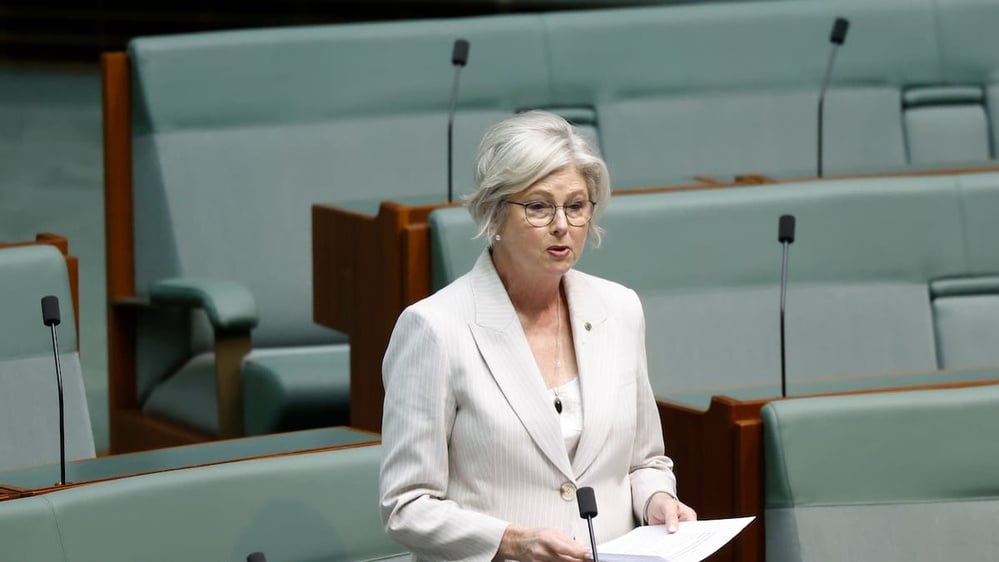

2026 © Helium Trades
Privacy Policy & Disclosure
* Disclaimer: Nothing on this website constitutes investment advice, performance data or any recommendation that any particular security, portfolio of securities, transaction or investment strategy is suitable for any specific person. Helium Trades is not responsible in any way for the accuracy
of any model predictions or price data. Any mention of a particular security and related prediction data is not a recommendation to buy or sell that security. Investments in securities involve the risk of loss. Past performance is no guarantee of future results. Helium Trades is not responsible for any of your investment decisions,
you should consult a financial expert before engaging in any transaction.
Helium Research Assistant

How can I help you today?
Ask any question about this page.


