See whether Helium helps you make better-informed decisions. Try every Pro Trader feature for 30 days. No credit card required.
Try every Pro Trader feature for 30 days. No credit card required.
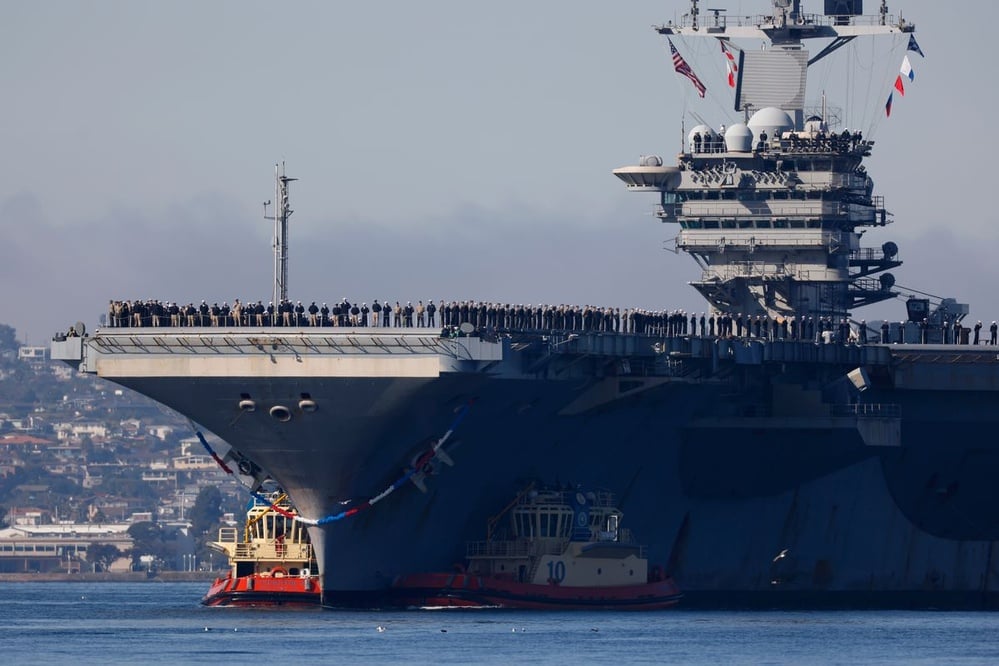
Framing stresses the human and moral costs of an extended Navy deployment, treats Trump's comments as a dismissive punchline, and presents the Pentagon's defense as secondary.
Automated analysis; not human reviewed.
Limitations: The exact publication date is not visible in the excerpt, the article is mixed with related news teasers, and the underlying Military Times/Stars and Stripes reporting was not re-checked, which limits temporal verification.
·
3 of 54 available dimensions scored; omitted dimensions are not treated as neutral.
·
Verified supporting quotes for 0 of 3 scored dimensions.
Claim: The report favorites critical Democratic and family/sailor accounts and portrays Trump's comment in a negative, headline-worthy light, while including the Pentagon rebuttal.
“Democratic lawmakers and military families are pressing the Pentagon for answers after reports emerged that thousands of sailors aboard the USS Abraham Lincoln have endured food shortages, plumbing failures and severe fatigue.” · not found in supplied text
“The president’s remarks contrast with the concerns raised by lawmakers and military families, including reports by the Military Times and the Stars and Stripes that sailors tried to jump overboard as the deployment kept going.” · not found in supplied text
Counterevidence:
“Hegseth told reporters on Thursday that “some deployments are longer than others.”” · exact text match
Why: A slight left-of-center framing appears in the single selection of Democratic lawmakers and military families as primary critics, while Trump's comment and a rebuttal are included but the framing remains generally critical.
Claim: The article treats an operational military deployment chiefly as a political conflict involving Trump, Congress, and the Pentagon.
“President Trump’s differing statements are amplified in the headline and the lede, and congressional Democrats from San Diego are center of the conflict.” · not found in supplied text
“Rep.
Mike Levin wrote that the plans are not enough and asked for the government for truth from the Defense Department about failures.”
· not found in supplied text
Why: The issue was reported through the conflict, from a presidential comment and lawmakers' demands, rather than solely through Navy operations or military analysis.
Claim: The story consistently attributes claims to named officials, outlets, a peer-reviewed study, and a recorded meeting, which supports substantive credibility.
“A study of nearly 1,000 sailors published in the journal Military Medicine in January 2025 found that service members aboard Navy ships suffer the highest rates of 'serious psychological distress.'” · not found in supplied text
“According to a recording obtained by MS NOW, a reporting interview, there were combative meetings with military families.” · not found in supplied text
Why: Assessment of credibility as strong but not maximum: negative claims were explicitly attributed, but the final result is a widely differing factual picture, and underlying reports were not independently verified in this article.
The exact publication date is not visible in the excerpt, the article is mixed with related news teasers, and the underlying Military Times/Stars and Stripes reporting was not re-checked, which limits temporal verification.
The carrier-conditions story is framed as an official-response story, with the admiral's praise and the Navy's return announcement foregrounded over the crew complaints.
Automated analysis; not human reviewed.
Limitations: The supplied text includes duplicated paragraphs and an appended list of headlines, so page-content boundaries are uncertain.
·
3 of 54 available dimensions scored; omitted dimensions are not treated as neutral.
·
Verified supporting quotes for 3 of 3 scored dimensions.
Claim: The publisher keeps its own viewpoint out of the text, using attributed allegations and direct quotations rather than evaluative language.
“drawing recent attention for alleged issues over the mental health of some crew members, as well as reports of poor conditions on board, including moldy showers and rotten food, according to The Hill.” · exact text match
“Centcom issued a statement Saturday about the visit, stating Cooper visited the ship during his 10-day trip to the region where he visited half a dozen countries.” · exact text match
Why: Condition claims are explicitly attributed to The Hill and marked as 'alleged' and 'reports,' while Centcom's account is presented as a statement rather than adopted as the publisher's own conclusion.
Claim: The report is dominated by institutional responses to the deployment controversy rather than direct reporting on the alleged conditions.
“Centcom issued a statement Saturday about the visit, stating Cooper visited the ship during his 10-day trip to the region where he visited half a dozen countries.” · exact text match
“Acting Navy Secretary Hung Cao announced Friday that the USS Abraham Lincoln will soon return home from its months-long deployment amid these various concerns,” · exact text match
Why: The lead and body center on the commander's visit, the command's statement, the secretary's return announcement, and lawmakers' demands; the underlying crew conditions are only summarized as attributed allegations.
Claim: The report is visibly sourced and hedged, giving readers named officials and attribution for disputed claims.
“Acting Navy Secretary Hung Cao announced Friday that the USS Abraham Lincoln will soon return home from its months-long deployment amid these various concerns,” · exact text match
“drawing recent attention for alleged issues over the mental health of some crew members, as well as reports of poor conditions on board, including moldy showers and rotten food, according to The Hill.” · exact text match
Why: Named officials appear with direct quotes, and the negative-condition allegations are attributed to The Hill rather than asserted as established fact.
The supplied text includes duplicated paragraphs and an appended list of headlines, so page-content boundaries are uncertain.
The report presents the carrier swap and Iran timeline with neutral, factual framing, relying on official statements and attributed reports without editorializing.
The U.S. has been involved in military actions against Iran, including naval deployments, for over 170 days.
The MOU refers to a June agreement outlining a timeline for a comprehensive deal, likely related to nuclear or regional issues.
Automated analysis; not human reviewed.
Limitations: The article text is a snippet with possible truncation; missing full context on the Iran conflict and carrier operations.
·
51 of 54 available dimensions scored; omitted dimensions are not treated as neutral.
·
Verified supporting quotes for 0 of 51 scored dimensions.
The article text is a snippet with possible truncation; missing full context on the Iran conflict and carrier operations.
Framing stresses the human and moral costs of an extended Navy deployment, treats Trump's comments as a dismissive punchline, and presents the Pentagon's defense as secondary.
Automated analysis; not human reviewed.
Limitations: The exact publication date is not visible in the excerpt, the article is mixed with related news teasers, and the underlying Military Times/Stars and Stripes reporting was not re-checked, which limits temporal verification.
·
3 of 54 available dimensions scored; omitted dimensions are not treated as neutral.
·
Verified supporting quotes for 0 of 3 scored dimensions.
Claim: The report favorites critical Democratic and family/sailor accounts and portrays Trump's comment in a negative, headline-worthy light, while including the Pentagon rebuttal.
“Democratic lawmakers and military families are pressing the Pentagon for answers after reports emerged that thousands of sailors aboard the USS Abraham Lincoln have endured food shortages, plumbing failures and severe fatigue.” · not found in supplied text
“The president’s remarks contrast with the concerns raised by lawmakers and military families, including reports by the Military Times and the Stars and Stripes that sailors tried to jump overboard as the deployment kept going.” · not found in supplied text
Counterevidence:
“Hegseth told reporters on Thursday that “some deployments are longer than others.”” · exact text match
Why: A slight left-of-center framing appears in the single selection of Democratic lawmakers and military families as primary critics, while Trump's comment and a rebuttal are included but the framing remains generally critical.
Claim: The article treats an operational military deployment chiefly as a political conflict involving Trump, Congress, and the Pentagon.
“President Trump’s differing statements are amplified in the headline and the lede, and congressional Democrats from San Diego are center of the conflict.” · not found in supplied text
“Rep.
Mike Levin wrote that the plans are not enough and asked for the government for truth from the Defense Department about failures.”
· not found in supplied text
Why: The issue was reported through the conflict, from a presidential comment and lawmakers' demands, rather than solely through Navy operations or military analysis.
Claim: The story consistently attributes claims to named officials, outlets, a peer-reviewed study, and a recorded meeting, which supports substantive credibility.
“A study of nearly 1,000 sailors published in the journal Military Medicine in January 2025 found that service members aboard Navy ships suffer the highest rates of 'serious psychological distress.'” · not found in supplied text
“According to a recording obtained by MS NOW, a reporting interview, there were combative meetings with military families.” · not found in supplied text
Why: Assessment of credibility as strong but not maximum: negative claims were explicitly attributed, but the final result is a widely differing factual picture, and underlying reports were not independently verified in this article.
The exact publication date is not visible in the excerpt, the article is mixed with related news teasers, and the underlying Military Times/Stars and Stripes reporting was not re-checked, which limits temporal verification.
The carrier-conditions story is framed as an official-response story, with the admiral's praise and the Navy's return announcement foregrounded over the crew complaints.
Automated analysis; not human reviewed.
Limitations: The supplied text includes duplicated paragraphs and an appended list of headlines, so page-content boundaries are uncertain.
·
3 of 54 available dimensions scored; omitted dimensions are not treated as neutral.
·
Verified supporting quotes for 3 of 3 scored dimensions.
Claim: The publisher keeps its own viewpoint out of the text, using attributed allegations and direct quotations rather than evaluative language.
“drawing recent attention for alleged issues over the mental health of some crew members, as well as reports of poor conditions on board, including moldy showers and rotten food, according to The Hill.” · exact text match
“Centcom issued a statement Saturday about the visit, stating Cooper visited the ship during his 10-day trip to the region where he visited half a dozen countries.” · exact text match
Why: Condition claims are explicitly attributed to The Hill and marked as 'alleged' and 'reports,' while Centcom's account is presented as a statement rather than adopted as the publisher's own conclusion.
Claim: The report is dominated by institutional responses to the deployment controversy rather than direct reporting on the alleged conditions.
“Centcom issued a statement Saturday about the visit, stating Cooper visited the ship during his 10-day trip to the region where he visited half a dozen countries.” · exact text match
“Acting Navy Secretary Hung Cao announced Friday that the USS Abraham Lincoln will soon return home from its months-long deployment amid these various concerns,” · exact text match
Why: The lead and body center on the commander's visit, the command's statement, the secretary's return announcement, and lawmakers' demands; the underlying crew conditions are only summarized as attributed allegations.
Claim: The report is visibly sourced and hedged, giving readers named officials and attribution for disputed claims.
“Acting Navy Secretary Hung Cao announced Friday that the USS Abraham Lincoln will soon return home from its months-long deployment amid these various concerns,” · exact text match
“drawing recent attention for alleged issues over the mental health of some crew members, as well as reports of poor conditions on board, including moldy showers and rotten food, according to The Hill.” · exact text match
Why: Named officials appear with direct quotes, and the negative-condition allegations are attributed to The Hill rather than asserted as established fact.
The supplied text includes duplicated paragraphs and an appended list of headlines, so page-content boundaries are uncertain.
August 17, 2026 · 0 shares
Framing characterizes Trump's denial as dismissive—'downplays'—while preserving his direct quote and his view that the deployment was 'not nearly long enough.'
Automated analysis; not human reviewed.
Limitations: The supplied text is a brief excerpt with an appended JSON-like block of tags and related headlines; the full article and its sourcing were unavailable.
·
54 of 54 available dimensions scored; omitted dimensions are not treated as neutral.
·
Verified supporting quotes for 3 of 54 scored dimensions.
Claim: The publisher uses 'downplays' and 'played down' to characterize Trump's denial, a mildly negative framing of a Republican president.
“Trump Downplays Concerns About Conditions on the USS Abraham Lincoln” · exact text match
“President Trump played down concerns about the living conditions aboard the USS Abraham Lincoln” · exact text match
Counterevidence:
“No they're not. That ship is moving right now or very shortly, and it's being replaced with another very similar ship.” · exact text match
Why: The repeated interpretive verb frames Trump's response as dismissive, suggesting a mild liberal-leaning slant while still including his direct quote.
Claim: The article mixes an objective direct quote with a subjective characterization of the president's response.
“President Trump played down concerns about the living conditions” · exact text match
“No they're not. That ship is moving right now or very shortly, and it's being replaced with another very similar ship.” · exact text match
Counterevidence:
“That ship is moving right now or very shortly, and it's being replaced with another very similar ship.” · exact text match
Why: One clause interprets the president's words as 'downplaying,' while the other gives his exact denial, making the piece mostly objective with a subjective framing.
Claim: The report uses evaluative language to characterize the president's statement rather than limiting itself to neutral description.
“played down concerns” · exact text match
“Trump Downplays Concerns About Conditions on the USS Abraham Lincoln” · exact text match
Why: 'Downplays' and 'played down' are interpretive verbs implying a gap between the president's response and the seriousness of the concerns.
The supplied text is a brief excerpt with an appended JSON-like block of tags and related headlines; the full article and its sourcing were unavailable.
Trump’s dismissals are quoted directly but paired with reports of family concern, deteriorating conditions, and multiple suicide attempts, framing the administration’s response as insufficient without explicit commentary.
Automated analysis; not human reviewed.
Limitations: The supplied article text contains a malformed embedded block after the opening sentence, so analysis relied on the first paragraph and the final quoted reporting block, leaving minor uncertainty about exact lexical continuity.
·
4 of 54 available dimensions scored; omitted dimensions are not treated as neutral.
·
Verified supporting quotes for 1 of 4 scored dimensions.
Claim: The publisher reports the story in a largely factual, attributive register rather than a subjective or opinion-driven one.
“US media, including specialist military publications, have quoted multiple relatives of crew members saying living conditions have deteriorated on the Lincoln.” · exact text match
“The president confirmed reports that the ship was due to be swapped out with another aircraft carrier.” · not found in supplied text
Why: Descriptions are attributed to Trump, relatives, and US media, and the wording does not call for a policy or take an explicit position.
Claim: The report describes what was said and reported rather than prescribing what should be done.
“Asked by reporters whether family members were worried about the situation on the USS Abraham Lincoln, Trump said “no, they’re not.”” · not found in supplied text
“There have also been reports of several suicide attempts.” · exact text match
Why: The article largely relays statements and reports without recommending action or proposing policy.
Claim: The report is credible within its supplied evidence because it attributes statements and identifies the presence of reports without overclaiming.
“That ship is moving right now or very shortly and it’s being replaced with another very similar ship,” Trump said.” · exact text match
“There have also been reports of several suicide attempts.” · exact text match
Why: Visible attribution is strong: Trump is directly quoted, and the most serious claims are attributed to relatives, US media, military publications, and reports.
Claim: The coverage is internally fair and transparent about sourcing.
“US media, including specialist military publications, have quoted multiple relatives of crew members saying living conditions have deteriorated on the Lincoln.” · exact text match
“The president confirmed reports that the ship was due to be swapped out with another aircraft carrier.” · not found in supplied text
Why: Direct quotes are preserved and material about morale is attributed to relatives, military publications, and reports rather than presented as the reporter’s own established fact.
The supplied article text contains a malformed embedded block after the opening sentence, so analysis relied on the first paragraph and the final quoted reporting block, leaving minor uncertainty about exact lexical continuity.
August 14, 2026 · 0 shares
The publisher’s framing is cautionary and noncommittal: it treats the overboard reports as unverified claims, weighs anonymous family accounts against official Navy denials, and explicitly withholds a rating pending primary evidence.
Automated analysis; not human reviewed.
Limitations: The supplied text contains redacted publisher references and malformed JSON-like metadata, so some source attributions and the exact publication title are ambiguous.
·
7 of 54 available dimensions scored; omitted dimensions are not treated as neutral.
·
Verified supporting quotes for 6 of 7 scored dimensions.
Claim: The report uses attributed statements and explicit verification limits rather than subjective narration.
“All the available media coverage relies on anonymous sources or secondhand reporting from sailors' families who say they have sporadic communication with their deployed family members.” · exact text match
Why: It labels reports as reliant on anonymous or family sources and separates what was alleged from what could be verified.
Claim: The report avoids sensationalizing the overboard claims by declining to present them as established.
“we've left this claim unrated and will update our report if new information emerges.” · exact text match
Why: Instead of treating the rumor as confirmed or dramatizing it, the publisher explicitly withholds judgment and promises updates.
Claim: The text describes claims, denials, and context without prescribing policy or action.
“Short of going onboard the aircraft carrier or speaking to sailors directly, it is impossible for us to confirm firsthand the conditions on the USS Abraham Lincoln.” · exact text match
Why: It stays in a descriptive, evidence-assessment mode and makes no recommendation or normative demand.
Claim: The report provides visible sourcing and attribution for each major claim.
“According to the Navy Times, one woman said her husband was "overextended" and burned out when he tried to jump overboard, but was rescued.” · not found in supplied text
“a Navy official said there had not been "an increase in suicidal ideations or attempts aboard the ship."” · not found in supplied text
Why: It names outlets, identifies an interviewee, quotes an official email, and states uncertainty, supporting source-based credibility.
Claim: The publisher consistently withholds conclusions when evidence is secondhand or unverified.
“As of this writing, we were unable to independently confirm the conditions aboard the USS Abraham Lincoln or the mental health of its sailors.” · exact text match
“Short of going onboard the aircraft carrier or speaking to sailors directly, it is impossible for us to confirm firsthand the conditions on the USS Abraham Lincoln.” · exact text match
Why: The text explicitly ties conclusions to available evidence and leaves the claim unrated rather than speculating or asserting beyond the source material.
Claim: The publisher is transparent about what it could and could not verify.
“we've left this claim unrated and will update our report if new information emerges.” · exact text match
Why: Disclosing the inability to verify and offering to update are visible honesty and fairness signals.
Claim: The reasoning distinguishes between rumor, secondhand report, official denial, and confirmed facts.
“All the available media coverage relies on anonymous sources or secondhand reporting from sailors' families who say they have sporadic communication with their deployed family members.” · exact text match
Why: It applies a consistent hierarchy of evidence and avoids drawing stronger conclusions than the available material allows.
The supplied text contains redacted publisher references and malformed JSON-like metadata, so some source attributions and the exact publication title are ambiguous.
August 15, 2026 · 0 shares
Reporting frames the overboard incident as an indictment of an unjustified, imperialist U.S. war, portraying Trump, Navy leaders, and Congress as callous elites who treat sailors as expendable while a financier class bears the war's real aims and costs.
Automated analysis; not human reviewed.
Limitations: The supplied text is an overtly framed editorial-news hybrid and no independent official records or full Navy transcripts are provided, so no external fact-check or independent verification is possible from the input alone.
·
13 of 54 available dimensions scored; omitted dimensions are not treated as neutral.
·
Verified supporting quotes for 12 of 13 scored dimensions.
Claim: The article's framing is left-wing in its economic and political coordinates, blaming capitalist elites for military harm and attacking conservative leaders.
“The strategic aims of the conflict—an effort to impose US dominance over the Middle East by military means—are determined by the financial aristocracy while the cost is to be borne by working class sailors, soldiers and their families.” · exact text match
Why: The quote presents an economically left-wing class analysis of foreign policy rather than a neutral or center-right frame.
Claim: The framing sharply divides a callous, self-serving elite from ordinary military families considered workers, which is strongly populist.
“The President’s response encapsulates the contempt of the entire ruling elite for the conditions of sailors and other military men and women in the war against Iran.” · exact text match
Why: It creates an explicit elite-versus-ordinary-people frame, a core feature of populist messaging.
Claim: The article repeatedly substitutes value judgments for neutral description.
“The President’s angry and callous response to a reporter who questioned him about the horrible conditions facing sailors aboard the Lincoln is a warning.” · exact text match
Why: Labels such as 'angry and callous' and 'horrible conditions' are evaluative interpretations rather than dispassionate facts.
Claim: The article gives a deeply pessimistic outlook, including a warning of a worsens of the war into a possible world war.
“intensifies the likelihood of a much deeper and catastrophic conflagration up to and including a new world war.” · exact text match
Why: It frames the near future in catastrophic terms, a negative and pessimistic emphasis.
Claim: The article is stridently anti-war, describing U.S. military action against Iran as criminal and imperialist.
“He did not condemn the treatment of sailors or call for an end to the disastrous and criminal war but called for a military strategy to win the war.” · exact text match
Why: Calling the war 'criminal' and 'disastrous' marks the publication as anti-war and strongly dovis.
Claim: The article sharpens its warning with threatening future cataclysm, which raises emotional fear as an outcome.
“intensifies the likelihood of a much deeper and catastrophic conflagration up to and including a new world war.” · exact text match
Why: The phrase is intended to alarm readers about consequences far bigger than the shipboard incident itself.
Claim: The treatment presents the conclusion that the Iran war is unprovoked and illegal as a settled-given premise, not as a proposition that needs support.
“not a single objective of the unprovoked and illegal imperialist war has been achieved” · exact text match
Why: The key normative characterization 'unprovoked and illegal imperialist war' is inserted parenthetically as an established fact instead of being argued.
Claim: The article is heavily opinionated and assertive in its verdicts.
“Trump makes clear that the health and lives of American soldiers are expendable.” · exact text match
Why: This is a sweeping interpretive conclusion stated as a certainty rather than obvious analysis.
Claim: The article's core focus is political confrontation and war policy, not neutral administration of news.
“The Lincoln’s crisis has revealed the real social character of the imperialist war against Iran.” · exact text match
Why: The sentence converts a military mental-health incident into an ideological judgment about national policy, making the piece highly political.
Claim: The article repeatedly applies a class-based ideological frame to explain policy and military decisions.
“The strategic aims of the conflict—are determined by the financial aristocracy while the cost is to be attributed by working class sailors, soldiers and their families.” · not found in supplied text
Why: The explanation reduces a security situation to class structure and elite financial interest, which is an ideologically shaped analysis.
Claim: The article attacks both the Trump administration and the mainstream Democratic opposition, grounding it in broad anti-establishment terms.
“The response of Democratic Party Senator Richard Blumenthal from Connecticut to the crisis is typical of the “opposition” in Congress to Trump’s policies.” · exact text match
Why: The article treats the Democratic response as part of the same structure and even mentions Trump's close fit to both war and corporate elites.
Claim: The article is strongly hostile to corporate power, specifically blaming oil monopolies and the financial oligarchy for the war.
“in the interests of the American oil monopolies and financial oligarchy” · exact text match
Why: This frames the war as driven by private corporate profit rather than public interests, a sharply anti-corporate stance.
Claim: The article uses class-conflict material analysis in assigning war's objectives to the financial aristocracy and its costs to the working class.
“The strategic aims of the conflict—an effort to impose US dominance over the Middle East by military means—are determined by the financial aristocracy while the cost is to be borne by working class sailors, soldiers and their families.” · exact text match
Why: This is an explicit class-based materialist account of the war, consistent with Marxist analytical framing.
The supplied text is an overtly framed editorial-news hybrid and no independent official records or full Navy transcripts are provided, so no external fact-check or independent verification is possible from the input alone.
August 14, 2026 · 0 shares
The publisher’s framing is cautionary and noncommittal: it treats the overboard reports as unverified claims, weighs anonymous family accounts against official Navy denials, and explicitly withholds a rating pending primary evidence.
Automated analysis; not human reviewed.
Limitations: The supplied text contains redacted publisher references and malformed JSON-like metadata, so some source attributions and the exact publication title are ambiguous.
·
7 of 54 available dimensions scored; omitted dimensions are not treated as neutral.
·
Verified supporting quotes for 6 of 7 scored dimensions.
Claim: The report uses attributed statements and explicit verification limits rather than subjective narration.
“All the available media coverage relies on anonymous sources or secondhand reporting from sailors' families who say they have sporadic communication with their deployed family members.” · exact text match
Why: It labels reports as reliant on anonymous or family sources and separates what was alleged from what could be verified.
Claim: The report avoids sensationalizing the overboard claims by declining to present them as established.
“we've left this claim unrated and will update our report if new information emerges.” · exact text match
Why: Instead of treating the rumor as confirmed or dramatizing it, the publisher explicitly withholds judgment and promises updates.
Claim: The text describes claims, denials, and context without prescribing policy or action.
“Short of going onboard the aircraft carrier or speaking to sailors directly, it is impossible for us to confirm firsthand the conditions on the USS Abraham Lincoln.” · exact text match
Why: It stays in a descriptive, evidence-assessment mode and makes no recommendation or normative demand.
Claim: The report provides visible sourcing and attribution for each major claim.
“According to the Navy Times, one woman said her husband was "overextended" and burned out when he tried to jump overboard, but was rescued.” · not found in supplied text
“a Navy official said there had not been "an increase in suicidal ideations or attempts aboard the ship."” · not found in supplied text
Why: It names outlets, identifies an interviewee, quotes an official email, and states uncertainty, supporting source-based credibility.
Claim: The publisher consistently withholds conclusions when evidence is secondhand or unverified.
“As of this writing, we were unable to independently confirm the conditions aboard the USS Abraham Lincoln or the mental health of its sailors.” · exact text match
“Short of going onboard the aircraft carrier or speaking to sailors directly, it is impossible for us to confirm firsthand the conditions on the USS Abraham Lincoln.” · exact text match
Why: The text explicitly ties conclusions to available evidence and leaves the claim unrated rather than speculating or asserting beyond the source material.
Claim: The publisher is transparent about what it could and could not verify.
“we've left this claim unrated and will update our report if new information emerges.” · exact text match
Why: Disclosing the inability to verify and offering to update are visible honesty and fairness signals.
Claim: The reasoning distinguishes between rumor, secondhand report, official denial, and confirmed facts.
“All the available media coverage relies on anonymous sources or secondhand reporting from sailors' families who say they have sporadic communication with their deployed family members.” · exact text match
Why: It applies a consistent hierarchy of evidence and avoids drawing stronger conclusions than the available material allows.
The supplied text contains redacted publisher references and malformed JSON-like metadata, so some source attributions and the exact publication title are ambiguous.
The framing centers on official rebuttals to allegations of poor conditions aboard the USS Abraham Lincoln, highlighting a low mental health case count as a counterpoint while acknowledging the carrier's extended deployment and reported denial of supply and plumbing issues.
The USS Abraham Lincoln is an aircraft carrier deployed in the Middle East supporting U.S. operations related to the war with Iran.
The article reports on a public relations response to reported crew morale and welfare issues during an extended deployment.
Automated analysis; not human reviewed.
Limitations: The article text is short and includes headline-like fragments and surrounding content that may not be fully substantive; only limited source context is given without independent verification.
·
54 of 54 available dimensions scored; omitted dimensions are not treated as neutral.
·
Verified supporting quotes for 0 of 54 scored dimensions.
The article text is short and includes headline-like fragments and surrounding content that may not be fully substantive; only limited source context is given without independent verification.
Framing stresses the human and moral costs of an extended Navy deployment, treats Trump's comments as a dismissive punchline, and presents the Pentagon's defense as secondary.
Automated analysis; not human reviewed.
Limitations: The exact publication date is not visible in the excerpt, the article is mixed with related news teasers, and the underlying Military Times/Stars and Stripes reporting was not re-checked, which limits temporal verification.
·
3 of 54 available dimensions scored; omitted dimensions are not treated as neutral.
·
Verified supporting quotes for 0 of 3 scored dimensions.
Claim: The report favorites critical Democratic and family/sailor accounts and portrays Trump's comment in a negative, headline-worthy light, while including the Pentagon rebuttal.
“Democratic lawmakers and military families are pressing the Pentagon for answers after reports emerged that thousands of sailors aboard the USS Abraham Lincoln have endured food shortages, plumbing failures and severe fatigue.” · not found in supplied text
“The president’s remarks contrast with the concerns raised by lawmakers and military families, including reports by the Military Times and the Stars and Stripes that sailors tried to jump overboard as the deployment kept going.” · not found in supplied text
Counterevidence:
“Hegseth told reporters on Thursday that “some deployments are longer than others.”” · exact text match
Why: A slight left-of-center framing appears in the single selection of Democratic lawmakers and military families as primary critics, while Trump's comment and a rebuttal are included but the framing remains generally critical.
Claim: The article treats an operational military deployment chiefly as a political conflict involving Trump, Congress, and the Pentagon.
“President Trump’s differing statements are amplified in the headline and the lede, and congressional Democrats from San Diego are center of the conflict.” · not found in supplied text
“Rep.
Mike Levin wrote that the plans are not enough and asked for the government for truth from the Defense Department about failures.”
· not found in supplied text
Why: The issue was reported through the conflict, from a presidential comment and lawmakers' demands, rather than solely through Navy operations or military analysis.
Claim: The story consistently attributes claims to named officials, outlets, a peer-reviewed study, and a recorded meeting, which supports substantive credibility.
“A study of nearly 1,000 sailors published in the journal Military Medicine in January 2025 found that service members aboard Navy ships suffer the highest rates of 'serious psychological distress.'” · not found in supplied text
“According to a recording obtained by MS NOW, a reporting interview, there were combative meetings with military families.” · not found in supplied text
Why: Assessment of credibility as strong but not maximum: negative claims were explicitly attributed, but the final result is a widely differing factual picture, and underlying reports were not independently verified in this article.
The exact publication date is not visible in the excerpt, the article is mixed with related news teasers, and the underlying Military Times/Stars and Stripes reporting was not re-checked, which limits temporal verification.
Frames President Trump as dismissing the toll on sailors, foregrounds Democratic officials’ criticism, and treats an indefinite deployment as problematic before reporting official denials.
Automated analysis; not human reviewed.
Limitations: The analysis uses only the supplied article text and lacks a byline, publication date, or outside material for verification.
·
4 of 54 available dimensions scored; omitted dimensions are not treated as neutral.
·
Verified supporting quotes for 0 of 4 scored dimensions.
Claim: The reporting foregrounds Trump’s dismissal and Democratic criticism of his handling of the carrier.
“President Donald Trump on Friday downplayed the toll that the record-setting uninterrupted time at sea is having on American sailors deployed to the Middle East stationed on the USS Abraham Lincoln as Democratic lawmakers raised concerns about mental health and supply issues aboard the aircraft carrier.” · exact text match
“The Trump administration has offered no clarity on how it intends to wind down the war.” · not found in supplied text
Counterevidence:
“Defense Secretary Pete Hegseth on Thursday said the conditions were “completely misrepresented.”” · not found in supplied text
Why: The opening frame and conclusion emphasize the case that the administration is disregarding service-members and has no exit strategy, despite later arrival of official denials.
Claim: The article is largely factual but uses evaluative characterization in its central framing.
“President Donald Trump on Friday downplayed the toll that the record-setting uninterrupted time at sea is having on American sailors deployed to the Middle East stationed on the USS Abraham Lincoln.” · not found in supplied text
“The Trump administration has offered no clear clarity on how it intends to wind down the war.” · not found in supplied text
Why: The word “downplayed the toll” and the “no clarity” judgment say something beyond strict observation, though the rest of the piece stays close to attributed reports and official statements.
Claim: The story defines an operational military event primarily through partisan conflict and congressional criticism.
“At such a moment, several Democrats, including Sens.
Richard Blumenthal of Connecticut and Ruben Gallego of Arizona, are pressing upon the Pentagon for accountability over conditions aboard the Lincoln.”
· not found in supplied text
“Rep.
Jason Crow, D-Colo., said on X that “President Trump does not care about our servicemembers or their families.””
· not found in supplied text
Why: The deployment is reported through the reactions of Democratic lawmakers and a Democratic critic, making it a highly political news story rather than a military logistics story.
Claim: The article shows generally credible sourcing by naming officials, using direct quotes, reporting official denials, and noting data restrictions.
“The Navy said it has “not observed an increase in suicidal ideations or attempts aboard the ship,” though officials have declined to provide data, citing operational security and patient privacy.” · not found in supplied text
“Defense Secretary Pete Hegseth on Thursday said the conditions were “completely misrepresented.”” · not found in supplied text
Why: The text attributes claims to named officials and agencies and preserves uncertainty where there is no public data, supporting overall reliability.
The analysis uses only the supplied article text and lacks a byline, publication date, or outside material for verification.
Critiques the Wall Street Journal's framing of the USS Abraham Lincoln story, asserting that the administration's war planning is flawed and that Congress's questioning is valid oversight, reflecting a strong anti-administration perspective.
The USS Abraham Lincoln is a U.S. Navy aircraft carrier deployed during a conflict with Iran. The article is an opinion piece by Brian O'Neill, a retired CIA senior executive, writing for The Contrarian, a community-supported outlet. The piece responds to a Wall Street Journal editorial that criticized Democrats for complaining about carrier conditions while opposing more war funding. The broader context includes debates about military readiness, the administration's management of the war, and congressional oversight.
Automated analysis; not human reviewed. Limitations: The article is an opinion piece from a source with an explicit anti-Trump stance; it primarily argues against the Wall Street Journal's editorial and the administration's handling of the war, so its objectivity is limited by its persuasive purpose. · 23 of 54 available dimensions scored; omitted dimensions are not treated as neutral. · Verified supporting quotes for 0 of 23 scored dimensions.
The article is an opinion piece from a source with an explicit anti-Trump stance; it primarily argues against the Wall Street Journal's editorial and the administration's handling of the war, so its objectivity is limited by its persuasive purpose.
Framing stresses the human and moral costs of an extended Navy deployment, treats Trump's comments as a dismissive punchline, and presents the Pentagon's defense as secondary.
Automated analysis; not human reviewed. Limitations: The exact publication date is not visible in the excerpt, the article is mixed with related news teasers, and the underlying Military Times/Stars and Stripes reporting was not re-checked, which limits temporal verification. · 3 of 54 available dimensions scored; omitted dimensions are not treated as neutral. · Verified supporting quotes for 0 of 3 scored dimensions.
Claim: The report favorites critical Democratic and family/sailor accounts and portrays Trump's comment in a negative, headline-worthy light, while including the Pentagon rebuttal.
“Democratic lawmakers and military families are pressing the Pentagon for answers after reports emerged that thousands of sailors aboard the USS Abraham Lincoln have endured food shortages, plumbing failures and severe fatigue.” · not found in supplied text
“The president’s remarks contrast with the concerns raised by lawmakers and military families, including reports by the Military Times and the Stars and Stripes that sailors tried to jump overboard as the deployment kept going.” · not found in supplied text
Counterevidence:
“Hegseth told reporters on Thursday that “some deployments are longer than others.”” · exact text match
Why: A slight left-of-center framing appears in the single selection of Democratic lawmakers and military families as primary critics, while Trump's comment and a rebuttal are included but the framing remains generally critical.
Claim: The article treats an operational military deployment chiefly as a political conflict involving Trump, Congress, and the Pentagon.
“President Trump’s differing statements are amplified in the headline and the lede, and congressional Democrats from San Diego are center of the conflict.” · not found in supplied text
“Rep. Mike Levin wrote that the plans are not enough and asked for the government for truth from the Defense Department about failures.” · not found in supplied text
Why: The issue was reported through the conflict, from a presidential comment and lawmakers' demands, rather than solely through Navy operations or military analysis.
Claim: The story consistently attributes claims to named officials, outlets, a peer-reviewed study, and a recorded meeting, which supports substantive credibility.
“A study of nearly 1,000 sailors published in the journal Military Medicine in January 2025 found that service members aboard Navy ships suffer the highest rates of 'serious psychological distress.'” · not found in supplied text
“According to a recording obtained by MS NOW, a reporting interview, there were combative meetings with military families.” · not found in supplied text
Why: Assessment of credibility as strong but not maximum: negative claims were explicitly attributed, but the final result is a widely differing factual picture, and underlying reports were not independently verified in this article.
The exact publication date is not visible in the excerpt, the article is mixed with related news teasers, and the underlying Military Times/Stars and Stripes reporting was not re-checked, which limits temporal verification.
The carrier-conditions story is framed as an official-response story, with the admiral's praise and the Navy's return announcement foregrounded over the crew complaints.
Automated analysis; not human reviewed. Limitations: The supplied text includes duplicated paragraphs and an appended list of headlines, so page-content boundaries are uncertain. · 3 of 54 available dimensions scored; omitted dimensions are not treated as neutral. · Verified supporting quotes for 3 of 3 scored dimensions.
Claim: The publisher keeps its own viewpoint out of the text, using attributed allegations and direct quotations rather than evaluative language.
“drawing recent attention for alleged issues over the mental health of some crew members, as well as reports of poor conditions on board, including moldy showers and rotten food, according to The Hill.” · exact text match
“Centcom issued a statement Saturday about the visit, stating Cooper visited the ship during his 10-day trip to the region where he visited half a dozen countries.” · exact text match
Why: Condition claims are explicitly attributed to The Hill and marked as 'alleged' and 'reports,' while Centcom's account is presented as a statement rather than adopted as the publisher's own conclusion.
Claim: The report is dominated by institutional responses to the deployment controversy rather than direct reporting on the alleged conditions.
“Centcom issued a statement Saturday about the visit, stating Cooper visited the ship during his 10-day trip to the region where he visited half a dozen countries.” · exact text match
“Acting Navy Secretary Hung Cao announced Friday that the USS Abraham Lincoln will soon return home from its months-long deployment amid these various concerns,” · exact text match
Why: The lead and body center on the commander's visit, the command's statement, the secretary's return announcement, and lawmakers' demands; the underlying crew conditions are only summarized as attributed allegations.
Claim: The report is visibly sourced and hedged, giving readers named officials and attribution for disputed claims.
“Acting Navy Secretary Hung Cao announced Friday that the USS Abraham Lincoln will soon return home from its months-long deployment amid these various concerns,” · exact text match
“drawing recent attention for alleged issues over the mental health of some crew members, as well as reports of poor conditions on board, including moldy showers and rotten food, according to The Hill.” · exact text match
Why: Named officials appear with direct quotes, and the negative-condition allegations are attributed to The Hill rather than asserted as established fact.
The supplied text includes duplicated paragraphs and an appended list of headlines, so page-content boundaries are uncertain.
The report presents the carrier swap and Iran timeline with neutral, factual framing, relying on official statements and attributed reports without editorializing.
The U.S. has been involved in military actions against Iran, including naval deployments, for over 170 days. The MOU refers to a June agreement outlining a timeline for a comprehensive deal, likely related to nuclear or regional issues.
Automated analysis; not human reviewed. Limitations: The article text is a snippet with possible truncation; missing full context on the Iran conflict and carrier operations. · 51 of 54 available dimensions scored; omitted dimensions are not treated as neutral. · Verified supporting quotes for 0 of 51 scored dimensions.
The article text is a snippet with possible truncation; missing full context on the Iran conflict and carrier operations.
August 14, 2026 · 0 shares
The publisher’s framing is cautionary and noncommittal: it treats the overboard reports as unverified claims, weighs anonymous family accounts against official Navy denials, and explicitly withholds a rating pending primary evidence.
Automated analysis; not human reviewed. Limitations: The supplied text contains redacted publisher references and malformed JSON-like metadata, so some source attributions and the exact publication title are ambiguous. · 7 of 54 available dimensions scored; omitted dimensions are not treated as neutral. · Verified supporting quotes for 6 of 7 scored dimensions.
Claim: The report uses attributed statements and explicit verification limits rather than subjective narration.
“All the available media coverage relies on anonymous sources or secondhand reporting from sailors' families who say they have sporadic communication with their deployed family members.” · exact text match
Why: It labels reports as reliant on anonymous or family sources and separates what was alleged from what could be verified.
Claim: The report avoids sensationalizing the overboard claims by declining to present them as established.
“we've left this claim unrated and will update our report if new information emerges.” · exact text match
Why: Instead of treating the rumor as confirmed or dramatizing it, the publisher explicitly withholds judgment and promises updates.
Claim: The text describes claims, denials, and context without prescribing policy or action.
“Short of going onboard the aircraft carrier or speaking to sailors directly, it is impossible for us to confirm firsthand the conditions on the USS Abraham Lincoln.” · exact text match
Why: It stays in a descriptive, evidence-assessment mode and makes no recommendation or normative demand.
Claim: The report provides visible sourcing and attribution for each major claim.
“According to the Navy Times, one woman said her husband was "overextended" and burned out when he tried to jump overboard, but was rescued.” · not found in supplied text
“a Navy official said there had not been "an increase in suicidal ideations or attempts aboard the ship."” · not found in supplied text
Why: It names outlets, identifies an interviewee, quotes an official email, and states uncertainty, supporting source-based credibility.
Claim: The publisher consistently withholds conclusions when evidence is secondhand or unverified.
“As of this writing, we were unable to independently confirm the conditions aboard the USS Abraham Lincoln or the mental health of its sailors.” · exact text match
“Short of going onboard the aircraft carrier or speaking to sailors directly, it is impossible for us to confirm firsthand the conditions on the USS Abraham Lincoln.” · exact text match
Why: The text explicitly ties conclusions to available evidence and leaves the claim unrated rather than speculating or asserting beyond the source material.
Claim: The publisher is transparent about what it could and could not verify.
“we've left this claim unrated and will update our report if new information emerges.” · exact text match
Why: Disclosing the inability to verify and offering to update are visible honesty and fairness signals.
Claim: The reasoning distinguishes between rumor, secondhand report, official denial, and confirmed facts.
“All the available media coverage relies on anonymous sources or secondhand reporting from sailors' families who say they have sporadic communication with their deployed family members.” · exact text match
Why: It applies a consistent hierarchy of evidence and avoids drawing stronger conclusions than the available material allows.
The supplied text contains redacted publisher references and malformed JSON-like metadata, so some source attributions and the exact publication title are ambiguous.
August 15, 2026 · 0 shares
Reporting frames the overboard incident as an indictment of an unjustified, imperialist U.S. war, portraying Trump, Navy leaders, and Congress as callous elites who treat sailors as expendable while a financier class bears the war's real aims and costs.
Automated analysis; not human reviewed. Limitations: The supplied text is an overtly framed editorial-news hybrid and no independent official records or full Navy transcripts are provided, so no external fact-check or independent verification is possible from the input alone. · 13 of 54 available dimensions scored; omitted dimensions are not treated as neutral. · Verified supporting quotes for 12 of 13 scored dimensions.
Claim: The article's framing is left-wing in its economic and political coordinates, blaming capitalist elites for military harm and attacking conservative leaders.
“The strategic aims of the conflict—an effort to impose US dominance over the Middle East by military means—are determined by the financial aristocracy while the cost is to be borne by working class sailors, soldiers and their families.” · exact text match
Why: The quote presents an economically left-wing class analysis of foreign policy rather than a neutral or center-right frame.
Claim: The framing sharply divides a callous, self-serving elite from ordinary military families considered workers, which is strongly populist.
“The President’s response encapsulates the contempt of the entire ruling elite for the conditions of sailors and other military men and women in the war against Iran.” · exact text match
Why: It creates an explicit elite-versus-ordinary-people frame, a core feature of populist messaging.
Claim: The article repeatedly substitutes value judgments for neutral description.
“The President’s angry and callous response to a reporter who questioned him about the horrible conditions facing sailors aboard the Lincoln is a warning.” · exact text match
Why: Labels such as 'angry and callous' and 'horrible conditions' are evaluative interpretations rather than dispassionate facts.
Claim: The article gives a deeply pessimistic outlook, including a warning of a worsens of the war into a possible world war.
“intensifies the likelihood of a much deeper and catastrophic conflagration up to and including a new world war.” · exact text match
Why: It frames the near future in catastrophic terms, a negative and pessimistic emphasis.
Claim: The article is stridently anti-war, describing U.S. military action against Iran as criminal and imperialist.
“He did not condemn the treatment of sailors or call for an end to the disastrous and criminal war but called for a military strategy to win the war.” · exact text match
Why: Calling the war 'criminal' and 'disastrous' marks the publication as anti-war and strongly dovis.
Claim: The article sharpens its warning with threatening future cataclysm, which raises emotional fear as an outcome.
“intensifies the likelihood of a much deeper and catastrophic conflagration up to and including a new world war.” · exact text match
Why: The phrase is intended to alarm readers about consequences far bigger than the shipboard incident itself.
Claim: The treatment presents the conclusion that the Iran war is unprovoked and illegal as a settled-given premise, not as a proposition that needs support.
“not a single objective of the unprovoked and illegal imperialist war has been achieved” · exact text match
Why: The key normative characterization 'unprovoked and illegal imperialist war' is inserted parenthetically as an established fact instead of being argued.
Claim: The article is heavily opinionated and assertive in its verdicts.
“Trump makes clear that the health and lives of American soldiers are expendable.” · exact text match
Why: This is a sweeping interpretive conclusion stated as a certainty rather than obvious analysis.
Claim: The article's core focus is political confrontation and war policy, not neutral administration of news.
“The Lincoln’s crisis has revealed the real social character of the imperialist war against Iran.” · exact text match
Why: The sentence converts a military mental-health incident into an ideological judgment about national policy, making the piece highly political.
Claim: The article repeatedly applies a class-based ideological frame to explain policy and military decisions.
“The strategic aims of the conflict—are determined by the financial aristocracy while the cost is to be attributed by working class sailors, soldiers and their families.” · not found in supplied text
Why: The explanation reduces a security situation to class structure and elite financial interest, which is an ideologically shaped analysis.
Claim: The article attacks both the Trump administration and the mainstream Democratic opposition, grounding it in broad anti-establishment terms.
“The response of Democratic Party Senator Richard Blumenthal from Connecticut to the crisis is typical of the “opposition” in Congress to Trump’s policies.” · exact text match
Why: The article treats the Democratic response as part of the same structure and even mentions Trump's close fit to both war and corporate elites.
Claim: The article is strongly hostile to corporate power, specifically blaming oil monopolies and the financial oligarchy for the war.
“in the interests of the American oil monopolies and financial oligarchy” · exact text match
Why: This frames the war as driven by private corporate profit rather than public interests, a sharply anti-corporate stance.
Claim: The article uses class-conflict material analysis in assigning war's objectives to the financial aristocracy and its costs to the working class.
“The strategic aims of the conflict—an effort to impose US dominance over the Middle East by military means—are determined by the financial aristocracy while the cost is to be borne by working class sailors, soldiers and their families.” · exact text match
Why: This is an explicit class-based materialist account of the war, consistent with Marxist analytical framing.
The supplied text is an overtly framed editorial-news hybrid and no independent official records or full Navy transcripts are provided, so no external fact-check or independent verification is possible from the input alone.
August 14, 2026 · 0 shares
The publisher’s framing is cautionary and noncommittal: it treats the overboard reports as unverified claims, weighs anonymous family accounts against official Navy denials, and explicitly withholds a rating pending primary evidence.
Automated analysis; not human reviewed. Limitations: The supplied text contains redacted publisher references and malformed JSON-like metadata, so some source attributions and the exact publication title are ambiguous. · 7 of 54 available dimensions scored; omitted dimensions are not treated as neutral. · Verified supporting quotes for 6 of 7 scored dimensions.
Claim: The report uses attributed statements and explicit verification limits rather than subjective narration.
“All the available media coverage relies on anonymous sources or secondhand reporting from sailors' families who say they have sporadic communication with their deployed family members.” · exact text match
Why: It labels reports as reliant on anonymous or family sources and separates what was alleged from what could be verified.
Claim: The report avoids sensationalizing the overboard claims by declining to present them as established.
“we've left this claim unrated and will update our report if new information emerges.” · exact text match
Why: Instead of treating the rumor as confirmed or dramatizing it, the publisher explicitly withholds judgment and promises updates.
Claim: The text describes claims, denials, and context without prescribing policy or action.
“Short of going onboard the aircraft carrier or speaking to sailors directly, it is impossible for us to confirm firsthand the conditions on the USS Abraham Lincoln.” · exact text match
Why: It stays in a descriptive, evidence-assessment mode and makes no recommendation or normative demand.
Claim: The report provides visible sourcing and attribution for each major claim.
“According to the Navy Times, one woman said her husband was "overextended" and burned out when he tried to jump overboard, but was rescued.” · not found in supplied text
“a Navy official said there had not been "an increase in suicidal ideations or attempts aboard the ship."” · not found in supplied text
Why: It names outlets, identifies an interviewee, quotes an official email, and states uncertainty, supporting source-based credibility.
Claim: The publisher consistently withholds conclusions when evidence is secondhand or unverified.
“As of this writing, we were unable to independently confirm the conditions aboard the USS Abraham Lincoln or the mental health of its sailors.” · exact text match
“Short of going onboard the aircraft carrier or speaking to sailors directly, it is impossible for us to confirm firsthand the conditions on the USS Abraham Lincoln.” · exact text match
Why: The text explicitly ties conclusions to available evidence and leaves the claim unrated rather than speculating or asserting beyond the source material.
Claim: The publisher is transparent about what it could and could not verify.
“we've left this claim unrated and will update our report if new information emerges.” · exact text match
Why: Disclosing the inability to verify and offering to update are visible honesty and fairness signals.
Claim: The reasoning distinguishes between rumor, secondhand report, official denial, and confirmed facts.
“All the available media coverage relies on anonymous sources or secondhand reporting from sailors' families who say they have sporadic communication with their deployed family members.” · exact text match
Why: It applies a consistent hierarchy of evidence and avoids drawing stronger conclusions than the available material allows.
The supplied text contains redacted publisher references and malformed JSON-like metadata, so some source attributions and the exact publication title are ambiguous.
The framing leads with the mental-health toll on the USS Abraham Lincoln, casts the president and navy leaders as dismissive, and surrounds the official reassurances with skeptical language.
Automated analysis; not human reviewed. Limitations: The text is ambiguous about what “One sailor succeeded in early August” implies about the outcome of the overboard incident, which limits precise classification of that detail. · 5 of 54 available dimensions scored; omitted dimensions are not treated as neutral. · Verified supporting quotes for 0 of 5 scored dimensions.
Claim: The framing is left-of-center, emphasizing the dramatic edge of the administration and integration of service families over official rules.
“Donald Trump has downplayed concerns about US sailors enduring a record-setting deployment of nearly nine months such as the USS Abraham Lincoln.”” · not found in supplied text
Why: The choice of 'downplayed' and the references to family worries and authority statements in being a mental-health crisis promote the greater critical perspective, even though official assurances other than the administration are occasionally mentioned.
Claim: The reporting shows loaded and subjective in certain phrases.
“The president descends into the record-setting deployment of nearly nine months.” · not found in supplied text
“Military families and US Congress members have called attention to the intensifying mental health crisis for those on board the USS Abraham Lincoln.” · not found in supplied text
Why: Words such as 'downplayed' and 'crisis' are assessments; however, the report also includes attributed official statements.
Claim: The article uses toneCues and vivid details that heighten the emotional impact.
“There have been multiple attempts by sailors to jump overboard as to the living conditions and mental stress on the Lincoln reach a breaking point in its ninth month at sea.” · not found in supplied text
“One of the spouses said that her husband had texted her that day saying he hoped he didn't wake up tomorrow.” · not found in supplied text
Why: 'Breaking point,' a graphic suicide-themed anecdote, but the same core events are attributed to Navy Times and Stars and Stripes; it is a serious and assertive report, not just a dispassionate summary.
Claim: The cumulative framing is pessimistic rather than measured or optimistic.
“The Trump administration has offered no risk on how it intends to wind down the war.” · not found in supplied text
“There is no question our young men and women have been pushed to their limits.” · not found in supplied text
Why: The article emphasizes lack of exit strategy, mental breakdown, and official denial across categories, while its official assurances are mostly quoted or presented in a weak and unconvincing section.
Claim: The overall visible credibility practices are reasonably credible: sources are attributed, official quotes are included, and uncertainty is disclosed in some places.
“One Sailor went overboard in early August, a US official confirmed.” · not found in supplied text
“The US Navy said it had 'not observed an increase in suicidal ideations or attempts aboard the ship.'” · not found in supplied text
Why: The report and corrects the possibility of an anonymous official and then also discloses a Navy denial, showing sourcing and some effort at balance; nevertheless, the major sampling are attributed and some assertions remain unsubstantiated.
The text is ambiguous about what “One sailor succeeded in early August” implies about the outcome of the overboard incident, which limits precise classification of that detail.
The framing centers on official rebuttals to allegations of poor conditions aboard the USS Abraham Lincoln, highlighting a low mental health case count as a counterpoint while acknowledging the carrier's extended deployment and reported denial of supply and plumbing issues.
The USS Abraham Lincoln is an aircraft carrier deployed in the Middle East supporting U.S. operations related to the war with Iran. The article reports on a public relations response to reported crew morale and welfare issues during an extended deployment.
Automated analysis; not human reviewed. Limitations: The article text is short and includes headline-like fragments and surrounding content that may not be fully substantive; only limited source context is given without independent verification. · 54 of 54 available dimensions scored; omitted dimensions are not treated as neutral. · Verified supporting quotes for 0 of 54 scored dimensions.
The article text is short and includes headline-like fragments and surrounding content that may not be fully substantive; only limited source context is given without independent verification.
Framing stresses the human and moral costs of an extended Navy deployment, treats Trump's comments as a dismissive punchline, and presents the Pentagon's defense as secondary.
Automated analysis; not human reviewed. Limitations: The exact publication date is not visible in the excerpt, the article is mixed with related news teasers, and the underlying Military Times/Stars and Stripes reporting was not re-checked, which limits temporal verification. · 3 of 54 available dimensions scored; omitted dimensions are not treated as neutral. · Verified supporting quotes for 0 of 3 scored dimensions.
Claim: The report favorites critical Democratic and family/sailor accounts and portrays Trump's comment in a negative, headline-worthy light, while including the Pentagon rebuttal.
“Democratic lawmakers and military families are pressing the Pentagon for answers after reports emerged that thousands of sailors aboard the USS Abraham Lincoln have endured food shortages, plumbing failures and severe fatigue.” · not found in supplied text
“The president’s remarks contrast with the concerns raised by lawmakers and military families, including reports by the Military Times and the Stars and Stripes that sailors tried to jump overboard as the deployment kept going.” · not found in supplied text
Counterevidence:
“Hegseth told reporters on Thursday that “some deployments are longer than others.”” · exact text match
Why: A slight left-of-center framing appears in the single selection of Democratic lawmakers and military families as primary critics, while Trump's comment and a rebuttal are included but the framing remains generally critical.
Claim: The article treats an operational military deployment chiefly as a political conflict involving Trump, Congress, and the Pentagon.
“President Trump’s differing statements are amplified in the headline and the lede, and congressional Democrats from San Diego are center of the conflict.” · not found in supplied text
“Rep. Mike Levin wrote that the plans are not enough and asked for the government for truth from the Defense Department about failures.” · not found in supplied text
Why: The issue was reported through the conflict, from a presidential comment and lawmakers' demands, rather than solely through Navy operations or military analysis.
Claim: The story consistently attributes claims to named officials, outlets, a peer-reviewed study, and a recorded meeting, which supports substantive credibility.
“A study of nearly 1,000 sailors published in the journal Military Medicine in January 2025 found that service members aboard Navy ships suffer the highest rates of 'serious psychological distress.'” · not found in supplied text
“According to a recording obtained by MS NOW, a reporting interview, there were combative meetings with military families.” · not found in supplied text
Why: Assessment of credibility as strong but not maximum: negative claims were explicitly attributed, but the final result is a widely differing factual picture, and underlying reports were not independently verified in this article.
The exact publication date is not visible in the excerpt, the article is mixed with related news teasers, and the underlying Military Times/Stars and Stripes reporting was not re-checked, which limits temporal verification.
Navy and administration
The framing centers on official rebuttals to allegations of poor conditions aboard the USS Abraham Lincoln, highlighting a low mental health case count as a counterpoint while acknowledging the carrier's extended deployment and reported denial of supply and plumbing issues.
The USS Abraham Lincoln is an aircraft carrier deployed in the Middle East supporting U.S. operations related to the war with Iran. The article reports on a public relations response to reported crew morale and welfare issues during an extended deployment.
Automated analysis; not human reviewed. Limitations: The article text is short and includes headline-like fragments and surrounding content that may not be fully substantive; only limited source context is given without independent verification. · 54 of 54 available dimensions scored; omitted dimensions are not treated as neutral. · Verified supporting quotes for 0 of 54 scored dimensions.
The article text is short and includes headline-like fragments and surrounding content that may not be fully substantive; only limited source context is given without independent verification.
August 16, 2026 · 0 shares
The framing is a non-partisan, official-source-led digest of Middle East war and diplomacy developments, with humanitarian and morale costs reported through attributed accounts.
Automated analysis; not human reviewed. Limitations: The supplied text is a multi-thread roundup with related-link and subscription boilerplate mixed in, so relative editorial emphasis across threads is difficult to assess. · 7 of 54 available dimensions scored; omitted dimensions are not treated as neutral. · Verified supporting quotes for 7 of 7 scored dimensions.
Claim: The text is written in an objective news-roundup style, attributing statements and data to named or specified sources rather than presenting them as the publisher's own assertions.
“Here’s a look at the latest developments on Sunday in the Iran war and the wider Middle East.” · exact text match
“Mr. Cooper also went to Bahrain, Iraq, Israel, Jordan, Saudi Arabia, and the United Arab Emirates to meet with civilian and military leaders, according to the Central Command statement.” · exact text match
Why: The publisher marks the piece as a 'look' at developments and repeatedly uses 'said' and 'according to' to attribute claims.
Claim: The report is non-sensational in tone, using attributed, matter-of-fact language even for lethal events.
“Israel’s military said it targeted two Hezbollah commanders in Saturday’s strikes in southern Lebanon, the deadliest attacks since a truce between Israel and Iran-backed Hezbollah went into effect in June.” · exact text match
“Lebanon’s Health Ministry and state news agency said at least 11 people were killed.” · exact text match
Why: Deadly attacks are described through military and ministry statements without editorializing adjectives.
Claim: The text is descriptive and avoids policy prescriptions or calls to action.
“Here’s a look at the latest developments on Sunday in the Iran war and the wider Middle East.” · exact text match
Why: The introductory phrase frames the piece as an informational digest, and no sentence instructs readers what should be done.
Claim: The content is heavily political and military, centering on governments, armed forces, and diplomatic negotiations.
“U.S. negotiator Jared Kushner had a rare meeting with the Hamas leader on the Gaza ceasefire.” · exact text match
“Israel’s military said it struck a member of the Palestinian Islamic Jihad.” · exact text match
Why: Nearly every development concerns state, military, or insurgent political actors.
Claim: The article is emotionally neutral, reporting difficult events without affective language.
“While the heaviest fighting has subsided since a ceasefire took hold in October between Israel and Hamas, Israeli forces have carried out repeated airstrikes, killing at least 1,262 Palestinians, according to Gaza’s Health Ministry.” · exact text match
Why: Casualty figures are attributed to a ministry; the sentence is clinical despite the subject matter.
Claim: The text is credible in visible sourcing, with named officials, ministry attributions, and explicit reasons for anonymity.
“The meeting in Egypt with Hamas’ Khalil al-Hayya was confirmed by a regional official and a Hamas official, both speaking on condition of anonymity because they were not authorized to talk to reporters.” · exact text match
“The ministry, part of the Hamas-led government, maintains detailed casualty records that are seen as generally reliable by U.N.” · exact text match
Why: Sourcing is specific and transparent, and uncertain or contested claims are attributed rather than asserted.
Claim: The reporting signals internal integrity by explaining anonymity and identifying the basis for casualty-record reliability.
“The meeting in Egypt with Hamas’ Khalil al-Hayya was confirmed by a regional official and a Hamas official, both speaking on condition of anonymity because they were not authorized to talk to reporters.” · exact text match
“The ministry, part of the Hamas-led government, maintains detailed casualty records that are seen as generally reliable by U.N.” · exact text match
Why: The text discloses why sources are anonymous and notes the U.N.'s assessment of casualty records, reflecting transparency.
The supplied text is a multi-thread roundup with related-link and subscription boilerplate mixed in, so relative editorial emphasis across threads is difficult to assess.
August 14, 2026 · 0 shares
The publisher’s framing is cautionary and noncommittal: it treats the overboard reports as unverified claims, weighs anonymous family accounts against official Navy denials, and explicitly withholds a rating pending primary evidence.
Automated analysis; not human reviewed. Limitations: The supplied text contains redacted publisher references and malformed JSON-like metadata, so some source attributions and the exact publication title are ambiguous. · 7 of 54 available dimensions scored; omitted dimensions are not treated as neutral. · Verified supporting quotes for 6 of 7 scored dimensions.
Claim: The report uses attributed statements and explicit verification limits rather than subjective narration.
“All the available media coverage relies on anonymous sources or secondhand reporting from sailors' families who say they have sporadic communication with their deployed family members.” · exact text match
Why: It labels reports as reliant on anonymous or family sources and separates what was alleged from what could be verified.
Claim: The report avoids sensationalizing the overboard claims by declining to present them as established.
“we've left this claim unrated and will update our report if new information emerges.” · exact text match
Why: Instead of treating the rumor as confirmed or dramatizing it, the publisher explicitly withholds judgment and promises updates.
Claim: The text describes claims, denials, and context without prescribing policy or action.
“Short of going onboard the aircraft carrier or speaking to sailors directly, it is impossible for us to confirm firsthand the conditions on the USS Abraham Lincoln.” · exact text match
Why: It stays in a descriptive, evidence-assessment mode and makes no recommendation or normative demand.
Claim: The report provides visible sourcing and attribution for each major claim.
“According to the Navy Times, one woman said her husband was "overextended" and burned out when he tried to jump overboard, but was rescued.” · not found in supplied text
“a Navy official said there had not been "an increase in suicidal ideations or attempts aboard the ship."” · not found in supplied text
Why: It names outlets, identifies an interviewee, quotes an official email, and states uncertainty, supporting source-based credibility.
Claim: The publisher consistently withholds conclusions when evidence is secondhand or unverified.
“As of this writing, we were unable to independently confirm the conditions aboard the USS Abraham Lincoln or the mental health of its sailors.” · exact text match
“Short of going onboard the aircraft carrier or speaking to sailors directly, it is impossible for us to confirm firsthand the conditions on the USS Abraham Lincoln.” · exact text match
Why: The text explicitly ties conclusions to available evidence and leaves the claim unrated rather than speculating or asserting beyond the source material.
Claim: The publisher is transparent about what it could and could not verify.
“we've left this claim unrated and will update our report if new information emerges.” · exact text match
Why: Disclosing the inability to verify and offering to update are visible honesty and fairness signals.
Claim: The reasoning distinguishes between rumor, secondhand report, official denial, and confirmed facts.
“All the available media coverage relies on anonymous sources or secondhand reporting from sailors' families who say they have sporadic communication with their deployed family members.” · exact text match
Why: It applies a consistent hierarchy of evidence and avoids drawing stronger conclusions than the available material allows.
The supplied text contains redacted publisher references and malformed JSON-like metadata, so some source attributions and the exact publication title are ambiguous.
Framing stresses the human and moral costs of an extended Navy deployment, treats Trump's comments as a dismissive punchline, and presents the Pentagon's defense as secondary.
Automated analysis; not human reviewed. Limitations: The exact publication date is not visible in the excerpt, the article is mixed with related news teasers, and the underlying Military Times/Stars and Stripes reporting was not re-checked, which limits temporal verification. · 3 of 54 available dimensions scored; omitted dimensions are not treated as neutral. · Verified supporting quotes for 0 of 3 scored dimensions.
Claim: The report favorites critical Democratic and family/sailor accounts and portrays Trump's comment in a negative, headline-worthy light, while including the Pentagon rebuttal.
“Democratic lawmakers and military families are pressing the Pentagon for answers after reports emerged that thousands of sailors aboard the USS Abraham Lincoln have endured food shortages, plumbing failures and severe fatigue.” · not found in supplied text
“The president’s remarks contrast with the concerns raised by lawmakers and military families, including reports by the Military Times and the Stars and Stripes that sailors tried to jump overboard as the deployment kept going.” · not found in supplied text
Counterevidence:
“Hegseth told reporters on Thursday that “some deployments are longer than others.”” · exact text match
Why: A slight left-of-center framing appears in the single selection of Democratic lawmakers and military families as primary critics, while Trump's comment and a rebuttal are included but the framing remains generally critical.
Claim: The article treats an operational military deployment chiefly as a political conflict involving Trump, Congress, and the Pentagon.
“President Trump’s differing statements are amplified in the headline and the lede, and congressional Democrats from San Diego are center of the conflict.” · not found in supplied text
“Rep. Mike Levin wrote that the plans are not enough and asked for the government for truth from the Defense Department about failures.” · not found in supplied text
Why: The issue was reported through the conflict, from a presidential comment and lawmakers' demands, rather than solely through Navy operations or military analysis.
Claim: The story consistently attributes claims to named officials, outlets, a peer-reviewed study, and a recorded meeting, which supports substantive credibility.
“A study of nearly 1,000 sailors published in the journal Military Medicine in January 2025 found that service members aboard Navy ships suffer the highest rates of 'serious psychological distress.'” · not found in supplied text
“According to a recording obtained by MS NOW, a reporting interview, there were combative meetings with military families.” · not found in supplied text
Why: Assessment of credibility as strong but not maximum: negative claims were explicitly attributed, but the final result is a widely differing factual picture, and underlying reports were not independently verified in this article.
The exact publication date is not visible in the excerpt, the article is mixed with related news teasers, and the underlying Military Times/Stars and Stripes reporting was not re-checked, which limits temporal verification.
Framing stresses the human and moral costs of an extended Navy deployment, treats Trump's comments as a dismissive punchline, and presents the Pentagon's defense as secondary.
Automated analysis; not human reviewed. Limitations: The exact publication date is not visible in the excerpt, the article is mixed with related news teasers, and the underlying Military Times/Stars and Stripes reporting was not re-checked, which limits temporal verification. · 3 of 54 available dimensions scored; omitted dimensions are not treated as neutral. · Verified supporting quotes for 0 of 3 scored dimensions.
Claim: The report favorites critical Democratic and family/sailor accounts and portrays Trump's comment in a negative, headline-worthy light, while including the Pentagon rebuttal.
“Democratic lawmakers and military families are pressing the Pentagon for answers after reports emerged that thousands of sailors aboard the USS Abraham Lincoln have endured food shortages, plumbing failures and severe fatigue.” · not found in supplied text
“The president’s remarks contrast with the concerns raised by lawmakers and military families, including reports by the Military Times and the Stars and Stripes that sailors tried to jump overboard as the deployment kept going.” · not found in supplied text
Counterevidence:
“Hegseth told reporters on Thursday that “some deployments are longer than others.”” · exact text match
Why: A slight left-of-center framing appears in the single selection of Democratic lawmakers and military families as primary critics, while Trump's comment and a rebuttal are included but the framing remains generally critical.
Claim: The article treats an operational military deployment chiefly as a political conflict involving Trump, Congress, and the Pentagon.
“President Trump’s differing statements are amplified in the headline and the lede, and congressional Democrats from San Diego are center of the conflict.” · not found in supplied text
“Rep. Mike Levin wrote that the plans are not enough and asked for the government for truth from the Defense Department about failures.” · not found in supplied text
Why: The issue was reported through the conflict, from a presidential comment and lawmakers' demands, rather than solely through Navy operations or military analysis.
Claim: The story consistently attributes claims to named officials, outlets, a peer-reviewed study, and a recorded meeting, which supports substantive credibility.
“A study of nearly 1,000 sailors published in the journal Military Medicine in January 2025 found that service members aboard Navy ships suffer the highest rates of 'serious psychological distress.'” · not found in supplied text
“According to a recording obtained by MS NOW, a reporting interview, there were combative meetings with military families.” · not found in supplied text
Why: Assessment of credibility as strong but not maximum: negative claims were explicitly attributed, but the final result is a widely differing factual picture, and underlying reports were not independently verified in this article.
The exact publication date is not visible in the excerpt, the article is mixed with related news teasers, and the underlying Military Times/Stars and Stripes reporting was not re-checked, which limits temporal verification.
The framing leads with the mental-health toll on the USS Abraham Lincoln, casts the president and navy leaders as dismissive, and surrounds the official reassurances with skeptical language.
Automated analysis; not human reviewed. Limitations: The text is ambiguous about what “One sailor succeeded in early August” implies about the outcome of the overboard incident, which limits precise classification of that detail. · 5 of 54 available dimensions scored; omitted dimensions are not treated as neutral. · Verified supporting quotes for 0 of 5 scored dimensions.
Claim: The framing is left-of-center, emphasizing the dramatic edge of the administration and integration of service families over official rules.
“Donald Trump has downplayed concerns about US sailors enduring a record-setting deployment of nearly nine months such as the USS Abraham Lincoln.”” · not found in supplied text
Why: The choice of 'downplayed' and the references to family worries and authority statements in being a mental-health crisis promote the greater critical perspective, even though official assurances other than the administration are occasionally mentioned.
Claim: The reporting shows loaded and subjective in certain phrases.
“The president descends into the record-setting deployment of nearly nine months.” · not found in supplied text
“Military families and US Congress members have called attention to the intensifying mental health crisis for those on board the USS Abraham Lincoln.” · not found in supplied text
Why: Words such as 'downplayed' and 'crisis' are assessments; however, the report also includes attributed official statements.
Claim: The article uses toneCues and vivid details that heighten the emotional impact.
“There have been multiple attempts by sailors to jump overboard as to the living conditions and mental stress on the Lincoln reach a breaking point in its ninth month at sea.” · not found in supplied text
“One of the spouses said that her husband had texted her that day saying he hoped he didn't wake up tomorrow.” · not found in supplied text
Why: 'Breaking point,' a graphic suicide-themed anecdote, but the same core events are attributed to Navy Times and Stars and Stripes; it is a serious and assertive report, not just a dispassionate summary.
Claim: The cumulative framing is pessimistic rather than measured or optimistic.
“The Trump administration has offered no risk on how it intends to wind down the war.” · not found in supplied text
“There is no question our young men and women have been pushed to their limits.” · not found in supplied text
Why: The article emphasizes lack of exit strategy, mental breakdown, and official denial across categories, while its official assurances are mostly quoted or presented in a weak and unconvincing section.
Claim: The overall visible credibility practices are reasonably credible: sources are attributed, official quotes are included, and uncertainty is disclosed in some places.
“One Sailor went overboard in early August, a US official confirmed.” · not found in supplied text
“The US Navy said it had 'not observed an increase in suicidal ideations or attempts aboard the ship.'” · not found in supplied text
Why: The report and corrects the possibility of an anonymous official and then also discloses a Navy denial, showing sourcing and some effort at balance; nevertheless, the major sampling are attributed and some assertions remain unsubstantiated.
The text is ambiguous about what “One sailor succeeded in early August” implies about the outcome of the overboard incident, which limits precise classification of that detail.
The framing centers on official rebuttals to allegations of poor conditions aboard the USS Abraham Lincoln, highlighting a low mental health case count as a counterpoint while acknowledging the carrier's extended deployment and reported denial of supply and plumbing issues.
The USS Abraham Lincoln is an aircraft carrier deployed in the Middle East supporting U.S. operations related to the war with Iran. The article reports on a public relations response to reported crew morale and welfare issues during an extended deployment.
Automated analysis; not human reviewed. Limitations: The article text is short and includes headline-like fragments and surrounding content that may not be fully substantive; only limited source context is given without independent verification. · 54 of 54 available dimensions scored; omitted dimensions are not treated as neutral. · Verified supporting quotes for 0 of 54 scored dimensions.
The article text is short and includes headline-like fragments and surrounding content that may not be fully substantive; only limited source context is given without independent verification.
Families, sailors, and military critics
August 15, 2026 · 0 shares
Reporting frames the overboard incident as an indictment of an unjustified, imperialist U.S. war, portraying Trump, Navy leaders, and Congress as callous elites who treat sailors as expendable while a financier class bears the war's real aims and costs.
Automated analysis; not human reviewed. Limitations: The supplied text is an overtly framed editorial-news hybrid and no independent official records or full Navy transcripts are provided, so no external fact-check or independent verification is possible from the input alone. · 13 of 54 available dimensions scored; omitted dimensions are not treated as neutral. · Verified supporting quotes for 12 of 13 scored dimensions.
Claim: The article's framing is left-wing in its economic and political coordinates, blaming capitalist elites for military harm and attacking conservative leaders.
“The strategic aims of the conflict—an effort to impose US dominance over the Middle East by military means—are determined by the financial aristocracy while the cost is to be borne by working class sailors, soldiers and their families.” · exact text match
Why: The quote presents an economically left-wing class analysis of foreign policy rather than a neutral or center-right frame.
Claim: The framing sharply divides a callous, self-serving elite from ordinary military families considered workers, which is strongly populist.
“The President’s response encapsulates the contempt of the entire ruling elite for the conditions of sailors and other military men and women in the war against Iran.” · exact text match
Why: It creates an explicit elite-versus-ordinary-people frame, a core feature of populist messaging.
Claim: The article repeatedly substitutes value judgments for neutral description.
“The President’s angry and callous response to a reporter who questioned him about the horrible conditions facing sailors aboard the Lincoln is a warning.” · exact text match
Why: Labels such as 'angry and callous' and 'horrible conditions' are evaluative interpretations rather than dispassionate facts.
Claim: The article gives a deeply pessimistic outlook, including a warning of a worsens of the war into a possible world war.
“intensifies the likelihood of a much deeper and catastrophic conflagration up to and including a new world war.” · exact text match
Why: It frames the near future in catastrophic terms, a negative and pessimistic emphasis.
Claim: The article is stridently anti-war, describing U.S. military action against Iran as criminal and imperialist.
“He did not condemn the treatment of sailors or call for an end to the disastrous and criminal war but called for a military strategy to win the war.” · exact text match
Why: Calling the war 'criminal' and 'disastrous' marks the publication as anti-war and strongly dovis.
Claim: The article sharpens its warning with threatening future cataclysm, which raises emotional fear as an outcome.
“intensifies the likelihood of a much deeper and catastrophic conflagration up to and including a new world war.” · exact text match
Why: The phrase is intended to alarm readers about consequences far bigger than the shipboard incident itself.
Claim: The treatment presents the conclusion that the Iran war is unprovoked and illegal as a settled-given premise, not as a proposition that needs support.
“not a single objective of the unprovoked and illegal imperialist war has been achieved” · exact text match
Why: The key normative characterization 'unprovoked and illegal imperialist war' is inserted parenthetically as an established fact instead of being argued.
Claim: The article is heavily opinionated and assertive in its verdicts.
“Trump makes clear that the health and lives of American soldiers are expendable.” · exact text match
Why: This is a sweeping interpretive conclusion stated as a certainty rather than obvious analysis.
Claim: The article's core focus is political confrontation and war policy, not neutral administration of news.
“The Lincoln’s crisis has revealed the real social character of the imperialist war against Iran.” · exact text match
Why: The sentence converts a military mental-health incident into an ideological judgment about national policy, making the piece highly political.
Claim: The article repeatedly applies a class-based ideological frame to explain policy and military decisions.
“The strategic aims of the conflict—are determined by the financial aristocracy while the cost is to be attributed by working class sailors, soldiers and their families.” · not found in supplied text
Why: The explanation reduces a security situation to class structure and elite financial interest, which is an ideologically shaped analysis.
Claim: The article attacks both the Trump administration and the mainstream Democratic opposition, grounding it in broad anti-establishment terms.
“The response of Democratic Party Senator Richard Blumenthal from Connecticut to the crisis is typical of the “opposition” in Congress to Trump’s policies.” · exact text match
Why: The article treats the Democratic response as part of the same structure and even mentions Trump's close fit to both war and corporate elites.
Claim: The article is strongly hostile to corporate power, specifically blaming oil monopolies and the financial oligarchy for the war.
“in the interests of the American oil monopolies and financial oligarchy” · exact text match
Why: This frames the war as driven by private corporate profit rather than public interests, a sharply anti-corporate stance.
Claim: The article uses class-conflict material analysis in assigning war's objectives to the financial aristocracy and its costs to the working class.
“The strategic aims of the conflict—an effort to impose US dominance over the Middle East by military means—are determined by the financial aristocracy while the cost is to be borne by working class sailors, soldiers and their families.” · exact text match
Why: This is an explicit class-based materialist account of the war, consistent with Marxist analytical framing.
The supplied text is an overtly framed editorial-news hybrid and no independent official records or full Navy transcripts are provided, so no external fact-check or independent verification is possible from the input alone.
The framing is strongly anti-establishment and pro-socialist, depicting the US government and military as a ruling-class elite that mistreats working-class sailors, with an explicit call for socialist revolution.
The USS Abraham Lincoln is a Nimitz-class aircraft carrier deployed in the Arabian Sea during heightened US-Iran tensions in 2025. The article appears from a socialist perspective, citing the International Committee of the Fourth International, which may not be widely covered in mainstream media.
Automated analysis; not human reviewed. Limitations: The article is from a socialist perspective, which may influence the selection and interpretation of facts.
The article is from a socialist perspective, which may influence the selection and interpretation of facts.
Framing stresses the human and moral costs of an extended Navy deployment, treats Trump's comments as a dismissive punchline, and presents the Pentagon's defense as secondary.
Automated analysis; not human reviewed. Limitations: The exact publication date is not visible in the excerpt, the article is mixed with related news teasers, and the underlying Military Times/Stars and Stripes reporting was not re-checked, which limits temporal verification. · 3 of 54 available dimensions scored; omitted dimensions are not treated as neutral. · Verified supporting quotes for 0 of 3 scored dimensions.
Claim: The report favorites critical Democratic and family/sailor accounts and portrays Trump's comment in a negative, headline-worthy light, while including the Pentagon rebuttal.
“Democratic lawmakers and military families are pressing the Pentagon for answers after reports emerged that thousands of sailors aboard the USS Abraham Lincoln have endured food shortages, plumbing failures and severe fatigue.” · not found in supplied text
“The president’s remarks contrast with the concerns raised by lawmakers and military families, including reports by the Military Times and the Stars and Stripes that sailors tried to jump overboard as the deployment kept going.” · not found in supplied text
Counterevidence:
“Hegseth told reporters on Thursday that “some deployments are longer than others.”” · exact text match
Why: A slight left-of-center framing appears in the single selection of Democratic lawmakers and military families as primary critics, while Trump's comment and a rebuttal are included but the framing remains generally critical.
Claim: The article treats an operational military deployment chiefly as a political conflict involving Trump, Congress, and the Pentagon.
“President Trump’s differing statements are amplified in the headline and the lede, and congressional Democrats from San Diego are center of the conflict.” · not found in supplied text
“Rep. Mike Levin wrote that the plans are not enough and asked for the government for truth from the Defense Department about failures.” · not found in supplied text
Why: The issue was reported through the conflict, from a presidential comment and lawmakers' demands, rather than solely through Navy operations or military analysis.
Claim: The story consistently attributes claims to named officials, outlets, a peer-reviewed study, and a recorded meeting, which supports substantive credibility.
“A study of nearly 1,000 sailors published in the journal Military Medicine in January 2025 found that service members aboard Navy ships suffer the highest rates of 'serious psychological distress.'” · not found in supplied text
“According to a recording obtained by MS NOW, a reporting interview, there were combative meetings with military families.” · not found in supplied text
Why: Assessment of credibility as strong but not maximum: negative claims were explicitly attributed, but the final result is a widely differing factual picture, and underlying reports were not independently verified in this article.
The exact publication date is not visible in the excerpt, the article is mixed with related news teasers, and the underlying Military Times/Stars and Stripes reporting was not re-checked, which limits temporal verification.
August 15, 2026 · 0 shares
Reporting frames the overboard incident as an indictment of an unjustified, imperialist U.S. war, portraying Trump, Navy leaders, and Congress as callous elites who treat sailors as expendable while a financier class bears the war's real aims and costs.
Automated analysis; not human reviewed. Limitations: The supplied text is an overtly framed editorial-news hybrid and no independent official records or full Navy transcripts are provided, so no external fact-check or independent verification is possible from the input alone. · 13 of 54 available dimensions scored; omitted dimensions are not treated as neutral. · Verified supporting quotes for 12 of 13 scored dimensions.
Claim: The article's framing is left-wing in its economic and political coordinates, blaming capitalist elites for military harm and attacking conservative leaders.
“The strategic aims of the conflict—an effort to impose US dominance over the Middle East by military means—are determined by the financial aristocracy while the cost is to be borne by working class sailors, soldiers and their families.” · exact text match
Why: The quote presents an economically left-wing class analysis of foreign policy rather than a neutral or center-right frame.
Claim: The framing sharply divides a callous, self-serving elite from ordinary military families considered workers, which is strongly populist.
“The President’s response encapsulates the contempt of the entire ruling elite for the conditions of sailors and other military men and women in the war against Iran.” · exact text match
Why: It creates an explicit elite-versus-ordinary-people frame, a core feature of populist messaging.
Claim: The article repeatedly substitutes value judgments for neutral description.
“The President’s angry and callous response to a reporter who questioned him about the horrible conditions facing sailors aboard the Lincoln is a warning.” · exact text match
Why: Labels such as 'angry and callous' and 'horrible conditions' are evaluative interpretations rather than dispassionate facts.
Claim: The article gives a deeply pessimistic outlook, including a warning of a worsens of the war into a possible world war.
“intensifies the likelihood of a much deeper and catastrophic conflagration up to and including a new world war.” · exact text match
Why: It frames the near future in catastrophic terms, a negative and pessimistic emphasis.
Claim: The article is stridently anti-war, describing U.S. military action against Iran as criminal and imperialist.
“He did not condemn the treatment of sailors or call for an end to the disastrous and criminal war but called for a military strategy to win the war.” · exact text match
Why: Calling the war 'criminal' and 'disastrous' marks the publication as anti-war and strongly dovis.
Claim: The article sharpens its warning with threatening future cataclysm, which raises emotional fear as an outcome.
“intensifies the likelihood of a much deeper and catastrophic conflagration up to and including a new world war.” · exact text match
Why: The phrase is intended to alarm readers about consequences far bigger than the shipboard incident itself.
Claim: The treatment presents the conclusion that the Iran war is unprovoked and illegal as a settled-given premise, not as a proposition that needs support.
“not a single objective of the unprovoked and illegal imperialist war has been achieved” · exact text match
Why: The key normative characterization 'unprovoked and illegal imperialist war' is inserted parenthetically as an established fact instead of being argued.
Claim: The article is heavily opinionated and assertive in its verdicts.
“Trump makes clear that the health and lives of American soldiers are expendable.” · exact text match
Why: This is a sweeping interpretive conclusion stated as a certainty rather than obvious analysis.
Claim: The article's core focus is political confrontation and war policy, not neutral administration of news.
“The Lincoln’s crisis has revealed the real social character of the imperialist war against Iran.” · exact text match
Why: The sentence converts a military mental-health incident into an ideological judgment about national policy, making the piece highly political.
Claim: The article repeatedly applies a class-based ideological frame to explain policy and military decisions.
“The strategic aims of the conflict—are determined by the financial aristocracy while the cost is to be attributed by working class sailors, soldiers and their families.” · not found in supplied text
Why: The explanation reduces a security situation to class structure and elite financial interest, which is an ideologically shaped analysis.
Claim: The article attacks both the Trump administration and the mainstream Democratic opposition, grounding it in broad anti-establishment terms.
“The response of Democratic Party Senator Richard Blumenthal from Connecticut to the crisis is typical of the “opposition” in Congress to Trump’s policies.” · exact text match
Why: The article treats the Democratic response as part of the same structure and even mentions Trump's close fit to both war and corporate elites.
Claim: The article is strongly hostile to corporate power, specifically blaming oil monopolies and the financial oligarchy for the war.
“in the interests of the American oil monopolies and financial oligarchy” · exact text match
Why: This frames the war as driven by private corporate profit rather than public interests, a sharply anti-corporate stance.
Claim: The article uses class-conflict material analysis in assigning war's objectives to the financial aristocracy and its costs to the working class.
“The strategic aims of the conflict—an effort to impose US dominance over the Middle East by military means—are determined by the financial aristocracy while the cost is to be borne by working class sailors, soldiers and their families.” · exact text match
Why: This is an explicit class-based materialist account of the war, consistent with Marxist analytical framing.
The supplied text is an overtly framed editorial-news hybrid and no independent official records or full Navy transcripts are provided, so no external fact-check or independent verification is possible from the input alone.
August 17, 2026 · 0 shares
Framing characterizes Trump's denial as dismissive—'downplays'—while preserving his direct quote and his view that the deployment was 'not nearly long enough.'
Automated analysis; not human reviewed. Limitations: The supplied text is a brief excerpt with an appended JSON-like block of tags and related headlines; the full article and its sourcing were unavailable. · 54 of 54 available dimensions scored; omitted dimensions are not treated as neutral. · Verified supporting quotes for 3 of 54 scored dimensions.
Claim: The publisher uses 'downplays' and 'played down' to characterize Trump's denial, a mildly negative framing of a Republican president.
“Trump Downplays Concerns About Conditions on the USS Abraham Lincoln” · exact text match
“President Trump played down concerns about the living conditions aboard the USS Abraham Lincoln” · exact text match
Counterevidence:
“No they're not. That ship is moving right now or very shortly, and it's being replaced with another very similar ship.” · exact text match
Why: The repeated interpretive verb frames Trump's response as dismissive, suggesting a mild liberal-leaning slant while still including his direct quote.
Claim: The article mixes an objective direct quote with a subjective characterization of the president's response.
“President Trump played down concerns about the living conditions” · exact text match
“No they're not. That ship is moving right now or very shortly, and it's being replaced with another very similar ship.” · exact text match
Counterevidence:
“That ship is moving right now or very shortly, and it's being replaced with another very similar ship.” · exact text match
Why: One clause interprets the president's words as 'downplaying,' while the other gives his exact denial, making the piece mostly objective with a subjective framing.
Claim: The report uses evaluative language to characterize the president's statement rather than limiting itself to neutral description.
“played down concerns” · exact text match
“Trump Downplays Concerns About Conditions on the USS Abraham Lincoln” · exact text match
Why: 'Downplays' and 'played down' are interpretive verbs implying a gap between the president's response and the seriousness of the concerns.
The supplied text is a brief excerpt with an appended JSON-like block of tags and related headlines; the full article and its sourcing were unavailable.
Trump’s dismissals are quoted directly but paired with reports of family concern, deteriorating conditions, and multiple suicide attempts, framing the administration’s response as insufficient without explicit commentary.
Automated analysis; not human reviewed. Limitations: The supplied article text contains a malformed embedded block after the opening sentence, so analysis relied on the first paragraph and the final quoted reporting block, leaving minor uncertainty about exact lexical continuity. · 4 of 54 available dimensions scored; omitted dimensions are not treated as neutral. · Verified supporting quotes for 1 of 4 scored dimensions.
Claim: The publisher reports the story in a largely factual, attributive register rather than a subjective or opinion-driven one.
“US media, including specialist military publications, have quoted multiple relatives of crew members saying living conditions have deteriorated on the Lincoln.” · exact text match
“The president confirmed reports that the ship was due to be swapped out with another aircraft carrier.” · not found in supplied text
Why: Descriptions are attributed to Trump, relatives, and US media, and the wording does not call for a policy or take an explicit position.
Claim: The report describes what was said and reported rather than prescribing what should be done.
“Asked by reporters whether family members were worried about the situation on the USS Abraham Lincoln, Trump said “no, they’re not.”” · not found in supplied text
“There have also been reports of several suicide attempts.” · exact text match
Why: The article largely relays statements and reports without recommending action or proposing policy.
Claim: The report is credible within its supplied evidence because it attributes statements and identifies the presence of reports without overclaiming.
“That ship is moving right now or very shortly and it’s being replaced with another very similar ship,” Trump said.” · exact text match
“There have also been reports of several suicide attempts.” · exact text match
Why: Visible attribution is strong: Trump is directly quoted, and the most serious claims are attributed to relatives, US media, military publications, and reports.
Claim: The coverage is internally fair and transparent about sourcing.
“US media, including specialist military publications, have quoted multiple relatives of crew members saying living conditions have deteriorated on the Lincoln.” · exact text match
“The president confirmed reports that the ship was due to be swapped out with another aircraft carrier.” · not found in supplied text
Why: Direct quotes are preserved and material about morale is attributed to relatives, military publications, and reports rather than presented as the reporter’s own established fact.
The supplied article text contains a malformed embedded block after the opening sentence, so analysis relied on the first paragraph and the final quoted reporting block, leaving minor uncertainty about exact lexical continuity.
August 14, 2026 · 0 shares
The publisher’s framing is cautionary and noncommittal: it treats the overboard reports as unverified claims, weighs anonymous family accounts against official Navy denials, and explicitly withholds a rating pending primary evidence.
Automated analysis; not human reviewed. Limitations: The supplied text contains redacted publisher references and malformed JSON-like metadata, so some source attributions and the exact publication title are ambiguous. · 7 of 54 available dimensions scored; omitted dimensions are not treated as neutral. · Verified supporting quotes for 6 of 7 scored dimensions.
Claim: The report uses attributed statements and explicit verification limits rather than subjective narration.
“All the available media coverage relies on anonymous sources or secondhand reporting from sailors' families who say they have sporadic communication with their deployed family members.” · exact text match
Why: It labels reports as reliant on anonymous or family sources and separates what was alleged from what could be verified.
Claim: The report avoids sensationalizing the overboard claims by declining to present them as established.
“we've left this claim unrated and will update our report if new information emerges.” · exact text match
Why: Instead of treating the rumor as confirmed or dramatizing it, the publisher explicitly withholds judgment and promises updates.
Claim: The text describes claims, denials, and context without prescribing policy or action.
“Short of going onboard the aircraft carrier or speaking to sailors directly, it is impossible for us to confirm firsthand the conditions on the USS Abraham Lincoln.” · exact text match
Why: It stays in a descriptive, evidence-assessment mode and makes no recommendation or normative demand.
Claim: The report provides visible sourcing and attribution for each major claim.
“According to the Navy Times, one woman said her husband was "overextended" and burned out when he tried to jump overboard, but was rescued.” · not found in supplied text
“a Navy official said there had not been "an increase in suicidal ideations or attempts aboard the ship."” · not found in supplied text
Why: It names outlets, identifies an interviewee, quotes an official email, and states uncertainty, supporting source-based credibility.
Claim: The publisher consistently withholds conclusions when evidence is secondhand or unverified.
“As of this writing, we were unable to independently confirm the conditions aboard the USS Abraham Lincoln or the mental health of its sailors.” · exact text match
“Short of going onboard the aircraft carrier or speaking to sailors directly, it is impossible for us to confirm firsthand the conditions on the USS Abraham Lincoln.” · exact text match
Why: The text explicitly ties conclusions to available evidence and leaves the claim unrated rather than speculating or asserting beyond the source material.
Claim: The publisher is transparent about what it could and could not verify.
“we've left this claim unrated and will update our report if new information emerges.” · exact text match
Why: Disclosing the inability to verify and offering to update are visible honesty and fairness signals.
Claim: The reasoning distinguishes between rumor, secondhand report, official denial, and confirmed facts.
“All the available media coverage relies on anonymous sources or secondhand reporting from sailors' families who say they have sporadic communication with their deployed family members.” · exact text match
Why: It applies a consistent hierarchy of evidence and avoids drawing stronger conclusions than the available material allows.
The supplied text contains redacted publisher references and malformed JSON-like metadata, so some source attributions and the exact publication title are ambiguous.
August 14, 2026 · 0 shares
The publisher’s framing is cautionary and noncommittal: it treats the overboard reports as unverified claims, weighs anonymous family accounts against official Navy denials, and explicitly withholds a rating pending primary evidence.
Automated analysis; not human reviewed. Limitations: The supplied text contains redacted publisher references and malformed JSON-like metadata, so some source attributions and the exact publication title are ambiguous. · 7 of 54 available dimensions scored; omitted dimensions are not treated as neutral. · Verified supporting quotes for 6 of 7 scored dimensions.
Claim: The report uses attributed statements and explicit verification limits rather than subjective narration.
“All the available media coverage relies on anonymous sources or secondhand reporting from sailors' families who say they have sporadic communication with their deployed family members.” · exact text match
Why: It labels reports as reliant on anonymous or family sources and separates what was alleged from what could be verified.
Claim: The report avoids sensationalizing the overboard claims by declining to present them as established.
“we've left this claim unrated and will update our report if new information emerges.” · exact text match
Why: Instead of treating the rumor as confirmed or dramatizing it, the publisher explicitly withholds judgment and promises updates.
Claim: The text describes claims, denials, and context without prescribing policy or action.
“Short of going onboard the aircraft carrier or speaking to sailors directly, it is impossible for us to confirm firsthand the conditions on the USS Abraham Lincoln.” · exact text match
Why: It stays in a descriptive, evidence-assessment mode and makes no recommendation or normative demand.
Claim: The report provides visible sourcing and attribution for each major claim.
“According to the Navy Times, one woman said her husband was "overextended" and burned out when he tried to jump overboard, but was rescued.” · not found in supplied text
“a Navy official said there had not been "an increase in suicidal ideations or attempts aboard the ship."” · not found in supplied text
Why: It names outlets, identifies an interviewee, quotes an official email, and states uncertainty, supporting source-based credibility.
Claim: The publisher consistently withholds conclusions when evidence is secondhand or unverified.
“As of this writing, we were unable to independently confirm the conditions aboard the USS Abraham Lincoln or the mental health of its sailors.” · exact text match
“Short of going onboard the aircraft carrier or speaking to sailors directly, it is impossible for us to confirm firsthand the conditions on the USS Abraham Lincoln.” · exact text match
Why: The text explicitly ties conclusions to available evidence and leaves the claim unrated rather than speculating or asserting beyond the source material.
Claim: The publisher is transparent about what it could and could not verify.
“we've left this claim unrated and will update our report if new information emerges.” · exact text match
Why: Disclosing the inability to verify and offering to update are visible honesty and fairness signals.
Claim: The reasoning distinguishes between rumor, secondhand report, official denial, and confirmed facts.
“All the available media coverage relies on anonymous sources or secondhand reporting from sailors' families who say they have sporadic communication with their deployed family members.” · exact text match
Why: It applies a consistent hierarchy of evidence and avoids drawing stronger conclusions than the available material allows.
The supplied text contains redacted publisher references and malformed JSON-like metadata, so some source attributions and the exact publication title are ambiguous.
Congressional and strategic critics
The framing leads with the mental-health toll on the USS Abraham Lincoln, casts the president and navy leaders as dismissive, and surrounds the official reassurances with skeptical language.
Automated analysis; not human reviewed. Limitations: The text is ambiguous about what “One sailor succeeded in early August” implies about the outcome of the overboard incident, which limits precise classification of that detail. · 5 of 54 available dimensions scored; omitted dimensions are not treated as neutral. · Verified supporting quotes for 0 of 5 scored dimensions.
Claim: The framing is left-of-center, emphasizing the dramatic edge of the administration and integration of service families over official rules.
“Donald Trump has downplayed concerns about US sailors enduring a record-setting deployment of nearly nine months such as the USS Abraham Lincoln.”” · not found in supplied text
Why: The choice of 'downplayed' and the references to family worries and authority statements in being a mental-health crisis promote the greater critical perspective, even though official assurances other than the administration are occasionally mentioned.
Claim: The reporting shows loaded and subjective in certain phrases.
“The president descends into the record-setting deployment of nearly nine months.” · not found in supplied text
“Military families and US Congress members have called attention to the intensifying mental health crisis for those on board the USS Abraham Lincoln.” · not found in supplied text
Why: Words such as 'downplayed' and 'crisis' are assessments; however, the report also includes attributed official statements.
Claim: The article uses toneCues and vivid details that heighten the emotional impact.
“There have been multiple attempts by sailors to jump overboard as to the living conditions and mental stress on the Lincoln reach a breaking point in its ninth month at sea.” · not found in supplied text
“One of the spouses said that her husband had texted her that day saying he hoped he didn't wake up tomorrow.” · not found in supplied text
Why: 'Breaking point,' a graphic suicide-themed anecdote, but the same core events are attributed to Navy Times and Stars and Stripes; it is a serious and assertive report, not just a dispassionate summary.
Claim: The cumulative framing is pessimistic rather than measured or optimistic.
“The Trump administration has offered no risk on how it intends to wind down the war.” · not found in supplied text
“There is no question our young men and women have been pushed to their limits.” · not found in supplied text
Why: The article emphasizes lack of exit strategy, mental breakdown, and official denial across categories, while its official assurances are mostly quoted or presented in a weak and unconvincing section.
Claim: The overall visible credibility practices are reasonably credible: sources are attributed, official quotes are included, and uncertainty is disclosed in some places.
“One Sailor went overboard in early August, a US official confirmed.” · not found in supplied text
“The US Navy said it had 'not observed an increase in suicidal ideations or attempts aboard the ship.'” · not found in supplied text
Why: The report and corrects the possibility of an anonymous official and then also discloses a Navy denial, showing sourcing and some effort at balance; nevertheless, the major sampling are attributed and some assertions remain unsubstantiated.
The text is ambiguous about what “One sailor succeeded in early August” implies about the outcome of the overboard incident, which limits precise classification of that detail.
Framing stresses the human and moral costs of an extended Navy deployment, treats Trump's comments as a dismissive punchline, and presents the Pentagon's defense as secondary.
Automated analysis; not human reviewed. Limitations: The exact publication date is not visible in the excerpt, the article is mixed with related news teasers, and the underlying Military Times/Stars and Stripes reporting was not re-checked, which limits temporal verification. · 3 of 54 available dimensions scored; omitted dimensions are not treated as neutral. · Verified supporting quotes for 0 of 3 scored dimensions.
Claim: The report favorites critical Democratic and family/sailor accounts and portrays Trump's comment in a negative, headline-worthy light, while including the Pentagon rebuttal.
“Democratic lawmakers and military families are pressing the Pentagon for answers after reports emerged that thousands of sailors aboard the USS Abraham Lincoln have endured food shortages, plumbing failures and severe fatigue.” · not found in supplied text
“The president’s remarks contrast with the concerns raised by lawmakers and military families, including reports by the Military Times and the Stars and Stripes that sailors tried to jump overboard as the deployment kept going.” · not found in supplied text
Counterevidence:
“Hegseth told reporters on Thursday that “some deployments are longer than others.”” · exact text match
Why: A slight left-of-center framing appears in the single selection of Democratic lawmakers and military families as primary critics, while Trump's comment and a rebuttal are included but the framing remains generally critical.
Claim: The article treats an operational military deployment chiefly as a political conflict involving Trump, Congress, and the Pentagon.
“President Trump’s differing statements are amplified in the headline and the lede, and congressional Democrats from San Diego are center of the conflict.” · not found in supplied text
“Rep. Mike Levin wrote that the plans are not enough and asked for the government for truth from the Defense Department about failures.” · not found in supplied text
Why: The issue was reported through the conflict, from a presidential comment and lawmakers' demands, rather than solely through Navy operations or military analysis.
Claim: The story consistently attributes claims to named officials, outlets, a peer-reviewed study, and a recorded meeting, which supports substantive credibility.
“A study of nearly 1,000 sailors published in the journal Military Medicine in January 2025 found that service members aboard Navy ships suffer the highest rates of 'serious psychological distress.'” · not found in supplied text
“According to a recording obtained by MS NOW, a reporting interview, there were combative meetings with military families.” · not found in supplied text
Why: Assessment of credibility as strong but not maximum: negative claims were explicitly attributed, but the final result is a widely differing factual picture, and underlying reports were not independently verified in this article.
The exact publication date is not visible in the excerpt, the article is mixed with related news teasers, and the underlying Military Times/Stars and Stripes reporting was not re-checked, which limits temporal verification.
Frames President Trump as dismissing the toll on sailors, foregrounds Democratic officials’ criticism, and treats an indefinite deployment as problematic before reporting official denials.
Automated analysis; not human reviewed. Limitations: The analysis uses only the supplied article text and lacks a byline, publication date, or outside material for verification. · 4 of 54 available dimensions scored; omitted dimensions are not treated as neutral. · Verified supporting quotes for 0 of 4 scored dimensions.
Claim: The reporting foregrounds Trump’s dismissal and Democratic criticism of his handling of the carrier.
“President Donald Trump on Friday downplayed the toll that the record-setting uninterrupted time at sea is having on American sailors deployed to the Middle East stationed on the USS Abraham Lincoln as Democratic lawmakers raised concerns about mental health and supply issues aboard the aircraft carrier.” · exact text match
“The Trump administration has offered no clarity on how it intends to wind down the war.” · not found in supplied text
Counterevidence:
“Defense Secretary Pete Hegseth on Thursday said the conditions were “completely misrepresented.”” · not found in supplied text
Why: The opening frame and conclusion emphasize the case that the administration is disregarding service-members and has no exit strategy, despite later arrival of official denials.
Claim: The article is largely factual but uses evaluative characterization in its central framing.
“President Donald Trump on Friday downplayed the toll that the record-setting uninterrupted time at sea is having on American sailors deployed to the Middle East stationed on the USS Abraham Lincoln.” · not found in supplied text
“The Trump administration has offered no clear clarity on how it intends to wind down the war.” · not found in supplied text
Why: The word “downplayed the toll” and the “no clarity” judgment say something beyond strict observation, though the rest of the piece stays close to attributed reports and official statements.
Claim: The story defines an operational military event primarily through partisan conflict and congressional criticism.
“At such a moment, several Democrats, including Sens. Richard Blumenthal of Connecticut and Ruben Gallego of Arizona, are pressing upon the Pentagon for accountability over conditions aboard the Lincoln.” · not found in supplied text
“Rep. Jason Crow, D-Colo., said on X that “President Trump does not care about our servicemembers or their families.”” · not found in supplied text
Why: The deployment is reported through the reactions of Democratic lawmakers and a Democratic critic, making it a highly political news story rather than a military logistics story.
Claim: The article shows generally credible sourcing by naming officials, using direct quotes, reporting official denials, and noting data restrictions.
“The Navy said it has “not observed an increase in suicidal ideations or attempts aboard the ship,” though officials have declined to provide data, citing operational security and patient privacy.” · not found in supplied text
“Defense Secretary Pete Hegseth on Thursday said the conditions were “completely misrepresented.”” · not found in supplied text
Why: The text attributes claims to named officials and agencies and preserves uncertainty where there is no public data, supporting overall reliability.
The analysis uses only the supplied article text and lacks a byline, publication date, or outside material for verification.
Critiques the Wall Street Journal's framing of the USS Abraham Lincoln story, asserting that the administration's war planning is flawed and that Congress's questioning is valid oversight, reflecting a strong anti-administration perspective.
The USS Abraham Lincoln is a U.S. Navy aircraft carrier deployed during a conflict with Iran. The article is an opinion piece by Brian O'Neill, a retired CIA senior executive, writing for The Contrarian, a community-supported outlet. The piece responds to a Wall Street Journal editorial that criticized Democrats for complaining about carrier conditions while opposing more war funding. The broader context includes debates about military readiness, the administration's management of the war, and congressional oversight.
Automated analysis; not human reviewed. Limitations: The article is an opinion piece from a source with an explicit anti-Trump stance; it primarily argues against the Wall Street Journal's editorial and the administration's handling of the war, so its objectivity is limited by its persuasive purpose. · 23 of 54 available dimensions scored; omitted dimensions are not treated as neutral. · Verified supporting quotes for 0 of 23 scored dimensions.
The article is an opinion piece from a source with an explicit anti-Trump stance; it primarily argues against the Wall Street Journal's editorial and the administration's handling of the war, so its objectivity is limited by its persuasive purpose.
The report presents the carrier swap and Iran timeline with neutral, factual framing, relying on official statements and attributed reports without editorializing.
The U.S. has been involved in military actions against Iran, including naval deployments, for over 170 days. The MOU refers to a June agreement outlining a timeline for a comprehensive deal, likely related to nuclear or regional issues.
Automated analysis; not human reviewed. Limitations: The article text is a snippet with possible truncation; missing full context on the Iran conflict and carrier operations. · 51 of 54 available dimensions scored; omitted dimensions are not treated as neutral. · Verified supporting quotes for 0 of 51 scored dimensions.
The article text is a snippet with possible truncation; missing full context on the Iran conflict and carrier operations.
Critiques the Wall Street Journal's framing of the USS Abraham Lincoln story, asserting that the administration's war planning is flawed and that Congress's questioning is valid oversight, reflecting a strong anti-administration perspective.
The USS Abraham Lincoln is a U.S. Navy aircraft carrier deployed during a conflict with Iran. The article is an opinion piece by Brian O'Neill, a retired CIA senior executive, writing for The Contrarian, a community-supported outlet. The piece responds to a Wall Street Journal editorial that criticized Democrats for complaining about carrier conditions while opposing more war funding. The broader context includes debates about military readiness, the administration's management of the war, and congressional oversight.
Automated analysis; not human reviewed. Limitations: The article is an opinion piece from a source with an explicit anti-Trump stance; it primarily argues against the Wall Street Journal's editorial and the administration's handling of the war, so its objectivity is limited by its persuasive purpose. · 23 of 54 available dimensions scored; omitted dimensions are not treated as neutral. · Verified supporting quotes for 0 of 23 scored dimensions.
The article is an opinion piece from a source with an explicit anti-Trump stance; it primarily argues against the Wall Street Journal's editorial and the administration's handling of the war, so its objectivity is limited by its persuasive purpose.
Helium Bias
Story Blindspots
August 14, 2026 · 0 shares
The publisher’s framing is cautionary and noncommittal: it treats the overboard reports as unverified claims, weighs anonymous family accounts against official Navy denials, and explicitly withholds a rating pending primary evidence.
Automated analysis; not human reviewed. Limitations: The supplied text contains redacted publisher references and malformed JSON-like metadata, so some source attributions and the exact publication title are ambiguous. · 7 of 54 available dimensions scored; omitted dimensions are not treated as neutral. · Verified supporting quotes for 6 of 7 scored dimensions.
Claim: The report uses attributed statements and explicit verification limits rather than subjective narration.
“All the available media coverage relies on anonymous sources or secondhand reporting from sailors' families who say they have sporadic communication with their deployed family members.” · exact text match
Why: It labels reports as reliant on anonymous or family sources and separates what was alleged from what could be verified.
Claim: The report avoids sensationalizing the overboard claims by declining to present them as established.
“we've left this claim unrated and will update our report if new information emerges.” · exact text match
Why: Instead of treating the rumor as confirmed or dramatizing it, the publisher explicitly withholds judgment and promises updates.
Claim: The text describes claims, denials, and context without prescribing policy or action.
“Short of going onboard the aircraft carrier or speaking to sailors directly, it is impossible for us to confirm firsthand the conditions on the USS Abraham Lincoln.” · exact text match
Why: It stays in a descriptive, evidence-assessment mode and makes no recommendation or normative demand.
Claim: The report provides visible sourcing and attribution for each major claim.
“According to the Navy Times, one woman said her husband was "overextended" and burned out when he tried to jump overboard, but was rescued.” · not found in supplied text
“a Navy official said there had not been "an increase in suicidal ideations or attempts aboard the ship."” · not found in supplied text
Why: It names outlets, identifies an interviewee, quotes an official email, and states uncertainty, supporting source-based credibility.
Claim: The publisher consistently withholds conclusions when evidence is secondhand or unverified.
“As of this writing, we were unable to independently confirm the conditions aboard the USS Abraham Lincoln or the mental health of its sailors.” · exact text match
“Short of going onboard the aircraft carrier or speaking to sailors directly, it is impossible for us to confirm firsthand the conditions on the USS Abraham Lincoln.” · exact text match
Why: The text explicitly ties conclusions to available evidence and leaves the claim unrated rather than speculating or asserting beyond the source material.
Claim: The publisher is transparent about what it could and could not verify.
“we've left this claim unrated and will update our report if new information emerges.” · exact text match
Why: Disclosing the inability to verify and offering to update are visible honesty and fairness signals.
Claim: The reasoning distinguishes between rumor, secondhand report, official denial, and confirmed facts.
“All the available media coverage relies on anonymous sources or secondhand reporting from sailors' families who say they have sporadic communication with their deployed family members.” · exact text match
Why: It applies a consistent hierarchy of evidence and avoids drawing stronger conclusions than the available material allows.
The supplied text contains redacted publisher references and malformed JSON-like metadata, so some source attributions and the exact publication title are ambiguous.
The framing leads with the mental-health toll on the USS Abraham Lincoln, casts the president and navy leaders as dismissive, and surrounds the official reassurances with skeptical language.
Automated analysis; not human reviewed. Limitations: The text is ambiguous about what “One sailor succeeded in early August” implies about the outcome of the overboard incident, which limits precise classification of that detail. · 5 of 54 available dimensions scored; omitted dimensions are not treated as neutral. · Verified supporting quotes for 0 of 5 scored dimensions.
Claim: The framing is left-of-center, emphasizing the dramatic edge of the administration and integration of service families over official rules.
“Donald Trump has downplayed concerns about US sailors enduring a record-setting deployment of nearly nine months such as the USS Abraham Lincoln.”” · not found in supplied text
Why: The choice of 'downplayed' and the references to family worries and authority statements in being a mental-health crisis promote the greater critical perspective, even though official assurances other than the administration are occasionally mentioned.
Claim: The reporting shows loaded and subjective in certain phrases.
“The president descends into the record-setting deployment of nearly nine months.” · not found in supplied text
“Military families and US Congress members have called attention to the intensifying mental health crisis for those on board the USS Abraham Lincoln.” · not found in supplied text
Why: Words such as 'downplayed' and 'crisis' are assessments; however, the report also includes attributed official statements.
Claim: The article uses toneCues and vivid details that heighten the emotional impact.
“There have been multiple attempts by sailors to jump overboard as to the living conditions and mental stress on the Lincoln reach a breaking point in its ninth month at sea.” · not found in supplied text
“One of the spouses said that her husband had texted her that day saying he hoped he didn't wake up tomorrow.” · not found in supplied text
Why: 'Breaking point,' a graphic suicide-themed anecdote, but the same core events are attributed to Navy Times and Stars and Stripes; it is a serious and assertive report, not just a dispassionate summary.
Claim: The cumulative framing is pessimistic rather than measured or optimistic.
“The Trump administration has offered no risk on how it intends to wind down the war.” · not found in supplied text
“There is no question our young men and women have been pushed to their limits.” · not found in supplied text
Why: The article emphasizes lack of exit strategy, mental breakdown, and official denial across categories, while its official assurances are mostly quoted or presented in a weak and unconvincing section.
Claim: The overall visible credibility practices are reasonably credible: sources are attributed, official quotes are included, and uncertainty is disclosed in some places.
“One Sailor went overboard in early August, a US official confirmed.” · not found in supplied text
“The US Navy said it had 'not observed an increase in suicidal ideations or attempts aboard the ship.'” · not found in supplied text
Why: The report and corrects the possibility of an anonymous official and then also discloses a Navy denial, showing sourcing and some effort at balance; nevertheless, the major sampling are attributed and some assertions remain unsubstantiated.
The text is ambiguous about what “One sailor succeeded in early August” implies about the outcome of the overboard incident, which limits precise classification of that detail.
The framing centers on official rebuttals to allegations of poor conditions aboard the USS Abraham Lincoln, highlighting a low mental health case count as a counterpoint while acknowledging the carrier's extended deployment and reported denial of supply and plumbing issues.
The USS Abraham Lincoln is an aircraft carrier deployed in the Middle East supporting U.S. operations related to the war with Iran. The article reports on a public relations response to reported crew morale and welfare issues during an extended deployment.
Automated analysis; not human reviewed. Limitations: The article text is short and includes headline-like fragments and surrounding content that may not be fully substantive; only limited source context is given without independent verification. · 54 of 54 available dimensions scored; omitted dimensions are not treated as neutral. · Verified supporting quotes for 0 of 54 scored dimensions.
The article text is short and includes headline-like fragments and surrounding content that may not be fully substantive; only limited source context is given without independent verification.
Critiques the Wall Street Journal's framing of the USS Abraham Lincoln story, asserting that the administration's war planning is flawed and that Congress's questioning is valid oversight, reflecting a strong anti-administration perspective.
The USS Abraham Lincoln is a U.S. Navy aircraft carrier deployed during a conflict with Iran. The article is an opinion piece by Brian O'Neill, a retired CIA senior executive, writing for The Contrarian, a community-supported outlet. The piece responds to a Wall Street Journal editorial that criticized Democrats for complaining about carrier conditions while opposing more war funding. The broader context includes debates about military readiness, the administration's management of the war, and congressional oversight.
Automated analysis; not human reviewed. Limitations: The article is an opinion piece from a source with an explicit anti-Trump stance; it primarily argues against the Wall Street Journal's editorial and the administration's handling of the war, so its objectivity is limited by its persuasive purpose. · 23 of 54 available dimensions scored; omitted dimensions are not treated as neutral. · Verified supporting quotes for 0 of 23 scored dimensions.
The article is an opinion piece from a source with an explicit anti-Trump stance; it primarily argues against the Wall Street Journal's editorial and the administration's handling of the war, so its objectivity is limited by its persuasive purpose.
Framing stresses the human and moral costs of an extended Navy deployment, treats Trump's comments as a dismissive punchline, and presents the Pentagon's defense as secondary.
Automated analysis; not human reviewed. Limitations: The exact publication date is not visible in the excerpt, the article is mixed with related news teasers, and the underlying Military Times/Stars and Stripes reporting was not re-checked, which limits temporal verification. · 3 of 54 available dimensions scored; omitted dimensions are not treated as neutral. · Verified supporting quotes for 0 of 3 scored dimensions.
Claim: The report favorites critical Democratic and family/sailor accounts and portrays Trump's comment in a negative, headline-worthy light, while including the Pentagon rebuttal.
“Democratic lawmakers and military families are pressing the Pentagon for answers after reports emerged that thousands of sailors aboard the USS Abraham Lincoln have endured food shortages, plumbing failures and severe fatigue.” · not found in supplied text
“The president’s remarks contrast with the concerns raised by lawmakers and military families, including reports by the Military Times and the Stars and Stripes that sailors tried to jump overboard as the deployment kept going.” · not found in supplied text
Counterevidence:
“Hegseth told reporters on Thursday that “some deployments are longer than others.”” · exact text match
Why: A slight left-of-center framing appears in the single selection of Democratic lawmakers and military families as primary critics, while Trump's comment and a rebuttal are included but the framing remains generally critical.
Claim: The article treats an operational military deployment chiefly as a political conflict involving Trump, Congress, and the Pentagon.
“President Trump’s differing statements are amplified in the headline and the lede, and congressional Democrats from San Diego are center of the conflict.” · not found in supplied text
“Rep. Mike Levin wrote that the plans are not enough and asked for the government for truth from the Defense Department about failures.” · not found in supplied text
Why: The issue was reported through the conflict, from a presidential comment and lawmakers' demands, rather than solely through Navy operations or military analysis.
Claim: The story consistently attributes claims to named officials, outlets, a peer-reviewed study, and a recorded meeting, which supports substantive credibility.
“A study of nearly 1,000 sailors published in the journal Military Medicine in January 2025 found that service members aboard Navy ships suffer the highest rates of 'serious psychological distress.'” · not found in supplied text
“According to a recording obtained by MS NOW, a reporting interview, there were combative meetings with military families.” · not found in supplied text
Why: Assessment of credibility as strong but not maximum: negative claims were explicitly attributed, but the final result is a widely differing factual picture, and underlying reports were not independently verified in this article.
The exact publication date is not visible in the excerpt, the article is mixed with related news teasers, and the underlying Military Times/Stars and Stripes reporting was not re-checked, which limits temporal verification.
Trump’s dismissals are quoted directly but paired with reports of family concern, deteriorating conditions, and multiple suicide attempts, framing the administration’s response as insufficient without explicit commentary.
Automated analysis; not human reviewed. Limitations: The supplied article text contains a malformed embedded block after the opening sentence, so analysis relied on the first paragraph and the final quoted reporting block, leaving minor uncertainty about exact lexical continuity. · 4 of 54 available dimensions scored; omitted dimensions are not treated as neutral. · Verified supporting quotes for 1 of 4 scored dimensions.
Claim: The publisher reports the story in a largely factual, attributive register rather than a subjective or opinion-driven one.
“US media, including specialist military publications, have quoted multiple relatives of crew members saying living conditions have deteriorated on the Lincoln.” · exact text match
“The president confirmed reports that the ship was due to be swapped out with another aircraft carrier.” · not found in supplied text
Why: Descriptions are attributed to Trump, relatives, and US media, and the wording does not call for a policy or take an explicit position.
Claim: The report describes what was said and reported rather than prescribing what should be done.
“Asked by reporters whether family members were worried about the situation on the USS Abraham Lincoln, Trump said “no, they’re not.”” · not found in supplied text
“There have also been reports of several suicide attempts.” · exact text match
Why: The article largely relays statements and reports without recommending action or proposing policy.
Claim: The report is credible within its supplied evidence because it attributes statements and identifies the presence of reports without overclaiming.
“That ship is moving right now or very shortly and it’s being replaced with another very similar ship,” Trump said.” · exact text match
“There have also been reports of several suicide attempts.” · exact text match
Why: Visible attribution is strong: Trump is directly quoted, and the most serious claims are attributed to relatives, US media, military publications, and reports.
Claim: The coverage is internally fair and transparent about sourcing.
“US media, including specialist military publications, have quoted multiple relatives of crew members saying living conditions have deteriorated on the Lincoln.” · exact text match
“The president confirmed reports that the ship was due to be swapped out with another aircraft carrier.” · not found in supplied text
Why: Direct quotes are preserved and material about morale is attributed to relatives, military publications, and reports rather than presented as the reporter’s own established fact.
The supplied article text contains a malformed embedded block after the opening sentence, so analysis relied on the first paragraph and the final quoted reporting block, leaving minor uncertainty about exact lexical continuity.
August 15, 2026 · 0 shares
Framing is adversarial and editorializing, presenting the Trump administration's Iran handling as a covert war with withheld information, shifting objectives, and deliberate deception.
Automated analysis; not human reviewed. Limitations: The supplied text is only a headline-length excerpt, so there is no full article body from which to assess broader sourcing, context, or factual development. · 7 of 54 available dimensions scored; omitted dimensions are not treated as neutral. · Verified supporting quotes for 7 of 7 scored dimensions.
Claim: The wording frames Trump-era national-security conduct as deceptive and morally compromised.
“Trump's silent Iran war: Withheld information, shifting objectives and skilled deception” · exact text match
Why: In the U.S. political context, sharp adversarial characterization of a Republican president's war conduct is associated with a liberal-leaning framing.
Claim: The excerpt uses evaluative and editorial language rather than neutral description.
“skilled deception” · exact text match
“shifting objectives” · exact text match
Why: These phrases are interpretive judgments, not straightforward verified facts.
Claim: The excerpt emphasizes negative conditions and unresponsiveness without balancing context.
“deteriorating living conditions” · exact text match
“Yet the White House has shown little willingness to provide information on the conflict.” · exact text match
Why: The selected details and closing contrast convey a distinctly pessimistic tone.
Claim: The core accusation is assumed in the opening rather than demonstrated.
“Trump's silent Iran war: Withheld information, shifting objectives and skilled deception” · exact text match
Why: The sentence presupposes that a war and deception exist while presenting those as the basis for the report.
Claim: The presentation mixes headline assertion with strong evaluative characterizations.
“Withheld information, shifting objectives and skilled deception” · exact text match
Why: The accusation of 'skilled deception' is advanced as a confident editorial conclusion.
Claim: The White House's conflict-related conduct is framed adversarially under a presidential spotlight.
“Trump's silent Iran war” · exact text match
“the White House has shown little willingness to provide information” · exact text match
Why: The text makes an explicitly named presidential administration the subject of a national-security accusation.
Claim: The text asserts deception and changing national security objectives with certainty.
“Withheld information, shifting objectives and skilled deception” · exact text match
Why: The excerpt states these accusations declaratively, without hedging or external substantiation.
The supplied text is only a headline-length excerpt, so there is no full article body from which to assess broader sourcing, context, or factual development.
August 14, 2026 · 0 shares
The coverage frames the return of the USS Abraham Lincoln as tied to a living-conditions controversy while including an official necessity statement without resolving the dispute.
Automated analysis; not human reviewed. Limitations: The supplied content is only a two-sentence brief, so there is no basis for assessing the substance of the living-conditions dispute or broader editorial practices.
The supplied content is only a two-sentence brief, so there is no basis for assessing the substance of the living-conditions dispute or broader editorial practices.
Framing stresses the human and moral costs of an extended Navy deployment, treats Trump's comments as a dismissive punchline, and presents the Pentagon's defense as secondary.
Automated analysis; not human reviewed. Limitations: The exact publication date is not visible in the excerpt, the article is mixed with related news teasers, and the underlying Military Times/Stars and Stripes reporting was not re-checked, which limits temporal verification. · 3 of 54 available dimensions scored; omitted dimensions are not treated as neutral. · Verified supporting quotes for 0 of 3 scored dimensions.
Claim: The report favorites critical Democratic and family/sailor accounts and portrays Trump's comment in a negative, headline-worthy light, while including the Pentagon rebuttal.
“Democratic lawmakers and military families are pressing the Pentagon for answers after reports emerged that thousands of sailors aboard the USS Abraham Lincoln have endured food shortages, plumbing failures and severe fatigue.” · not found in supplied text
“The president’s remarks contrast with the concerns raised by lawmakers and military families, including reports by the Military Times and the Stars and Stripes that sailors tried to jump overboard as the deployment kept going.” · not found in supplied text
Counterevidence:
“Hegseth told reporters on Thursday that “some deployments are longer than others.”” · exact text match
Why: A slight left-of-center framing appears in the single selection of Democratic lawmakers and military families as primary critics, while Trump's comment and a rebuttal are included but the framing remains generally critical.
Claim: The article treats an operational military deployment chiefly as a political conflict involving Trump, Congress, and the Pentagon.
“President Trump’s differing statements are amplified in the headline and the lede, and congressional Democrats from San Diego are center of the conflict.” · not found in supplied text
“Rep. Mike Levin wrote that the plans are not enough and asked for the government for truth from the Defense Department about failures.” · not found in supplied text
Why: The issue was reported through the conflict, from a presidential comment and lawmakers' demands, rather than solely through Navy operations or military analysis.
Claim: The story consistently attributes claims to named officials, outlets, a peer-reviewed study, and a recorded meeting, which supports substantive credibility.
“A study of nearly 1,000 sailors published in the journal Military Medicine in January 2025 found that service members aboard Navy ships suffer the highest rates of 'serious psychological distress.'” · not found in supplied text
“According to a recording obtained by MS NOW, a reporting interview, there were combative meetings with military families.” · not found in supplied text
Why: Assessment of credibility as strong but not maximum: negative claims were explicitly attributed, but the final result is a widely differing factual picture, and underlying reports were not independently verified in this article.
The exact publication date is not visible in the excerpt, the article is mixed with related news teasers, and the underlying Military Times/Stars and Stripes reporting was not re-checked, which limits temporal verification.
The carrier-conditions story is framed as an official-response story, with the admiral's praise and the Navy's return announcement foregrounded over the crew complaints.
Automated analysis; not human reviewed. Limitations: The supplied text includes duplicated paragraphs and an appended list of headlines, so page-content boundaries are uncertain. · 3 of 54 available dimensions scored; omitted dimensions are not treated as neutral. · Verified supporting quotes for 3 of 3 scored dimensions.
Claim: The publisher keeps its own viewpoint out of the text, using attributed allegations and direct quotations rather than evaluative language.
“drawing recent attention for alleged issues over the mental health of some crew members, as well as reports of poor conditions on board, including moldy showers and rotten food, according to The Hill.” · exact text match
“Centcom issued a statement Saturday about the visit, stating Cooper visited the ship during his 10-day trip to the region where he visited half a dozen countries.” · exact text match
Why: Condition claims are explicitly attributed to The Hill and marked as 'alleged' and 'reports,' while Centcom's account is presented as a statement rather than adopted as the publisher's own conclusion.
Claim: The report is dominated by institutional responses to the deployment controversy rather than direct reporting on the alleged conditions.
“Centcom issued a statement Saturday about the visit, stating Cooper visited the ship during his 10-day trip to the region where he visited half a dozen countries.” · exact text match
“Acting Navy Secretary Hung Cao announced Friday that the USS Abraham Lincoln will soon return home from its months-long deployment amid these various concerns,” · exact text match
Why: The lead and body center on the commander's visit, the command's statement, the secretary's return announcement, and lawmakers' demands; the underlying crew conditions are only summarized as attributed allegations.
Claim: The report is visibly sourced and hedged, giving readers named officials and attribution for disputed claims.
“Acting Navy Secretary Hung Cao announced Friday that the USS Abraham Lincoln will soon return home from its months-long deployment amid these various concerns,” · exact text match
“drawing recent attention for alleged issues over the mental health of some crew members, as well as reports of poor conditions on board, including moldy showers and rotten food, according to The Hill.” · exact text match
Why: Named officials appear with direct quotes, and the negative-condition allegations are attributed to The Hill rather than asserted as established fact.
The supplied text includes duplicated paragraphs and an appended list of headlines, so page-content boundaries are uncertain.
Critiques the Wall Street Journal's framing of the USS Abraham Lincoln story, asserting that the administration's war planning is flawed and that Congress's questioning is valid oversight, reflecting a strong anti-administration perspective.
The USS Abraham Lincoln is a U.S. Navy aircraft carrier deployed during a conflict with Iran. The article is an opinion piece by Brian O'Neill, a retired CIA senior executive, writing for The Contrarian, a community-supported outlet. The piece responds to a Wall Street Journal editorial that criticized Democrats for complaining about carrier conditions while opposing more war funding. The broader context includes debates about military readiness, the administration's management of the war, and congressional oversight.
Automated analysis; not human reviewed. Limitations: The article is an opinion piece from a source with an explicit anti-Trump stance; it primarily argues against the Wall Street Journal's editorial and the administration's handling of the war, so its objectivity is limited by its persuasive purpose. · 23 of 54 available dimensions scored; omitted dimensions are not treated as neutral. · Verified supporting quotes for 0 of 23 scored dimensions.
The article is an opinion piece from a source with an explicit anti-Trump stance; it primarily argues against the Wall Street Journal's editorial and the administration's handling of the war, so its objectivity is limited by its persuasive purpose.
Framing stresses the human and moral costs of an extended Navy deployment, treats Trump's comments as a dismissive punchline, and presents the Pentagon's defense as secondary.
Automated analysis; not human reviewed. Limitations: The exact publication date is not visible in the excerpt, the article is mixed with related news teasers, and the underlying Military Times/Stars and Stripes reporting was not re-checked, which limits temporal verification. · 3 of 54 available dimensions scored; omitted dimensions are not treated as neutral. · Verified supporting quotes for 0 of 3 scored dimensions.
Claim: The report favorites critical Democratic and family/sailor accounts and portrays Trump's comment in a negative, headline-worthy light, while including the Pentagon rebuttal.
“Democratic lawmakers and military families are pressing the Pentagon for answers after reports emerged that thousands of sailors aboard the USS Abraham Lincoln have endured food shortages, plumbing failures and severe fatigue.” · not found in supplied text
“The president’s remarks contrast with the concerns raised by lawmakers and military families, including reports by the Military Times and the Stars and Stripes that sailors tried to jump overboard as the deployment kept going.” · not found in supplied text
Counterevidence:
“Hegseth told reporters on Thursday that “some deployments are longer than others.”” · exact text match
Why: A slight left-of-center framing appears in the single selection of Democratic lawmakers and military families as primary critics, while Trump's comment and a rebuttal are included but the framing remains generally critical.
Claim: The article treats an operational military deployment chiefly as a political conflict involving Trump, Congress, and the Pentagon.
“President Trump’s differing statements are amplified in the headline and the lede, and congressional Democrats from San Diego are center of the conflict.” · not found in supplied text
“Rep. Mike Levin wrote that the plans are not enough and asked for the government for truth from the Defense Department about failures.” · not found in supplied text
Why: The issue was reported through the conflict, from a presidential comment and lawmakers' demands, rather than solely through Navy operations or military analysis.
Claim: The story consistently attributes claims to named officials, outlets, a peer-reviewed study, and a recorded meeting, which supports substantive credibility.
“A study of nearly 1,000 sailors published in the journal Military Medicine in January 2025 found that service members aboard Navy ships suffer the highest rates of 'serious psychological distress.'” · not found in supplied text
“According to a recording obtained by MS NOW, a reporting interview, there were combative meetings with military families.” · not found in supplied text
Why: Assessment of credibility as strong but not maximum: negative claims were explicitly attributed, but the final result is a widely differing factual picture, and underlying reports were not independently verified in this article.
The exact publication date is not visible in the excerpt, the article is mixed with related news teasers, and the underlying Military Times/Stars and Stripes reporting was not re-checked, which limits temporal verification.
August 14, 2026 · 0 shares
The publisher’s framing is cautionary and noncommittal: it treats the overboard reports as unverified claims, weighs anonymous family accounts against official Navy denials, and explicitly withholds a rating pending primary evidence.
Automated analysis; not human reviewed. Limitations: The supplied text contains redacted publisher references and malformed JSON-like metadata, so some source attributions and the exact publication title are ambiguous. · 7 of 54 available dimensions scored; omitted dimensions are not treated as neutral. · Verified supporting quotes for 6 of 7 scored dimensions.
Claim: The report uses attributed statements and explicit verification limits rather than subjective narration.
“All the available media coverage relies on anonymous sources or secondhand reporting from sailors' families who say they have sporadic communication with their deployed family members.” · exact text match
Why: It labels reports as reliant on anonymous or family sources and separates what was alleged from what could be verified.
Claim: The report avoids sensationalizing the overboard claims by declining to present them as established.
“we've left this claim unrated and will update our report if new information emerges.” · exact text match
Why: Instead of treating the rumor as confirmed or dramatizing it, the publisher explicitly withholds judgment and promises updates.
Claim: The text describes claims, denials, and context without prescribing policy or action.
“Short of going onboard the aircraft carrier or speaking to sailors directly, it is impossible for us to confirm firsthand the conditions on the USS Abraham Lincoln.” · exact text match
Why: It stays in a descriptive, evidence-assessment mode and makes no recommendation or normative demand.
Claim: The report provides visible sourcing and attribution for each major claim.
“According to the Navy Times, one woman said her husband was "overextended" and burned out when he tried to jump overboard, but was rescued.” · not found in supplied text
“a Navy official said there had not been "an increase in suicidal ideations or attempts aboard the ship."” · not found in supplied text
Why: It names outlets, identifies an interviewee, quotes an official email, and states uncertainty, supporting source-based credibility.
Claim: The publisher consistently withholds conclusions when evidence is secondhand or unverified.
“As of this writing, we were unable to independently confirm the conditions aboard the USS Abraham Lincoln or the mental health of its sailors.” · exact text match
“Short of going onboard the aircraft carrier or speaking to sailors directly, it is impossible for us to confirm firsthand the conditions on the USS Abraham Lincoln.” · exact text match
Why: The text explicitly ties conclusions to available evidence and leaves the claim unrated rather than speculating or asserting beyond the source material.
Claim: The publisher is transparent about what it could and could not verify.
“we've left this claim unrated and will update our report if new information emerges.” · exact text match
Why: Disclosing the inability to verify and offering to update are visible honesty and fairness signals.
Claim: The reasoning distinguishes between rumor, secondhand report, official denial, and confirmed facts.
“All the available media coverage relies on anonymous sources or secondhand reporting from sailors' families who say they have sporadic communication with their deployed family members.” · exact text match
Why: It applies a consistent hierarchy of evidence and avoids drawing stronger conclusions than the available material allows.
The supplied text contains redacted publisher references and malformed JSON-like metadata, so some source attributions and the exact publication title are ambiguous.
August 15, 2026 · 0 shares
Reporting frames the overboard incident as an indictment of an unjustified, imperialist U.S. war, portraying Trump, Navy leaders, and Congress as callous elites who treat sailors as expendable while a financier class bears the war's real aims and costs.
Automated analysis; not human reviewed. Limitations: The supplied text is an overtly framed editorial-news hybrid and no independent official records or full Navy transcripts are provided, so no external fact-check or independent verification is possible from the input alone. · 13 of 54 available dimensions scored; omitted dimensions are not treated as neutral. · Verified supporting quotes for 12 of 13 scored dimensions.
Claim: The article's framing is left-wing in its economic and political coordinates, blaming capitalist elites for military harm and attacking conservative leaders.
“The strategic aims of the conflict—an effort to impose US dominance over the Middle East by military means—are determined by the financial aristocracy while the cost is to be borne by working class sailors, soldiers and their families.” · exact text match
Why: The quote presents an economically left-wing class analysis of foreign policy rather than a neutral or center-right frame.
Claim: The framing sharply divides a callous, self-serving elite from ordinary military families considered workers, which is strongly populist.
“The President’s response encapsulates the contempt of the entire ruling elite for the conditions of sailors and other military men and women in the war against Iran.” · exact text match
Why: It creates an explicit elite-versus-ordinary-people frame, a core feature of populist messaging.
Claim: The article repeatedly substitutes value judgments for neutral description.
“The President’s angry and callous response to a reporter who questioned him about the horrible conditions facing sailors aboard the Lincoln is a warning.” · exact text match
Why: Labels such as 'angry and callous' and 'horrible conditions' are evaluative interpretations rather than dispassionate facts.
Claim: The article gives a deeply pessimistic outlook, including a warning of a worsens of the war into a possible world war.
“intensifies the likelihood of a much deeper and catastrophic conflagration up to and including a new world war.” · exact text match
Why: It frames the near future in catastrophic terms, a negative and pessimistic emphasis.
Claim: The article is stridently anti-war, describing U.S. military action against Iran as criminal and imperialist.
“He did not condemn the treatment of sailors or call for an end to the disastrous and criminal war but called for a military strategy to win the war.” · exact text match
Why: Calling the war 'criminal' and 'disastrous' marks the publication as anti-war and strongly dovis.
Claim: The article sharpens its warning with threatening future cataclysm, which raises emotional fear as an outcome.
“intensifies the likelihood of a much deeper and catastrophic conflagration up to and including a new world war.” · exact text match
Why: The phrase is intended to alarm readers about consequences far bigger than the shipboard incident itself.
Claim: The treatment presents the conclusion that the Iran war is unprovoked and illegal as a settled-given premise, not as a proposition that needs support.
“not a single objective of the unprovoked and illegal imperialist war has been achieved” · exact text match
Why: The key normative characterization 'unprovoked and illegal imperialist war' is inserted parenthetically as an established fact instead of being argued.
Claim: The article is heavily opinionated and assertive in its verdicts.
“Trump makes clear that the health and lives of American soldiers are expendable.” · exact text match
Why: This is a sweeping interpretive conclusion stated as a certainty rather than obvious analysis.
Claim: The article's core focus is political confrontation and war policy, not neutral administration of news.
“The Lincoln’s crisis has revealed the real social character of the imperialist war against Iran.” · exact text match
Why: The sentence converts a military mental-health incident into an ideological judgment about national policy, making the piece highly political.
Claim: The article repeatedly applies a class-based ideological frame to explain policy and military decisions.
“The strategic aims of the conflict—are determined by the financial aristocracy while the cost is to be attributed by working class sailors, soldiers and their families.” · not found in supplied text
Why: The explanation reduces a security situation to class structure and elite financial interest, which is an ideologically shaped analysis.
Claim: The article attacks both the Trump administration and the mainstream Democratic opposition, grounding it in broad anti-establishment terms.
“The response of Democratic Party Senator Richard Blumenthal from Connecticut to the crisis is typical of the “opposition” in Congress to Trump’s policies.” · exact text match
Why: The article treats the Democratic response as part of the same structure and even mentions Trump's close fit to both war and corporate elites.
Claim: The article is strongly hostile to corporate power, specifically blaming oil monopolies and the financial oligarchy for the war.
“in the interests of the American oil monopolies and financial oligarchy” · exact text match
Why: This frames the war as driven by private corporate profit rather than public interests, a sharply anti-corporate stance.
Claim: The article uses class-conflict material analysis in assigning war's objectives to the financial aristocracy and its costs to the working class.
“The strategic aims of the conflict—an effort to impose US dominance over the Middle East by military means—are determined by the financial aristocracy while the cost is to be borne by working class sailors, soldiers and their families.” · exact text match
Why: This is an explicit class-based materialist account of the war, consistent with Marxist analytical framing.
The supplied text is an overtly framed editorial-news hybrid and no independent official records or full Navy transcripts are provided, so no external fact-check or independent verification is possible from the input alone.
August 14, 2026 · 0 shares
The publisher’s framing is cautionary and noncommittal: it treats the overboard reports as unverified claims, weighs anonymous family accounts against official Navy denials, and explicitly withholds a rating pending primary evidence.
Automated analysis; not human reviewed. Limitations: The supplied text contains redacted publisher references and malformed JSON-like metadata, so some source attributions and the exact publication title are ambiguous. · 7 of 54 available dimensions scored; omitted dimensions are not treated as neutral. · Verified supporting quotes for 6 of 7 scored dimensions.
Claim: The report uses attributed statements and explicit verification limits rather than subjective narration.
“All the available media coverage relies on anonymous sources or secondhand reporting from sailors' families who say they have sporadic communication with their deployed family members.” · exact text match
Why: It labels reports as reliant on anonymous or family sources and separates what was alleged from what could be verified.
Claim: The report avoids sensationalizing the overboard claims by declining to present them as established.
“we've left this claim unrated and will update our report if new information emerges.” · exact text match
Why: Instead of treating the rumor as confirmed or dramatizing it, the publisher explicitly withholds judgment and promises updates.
Claim: The text describes claims, denials, and context without prescribing policy or action.
“Short of going onboard the aircraft carrier or speaking to sailors directly, it is impossible for us to confirm firsthand the conditions on the USS Abraham Lincoln.” · exact text match
Why: It stays in a descriptive, evidence-assessment mode and makes no recommendation or normative demand.
Claim: The report provides visible sourcing and attribution for each major claim.
“According to the Navy Times, one woman said her husband was "overextended" and burned out when he tried to jump overboard, but was rescued.” · not found in supplied text
“a Navy official said there had not been "an increase in suicidal ideations or attempts aboard the ship."” · not found in supplied text
Why: It names outlets, identifies an interviewee, quotes an official email, and states uncertainty, supporting source-based credibility.
Claim: The publisher consistently withholds conclusions when evidence is secondhand or unverified.
“As of this writing, we were unable to independently confirm the conditions aboard the USS Abraham Lincoln or the mental health of its sailors.” · exact text match
“Short of going onboard the aircraft carrier or speaking to sailors directly, it is impossible for us to confirm firsthand the conditions on the USS Abraham Lincoln.” · exact text match
Why: The text explicitly ties conclusions to available evidence and leaves the claim unrated rather than speculating or asserting beyond the source material.
Claim: The publisher is transparent about what it could and could not verify.
“we've left this claim unrated and will update our report if new information emerges.” · exact text match
Why: Disclosing the inability to verify and offering to update are visible honesty and fairness signals.
Claim: The reasoning distinguishes between rumor, secondhand report, official denial, and confirmed facts.
“All the available media coverage relies on anonymous sources or secondhand reporting from sailors' families who say they have sporadic communication with their deployed family members.” · exact text match
Why: It applies a consistent hierarchy of evidence and avoids drawing stronger conclusions than the available material allows.
The supplied text contains redacted publisher references and malformed JSON-like metadata, so some source attributions and the exact publication title are ambiguous.
August 14, 2026 · 0 shares
The publisher’s framing is cautionary and noncommittal: it treats the overboard reports as unverified claims, weighs anonymous family accounts against official Navy denials, and explicitly withholds a rating pending primary evidence.
Automated analysis; not human reviewed. Limitations: The supplied text contains redacted publisher references and malformed JSON-like metadata, so some source attributions and the exact publication title are ambiguous. · 7 of 54 available dimensions scored; omitted dimensions are not treated as neutral. · Verified supporting quotes for 6 of 7 scored dimensions.
Claim: The report uses attributed statements and explicit verification limits rather than subjective narration.
“All the available media coverage relies on anonymous sources or secondhand reporting from sailors' families who say they have sporadic communication with their deployed family members.” · exact text match
Why: It labels reports as reliant on anonymous or family sources and separates what was alleged from what could be verified.
Claim: The report avoids sensationalizing the overboard claims by declining to present them as established.
“we've left this claim unrated and will update our report if new information emerges.” · exact text match
Why: Instead of treating the rumor as confirmed or dramatizing it, the publisher explicitly withholds judgment and promises updates.
Claim: The text describes claims, denials, and context without prescribing policy or action.
“Short of going onboard the aircraft carrier or speaking to sailors directly, it is impossible for us to confirm firsthand the conditions on the USS Abraham Lincoln.” · exact text match
Why: It stays in a descriptive, evidence-assessment mode and makes no recommendation or normative demand.
Claim: The report provides visible sourcing and attribution for each major claim.
“According to the Navy Times, one woman said her husband was "overextended" and burned out when he tried to jump overboard, but was rescued.” · not found in supplied text
“a Navy official said there had not been "an increase in suicidal ideations or attempts aboard the ship."” · not found in supplied text
Why: It names outlets, identifies an interviewee, quotes an official email, and states uncertainty, supporting source-based credibility.
Claim: The publisher consistently withholds conclusions when evidence is secondhand or unverified.
“As of this writing, we were unable to independently confirm the conditions aboard the USS Abraham Lincoln or the mental health of its sailors.” · exact text match
“Short of going onboard the aircraft carrier or speaking to sailors directly, it is impossible for us to confirm firsthand the conditions on the USS Abraham Lincoln.” · exact text match
Why: The text explicitly ties conclusions to available evidence and leaves the claim unrated rather than speculating or asserting beyond the source material.
Claim: The publisher is transparent about what it could and could not verify.
“we've left this claim unrated and will update our report if new information emerges.” · exact text match
Why: Disclosing the inability to verify and offering to update are visible honesty and fairness signals.
Claim: The reasoning distinguishes between rumor, secondhand report, official denial, and confirmed facts.
“All the available media coverage relies on anonymous sources or secondhand reporting from sailors' families who say they have sporadic communication with their deployed family members.” · exact text match
Why: It applies a consistent hierarchy of evidence and avoids drawing stronger conclusions than the available material allows.
The supplied text contains redacted publisher references and malformed JSON-like metadata, so some source attributions and the exact publication title are ambiguous.
The framing leads with the mental-health toll on the USS Abraham Lincoln, casts the president and navy leaders as dismissive, and surrounds the official reassurances with skeptical language.
Automated analysis; not human reviewed. Limitations: The text is ambiguous about what “One sailor succeeded in early August” implies about the outcome of the overboard incident, which limits precise classification of that detail. · 5 of 54 available dimensions scored; omitted dimensions are not treated as neutral. · Verified supporting quotes for 0 of 5 scored dimensions.
Claim: The framing is left-of-center, emphasizing the dramatic edge of the administration and integration of service families over official rules.
“Donald Trump has downplayed concerns about US sailors enduring a record-setting deployment of nearly nine months such as the USS Abraham Lincoln.”” · not found in supplied text
Why: The choice of 'downplayed' and the references to family worries and authority statements in being a mental-health crisis promote the greater critical perspective, even though official assurances other than the administration are occasionally mentioned.
Claim: The reporting shows loaded and subjective in certain phrases.
“The president descends into the record-setting deployment of nearly nine months.” · not found in supplied text
“Military families and US Congress members have called attention to the intensifying mental health crisis for those on board the USS Abraham Lincoln.” · not found in supplied text
Why: Words such as 'downplayed' and 'crisis' are assessments; however, the report also includes attributed official statements.
Claim: The article uses toneCues and vivid details that heighten the emotional impact.
“There have been multiple attempts by sailors to jump overboard as to the living conditions and mental stress on the Lincoln reach a breaking point in its ninth month at sea.” · not found in supplied text
“One of the spouses said that her husband had texted her that day saying he hoped he didn't wake up tomorrow.” · not found in supplied text
Why: 'Breaking point,' a graphic suicide-themed anecdote, but the same core events are attributed to Navy Times and Stars and Stripes; it is a serious and assertive report, not just a dispassionate summary.
Claim: The cumulative framing is pessimistic rather than measured or optimistic.
“The Trump administration has offered no risk on how it intends to wind down the war.” · not found in supplied text
“There is no question our young men and women have been pushed to their limits.” · not found in supplied text
Why: The article emphasizes lack of exit strategy, mental breakdown, and official denial across categories, while its official assurances are mostly quoted or presented in a weak and unconvincing section.
Claim: The overall visible credibility practices are reasonably credible: sources are attributed, official quotes are included, and uncertainty is disclosed in some places.
“One Sailor went overboard in early August, a US official confirmed.” · not found in supplied text
“The US Navy said it had 'not observed an increase in suicidal ideations or attempts aboard the ship.'” · not found in supplied text
Why: The report and corrects the possibility of an anonymous official and then also discloses a Navy denial, showing sourcing and some effort at balance; nevertheless, the major sampling are attributed and some assertions remain unsubstantiated.
The text is ambiguous about what “One sailor succeeded in early August” implies about the outcome of the overboard incident, which limits precise classification of that detail.
The framing centers on official rebuttals to allegations of poor conditions aboard the USS Abraham Lincoln, highlighting a low mental health case count as a counterpoint while acknowledging the carrier's extended deployment and reported denial of supply and plumbing issues.
The USS Abraham Lincoln is an aircraft carrier deployed in the Middle East supporting U.S. operations related to the war with Iran. The article reports on a public relations response to reported crew morale and welfare issues during an extended deployment.
Automated analysis; not human reviewed. Limitations: The article text is short and includes headline-like fragments and surrounding content that may not be fully substantive; only limited source context is given without independent verification. · 54 of 54 available dimensions scored; omitted dimensions are not treated as neutral. · Verified supporting quotes for 0 of 54 scored dimensions.
The article text is short and includes headline-like fragments and surrounding content that may not be fully substantive; only limited source context is given without independent verification.
August 14, 2026 · 0 shares
The publisher’s framing is cautionary and noncommittal: it treats the overboard reports as unverified claims, weighs anonymous family accounts against official Navy denials, and explicitly withholds a rating pending primary evidence.
Automated analysis; not human reviewed. Limitations: The supplied text contains redacted publisher references and malformed JSON-like metadata, so some source attributions and the exact publication title are ambiguous. · 7 of 54 available dimensions scored; omitted dimensions are not treated as neutral. · Verified supporting quotes for 6 of 7 scored dimensions.
Claim: The report uses attributed statements and explicit verification limits rather than subjective narration.
“All the available media coverage relies on anonymous sources or secondhand reporting from sailors' families who say they have sporadic communication with their deployed family members.” · exact text match
Why: It labels reports as reliant on anonymous or family sources and separates what was alleged from what could be verified.
Claim: The report avoids sensationalizing the overboard claims by declining to present them as established.
“we've left this claim unrated and will update our report if new information emerges.” · exact text match
Why: Instead of treating the rumor as confirmed or dramatizing it, the publisher explicitly withholds judgment and promises updates.
Claim: The text describes claims, denials, and context without prescribing policy or action.
“Short of going onboard the aircraft carrier or speaking to sailors directly, it is impossible for us to confirm firsthand the conditions on the USS Abraham Lincoln.” · exact text match
Why: It stays in a descriptive, evidence-assessment mode and makes no recommendation or normative demand.
Claim: The report provides visible sourcing and attribution for each major claim.
“According to the Navy Times, one woman said her husband was "overextended" and burned out when he tried to jump overboard, but was rescued.” · not found in supplied text
“a Navy official said there had not been "an increase in suicidal ideations or attempts aboard the ship."” · not found in supplied text
Why: It names outlets, identifies an interviewee, quotes an official email, and states uncertainty, supporting source-based credibility.
Claim: The publisher consistently withholds conclusions when evidence is secondhand or unverified.
“As of this writing, we were unable to independently confirm the conditions aboard the USS Abraham Lincoln or the mental health of its sailors.” · exact text match
“Short of going onboard the aircraft carrier or speaking to sailors directly, it is impossible for us to confirm firsthand the conditions on the USS Abraham Lincoln.” · exact text match
Why: The text explicitly ties conclusions to available evidence and leaves the claim unrated rather than speculating or asserting beyond the source material.
Claim: The publisher is transparent about what it could and could not verify.
“we've left this claim unrated and will update our report if new information emerges.” · exact text match
Why: Disclosing the inability to verify and offering to update are visible honesty and fairness signals.
Claim: The reasoning distinguishes between rumor, secondhand report, official denial, and confirmed facts.
“All the available media coverage relies on anonymous sources or secondhand reporting from sailors' families who say they have sporadic communication with their deployed family members.” · exact text match
Why: It applies a consistent hierarchy of evidence and avoids drawing stronger conclusions than the available material allows.
The supplied text contains redacted publisher references and malformed JSON-like metadata, so some source attributions and the exact publication title are ambiguous.
August 15, 2026 · 0 shares
Reporting frames the overboard incident as an indictment of an unjustified, imperialist U.S. war, portraying Trump, Navy leaders, and Congress as callous elites who treat sailors as expendable while a financier class bears the war's real aims and costs.
Automated analysis; not human reviewed. Limitations: The supplied text is an overtly framed editorial-news hybrid and no independent official records or full Navy transcripts are provided, so no external fact-check or independent verification is possible from the input alone. · 13 of 54 available dimensions scored; omitted dimensions are not treated as neutral. · Verified supporting quotes for 12 of 13 scored dimensions.
Claim: The article's framing is left-wing in its economic and political coordinates, blaming capitalist elites for military harm and attacking conservative leaders.
“The strategic aims of the conflict—an effort to impose US dominance over the Middle East by military means—are determined by the financial aristocracy while the cost is to be borne by working class sailors, soldiers and their families.” · exact text match
Why: The quote presents an economically left-wing class analysis of foreign policy rather than a neutral or center-right frame.
Claim: The framing sharply divides a callous, self-serving elite from ordinary military families considered workers, which is strongly populist.
“The President’s response encapsulates the contempt of the entire ruling elite for the conditions of sailors and other military men and women in the war against Iran.” · exact text match
Why: It creates an explicit elite-versus-ordinary-people frame, a core feature of populist messaging.
Claim: The article repeatedly substitutes value judgments for neutral description.
“The President’s angry and callous response to a reporter who questioned him about the horrible conditions facing sailors aboard the Lincoln is a warning.” · exact text match
Why: Labels such as 'angry and callous' and 'horrible conditions' are evaluative interpretations rather than dispassionate facts.
Claim: The article gives a deeply pessimistic outlook, including a warning of a worsens of the war into a possible world war.
“intensifies the likelihood of a much deeper and catastrophic conflagration up to and including a new world war.” · exact text match
Why: It frames the near future in catastrophic terms, a negative and pessimistic emphasis.
Claim: The article is stridently anti-war, describing U.S. military action against Iran as criminal and imperialist.
“He did not condemn the treatment of sailors or call for an end to the disastrous and criminal war but called for a military strategy to win the war.” · exact text match
Why: Calling the war 'criminal' and 'disastrous' marks the publication as anti-war and strongly dovis.
Claim: The article sharpens its warning with threatening future cataclysm, which raises emotional fear as an outcome.
“intensifies the likelihood of a much deeper and catastrophic conflagration up to and including a new world war.” · exact text match
Why: The phrase is intended to alarm readers about consequences far bigger than the shipboard incident itself.
Claim: The treatment presents the conclusion that the Iran war is unprovoked and illegal as a settled-given premise, not as a proposition that needs support.
“not a single objective of the unprovoked and illegal imperialist war has been achieved” · exact text match
Why: The key normative characterization 'unprovoked and illegal imperialist war' is inserted parenthetically as an established fact instead of being argued.
Claim: The article is heavily opinionated and assertive in its verdicts.
“Trump makes clear that the health and lives of American soldiers are expendable.” · exact text match
Why: This is a sweeping interpretive conclusion stated as a certainty rather than obvious analysis.
Claim: The article's core focus is political confrontation and war policy, not neutral administration of news.
“The Lincoln’s crisis has revealed the real social character of the imperialist war against Iran.” · exact text match
Why: The sentence converts a military mental-health incident into an ideological judgment about national policy, making the piece highly political.
Claim: The article repeatedly applies a class-based ideological frame to explain policy and military decisions.
“The strategic aims of the conflict—are determined by the financial aristocracy while the cost is to be attributed by working class sailors, soldiers and their families.” · not found in supplied text
Why: The explanation reduces a security situation to class structure and elite financial interest, which is an ideologically shaped analysis.
Claim: The article attacks both the Trump administration and the mainstream Democratic opposition, grounding it in broad anti-establishment terms.
“The response of Democratic Party Senator Richard Blumenthal from Connecticut to the crisis is typical of the “opposition” in Congress to Trump’s policies.” · exact text match
Why: The article treats the Democratic response as part of the same structure and even mentions Trump's close fit to both war and corporate elites.
Claim: The article is strongly hostile to corporate power, specifically blaming oil monopolies and the financial oligarchy for the war.
“in the interests of the American oil monopolies and financial oligarchy” · exact text match
Why: This frames the war as driven by private corporate profit rather than public interests, a sharply anti-corporate stance.
Claim: The article uses class-conflict material analysis in assigning war's objectives to the financial aristocracy and its costs to the working class.
“The strategic aims of the conflict—an effort to impose US dominance over the Middle East by military means—are determined by the financial aristocracy while the cost is to be borne by working class sailors, soldiers and their families.” · exact text match
Why: This is an explicit class-based materialist account of the war, consistent with Marxist analytical framing.
The supplied text is an overtly framed editorial-news hybrid and no independent official records or full Navy transcripts are provided, so no external fact-check or independent verification is possible from the input alone.
Critiques the Wall Street Journal's framing of the USS Abraham Lincoln story, asserting that the administration's war planning is flawed and that Congress's questioning is valid oversight, reflecting a strong anti-administration perspective.
The USS Abraham Lincoln is a U.S. Navy aircraft carrier deployed during a conflict with Iran. The article is an opinion piece by Brian O'Neill, a retired CIA senior executive, writing for The Contrarian, a community-supported outlet. The piece responds to a Wall Street Journal editorial that criticized Democrats for complaining about carrier conditions while opposing more war funding. The broader context includes debates about military readiness, the administration's management of the war, and congressional oversight.
Automated analysis; not human reviewed. Limitations: The article is an opinion piece from a source with an explicit anti-Trump stance; it primarily argues against the Wall Street Journal's editorial and the administration's handling of the war, so its objectivity is limited by its persuasive purpose. · 23 of 54 available dimensions scored; omitted dimensions are not treated as neutral. · Verified supporting quotes for 0 of 23 scored dimensions.
The article is an opinion piece from a source with an explicit anti-Trump stance; it primarily argues against the Wall Street Journal's editorial and the administration's handling of the war, so its objectivity is limited by its persuasive purpose.
The carrier-conditions story is framed as an official-response story, with the admiral's praise and the Navy's return announcement foregrounded over the crew complaints.
Automated analysis; not human reviewed. Limitations: The supplied text includes duplicated paragraphs and an appended list of headlines, so page-content boundaries are uncertain. · 3 of 54 available dimensions scored; omitted dimensions are not treated as neutral. · Verified supporting quotes for 3 of 3 scored dimensions.
Claim: The publisher keeps its own viewpoint out of the text, using attributed allegations and direct quotations rather than evaluative language.
“drawing recent attention for alleged issues over the mental health of some crew members, as well as reports of poor conditions on board, including moldy showers and rotten food, according to The Hill.” · exact text match
“Centcom issued a statement Saturday about the visit, stating Cooper visited the ship during his 10-day trip to the region where he visited half a dozen countries.” · exact text match
Why: Condition claims are explicitly attributed to The Hill and marked as 'alleged' and 'reports,' while Centcom's account is presented as a statement rather than adopted as the publisher's own conclusion.
Claim: The report is dominated by institutional responses to the deployment controversy rather than direct reporting on the alleged conditions.
“Centcom issued a statement Saturday about the visit, stating Cooper visited the ship during his 10-day trip to the region where he visited half a dozen countries.” · exact text match
“Acting Navy Secretary Hung Cao announced Friday that the USS Abraham Lincoln will soon return home from its months-long deployment amid these various concerns,” · exact text match
Why: The lead and body center on the commander's visit, the command's statement, the secretary's return announcement, and lawmakers' demands; the underlying crew conditions are only summarized as attributed allegations.
Claim: The report is visibly sourced and hedged, giving readers named officials and attribution for disputed claims.
“Acting Navy Secretary Hung Cao announced Friday that the USS Abraham Lincoln will soon return home from its months-long deployment amid these various concerns,” · exact text match
“drawing recent attention for alleged issues over the mental health of some crew members, as well as reports of poor conditions on board, including moldy showers and rotten food, according to The Hill.” · exact text match
Why: Named officials appear with direct quotes, and the negative-condition allegations are attributed to The Hill rather than asserted as established fact.
The supplied text includes duplicated paragraphs and an appended list of headlines, so page-content boundaries are uncertain.
Critiques the Wall Street Journal's framing of the USS Abraham Lincoln story, asserting that the administration's war planning is flawed and that Congress's questioning is valid oversight, reflecting a strong anti-administration perspective.
The USS Abraham Lincoln is a U.S. Navy aircraft carrier deployed during a conflict with Iran. The article is an opinion piece by Brian O'Neill, a retired CIA senior executive, writing for The Contrarian, a community-supported outlet. The piece responds to a Wall Street Journal editorial that criticized Democrats for complaining about carrier conditions while opposing more war funding. The broader context includes debates about military readiness, the administration's management of the war, and congressional oversight.
Automated analysis; not human reviewed. Limitations: The article is an opinion piece from a source with an explicit anti-Trump stance; it primarily argues against the Wall Street Journal's editorial and the administration's handling of the war, so its objectivity is limited by its persuasive purpose. · 23 of 54 available dimensions scored; omitted dimensions are not treated as neutral. · Verified supporting quotes for 0 of 23 scored dimensions.
The article is an opinion piece from a source with an explicit anti-Trump stance; it primarily argues against the Wall Street Journal's editorial and the administration's handling of the war, so its objectivity is limited by its persuasive purpose.
Framing stresses the human and moral costs of an extended Navy deployment, treats Trump's comments as a dismissive punchline, and presents the Pentagon's defense as secondary.
Automated analysis; not human reviewed. Limitations: The exact publication date is not visible in the excerpt, the article is mixed with related news teasers, and the underlying Military Times/Stars and Stripes reporting was not re-checked, which limits temporal verification. · 3 of 54 available dimensions scored; omitted dimensions are not treated as neutral. · Verified supporting quotes for 0 of 3 scored dimensions.
Claim: The report favorites critical Democratic and family/sailor accounts and portrays Trump's comment in a negative, headline-worthy light, while including the Pentagon rebuttal.
“Democratic lawmakers and military families are pressing the Pentagon for answers after reports emerged that thousands of sailors aboard the USS Abraham Lincoln have endured food shortages, plumbing failures and severe fatigue.” · not found in supplied text
“The president’s remarks contrast with the concerns raised by lawmakers and military families, including reports by the Military Times and the Stars and Stripes that sailors tried to jump overboard as the deployment kept going.” · not found in supplied text
Counterevidence:
“Hegseth told reporters on Thursday that “some deployments are longer than others.”” · exact text match
Why: A slight left-of-center framing appears in the single selection of Democratic lawmakers and military families as primary critics, while Trump's comment and a rebuttal are included but the framing remains generally critical.
Claim: The article treats an operational military deployment chiefly as a political conflict involving Trump, Congress, and the Pentagon.
“President Trump’s differing statements are amplified in the headline and the lede, and congressional Democrats from San Diego are center of the conflict.” · not found in supplied text
“Rep. Mike Levin wrote that the plans are not enough and asked for the government for truth from the Defense Department about failures.” · not found in supplied text
Why: The issue was reported through the conflict, from a presidential comment and lawmakers' demands, rather than solely through Navy operations or military analysis.
Claim: The story consistently attributes claims to named officials, outlets, a peer-reviewed study, and a recorded meeting, which supports substantive credibility.
“A study of nearly 1,000 sailors published in the journal Military Medicine in January 2025 found that service members aboard Navy ships suffer the highest rates of 'serious psychological distress.'” · not found in supplied text
“According to a recording obtained by MS NOW, a reporting interview, there were combative meetings with military families.” · not found in supplied text
Why: Assessment of credibility as strong but not maximum: negative claims were explicitly attributed, but the final result is a widely differing factual picture, and underlying reports were not independently verified in this article.
The exact publication date is not visible in the excerpt, the article is mixed with related news teasers, and the underlying Military Times/Stars and Stripes reporting was not re-checked, which limits temporal verification.
August 14, 2026 · 0 shares
The publisher’s framing is cautionary and noncommittal: it treats the overboard reports as unverified claims, weighs anonymous family accounts against official Navy denials, and explicitly withholds a rating pending primary evidence.
Automated analysis; not human reviewed. Limitations: The supplied text contains redacted publisher references and malformed JSON-like metadata, so some source attributions and the exact publication title are ambiguous. · 7 of 54 available dimensions scored; omitted dimensions are not treated as neutral. · Verified supporting quotes for 6 of 7 scored dimensions.
Claim: The report uses attributed statements and explicit verification limits rather than subjective narration.
“All the available media coverage relies on anonymous sources or secondhand reporting from sailors' families who say they have sporadic communication with their deployed family members.” · exact text match
Why: It labels reports as reliant on anonymous or family sources and separates what was alleged from what could be verified.
Claim: The report avoids sensationalizing the overboard claims by declining to present them as established.
“we've left this claim unrated and will update our report if new information emerges.” · exact text match
Why: Instead of treating the rumor as confirmed or dramatizing it, the publisher explicitly withholds judgment and promises updates.
Claim: The text describes claims, denials, and context without prescribing policy or action.
“Short of going onboard the aircraft carrier or speaking to sailors directly, it is impossible for us to confirm firsthand the conditions on the USS Abraham Lincoln.” · exact text match
Why: It stays in a descriptive, evidence-assessment mode and makes no recommendation or normative demand.
Claim: The report provides visible sourcing and attribution for each major claim.
“According to the Navy Times, one woman said her husband was "overextended" and burned out when he tried to jump overboard, but was rescued.” · not found in supplied text
“a Navy official said there had not been "an increase in suicidal ideations or attempts aboard the ship."” · not found in supplied text
Why: It names outlets, identifies an interviewee, quotes an official email, and states uncertainty, supporting source-based credibility.
Claim: The publisher consistently withholds conclusions when evidence is secondhand or unverified.
“As of this writing, we were unable to independently confirm the conditions aboard the USS Abraham Lincoln or the mental health of its sailors.” · exact text match
“Short of going onboard the aircraft carrier or speaking to sailors directly, it is impossible for us to confirm firsthand the conditions on the USS Abraham Lincoln.” · exact text match
Why: The text explicitly ties conclusions to available evidence and leaves the claim unrated rather than speculating or asserting beyond the source material.
Claim: The publisher is transparent about what it could and could not verify.
“we've left this claim unrated and will update our report if new information emerges.” · exact text match
Why: Disclosing the inability to verify and offering to update are visible honesty and fairness signals.
Claim: The reasoning distinguishes between rumor, secondhand report, official denial, and confirmed facts.
“All the available media coverage relies on anonymous sources or secondhand reporting from sailors' families who say they have sporadic communication with their deployed family members.” · exact text match
Why: It applies a consistent hierarchy of evidence and avoids drawing stronger conclusions than the available material allows.
The supplied text contains redacted publisher references and malformed JSON-like metadata, so some source attributions and the exact publication title are ambiguous.
The framing centers on official rebuttals to allegations of poor conditions aboard the USS Abraham Lincoln, highlighting a low mental health case count as a counterpoint while acknowledging the carrier's extended deployment and reported denial of supply and plumbing issues.
The USS Abraham Lincoln is an aircraft carrier deployed in the Middle East supporting U.S. operations related to the war with Iran. The article reports on a public relations response to reported crew morale and welfare issues during an extended deployment.
Automated analysis; not human reviewed. Limitations: The article text is short and includes headline-like fragments and surrounding content that may not be fully substantive; only limited source context is given without independent verification. · 54 of 54 available dimensions scored; omitted dimensions are not treated as neutral. · Verified supporting quotes for 0 of 54 scored dimensions.
The article text is short and includes headline-like fragments and surrounding content that may not be fully substantive; only limited source context is given without independent verification.
The framing leads with the mental-health toll on the USS Abraham Lincoln, casts the president and navy leaders as dismissive, and surrounds the official reassurances with skeptical language.
Automated analysis; not human reviewed.
Limitations: The text is ambiguous about what “One sailor succeeded in early August” implies about the outcome of the overboard incident, which limits precise classification of that detail.
·
5 of 54 available dimensions scored; omitted dimensions are not treated as neutral.
·
Verified supporting quotes for 0 of 5 scored dimensions.
Claim: The framing is left-of-center, emphasizing the dramatic edge of the administration and integration of service families over official rules.
“Donald Trump has downplayed concerns about US sailors enduring a record-setting deployment of nearly nine months such as the USS Abraham Lincoln.”” · not found in supplied text
Why: The choice of 'downplayed' and the references to family worries and authority statements in being a mental-health crisis promote the greater critical perspective, even though official assurances other than the administration are occasionally mentioned.
Claim: The reporting shows loaded and subjective in certain phrases.
“The president descends into the record-setting deployment of nearly nine months.” · not found in supplied text
“Military families and US Congress members have called attention to the intensifying mental health crisis for those on board the USS Abraham Lincoln.” · not found in supplied text
Why: Words such as 'downplayed' and 'crisis' are assessments; however, the report also includes attributed official statements.
Claim: The article uses toneCues and vivid details that heighten the emotional impact.
“There have been multiple attempts by sailors to jump overboard as to the living conditions and mental stress on the Lincoln reach a breaking point in its ninth month at sea.” · not found in supplied text
“One of the spouses said that her husband had texted her that day saying he hoped he didn't wake up tomorrow.” · not found in supplied text
Why: 'Breaking point,' a graphic suicide-themed anecdote, but the same core events are attributed to Navy Times and Stars and Stripes; it is a serious and assertive report, not just a dispassionate summary.
Claim: The cumulative framing is pessimistic rather than measured or optimistic.
“The Trump administration has offered no risk on how it intends to wind down the war.” · not found in supplied text
“There is no question our young men and women have been pushed to their limits.” · not found in supplied text
Why: The article emphasizes lack of exit strategy, mental breakdown, and official denial across categories, while its official assurances are mostly quoted or presented in a weak and unconvincing section.
Claim: The overall visible credibility practices are reasonably credible: sources are attributed, official quotes are included, and uncertainty is disclosed in some places.
“One Sailor went overboard in early August, a US official confirmed.” · not found in supplied text
“The US Navy said it had 'not observed an increase in suicidal ideations or attempts aboard the ship.'” · not found in supplied text
Why: The report and corrects the possibility of an anonymous official and then also discloses a Navy denial, showing sourcing and some effort at balance; nevertheless, the major sampling are attributed and some assertions remain unsubstantiated.
The text is ambiguous about what “One sailor succeeded in early August” implies about the outcome of the overboard incident, which limits precise classification of that detail.
August 17, 2026 · 0 shares
Framing characterizes Trump's denial as dismissive—'downplays'—while preserving his direct quote and his view that the deployment was 'not nearly long enough.'
Automated analysis; not human reviewed.
Limitations: The supplied text is a brief excerpt with an appended JSON-like block of tags and related headlines; the full article and its sourcing were unavailable.
·
54 of 54 available dimensions scored; omitted dimensions are not treated as neutral.
·
Verified supporting quotes for 3 of 54 scored dimensions.
Claim: The publisher uses 'downplays' and 'played down' to characterize Trump's denial, a mildly negative framing of a Republican president.
“Trump Downplays Concerns About Conditions on the USS Abraham Lincoln” · exact text match
“President Trump played down concerns about the living conditions aboard the USS Abraham Lincoln” · exact text match
Counterevidence:
“No they're not. That ship is moving right now or very shortly, and it's being replaced with another very similar ship.” · exact text match
Why: The repeated interpretive verb frames Trump's response as dismissive, suggesting a mild liberal-leaning slant while still including his direct quote.
Claim: The article mixes an objective direct quote with a subjective characterization of the president's response.
“President Trump played down concerns about the living conditions” · exact text match
“No they're not. That ship is moving right now or very shortly, and it's being replaced with another very similar ship.” · exact text match
Counterevidence:
“That ship is moving right now or very shortly, and it's being replaced with another very similar ship.” · exact text match
Why: One clause interprets the president's words as 'downplaying,' while the other gives his exact denial, making the piece mostly objective with a subjective framing.
Claim: The report uses evaluative language to characterize the president's statement rather than limiting itself to neutral description.
“played down concerns” · exact text match
“Trump Downplays Concerns About Conditions on the USS Abraham Lincoln” · exact text match
Why: 'Downplays' and 'played down' are interpretive verbs implying a gap between the president's response and the seriousness of the concerns.
The supplied text is a brief excerpt with an appended JSON-like block of tags and related headlines; the full article and its sourcing were unavailable.
Trump’s dismissals are quoted directly but paired with reports of family concern, deteriorating conditions, and multiple suicide attempts, framing the administration’s response as insufficient without explicit commentary.
Automated analysis; not human reviewed.
Limitations: The supplied article text contains a malformed embedded block after the opening sentence, so analysis relied on the first paragraph and the final quoted reporting block, leaving minor uncertainty about exact lexical continuity.
·
4 of 54 available dimensions scored; omitted dimensions are not treated as neutral.
·
Verified supporting quotes for 1 of 4 scored dimensions.
Claim: The publisher reports the story in a largely factual, attributive register rather than a subjective or opinion-driven one.
“US media, including specialist military publications, have quoted multiple relatives of crew members saying living conditions have deteriorated on the Lincoln.” · exact text match
“The president confirmed reports that the ship was due to be swapped out with another aircraft carrier.” · not found in supplied text
Why: Descriptions are attributed to Trump, relatives, and US media, and the wording does not call for a policy or take an explicit position.
Claim: The report describes what was said and reported rather than prescribing what should be done.
“Asked by reporters whether family members were worried about the situation on the USS Abraham Lincoln, Trump said “no, they’re not.”” · not found in supplied text
“There have also been reports of several suicide attempts.” · exact text match
Why: The article largely relays statements and reports without recommending action or proposing policy.
Claim: The report is credible within its supplied evidence because it attributes statements and identifies the presence of reports without overclaiming.
“That ship is moving right now or very shortly and it’s being replaced with another very similar ship,” Trump said.” · exact text match
“There have also been reports of several suicide attempts.” · exact text match
Why: Visible attribution is strong: Trump is directly quoted, and the most serious claims are attributed to relatives, US media, military publications, and reports.
Claim: The coverage is internally fair and transparent about sourcing.
“US media, including specialist military publications, have quoted multiple relatives of crew members saying living conditions have deteriorated on the Lincoln.” · exact text match
“The president confirmed reports that the ship was due to be swapped out with another aircraft carrier.” · not found in supplied text
Why: Direct quotes are preserved and material about morale is attributed to relatives, military publications, and reports rather than presented as the reporter’s own established fact.
The supplied article text contains a malformed embedded block after the opening sentence, so analysis relied on the first paragraph and the final quoted reporting block, leaving minor uncertainty about exact lexical continuity.
Framing stresses the human and moral costs of an extended Navy deployment, treats Trump's comments as a dismissive punchline, and presents the Pentagon's defense as secondary.
Automated analysis; not human reviewed.
Limitations: The exact publication date is not visible in the excerpt, the article is mixed with related news teasers, and the underlying Military Times/Stars and Stripes reporting was not re-checked, which limits temporal verification.
·
3 of 54 available dimensions scored; omitted dimensions are not treated as neutral.
·
Verified supporting quotes for 0 of 3 scored dimensions.
Claim: The report favorites critical Democratic and family/sailor accounts and portrays Trump's comment in a negative, headline-worthy light, while including the Pentagon rebuttal.
“Democratic lawmakers and military families are pressing the Pentagon for answers after reports emerged that thousands of sailors aboard the USS Abraham Lincoln have endured food shortages, plumbing failures and severe fatigue.” · not found in supplied text
“The president’s remarks contrast with the concerns raised by lawmakers and military families, including reports by the Military Times and the Stars and Stripes that sailors tried to jump overboard as the deployment kept going.” · not found in supplied text
Counterevidence:
“Hegseth told reporters on Thursday that “some deployments are longer than others.”” · exact text match
Why: A slight left-of-center framing appears in the single selection of Democratic lawmakers and military families as primary critics, while Trump's comment and a rebuttal are included but the framing remains generally critical.
Claim: The article treats an operational military deployment chiefly as a political conflict involving Trump, Congress, and the Pentagon.
“President Trump’s differing statements are amplified in the headline and the lede, and congressional Democrats from San Diego are center of the conflict.” · not found in supplied text
“Rep.
Mike Levin wrote that the plans are not enough and asked for the government for truth from the Defense Department about failures.”
· not found in supplied text
Why: The issue was reported through the conflict, from a presidential comment and lawmakers' demands, rather than solely through Navy operations or military analysis.
Claim: The story consistently attributes claims to named officials, outlets, a peer-reviewed study, and a recorded meeting, which supports substantive credibility.
“A study of nearly 1,000 sailors published in the journal Military Medicine in January 2025 found that service members aboard Navy ships suffer the highest rates of 'serious psychological distress.'” · not found in supplied text
“According to a recording obtained by MS NOW, a reporting interview, there were combative meetings with military families.” · not found in supplied text
Why: Assessment of credibility as strong but not maximum: negative claims were explicitly attributed, but the final result is a widely differing factual picture, and underlying reports were not independently verified in this article.
The exact publication date is not visible in the excerpt, the article is mixed with related news teasers, and the underlying Military Times/Stars and Stripes reporting was not re-checked, which limits temporal verification.
August 15, 2026 · 0 shares
Reporting frames the overboard incident as an indictment of an unjustified, imperialist U.S. war, portraying Trump, Navy leaders, and Congress as callous elites who treat sailors as expendable while a financier class bears the war's real aims and costs.
Automated analysis; not human reviewed.
Limitations: The supplied text is an overtly framed editorial-news hybrid and no independent official records or full Navy transcripts are provided, so no external fact-check or independent verification is possible from the input alone.
·
13 of 54 available dimensions scored; omitted dimensions are not treated as neutral.
·
Verified supporting quotes for 12 of 13 scored dimensions.
Claim: The article's framing is left-wing in its economic and political coordinates, blaming capitalist elites for military harm and attacking conservative leaders.
“The strategic aims of the conflict—an effort to impose US dominance over the Middle East by military means—are determined by the financial aristocracy while the cost is to be borne by working class sailors, soldiers and their families.” · exact text match
Why: The quote presents an economically left-wing class analysis of foreign policy rather than a neutral or center-right frame.
Claim: The framing sharply divides a callous, self-serving elite from ordinary military families considered workers, which is strongly populist.
“The President’s response encapsulates the contempt of the entire ruling elite for the conditions of sailors and other military men and women in the war against Iran.” · exact text match
Why: It creates an explicit elite-versus-ordinary-people frame, a core feature of populist messaging.
Claim: The article repeatedly substitutes value judgments for neutral description.
“The President’s angry and callous response to a reporter who questioned him about the horrible conditions facing sailors aboard the Lincoln is a warning.” · exact text match
Why: Labels such as 'angry and callous' and 'horrible conditions' are evaluative interpretations rather than dispassionate facts.
Claim: The article gives a deeply pessimistic outlook, including a warning of a worsens of the war into a possible world war.
“intensifies the likelihood of a much deeper and catastrophic conflagration up to and including a new world war.” · exact text match
Why: It frames the near future in catastrophic terms, a negative and pessimistic emphasis.
Claim: The article is stridently anti-war, describing U.S. military action against Iran as criminal and imperialist.
“He did not condemn the treatment of sailors or call for an end to the disastrous and criminal war but called for a military strategy to win the war.” · exact text match
Why: Calling the war 'criminal' and 'disastrous' marks the publication as anti-war and strongly dovis.
Claim: The article sharpens its warning with threatening future cataclysm, which raises emotional fear as an outcome.
“intensifies the likelihood of a much deeper and catastrophic conflagration up to and including a new world war.” · exact text match
Why: The phrase is intended to alarm readers about consequences far bigger than the shipboard incident itself.
Claim: The treatment presents the conclusion that the Iran war is unprovoked and illegal as a settled-given premise, not as a proposition that needs support.
“not a single objective of the unprovoked and illegal imperialist war has been achieved” · exact text match
Why: The key normative characterization 'unprovoked and illegal imperialist war' is inserted parenthetically as an established fact instead of being argued.
Claim: The article is heavily opinionated and assertive in its verdicts.
“Trump makes clear that the health and lives of American soldiers are expendable.” · exact text match
Why: This is a sweeping interpretive conclusion stated as a certainty rather than obvious analysis.
Claim: The article's core focus is political confrontation and war policy, not neutral administration of news.
“The Lincoln’s crisis has revealed the real social character of the imperialist war against Iran.” · exact text match
Why: The sentence converts a military mental-health incident into an ideological judgment about national policy, making the piece highly political.
Claim: The article repeatedly applies a class-based ideological frame to explain policy and military decisions.
“The strategic aims of the conflict—are determined by the financial aristocracy while the cost is to be attributed by working class sailors, soldiers and their families.” · not found in supplied text
Why: The explanation reduces a security situation to class structure and elite financial interest, which is an ideologically shaped analysis.
Claim: The article attacks both the Trump administration and the mainstream Democratic opposition, grounding it in broad anti-establishment terms.
“The response of Democratic Party Senator Richard Blumenthal from Connecticut to the crisis is typical of the “opposition” in Congress to Trump’s policies.” · exact text match
Why: The article treats the Democratic response as part of the same structure and even mentions Trump's close fit to both war and corporate elites.
Claim: The article is strongly hostile to corporate power, specifically blaming oil monopolies and the financial oligarchy for the war.
“in the interests of the American oil monopolies and financial oligarchy” · exact text match
Why: This frames the war as driven by private corporate profit rather than public interests, a sharply anti-corporate stance.
Claim: The article uses class-conflict material analysis in assigning war's objectives to the financial aristocracy and its costs to the working class.
“The strategic aims of the conflict—an effort to impose US dominance over the Middle East by military means—are determined by the financial aristocracy while the cost is to be borne by working class sailors, soldiers and their families.” · exact text match
Why: This is an explicit class-based materialist account of the war, consistent with Marxist analytical framing.
The supplied text is an overtly framed editorial-news hybrid and no independent official records or full Navy transcripts are provided, so no external fact-check or independent verification is possible from the input alone.
The framing is strongly anti-establishment and pro-socialist, depicting the US government and military as a ruling-class elite that mistreats working-class sailors, with an explicit call for socialist revolution.
The USS Abraham Lincoln is a Nimitz-class aircraft carrier deployed in the Arabian Sea during heightened US-Iran tensions in 2025. The article appears from a socialist perspective, citing the International Committee of the Fourth International, which may not be widely covered in mainstream media.
Automated analysis; not human reviewed. Limitations: The article is from a socialist perspective, which may influence the selection and interpretation of facts.
The article is from a socialist perspective, which may influence the selection and interpretation of facts.
A strongly opinionated article criticizes the Trump administration's response to reported poor conditions on the USS Abraham Lincoln and uses it to argue for bringing troops home from an unauthorized war in Iran.
The article references the US military deployment in the Middle East and the attack on Iran, set in 2025, but does not provide full geopolitical background or official responses from the Navy.
Automated analysis; not human reviewed.
Limitations: The article is a strongly opinionated commentary with limited sourcing; official statements and contextual details are scarce.
·
14 of 54 available dimensions scored; omitted dimensions are not treated as neutral.
·
Verified supporting quotes for 13 of 14 scored dimensions.
Claim: The article presents a left-leaning perspective by criticizing the Trump administration's handling of military conditions and questioning the war's legitimacy.
“Defense Secretary Pete Hegseth immediately brushed off concerns about conditions aboard the Abraham Lincoln as “fake news.”” · exact text match
“Our Constitution – the supreme law of the land – only allows the United States to go to war if the war is approved beforehand by “the people’s branch” of government, the US Congress.” · exact text match
Why: The framing is critical of Republican leaders and the war policy, uses constitutional argument common in liberal discourse, and calls for bringing troops home.
Claim: The article adopts a populist tone, contrasting the elite administration with ordinary service members and their families.
“Parents and spouses of service members risked disciplinary action against their loved ones to highlight to the US Navy Secretary and to the media the revolting conditions aboard the carrier” · exact text match
Why: Emphasizes the plight of ordinary people against the administration's dismissive attitude, appealing to the reader's sense of fairness.
Claim: The article blends factual reporting with strong subjective commentary and advocacy.
“President Trump responded to the allegations even more callously than Hegseth.” · exact text match
“There is a bigger lesson here than lack of planning for Trump’s war of choice on Iran.” · exact text match
Why: Uses loaded language like 'callously' and 'war of choice' while presenting opinions as conclusions.
Claim: The article uses emotive and dramatic language to amplify the severity of conditions and official indifference.
“looked worse than what you would feed a dog” · exact text match
“President Trump said, “no they’re not.”” · exact text match
Why: Descriptions are visceral and invoke outrage, but underlying facts are reported from media sources.
Claim: The article moves from describing events to prescribing what should be done.
“As I always said on the campaign trail, the best way to support the troops is to bring them home.” · exact text match
Why: Ends with an explicit policy prescription after describing problems.
Claim: The piece is largely opinionated commentary rather than balanced news reporting.
“I am sure the parents and spouses of the sailors aboard the Lincoln would disagree.” · exact text match
“There is a bigger lesson here than lack of planning for Trump’s war of choice on Iran.” · exact text match
Why: Use of first-person, direct moral judgments, and advocacy for a specific policy.
Claim: The article is strongly political, attacking the Trump administration and its war policies.
“He just said reports were “fake news.”” · exact text match
“Our Constitution – the supreme law of the land – only allows the United States to go to war if the war is approved beforehand by “the people’s branch” of government, the US Congress.” · exact text match
Why: Focus on election-related criticism and constitutional argument against the President's actions.
Claim: The article states its conclusions with certainty without providing extensive evidence or acknowledging alternative perspectives.
“President Trump responded to the allegations even more callously than Hegseth.” · exact text match
“There is a bigger lesson here than lack of planning for Trump’s war of choice on Iran.” · exact text match
Why: The tone is definitive, while the underlying evidence is based on media reports and the author's interpretation.
Claim: The article is framed within an anti-war, constitutional-libertarian ideology.
“Unless under direct attack, the use of the military must be subject to a thorough public debate.
It was never meant to ride on the whim of a President.”
· exact text match
“The best way to support the troops is to bring them home.” · not found in supplied text
Why: The argument depends on a particular constitutional interpretation and anti-war stance.
Claim: The article is anti-establishment, opposing the executive branch and its war policy.
“That is the chief reason we broke with King George in the first place.” · exact text match
“He just said reports were “fake news.”” · exact text match
Why: Criticizes the administration's authority and draws a parallel to colonial rebellion.
Claim: The article uses negative emotional appeals to generate sympathy and outrage.
“looked worse than what you would feed a dog” · exact text match
“I am sure the parents and spouses of the sailors aboard the Lincoln would disagree.” · exact text match
Why: Descriptions of suffering and callousness are designed to evoke strong emotions.
Claim: The article has low credibility due to heavy opinionation, reliance on external media reports, and lack of verification.
“Stories of broken toilets, filth, and mold everywhere were reported in the media last week.” · exact text match
“According to a report in the New York Times” · exact text match
Why: Presents allegations without firsthand verification, and the authorial tone is advocacy rather than neutral reporting.
Claim: The article makes some speculative claims about the administration's motives and consequences.
“Given the opportunity, the executive is much more likely to take the country to war for reasons not related to defending our country.” · exact text match
Why: Uses conditional speculation without direct evidence for the motives.
Claim: The article contains some analytical reasoning but is limited by emotionalism and lack of nuance.
“There is a bigger lesson here than lack of planning for Trump’s war of choice on Iran.” · exact text match
“That is the chief reason we broke with King George in the first place.” · exact text match
Why: Makes an argument about constitutional war powers but does not engage with counterarguments or detailed evidence.
The article is a strongly opinionated commentary with limited sourcing; official statements and contextual details are scarce.
Critiques the Wall Street Journal's framing of the USS Abraham Lincoln story, asserting that the administration's war planning is flawed and that Congress's questioning is valid oversight, reflecting a strong anti-administration perspective.
The USS Abraham Lincoln is a U.S. Navy aircraft carrier deployed during a conflict with Iran.
The article is an opinion piece by Brian O'Neill, a retired CIA senior executive, writing for The Contrarian, a community-supported outlet.
The piece responds to a Wall Street Journal editorial that criticized Democrats for complaining about carrier conditions while opposing more war funding.
The broader context includes debates about military readiness, the administration's management of the war, and congressional oversight.
Automated analysis; not human reviewed.
Limitations: The article is an opinion piece from a source with an explicit anti-Trump stance; it primarily argues against the Wall Street Journal's editorial and the administration's handling of the war, so its objectivity is limited by its persuasive purpose.
·
23 of 54 available dimensions scored; omitted dimensions are not treated as neutral.
·
Verified supporting quotes for 0 of 23 scored dimensions.
The article is an opinion piece from a source with an explicit anti-Trump stance; it primarily argues against the Wall Street Journal's editorial and the administration's handling of the war, so its objectivity is limited by its persuasive purpose.
The report presents the carrier swap and Iran timeline with neutral, factual framing, relying on official statements and attributed reports without editorializing.
The U.S. has been involved in military actions against Iran, including naval deployments, for over 170 days.
The MOU refers to a June agreement outlining a timeline for a comprehensive deal, likely related to nuclear or regional issues.
Automated analysis; not human reviewed.
Limitations: The article text is a snippet with possible truncation; missing full context on the Iran conflict and carrier operations.
·
51 of 54 available dimensions scored; omitted dimensions are not treated as neutral.
·
Verified supporting quotes for 0 of 51 scored dimensions.
The article text is a snippet with possible truncation; missing full context on the Iran conflict and carrier operations.
The framing centers on official rebuttals to allegations of poor conditions aboard the USS Abraham Lincoln, highlighting a low mental health case count as a counterpoint while acknowledging the carrier's extended deployment and reported denial of supply and plumbing issues.
The USS Abraham Lincoln is an aircraft carrier deployed in the Middle East supporting U.S. operations related to the war with Iran.
The article reports on a public relations response to reported crew morale and welfare issues during an extended deployment.
Automated analysis; not human reviewed.
Limitations: The article text is short and includes headline-like fragments and surrounding content that may not be fully substantive; only limited source context is given without independent verification.
·
54 of 54 available dimensions scored; omitted dimensions are not treated as neutral.
·
Verified supporting quotes for 0 of 54 scored dimensions.
The article text is short and includes headline-like fragments and surrounding content that may not be fully substantive; only limited source context is given without independent verification.
The carrier-conditions story is framed as an official-response story, with the admiral's praise and the Navy's return announcement foregrounded over the crew complaints.
Automated analysis; not human reviewed.
Limitations: The supplied text includes duplicated paragraphs and an appended list of headlines, so page-content boundaries are uncertain.
·
3 of 54 available dimensions scored; omitted dimensions are not treated as neutral.
·
Verified supporting quotes for 3 of 3 scored dimensions.
Claim: The publisher keeps its own viewpoint out of the text, using attributed allegations and direct quotations rather than evaluative language.
“drawing recent attention for alleged issues over the mental health of some crew members, as well as reports of poor conditions on board, including moldy showers and rotten food, according to The Hill.” · exact text match
“Centcom issued a statement Saturday about the visit, stating Cooper visited the ship during his 10-day trip to the region where he visited half a dozen countries.” · exact text match
Why: Condition claims are explicitly attributed to The Hill and marked as 'alleged' and 'reports,' while Centcom's account is presented as a statement rather than adopted as the publisher's own conclusion.
Claim: The report is dominated by institutional responses to the deployment controversy rather than direct reporting on the alleged conditions.
“Centcom issued a statement Saturday about the visit, stating Cooper visited the ship during his 10-day trip to the region where he visited half a dozen countries.” · exact text match
“Acting Navy Secretary Hung Cao announced Friday that the USS Abraham Lincoln will soon return home from its months-long deployment amid these various concerns,” · exact text match
Why: The lead and body center on the commander's visit, the command's statement, the secretary's return announcement, and lawmakers' demands; the underlying crew conditions are only summarized as attributed allegations.
Claim: The report is visibly sourced and hedged, giving readers named officials and attribution for disputed claims.
“Acting Navy Secretary Hung Cao announced Friday that the USS Abraham Lincoln will soon return home from its months-long deployment amid these various concerns,” · exact text match
“drawing recent attention for alleged issues over the mental health of some crew members, as well as reports of poor conditions on board, including moldy showers and rotten food, according to The Hill.” · exact text match
Why: Named officials appear with direct quotes, and the negative-condition allegations are attributed to The Hill rather than asserted as established fact.
The supplied text includes duplicated paragraphs and an appended list of headlines, so page-content boundaries are uncertain.
August 16, 2026 · 0 shares
The framing is a non-partisan, official-source-led digest of Middle East war and diplomacy developments, with humanitarian and morale costs reported through attributed accounts.
Automated analysis; not human reviewed.
Limitations: The supplied text is a multi-thread roundup with related-link and subscription boilerplate mixed in, so relative editorial emphasis across threads is difficult to assess.
·
7 of 54 available dimensions scored; omitted dimensions are not treated as neutral.
·
Verified supporting quotes for 7 of 7 scored dimensions.
Claim: The text is written in an objective news-roundup style, attributing statements and data to named or specified sources rather than presenting them as the publisher's own assertions.
“Here’s a look at the latest developments on Sunday in the Iran war and the wider Middle East.” · exact text match
“Mr. Cooper also went to Bahrain, Iraq, Israel, Jordan, Saudi Arabia, and the United Arab Emirates to meet with civilian and military leaders, according to the Central Command statement.” · exact text match
Why: The publisher marks the piece as a 'look' at developments and repeatedly uses 'said' and 'according to' to attribute claims.
Claim: The report is non-sensational in tone, using attributed, matter-of-fact language even for lethal events.
“Israel’s military said it targeted two Hezbollah commanders in Saturday’s strikes in southern Lebanon, the deadliest attacks since a truce between Israel and Iran-backed Hezbollah went into effect in June.” · exact text match
“Lebanon’s Health Ministry and state news agency said at least 11 people were killed.” · exact text match
Why: Deadly attacks are described through military and ministry statements without editorializing adjectives.
Claim: The text is descriptive and avoids policy prescriptions or calls to action.
“Here’s a look at the latest developments on Sunday in the Iran war and the wider Middle East.” · exact text match
Why: The introductory phrase frames the piece as an informational digest, and no sentence instructs readers what should be done.
Claim: The content is heavily political and military, centering on governments, armed forces, and diplomatic negotiations.
“U.S. negotiator Jared Kushner had a rare meeting with the Hamas leader on the Gaza ceasefire.” · exact text match
“Israel’s military said it struck a member of the Palestinian Islamic Jihad.” · exact text match
Why: Nearly every development concerns state, military, or insurgent political actors.
Claim: The article is emotionally neutral, reporting difficult events without affective language.
“While the heaviest fighting has subsided since a ceasefire took hold in October between Israel and Hamas, Israeli forces have carried out repeated airstrikes, killing at least 1,262 Palestinians, according to Gaza’s Health Ministry.” · exact text match
Why: Casualty figures are attributed to a ministry; the sentence is clinical despite the subject matter.
Claim: The text is credible in visible sourcing, with named officials, ministry attributions, and explicit reasons for anonymity.
“The meeting in Egypt with Hamas’ Khalil al-Hayya was confirmed by a regional official and a Hamas official, both speaking on condition of anonymity because they were not authorized to talk to reporters.” · exact text match
“The ministry, part of the Hamas-led government, maintains detailed casualty records that are seen as generally reliable by U.N.” · exact text match
Why: Sourcing is specific and transparent, and uncertain or contested claims are attributed rather than asserted.
Claim: The reporting signals internal integrity by explaining anonymity and identifying the basis for casualty-record reliability.
“The meeting in Egypt with Hamas’ Khalil al-Hayya was confirmed by a regional official and a Hamas official, both speaking on condition of anonymity because they were not authorized to talk to reporters.” · exact text match
“The ministry, part of the Hamas-led government, maintains detailed casualty records that are seen as generally reliable by U.N.” · exact text match
Why: The text discloses why sources are anonymous and notes the U.N.'s assessment of casualty records, reflecting transparency.
The supplied text is a multi-thread roundup with related-link and subscription boilerplate mixed in, so relative editorial emphasis across threads is difficult to assess.
August 14, 2026 · 0 shares
The publisher’s framing is cautionary and noncommittal: it treats the overboard reports as unverified claims, weighs anonymous family accounts against official Navy denials, and explicitly withholds a rating pending primary evidence.
Automated analysis; not human reviewed.
Limitations: The supplied text contains redacted publisher references and malformed JSON-like metadata, so some source attributions and the exact publication title are ambiguous.
·
7 of 54 available dimensions scored; omitted dimensions are not treated as neutral.
·
Verified supporting quotes for 6 of 7 scored dimensions.
Claim: The report uses attributed statements and explicit verification limits rather than subjective narration.
“All the available media coverage relies on anonymous sources or secondhand reporting from sailors' families who say they have sporadic communication with their deployed family members.” · exact text match
Why: It labels reports as reliant on anonymous or family sources and separates what was alleged from what could be verified.
Claim: The report avoids sensationalizing the overboard claims by declining to present them as established.
“we've left this claim unrated and will update our report if new information emerges.” · exact text match
Why: Instead of treating the rumor as confirmed or dramatizing it, the publisher explicitly withholds judgment and promises updates.
Claim: The text describes claims, denials, and context without prescribing policy or action.
“Short of going onboard the aircraft carrier or speaking to sailors directly, it is impossible for us to confirm firsthand the conditions on the USS Abraham Lincoln.” · exact text match
Why: It stays in a descriptive, evidence-assessment mode and makes no recommendation or normative demand.
Claim: The report provides visible sourcing and attribution for each major claim.
“According to the Navy Times, one woman said her husband was "overextended" and burned out when he tried to jump overboard, but was rescued.” · not found in supplied text
“a Navy official said there had not been "an increase in suicidal ideations or attempts aboard the ship."” · not found in supplied text
Why: It names outlets, identifies an interviewee, quotes an official email, and states uncertainty, supporting source-based credibility.
Claim: The publisher consistently withholds conclusions when evidence is secondhand or unverified.
“As of this writing, we were unable to independently confirm the conditions aboard the USS Abraham Lincoln or the mental health of its sailors.” · exact text match
“Short of going onboard the aircraft carrier or speaking to sailors directly, it is impossible for us to confirm firsthand the conditions on the USS Abraham Lincoln.” · exact text match
Why: The text explicitly ties conclusions to available evidence and leaves the claim unrated rather than speculating or asserting beyond the source material.
Claim: The publisher is transparent about what it could and could not verify.
“we've left this claim unrated and will update our report if new information emerges.” · exact text match
Why: Disclosing the inability to verify and offering to update are visible honesty and fairness signals.
Claim: The reasoning distinguishes between rumor, secondhand report, official denial, and confirmed facts.
“All the available media coverage relies on anonymous sources or secondhand reporting from sailors' families who say they have sporadic communication with their deployed family members.” · exact text match
Why: It applies a consistent hierarchy of evidence and avoids drawing stronger conclusions than the available material allows.
The supplied text contains redacted publisher references and malformed JSON-like metadata, so some source attributions and the exact publication title are ambiguous.
August 14, 2026 · 0 shares
The publisher’s framing is cautionary and noncommittal: it treats the overboard reports as unverified claims, weighs anonymous family accounts against official Navy denials, and explicitly withholds a rating pending primary evidence.
Automated analysis; not human reviewed.
Limitations: The supplied text contains redacted publisher references and malformed JSON-like metadata, so some source attributions and the exact publication title are ambiguous.
·
7 of 54 available dimensions scored; omitted dimensions are not treated as neutral.
·
Verified supporting quotes for 6 of 7 scored dimensions.
Claim: The report uses attributed statements and explicit verification limits rather than subjective narration.
“All the available media coverage relies on anonymous sources or secondhand reporting from sailors' families who say they have sporadic communication with their deployed family members.” · exact text match
Why: It labels reports as reliant on anonymous or family sources and separates what was alleged from what could be verified.
Claim: The report avoids sensationalizing the overboard claims by declining to present them as established.
“we've left this claim unrated and will update our report if new information emerges.” · exact text match
Why: Instead of treating the rumor as confirmed or dramatizing it, the publisher explicitly withholds judgment and promises updates.
Claim: The text describes claims, denials, and context without prescribing policy or action.
“Short of going onboard the aircraft carrier or speaking to sailors directly, it is impossible for us to confirm firsthand the conditions on the USS Abraham Lincoln.” · exact text match
Why: It stays in a descriptive, evidence-assessment mode and makes no recommendation or normative demand.
Claim: The report provides visible sourcing and attribution for each major claim.
“According to the Navy Times, one woman said her husband was "overextended" and burned out when he tried to jump overboard, but was rescued.” · not found in supplied text
“a Navy official said there had not been "an increase in suicidal ideations or attempts aboard the ship."” · not found in supplied text
Why: It names outlets, identifies an interviewee, quotes an official email, and states uncertainty, supporting source-based credibility.
Claim: The publisher consistently withholds conclusions when evidence is secondhand or unverified.
“As of this writing, we were unable to independently confirm the conditions aboard the USS Abraham Lincoln or the mental health of its sailors.” · exact text match
“Short of going onboard the aircraft carrier or speaking to sailors directly, it is impossible for us to confirm firsthand the conditions on the USS Abraham Lincoln.” · exact text match
Why: The text explicitly ties conclusions to available evidence and leaves the claim unrated rather than speculating or asserting beyond the source material.
Claim: The publisher is transparent about what it could and could not verify.
“we've left this claim unrated and will update our report if new information emerges.” · exact text match
Why: Disclosing the inability to verify and offering to update are visible honesty and fairness signals.
Claim: The reasoning distinguishes between rumor, secondhand report, official denial, and confirmed facts.
“All the available media coverage relies on anonymous sources or secondhand reporting from sailors' families who say they have sporadic communication with their deployed family members.” · exact text match
Why: It applies a consistent hierarchy of evidence and avoids drawing stronger conclusions than the available material allows.
The supplied text contains redacted publisher references and malformed JSON-like metadata, so some source attributions and the exact publication title are ambiguous.
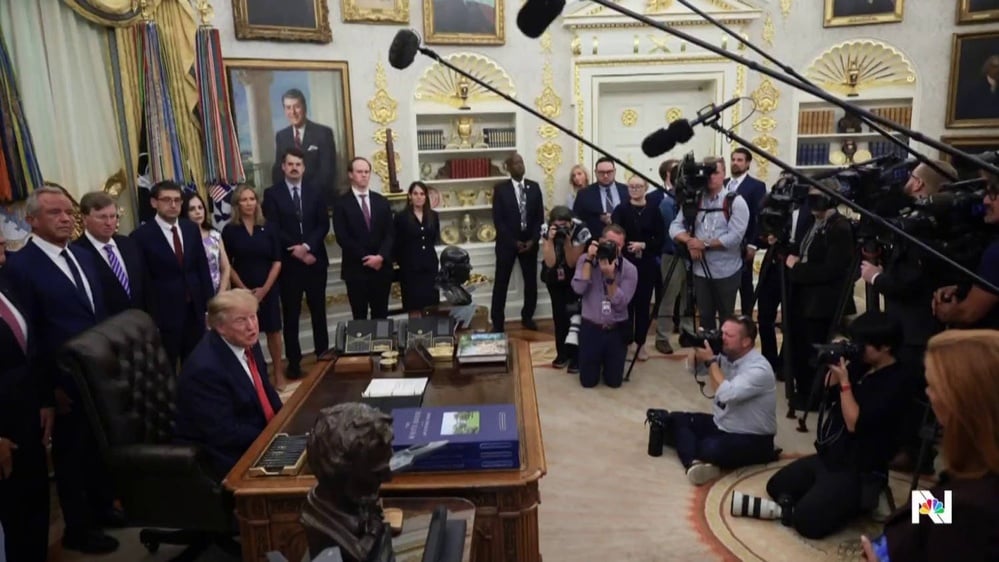


2026 © Helium Trades
Privacy Policy & Disclosure
* Disclaimer: Nothing on this website constitutes investment advice, performance data or any recommendation that any particular security, portfolio of securities, transaction or investment strategy is suitable for any specific person. Helium Trades is not responsible in any way for the accuracy
of any model predictions or price data. Any mention of a particular security and related prediction data is not a recommendation to buy or sell that security. Investments in securities involve the risk of loss. Past performance is no guarantee of future results. Helium Trades is not responsible for any of your investment decisions,
you should consult a financial expert before engaging in any transaction.
Helium Research Assistant

How can I help you today?
Ask any question about this page.


