See whether Helium helps you make better-informed decisions. Try every Pro Trader feature for 30 days. No credit card required.
Try every Pro Trader feature for 30 days. No credit card required.
November 23, 2026 · 0 shares
A strongly opinionated anti-war frame leads with 'endless, taxpayer-funded proxy war' and sometimes states suspected Ukrainian responsibility more definitively than the sourcing supports.
Helium Analysis
Limitations: Attribution remains contested: the article says 'suspected' and 'no one has claimed responsibility' while also using more definitive framing; promotional boilerplate and scraped formatting were excluded.
·
19 of 56 available dimensions scored; omitted dimensions are not treated as neutral.
·
Verified supporting quotes for 19 of 19 scored dimensions.
Claim: The opening invokes a right-populist, anti-Ukraine-aid critique by calling the war an 'endless, taxpayer-funded proxy war.'
“The endless, taxpayer-funded proxy war in Eastern Europe just violently spilled over into North Africa.” · exact text match
Why: This loaded anti-aid framing is commonly associated with conservative-populist skepticism of the Ukraine proxy conflict.
Claim: The opening frames the conflict as an expensive burden imposed by distant policymakers on ordinary taxpayers.
“The endless, taxpayer-funded proxy war in Eastern Europe just violently spilled over into North Africa.” · exact text match
Why: 'Taxpayer-funded proxy war' sets ordinary taxpayers against elite war policy, a populist framing.
Claim: The opening embeds a subjective judgment about the war rather than only reporting the strike.
“The endless, taxpayer-funded proxy war in Eastern Europe just violently spilled over into North Africa.” · exact text match
Why: The adjective-laden judgment frames the event as an extension of a disliked war.
Claim: Sensational wording dramatizes the attack beyond neutral reporting.
“The endless, taxpayer-funded proxy war in Eastern Europe just violently spilled over into North Africa.” · exact text match
“triggering a massive explosion and fire” · exact text match
Why: 'Violently spilled over' and 'massive explosion' heighten drama and impact.
Claim: The article presents the conflict as endless and escalating, a pessimistic outlook.
“The endless, taxpayer-funded proxy war in Eastern Europe just violently spilled over into North Africa.” · exact text match
Why: 'Endless' and 'violently spilled over' convey a negative, escalation-focused prognosis.
Claim: The opening advances a prescriptive critique of the proxy war rather than merely describing the strike.
“The endless, taxpayer-funded proxy war in Eastern Europe just violently spilled over into North Africa.” · exact text match
Why: The phrase 'endless, taxpayer-funded proxy war' signals disapproval of the policy, not neutral description.
Claim: The anti-war phrasing criticizes the proxy conflict rather than advocating escalation.
“The endless, taxpayer-funded proxy war in Eastern Europe just violently spilled over into North Africa.” · exact text match
Why: Criticizing the 'endless' proxy war is a dovish/anti-interventionist cue.
Claim: The language heightens fear by emphasizing violent escalation and massive destruction.
“The endless, taxpayer-funded proxy war in Eastern Europe just violently spilled over into North Africa.” · exact text match
“triggering a massive explosion and fire” · exact text match
Why: 'Violently spilled over' and 'massive explosion and fire' create alarm.
Claim: The text treats Ukrainian responsibility as established even while reporting no claim of responsibility and describing the attack as suspected.
“The attacks come just 12 hours after the Ukrainians sank the 105-meter-long Russian Navy corvette Merkury in the Port of Benghazi.” · exact text match
“No one has claimed responsibility, and Russian authorities have issued no immediate public reaction.” · exact text match
Why: It asserts 'the Ukrainians sank' while also saying no one claimed responsibility.
Claim: The opening is explicitly opinionated rather than neutral.
“The endless, taxpayer-funded proxy war in Eastern Europe just violently spilled over into North Africa.” · exact text match
Why: 'Endless, taxpayer-funded proxy war' is a clear evaluative opinion.
Claim: The report is framed through a political lens of taxpayer-funded proxy war.
“The endless, taxpayer-funded proxy war in Eastern Europe just violently spilled over into North Africa.” · exact text match
Why: The phrase makes the event about war policy and funding politics.
Claim: Complex geopolitical conflict is compressed into the slogan-like phrase 'endless, taxpayer-funded proxy war.'
“The endless, taxpayer-funded proxy war in Eastern Europe just violently spilled over into North Africa.” · exact text match
Why: The phrase reduces a multi-actor war to a simple taxpayer-funded proxy narrative.
Claim: The article asserts a Ukrainian sinking despite no claimed responsibility and a 'suspected' attribution.
“The attacks come just 12 hours after the Ukrainians sank the 105-meter-long Russian Navy corvette Merkury in the Port of Benghazi.” · exact text match
“No one has claimed responsibility, and Russian authorities have issued no immediate public reaction.” · exact text match
Why: The definite attribution exceeds the stated 'suspected' and unclaimed status.
Claim: The opening imposes an anti-interventionist ideological frame on the event.
“The endless, taxpayer-funded proxy war in Eastern Europe just violently spilled over into North Africa.” · exact text match
Why: 'Taxpayer-funded proxy war' is a recognizable ideological critique of intervention.
Claim: The article adopts an anti-establishment stance by attacking the taxpayer-funded proxy war.
“The endless, taxpayer-funded proxy war in Eastern Europe just violently spilled over into North Africa.” · exact text match
Why: The phrase frames the war as a costly establishment project.
Claim: The article's negative emotional valence is set by 'endless' and 'violently.'
“The endless, taxpayer-funded proxy war in Eastern Europe just violently spilled over into North Africa.” · exact text match
Why: These words convey strong negative affect toward the conflict.
Claim: The report names sources for contested details, including Libya’s eastern government, satellite imagery, Reuters, and Libyan military sources.
“according to Libya’s eastern-based government and satellite imagery” · exact text match
“two Libyan military sources told Reuters” · exact text match
Counterevidence:
“The attacks come just 12 hours after the Ukrainians sank the 105-meter-long Russian Navy corvette Merkury in the Port of Benghazi.” · exact text match
Why: Visible sourcing supports moderate credibility, though loaded framing and unverified responsibility reduce it.
Claim: The report mixes attributed suspicion with a more definite assertion of Ukrainian responsibility.
“suspected drone attack using unmanned vehicles” · exact text match
“The attacks come just 12 hours after the Ukrainians sank the 105-meter-long Russian Navy corvette Merkury in the Port of Benghazi.” · exact text match
Why: It labels one assessment 'suspected' but elsewhere states the Ukrainians sank the vessel.
Claim: Loaded framing is used to shape interpretation of the strike.
“The endless, taxpayer-funded proxy war in Eastern Europe just violently spilled over into North Africa.” · exact text match
Why: The evaluative phrase is placed before the factual report, priming the reader against the war.
Attribution remains contested: the article says 'suspected' and 'no one has claimed responsibility' while also using more definitive framing; promotional boilerplate and scraped formatting were excluded.
November 22, 2026 · 0 shares
Cautious, attributed wording ('suspected,' 'according to Libyan officials') frames the report as factual and non-sensational, without overt ideological advocacy.
Helium Analysis
Limitations: The supplied article text is truncated after 'An initial investigation found that…', so later findings and full sourcing cannot be assessed.
·
7 of 56 available dimensions scored; omitted dimensions are not treated as neutral.
·
Verified supporting quotes for 7 of 7 scored dimensions.
Claim: The report uses attribution and uncertainty markers rather than subjective commentary.
“according to Libyan officials” · exact text match
“suspected Ukrainian drone attack” · exact text match
Why: Sourcing and the word 'suspected' qualify the claim, reducing subjective framing.
Claim: The report avoids sensational language while describing the strike and damage.
“was severely damaged in a suspected Ukrainian drone attack Sunday, according to Libyan officials.” · exact text match
Why: The damage is stated plainly and attributed, without alarmist or emotive framing beyond 'severely damaged'.
Claim: The report concerns a geopolitical military incident involving Russian and suspected Ukrainian forces in Libya.
“A Russian ship docked at a naval base in Benghazi” · exact text match
“suspected Ukrainian drone attack” · exact text match
Why: The subject is international security and state-linked military action, making it political in topic.
Claim: Visible attribution and cautious language give the excerpt moderate credibility, though corroboration is absent.
“according to Libyan officials” · exact text match
“suspected Ukrainian drone attack” · exact text match
Why: Attribution and hedging are present, but the item is short and single-sourced.
Claim: The account is framed through official attribution and a suspicion marker rather than assertive speculation.
“according to Libyan officials” · exact text match
“suspected Ukrainian drone attack” · exact text match
Why: Sourcing and hedging support a rational, restrained presentation.
Claim: Speculation is limited; the report presents the attack as suspected and cites an initial investigation.
“suspected Ukrainian drone attack” · exact text match
“An initial investigation found that…” · exact text match
Why: The wording is hedged and investigative, not a forecast or unsupported projection.
Claim: The report signals fairness by attributing key claims and labeling the attack suspected.
“according to Libyan officials” · exact text match
“suspected Ukrainian drone attack” · exact text match
Why: Attribution and uncertainty markers are observable honesty and fairness signals.
The supplied article text is truncated after 'An initial investigation found that…', so later findings and full sourcing cannot be assessed.
November 22, 2026 · 0 shares
Cautious attribution dominates: the account labels the attack 'suspected,' relies on anonymous Libyan military officials, and notes absent Russian/Ukrainian comment rather than asserting responsibility.
Helium Analysis
Limitations: The supplied text is a scraped wire report with malformed bracket/social-follow artifacts and no clear byline, limiting certainty about author attribution and full original presentation.
·
6 of 56 available dimensions scored; omitted dimensions are not treated as neutral.
·
Verified supporting quotes for 6 of 6 scored dimensions.
Claim: The report attributes the strike to Libyan officials and uses 'suspected' rather than asserting the event as confirmed fact.
“A suspected Ukrainian drone strike hit a Russian warship Sunday at a Libyan naval base, Libyan officials said” · exact text match
Why: Attribution and the qualifier 'suspected' keep the account in an objective, source-bound mode.
Claim: Damage and fire are described with factual specificity and attributed sourcing rather than sensational language.
“severely damaged the Merkury, a Russian Navy corvette, and ignited a fire at the facility, two Libyan military officials said” · exact text match
Why: The wording is concrete and measured, with no emotive embellishment beyond the attributed damage description.
Claim: The account is descriptive and attributive, not prescriptive about what should be done.
“A suspected Ukrainian drone strike hit a Russian warship Sunday at a Libyan naval base, Libyan officials said, the latest attack in the North African nation linked to the Russia-Ukraine war.” · exact text match
Why: It reports the event and official statements without recommending a policy response.
Claim: The report is substantially political, centering on rival Libyan authorities and international-conflict spillover.
“turning Libya into an arena for international conflicts or a theater for external powers to settle scores” · exact text match
“Libya has been divided since a NATO-backed uprising toppled longtime dictator Moammar Gadhafi, who was later killed, in 2011.” · exact text match
Why: Official reactions and background on Libya's divided governance make political conflict central to the story.
Claim: Visible sourcing, attribution to an initial investigation, and acknowledgment of missing comment support high credibility.
“two Libyan military officials said” · exact text match
“according to an initial investigation into the attack” · exact text match
“There was no immediate comment from either Russia or Ukraine.” · exact text match
Why: The report signals both its sources and limits rather than presenting unconfirmed details as settled.
Claim: The report discloses source affiliation and anonymity constraints and acknowledges missing claims/comments from key parties.
“The officials, affiliated with the self-styled Libyan National Army, which controls eastern and southern Libya, spoke on condition of anonymity because they were not allowed to talk to reporters.” · exact text match
“No group immediately claimed responsibility for the attack.
There was no immediate comment from either Russia or Ukraine.”
· exact text match
Why: Those disclosures let readers assess sourcing and signal an effort to note relevant absences.
The supplied text is a scraped wire report with malformed bracket/social-follow artifacts and no clear byline, limiting certainty about author attribution and full original presentation.
November 22, 2026 · 0 shares
Coverage is attribution-heavy and hedged, repeatedly using 'suspected' and named-source attribution while including an unendorsed pro-Ukraine official quote, so the strongest observable framing is neutral but security-focused.
Helium Analysis
Limitations: The supplied report has no byline and relies on attributed Libyan, military, and medical sources for drone origin and casualty claims, which are not independently verified in the text.
·
9 of 56 available dimensions scored; omitted dimensions are not treated as neutral.
·
Verified supporting quotes for 9 of 9 scored dimensions.
Claim: The report does not frame the attack through liberal-versus-conservative ideological themes.
“suspected Ukrainian drone attack, officials said” · exact text match
Why: The event is described through attributed security reporting rather than left-right ideological language.
Claim: The report is largely factual and source-attributed, with uncertainty clearly marked.
“suspected Ukrainian drone attack, officials said” · exact text match
“No one has officially claimed responsibility for the attack.” · exact text match
Why: These formulations show objective, source-based reporting rather than subjective commentary.
Claim: The report uses measured descriptors and avoids sensational language.
“suspected Ukrainian drone attack, officials said” · exact text match
“most of the vessel had capsized and sunk on Sunday” · exact text match
Why: The language is descriptive and hedged rather than emotionally charged or hyperbolic.
Claim: The report describes events and statements without prescribing a policy response.
“The eastern-based government said that port and naval base facilities, including warehouses, were safe and that normal operations had resumed after the incident.” · exact text match
“No one has officially claimed responsibility for the attack.” · exact text match
Why: It reports developments and statements rather than recommending action.
Claim: The report centers on a military strike within the Russia-Ukraine war and includes a prime minister's political characterization.
“Finland’s prime minister Petteri Orpo warned that the Russia-Ukaine conflict was “spilling over”” · exact text match
Why: The selected official quote frames the incident in broad geopolitical conflict terms.
Claim: The report displays multiple attributions, uncertainty markers, and official responses.
“Libyan officials told the Associated Press.” · exact text match
“medical sources told Reuters.” · exact text match
Why: Named outlets and source attribution support credibility within the supplied text.
Claim: The report relies on attributed and hedged descriptions rather than speculative or emotive reasoning.
“suspected Ukrainian drone attack, officials said” · exact text match
“No one has officially claimed responsibility for the attack.” · exact text match
Why: It flags uncertainty and sourcing, which supports a rational reporting classification.
Claim: The report includes attribution, uncertainty, and official responses without asserting unverified responsibility.
“No one has officially claimed responsibility for the attack.” · exact text match
“The government emphasised that Libya was not involved in the conflict or to any war beyond its borders.” · exact text match
Why: Including uncertainty and the Libyan government's denial/condemnation signals fair handling.
Claim: The report provides sourced details, satellite evidence, casualty figures, and context.
“Satellite images by Vantor showed the ship was a Russian Navy corvette” · exact text match
“Ten people, both Russians and Libyans, were injured in the attack and are receiving treatment in Benghazi, medical sources told Reuters.” · exact text match
Why: It integrates specific details and multiple sources, supporting an above-average intelligence rating.
The supplied report has no byline and relies on attributed Libyan, military, and medical sources for drone origin and casualty claims, which are not independently verified in the text.
November 22, 2026 · 0 shares
Framing is largely neutral and attribution-conscious, with a mild dramatic flourish around the explosion.
Helium Analysis
Limitations: The supplied text is a short excerpt with no precise date, named officials, or independent confirmation of the sinking or attribution.
·
5 of 56 available dimensions scored; omitted dimensions are not treated as neutral.
·
Verified supporting quotes for 5 of 5 scored dimensions.
Claim: The report is predominantly factual and attributional rather than subjective commentary.
“according to Libyan officials from the country’s eastern government” · exact text match
“suspected Ukrainian sea drone attack” · exact text match
Counterevidence:
“causing a dramatic night-time explosion and the sinking of the vessel” · exact text match
Why: It attributes details to officials and flags the Ukrainian attribution as suspected, though 'dramatic' adds mild color.
Claim: The framing is mostly restrained and factual, with only a mildly vivid phrase.
“according to Libyan officials from the country’s eastern government” · exact text match
“suspected Ukrainian sea drone attack” · exact text match
Counterevidence:
“causing a dramatic night-time explosion and the sinking of the vessel” · exact text match
Why: Attribution and suspicion qualify the claim, keeping the report from sustained sensationalizing; 'dramatic' is a limited exception.
Claim: The report is descriptive, offering no policy recommendation or prescriptive argument.
“A Russian warship docked in the Libyan port city of Benghazi was struck in the early hours of Sunday in a suspected Ukrainian sea drone attack” · exact text match
Why: It narrates the incident and sourcing without advocating action.
Claim: Credibility is supported by explicit attribution, uncertainty markers, and acknowledgment that no responsibility claim was made.
“according to Libyan officials from the country’s eastern government” · exact text match
“No one has claimed responsibility for the strike on the vessel” · exact text match
Why: The excerpt shows sourcing and caution, though it lacks named officials and independent confirmation.
Claim: The report signals honesty by qualifying attribution and acknowledging absence of a responsibility claim.
“suspected Ukrainian sea drone attack” · exact text match
“No one has claimed responsibility for the strike on the vessel” · exact text match
Why: Uncertainty about the attacker and responsibility is stated, and damage details are attributed to eastern Libyan officials.
The supplied text is a short excerpt with no precise date, named officials, or independent confirmation of the sinking or attribution.
November 23, 2026 · 0 shares
A strongly opinionated anti-war frame leads with 'endless, taxpayer-funded proxy war' and sometimes states suspected Ukrainian responsibility more definitively than the sourcing supports.
Helium Analysis
Limitations: Attribution remains contested: the article says 'suspected' and 'no one has claimed responsibility' while also using more definitive framing; promotional boilerplate and scraped formatting were excluded.
·
19 of 56 available dimensions scored; omitted dimensions are not treated as neutral.
·
Verified supporting quotes for 19 of 19 scored dimensions.
Claim: The opening invokes a right-populist, anti-Ukraine-aid critique by calling the war an 'endless, taxpayer-funded proxy war.'
“The endless, taxpayer-funded proxy war in Eastern Europe just violently spilled over into North Africa.” · exact text match
Why: This loaded anti-aid framing is commonly associated with conservative-populist skepticism of the Ukraine proxy conflict.
Claim: The opening frames the conflict as an expensive burden imposed by distant policymakers on ordinary taxpayers.
“The endless, taxpayer-funded proxy war in Eastern Europe just violently spilled over into North Africa.” · exact text match
Why: 'Taxpayer-funded proxy war' sets ordinary taxpayers against elite war policy, a populist framing.
Claim: The opening embeds a subjective judgment about the war rather than only reporting the strike.
“The endless, taxpayer-funded proxy war in Eastern Europe just violently spilled over into North Africa.” · exact text match
Why: The adjective-laden judgment frames the event as an extension of a disliked war.
Claim: Sensational wording dramatizes the attack beyond neutral reporting.
“The endless, taxpayer-funded proxy war in Eastern Europe just violently spilled over into North Africa.” · exact text match
“triggering a massive explosion and fire” · exact text match
Why: 'Violently spilled over' and 'massive explosion' heighten drama and impact.
Claim: The article presents the conflict as endless and escalating, a pessimistic outlook.
“The endless, taxpayer-funded proxy war in Eastern Europe just violently spilled over into North Africa.” · exact text match
Why: 'Endless' and 'violently spilled over' convey a negative, escalation-focused prognosis.
Claim: The opening advances a prescriptive critique of the proxy war rather than merely describing the strike.
“The endless, taxpayer-funded proxy war in Eastern Europe just violently spilled over into North Africa.” · exact text match
Why: The phrase 'endless, taxpayer-funded proxy war' signals disapproval of the policy, not neutral description.
Claim: The anti-war phrasing criticizes the proxy conflict rather than advocating escalation.
“The endless, taxpayer-funded proxy war in Eastern Europe just violently spilled over into North Africa.” · exact text match
Why: Criticizing the 'endless' proxy war is a dovish/anti-interventionist cue.
Claim: The language heightens fear by emphasizing violent escalation and massive destruction.
“The endless, taxpayer-funded proxy war in Eastern Europe just violently spilled over into North Africa.” · exact text match
“triggering a massive explosion and fire” · exact text match
Why: 'Violently spilled over' and 'massive explosion and fire' create alarm.
Claim: The text treats Ukrainian responsibility as established even while reporting no claim of responsibility and describing the attack as suspected.
“The attacks come just 12 hours after the Ukrainians sank the 105-meter-long Russian Navy corvette Merkury in the Port of Benghazi.” · exact text match
“No one has claimed responsibility, and Russian authorities have issued no immediate public reaction.” · exact text match
Why: It asserts 'the Ukrainians sank' while also saying no one claimed responsibility.
Claim: The opening is explicitly opinionated rather than neutral.
“The endless, taxpayer-funded proxy war in Eastern Europe just violently spilled over into North Africa.” · exact text match
Why: 'Endless, taxpayer-funded proxy war' is a clear evaluative opinion.
Claim: The report is framed through a political lens of taxpayer-funded proxy war.
“The endless, taxpayer-funded proxy war in Eastern Europe just violently spilled over into North Africa.” · exact text match
Why: The phrase makes the event about war policy and funding politics.
Claim: Complex geopolitical conflict is compressed into the slogan-like phrase 'endless, taxpayer-funded proxy war.'
“The endless, taxpayer-funded proxy war in Eastern Europe just violently spilled over into North Africa.” · exact text match
Why: The phrase reduces a multi-actor war to a simple taxpayer-funded proxy narrative.
Claim: The article asserts a Ukrainian sinking despite no claimed responsibility and a 'suspected' attribution.
“The attacks come just 12 hours after the Ukrainians sank the 105-meter-long Russian Navy corvette Merkury in the Port of Benghazi.” · exact text match
“No one has claimed responsibility, and Russian authorities have issued no immediate public reaction.” · exact text match
Why: The definite attribution exceeds the stated 'suspected' and unclaimed status.
Claim: The opening imposes an anti-interventionist ideological frame on the event.
“The endless, taxpayer-funded proxy war in Eastern Europe just violently spilled over into North Africa.” · exact text match
Why: 'Taxpayer-funded proxy war' is a recognizable ideological critique of intervention.
Claim: The article adopts an anti-establishment stance by attacking the taxpayer-funded proxy war.
“The endless, taxpayer-funded proxy war in Eastern Europe just violently spilled over into North Africa.” · exact text match
Why: The phrase frames the war as a costly establishment project.
Claim: The article's negative emotional valence is set by 'endless' and 'violently.'
“The endless, taxpayer-funded proxy war in Eastern Europe just violently spilled over into North Africa.” · exact text match
Why: These words convey strong negative affect toward the conflict.
Claim: The report names sources for contested details, including Libya’s eastern government, satellite imagery, Reuters, and Libyan military sources.
“according to Libya’s eastern-based government and satellite imagery” · exact text match
“two Libyan military sources told Reuters” · exact text match
Counterevidence:
“The attacks come just 12 hours after the Ukrainians sank the 105-meter-long Russian Navy corvette Merkury in the Port of Benghazi.” · exact text match
Why: Visible sourcing supports moderate credibility, though loaded framing and unverified responsibility reduce it.
Claim: The report mixes attributed suspicion with a more definite assertion of Ukrainian responsibility.
“suspected drone attack using unmanned vehicles” · exact text match
“The attacks come just 12 hours after the Ukrainians sank the 105-meter-long Russian Navy corvette Merkury in the Port of Benghazi.” · exact text match
Why: It labels one assessment 'suspected' but elsewhere states the Ukrainians sank the vessel.
Claim: Loaded framing is used to shape interpretation of the strike.
“The endless, taxpayer-funded proxy war in Eastern Europe just violently spilled over into North Africa.” · exact text match
Why: The evaluative phrase is placed before the factual report, priming the reader against the war.
Attribution remains contested: the article says 'suspected' and 'no one has claimed responsibility' while also using more definitive framing; promotional boilerplate and scraped formatting were excluded.
November 22, 2026 · 0 shares
Coverage is attribution-heavy and hedged, repeatedly using 'suspected' and named-source attribution while including an unendorsed pro-Ukraine official quote, so the strongest observable framing is neutral but security-focused.
Helium Analysis
Limitations: The supplied report has no byline and relies on attributed Libyan, military, and medical sources for drone origin and casualty claims, which are not independently verified in the text.
·
9 of 56 available dimensions scored; omitted dimensions are not treated as neutral.
·
Verified supporting quotes for 9 of 9 scored dimensions.
Claim: The report does not frame the attack through liberal-versus-conservative ideological themes.
“suspected Ukrainian drone attack, officials said” · exact text match
Why: The event is described through attributed security reporting rather than left-right ideological language.
Claim: The report is largely factual and source-attributed, with uncertainty clearly marked.
“suspected Ukrainian drone attack, officials said” · exact text match
“No one has officially claimed responsibility for the attack.” · exact text match
Why: These formulations show objective, source-based reporting rather than subjective commentary.
Claim: The report uses measured descriptors and avoids sensational language.
“suspected Ukrainian drone attack, officials said” · exact text match
“most of the vessel had capsized and sunk on Sunday” · exact text match
Why: The language is descriptive and hedged rather than emotionally charged or hyperbolic.
Claim: The report describes events and statements without prescribing a policy response.
“The eastern-based government said that port and naval base facilities, including warehouses, were safe and that normal operations had resumed after the incident.” · exact text match
“No one has officially claimed responsibility for the attack.” · exact text match
Why: It reports developments and statements rather than recommending action.
Claim: The report centers on a military strike within the Russia-Ukraine war and includes a prime minister's political characterization.
“Finland’s prime minister Petteri Orpo warned that the Russia-Ukaine conflict was “spilling over”” · exact text match
Why: The selected official quote frames the incident in broad geopolitical conflict terms.
Claim: The report displays multiple attributions, uncertainty markers, and official responses.
“Libyan officials told the Associated Press.” · exact text match
“medical sources told Reuters.” · exact text match
Why: Named outlets and source attribution support credibility within the supplied text.
Claim: The report relies on attributed and hedged descriptions rather than speculative or emotive reasoning.
“suspected Ukrainian drone attack, officials said” · exact text match
“No one has officially claimed responsibility for the attack.” · exact text match
Why: It flags uncertainty and sourcing, which supports a rational reporting classification.
Claim: The report includes attribution, uncertainty, and official responses without asserting unverified responsibility.
“No one has officially claimed responsibility for the attack.” · exact text match
“The government emphasised that Libya was not involved in the conflict or to any war beyond its borders.” · exact text match
Why: Including uncertainty and the Libyan government's denial/condemnation signals fair handling.
Claim: The report provides sourced details, satellite evidence, casualty figures, and context.
“Satellite images by Vantor showed the ship was a Russian Navy corvette” · exact text match
“Ten people, both Russians and Libyans, were injured in the attack and are receiving treatment in Benghazi, medical sources told Reuters.” · exact text match
Why: It integrates specific details and multiple sources, supporting an above-average intelligence rating.
The supplied report has no byline and relies on attributed Libyan, military, and medical sources for drone origin and casualty claims, which are not independently verified in the text.
November 23, 2026 · 0 shares
A strongly opinionated anti-war frame leads with 'endless, taxpayer-funded proxy war' and sometimes states suspected Ukrainian responsibility more definitively than the sourcing supports.
Helium Analysis
Limitations: Attribution remains contested: the article says 'suspected' and 'no one has claimed responsibility' while also using more definitive framing; promotional boilerplate and scraped formatting were excluded.
·
19 of 56 available dimensions scored; omitted dimensions are not treated as neutral.
·
Verified supporting quotes for 19 of 19 scored dimensions.
Claim: The opening invokes a right-populist, anti-Ukraine-aid critique by calling the war an 'endless, taxpayer-funded proxy war.'
“The endless, taxpayer-funded proxy war in Eastern Europe just violently spilled over into North Africa.” · exact text match
Why: This loaded anti-aid framing is commonly associated with conservative-populist skepticism of the Ukraine proxy conflict.
Claim: The opening frames the conflict as an expensive burden imposed by distant policymakers on ordinary taxpayers.
“The endless, taxpayer-funded proxy war in Eastern Europe just violently spilled over into North Africa.” · exact text match
Why: 'Taxpayer-funded proxy war' sets ordinary taxpayers against elite war policy, a populist framing.
Claim: The opening embeds a subjective judgment about the war rather than only reporting the strike.
“The endless, taxpayer-funded proxy war in Eastern Europe just violently spilled over into North Africa.” · exact text match
Why: The adjective-laden judgment frames the event as an extension of a disliked war.
Claim: Sensational wording dramatizes the attack beyond neutral reporting.
“The endless, taxpayer-funded proxy war in Eastern Europe just violently spilled over into North Africa.” · exact text match
“triggering a massive explosion and fire” · exact text match
Why: 'Violently spilled over' and 'massive explosion' heighten drama and impact.
Claim: The article presents the conflict as endless and escalating, a pessimistic outlook.
“The endless, taxpayer-funded proxy war in Eastern Europe just violently spilled over into North Africa.” · exact text match
Why: 'Endless' and 'violently spilled over' convey a negative, escalation-focused prognosis.
Claim: The opening advances a prescriptive critique of the proxy war rather than merely describing the strike.
“The endless, taxpayer-funded proxy war in Eastern Europe just violently spilled over into North Africa.” · exact text match
Why: The phrase 'endless, taxpayer-funded proxy war' signals disapproval of the policy, not neutral description.
Claim: The anti-war phrasing criticizes the proxy conflict rather than advocating escalation.
“The endless, taxpayer-funded proxy war in Eastern Europe just violently spilled over into North Africa.” · exact text match
Why: Criticizing the 'endless' proxy war is a dovish/anti-interventionist cue.
Claim: The language heightens fear by emphasizing violent escalation and massive destruction.
“The endless, taxpayer-funded proxy war in Eastern Europe just violently spilled over into North Africa.” · exact text match
“triggering a massive explosion and fire” · exact text match
Why: 'Violently spilled over' and 'massive explosion and fire' create alarm.
Claim: The text treats Ukrainian responsibility as established even while reporting no claim of responsibility and describing the attack as suspected.
“The attacks come just 12 hours after the Ukrainians sank the 105-meter-long Russian Navy corvette Merkury in the Port of Benghazi.” · exact text match
“No one has claimed responsibility, and Russian authorities have issued no immediate public reaction.” · exact text match
Why: It asserts 'the Ukrainians sank' while also saying no one claimed responsibility.
Claim: The opening is explicitly opinionated rather than neutral.
“The endless, taxpayer-funded proxy war in Eastern Europe just violently spilled over into North Africa.” · exact text match
Why: 'Endless, taxpayer-funded proxy war' is a clear evaluative opinion.
Claim: The report is framed through a political lens of taxpayer-funded proxy war.
“The endless, taxpayer-funded proxy war in Eastern Europe just violently spilled over into North Africa.” · exact text match
Why: The phrase makes the event about war policy and funding politics.
Claim: Complex geopolitical conflict is compressed into the slogan-like phrase 'endless, taxpayer-funded proxy war.'
“The endless, taxpayer-funded proxy war in Eastern Europe just violently spilled over into North Africa.” · exact text match
Why: The phrase reduces a multi-actor war to a simple taxpayer-funded proxy narrative.
Claim: The article asserts a Ukrainian sinking despite no claimed responsibility and a 'suspected' attribution.
“The attacks come just 12 hours after the Ukrainians sank the 105-meter-long Russian Navy corvette Merkury in the Port of Benghazi.” · exact text match
“No one has claimed responsibility, and Russian authorities have issued no immediate public reaction.” · exact text match
Why: The definite attribution exceeds the stated 'suspected' and unclaimed status.
Claim: The opening imposes an anti-interventionist ideological frame on the event.
“The endless, taxpayer-funded proxy war in Eastern Europe just violently spilled over into North Africa.” · exact text match
Why: 'Taxpayer-funded proxy war' is a recognizable ideological critique of intervention.
Claim: The article adopts an anti-establishment stance by attacking the taxpayer-funded proxy war.
“The endless, taxpayer-funded proxy war in Eastern Europe just violently spilled over into North Africa.” · exact text match
Why: The phrase frames the war as a costly establishment project.
Claim: The article's negative emotional valence is set by 'endless' and 'violently.'
“The endless, taxpayer-funded proxy war in Eastern Europe just violently spilled over into North Africa.” · exact text match
Why: These words convey strong negative affect toward the conflict.
Claim: The report names sources for contested details, including Libya’s eastern government, satellite imagery, Reuters, and Libyan military sources.
“according to Libya’s eastern-based government and satellite imagery” · exact text match
“two Libyan military sources told Reuters” · exact text match
Counterevidence:
“The attacks come just 12 hours after the Ukrainians sank the 105-meter-long Russian Navy corvette Merkury in the Port of Benghazi.” · exact text match
Why: Visible sourcing supports moderate credibility, though loaded framing and unverified responsibility reduce it.
Claim: The report mixes attributed suspicion with a more definite assertion of Ukrainian responsibility.
“suspected drone attack using unmanned vehicles” · exact text match
“The attacks come just 12 hours after the Ukrainians sank the 105-meter-long Russian Navy corvette Merkury in the Port of Benghazi.” · exact text match
Why: It labels one assessment 'suspected' but elsewhere states the Ukrainians sank the vessel.
Claim: Loaded framing is used to shape interpretation of the strike.
“The endless, taxpayer-funded proxy war in Eastern Europe just violently spilled over into North Africa.” · exact text match
Why: The evaluative phrase is placed before the factual report, priming the reader against the war.
Attribution remains contested: the article says 'suspected' and 'no one has claimed responsibility' while also using more definitive framing; promotional boilerplate and scraped formatting were excluded.
November 23, 2026 · 0 shares
Wire-style, attributed reporting leads with Zelenskyy's account of Ukrainian drone strikes as accomplished results and balances it with Russia's official warning, without independent confirmation in the supplied text.
Helium Analysis
Limitations: The supplied text contains duplicated and truncated passages, including a broken injury sentence and repeated article text; injury and attribution details were reconstructed from the repeated materials.
·
8 of 56 available dimensions scored; omitted dimensions are not treated as neutral.
·
Verified supporting quotes for 8 of 8 scored dimensions.
Claim: The report mostly uses attributed official statements but presents the Ukrainian strike results as established facts in the lead.
“Ukraine sank a Russian corvette, destroyed a military helicopter, and struck a cargo vessel in a naval drone operation off the coast of Libya, Ukrainian President Volodymyr Zelenskyy said Monday.” · exact text match
Why: The attributed wording supports an objective classification, while the lead's factual phrasing of claimed results is mildly subjective.
Claim: The report uses straight news language and avoids sensational or dramatic framing outside direct quotes.
“Zelenskyy confirms sea drone attack on Russian warship.” · exact text match
Why: The headline and lead are declarative and restrained, supporting a strongly objective rating.
Claim: The story is framed as a geopolitical and military confrontation between Ukrainian and Russian official positions.
“Ukrainian President Volodymyr Zelenskyy said Monday.” · exact text match
“Russia’s ambassador to Libya, Aydar Aganin, accused Ukraine of seeking to extend the conflict into maritime areas far beyond the main theater of fighting” · exact text match
Why: Official war statements and diplomatic warnings make the report heavily political.
Claim: The lead presents the operation's claimed results as accomplished facts before attributing them to Zelenskyy at the sentence's end.
“Ukraine sank a Russian corvette, destroyed a military helicopter, and struck a cargo vessel in a naval drone operation off the coast of Libya, Ukrainian President Volodymyr Zelenskyy said Monday.” · exact text match
Why: The declarative phrasing creates modest certainty beyond the single-source attribution in the supplied text.
Claim: The publisher's prose remains emotionally neutral, balancing Ukrainian claims with a Russian official response.
“Ukrainian President Volodymyr Zelenskyy said Monday.” · exact text match
“Russia’s ambassador to Libya, Aydar Aganin, accused Ukraine of seeking to extend the conflict into maritime areas far beyond the main theater of fighting” · exact text match
Why: Reporting attributed claims from both sides without emotive adjectives supports neutral emotional framing.
Claim: The report shows standard attribution and includes multiple official perspectives, though it provides limited independent verification.
“Ukrainian President Volodymyr Zelenskyy said Monday.” · exact text match
“Russia’s ambassador to Libya, Aydar Aganin, accused Ukraine of seeking to extend the conflict into maritime areas far beyond the main theater of fighting” · exact text match
Why: Named sourcing and opposing responses support above-neutral credibility, but reliance on official claims limits certainty.
Claim: The report grounds its central claims in named official sources rather than unsupported inference.
“Ukrainian President Volodymyr Zelenskyy said Monday.” · exact text match
“Russia’s ambassador to Libya, Aydar Aganin, accused Ukraine of seeking to extend the conflict into maritime areas far beyond the main theater of fighting” · exact text match
Why: Explicit attribution to identified officials supports a rational, source-based classification.
Claim: The report attributes claims to named officials and includes the Russian ambassador's response.
“Ukrainian President Volodymyr Zelenskyy said Monday.” · exact text match
“Russia’s ambassador to Libya, Aydar Aganin, accused Ukraine of seeking to extend the conflict into maritime areas far beyond the main theater of fighting” · exact text match
Why: Including named attribution and the opposing official response supports above-neutral integrity.
The supplied text contains duplicated and truncated passages, including a broken injury sentence and repeated article text; injury and attribution details were reconstructed from the repeated materials.
November 23, 2026 · 0 shares
Headline presents the sinking as fact while the body attributes it to Zelensky's claim, otherwise using restrained, descriptive language.
Helium Analysis
Limitations: The excerpt is very short and relies almost entirely on Zelensky's account; no independent confirmation or Russian response is provided, limiting assessment of event details.
·
7 of 56 available dimensions scored; omitted dimensions are not treated as neutral.
·
Verified supporting quotes for 7 of 7 scored dimensions.
Claim: The report uses attributed, factual language rather than subjective commentary.
“President Volodymyr Zelensky said Monday, claiming that sea drones sank the navy vessel” · exact text match
Why: The sentence explicitly attributes the sinking claim to Zelensky and does not add evaluative wording.
Claim: The report is largely restrained and factual rather than sensational.
“Ukrainian forces deployed seven domestically made sea drones in the operation” · exact text match
Why: Specific operational details are given in neutral prose without emotive adjectives.
Claim: The article describes the reported attack without prescribing a policy response.
“Ukraine carried out an attack on a Russian warship moored at a port in Libya” · exact text match
Why: The sentence reports an action and contains no recommendation or advocacy.
Claim: The report is centered on political-military state action.
“President Volodymyr Zelensky said Monday” · exact text match
“Moscow launched the 2022 full-scale invasion of its neighbour” · exact text match
Why: The content concerns Ukrainian military action, a presidential statement, and the Russia-Ukraine war, making it strongly political.
Claim: The headline asserts the sinking as fact beyond the single attributed claim in the body.
“Ukrainian drones sink Russian warship at naval base in Libya.” · exact text match
Counterevidence:
“claiming that sea drones sank the navy vessel” · exact text match
Why: The unqualified headline states a contested event as fact, though the body later qualifies it as Zelensky's claim.
Claim: The excerpt is moderately credible because it attributes the central claim but provides no independent confirmation.
“President Volodymyr Zelensky said Monday, claiming that sea drones sank the navy vessel” · exact text match
Why: The sole-source claim is clearly attributed, which supports credibility, while the absence of corroboration limits it.
Claim: The report shows fair attribution by marking the central sinking claim as Zelensky's assertion.
“President Volodymyr Zelensky said Monday, claiming that sea drones sank the navy vessel” · exact text match
Why: Attribution of a contested or single-source claim is an observable honesty/fairness signal.
The excerpt is very short and relies almost entirely on Zelensky's account; no independent confirmation or Russian response is provided, limiting assessment of event details.
Frames Ukrainian long-range drone strikes as strategically justified attacks on Russia’s war-fuel and revenue infrastructure while treating Russian official statements with more skepticism ('claimed') than Ukrainian monitoring reports.
Helium Analysis
Limitations: Strike details rely heavily on Ukrainian Telegram channels and video claims; independent verification of damage and target identity is limited in the supplied text.
·
12 of 56 available dimensions scored; omitted dimensions are not treated as neutral.
·
Verified supporting quotes for 12 of 12 scored dimensions.
Claim: The report goes beyond neutral event description by explaining the strategic purpose of Ukraine's strikes.
“Ukraine's long-range drones go after the plants and pipelines that keep Russian troops supplied with fuel and bring in the oil revenue that pays for the war.” · exact text match
Why: This interpretive framing assigns strategic rationale to the attacks.
Claim: The report mainly describes events and attributed claims rather than prescribing actions.
“Russian officials acknowledged fires or damage in all three regions but did not name the sites.” · exact text match
“Ukraine's General Staff had not commented by 10:00 Kyiv time.” · exact text match
Why: Primarily descriptive reporting with no explicit call to action.
Claim: The report presents Ukrainian long-range strikes on Russian energy infrastructure as a legitimate means of degrading Russia's war effort.
“Ukraine's long-range drones go after the plants and pipelines that keep Russian troops supplied with fuel and bring in the oil revenue that pays for the war.” · exact text match
Why: Frames military escalation as strategically justified rather than calling for de-escalation.
Claim: The report includes evaluative strategic context rather than only raw incident details.
“Ukraine's long-range drones go after the plants and pipelines that keep Russian troops supplied with fuel and bring in the oil revenue that pays for the war.” · exact text match
Why: Frames the strikes as purposeful and consequential.
Claim: The report frames the refinery strikes within the political-military conflict between Russia and Ukraine.
“Russia's war goes on at the front line and in nightly drone and missile strikes on Ukraine's cities and power grid.” · exact text match
“Ukraine's long-range drones go after the plants and pipelines that keep Russian troops supplied with fuel and bring in the oil revenue that pays for the war.” · exact text match
Why: Explicitly embeds the events in the war's political and strategic stakes.
Claim: The report adopts a pro-Ukraine interpretive frame of the war and strikes.
“Russia's war goes on at the front line and in nightly drone and missile strikes on Ukraine's cities and power grid.” · exact text match
“Ukraine's long-range drones go after the plants and pipelines that keep Russian troops supplied with fuel and bring in the oil revenue that pays for the war.” · exact text match
Why: Uses language and causal framing aligned with Ukraine's war narrative.
Claim: Russian official statements are labeled as 'claimed' while Ukrainian monitoring channel assertions are introduced as 'reported'.
“Rostov Oblast Governor Yuri Slyusar claimed that more than 80 drones were destroyed or suppressed over the region.” · exact text match
“Exilenova+ reported at 01:05 Kyiv time.” · exact text match
Why: The asymmetric verbs treat comparable source claims differently.
Claim: The report supplies detailed sourcing and qualifying language for many claims.
“according to industry sources” · exact text match
“Russia's Defense Ministry claimed that 192 Ukrainian drones were downed overnight over 16 Russian regions and Russian-occupied Crimea.” · exact text match
Why: Includes attribution and distinguishes official claims, supporting credibility.
Claim: The report uses attributed data, timelines, and open-source analysis rather than emotional assertion.
“By 10 November, strikes since late October had disrupted about 30% of Russia's refining capacity, according to industry sources.” · exact text match
“Russian Telegram channel Astra's open-source analyst found many fires at the plant, most likely in the area holding its crude desalting and distillation units.” · exact text match
Why: Quantified and sourced analysis supports a rational classification.
Claim: The report uses loaded framing and asymmetric attribution to shape interpretation of the attacks.
“Russia's war goes on at the front line and in nightly drone and missile strikes on Ukraine's cities and power grid.” · exact text match
“Rostov Oblast Governor Yuri Slyusar claimed that more than 80 drones were destroyed or suppressed over the region.” · exact text match
Why: Loaded war framing and 'claimed' for Russian officials are observable framing techniques.
Claim: The report generally attributes claims to named sources and notes when a party had not commented.
“Ukrainian and Russian monitoring channels reported.” · exact text match
“Ukraine's General Staff had not commented by 10:00 Kyiv time.” · exact text match
Why: Shows sourcing and acknowledgment of missing response, though with asymmetric labeling.
Claim: The report integrates timelines, capacities, distances, and source attributions to explain the strikes.
“The refinery processes more than 13 million tons of crude a year, Astra noted.
It lies about 1,490 km from the front line.”
· exact text match
“By 10 November, strikes since late October had disrupted about 30% of Russia's refining capacity, according to industry sources.” · exact text match
Why: Detailed contextual data and source differentiation indicate high article intelligence.
Strike details rely heavily on Ukrainian Telegram channels and video claims; independent verification of damage and target identity is limited in the supplied text.
November 23, 2026 · 0 shares
The framing is sympathetic to Ukraine’s long-range drone campaign, foregrounding official Ukrainian and allied voices and morally charged terms such as “Russian aggression” and “war chest” while retaining attribution and caveats.
Helium Analysis
Limitations: The supplied text includes duplicated fragments, related-link/navigation items, and promotional newsletter copy, so only substantive news passages were analyzed.
·
13 of 56 available dimensions scored; omitted dimensions are not treated as neutral.
·
Verified supporting quotes for 13 of 13 scored dimensions.
Claim: The publisher’s own subheading uses a vivid evaluative verb, making the framing slightly subjective.
“Kyiv’s drone forces are hunting Moscow’s warships and arms from north Africa to the Baltic” · exact text match
Why: “hunting” adds dynamic, interpretive language beyond neutral description.
Claim: The report heightens impact with dramatic imagery of explosions and fire, though it remains tied to reported events.
“causing huge explosions” · exact text match
“was set ablaze between Libya and Malta” · exact text match
Why: Dramatic wording produces mild sensationalism without detaching from the reported incidents.
Claim: The article is primarily descriptive, narrating attacks and official statements rather than urging a policy course.
“The corvette Merkury – one of the most modern ships in the Russian navy – and the Angara cargo ship were attacked by marine drones on Sunday” · exact text match
Why: The central construction reports an event, supporting a strongly descriptive classification.
Claim: Prominent sympathetic selection of Ukrainian and allied statements frames offensive drone strikes as legitimate and effective, yielding a hawkish tilt.
““An exemplary Ukrainian operation ... I thank the warriors of the Security Service of Ukraine and all our defence forces of Ukraine who took part in carrying out these tasks,” Zelenskiy said” · exact text match
““Ukraine has the right to fight back against the aggressor.”” · exact text match
Why: Praise for the operation and endorsement of fighting back are prominent, though attributed to quoted leaders.
Claim: The report highlights regional alarm and escalation risks from the drone campaign.
““War is spilling over into our immediate vicinity,” said Finnish prime minister Petteri Orpo.” · exact text match
“further fuelling nervousness in the region about Russian aggression” · exact text match
Why: These phrases foreground fear of spillover and regional nervousness, supporting mild fearful framing.
Claim: The publisher states an evaluative judgment of Ukraine’s drone capability as fact rather than attributing it.
“it has become a world leader in the manufacture and use of attack drones” · exact text match
Why: This unqualified evaluative claim in publisher voice supports a mild opinion classification.
Claim: The article is centrally about geopolitical conflict, state responses, and military/diplomatic escalation.
“Kremlin spokesman Dmitry Peskov declined to comment on Monday about the attacks in Libya” · exact text match
“Estonia plans to close all its road border crossing with Russia on December 1st in response to alleged sabotage attacks and other operations.” · exact text match
Why: The report is structured around state actors and security/diplomatic responses, making it strongly political.
Claim: The report uses morally charged geopolitical terminology aligned with a Western pro-Ukraine interpretation.
“keeping export revenue flowing into the Kremlin’s war chest nearly five years into its all-out invasion of Ukraine” · exact text match
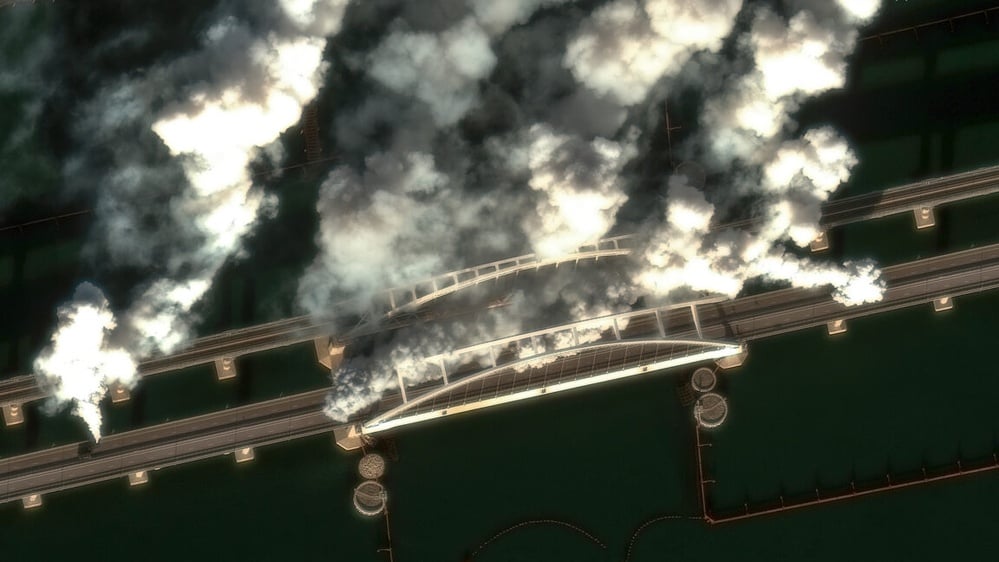
“badly damaged the bridge linking Russia to occupied Crimea” · exact text match
Why: Terms like “war chest,” “all-out invasion,” and “occupied Crimea” embed a normative Western framing, supporting moderate ideological bias.
Claim: The report foregrounds official state and Western-alliance framing, including sanctions legitimacy and allied leaders’ reactions.
“The Angara and the Sparta II are under Ukrainian and US sanctions for carrying weapons for Moscow.” · exact text match
““War is spilling over into our immediate vicinity,” said Finnish prime minister Petteri Orpo.” · exact text match
Why: Sanctions and allied official reactions are treated as central interpretive frames, indicating a pro-establishment perspective.
Claim: The report uses multiple named sources and distinguishes claims from confirmations, supporting high apparent credibility.
““We continue our operations in designated waters.
We are responding to Russia’s aggression.
We are developing Ukrainian weapons,” Zelenskiy added.”
· exact text match
“Kyiv did not claim responsibility for the attack on Sparta II” · exact text match
Why: Attribution to named actors plus caveats about non-claims provide visible credibility signals.
Claim: The report attributes contested military claims to named actors and notes unresolved confirmation gaps rather than presenting all claims as independently verified.
“Kyiv has not confirmed that its troops provide training to government forces and use Libya to strike Russian shipping” · exact text match
Why: This caveat shows the text distinguishes reports from confirmed facts, supporting a rational/evidence-bound classification.
Claim: The report notes non-claims and confirmation gaps, showing visible fairness and care with attribution.
“Kyiv did not claim responsibility for the attack on Sparta II” · exact text match
“Kyiv has not confirmed that its troops provide training to government forces and use Libya to strike Russian shipping” · exact text match
Why: Explicit caveats about responsibility and confirmation are strong internal integrity signals.
Claim: The article supplies detailed chronology, locations, vessel names, distances, and attribution, indicating high informational sophistication.
“In June, Ukraine’s drone forces said they hit the corvette Boiky – a sister ship of the Merkury – in Kronstadt naval base outside Saint Petersburg” · exact text match
“Kyiv says its drones have flown more than 3,000km to hit Russian energy sites in Siberia” · exact text match
Why: Specific dates, distances, vessel names, and sourcing support high article intelligence.
The supplied text includes duplicated fragments, related-link/navigation items, and promotional newsletter copy, so only substantive news passages were analyzed.
November 23, 2026 · 0 shares
A strongly opinionated anti-war frame leads with 'endless, taxpayer-funded proxy war' and sometimes states suspected Ukrainian responsibility more definitively than the sourcing supports.
Helium Analysis
Limitations: Attribution remains contested: the article says 'suspected' and 'no one has claimed responsibility' while also using more definitive framing; promotional boilerplate and scraped formatting were excluded.
·
19 of 56 available dimensions scored; omitted dimensions are not treated as neutral.
·
Verified supporting quotes for 19 of 19 scored dimensions.
Claim: The opening invokes a right-populist, anti-Ukraine-aid critique by calling the war an 'endless, taxpayer-funded proxy war.'
“The endless, taxpayer-funded proxy war in Eastern Europe just violently spilled over into North Africa.” · exact text match
Why: This loaded anti-aid framing is commonly associated with conservative-populist skepticism of the Ukraine proxy conflict.
Claim: The opening frames the conflict as an expensive burden imposed by distant policymakers on ordinary taxpayers.
“The endless, taxpayer-funded proxy war in Eastern Europe just violently spilled over into North Africa.” · exact text match
Why: 'Taxpayer-funded proxy war' sets ordinary taxpayers against elite war policy, a populist framing.
Claim: The opening embeds a subjective judgment about the war rather than only reporting the strike.
“The endless, taxpayer-funded proxy war in Eastern Europe just violently spilled over into North Africa.” · exact text match
Why: The adjective-laden judgment frames the event as an extension of a disliked war.
Claim: Sensational wording dramatizes the attack beyond neutral reporting.
“The endless, taxpayer-funded proxy war in Eastern Europe just violently spilled over into North Africa.” · exact text match
“triggering a massive explosion and fire” · exact text match
Why: 'Violently spilled over' and 'massive explosion' heighten drama and impact.
Claim: The article presents the conflict as endless and escalating, a pessimistic outlook.
“The endless, taxpayer-funded proxy war in Eastern Europe just violently spilled over into North Africa.” · exact text match
Why: 'Endless' and 'violently spilled over' convey a negative, escalation-focused prognosis.
Claim: The opening advances a prescriptive critique of the proxy war rather than merely describing the strike.
“The endless, taxpayer-funded proxy war in Eastern Europe just violently spilled over into North Africa.” · exact text match
Why: The phrase 'endless, taxpayer-funded proxy war' signals disapproval of the policy, not neutral description.
Claim: The anti-war phrasing criticizes the proxy conflict rather than advocating escalation.
“The endless, taxpayer-funded proxy war in Eastern Europe just violently spilled over into North Africa.” · exact text match
Why: Criticizing the 'endless' proxy war is a dovish/anti-interventionist cue.
Claim: The language heightens fear by emphasizing violent escalation and massive destruction.
“The endless, taxpayer-funded proxy war in Eastern Europe just violently spilled over into North Africa.” · exact text match
“triggering a massive explosion and fire” · exact text match
Why: 'Violently spilled over' and 'massive explosion and fire' create alarm.
Claim: The text treats Ukrainian responsibility as established even while reporting no claim of responsibility and describing the attack as suspected.
“The attacks come just 12 hours after the Ukrainians sank the 105-meter-long Russian Navy corvette Merkury in the Port of Benghazi.” · exact text match
“No one has claimed responsibility, and Russian authorities have issued no immediate public reaction.” · exact text match
Why: It asserts 'the Ukrainians sank' while also saying no one claimed responsibility.
Claim: The opening is explicitly opinionated rather than neutral.
“The endless, taxpayer-funded proxy war in Eastern Europe just violently spilled over into North Africa.” · exact text match
Why: 'Endless, taxpayer-funded proxy war' is a clear evaluative opinion.
Claim: The report is framed through a political lens of taxpayer-funded proxy war.
“The endless, taxpayer-funded proxy war in Eastern Europe just violently spilled over into North Africa.” · exact text match
Why: The phrase makes the event about war policy and funding politics.
Claim: Complex geopolitical conflict is compressed into the slogan-like phrase 'endless, taxpayer-funded proxy war.'
“The endless, taxpayer-funded proxy war in Eastern Europe just violently spilled over into North Africa.” · exact text match
Why: The phrase reduces a multi-actor war to a simple taxpayer-funded proxy narrative.
Claim: The article asserts a Ukrainian sinking despite no claimed responsibility and a 'suspected' attribution.
“The attacks come just 12 hours after the Ukrainians sank the 105-meter-long Russian Navy corvette Merkury in the Port of Benghazi.” · exact text match
“No one has claimed responsibility, and Russian authorities have issued no immediate public reaction.” · exact text match
Why: The definite attribution exceeds the stated 'suspected' and unclaimed status.
Claim: The opening imposes an anti-interventionist ideological frame on the event.
“The endless, taxpayer-funded proxy war in Eastern Europe just violently spilled over into North Africa.” · exact text match
Why: 'Taxpayer-funded proxy war' is a recognizable ideological critique of intervention.
Claim: The article adopts an anti-establishment stance by attacking the taxpayer-funded proxy war.
“The endless, taxpayer-funded proxy war in Eastern Europe just violently spilled over into North Africa.” · exact text match
Why: The phrase frames the war as a costly establishment project.
Claim: The article's negative emotional valence is set by 'endless' and 'violently.'
“The endless, taxpayer-funded proxy war in Eastern Europe just violently spilled over into North Africa.” · exact text match
Why: These words convey strong negative affect toward the conflict.
Claim: The report names sources for contested details, including Libya’s eastern government, satellite imagery, Reuters, and Libyan military sources.
“according to Libya’s eastern-based government and satellite imagery” · exact text match
“two Libyan military sources told Reuters” · exact text match
Counterevidence:
“The attacks come just 12 hours after the Ukrainians sank the 105-meter-long Russian Navy corvette Merkury in the Port of Benghazi.” · exact text match
Why: Visible sourcing supports moderate credibility, though loaded framing and unverified responsibility reduce it.
Claim: The report mixes attributed suspicion with a more definite assertion of Ukrainian responsibility.
“suspected drone attack using unmanned vehicles” · exact text match
“The attacks come just 12 hours after the Ukrainians sank the 105-meter-long Russian Navy corvette Merkury in the Port of Benghazi.” · exact text match
Why: It labels one assessment 'suspected' but elsewhere states the Ukrainians sank the vessel.
Claim: Loaded framing is used to shape interpretation of the strike.
“The endless, taxpayer-funded proxy war in Eastern Europe just violently spilled over into North Africa.” · exact text match
Why: The evaluative phrase is placed before the factual report, priming the reader against the war.
Attribution remains contested: the article says 'suspected' and 'no one has claimed responsibility' while also using more definitive framing; promotional boilerplate and scraped formatting were excluded.
November 22, 2026 · 0 shares
Cautious attribution dominates: the account labels the attack 'suspected,' relies on anonymous Libyan military officials, and notes absent Russian/Ukrainian comment rather than asserting responsibility.
Helium Analysis
Limitations: The supplied text is a scraped wire report with malformed bracket/social-follow artifacts and no clear byline, limiting certainty about author attribution and full original presentation.
·
6 of 56 available dimensions scored; omitted dimensions are not treated as neutral.
·
Verified supporting quotes for 6 of 6 scored dimensions.
Claim: The report attributes the strike to Libyan officials and uses 'suspected' rather than asserting the event as confirmed fact.
“A suspected Ukrainian drone strike hit a Russian warship Sunday at a Libyan naval base, Libyan officials said” · exact text match
Why: Attribution and the qualifier 'suspected' keep the account in an objective, source-bound mode.
Claim: Damage and fire are described with factual specificity and attributed sourcing rather than sensational language.
“severely damaged the Merkury, a Russian Navy corvette, and ignited a fire at the facility, two Libyan military officials said” · exact text match
Why: The wording is concrete and measured, with no emotive embellishment beyond the attributed damage description.
Claim: The account is descriptive and attributive, not prescriptive about what should be done.
“A suspected Ukrainian drone strike hit a Russian warship Sunday at a Libyan naval base, Libyan officials said, the latest attack in the North African nation linked to the Russia-Ukraine war.” · exact text match
Why: It reports the event and official statements without recommending a policy response.
Claim: The report is substantially political, centering on rival Libyan authorities and international-conflict spillover.
“turning Libya into an arena for international conflicts or a theater for external powers to settle scores” · exact text match
“Libya has been divided since a NATO-backed uprising toppled longtime dictator Moammar Gadhafi, who was later killed, in 2011.” · exact text match
Why: Official reactions and background on Libya's divided governance make political conflict central to the story.
Claim: Visible sourcing, attribution to an initial investigation, and acknowledgment of missing comment support high credibility.
“two Libyan military officials said” · exact text match
“according to an initial investigation into the attack” · exact text match
“There was no immediate comment from either Russia or Ukraine.” · exact text match
Why: The report signals both its sources and limits rather than presenting unconfirmed details as settled.
Claim: The report discloses source affiliation and anonymity constraints and acknowledges missing claims/comments from key parties.
“The officials, affiliated with the self-styled Libyan National Army, which controls eastern and southern Libya, spoke on condition of anonymity because they were not allowed to talk to reporters.” · exact text match
“No group immediately claimed responsibility for the attack.
There was no immediate comment from either Russia or Ukraine.”
· exact text match
Why: Those disclosures let readers assess sourcing and signal an effort to note relevant absences.
The supplied text is a scraped wire report with malformed bracket/social-follow artifacts and no clear byline, limiting certainty about author attribution and full original presentation.
November 23, 2026 · 0 shares
A strongly opinionated anti-war frame leads with 'endless, taxpayer-funded proxy war' and sometimes states suspected Ukrainian responsibility more definitively than the sourcing supports.
Helium Analysis
Limitations: Attribution remains contested: the article says 'suspected' and 'no one has claimed responsibility' while also using more definitive framing; promotional boilerplate and scraped formatting were excluded.
·
19 of 56 available dimensions scored; omitted dimensions are not treated as neutral.
·
Verified supporting quotes for 19 of 19 scored dimensions.
Claim: The opening invokes a right-populist, anti-Ukraine-aid critique by calling the war an 'endless, taxpayer-funded proxy war.'
“The endless, taxpayer-funded proxy war in Eastern Europe just violently spilled over into North Africa.” · exact text match
Why: This loaded anti-aid framing is commonly associated with conservative-populist skepticism of the Ukraine proxy conflict.
Claim: The opening frames the conflict as an expensive burden imposed by distant policymakers on ordinary taxpayers.
“The endless, taxpayer-funded proxy war in Eastern Europe just violently spilled over into North Africa.” · exact text match
Why: 'Taxpayer-funded proxy war' sets ordinary taxpayers against elite war policy, a populist framing.
Claim: The opening embeds a subjective judgment about the war rather than only reporting the strike.
“The endless, taxpayer-funded proxy war in Eastern Europe just violently spilled over into North Africa.” · exact text match
Why: The adjective-laden judgment frames the event as an extension of a disliked war.
Claim: Sensational wording dramatizes the attack beyond neutral reporting.
“The endless, taxpayer-funded proxy war in Eastern Europe just violently spilled over into North Africa.” · exact text match
“triggering a massive explosion and fire” · exact text match
Why: 'Violently spilled over' and 'massive explosion' heighten drama and impact.
Claim: The article presents the conflict as endless and escalating, a pessimistic outlook.
“The endless, taxpayer-funded proxy war in Eastern Europe just violently spilled over into North Africa.” · exact text match
Why: 'Endless' and 'violently spilled over' convey a negative, escalation-focused prognosis.
Claim: The opening advances a prescriptive critique of the proxy war rather than merely describing the strike.
“The endless, taxpayer-funded proxy war in Eastern Europe just violently spilled over into North Africa.” · exact text match
Why: The phrase 'endless, taxpayer-funded proxy war' signals disapproval of the policy, not neutral description.
Claim: The anti-war phrasing criticizes the proxy conflict rather than advocating escalation.
“The endless, taxpayer-funded proxy war in Eastern Europe just violently spilled over into North Africa.” · exact text match
Why: Criticizing the 'endless' proxy war is a dovish/anti-interventionist cue.
Claim: The language heightens fear by emphasizing violent escalation and massive destruction.
“The endless, taxpayer-funded proxy war in Eastern Europe just violently spilled over into North Africa.” · exact text match
“triggering a massive explosion and fire” · exact text match
Why: 'Violently spilled over' and 'massive explosion and fire' create alarm.
Claim: The text treats Ukrainian responsibility as established even while reporting no claim of responsibility and describing the attack as suspected.
“The attacks come just 12 hours after the Ukrainians sank the 105-meter-long Russian Navy corvette Merkury in the Port of Benghazi.” · exact text match
“No one has claimed responsibility, and Russian authorities have issued no immediate public reaction.” · exact text match
Why: It asserts 'the Ukrainians sank' while also saying no one claimed responsibility.
Claim: The opening is explicitly opinionated rather than neutral.
“The endless, taxpayer-funded proxy war in Eastern Europe just violently spilled over into North Africa.” · exact text match
Why: 'Endless, taxpayer-funded proxy war' is a clear evaluative opinion.
Claim: The report is framed through a political lens of taxpayer-funded proxy war.
“The endless, taxpayer-funded proxy war in Eastern Europe just violently spilled over into North Africa.” · exact text match
Why: The phrase makes the event about war policy and funding politics.
Claim: Complex geopolitical conflict is compressed into the slogan-like phrase 'endless, taxpayer-funded proxy war.'
“The endless, taxpayer-funded proxy war in Eastern Europe just violently spilled over into North Africa.” · exact text match
Why: The phrase reduces a multi-actor war to a simple taxpayer-funded proxy narrative.
Claim: The article asserts a Ukrainian sinking despite no claimed responsibility and a 'suspected' attribution.
“The attacks come just 12 hours after the Ukrainians sank the 105-meter-long Russian Navy corvette Merkury in the Port of Benghazi.” · exact text match
“No one has claimed responsibility, and Russian authorities have issued no immediate public reaction.” · exact text match
Why: The definite attribution exceeds the stated 'suspected' and unclaimed status.
Claim: The opening imposes an anti-interventionist ideological frame on the event.
“The endless, taxpayer-funded proxy war in Eastern Europe just violently spilled over into North Africa.” · exact text match
Why: 'Taxpayer-funded proxy war' is a recognizable ideological critique of intervention.
Claim: The article adopts an anti-establishment stance by attacking the taxpayer-funded proxy war.
“The endless, taxpayer-funded proxy war in Eastern Europe just violently spilled over into North Africa.” · exact text match
Why: The phrase frames the war as a costly establishment project.
Claim: The article's negative emotional valence is set by 'endless' and 'violently.'
“The endless, taxpayer-funded proxy war in Eastern Europe just violently spilled over into North Africa.” · exact text match
Why: These words convey strong negative affect toward the conflict.
Claim: The report names sources for contested details, including Libya’s eastern government, satellite imagery, Reuters, and Libyan military sources.
“according to Libya’s eastern-based government and satellite imagery” · exact text match
“two Libyan military sources told Reuters” · exact text match
Counterevidence:
“The attacks come just 12 hours after the Ukrainians sank the 105-meter-long Russian Navy corvette Merkury in the Port of Benghazi.” · exact text match
Why: Visible sourcing supports moderate credibility, though loaded framing and unverified responsibility reduce it.
Claim: The report mixes attributed suspicion with a more definite assertion of Ukrainian responsibility.
“suspected drone attack using unmanned vehicles” · exact text match
“The attacks come just 12 hours after the Ukrainians sank the 105-meter-long Russian Navy corvette Merkury in the Port of Benghazi.” · exact text match
Why: It labels one assessment 'suspected' but elsewhere states the Ukrainians sank the vessel.
Claim: Loaded framing is used to shape interpretation of the strike.
“The endless, taxpayer-funded proxy war in Eastern Europe just violently spilled over into North Africa.” · exact text match
Why: The evaluative phrase is placed before the factual report, priming the reader against the war.
Attribution remains contested: the article says 'suspected' and 'no one has claimed responsibility' while also using more definitive framing; promotional boilerplate and scraped formatting were excluded.
November 23, 2026 · 0 shares
The framing is sympathetic to Ukraine’s long-range drone campaign, foregrounding official Ukrainian and allied voices and morally charged terms such as “Russian aggression” and “war chest” while retaining attribution and caveats.
Helium Analysis
Limitations: The supplied text includes duplicated fragments, related-link/navigation items, and promotional newsletter copy, so only substantive news passages were analyzed.
·
13 of 56 available dimensions scored; omitted dimensions are not treated as neutral.
·
Verified supporting quotes for 13 of 13 scored dimensions.
Claim: The publisher’s own subheading uses a vivid evaluative verb, making the framing slightly subjective.
“Kyiv’s drone forces are hunting Moscow’s warships and arms from north Africa to the Baltic” · exact text match
Why: “hunting” adds dynamic, interpretive language beyond neutral description.
Claim: The report heightens impact with dramatic imagery of explosions and fire, though it remains tied to reported events.
“causing huge explosions” · exact text match
“was set ablaze between Libya and Malta” · exact text match
Why: Dramatic wording produces mild sensationalism without detaching from the reported incidents.
Claim: The article is primarily descriptive, narrating attacks and official statements rather than urging a policy course.
“The corvette Merkury – one of the most modern ships in the Russian navy – and the Angara cargo ship were attacked by marine drones on Sunday” · exact text match
Why: The central construction reports an event, supporting a strongly descriptive classification.
Claim: Prominent sympathetic selection of Ukrainian and allied statements frames offensive drone strikes as legitimate and effective, yielding a hawkish tilt.
““An exemplary Ukrainian operation ... I thank the warriors of the Security Service of Ukraine and all our defence forces of Ukraine who took part in carrying out these tasks,” Zelenskiy said” · exact text match
““Ukraine has the right to fight back against the aggressor.”” · exact text match
Why: Praise for the operation and endorsement of fighting back are prominent, though attributed to quoted leaders.
Claim: The report highlights regional alarm and escalation risks from the drone campaign.
““War is spilling over into our immediate vicinity,” said Finnish prime minister Petteri Orpo.” · exact text match
“further fuelling nervousness in the region about Russian aggression” · exact text match
Why: These phrases foreground fear of spillover and regional nervousness, supporting mild fearful framing.
Claim: The publisher states an evaluative judgment of Ukraine’s drone capability as fact rather than attributing it.
“it has become a world leader in the manufacture and use of attack drones” · exact text match
Why: This unqualified evaluative claim in publisher voice supports a mild opinion classification.
Claim: The article is centrally about geopolitical conflict, state responses, and military/diplomatic escalation.
“Kremlin spokesman Dmitry Peskov declined to comment on Monday about the attacks in Libya” · exact text match
“Estonia plans to close all its road border crossing with Russia on December 1st in response to alleged sabotage attacks and other operations.” · exact text match
Why: The report is structured around state actors and security/diplomatic responses, making it strongly political.
Claim: The report uses morally charged geopolitical terminology aligned with a Western pro-Ukraine interpretation.
“keeping export revenue flowing into the Kremlin’s war chest nearly five years into its all-out invasion of Ukraine” · exact text match
“badly damaged the bridge linking Russia to occupied Crimea” · exact text match
Why: Terms like “war chest,” “all-out invasion,” and “occupied Crimea” embed a normative Western framing, supporting moderate ideological bias.
Claim: The report foregrounds official state and Western-alliance framing, including sanctions legitimacy and allied leaders’ reactions.
“The Angara and the Sparta II are under Ukrainian and US sanctions for carrying weapons for Moscow.” · exact text match
““War is spilling over into our immediate vicinity,” said Finnish prime minister Petteri Orpo.” · exact text match
Why: Sanctions and allied official reactions are treated as central interpretive frames, indicating a pro-establishment perspective.
Claim: The report uses multiple named sources and distinguishes claims from confirmations, supporting high apparent credibility.
““We continue our operations in designated waters.
We are responding to Russia’s aggression.
We are developing Ukrainian weapons,” Zelenskiy added.”
· exact text match
“Kyiv did not claim responsibility for the attack on Sparta II” · exact text match
Why: Attribution to named actors plus caveats about non-claims provide visible credibility signals.
Claim: The report attributes contested military claims to named actors and notes unresolved confirmation gaps rather than presenting all claims as independently verified.
“Kyiv has not confirmed that its troops provide training to government forces and use Libya to strike Russian shipping” · exact text match
Why: This caveat shows the text distinguishes reports from confirmed facts, supporting a rational/evidence-bound classification.
Claim: The report notes non-claims and confirmation gaps, showing visible fairness and care with attribution.
“Kyiv did not claim responsibility for the attack on Sparta II” · exact text match
“Kyiv has not confirmed that its troops provide training to government forces and use Libya to strike Russian shipping” · exact text match
Why: Explicit caveats about responsibility and confirmation are strong internal integrity signals.
Claim: The article supplies detailed chronology, locations, vessel names, distances, and attribution, indicating high informational sophistication.
“In June, Ukraine’s drone forces said they hit the corvette Boiky – a sister ship of the Merkury – in Kronstadt naval base outside Saint Petersburg” · exact text match
“Kyiv says its drones have flown more than 3,000km to hit Russian energy sites in Siberia” · exact text match
Why: Specific dates, distances, vessel names, and sourcing support high article intelligence.
The supplied text includes duplicated fragments, related-link/navigation items, and promotional newsletter copy, so only substantive news passages were analyzed.
November 23, 2026 · 0 shares
Wire-style, attributed reporting leads with Zelenskyy's account of Ukrainian drone strikes as accomplished results and balances it with Russia's official warning, without independent confirmation in the supplied text.
Helium Analysis
Limitations: The supplied text contains duplicated and truncated passages, including a broken injury sentence and repeated article text; injury and attribution details were reconstructed from the repeated materials.
·
8 of 56 available dimensions scored; omitted dimensions are not treated as neutral.
·
Verified supporting quotes for 8 of 8 scored dimensions.
Claim: The report mostly uses attributed official statements but presents the Ukrainian strike results as established facts in the lead.
“Ukraine sank a Russian corvette, destroyed a military helicopter, and struck a cargo vessel in a naval drone operation off the coast of Libya, Ukrainian President Volodymyr Zelenskyy said Monday.” · exact text match
Why: The attributed wording supports an objective classification, while the lead's factual phrasing of claimed results is mildly subjective.
Claim: The report uses straight news language and avoids sensational or dramatic framing outside direct quotes.
“Zelenskyy confirms sea drone attack on Russian warship.” · exact text match
Why: The headline and lead are declarative and restrained, supporting a strongly objective rating.
Claim: The story is framed as a geopolitical and military confrontation between Ukrainian and Russian official positions.
“Ukrainian President Volodymyr Zelenskyy said Monday.” · exact text match
“Russia’s ambassador to Libya, Aydar Aganin, accused Ukraine of seeking to extend the conflict into maritime areas far beyond the main theater of fighting” · exact text match
Why: Official war statements and diplomatic warnings make the report heavily political.
Claim: The lead presents the operation's claimed results as accomplished facts before attributing them to Zelenskyy at the sentence's end.
“Ukraine sank a Russian corvette, destroyed a military helicopter, and struck a cargo vessel in a naval drone operation off the coast of Libya, Ukrainian President Volodymyr Zelenskyy said Monday.” · exact text match
Why: The declarative phrasing creates modest certainty beyond the single-source attribution in the supplied text.
Claim: The publisher's prose remains emotionally neutral, balancing Ukrainian claims with a Russian official response.
“Ukrainian President Volodymyr Zelenskyy said Monday.” · exact text match
“Russia’s ambassador to Libya, Aydar Aganin, accused Ukraine of seeking to extend the conflict into maritime areas far beyond the main theater of fighting” · exact text match
Why: Reporting attributed claims from both sides without emotive adjectives supports neutral emotional framing.
Claim: The report shows standard attribution and includes multiple official perspectives, though it provides limited independent verification.
“Ukrainian President Volodymyr Zelenskyy said Monday.” · exact text match
“Russia’s ambassador to Libya, Aydar Aganin, accused Ukraine of seeking to extend the conflict into maritime areas far beyond the main theater of fighting” · exact text match
Why: Named sourcing and opposing responses support above-neutral credibility, but reliance on official claims limits certainty.
Claim: The report grounds its central claims in named official sources rather than unsupported inference.
“Ukrainian President Volodymyr Zelenskyy said Monday.” · exact text match
“Russia’s ambassador to Libya, Aydar Aganin, accused Ukraine of seeking to extend the conflict into maritime areas far beyond the main theater of fighting” · exact text match
Why: Explicit attribution to identified officials supports a rational, source-based classification.
Claim: The report attributes claims to named officials and includes the Russian ambassador's response.
“Ukrainian President Volodymyr Zelenskyy said Monday.” · exact text match
“Russia’s ambassador to Libya, Aydar Aganin, accused Ukraine of seeking to extend the conflict into maritime areas far beyond the main theater of fighting” · exact text match
Why: Including named attribution and the opposing official response supports above-neutral integrity.
The supplied text contains duplicated and truncated passages, including a broken injury sentence and repeated article text; injury and attribution details were reconstructed from the repeated materials.
November 18, 2026 · 0 shares
The framing is consistently pro-Ukrainian and anti-Russian, treating the bridge strike as a notable military success and using evaluative phrases like 'pulled off' and 'symbolic blow' while grounding most factual claims in named-source attribution.
Helium Analysis
Limitations: The supplied text is truncated mid-sentence and duplicates a block of content; it also lacks an explicit year for the November 15–16 strike, so temporal context is partly ambiguous.
·
14 of 56 available dimensions scored; omitted dimensions are not treated as neutral.
·
Verified supporting quotes for 14 of 14 scored dimensions.
Claim: The report is predominantly objective and source-attributed, though some framing is evaluative and pro-Ukrainian.
“pulled off the strike deep within Russian-occupied territory” · exact text match
“The Kerch Strait Bridge’s future prospects look much bleaker now” · exact text match
Why: Most claims are attributed, but evaluative descriptors appear in the framing.
Claim: The headline and opening use dramatic, conflict-oriented language beyond a dry technical report.
“Ukraine blew up Putin’s bridge using relay drones to bypass Starlink limits” · exact text match
“collapsed a crucial segment of Russian President Vladimir Putin’s prized Kerch Strait Bridge” · exact text match
Why: The verb 'blew up' and modifier 'prized' add sensational emphasis.
Claim: The article is primarily descriptive, explaining what happened and how, rather than prescribing policy.
“The Ukrainian operation adapted a Russian battlefield innovation by using drones equipped with mesh radios to create an airborne communications network” · exact text match
Why: The passage explains operational mechanics without explicit policy recommendations.
Claim: The framing is modestly hawkish, presenting a successful Ukrainian military strike as strategically significant and as a symbolic blow to Putin.
“symbolic blow to Putin’s ambition of holding onto the Crimean peninsula” · exact text match
“A Ukrainian barrage of missiles and drones collapsed a crucial segment” · exact text match
Why: Emphasis on military success and strategic damage without diplomatic framing suggests mild hawkish tone.
Claim: The article is largely factual but includes some evaluative opinion language.
“arguably the leading country in developing new battlefield uses of drones” · exact text match
“The Kerch Strait Bridge’s future prospects look much bleaker now” · exact text match
Why: Hedged opinions and forecasts appear amid otherwise factual reporting.
Claim: The subject is inherently geopolitical and the reporting adopts a clear pro-Ukraine, anti-Russia political frame.
“Russian-occupied Crimean peninsula of Ukraine” · exact text match
“Putin’s ambition of holding onto the Crimean peninsula” · exact text match
Why: Sovereignty and territorial conflict framing is explicit and politically loaded.
Claim: The article frames the conflict through a pro-Ukrainian sovereignty narrative, though it remains largely reportorial.
“Russian-occupied Crimean peninsula of Ukraine” · exact text match
“Putin’s ambition of holding onto the Crimean peninsula” · exact text match
Why: Adopts one side’s sovereignty framing while mostly reporting attributed facts.
Claim: The tone is mildly positive toward the Ukrainian operation and negative toward Russia.
“pulled off the strike” · exact text match
“symbolic blow to Putin’s ambition” · exact text match
Why: Positive evaluative phrasing for Ukraine and negative framing of Putin’s aims.
Claim: The report is credible due to multiple named sources, attribution, and acknowledgment of competing claims.
“according to an Institute for the Study of War update” · exact text match
“Reuters reported” · exact text match
Why: Sourcing and attribution are visible throughout the supplied text.
Claim: The report is highly rational and evidence-based, presenting technical details and attributing key claims to named sources.
“Each networked drone acts as a relay node to extend the communication link between human operators and remotely piloted missiles and strike drones.” · exact text match
“according to an Institute for the Study of War update” · exact text match
Why: Technical causal explanation and multiple attributed sources show rational analysis.
Claim: The article employs technical, empirical explanation rather than superstition.
“drones equipped with mesh radios to create an airborne communications network” · exact text match
Why: The mechanism is explained in technical, empirical terms.
Claim: The article includes some forward-looking speculation about repair timelines and future bridge vulnerability, though attributed or hedged.
“The Kerch Strait Bridge’s future prospects look much bleaker now” · exact text match
“repairs to the bridge roadway could also take two years under normal circumstances” · exact text match
Why: Explicit forecast and repair estimate introduce speculation beyond current damage reporting.
Claim: The report demonstrates high integrity by attributing claims to multiple sources and noting a denial from SpaceX.
“SpaceX denied that the restrictions had returned” · exact text match
“according to an Institute for the Study of War update” · exact text match
Why: Inclusion of a denial and named institutional sourcing supports fair, honest signals.
Claim: The article is technically detailed and analytically sophisticated.
“Each networked drone acts as a relay node to extend the communication link between human operators and remotely piloted missiles and strike drones.” · exact text match
Why: Explains mesh network mechanics and operational adaptation in a clear technical way.
The supplied text is truncated mid-sentence and duplicates a block of content; it also lacks an explicit year for the November 15–16 strike, so temporal context is partly ambiguous.
November 23, 2026 · 0 shares
The framing is sympathetic to Ukraine’s long-range drone campaign, foregrounding official Ukrainian and allied voices and morally charged terms such as “Russian aggression” and “war chest” while retaining attribution and caveats.
Helium Analysis
Limitations: The supplied text includes duplicated fragments, related-link/navigation items, and promotional newsletter copy, so only substantive news passages were analyzed.
·
13 of 56 available dimensions scored; omitted dimensions are not treated as neutral.
·
Verified supporting quotes for 13 of 13 scored dimensions.
Claim: The publisher’s own subheading uses a vivid evaluative verb, making the framing slightly subjective.
“Kyiv’s drone forces are hunting Moscow’s warships and arms from north Africa to the Baltic” · exact text match
Why: “hunting” adds dynamic, interpretive language beyond neutral description.
Claim: The report heightens impact with dramatic imagery of explosions and fire, though it remains tied to reported events.
“causing huge explosions” · exact text match
“was set ablaze between Libya and Malta” · exact text match
Why: Dramatic wording produces mild sensationalism without detaching from the reported incidents.
Claim: The article is primarily descriptive, narrating attacks and official statements rather than urging a policy course.
“The corvette Merkury – one of the most modern ships in the Russian navy – and the Angara cargo ship were attacked by marine drones on Sunday” · exact text match
Why: The central construction reports an event, supporting a strongly descriptive classification.
Claim: Prominent sympathetic selection of Ukrainian and allied statements frames offensive drone strikes as legitimate and effective, yielding a hawkish tilt.
““An exemplary Ukrainian operation ... I thank the warriors of the Security Service of Ukraine and all our defence forces of Ukraine who took part in carrying out these tasks,” Zelenskiy said” · exact text match
““Ukraine has the right to fight back against the aggressor.”” · exact text match
Why: Praise for the operation and endorsement of fighting back are prominent, though attributed to quoted leaders.
Claim: The report highlights regional alarm and escalation risks from the drone campaign.
““War is spilling over into our immediate vicinity,” said Finnish prime minister Petteri Orpo.” · exact text match
“further fuelling nervousness in the region about Russian aggression” · exact text match
Why: These phrases foreground fear of spillover and regional nervousness, supporting mild fearful framing.
Claim: The publisher states an evaluative judgment of Ukraine’s drone capability as fact rather than attributing it.
“it has become a world leader in the manufacture and use of attack drones” · exact text match
Why: This unqualified evaluative claim in publisher voice supports a mild opinion classification.
Claim: The article is centrally about geopolitical conflict, state responses, and military/diplomatic escalation.
“Kremlin spokesman Dmitry Peskov declined to comment on Monday about the attacks in Libya” · exact text match
“Estonia plans to close all its road border crossing with Russia on December 1st in response to alleged sabotage attacks and other operations.” · exact text match
Why: The report is structured around state actors and security/diplomatic responses, making it strongly political.
Claim: The report uses morally charged geopolitical terminology aligned with a Western pro-Ukraine interpretation.
“keeping export revenue flowing into the Kremlin’s war chest nearly five years into its all-out invasion of Ukraine” · exact text match
“badly damaged the bridge linking Russia to occupied Crimea” · exact text match
Why: Terms like “war chest,” “all-out invasion,” and “occupied Crimea” embed a normative Western framing, supporting moderate ideological bias.
Claim: The report foregrounds official state and Western-alliance framing, including sanctions legitimacy and allied leaders’ reactions.
“The Angara and the Sparta II are under Ukrainian and US sanctions for carrying weapons for Moscow.” · exact text match
““War is spilling over into our immediate vicinity,” said Finnish prime minister Petteri Orpo.” · exact text match
Why: Sanctions and allied official reactions are treated as central interpretive frames, indicating a pro-establishment perspective.
Claim: The report uses multiple named sources and distinguishes claims from confirmations, supporting high apparent credibility.
““We continue our operations in designated waters.
We are responding to Russia’s aggression.
We are developing Ukrainian weapons,” Zelenskiy added.”
· exact text match
“Kyiv did not claim responsibility for the attack on Sparta II” · exact text match
Why: Attribution to named actors plus caveats about non-claims provide visible credibility signals.
Claim: The report attributes contested military claims to named actors and notes unresolved confirmation gaps rather than presenting all claims as independently verified.
“Kyiv has not confirmed that its troops provide training to government forces and use Libya to strike Russian shipping” · exact text match
Why: This caveat shows the text distinguishes reports from confirmed facts, supporting a rational/evidence-bound classification.
Claim: The report notes non-claims and confirmation gaps, showing visible fairness and care with attribution.
“Kyiv did not claim responsibility for the attack on Sparta II” · exact text match
“Kyiv has not confirmed that its troops provide training to government forces and use Libya to strike Russian shipping” · exact text match
Why: Explicit caveats about responsibility and confirmation are strong internal integrity signals.
Claim: The article supplies detailed chronology, locations, vessel names, distances, and attribution, indicating high informational sophistication.
“In June, Ukraine’s drone forces said they hit the corvette Boiky – a sister ship of the Merkury – in Kronstadt naval base outside Saint Petersburg” · exact text match
“Kyiv says its drones have flown more than 3,000km to hit Russian energy sites in Siberia” · exact text match
Why: Specific dates, distances, vessel names, and sourcing support high article intelligence.
The supplied text includes duplicated fragments, related-link/navigation items, and promotional newsletter copy, so only substantive news passages were analyzed.
November 21, 2026 · 0 shares
Framing centers Russian official accounts and presents Ukrainian drone strikes as attacks on civilian areas and terrorism, with limited countervailing context.
Helium Analysis
Limitations: The supplied text includes scraped list formatting and boilerplate; scoring is limited to the substantive news paragraphs.
·
10 of 56 available dimensions scored; omitted dimensions are not treated as neutral.
·
Verified supporting quotes for 10 of 10 scored dimensions.
Claim: The report includes subjective characterizations of Ukrainian actions alongside factual reporting.
“targeting critical infrastructure and civilian areas” · exact text match
Why: The phrase states a contested characterization as fact rather than attributing it, increasing subjectivity.
Claim: Headline and prose use dramatic conflict wording beyond bare event reporting.
“as Ukraine launched a major strike on Leningrad Region” · exact text match
Why: 'Major strike' and attack framing are more dramatic than neutral incident description.
Claim: The report frames the event as part of a political-military conflict between Ukraine and Russia.
“Ukraine has repeatedly launched drone strikes deep inside Russia, targeting critical infrastructure and civilian areas.” · exact text match
Why: The passage is overtly about state military conflict and policy responses, making the article highly political.
Claim: Claims are supported primarily by citing senior officials and authorities rather than direct evidence.
“Rodion Miroshnik, a senior Russian Foreign Ministry official tasked with documenting alleged Ukrainian war crimes, reported” · exact text match
“US Under Secretary of Defense for Policy Elbridge Colby argued” · exact text match
Why: The article repeatedly invokes official titles and statements to carry factual claims.
Claim: The report emphasizes Ukrainian attacks causing Russian civilian deaths and presents Russia as the harmed party.
“64 civilians had been killed and another 236 wounded in Ukrainian attacks over the preceding week alone.” · exact text match
“six people, including a 13-year-old girl, had been killed in a Ukrainian drone strike on residential buildings” · exact text match
Why: Selected casualty details and the terrorism denunciation foreground Russian victimhood.
Claim: The article states Ukrainian targeting of civilian areas as established fact without caveat.
“Ukraine has repeatedly launched drone strikes deep inside Russia, targeting critical infrastructure and civilian areas.” · exact text match
Why: The unqualified assertion exceeds what the cited official claims establish.
Claim: The framing aligns with a Russian official perspective by treating Ukrainian strikes as terrorism and civilian targeting.
“Moscow has denounced the attacks as acts of terrorism.” · exact text match
“targeting critical infrastructure and civilian areas” · exact text match
Why: Publisher prose asserts civilian targeting without qualification and elevates the terrorism label, reflecting a strong state-aligned ideological frame.
Claim: The account relies heavily on official government and military sources.
“Leningrad Region Governor Aleksandr Drozdenko has reported.” · exact text match
“Finland has also confirmed the incident saying that its military “detected a drone attack on a Russian merchant ship west of Suursaari in the eastern Gulf of Finland, in international waters.”” · exact text match
Why: Named governors, military authorities, and ministries are the primary voices, indicating a pro-establishment sourcing pattern.
Claim: Visible sourcing includes Finnish confirmation and notes a Russian-Finnish information discrepancy, but the account remains one-sided.
“Finland has also confirmed the incident” · exact text match
“Russian officials have not reported a fire aboard the vessel or mentioned any contact with their Finnish counterparts.” · exact text match
Why: Named attribution and noted discrepancies support some credibility, while selective emphasis limits it.
Claim: Loaded framing presents contested claims about civilian targeting and terrorism without countervailing context.
“targeting critical infrastructure and civilian areas” · exact text match
“Moscow has denounced the attacks as acts of terrorism.” · exact text match
Why: The combination of unqualified targeting language and terrorism framing is a strong observable loaded-framing technique.
The supplied text includes scraped list formatting and boilerplate; scoring is limited to the substantive news paragraphs.
November 19, 2026 · 0 shares
Prescriptive Atlanticist policy framing presents Ukrainian drone production as a cost-effective, high-return means of countering Russia and urges Kyiv’s partners to fund it.
Helium Analysis
Limitations: The supplied content is an opinion/analysis piece bundled with Atlantic Council promotional boilerplate and related-story teasers; only the substantive commentary was scored.
·
17 of 56 available dimensions scored; omitted dimensions are not treated as neutral.
·
Verified supporting quotes for 17 of 17 scored dimensions.
Claim: The text is an explicitly argued policy recommendation, not neutral reporting.
“Kyiv's partners should prioritize Ukraine's domestic drone production.” · exact text match
Why: The opening recommendation is normative and shapes the entire piece.
Claim: Loaded language dramatizes the conflict and policy stakes.
“creating challenges for the energy exports that fund the Kremlin war machine” · exact text match
Why: The phrase 'Kremlin war machine' is evaluative and sensational rather than neutral.
Claim: The commentary is bullish on funding Ukrainian defense production as a high-return investment.
“channeling part of that money into Ukrainian production and joint component ventures on European soil offers the highest possible return on investment” · exact text match
Why: Explicit 'highest possible return on investment' language frames the policy as a bullish investment.
Claim: The commentary is optimistic about Ukraine's ability to scale production with more funding.
“With sufficient international support, the country’s booming defense industry has the capacity to do much more.” · exact text match
Why: The assertion forecasts expanded output and uses positive 'booming' framing.
Claim: The commentary is strongly prescriptive, urging a specific funding policy.
“One obvious solution would be for Kyiv’s partners to direct existing financial commitments toward Ukraine’s defense industry.” · exact text match
Why: It explicitly recommends a policy action and frames it as an obvious solution.
Claim: The article advocates escalated military support to counter Russia.
“Funding increased drone production may be the most cost-effective way for Ukraine’s European partners to counter the Russian threat and safeguard their own security.” · exact text match
Why: The stated goal is military countering of Russia through expanded drone production.
Claim: The text is opinion-driven advocacy rather than neutral fact reporting.
“Kyiv's partners should prioritize Ukraine's domestic drone production.” · exact text match
Why: A direct 'should' recommendation dominates the piece.
Claim: The central subject is war, defense funding, and international security policy.
“Funding increased drone production may be the most cost-effective way for Ukraine’s European partners to counter the Russian threat and safeguard their own security.” · exact text match
Why: The argument is explicitly about military/security policy and alliance strategy.
Claim: The commentary presents money as the singular answer to expanding drone output.
“The answer is not engineering or industrial capacity.
It is money.”
· exact text match
Counterevidence:
“Many of Ukraine’s drone manufacturers still rely heavily on imported components including engines, electronics, and navigation tools.” · exact text match
Why: This reduces a complex production problem to one factor, though the article later mentions component bottlenecks.
Claim: The text makes confident claims about ROI and capacity that exceed the supplied evidence.
“offers the highest possible return on investment” · exact text match
Counterevidence:
“Funding increased drone production may be the most cost-effective way for Ukraine’s European partners to counter the Russian threat and safeguard their own security.” · exact text match
Why: The superlative 'highest possible return' is a strong forecast not directly proven by the supplied data.
Claim: The text frames the war through a clear pro-Ukraine/Atlanticist ideological lens.
“creating challenges for the energy exports that fund the Kremlin war machine” · exact text match
Why: The 'Kremlin war machine' framing is ideologically loaded and aligns with a particular transatlantic security narrative.
Claim: The policy prescription aligns with NATO and Atlantic Council establishment priorities.
“As NATO allies ramp up their defense budgets to meet new spending pledges, channeling part of that money into Ukrainian production and joint component ventures on European soil offers the highest possible return on investment.” · exact text match
Why: It explicitly channels NATO defense-budget expansion into the proposed policy, reflecting establishment/transatlantic framing.
Claim: The commentary uses named sources, distinguishes estimates, and acknowledges counterarguments.
“While Reuters cites a 45 percent reduction in oil refining, Ukrainian President Volodymyr Zelenskyy recently claimed that Ukrainian attacks had taken 55 percent of Russia’s oil refinery capacity offline.” · exact text match
Why: Attributing competing figures to Reuters and Zelenskyy shows transparency about sourcing and uncertainty.
Claim: The commentary grounds its advocacy in cited data and cost-benefit reasoning rather than pure assertion.
“While Reuters cites a 45 percent reduction in oil refining, Ukrainian President Volodymyr Zelenskyy recently claimed that Ukrainian attacks had taken 55 percent of Russia’s oil refinery capacity offline.” · exact text match
Why: Attributing competing figures to Reuters and Zelenskyy and comparing costs supports an evidence-based framing.
Claim: The piece forecasts future production gains and strategic returns from increased funding.
“With sufficient international support, the country’s booming defense industry has the capacity to do much more.” · exact text match
Why: This is a conditional forecast about future capacity, not a realized outcome.
Claim: The text acknowledges a major counterargument about corruption and transparency.
“Skeptics have raised concerns over possible corruption and highlighted the importance of transparency when funneling large sums of money to Ukrainian defense tech companies.” · exact text match
“There is clearly a need for audits and accountability, but fears over the potential mismanagement of funds can be addressed without leaving production lines idle.” · exact text match
Why: Including the skeptics' concern and calling for audits signals fairness/honesty within an advocacy piece.
Claim: The commentary integrates quantitative evidence, policy mechanisms, and counterarguments.
“Under the so-called Danish model, donor governments pay Ukrainian manufacturers directly, rather than shipping weapons from their own shrinking stocks.” · exact text match
Why: Describing a concrete funding mechanism and its rationale indicates analytical sophistication.
The supplied content is an opinion/analysis piece bundled with Atlantic Council promotional boilerplate and related-story teasers; only the substantive commentary was scored.
Uses strategically sympathetic, mildly dramatized language ('pummel') for Ukrainian strikes while explicitly caveating unverified damage.
Helium Analysis
Limitations: Damage and target details rely on unverified OSINT and eyewitness reports; unrelated related-link headlines at the end were excluded as page chrome.
·
6 of 56 available dimensions scored; omitted dimensions are not treated as neutral.
·
Verified supporting quotes for 5 of 6 scored dimensions.
Claim: The report is predominantly objective and attribution-based, though some details rely on unverified OSINT and eyewitness accounts.
“multiple monitoring outlets reported early on Nov. 23” · exact text match
“The Kyiv Independent can not independently verify the extent of the damage or the targets of the strikes at the time of publication.” · exact text match
Why: Named attribution and an explicit non-verification caveat indicate a mostly objective orientation with residual reliance on unverified source material.
Claim: The prose uses mild dramatization through forceful verbs and vivid fire imagery.
“As Kyiv continues to pummel Russian energy sites, Moscow's oil output has seen a notable decline.” · exact text match
Why: ‘Pummel’ is a forceful, loaded verb, but the surrounding report remains largely measured.
Claim: The text reports events and attributed strategic aims without advocating a policy or action.
“According to Ukraine's General Staff, the Novoshakhtinsk refinery can process approximately 7.5 million tons of oil per year.” · exact text match
Why: The article explains and attributes rather than prescribes, supporting a strongly descriptive classification.
Claim: The report is framed around geopolitical war strategy and state energy revenue.
“The strikes are the latest Ukrainian attack on Russian energy sites aiming to reduce Moscow's oil profits and deplete fuel powering Russian forces.” · exact text match
Why: The central claim concerns military strategy and state economic power in an interstate war, making the framing highly political.
Claim: Visible sourcing and caveats support high credibility in the supplied text.
“multiple monitoring outlets reported early on Nov. 23” · exact text match
“The Kyiv Independent can not independently verify the extent of the damage or the targets of the strikes at the time of publication.” · exact text match
Why: Attribution to multiple outlets plus explicit uncertainty disclosure are strong credibility signals.
Claim: The article shows fairness and honesty signals by disclosing verification limits and naming sources.
“The Kyiv Independent can not independently verify the extent of the damage or the targets of the strikes at the time of publication.” · exact text match
“Yury Slyusar, Rostov Oblast's regional governor, confirmed that the region "was subjected to a massive aerial attack" overnight on Nov.
23.”
· not found in supplied text
Why: Explicit caveats and named attribution support high observable integrity.
Damage and target details rely on unverified OSINT and eyewitness reports; unrelated related-link headlines at the end were excluded as page chrome.
November 23, 2026 · 0 shares
A strongly opinionated anti-war frame leads with 'endless, taxpayer-funded proxy war' and sometimes states suspected Ukrainian responsibility more definitively than the sourcing supports.
Helium Analysis Limitations: Attribution remains contested: the article says 'suspected' and 'no one has claimed responsibility' while also using more definitive framing; promotional boilerplate and scraped formatting were excluded. · 19 of 56 available dimensions scored; omitted dimensions are not treated as neutral. · Verified supporting quotes for 19 of 19 scored dimensions.
Claim: The opening invokes a right-populist, anti-Ukraine-aid critique by calling the war an 'endless, taxpayer-funded proxy war.'
“The endless, taxpayer-funded proxy war in Eastern Europe just violently spilled over into North Africa.” · exact text match
Why: This loaded anti-aid framing is commonly associated with conservative-populist skepticism of the Ukraine proxy conflict.
Claim: The opening frames the conflict as an expensive burden imposed by distant policymakers on ordinary taxpayers.
“The endless, taxpayer-funded proxy war in Eastern Europe just violently spilled over into North Africa.” · exact text match
Why: 'Taxpayer-funded proxy war' sets ordinary taxpayers against elite war policy, a populist framing.
Claim: The opening embeds a subjective judgment about the war rather than only reporting the strike.
“The endless, taxpayer-funded proxy war in Eastern Europe just violently spilled over into North Africa.” · exact text match
Why: The adjective-laden judgment frames the event as an extension of a disliked war.
Claim: Sensational wording dramatizes the attack beyond neutral reporting.
“The endless, taxpayer-funded proxy war in Eastern Europe just violently spilled over into North Africa.” · exact text match
“triggering a massive explosion and fire” · exact text match
Why: 'Violently spilled over' and 'massive explosion' heighten drama and impact.
Claim: The article presents the conflict as endless and escalating, a pessimistic outlook.
“The endless, taxpayer-funded proxy war in Eastern Europe just violently spilled over into North Africa.” · exact text match
Why: 'Endless' and 'violently spilled over' convey a negative, escalation-focused prognosis.
Claim: The opening advances a prescriptive critique of the proxy war rather than merely describing the strike.
“The endless, taxpayer-funded proxy war in Eastern Europe just violently spilled over into North Africa.” · exact text match
Why: The phrase 'endless, taxpayer-funded proxy war' signals disapproval of the policy, not neutral description.
Claim: The anti-war phrasing criticizes the proxy conflict rather than advocating escalation.
“The endless, taxpayer-funded proxy war in Eastern Europe just violently spilled over into North Africa.” · exact text match
Why: Criticizing the 'endless' proxy war is a dovish/anti-interventionist cue.
Claim: The language heightens fear by emphasizing violent escalation and massive destruction.
“The endless, taxpayer-funded proxy war in Eastern Europe just violently spilled over into North Africa.” · exact text match
“triggering a massive explosion and fire” · exact text match
Why: 'Violently spilled over' and 'massive explosion and fire' create alarm.
Claim: The text treats Ukrainian responsibility as established even while reporting no claim of responsibility and describing the attack as suspected.
“The attacks come just 12 hours after the Ukrainians sank the 105-meter-long Russian Navy corvette Merkury in the Port of Benghazi.” · exact text match
“No one has claimed responsibility, and Russian authorities have issued no immediate public reaction.” · exact text match
Why: It asserts 'the Ukrainians sank' while also saying no one claimed responsibility.
Claim: The opening is explicitly opinionated rather than neutral.
“The endless, taxpayer-funded proxy war in Eastern Europe just violently spilled over into North Africa.” · exact text match
Why: 'Endless, taxpayer-funded proxy war' is a clear evaluative opinion.
Claim: The report is framed through a political lens of taxpayer-funded proxy war.
“The endless, taxpayer-funded proxy war in Eastern Europe just violently spilled over into North Africa.” · exact text match
Why: The phrase makes the event about war policy and funding politics.
Claim: Complex geopolitical conflict is compressed into the slogan-like phrase 'endless, taxpayer-funded proxy war.'
“The endless, taxpayer-funded proxy war in Eastern Europe just violently spilled over into North Africa.” · exact text match
Why: The phrase reduces a multi-actor war to a simple taxpayer-funded proxy narrative.
Claim: The article asserts a Ukrainian sinking despite no claimed responsibility and a 'suspected' attribution.
“The attacks come just 12 hours after the Ukrainians sank the 105-meter-long Russian Navy corvette Merkury in the Port of Benghazi.” · exact text match
“No one has claimed responsibility, and Russian authorities have issued no immediate public reaction.” · exact text match
Why: The definite attribution exceeds the stated 'suspected' and unclaimed status.
Claim: The opening imposes an anti-interventionist ideological frame on the event.
“The endless, taxpayer-funded proxy war in Eastern Europe just violently spilled over into North Africa.” · exact text match
Why: 'Taxpayer-funded proxy war' is a recognizable ideological critique of intervention.
Claim: The article adopts an anti-establishment stance by attacking the taxpayer-funded proxy war.
“The endless, taxpayer-funded proxy war in Eastern Europe just violently spilled over into North Africa.” · exact text match
Why: The phrase frames the war as a costly establishment project.
Claim: The article's negative emotional valence is set by 'endless' and 'violently.'
“The endless, taxpayer-funded proxy war in Eastern Europe just violently spilled over into North Africa.” · exact text match
Why: These words convey strong negative affect toward the conflict.
Claim: The report names sources for contested details, including Libya’s eastern government, satellite imagery, Reuters, and Libyan military sources.
“according to Libya’s eastern-based government and satellite imagery” · exact text match
“two Libyan military sources told Reuters” · exact text match
Counterevidence:
“The attacks come just 12 hours after the Ukrainians sank the 105-meter-long Russian Navy corvette Merkury in the Port of Benghazi.” · exact text match
Why: Visible sourcing supports moderate credibility, though loaded framing and unverified responsibility reduce it.
Claim: The report mixes attributed suspicion with a more definite assertion of Ukrainian responsibility.
“suspected drone attack using unmanned vehicles” · exact text match
“The attacks come just 12 hours after the Ukrainians sank the 105-meter-long Russian Navy corvette Merkury in the Port of Benghazi.” · exact text match
Why: It labels one assessment 'suspected' but elsewhere states the Ukrainians sank the vessel.
Claim: Loaded framing is used to shape interpretation of the strike.
“The endless, taxpayer-funded proxy war in Eastern Europe just violently spilled over into North Africa.” · exact text match
Why: The evaluative phrase is placed before the factual report, priming the reader against the war.
Attribution remains contested: the article says 'suspected' and 'no one has claimed responsibility' while also using more definitive framing; promotional boilerplate and scraped formatting were excluded.
November 22, 2026 · 0 shares
Coverage is attribution-heavy and hedged, repeatedly using 'suspected' and named-source attribution while including an unendorsed pro-Ukraine official quote, so the strongest observable framing is neutral but security-focused.
Helium Analysis Limitations: The supplied report has no byline and relies on attributed Libyan, military, and medical sources for drone origin and casualty claims, which are not independently verified in the text. · 9 of 56 available dimensions scored; omitted dimensions are not treated as neutral. · Verified supporting quotes for 9 of 9 scored dimensions.
Claim: The report does not frame the attack through liberal-versus-conservative ideological themes.
“suspected Ukrainian drone attack, officials said” · exact text match
Why: The event is described through attributed security reporting rather than left-right ideological language.
Claim: The report is largely factual and source-attributed, with uncertainty clearly marked.
“suspected Ukrainian drone attack, officials said” · exact text match
“No one has officially claimed responsibility for the attack.” · exact text match
Why: These formulations show objective, source-based reporting rather than subjective commentary.
Claim: The report uses measured descriptors and avoids sensational language.
“suspected Ukrainian drone attack, officials said” · exact text match
“most of the vessel had capsized and sunk on Sunday” · exact text match
Why: The language is descriptive and hedged rather than emotionally charged or hyperbolic.
Claim: The report describes events and statements without prescribing a policy response.
“The eastern-based government said that port and naval base facilities, including warehouses, were safe and that normal operations had resumed after the incident.” · exact text match
“No one has officially claimed responsibility for the attack.” · exact text match
Why: It reports developments and statements rather than recommending action.
Claim: The report centers on a military strike within the Russia-Ukraine war and includes a prime minister's political characterization.
“Finland’s prime minister Petteri Orpo warned that the Russia-Ukaine conflict was “spilling over”” · exact text match
Why: The selected official quote frames the incident in broad geopolitical conflict terms.
Claim: The report displays multiple attributions, uncertainty markers, and official responses.
“Libyan officials told the Associated Press.” · exact text match
“medical sources told Reuters.” · exact text match
Why: Named outlets and source attribution support credibility within the supplied text.
Claim: The report relies on attributed and hedged descriptions rather than speculative or emotive reasoning.
“suspected Ukrainian drone attack, officials said” · exact text match
“No one has officially claimed responsibility for the attack.” · exact text match
Why: It flags uncertainty and sourcing, which supports a rational reporting classification.
Claim: The report includes attribution, uncertainty, and official responses without asserting unverified responsibility.
“No one has officially claimed responsibility for the attack.” · exact text match
“The government emphasised that Libya was not involved in the conflict or to any war beyond its borders.” · exact text match
Why: Including uncertainty and the Libyan government's denial/condemnation signals fair handling.
Claim: The report provides sourced details, satellite evidence, casualty figures, and context.
“Satellite images by Vantor showed the ship was a Russian Navy corvette” · exact text match
“Ten people, both Russians and Libyans, were injured in the attack and are receiving treatment in Benghazi, medical sources told Reuters.” · exact text match
Why: It integrates specific details and multiple sources, supporting an above-average intelligence rating.
The supplied report has no byline and relies on attributed Libyan, military, and medical sources for drone origin and casualty claims, which are not independently verified in the text.
November 22, 2026 · 0 shares
Cautious attribution dominates: the account labels the attack 'suspected,' relies on anonymous Libyan military officials, and notes absent Russian/Ukrainian comment rather than asserting responsibility.
Helium Analysis Limitations: The supplied text is a scraped wire report with malformed bracket/social-follow artifacts and no clear byline, limiting certainty about author attribution and full original presentation. · 6 of 56 available dimensions scored; omitted dimensions are not treated as neutral. · Verified supporting quotes for 6 of 6 scored dimensions.
Claim: The report attributes the strike to Libyan officials and uses 'suspected' rather than asserting the event as confirmed fact.
“A suspected Ukrainian drone strike hit a Russian warship Sunday at a Libyan naval base, Libyan officials said” · exact text match
Why: Attribution and the qualifier 'suspected' keep the account in an objective, source-bound mode.
Claim: Damage and fire are described with factual specificity and attributed sourcing rather than sensational language.
“severely damaged the Merkury, a Russian Navy corvette, and ignited a fire at the facility, two Libyan military officials said” · exact text match
Why: The wording is concrete and measured, with no emotive embellishment beyond the attributed damage description.
Claim: The account is descriptive and attributive, not prescriptive about what should be done.
“A suspected Ukrainian drone strike hit a Russian warship Sunday at a Libyan naval base, Libyan officials said, the latest attack in the North African nation linked to the Russia-Ukraine war.” · exact text match
Why: It reports the event and official statements without recommending a policy response.
Claim: The report is substantially political, centering on rival Libyan authorities and international-conflict spillover.
“turning Libya into an arena for international conflicts or a theater for external powers to settle scores” · exact text match
“Libya has been divided since a NATO-backed uprising toppled longtime dictator Moammar Gadhafi, who was later killed, in 2011.” · exact text match
Why: Official reactions and background on Libya's divided governance make political conflict central to the story.
Claim: Visible sourcing, attribution to an initial investigation, and acknowledgment of missing comment support high credibility.
“two Libyan military officials said” · exact text match
“according to an initial investigation into the attack” · exact text match
“There was no immediate comment from either Russia or Ukraine.” · exact text match
Why: The report signals both its sources and limits rather than presenting unconfirmed details as settled.
Claim: The report discloses source affiliation and anonymity constraints and acknowledges missing claims/comments from key parties.
“The officials, affiliated with the self-styled Libyan National Army, which controls eastern and southern Libya, spoke on condition of anonymity because they were not allowed to talk to reporters.” · exact text match
“No group immediately claimed responsibility for the attack. There was no immediate comment from either Russia or Ukraine.” · exact text match
Why: Those disclosures let readers assess sourcing and signal an effort to note relevant absences.
The supplied text is a scraped wire report with malformed bracket/social-follow artifacts and no clear byline, limiting certainty about author attribution and full original presentation.
November 23, 2026 · 0 shares
Wire-style, attributed reporting leads with Zelenskyy's account of Ukrainian drone strikes as accomplished results and balances it with Russia's official warning, without independent confirmation in the supplied text.
Helium Analysis Limitations: The supplied text contains duplicated and truncated passages, including a broken injury sentence and repeated article text; injury and attribution details were reconstructed from the repeated materials. · 8 of 56 available dimensions scored; omitted dimensions are not treated as neutral. · Verified supporting quotes for 8 of 8 scored dimensions.
Claim: The report mostly uses attributed official statements but presents the Ukrainian strike results as established facts in the lead.
“Ukraine sank a Russian corvette, destroyed a military helicopter, and struck a cargo vessel in a naval drone operation off the coast of Libya, Ukrainian President Volodymyr Zelenskyy said Monday.” · exact text match
Why: The attributed wording supports an objective classification, while the lead's factual phrasing of claimed results is mildly subjective.
Claim: The report uses straight news language and avoids sensational or dramatic framing outside direct quotes.
“Zelenskyy confirms sea drone attack on Russian warship.” · exact text match
Why: The headline and lead are declarative and restrained, supporting a strongly objective rating.
Claim: The story is framed as a geopolitical and military confrontation between Ukrainian and Russian official positions.
“Ukrainian President Volodymyr Zelenskyy said Monday.” · exact text match
“Russia’s ambassador to Libya, Aydar Aganin, accused Ukraine of seeking to extend the conflict into maritime areas far beyond the main theater of fighting” · exact text match
Why: Official war statements and diplomatic warnings make the report heavily political.
Claim: The lead presents the operation's claimed results as accomplished facts before attributing them to Zelenskyy at the sentence's end.
“Ukraine sank a Russian corvette, destroyed a military helicopter, and struck a cargo vessel in a naval drone operation off the coast of Libya, Ukrainian President Volodymyr Zelenskyy said Monday.” · exact text match
Why: The declarative phrasing creates modest certainty beyond the single-source attribution in the supplied text.
Claim: The publisher's prose remains emotionally neutral, balancing Ukrainian claims with a Russian official response.
“Ukrainian President Volodymyr Zelenskyy said Monday.” · exact text match
“Russia’s ambassador to Libya, Aydar Aganin, accused Ukraine of seeking to extend the conflict into maritime areas far beyond the main theater of fighting” · exact text match
Why: Reporting attributed claims from both sides without emotive adjectives supports neutral emotional framing.
Claim: The report shows standard attribution and includes multiple official perspectives, though it provides limited independent verification.
“Ukrainian President Volodymyr Zelenskyy said Monday.” · exact text match
“Russia’s ambassador to Libya, Aydar Aganin, accused Ukraine of seeking to extend the conflict into maritime areas far beyond the main theater of fighting” · exact text match
Why: Named sourcing and opposing responses support above-neutral credibility, but reliance on official claims limits certainty.
Claim: The report grounds its central claims in named official sources rather than unsupported inference.
“Ukrainian President Volodymyr Zelenskyy said Monday.” · exact text match
“Russia’s ambassador to Libya, Aydar Aganin, accused Ukraine of seeking to extend the conflict into maritime areas far beyond the main theater of fighting” · exact text match
Why: Explicit attribution to identified officials supports a rational, source-based classification.
Claim: The report attributes claims to named officials and includes the Russian ambassador's response.
“Ukrainian President Volodymyr Zelenskyy said Monday.” · exact text match
“Russia’s ambassador to Libya, Aydar Aganin, accused Ukraine of seeking to extend the conflict into maritime areas far beyond the main theater of fighting” · exact text match
Why: Including named attribution and the opposing official response supports above-neutral integrity.
The supplied text contains duplicated and truncated passages, including a broken injury sentence and repeated article text; injury and attribution details were reconstructed from the repeated materials.
Frames Ukrainian long-range drone strikes as strategically justified attacks on Russia’s war-fuel and revenue infrastructure while treating Russian official statements with more skepticism ('claimed') than Ukrainian monitoring reports.
Helium Analysis Limitations: Strike details rely heavily on Ukrainian Telegram channels and video claims; independent verification of damage and target identity is limited in the supplied text. · 12 of 56 available dimensions scored; omitted dimensions are not treated as neutral. · Verified supporting quotes for 12 of 12 scored dimensions.
Claim: The report goes beyond neutral event description by explaining the strategic purpose of Ukraine's strikes.
“Ukraine's long-range drones go after the plants and pipelines that keep Russian troops supplied with fuel and bring in the oil revenue that pays for the war.” · exact text match
Why: This interpretive framing assigns strategic rationale to the attacks.
Claim: The report mainly describes events and attributed claims rather than prescribing actions.
“Russian officials acknowledged fires or damage in all three regions but did not name the sites.” · exact text match
“Ukraine's General Staff had not commented by 10:00 Kyiv time.” · exact text match
Why: Primarily descriptive reporting with no explicit call to action.
Claim: The report presents Ukrainian long-range strikes on Russian energy infrastructure as a legitimate means of degrading Russia's war effort.
“Ukraine's long-range drones go after the plants and pipelines that keep Russian troops supplied with fuel and bring in the oil revenue that pays for the war.” · exact text match
Why: Frames military escalation as strategically justified rather than calling for de-escalation.
Claim: The report includes evaluative strategic context rather than only raw incident details.
“Ukraine's long-range drones go after the plants and pipelines that keep Russian troops supplied with fuel and bring in the oil revenue that pays for the war.” · exact text match
Why: Frames the strikes as purposeful and consequential.
Claim: The report frames the refinery strikes within the political-military conflict between Russia and Ukraine.
“Russia's war goes on at the front line and in nightly drone and missile strikes on Ukraine's cities and power grid.” · exact text match
“Ukraine's long-range drones go after the plants and pipelines that keep Russian troops supplied with fuel and bring in the oil revenue that pays for the war.” · exact text match
Why: Explicitly embeds the events in the war's political and strategic stakes.
Claim: The report adopts a pro-Ukraine interpretive frame of the war and strikes.
“Russia's war goes on at the front line and in nightly drone and missile strikes on Ukraine's cities and power grid.” · exact text match
“Ukraine's long-range drones go after the plants and pipelines that keep Russian troops supplied with fuel and bring in the oil revenue that pays for the war.” · exact text match
Why: Uses language and causal framing aligned with Ukraine's war narrative.
Claim: Russian official statements are labeled as 'claimed' while Ukrainian monitoring channel assertions are introduced as 'reported'.
“Rostov Oblast Governor Yuri Slyusar claimed that more than 80 drones were destroyed or suppressed over the region.” · exact text match
“Exilenova+ reported at 01:05 Kyiv time.” · exact text match
Why: The asymmetric verbs treat comparable source claims differently.
Claim: The report supplies detailed sourcing and qualifying language for many claims.
“according to industry sources” · exact text match
“Russia's Defense Ministry claimed that 192 Ukrainian drones were downed overnight over 16 Russian regions and Russian-occupied Crimea.” · exact text match
Why: Includes attribution and distinguishes official claims, supporting credibility.
Claim: The report uses attributed data, timelines, and open-source analysis rather than emotional assertion.
“By 10 November, strikes since late October had disrupted about 30% of Russia's refining capacity, according to industry sources.” · exact text match
“Russian Telegram channel Astra's open-source analyst found many fires at the plant, most likely in the area holding its crude desalting and distillation units.” · exact text match
Why: Quantified and sourced analysis supports a rational classification.
Claim: The report uses loaded framing and asymmetric attribution to shape interpretation of the attacks.
“Russia's war goes on at the front line and in nightly drone and missile strikes on Ukraine's cities and power grid.” · exact text match
“Rostov Oblast Governor Yuri Slyusar claimed that more than 80 drones were destroyed or suppressed over the region.” · exact text match
Why: Loaded war framing and 'claimed' for Russian officials are observable framing techniques.
Claim: The report generally attributes claims to named sources and notes when a party had not commented.
“Ukrainian and Russian monitoring channels reported.” · exact text match
“Ukraine's General Staff had not commented by 10:00 Kyiv time.” · exact text match
Why: Shows sourcing and acknowledgment of missing response, though with asymmetric labeling.
Claim: The report integrates timelines, capacities, distances, and source attributions to explain the strikes.
“The refinery processes more than 13 million tons of crude a year, Astra noted. It lies about 1,490 km from the front line.” · exact text match
“By 10 November, strikes since late October had disrupted about 30% of Russia's refining capacity, according to industry sources.” · exact text match
Why: Detailed contextual data and source differentiation indicate high article intelligence.
Strike details rely heavily on Ukrainian Telegram channels and video claims; independent verification of damage and target identity is limited in the supplied text.
November 23, 2026 · 0 shares
A strongly opinionated anti-war frame leads with 'endless, taxpayer-funded proxy war' and sometimes states suspected Ukrainian responsibility more definitively than the sourcing supports.
Helium Analysis Limitations: Attribution remains contested: the article says 'suspected' and 'no one has claimed responsibility' while also using more definitive framing; promotional boilerplate and scraped formatting were excluded. · 19 of 56 available dimensions scored; omitted dimensions are not treated as neutral. · Verified supporting quotes for 19 of 19 scored dimensions.
Claim: The opening invokes a right-populist, anti-Ukraine-aid critique by calling the war an 'endless, taxpayer-funded proxy war.'
“The endless, taxpayer-funded proxy war in Eastern Europe just violently spilled over into North Africa.” · exact text match
Why: This loaded anti-aid framing is commonly associated with conservative-populist skepticism of the Ukraine proxy conflict.
Claim: The opening frames the conflict as an expensive burden imposed by distant policymakers on ordinary taxpayers.
“The endless, taxpayer-funded proxy war in Eastern Europe just violently spilled over into North Africa.” · exact text match
Why: 'Taxpayer-funded proxy war' sets ordinary taxpayers against elite war policy, a populist framing.
Claim: The opening embeds a subjective judgment about the war rather than only reporting the strike.
“The endless, taxpayer-funded proxy war in Eastern Europe just violently spilled over into North Africa.” · exact text match
Why: The adjective-laden judgment frames the event as an extension of a disliked war.
Claim: Sensational wording dramatizes the attack beyond neutral reporting.
“The endless, taxpayer-funded proxy war in Eastern Europe just violently spilled over into North Africa.” · exact text match
“triggering a massive explosion and fire” · exact text match
Why: 'Violently spilled over' and 'massive explosion' heighten drama and impact.
Claim: The article presents the conflict as endless and escalating, a pessimistic outlook.
“The endless, taxpayer-funded proxy war in Eastern Europe just violently spilled over into North Africa.” · exact text match
Why: 'Endless' and 'violently spilled over' convey a negative, escalation-focused prognosis.
Claim: The opening advances a prescriptive critique of the proxy war rather than merely describing the strike.
“The endless, taxpayer-funded proxy war in Eastern Europe just violently spilled over into North Africa.” · exact text match
Why: The phrase 'endless, taxpayer-funded proxy war' signals disapproval of the policy, not neutral description.
Claim: The anti-war phrasing criticizes the proxy conflict rather than advocating escalation.
“The endless, taxpayer-funded proxy war in Eastern Europe just violently spilled over into North Africa.” · exact text match
Why: Criticizing the 'endless' proxy war is a dovish/anti-interventionist cue.
Claim: The language heightens fear by emphasizing violent escalation and massive destruction.
“The endless, taxpayer-funded proxy war in Eastern Europe just violently spilled over into North Africa.” · exact text match
“triggering a massive explosion and fire” · exact text match
Why: 'Violently spilled over' and 'massive explosion and fire' create alarm.
Claim: The text treats Ukrainian responsibility as established even while reporting no claim of responsibility and describing the attack as suspected.
“The attacks come just 12 hours after the Ukrainians sank the 105-meter-long Russian Navy corvette Merkury in the Port of Benghazi.” · exact text match
“No one has claimed responsibility, and Russian authorities have issued no immediate public reaction.” · exact text match
Why: It asserts 'the Ukrainians sank' while also saying no one claimed responsibility.
Claim: The opening is explicitly opinionated rather than neutral.
“The endless, taxpayer-funded proxy war in Eastern Europe just violently spilled over into North Africa.” · exact text match
Why: 'Endless, taxpayer-funded proxy war' is a clear evaluative opinion.
Claim: The report is framed through a political lens of taxpayer-funded proxy war.
“The endless, taxpayer-funded proxy war in Eastern Europe just violently spilled over into North Africa.” · exact text match
Why: The phrase makes the event about war policy and funding politics.
Claim: Complex geopolitical conflict is compressed into the slogan-like phrase 'endless, taxpayer-funded proxy war.'
“The endless, taxpayer-funded proxy war in Eastern Europe just violently spilled over into North Africa.” · exact text match
Why: The phrase reduces a multi-actor war to a simple taxpayer-funded proxy narrative.
Claim: The article asserts a Ukrainian sinking despite no claimed responsibility and a 'suspected' attribution.
“The attacks come just 12 hours after the Ukrainians sank the 105-meter-long Russian Navy corvette Merkury in the Port of Benghazi.” · exact text match
“No one has claimed responsibility, and Russian authorities have issued no immediate public reaction.” · exact text match
Why: The definite attribution exceeds the stated 'suspected' and unclaimed status.
Claim: The opening imposes an anti-interventionist ideological frame on the event.
“The endless, taxpayer-funded proxy war in Eastern Europe just violently spilled over into North Africa.” · exact text match
Why: 'Taxpayer-funded proxy war' is a recognizable ideological critique of intervention.
Claim: The article adopts an anti-establishment stance by attacking the taxpayer-funded proxy war.
“The endless, taxpayer-funded proxy war in Eastern Europe just violently spilled over into North Africa.” · exact text match
Why: The phrase frames the war as a costly establishment project.
Claim: The article's negative emotional valence is set by 'endless' and 'violently.'
“The endless, taxpayer-funded proxy war in Eastern Europe just violently spilled over into North Africa.” · exact text match
Why: These words convey strong negative affect toward the conflict.
Claim: The report names sources for contested details, including Libya’s eastern government, satellite imagery, Reuters, and Libyan military sources.
“according to Libya’s eastern-based government and satellite imagery” · exact text match
“two Libyan military sources told Reuters” · exact text match
Counterevidence:
“The attacks come just 12 hours after the Ukrainians sank the 105-meter-long Russian Navy corvette Merkury in the Port of Benghazi.” · exact text match
Why: Visible sourcing supports moderate credibility, though loaded framing and unverified responsibility reduce it.
Claim: The report mixes attributed suspicion with a more definite assertion of Ukrainian responsibility.
“suspected drone attack using unmanned vehicles” · exact text match
“The attacks come just 12 hours after the Ukrainians sank the 105-meter-long Russian Navy corvette Merkury in the Port of Benghazi.” · exact text match
Why: It labels one assessment 'suspected' but elsewhere states the Ukrainians sank the vessel.
Claim: Loaded framing is used to shape interpretation of the strike.
“The endless, taxpayer-funded proxy war in Eastern Europe just violently spilled over into North Africa.” · exact text match
Why: The evaluative phrase is placed before the factual report, priming the reader against the war.
Attribution remains contested: the article says 'suspected' and 'no one has claimed responsibility' while also using more definitive framing; promotional boilerplate and scraped formatting were excluded.
November 23, 2026 · 0 shares
The framing is sympathetic to Ukraine’s long-range drone campaign, foregrounding official Ukrainian and allied voices and morally charged terms such as “Russian aggression” and “war chest” while retaining attribution and caveats.
Helium Analysis Limitations: The supplied text includes duplicated fragments, related-link/navigation items, and promotional newsletter copy, so only substantive news passages were analyzed. · 13 of 56 available dimensions scored; omitted dimensions are not treated as neutral. · Verified supporting quotes for 13 of 13 scored dimensions.
Claim: The publisher’s own subheading uses a vivid evaluative verb, making the framing slightly subjective.
“Kyiv’s drone forces are hunting Moscow’s warships and arms from north Africa to the Baltic” · exact text match
Why: “hunting” adds dynamic, interpretive language beyond neutral description.
Claim: The report heightens impact with dramatic imagery of explosions and fire, though it remains tied to reported events.
“causing huge explosions” · exact text match
“was set ablaze between Libya and Malta” · exact text match
Why: Dramatic wording produces mild sensationalism without detaching from the reported incidents.
Claim: The article is primarily descriptive, narrating attacks and official statements rather than urging a policy course.
“The corvette Merkury – one of the most modern ships in the Russian navy – and the Angara cargo ship were attacked by marine drones on Sunday” · exact text match
Why: The central construction reports an event, supporting a strongly descriptive classification.
Claim: Prominent sympathetic selection of Ukrainian and allied statements frames offensive drone strikes as legitimate and effective, yielding a hawkish tilt.
““An exemplary Ukrainian operation ... I thank the warriors of the Security Service of Ukraine and all our defence forces of Ukraine who took part in carrying out these tasks,” Zelenskiy said” · exact text match
““Ukraine has the right to fight back against the aggressor.”” · exact text match
Why: Praise for the operation and endorsement of fighting back are prominent, though attributed to quoted leaders.
Claim: The report highlights regional alarm and escalation risks from the drone campaign.
““War is spilling over into our immediate vicinity,” said Finnish prime minister Petteri Orpo.” · exact text match
“further fuelling nervousness in the region about Russian aggression” · exact text match
Why: These phrases foreground fear of spillover and regional nervousness, supporting mild fearful framing.
Claim: The publisher states an evaluative judgment of Ukraine’s drone capability as fact rather than attributing it.
“it has become a world leader in the manufacture and use of attack drones” · exact text match
Why: This unqualified evaluative claim in publisher voice supports a mild opinion classification.
Claim: The article is centrally about geopolitical conflict, state responses, and military/diplomatic escalation.
“Kremlin spokesman Dmitry Peskov declined to comment on Monday about the attacks in Libya” · exact text match
“Estonia plans to close all its road border crossing with Russia on December 1st in response to alleged sabotage attacks and other operations.” · exact text match
Why: The report is structured around state actors and security/diplomatic responses, making it strongly political.
Claim: The report uses morally charged geopolitical terminology aligned with a Western pro-Ukraine interpretation.
“keeping export revenue flowing into the Kremlin’s war chest nearly five years into its all-out invasion of Ukraine” · exact text match
“badly damaged the bridge linking Russia to occupied Crimea” · exact text match
Why: Terms like “war chest,” “all-out invasion,” and “occupied Crimea” embed a normative Western framing, supporting moderate ideological bias.
Claim: The report foregrounds official state and Western-alliance framing, including sanctions legitimacy and allied leaders’ reactions.
“The Angara and the Sparta II are under Ukrainian and US sanctions for carrying weapons for Moscow.” · exact text match
““War is spilling over into our immediate vicinity,” said Finnish prime minister Petteri Orpo.” · exact text match
Why: Sanctions and allied official reactions are treated as central interpretive frames, indicating a pro-establishment perspective.
Claim: The report uses multiple named sources and distinguishes claims from confirmations, supporting high apparent credibility.
““We continue our operations in designated waters. We are responding to Russia’s aggression. We are developing Ukrainian weapons,” Zelenskiy added.” · exact text match
“Kyiv did not claim responsibility for the attack on Sparta II” · exact text match
Why: Attribution to named actors plus caveats about non-claims provide visible credibility signals.
Claim: The report attributes contested military claims to named actors and notes unresolved confirmation gaps rather than presenting all claims as independently verified.
“Kyiv has not confirmed that its troops provide training to government forces and use Libya to strike Russian shipping” · exact text match
Why: This caveat shows the text distinguishes reports from confirmed facts, supporting a rational/evidence-bound classification.
Claim: The report notes non-claims and confirmation gaps, showing visible fairness and care with attribution.
“Kyiv did not claim responsibility for the attack on Sparta II” · exact text match
“Kyiv has not confirmed that its troops provide training to government forces and use Libya to strike Russian shipping” · exact text match
Why: Explicit caveats about responsibility and confirmation are strong internal integrity signals.
Claim: The article supplies detailed chronology, locations, vessel names, distances, and attribution, indicating high informational sophistication.
“In June, Ukraine’s drone forces said they hit the corvette Boiky – a sister ship of the Merkury – in Kronstadt naval base outside Saint Petersburg” · exact text match
“Kyiv says its drones have flown more than 3,000km to hit Russian energy sites in Siberia” · exact text match
Why: Specific dates, distances, vessel names, and sourcing support high article intelligence.
The supplied text includes duplicated fragments, related-link/navigation items, and promotional newsletter copy, so only substantive news passages were analyzed.
Helium Bias
November 21, 2026 · 0 shares
Framing centers Russian official accounts and presents Ukrainian drone strikes as attacks on civilian areas and terrorism, with limited countervailing context.
Helium Analysis Limitations: The supplied text includes scraped list formatting and boilerplate; scoring is limited to the substantive news paragraphs. · 10 of 56 available dimensions scored; omitted dimensions are not treated as neutral. · Verified supporting quotes for 10 of 10 scored dimensions.
Claim: The report includes subjective characterizations of Ukrainian actions alongside factual reporting.
“targeting critical infrastructure and civilian areas” · exact text match
Why: The phrase states a contested characterization as fact rather than attributing it, increasing subjectivity.
Claim: Headline and prose use dramatic conflict wording beyond bare event reporting.
“as Ukraine launched a major strike on Leningrad Region” · exact text match
Why: 'Major strike' and attack framing are more dramatic than neutral incident description.
Claim: The report frames the event as part of a political-military conflict between Ukraine and Russia.
“Ukraine has repeatedly launched drone strikes deep inside Russia, targeting critical infrastructure and civilian areas.” · exact text match
Why: The passage is overtly about state military conflict and policy responses, making the article highly political.
Claim: Claims are supported primarily by citing senior officials and authorities rather than direct evidence.
“Rodion Miroshnik, a senior Russian Foreign Ministry official tasked with documenting alleged Ukrainian war crimes, reported” · exact text match
“US Under Secretary of Defense for Policy Elbridge Colby argued” · exact text match
Why: The article repeatedly invokes official titles and statements to carry factual claims.
Claim: The report emphasizes Ukrainian attacks causing Russian civilian deaths and presents Russia as the harmed party.
“64 civilians had been killed and another 236 wounded in Ukrainian attacks over the preceding week alone.” · exact text match
“six people, including a 13-year-old girl, had been killed in a Ukrainian drone strike on residential buildings” · exact text match
Why: Selected casualty details and the terrorism denunciation foreground Russian victimhood.
Claim: The article states Ukrainian targeting of civilian areas as established fact without caveat.
“Ukraine has repeatedly launched drone strikes deep inside Russia, targeting critical infrastructure and civilian areas.” · exact text match
Why: The unqualified assertion exceeds what the cited official claims establish.
Claim: The framing aligns with a Russian official perspective by treating Ukrainian strikes as terrorism and civilian targeting.
“Moscow has denounced the attacks as acts of terrorism.” · exact text match
“targeting critical infrastructure and civilian areas” · exact text match
Why: Publisher prose asserts civilian targeting without qualification and elevates the terrorism label, reflecting a strong state-aligned ideological frame.
Claim: The account relies heavily on official government and military sources.
“Leningrad Region Governor Aleksandr Drozdenko has reported.” · exact text match
“Finland has also confirmed the incident saying that its military “detected a drone attack on a Russian merchant ship west of Suursaari in the eastern Gulf of Finland, in international waters.”” · exact text match
Why: Named governors, military authorities, and ministries are the primary voices, indicating a pro-establishment sourcing pattern.
Claim: Visible sourcing includes Finnish confirmation and notes a Russian-Finnish information discrepancy, but the account remains one-sided.
“Finland has also confirmed the incident” · exact text match
“Russian officials have not reported a fire aboard the vessel or mentioned any contact with their Finnish counterparts.” · exact text match
Why: Named attribution and noted discrepancies support some credibility, while selective emphasis limits it.
Claim: Loaded framing presents contested claims about civilian targeting and terrorism without countervailing context.
“targeting critical infrastructure and civilian areas” · exact text match
“Moscow has denounced the attacks as acts of terrorism.” · exact text match
Why: The combination of unqualified targeting language and terrorism framing is a strong observable loaded-framing technique.
The supplied text includes scraped list formatting and boilerplate; scoring is limited to the substantive news paragraphs.
November 22, 2026 · 0 shares
Cautious attribution dominates: the account labels the attack 'suspected,' relies on anonymous Libyan military officials, and notes absent Russian/Ukrainian comment rather than asserting responsibility.
Helium Analysis Limitations: The supplied text is a scraped wire report with malformed bracket/social-follow artifacts and no clear byline, limiting certainty about author attribution and full original presentation. · 6 of 56 available dimensions scored; omitted dimensions are not treated as neutral. · Verified supporting quotes for 6 of 6 scored dimensions.
Claim: The report attributes the strike to Libyan officials and uses 'suspected' rather than asserting the event as confirmed fact.
“A suspected Ukrainian drone strike hit a Russian warship Sunday at a Libyan naval base, Libyan officials said” · exact text match
Why: Attribution and the qualifier 'suspected' keep the account in an objective, source-bound mode.
Claim: Damage and fire are described with factual specificity and attributed sourcing rather than sensational language.
“severely damaged the Merkury, a Russian Navy corvette, and ignited a fire at the facility, two Libyan military officials said” · exact text match
Why: The wording is concrete and measured, with no emotive embellishment beyond the attributed damage description.
Claim: The account is descriptive and attributive, not prescriptive about what should be done.
“A suspected Ukrainian drone strike hit a Russian warship Sunday at a Libyan naval base, Libyan officials said, the latest attack in the North African nation linked to the Russia-Ukraine war.” · exact text match
Why: It reports the event and official statements without recommending a policy response.
Claim: The report is substantially political, centering on rival Libyan authorities and international-conflict spillover.
“turning Libya into an arena for international conflicts or a theater for external powers to settle scores” · exact text match
“Libya has been divided since a NATO-backed uprising toppled longtime dictator Moammar Gadhafi, who was later killed, in 2011.” · exact text match
Why: Official reactions and background on Libya's divided governance make political conflict central to the story.
Claim: Visible sourcing, attribution to an initial investigation, and acknowledgment of missing comment support high credibility.
“two Libyan military officials said” · exact text match
“according to an initial investigation into the attack” · exact text match
“There was no immediate comment from either Russia or Ukraine.” · exact text match
Why: The report signals both its sources and limits rather than presenting unconfirmed details as settled.
Claim: The report discloses source affiliation and anonymity constraints and acknowledges missing claims/comments from key parties.
“The officials, affiliated with the self-styled Libyan National Army, which controls eastern and southern Libya, spoke on condition of anonymity because they were not allowed to talk to reporters.” · exact text match
“No group immediately claimed responsibility for the attack. There was no immediate comment from either Russia or Ukraine.” · exact text match
Why: Those disclosures let readers assess sourcing and signal an effort to note relevant absences.
The supplied text is a scraped wire report with malformed bracket/social-follow artifacts and no clear byline, limiting certainty about author attribution and full original presentation.
Story Blindspots
November 23, 2026 · 0 shares
A strongly opinionated anti-war frame leads with 'endless, taxpayer-funded proxy war' and sometimes states suspected Ukrainian responsibility more definitively than the sourcing supports.
Helium Analysis Limitations: Attribution remains contested: the article says 'suspected' and 'no one has claimed responsibility' while also using more definitive framing; promotional boilerplate and scraped formatting were excluded. · 19 of 56 available dimensions scored; omitted dimensions are not treated as neutral. · Verified supporting quotes for 19 of 19 scored dimensions.
Claim: The opening invokes a right-populist, anti-Ukraine-aid critique by calling the war an 'endless, taxpayer-funded proxy war.'
“The endless, taxpayer-funded proxy war in Eastern Europe just violently spilled over into North Africa.” · exact text match
Why: This loaded anti-aid framing is commonly associated with conservative-populist skepticism of the Ukraine proxy conflict.
Claim: The opening frames the conflict as an expensive burden imposed by distant policymakers on ordinary taxpayers.
“The endless, taxpayer-funded proxy war in Eastern Europe just violently spilled over into North Africa.” · exact text match
Why: 'Taxpayer-funded proxy war' sets ordinary taxpayers against elite war policy, a populist framing.
Claim: The opening embeds a subjective judgment about the war rather than only reporting the strike.
“The endless, taxpayer-funded proxy war in Eastern Europe just violently spilled over into North Africa.” · exact text match
Why: The adjective-laden judgment frames the event as an extension of a disliked war.
Claim: Sensational wording dramatizes the attack beyond neutral reporting.
“The endless, taxpayer-funded proxy war in Eastern Europe just violently spilled over into North Africa.” · exact text match
“triggering a massive explosion and fire” · exact text match
Why: 'Violently spilled over' and 'massive explosion' heighten drama and impact.
Claim: The article presents the conflict as endless and escalating, a pessimistic outlook.
“The endless, taxpayer-funded proxy war in Eastern Europe just violently spilled over into North Africa.” · exact text match
Why: 'Endless' and 'violently spilled over' convey a negative, escalation-focused prognosis.
Claim: The opening advances a prescriptive critique of the proxy war rather than merely describing the strike.
“The endless, taxpayer-funded proxy war in Eastern Europe just violently spilled over into North Africa.” · exact text match
Why: The phrase 'endless, taxpayer-funded proxy war' signals disapproval of the policy, not neutral description.
Claim: The anti-war phrasing criticizes the proxy conflict rather than advocating escalation.
“The endless, taxpayer-funded proxy war in Eastern Europe just violently spilled over into North Africa.” · exact text match
Why: Criticizing the 'endless' proxy war is a dovish/anti-interventionist cue.
Claim: The language heightens fear by emphasizing violent escalation and massive destruction.
“The endless, taxpayer-funded proxy war in Eastern Europe just violently spilled over into North Africa.” · exact text match
“triggering a massive explosion and fire” · exact text match
Why: 'Violently spilled over' and 'massive explosion and fire' create alarm.
Claim: The text treats Ukrainian responsibility as established even while reporting no claim of responsibility and describing the attack as suspected.
“The attacks come just 12 hours after the Ukrainians sank the 105-meter-long Russian Navy corvette Merkury in the Port of Benghazi.” · exact text match
“No one has claimed responsibility, and Russian authorities have issued no immediate public reaction.” · exact text match
Why: It asserts 'the Ukrainians sank' while also saying no one claimed responsibility.
Claim: The opening is explicitly opinionated rather than neutral.
“The endless, taxpayer-funded proxy war in Eastern Europe just violently spilled over into North Africa.” · exact text match
Why: 'Endless, taxpayer-funded proxy war' is a clear evaluative opinion.
Claim: The report is framed through a political lens of taxpayer-funded proxy war.
“The endless, taxpayer-funded proxy war in Eastern Europe just violently spilled over into North Africa.” · exact text match
Why: The phrase makes the event about war policy and funding politics.
Claim: Complex geopolitical conflict is compressed into the slogan-like phrase 'endless, taxpayer-funded proxy war.'
“The endless, taxpayer-funded proxy war in Eastern Europe just violently spilled over into North Africa.” · exact text match
Why: The phrase reduces a multi-actor war to a simple taxpayer-funded proxy narrative.
Claim: The article asserts a Ukrainian sinking despite no claimed responsibility and a 'suspected' attribution.
“The attacks come just 12 hours after the Ukrainians sank the 105-meter-long Russian Navy corvette Merkury in the Port of Benghazi.” · exact text match
“No one has claimed responsibility, and Russian authorities have issued no immediate public reaction.” · exact text match
Why: The definite attribution exceeds the stated 'suspected' and unclaimed status.
Claim: The opening imposes an anti-interventionist ideological frame on the event.
“The endless, taxpayer-funded proxy war in Eastern Europe just violently spilled over into North Africa.” · exact text match
Why: 'Taxpayer-funded proxy war' is a recognizable ideological critique of intervention.
Claim: The article adopts an anti-establishment stance by attacking the taxpayer-funded proxy war.
“The endless, taxpayer-funded proxy war in Eastern Europe just violently spilled over into North Africa.” · exact text match
Why: The phrase frames the war as a costly establishment project.
Claim: The article's negative emotional valence is set by 'endless' and 'violently.'
“The endless, taxpayer-funded proxy war in Eastern Europe just violently spilled over into North Africa.” · exact text match
Why: These words convey strong negative affect toward the conflict.
Claim: The report names sources for contested details, including Libya’s eastern government, satellite imagery, Reuters, and Libyan military sources.
“according to Libya’s eastern-based government and satellite imagery” · exact text match
“two Libyan military sources told Reuters” · exact text match
Counterevidence:
“The attacks come just 12 hours after the Ukrainians sank the 105-meter-long Russian Navy corvette Merkury in the Port of Benghazi.” · exact text match
Why: Visible sourcing supports moderate credibility, though loaded framing and unverified responsibility reduce it.
Claim: The report mixes attributed suspicion with a more definite assertion of Ukrainian responsibility.
“suspected drone attack using unmanned vehicles” · exact text match
“The attacks come just 12 hours after the Ukrainians sank the 105-meter-long Russian Navy corvette Merkury in the Port of Benghazi.” · exact text match
Why: It labels one assessment 'suspected' but elsewhere states the Ukrainians sank the vessel.
Claim: Loaded framing is used to shape interpretation of the strike.
“The endless, taxpayer-funded proxy war in Eastern Europe just violently spilled over into North Africa.” · exact text match
Why: The evaluative phrase is placed before the factual report, priming the reader against the war.
Attribution remains contested: the article says 'suspected' and 'no one has claimed responsibility' while also using more definitive framing; promotional boilerplate and scraped formatting were excluded.
November 23, 2026 · 0 shares
Wire-style, attributed reporting leads with Zelenskyy's account of Ukrainian drone strikes as accomplished results and balances it with Russia's official warning, without independent confirmation in the supplied text.
Helium Analysis Limitations: The supplied text contains duplicated and truncated passages, including a broken injury sentence and repeated article text; injury and attribution details were reconstructed from the repeated materials. · 8 of 56 available dimensions scored; omitted dimensions are not treated as neutral. · Verified supporting quotes for 8 of 8 scored dimensions.
Claim: The report mostly uses attributed official statements but presents the Ukrainian strike results as established facts in the lead.
“Ukraine sank a Russian corvette, destroyed a military helicopter, and struck a cargo vessel in a naval drone operation off the coast of Libya, Ukrainian President Volodymyr Zelenskyy said Monday.” · exact text match
Why: The attributed wording supports an objective classification, while the lead's factual phrasing of claimed results is mildly subjective.
Claim: The report uses straight news language and avoids sensational or dramatic framing outside direct quotes.
“Zelenskyy confirms sea drone attack on Russian warship.” · exact text match
Why: The headline and lead are declarative and restrained, supporting a strongly objective rating.
Claim: The story is framed as a geopolitical and military confrontation between Ukrainian and Russian official positions.
“Ukrainian President Volodymyr Zelenskyy said Monday.” · exact text match
“Russia’s ambassador to Libya, Aydar Aganin, accused Ukraine of seeking to extend the conflict into maritime areas far beyond the main theater of fighting” · exact text match
Why: Official war statements and diplomatic warnings make the report heavily political.
Claim: The lead presents the operation's claimed results as accomplished facts before attributing them to Zelenskyy at the sentence's end.
“Ukraine sank a Russian corvette, destroyed a military helicopter, and struck a cargo vessel in a naval drone operation off the coast of Libya, Ukrainian President Volodymyr Zelenskyy said Monday.” · exact text match
Why: The declarative phrasing creates modest certainty beyond the single-source attribution in the supplied text.
Claim: The publisher's prose remains emotionally neutral, balancing Ukrainian claims with a Russian official response.
“Ukrainian President Volodymyr Zelenskyy said Monday.” · exact text match
“Russia’s ambassador to Libya, Aydar Aganin, accused Ukraine of seeking to extend the conflict into maritime areas far beyond the main theater of fighting” · exact text match
Why: Reporting attributed claims from both sides without emotive adjectives supports neutral emotional framing.
Claim: The report shows standard attribution and includes multiple official perspectives, though it provides limited independent verification.
“Ukrainian President Volodymyr Zelenskyy said Monday.” · exact text match
“Russia’s ambassador to Libya, Aydar Aganin, accused Ukraine of seeking to extend the conflict into maritime areas far beyond the main theater of fighting” · exact text match
Why: Named sourcing and opposing responses support above-neutral credibility, but reliance on official claims limits certainty.
Claim: The report grounds its central claims in named official sources rather than unsupported inference.
“Ukrainian President Volodymyr Zelenskyy said Monday.” · exact text match
“Russia’s ambassador to Libya, Aydar Aganin, accused Ukraine of seeking to extend the conflict into maritime areas far beyond the main theater of fighting” · exact text match
Why: Explicit attribution to identified officials supports a rational, source-based classification.
Claim: The report attributes claims to named officials and includes the Russian ambassador's response.
“Ukrainian President Volodymyr Zelenskyy said Monday.” · exact text match
“Russia’s ambassador to Libya, Aydar Aganin, accused Ukraine of seeking to extend the conflict into maritime areas far beyond the main theater of fighting” · exact text match
Why: Including named attribution and the opposing official response supports above-neutral integrity.
The supplied text contains duplicated and truncated passages, including a broken injury sentence and repeated article text; injury and attribution details were reconstructed from the repeated materials.
November 22, 2026 · 0 shares
Cautious attribution dominates: the account labels the attack 'suspected,' relies on anonymous Libyan military officials, and notes absent Russian/Ukrainian comment rather than asserting responsibility.
Helium Analysis Limitations: The supplied text is a scraped wire report with malformed bracket/social-follow artifacts and no clear byline, limiting certainty about author attribution and full original presentation. · 6 of 56 available dimensions scored; omitted dimensions are not treated as neutral. · Verified supporting quotes for 6 of 6 scored dimensions.
Claim: The report attributes the strike to Libyan officials and uses 'suspected' rather than asserting the event as confirmed fact.
“A suspected Ukrainian drone strike hit a Russian warship Sunday at a Libyan naval base, Libyan officials said” · exact text match
Why: Attribution and the qualifier 'suspected' keep the account in an objective, source-bound mode.
Claim: Damage and fire are described with factual specificity and attributed sourcing rather than sensational language.
“severely damaged the Merkury, a Russian Navy corvette, and ignited a fire at the facility, two Libyan military officials said” · exact text match
Why: The wording is concrete and measured, with no emotive embellishment beyond the attributed damage description.
Claim: The account is descriptive and attributive, not prescriptive about what should be done.
“A suspected Ukrainian drone strike hit a Russian warship Sunday at a Libyan naval base, Libyan officials said, the latest attack in the North African nation linked to the Russia-Ukraine war.” · exact text match
Why: It reports the event and official statements without recommending a policy response.
Claim: The report is substantially political, centering on rival Libyan authorities and international-conflict spillover.
“turning Libya into an arena for international conflicts or a theater for external powers to settle scores” · exact text match
“Libya has been divided since a NATO-backed uprising toppled longtime dictator Moammar Gadhafi, who was later killed, in 2011.” · exact text match
Why: Official reactions and background on Libya's divided governance make political conflict central to the story.
Claim: Visible sourcing, attribution to an initial investigation, and acknowledgment of missing comment support high credibility.
“two Libyan military officials said” · exact text match
“according to an initial investigation into the attack” · exact text match
“There was no immediate comment from either Russia or Ukraine.” · exact text match
Why: The report signals both its sources and limits rather than presenting unconfirmed details as settled.
Claim: The report discloses source affiliation and anonymity constraints and acknowledges missing claims/comments from key parties.
“The officials, affiliated with the self-styled Libyan National Army, which controls eastern and southern Libya, spoke on condition of anonymity because they were not allowed to talk to reporters.” · exact text match
“No group immediately claimed responsibility for the attack. There was no immediate comment from either Russia or Ukraine.” · exact text match
Why: Those disclosures let readers assess sourcing and signal an effort to note relevant absences.
The supplied text is a scraped wire report with malformed bracket/social-follow artifacts and no clear byline, limiting certainty about author attribution and full original presentation.
November 23, 2026 · 0 shares
A strongly opinionated anti-war frame leads with 'endless, taxpayer-funded proxy war' and sometimes states suspected Ukrainian responsibility more definitively than the sourcing supports.
Helium Analysis Limitations: Attribution remains contested: the article says 'suspected' and 'no one has claimed responsibility' while also using more definitive framing; promotional boilerplate and scraped formatting were excluded. · 19 of 56 available dimensions scored; omitted dimensions are not treated as neutral. · Verified supporting quotes for 19 of 19 scored dimensions.
Claim: The opening invokes a right-populist, anti-Ukraine-aid critique by calling the war an 'endless, taxpayer-funded proxy war.'
“The endless, taxpayer-funded proxy war in Eastern Europe just violently spilled over into North Africa.” · exact text match
Why: This loaded anti-aid framing is commonly associated with conservative-populist skepticism of the Ukraine proxy conflict.
Claim: The opening frames the conflict as an expensive burden imposed by distant policymakers on ordinary taxpayers.
“The endless, taxpayer-funded proxy war in Eastern Europe just violently spilled over into North Africa.” · exact text match
Why: 'Taxpayer-funded proxy war' sets ordinary taxpayers against elite war policy, a populist framing.
Claim: The opening embeds a subjective judgment about the war rather than only reporting the strike.
“The endless, taxpayer-funded proxy war in Eastern Europe just violently spilled over into North Africa.” · exact text match
Why: The adjective-laden judgment frames the event as an extension of a disliked war.
Claim: Sensational wording dramatizes the attack beyond neutral reporting.
“The endless, taxpayer-funded proxy war in Eastern Europe just violently spilled over into North Africa.” · exact text match
“triggering a massive explosion and fire” · exact text match
Why: 'Violently spilled over' and 'massive explosion' heighten drama and impact.
Claim: The article presents the conflict as endless and escalating, a pessimistic outlook.
“The endless, taxpayer-funded proxy war in Eastern Europe just violently spilled over into North Africa.” · exact text match
Why: 'Endless' and 'violently spilled over' convey a negative, escalation-focused prognosis.
Claim: The opening advances a prescriptive critique of the proxy war rather than merely describing the strike.
“The endless, taxpayer-funded proxy war in Eastern Europe just violently spilled over into North Africa.” · exact text match
Why: The phrase 'endless, taxpayer-funded proxy war' signals disapproval of the policy, not neutral description.
Claim: The anti-war phrasing criticizes the proxy conflict rather than advocating escalation.
“The endless, taxpayer-funded proxy war in Eastern Europe just violently spilled over into North Africa.” · exact text match
Why: Criticizing the 'endless' proxy war is a dovish/anti-interventionist cue.
Claim: The language heightens fear by emphasizing violent escalation and massive destruction.
“The endless, taxpayer-funded proxy war in Eastern Europe just violently spilled over into North Africa.” · exact text match
“triggering a massive explosion and fire” · exact text match
Why: 'Violently spilled over' and 'massive explosion and fire' create alarm.
Claim: The text treats Ukrainian responsibility as established even while reporting no claim of responsibility and describing the attack as suspected.
“The attacks come just 12 hours after the Ukrainians sank the 105-meter-long Russian Navy corvette Merkury in the Port of Benghazi.” · exact text match
“No one has claimed responsibility, and Russian authorities have issued no immediate public reaction.” · exact text match
Why: It asserts 'the Ukrainians sank' while also saying no one claimed responsibility.
Claim: The opening is explicitly opinionated rather than neutral.
“The endless, taxpayer-funded proxy war in Eastern Europe just violently spilled over into North Africa.” · exact text match
Why: 'Endless, taxpayer-funded proxy war' is a clear evaluative opinion.
Claim: The report is framed through a political lens of taxpayer-funded proxy war.
“The endless, taxpayer-funded proxy war in Eastern Europe just violently spilled over into North Africa.” · exact text match
Why: The phrase makes the event about war policy and funding politics.
Claim: Complex geopolitical conflict is compressed into the slogan-like phrase 'endless, taxpayer-funded proxy war.'
“The endless, taxpayer-funded proxy war in Eastern Europe just violently spilled over into North Africa.” · exact text match
Why: The phrase reduces a multi-actor war to a simple taxpayer-funded proxy narrative.
Claim: The article asserts a Ukrainian sinking despite no claimed responsibility and a 'suspected' attribution.
“The attacks come just 12 hours after the Ukrainians sank the 105-meter-long Russian Navy corvette Merkury in the Port of Benghazi.” · exact text match
“No one has claimed responsibility, and Russian authorities have issued no immediate public reaction.” · exact text match
Why: The definite attribution exceeds the stated 'suspected' and unclaimed status.
Claim: The opening imposes an anti-interventionist ideological frame on the event.
“The endless, taxpayer-funded proxy war in Eastern Europe just violently spilled over into North Africa.” · exact text match
Why: 'Taxpayer-funded proxy war' is a recognizable ideological critique of intervention.
Claim: The article adopts an anti-establishment stance by attacking the taxpayer-funded proxy war.
“The endless, taxpayer-funded proxy war in Eastern Europe just violently spilled over into North Africa.” · exact text match
Why: The phrase frames the war as a costly establishment project.
Claim: The article's negative emotional valence is set by 'endless' and 'violently.'
“The endless, taxpayer-funded proxy war in Eastern Europe just violently spilled over into North Africa.” · exact text match
Why: These words convey strong negative affect toward the conflict.
Claim: The report names sources for contested details, including Libya’s eastern government, satellite imagery, Reuters, and Libyan military sources.
“according to Libya’s eastern-based government and satellite imagery” · exact text match
“two Libyan military sources told Reuters” · exact text match
Counterevidence:
“The attacks come just 12 hours after the Ukrainians sank the 105-meter-long Russian Navy corvette Merkury in the Port of Benghazi.” · exact text match
Why: Visible sourcing supports moderate credibility, though loaded framing and unverified responsibility reduce it.
Claim: The report mixes attributed suspicion with a more definite assertion of Ukrainian responsibility.
“suspected drone attack using unmanned vehicles” · exact text match
“The attacks come just 12 hours after the Ukrainians sank the 105-meter-long Russian Navy corvette Merkury in the Port of Benghazi.” · exact text match
Why: It labels one assessment 'suspected' but elsewhere states the Ukrainians sank the vessel.
Claim: Loaded framing is used to shape interpretation of the strike.
“The endless, taxpayer-funded proxy war in Eastern Europe just violently spilled over into North Africa.” · exact text match
Why: The evaluative phrase is placed before the factual report, priming the reader against the war.
Attribution remains contested: the article says 'suspected' and 'no one has claimed responsibility' while also using more definitive framing; promotional boilerplate and scraped formatting were excluded.
November 23, 2026 · 0 shares
Wire-style, attributed reporting leads with Zelenskyy's account of Ukrainian drone strikes as accomplished results and balances it with Russia's official warning, without independent confirmation in the supplied text.
Helium Analysis Limitations: The supplied text contains duplicated and truncated passages, including a broken injury sentence and repeated article text; injury and attribution details were reconstructed from the repeated materials. · 8 of 56 available dimensions scored; omitted dimensions are not treated as neutral. · Verified supporting quotes for 8 of 8 scored dimensions.
Claim: The report mostly uses attributed official statements but presents the Ukrainian strike results as established facts in the lead.
“Ukraine sank a Russian corvette, destroyed a military helicopter, and struck a cargo vessel in a naval drone operation off the coast of Libya, Ukrainian President Volodymyr Zelenskyy said Monday.” · exact text match
Why: The attributed wording supports an objective classification, while the lead's factual phrasing of claimed results is mildly subjective.
Claim: The report uses straight news language and avoids sensational or dramatic framing outside direct quotes.
“Zelenskyy confirms sea drone attack on Russian warship.” · exact text match
Why: The headline and lead are declarative and restrained, supporting a strongly objective rating.
Claim: The story is framed as a geopolitical and military confrontation between Ukrainian and Russian official positions.
“Ukrainian President Volodymyr Zelenskyy said Monday.” · exact text match
“Russia’s ambassador to Libya, Aydar Aganin, accused Ukraine of seeking to extend the conflict into maritime areas far beyond the main theater of fighting” · exact text match
Why: Official war statements and diplomatic warnings make the report heavily political.
Claim: The lead presents the operation's claimed results as accomplished facts before attributing them to Zelenskyy at the sentence's end.
“Ukraine sank a Russian corvette, destroyed a military helicopter, and struck a cargo vessel in a naval drone operation off the coast of Libya, Ukrainian President Volodymyr Zelenskyy said Monday.” · exact text match
Why: The declarative phrasing creates modest certainty beyond the single-source attribution in the supplied text.
Claim: The publisher's prose remains emotionally neutral, balancing Ukrainian claims with a Russian official response.
“Ukrainian President Volodymyr Zelenskyy said Monday.” · exact text match
“Russia’s ambassador to Libya, Aydar Aganin, accused Ukraine of seeking to extend the conflict into maritime areas far beyond the main theater of fighting” · exact text match
Why: Reporting attributed claims from both sides without emotive adjectives supports neutral emotional framing.
Claim: The report shows standard attribution and includes multiple official perspectives, though it provides limited independent verification.
“Ukrainian President Volodymyr Zelenskyy said Monday.” · exact text match
“Russia’s ambassador to Libya, Aydar Aganin, accused Ukraine of seeking to extend the conflict into maritime areas far beyond the main theater of fighting” · exact text match
Why: Named sourcing and opposing responses support above-neutral credibility, but reliance on official claims limits certainty.
Claim: The report grounds its central claims in named official sources rather than unsupported inference.
“Ukrainian President Volodymyr Zelenskyy said Monday.” · exact text match
“Russia’s ambassador to Libya, Aydar Aganin, accused Ukraine of seeking to extend the conflict into maritime areas far beyond the main theater of fighting” · exact text match
Why: Explicit attribution to identified officials supports a rational, source-based classification.
Claim: The report attributes claims to named officials and includes the Russian ambassador's response.
“Ukrainian President Volodymyr Zelenskyy said Monday.” · exact text match
“Russia’s ambassador to Libya, Aydar Aganin, accused Ukraine of seeking to extend the conflict into maritime areas far beyond the main theater of fighting” · exact text match
Why: Including named attribution and the opposing official response supports above-neutral integrity.
The supplied text contains duplicated and truncated passages, including a broken injury sentence and repeated article text; injury and attribution details were reconstructed from the repeated materials.
November 23, 2026 · 0 shares
Headline presents the sinking as fact while the body attributes it to Zelensky's claim, otherwise using restrained, descriptive language.
Helium Analysis Limitations: The excerpt is very short and relies almost entirely on Zelensky's account; no independent confirmation or Russian response is provided, limiting assessment of event details. · 7 of 56 available dimensions scored; omitted dimensions are not treated as neutral. · Verified supporting quotes for 7 of 7 scored dimensions.
Claim: The report uses attributed, factual language rather than subjective commentary.
“President Volodymyr Zelensky said Monday, claiming that sea drones sank the navy vessel” · exact text match
Why: The sentence explicitly attributes the sinking claim to Zelensky and does not add evaluative wording.
Claim: The report is largely restrained and factual rather than sensational.
“Ukrainian forces deployed seven domestically made sea drones in the operation” · exact text match
Why: Specific operational details are given in neutral prose without emotive adjectives.
Claim: The article describes the reported attack without prescribing a policy response.
“Ukraine carried out an attack on a Russian warship moored at a port in Libya” · exact text match
Why: The sentence reports an action and contains no recommendation or advocacy.
Claim: The report is centered on political-military state action.
“President Volodymyr Zelensky said Monday” · exact text match
“Moscow launched the 2022 full-scale invasion of its neighbour” · exact text match
Why: The content concerns Ukrainian military action, a presidential statement, and the Russia-Ukraine war, making it strongly political.
Claim: The headline asserts the sinking as fact beyond the single attributed claim in the body.
“Ukrainian drones sink Russian warship at naval base in Libya.” · exact text match
Counterevidence:
“claiming that sea drones sank the navy vessel” · exact text match
Why: The unqualified headline states a contested event as fact, though the body later qualifies it as Zelensky's claim.
Claim: The excerpt is moderately credible because it attributes the central claim but provides no independent confirmation.
“President Volodymyr Zelensky said Monday, claiming that sea drones sank the navy vessel” · exact text match
Why: The sole-source claim is clearly attributed, which supports credibility, while the absence of corroboration limits it.
Claim: The report shows fair attribution by marking the central sinking claim as Zelensky's assertion.
“President Volodymyr Zelensky said Monday, claiming that sea drones sank the navy vessel” · exact text match
Why: Attribution of a contested or single-source claim is an observable honesty/fairness signal.
The excerpt is very short and relies almost entirely on Zelensky's account; no independent confirmation or Russian response is provided, limiting assessment of event details.
Frames Ukrainian long-range drone strikes as strategically justified attacks on Russia’s war-fuel and revenue infrastructure while treating Russian official statements with more skepticism ('claimed') than Ukrainian monitoring reports.
Helium Analysis Limitations: Strike details rely heavily on Ukrainian Telegram channels and video claims; independent verification of damage and target identity is limited in the supplied text. · 12 of 56 available dimensions scored; omitted dimensions are not treated as neutral. · Verified supporting quotes for 12 of 12 scored dimensions.
Claim: The report goes beyond neutral event description by explaining the strategic purpose of Ukraine's strikes.
“Ukraine's long-range drones go after the plants and pipelines that keep Russian troops supplied with fuel and bring in the oil revenue that pays for the war.” · exact text match
Why: This interpretive framing assigns strategic rationale to the attacks.
Claim: The report mainly describes events and attributed claims rather than prescribing actions.
“Russian officials acknowledged fires or damage in all three regions but did not name the sites.” · exact text match
“Ukraine's General Staff had not commented by 10:00 Kyiv time.” · exact text match
Why: Primarily descriptive reporting with no explicit call to action.
Claim: The report presents Ukrainian long-range strikes on Russian energy infrastructure as a legitimate means of degrading Russia's war effort.
“Ukraine's long-range drones go after the plants and pipelines that keep Russian troops supplied with fuel and bring in the oil revenue that pays for the war.” · exact text match
Why: Frames military escalation as strategically justified rather than calling for de-escalation.
Claim: The report includes evaluative strategic context rather than only raw incident details.
“Ukraine's long-range drones go after the plants and pipelines that keep Russian troops supplied with fuel and bring in the oil revenue that pays for the war.” · exact text match
Why: Frames the strikes as purposeful and consequential.
Claim: The report frames the refinery strikes within the political-military conflict between Russia and Ukraine.
“Russia's war goes on at the front line and in nightly drone and missile strikes on Ukraine's cities and power grid.” · exact text match
“Ukraine's long-range drones go after the plants and pipelines that keep Russian troops supplied with fuel and bring in the oil revenue that pays for the war.” · exact text match
Why: Explicitly embeds the events in the war's political and strategic stakes.
Claim: The report adopts a pro-Ukraine interpretive frame of the war and strikes.
“Russia's war goes on at the front line and in nightly drone and missile strikes on Ukraine's cities and power grid.” · exact text match
“Ukraine's long-range drones go after the plants and pipelines that keep Russian troops supplied with fuel and bring in the oil revenue that pays for the war.” · exact text match
Why: Uses language and causal framing aligned with Ukraine's war narrative.
Claim: Russian official statements are labeled as 'claimed' while Ukrainian monitoring channel assertions are introduced as 'reported'.
“Rostov Oblast Governor Yuri Slyusar claimed that more than 80 drones were destroyed or suppressed over the region.” · exact text match
“Exilenova+ reported at 01:05 Kyiv time.” · exact text match
Why: The asymmetric verbs treat comparable source claims differently.
Claim: The report supplies detailed sourcing and qualifying language for many claims.
“according to industry sources” · exact text match
“Russia's Defense Ministry claimed that 192 Ukrainian drones were downed overnight over 16 Russian regions and Russian-occupied Crimea.” · exact text match
Why: Includes attribution and distinguishes official claims, supporting credibility.
Claim: The report uses attributed data, timelines, and open-source analysis rather than emotional assertion.
“By 10 November, strikes since late October had disrupted about 30% of Russia's refining capacity, according to industry sources.” · exact text match
“Russian Telegram channel Astra's open-source analyst found many fires at the plant, most likely in the area holding its crude desalting and distillation units.” · exact text match
Why: Quantified and sourced analysis supports a rational classification.
Claim: The report uses loaded framing and asymmetric attribution to shape interpretation of the attacks.
“Russia's war goes on at the front line and in nightly drone and missile strikes on Ukraine's cities and power grid.” · exact text match
“Rostov Oblast Governor Yuri Slyusar claimed that more than 80 drones were destroyed or suppressed over the region.” · exact text match
Why: Loaded war framing and 'claimed' for Russian officials are observable framing techniques.
Claim: The report generally attributes claims to named sources and notes when a party had not commented.
“Ukrainian and Russian monitoring channels reported.” · exact text match
“Ukraine's General Staff had not commented by 10:00 Kyiv time.” · exact text match
Why: Shows sourcing and acknowledgment of missing response, though with asymmetric labeling.
Claim: The report integrates timelines, capacities, distances, and source attributions to explain the strikes.
“The refinery processes more than 13 million tons of crude a year, Astra noted. It lies about 1,490 km from the front line.” · exact text match
“By 10 November, strikes since late October had disrupted about 30% of Russia's refining capacity, according to industry sources.” · exact text match
Why: Detailed contextual data and source differentiation indicate high article intelligence.
Strike details rely heavily on Ukrainian Telegram channels and video claims; independent verification of damage and target identity is limited in the supplied text.
November 22, 2026 · 0 shares
Cautious attribution dominates: the account labels the attack 'suspected,' relies on anonymous Libyan military officials, and notes absent Russian/Ukrainian comment rather than asserting responsibility.
Helium Analysis Limitations: The supplied text is a scraped wire report with malformed bracket/social-follow artifacts and no clear byline, limiting certainty about author attribution and full original presentation. · 6 of 56 available dimensions scored; omitted dimensions are not treated as neutral. · Verified supporting quotes for 6 of 6 scored dimensions.
Claim: The report attributes the strike to Libyan officials and uses 'suspected' rather than asserting the event as confirmed fact.
“A suspected Ukrainian drone strike hit a Russian warship Sunday at a Libyan naval base, Libyan officials said” · exact text match
Why: Attribution and the qualifier 'suspected' keep the account in an objective, source-bound mode.
Claim: Damage and fire are described with factual specificity and attributed sourcing rather than sensational language.
“severely damaged the Merkury, a Russian Navy corvette, and ignited a fire at the facility, two Libyan military officials said” · exact text match
Why: The wording is concrete and measured, with no emotive embellishment beyond the attributed damage description.
Claim: The account is descriptive and attributive, not prescriptive about what should be done.
“A suspected Ukrainian drone strike hit a Russian warship Sunday at a Libyan naval base, Libyan officials said, the latest attack in the North African nation linked to the Russia-Ukraine war.” · exact text match
Why: It reports the event and official statements without recommending a policy response.
Claim: The report is substantially political, centering on rival Libyan authorities and international-conflict spillover.
“turning Libya into an arena for international conflicts or a theater for external powers to settle scores” · exact text match
“Libya has been divided since a NATO-backed uprising toppled longtime dictator Moammar Gadhafi, who was later killed, in 2011.” · exact text match
Why: Official reactions and background on Libya's divided governance make political conflict central to the story.
Claim: Visible sourcing, attribution to an initial investigation, and acknowledgment of missing comment support high credibility.
“two Libyan military officials said” · exact text match
“according to an initial investigation into the attack” · exact text match
“There was no immediate comment from either Russia or Ukraine.” · exact text match
Why: The report signals both its sources and limits rather than presenting unconfirmed details as settled.
Claim: The report discloses source affiliation and anonymity constraints and acknowledges missing claims/comments from key parties.
“The officials, affiliated with the self-styled Libyan National Army, which controls eastern and southern Libya, spoke on condition of anonymity because they were not allowed to talk to reporters.” · exact text match
“No group immediately claimed responsibility for the attack. There was no immediate comment from either Russia or Ukraine.” · exact text match
Why: Those disclosures let readers assess sourcing and signal an effort to note relevant absences.
The supplied text is a scraped wire report with malformed bracket/social-follow artifacts and no clear byline, limiting certainty about author attribution and full original presentation.
November 22, 2026 · 0 shares
Cautious, attributed wording ('suspected,' 'according to Libyan officials') frames the report as factual and non-sensational, without overt ideological advocacy.
Helium Analysis Limitations: The supplied article text is truncated after 'An initial investigation found that…', so later findings and full sourcing cannot be assessed. · 7 of 56 available dimensions scored; omitted dimensions are not treated as neutral. · Verified supporting quotes for 7 of 7 scored dimensions.
Claim: The report uses attribution and uncertainty markers rather than subjective commentary.
“according to Libyan officials” · exact text match
“suspected Ukrainian drone attack” · exact text match
Why: Sourcing and the word 'suspected' qualify the claim, reducing subjective framing.
Claim: The report avoids sensational language while describing the strike and damage.
“was severely damaged in a suspected Ukrainian drone attack Sunday, according to Libyan officials.” · exact text match
Why: The damage is stated plainly and attributed, without alarmist or emotive framing beyond 'severely damaged'.
Claim: The report concerns a geopolitical military incident involving Russian and suspected Ukrainian forces in Libya.
“A Russian ship docked at a naval base in Benghazi” · exact text match
“suspected Ukrainian drone attack” · exact text match
Why: The subject is international security and state-linked military action, making it political in topic.
Claim: Visible attribution and cautious language give the excerpt moderate credibility, though corroboration is absent.
“according to Libyan officials” · exact text match
“suspected Ukrainian drone attack” · exact text match
Why: Attribution and hedging are present, but the item is short and single-sourced.
Claim: The account is framed through official attribution and a suspicion marker rather than assertive speculation.
“according to Libyan officials” · exact text match
“suspected Ukrainian drone attack” · exact text match
Why: Sourcing and hedging support a rational, restrained presentation.
Claim: Speculation is limited; the report presents the attack as suspected and cites an initial investigation.
“suspected Ukrainian drone attack” · exact text match
“An initial investigation found that…” · exact text match
Why: The wording is hedged and investigative, not a forecast or unsupported projection.
Claim: The report signals fairness by attributing key claims and labeling the attack suspected.
“according to Libyan officials” · exact text match
“suspected Ukrainian drone attack” · exact text match
Why: Attribution and uncertainty markers are observable honesty and fairness signals.
The supplied article text is truncated after 'An initial investigation found that…', so later findings and full sourcing cannot be assessed.
November 22, 2026 · 0 shares
Framing is largely neutral and attribution-conscious, with a mild dramatic flourish around the explosion.
Helium Analysis Limitations: The supplied text is a short excerpt with no precise date, named officials, or independent confirmation of the sinking or attribution. · 5 of 56 available dimensions scored; omitted dimensions are not treated as neutral. · Verified supporting quotes for 5 of 5 scored dimensions.
Claim: The report is predominantly factual and attributional rather than subjective commentary.
“according to Libyan officials from the country’s eastern government” · exact text match
“suspected Ukrainian sea drone attack” · exact text match
Counterevidence:
“causing a dramatic night-time explosion and the sinking of the vessel” · exact text match
Why: It attributes details to officials and flags the Ukrainian attribution as suspected, though 'dramatic' adds mild color.
Claim: The framing is mostly restrained and factual, with only a mildly vivid phrase.
“according to Libyan officials from the country’s eastern government” · exact text match
“suspected Ukrainian sea drone attack” · exact text match
Counterevidence:
“causing a dramatic night-time explosion and the sinking of the vessel” · exact text match
Why: Attribution and suspicion qualify the claim, keeping the report from sustained sensationalizing; 'dramatic' is a limited exception.
Claim: The report is descriptive, offering no policy recommendation or prescriptive argument.
“A Russian warship docked in the Libyan port city of Benghazi was struck in the early hours of Sunday in a suspected Ukrainian sea drone attack” · exact text match
Why: It narrates the incident and sourcing without advocating action.
Claim: Credibility is supported by explicit attribution, uncertainty markers, and acknowledgment that no responsibility claim was made.
“according to Libyan officials from the country’s eastern government” · exact text match
“No one has claimed responsibility for the strike on the vessel” · exact text match
Why: The excerpt shows sourcing and caution, though it lacks named officials and independent confirmation.
Claim: The report signals honesty by qualifying attribution and acknowledging absence of a responsibility claim.
“suspected Ukrainian sea drone attack” · exact text match
“No one has claimed responsibility for the strike on the vessel” · exact text match
Why: Uncertainty about the attacker and responsibility is stated, and damage details are attributed to eastern Libyan officials.
The supplied text is a short excerpt with no precise date, named officials, or independent confirmation of the sinking or attribution.
November 23, 2026 · 0 shares
A strongly opinionated anti-war frame leads with 'endless, taxpayer-funded proxy war' and sometimes states suspected Ukrainian responsibility more definitively than the sourcing supports.
Helium Analysis Limitations: Attribution remains contested: the article says 'suspected' and 'no one has claimed responsibility' while also using more definitive framing; promotional boilerplate and scraped formatting were excluded. · 19 of 56 available dimensions scored; omitted dimensions are not treated as neutral. · Verified supporting quotes for 19 of 19 scored dimensions.
Claim: The opening invokes a right-populist, anti-Ukraine-aid critique by calling the war an 'endless, taxpayer-funded proxy war.'
“The endless, taxpayer-funded proxy war in Eastern Europe just violently spilled over into North Africa.” · exact text match
Why: This loaded anti-aid framing is commonly associated with conservative-populist skepticism of the Ukraine proxy conflict.
Claim: The opening frames the conflict as an expensive burden imposed by distant policymakers on ordinary taxpayers.
“The endless, taxpayer-funded proxy war in Eastern Europe just violently spilled over into North Africa.” · exact text match
Why: 'Taxpayer-funded proxy war' sets ordinary taxpayers against elite war policy, a populist framing.
Claim: The opening embeds a subjective judgment about the war rather than only reporting the strike.
“The endless, taxpayer-funded proxy war in Eastern Europe just violently spilled over into North Africa.” · exact text match
Why: The adjective-laden judgment frames the event as an extension of a disliked war.
Claim: Sensational wording dramatizes the attack beyond neutral reporting.
“The endless, taxpayer-funded proxy war in Eastern Europe just violently spilled over into North Africa.” · exact text match
“triggering a massive explosion and fire” · exact text match
Why: 'Violently spilled over' and 'massive explosion' heighten drama and impact.
Claim: The article presents the conflict as endless and escalating, a pessimistic outlook.
“The endless, taxpayer-funded proxy war in Eastern Europe just violently spilled over into North Africa.” · exact text match
Why: 'Endless' and 'violently spilled over' convey a negative, escalation-focused prognosis.
Claim: The opening advances a prescriptive critique of the proxy war rather than merely describing the strike.
“The endless, taxpayer-funded proxy war in Eastern Europe just violently spilled over into North Africa.” · exact text match
Why: The phrase 'endless, taxpayer-funded proxy war' signals disapproval of the policy, not neutral description.
Claim: The anti-war phrasing criticizes the proxy conflict rather than advocating escalation.
“The endless, taxpayer-funded proxy war in Eastern Europe just violently spilled over into North Africa.” · exact text match
Why: Criticizing the 'endless' proxy war is a dovish/anti-interventionist cue.
Claim: The language heightens fear by emphasizing violent escalation and massive destruction.
“The endless, taxpayer-funded proxy war in Eastern Europe just violently spilled over into North Africa.” · exact text match
“triggering a massive explosion and fire” · exact text match
Why: 'Violently spilled over' and 'massive explosion and fire' create alarm.
Claim: The text treats Ukrainian responsibility as established even while reporting no claim of responsibility and describing the attack as suspected.
“The attacks come just 12 hours after the Ukrainians sank the 105-meter-long Russian Navy corvette Merkury in the Port of Benghazi.” · exact text match
“No one has claimed responsibility, and Russian authorities have issued no immediate public reaction.” · exact text match
Why: It asserts 'the Ukrainians sank' while also saying no one claimed responsibility.
Claim: The opening is explicitly opinionated rather than neutral.
“The endless, taxpayer-funded proxy war in Eastern Europe just violently spilled over into North Africa.” · exact text match
Why: 'Endless, taxpayer-funded proxy war' is a clear evaluative opinion.
Claim: The report is framed through a political lens of taxpayer-funded proxy war.
“The endless, taxpayer-funded proxy war in Eastern Europe just violently spilled over into North Africa.” · exact text match
Why: The phrase makes the event about war policy and funding politics.
Claim: Complex geopolitical conflict is compressed into the slogan-like phrase 'endless, taxpayer-funded proxy war.'
“The endless, taxpayer-funded proxy war in Eastern Europe just violently spilled over into North Africa.” · exact text match
Why: The phrase reduces a multi-actor war to a simple taxpayer-funded proxy narrative.
Claim: The article asserts a Ukrainian sinking despite no claimed responsibility and a 'suspected' attribution.
“The attacks come just 12 hours after the Ukrainians sank the 105-meter-long Russian Navy corvette Merkury in the Port of Benghazi.” · exact text match
“No one has claimed responsibility, and Russian authorities have issued no immediate public reaction.” · exact text match
Why: The definite attribution exceeds the stated 'suspected' and unclaimed status.
Claim: The opening imposes an anti-interventionist ideological frame on the event.
“The endless, taxpayer-funded proxy war in Eastern Europe just violently spilled over into North Africa.” · exact text match
Why: 'Taxpayer-funded proxy war' is a recognizable ideological critique of intervention.
Claim: The article adopts an anti-establishment stance by attacking the taxpayer-funded proxy war.
“The endless, taxpayer-funded proxy war in Eastern Europe just violently spilled over into North Africa.” · exact text match
Why: The phrase frames the war as a costly establishment project.
Claim: The article's negative emotional valence is set by 'endless' and 'violently.'
“The endless, taxpayer-funded proxy war in Eastern Europe just violently spilled over into North Africa.” · exact text match
Why: These words convey strong negative affect toward the conflict.
Claim: The report names sources for contested details, including Libya’s eastern government, satellite imagery, Reuters, and Libyan military sources.
“according to Libya’s eastern-based government and satellite imagery” · exact text match
“two Libyan military sources told Reuters” · exact text match
Counterevidence:
“The attacks come just 12 hours after the Ukrainians sank the 105-meter-long Russian Navy corvette Merkury in the Port of Benghazi.” · exact text match
Why: Visible sourcing supports moderate credibility, though loaded framing and unverified responsibility reduce it.
Claim: The report mixes attributed suspicion with a more definite assertion of Ukrainian responsibility.
“suspected drone attack using unmanned vehicles” · exact text match
“The attacks come just 12 hours after the Ukrainians sank the 105-meter-long Russian Navy corvette Merkury in the Port of Benghazi.” · exact text match
Why: It labels one assessment 'suspected' but elsewhere states the Ukrainians sank the vessel.
Claim: Loaded framing is used to shape interpretation of the strike.
“The endless, taxpayer-funded proxy war in Eastern Europe just violently spilled over into North Africa.” · exact text match
Why: The evaluative phrase is placed before the factual report, priming the reader against the war.
Attribution remains contested: the article says 'suspected' and 'no one has claimed responsibility' while also using more definitive framing; promotional boilerplate and scraped formatting were excluded.
November 22, 2026 · 0 shares
Coverage is attribution-heavy and hedged, repeatedly using 'suspected' and named-source attribution while including an unendorsed pro-Ukraine official quote, so the strongest observable framing is neutral but security-focused.
Helium Analysis Limitations: The supplied report has no byline and relies on attributed Libyan, military, and medical sources for drone origin and casualty claims, which are not independently verified in the text. · 9 of 56 available dimensions scored; omitted dimensions are not treated as neutral. · Verified supporting quotes for 9 of 9 scored dimensions.
Claim: The report does not frame the attack through liberal-versus-conservative ideological themes.
“suspected Ukrainian drone attack, officials said” · exact text match
Why: The event is described through attributed security reporting rather than left-right ideological language.
Claim: The report is largely factual and source-attributed, with uncertainty clearly marked.
“suspected Ukrainian drone attack, officials said” · exact text match
“No one has officially claimed responsibility for the attack.” · exact text match
Why: These formulations show objective, source-based reporting rather than subjective commentary.
Claim: The report uses measured descriptors and avoids sensational language.
“suspected Ukrainian drone attack, officials said” · exact text match
“most of the vessel had capsized and sunk on Sunday” · exact text match
Why: The language is descriptive and hedged rather than emotionally charged or hyperbolic.
Claim: The report describes events and statements without prescribing a policy response.
“The eastern-based government said that port and naval base facilities, including warehouses, were safe and that normal operations had resumed after the incident.” · exact text match
“No one has officially claimed responsibility for the attack.” · exact text match
Why: It reports developments and statements rather than recommending action.
Claim: The report centers on a military strike within the Russia-Ukraine war and includes a prime minister's political characterization.
“Finland’s prime minister Petteri Orpo warned that the Russia-Ukaine conflict was “spilling over”” · exact text match
Why: The selected official quote frames the incident in broad geopolitical conflict terms.
Claim: The report displays multiple attributions, uncertainty markers, and official responses.
“Libyan officials told the Associated Press.” · exact text match
“medical sources told Reuters.” · exact text match
Why: Named outlets and source attribution support credibility within the supplied text.
Claim: The report relies on attributed and hedged descriptions rather than speculative or emotive reasoning.
“suspected Ukrainian drone attack, officials said” · exact text match
“No one has officially claimed responsibility for the attack.” · exact text match
Why: It flags uncertainty and sourcing, which supports a rational reporting classification.
Claim: The report includes attribution, uncertainty, and official responses without asserting unverified responsibility.
“No one has officially claimed responsibility for the attack.” · exact text match
“The government emphasised that Libya was not involved in the conflict or to any war beyond its borders.” · exact text match
Why: Including uncertainty and the Libyan government's denial/condemnation signals fair handling.
Claim: The report provides sourced details, satellite evidence, casualty figures, and context.
“Satellite images by Vantor showed the ship was a Russian Navy corvette” · exact text match
“Ten people, both Russians and Libyans, were injured in the attack and are receiving treatment in Benghazi, medical sources told Reuters.” · exact text match
Why: It integrates specific details and multiple sources, supporting an above-average intelligence rating.
The supplied report has no byline and relies on attributed Libyan, military, and medical sources for drone origin and casualty claims, which are not independently verified in the text.
November 22, 2026 · 0 shares
Cautious attribution dominates: the account labels the attack 'suspected,' relies on anonymous Libyan military officials, and notes absent Russian/Ukrainian comment rather than asserting responsibility.
Helium Analysis Limitations: The supplied text is a scraped wire report with malformed bracket/social-follow artifacts and no clear byline, limiting certainty about author attribution and full original presentation. · 6 of 56 available dimensions scored; omitted dimensions are not treated as neutral. · Verified supporting quotes for 6 of 6 scored dimensions.
Claim: The report attributes the strike to Libyan officials and uses 'suspected' rather than asserting the event as confirmed fact.
“A suspected Ukrainian drone strike hit a Russian warship Sunday at a Libyan naval base, Libyan officials said” · exact text match
Why: Attribution and the qualifier 'suspected' keep the account in an objective, source-bound mode.
Claim: Damage and fire are described with factual specificity and attributed sourcing rather than sensational language.
“severely damaged the Merkury, a Russian Navy corvette, and ignited a fire at the facility, two Libyan military officials said” · exact text match
Why: The wording is concrete and measured, with no emotive embellishment beyond the attributed damage description.
Claim: The account is descriptive and attributive, not prescriptive about what should be done.
“A suspected Ukrainian drone strike hit a Russian warship Sunday at a Libyan naval base, Libyan officials said, the latest attack in the North African nation linked to the Russia-Ukraine war.” · exact text match
Why: It reports the event and official statements without recommending a policy response.
Claim: The report is substantially political, centering on rival Libyan authorities and international-conflict spillover.
“turning Libya into an arena for international conflicts or a theater for external powers to settle scores” · exact text match
“Libya has been divided since a NATO-backed uprising toppled longtime dictator Moammar Gadhafi, who was later killed, in 2011.” · exact text match
Why: Official reactions and background on Libya's divided governance make political conflict central to the story.
Claim: Visible sourcing, attribution to an initial investigation, and acknowledgment of missing comment support high credibility.
“two Libyan military officials said” · exact text match
“according to an initial investigation into the attack” · exact text match
“There was no immediate comment from either Russia or Ukraine.” · exact text match
Why: The report signals both its sources and limits rather than presenting unconfirmed details as settled.
Claim: The report discloses source affiliation and anonymity constraints and acknowledges missing claims/comments from key parties.
“The officials, affiliated with the self-styled Libyan National Army, which controls eastern and southern Libya, spoke on condition of anonymity because they were not allowed to talk to reporters.” · exact text match
“No group immediately claimed responsibility for the attack. There was no immediate comment from either Russia or Ukraine.” · exact text match
Why: Those disclosures let readers assess sourcing and signal an effort to note relevant absences.
The supplied text is a scraped wire report with malformed bracket/social-follow artifacts and no clear byline, limiting certainty about author attribution and full original presentation.
November 18, 2026 · 0 shares
The framing is consistently pro-Ukrainian and anti-Russian, treating the bridge strike as a notable military success and using evaluative phrases like 'pulled off' and 'symbolic blow' while grounding most factual claims in named-source attribution.
Helium Analysis Limitations: The supplied text is truncated mid-sentence and duplicates a block of content; it also lacks an explicit year for the November 15–16 strike, so temporal context is partly ambiguous. · 14 of 56 available dimensions scored; omitted dimensions are not treated as neutral. · Verified supporting quotes for 14 of 14 scored dimensions.
Claim: The report is predominantly objective and source-attributed, though some framing is evaluative and pro-Ukrainian.
“pulled off the strike deep within Russian-occupied territory” · exact text match
“The Kerch Strait Bridge’s future prospects look much bleaker now” · exact text match
Why: Most claims are attributed, but evaluative descriptors appear in the framing.
Claim: The headline and opening use dramatic, conflict-oriented language beyond a dry technical report.
“Ukraine blew up Putin’s bridge using relay drones to bypass Starlink limits” · exact text match
“collapsed a crucial segment of Russian President Vladimir Putin’s prized Kerch Strait Bridge” · exact text match
Why: The verb 'blew up' and modifier 'prized' add sensational emphasis.
Claim: The article is primarily descriptive, explaining what happened and how, rather than prescribing policy.
“The Ukrainian operation adapted a Russian battlefield innovation by using drones equipped with mesh radios to create an airborne communications network” · exact text match
Why: The passage explains operational mechanics without explicit policy recommendations.
Claim: The framing is modestly hawkish, presenting a successful Ukrainian military strike as strategically significant and as a symbolic blow to Putin.
“symbolic blow to Putin’s ambition of holding onto the Crimean peninsula” · exact text match
“A Ukrainian barrage of missiles and drones collapsed a crucial segment” · exact text match
Why: Emphasis on military success and strategic damage without diplomatic framing suggests mild hawkish tone.
Claim: The article is largely factual but includes some evaluative opinion language.
“arguably the leading country in developing new battlefield uses of drones” · exact text match
“The Kerch Strait Bridge’s future prospects look much bleaker now” · exact text match
Why: Hedged opinions and forecasts appear amid otherwise factual reporting.
Claim: The subject is inherently geopolitical and the reporting adopts a clear pro-Ukraine, anti-Russia political frame.
“Russian-occupied Crimean peninsula of Ukraine” · exact text match
“Putin’s ambition of holding onto the Crimean peninsula” · exact text match
Why: Sovereignty and territorial conflict framing is explicit and politically loaded.
Claim: The article frames the conflict through a pro-Ukrainian sovereignty narrative, though it remains largely reportorial.
“Russian-occupied Crimean peninsula of Ukraine” · exact text match
“Putin’s ambition of holding onto the Crimean peninsula” · exact text match
Why: Adopts one side’s sovereignty framing while mostly reporting attributed facts.
Claim: The tone is mildly positive toward the Ukrainian operation and negative toward Russia.
“pulled off the strike” · exact text match
“symbolic blow to Putin’s ambition” · exact text match
Why: Positive evaluative phrasing for Ukraine and negative framing of Putin’s aims.
Claim: The report is credible due to multiple named sources, attribution, and acknowledgment of competing claims.
“according to an Institute for the Study of War update” · exact text match
“Reuters reported” · exact text match
Why: Sourcing and attribution are visible throughout the supplied text.
Claim: The report is highly rational and evidence-based, presenting technical details and attributing key claims to named sources.
“Each networked drone acts as a relay node to extend the communication link between human operators and remotely piloted missiles and strike drones.” · exact text match
“according to an Institute for the Study of War update” · exact text match
Why: Technical causal explanation and multiple attributed sources show rational analysis.
Claim: The article employs technical, empirical explanation rather than superstition.
“drones equipped with mesh radios to create an airborne communications network” · exact text match
Why: The mechanism is explained in technical, empirical terms.
Claim: The article includes some forward-looking speculation about repair timelines and future bridge vulnerability, though attributed or hedged.
“The Kerch Strait Bridge’s future prospects look much bleaker now” · exact text match
“repairs to the bridge roadway could also take two years under normal circumstances” · exact text match
Why: Explicit forecast and repair estimate introduce speculation beyond current damage reporting.
Claim: The report demonstrates high integrity by attributing claims to multiple sources and noting a denial from SpaceX.
“SpaceX denied that the restrictions had returned” · exact text match
“according to an Institute for the Study of War update” · exact text match
Why: Inclusion of a denial and named institutional sourcing supports fair, honest signals.
Claim: The article is technically detailed and analytically sophisticated.
“Each networked drone acts as a relay node to extend the communication link between human operators and remotely piloted missiles and strike drones.” · exact text match
Why: Explains mesh network mechanics and operational adaptation in a clear technical way.
The supplied text is truncated mid-sentence and duplicates a block of content; it also lacks an explicit year for the November 15–16 strike, so temporal context is partly ambiguous.
November 23, 2026 · 0 shares
The framing is sympathetic to Ukraine’s long-range drone campaign, foregrounding official Ukrainian and allied voices and morally charged terms such as “Russian aggression” and “war chest” while retaining attribution and caveats.
Helium Analysis Limitations: The supplied text includes duplicated fragments, related-link/navigation items, and promotional newsletter copy, so only substantive news passages were analyzed. · 13 of 56 available dimensions scored; omitted dimensions are not treated as neutral. · Verified supporting quotes for 13 of 13 scored dimensions.
Claim: The publisher’s own subheading uses a vivid evaluative verb, making the framing slightly subjective.
“Kyiv’s drone forces are hunting Moscow’s warships and arms from north Africa to the Baltic” · exact text match
Why: “hunting” adds dynamic, interpretive language beyond neutral description.
Claim: The report heightens impact with dramatic imagery of explosions and fire, though it remains tied to reported events.
“causing huge explosions” · exact text match
“was set ablaze between Libya and Malta” · exact text match
Why: Dramatic wording produces mild sensationalism without detaching from the reported incidents.
Claim: The article is primarily descriptive, narrating attacks and official statements rather than urging a policy course.
“The corvette Merkury – one of the most modern ships in the Russian navy – and the Angara cargo ship were attacked by marine drones on Sunday” · exact text match
Why: The central construction reports an event, supporting a strongly descriptive classification.
Claim: Prominent sympathetic selection of Ukrainian and allied statements frames offensive drone strikes as legitimate and effective, yielding a hawkish tilt.
““An exemplary Ukrainian operation ... I thank the warriors of the Security Service of Ukraine and all our defence forces of Ukraine who took part in carrying out these tasks,” Zelenskiy said” · exact text match
““Ukraine has the right to fight back against the aggressor.”” · exact text match
Why: Praise for the operation and endorsement of fighting back are prominent, though attributed to quoted leaders.
Claim: The report highlights regional alarm and escalation risks from the drone campaign.
““War is spilling over into our immediate vicinity,” said Finnish prime minister Petteri Orpo.” · exact text match
“further fuelling nervousness in the region about Russian aggression” · exact text match
Why: These phrases foreground fear of spillover and regional nervousness, supporting mild fearful framing.
Claim: The publisher states an evaluative judgment of Ukraine’s drone capability as fact rather than attributing it.
“it has become a world leader in the manufacture and use of attack drones” · exact text match
Why: This unqualified evaluative claim in publisher voice supports a mild opinion classification.
Claim: The article is centrally about geopolitical conflict, state responses, and military/diplomatic escalation.
“Kremlin spokesman Dmitry Peskov declined to comment on Monday about the attacks in Libya” · exact text match
“Estonia plans to close all its road border crossing with Russia on December 1st in response to alleged sabotage attacks and other operations.” · exact text match
Why: The report is structured around state actors and security/diplomatic responses, making it strongly political.
Claim: The report uses morally charged geopolitical terminology aligned with a Western pro-Ukraine interpretation.
“keeping export revenue flowing into the Kremlin’s war chest nearly five years into its all-out invasion of Ukraine” · exact text match
“badly damaged the bridge linking Russia to occupied Crimea” · exact text match
Why: Terms like “war chest,” “all-out invasion,” and “occupied Crimea” embed a normative Western framing, supporting moderate ideological bias.
Claim: The report foregrounds official state and Western-alliance framing, including sanctions legitimacy and allied leaders’ reactions.
“The Angara and the Sparta II are under Ukrainian and US sanctions for carrying weapons for Moscow.” · exact text match
““War is spilling over into our immediate vicinity,” said Finnish prime minister Petteri Orpo.” · exact text match
Why: Sanctions and allied official reactions are treated as central interpretive frames, indicating a pro-establishment perspective.
Claim: The report uses multiple named sources and distinguishes claims from confirmations, supporting high apparent credibility.
““We continue our operations in designated waters. We are responding to Russia’s aggression. We are developing Ukrainian weapons,” Zelenskiy added.” · exact text match
“Kyiv did not claim responsibility for the attack on Sparta II” · exact text match
Why: Attribution to named actors plus caveats about non-claims provide visible credibility signals.
Claim: The report attributes contested military claims to named actors and notes unresolved confirmation gaps rather than presenting all claims as independently verified.
“Kyiv has not confirmed that its troops provide training to government forces and use Libya to strike Russian shipping” · exact text match
Why: This caveat shows the text distinguishes reports from confirmed facts, supporting a rational/evidence-bound classification.
Claim: The report notes non-claims and confirmation gaps, showing visible fairness and care with attribution.
“Kyiv did not claim responsibility for the attack on Sparta II” · exact text match
“Kyiv has not confirmed that its troops provide training to government forces and use Libya to strike Russian shipping” · exact text match
Why: Explicit caveats about responsibility and confirmation are strong internal integrity signals.
Claim: The article supplies detailed chronology, locations, vessel names, distances, and attribution, indicating high informational sophistication.
“In June, Ukraine’s drone forces said they hit the corvette Boiky – a sister ship of the Merkury – in Kronstadt naval base outside Saint Petersburg” · exact text match
“Kyiv says its drones have flown more than 3,000km to hit Russian energy sites in Siberia” · exact text match
Why: Specific dates, distances, vessel names, and sourcing support high article intelligence.
The supplied text includes duplicated fragments, related-link/navigation items, and promotional newsletter copy, so only substantive news passages were analyzed.
November 21, 2026 · 0 shares
Framing centers Russian official accounts and presents Ukrainian drone strikes as attacks on civilian areas and terrorism, with limited countervailing context.
Helium Analysis Limitations: The supplied text includes scraped list formatting and boilerplate; scoring is limited to the substantive news paragraphs. · 10 of 56 available dimensions scored; omitted dimensions are not treated as neutral. · Verified supporting quotes for 10 of 10 scored dimensions.
Claim: The report includes subjective characterizations of Ukrainian actions alongside factual reporting.
“targeting critical infrastructure and civilian areas” · exact text match
Why: The phrase states a contested characterization as fact rather than attributing it, increasing subjectivity.
Claim: Headline and prose use dramatic conflict wording beyond bare event reporting.
“as Ukraine launched a major strike on Leningrad Region” · exact text match
Why: 'Major strike' and attack framing are more dramatic than neutral incident description.
Claim: The report frames the event as part of a political-military conflict between Ukraine and Russia.
“Ukraine has repeatedly launched drone strikes deep inside Russia, targeting critical infrastructure and civilian areas.” · exact text match
Why: The passage is overtly about state military conflict and policy responses, making the article highly political.
Claim: Claims are supported primarily by citing senior officials and authorities rather than direct evidence.
“Rodion Miroshnik, a senior Russian Foreign Ministry official tasked with documenting alleged Ukrainian war crimes, reported” · exact text match
“US Under Secretary of Defense for Policy Elbridge Colby argued” · exact text match
Why: The article repeatedly invokes official titles and statements to carry factual claims.
Claim: The report emphasizes Ukrainian attacks causing Russian civilian deaths and presents Russia as the harmed party.
“64 civilians had been killed and another 236 wounded in Ukrainian attacks over the preceding week alone.” · exact text match
“six people, including a 13-year-old girl, had been killed in a Ukrainian drone strike on residential buildings” · exact text match
Why: Selected casualty details and the terrorism denunciation foreground Russian victimhood.
Claim: The article states Ukrainian targeting of civilian areas as established fact without caveat.
“Ukraine has repeatedly launched drone strikes deep inside Russia, targeting critical infrastructure and civilian areas.” · exact text match
Why: The unqualified assertion exceeds what the cited official claims establish.
Claim: The framing aligns with a Russian official perspective by treating Ukrainian strikes as terrorism and civilian targeting.
“Moscow has denounced the attacks as acts of terrorism.” · exact text match
“targeting critical infrastructure and civilian areas” · exact text match
Why: Publisher prose asserts civilian targeting without qualification and elevates the terrorism label, reflecting a strong state-aligned ideological frame.
Claim: The account relies heavily on official government and military sources.
“Leningrad Region Governor Aleksandr Drozdenko has reported.” · exact text match
“Finland has also confirmed the incident saying that its military “detected a drone attack on a Russian merchant ship west of Suursaari in the eastern Gulf of Finland, in international waters.”” · exact text match
Why: Named governors, military authorities, and ministries are the primary voices, indicating a pro-establishment sourcing pattern.
Claim: Visible sourcing includes Finnish confirmation and notes a Russian-Finnish information discrepancy, but the account remains one-sided.
“Finland has also confirmed the incident” · exact text match
“Russian officials have not reported a fire aboard the vessel or mentioned any contact with their Finnish counterparts.” · exact text match
Why: Named attribution and noted discrepancies support some credibility, while selective emphasis limits it.
Claim: Loaded framing presents contested claims about civilian targeting and terrorism without countervailing context.
“targeting critical infrastructure and civilian areas” · exact text match
“Moscow has denounced the attacks as acts of terrorism.” · exact text match
Why: The combination of unqualified targeting language and terrorism framing is a strong observable loaded-framing technique.
The supplied text includes scraped list formatting and boilerplate; scoring is limited to the substantive news paragraphs.
November 19, 2026 · 0 shares
Prescriptive Atlanticist policy framing presents Ukrainian drone production as a cost-effective, high-return means of countering Russia and urges Kyiv’s partners to fund it.
Helium Analysis Limitations: The supplied content is an opinion/analysis piece bundled with Atlantic Council promotional boilerplate and related-story teasers; only the substantive commentary was scored. · 17 of 56 available dimensions scored; omitted dimensions are not treated as neutral. · Verified supporting quotes for 17 of 17 scored dimensions.
Claim: The text is an explicitly argued policy recommendation, not neutral reporting.
“Kyiv's partners should prioritize Ukraine's domestic drone production.” · exact text match
Why: The opening recommendation is normative and shapes the entire piece.
Claim: Loaded language dramatizes the conflict and policy stakes.
“creating challenges for the energy exports that fund the Kremlin war machine” · exact text match
Why: The phrase 'Kremlin war machine' is evaluative and sensational rather than neutral.
Claim: The commentary is bullish on funding Ukrainian defense production as a high-return investment.
“channeling part of that money into Ukrainian production and joint component ventures on European soil offers the highest possible return on investment” · exact text match
Why: Explicit 'highest possible return on investment' language frames the policy as a bullish investment.
Claim: The commentary is optimistic about Ukraine's ability to scale production with more funding.
“With sufficient international support, the country’s booming defense industry has the capacity to do much more.” · exact text match
Why: The assertion forecasts expanded output and uses positive 'booming' framing.
Claim: The commentary is strongly prescriptive, urging a specific funding policy.
“One obvious solution would be for Kyiv’s partners to direct existing financial commitments toward Ukraine’s defense industry.” · exact text match
Why: It explicitly recommends a policy action and frames it as an obvious solution.
Claim: The article advocates escalated military support to counter Russia.
“Funding increased drone production may be the most cost-effective way for Ukraine’s European partners to counter the Russian threat and safeguard their own security.” · exact text match
Why: The stated goal is military countering of Russia through expanded drone production.
Claim: The text is opinion-driven advocacy rather than neutral fact reporting.
“Kyiv's partners should prioritize Ukraine's domestic drone production.” · exact text match
Why: A direct 'should' recommendation dominates the piece.
Claim: The central subject is war, defense funding, and international security policy.
“Funding increased drone production may be the most cost-effective way for Ukraine’s European partners to counter the Russian threat and safeguard their own security.” · exact text match
Why: The argument is explicitly about military/security policy and alliance strategy.
Claim: The commentary presents money as the singular answer to expanding drone output.
“The answer is not engineering or industrial capacity. It is money.” · exact text match
Counterevidence:
“Many of Ukraine’s drone manufacturers still rely heavily on imported components including engines, electronics, and navigation tools.” · exact text match
Why: This reduces a complex production problem to one factor, though the article later mentions component bottlenecks.
Claim: The text makes confident claims about ROI and capacity that exceed the supplied evidence.
“offers the highest possible return on investment” · exact text match
Counterevidence:
“Funding increased drone production may be the most cost-effective way for Ukraine’s European partners to counter the Russian threat and safeguard their own security.” · exact text match
Why: The superlative 'highest possible return' is a strong forecast not directly proven by the supplied data.
Claim: The text frames the war through a clear pro-Ukraine/Atlanticist ideological lens.
“creating challenges for the energy exports that fund the Kremlin war machine” · exact text match
Why: The 'Kremlin war machine' framing is ideologically loaded and aligns with a particular transatlantic security narrative.
Claim: The policy prescription aligns with NATO and Atlantic Council establishment priorities.
“As NATO allies ramp up their defense budgets to meet new spending pledges, channeling part of that money into Ukrainian production and joint component ventures on European soil offers the highest possible return on investment.” · exact text match
Why: It explicitly channels NATO defense-budget expansion into the proposed policy, reflecting establishment/transatlantic framing.
Claim: The commentary uses named sources, distinguishes estimates, and acknowledges counterarguments.
“While Reuters cites a 45 percent reduction in oil refining, Ukrainian President Volodymyr Zelenskyy recently claimed that Ukrainian attacks had taken 55 percent of Russia’s oil refinery capacity offline.” · exact text match
Why: Attributing competing figures to Reuters and Zelenskyy shows transparency about sourcing and uncertainty.
Claim: The commentary grounds its advocacy in cited data and cost-benefit reasoning rather than pure assertion.
“While Reuters cites a 45 percent reduction in oil refining, Ukrainian President Volodymyr Zelenskyy recently claimed that Ukrainian attacks had taken 55 percent of Russia’s oil refinery capacity offline.” · exact text match
Why: Attributing competing figures to Reuters and Zelenskyy and comparing costs supports an evidence-based framing.
Claim: The piece forecasts future production gains and strategic returns from increased funding.
“With sufficient international support, the country’s booming defense industry has the capacity to do much more.” · exact text match
Why: This is a conditional forecast about future capacity, not a realized outcome.
Claim: The text acknowledges a major counterargument about corruption and transparency.
“Skeptics have raised concerns over possible corruption and highlighted the importance of transparency when funneling large sums of money to Ukrainian defense tech companies.” · exact text match
“There is clearly a need for audits and accountability, but fears over the potential mismanagement of funds can be addressed without leaving production lines idle.” · exact text match
Why: Including the skeptics' concern and calling for audits signals fairness/honesty within an advocacy piece.
Claim: The commentary integrates quantitative evidence, policy mechanisms, and counterarguments.
“Under the so-called Danish model, donor governments pay Ukrainian manufacturers directly, rather than shipping weapons from their own shrinking stocks.” · exact text match
Why: Describing a concrete funding mechanism and its rationale indicates analytical sophistication.
The supplied content is an opinion/analysis piece bundled with Atlantic Council promotional boilerplate and related-story teasers; only the substantive commentary was scored.
Uses strategically sympathetic, mildly dramatized language ('pummel') for Ukrainian strikes while explicitly caveating unverified damage.
Helium Analysis Limitations: Damage and target details rely on unverified OSINT and eyewitness reports; unrelated related-link headlines at the end were excluded as page chrome. · 6 of 56 available dimensions scored; omitted dimensions are not treated as neutral. · Verified supporting quotes for 5 of 6 scored dimensions.
Claim: The report is predominantly objective and attribution-based, though some details rely on unverified OSINT and eyewitness accounts.
“multiple monitoring outlets reported early on Nov. 23” · exact text match
“The Kyiv Independent can not independently verify the extent of the damage or the targets of the strikes at the time of publication.” · exact text match
Why: Named attribution and an explicit non-verification caveat indicate a mostly objective orientation with residual reliance on unverified source material.
Claim: The prose uses mild dramatization through forceful verbs and vivid fire imagery.
“As Kyiv continues to pummel Russian energy sites, Moscow's oil output has seen a notable decline.” · exact text match
Why: ‘Pummel’ is a forceful, loaded verb, but the surrounding report remains largely measured.
Claim: The text reports events and attributed strategic aims without advocating a policy or action.
“According to Ukraine's General Staff, the Novoshakhtinsk refinery can process approximately 7.5 million tons of oil per year.” · exact text match
Why: The article explains and attributes rather than prescribes, supporting a strongly descriptive classification.
Claim: The report is framed around geopolitical war strategy and state energy revenue.
“The strikes are the latest Ukrainian attack on Russian energy sites aiming to reduce Moscow's oil profits and deplete fuel powering Russian forces.” · exact text match
Why: The central claim concerns military strategy and state economic power in an interstate war, making the framing highly political.
Claim: Visible sourcing and caveats support high credibility in the supplied text.
“multiple monitoring outlets reported early on Nov. 23” · exact text match
“The Kyiv Independent can not independently verify the extent of the damage or the targets of the strikes at the time of publication.” · exact text match
Why: Attribution to multiple outlets plus explicit uncertainty disclosure are strong credibility signals.
Claim: The article shows fairness and honesty signals by disclosing verification limits and naming sources.
“The Kyiv Independent can not independently verify the extent of the damage or the targets of the strikes at the time of publication.” · exact text match
“Yury Slyusar, Rostov Oblast's regional governor, confirmed that the region "was subjected to a massive aerial attack" overnight on Nov. 23.” · not found in supplied text
Why: Explicit caveats and named attribution support high observable integrity.
Damage and target details rely on unverified OSINT and eyewitness reports; unrelated related-link headlines at the end were excluded as page chrome.
November 20, 2026 · 0 shares
Announcement-driven defense-industry reporting relays Auterion’s claims and a Reuters funding report with limited independent scrutiny, giving the joint venture a mildly promotional cast.
Helium Analysis Limitations: The supplied text is a short announcement-based item with no byline and a trailing list of unrelated headlines; analysis is limited to the core joint-venture report. · 5 of 56 available dimensions scored; omitted dimensions are not treated as neutral. · Verified supporting quotes for 5 of 5 scored dimensions.
Claim: The publisher's framing is largely descriptive and attribution-based rather than opinionated.
“Auterion announced today” · exact text match
“the company said” · exact text match
Why: The report uses neutral reporting verbs and attributes claims to named sources.
Claim: The article uses neutral, non-sensational language.
“the company said” · exact text match
“Reuters reported” · exact text match
Why: The prose relies on attributions and lacks emotive or alarmist phrasing.
Claim: The article frames the venture within official defense-cooperation and government-funding channels without critical context.
“under the auspices of the official ‘Build with Ukraine’ defense cooperation framework” · exact text match
“Reuters reported that the German government would provide funding for the new factory and for drone orders” · exact text match
Why: Official framework and government funding are presented as normal supporting context.
Claim: The report has some credible sourcing through Reuters and explicit attribution, though it relies heavily on Auterion's announcement.
“Reuters reported that the German government would provide funding for the new factory and for drone orders.” · exact text match
“Citing an industry official” · exact text match
Why: A wire service and clear attribution increase credibility, while company claims and an unnamed official limit independent verification.
Claim: The article is mildly promotional because it is built around a company announcement and includes an executive's capability claim.
“Auterion announced today” · exact text match
“SkyFall and Auterion have put more than 50,000 drones into the hands of Ukrainian units with advanced terminal guidance and target detection” · exact text match
Why: The core item originates in a company announcement and prominently relays promotional claims.
The supplied text is a short announcement-based item with no byline and a trailing list of unrelated headlines; analysis is limited to the core joint-venture report.
Official-source defense reporting frames UK-Ukraine drone production positively through Ukrainian Ministry of Defense claims and supportive quotes, without independent verification or opposing perspectives.
Helium Analysis Limitations: The supplied text is a single-source report based on Ukrainian Ministry of Defense statements via Ukrinform, with no UK or independent confirmation and no opposing perspective. · 7 of 56 available dimensions scored; omitted dimensions are not treated as neutral. · Verified supporting quotes for 7 of 7 scored dimensions.
Claim: The report is attributed to official sources rather than framed as the publisher's own opinion.
“According to Ukrinform, this was reported by the Ukrainian Ministry of Defense.” · exact text match
Why: Clear attribution and quotation indicate mostly objective reporting rather than subjective commentary.
Claim: The headline and report use neutral, factual language rather than sensational wording.
“Ukraine, UK agree to jointly produce Ukrainian middle- and deep-strike drones in Britain.” · exact text match
Why: The headline states the agreement directly without emotive or alarmist language.
Claim: The article primarily describes an agreement and official discussions rather than prescribing policy.
“Ukraine, UK agree to jointly produce Ukrainian middle- and deep-strike drones in Britain.” · exact text match
Why: The central framing is descriptive reporting of a defense arrangement.
Claim: The report highlights expanded Ukrainian air-defense and long-range strike capacity as a positive objective.
“The two sides also focused on further steps to strengthen Ukraine’s air defenses, particularly accelerating additional deliveries of LMM missiles from existing stockpiles.” · exact text match
“In addition, they discussed strengthening Ukraine’s long-range strike capabilities and upgrading Ukrainian-made missiles.” · exact text match
Why: The selection and framing emphasize military capability enhancement, leaning modestly hawkish, though largely through attributed statements.
Claim: The report centers on government-to-government defense cooperation involving national leaders and ministries.
“The Ministry of Defense reported that Khmara also took part in a meeting between the British delegation and President Volodymyr Zelensky, during which the sides discussed further support for Ukraine and the development of the Ukrainian-British defense partnership.” · exact text match
Why: The content is inherently political-military, involving state officials and bilateral defense policy.
Claim: The report relies on the Ukrainian Ministry of Defense as the authoritative source for the agreement and its significance.
“According to Ukrinform, this was reported by the Ukrainian Ministry of Defense.” · exact text match
Why: The claims are grounded in official ministry statements without independent corroboration in the supplied text.
Claim: The report transparently attributes its claims to the Ukrainian Ministry of Defense and gives direct quotes, though it relies on a single official source.
“According to Ukrinform, this was reported by the Ukrainian Ministry of Defense.” · exact text match
Why: Sourcing and direct quotation support credibility, but the single-source official framing limits stronger confidence.
The supplied text is a single-source report based on Ukrainian Ministry of Defense statements via Ukrinform, with no UK or independent confirmation and no opposing perspective.
November 20, 2026 · 0 shares
The item is a one-sided corporate defense-industry announcement that frames QFI’s production expansion and Ukraine support capacity in promotional, positive terms without independent scrutiny.
Helium Analysis Limitations: The supplied text is a corporate-style announcement with an embedded array artifact and no independent reporting; scores reflect the framing of the announcement, not external verification of its contract claims. · 13 of 56 available dimensions scored; omitted dimensions are not treated as neutral. · Verified supporting quotes for 13 of 13 scored dimensions.
Claim: Uses date-specific manufacturing facts rather than subjective commentary.
“QFI began manufacturing Frontline Robotics’ Linza 3.0 multi-purpose drone in Germany in February 2026.” · exact text match
Why: The statement is a verifiable production claim presented in neutral terms.
Claim: Frames the partnership in dry, procedural language.
“The programme is the next stage of the partnership the two companies established in December 2025 through (QFI), their joint venture for manufacturing Ukrainian-developed unmanned systems at scale.” · exact text match
Why: No sensational vocabulary or dramatic emphasis appears in the core description.
Claim: Includes a positive executive quote about Ukrainian-German co-production.
“Through QFI, we’ve shown what Ukrainian engineering and German manufacturing can achieve together.” · exact text match
Why: The quote promotes the partnership as a success, giving the item an optimistic tone.
Claim: Describes contractual support activities rather than advocating policy.
“This contractual commitment will support operator training, a dedicated support line and local maintenance services in Ukraine.” · exact text match
Why: The sentence is a descriptive statement of services, not a prescription.
Claim: Contains evaluative promotional language through a company executive.
“Through QFI, we’ve shown what Ukrainian engineering and German manufacturing can achieve together.” · exact text match
Why: The quote offers a positive evaluation, but most surrounding text is factual.
Claim: Situates the report within Ukrainian military procurement.
“the joint venture has secured a larger follow-on contract with the National Guard of Ukraine for 2027” · exact text match
Why: The central development involves a national military force and defense production.
Claim: The article’s tone is mildly positive through the quoted achievement language.
“Through QFI, we’ve shown what Ukrainian engineering and German manufacturing can achieve together.” · exact text match
Why: The positive quote gives a modest upbeat emotional valence.
Claim: Provides specific quantities, dates, and a named executive, but remains a single-source corporate announcement.
“With its first contract for the delivery of 10,000 Linza systems to Ukraine approaching completion” · exact text match
Why: Specific details and attribution support basic credibility, while lack of independent sourcing limits it.
Claim: Reports concrete production and contract details in a structured, factual manner.
“With its first contract for the delivery of 10,000 Linza systems to Ukraine approaching completion” · exact text match
Why: Specific quantities and contract status indicate a rational/technical framing rather than emotive argument.
Claim: Promotes the joint venture’s expansion and long-term support program in a corporate-announcement style.
“Quantum Systems and Frontline Robotics are expanding their industrial cooperation through a programme for long-term support capacity in Ukraine” · exact text match
Why: The item centers company cooperation and capacity growth, resembling promotional industry news.
Claim: Frames corporate joint-venture expansion as beneficial capacity-building.
“Quantum Systems and Frontline Robotics are expanding their industrial cooperation” · exact text match
Why: The article’s focus and tone are favorable to the companies’ industrial partnership.
Claim: Emphasizes engineering and manufacturing capacity.
“Ukrainian drone engineering meets German manufacturing” · exact text match
Why: The framing is technological and manufacturing-oriented rather than superstitious.
Claim: Includes forward-looking production plans for 2027.
“QFI plans to expand its production capacity fivefold in 2027.” · exact text match
Why: The article reports future plans and capacity targets, though attributed to the company.
The supplied text is a corporate-style announcement with an embedded array artifact and no independent reporting; scores reflect the framing of the announcement, not external verification of its contract claims.
November 23, 2026 · 0 shares
The framing is sympathetic to Ukraine’s long-range drone campaign, foregrounding official Ukrainian and allied voices and morally charged terms such as “Russian aggression” and “war chest” while retaining attribution and caveats.
Helium Analysis
Limitations: The supplied text includes duplicated fragments, related-link/navigation items, and promotional newsletter copy, so only substantive news passages were analyzed.
·
13 of 56 available dimensions scored; omitted dimensions are not treated as neutral.
·
Verified supporting quotes for 13 of 13 scored dimensions.
Claim: The publisher’s own subheading uses a vivid evaluative verb, making the framing slightly subjective.
“Kyiv’s drone forces are hunting Moscow’s warships and arms from north Africa to the Baltic” · exact text match
Why: “hunting” adds dynamic, interpretive language beyond neutral description.
Claim: The report heightens impact with dramatic imagery of explosions and fire, though it remains tied to reported events.
“causing huge explosions” · exact text match
“was set ablaze between Libya and Malta” · exact text match
Why: Dramatic wording produces mild sensationalism without detaching from the reported incidents.
Claim: The article is primarily descriptive, narrating attacks and official statements rather than urging a policy course.
“The corvette Merkury – one of the most modern ships in the Russian navy – and the Angara cargo ship were attacked by marine drones on Sunday” · exact text match
Why: The central construction reports an event, supporting a strongly descriptive classification.
Claim: Prominent sympathetic selection of Ukrainian and allied statements frames offensive drone strikes as legitimate and effective, yielding a hawkish tilt.
““An exemplary Ukrainian operation ... I thank the warriors of the Security Service of Ukraine and all our defence forces of Ukraine who took part in carrying out these tasks,” Zelenskiy said” · exact text match
““Ukraine has the right to fight back against the aggressor.”” · exact text match
Why: Praise for the operation and endorsement of fighting back are prominent, though attributed to quoted leaders.
Claim: The report highlights regional alarm and escalation risks from the drone campaign.
““War is spilling over into our immediate vicinity,” said Finnish prime minister Petteri Orpo.” · exact text match
“further fuelling nervousness in the region about Russian aggression” · exact text match
Why: These phrases foreground fear of spillover and regional nervousness, supporting mild fearful framing.
Claim: The publisher states an evaluative judgment of Ukraine’s drone capability as fact rather than attributing it.
“it has become a world leader in the manufacture and use of attack drones” · exact text match
Why: This unqualified evaluative claim in publisher voice supports a mild opinion classification.
Claim: The article is centrally about geopolitical conflict, state responses, and military/diplomatic escalation.
“Kremlin spokesman Dmitry Peskov declined to comment on Monday about the attacks in Libya” · exact text match
“Estonia plans to close all its road border crossing with Russia on December 1st in response to alleged sabotage attacks and other operations.” · exact text match
Why: The report is structured around state actors and security/diplomatic responses, making it strongly political.
Claim: The report uses morally charged geopolitical terminology aligned with a Western pro-Ukraine interpretation.
“keeping export revenue flowing into the Kremlin’s war chest nearly five years into its all-out invasion of Ukraine” · exact text match
“badly damaged the bridge linking Russia to occupied Crimea” · exact text match
Why: Terms like “war chest,” “all-out invasion,” and “occupied Crimea” embed a normative Western framing, supporting moderate ideological bias.
Claim: The report foregrounds official state and Western-alliance framing, including sanctions legitimacy and allied leaders’ reactions.
“The Angara and the Sparta II are under Ukrainian and US sanctions for carrying weapons for Moscow.” · exact text match
““War is spilling over into our immediate vicinity,” said Finnish prime minister Petteri Orpo.” · exact text match
Why: Sanctions and allied official reactions are treated as central interpretive frames, indicating a pro-establishment perspective.
Claim: The report uses multiple named sources and distinguishes claims from confirmations, supporting high apparent credibility.
““We continue our operations in designated waters.
We are responding to Russia’s aggression.
We are developing Ukrainian weapons,” Zelenskiy added.”
· exact text match
“Kyiv did not claim responsibility for the attack on Sparta II” · exact text match
Why: Attribution to named actors plus caveats about non-claims provide visible credibility signals.
Claim: The report attributes contested military claims to named actors and notes unresolved confirmation gaps rather than presenting all claims as independently verified.
“Kyiv has not confirmed that its troops provide training to government forces and use Libya to strike Russian shipping” · exact text match
Why: This caveat shows the text distinguishes reports from confirmed facts, supporting a rational/evidence-bound classification.
Claim: The report notes non-claims and confirmation gaps, showing visible fairness and care with attribution.
“Kyiv did not claim responsibility for the attack on Sparta II” · exact text match
“Kyiv has not confirmed that its troops provide training to government forces and use Libya to strike Russian shipping” · exact text match
Why: Explicit caveats about responsibility and confirmation are strong internal integrity signals.
Claim: The article supplies detailed chronology, locations, vessel names, distances, and attribution, indicating high informational sophistication.
“In June, Ukraine’s drone forces said they hit the corvette Boiky – a sister ship of the Merkury – in Kronstadt naval base outside Saint Petersburg” · exact text match
“Kyiv says its drones have flown more than 3,000km to hit Russian energy sites in Siberia” · exact text match
Why: Specific dates, distances, vessel names, and sourcing support high article intelligence.
The supplied text includes duplicated fragments, related-link/navigation items, and promotional newsletter copy, so only substantive news passages were analyzed.
November 18, 2026 · 0 shares
The framing is consistently pro-Ukrainian and anti-Russian, treating the bridge strike as a notable military success and using evaluative phrases like 'pulled off' and 'symbolic blow' while grounding most factual claims in named-source attribution.
Helium Analysis
Limitations: The supplied text is truncated mid-sentence and duplicates a block of content; it also lacks an explicit year for the November 15–16 strike, so temporal context is partly ambiguous.
·
14 of 56 available dimensions scored; omitted dimensions are not treated as neutral.
·
Verified supporting quotes for 14 of 14 scored dimensions.
Claim: The report is predominantly objective and source-attributed, though some framing is evaluative and pro-Ukrainian.
“pulled off the strike deep within Russian-occupied territory” · exact text match
“The Kerch Strait Bridge’s future prospects look much bleaker now” · exact text match
Why: Most claims are attributed, but evaluative descriptors appear in the framing.
Claim: The headline and opening use dramatic, conflict-oriented language beyond a dry technical report.
“Ukraine blew up Putin’s bridge using relay drones to bypass Starlink limits” · exact text match
“collapsed a crucial segment of Russian President Vladimir Putin’s prized Kerch Strait Bridge” · exact text match
Why: The verb 'blew up' and modifier 'prized' add sensational emphasis.
Claim: The article is primarily descriptive, explaining what happened and how, rather than prescribing policy.
“The Ukrainian operation adapted a Russian battlefield innovation by using drones equipped with mesh radios to create an airborne communications network” · exact text match
Why: The passage explains operational mechanics without explicit policy recommendations.
Claim: The framing is modestly hawkish, presenting a successful Ukrainian military strike as strategically significant and as a symbolic blow to Putin.
“symbolic blow to Putin’s ambition of holding onto the Crimean peninsula” · exact text match
“A Ukrainian barrage of missiles and drones collapsed a crucial segment” · exact text match
Why: Emphasis on military success and strategic damage without diplomatic framing suggests mild hawkish tone.
Claim: The article is largely factual but includes some evaluative opinion language.
“arguably the leading country in developing new battlefield uses of drones” · exact text match
“The Kerch Strait Bridge’s future prospects look much bleaker now” · exact text match
Why: Hedged opinions and forecasts appear amid otherwise factual reporting.
Claim: The subject is inherently geopolitical and the reporting adopts a clear pro-Ukraine, anti-Russia political frame.
“Russian-occupied Crimean peninsula of Ukraine” · exact text match
“Putin’s ambition of holding onto the Crimean peninsula” · exact text match
Why: Sovereignty and territorial conflict framing is explicit and politically loaded.
Claim: The article frames the conflict through a pro-Ukrainian sovereignty narrative, though it remains largely reportorial.
“Russian-occupied Crimean peninsula of Ukraine” · exact text match
“Putin’s ambition of holding onto the Crimean peninsula” · exact text match
Why: Adopts one side’s sovereignty framing while mostly reporting attributed facts.
Claim: The tone is mildly positive toward the Ukrainian operation and negative toward Russia.
“pulled off the strike” · exact text match
“symbolic blow to Putin’s ambition” · exact text match
Why: Positive evaluative phrasing for Ukraine and negative framing of Putin’s aims.
Claim: The report is credible due to multiple named sources, attribution, and acknowledgment of competing claims.
“according to an Institute for the Study of War update” · exact text match
“Reuters reported” · exact text match
Why: Sourcing and attribution are visible throughout the supplied text.
Claim: The report is highly rational and evidence-based, presenting technical details and attributing key claims to named sources.
“Each networked drone acts as a relay node to extend the communication link between human operators and remotely piloted missiles and strike drones.” · exact text match
“according to an Institute for the Study of War update” · exact text match
Why: Technical causal explanation and multiple attributed sources show rational analysis.
Claim: The article employs technical, empirical explanation rather than superstition.
“drones equipped with mesh radios to create an airborne communications network” · exact text match
Why: The mechanism is explained in technical, empirical terms.
Claim: The article includes some forward-looking speculation about repair timelines and future bridge vulnerability, though attributed or hedged.
“The Kerch Strait Bridge’s future prospects look much bleaker now” · exact text match
“repairs to the bridge roadway could also take two years under normal circumstances” · exact text match
Why: Explicit forecast and repair estimate introduce speculation beyond current damage reporting.
Claim: The report demonstrates high integrity by attributing claims to multiple sources and noting a denial from SpaceX.
“SpaceX denied that the restrictions had returned” · exact text match
“according to an Institute for the Study of War update” · exact text match
Why: Inclusion of a denial and named institutional sourcing supports fair, honest signals.
Claim: The article is technically detailed and analytically sophisticated.
“Each networked drone acts as a relay node to extend the communication link between human operators and remotely piloted missiles and strike drones.” · exact text match
Why: Explains mesh network mechanics and operational adaptation in a clear technical way.
The supplied text is truncated mid-sentence and duplicates a block of content; it also lacks an explicit year for the November 15–16 strike, so temporal context is partly ambiguous.
Frames Ukrainian long-range drone strikes as strategically justified attacks on Russia’s war-fuel and revenue infrastructure while treating Russian official statements with more skepticism ('claimed') than Ukrainian monitoring reports.
Helium Analysis
Limitations: Strike details rely heavily on Ukrainian Telegram channels and video claims; independent verification of damage and target identity is limited in the supplied text.
·
12 of 56 available dimensions scored; omitted dimensions are not treated as neutral.
·
Verified supporting quotes for 12 of 12 scored dimensions.
Claim: The report goes beyond neutral event description by explaining the strategic purpose of Ukraine's strikes.
“Ukraine's long-range drones go after the plants and pipelines that keep Russian troops supplied with fuel and bring in the oil revenue that pays for the war.” · exact text match
Why: This interpretive framing assigns strategic rationale to the attacks.
Claim: The report mainly describes events and attributed claims rather than prescribing actions.
“Russian officials acknowledged fires or damage in all three regions but did not name the sites.” · exact text match
“Ukraine's General Staff had not commented by 10:00 Kyiv time.” · exact text match
Why: Primarily descriptive reporting with no explicit call to action.
Claim: The report presents Ukrainian long-range strikes on Russian energy infrastructure as a legitimate means of degrading Russia's war effort.
“Ukraine's long-range drones go after the plants and pipelines that keep Russian troops supplied with fuel and bring in the oil revenue that pays for the war.” · exact text match
Why: Frames military escalation as strategically justified rather than calling for de-escalation.
Claim: The report includes evaluative strategic context rather than only raw incident details.
“Ukraine's long-range drones go after the plants and pipelines that keep Russian troops supplied with fuel and bring in the oil revenue that pays for the war.” · exact text match
Why: Frames the strikes as purposeful and consequential.
Claim: The report frames the refinery strikes within the political-military conflict between Russia and Ukraine.
“Russia's war goes on at the front line and in nightly drone and missile strikes on Ukraine's cities and power grid.” · exact text match
“Ukraine's long-range drones go after the plants and pipelines that keep Russian troops supplied with fuel and bring in the oil revenue that pays for the war.” · exact text match
Why: Explicitly embeds the events in the war's political and strategic stakes.
Claim: The report adopts a pro-Ukraine interpretive frame of the war and strikes.
“Russia's war goes on at the front line and in nightly drone and missile strikes on Ukraine's cities and power grid.” · exact text match
“Ukraine's long-range drones go after the plants and pipelines that keep Russian troops supplied with fuel and bring in the oil revenue that pays for the war.” · exact text match
Why: Uses language and causal framing aligned with Ukraine's war narrative.
Claim: Russian official statements are labeled as 'claimed' while Ukrainian monitoring channel assertions are introduced as 'reported'.
“Rostov Oblast Governor Yuri Slyusar claimed that more than 80 drones were destroyed or suppressed over the region.” · exact text match
“Exilenova+ reported at 01:05 Kyiv time.” · exact text match
Why: The asymmetric verbs treat comparable source claims differently.
Claim: The report supplies detailed sourcing and qualifying language for many claims.
“according to industry sources” · exact text match
“Russia's Defense Ministry claimed that 192 Ukrainian drones were downed overnight over 16 Russian regions and Russian-occupied Crimea.” · exact text match
Why: Includes attribution and distinguishes official claims, supporting credibility.
Claim: The report uses attributed data, timelines, and open-source analysis rather than emotional assertion.
“By 10 November, strikes since late October had disrupted about 30% of Russia's refining capacity, according to industry sources.” · exact text match
“Russian Telegram channel Astra's open-source analyst found many fires at the plant, most likely in the area holding its crude desalting and distillation units.” · exact text match
Why: Quantified and sourced analysis supports a rational classification.
Claim: The report uses loaded framing and asymmetric attribution to shape interpretation of the attacks.
“Russia's war goes on at the front line and in nightly drone and missile strikes on Ukraine's cities and power grid.” · exact text match
“Rostov Oblast Governor Yuri Slyusar claimed that more than 80 drones were destroyed or suppressed over the region.” · exact text match
Why: Loaded war framing and 'claimed' for Russian officials are observable framing techniques.
Claim: The report generally attributes claims to named sources and notes when a party had not commented.
“Ukrainian and Russian monitoring channels reported.” · exact text match
“Ukraine's General Staff had not commented by 10:00 Kyiv time.” · exact text match
Why: Shows sourcing and acknowledgment of missing response, though with asymmetric labeling.
Claim: The report integrates timelines, capacities, distances, and source attributions to explain the strikes.
“The refinery processes more than 13 million tons of crude a year, Astra noted.
It lies about 1,490 km from the front line.”
· exact text match
“By 10 November, strikes since late October had disrupted about 30% of Russia's refining capacity, according to industry sources.” · exact text match
Why: Detailed contextual data and source differentiation indicate high article intelligence.
Strike details rely heavily on Ukrainian Telegram channels and video claims; independent verification of damage and target identity is limited in the supplied text.
November 22, 2026 · 0 shares
Cautious, attributed wording ('suspected,' 'according to Libyan officials') frames the report as factual and non-sensational, without overt ideological advocacy.
Helium Analysis
Limitations: The supplied article text is truncated after 'An initial investigation found that…', so later findings and full sourcing cannot be assessed.
·
7 of 56 available dimensions scored; omitted dimensions are not treated as neutral.
·
Verified supporting quotes for 7 of 7 scored dimensions.
Claim: The report uses attribution and uncertainty markers rather than subjective commentary.
“according to Libyan officials” · exact text match
“suspected Ukrainian drone attack” · exact text match
Why: Sourcing and the word 'suspected' qualify the claim, reducing subjective framing.
Claim: The report avoids sensational language while describing the strike and damage.
“was severely damaged in a suspected Ukrainian drone attack Sunday, according to Libyan officials.” · exact text match
Why: The damage is stated plainly and attributed, without alarmist or emotive framing beyond 'severely damaged'.
Claim: The report concerns a geopolitical military incident involving Russian and suspected Ukrainian forces in Libya.
“A Russian ship docked at a naval base in Benghazi” · exact text match
“suspected Ukrainian drone attack” · exact text match
Why: The subject is international security and state-linked military action, making it political in topic.
Claim: Visible attribution and cautious language give the excerpt moderate credibility, though corroboration is absent.
“according to Libyan officials” · exact text match
“suspected Ukrainian drone attack” · exact text match
Why: Attribution and hedging are present, but the item is short and single-sourced.
Claim: The account is framed through official attribution and a suspicion marker rather than assertive speculation.
“according to Libyan officials” · exact text match
“suspected Ukrainian drone attack” · exact text match
Why: Sourcing and hedging support a rational, restrained presentation.
Claim: Speculation is limited; the report presents the attack as suspected and cites an initial investigation.
“suspected Ukrainian drone attack” · exact text match
“An initial investigation found that…” · exact text match
Why: The wording is hedged and investigative, not a forecast or unsupported projection.
Claim: The report signals fairness by attributing key claims and labeling the attack suspected.
“according to Libyan officials” · exact text match
“suspected Ukrainian drone attack” · exact text match
Why: Attribution and uncertainty markers are observable honesty and fairness signals.
The supplied article text is truncated after 'An initial investigation found that…', so later findings and full sourcing cannot be assessed.
November 22, 2026 · 0 shares
Framing is largely neutral and attribution-conscious, with a mild dramatic flourish around the explosion.
Helium Analysis
Limitations: The supplied text is a short excerpt with no precise date, named officials, or independent confirmation of the sinking or attribution.
·
5 of 56 available dimensions scored; omitted dimensions are not treated as neutral.
·
Verified supporting quotes for 5 of 5 scored dimensions.
Claim: The report is predominantly factual and attributional rather than subjective commentary.
“according to Libyan officials from the country’s eastern government” · exact text match
“suspected Ukrainian sea drone attack” · exact text match
Counterevidence:
“causing a dramatic night-time explosion and the sinking of the vessel” · exact text match
Why: It attributes details to officials and flags the Ukrainian attribution as suspected, though 'dramatic' adds mild color.
Claim: The framing is mostly restrained and factual, with only a mildly vivid phrase.
“according to Libyan officials from the country’s eastern government” · exact text match
“suspected Ukrainian sea drone attack” · exact text match
Counterevidence:
“causing a dramatic night-time explosion and the sinking of the vessel” · exact text match
Why: Attribution and suspicion qualify the claim, keeping the report from sustained sensationalizing; 'dramatic' is a limited exception.
Claim: The report is descriptive, offering no policy recommendation or prescriptive argument.
“A Russian warship docked in the Libyan port city of Benghazi was struck in the early hours of Sunday in a suspected Ukrainian sea drone attack” · exact text match
Why: It narrates the incident and sourcing without advocating action.
Claim: Credibility is supported by explicit attribution, uncertainty markers, and acknowledgment that no responsibility claim was made.
“according to Libyan officials from the country’s eastern government” · exact text match
“No one has claimed responsibility for the strike on the vessel” · exact text match
Why: The excerpt shows sourcing and caution, though it lacks named officials and independent confirmation.
Claim: The report signals honesty by qualifying attribution and acknowledging absence of a responsibility claim.
“suspected Ukrainian sea drone attack” · exact text match
“No one has claimed responsibility for the strike on the vessel” · exact text match
Why: Uncertainty about the attacker and responsibility is stated, and damage details are attributed to eastern Libyan officials.
The supplied text is a short excerpt with no precise date, named officials, or independent confirmation of the sinking or attribution.
November 22, 2026 · 0 shares
Cautious attribution dominates: the account labels the attack 'suspected,' relies on anonymous Libyan military officials, and notes absent Russian/Ukrainian comment rather than asserting responsibility.
Helium Analysis
Limitations: The supplied text is a scraped wire report with malformed bracket/social-follow artifacts and no clear byline, limiting certainty about author attribution and full original presentation.
·
6 of 56 available dimensions scored; omitted dimensions are not treated as neutral.
·
Verified supporting quotes for 6 of 6 scored dimensions.
Claim: The report attributes the strike to Libyan officials and uses 'suspected' rather than asserting the event as confirmed fact.
“A suspected Ukrainian drone strike hit a Russian warship Sunday at a Libyan naval base, Libyan officials said” · exact text match
Why: Attribution and the qualifier 'suspected' keep the account in an objective, source-bound mode.
Claim: Damage and fire are described with factual specificity and attributed sourcing rather than sensational language.
“severely damaged the Merkury, a Russian Navy corvette, and ignited a fire at the facility, two Libyan military officials said” · exact text match
Why: The wording is concrete and measured, with no emotive embellishment beyond the attributed damage description.
Claim: The account is descriptive and attributive, not prescriptive about what should be done.
“A suspected Ukrainian drone strike hit a Russian warship Sunday at a Libyan naval base, Libyan officials said, the latest attack in the North African nation linked to the Russia-Ukraine war.” · exact text match
Why: It reports the event and official statements without recommending a policy response.
Claim: The report is substantially political, centering on rival Libyan authorities and international-conflict spillover.
“turning Libya into an arena for international conflicts or a theater for external powers to settle scores” · exact text match
“Libya has been divided since a NATO-backed uprising toppled longtime dictator Moammar Gadhafi, who was later killed, in 2011.” · exact text match
Why: Official reactions and background on Libya's divided governance make political conflict central to the story.
Claim: Visible sourcing, attribution to an initial investigation, and acknowledgment of missing comment support high credibility.
“two Libyan military officials said” · exact text match
“according to an initial investigation into the attack” · exact text match
“There was no immediate comment from either Russia or Ukraine.” · exact text match
Why: The report signals both its sources and limits rather than presenting unconfirmed details as settled.
Claim: The report discloses source affiliation and anonymity constraints and acknowledges missing claims/comments from key parties.
“The officials, affiliated with the self-styled Libyan National Army, which controls eastern and southern Libya, spoke on condition of anonymity because they were not allowed to talk to reporters.” · exact text match
“No group immediately claimed responsibility for the attack.
There was no immediate comment from either Russia or Ukraine.”
· exact text match
Why: Those disclosures let readers assess sourcing and signal an effort to note relevant absences.
The supplied text is a scraped wire report with malformed bracket/social-follow artifacts and no clear byline, limiting certainty about author attribution and full original presentation.
November 22, 2026 · 0 shares
Coverage is attribution-heavy and hedged, repeatedly using 'suspected' and named-source attribution while including an unendorsed pro-Ukraine official quote, so the strongest observable framing is neutral but security-focused.
Helium Analysis
Limitations: The supplied report has no byline and relies on attributed Libyan, military, and medical sources for drone origin and casualty claims, which are not independently verified in the text.
·
9 of 56 available dimensions scored; omitted dimensions are not treated as neutral.
·
Verified supporting quotes for 9 of 9 scored dimensions.
Claim: The report does not frame the attack through liberal-versus-conservative ideological themes.
“suspected Ukrainian drone attack, officials said” · exact text match
Why: The event is described through attributed security reporting rather than left-right ideological language.
Claim: The report is largely factual and source-attributed, with uncertainty clearly marked.
“suspected Ukrainian drone attack, officials said” · exact text match
“No one has officially claimed responsibility for the attack.” · exact text match
Why: These formulations show objective, source-based reporting rather than subjective commentary.
Claim: The report uses measured descriptors and avoids sensational language.
“suspected Ukrainian drone attack, officials said” · exact text match
“most of the vessel had capsized and sunk on Sunday” · exact text match
Why: The language is descriptive and hedged rather than emotionally charged or hyperbolic.
Claim: The report describes events and statements without prescribing a policy response.
“The eastern-based government said that port and naval base facilities, including warehouses, were safe and that normal operations had resumed after the incident.” · exact text match
“No one has officially claimed responsibility for the attack.” · exact text match
Why: It reports developments and statements rather than recommending action.
Claim: The report centers on a military strike within the Russia-Ukraine war and includes a prime minister's political characterization.
“Finland’s prime minister Petteri Orpo warned that the Russia-Ukaine conflict was “spilling over”” · exact text match
Why: The selected official quote frames the incident in broad geopolitical conflict terms.
Claim: The report displays multiple attributions, uncertainty markers, and official responses.
“Libyan officials told the Associated Press.” · exact text match
“medical sources told Reuters.” · exact text match
Why: Named outlets and source attribution support credibility within the supplied text.
Claim: The report relies on attributed and hedged descriptions rather than speculative or emotive reasoning.
“suspected Ukrainian drone attack, officials said” · exact text match
“No one has officially claimed responsibility for the attack.” · exact text match
Why: It flags uncertainty and sourcing, which supports a rational reporting classification.
Claim: The report includes attribution, uncertainty, and official responses without asserting unverified responsibility.
“No one has officially claimed responsibility for the attack.” · exact text match
“The government emphasised that Libya was not involved in the conflict or to any war beyond its borders.” · exact text match
Why: Including uncertainty and the Libyan government's denial/condemnation signals fair handling.
Claim: The report provides sourced details, satellite evidence, casualty figures, and context.
“Satellite images by Vantor showed the ship was a Russian Navy corvette” · exact text match
“Ten people, both Russians and Libyans, were injured in the attack and are receiving treatment in Benghazi, medical sources told Reuters.” · exact text match
Why: It integrates specific details and multiple sources, supporting an above-average intelligence rating.
The supplied report has no byline and relies on attributed Libyan, military, and medical sources for drone origin and casualty claims, which are not independently verified in the text.
November 21, 2026 · 0 shares
Framing centers Russian official accounts and presents Ukrainian drone strikes as attacks on civilian areas and terrorism, with limited countervailing context.
Helium Analysis
Limitations: The supplied text includes scraped list formatting and boilerplate; scoring is limited to the substantive news paragraphs.
·
10 of 56 available dimensions scored; omitted dimensions are not treated as neutral.
·
Verified supporting quotes for 10 of 10 scored dimensions.
Claim: The report includes subjective characterizations of Ukrainian actions alongside factual reporting.
“targeting critical infrastructure and civilian areas” · exact text match
Why: The phrase states a contested characterization as fact rather than attributing it, increasing subjectivity.
Claim: Headline and prose use dramatic conflict wording beyond bare event reporting.
“as Ukraine launched a major strike on Leningrad Region” · exact text match
Why: 'Major strike' and attack framing are more dramatic than neutral incident description.
Claim: The report frames the event as part of a political-military conflict between Ukraine and Russia.
“Ukraine has repeatedly launched drone strikes deep inside Russia, targeting critical infrastructure and civilian areas.” · exact text match
Why: The passage is overtly about state military conflict and policy responses, making the article highly political.
Claim: Claims are supported primarily by citing senior officials and authorities rather than direct evidence.
“Rodion Miroshnik, a senior Russian Foreign Ministry official tasked with documenting alleged Ukrainian war crimes, reported” · exact text match
“US Under Secretary of Defense for Policy Elbridge Colby argued” · exact text match
Why: The article repeatedly invokes official titles and statements to carry factual claims.
Claim: The report emphasizes Ukrainian attacks causing Russian civilian deaths and presents Russia as the harmed party.
“64 civilians had been killed and another 236 wounded in Ukrainian attacks over the preceding week alone.” · exact text match
“six people, including a 13-year-old girl, had been killed in a Ukrainian drone strike on residential buildings” · exact text match
Why: Selected casualty details and the terrorism denunciation foreground Russian victimhood.
Claim: The article states Ukrainian targeting of civilian areas as established fact without caveat.
“Ukraine has repeatedly launched drone strikes deep inside Russia, targeting critical infrastructure and civilian areas.” · exact text match
Why: The unqualified assertion exceeds what the cited official claims establish.
Claim: The framing aligns with a Russian official perspective by treating Ukrainian strikes as terrorism and civilian targeting.
“Moscow has denounced the attacks as acts of terrorism.” · exact text match
“targeting critical infrastructure and civilian areas” · exact text match
Why: Publisher prose asserts civilian targeting without qualification and elevates the terrorism label, reflecting a strong state-aligned ideological frame.
Claim: The account relies heavily on official government and military sources.
“Leningrad Region Governor Aleksandr Drozdenko has reported.” · exact text match
“Finland has also confirmed the incident saying that its military “detected a drone attack on a Russian merchant ship west of Suursaari in the eastern Gulf of Finland, in international waters.”” · exact text match
Why: Named governors, military authorities, and ministries are the primary voices, indicating a pro-establishment sourcing pattern.
Claim: Visible sourcing includes Finnish confirmation and notes a Russian-Finnish information discrepancy, but the account remains one-sided.
“Finland has also confirmed the incident” · exact text match
“Russian officials have not reported a fire aboard the vessel or mentioned any contact with their Finnish counterparts.” · exact text match
Why: Named attribution and noted discrepancies support some credibility, while selective emphasis limits it.
Claim: Loaded framing presents contested claims about civilian targeting and terrorism without countervailing context.
“targeting critical infrastructure and civilian areas” · exact text match
“Moscow has denounced the attacks as acts of terrorism.” · exact text match
Why: The combination of unqualified targeting language and terrorism framing is a strong observable loaded-framing technique.
The supplied text includes scraped list formatting and boilerplate; scoring is limited to the substantive news paragraphs.
November 23, 2026 · 0 shares
A strongly opinionated anti-war frame leads with 'endless, taxpayer-funded proxy war' and sometimes states suspected Ukrainian responsibility more definitively than the sourcing supports.
Helium Analysis
Limitations: Attribution remains contested: the article says 'suspected' and 'no one has claimed responsibility' while also using more definitive framing; promotional boilerplate and scraped formatting were excluded.
·
19 of 56 available dimensions scored; omitted dimensions are not treated as neutral.
·
Verified supporting quotes for 19 of 19 scored dimensions.
Claim: The opening invokes a right-populist, anti-Ukraine-aid critique by calling the war an 'endless, taxpayer-funded proxy war.'
“The endless, taxpayer-funded proxy war in Eastern Europe just violently spilled over into North Africa.” · exact text match
Why: This loaded anti-aid framing is commonly associated with conservative-populist skepticism of the Ukraine proxy conflict.
Claim: The opening frames the conflict as an expensive burden imposed by distant policymakers on ordinary taxpayers.
“The endless, taxpayer-funded proxy war in Eastern Europe just violently spilled over into North Africa.” · exact text match
Why: 'Taxpayer-funded proxy war' sets ordinary taxpayers against elite war policy, a populist framing.
Claim: The opening embeds a subjective judgment about the war rather than only reporting the strike.
“The endless, taxpayer-funded proxy war in Eastern Europe just violently spilled over into North Africa.” · exact text match
Why: The adjective-laden judgment frames the event as an extension of a disliked war.
Claim: Sensational wording dramatizes the attack beyond neutral reporting.
“The endless, taxpayer-funded proxy war in Eastern Europe just violently spilled over into North Africa.” · exact text match
“triggering a massive explosion and fire” · exact text match
Why: 'Violently spilled over' and 'massive explosion' heighten drama and impact.
Claim: The article presents the conflict as endless and escalating, a pessimistic outlook.
“The endless, taxpayer-funded proxy war in Eastern Europe just violently spilled over into North Africa.” · exact text match
Why: 'Endless' and 'violently spilled over' convey a negative, escalation-focused prognosis.
Claim: The opening advances a prescriptive critique of the proxy war rather than merely describing the strike.
“The endless, taxpayer-funded proxy war in Eastern Europe just violently spilled over into North Africa.” · exact text match
Why: The phrase 'endless, taxpayer-funded proxy war' signals disapproval of the policy, not neutral description.
Claim: The anti-war phrasing criticizes the proxy conflict rather than advocating escalation.
“The endless, taxpayer-funded proxy war in Eastern Europe just violently spilled over into North Africa.” · exact text match
Why: Criticizing the 'endless' proxy war is a dovish/anti-interventionist cue.
Claim: The language heightens fear by emphasizing violent escalation and massive destruction.
“The endless, taxpayer-funded proxy war in Eastern Europe just violently spilled over into North Africa.” · exact text match
“triggering a massive explosion and fire” · exact text match
Why: 'Violently spilled over' and 'massive explosion and fire' create alarm.
Claim: The text treats Ukrainian responsibility as established even while reporting no claim of responsibility and describing the attack as suspected.
“The attacks come just 12 hours after the Ukrainians sank the 105-meter-long Russian Navy corvette Merkury in the Port of Benghazi.” · exact text match
“No one has claimed responsibility, and Russian authorities have issued no immediate public reaction.” · exact text match
Why: It asserts 'the Ukrainians sank' while also saying no one claimed responsibility.
Claim: The opening is explicitly opinionated rather than neutral.
“The endless, taxpayer-funded proxy war in Eastern Europe just violently spilled over into North Africa.” · exact text match
Why: 'Endless, taxpayer-funded proxy war' is a clear evaluative opinion.
Claim: The report is framed through a political lens of taxpayer-funded proxy war.
“The endless, taxpayer-funded proxy war in Eastern Europe just violently spilled over into North Africa.” · exact text match
Why: The phrase makes the event about war policy and funding politics.
Claim: Complex geopolitical conflict is compressed into the slogan-like phrase 'endless, taxpayer-funded proxy war.'
“The endless, taxpayer-funded proxy war in Eastern Europe just violently spilled over into North Africa.” · exact text match
Why: The phrase reduces a multi-actor war to a simple taxpayer-funded proxy narrative.
Claim: The article asserts a Ukrainian sinking despite no claimed responsibility and a 'suspected' attribution.
“The attacks come just 12 hours after the Ukrainians sank the 105-meter-long Russian Navy corvette Merkury in the Port of Benghazi.” · exact text match
“No one has claimed responsibility, and Russian authorities have issued no immediate public reaction.” · exact text match
Why: The definite attribution exceeds the stated 'suspected' and unclaimed status.
Claim: The opening imposes an anti-interventionist ideological frame on the event.
“The endless, taxpayer-funded proxy war in Eastern Europe just violently spilled over into North Africa.” · exact text match
Why: 'Taxpayer-funded proxy war' is a recognizable ideological critique of intervention.
Claim: The article adopts an anti-establishment stance by attacking the taxpayer-funded proxy war.
“The endless, taxpayer-funded proxy war in Eastern Europe just violently spilled over into North Africa.” · exact text match
Why: The phrase frames the war as a costly establishment project.
Claim: The article's negative emotional valence is set by 'endless' and 'violently.'
“The endless, taxpayer-funded proxy war in Eastern Europe just violently spilled over into North Africa.” · exact text match
Why: These words convey strong negative affect toward the conflict.
Claim: The report names sources for contested details, including Libya’s eastern government, satellite imagery, Reuters, and Libyan military sources.
“according to Libya’s eastern-based government and satellite imagery” · exact text match
“two Libyan military sources told Reuters” · exact text match
Counterevidence:
“The attacks come just 12 hours after the Ukrainians sank the 105-meter-long Russian Navy corvette Merkury in the Port of Benghazi.” · exact text match
Why: Visible sourcing supports moderate credibility, though loaded framing and unverified responsibility reduce it.
Claim: The report mixes attributed suspicion with a more definite assertion of Ukrainian responsibility.
“suspected drone attack using unmanned vehicles” · exact text match
“The attacks come just 12 hours after the Ukrainians sank the 105-meter-long Russian Navy corvette Merkury in the Port of Benghazi.” · exact text match
Why: It labels one assessment 'suspected' but elsewhere states the Ukrainians sank the vessel.
Claim: Loaded framing is used to shape interpretation of the strike.
“The endless, taxpayer-funded proxy war in Eastern Europe just violently spilled over into North Africa.” · exact text match
Why: The evaluative phrase is placed before the factual report, priming the reader against the war.
Attribution remains contested: the article says 'suspected' and 'no one has claimed responsibility' while also using more definitive framing; promotional boilerplate and scraped formatting were excluded.
November 22, 2026 · 0 shares
Cautious attribution dominates: the account labels the attack 'suspected,' relies on anonymous Libyan military officials, and notes absent Russian/Ukrainian comment rather than asserting responsibility.
Helium Analysis
Limitations: The supplied text is a scraped wire report with malformed bracket/social-follow artifacts and no clear byline, limiting certainty about author attribution and full original presentation.
·
6 of 56 available dimensions scored; omitted dimensions are not treated as neutral.
·
Verified supporting quotes for 6 of 6 scored dimensions.
Claim: The report attributes the strike to Libyan officials and uses 'suspected' rather than asserting the event as confirmed fact.
“A suspected Ukrainian drone strike hit a Russian warship Sunday at a Libyan naval base, Libyan officials said” · exact text match
Why: Attribution and the qualifier 'suspected' keep the account in an objective, source-bound mode.
Claim: Damage and fire are described with factual specificity and attributed sourcing rather than sensational language.
“severely damaged the Merkury, a Russian Navy corvette, and ignited a fire at the facility, two Libyan military officials said” · exact text match
Why: The wording is concrete and measured, with no emotive embellishment beyond the attributed damage description.
Claim: The account is descriptive and attributive, not prescriptive about what should be done.
“A suspected Ukrainian drone strike hit a Russian warship Sunday at a Libyan naval base, Libyan officials said, the latest attack in the North African nation linked to the Russia-Ukraine war.” · exact text match
Why: It reports the event and official statements without recommending a policy response.
Claim: The report is substantially political, centering on rival Libyan authorities and international-conflict spillover.
“turning Libya into an arena for international conflicts or a theater for external powers to settle scores” · exact text match
“Libya has been divided since a NATO-backed uprising toppled longtime dictator Moammar Gadhafi, who was later killed, in 2011.” · exact text match
Why: Official reactions and background on Libya's divided governance make political conflict central to the story.
Claim: Visible sourcing, attribution to an initial investigation, and acknowledgment of missing comment support high credibility.
“two Libyan military officials said” · exact text match
“according to an initial investigation into the attack” · exact text match
“There was no immediate comment from either Russia or Ukraine.” · exact text match
Why: The report signals both its sources and limits rather than presenting unconfirmed details as settled.
Claim: The report discloses source affiliation and anonymity constraints and acknowledges missing claims/comments from key parties.
“The officials, affiliated with the self-styled Libyan National Army, which controls eastern and southern Libya, spoke on condition of anonymity because they were not allowed to talk to reporters.” · exact text match
“No group immediately claimed responsibility for the attack.
There was no immediate comment from either Russia or Ukraine.”
· exact text match
Why: Those disclosures let readers assess sourcing and signal an effort to note relevant absences.
The supplied text is a scraped wire report with malformed bracket/social-follow artifacts and no clear byline, limiting certainty about author attribution and full original presentation.
November 22, 2026 · 0 shares
Cautious attribution dominates: the account labels the attack 'suspected,' relies on anonymous Libyan military officials, and notes absent Russian/Ukrainian comment rather than asserting responsibility.
Helium Analysis
Limitations: The supplied text is a scraped wire report with malformed bracket/social-follow artifacts and no clear byline, limiting certainty about author attribution and full original presentation.
·
6 of 56 available dimensions scored; omitted dimensions are not treated as neutral.
·
Verified supporting quotes for 6 of 6 scored dimensions.
Claim: The report attributes the strike to Libyan officials and uses 'suspected' rather than asserting the event as confirmed fact.
“A suspected Ukrainian drone strike hit a Russian warship Sunday at a Libyan naval base, Libyan officials said” · exact text match
Why: Attribution and the qualifier 'suspected' keep the account in an objective, source-bound mode.
Claim: Damage and fire are described with factual specificity and attributed sourcing rather than sensational language.
“severely damaged the Merkury, a Russian Navy corvette, and ignited a fire at the facility, two Libyan military officials said” · exact text match
Why: The wording is concrete and measured, with no emotive embellishment beyond the attributed damage description.
Claim: The account is descriptive and attributive, not prescriptive about what should be done.
“A suspected Ukrainian drone strike hit a Russian warship Sunday at a Libyan naval base, Libyan officials said, the latest attack in the North African nation linked to the Russia-Ukraine war.” · exact text match
Why: It reports the event and official statements without recommending a policy response.
Claim: The report is substantially political, centering on rival Libyan authorities and international-conflict spillover.
“turning Libya into an arena for international conflicts or a theater for external powers to settle scores” · exact text match
“Libya has been divided since a NATO-backed uprising toppled longtime dictator Moammar Gadhafi, who was later killed, in 2011.” · exact text match
Why: Official reactions and background on Libya's divided governance make political conflict central to the story.
Claim: Visible sourcing, attribution to an initial investigation, and acknowledgment of missing comment support high credibility.
“two Libyan military officials said” · exact text match
“according to an initial investigation into the attack” · exact text match
“There was no immediate comment from either Russia or Ukraine.” · exact text match
Why: The report signals both its sources and limits rather than presenting unconfirmed details as settled.
Claim: The report discloses source affiliation and anonymity constraints and acknowledges missing claims/comments from key parties.
“The officials, affiliated with the self-styled Libyan National Army, which controls eastern and southern Libya, spoke on condition of anonymity because they were not allowed to talk to reporters.” · exact text match
“No group immediately claimed responsibility for the attack.
There was no immediate comment from either Russia or Ukraine.”
· exact text match
Why: Those disclosures let readers assess sourcing and signal an effort to note relevant absences.
The supplied text is a scraped wire report with malformed bracket/social-follow artifacts and no clear byline, limiting certainty about author attribution and full original presentation.
November 23, 2026 · 0 shares
A strongly opinionated anti-war frame leads with 'endless, taxpayer-funded proxy war' and sometimes states suspected Ukrainian responsibility more definitively than the sourcing supports.
Helium Analysis
Limitations: Attribution remains contested: the article says 'suspected' and 'no one has claimed responsibility' while also using more definitive framing; promotional boilerplate and scraped formatting were excluded.
·
19 of 56 available dimensions scored; omitted dimensions are not treated as neutral.
·
Verified supporting quotes for 19 of 19 scored dimensions.
Claim: The opening invokes a right-populist, anti-Ukraine-aid critique by calling the war an 'endless, taxpayer-funded proxy war.'
“The endless, taxpayer-funded proxy war in Eastern Europe just violently spilled over into North Africa.” · exact text match
Why: This loaded anti-aid framing is commonly associated with conservative-populist skepticism of the Ukraine proxy conflict.
Claim: The opening frames the conflict as an expensive burden imposed by distant policymakers on ordinary taxpayers.
“The endless, taxpayer-funded proxy war in Eastern Europe just violently spilled over into North Africa.” · exact text match
Why: 'Taxpayer-funded proxy war' sets ordinary taxpayers against elite war policy, a populist framing.
Claim: The opening embeds a subjective judgment about the war rather than only reporting the strike.
“The endless, taxpayer-funded proxy war in Eastern Europe just violently spilled over into North Africa.” · exact text match
Why: The adjective-laden judgment frames the event as an extension of a disliked war.
Claim: Sensational wording dramatizes the attack beyond neutral reporting.
“The endless, taxpayer-funded proxy war in Eastern Europe just violently spilled over into North Africa.” · exact text match
“triggering a massive explosion and fire” · exact text match
Why: 'Violently spilled over' and 'massive explosion' heighten drama and impact.
Claim: The article presents the conflict as endless and escalating, a pessimistic outlook.
“The endless, taxpayer-funded proxy war in Eastern Europe just violently spilled over into North Africa.” · exact text match
Why: 'Endless' and 'violently spilled over' convey a negative, escalation-focused prognosis.
Claim: The opening advances a prescriptive critique of the proxy war rather than merely describing the strike.
“The endless, taxpayer-funded proxy war in Eastern Europe just violently spilled over into North Africa.” · exact text match
Why: The phrase 'endless, taxpayer-funded proxy war' signals disapproval of the policy, not neutral description.
Claim: The anti-war phrasing criticizes the proxy conflict rather than advocating escalation.
“The endless, taxpayer-funded proxy war in Eastern Europe just violently spilled over into North Africa.” · exact text match
Why: Criticizing the 'endless' proxy war is a dovish/anti-interventionist cue.
Claim: The language heightens fear by emphasizing violent escalation and massive destruction.
“The endless, taxpayer-funded proxy war in Eastern Europe just violently spilled over into North Africa.” · exact text match
“triggering a massive explosion and fire” · exact text match
Why: 'Violently spilled over' and 'massive explosion and fire' create alarm.
Claim: The text treats Ukrainian responsibility as established even while reporting no claim of responsibility and describing the attack as suspected.
“The attacks come just 12 hours after the Ukrainians sank the 105-meter-long Russian Navy corvette Merkury in the Port of Benghazi.” · exact text match
“No one has claimed responsibility, and Russian authorities have issued no immediate public reaction.” · exact text match
Why: It asserts 'the Ukrainians sank' while also saying no one claimed responsibility.
Claim: The opening is explicitly opinionated rather than neutral.
“The endless, taxpayer-funded proxy war in Eastern Europe just violently spilled over into North Africa.” · exact text match
Why: 'Endless, taxpayer-funded proxy war' is a clear evaluative opinion.
Claim: The report is framed through a political lens of taxpayer-funded proxy war.
“The endless, taxpayer-funded proxy war in Eastern Europe just violently spilled over into North Africa.” · exact text match
Why: The phrase makes the event about war policy and funding politics.
Claim: Complex geopolitical conflict is compressed into the slogan-like phrase 'endless, taxpayer-funded proxy war.'
“The endless, taxpayer-funded proxy war in Eastern Europe just violently spilled over into North Africa.” · exact text match
Why: The phrase reduces a multi-actor war to a simple taxpayer-funded proxy narrative.
Claim: The article asserts a Ukrainian sinking despite no claimed responsibility and a 'suspected' attribution.
“The attacks come just 12 hours after the Ukrainians sank the 105-meter-long Russian Navy corvette Merkury in the Port of Benghazi.” · exact text match
“No one has claimed responsibility, and Russian authorities have issued no immediate public reaction.” · exact text match
Why: The definite attribution exceeds the stated 'suspected' and unclaimed status.
Claim: The opening imposes an anti-interventionist ideological frame on the event.
“The endless, taxpayer-funded proxy war in Eastern Europe just violently spilled over into North Africa.” · exact text match
Why: 'Taxpayer-funded proxy war' is a recognizable ideological critique of intervention.
Claim: The article adopts an anti-establishment stance by attacking the taxpayer-funded proxy war.
“The endless, taxpayer-funded proxy war in Eastern Europe just violently spilled over into North Africa.” · exact text match
Why: The phrase frames the war as a costly establishment project.
Claim: The article's negative emotional valence is set by 'endless' and 'violently.'
“The endless, taxpayer-funded proxy war in Eastern Europe just violently spilled over into North Africa.” · exact text match
Why: These words convey strong negative affect toward the conflict.
Claim: The report names sources for contested details, including Libya’s eastern government, satellite imagery, Reuters, and Libyan military sources.
“according to Libya’s eastern-based government and satellite imagery” · exact text match
“two Libyan military sources told Reuters” · exact text match
Counterevidence:
“The attacks come just 12 hours after the Ukrainians sank the 105-meter-long Russian Navy corvette Merkury in the Port of Benghazi.” · exact text match
Why: Visible sourcing supports moderate credibility, though loaded framing and unverified responsibility reduce it.
Claim: The report mixes attributed suspicion with a more definite assertion of Ukrainian responsibility.
“suspected drone attack using unmanned vehicles” · exact text match
“The attacks come just 12 hours after the Ukrainians sank the 105-meter-long Russian Navy corvette Merkury in the Port of Benghazi.” · exact text match
Why: It labels one assessment 'suspected' but elsewhere states the Ukrainians sank the vessel.
Claim: Loaded framing is used to shape interpretation of the strike.
“The endless, taxpayer-funded proxy war in Eastern Europe just violently spilled over into North Africa.” · exact text match
Why: The evaluative phrase is placed before the factual report, priming the reader against the war.
Attribution remains contested: the article says 'suspected' and 'no one has claimed responsibility' while also using more definitive framing; promotional boilerplate and scraped formatting were excluded.
November 23, 2026 · 0 shares
Wire-style, attributed reporting leads with Zelenskyy's account of Ukrainian drone strikes as accomplished results and balances it with Russia's official warning, without independent confirmation in the supplied text.
Helium Analysis
Limitations: The supplied text contains duplicated and truncated passages, including a broken injury sentence and repeated article text; injury and attribution details were reconstructed from the repeated materials.
·
8 of 56 available dimensions scored; omitted dimensions are not treated as neutral.
·
Verified supporting quotes for 8 of 8 scored dimensions.
Claim: The report mostly uses attributed official statements but presents the Ukrainian strike results as established facts in the lead.
“Ukraine sank a Russian corvette, destroyed a military helicopter, and struck a cargo vessel in a naval drone operation off the coast of Libya, Ukrainian President Volodymyr Zelenskyy said Monday.” · exact text match
Why: The attributed wording supports an objective classification, while the lead's factual phrasing of claimed results is mildly subjective.
Claim: The report uses straight news language and avoids sensational or dramatic framing outside direct quotes.
“Zelenskyy confirms sea drone attack on Russian warship.” · exact text match
Why: The headline and lead are declarative and restrained, supporting a strongly objective rating.
Claim: The story is framed as a geopolitical and military confrontation between Ukrainian and Russian official positions.
“Ukrainian President Volodymyr Zelenskyy said Monday.” · exact text match
“Russia’s ambassador to Libya, Aydar Aganin, accused Ukraine of seeking to extend the conflict into maritime areas far beyond the main theater of fighting” · exact text match
Why: Official war statements and diplomatic warnings make the report heavily political.
Claim: The lead presents the operation's claimed results as accomplished facts before attributing them to Zelenskyy at the sentence's end.
“Ukraine sank a Russian corvette, destroyed a military helicopter, and struck a cargo vessel in a naval drone operation off the coast of Libya, Ukrainian President Volodymyr Zelenskyy said Monday.” · exact text match
Why: The declarative phrasing creates modest certainty beyond the single-source attribution in the supplied text.
Claim: The publisher's prose remains emotionally neutral, balancing Ukrainian claims with a Russian official response.
“Ukrainian President Volodymyr Zelenskyy said Monday.” · exact text match
“Russia’s ambassador to Libya, Aydar Aganin, accused Ukraine of seeking to extend the conflict into maritime areas far beyond the main theater of fighting” · exact text match
Why: Reporting attributed claims from both sides without emotive adjectives supports neutral emotional framing.
Claim: The report shows standard attribution and includes multiple official perspectives, though it provides limited independent verification.
“Ukrainian President Volodymyr Zelenskyy said Monday.” · exact text match
“Russia’s ambassador to Libya, Aydar Aganin, accused Ukraine of seeking to extend the conflict into maritime areas far beyond the main theater of fighting” · exact text match
Why: Named sourcing and opposing responses support above-neutral credibility, but reliance on official claims limits certainty.
Claim: The report grounds its central claims in named official sources rather than unsupported inference.
“Ukrainian President Volodymyr Zelenskyy said Monday.” · exact text match
“Russia’s ambassador to Libya, Aydar Aganin, accused Ukraine of seeking to extend the conflict into maritime areas far beyond the main theater of fighting” · exact text match
Why: Explicit attribution to identified officials supports a rational, source-based classification.
Claim: The report attributes claims to named officials and includes the Russian ambassador's response.
“Ukrainian President Volodymyr Zelenskyy said Monday.” · exact text match
“Russia’s ambassador to Libya, Aydar Aganin, accused Ukraine of seeking to extend the conflict into maritime areas far beyond the main theater of fighting” · exact text match
Why: Including named attribution and the opposing official response supports above-neutral integrity.
The supplied text contains duplicated and truncated passages, including a broken injury sentence and repeated article text; injury and attribution details were reconstructed from the repeated materials.
November 23, 2026 · 0 shares
Headline presents the sinking as fact while the body attributes it to Zelensky's claim, otherwise using restrained, descriptive language.
Helium Analysis
Limitations: The excerpt is very short and relies almost entirely on Zelensky's account; no independent confirmation or Russian response is provided, limiting assessment of event details.
·
7 of 56 available dimensions scored; omitted dimensions are not treated as neutral.
·
Verified supporting quotes for 7 of 7 scored dimensions.
Claim: The report uses attributed, factual language rather than subjective commentary.
“President Volodymyr Zelensky said Monday, claiming that sea drones sank the navy vessel” · exact text match
Why: The sentence explicitly attributes the sinking claim to Zelensky and does not add evaluative wording.
Claim: The report is largely restrained and factual rather than sensational.
“Ukrainian forces deployed seven domestically made sea drones in the operation” · exact text match
Why: Specific operational details are given in neutral prose without emotive adjectives.
Claim: The article describes the reported attack without prescribing a policy response.
“Ukraine carried out an attack on a Russian warship moored at a port in Libya” · exact text match
Why: The sentence reports an action and contains no recommendation or advocacy.
Claim: The report is centered on political-military state action.
“President Volodymyr Zelensky said Monday” · exact text match
“Moscow launched the 2022 full-scale invasion of its neighbour” · exact text match
Why: The content concerns Ukrainian military action, a presidential statement, and the Russia-Ukraine war, making it strongly political.
Claim: The headline asserts the sinking as fact beyond the single attributed claim in the body.
“Ukrainian drones sink Russian warship at naval base in Libya.” · exact text match
Counterevidence:
“claiming that sea drones sank the navy vessel” · exact text match
Why: The unqualified headline states a contested event as fact, though the body later qualifies it as Zelensky's claim.
Claim: The excerpt is moderately credible because it attributes the central claim but provides no independent confirmation.
“President Volodymyr Zelensky said Monday, claiming that sea drones sank the navy vessel” · exact text match
Why: The sole-source claim is clearly attributed, which supports credibility, while the absence of corroboration limits it.
Claim: The report shows fair attribution by marking the central sinking claim as Zelensky's assertion.
“President Volodymyr Zelensky said Monday, claiming that sea drones sank the navy vessel” · exact text match
Why: Attribution of a contested or single-source claim is an observable honesty/fairness signal.
The excerpt is very short and relies almost entirely on Zelensky's account; no independent confirmation or Russian response is provided, limiting assessment of event details.
November 23, 2026 · 0 shares
Wire-style, attributed reporting leads with Zelenskyy's account of Ukrainian drone strikes as accomplished results and balances it with Russia's official warning, without independent confirmation in the supplied text.
Helium Analysis Limitations: The supplied text contains duplicated and truncated passages, including a broken injury sentence and repeated article text; injury and attribution details were reconstructed from the repeated materials. · 8 of 56 available dimensions scored; omitted dimensions are not treated as neutral. · Verified supporting quotes for 8 of 8 scored dimensions.
Claim: The report mostly uses attributed official statements but presents the Ukrainian strike results as established facts in the lead.
“Ukraine sank a Russian corvette, destroyed a military helicopter, and struck a cargo vessel in a naval drone operation off the coast of Libya, Ukrainian President Volodymyr Zelenskyy said Monday.” · exact text match
Why: The attributed wording supports an objective classification, while the lead's factual phrasing of claimed results is mildly subjective.
Claim: The report uses straight news language and avoids sensational or dramatic framing outside direct quotes.
“Zelenskyy confirms sea drone attack on Russian warship.” · exact text match
Why: The headline and lead are declarative and restrained, supporting a strongly objective rating.
Claim: The story is framed as a geopolitical and military confrontation between Ukrainian and Russian official positions.
“Ukrainian President Volodymyr Zelenskyy said Monday.” · exact text match
“Russia’s ambassador to Libya, Aydar Aganin, accused Ukraine of seeking to extend the conflict into maritime areas far beyond the main theater of fighting” · exact text match
Why: Official war statements and diplomatic warnings make the report heavily political.
Claim: The lead presents the operation's claimed results as accomplished facts before attributing them to Zelenskyy at the sentence's end.
“Ukraine sank a Russian corvette, destroyed a military helicopter, and struck a cargo vessel in a naval drone operation off the coast of Libya, Ukrainian President Volodymyr Zelenskyy said Monday.” · exact text match
Why: The declarative phrasing creates modest certainty beyond the single-source attribution in the supplied text.
Claim: The publisher's prose remains emotionally neutral, balancing Ukrainian claims with a Russian official response.
“Ukrainian President Volodymyr Zelenskyy said Monday.” · exact text match
“Russia’s ambassador to Libya, Aydar Aganin, accused Ukraine of seeking to extend the conflict into maritime areas far beyond the main theater of fighting” · exact text match
Why: Reporting attributed claims from both sides without emotive adjectives supports neutral emotional framing.
Claim: The report shows standard attribution and includes multiple official perspectives, though it provides limited independent verification.
“Ukrainian President Volodymyr Zelenskyy said Monday.” · exact text match
“Russia’s ambassador to Libya, Aydar Aganin, accused Ukraine of seeking to extend the conflict into maritime areas far beyond the main theater of fighting” · exact text match
Why: Named sourcing and opposing responses support above-neutral credibility, but reliance on official claims limits certainty.
Claim: The report grounds its central claims in named official sources rather than unsupported inference.
“Ukrainian President Volodymyr Zelenskyy said Monday.” · exact text match
“Russia’s ambassador to Libya, Aydar Aganin, accused Ukraine of seeking to extend the conflict into maritime areas far beyond the main theater of fighting” · exact text match
Why: Explicit attribution to identified officials supports a rational, source-based classification.
Claim: The report attributes claims to named officials and includes the Russian ambassador's response.
“Ukrainian President Volodymyr Zelenskyy said Monday.” · exact text match
“Russia’s ambassador to Libya, Aydar Aganin, accused Ukraine of seeking to extend the conflict into maritime areas far beyond the main theater of fighting” · exact text match
Why: Including named attribution and the opposing official response supports above-neutral integrity.
The supplied text contains duplicated and truncated passages, including a broken injury sentence and repeated article text; injury and attribution details were reconstructed from the repeated materials.
November 22, 2026 · 0 shares
Coverage is attribution-heavy and hedged, repeatedly using 'suspected' and named-source attribution while including an unendorsed pro-Ukraine official quote, so the strongest observable framing is neutral but security-focused.
Helium Analysis Limitations: The supplied report has no byline and relies on attributed Libyan, military, and medical sources for drone origin and casualty claims, which are not independently verified in the text. · 9 of 56 available dimensions scored; omitted dimensions are not treated as neutral. · Verified supporting quotes for 9 of 9 scored dimensions.
Claim: The report does not frame the attack through liberal-versus-conservative ideological themes.
“suspected Ukrainian drone attack, officials said” · exact text match
Why: The event is described through attributed security reporting rather than left-right ideological language.
Claim: The report is largely factual and source-attributed, with uncertainty clearly marked.
“suspected Ukrainian drone attack, officials said” · exact text match
“No one has officially claimed responsibility for the attack.” · exact text match
Why: These formulations show objective, source-based reporting rather than subjective commentary.
Claim: The report uses measured descriptors and avoids sensational language.
“suspected Ukrainian drone attack, officials said” · exact text match
“most of the vessel had capsized and sunk on Sunday” · exact text match
Why: The language is descriptive and hedged rather than emotionally charged or hyperbolic.
Claim: The report describes events and statements without prescribing a policy response.
“The eastern-based government said that port and naval base facilities, including warehouses, were safe and that normal operations had resumed after the incident.” · exact text match
“No one has officially claimed responsibility for the attack.” · exact text match
Why: It reports developments and statements rather than recommending action.
Claim: The report centers on a military strike within the Russia-Ukraine war and includes a prime minister's political characterization.
“Finland’s prime minister Petteri Orpo warned that the Russia-Ukaine conflict was “spilling over”” · exact text match
Why: The selected official quote frames the incident in broad geopolitical conflict terms.
Claim: The report displays multiple attributions, uncertainty markers, and official responses.
“Libyan officials told the Associated Press.” · exact text match
“medical sources told Reuters.” · exact text match
Why: Named outlets and source attribution support credibility within the supplied text.
Claim: The report relies on attributed and hedged descriptions rather than speculative or emotive reasoning.
“suspected Ukrainian drone attack, officials said” · exact text match
“No one has officially claimed responsibility for the attack.” · exact text match
Why: It flags uncertainty and sourcing, which supports a rational reporting classification.
Claim: The report includes attribution, uncertainty, and official responses without asserting unverified responsibility.
“No one has officially claimed responsibility for the attack.” · exact text match
“The government emphasised that Libya was not involved in the conflict or to any war beyond its borders.” · exact text match
Why: Including uncertainty and the Libyan government's denial/condemnation signals fair handling.
Claim: The report provides sourced details, satellite evidence, casualty figures, and context.
“Satellite images by Vantor showed the ship was a Russian Navy corvette” · exact text match
“Ten people, both Russians and Libyans, were injured in the attack and are receiving treatment in Benghazi, medical sources told Reuters.” · exact text match
Why: It integrates specific details and multiple sources, supporting an above-average intelligence rating.
The supplied report has no byline and relies on attributed Libyan, military, and medical sources for drone origin and casualty claims, which are not independently verified in the text.
November 22, 2026 · 0 shares
Cautious, attributed wording ('suspected,' 'according to Libyan officials') frames the report as factual and non-sensational, without overt ideological advocacy.
Helium Analysis Limitations: The supplied article text is truncated after 'An initial investigation found that…', so later findings and full sourcing cannot be assessed. · 7 of 56 available dimensions scored; omitted dimensions are not treated as neutral. · Verified supporting quotes for 7 of 7 scored dimensions.
Claim: The report uses attribution and uncertainty markers rather than subjective commentary.
“according to Libyan officials” · exact text match
“suspected Ukrainian drone attack” · exact text match
Why: Sourcing and the word 'suspected' qualify the claim, reducing subjective framing.
Claim: The report avoids sensational language while describing the strike and damage.
“was severely damaged in a suspected Ukrainian drone attack Sunday, according to Libyan officials.” · exact text match
Why: The damage is stated plainly and attributed, without alarmist or emotive framing beyond 'severely damaged'.
Claim: The report concerns a geopolitical military incident involving Russian and suspected Ukrainian forces in Libya.
“A Russian ship docked at a naval base in Benghazi” · exact text match
“suspected Ukrainian drone attack” · exact text match
Why: The subject is international security and state-linked military action, making it political in topic.
Claim: Visible attribution and cautious language give the excerpt moderate credibility, though corroboration is absent.
“according to Libyan officials” · exact text match
“suspected Ukrainian drone attack” · exact text match
Why: Attribution and hedging are present, but the item is short and single-sourced.
Claim: The account is framed through official attribution and a suspicion marker rather than assertive speculation.
“according to Libyan officials” · exact text match
“suspected Ukrainian drone attack” · exact text match
Why: Sourcing and hedging support a rational, restrained presentation.
Claim: Speculation is limited; the report presents the attack as suspected and cites an initial investigation.
“suspected Ukrainian drone attack” · exact text match
“An initial investigation found that…” · exact text match
Why: The wording is hedged and investigative, not a forecast or unsupported projection.
Claim: The report signals fairness by attributing key claims and labeling the attack suspected.
“according to Libyan officials” · exact text match
“suspected Ukrainian drone attack” · exact text match
Why: Attribution and uncertainty markers are observable honesty and fairness signals.
The supplied article text is truncated after 'An initial investigation found that…', so later findings and full sourcing cannot be assessed.
November 23, 2026 · 0 shares
A strongly opinionated anti-war frame leads with 'endless, taxpayer-funded proxy war' and sometimes states suspected Ukrainian responsibility more definitively than the sourcing supports.
Helium Analysis Limitations: Attribution remains contested: the article says 'suspected' and 'no one has claimed responsibility' while also using more definitive framing; promotional boilerplate and scraped formatting were excluded. · 19 of 56 available dimensions scored; omitted dimensions are not treated as neutral. · Verified supporting quotes for 19 of 19 scored dimensions.
Claim: The opening invokes a right-populist, anti-Ukraine-aid critique by calling the war an 'endless, taxpayer-funded proxy war.'
“The endless, taxpayer-funded proxy war in Eastern Europe just violently spilled over into North Africa.” · exact text match
Why: This loaded anti-aid framing is commonly associated with conservative-populist skepticism of the Ukraine proxy conflict.
Claim: The opening frames the conflict as an expensive burden imposed by distant policymakers on ordinary taxpayers.
“The endless, taxpayer-funded proxy war in Eastern Europe just violently spilled over into North Africa.” · exact text match
Why: 'Taxpayer-funded proxy war' sets ordinary taxpayers against elite war policy, a populist framing.
Claim: The opening embeds a subjective judgment about the war rather than only reporting the strike.
“The endless, taxpayer-funded proxy war in Eastern Europe just violently spilled over into North Africa.” · exact text match
Why: The adjective-laden judgment frames the event as an extension of a disliked war.
Claim: Sensational wording dramatizes the attack beyond neutral reporting.
“The endless, taxpayer-funded proxy war in Eastern Europe just violently spilled over into North Africa.” · exact text match
“triggering a massive explosion and fire” · exact text match
Why: 'Violently spilled over' and 'massive explosion' heighten drama and impact.
Claim: The article presents the conflict as endless and escalating, a pessimistic outlook.
“The endless, taxpayer-funded proxy war in Eastern Europe just violently spilled over into North Africa.” · exact text match
Why: 'Endless' and 'violently spilled over' convey a negative, escalation-focused prognosis.
Claim: The opening advances a prescriptive critique of the proxy war rather than merely describing the strike.
“The endless, taxpayer-funded proxy war in Eastern Europe just violently spilled over into North Africa.” · exact text match
Why: The phrase 'endless, taxpayer-funded proxy war' signals disapproval of the policy, not neutral description.
Claim: The anti-war phrasing criticizes the proxy conflict rather than advocating escalation.
“The endless, taxpayer-funded proxy war in Eastern Europe just violently spilled over into North Africa.” · exact text match
Why: Criticizing the 'endless' proxy war is a dovish/anti-interventionist cue.
Claim: The language heightens fear by emphasizing violent escalation and massive destruction.
“The endless, taxpayer-funded proxy war in Eastern Europe just violently spilled over into North Africa.” · exact text match
“triggering a massive explosion and fire” · exact text match
Why: 'Violently spilled over' and 'massive explosion and fire' create alarm.
Claim: The text treats Ukrainian responsibility as established even while reporting no claim of responsibility and describing the attack as suspected.
“The attacks come just 12 hours after the Ukrainians sank the 105-meter-long Russian Navy corvette Merkury in the Port of Benghazi.” · exact text match
“No one has claimed responsibility, and Russian authorities have issued no immediate public reaction.” · exact text match
Why: It asserts 'the Ukrainians sank' while also saying no one claimed responsibility.
Claim: The opening is explicitly opinionated rather than neutral.
“The endless, taxpayer-funded proxy war in Eastern Europe just violently spilled over into North Africa.” · exact text match
Why: 'Endless, taxpayer-funded proxy war' is a clear evaluative opinion.
Claim: The report is framed through a political lens of taxpayer-funded proxy war.
“The endless, taxpayer-funded proxy war in Eastern Europe just violently spilled over into North Africa.” · exact text match
Why: The phrase makes the event about war policy and funding politics.
Claim: Complex geopolitical conflict is compressed into the slogan-like phrase 'endless, taxpayer-funded proxy war.'
“The endless, taxpayer-funded proxy war in Eastern Europe just violently spilled over into North Africa.” · exact text match
Why: The phrase reduces a multi-actor war to a simple taxpayer-funded proxy narrative.
Claim: The article asserts a Ukrainian sinking despite no claimed responsibility and a 'suspected' attribution.
“The attacks come just 12 hours after the Ukrainians sank the 105-meter-long Russian Navy corvette Merkury in the Port of Benghazi.” · exact text match
“No one has claimed responsibility, and Russian authorities have issued no immediate public reaction.” · exact text match
Why: The definite attribution exceeds the stated 'suspected' and unclaimed status.
Claim: The opening imposes an anti-interventionist ideological frame on the event.
“The endless, taxpayer-funded proxy war in Eastern Europe just violently spilled over into North Africa.” · exact text match
Why: 'Taxpayer-funded proxy war' is a recognizable ideological critique of intervention.
Claim: The article adopts an anti-establishment stance by attacking the taxpayer-funded proxy war.
“The endless, taxpayer-funded proxy war in Eastern Europe just violently spilled over into North Africa.” · exact text match
Why: The phrase frames the war as a costly establishment project.
Claim: The article's negative emotional valence is set by 'endless' and 'violently.'
“The endless, taxpayer-funded proxy war in Eastern Europe just violently spilled over into North Africa.” · exact text match
Why: These words convey strong negative affect toward the conflict.
Claim: The report names sources for contested details, including Libya’s eastern government, satellite imagery, Reuters, and Libyan military sources.
“according to Libya’s eastern-based government and satellite imagery” · exact text match
“two Libyan military sources told Reuters” · exact text match
Counterevidence:
“The attacks come just 12 hours after the Ukrainians sank the 105-meter-long Russian Navy corvette Merkury in the Port of Benghazi.” · exact text match
Why: Visible sourcing supports moderate credibility, though loaded framing and unverified responsibility reduce it.
Claim: The report mixes attributed suspicion with a more definite assertion of Ukrainian responsibility.
“suspected drone attack using unmanned vehicles” · exact text match
“The attacks come just 12 hours after the Ukrainians sank the 105-meter-long Russian Navy corvette Merkury in the Port of Benghazi.” · exact text match
Why: It labels one assessment 'suspected' but elsewhere states the Ukrainians sank the vessel.
Claim: Loaded framing is used to shape interpretation of the strike.
“The endless, taxpayer-funded proxy war in Eastern Europe just violently spilled over into North Africa.” · exact text match
Why: The evaluative phrase is placed before the factual report, priming the reader against the war.
Attribution remains contested: the article says 'suspected' and 'no one has claimed responsibility' while also using more definitive framing; promotional boilerplate and scraped formatting were excluded.
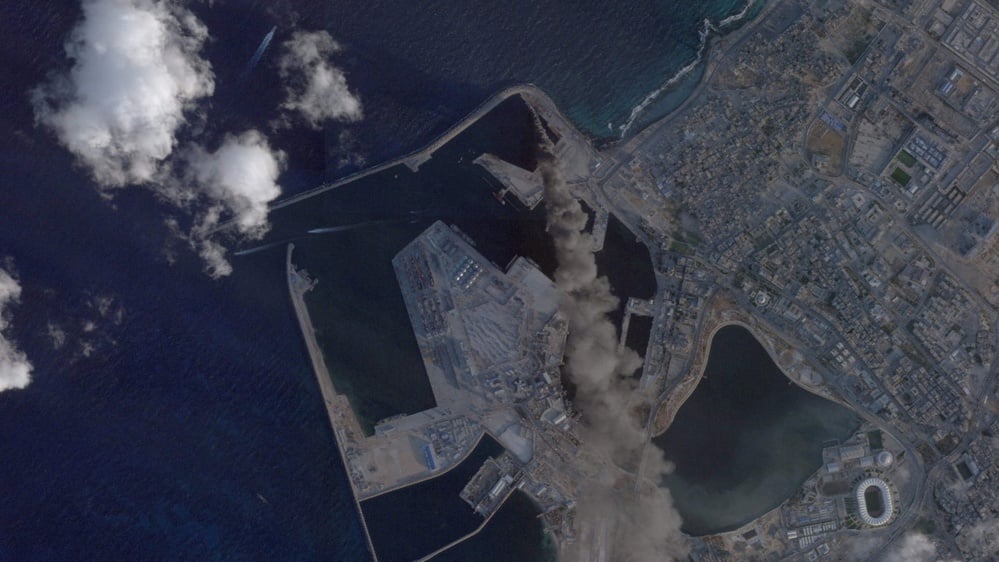


Click points to explore news by date. News sentiment ranges from -10 (very negative) to +10 (very positive) where 0 is neutral.
2026 © Helium Trades
Privacy Policy & Disclosure
* Disclaimer: Nothing on this website constitutes investment advice, performance data or any recommendation that any particular security, portfolio of securities, transaction or investment strategy is suitable for any specific person. Helium Trades is not responsible in any way for the accuracy
of any model predictions or price data. Any mention of a particular security and related prediction data is not a recommendation to buy or sell that security. Investments in securities involve the risk of loss. Past performance is no guarantee of future results. Helium Trades is not responsible for any of your investment decisions,
you should consult a financial expert before engaging in any transaction.
Helium Research Assistant

How can I help you today?
Ask any question about this page.


