See whether Helium helps you make better-informed decisions. Try every Pro Trader feature for 30 days. No credit card required.
Try every Pro Trader feature for 30 days. No credit card required.

August 12, 2026 · 0 shares
Neutral reporting that presents both candidates' profiles without editorializing.
Automated analysis; not human reviewed.
·
6 of 53 available dimensions scored; omitted dimensions are not treated as neutral.
·
Verified supporting quotes for 5 of 6 scored dimensions.
Claim: The article shows no partisan slant; it reports facts about both Republican candidates without favoring one.
“Two Republicans are headed to a runoff for the party’s nomination for Lindsey Graham’s old Senate seat” · exact text match
“She has avoided questions in the Capitol and has had limited interaction with local reporters in South Carolina” · exact text match
“Norman is known for being a thorn in the side of both House Republican leadership and Trump” · not found in supplied text
Why: The article presents both candidates' backgrounds and positions without evaluative language; it notes Graham's Trump endorsement and Norman's conservative credentials and opposition to Trump equally.
Claim: The article is highly objective, relying on verifiable facts and attributions.
“Graham was appointed by South Carolina Gov. Henry McMaster to serve out the remainder of her brother’s term last month” · exact text match
“Norman, a House member who previously ran unsuccessfully for governor, is known for being a thorn in the side of both House Republican leadership and Trump” · exact text match
Why: Most statements are factual (appointment, endorsements, primary results) with only mild characterization ('thorn in the side') that is supported by his voting record.
The subjective element is minimal and clearly attributed to his known behavior.
Claim: The article is not sensational; it reports the primary outcome and background without dramatic language.
“Two Republicans are headed to a runoff for the party’s nomination for Lindsey Graham’s old Senate seat, after none of the 10 people running received a majority in Tuesday’s primary” · exact text match
“Sen.
Darline Graham, the late senator’s sister, and Rep. Ralph Norman advanced to the Republican runoff on Aug. 25”
· exact text match
Why: The reporting is straightforward; no hyperbole, alarming headlines, or emotional framing.
The article sticks to the facts of the election.
Claim: The article is politically neutral in its coverage, not advocating for any candidate or party.
“Two Republicans are headed to a runoff for the party’s nomination for Lindsey Graham’s old Senate seat” · exact text match
“The winner will take on Democratic nominee Annie Andrews” · exact text match
Why: The article covers a political race but does not express support or opposition to any candidate or party.
It simply reports the primary results and candidate profiles.
Claim: The article demonstrates credible sourcing and reporting, with specific details and named reporter.
“Reese Gorman is a reporter at NOTUS” · verified after text normalization
“President Donald Trump, who was personally close to the late senator, endorsed her for the full term” · exact text match
Why: The article includes specific factual details (runoff date, appointment, endorsements) and attributes them to a named reporter.
However, it does not provide direct sources for all claims (e.g., Graham's avoidance of questions).
Overall, it appears trustworthy.
Claim: The article exhibits human writing characteristics, with natural variation and contextual details.
“Little is known about Graham’s political views, even by her Republican colleagues” · exact text match
“The remaining days will be an all-out sprint for the two candidates as they try to tie themselves as closely to Trump as possible” · exact text match
Why: The prose includes idiomatic phrases ('all-out sprint'), nuanced observations ('Little is known'), and specific contextual details typical of human reporting.
No signs of AI generation.
Reporting on the South Carolina GOP Senate primary runoff with neutral framing, focusing on procedural details and candidate backgrounds without editorial slant.
Automated analysis; not human reviewed.
·
1 of 53 available dimensions scored; omitted dimensions are not treated as neutral.
·
Verified supporting quotes for 1 of 1 scored dimensions.
Claim: The article presents the primary race without favoring a candidate or ideology.
“Ten candidates faced off in Tuesday's special primary election as they aimed to secure the Republican nomination and take on Democrat Annie Andrews in November.” · exact text match
“While her opponents have expressed their respect for Darline Graham and her support of her late brother's legacy, they've sought to highlight her lack of experience in elected office and cast doubt on her ability to represent the state for a full six-year term.” · exact text match
Why: The article uses neutral language, reports both sides of the campaign, and does not express preference for any candidate or ideology.
Trump's endorsement of Darline Graham, praised for her 'good genetics' and professionalism, with acknowledgment that all candidates are 'Trumpers', frames the runoff as a contest among Trump-aligned Republicans.
Lindsey Graham, a longtime Republican senator from South Carolina and a strong supporter of Israel, died recently; his sister Darline Graham was appointed to fill his seat, and a special primary is being held for a full six-year term.
Automated analysis; not human reviewed.
Limitations: Limited to a short election update; no in-depth analysis or independent verification of the provided vote numbers.
·
53 of 53 available dimensions scored; omitted dimensions are not treated as neutral.
·
Verified supporting quotes for 0 of 53 scored dimensions.
Limited to a short election update; no in-depth analysis or independent verification of the provided vote numbers.
August 12, 2026 · 0 shares
Emphasizes anti-incumbent sentiment via embedded tweet while maintaining conservative alignment through Trump endorsement and candidate description.
Automated analysis; not human reviewed.
Limitations: Publisher self-identifies as conservative; article includes an embedded tweet criticizing the appointed incumbent, which may influence framing.
·
6 of 53 available dimensions scored; omitted dimensions are not treated as neutral.
·
Verified supporting quotes for 4 of 6 scored dimensions.
Claim: The article frames the race with a conservative perspective by describing a candidate as 'a proven conservative' and asserting Republican advantage.
“a proven conservative” · exact text match
“heavily favored to hold the seat given the state’s partisan lean” · exact text match
Why: The descriptors and prediction align with conservative advocacy, though the article is primarily factual.
Claim: The article includes an embedded tweet that highlights anti-incumbent, populist sentiment against Darline Graham.
“67% of South Carolina Republicans just voted against the incumbent, Darline Graham.
That is a clear statement.”
· not found in supplied text
Why: The tweet is presented without counterpoint, lending implicit support to a populist narrative.
Claim: The entire article focuses on a partisan primary election, with detailed coverage of candidates and endorsements.
“Darline Graham and U.S. Rep. Ralph Norman have advanced to a runoff in South Carolina’s special Republican primary” · exact text match
“President Donald Trump endorsed Darline Graham” · exact text match
Why: The subject matter is inherently political, but the article does not adopt a non-partisan or analytical stance.
Claim: The article highlights Trump's endorsement and quotes him to bolster Darline Graham's candidacy.
“I endorse her. I think she’s great.” · not found in supplied text
“RUN, DARLINE, RUN” · exact text match
Why: The endorsement is given prominence and positive framing.
Claim: The article states that the Republican nominee is 'heavily favored' to hold the seat, a prediction that exceeds the presented evidence.
“The eventual Republican nominee is heavily favored to hold the seat given the state’s partisan lean.” · exact text match
Why: While the state is reliably Republican, the primary results show a divided electorate, and the general election outcome is not certain.
Claim: The article's inclusion of a tweet criticizing the appointed incumbent suggests a slight anti-establishment leaning.
“67% of South Carolina Republicans just voted against the incumbent, Darline Graham.” · exact text match
Why: The tweet frames the primary as a rejection of the establishment choice, but the article also quotes Trump's pro-endorsement statements, creating mixed signals.
Publisher self-identifies as conservative; article includes an embedded tweet criticizing the appointed incumbent, which may influence framing.
August 12, 2026 · 0 shares
Framing emphasizes the importance of pro-Israel representation in the Senate seat while neutrally reporting the primary results.
Automated analysis; not human reviewed.
Limitations: Article content includes donation pleas and navigation links that are not part of the news report; analysis focused on the core news text.
·
8 of 53 available dimensions scored; omitted dimensions are not treated as neutral.
·
Verified supporting quotes for 6 of 8 scored dimensions.
Claim: The article does not take a partisan stance, neutrally reporting facts from a Republican primary.
“the Associated Press declared that Darline Graham would advance to a runoff election” · exact text match
“The question is whether they will be the champion for Israel that Lindsey Graham was” · exact text match
Why: The article relies on AP data and neutral quotes, avoiding editorial judgment about candidates or parties.
Claim: The article uses objective reporting techniques such as citing official vote counts and expert quotes.
“Just over an hour after polls closed, at about 8:15 pm, the Associated Press declared” · exact text match
“"Whoever wins this is going to be an ally of Israel," Christopher Cooper ... told the Jewish Telegraphic Agency” · not found in supplied text
Why: Factual reporting of vote percentages and direct quotes from a professor without subjective language.
Claim: The article presents information in a straightforward manner without sensationalism.
“At that point Graham had secured 32.6% of the vote, with 39% of ballots counted.” · exact text match
Why: No dramatic or exaggerated language; the article simply states percentages and candidate details.
Claim: The article provides specific vote share, runoff date, and candidate details that are moderately engaging.
“At that point Graham had secured 32.6% of the vote” · exact text match
“Runoff scheduled for August 25” · not found in supplied text
Why: The article contains concrete numbers and a clear narrative about a special election, which is of interest but not extraordinary.
Claim: The article describes events and quotes without prescribing actions or opinions.
“South Carolina Sen. Darline Graham and a second Republican candidate will advance to a special primary runoff” · exact text match
Why: The article narrates the primary outcome and background without advocating for any candidate or policy.
Claim: The article maintains a factual tone without expressing the publisher's opinion.
“the Associated Press declared that Darline Graham would advance to a runoff election” · exact text match
“In the November general election, the winner will face Democrat Annie Andrews, a pediatrician who is unlikely to prevail in this solidly Republican state.” · exact text match
Why: All statements are either attributed to AP or presented as straightforward observations; no opinionated language.
Claim: The article covers a political election and emphasizes the pro-Israel stance of the deceased senator and potential successors.
“Sister of pro-Israel stalwart Lindsey Graham wins runoff slot” · exact text match
“The question is whether they will be the champion for Israel that Lindsey Graham was” · exact text match
Why: The headline and framing highlight the Israel dimension of the race, making it overtly political.
Claim: The article attributes information to the Associated Press and quotes a named academic source, enhancing credibility.
“the Associated Press declared” · exact text match
“Christopher Cooper, a political science professor at Western Carolina University, told the Jewish Telegraphic Agency” · exact text match
Why: Use of a reputable wire service and an identified expert source supports trustworthiness.
Article content includes donation pleas and navigation links that are not part of the news report; analysis focused on the core news text.
August 12, 2026 · 0 shares
Neutral reporting that presents both candidates' profiles without editorializing.
Automated analysis; not human reviewed.
·
6 of 53 available dimensions scored; omitted dimensions are not treated as neutral.
·
Verified supporting quotes for 5 of 6 scored dimensions.
Claim: The article shows no partisan slant; it reports facts about both Republican candidates without favoring one.
“Two Republicans are headed to a runoff for the party’s nomination for Lindsey Graham’s old Senate seat” · exact text match
“She has avoided questions in the Capitol and has had limited interaction with local reporters in South Carolina” · exact text match
“Norman is known for being a thorn in the side of both House Republican leadership and Trump” · not found in supplied text
Why: The article presents both candidates' backgrounds and positions without evaluative language; it notes Graham's Trump endorsement and Norman's conservative credentials and opposition to Trump equally.
Claim: The article is highly objective, relying on verifiable facts and attributions.
“Graham was appointed by South Carolina Gov. Henry McMaster to serve out the remainder of her brother’s term last month” · exact text match
“Norman, a House member who previously ran unsuccessfully for governor, is known for being a thorn in the side of both House Republican leadership and Trump” · exact text match
Why: Most statements are factual (appointment, endorsements, primary results) with only mild characterization ('thorn in the side') that is supported by his voting record.
The subjective element is minimal and clearly attributed to his known behavior.
Claim: The article is not sensational; it reports the primary outcome and background without dramatic language.
“Two Republicans are headed to a runoff for the party’s nomination for Lindsey Graham’s old Senate seat, after none of the 10 people running received a majority in Tuesday’s primary” · exact text match
“Sen.
Darline Graham, the late senator’s sister, and Rep. Ralph Norman advanced to the Republican runoff on Aug. 25”
· exact text match
Why: The reporting is straightforward; no hyperbole, alarming headlines, or emotional framing.
The article sticks to the facts of the election.
Claim: The article is politically neutral in its coverage, not advocating for any candidate or party.
“Two Republicans are headed to a runoff for the party’s nomination for Lindsey Graham’s old Senate seat” · exact text match
“The winner will take on Democratic nominee Annie Andrews” · exact text match
Why: The article covers a political race but does not express support or opposition to any candidate or party.
It simply reports the primary results and candidate profiles.
Claim: The article demonstrates credible sourcing and reporting, with specific details and named reporter.
“Reese Gorman is a reporter at NOTUS” · verified after text normalization
“President Donald Trump, who was personally close to the late senator, endorsed her for the full term” · exact text match
Why: The article includes specific factual details (runoff date, appointment, endorsements) and attributes them to a named reporter.
However, it does not provide direct sources for all claims (e.g., Graham's avoidance of questions).
Overall, it appears trustworthy.
Claim: The article exhibits human writing characteristics, with natural variation and contextual details.
“Little is known about Graham’s political views, even by her Republican colleagues” · exact text match
“The remaining days will be an all-out sprint for the two candidates as they try to tie themselves as closely to Trump as possible” · exact text match
Why: The prose includes idiomatic phrases ('all-out sprint'), nuanced observations ('Little is known'), and specific contextual details typical of human reporting.
No signs of AI generation.
August 12, 2026 · 0 shares
Neutral reporting of South Carolina primary results, with balanced inclusion of contextual details about both candidates.
Automated analysis; not human reviewed. Limitations: The article text includes unrelated headlines that were ignored; analysis limited to the South Carolina primary content.
The article text includes unrelated headlines that were ignored; analysis limited to the South Carolina primary content.
Trump's endorsement of Darline Graham, praised for her 'good genetics' and professionalism, with acknowledgment that all candidates are 'Trumpers', frames the runoff as a contest among Trump-aligned Republicans.
Lindsey Graham, a longtime Republican senator from South Carolina and a strong supporter of Israel, died recently; his sister Darline Graham was appointed to fill his seat, and a special primary is being held for a full six-year term.
Automated analysis; not human reviewed.
Limitations: Limited to a short election update; no in-depth analysis or independent verification of the provided vote numbers.
·
53 of 53 available dimensions scored; omitted dimensions are not treated as neutral.
·
Verified supporting quotes for 0 of 53 scored dimensions.
Limited to a short election update; no in-depth analysis or independent verification of the provided vote numbers.
August 12, 2026 · 0 shares
Neutral reporting that presents both candidates' profiles without editorializing.
Automated analysis; not human reviewed.
·
6 of 53 available dimensions scored; omitted dimensions are not treated as neutral.
·
Verified supporting quotes for 5 of 6 scored dimensions.
Claim: The article shows no partisan slant; it reports facts about both Republican candidates without favoring one.
“Two Republicans are headed to a runoff for the party’s nomination for Lindsey Graham’s old Senate seat” · exact text match
“She has avoided questions in the Capitol and has had limited interaction with local reporters in South Carolina” · exact text match
“Norman is known for being a thorn in the side of both House Republican leadership and Trump” · not found in supplied text
Why: The article presents both candidates' backgrounds and positions without evaluative language; it notes Graham's Trump endorsement and Norman's conservative credentials and opposition to Trump equally.
Claim: The article is highly objective, relying on verifiable facts and attributions.
“Graham was appointed by South Carolina Gov. Henry McMaster to serve out the remainder of her brother’s term last month” · exact text match
“Norman, a House member who previously ran unsuccessfully for governor, is known for being a thorn in the side of both House Republican leadership and Trump” · exact text match
Why: Most statements are factual (appointment, endorsements, primary results) with only mild characterization ('thorn in the side') that is supported by his voting record.
The subjective element is minimal and clearly attributed to his known behavior.
Claim: The article is not sensational; it reports the primary outcome and background without dramatic language.
“Two Republicans are headed to a runoff for the party’s nomination for Lindsey Graham’s old Senate seat, after none of the 10 people running received a majority in Tuesday’s primary” · exact text match
“Sen.
Darline Graham, the late senator’s sister, and Rep. Ralph Norman advanced to the Republican runoff on Aug. 25”
· exact text match
Why: The reporting is straightforward; no hyperbole, alarming headlines, or emotional framing.
The article sticks to the facts of the election.
Claim: The article is politically neutral in its coverage, not advocating for any candidate or party.
“Two Republicans are headed to a runoff for the party’s nomination for Lindsey Graham’s old Senate seat” · exact text match
“The winner will take on Democratic nominee Annie Andrews” · exact text match
Why: The article covers a political race but does not express support or opposition to any candidate or party.
It simply reports the primary results and candidate profiles.
Claim: The article demonstrates credible sourcing and reporting, with specific details and named reporter.
“Reese Gorman is a reporter at NOTUS” · verified after text normalization
“President Donald Trump, who was personally close to the late senator, endorsed her for the full term” · exact text match
Why: The article includes specific factual details (runoff date, appointment, endorsements) and attributes them to a named reporter.
However, it does not provide direct sources for all claims (e.g., Graham's avoidance of questions).
Overall, it appears trustworthy.
Claim: The article exhibits human writing characteristics, with natural variation and contextual details.
“Little is known about Graham’s political views, even by her Republican colleagues” · exact text match
“The remaining days will be an all-out sprint for the two candidates as they try to tie themselves as closely to Trump as possible” · exact text match
Why: The prose includes idiomatic phrases ('all-out sprint'), nuanced observations ('Little is known'), and specific contextual details typical of human reporting.
No signs of AI generation.
Reporting on the South Carolina GOP Senate primary runoff with neutral framing, focusing on procedural details and candidate backgrounds without editorial slant.
Automated analysis; not human reviewed.
·
1 of 53 available dimensions scored; omitted dimensions are not treated as neutral.
·
Verified supporting quotes for 1 of 1 scored dimensions.
Claim: The article presents the primary race without favoring a candidate or ideology.
“Ten candidates faced off in Tuesday's special primary election as they aimed to secure the Republican nomination and take on Democrat Annie Andrews in November.” · exact text match
“While her opponents have expressed their respect for Darline Graham and her support of her late brother's legacy, they've sought to highlight her lack of experience in elected office and cast doubt on her ability to represent the state for a full six-year term.” · exact text match
Why: The article uses neutral language, reports both sides of the campaign, and does not express preference for any candidate or ideology.
August 12, 2026 · 0 shares
Emphasizes anti-incumbent sentiment via embedded tweet while maintaining conservative alignment through Trump endorsement and candidate description.
Automated analysis; not human reviewed.
Limitations: Publisher self-identifies as conservative; article includes an embedded tweet criticizing the appointed incumbent, which may influence framing.
·
6 of 53 available dimensions scored; omitted dimensions are not treated as neutral.
·
Verified supporting quotes for 4 of 6 scored dimensions.
Claim: The article frames the race with a conservative perspective by describing a candidate as 'a proven conservative' and asserting Republican advantage.
“a proven conservative” · exact text match
“heavily favored to hold the seat given the state’s partisan lean” · exact text match
Why: The descriptors and prediction align with conservative advocacy, though the article is primarily factual.
Claim: The article includes an embedded tweet that highlights anti-incumbent, populist sentiment against Darline Graham.
“67% of South Carolina Republicans just voted against the incumbent, Darline Graham.
That is a clear statement.”
· not found in supplied text
Why: The tweet is presented without counterpoint, lending implicit support to a populist narrative.
Claim: The entire article focuses on a partisan primary election, with detailed coverage of candidates and endorsements.
“Darline Graham and U.S. Rep. Ralph Norman have advanced to a runoff in South Carolina’s special Republican primary” · exact text match
“President Donald Trump endorsed Darline Graham” · exact text match
Why: The subject matter is inherently political, but the article does not adopt a non-partisan or analytical stance.
Claim: The article highlights Trump's endorsement and quotes him to bolster Darline Graham's candidacy.
“I endorse her. I think she’s great.” · not found in supplied text
“RUN, DARLINE, RUN” · exact text match
Why: The endorsement is given prominence and positive framing.
Claim: The article states that the Republican nominee is 'heavily favored' to hold the seat, a prediction that exceeds the presented evidence.
“The eventual Republican nominee is heavily favored to hold the seat given the state’s partisan lean.” · exact text match
Why: While the state is reliably Republican, the primary results show a divided electorate, and the general election outcome is not certain.
Claim: The article's inclusion of a tweet criticizing the appointed incumbent suggests a slight anti-establishment leaning.
“67% of South Carolina Republicans just voted against the incumbent, Darline Graham.” · exact text match
Why: The tweet frames the primary as a rejection of the establishment choice, but the article also quotes Trump's pro-endorsement statements, creating mixed signals.
Publisher self-identifies as conservative; article includes an embedded tweet criticizing the appointed incumbent, which may influence framing.
Reporting on the South Carolina GOP Senate primary runoff with neutral framing, focusing on procedural details and candidate backgrounds without editorial slant.
Automated analysis; not human reviewed.
·
1 of 53 available dimensions scored; omitted dimensions are not treated as neutral.
·
Verified supporting quotes for 1 of 1 scored dimensions.
Claim: The article presents the primary race without favoring a candidate or ideology.
“Ten candidates faced off in Tuesday's special primary election as they aimed to secure the Republican nomination and take on Democrat Annie Andrews in November.” · exact text match
“While her opponents have expressed their respect for Darline Graham and her support of her late brother's legacy, they've sought to highlight her lack of experience in elected office and cast doubt on her ability to represent the state for a full six-year term.” · exact text match
Why: The article uses neutral language, reports both sides of the campaign, and does not express preference for any candidate or ideology.
August 12, 2026 · 0 shares
Emphasizes anti-incumbent sentiment via embedded tweet while maintaining conservative alignment through Trump endorsement and candidate description.
Automated analysis; not human reviewed.
Limitations: Publisher self-identifies as conservative; article includes an embedded tweet criticizing the appointed incumbent, which may influence framing.
·
6 of 53 available dimensions scored; omitted dimensions are not treated as neutral.
·
Verified supporting quotes for 4 of 6 scored dimensions.
Claim: The article frames the race with a conservative perspective by describing a candidate as 'a proven conservative' and asserting Republican advantage.
“a proven conservative” · exact text match
“heavily favored to hold the seat given the state’s partisan lean” · exact text match
Why: The descriptors and prediction align with conservative advocacy, though the article is primarily factual.
Claim: The article includes an embedded tweet that highlights anti-incumbent, populist sentiment against Darline Graham.
“67% of South Carolina Republicans just voted against the incumbent, Darline Graham.
That is a clear statement.”
· not found in supplied text
Why: The tweet is presented without counterpoint, lending implicit support to a populist narrative.
Claim: The entire article focuses on a partisan primary election, with detailed coverage of candidates and endorsements.
“Darline Graham and U.S. Rep. Ralph Norman have advanced to a runoff in South Carolina’s special Republican primary” · exact text match
“President Donald Trump endorsed Darline Graham” · exact text match
Why: The subject matter is inherently political, but the article does not adopt a non-partisan or analytical stance.
Claim: The article highlights Trump's endorsement and quotes him to bolster Darline Graham's candidacy.
“I endorse her. I think she’s great.” · not found in supplied text
“RUN, DARLINE, RUN” · exact text match
Why: The endorsement is given prominence and positive framing.
Claim: The article states that the Republican nominee is 'heavily favored' to hold the seat, a prediction that exceeds the presented evidence.
“The eventual Republican nominee is heavily favored to hold the seat given the state’s partisan lean.” · exact text match
Why: While the state is reliably Republican, the primary results show a divided electorate, and the general election outcome is not certain.
Claim: The article's inclusion of a tweet criticizing the appointed incumbent suggests a slight anti-establishment leaning.
“67% of South Carolina Republicans just voted against the incumbent, Darline Graham.” · exact text match
Why: The tweet frames the primary as a rejection of the establishment choice, but the article also quotes Trump's pro-endorsement statements, creating mixed signals.
Publisher self-identifies as conservative; article includes an embedded tweet criticizing the appointed incumbent, which may influence framing.
August 12, 2026 · 0 shares
Framing emphasizes the importance of pro-Israel representation in the Senate seat while neutrally reporting the primary results.
Automated analysis; not human reviewed.
Limitations: Article content includes donation pleas and navigation links that are not part of the news report; analysis focused on the core news text.
·
8 of 53 available dimensions scored; omitted dimensions are not treated as neutral.
·
Verified supporting quotes for 6 of 8 scored dimensions.
Claim: The article does not take a partisan stance, neutrally reporting facts from a Republican primary.
“the Associated Press declared that Darline Graham would advance to a runoff election” · exact text match
“The question is whether they will be the champion for Israel that Lindsey Graham was” · exact text match
Why: The article relies on AP data and neutral quotes, avoiding editorial judgment about candidates or parties.
Claim: The article uses objective reporting techniques such as citing official vote counts and expert quotes.
“Just over an hour after polls closed, at about 8:15 pm, the Associated Press declared” · exact text match
“"Whoever wins this is going to be an ally of Israel," Christopher Cooper ... told the Jewish Telegraphic Agency” · not found in supplied text
Why: Factual reporting of vote percentages and direct quotes from a professor without subjective language.
Claim: The article presents information in a straightforward manner without sensationalism.
“At that point Graham had secured 32.6% of the vote, with 39% of ballots counted.” · exact text match
Why: No dramatic or exaggerated language; the article simply states percentages and candidate details.
Claim: The article provides specific vote share, runoff date, and candidate details that are moderately engaging.
“At that point Graham had secured 32.6% of the vote” · exact text match
“Runoff scheduled for August 25” · not found in supplied text
Why: The article contains concrete numbers and a clear narrative about a special election, which is of interest but not extraordinary.
Claim: The article describes events and quotes without prescribing actions or opinions.
“South Carolina Sen. Darline Graham and a second Republican candidate will advance to a special primary runoff” · exact text match
Why: The article narrates the primary outcome and background without advocating for any candidate or policy.
Claim: The article maintains a factual tone without expressing the publisher's opinion.
“the Associated Press declared that Darline Graham would advance to a runoff election” · exact text match
“In the November general election, the winner will face Democrat Annie Andrews, a pediatrician who is unlikely to prevail in this solidly Republican state.” · exact text match
Why: All statements are either attributed to AP or presented as straightforward observations; no opinionated language.
Claim: The article covers a political election and emphasizes the pro-Israel stance of the deceased senator and potential successors.
“Sister of pro-Israel stalwart Lindsey Graham wins runoff slot” · exact text match
“The question is whether they will be the champion for Israel that Lindsey Graham was” · exact text match
Why: The headline and framing highlight the Israel dimension of the race, making it overtly political.
Claim: The article attributes information to the Associated Press and quotes a named academic source, enhancing credibility.
“the Associated Press declared” · exact text match
“Christopher Cooper, a political science professor at Western Carolina University, told the Jewish Telegraphic Agency” · exact text match
Why: Use of a reputable wire service and an identified expert source supports trustworthiness.
Article content includes donation pleas and navigation links that are not part of the news report; analysis focused on the core news text.
August 12, 2026 · 0 shares
Neutral reporting that presents both candidates' profiles without editorializing.
Automated analysis; not human reviewed. · 6 of 53 available dimensions scored; omitted dimensions are not treated as neutral. · Verified supporting quotes for 5 of 6 scored dimensions.
Claim: The article shows no partisan slant; it reports facts about both Republican candidates without favoring one.
“Two Republicans are headed to a runoff for the party’s nomination for Lindsey Graham’s old Senate seat” · exact text match
“She has avoided questions in the Capitol and has had limited interaction with local reporters in South Carolina” · exact text match
“Norman is known for being a thorn in the side of both House Republican leadership and Trump” · not found in supplied text
Why: The article presents both candidates' backgrounds and positions without evaluative language; it notes Graham's Trump endorsement and Norman's conservative credentials and opposition to Trump equally.
Claim: The article is highly objective, relying on verifiable facts and attributions.
“Graham was appointed by South Carolina Gov. Henry McMaster to serve out the remainder of her brother’s term last month” · exact text match
“Norman, a House member who previously ran unsuccessfully for governor, is known for being a thorn in the side of both House Republican leadership and Trump” · exact text match
Why: Most statements are factual (appointment, endorsements, primary results) with only mild characterization ('thorn in the side') that is supported by his voting record. The subjective element is minimal and clearly attributed to his known behavior.
Claim: The article is not sensational; it reports the primary outcome and background without dramatic language.
“Two Republicans are headed to a runoff for the party’s nomination for Lindsey Graham’s old Senate seat, after none of the 10 people running received a majority in Tuesday’s primary” · exact text match
“Sen. Darline Graham, the late senator’s sister, and Rep. Ralph Norman advanced to the Republican runoff on Aug. 25” · exact text match
Why: The reporting is straightforward; no hyperbole, alarming headlines, or emotional framing. The article sticks to the facts of the election.
Claim: The article is politically neutral in its coverage, not advocating for any candidate or party.
“Two Republicans are headed to a runoff for the party’s nomination for Lindsey Graham’s old Senate seat” · exact text match
“The winner will take on Democratic nominee Annie Andrews” · exact text match
Why: The article covers a political race but does not express support or opposition to any candidate or party. It simply reports the primary results and candidate profiles.
Claim: The article demonstrates credible sourcing and reporting, with specific details and named reporter.
“Reese Gorman is a reporter at NOTUS” · verified after text normalization
“President Donald Trump, who was personally close to the late senator, endorsed her for the full term” · exact text match
Why: The article includes specific factual details (runoff date, appointment, endorsements) and attributes them to a named reporter. However, it does not provide direct sources for all claims (e.g., Graham's avoidance of questions). Overall, it appears trustworthy.
Claim: The article exhibits human writing characteristics, with natural variation and contextual details.
“Little is known about Graham’s political views, even by her Republican colleagues” · exact text match
“The remaining days will be an all-out sprint for the two candidates as they try to tie themselves as closely to Trump as possible” · exact text match
Why: The prose includes idiomatic phrases ('all-out sprint'), nuanced observations ('Little is known'), and specific contextual details typical of human reporting. No signs of AI generation.
Reporting on the South Carolina GOP Senate primary runoff with neutral framing, focusing on procedural details and candidate backgrounds without editorial slant.
Automated analysis; not human reviewed. · 1 of 53 available dimensions scored; omitted dimensions are not treated as neutral. · Verified supporting quotes for 1 of 1 scored dimensions.
Claim: The article presents the primary race without favoring a candidate or ideology.
“Ten candidates faced off in Tuesday's special primary election as they aimed to secure the Republican nomination and take on Democrat Annie Andrews in November.” · exact text match
“While her opponents have expressed their respect for Darline Graham and her support of her late brother's legacy, they've sought to highlight her lack of experience in elected office and cast doubt on her ability to represent the state for a full six-year term.” · exact text match
Why: The article uses neutral language, reports both sides of the campaign, and does not express preference for any candidate or ideology.
Trump's endorsement of Darline Graham, praised for her 'good genetics' and professionalism, with acknowledgment that all candidates are 'Trumpers', frames the runoff as a contest among Trump-aligned Republicans.
Lindsey Graham, a longtime Republican senator from South Carolina and a strong supporter of Israel, died recently; his sister Darline Graham was appointed to fill his seat, and a special primary is being held for a full six-year term.
Automated analysis; not human reviewed. Limitations: Limited to a short election update; no in-depth analysis or independent verification of the provided vote numbers. · 53 of 53 available dimensions scored; omitted dimensions are not treated as neutral. · Verified supporting quotes for 0 of 53 scored dimensions.
Limited to a short election update; no in-depth analysis or independent verification of the provided vote numbers.
August 12, 2026 · 0 shares
Emphasizes anti-incumbent sentiment via embedded tweet while maintaining conservative alignment through Trump endorsement and candidate description.
Automated analysis; not human reviewed. Limitations: Publisher self-identifies as conservative; article includes an embedded tweet criticizing the appointed incumbent, which may influence framing. · 6 of 53 available dimensions scored; omitted dimensions are not treated as neutral. · Verified supporting quotes for 4 of 6 scored dimensions.
Claim: The article frames the race with a conservative perspective by describing a candidate as 'a proven conservative' and asserting Republican advantage.
“a proven conservative” · exact text match
“heavily favored to hold the seat given the state’s partisan lean” · exact text match
Why: The descriptors and prediction align with conservative advocacy, though the article is primarily factual.
Claim: The article includes an embedded tweet that highlights anti-incumbent, populist sentiment against Darline Graham.
“67% of South Carolina Republicans just voted against the incumbent, Darline Graham. That is a clear statement.” · not found in supplied text
Why: The tweet is presented without counterpoint, lending implicit support to a populist narrative.
Claim: The entire article focuses on a partisan primary election, with detailed coverage of candidates and endorsements.
“Darline Graham and U.S. Rep. Ralph Norman have advanced to a runoff in South Carolina’s special Republican primary” · exact text match
“President Donald Trump endorsed Darline Graham” · exact text match
Why: The subject matter is inherently political, but the article does not adopt a non-partisan or analytical stance.
Claim: The article highlights Trump's endorsement and quotes him to bolster Darline Graham's candidacy.
“I endorse her. I think she’s great.” · not found in supplied text
“RUN, DARLINE, RUN” · exact text match
Why: The endorsement is given prominence and positive framing.
Claim: The article states that the Republican nominee is 'heavily favored' to hold the seat, a prediction that exceeds the presented evidence.
“The eventual Republican nominee is heavily favored to hold the seat given the state’s partisan lean.” · exact text match
Why: While the state is reliably Republican, the primary results show a divided electorate, and the general election outcome is not certain.
Claim: The article's inclusion of a tweet criticizing the appointed incumbent suggests a slight anti-establishment leaning.
“67% of South Carolina Republicans just voted against the incumbent, Darline Graham.” · exact text match
Why: The tweet frames the primary as a rejection of the establishment choice, but the article also quotes Trump's pro-endorsement statements, creating mixed signals.
Publisher self-identifies as conservative; article includes an embedded tweet criticizing the appointed incumbent, which may influence framing.
August 12, 2026 · 0 shares
Framing emphasizes the importance of pro-Israel representation in the Senate seat while neutrally reporting the primary results.
Automated analysis; not human reviewed. Limitations: Article content includes donation pleas and navigation links that are not part of the news report; analysis focused on the core news text. · 8 of 53 available dimensions scored; omitted dimensions are not treated as neutral. · Verified supporting quotes for 6 of 8 scored dimensions.
Claim: The article does not take a partisan stance, neutrally reporting facts from a Republican primary.
“the Associated Press declared that Darline Graham would advance to a runoff election” · exact text match
“The question is whether they will be the champion for Israel that Lindsey Graham was” · exact text match
Why: The article relies on AP data and neutral quotes, avoiding editorial judgment about candidates or parties.
Claim: The article uses objective reporting techniques such as citing official vote counts and expert quotes.
“Just over an hour after polls closed, at about 8:15 pm, the Associated Press declared” · exact text match
“"Whoever wins this is going to be an ally of Israel," Christopher Cooper ... told the Jewish Telegraphic Agency” · not found in supplied text
Why: Factual reporting of vote percentages and direct quotes from a professor without subjective language.
Claim: The article presents information in a straightforward manner without sensationalism.
“At that point Graham had secured 32.6% of the vote, with 39% of ballots counted.” · exact text match
Why: No dramatic or exaggerated language; the article simply states percentages and candidate details.
Claim: The article provides specific vote share, runoff date, and candidate details that are moderately engaging.
“At that point Graham had secured 32.6% of the vote” · exact text match
“Runoff scheduled for August 25” · not found in supplied text
Why: The article contains concrete numbers and a clear narrative about a special election, which is of interest but not extraordinary.
Claim: The article describes events and quotes without prescribing actions or opinions.
“South Carolina Sen. Darline Graham and a second Republican candidate will advance to a special primary runoff” · exact text match
Why: The article narrates the primary outcome and background without advocating for any candidate or policy.
Claim: The article maintains a factual tone without expressing the publisher's opinion.
“the Associated Press declared that Darline Graham would advance to a runoff election” · exact text match
“In the November general election, the winner will face Democrat Annie Andrews, a pediatrician who is unlikely to prevail in this solidly Republican state.” · exact text match
Why: All statements are either attributed to AP or presented as straightforward observations; no opinionated language.
Claim: The article covers a political election and emphasizes the pro-Israel stance of the deceased senator and potential successors.
“Sister of pro-Israel stalwart Lindsey Graham wins runoff slot” · exact text match
“The question is whether they will be the champion for Israel that Lindsey Graham was” · exact text match
Why: The headline and framing highlight the Israel dimension of the race, making it overtly political.
Claim: The article attributes information to the Associated Press and quotes a named academic source, enhancing credibility.
“the Associated Press declared” · exact text match
“Christopher Cooper, a political science professor at Western Carolina University, told the Jewish Telegraphic Agency” · exact text match
Why: Use of a reputable wire service and an identified expert source supports trustworthiness.
Article content includes donation pleas and navigation links that are not part of the news report; analysis focused on the core news text.
August 12, 2026 · 0 shares
Neutral reporting that presents both candidates' profiles without editorializing.
Automated analysis; not human reviewed. · 6 of 53 available dimensions scored; omitted dimensions are not treated as neutral. · Verified supporting quotes for 5 of 6 scored dimensions.
Claim: The article shows no partisan slant; it reports facts about both Republican candidates without favoring one.
“Two Republicans are headed to a runoff for the party’s nomination for Lindsey Graham’s old Senate seat” · exact text match
“She has avoided questions in the Capitol and has had limited interaction with local reporters in South Carolina” · exact text match
“Norman is known for being a thorn in the side of both House Republican leadership and Trump” · not found in supplied text
Why: The article presents both candidates' backgrounds and positions without evaluative language; it notes Graham's Trump endorsement and Norman's conservative credentials and opposition to Trump equally.
Claim: The article is highly objective, relying on verifiable facts and attributions.
“Graham was appointed by South Carolina Gov. Henry McMaster to serve out the remainder of her brother’s term last month” · exact text match
“Norman, a House member who previously ran unsuccessfully for governor, is known for being a thorn in the side of both House Republican leadership and Trump” · exact text match
Why: Most statements are factual (appointment, endorsements, primary results) with only mild characterization ('thorn in the side') that is supported by his voting record. The subjective element is minimal and clearly attributed to his known behavior.
Claim: The article is not sensational; it reports the primary outcome and background without dramatic language.
“Two Republicans are headed to a runoff for the party’s nomination for Lindsey Graham’s old Senate seat, after none of the 10 people running received a majority in Tuesday’s primary” · exact text match
“Sen. Darline Graham, the late senator’s sister, and Rep. Ralph Norman advanced to the Republican runoff on Aug. 25” · exact text match
Why: The reporting is straightforward; no hyperbole, alarming headlines, or emotional framing. The article sticks to the facts of the election.
Claim: The article is politically neutral in its coverage, not advocating for any candidate or party.
“Two Republicans are headed to a runoff for the party’s nomination for Lindsey Graham’s old Senate seat” · exact text match
“The winner will take on Democratic nominee Annie Andrews” · exact text match
Why: The article covers a political race but does not express support or opposition to any candidate or party. It simply reports the primary results and candidate profiles.
Claim: The article demonstrates credible sourcing and reporting, with specific details and named reporter.
“Reese Gorman is a reporter at NOTUS” · verified after text normalization
“President Donald Trump, who was personally close to the late senator, endorsed her for the full term” · exact text match
Why: The article includes specific factual details (runoff date, appointment, endorsements) and attributes them to a named reporter. However, it does not provide direct sources for all claims (e.g., Graham's avoidance of questions). Overall, it appears trustworthy.
Claim: The article exhibits human writing characteristics, with natural variation and contextual details.
“Little is known about Graham’s political views, even by her Republican colleagues” · exact text match
“The remaining days will be an all-out sprint for the two candidates as they try to tie themselves as closely to Trump as possible” · exact text match
Why: The prose includes idiomatic phrases ('all-out sprint'), nuanced observations ('Little is known'), and specific contextual details typical of human reporting. No signs of AI generation.
August 12, 2026 · 0 shares
Neutral reporting of South Carolina primary results, with balanced inclusion of contextual details about both candidates.
Automated analysis; not human reviewed. Limitations: The article text includes unrelated headlines that were ignored; analysis limited to the South Carolina primary content.
The article text includes unrelated headlines that were ignored; analysis limited to the South Carolina primary content.
August 08, 2026 · 0 shares
Factual reporting of polling data and race dynamics without partisan slant.
Automated analysis; not human reviewed. Limitations: Article text contained multiple unrelated headlines; analysis focused on the South Carolina race segment. · 4 of 53 available dimensions scored; omitted dimensions are not treated as neutral. · Verified supporting quotes for 3 of 4 scored dimensions.
Claim: The article presents polling data for multiple Republican candidates without expressing preference.
“Recent surveys have shown different results, with Rep. Ralph Norman briefly leading one poll while Sen. Darline Graham Nordone, who has President Donald Trump’s endorsement, has led in two others.” · exact text match
Why: The article reports both positive and negative poll standings for candidates without slanting language.
Claim: The article reports poll numbers and race dynamics without subjective commentary.
“An Emerson College poll of 500 likely Republican voters conducted in late July found Norman with 22% support, followed by Nordone at 19% and Rep. Russell Fry at 12%, while former Gov. Mark Sanford received 11%.” · exact text match
Why: The reporting is factual, attributing specific numbers to specific pollsters.
Claim: The article describes the state of the race without prescribing any action or viewpoint.
“With several candidates competing for the Republican nomination, the varying polls suggest the race remains fluid and turnout could play a decisive role in determining who advances.” · exact text match
Why: The final sentence is a descriptive inference from the polls, not a prescription.
Claim: The article attributes polling data to named firms and includes specific methodology details.
“An Emerson College poll of 500 likely Republican voters conducted in late July found Norman with 22% support...” · not found in supplied text
Why: Attribution to specific pollsters with sample size and timing enhances credibility.
Article text contained multiple unrelated headlines; analysis focused on the South Carolina race segment.
Graham supporters
A neutral, descriptive report on the South Carolina Republican primary, balancing voter skepticism and support for interim Senator Darline Graham.
August 12, 2026 · 0 shares
Neutral reporting that presents both candidates' profiles without editorializing.
Automated analysis; not human reviewed. · 6 of 53 available dimensions scored; omitted dimensions are not treated as neutral. · Verified supporting quotes for 5 of 6 scored dimensions.
Claim: The article shows no partisan slant; it reports facts about both Republican candidates without favoring one.
“Two Republicans are headed to a runoff for the party’s nomination for Lindsey Graham’s old Senate seat” · exact text match
“She has avoided questions in the Capitol and has had limited interaction with local reporters in South Carolina” · exact text match
“Norman is known for being a thorn in the side of both House Republican leadership and Trump” · not found in supplied text
Why: The article presents both candidates' backgrounds and positions without evaluative language; it notes Graham's Trump endorsement and Norman's conservative credentials and opposition to Trump equally.
Claim: The article is highly objective, relying on verifiable facts and attributions.
“Graham was appointed by South Carolina Gov. Henry McMaster to serve out the remainder of her brother’s term last month” · exact text match
“Norman, a House member who previously ran unsuccessfully for governor, is known for being a thorn in the side of both House Republican leadership and Trump” · exact text match
Why: Most statements are factual (appointment, endorsements, primary results) with only mild characterization ('thorn in the side') that is supported by his voting record. The subjective element is minimal and clearly attributed to his known behavior.
Claim: The article is not sensational; it reports the primary outcome and background without dramatic language.
“Two Republicans are headed to a runoff for the party’s nomination for Lindsey Graham’s old Senate seat, after none of the 10 people running received a majority in Tuesday’s primary” · exact text match
“Sen. Darline Graham, the late senator’s sister, and Rep. Ralph Norman advanced to the Republican runoff on Aug. 25” · exact text match
Why: The reporting is straightforward; no hyperbole, alarming headlines, or emotional framing. The article sticks to the facts of the election.
Claim: The article is politically neutral in its coverage, not advocating for any candidate or party.
“Two Republicans are headed to a runoff for the party’s nomination for Lindsey Graham’s old Senate seat” · exact text match
“The winner will take on Democratic nominee Annie Andrews” · exact text match
Why: The article covers a political race but does not express support or opposition to any candidate or party. It simply reports the primary results and candidate profiles.
Claim: The article demonstrates credible sourcing and reporting, with specific details and named reporter.
“Reese Gorman is a reporter at NOTUS” · verified after text normalization
“President Donald Trump, who was personally close to the late senator, endorsed her for the full term” · exact text match
Why: The article includes specific factual details (runoff date, appointment, endorsements) and attributes them to a named reporter. However, it does not provide direct sources for all claims (e.g., Graham's avoidance of questions). Overall, it appears trustworthy.
Claim: The article exhibits human writing characteristics, with natural variation and contextual details.
“Little is known about Graham’s political views, even by her Republican colleagues” · exact text match
“The remaining days will be an all-out sprint for the two candidates as they try to tie themselves as closely to Trump as possible” · exact text match
Why: The prose includes idiomatic phrases ('all-out sprint'), nuanced observations ('Little is known'), and specific contextual details typical of human reporting. No signs of AI generation.
August 12, 2026 · 0 shares
Neutral reporting of South Carolina primary results, with balanced inclusion of contextual details about both candidates.
Automated analysis; not human reviewed. Limitations: The article text includes unrelated headlines that were ignored; analysis limited to the South Carolina primary content.
The article text includes unrelated headlines that were ignored; analysis limited to the South Carolina primary content.
A neutral, descriptive report on the South Carolina Republican primary, balancing voter skepticism and support for interim Senator Darline Graham.
Norman supporters
A neutral, descriptive report on the South Carolina Republican primary, balancing voter skepticism and support for interim Senator Darline Graham.
August 12, 2026 · 0 shares
Neutral reporting that presents both candidates' profiles without editorializing.
Automated analysis; not human reviewed. · 6 of 53 available dimensions scored; omitted dimensions are not treated as neutral. · Verified supporting quotes for 5 of 6 scored dimensions.
Claim: The article shows no partisan slant; it reports facts about both Republican candidates without favoring one.
“Two Republicans are headed to a runoff for the party’s nomination for Lindsey Graham’s old Senate seat” · exact text match
“She has avoided questions in the Capitol and has had limited interaction with local reporters in South Carolina” · exact text match
“Norman is known for being a thorn in the side of both House Republican leadership and Trump” · not found in supplied text
Why: The article presents both candidates' backgrounds and positions without evaluative language; it notes Graham's Trump endorsement and Norman's conservative credentials and opposition to Trump equally.
Claim: The article is highly objective, relying on verifiable facts and attributions.
“Graham was appointed by South Carolina Gov. Henry McMaster to serve out the remainder of her brother’s term last month” · exact text match
“Norman, a House member who previously ran unsuccessfully for governor, is known for being a thorn in the side of both House Republican leadership and Trump” · exact text match
Why: Most statements are factual (appointment, endorsements, primary results) with only mild characterization ('thorn in the side') that is supported by his voting record. The subjective element is minimal and clearly attributed to his known behavior.
Claim: The article is not sensational; it reports the primary outcome and background without dramatic language.
“Two Republicans are headed to a runoff for the party’s nomination for Lindsey Graham’s old Senate seat, after none of the 10 people running received a majority in Tuesday’s primary” · exact text match
“Sen. Darline Graham, the late senator’s sister, and Rep. Ralph Norman advanced to the Republican runoff on Aug. 25” · exact text match
Why: The reporting is straightforward; no hyperbole, alarming headlines, or emotional framing. The article sticks to the facts of the election.
Claim: The article is politically neutral in its coverage, not advocating for any candidate or party.
“Two Republicans are headed to a runoff for the party’s nomination for Lindsey Graham’s old Senate seat” · exact text match
“The winner will take on Democratic nominee Annie Andrews” · exact text match
Why: The article covers a political race but does not express support or opposition to any candidate or party. It simply reports the primary results and candidate profiles.
Claim: The article demonstrates credible sourcing and reporting, with specific details and named reporter.
“Reese Gorman is a reporter at NOTUS” · verified after text normalization
“President Donald Trump, who was personally close to the late senator, endorsed her for the full term” · exact text match
Why: The article includes specific factual details (runoff date, appointment, endorsements) and attributes them to a named reporter. However, it does not provide direct sources for all claims (e.g., Graham's avoidance of questions). Overall, it appears trustworthy.
Claim: The article exhibits human writing characteristics, with natural variation and contextual details.
“Little is known about Graham’s political views, even by her Republican colleagues” · exact text match
“The remaining days will be an all-out sprint for the two candidates as they try to tie themselves as closely to Trump as possible” · exact text match
Why: The prose includes idiomatic phrases ('all-out sprint'), nuanced observations ('Little is known'), and specific contextual details typical of human reporting. No signs of AI generation.
August 12, 2026 · 0 shares
Neutral reporting that presents both candidates' profiles without editorializing.
Automated analysis; not human reviewed. · 6 of 53 available dimensions scored; omitted dimensions are not treated as neutral. · Verified supporting quotes for 5 of 6 scored dimensions.
Claim: The article shows no partisan slant; it reports facts about both Republican candidates without favoring one.
“Two Republicans are headed to a runoff for the party’s nomination for Lindsey Graham’s old Senate seat” · exact text match
“She has avoided questions in the Capitol and has had limited interaction with local reporters in South Carolina” · exact text match
“Norman is known for being a thorn in the side of both House Republican leadership and Trump” · not found in supplied text
Why: The article presents both candidates' backgrounds and positions without evaluative language; it notes Graham's Trump endorsement and Norman's conservative credentials and opposition to Trump equally.
Claim: The article is highly objective, relying on verifiable facts and attributions.
“Graham was appointed by South Carolina Gov. Henry McMaster to serve out the remainder of her brother’s term last month” · exact text match
“Norman, a House member who previously ran unsuccessfully for governor, is known for being a thorn in the side of both House Republican leadership and Trump” · exact text match
Why: Most statements are factual (appointment, endorsements, primary results) with only mild characterization ('thorn in the side') that is supported by his voting record. The subjective element is minimal and clearly attributed to his known behavior.
Claim: The article is not sensational; it reports the primary outcome and background without dramatic language.
“Two Republicans are headed to a runoff for the party’s nomination for Lindsey Graham’s old Senate seat, after none of the 10 people running received a majority in Tuesday’s primary” · exact text match
“Sen. Darline Graham, the late senator’s sister, and Rep. Ralph Norman advanced to the Republican runoff on Aug. 25” · exact text match
Why: The reporting is straightforward; no hyperbole, alarming headlines, or emotional framing. The article sticks to the facts of the election.
Claim: The article is politically neutral in its coverage, not advocating for any candidate or party.
“Two Republicans are headed to a runoff for the party’s nomination for Lindsey Graham’s old Senate seat” · exact text match
“The winner will take on Democratic nominee Annie Andrews” · exact text match
Why: The article covers a political race but does not express support or opposition to any candidate or party. It simply reports the primary results and candidate profiles.
Claim: The article demonstrates credible sourcing and reporting, with specific details and named reporter.
“Reese Gorman is a reporter at NOTUS” · verified after text normalization
“President Donald Trump, who was personally close to the late senator, endorsed her for the full term” · exact text match
Why: The article includes specific factual details (runoff date, appointment, endorsements) and attributes them to a named reporter. However, it does not provide direct sources for all claims (e.g., Graham's avoidance of questions). Overall, it appears trustworthy.
Claim: The article exhibits human writing characteristics, with natural variation and contextual details.
“Little is known about Graham’s political views, even by her Republican colleagues” · exact text match
“The remaining days will be an all-out sprint for the two candidates as they try to tie themselves as closely to Trump as possible” · exact text match
Why: The prose includes idiomatic phrases ('all-out sprint'), nuanced observations ('Little is known'), and specific contextual details typical of human reporting. No signs of AI generation.
August 12, 2026 · 0 shares
Neutral reporting of South Carolina primary results, with balanced inclusion of contextual details about both candidates.
Automated analysis; not human reviewed. Limitations: The article text includes unrelated headlines that were ignored; analysis limited to the South Carolina primary content.
The article text includes unrelated headlines that were ignored; analysis limited to the South Carolina primary content.
August 12, 2026 · 0 shares
The framing is neutral, presenting both candidates' campaign strategies without preference or endorsement.
Automated analysis; not human reviewed. Limitations: Extremely short text, likely a headline only, limiting depth of analysis. · 8 of 53 available dimensions scored; omitted dimensions are not treated as neutral. · Verified supporting quotes for 8 of 8 scored dimensions.
Claim: The article shows no favoritism toward liberal or conservative positions.
“She will sell her closeness to President Trump.” · exact text match
“He will tout his conservatism.” · exact text match
Why: The article presents both candidates' campaign pitches without endorsing either, indicating neutrality.
Claim: The article presents factual information without subjective opinion.
“She will sell her closeness to President Trump.” · exact text match
“He will tout his conservatism.” · exact text match
Why: No evaluative language; statements are descriptive of what the candidates will do.
Claim: The article describes rather than prescribes.
“South Carolina Senate Runoff Kicks Off With Chick-fil-A and Trump Calls.” · exact text match
Why: The headline describes an event without imperative or moral language.
Claim: The article contains no opinion.
“Darline Graham and Ralph Norman emerged from a special election sprint on Tuesday to succeed Lindsey Graham.” · exact text match
Why: Factual statement with no opinion markers.
Claim: The article is politically neutral despite its political subject matter.
“She will sell her closeness to President Trump.” · exact text match
“He will tout his conservatism.” · exact text match
Why: Both strategies are reported without favoritism.
Claim: The article is not spam.
“South Carolina Senate Runoff Kicks Off With Chick-fil-A and Trump Calls.” · exact text match
Why: Straightforward news headline without promotional content.
Claim: The article is emotionally neutral.
“South Carolina Senate Runoff Kicks Off With Chick-fil-A and Trump Calls.” · exact text match
Why: Lack of emotional or evocative language.
Claim: The article is not advertorial.
“South Carolina Senate Runoff Kicks Off With Chick-fil-A and Trump Calls.” · exact text match
Why: No commercial or promotional framing.
Extremely short text, likely a headline only, limiting depth of analysis.
August 12, 2026 · 0 shares
The framing is neutral, presenting both candidates' campaign strategies without preference or endorsement.
Automated analysis; not human reviewed. Limitations: Extremely short text, likely a headline only, limiting depth of analysis. · 8 of 53 available dimensions scored; omitted dimensions are not treated as neutral. · Verified supporting quotes for 8 of 8 scored dimensions.
Claim: The article shows no favoritism toward liberal or conservative positions.
“She will sell her closeness to President Trump.” · exact text match
“He will tout his conservatism.” · exact text match
Why: The article presents both candidates' campaign pitches without endorsing either, indicating neutrality.
Claim: The article presents factual information without subjective opinion.
“She will sell her closeness to President Trump.” · exact text match
“He will tout his conservatism.” · exact text match
Why: No evaluative language; statements are descriptive of what the candidates will do.
Claim: The article describes rather than prescribes.
“South Carolina Senate Runoff Kicks Off With Chick-fil-A and Trump Calls.” · exact text match
Why: The headline describes an event without imperative or moral language.
Claim: The article contains no opinion.
“Darline Graham and Ralph Norman emerged from a special election sprint on Tuesday to succeed Lindsey Graham.” · exact text match
Why: Factual statement with no opinion markers.
Claim: The article is politically neutral despite its political subject matter.
“She will sell her closeness to President Trump.” · exact text match
“He will tout his conservatism.” · exact text match
Why: Both strategies are reported without favoritism.
Claim: The article is not spam.
“South Carolina Senate Runoff Kicks Off With Chick-fil-A and Trump Calls.” · exact text match
Why: Straightforward news headline without promotional content.
Claim: The article is emotionally neutral.
“South Carolina Senate Runoff Kicks Off With Chick-fil-A and Trump Calls.” · exact text match
Why: Lack of emotional or evocative language.
Claim: The article is not advertorial.
“South Carolina Senate Runoff Kicks Off With Chick-fil-A and Trump Calls.” · exact text match
Why: No commercial or promotional framing.
Extremely short text, likely a headline only, limiting depth of analysis.
August 08, 2026 · 0 shares
Factual reporting of polling data and race dynamics without partisan slant.
Automated analysis; not human reviewed. Limitations: Article text contained multiple unrelated headlines; analysis focused on the South Carolina race segment. · 4 of 53 available dimensions scored; omitted dimensions are not treated as neutral. · Verified supporting quotes for 3 of 4 scored dimensions.
Claim: The article presents polling data for multiple Republican candidates without expressing preference.
“Recent surveys have shown different results, with Rep. Ralph Norman briefly leading one poll while Sen. Darline Graham Nordone, who has President Donald Trump’s endorsement, has led in two others.” · exact text match
Why: The article reports both positive and negative poll standings for candidates without slanting language.
Claim: The article reports poll numbers and race dynamics without subjective commentary.
“An Emerson College poll of 500 likely Republican voters conducted in late July found Norman with 22% support, followed by Nordone at 19% and Rep. Russell Fry at 12%, while former Gov. Mark Sanford received 11%.” · exact text match
Why: The reporting is factual, attributing specific numbers to specific pollsters.
Claim: The article describes the state of the race without prescribing any action or viewpoint.
“With several candidates competing for the Republican nomination, the varying polls suggest the race remains fluid and turnout could play a decisive role in determining who advances.” · exact text match
Why: The final sentence is a descriptive inference from the polls, not a prescription.
Claim: The article attributes polling data to named firms and includes specific methodology details.
“An Emerson College poll of 500 likely Republican voters conducted in late July found Norman with 22% support...” · not found in supplied text
Why: Attribution to specific pollsters with sample size and timing enhances credibility.
Article text contained multiple unrelated headlines; analysis focused on the South Carolina race segment.
Helium Bias
Story Blindspots
Trump's endorsement of Darline Graham, praised for her 'good genetics' and professionalism, with acknowledgment that all candidates are 'Trumpers', frames the runoff as a contest among Trump-aligned Republicans.
Lindsey Graham, a longtime Republican senator from South Carolina and a strong supporter of Israel, died recently; his sister Darline Graham was appointed to fill his seat, and a special primary is being held for a full six-year term.
Automated analysis; not human reviewed. Limitations: Limited to a short election update; no in-depth analysis or independent verification of the provided vote numbers. · 53 of 53 available dimensions scored; omitted dimensions are not treated as neutral. · Verified supporting quotes for 0 of 53 scored dimensions.
Limited to a short election update; no in-depth analysis or independent verification of the provided vote numbers.
August 12, 2026 · 0 shares
Neutral reporting that presents both candidates' profiles without editorializing.
Automated analysis; not human reviewed. · 6 of 53 available dimensions scored; omitted dimensions are not treated as neutral. · Verified supporting quotes for 5 of 6 scored dimensions.
Claim: The article shows no partisan slant; it reports facts about both Republican candidates without favoring one.
“Two Republicans are headed to a runoff for the party’s nomination for Lindsey Graham’s old Senate seat” · exact text match
“She has avoided questions in the Capitol and has had limited interaction with local reporters in South Carolina” · exact text match
“Norman is known for being a thorn in the side of both House Republican leadership and Trump” · not found in supplied text
Why: The article presents both candidates' backgrounds and positions without evaluative language; it notes Graham's Trump endorsement and Norman's conservative credentials and opposition to Trump equally.
Claim: The article is highly objective, relying on verifiable facts and attributions.
“Graham was appointed by South Carolina Gov. Henry McMaster to serve out the remainder of her brother’s term last month” · exact text match
“Norman, a House member who previously ran unsuccessfully for governor, is known for being a thorn in the side of both House Republican leadership and Trump” · exact text match
Why: Most statements are factual (appointment, endorsements, primary results) with only mild characterization ('thorn in the side') that is supported by his voting record. The subjective element is minimal and clearly attributed to his known behavior.
Claim: The article is not sensational; it reports the primary outcome and background without dramatic language.
“Two Republicans are headed to a runoff for the party’s nomination for Lindsey Graham’s old Senate seat, after none of the 10 people running received a majority in Tuesday’s primary” · exact text match
“Sen. Darline Graham, the late senator’s sister, and Rep. Ralph Norman advanced to the Republican runoff on Aug. 25” · exact text match
Why: The reporting is straightforward; no hyperbole, alarming headlines, or emotional framing. The article sticks to the facts of the election.
Claim: The article is politically neutral in its coverage, not advocating for any candidate or party.
“Two Republicans are headed to a runoff for the party’s nomination for Lindsey Graham’s old Senate seat” · exact text match
“The winner will take on Democratic nominee Annie Andrews” · exact text match
Why: The article covers a political race but does not express support or opposition to any candidate or party. It simply reports the primary results and candidate profiles.
Claim: The article demonstrates credible sourcing and reporting, with specific details and named reporter.
“Reese Gorman is a reporter at NOTUS” · verified after text normalization
“President Donald Trump, who was personally close to the late senator, endorsed her for the full term” · exact text match
Why: The article includes specific factual details (runoff date, appointment, endorsements) and attributes them to a named reporter. However, it does not provide direct sources for all claims (e.g., Graham's avoidance of questions). Overall, it appears trustworthy.
Claim: The article exhibits human writing characteristics, with natural variation and contextual details.
“Little is known about Graham’s political views, even by her Republican colleagues” · exact text match
“The remaining days will be an all-out sprint for the two candidates as they try to tie themselves as closely to Trump as possible” · exact text match
Why: The prose includes idiomatic phrases ('all-out sprint'), nuanced observations ('Little is known'), and specific contextual details typical of human reporting. No signs of AI generation.
Reporting on the South Carolina GOP Senate primary runoff with neutral framing, focusing on procedural details and candidate backgrounds without editorial slant.
Automated analysis; not human reviewed. · 1 of 53 available dimensions scored; omitted dimensions are not treated as neutral. · Verified supporting quotes for 1 of 1 scored dimensions.
Claim: The article presents the primary race without favoring a candidate or ideology.
“Ten candidates faced off in Tuesday's special primary election as they aimed to secure the Republican nomination and take on Democrat Annie Andrews in November.” · exact text match
“While her opponents have expressed their respect for Darline Graham and her support of her late brother's legacy, they've sought to highlight her lack of experience in elected office and cast doubt on her ability to represent the state for a full six-year term.” · exact text match
Why: The article uses neutral language, reports both sides of the campaign, and does not express preference for any candidate or ideology.
August 12, 2026 · 0 shares
Emphasizes anti-incumbent sentiment via embedded tweet while maintaining conservative alignment through Trump endorsement and candidate description.
Automated analysis; not human reviewed. Limitations: Publisher self-identifies as conservative; article includes an embedded tweet criticizing the appointed incumbent, which may influence framing. · 6 of 53 available dimensions scored; omitted dimensions are not treated as neutral. · Verified supporting quotes for 4 of 6 scored dimensions.
Claim: The article frames the race with a conservative perspective by describing a candidate as 'a proven conservative' and asserting Republican advantage.
“a proven conservative” · exact text match
“heavily favored to hold the seat given the state’s partisan lean” · exact text match
Why: The descriptors and prediction align with conservative advocacy, though the article is primarily factual.
Claim: The article includes an embedded tweet that highlights anti-incumbent, populist sentiment against Darline Graham.
“67% of South Carolina Republicans just voted against the incumbent, Darline Graham. That is a clear statement.” · not found in supplied text
Why: The tweet is presented without counterpoint, lending implicit support to a populist narrative.
Claim: The entire article focuses on a partisan primary election, with detailed coverage of candidates and endorsements.
“Darline Graham and U.S. Rep. Ralph Norman have advanced to a runoff in South Carolina’s special Republican primary” · exact text match
“President Donald Trump endorsed Darline Graham” · exact text match
Why: The subject matter is inherently political, but the article does not adopt a non-partisan or analytical stance.
Claim: The article highlights Trump's endorsement and quotes him to bolster Darline Graham's candidacy.
“I endorse her. I think she’s great.” · not found in supplied text
“RUN, DARLINE, RUN” · exact text match
Why: The endorsement is given prominence and positive framing.
Claim: The article states that the Republican nominee is 'heavily favored' to hold the seat, a prediction that exceeds the presented evidence.
“The eventual Republican nominee is heavily favored to hold the seat given the state’s partisan lean.” · exact text match
Why: While the state is reliably Republican, the primary results show a divided electorate, and the general election outcome is not certain.
Claim: The article's inclusion of a tweet criticizing the appointed incumbent suggests a slight anti-establishment leaning.
“67% of South Carolina Republicans just voted against the incumbent, Darline Graham.” · exact text match
Why: The tweet frames the primary as a rejection of the establishment choice, but the article also quotes Trump's pro-endorsement statements, creating mixed signals.
Publisher self-identifies as conservative; article includes an embedded tweet criticizing the appointed incumbent, which may influence framing.
Trump's endorsement of Darline Graham, praised for her 'good genetics' and professionalism, with acknowledgment that all candidates are 'Trumpers', frames the runoff as a contest among Trump-aligned Republicans.
Lindsey Graham, a longtime Republican senator from South Carolina and a strong supporter of Israel, died recently; his sister Darline Graham was appointed to fill his seat, and a special primary is being held for a full six-year term.
Automated analysis; not human reviewed. Limitations: Limited to a short election update; no in-depth analysis or independent verification of the provided vote numbers. · 53 of 53 available dimensions scored; omitted dimensions are not treated as neutral. · Verified supporting quotes for 0 of 53 scored dimensions.
Limited to a short election update; no in-depth analysis or independent verification of the provided vote numbers.
August 12, 2026 · 0 shares
Emphasizes anti-incumbent sentiment via embedded tweet while maintaining conservative alignment through Trump endorsement and candidate description.
Automated analysis; not human reviewed. Limitations: Publisher self-identifies as conservative; article includes an embedded tweet criticizing the appointed incumbent, which may influence framing. · 6 of 53 available dimensions scored; omitted dimensions are not treated as neutral. · Verified supporting quotes for 4 of 6 scored dimensions.
Claim: The article frames the race with a conservative perspective by describing a candidate as 'a proven conservative' and asserting Republican advantage.
“a proven conservative” · exact text match
“heavily favored to hold the seat given the state’s partisan lean” · exact text match
Why: The descriptors and prediction align with conservative advocacy, though the article is primarily factual.
Claim: The article includes an embedded tweet that highlights anti-incumbent, populist sentiment against Darline Graham.
“67% of South Carolina Republicans just voted against the incumbent, Darline Graham. That is a clear statement.” · not found in supplied text
Why: The tweet is presented without counterpoint, lending implicit support to a populist narrative.
Claim: The entire article focuses on a partisan primary election, with detailed coverage of candidates and endorsements.
“Darline Graham and U.S. Rep. Ralph Norman have advanced to a runoff in South Carolina’s special Republican primary” · exact text match
“President Donald Trump endorsed Darline Graham” · exact text match
Why: The subject matter is inherently political, but the article does not adopt a non-partisan or analytical stance.
Claim: The article highlights Trump's endorsement and quotes him to bolster Darline Graham's candidacy.
“I endorse her. I think she’s great.” · not found in supplied text
“RUN, DARLINE, RUN” · exact text match
Why: The endorsement is given prominence and positive framing.
Claim: The article states that the Republican nominee is 'heavily favored' to hold the seat, a prediction that exceeds the presented evidence.
“The eventual Republican nominee is heavily favored to hold the seat given the state’s partisan lean.” · exact text match
Why: While the state is reliably Republican, the primary results show a divided electorate, and the general election outcome is not certain.
Claim: The article's inclusion of a tweet criticizing the appointed incumbent suggests a slight anti-establishment leaning.
“67% of South Carolina Republicans just voted against the incumbent, Darline Graham.” · exact text match
Why: The tweet frames the primary as a rejection of the establishment choice, but the article also quotes Trump's pro-endorsement statements, creating mixed signals.
Publisher self-identifies as conservative; article includes an embedded tweet criticizing the appointed incumbent, which may influence framing.
August 12, 2026 · 0 shares
Framing emphasizes the importance of pro-Israel representation in the Senate seat while neutrally reporting the primary results.
Automated analysis; not human reviewed. Limitations: Article content includes donation pleas and navigation links that are not part of the news report; analysis focused on the core news text. · 8 of 53 available dimensions scored; omitted dimensions are not treated as neutral. · Verified supporting quotes for 6 of 8 scored dimensions.
Claim: The article does not take a partisan stance, neutrally reporting facts from a Republican primary.
“the Associated Press declared that Darline Graham would advance to a runoff election” · exact text match
“The question is whether they will be the champion for Israel that Lindsey Graham was” · exact text match
Why: The article relies on AP data and neutral quotes, avoiding editorial judgment about candidates or parties.
Claim: The article uses objective reporting techniques such as citing official vote counts and expert quotes.
“Just over an hour after polls closed, at about 8:15 pm, the Associated Press declared” · exact text match
“"Whoever wins this is going to be an ally of Israel," Christopher Cooper ... told the Jewish Telegraphic Agency” · not found in supplied text
Why: Factual reporting of vote percentages and direct quotes from a professor without subjective language.
Claim: The article presents information in a straightforward manner without sensationalism.
“At that point Graham had secured 32.6% of the vote, with 39% of ballots counted.” · exact text match
Why: No dramatic or exaggerated language; the article simply states percentages and candidate details.
Claim: The article provides specific vote share, runoff date, and candidate details that are moderately engaging.
“At that point Graham had secured 32.6% of the vote” · exact text match
“Runoff scheduled for August 25” · not found in supplied text
Why: The article contains concrete numbers and a clear narrative about a special election, which is of interest but not extraordinary.
Claim: The article describes events and quotes without prescribing actions or opinions.
“South Carolina Sen. Darline Graham and a second Republican candidate will advance to a special primary runoff” · exact text match
Why: The article narrates the primary outcome and background without advocating for any candidate or policy.
Claim: The article maintains a factual tone without expressing the publisher's opinion.
“the Associated Press declared that Darline Graham would advance to a runoff election” · exact text match
“In the November general election, the winner will face Democrat Annie Andrews, a pediatrician who is unlikely to prevail in this solidly Republican state.” · exact text match
Why: All statements are either attributed to AP or presented as straightforward observations; no opinionated language.
Claim: The article covers a political election and emphasizes the pro-Israel stance of the deceased senator and potential successors.
“Sister of pro-Israel stalwart Lindsey Graham wins runoff slot” · exact text match
“The question is whether they will be the champion for Israel that Lindsey Graham was” · exact text match
Why: The headline and framing highlight the Israel dimension of the race, making it overtly political.
Claim: The article attributes information to the Associated Press and quotes a named academic source, enhancing credibility.
“the Associated Press declared” · exact text match
“Christopher Cooper, a political science professor at Western Carolina University, told the Jewish Telegraphic Agency” · exact text match
Why: Use of a reputable wire service and an identified expert source supports trustworthiness.
Article content includes donation pleas and navigation links that are not part of the news report; analysis focused on the core news text.
August 08, 2026 · 0 shares
Factual reporting of polling data and race dynamics without partisan slant.
Automated analysis; not human reviewed. Limitations: Article text contained multiple unrelated headlines; analysis focused on the South Carolina race segment. · 4 of 53 available dimensions scored; omitted dimensions are not treated as neutral. · Verified supporting quotes for 3 of 4 scored dimensions.
Claim: The article presents polling data for multiple Republican candidates without expressing preference.
“Recent surveys have shown different results, with Rep. Ralph Norman briefly leading one poll while Sen. Darline Graham Nordone, who has President Donald Trump’s endorsement, has led in two others.” · exact text match
Why: The article reports both positive and negative poll standings for candidates without slanting language.
Claim: The article reports poll numbers and race dynamics without subjective commentary.
“An Emerson College poll of 500 likely Republican voters conducted in late July found Norman with 22% support, followed by Nordone at 19% and Rep. Russell Fry at 12%, while former Gov. Mark Sanford received 11%.” · exact text match
Why: The reporting is factual, attributing specific numbers to specific pollsters.
Claim: The article describes the state of the race without prescribing any action or viewpoint.
“With several candidates competing for the Republican nomination, the varying polls suggest the race remains fluid and turnout could play a decisive role in determining who advances.” · exact text match
Why: The final sentence is a descriptive inference from the polls, not a prescription.
Claim: The article attributes polling data to named firms and includes specific methodology details.
“An Emerson College poll of 500 likely Republican voters conducted in late July found Norman with 22% support...” · not found in supplied text
Why: Attribution to specific pollsters with sample size and timing enhances credibility.
Article text contained multiple unrelated headlines; analysis focused on the South Carolina race segment.
Reporting on the South Carolina GOP Senate primary runoff with neutral framing, focusing on procedural details and candidate backgrounds without editorial slant.
Automated analysis; not human reviewed. · 1 of 53 available dimensions scored; omitted dimensions are not treated as neutral. · Verified supporting quotes for 1 of 1 scored dimensions.
Claim: The article presents the primary race without favoring a candidate or ideology.
“Ten candidates faced off in Tuesday's special primary election as they aimed to secure the Republican nomination and take on Democrat Annie Andrews in November.” · exact text match
“While her opponents have expressed their respect for Darline Graham and her support of her late brother's legacy, they've sought to highlight her lack of experience in elected office and cast doubt on her ability to represent the state for a full six-year term.” · exact text match
Why: The article uses neutral language, reports both sides of the campaign, and does not express preference for any candidate or ideology.
August 12, 2026 · 0 shares
Emphasizes anti-incumbent sentiment via embedded tweet while maintaining conservative alignment through Trump endorsement and candidate description.
Automated analysis; not human reviewed. Limitations: Publisher self-identifies as conservative; article includes an embedded tweet criticizing the appointed incumbent, which may influence framing. · 6 of 53 available dimensions scored; omitted dimensions are not treated as neutral. · Verified supporting quotes for 4 of 6 scored dimensions.
Claim: The article frames the race with a conservative perspective by describing a candidate as 'a proven conservative' and asserting Republican advantage.
“a proven conservative” · exact text match
“heavily favored to hold the seat given the state’s partisan lean” · exact text match
Why: The descriptors and prediction align with conservative advocacy, though the article is primarily factual.
Claim: The article includes an embedded tweet that highlights anti-incumbent, populist sentiment against Darline Graham.
“67% of South Carolina Republicans just voted against the incumbent, Darline Graham. That is a clear statement.” · not found in supplied text
Why: The tweet is presented without counterpoint, lending implicit support to a populist narrative.
Claim: The entire article focuses on a partisan primary election, with detailed coverage of candidates and endorsements.
“Darline Graham and U.S. Rep. Ralph Norman have advanced to a runoff in South Carolina’s special Republican primary” · exact text match
“President Donald Trump endorsed Darline Graham” · exact text match
Why: The subject matter is inherently political, but the article does not adopt a non-partisan or analytical stance.
Claim: The article highlights Trump's endorsement and quotes him to bolster Darline Graham's candidacy.
“I endorse her. I think she’s great.” · not found in supplied text
“RUN, DARLINE, RUN” · exact text match
Why: The endorsement is given prominence and positive framing.
Claim: The article states that the Republican nominee is 'heavily favored' to hold the seat, a prediction that exceeds the presented evidence.
“The eventual Republican nominee is heavily favored to hold the seat given the state’s partisan lean.” · exact text match
Why: While the state is reliably Republican, the primary results show a divided electorate, and the general election outcome is not certain.
Claim: The article's inclusion of a tweet criticizing the appointed incumbent suggests a slight anti-establishment leaning.
“67% of South Carolina Republicans just voted against the incumbent, Darline Graham.” · exact text match
Why: The tweet frames the primary as a rejection of the establishment choice, but the article also quotes Trump's pro-endorsement statements, creating mixed signals.
Publisher self-identifies as conservative; article includes an embedded tweet criticizing the appointed incumbent, which may influence framing.
August 12, 2026 · 0 shares
Framing emphasizes the importance of pro-Israel representation in the Senate seat while neutrally reporting the primary results.
Automated analysis; not human reviewed. Limitations: Article content includes donation pleas and navigation links that are not part of the news report; analysis focused on the core news text. · 8 of 53 available dimensions scored; omitted dimensions are not treated as neutral. · Verified supporting quotes for 6 of 8 scored dimensions.
Claim: The article does not take a partisan stance, neutrally reporting facts from a Republican primary.
“the Associated Press declared that Darline Graham would advance to a runoff election” · exact text match
“The question is whether they will be the champion for Israel that Lindsey Graham was” · exact text match
Why: The article relies on AP data and neutral quotes, avoiding editorial judgment about candidates or parties.
Claim: The article uses objective reporting techniques such as citing official vote counts and expert quotes.
“Just over an hour after polls closed, at about 8:15 pm, the Associated Press declared” · exact text match
“"Whoever wins this is going to be an ally of Israel," Christopher Cooper ... told the Jewish Telegraphic Agency” · not found in supplied text
Why: Factual reporting of vote percentages and direct quotes from a professor without subjective language.
Claim: The article presents information in a straightforward manner without sensationalism.
“At that point Graham had secured 32.6% of the vote, with 39% of ballots counted.” · exact text match
Why: No dramatic or exaggerated language; the article simply states percentages and candidate details.
Claim: The article provides specific vote share, runoff date, and candidate details that are moderately engaging.
“At that point Graham had secured 32.6% of the vote” · exact text match
“Runoff scheduled for August 25” · not found in supplied text
Why: The article contains concrete numbers and a clear narrative about a special election, which is of interest but not extraordinary.
Claim: The article describes events and quotes without prescribing actions or opinions.
“South Carolina Sen. Darline Graham and a second Republican candidate will advance to a special primary runoff” · exact text match
Why: The article narrates the primary outcome and background without advocating for any candidate or policy.
Claim: The article maintains a factual tone without expressing the publisher's opinion.
“the Associated Press declared that Darline Graham would advance to a runoff election” · exact text match
“In the November general election, the winner will face Democrat Annie Andrews, a pediatrician who is unlikely to prevail in this solidly Republican state.” · exact text match
Why: All statements are either attributed to AP or presented as straightforward observations; no opinionated language.
Claim: The article covers a political election and emphasizes the pro-Israel stance of the deceased senator and potential successors.
“Sister of pro-Israel stalwart Lindsey Graham wins runoff slot” · exact text match
“The question is whether they will be the champion for Israel that Lindsey Graham was” · exact text match
Why: The headline and framing highlight the Israel dimension of the race, making it overtly political.
Claim: The article attributes information to the Associated Press and quotes a named academic source, enhancing credibility.
“the Associated Press declared” · exact text match
“Christopher Cooper, a political science professor at Western Carolina University, told the Jewish Telegraphic Agency” · exact text match
Why: Use of a reputable wire service and an identified expert source supports trustworthiness.
Article content includes donation pleas and navigation links that are not part of the news report; analysis focused on the core news text.
August 12, 2026 · 0 shares
Neutral reporting that presents both candidates' profiles without editorializing.
Automated analysis; not human reviewed. · 6 of 53 available dimensions scored; omitted dimensions are not treated as neutral. · Verified supporting quotes for 5 of 6 scored dimensions.
Claim: The article shows no partisan slant; it reports facts about both Republican candidates without favoring one.
“Two Republicans are headed to a runoff for the party’s nomination for Lindsey Graham’s old Senate seat” · exact text match
“She has avoided questions in the Capitol and has had limited interaction with local reporters in South Carolina” · exact text match
“Norman is known for being a thorn in the side of both House Republican leadership and Trump” · not found in supplied text
Why: The article presents both candidates' backgrounds and positions without evaluative language; it notes Graham's Trump endorsement and Norman's conservative credentials and opposition to Trump equally.
Claim: The article is highly objective, relying on verifiable facts and attributions.
“Graham was appointed by South Carolina Gov. Henry McMaster to serve out the remainder of her brother’s term last month” · exact text match
“Norman, a House member who previously ran unsuccessfully for governor, is known for being a thorn in the side of both House Republican leadership and Trump” · exact text match
Why: Most statements are factual (appointment, endorsements, primary results) with only mild characterization ('thorn in the side') that is supported by his voting record. The subjective element is minimal and clearly attributed to his known behavior.
Claim: The article is not sensational; it reports the primary outcome and background without dramatic language.
“Two Republicans are headed to a runoff for the party’s nomination for Lindsey Graham’s old Senate seat, after none of the 10 people running received a majority in Tuesday’s primary” · exact text match
“Sen. Darline Graham, the late senator’s sister, and Rep. Ralph Norman advanced to the Republican runoff on Aug. 25” · exact text match
Why: The reporting is straightforward; no hyperbole, alarming headlines, or emotional framing. The article sticks to the facts of the election.
Claim: The article is politically neutral in its coverage, not advocating for any candidate or party.
“Two Republicans are headed to a runoff for the party’s nomination for Lindsey Graham’s old Senate seat” · exact text match
“The winner will take on Democratic nominee Annie Andrews” · exact text match
Why: The article covers a political race but does not express support or opposition to any candidate or party. It simply reports the primary results and candidate profiles.
Claim: The article demonstrates credible sourcing and reporting, with specific details and named reporter.
“Reese Gorman is a reporter at NOTUS” · verified after text normalization
“President Donald Trump, who was personally close to the late senator, endorsed her for the full term” · exact text match
Why: The article includes specific factual details (runoff date, appointment, endorsements) and attributes them to a named reporter. However, it does not provide direct sources for all claims (e.g., Graham's avoidance of questions). Overall, it appears trustworthy.
Claim: The article exhibits human writing characteristics, with natural variation and contextual details.
“Little is known about Graham’s political views, even by her Republican colleagues” · exact text match
“The remaining days will be an all-out sprint for the two candidates as they try to tie themselves as closely to Trump as possible” · exact text match
Why: The prose includes idiomatic phrases ('all-out sprint'), nuanced observations ('Little is known'), and specific contextual details typical of human reporting. No signs of AI generation.
Reporting on the South Carolina GOP Senate primary runoff with neutral framing, focusing on procedural details and candidate backgrounds without editorial slant.
Automated analysis; not human reviewed. · 1 of 53 available dimensions scored; omitted dimensions are not treated as neutral. · Verified supporting quotes for 1 of 1 scored dimensions.
Claim: The article presents the primary race without favoring a candidate or ideology.
“Ten candidates faced off in Tuesday's special primary election as they aimed to secure the Republican nomination and take on Democrat Annie Andrews in November.” · exact text match
“While her opponents have expressed their respect for Darline Graham and her support of her late brother's legacy, they've sought to highlight her lack of experience in elected office and cast doubt on her ability to represent the state for a full six-year term.” · exact text match
Why: The article uses neutral language, reports both sides of the campaign, and does not express preference for any candidate or ideology.
Trump's endorsement of Darline Graham, praised for her 'good genetics' and professionalism, with acknowledgment that all candidates are 'Trumpers', frames the runoff as a contest among Trump-aligned Republicans.
Lindsey Graham, a longtime Republican senator from South Carolina and a strong supporter of Israel, died recently; his sister Darline Graham was appointed to fill his seat, and a special primary is being held for a full six-year term.
Automated analysis; not human reviewed. Limitations: Limited to a short election update; no in-depth analysis or independent verification of the provided vote numbers. · 53 of 53 available dimensions scored; omitted dimensions are not treated as neutral. · Verified supporting quotes for 0 of 53 scored dimensions.
Limited to a short election update; no in-depth analysis or independent verification of the provided vote numbers.
August 12, 2026 · 0 shares
Emphasizes anti-incumbent sentiment via embedded tweet while maintaining conservative alignment through Trump endorsement and candidate description.
Automated analysis; not human reviewed. Limitations: Publisher self-identifies as conservative; article includes an embedded tweet criticizing the appointed incumbent, which may influence framing. · 6 of 53 available dimensions scored; omitted dimensions are not treated as neutral. · Verified supporting quotes for 4 of 6 scored dimensions.
Claim: The article frames the race with a conservative perspective by describing a candidate as 'a proven conservative' and asserting Republican advantage.
“a proven conservative” · exact text match
“heavily favored to hold the seat given the state’s partisan lean” · exact text match
Why: The descriptors and prediction align with conservative advocacy, though the article is primarily factual.
Claim: The article includes an embedded tweet that highlights anti-incumbent, populist sentiment against Darline Graham.
“67% of South Carolina Republicans just voted against the incumbent, Darline Graham. That is a clear statement.” · not found in supplied text
Why: The tweet is presented without counterpoint, lending implicit support to a populist narrative.
Claim: The entire article focuses on a partisan primary election, with detailed coverage of candidates and endorsements.
“Darline Graham and U.S. Rep. Ralph Norman have advanced to a runoff in South Carolina’s special Republican primary” · exact text match
“President Donald Trump endorsed Darline Graham” · exact text match
Why: The subject matter is inherently political, but the article does not adopt a non-partisan or analytical stance.
Claim: The article highlights Trump's endorsement and quotes him to bolster Darline Graham's candidacy.
“I endorse her. I think she’s great.” · not found in supplied text
“RUN, DARLINE, RUN” · exact text match
Why: The endorsement is given prominence and positive framing.
Claim: The article states that the Republican nominee is 'heavily favored' to hold the seat, a prediction that exceeds the presented evidence.
“The eventual Republican nominee is heavily favored to hold the seat given the state’s partisan lean.” · exact text match
Why: While the state is reliably Republican, the primary results show a divided electorate, and the general election outcome is not certain.
Claim: The article's inclusion of a tweet criticizing the appointed incumbent suggests a slight anti-establishment leaning.
“67% of South Carolina Republicans just voted against the incumbent, Darline Graham.” · exact text match
Why: The tweet frames the primary as a rejection of the establishment choice, but the article also quotes Trump's pro-endorsement statements, creating mixed signals.
Publisher self-identifies as conservative; article includes an embedded tweet criticizing the appointed incumbent, which may influence framing.
August 12, 2026 · 0 shares
Framing emphasizes the importance of pro-Israel representation in the Senate seat while neutrally reporting the primary results.
Automated analysis; not human reviewed. Limitations: Article content includes donation pleas and navigation links that are not part of the news report; analysis focused on the core news text. · 8 of 53 available dimensions scored; omitted dimensions are not treated as neutral. · Verified supporting quotes for 6 of 8 scored dimensions.
Claim: The article does not take a partisan stance, neutrally reporting facts from a Republican primary.
“the Associated Press declared that Darline Graham would advance to a runoff election” · exact text match
“The question is whether they will be the champion for Israel that Lindsey Graham was” · exact text match
Why: The article relies on AP data and neutral quotes, avoiding editorial judgment about candidates or parties.
Claim: The article uses objective reporting techniques such as citing official vote counts and expert quotes.
“Just over an hour after polls closed, at about 8:15 pm, the Associated Press declared” · exact text match
“"Whoever wins this is going to be an ally of Israel," Christopher Cooper ... told the Jewish Telegraphic Agency” · not found in supplied text
Why: Factual reporting of vote percentages and direct quotes from a professor without subjective language.
Claim: The article presents information in a straightforward manner without sensationalism.
“At that point Graham had secured 32.6% of the vote, with 39% of ballots counted.” · exact text match
Why: No dramatic or exaggerated language; the article simply states percentages and candidate details.
Claim: The article provides specific vote share, runoff date, and candidate details that are moderately engaging.
“At that point Graham had secured 32.6% of the vote” · exact text match
“Runoff scheduled for August 25” · not found in supplied text
Why: The article contains concrete numbers and a clear narrative about a special election, which is of interest but not extraordinary.
Claim: The article describes events and quotes without prescribing actions or opinions.
“South Carolina Sen. Darline Graham and a second Republican candidate will advance to a special primary runoff” · exact text match
Why: The article narrates the primary outcome and background without advocating for any candidate or policy.
Claim: The article maintains a factual tone without expressing the publisher's opinion.
“the Associated Press declared that Darline Graham would advance to a runoff election” · exact text match
“In the November general election, the winner will face Democrat Annie Andrews, a pediatrician who is unlikely to prevail in this solidly Republican state.” · exact text match
Why: All statements are either attributed to AP or presented as straightforward observations; no opinionated language.
Claim: The article covers a political election and emphasizes the pro-Israel stance of the deceased senator and potential successors.
“Sister of pro-Israel stalwart Lindsey Graham wins runoff slot” · exact text match
“The question is whether they will be the champion for Israel that Lindsey Graham was” · exact text match
Why: The headline and framing highlight the Israel dimension of the race, making it overtly political.
Claim: The article attributes information to the Associated Press and quotes a named academic source, enhancing credibility.
“the Associated Press declared” · exact text match
“Christopher Cooper, a political science professor at Western Carolina University, told the Jewish Telegraphic Agency” · exact text match
Why: Use of a reputable wire service and an identified expert source supports trustworthiness.
Article content includes donation pleas and navigation links that are not part of the news report; analysis focused on the core news text.
Trump's endorsement of Darline Graham, praised for her 'good genetics' and professionalism, with acknowledgment that all candidates are 'Trumpers', frames the runoff as a contest among Trump-aligned Republicans.
Lindsey Graham, a longtime Republican senator from South Carolina and a strong supporter of Israel, died recently; his sister Darline Graham was appointed to fill his seat, and a special primary is being held for a full six-year term.
Automated analysis; not human reviewed. Limitations: Limited to a short election update; no in-depth analysis or independent verification of the provided vote numbers. · 53 of 53 available dimensions scored; omitted dimensions are not treated as neutral. · Verified supporting quotes for 0 of 53 scored dimensions.
Limited to a short election update; no in-depth analysis or independent verification of the provided vote numbers.
August 12, 2026 · 0 shares
Neutral reporting that presents both candidates' profiles without editorializing.
Automated analysis; not human reviewed. · 6 of 53 available dimensions scored; omitted dimensions are not treated as neutral. · Verified supporting quotes for 5 of 6 scored dimensions.
Claim: The article shows no partisan slant; it reports facts about both Republican candidates without favoring one.
“Two Republicans are headed to a runoff for the party’s nomination for Lindsey Graham’s old Senate seat” · exact text match
“She has avoided questions in the Capitol and has had limited interaction with local reporters in South Carolina” · exact text match
“Norman is known for being a thorn in the side of both House Republican leadership and Trump” · not found in supplied text
Why: The article presents both candidates' backgrounds and positions without evaluative language; it notes Graham's Trump endorsement and Norman's conservative credentials and opposition to Trump equally.
Claim: The article is highly objective, relying on verifiable facts and attributions.
“Graham was appointed by South Carolina Gov. Henry McMaster to serve out the remainder of her brother’s term last month” · exact text match
“Norman, a House member who previously ran unsuccessfully for governor, is known for being a thorn in the side of both House Republican leadership and Trump” · exact text match
Why: Most statements are factual (appointment, endorsements, primary results) with only mild characterization ('thorn in the side') that is supported by his voting record. The subjective element is minimal and clearly attributed to his known behavior.
Claim: The article is not sensational; it reports the primary outcome and background without dramatic language.
“Two Republicans are headed to a runoff for the party’s nomination for Lindsey Graham’s old Senate seat, after none of the 10 people running received a majority in Tuesday’s primary” · exact text match
“Sen. Darline Graham, the late senator’s sister, and Rep. Ralph Norman advanced to the Republican runoff on Aug. 25” · exact text match
Why: The reporting is straightforward; no hyperbole, alarming headlines, or emotional framing. The article sticks to the facts of the election.
Claim: The article is politically neutral in its coverage, not advocating for any candidate or party.
“Two Republicans are headed to a runoff for the party’s nomination for Lindsey Graham’s old Senate seat” · exact text match
“The winner will take on Democratic nominee Annie Andrews” · exact text match
Why: The article covers a political race but does not express support or opposition to any candidate or party. It simply reports the primary results and candidate profiles.
Claim: The article demonstrates credible sourcing and reporting, with specific details and named reporter.
“Reese Gorman is a reporter at NOTUS” · verified after text normalization
“President Donald Trump, who was personally close to the late senator, endorsed her for the full term” · exact text match
Why: The article includes specific factual details (runoff date, appointment, endorsements) and attributes them to a named reporter. However, it does not provide direct sources for all claims (e.g., Graham's avoidance of questions). Overall, it appears trustworthy.
Claim: The article exhibits human writing characteristics, with natural variation and contextual details.
“Little is known about Graham’s political views, even by her Republican colleagues” · exact text match
“The remaining days will be an all-out sprint for the two candidates as they try to tie themselves as closely to Trump as possible” · exact text match
Why: The prose includes idiomatic phrases ('all-out sprint'), nuanced observations ('Little is known'), and specific contextual details typical of human reporting. No signs of AI generation.
August 12, 2026 · 0 shares
Neutral reporting of South Carolina primary results, with balanced inclusion of contextual details about both candidates.
Automated analysis; not human reviewed. Limitations: The article text includes unrelated headlines that were ignored; analysis limited to the South Carolina primary content.
The article text includes unrelated headlines that were ignored; analysis limited to the South Carolina primary content.
Reporting on the South Carolina GOP Senate primary runoff with neutral framing, focusing on procedural details and candidate backgrounds without editorial slant.
Automated analysis; not human reviewed. · 1 of 53 available dimensions scored; omitted dimensions are not treated as neutral. · Verified supporting quotes for 1 of 1 scored dimensions.
Claim: The article presents the primary race without favoring a candidate or ideology.
“Ten candidates faced off in Tuesday's special primary election as they aimed to secure the Republican nomination and take on Democrat Annie Andrews in November.” · exact text match
“While her opponents have expressed their respect for Darline Graham and her support of her late brother's legacy, they've sought to highlight her lack of experience in elected office and cast doubt on her ability to represent the state for a full six-year term.” · exact text match
Why: The article uses neutral language, reports both sides of the campaign, and does not express preference for any candidate or ideology.
August 08, 2026 · 0 shares
Suggests Trump's endorsement may be insufficient in the South Carolina special election.
Automated analysis; not human reviewed. Limitations: The article text is a fictional scenario from a podcast description, not a factual news report.
The article text is a fictional scenario from a podcast description, not a factual news report.
A neutral, descriptive report on the South Carolina Republican primary, balancing voter skepticism and support for interim Senator Darline Graham.
August 12, 2026 · 0 shares
Neutral reporting that presents both candidates' profiles without editorializing.
Automated analysis; not human reviewed. · 6 of 53 available dimensions scored; omitted dimensions are not treated as neutral. · Verified supporting quotes for 5 of 6 scored dimensions.
Claim: The article shows no partisan slant; it reports facts about both Republican candidates without favoring one.
“Two Republicans are headed to a runoff for the party’s nomination for Lindsey Graham’s old Senate seat” · exact text match
“She has avoided questions in the Capitol and has had limited interaction with local reporters in South Carolina” · exact text match
“Norman is known for being a thorn in the side of both House Republican leadership and Trump” · not found in supplied text
Why: The article presents both candidates' backgrounds and positions without evaluative language; it notes Graham's Trump endorsement and Norman's conservative credentials and opposition to Trump equally.
Claim: The article is highly objective, relying on verifiable facts and attributions.
“Graham was appointed by South Carolina Gov. Henry McMaster to serve out the remainder of her brother’s term last month” · exact text match
“Norman, a House member who previously ran unsuccessfully for governor, is known for being a thorn in the side of both House Republican leadership and Trump” · exact text match
Why: Most statements are factual (appointment, endorsements, primary results) with only mild characterization ('thorn in the side') that is supported by his voting record. The subjective element is minimal and clearly attributed to his known behavior.
Claim: The article is not sensational; it reports the primary outcome and background without dramatic language.
“Two Republicans are headed to a runoff for the party’s nomination for Lindsey Graham’s old Senate seat, after none of the 10 people running received a majority in Tuesday’s primary” · exact text match
“Sen. Darline Graham, the late senator’s sister, and Rep. Ralph Norman advanced to the Republican runoff on Aug. 25” · exact text match
Why: The reporting is straightforward; no hyperbole, alarming headlines, or emotional framing. The article sticks to the facts of the election.
Claim: The article is politically neutral in its coverage, not advocating for any candidate or party.
“Two Republicans are headed to a runoff for the party’s nomination for Lindsey Graham’s old Senate seat” · exact text match
“The winner will take on Democratic nominee Annie Andrews” · exact text match
Why: The article covers a political race but does not express support or opposition to any candidate or party. It simply reports the primary results and candidate profiles.
Claim: The article demonstrates credible sourcing and reporting, with specific details and named reporter.
“Reese Gorman is a reporter at NOTUS” · verified after text normalization
“President Donald Trump, who was personally close to the late senator, endorsed her for the full term” · exact text match
Why: The article includes specific factual details (runoff date, appointment, endorsements) and attributes them to a named reporter. However, it does not provide direct sources for all claims (e.g., Graham's avoidance of questions). Overall, it appears trustworthy.
Claim: The article exhibits human writing characteristics, with natural variation and contextual details.
“Little is known about Graham’s political views, even by her Republican colleagues” · exact text match
“The remaining days will be an all-out sprint for the two candidates as they try to tie themselves as closely to Trump as possible” · exact text match
Why: The prose includes idiomatic phrases ('all-out sprint'), nuanced observations ('Little is known'), and specific contextual details typical of human reporting. No signs of AI generation.
August 12, 2026 · 0 shares
Framing emphasizes the importance of pro-Israel representation in the Senate seat while neutrally reporting the primary results.
Automated analysis; not human reviewed. Limitations: Article content includes donation pleas and navigation links that are not part of the news report; analysis focused on the core news text. · 8 of 53 available dimensions scored; omitted dimensions are not treated as neutral. · Verified supporting quotes for 6 of 8 scored dimensions.
Claim: The article does not take a partisan stance, neutrally reporting facts from a Republican primary.
“the Associated Press declared that Darline Graham would advance to a runoff election” · exact text match
“The question is whether they will be the champion for Israel that Lindsey Graham was” · exact text match
Why: The article relies on AP data and neutral quotes, avoiding editorial judgment about candidates or parties.
Claim: The article uses objective reporting techniques such as citing official vote counts and expert quotes.
“Just over an hour after polls closed, at about 8:15 pm, the Associated Press declared” · exact text match
“"Whoever wins this is going to be an ally of Israel," Christopher Cooper ... told the Jewish Telegraphic Agency” · not found in supplied text
Why: Factual reporting of vote percentages and direct quotes from a professor without subjective language.
Claim: The article presents information in a straightforward manner without sensationalism.
“At that point Graham had secured 32.6% of the vote, with 39% of ballots counted.” · exact text match
Why: No dramatic or exaggerated language; the article simply states percentages and candidate details.
Claim: The article provides specific vote share, runoff date, and candidate details that are moderately engaging.
“At that point Graham had secured 32.6% of the vote” · exact text match
“Runoff scheduled for August 25” · not found in supplied text
Why: The article contains concrete numbers and a clear narrative about a special election, which is of interest but not extraordinary.
Claim: The article describes events and quotes without prescribing actions or opinions.
“South Carolina Sen. Darline Graham and a second Republican candidate will advance to a special primary runoff” · exact text match
Why: The article narrates the primary outcome and background without advocating for any candidate or policy.
Claim: The article maintains a factual tone without expressing the publisher's opinion.
“the Associated Press declared that Darline Graham would advance to a runoff election” · exact text match
“In the November general election, the winner will face Democrat Annie Andrews, a pediatrician who is unlikely to prevail in this solidly Republican state.” · exact text match
Why: All statements are either attributed to AP or presented as straightforward observations; no opinionated language.
Claim: The article covers a political election and emphasizes the pro-Israel stance of the deceased senator and potential successors.
“Sister of pro-Israel stalwart Lindsey Graham wins runoff slot” · exact text match
“The question is whether they will be the champion for Israel that Lindsey Graham was” · exact text match
Why: The headline and framing highlight the Israel dimension of the race, making it overtly political.
Claim: The article attributes information to the Associated Press and quotes a named academic source, enhancing credibility.
“the Associated Press declared” · exact text match
“Christopher Cooper, a political science professor at Western Carolina University, told the Jewish Telegraphic Agency” · exact text match
Why: Use of a reputable wire service and an identified expert source supports trustworthiness.
Article content includes donation pleas and navigation links that are not part of the news report; analysis focused on the core news text.
August 12, 2026 · 0 shares
Neutral reporting that presents both candidates' profiles without editorializing.
Automated analysis; not human reviewed. · 6 of 53 available dimensions scored; omitted dimensions are not treated as neutral. · Verified supporting quotes for 5 of 6 scored dimensions.
Claim: The article shows no partisan slant; it reports facts about both Republican candidates without favoring one.
“Two Republicans are headed to a runoff for the party’s nomination for Lindsey Graham’s old Senate seat” · exact text match
“She has avoided questions in the Capitol and has had limited interaction with local reporters in South Carolina” · exact text match
“Norman is known for being a thorn in the side of both House Republican leadership and Trump” · not found in supplied text
Why: The article presents both candidates' backgrounds and positions without evaluative language; it notes Graham's Trump endorsement and Norman's conservative credentials and opposition to Trump equally.
Claim: The article is highly objective, relying on verifiable facts and attributions.
“Graham was appointed by South Carolina Gov. Henry McMaster to serve out the remainder of her brother’s term last month” · exact text match
“Norman, a House member who previously ran unsuccessfully for governor, is known for being a thorn in the side of both House Republican leadership and Trump” · exact text match
Why: Most statements are factual (appointment, endorsements, primary results) with only mild characterization ('thorn in the side') that is supported by his voting record. The subjective element is minimal and clearly attributed to his known behavior.
Claim: The article is not sensational; it reports the primary outcome and background without dramatic language.
“Two Republicans are headed to a runoff for the party’s nomination for Lindsey Graham’s old Senate seat, after none of the 10 people running received a majority in Tuesday’s primary” · exact text match
“Sen. Darline Graham, the late senator’s sister, and Rep. Ralph Norman advanced to the Republican runoff on Aug. 25” · exact text match
Why: The reporting is straightforward; no hyperbole, alarming headlines, or emotional framing. The article sticks to the facts of the election.
Claim: The article is politically neutral in its coverage, not advocating for any candidate or party.
“Two Republicans are headed to a runoff for the party’s nomination for Lindsey Graham’s old Senate seat” · exact text match
“The winner will take on Democratic nominee Annie Andrews” · exact text match
Why: The article covers a political race but does not express support or opposition to any candidate or party. It simply reports the primary results and candidate profiles.
Claim: The article demonstrates credible sourcing and reporting, with specific details and named reporter.
“Reese Gorman is a reporter at NOTUS” · verified after text normalization
“President Donald Trump, who was personally close to the late senator, endorsed her for the full term” · exact text match
Why: The article includes specific factual details (runoff date, appointment, endorsements) and attributes them to a named reporter. However, it does not provide direct sources for all claims (e.g., Graham's avoidance of questions). Overall, it appears trustworthy.
Claim: The article exhibits human writing characteristics, with natural variation and contextual details.
“Little is known about Graham’s political views, even by her Republican colleagues” · exact text match
“The remaining days will be an all-out sprint for the two candidates as they try to tie themselves as closely to Trump as possible” · exact text match
Why: The prose includes idiomatic phrases ('all-out sprint'), nuanced observations ('Little is known'), and specific contextual details typical of human reporting. No signs of AI generation.
August 12, 2026 · 0 shares
The framing is neutral, presenting both candidates' campaign strategies without preference or endorsement.
Automated analysis; not human reviewed. Limitations: Extremely short text, likely a headline only, limiting depth of analysis. · 8 of 53 available dimensions scored; omitted dimensions are not treated as neutral. · Verified supporting quotes for 8 of 8 scored dimensions.
Claim: The article shows no favoritism toward liberal or conservative positions.
“She will sell her closeness to President Trump.” · exact text match
“He will tout his conservatism.” · exact text match
Why: The article presents both candidates' campaign pitches without endorsing either, indicating neutrality.
Claim: The article presents factual information without subjective opinion.
“She will sell her closeness to President Trump.” · exact text match
“He will tout his conservatism.” · exact text match
Why: No evaluative language; statements are descriptive of what the candidates will do.
Claim: The article describes rather than prescribes.
“South Carolina Senate Runoff Kicks Off With Chick-fil-A and Trump Calls.” · exact text match
Why: The headline describes an event without imperative or moral language.
Claim: The article contains no opinion.
“Darline Graham and Ralph Norman emerged from a special election sprint on Tuesday to succeed Lindsey Graham.” · exact text match
Why: Factual statement with no opinion markers.
Claim: The article is politically neutral despite its political subject matter.
“She will sell her closeness to President Trump.” · exact text match
“He will tout his conservatism.” · exact text match
Why: Both strategies are reported without favoritism.
Claim: The article is not spam.
“South Carolina Senate Runoff Kicks Off With Chick-fil-A and Trump Calls.” · exact text match
Why: Straightforward news headline without promotional content.
Claim: The article is emotionally neutral.
“South Carolina Senate Runoff Kicks Off With Chick-fil-A and Trump Calls.” · exact text match
Why: Lack of emotional or evocative language.
Claim: The article is not advertorial.
“South Carolina Senate Runoff Kicks Off With Chick-fil-A and Trump Calls.” · exact text match
Why: No commercial or promotional framing.
Extremely short text, likely a headline only, limiting depth of analysis.
Reporting on the South Carolina GOP Senate primary runoff with neutral framing, focusing on procedural details and candidate backgrounds without editorial slant.
Automated analysis; not human reviewed. · 1 of 53 available dimensions scored; omitted dimensions are not treated as neutral. · Verified supporting quotes for 1 of 1 scored dimensions.
Claim: The article presents the primary race without favoring a candidate or ideology.
“Ten candidates faced off in Tuesday's special primary election as they aimed to secure the Republican nomination and take on Democrat Annie Andrews in November.” · exact text match
“While her opponents have expressed their respect for Darline Graham and her support of her late brother's legacy, they've sought to highlight her lack of experience in elected office and cast doubt on her ability to represent the state for a full six-year term.” · exact text match
Why: The article uses neutral language, reports both sides of the campaign, and does not express preference for any candidate or ideology.
August 12, 2026 · 0 shares
Emphasizes anti-incumbent sentiment via embedded tweet while maintaining conservative alignment through Trump endorsement and candidate description.
Automated analysis; not human reviewed. Limitations: Publisher self-identifies as conservative; article includes an embedded tweet criticizing the appointed incumbent, which may influence framing. · 6 of 53 available dimensions scored; omitted dimensions are not treated as neutral. · Verified supporting quotes for 4 of 6 scored dimensions.
Claim: The article frames the race with a conservative perspective by describing a candidate as 'a proven conservative' and asserting Republican advantage.
“a proven conservative” · exact text match
“heavily favored to hold the seat given the state’s partisan lean” · exact text match
Why: The descriptors and prediction align with conservative advocacy, though the article is primarily factual.
Claim: The article includes an embedded tweet that highlights anti-incumbent, populist sentiment against Darline Graham.
“67% of South Carolina Republicans just voted against the incumbent, Darline Graham. That is a clear statement.” · not found in supplied text
Why: The tweet is presented without counterpoint, lending implicit support to a populist narrative.
Claim: The entire article focuses on a partisan primary election, with detailed coverage of candidates and endorsements.
“Darline Graham and U.S. Rep. Ralph Norman have advanced to a runoff in South Carolina’s special Republican primary” · exact text match
“President Donald Trump endorsed Darline Graham” · exact text match
Why: The subject matter is inherently political, but the article does not adopt a non-partisan or analytical stance.
Claim: The article highlights Trump's endorsement and quotes him to bolster Darline Graham's candidacy.
“I endorse her. I think she’s great.” · not found in supplied text
“RUN, DARLINE, RUN” · exact text match
Why: The endorsement is given prominence and positive framing.
Claim: The article states that the Republican nominee is 'heavily favored' to hold the seat, a prediction that exceeds the presented evidence.
“The eventual Republican nominee is heavily favored to hold the seat given the state’s partisan lean.” · exact text match
Why: While the state is reliably Republican, the primary results show a divided electorate, and the general election outcome is not certain.
Claim: The article's inclusion of a tweet criticizing the appointed incumbent suggests a slight anti-establishment leaning.
“67% of South Carolina Republicans just voted against the incumbent, Darline Graham.” · exact text match
Why: The tweet frames the primary as a rejection of the establishment choice, but the article also quotes Trump's pro-endorsement statements, creating mixed signals.
Publisher self-identifies as conservative; article includes an embedded tweet criticizing the appointed incumbent, which may influence framing.
August 08, 2026 · 0 shares
Factual reporting of polling data and race dynamics without partisan slant.
Automated analysis; not human reviewed. Limitations: Article text contained multiple unrelated headlines; analysis focused on the South Carolina race segment. · 4 of 53 available dimensions scored; omitted dimensions are not treated as neutral. · Verified supporting quotes for 3 of 4 scored dimensions.
Claim: The article presents polling data for multiple Republican candidates without expressing preference.
“Recent surveys have shown different results, with Rep. Ralph Norman briefly leading one poll while Sen. Darline Graham Nordone, who has President Donald Trump’s endorsement, has led in two others.” · exact text match
Why: The article reports both positive and negative poll standings for candidates without slanting language.
Claim: The article reports poll numbers and race dynamics without subjective commentary.
“An Emerson College poll of 500 likely Republican voters conducted in late July found Norman with 22% support, followed by Nordone at 19% and Rep. Russell Fry at 12%, while former Gov. Mark Sanford received 11%.” · exact text match
Why: The reporting is factual, attributing specific numbers to specific pollsters.
Claim: The article describes the state of the race without prescribing any action or viewpoint.
“With several candidates competing for the Republican nomination, the varying polls suggest the race remains fluid and turnout could play a decisive role in determining who advances.” · exact text match
Why: The final sentence is a descriptive inference from the polls, not a prescription.
Claim: The article attributes polling data to named firms and includes specific methodology details.
“An Emerson College poll of 500 likely Republican voters conducted in late July found Norman with 22% support...” · not found in supplied text
Why: Attribution to specific pollsters with sample size and timing enhances credibility.
Article text contained multiple unrelated headlines; analysis focused on the South Carolina race segment.
Trump's endorsement of Darline Graham, praised for her 'good genetics' and professionalism, with acknowledgment that all candidates are 'Trumpers', frames the runoff as a contest among Trump-aligned Republicans.
Lindsey Graham, a longtime Republican senator from South Carolina and a strong supporter of Israel, died recently; his sister Darline Graham was appointed to fill his seat, and a special primary is being held for a full six-year term.
Automated analysis; not human reviewed. Limitations: Limited to a short election update; no in-depth analysis or independent verification of the provided vote numbers. · 53 of 53 available dimensions scored; omitted dimensions are not treated as neutral. · Verified supporting quotes for 0 of 53 scored dimensions.
Limited to a short election update; no in-depth analysis or independent verification of the provided vote numbers.
Trump's endorsement of Darline Graham, praised for her 'good genetics' and professionalism, with acknowledgment that all candidates are 'Trumpers', frames the runoff as a contest among Trump-aligned Republicans.
Lindsey Graham, a longtime Republican senator from South Carolina and a strong supporter of Israel, died recently; his sister Darline Graham was appointed to fill his seat, and a special primary is being held for a full six-year term.
Automated analysis; not human reviewed.
Limitations: Limited to a short election update; no in-depth analysis or independent verification of the provided vote numbers.
·
53 of 53 available dimensions scored; omitted dimensions are not treated as neutral.
·
Verified supporting quotes for 0 of 53 scored dimensions.
Limited to a short election update; no in-depth analysis or independent verification of the provided vote numbers.
August 12, 2026 · 0 shares
Neutral reporting that presents both candidates' profiles without editorializing.
Automated analysis; not human reviewed.
·
6 of 53 available dimensions scored; omitted dimensions are not treated as neutral.
·
Verified supporting quotes for 5 of 6 scored dimensions.
Claim: The article shows no partisan slant; it reports facts about both Republican candidates without favoring one.
“Two Republicans are headed to a runoff for the party’s nomination for Lindsey Graham’s old Senate seat” · exact text match
“She has avoided questions in the Capitol and has had limited interaction with local reporters in South Carolina” · exact text match
“Norman is known for being a thorn in the side of both House Republican leadership and Trump” · not found in supplied text
Why: The article presents both candidates' backgrounds and positions without evaluative language; it notes Graham's Trump endorsement and Norman's conservative credentials and opposition to Trump equally.
Claim: The article is highly objective, relying on verifiable facts and attributions.
“Graham was appointed by South Carolina Gov. Henry McMaster to serve out the remainder of her brother’s term last month” · exact text match
“Norman, a House member who previously ran unsuccessfully for governor, is known for being a thorn in the side of both House Republican leadership and Trump” · exact text match
Why: Most statements are factual (appointment, endorsements, primary results) with only mild characterization ('thorn in the side') that is supported by his voting record.
The subjective element is minimal and clearly attributed to his known behavior.
Claim: The article is not sensational; it reports the primary outcome and background without dramatic language.
“Two Republicans are headed to a runoff for the party’s nomination for Lindsey Graham’s old Senate seat, after none of the 10 people running received a majority in Tuesday’s primary” · exact text match
“Sen.
Darline Graham, the late senator’s sister, and Rep. Ralph Norman advanced to the Republican runoff on Aug. 25”
· exact text match
Why: The reporting is straightforward; no hyperbole, alarming headlines, or emotional framing.
The article sticks to the facts of the election.
Claim: The article is politically neutral in its coverage, not advocating for any candidate or party.
“Two Republicans are headed to a runoff for the party’s nomination for Lindsey Graham’s old Senate seat” · exact text match
“The winner will take on Democratic nominee Annie Andrews” · exact text match
Why: The article covers a political race but does not express support or opposition to any candidate or party.
It simply reports the primary results and candidate profiles.
Claim: The article demonstrates credible sourcing and reporting, with specific details and named reporter.
“Reese Gorman is a reporter at NOTUS” · verified after text normalization
“President Donald Trump, who was personally close to the late senator, endorsed her for the full term” · exact text match
Why: The article includes specific factual details (runoff date, appointment, endorsements) and attributes them to a named reporter.
However, it does not provide direct sources for all claims (e.g., Graham's avoidance of questions).
Overall, it appears trustworthy.
Claim: The article exhibits human writing characteristics, with natural variation and contextual details.
“Little is known about Graham’s political views, even by her Republican colleagues” · exact text match
“The remaining days will be an all-out sprint for the two candidates as they try to tie themselves as closely to Trump as possible” · exact text match
Why: The prose includes idiomatic phrases ('all-out sprint'), nuanced observations ('Little is known'), and specific contextual details typical of human reporting.
No signs of AI generation.
Reporting on the South Carolina GOP Senate primary runoff with neutral framing, focusing on procedural details and candidate backgrounds without editorial slant.
Automated analysis; not human reviewed.
·
1 of 53 available dimensions scored; omitted dimensions are not treated as neutral.
·
Verified supporting quotes for 1 of 1 scored dimensions.
Claim: The article presents the primary race without favoring a candidate or ideology.
“Ten candidates faced off in Tuesday's special primary election as they aimed to secure the Republican nomination and take on Democrat Annie Andrews in November.” · exact text match
“While her opponents have expressed their respect for Darline Graham and her support of her late brother's legacy, they've sought to highlight her lack of experience in elected office and cast doubt on her ability to represent the state for a full six-year term.” · exact text match
Why: The article uses neutral language, reports both sides of the campaign, and does not express preference for any candidate or ideology.
August 12, 2026 · 0 shares
Neutral reporting of South Carolina primary results, with balanced inclusion of contextual details about both candidates.
Automated analysis; not human reviewed. Limitations: The article text includes unrelated headlines that were ignored; analysis limited to the South Carolina primary content.
The article text includes unrelated headlines that were ignored; analysis limited to the South Carolina primary content.
A neutral, descriptive report on the South Carolina Republican primary, balancing voter skepticism and support for interim Senator Darline Graham.
August 12, 2026 · 0 shares
Framing emphasizes the importance of pro-Israel representation in the Senate seat while neutrally reporting the primary results.
Automated analysis; not human reviewed.
Limitations: Article content includes donation pleas and navigation links that are not part of the news report; analysis focused on the core news text.
·
8 of 53 available dimensions scored; omitted dimensions are not treated as neutral.
·
Verified supporting quotes for 6 of 8 scored dimensions.
Claim: The article does not take a partisan stance, neutrally reporting facts from a Republican primary.
“the Associated Press declared that Darline Graham would advance to a runoff election” · exact text match
“The question is whether they will be the champion for Israel that Lindsey Graham was” · exact text match
Why: The article relies on AP data and neutral quotes, avoiding editorial judgment about candidates or parties.
Claim: The article uses objective reporting techniques such as citing official vote counts and expert quotes.
“Just over an hour after polls closed, at about 8:15 pm, the Associated Press declared” · exact text match
“"Whoever wins this is going to be an ally of Israel," Christopher Cooper ... told the Jewish Telegraphic Agency” · not found in supplied text
Why: Factual reporting of vote percentages and direct quotes from a professor without subjective language.
Claim: The article presents information in a straightforward manner without sensationalism.
“At that point Graham had secured 32.6% of the vote, with 39% of ballots counted.” · exact text match
Why: No dramatic or exaggerated language; the article simply states percentages and candidate details.
Claim: The article provides specific vote share, runoff date, and candidate details that are moderately engaging.
“At that point Graham had secured 32.6% of the vote” · exact text match
“Runoff scheduled for August 25” · not found in supplied text
Why: The article contains concrete numbers and a clear narrative about a special election, which is of interest but not extraordinary.
Claim: The article describes events and quotes without prescribing actions or opinions.
“South Carolina Sen. Darline Graham and a second Republican candidate will advance to a special primary runoff” · exact text match
Why: The article narrates the primary outcome and background without advocating for any candidate or policy.
Claim: The article maintains a factual tone without expressing the publisher's opinion.
“the Associated Press declared that Darline Graham would advance to a runoff election” · exact text match
“In the November general election, the winner will face Democrat Annie Andrews, a pediatrician who is unlikely to prevail in this solidly Republican state.” · exact text match
Why: All statements are either attributed to AP or presented as straightforward observations; no opinionated language.
Claim: The article covers a political election and emphasizes the pro-Israel stance of the deceased senator and potential successors.
“Sister of pro-Israel stalwart Lindsey Graham wins runoff slot” · exact text match
“The question is whether they will be the champion for Israel that Lindsey Graham was” · exact text match
Why: The headline and framing highlight the Israel dimension of the race, making it overtly political.
Claim: The article attributes information to the Associated Press and quotes a named academic source, enhancing credibility.
“the Associated Press declared” · exact text match
“Christopher Cooper, a political science professor at Western Carolina University, told the Jewish Telegraphic Agency” · exact text match
Why: Use of a reputable wire service and an identified expert source supports trustworthiness.
Article content includes donation pleas and navigation links that are not part of the news report; analysis focused on the core news text.
August 12, 2026 · 0 shares
Emphasizes anti-incumbent sentiment via embedded tweet while maintaining conservative alignment through Trump endorsement and candidate description.
Automated analysis; not human reviewed.
Limitations: Publisher self-identifies as conservative; article includes an embedded tweet criticizing the appointed incumbent, which may influence framing.
·
6 of 53 available dimensions scored; omitted dimensions are not treated as neutral.
·
Verified supporting quotes for 4 of 6 scored dimensions.
Claim: The article frames the race with a conservative perspective by describing a candidate as 'a proven conservative' and asserting Republican advantage.
“a proven conservative” · exact text match
“heavily favored to hold the seat given the state’s partisan lean” · exact text match
Why: The descriptors and prediction align with conservative advocacy, though the article is primarily factual.
Claim: The article includes an embedded tweet that highlights anti-incumbent, populist sentiment against Darline Graham.
“67% of South Carolina Republicans just voted against the incumbent, Darline Graham.
That is a clear statement.”
· not found in supplied text
Why: The tweet is presented without counterpoint, lending implicit support to a populist narrative.
Claim: The entire article focuses on a partisan primary election, with detailed coverage of candidates and endorsements.
“Darline Graham and U.S. Rep. Ralph Norman have advanced to a runoff in South Carolina’s special Republican primary” · exact text match
“President Donald Trump endorsed Darline Graham” · exact text match
Why: The subject matter is inherently political, but the article does not adopt a non-partisan or analytical stance.
Claim: The article highlights Trump's endorsement and quotes him to bolster Darline Graham's candidacy.
“I endorse her. I think she’s great.” · not found in supplied text
“RUN, DARLINE, RUN” · exact text match
Why: The endorsement is given prominence and positive framing.
Claim: The article states that the Republican nominee is 'heavily favored' to hold the seat, a prediction that exceeds the presented evidence.
“The eventual Republican nominee is heavily favored to hold the seat given the state’s partisan lean.” · exact text match
Why: While the state is reliably Republican, the primary results show a divided electorate, and the general election outcome is not certain.
Claim: The article's inclusion of a tweet criticizing the appointed incumbent suggests a slight anti-establishment leaning.
“67% of South Carolina Republicans just voted against the incumbent, Darline Graham.” · exact text match
Why: The tweet frames the primary as a rejection of the establishment choice, but the article also quotes Trump's pro-endorsement statements, creating mixed signals.
Publisher self-identifies as conservative; article includes an embedded tweet criticizing the appointed incumbent, which may influence framing.
August 08, 2026 · 0 shares
Factual reporting of polling data and race dynamics without partisan slant.
Automated analysis; not human reviewed.
Limitations: Article text contained multiple unrelated headlines; analysis focused on the South Carolina race segment.
·
4 of 53 available dimensions scored; omitted dimensions are not treated as neutral.
·
Verified supporting quotes for 3 of 4 scored dimensions.
Claim: The article presents polling data for multiple Republican candidates without expressing preference.
“Recent surveys have shown different results, with Rep. Ralph Norman briefly leading one poll while Sen. Darline Graham Nordone, who has President Donald Trump’s endorsement, has led in two others.” · exact text match
Why: The article reports both positive and negative poll standings for candidates without slanting language.
Claim: The article reports poll numbers and race dynamics without subjective commentary.
“An Emerson College poll of 500 likely Republican voters conducted in late July found Norman with 22% support, followed by Nordone at 19% and Rep. Russell Fry at 12%, while former Gov. Mark Sanford received 11%.” · exact text match
Why: The reporting is factual, attributing specific numbers to specific pollsters.
Claim: The article describes the state of the race without prescribing any action or viewpoint.
“With several candidates competing for the Republican nomination, the varying polls suggest the race remains fluid and turnout could play a decisive role in determining who advances.” · exact text match
Why: The final sentence is a descriptive inference from the polls, not a prescription.
Claim: The article attributes polling data to named firms and includes specific methodology details.
“An Emerson College poll of 500 likely Republican voters conducted in late July found Norman with 22% support...” · not found in supplied text
Why: Attribution to specific pollsters with sample size and timing enhances credibility.
Article text contained multiple unrelated headlines; analysis focused on the South Carolina race segment.
August 11, 2026 · 0 shares
Frames the Senate campaign as a personal narrative of escaping a sibling's influence.
Automated analysis; not human reviewed. Limitations: Very limited text; unable to assess most bias dimensions.
Very limited text; unable to assess most bias dimensions.
August 12, 2026 · 0 shares
The framing is neutral, presenting both candidates' campaign strategies without preference or endorsement.
Automated analysis; not human reviewed.
Limitations: Extremely short text, likely a headline only, limiting depth of analysis.
·
8 of 53 available dimensions scored; omitted dimensions are not treated as neutral.
·
Verified supporting quotes for 8 of 8 scored dimensions.
Claim: The article shows no favoritism toward liberal or conservative positions.
“She will sell her closeness to President Trump.” · exact text match
“He will tout his conservatism.” · exact text match
Why: The article presents both candidates' campaign pitches without endorsing either, indicating neutrality.
Claim: The article presents factual information without subjective opinion.
“She will sell her closeness to President Trump.” · exact text match
“He will tout his conservatism.” · exact text match
Why: No evaluative language; statements are descriptive of what the candidates will do.
Claim: The article describes rather than prescribes.
“South Carolina Senate Runoff Kicks Off With Chick-fil-A and Trump Calls.” · exact text match
Why: The headline describes an event without imperative or moral language.
Claim: The article contains no opinion.
“Darline Graham and Ralph Norman emerged from a special election sprint on Tuesday to succeed Lindsey Graham.” · exact text match
Why: Factual statement with no opinion markers.
Claim: The article is politically neutral despite its political subject matter.
“She will sell her closeness to President Trump.” · exact text match
“He will tout his conservatism.” · exact text match
Why: Both strategies are reported without favoritism.
Claim: The article is not spam.
“South Carolina Senate Runoff Kicks Off With Chick-fil-A and Trump Calls.” · exact text match
Why: Straightforward news headline without promotional content.
Claim: The article is emotionally neutral.
“South Carolina Senate Runoff Kicks Off With Chick-fil-A and Trump Calls.” · exact text match
Why: Lack of emotional or evocative language.
Claim: The article is not advertorial.
“South Carolina Senate Runoff Kicks Off With Chick-fil-A and Trump Calls.” · exact text match
Why: No commercial or promotional framing.
Extremely short text, likely a headline only, limiting depth of analysis.
August 12, 2026 · 0 shares
The framing is neutral, presenting both candidates' campaign strategies without preference or endorsement.
Automated analysis; not human reviewed.
Limitations: Extremely short text, likely a headline only, limiting depth of analysis.
·
8 of 53 available dimensions scored; omitted dimensions are not treated as neutral.
·
Verified supporting quotes for 8 of 8 scored dimensions.
Claim: The article shows no favoritism toward liberal or conservative positions.
“She will sell her closeness to President Trump.” · exact text match
“He will tout his conservatism.” · exact text match
Why: The article presents both candidates' campaign pitches without endorsing either, indicating neutrality.
Claim: The article presents factual information without subjective opinion.
“She will sell her closeness to President Trump.” · exact text match
“He will tout his conservatism.” · exact text match
Why: No evaluative language; statements are descriptive of what the candidates will do.
Claim: The article describes rather than prescribes.
“South Carolina Senate Runoff Kicks Off With Chick-fil-A and Trump Calls.” · exact text match
Why: The headline describes an event without imperative or moral language.
Claim: The article contains no opinion.
“Darline Graham and Ralph Norman emerged from a special election sprint on Tuesday to succeed Lindsey Graham.” · exact text match
Why: Factual statement with no opinion markers.
Claim: The article is politically neutral despite its political subject matter.
“She will sell her closeness to President Trump.” · exact text match
“He will tout his conservatism.” · exact text match
Why: Both strategies are reported without favoritism.
Claim: The article is not spam.
“South Carolina Senate Runoff Kicks Off With Chick-fil-A and Trump Calls.” · exact text match
Why: Straightforward news headline without promotional content.
Claim: The article is emotionally neutral.
“South Carolina Senate Runoff Kicks Off With Chick-fil-A and Trump Calls.” · exact text match
Why: Lack of emotional or evocative language.
Claim: The article is not advertorial.
“South Carolina Senate Runoff Kicks Off With Chick-fil-A and Trump Calls.” · exact text match
Why: No commercial or promotional framing.
Extremely short text, likely a headline only, limiting depth of analysis.
August 08, 2026 · 0 shares
Factual reporting of polling data and race dynamics without partisan slant.
Automated analysis; not human reviewed.
Limitations: Article text contained multiple unrelated headlines; analysis focused on the South Carolina race segment.
·
4 of 53 available dimensions scored; omitted dimensions are not treated as neutral.
·
Verified supporting quotes for 3 of 4 scored dimensions.
Claim: The article presents polling data for multiple Republican candidates without expressing preference.
“Recent surveys have shown different results, with Rep. Ralph Norman briefly leading one poll while Sen. Darline Graham Nordone, who has President Donald Trump’s endorsement, has led in two others.” · exact text match
Why: The article reports both positive and negative poll standings for candidates without slanting language.
Claim: The article reports poll numbers and race dynamics without subjective commentary.
“An Emerson College poll of 500 likely Republican voters conducted in late July found Norman with 22% support, followed by Nordone at 19% and Rep. Russell Fry at 12%, while former Gov. Mark Sanford received 11%.” · exact text match
Why: The reporting is factual, attributing specific numbers to specific pollsters.
Claim: The article describes the state of the race without prescribing any action or viewpoint.
“With several candidates competing for the Republican nomination, the varying polls suggest the race remains fluid and turnout could play a decisive role in determining who advances.” · exact text match
Why: The final sentence is a descriptive inference from the polls, not a prescription.
Claim: The article attributes polling data to named firms and includes specific methodology details.
“An Emerson College poll of 500 likely Republican voters conducted in late July found Norman with 22% support...” · not found in supplied text
Why: Attribution to specific pollsters with sample size and timing enhances credibility.
Article text contained multiple unrelated headlines; analysis focused on the South Carolina race segment.
August 08, 2026 · 0 shares
Suggests Trump's endorsement may be insufficient in the South Carolina special election.
Automated analysis; not human reviewed. Limitations: The article text is a fictional scenario from a podcast description, not a factual news report.
The article text is a fictional scenario from a podcast description, not a factual news report.
Reporting on the South Carolina GOP Senate primary runoff with neutral framing, focusing on procedural details and candidate backgrounds without editorial slant.
Automated analysis; not human reviewed.
·
1 of 53 available dimensions scored; omitted dimensions are not treated as neutral.
·
Verified supporting quotes for 1 of 1 scored dimensions.
Claim: The article presents the primary race without favoring a candidate or ideology.
“Ten candidates faced off in Tuesday's special primary election as they aimed to secure the Republican nomination and take on Democrat Annie Andrews in November.” · exact text match
“While her opponents have expressed their respect for Darline Graham and her support of her late brother's legacy, they've sought to highlight her lack of experience in elected office and cast doubt on her ability to represent the state for a full six-year term.” · exact text match
Why: The article uses neutral language, reports both sides of the campaign, and does not express preference for any candidate or ideology.
August 12, 2026 · 0 shares
Emphasizes anti-incumbent sentiment via embedded tweet while maintaining conservative alignment through Trump endorsement and candidate description.
Automated analysis; not human reviewed.
Limitations: Publisher self-identifies as conservative; article includes an embedded tweet criticizing the appointed incumbent, which may influence framing.
·
6 of 53 available dimensions scored; omitted dimensions are not treated as neutral.
·
Verified supporting quotes for 4 of 6 scored dimensions.
Claim: The article frames the race with a conservative perspective by describing a candidate as 'a proven conservative' and asserting Republican advantage.
“a proven conservative” · exact text match
“heavily favored to hold the seat given the state’s partisan lean” · exact text match
Why: The descriptors and prediction align with conservative advocacy, though the article is primarily factual.
Claim: The article includes an embedded tweet that highlights anti-incumbent, populist sentiment against Darline Graham.
“67% of South Carolina Republicans just voted against the incumbent, Darline Graham.
That is a clear statement.”
· not found in supplied text
Why: The tweet is presented without counterpoint, lending implicit support to a populist narrative.
Claim: The entire article focuses on a partisan primary election, with detailed coverage of candidates and endorsements.
“Darline Graham and U.S. Rep. Ralph Norman have advanced to a runoff in South Carolina’s special Republican primary” · exact text match
“President Donald Trump endorsed Darline Graham” · exact text match
Why: The subject matter is inherently political, but the article does not adopt a non-partisan or analytical stance.
Claim: The article highlights Trump's endorsement and quotes him to bolster Darline Graham's candidacy.
“I endorse her. I think she’s great.” · not found in supplied text
“RUN, DARLINE, RUN” · exact text match
Why: The endorsement is given prominence and positive framing.
Claim: The article states that the Republican nominee is 'heavily favored' to hold the seat, a prediction that exceeds the presented evidence.
“The eventual Republican nominee is heavily favored to hold the seat given the state’s partisan lean.” · exact text match
Why: While the state is reliably Republican, the primary results show a divided electorate, and the general election outcome is not certain.
Claim: The article's inclusion of a tweet criticizing the appointed incumbent suggests a slight anti-establishment leaning.
“67% of South Carolina Republicans just voted against the incumbent, Darline Graham.” · exact text match
Why: The tweet frames the primary as a rejection of the establishment choice, but the article also quotes Trump's pro-endorsement statements, creating mixed signals.
Publisher self-identifies as conservative; article includes an embedded tweet criticizing the appointed incumbent, which may influence framing.
August 12, 2026 · 0 shares
Framing emphasizes the importance of pro-Israel representation in the Senate seat while neutrally reporting the primary results.
Automated analysis; not human reviewed.
Limitations: Article content includes donation pleas and navigation links that are not part of the news report; analysis focused on the core news text.
·
8 of 53 available dimensions scored; omitted dimensions are not treated as neutral.
·
Verified supporting quotes for 6 of 8 scored dimensions.
Claim: The article does not take a partisan stance, neutrally reporting facts from a Republican primary.
“the Associated Press declared that Darline Graham would advance to a runoff election” · exact text match
“The question is whether they will be the champion for Israel that Lindsey Graham was” · exact text match
Why: The article relies on AP data and neutral quotes, avoiding editorial judgment about candidates or parties.
Claim: The article uses objective reporting techniques such as citing official vote counts and expert quotes.
“Just over an hour after polls closed, at about 8:15 pm, the Associated Press declared” · exact text match
“"Whoever wins this is going to be an ally of Israel," Christopher Cooper ... told the Jewish Telegraphic Agency” · not found in supplied text
Why: Factual reporting of vote percentages and direct quotes from a professor without subjective language.
Claim: The article presents information in a straightforward manner without sensationalism.
“At that point Graham had secured 32.6% of the vote, with 39% of ballots counted.” · exact text match
Why: No dramatic or exaggerated language; the article simply states percentages and candidate details.
Claim: The article provides specific vote share, runoff date, and candidate details that are moderately engaging.
“At that point Graham had secured 32.6% of the vote” · exact text match
“Runoff scheduled for August 25” · not found in supplied text
Why: The article contains concrete numbers and a clear narrative about a special election, which is of interest but not extraordinary.
Claim: The article describes events and quotes without prescribing actions or opinions.
“South Carolina Sen. Darline Graham and a second Republican candidate will advance to a special primary runoff” · exact text match
Why: The article narrates the primary outcome and background without advocating for any candidate or policy.
Claim: The article maintains a factual tone without expressing the publisher's opinion.
“the Associated Press declared that Darline Graham would advance to a runoff election” · exact text match
“In the November general election, the winner will face Democrat Annie Andrews, a pediatrician who is unlikely to prevail in this solidly Republican state.” · exact text match
Why: All statements are either attributed to AP or presented as straightforward observations; no opinionated language.
Claim: The article covers a political election and emphasizes the pro-Israel stance of the deceased senator and potential successors.
“Sister of pro-Israel stalwart Lindsey Graham wins runoff slot” · exact text match
“The question is whether they will be the champion for Israel that Lindsey Graham was” · exact text match
Why: The headline and framing highlight the Israel dimension of the race, making it overtly political.
Claim: The article attributes information to the Associated Press and quotes a named academic source, enhancing credibility.
“the Associated Press declared” · exact text match
“Christopher Cooper, a political science professor at Western Carolina University, told the Jewish Telegraphic Agency” · exact text match
Why: Use of a reputable wire service and an identified expert source supports trustworthiness.
Article content includes donation pleas and navigation links that are not part of the news report; analysis focused on the core news text.
Trump's endorsement of Darline Graham, praised for her 'good genetics' and professionalism, with acknowledgment that all candidates are 'Trumpers', frames the runoff as a contest among Trump-aligned Republicans.
Lindsey Graham, a longtime Republican senator from South Carolina and a strong supporter of Israel, died recently; his sister Darline Graham was appointed to fill his seat, and a special primary is being held for a full six-year term.
Automated analysis; not human reviewed. Limitations: Limited to a short election update; no in-depth analysis or independent verification of the provided vote numbers. · 53 of 53 available dimensions scored; omitted dimensions are not treated as neutral. · Verified supporting quotes for 0 of 53 scored dimensions.
Limited to a short election update; no in-depth analysis or independent verification of the provided vote numbers.
August 08, 2026 · 0 shares
Factual reporting of polling data and race dynamics without partisan slant.
Automated analysis; not human reviewed. Limitations: Article text contained multiple unrelated headlines; analysis focused on the South Carolina race segment. · 4 of 53 available dimensions scored; omitted dimensions are not treated as neutral. · Verified supporting quotes for 3 of 4 scored dimensions.
Claim: The article presents polling data for multiple Republican candidates without expressing preference.
“Recent surveys have shown different results, with Rep. Ralph Norman briefly leading one poll while Sen. Darline Graham Nordone, who has President Donald Trump’s endorsement, has led in two others.” · exact text match
Why: The article reports both positive and negative poll standings for candidates without slanting language.
Claim: The article reports poll numbers and race dynamics without subjective commentary.
“An Emerson College poll of 500 likely Republican voters conducted in late July found Norman with 22% support, followed by Nordone at 19% and Rep. Russell Fry at 12%, while former Gov. Mark Sanford received 11%.” · exact text match
Why: The reporting is factual, attributing specific numbers to specific pollsters.
Claim: The article describes the state of the race without prescribing any action or viewpoint.
“With several candidates competing for the Republican nomination, the varying polls suggest the race remains fluid and turnout could play a decisive role in determining who advances.” · exact text match
Why: The final sentence is a descriptive inference from the polls, not a prescription.
Claim: The article attributes polling data to named firms and includes specific methodology details.
“An Emerson College poll of 500 likely Republican voters conducted in late July found Norman with 22% support...” · not found in supplied text
Why: Attribution to specific pollsters with sample size and timing enhances credibility.
Article text contained multiple unrelated headlines; analysis focused on the South Carolina race segment.
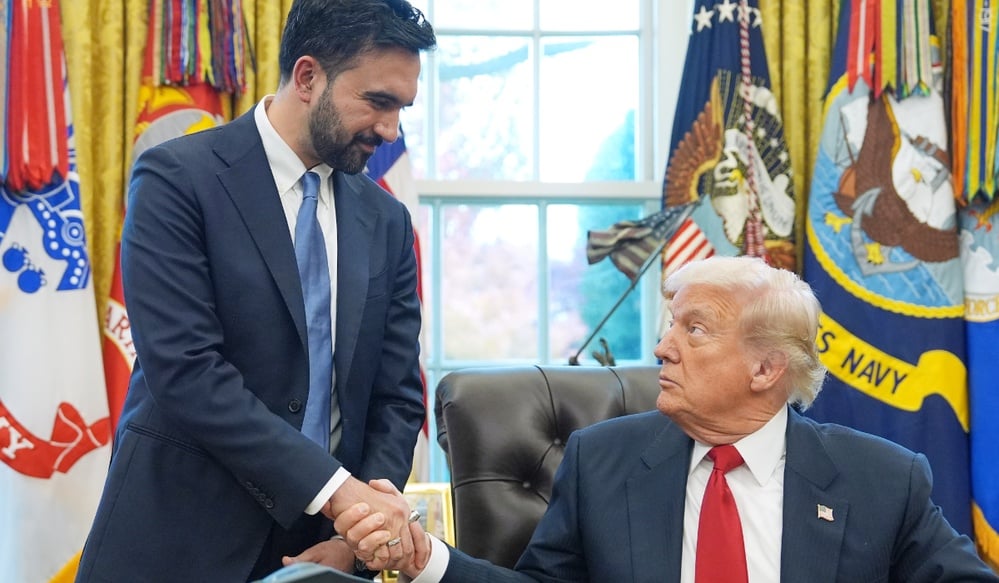
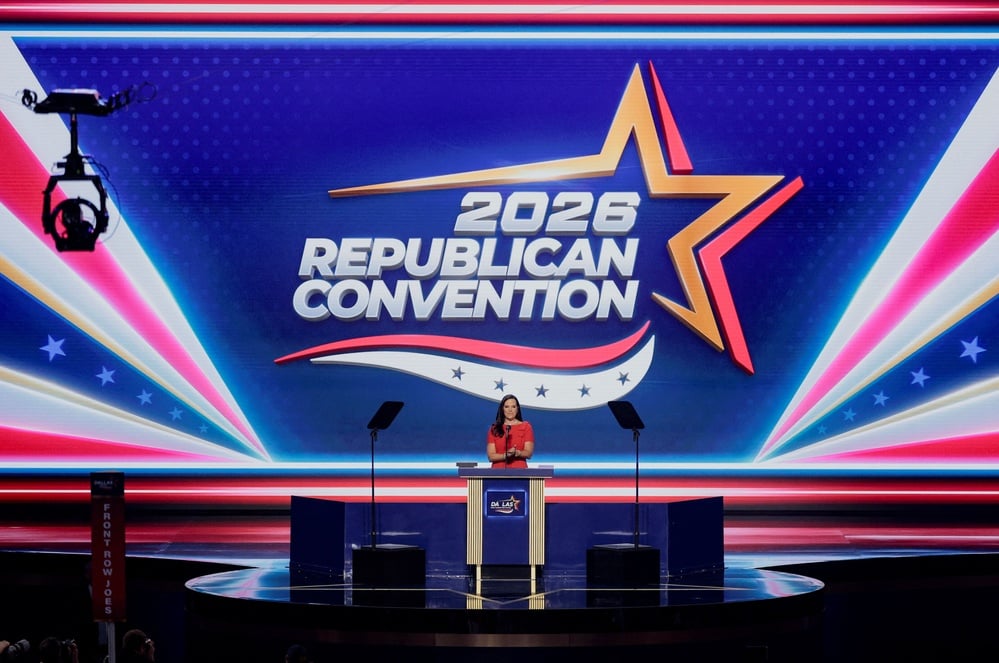

2026 © Helium Trades
Privacy Policy & Disclosure
* Disclaimer: Nothing on this website constitutes investment advice, performance data or any recommendation that any particular security, portfolio of securities, transaction or investment strategy is suitable for any specific person. Helium Trades is not responsible in any way for the accuracy
of any model predictions or price data. Any mention of a particular security and related prediction data is not a recommendation to buy or sell that security. Investments in securities involve the risk of loss. Past performance is no guarantee of future results. Helium Trades is not responsible for any of your investment decisions,
you should consult a financial expert before engaging in any transaction.
Helium Research Assistant

How can I help you today?
Ask any question about this page.


