See whether Helium helps you make better-informed decisions. Try every Pro Trader feature for 30 days. No credit card required.
Try every Pro Trader feature for 30 days. No credit card required.
October 10, 2026 · 0 shares
Wire-service disaster coverage relies on official advisories and attributed impact data, with no evident ideological, sensational, or evaluative framing.
Automated analysis; not human reviewed.
Limitations: The supplied text contains temporal/entity inconsistencies (Hurricane Isaias labeled first hurricane of the 2026 Atlantic season, dated Oct 9) and scraped zero-width characters/promotional chrome, limiting external verification.
·
14 of 55 available dimensions scored; omitted dimensions are not treated as neutral.
·
Verified supporting quotes for 12 of 14 scored dimensions.
Claim: The report uses no ideological labels or partisan framing; it attributes storm information to the National Hurricane Center and includes a neutral official quote from President Trump.
“the US National Hurricane Center said while warning of” · exact text match
“We're watching it very closely, the hurricane” · not found in supplied text
Why: Disaster facts are sourced to official agencies and a presidential statement without left-right characterization, indicating measured neutrality.
Claim: There is no populist or elitist rhetoric; the report relies on emergency-management authorities for factual updates.
“Alabama's emergency management” · exact text match
“Florida's emergency services urged residents” · exact text match
Why: Official safety information is presented descriptively rather than as a populist or elitist appeal.
Claim: The report maintains an objective wire-service style, attributing forecasts, warnings, and figures to named sources.
“More than 412,000 people in Florida and nearly 243,000 in Alabama lost power as the storm hit shore” · exact text match
Why: Quantitative, attributed impact data and advisory sourcing keep the framing objective.
Claim: The language reports storm severity and warnings without sensational or fear-baiting embellishment.
“The center warned of possible storm surges, urban and river flooding” · exact text match
Why: Hazard warnings are conveyed through official advisory language rather than dramatic or emotive wording.
Claim: The publisher remains descriptive, reporting official warnings and instructions rather than issuing its own prescriptions.
“Florida's emergency services urged residents” · exact text match
“all Houston County roads are” · exact text match
Why: Any directives are attributed to emergency agencies, not advanced by the publisher.
Claim: The report is fact-driven with no publisher editorial opinion; quoted opinions are clearly attributed.
“We're watching it very closely, the hurricane” · not found in supplied text
“the hurricane has downed trees and power lines” · exact text match
Why: Attributed quotes and factual updates indicate low opinion content.
Claim: Politics appears only through attributed official response mentions, not as the story's organizing frame.
“asked about hurricane preparations” · exact text match
“Homeland Security Secretary” · exact text match
Why: Mentions of federal officials create a minor political element, but they are subordinate to the storm-reporting frame.
Claim: The report relies almost entirely on official authorities for storm, outage, and response information.
“the US National Hurricane Center said while warning of” · exact text match
“Alabama's emergency management” · exact text match
Why: The sourcing is authority-centered, though appropriate for disaster reporting, giving a modest appeal-to-authority score.
Claim: No ideological framework or advocacy is present; the report remains a factual disaster update.
“Hurricane Isaias weakened” · exact text match
“The center warned” · exact text match
Why: Absence of ideological terminology or prescriptions indicates low ideological bias.
Claim: Credibility is supported by named agencies, exact figures, and reporter/editor attribution, though the supplied text lacks independent confirmation.
“the US National Hurricane Center said while warning of” · exact text match
“Reporting by Rhea Rose Abraham and Rajveer Singh Pardesi in Bengaluru” · exact text match
Why: Transparent sourcing and bylines indicate high credibility within the supplied text.
Claim: The report is structured around verifiable agency advisories, named officials, and outage data rather than emotional or speculative claims.
“the US National Hurricane Center said while warning of” · exact text match
“More than 412,000 people in Florida and nearly 243,000 in Alabama lost power” · exact text match
Why: Use of official advisory language and quantitative outage figures supports a rational, evidence-based presentation.
Claim: The report uses meteorological categories, wind speeds, and official forecasting rather than superstitious or non-empirical framing.
“Category 1 storm” · exact text match
“maximum sustained winds” · exact text match
Why: Reliance on NHC classifications and measurements supports a scientific rather than superstitious presentation.
Claim: The report shows high internal integrity through named agencies, exact figures, and bylined attribution.
“Reporting by Rhea Rose Abraham and Rajveer Singh Pardesi in Bengaluru” · exact text match
“More than 412,000 people in Florida and nearly 243,000 in Alabama lost power as the storm hit shore” · exact text match
Why: Clear sourcing, bylines, and quantitative specifics indicate fair, transparent reporting practices.
Claim: The report is clear, structured, and includes precise quantities and locations.
“about 65 miles (105 km)” · exact text match
“90 mph (150 kph)” · exact text match
Why: Specific measurements, locations, and attributions reflect careful, intelligent reporting.
The supplied text contains temporal/entity inconsistencies (Hurricane Isaias labeled first hurricane of the 2026 Atlantic season, dated Oct 9) and scraped zero-width characters/promotional chrome, limiting external verification.
October 10, 2026 · 0 shares
The report frames Hurricane Isaias through attributed official warnings, quantitative impact data, and localized human-interest quotes, with minimal ideological or sensational coloring.
Automated analysis; not human reviewed.
Limitations: The supplied text does not include a byline, full date, or year, limiting attribution and temporal context.
·
6 of 55 available dimensions scored; omitted dimensions are not treated as neutral.
·
Verified supporting quotes for 6 of 6 scored dimensions.
Claim: The report is primarily objective, relying on attributed data and official statements.
“More than 400,000 customers in Florida and Alabama were without power Friday evening, according to poweroutage.com.” · exact text match
Why: Quantified outage data with explicit source attribution supports an objective framing.
Claim: The report uses measured, official storm data rather than sensational language.
“It had maximum sustained winds of 169 km/h.” · exact text match
Why: A precise wind measurement and attributed official forecasts indicate an objective rather than sensational presentation.
Claim: The report is fact-focused with no publisher opinion inserted into the central claims.
“The first hurricane of the Atlantic season made landfall near Destin, Fla., the Miami-based U.S. National Hurricane Center said.” · exact text match
Why: The central event is attributed to an official source rather than presented as commentary.
Claim: The report is non-political despite quoting a governor, because it focuses on emergency guidance and storm response.
“Florida Gov. Ron DeSantis said at a news conference” · exact text match
Why: The only political figure mentioned gives evacuation and safety instructions, with no partisan framing.
Claim: The report shows strong credibility through named official sources, data attribution, and named local voices.
“the Miami-based U.S. National Hurricane Center said” · exact text match
“according to poweroutage.com” · exact text match
Why: Multiple specific, attributable sources support the reported facts and forecasts.
Claim: The report presents forecasts as attributed and probabilistic rather than as irrational certainty.
“Isaias is expected to weaken and be downgraded to a tropical storm by Saturday afternoon, the center said.” · exact text match
Why: The forecast is attributed to the hurricane center and uses expected, which reflects rational reporting.
The supplied text does not include a byline, full date, or year, limiting attribution and temporal context.
October 08, 2026 · 0 shares
The report is a straight, source-attributed weather forecast that stays descriptive and neutral, with no discernible political or ideological framing.
Hurricane Isaias is the first hurricane of the 2026 Atlantic season, and the BBC Weather segment is attributed to meteorologist Chris Fawkes.
Automated analysis; not human reviewed.
Limitations: The thin supplied snippet is only a brief weather-video description, and the landfall forecast is inherently probabilistic; bias dimensions tied to factual outcomes remain judgment calls.
·
55 of 55 available dimensions scored; omitted dimensions are not treated as neutral.
·
Verified supporting quotes for 14 of 55 scored dimensions.
Claim: The framing is objective, reporting measurable forecast details rather than subjective impressions.
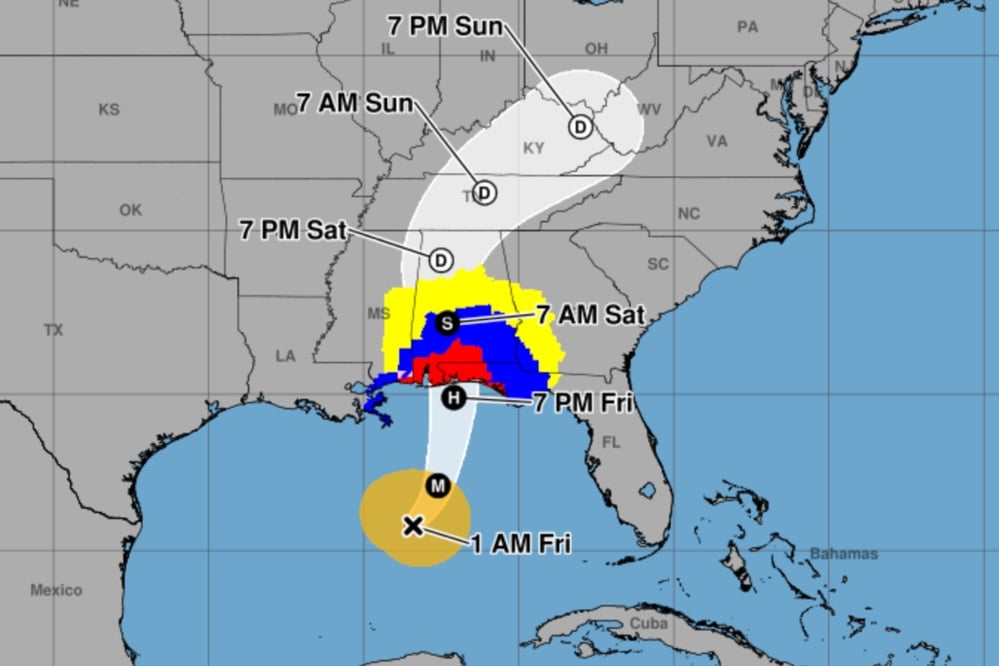
“Hurricane Isaias, the first hurricane of the 2026 Atlantic season, is intensifying as it heads toward the northern Gulf Coast.” · exact text match
Why: It states discrete storm attributes and location rather than opinion or personal reaction.
Claim: Hazard wording is sober and standard for weather reporting rather than sensationalized.
“bringing dangerous winds, storm surge and heavy rain” · exact text match
Why: The language matches conventional meteorological hazard descriptions without hyperbole or alarmist framing.
Claim: Interest is modest; it is routine weather reporting plus a record-tie detail.
“Isaias also ties the record for the latest first hurricane of an Atlantic season, set in 1905.” · exact text match
Why: The record tie is the most notable angle in an otherwise standard forecast.
Claim: The framing is descriptive, stating forecast conditions without prescribing actions or policy.
“is intensifying as it heads toward the northern Gulf Coast” · exact text match
Why: The text reports what is expected to happen rather than recommending responses.
Claim: There is mild hazard emphasis from dangerous winds, surge, and heavy rain.
“bringing dangerous winds, storm surge and heavy rain” · exact text match
Why: The wording is standard weather warning language; only mildly fear-evocative.
Claim: The forecast is brief and does not detail uncertainty ranges or variability.
“bringing dangerous winds, storm surge and heavy rain to parts of Mississippi, Alabama and Florida” · exact text match
Why: The short video description compresses the forecast without nuance.
Claim: It leans on the authority of BBC Weather and its meteorologist for the forecast.
“BBC Weather's Chris Fawkes says” · exact text match
Why: Forecast attribution to a named weather service is standard practice, but it is the primary epistemic basis supplied.
Claim: Emotional tone is neutral to slightly negative due to hazard wording.
“dangerous winds, storm surge and heavy rain” · exact text match
Why: Hazard terms carry mild negative valence but are factual.
Claim: Visible sourcing to a weather service and hedged expectations support moderate credibility.
“BBC Weather's Chris Fawkes says the first hurricane of the 2026 Atlantic season could bring dangerous winds, storm surge and heavy rains to the Gulf Coast Friday.” · exact text match
Why: The article names its source and uses conditional language for forecasts, supporting trustworthiness within the supplied text.
Claim: The framing is weather-report rational, presenting forecast information without fallacious reasoning.
“The storm is expected to make landfall Friday night, bringing dangerous winds, storm surge and heavy rain to parts of Mississippi, Alabama and Florida.” · exact text match
Why: The sentence presents a specific meteorological expectation attributed to a weather service with no fallacy or illogic.
Claim: The framing is scientific and empirical, using meteorological forecast language.
“is intensifying as it heads toward the northern Gulf Coast” · exact text match
Why: It relies on observable weather variables and a meteorological forecast rather than superstition.
Claim: The forecast is explicitly probabilistic and future-oriented.
“is expected to make landfall Friday night” · exact text match
Why: It predicts future storm behavior under uncertainty.
Claim: The report is internally fair and transparent about its sourcing and uncertainty.
“BBC Weather's Chris Fawkes explains.” · exact text match
Why: It openly attributes the forecast explanation and uses hedged expectation language.
Claim: The framing is truth-seeking, presenting a forecast without delusional claims.
“The storm is expected to make landfall Friday night” · exact text match
Why: The statements are ordinary forecast claims, not detached from evidence.
The thin supplied snippet is only a brief weather-video description, and the landfall forecast is inherently probabilistic; bias dimensions tied to factual outcomes remain judgment calls.
A straightforward, source-attributed severe-weather forecast relies heavily on expected and forecast language without overt political or ideological framing.
Automated analysis; not human reviewed.
Limitations: The supplied text has a likely date inconsistency ('2026') and duplicated fragments; these limit certainty about the article's original context.
·
8 of 55 available dimensions scored; omitted dimensions are not treated as neutral.
·
Verified supporting quotes for 5 of 8 scored dimensions.
Claim: The report is objective because it attributes forecast specifics to AccuWeather.
“According to AccuWeather, Isaias will make landfall between Pensacola Beach and Fort Walton Beach, Florida, as a Category 3 hurricane, with potentially destructive wind gusts of 100–120mph near the landfall zone.” · exact text match
Why: Attribution to a named forecasting source and concrete details indicate objective presentation.
Claim: The report is largely objective rather than sensational, using standard hazard terminology in a factual forecast.
“Isaias is expected to make landfall tonight.
By then, it will be a major hurricane, with dangerous winds and storm surge.”
· exact text match
Why: The language describes forecast hazards in conventional meteorological terms without dramatic embellishment.
Claim: The report is descriptive, stating expected impacts without prescribing actions or policies.
“Overnight into Saturday, damaging winds will spread inland across Alabama, increasing the risk of downed trees and power outages.” · exact text match
Why: The statement forecasts outcomes and risks rather than recommending or demanding a response.
Claim: The report is rational because it uses quantitative meteorological measurements and an attributed forecast rather than emotive or illogical claims.
“packing winds of 115mph and moving at 17mph, Isaias is expected to make landfall tonight.” · exact text match
Why: Specific wind speed, movement speed, and expected landfall support a rational/empirical classification.
Claim: The central content is a forecast of future landfall and impacts attributed to AccuWeather.
“According to AccuWeather, Isaias will make landfall between Pensacola Beach and Fort Walton Beach, Florida, as a Category 3 hurricane, with potentially destructive wind gusts of 100–120mph near the landfall zone.” · exact text match
Why: The article is built around expected future storm behavior and impacts, making it substantially speculative/forecasting in nature.
The supplied text has a likely date inconsistency ('2026') and duplicated fragments; these limit certainty about the article's original context.
October 10, 2026 · 0 shares
The report maintains a measured, attribution-heavy storm-disaster framing, balancing fatality and outage figures with official reassurances of limited impact.
The 2026 Atlantic hurricane season's first storm, Isaias, struck the US Southeast on Oct 10, 2026, prompting power restoration, evacuation, and production shutdown measures across several states and Gulf energy assets.
Automated analysis; not human reviewed.
Limitations: The article text contains duplicated segments and truncated outage figures, which may limit full reconstruction of the original report.
·
55 of 55 available dimensions scored; omitted dimensions are not treated as neutral.
·
Verified supporting quotes for 3 of 55 scored dimensions.
Claim: Framing prioritizes factual reporting over sensationalism.
“Authorities in Florida had received no search and rescue requests shortly after landfall in a sign of limited impact, Governor Ron DeSantis said.” · exact text match
Why: The article includes official reassurances and attribution, avoiding sensational framing.
Claim: Coverage is emotionally neutral, reporting casualties and damage without sensational language.
“Four people died after Hurricane Isaias made landfall early on Saturday (Oct 10), and about 670,000 residents in Florida, Alabama, Georgia and Mississippi were still without power as the storm weakened to a post-tropical cyclone, according to local authorities and electricity monitoring services.” · exact text match
Why: Factual, measured reporting of deaths and outages supports neutrality rather than positive or negative emotional loading.
Claim: Credibility is supported by attribution to named officials, agencies, and monitoring services.
“About 420,000 customers in Florida, 190,000 in Alabama, 43,000 in Georgia and 17,000 in Mississippi had no power as of midday Saturday, according to tracking firm PowerOutage.us.” · exact text match
Why: Specific figures are attributed to a named tracking firm, indicating transparent sourcing.
The article text contains duplicated segments and truncated outage figures, which may limit full reconstruction of the original report.
October 10, 2026 · 0 shares
Wire-service disaster coverage relies on official advisories and attributed impact data, with no evident ideological, sensational, or evaluative framing.
Automated analysis; not human reviewed.
Limitations: The supplied text contains temporal/entity inconsistencies (Hurricane Isaias labeled first hurricane of the 2026 Atlantic season, dated Oct 9) and scraped zero-width characters/promotional chrome, limiting external verification.
·
14 of 55 available dimensions scored; omitted dimensions are not treated as neutral.
·
Verified supporting quotes for 12 of 14 scored dimensions.
Claim: The report uses no ideological labels or partisan framing; it attributes storm information to the National Hurricane Center and includes a neutral official quote from President Trump.
“the US National Hurricane Center said while warning of” · exact text match
“We're watching it very closely, the hurricane” · not found in supplied text
Why: Disaster facts are sourced to official agencies and a presidential statement without left-right characterization, indicating measured neutrality.
Claim: There is no populist or elitist rhetoric; the report relies on emergency-management authorities for factual updates.
“Alabama's emergency management” · exact text match
“Florida's emergency services urged residents” · exact text match
Why: Official safety information is presented descriptively rather than as a populist or elitist appeal.
Claim: The report maintains an objective wire-service style, attributing forecasts, warnings, and figures to named sources.
“More than 412,000 people in Florida and nearly 243,000 in Alabama lost power as the storm hit shore” · exact text match
Why: Quantitative, attributed impact data and advisory sourcing keep the framing objective.
Claim: The language reports storm severity and warnings without sensational or fear-baiting embellishment.
“The center warned of possible storm surges, urban and river flooding” · exact text match
Why: Hazard warnings are conveyed through official advisory language rather than dramatic or emotive wording.
Claim: The publisher remains descriptive, reporting official warnings and instructions rather than issuing its own prescriptions.
“Florida's emergency services urged residents” · exact text match
“all Houston County roads are” · exact text match
Why: Any directives are attributed to emergency agencies, not advanced by the publisher.
Claim: The report is fact-driven with no publisher editorial opinion; quoted opinions are clearly attributed.
“We're watching it very closely, the hurricane” · not found in supplied text
“the hurricane has downed trees and power lines” · exact text match
Why: Attributed quotes and factual updates indicate low opinion content.
Claim: Politics appears only through attributed official response mentions, not as the story's organizing frame.
“asked about hurricane preparations” · exact text match
“Homeland Security Secretary” · exact text match
Why: Mentions of federal officials create a minor political element, but they are subordinate to the storm-reporting frame.
Claim: The report relies almost entirely on official authorities for storm, outage, and response information.
“the US National Hurricane Center said while warning of” · exact text match
“Alabama's emergency management” · exact text match
Why: The sourcing is authority-centered, though appropriate for disaster reporting, giving a modest appeal-to-authority score.
Claim: No ideological framework or advocacy is present; the report remains a factual disaster update.
“Hurricane Isaias weakened” · exact text match
“The center warned” · exact text match
Why: Absence of ideological terminology or prescriptions indicates low ideological bias.
Claim: Credibility is supported by named agencies, exact figures, and reporter/editor attribution, though the supplied text lacks independent confirmation.
“the US National Hurricane Center said while warning of” · exact text match
“Reporting by Rhea Rose Abraham and Rajveer Singh Pardesi in Bengaluru” · exact text match
Why: Transparent sourcing and bylines indicate high credibility within the supplied text.
Claim: The report is structured around verifiable agency advisories, named officials, and outage data rather than emotional or speculative claims.
“the US National Hurricane Center said while warning of” · exact text match
“More than 412,000 people in Florida and nearly 243,000 in Alabama lost power” · exact text match
Why: Use of official advisory language and quantitative outage figures supports a rational, evidence-based presentation.
Claim: The report uses meteorological categories, wind speeds, and official forecasting rather than superstitious or non-empirical framing.
“Category 1 storm” · exact text match
“maximum sustained winds” · exact text match
Why: Reliance on NHC classifications and measurements supports a scientific rather than superstitious presentation.
Claim: The report shows high internal integrity through named agencies, exact figures, and bylined attribution.
“Reporting by Rhea Rose Abraham and Rajveer Singh Pardesi in Bengaluru” · exact text match
“More than 412,000 people in Florida and nearly 243,000 in Alabama lost power as the storm hit shore” · exact text match
Why: Clear sourcing, bylines, and quantitative specifics indicate fair, transparent reporting practices.
Claim: The report is clear, structured, and includes precise quantities and locations.
“about 65 miles (105 km)” · exact text match
“90 mph (150 kph)” · exact text match
Why: Specific measurements, locations, and attributions reflect careful, intelligent reporting.
The supplied text contains temporal/entity inconsistencies (Hurricane Isaias labeled first hurricane of the 2026 Atlantic season, dated Oct 9) and scraped zero-width characters/promotional chrome, limiting external verification.
Straightforward, official-source-based reporting on Florida's emergency declaration for Hurricane Isaias, with no evident ideological or sensational framing.
Automated analysis; not human reviewed.
Limitations: Specific calendar dates for the executive order and Hurricane Isaias upgrade are not provided; only weekday references appear.
·
6 of 55 available dimensions scored; omitted dimensions are not treated as neutral.
·
Verified supporting quotes for 6 of 6 scored dimensions.
Claim: The article reports the emergency declaration in neutral, factual terms without subjective commentary.
“Florida Gov. Ron DeSantis signed an executive order on Tuesday declaring a state of emergency in 25 counties as a precaution due to a storm in the Gulf that has since become Hurricane Isaias.” · exact text match
Why: The sentence states the actor, action, number of counties, and reason without evaluative language.
Claim: The article avoids sensational or emotive language about the hurricane threat.
“Forecasters at the National Hurricane Center have recommended that interests in the Yucatan Peninsula and the northern U.S. Gulf Coast closely monitor the progress of the system.” · exact text match
Why: The phrasing is measured and advisory rather than alarmist.
Claim: The article primarily describes the executive order and official guidance rather than prescribing what readers should do.
“The executive order signed Tuesday by Gov. DeSantis — EO 26-202 — declares a state of emergency in the following counties: Baker, Bay, Calhoun, Columbia, Dixie, Escambia, Franklin, Gadsden, Gilchrist, Gulf, Hamilton, Holmes, Jackson, Jefferson, Lafayette, Leon, Liberty, Madison, Okaloosa, Santa Rosa, Suwannee, Taylor, Walton, Wakulla, and Washington.” · exact text match
Why: The publisher's own text lists the order and counties; any preparedness advice is attributed to DeSantis's quote, not the outlet.
Claim: The article has a low political intensity, reporting a government emergency declaration without ideological framing.
“Florida Gov. Ron DeSantis signed an executive order on Tuesday declaring a state of emergency in 25 counties as a precaution due to a storm in the Gulf that has since become Hurricane Isaias.” · exact text match
Why: The content concerns official government action but contains no partisan or ideological language.
Claim: The article is credible due to explicit sourcing from the governor and the National Hurricane Center.
““Today, I signed an Executive Order issuing a state of emergency ahead of potential impacts from Tropical Depression 9 (now Hurricane Isaias).
This order will allow the Florida Division of Emergency Management to stage critical preparedness resources and ensure Florida is ready to respond,” DeSantis said in a statement.”
· exact text match
Why: It cites a named official forecasting body and quotes the governor, providing verifiable attribution.
Claim: The article provides specific, verifiable details and attribution, indicating fair and honest reporting.
“The executive order signed Tuesday by Gov. DeSantis — EO 26-202 — declares a state of emergency in the following counties:” · exact text match
Why: The outlet attributes the statement directly to the governor and includes the executive order number, reducing risk of distortion.
Specific calendar dates for the executive order and Hurricane Isaias upgrade are not provided; only weekday references appear.
October 09, 2026 · 0 shares
The hurricane coverage is largely neutral and factual, relying on official sources, though the appended unrelated news snippets introduce unvetted, disparate content.
Hurricane Isaias was the first hurricane of the 2026 Atlantic season, forming during a quieter-than-average season influenced by a strong El Niño.
Automated analysis; not human reviewed.
Limitations: The article text includes appended unrelated news snippets that are not part of the main hurricane report, which may introduce extraneous content.
·
53 of 55 available dimensions scored; omitted dimensions are not treated as neutral.
·
Verified supporting quotes for 20 of 53 scored dimensions.
Claim: The article remains mostly objective, though some descriptions of storm impacts are mildly subjective.
“potentially life-threatening storm surge” · exact text match
Why: Use of 'potentially' maintains objective caution, but emotive language like 'life-threatening' adds slight subjectivity.
Claim: The coverage is largely objective and avoids sensationalism.
“Heavy rain and flooding could extend as far north as Tennessee and North Carolina through the weekend.” · exact text match
Why: Factual forecasts without hyperbole indicate low sensational bias.
Claim: The article leans slightly pessimistic due to emphasis on dangers and evacuations.
“Residents should take this storm seriously and evacuate” · exact text match
Why: Warnings and evacuation orders convey a pessimistic outlook.
Claim: The article is moderately interesting due to live updates and hurricane impact.
“Follow live updates on Hurricane Isaias below.” · exact text match
Why: Live format and storm details engage readers.
Claim: The article is mostly descriptive, with few prescriptive elements.
“Florida Gov. Ron DeSantis urged residents to prepare emergency supplies” · exact text match
Why: Reporting officials' advice is descriptive, though it includes prescriptive quotes.
Claim: The article contains mild fear-inducing language about storm dangers.
“potentially life-threatening storm surge” · exact text match
Why: Terms like 'life-threatening' may evoke fear, though used factually.
Claim: The article is mostly fact-based with minimal opinion.
“Officials are urging coastal residents from Mississippi to the Florida Panhandle to take the season's first Atlantic hurricane seriously.” · exact text match
Why: Reporting officials' urgings is factual, not opinionated.
Claim: The article has minimal political content, focusing on emergency response.
“Florida Gov. Ron DeSantis urged residents to prepare emergency supplies” · exact text match
Why: Mentions of governors are operational, not political.
Claim: The article simplifies some hurricane impacts but generally provides adequate detail.
“Well-constructed frame homes could sustain major roof and siding damage.” · exact text match
Why: Some blanket statements may oversimplify, but overall detail is sufficient.
Claim: The article heavily appeals to authority by citing multiple official sources.
“According to the National Hurricane Center” · exact text match
Why: Frequent reliance on NHC and governors indicates strong appeal to authority.
Claim: The article shows slight overconfidence in forecasts despite noting uncertainty.
“The storm is most likely to strike near the Alabama-Florida state line, though its exact path remains uncertain.” · exact text match
Why: Acknowledgment of uncertainty tempers confidence.
Claim: The article contains minor spam-like unrelated snippets at the end.
“Lee Inglis has admitted stabbing Stacey Hogg to death in her home in Hawick.” · exact text match
Why: Appended unrelated news items resemble spam or content aggregation.
Claim: The article is slightly pro-establishment, relying on government sources.
“The governors of Florida, Alabama and Georgia have declared states of emergency” · exact text match
Why: Prominent use of official declarations indicates mild establishment alignment.
Claim: The article is credible, using official sources and specific data.
“According to the National Hurricane Center” · exact text match
Why: Consistent attribution and factual reporting support high credibility.
Claim: The reporting is largely rational and evidence-based.
“According to the National Hurricane Center, Isaias is a Category 2 storm with sustained winds of 105 mph.” · exact text match
Why: Use of specific data and attribution supports rationality.
Claim: The article is scientific, relying on meteorological data.
“Saffir-Simpson Hurricane Wind Scale” · exact text match
Why: Reference to scientific scales and NHC indicates strong scientific bias.
Claim: The article includes some speculation about storm path and intensity.
“It is forecast to weaken to a Category 1 before landfall.” · exact text match
Why: Forecasts are inherently speculative but presented as expert projections.
Claim: The article shows some indicators of AI authorship, such as repetitive structure and appended unrelated content.
“Follow live updates on Hurricane Isaias below.” · exact text match
Why: Mixed formatting and aggregation suggest possible AI involvement, but not definitive.
Claim: The article demonstrates integrity through sourcing and clear attribution.
“Lindsey Long, a meteorologist with the U.S. National Oceanic and Atmospheric Administration's Climate Prediction Center, told AP.” · exact text match
Why: Attribution to named experts and agencies supports high integrity.
Claim: The article is reasonably intelligent, providing detailed forecasts and context.
“A Category 2 hurricane has extremely dangerous winds between 96 and 110 mph” · exact text match
Why: Clear explanations and data indicate above-average intelligence.
Claim: The article is truth-seeking, avoiding delusional content.
“The NHC's tracker (above) indicating it could hit near the border of Alabama and the Florida Panhandle border.” · not found in supplied text
Why: Factual reporting without conspiracy theories supports truth-seeking.
The article text includes appended unrelated news snippets that are not part of the main hurricane report, which may introduce extraneous content.
October 10, 2026 · 0 shares
Urgent, official-warning-driven disaster framing presents forecasts and evacuation orders as authoritative and life-threatening, with limited scrutiny of conflicting or unsourced storm claims.
Hurricanes are categorized by sustained wind speed, and states of emergency and mandatory evacuations are US emergency-management measures.
Automated analysis; not human reviewed.
Limitations: The supplied text includes repeated formatting artifacts and unrelated BBC promo links, and some storm claims appear internally inconsistent; analysis is limited to the substantive hurricane report.
·
7 of 55 available dimensions scored; omitted dimensions are not treated as neutral.
·
Verified supporting quotes for 7 of 7 scored dimensions.
Claim: Reporting is predominantly factual and attributed rather than opinion-driven, but includes human-interest elements.
“The storm weakened slightly to a category 2 hurricane, with 110 mph (175 kph) winds” · exact text match
“John Guoth, a resident of Navarre, Florida, told the BBC” · exact text match
Why: Concrete metrics and attribution support objectivity, while resident anecdotes add subjectivity.
Claim: Urgent and dramatic wording amplifies the storm’s danger beyond neutral reporting.
“life-threatening flooding and winds” · exact text match
“ramming into Florida's western panhandle” · exact text match
“barrels down” · exact text match
Why: The quoted urgent descriptors and active verbs heighten drama, though they are largely tied to official warnings.
Claim: Pessimistic framing centers on harm, danger, and disruption.
“life-threatening flooding” · exact text match
“hundreds of thousands were without power” · exact text match
Why: Focus on damage, evacuations, and outages yields pessimistic valence.
Claim: Framing emphasizes imminent life-threatening danger and emergency action.
“life-threatening flooding and winds that have forced thousands to evacuate” · exact text match
“DO NOT WAIT! Get out NOW!” · exact text match
“Extreme Wind Warning” · exact text match
Why: Repeated threat language and urgent evacuation quotes produce fear-oriented disaster framing.
Claim: Negative emotional tone dominates because of disaster threat and damage.
“life-threatening storm surge” · exact text match
“fierce winds and heavy rain” · exact text match
Why: Consistent danger cues create a negative emotional valence.
Claim: Visible sourcing and attribution are strong, though some claims are unsourced.
“the National Hurricane Center warned” · exact text match
“according to PowerOutage.us” · exact text match
“told the BBC” · exact text match
Why: Named agencies, a data source, and direct attributions support credibility.
Claim: Article relies on forecasts and expected impacts for future conditions.
“is expected to bring” · exact text match
“is forecast to move across Alabama” · exact text match
“is set to pick up speed and become category four by Saturday” · exact text match
Why: Central content is future-oriented forecasting, though attributed to weather agencies.
The supplied text includes repeated formatting artifacts and unrelated BBC promo links, and some storm claims appear internally inconsistent; analysis is limited to the substantive hurricane report.
October 10, 2026 · 0 shares
The report frames Hurricane Isaias through attributed official warnings, quantitative impact data, and localized human-interest quotes, with minimal ideological or sensational coloring.
Automated analysis; not human reviewed.
Limitations: The supplied text does not include a byline, full date, or year, limiting attribution and temporal context.
·
6 of 55 available dimensions scored; omitted dimensions are not treated as neutral.
·
Verified supporting quotes for 6 of 6 scored dimensions.
Claim: The report is primarily objective, relying on attributed data and official statements.
“More than 400,000 customers in Florida and Alabama were without power Friday evening, according to poweroutage.com.” · exact text match
Why: Quantified outage data with explicit source attribution supports an objective framing.
Claim: The report uses measured, official storm data rather than sensational language.
“It had maximum sustained winds of 169 km/h.” · exact text match
Why: A precise wind measurement and attributed official forecasts indicate an objective rather than sensational presentation.
Claim: The report is fact-focused with no publisher opinion inserted into the central claims.
“The first hurricane of the Atlantic season made landfall near Destin, Fla., the Miami-based U.S. National Hurricane Center said.” · exact text match
Why: The central event is attributed to an official source rather than presented as commentary.
Claim: The report is non-political despite quoting a governor, because it focuses on emergency guidance and storm response.
“Florida Gov. Ron DeSantis said at a news conference” · exact text match
Why: The only political figure mentioned gives evacuation and safety instructions, with no partisan framing.
Claim: The report shows strong credibility through named official sources, data attribution, and named local voices.
“the Miami-based U.S. National Hurricane Center said” · exact text match
“according to poweroutage.com” · exact text match
Why: Multiple specific, attributable sources support the reported facts and forecasts.
Claim: The report presents forecasts as attributed and probabilistic rather than as irrational certainty.
“Isaias is expected to weaken and be downgraded to a tropical storm by Saturday afternoon, the center said.” · exact text match
Why: The forecast is attributed to the hurricane center and uses expected, which reflects rational reporting.
The supplied text does not include a byline, full date, or year, limiting attribution and temporal context.
October 09, 2026 · 0 shares
The article maintains a neutral, market-focused frame, prioritizing production and freight data over sensationalism or political commentary.
The report is set amid the Iran war's disruption of global oil trade routes, which increased freight costs for US crude exports to Asia.
Automated analysis; not human reviewed.
·
55 of 55 available dimensions scored; omitted dimensions are not treated as neutral.
·
Verified supporting quotes for 12 of 55 scored dimensions.
Claim: The article presents factual information without subjective commentary or opinion.
“BP Plc shut production and evacuated its Thunder Horse and Na Kika platforms as the hurricane approached.” · exact text match
Why: Straightforward description of events without evaluative language.
Claim: The article uses neutral, factual language without sensationalism.
“Hurricane Isaias is lifting to US Gulf Coast crude prices, with nearly three-quarters of oil production in the region shut in.” · exact text match
Why: No hyperbolic or emotionally charged wording.
Claim: The article maintains a neutral tone, neither optimistic nor pessimistic.
“With freight costs weighing on export demand, the offshore production losses could limit the buildup of barrels that would otherwise struggle to find buyers abroad.” · exact text match
Why: Balanced presentation of potential market impacts.
Claim: The article is purely descriptive, offering no prescriptions or recommendations.
“Workers had evacuated 129 platforms as of 12 p.m. ET, white two dynamically positioned rigs moved out of the storm’s path.” · exact text match
Why: No advice or normative statements.
Claim: The article maintains a neutral emotional tone, slightly negative due to disruption.
“Hurricane Isaias is lifting to US Gulf Coast crude prices, with nearly three-quarters of oil production in the region shut in.” · exact text match
Why: Focus on disruption without emotional language.
Claim: The article is credible, with multiple named sources and specific figures.
“Producers halted about 1.46 million barrels a day of output, or 72% of the regional total, the Marine Minerals Administration said on Friday.” · exact text match
Why: Use of official agency data and named companies.
Claim: The article relies on verifiable data and attribution from authoritative sources.
“Producers halted about 1.46 million barrels a day of output, or 72% of the regional total, the Marine Minerals Administration said on Friday.” · exact text match
Why: Direct citation of a regulatory agency and specific numbers supports rational reporting.
Claim: The article relies on empirical data and scientific observation.
“Isaias, which strengthened into a Category 3 hurricane as it nears the US Gulf Coast, is disrupting offshore supplies at a time when the Iran war has upended global oil trade routes.” · exact text match
Why: Reference to hurricane category and market data.
Claim: The article may have been written by AI due to minor typos and awkward phrasing.
“white two dynamically positioned rigs moved out of the storm’s path.” · exact text match
Why: Typo 'white' instead of 'while' is a weak indicator of AI or automated writing.
Claim: The article cites specific sources and avoids unsupported assertions.
“Hiring a very large crude carrier to transport US oil to Asia now costs around $79 million, according to the Baltic Exchange.” · exact text match
Why: Attribution to a named exchange supports integrity.
Claim: The article demonstrates average to above-average intelligence through clear data presentation.
“Longer delivery times for Middle Eastern shipments have tied up tankers, sending the cost of moving American crude to Asia soaring.” · exact text match
Why: Coherent explanation of market dynamics.
Claim: The article is truth-seeking, grounded in observable events.
“The company also removed nonessential personnel from Argos, Atlantis and Mad Dog platforms.” · exact text match
Why: Concrete actions reported without speculation.
October 09, 2026 · 0 shares
The reporting is largely neutral and factual, relying on official sources with no evident political or ideological framing.
Hurricane Isaias is approaching the U.S. Gulf Coast, where a large share of U.S. offshore oil and gas infrastructure and shipbuilding activity is concentrated.
Automated analysis; not human reviewed.
·
55 of 55 available dimensions scored; omitted dimensions are not treated as neutral.
·
Verified supporting quotes for 10 of 55 scored dimensions.
Claim: The report presents factual data and official statements rather than subjective opinion.
“According to the Bureau of Safety and Environmental Enforcement - recently folded into the new Marine Minerals Administration - fully 121 production platforms have been evacuated in the Gulf as a precautionary measure, about one third of the offshore production footprint.” · exact text match
Why: Neutral attribution to a named agency supports objective framing.
Claim: The article avoids sensationalism, using measured official language even when quoting warnings.
“the National Hurricane Center is warning residents from eastern Louisiana to the Florida Panhandle to get ready for a "life-threatening storm surge."” · exact text match
Why: Direct attribution of the warning to the National Hurricane Center reduces sensational tone.
Claim: The article notes supply disruptions that are bearish for oil supply.
“The brief shutdown will take about 1.3 million barrels per day - more than one percent of all global production - offline until after the storm has passed and facilities are inspected for safety.” · exact text match
Why: Emphasis on temporary supply loss supports a mildly bearish supply framing.
Claim: The article frequently cites official authorities for its claims.
“the National Hurricane Center is warning residents from eastern Louisiana to the Florida Panhandle” · exact text match
Why: Multiple attributions to government agencies indicate reliance on authority.
Claim: The article uses multiple official sources and precise figures, making it highly credible.
“the latest Hurricane Hunters flight into the storm suggest surface wind speeds in the range of 85 knots” · exact text match
Why: Specific, attributed data from recognized sources support high credibility.
Claim: The article relies on official weather and regulatory data without speculative or fallacious reasoning.
“Isaias intensified as expected overnight Wednesday, and the latest Hurricane Hunters flight into the storm suggest surface wind speeds in the range of 85 knots.” · exact text match
Why: Source-based measurement and attribution indicate rational reporting.
Claim: The article relies on meteorological and agency data rather than superstition.
“Isaias is moving over warm waters in the northern Gulf, conditions that would normally favor intensification.” · exact text match
Why: Scientific explanation of storm behavior indicates an empirical approach.
Claim: The article includes a forecast about storm impact and supply effects, which is inherently speculative.
“Isaias is expected to remain a dangerous hurricane through landfall” · exact text match
Why: Forward-looking statements based on official forecasts support moderate speculation.
Claim: The article transparently cites agencies and provides verifiable data.
“About 60 percent of all Gulf oil and gas production is now shut in, the agency said in a statement.” · exact text match
Why: Attribution to an official statement and specific figures signal high integrity.
Claim: The article is truth-seeking, grounded in observable data and official reports.
“According to the Bureau of Safety and Environmental Enforcement - recently folded into the new Marine Minerals Administration - fully 121 production platforms have been evacuated in the Gulf as a precautionary measure” · exact text match
Why: Reliance on verifiable agency information supports a truth-seeking classification.
October 08, 2026 · 0 shares
The report frames Hurricane Isaias primarily through fuel-market risk and price-spike concerns, relying on industry and market sources with limited independent verification of the storm's human dimension.
The article describes a projected Gulf Coast hurricane landfall and its potential effects on U.S. refining capacity, fuel inventories, and pump prices.
Automated analysis; not human reviewed.
·
55 of 55 available dimensions scored; omitted dimensions are not treated as neutral.
·
Verified supporting quotes for 0 of 55 scored dimensions.
October 08, 2026 · 0 shares
The report is a data-driven, attributed market update that frames oil price increases around Middle East shipping attacks, Hurricane Isaias shut-ins, and inventory draws without partisan or sensational language.
Automated analysis; not human reviewed.
Limitations: The supplied text contains duplicated paragraphs and trailing navigation/headlines; analysis was limited to the substantive oil market report.
·
11 of 55 available dimensions scored; omitted dimensions are not treated as neutral.
·
Verified supporting quotes for 11 of 11 scored dimensions.
Claim: The report relies on precise market data and attributed sources rather than subjective interpretation.
“Brent crude futures rose $2.28, or 2.28 percent, to $102.28 a barrel by 07:27 a.m. Saudi time.” · exact text match
Why: Concrete price data and named sources indicate objective, data-driven reporting.
Claim: The report uses neutral, factual language for price and supply developments.
“Crude inventories fell by 3.2 million barrels to 424.1 million barrels” · exact text match
Why: Concrete inventory data without sensational wording supports a low sensational bias.
Claim: The report describes oil market developments without prescribing policy or action.
“Oil prices rose on Thursday on persistent worries about supply” · exact text match
Why: The article explains causes and data instead of recommending responses.
Claim: The report presents market data and attributed analysis without publisher opinion.
“Brent crude futures rose $2.28, or 2.28 percent, to $102.28 a barrel by 07:27 a.m. Saudi time.” · exact text match
Why: Factual data and attributed quotes rather than editorializing support a low opinion score.
Claim: The report references geopolitical conflict as market context but does not advance a political position.
“the US-Israeli conflict with Iran enters its eighth month” · exact text match
Why: Political content is present but subordinate to oil market reporting.
Claim: The report describes violent events and market moves in neutral, unemotional terms.
“a tanker north of Qatar was struck by multiple projectiles, causing casualties” · exact text match
Why: No emotive language or outrage framing supports a neutral emotional score.
Claim: The report cites multiple named agencies, companies, and analysts for key claims.
“the Energy Information Administration said on Wednesday” · exact text match
“the UK Maritime Trade Operations agency said on Wednesday” · exact text match
Why: Visible sourcing and attribution support high credibility.
Claim: The report presents causal market analysis based on supply disruptions, inventories, and analyst assessments.
“strategic stock releases can augment supply flows temporarily but do not create new production capacity” · exact text match
Why: Reasoned, attributed analysis rather than irrational claims supports a rational classification.
Claim: The report includes forward-looking analyst forecasts but attributes them rather than presenting them as publisher predictions.
“likely to intensify further” · exact text match
“would likely consist of barrels that were already part of the group's original 400-million-barrel release plan” · exact text match
Why: Speculative statements are present but clearly attributed, supporting a low-to-moderate score.
Claim: The report includes named official sources and qualifying analyst analysis.
“the UK Maritime Trade Operations agency said on Wednesday” · exact text match
“would likely consist of barrels that were already part of the group's original 400-million-barrel release plan” · exact text match
Why: Attribution and caveats indicate fair, honest reporting.
Claim: The report synthesizes price movements, shipping risks, inventories, and analyst forecasts.
“strategic stock releases can augment supply flows temporarily but do not create new production capacity” · exact text match
Why: Integrated market analysis supports a high intelligence score.
The supplied text contains duplicated paragraphs and trailing navigation/headlines; analysis was limited to the substantive oil market report.
October 09, 2026 · 0 shares
The report is largely a neutral, procedurally framed aggregation of official military statements about hurricane preparations, with no discernible ideological or sensational spin.
Automated analysis; not human reviewed.
Limitations: The supplied text is a short aggregation of official statements; it lacks bylined narrative or independent verification, limiting assessment of editorial framing.
·
55 of 55 available dimensions scored; omitted dimensions are not treated as neutral.
·
Verified supporting quotes for 14 of 55 scored dimensions.
Claim: The account is predominantly objective, relying on official statements and concrete details.
“A base spokesperson told Military Times that it cannot release aircraft numbers and details due to operational security, but confirmed the aircraft include F-15s, F-16s and F-35s.” · exact text match
Why: Attribution to spokespeople and specific facts indicate an objective, non-subjective framing.
Claim: The framing is objective rather than sensational, with no dramatic embellishment.
“Hurricane Isaias has strengthened into a Category 3 major hurricane and is expected to hit areas along the Gulf Coast Friday night, with power outages, storm surges and high rainfall anticipated through the weekend.” · exact text match
Why: The description is factual and measured, avoiding sensational language.
Claim: The content is mildly interesting due to storm preparations but lacks strong novelty.
“Bases in Florida and Mississippi have evacuated their aircraft and personnel in anticipation of Hurricane Isaias hitting the area beginning Friday night.” · exact text match
Why: Routine procedural reporting is somewhat engaging but not highly distinctive.
Claim: The article is descriptive of events and official actions rather than prescriptive.
“Bases in Florida and Mississippi have changed their hurricane condition statuses and sent aircraft to other bases for safekeeping as maintenance teams prepare on base.” · exact text match
Why: It reports what is being done without recommending policy or behavior.
Claim: The article heavily cites official base spokespeople as sources.
“A Hurlburt spokesperson told Military Times that all flyable aircraft, including their AC-130J Ghostrider and MC-130J Commando II, were relocated to Little Rock, while aircraft undergoing maintenance were secured in protective hangars at Hurlburt Field.” · exact text match
Why: Claims rest on military authorities rather than independent verification.
Claim: The text contains some promotional or unrelated headline links at the end.
“Pentagon barred Qatar base access to hide Iran war damage, US senator claims” · exact text match
Why: Lower-relevance links appear appended, slightly reducing content focus.
Claim: The report aligns with establishment/military official framing, relying on base spokespeople.
“A base spokesperson told Military Times that it cannot release aircraft numbers and details due to operational security, but confirmed the aircraft include F-15s, F-16s and F-35s.” · exact text match
Why: Dependence on official military sources reflects a pro-establishment perspective.
Claim: The article is credible, with clear attribution and no evident misinformation.
“Keesler’s Reserve 403rd Wing’s two flying units relocated its aircraft to Joint Base San Antonio, Texas, to ensure they were out of the hurricane’s path and could still conduct weather reconnaissance for the National Hurricane Center, according to a Thursday release.” · exact text match
Why: Specific, attributed details and named entities support strong credibility.
Claim: The report is rationally framed around official procedures and weather status.
“Eglin updated the base’s limited evacuation order on Thursday, ordering service members, Department of Defense employees and their dependents in specific county zones to evacuate.” · exact text match
Why: The article presents procedural, cause-effect hurricane preparation without irrational leaps.
Claim: The framing is scientific/empirical, citing weather categories and official conditions.
“Eglin’s aircraft departed the base as officials declared Hurricane Condition 1, meaning there is a possibility of destructive winds of 58 mph or greater within 12 hours.” · exact text match
Why: Use of defined meteorological and operational terms reflects empirical grounding.
Claim: The report is largely non-speculative, though it forecasts storm impacts.
“Hurricane Isaias has strengthened into a Category 3 major hurricane and is expected to hit areas along the Gulf Coast Friday night, with power outages, storm surges and high rainfall anticipated through the weekend.” · exact text match
Why: Weather forecasts are inherently probabilistic but based on official statements, not editorial speculation.
Claim: The article appears human-written with attributed reporting and minor typographical quirks.
“Cristina Stassis is a reporter covering stories surrounding the defense industry, national security, military/veteran affairs and more.” · exact text match
Why: Named byline and natural flow suggest human authorship, though short factual items can resemble AI output.
Claim: The report shows high integrity by attributing information and noting operational-security limits.
““Due to operational security considerations, we are not releasing specific quantities, relocation locations, or movement timelines,” the spokesperson said.” · exact text match
Why: Transparent attribution and acknowledgment of withheld details signal honesty and fairness.
Claim: The article is moderately intelligent, conveying clear factual information without depth.
“Little Rock Air Force Base, Arkansas, confirmed it received aircraft from Eglin and Hurlburt.” · exact text match
Why: Straightforward factual reporting indicates average informational intelligence.
The supplied text is a short aggregation of official statements; it lacks bylined narrative or independent verification, limiting assessment of editorial framing.
October 09, 2026 · 0 shares
The reporting is operational and attribution-driven, presenting base actions, official statements, and National Hurricane Center advisories without partisan or sensational framing.
Hurricane Isaias approached the U.S. northern Gulf Coast in early October, prompting military installations in Florida and Mississippi to take precautionary evacuation and readiness measures; the article notes Air Force hurricane-condition procedures and prior storm damage at Tyndall and Offutt.
Automated analysis; not human reviewed.
Limitations: The article contains apparent date and naming inconsistencies (e.g., Hurricane Isaias versus the 2018 Michael timeline and an Oct. 9 editor's note), but the substantive reporting text is otherwise clear.
·
55 of 55 available dimensions scored; omitted dimensions are not treated as neutral.
·
Verified supporting quotes for 1 of 55 scored dimensions.
Claim: The article is predominantly objective, reporting facts and attribution without inserting the author's subjective viewpoint.
““Tyndall moved to Hurricane Condition 2 status on Oct. 8, meaning destructive winds of 58 miles per hour or greater were possible over the next 24 hours.”” · not found in supplied text
Why: Descriptions are specific, sourced, and free of evaluative commentary.
Claim: The article avoids sensationalism; storm and evacuation details are presented in measured, operational terms.
““Isaias is currently gathering strength in the Gulf of Mexico, with maximum sustained winds increasing to nearly 120 miles per hour, the National Hurricane Center said the morning of Oct.
9.””
· not found in supplied text
Why: The tone is factual and technical rather than fear-amplifying.
Claim: The article has moderate inherent interest because it covers military disaster preparedness with concrete aircraft and base details.
““three bases in Florida and one in Mississippi have begun flying out F-35 Lightning IIs, AC-130J Ghostriders, MC-130J Commando IIs, and more”” · not found in supplied text
Why: Specific aircraft and base details raise topical interest for defense readers.
Claim: The article is descriptive rather than prescriptive, recounting base actions and forecasts without recommending policies.
““The Air Force has begun evacuating stealth fighters, gunships, and special operations planes ahead of Hurricane Isaias’ expected landfall over the Gulf Coast this weekend.”” · not found in supplied text
Why: The text describes events and official directives instead of advocating actions.
Claim: A mild threat-adjacent framing comes from severe-weather risk descriptions, but it is not fear-mongering.
““Severe storms can be devastating for Air Force bases, endangering lives, damaging aircraft and buildings, and battering runways.”” · not found in supplied text
Why: Risk framing is couched in factual disaster preparedness rather than emotional alarm.
Claim: Opinion content is minimal; almost all claims are attributed to officials or agency advisories.
““A base spokesman told Air & Space Forces Magazine.”” · not found in supplied text
Why: The piece avoids first-person commentary or normative judgment.
Claim: The article is only slightly simplified, given its brief summaries of complex storm and evacuation logistics.
““it was unclear how many would ultimately fly out. The wing declined to say where the planes were going, citing operational security concerns.”” · not found in supplied text
Why: The reporting acknowledges uncertainty and operational limits rather than reducing the situation to simple causes.
Claim: The article leans on official authorities but appropriately so for a news report on military and weather agency actions.
““according to the latest National Hurricane Center advisory”” · not found in supplied text
Why: Sourcing is attributed to relevant authorities rather than used as an unsupported rhetorical crutch.
Claim: There is some promotional and boilerplate material, mainly membership and newsletter appeals appended to the article.
““Become an AFA member for free to unlock exclusive content, receive breaking Air Force & Space Force news, and join the community that's moving our mission forward.”” · verified after text normalization
Why: The promotional callouts are page furniture rather than the substantive reporting.
Claim: The article is modestly pro-establishment, presenting Air Force and federal weather agency actions as responsible and routine.
““'Relocating our aircraft is a deliberate decision that reflects our responsibility to be good stewards of taxpayer resources while preserving our ability to execute the mission.'”” · not found in supplied text
Why: Official framing is relayed favorably but without overt editorializing.
Claim: The article is highly credible, with named officials, agency attributions, and explicit uncertainty where facts are unknown.
““The wing declined to say where the planes were going, citing operational security concerns.”” · not found in supplied text
Why: It discloses limits on information and relies on authoritative sources.
Claim: The article is highly rational, relying on agency advisories and attributed official statements rather than emotional or fallacious reasoning.
““'The safety of our Airmen, their families, and our community is our highest priority,' Keithley said in a statement.” · not found in supplied text
Why: Official statements and National Hurricane Center data are relayed without unsupported causal or emotive claims.
Claim: Advertorial or promotional elements are limited to membership/newsletter appeals and a sponsor audio mention.
““Audio of this article is brought to you by the Air & Space Forces Association, honoring and supporting our Airmen, Guardians, and their families.”” · not found in supplied text
Why: The article itself is not advertising, but some promotional language is embedded.
Claim: The article includes some forecasting and uncertainty about storm impact and aircraft evacuation numbers.
““it was unclear how many would ultimately fly out”” · not found in supplied text
Why: Weather forecasts and incomplete evacuation counts are inherently predictive, but the article labels them as uncertain.
Claim: The article displays high integrity signals, including named officials, attribution, and an editor's note about updates.
““Editor’s Note: This story was updated Oct. 9 with more information.”” · not found in supplied text
Why: Transparent sourcing and update disclosure indicate honesty about reporting provenance.
Claim: The article is intelligent in its clear, structured presentation of operational and meteorological facts.
““Bases in the region are on guard.
Tyndall moved to Hurricane Condition 2 status on Oct. 8, meaning destructive winds of 58 miles per hour or greater were possible over the next 24 hours.””
· not found in supplied text
Why: It explains terms and sequences events without jargon confusion.
Claim: The article is strongly truth-seeking, grounding claims in observable forecasts and official statements.
““Isaias is expected to hit the United States’ northern Gulf Coast and impact parts of Alabama, Georgia, and the Florida panhandle”” · not found in supplied text
Why: No conspiratorial or reality-detached framing appears.
The article contains apparent date and naming inconsistencies (e.g., Hurricane Isaias versus the 2018 Michael timeline and an Oct. 9 editor's note), but the substantive reporting text is otherwise clear.
October 11, 2026 · 0 shares
The supplied text is a disordered collage of unrelated news snippets with no coherent publisher framing or analysis to assess.
Automated analysis; not human reviewed. Limitations: The supplied text is a collection of unrelated headline-like fragments and snippets, not a single coherent article, which limits framing and bias assessment.
The supplied text is a collection of unrelated headline-like fragments and snippets, not a single coherent article, which limits framing and bias assessment.
October 10, 2026 · 0 shares
Wire-service disaster coverage relies on official advisories and attributed impact data, with no evident ideological, sensational, or evaluative framing.
Automated analysis; not human reviewed. Limitations: The supplied text contains temporal/entity inconsistencies (Hurricane Isaias labeled first hurricane of the 2026 Atlantic season, dated Oct 9) and scraped zero-width characters/promotional chrome, limiting external verification. · 14 of 55 available dimensions scored; omitted dimensions are not treated as neutral. · Verified supporting quotes for 12 of 14 scored dimensions.
Claim: The report uses no ideological labels or partisan framing; it attributes storm information to the National Hurricane Center and includes a neutral official quote from President Trump.
“the US National Hurricane Center said while warning of” · exact text match
“We're watching it very closely, the hurricane” · not found in supplied text
Why: Disaster facts are sourced to official agencies and a presidential statement without left-right characterization, indicating measured neutrality.
Claim: There is no populist or elitist rhetoric; the report relies on emergency-management authorities for factual updates.
“Alabama's emergency management” · exact text match
“Florida's emergency services urged residents” · exact text match
Why: Official safety information is presented descriptively rather than as a populist or elitist appeal.
Claim: The report maintains an objective wire-service style, attributing forecasts, warnings, and figures to named sources.
“More than 412,000 people in Florida and nearly 243,000 in Alabama lost power as the storm hit shore” · exact text match
Why: Quantitative, attributed impact data and advisory sourcing keep the framing objective.
Claim: The language reports storm severity and warnings without sensational or fear-baiting embellishment.
“The center warned of possible storm surges, urban and river flooding” · exact text match
Why: Hazard warnings are conveyed through official advisory language rather than dramatic or emotive wording.
Claim: The publisher remains descriptive, reporting official warnings and instructions rather than issuing its own prescriptions.
“Florida's emergency services urged residents” · exact text match
“all Houston County roads are” · exact text match
Why: Any directives are attributed to emergency agencies, not advanced by the publisher.
Claim: The report is fact-driven with no publisher editorial opinion; quoted opinions are clearly attributed.
“We're watching it very closely, the hurricane” · not found in supplied text
“the hurricane has downed trees and power lines” · exact text match
Why: Attributed quotes and factual updates indicate low opinion content.
Claim: Politics appears only through attributed official response mentions, not as the story's organizing frame.
“asked about hurricane preparations” · exact text match
“Homeland Security Secretary” · exact text match
Why: Mentions of federal officials create a minor political element, but they are subordinate to the storm-reporting frame.
Claim: The report relies almost entirely on official authorities for storm, outage, and response information.
“the US National Hurricane Center said while warning of” · exact text match
“Alabama's emergency management” · exact text match
Why: The sourcing is authority-centered, though appropriate for disaster reporting, giving a modest appeal-to-authority score.
Claim: No ideological framework or advocacy is present; the report remains a factual disaster update.
“Hurricane Isaias weakened” · exact text match
“The center warned” · exact text match
Why: Absence of ideological terminology or prescriptions indicates low ideological bias.
Claim: Credibility is supported by named agencies, exact figures, and reporter/editor attribution, though the supplied text lacks independent confirmation.
“the US National Hurricane Center said while warning of” · exact text match
“Reporting by Rhea Rose Abraham and Rajveer Singh Pardesi in Bengaluru” · exact text match
Why: Transparent sourcing and bylines indicate high credibility within the supplied text.
Claim: The report is structured around verifiable agency advisories, named officials, and outage data rather than emotional or speculative claims.
“the US National Hurricane Center said while warning of” · exact text match
“More than 412,000 people in Florida and nearly 243,000 in Alabama lost power” · exact text match
Why: Use of official advisory language and quantitative outage figures supports a rational, evidence-based presentation.
Claim: The report uses meteorological categories, wind speeds, and official forecasting rather than superstitious or non-empirical framing.
“Category 1 storm” · exact text match
“maximum sustained winds” · exact text match
Why: Reliance on NHC classifications and measurements supports a scientific rather than superstitious presentation.
Claim: The report shows high internal integrity through named agencies, exact figures, and bylined attribution.
“Reporting by Rhea Rose Abraham and Rajveer Singh Pardesi in Bengaluru” · exact text match
“More than 412,000 people in Florida and nearly 243,000 in Alabama lost power as the storm hit shore” · exact text match
Why: Clear sourcing, bylines, and quantitative specifics indicate fair, transparent reporting practices.
Claim: The report is clear, structured, and includes precise quantities and locations.
“about 65 miles (105 km)” · exact text match
“90 mph (150 kph)” · exact text match
Why: Specific measurements, locations, and attributions reflect careful, intelligent reporting.
The supplied text contains temporal/entity inconsistencies (Hurricane Isaias labeled first hurricane of the 2026 Atlantic season, dated Oct 9) and scraped zero-width characters/promotional chrome, limiting external verification.
October 10, 2026 · 0 shares
The report frames Hurricane Isaias through attributed official warnings, quantitative impact data, and localized human-interest quotes, with minimal ideological or sensational coloring.
Automated analysis; not human reviewed. Limitations: The supplied text does not include a byline, full date, or year, limiting attribution and temporal context. · 6 of 55 available dimensions scored; omitted dimensions are not treated as neutral. · Verified supporting quotes for 6 of 6 scored dimensions.
Claim: The report is primarily objective, relying on attributed data and official statements.
“More than 400,000 customers in Florida and Alabama were without power Friday evening, according to poweroutage.com.” · exact text match
Why: Quantified outage data with explicit source attribution supports an objective framing.
Claim: The report uses measured, official storm data rather than sensational language.
“It had maximum sustained winds of 169 km/h.” · exact text match
Why: A precise wind measurement and attributed official forecasts indicate an objective rather than sensational presentation.
Claim: The report is fact-focused with no publisher opinion inserted into the central claims.
“The first hurricane of the Atlantic season made landfall near Destin, Fla., the Miami-based U.S. National Hurricane Center said.” · exact text match
Why: The central event is attributed to an official source rather than presented as commentary.
Claim: The report is non-political despite quoting a governor, because it focuses on emergency guidance and storm response.
“Florida Gov. Ron DeSantis said at a news conference” · exact text match
Why: The only political figure mentioned gives evacuation and safety instructions, with no partisan framing.
Claim: The report shows strong credibility through named official sources, data attribution, and named local voices.
“the Miami-based U.S. National Hurricane Center said” · exact text match
“according to poweroutage.com” · exact text match
Why: Multiple specific, attributable sources support the reported facts and forecasts.
Claim: The report presents forecasts as attributed and probabilistic rather than as irrational certainty.
“Isaias is expected to weaken and be downgraded to a tropical storm by Saturday afternoon, the center said.” · exact text match
Why: The forecast is attributed to the hurricane center and uses expected, which reflects rational reporting.
The supplied text does not include a byline, full date, or year, limiting attribution and temporal context.
October 10, 2026 · 0 shares
Urgent, official-warning-driven disaster framing presents forecasts and evacuation orders as authoritative and life-threatening, with limited scrutiny of conflicting or unsourced storm claims.
Hurricanes are categorized by sustained wind speed, and states of emergency and mandatory evacuations are US emergency-management measures.
Automated analysis; not human reviewed. Limitations: The supplied text includes repeated formatting artifacts and unrelated BBC promo links, and some storm claims appear internally inconsistent; analysis is limited to the substantive hurricane report. · 7 of 55 available dimensions scored; omitted dimensions are not treated as neutral. · Verified supporting quotes for 7 of 7 scored dimensions.
Claim: Reporting is predominantly factual and attributed rather than opinion-driven, but includes human-interest elements.
“The storm weakened slightly to a category 2 hurricane, with 110 mph (175 kph) winds” · exact text match
“John Guoth, a resident of Navarre, Florida, told the BBC” · exact text match
Why: Concrete metrics and attribution support objectivity, while resident anecdotes add subjectivity.
Claim: Urgent and dramatic wording amplifies the storm’s danger beyond neutral reporting.
“life-threatening flooding and winds” · exact text match
“ramming into Florida's western panhandle” · exact text match
“barrels down” · exact text match
Why: The quoted urgent descriptors and active verbs heighten drama, though they are largely tied to official warnings.
Claim: Pessimistic framing centers on harm, danger, and disruption.
“life-threatening flooding” · exact text match
“hundreds of thousands were without power” · exact text match
Why: Focus on damage, evacuations, and outages yields pessimistic valence.
Claim: Framing emphasizes imminent life-threatening danger and emergency action.
“life-threatening flooding and winds that have forced thousands to evacuate” · exact text match
“DO NOT WAIT! Get out NOW!” · exact text match
“Extreme Wind Warning” · exact text match
Why: Repeated threat language and urgent evacuation quotes produce fear-oriented disaster framing.
Claim: Negative emotional tone dominates because of disaster threat and damage.
“life-threatening storm surge” · exact text match
“fierce winds and heavy rain” · exact text match
Why: Consistent danger cues create a negative emotional valence.
Claim: Visible sourcing and attribution are strong, though some claims are unsourced.
“the National Hurricane Center warned” · exact text match
“according to PowerOutage.us” · exact text match
“told the BBC” · exact text match
Why: Named agencies, a data source, and direct attributions support credibility.
Claim: Article relies on forecasts and expected impacts for future conditions.
“is expected to bring” · exact text match
“is forecast to move across Alabama” · exact text match
“is set to pick up speed and become category four by Saturday” · exact text match
Why: Central content is future-oriented forecasting, though attributed to weather agencies.
The supplied text includes repeated formatting artifacts and unrelated BBC promo links, and some storm claims appear internally inconsistent; analysis is limited to the substantive hurricane report.
October 09, 2026 · 0 shares
The report is a straightforward, attribution-heavy weather news account that favors official forecasts and emergency guidance without political framing.
Hurricane Isaias is approaching the U.S. Gulf Coast in October 2026. The eastern U.S. has not been hit by a hurricane since Milton in 2024. The National Hurricane Center issues storm surge and wind forecasts for the region.
Automated analysis; not human reviewed. · 55 of 55 available dimensions scored; omitted dimensions are not treated as neutral. · Verified supporting quotes for 11 of 55 scored dimensions.
Claim: The report confines itself to observable facts, official forecasts, and attributed quotes without inserting the journalist's own viewpoint.
“Forecasters warned of a significant storm surge, damaging winds, flooding and possibly even tornadoes before the storm loses steam as it moves inland and delivers strong winds and rain well north into Atlanta.” · exact text match
“The Category 3 storm has grown into a major hurricane — the first of an unusually quiet Atlantic season — and is expected to make landfall Friday (October 9, 2026) night.” · exact text match
Why: The article presents weather data, forecasts, and quoted officials/residents, with no authorial opinion or subjective framing.
Claim: The article uses measured, factual language to describe the hurricane threat rather than sensational or alarmist framing.
“Residents in Panama City, Florida, braved the rain while filling sandbags Friday to protect their houses.” · exact text match
“Once Isaias comes ashore, it is expected to weaken until it is downgraded to a tropical storm by Saturday afternoon, the hurricane center said.” · exact text match
Why: Descriptions are matter-of-fact and calm, with no dramatic or hyperbolic language.
Claim: The article maintains a neutral tone, neither optimistic nor pessimistic, reporting both risks and expected weakening.
“Once Isaias comes ashore, it is expected to weaken until it is downgraded to a tropical storm by Saturday afternoon, the hurricane center said.” · exact text match
“Still, heavy rain is forecast as it moves inland, with 4 to 8 inches (10 to 20 centimeters) or even more expected through the weekend from southern Alabama to southwestern Georgia.” · exact text match
Why: Balanced presentation of potential dangers and storm weakening indicates neither optimism nor pessimism.
Claim: The article is moderately interesting, with human-interest details like Waffle House closures and resident quotes adding color.
“In a sign of how serious the warnings are, dozens of Waffle Houses in the Florida Panhandle were closed, according to the company's website. The beloved Southern breakfast chain is known for staying open through severe weather and often is a measuring stick of a storm's severity.” · exact text match
“"It's just another adventure."” · verified after text normalization
Why: Anecdotal details and local color make the weather report engaging but not exceptionally compelling.
Claim: The article describes the storm, forecasts, and resident preparations without prescribing actions or policy beyond quoting official warnings.
“Homeowners gassed up generators, filled bathtubs with water and bought last-minute supplies along the U.S. Gulf Coast on Friday (October 9, 2026) while Hurricane Isaias gained strength as it charged toward the beaches of Alabama and the Florida Panhandle.” · exact text match
“Florida Gov. Ron DeSantis warned residents to expect power outages, gasoline shortages and closures of bridges and highways.” · exact text match
Why: The piece reports what people are doing and what officials say, without the publisher recommending behavior or policies.
Claim: The article consistently cites the National Hurricane Center and Governor DeSantis as sources for forecasts and warnings.
“One of the biggest concerns is a storm surge that could be as high as 6 to 9 feet (1.8 to 2.7 meters), according to the National Hurricane Center.” · exact text match
“Florida Gov. Ron DeSantis warned residents to expect power outages, gasoline shortages and closures of bridges and highways.” · exact text match
Why: Reliance on named authorities for factual claims is moderate and appropriate for weather reporting, not excessive.
Claim: The article is highly credible, with specific data, named sources, and no unsupported claims.
“As of early afternoon, the storm was centered about 90 miles (145 kilometers) south of Pensacola and moving to the north-northeast, the center said.” · exact text match
“Heavy rain is forecast as it moves inland, with 4 to 8 inches (10 to 20 centimeters) or even more expected through the weekend from southern Alabama to southwestern Georgia.” · not found in supplied text
Why: Reliance on official forecasts, quantified data, and attributed quotes makes the reporting highly trustworthy.
Claim: The article relies on named official forecasts, quantified storm metrics, and attributed quotes rather than emotional or speculative claims.
“One of the biggest concerns is a storm surge that could be as high as 6 to 9 feet (1.8 to 2.7 meters), according to the National Hurricane Center.” · exact text match
“It was packing 120 mph (193 kph) sustained winds Friday morning and picking up speed.” · exact text match
Why: Specific, attributed quantitative data and lack of sensational language indicate a highly rational, evidence-based report.
Claim: The article is scientific and empirical, relying on meteorological forecasts and measurements.
“It was packing 120 mph (193 kph) sustained winds Friday morning and picking up speed.” · exact text match
“One of the biggest concerns is a storm surge that could be as high as 6 to 9 feet (1.8 to 2.7 meters), according to the National Hurricane Center.” · exact text match
Why: Use of quantitative meteorological data and attribution to scientific authorities clearly indicates a scientific approach.
Claim: The article transparently attributes all forecasts and warnings to the National Hurricane Center, named officials, and direct quotes, showing high integrity.
“Forecasters warned of a significant storm surge, damaging winds, flooding and possibly even tornadoes before the storm loses steam as it moves inland and delivers strong winds and rain well north into Atlanta.” · exact text match
“Florida Gov. Ron DeSantis warned residents to expect power outages, gasoline shortages and closures of bridges and highways.” · exact text match
Why: Clear attribution to specific sources and direct quoting without distortion reflects high integrity in reporting.
Claim: The article demonstrates high intelligence through clear structure, precise data, and contextual details.
“The low-lying coastal area is known for its powdery white sand beaches dotted with vacation homes, waterfront bars and seafood shacks.” · exact text match
“Isaias, which will be the first hurricane to hit the eastern U.S. since Milton tore up the Gulf Coast of Florida in 2024, also is expected to bring heavy rain and potential flooding to much of the Southeast over the weekend, and then to parts of the Midwest and Northeast into Monday.” · exact text match
Why: Well-organized presentation of facts, figures, and context reflects high journalistic intelligence.
Claim: The article is truth-seeking, presenting verifiable facts and official forecasts without delusional content.
“As of early afternoon, the storm was centered about 90 miles (145 kilometers) south of Pensacola and moving to the north-northeast, the center said.” · exact text match
“Once Isaias comes ashore, it is expected to weaken until it is downgraded to a tropical storm by Saturday afternoon, the hurricane center said.” · exact text match
Why: Accurate reported data and forecasts indicate a commitment to truth rather than delusion.
October 09, 2026 · 0 shares
The article maintains a neutral, market-focused frame, prioritizing production and freight data over sensationalism or political commentary.
The report is set amid the Iran war's disruption of global oil trade routes, which increased freight costs for US crude exports to Asia.
Automated analysis; not human reviewed. · 55 of 55 available dimensions scored; omitted dimensions are not treated as neutral. · Verified supporting quotes for 12 of 55 scored dimensions.
Claim: The article presents factual information without subjective commentary or opinion.
“BP Plc shut production and evacuated its Thunder Horse and Na Kika platforms as the hurricane approached.” · exact text match
Why: Straightforward description of events without evaluative language.
Claim: The article uses neutral, factual language without sensationalism.
“Hurricane Isaias is lifting to US Gulf Coast crude prices, with nearly three-quarters of oil production in the region shut in.” · exact text match
Why: No hyperbolic or emotionally charged wording.
Claim: The article maintains a neutral tone, neither optimistic nor pessimistic.
“With freight costs weighing on export demand, the offshore production losses could limit the buildup of barrels that would otherwise struggle to find buyers abroad.” · exact text match
Why: Balanced presentation of potential market impacts.
Claim: The article is purely descriptive, offering no prescriptions or recommendations.
“Workers had evacuated 129 platforms as of 12 p.m. ET, white two dynamically positioned rigs moved out of the storm’s path.” · exact text match
Why: No advice or normative statements.
Claim: The article maintains a neutral emotional tone, slightly negative due to disruption.
“Hurricane Isaias is lifting to US Gulf Coast crude prices, with nearly three-quarters of oil production in the region shut in.” · exact text match
Why: Focus on disruption without emotional language.
Claim: The article is credible, with multiple named sources and specific figures.
“Producers halted about 1.46 million barrels a day of output, or 72% of the regional total, the Marine Minerals Administration said on Friday.” · exact text match
Why: Use of official agency data and named companies.
Claim: The article relies on verifiable data and attribution from authoritative sources.
“Producers halted about 1.46 million barrels a day of output, or 72% of the regional total, the Marine Minerals Administration said on Friday.” · exact text match
Why: Direct citation of a regulatory agency and specific numbers supports rational reporting.
Claim: The article relies on empirical data and scientific observation.
“Isaias, which strengthened into a Category 3 hurricane as it nears the US Gulf Coast, is disrupting offshore supplies at a time when the Iran war has upended global oil trade routes.” · exact text match
Why: Reference to hurricane category and market data.
Claim: The article may have been written by AI due to minor typos and awkward phrasing.
“white two dynamically positioned rigs moved out of the storm’s path.” · exact text match
Why: Typo 'white' instead of 'while' is a weak indicator of AI or automated writing.
Claim: The article cites specific sources and avoids unsupported assertions.
“Hiring a very large crude carrier to transport US oil to Asia now costs around $79 million, according to the Baltic Exchange.” · exact text match
Why: Attribution to a named exchange supports integrity.
Claim: The article demonstrates average to above-average intelligence through clear data presentation.
“Longer delivery times for Middle Eastern shipments have tied up tankers, sending the cost of moving American crude to Asia soaring.” · exact text match
Why: Coherent explanation of market dynamics.
Claim: The article is truth-seeking, grounded in observable events.
“The company also removed nonessential personnel from Argos, Atlantis and Mad Dog platforms.” · exact text match
Why: Concrete actions reported without speculation.
October 09, 2026 · 0 shares
The reporting is largely neutral and factual, relying on official sources with no evident political or ideological framing.
Hurricane Isaias is approaching the U.S. Gulf Coast, where a large share of U.S. offshore oil and gas infrastructure and shipbuilding activity is concentrated.
Automated analysis; not human reviewed. · 55 of 55 available dimensions scored; omitted dimensions are not treated as neutral. · Verified supporting quotes for 10 of 55 scored dimensions.
Claim: The report presents factual data and official statements rather than subjective opinion.
“According to the Bureau of Safety and Environmental Enforcement - recently folded into the new Marine Minerals Administration - fully 121 production platforms have been evacuated in the Gulf as a precautionary measure, about one third of the offshore production footprint.” · exact text match
Why: Neutral attribution to a named agency supports objective framing.
Claim: The article avoids sensationalism, using measured official language even when quoting warnings.
“the National Hurricane Center is warning residents from eastern Louisiana to the Florida Panhandle to get ready for a "life-threatening storm surge."” · exact text match
Why: Direct attribution of the warning to the National Hurricane Center reduces sensational tone.
Claim: The article notes supply disruptions that are bearish for oil supply.
“The brief shutdown will take about 1.3 million barrels per day - more than one percent of all global production - offline until after the storm has passed and facilities are inspected for safety.” · exact text match
Why: Emphasis on temporary supply loss supports a mildly bearish supply framing.
Claim: The article frequently cites official authorities for its claims.
“the National Hurricane Center is warning residents from eastern Louisiana to the Florida Panhandle” · exact text match
Why: Multiple attributions to government agencies indicate reliance on authority.
Claim: The article uses multiple official sources and precise figures, making it highly credible.
“the latest Hurricane Hunters flight into the storm suggest surface wind speeds in the range of 85 knots” · exact text match
Why: Specific, attributed data from recognized sources support high credibility.
Claim: The article relies on official weather and regulatory data without speculative or fallacious reasoning.
“Isaias intensified as expected overnight Wednesday, and the latest Hurricane Hunters flight into the storm suggest surface wind speeds in the range of 85 knots.” · exact text match
Why: Source-based measurement and attribution indicate rational reporting.
Claim: The article relies on meteorological and agency data rather than superstition.
“Isaias is moving over warm waters in the northern Gulf, conditions that would normally favor intensification.” · exact text match
Why: Scientific explanation of storm behavior indicates an empirical approach.
Claim: The article includes a forecast about storm impact and supply effects, which is inherently speculative.
“Isaias is expected to remain a dangerous hurricane through landfall” · exact text match
Why: Forward-looking statements based on official forecasts support moderate speculation.
Claim: The article transparently cites agencies and provides verifiable data.
“About 60 percent of all Gulf oil and gas production is now shut in, the agency said in a statement.” · exact text match
Why: Attribution to an official statement and specific figures signal high integrity.
Claim: The article is truth-seeking, grounded in observable data and official reports.
“According to the Bureau of Safety and Environmental Enforcement - recently folded into the new Marine Minerals Administration - fully 121 production platforms have been evacuated in the Gulf as a precautionary measure” · exact text match
Why: Reliance on verifiable agency information supports a truth-seeking classification.
October 08, 2026 · 0 shares
The report maintains a measured, wire-service tone, framing the storm primarily through its consequences for Gulf energy production and fuel prices.
Automated analysis; not human reviewed. Limitations: The supplied text includes apparent scraped duplicate content and unrelated headline links, which may affect completeness and interpretation. · 55 of 55 available dimensions scored; omitted dimensions are not treated as neutral. · Verified supporting quotes for 13 of 55 scored dimensions.
Claim: The article presents facts and expert forecasts rather than subjective commentary.
“US Gulf of Mexico oil and gas producers had shut in about 25.08% of oil production and 16.37% of natural gas production as of Wednesday, according to the Marine Minerals Administration.” · exact text match
Why: Attributed numeric data without evaluative language supports objectivity.
Claim: Coverage is factual and restrained rather than sensational.
“The NHC said additional strengthening is expected and Isaias should remain a strong hurricane as it approaches the northern Gulf coast on Friday night.” · exact text match
Why: Neutral restatement of an official forecast supports non-sensational framing.
Claim: The report notes potential upward pressure on oil and gas prices and inventories.
“The hurricane is expected to pass through areas with significant offshore oil and gas production, along with onshore refining facilities, which could pressure inventories and high prices at the pump.” · exact text match
Why: Mildly bearish for supply and bullish for prices, though framed conditionally.
Claim: The tone is mildly cautionary, emphasizing supply concerns without alarmism.
“Oil and gas production curbed, fuelling supply concerns” · exact text match
Why: A concern-oriented but restrained framing yields slight pessimism.
Claim: The article describes events and forecasts without prescribing action.
“US energy companies such as Shell and Chevron said they were curtailing offshore operations at their Gulf platforms.” · exact text match
Why: Pure description of company actions with no recommendations.
Claim: The report relies on official sources such as the NHC and Marine Minerals Administration.
“US Gulf of Mexico oil and gas producers had shut in about 25.08% of oil production and 16.37% of natural gas production as of Wednesday, according to the Marine Minerals Administration.” · exact text match
Why: Use of official data is an appeal to authority, though standard for weather reporting.
Claim: Sourcing is transparent and claims are properly attributed.
“US Gulf of Mexico oil and gas producers had shut in about 25.08% of oil production and 16.37% of natural gas production as of Wednesday, according to the Marine Minerals Administration.” · exact text match
Why: Specific data with named sources indicates high credibility.
Claim: The report is grounded in attributed meteorology and official production figures rather than emotive or irrational framing.
“Isaias was located about 715km south-southwest of the mouth of the Mississippi River, packing maximum sustained winds of 120km/h, the US National Hurricane Centre (NHC) said on Thursday.” · exact text match
Why: Specific, attributed quantitative storm data supports a rational framing.
Claim: The article reports scientific weather explanations.
“The strong El Niño weather pattern has limited hurricane formation in the Atlantic this year by creating unfavourable wind conditions that disrupt strengthening storms.” · exact text match
Why: Scientific explanation of weather patterns indicates a scientific bias.
Claim: The article includes some forecasting about storm path and market effects.
“The hurricane is expected to pass through areas with significant offshore oil and gas production, along with onshore refining facilities, which could pressure inventories and high prices at the pump.” · exact text match
Why: Forward-looking expectations are present but clearly attributed and hedged.
Claim: The article credits its sources clearly and uses hedged, conditional language.
“The strong El Niño weather pattern has limited hurricane formation in the Atlantic this year by creating unfavourable wind conditions that disrupt strengthening storms.” · exact text match
Why: Attribution and cautious phrasing demonstrate fair reporting.
Claim: The piece is competently structured and informative.
“The NHC said additional strengthening is expected and Isaias should remain a strong hurricane as it approaches the northern Gulf coast on Friday night.” · exact text match
Why: Clear factual reporting with appropriate detail suggests average intelligence.
Claim: Claims are tied to observable forecasts and agency data.
“Isaias was located about 715km south-southwest of the mouth of the Mississippi River, packing maximum sustained winds of 120km/h, the US National Hurricane Centre (NHC) said on Thursday.” · exact text match
Why: Concrete, verifiable information supports truth-seeking framing.
The supplied text includes apparent scraped duplicate content and unrelated headline links, which may affect completeness and interpretation.
October 10, 2026 · 0 shares
The report maintains a measured, attribution-heavy storm-disaster framing, balancing fatality and outage figures with official reassurances of limited impact.
The 2026 Atlantic hurricane season's first storm, Isaias, struck the US Southeast on Oct 10, 2026, prompting power restoration, evacuation, and production shutdown measures across several states and Gulf energy assets.
Automated analysis; not human reviewed. Limitations: The article text contains duplicated segments and truncated outage figures, which may limit full reconstruction of the original report. · 55 of 55 available dimensions scored; omitted dimensions are not treated as neutral. · Verified supporting quotes for 3 of 55 scored dimensions.
Claim: Framing prioritizes factual reporting over sensationalism.
“Authorities in Florida had received no search and rescue requests shortly after landfall in a sign of limited impact, Governor Ron DeSantis said.” · exact text match
Why: The article includes official reassurances and attribution, avoiding sensational framing.
Claim: Coverage is emotionally neutral, reporting casualties and damage without sensational language.
“Four people died after Hurricane Isaias made landfall early on Saturday (Oct 10), and about 670,000 residents in Florida, Alabama, Georgia and Mississippi were still without power as the storm weakened to a post-tropical cyclone, according to local authorities and electricity monitoring services.” · exact text match
Why: Factual, measured reporting of deaths and outages supports neutrality rather than positive or negative emotional loading.
Claim: Credibility is supported by attribution to named officials, agencies, and monitoring services.
“About 420,000 customers in Florida, 190,000 in Alabama, 43,000 in Georgia and 17,000 in Mississippi had no power as of midday Saturday, according to tracking firm PowerOutage.us.” · exact text match
Why: Specific figures are attributed to a named tracking firm, indicating transparent sourcing.
The article text contains duplicated segments and truncated outage figures, which may limit full reconstruction of the original report.
October 09, 2026 · 0 shares
Framing is business/risk-focused and largely neutral, quantifying property exposure without advocacy or sensationalism.
Alabama passed legislation in April to better predict damages and costs from natural disasters and invest in resilience for insurers and property owners, after Hurricanes Ivan and Katrina hit the Gulf Coast in 2004 and 2005; the U.S. has seen more than 400 billion-dollar weather events since 1980.
Automated analysis; not human reviewed. Limitations: The article mentions a 2026 hurricane season, an unusual date for a piece on Hurricane Isaias, which may indicate placeholder or conflated temporal metadata in the source text. · 55 of 55 available dimensions scored; omitted dimensions are not treated as neutral. · Verified supporting quotes for 9 of 55 scored dimensions.
Claim: The article focuses on commercial property and insurance industry perspectives with authorities like Moody's Analytics.
“according to Moody's interactive data” · exact text match
Why: Emphasis on commercial and insurance-sector data suggests an establishment/business audience perspective.
Claim: The report is predominantly factual, attributing estimates to Moody's and CNN rather than offering subjective commentary.
“These projections don't predict losses or damages from the storm, just the scope of properties that may be impacted in the wake of the hurricane.” · exact text match
Why: Clear attribution and caveats about projection limits indicate objective reporting.
Claim: The article maintains a factual tone, avoiding sensational language about the hurricane.
“Hurricane Isaias is scheduled to make landfall Friday night, with an estimated 31,659 commercial properties across Alabama, Florida and Mississippi having more than a 50% chance of facing winds of at least 50 mph, according to Moody's interactive data.” · exact text match
Why: Use of measured estimates and conditional language rather than alarmist phrasing.
Claim: The article describes storm projections and historical context without prescribing actions.
“States of emergency have been declared in parts of Alabama, Florida and Georgia.” · exact text match
Why: No policy recommendations or prescriptive framing appear in the article.
Claim: The article relies on Moody's Analytics and CNN as authoritative sources.
“according to Moody's interactive data” · exact text match
Why: Heavy citation of named authoritative sources for storm and property data.
Claim: Sourcing includes named entities like Moody's Analytics and CNN with specific figures.
“CNN reported” · exact text match
Why: Attribution to established sources with quantified data supports credibility.
Claim: The article relies on quantitative data and attribution to named sources rather than emotional or irrational appeals.
“The total estimated value along the storm's path is $71.8B.” · exact text match
Why: Use of specific numeric estimates and sourced data supports a rational epistemic approach.
Claim: The article includes forward-looking projections of storm impact.
“Hurricane Isaias is scheduled to make landfall Friday night, with an estimated 31,659 commercial properties across Alabama, Florida and Mississippi having more than a 50% chance of facing winds of at least 50 mph” · exact text match
Why: Projections and forecasts are inherently speculative but are qualified and attributed.
Claim: The article provides sourced estimates and acknowledges projection limitations.
“These projections don't predict losses or damages from the storm, just the scope of properties that may be impacted in the wake of the hurricane.” · exact text match
Why: Explicit caveats about data limitations indicate fairness and honesty in reporting.
The article mentions a 2026 hurricane season, an unusual date for a piece on Hurricane Isaias, which may indicate placeholder or conflated temporal metadata in the source text.
October 08, 2026 · 0 shares
The report is a straight, source-attributed weather forecast that stays descriptive and neutral, with no discernible political or ideological framing.
Hurricane Isaias is the first hurricane of the 2026 Atlantic season, and the BBC Weather segment is attributed to meteorologist Chris Fawkes.
Automated analysis; not human reviewed. Limitations: The thin supplied snippet is only a brief weather-video description, and the landfall forecast is inherently probabilistic; bias dimensions tied to factual outcomes remain judgment calls. · 55 of 55 available dimensions scored; omitted dimensions are not treated as neutral. · Verified supporting quotes for 14 of 55 scored dimensions.
Claim: The framing is objective, reporting measurable forecast details rather than subjective impressions.
“Hurricane Isaias, the first hurricane of the 2026 Atlantic season, is intensifying as it heads toward the northern Gulf Coast.” · exact text match
Why: It states discrete storm attributes and location rather than opinion or personal reaction.
Claim: Hazard wording is sober and standard for weather reporting rather than sensationalized.
“bringing dangerous winds, storm surge and heavy rain” · exact text match
Why: The language matches conventional meteorological hazard descriptions without hyperbole or alarmist framing.
Claim: Interest is modest; it is routine weather reporting plus a record-tie detail.
“Isaias also ties the record for the latest first hurricane of an Atlantic season, set in 1905.” · exact text match
Why: The record tie is the most notable angle in an otherwise standard forecast.
Claim: The framing is descriptive, stating forecast conditions without prescribing actions or policy.
“is intensifying as it heads toward the northern Gulf Coast” · exact text match
Why: The text reports what is expected to happen rather than recommending responses.
Claim: There is mild hazard emphasis from dangerous winds, surge, and heavy rain.
“bringing dangerous winds, storm surge and heavy rain” · exact text match
Why: The wording is standard weather warning language; only mildly fear-evocative.
Claim: The forecast is brief and does not detail uncertainty ranges or variability.
“bringing dangerous winds, storm surge and heavy rain to parts of Mississippi, Alabama and Florida” · exact text match
Why: The short video description compresses the forecast without nuance.
Claim: It leans on the authority of BBC Weather and its meteorologist for the forecast.
“BBC Weather's Chris Fawkes says” · exact text match
Why: Forecast attribution to a named weather service is standard practice, but it is the primary epistemic basis supplied.
Claim: Emotional tone is neutral to slightly negative due to hazard wording.
“dangerous winds, storm surge and heavy rain” · exact text match
Why: Hazard terms carry mild negative valence but are factual.
Claim: Visible sourcing to a weather service and hedged expectations support moderate credibility.
“BBC Weather's Chris Fawkes says the first hurricane of the 2026 Atlantic season could bring dangerous winds, storm surge and heavy rains to the Gulf Coast Friday.” · exact text match
Why: The article names its source and uses conditional language for forecasts, supporting trustworthiness within the supplied text.
Claim: The framing is weather-report rational, presenting forecast information without fallacious reasoning.
“The storm is expected to make landfall Friday night, bringing dangerous winds, storm surge and heavy rain to parts of Mississippi, Alabama and Florida.” · exact text match
Why: The sentence presents a specific meteorological expectation attributed to a weather service with no fallacy or illogic.
Claim: The framing is scientific and empirical, using meteorological forecast language.
“is intensifying as it heads toward the northern Gulf Coast” · exact text match
Why: It relies on observable weather variables and a meteorological forecast rather than superstition.
Claim: The forecast is explicitly probabilistic and future-oriented.
“is expected to make landfall Friday night” · exact text match
Why: It predicts future storm behavior under uncertainty.
Claim: The report is internally fair and transparent about its sourcing and uncertainty.
“BBC Weather's Chris Fawkes explains.” · exact text match
Why: It openly attributes the forecast explanation and uses hedged expectation language.
Claim: The framing is truth-seeking, presenting a forecast without delusional claims.
“The storm is expected to make landfall Friday night” · exact text match
Why: The statements are ordinary forecast claims, not detached from evidence.
The thin supplied snippet is only a brief weather-video description, and the landfall forecast is inherently probabilistic; bias dimensions tied to factual outcomes remain judgment calls.
A straightforward, source-attributed severe-weather forecast relies heavily on expected and forecast language without overt political or ideological framing.
Automated analysis; not human reviewed. Limitations: The supplied text has a likely date inconsistency ('2026') and duplicated fragments; these limit certainty about the article's original context. · 8 of 55 available dimensions scored; omitted dimensions are not treated as neutral. · Verified supporting quotes for 5 of 8 scored dimensions.
Claim: The report is objective because it attributes forecast specifics to AccuWeather.
“According to AccuWeather, Isaias will make landfall between Pensacola Beach and Fort Walton Beach, Florida, as a Category 3 hurricane, with potentially destructive wind gusts of 100–120mph near the landfall zone.” · exact text match
Why: Attribution to a named forecasting source and concrete details indicate objective presentation.
Claim: The report is largely objective rather than sensational, using standard hazard terminology in a factual forecast.
“Isaias is expected to make landfall tonight. By then, it will be a major hurricane, with dangerous winds and storm surge.” · exact text match
Why: The language describes forecast hazards in conventional meteorological terms without dramatic embellishment.
Claim: The report is descriptive, stating expected impacts without prescribing actions or policies.
“Overnight into Saturday, damaging winds will spread inland across Alabama, increasing the risk of downed trees and power outages.” · exact text match
Why: The statement forecasts outcomes and risks rather than recommending or demanding a response.
Claim: The report is rational because it uses quantitative meteorological measurements and an attributed forecast rather than emotive or illogical claims.
“packing winds of 115mph and moving at 17mph, Isaias is expected to make landfall tonight.” · exact text match
Why: Specific wind speed, movement speed, and expected landfall support a rational/empirical classification.
Claim: The central content is a forecast of future landfall and impacts attributed to AccuWeather.
“According to AccuWeather, Isaias will make landfall between Pensacola Beach and Fort Walton Beach, Florida, as a Category 3 hurricane, with potentially destructive wind gusts of 100–120mph near the landfall zone.” · exact text match
Why: The article is built around expected future storm behavior and impacts, making it substantially speculative/forecasting in nature.
The supplied text has a likely date inconsistency ('2026') and duplicated fragments; these limit certainty about the article's original context.
The report is a sourced, safety-oriented weather alert that relies on official forecasts and acknowledges uncertainty, with minimal ideological framing.
Automated analysis; not human reviewed. Limitations: The article text appears to be a concatenation of multiple live-update headlines and snippets, creating some internal inconsistencies (e.g., duplicate storm status updates), which limits coherent framing analysis. · 6 of 55 available dimensions scored; omitted dimensions are not treated as neutral. · Verified supporting quotes for 4 of 6 scored dimensions.
Claim: The article presents factual weather data and official warnings without subjective commentary.
“In their 11 p.m. update, the National Hurricane Center kept Isaias at tropical storm strength.” · exact text match
Why: The text centers on verifiable data and official statements rather than opinion.
Claim: The article is primarily descriptive of weather conditions and official warnings, with any advice quoted from authorities.
“Residents from Louisiana to the Florida Panhandle should closely monitor the latest forecast updates and ensure they have their hurricane plan in place, the NHC said.” · not found in supplied text
Why: The prescriptive safety guidance is attributed to the NHC, while the publisher's own text remains descriptive.
Claim: Mentions of political figures are limited to official emergency actions, with no political framing.
“Florida Governor Ron DeSantis and Alabama Governor Kay Ivey have declared states of emergency ahead of the storm.” · exact text match
Why: The only political references are neutral reports of emergency declarations.
Claim: The report relies on authoritative agencies and provides specific, sourced forecasts.
“NOAA's Storm Prediction Center (SPC) has issued a Level 2 out of 5 risk of severe weather for Saturday across southern Alabama and into the Florida Panhandle.” · not found in supplied text
Why: Specific, attributed data from official agencies supports high credibility.
Claim: The report consistently attributes forecasts to official sources and acknowledges uncertainty about landfall details.
“There is still some uncertainty regarding exactly where and how strong Isaias will be at landfall.” · exact text match
Why: Acknowledging forecast uncertainty and relying on NHC/NOAA data indicates rational, evidence-based reporting.
Claim: The report transparently cites official sources and includes qualifying uncertainty.
“The NHC also said it is increasingly likely that Isaias will be a significant hurricane when it reaches the coast.” · exact text match
Why: Attribution to named authorities and acknowledgment of uncertainty signal high integrity.
The article text appears to be a concatenation of multiple live-update headlines and snippets, creating some internal inconsistencies (e.g., duplicate storm status updates), which limits coherent framing analysis.
Straightforward weather reporting with attribution to meteorological agencies and officials, though it inconsistently mixes Category One and Category Three landfall forecasts without reconciling them.
The 2020 Atlantic hurricane season had been unusually quiet, with a strong Pacific El Nino producing wind shear that suppressed storm development until Isaias formed in an area of limited wind shear and high sea temperatures.
Automated analysis; not human reviewed. Limitations: The GB News article contains contradictory intensity forecasts (Category One, Category Two, and a quoted Category Three) that are not reconciled; no author byline or publication date is stated. · 55 of 55 available dimensions scored; omitted dimensions are not treated as neutral. · Verified supporting quotes for 17 of 55 scored dimensions.
Claim: The article is primarily factual with attributed forecasts and quoted officials.
“The US National Hurricane Center predicts by the time it makes landfall, it will have developed into a Category Two.” · exact text match
Why: Key claims are attributed to the National Hurricane Center or officials.
Claim: Tone is mostly measured, though some language raises urgency.
“Isaias will bring damaging 74-95 mph winds and torrential rain to parts of the US Gulf Coast.” · exact text match
Why: The language is factual but uses impactful terms like 'damaging' and 'torrential'.
Claim: Urgency around damaging winds, flooding, and emergency declarations raises mild fear.
“However, in extreme cases, 250mm is possible and could lead to flash flooding, especially in urban areas.” · exact text match
Why: The prospect of flash flooding and emergency measures adds a mild fear-inducing tone.
Claim: The piece is primarily informative with minimal opinion.
“Isaias caught a lucky break and formed in an area with limited wind shear and high sea temperatures, which have allowed it to grow.” · exact text match
Why: The 'lucky break' phrasing is a minor interpretive element in an otherwise factual piece.
Claim: The article is mainly weather news but mentions a political official and government action.
“Florida Governor Ron DeSantis has declared a state of emergency across 25 counties.” · exact text match
Why: Inclusion of a governor's action gives it a slight political dimension.
Claim: Forecasts and actions are heavily attributed to official agencies and officials.
“Ahead of its arrival, a storm surge is expected, meaning officials have issued both hurricane and storm surge alerts.” · exact text match
Why: The article relies on official meteorological and governmental sources for its information.
Claim: The page includes promotional links and self-promotional phrases, but the core article is informative.
“The fearless champion of Britain, its voices and its values.” · exact text match
“Join the fight for free speech and fearless journalism.” · exact text match
Why: Site promotional material appears alongside the article, indicating a slight promotional element.
Claim: Relies on official agencies and officials without challenging them.
“Florida Governor Ron DeSantis has declared a state of emergency across 25 counties.” · exact text match
Why: Framing centers official declarations and forecasts as authoritative.
Claim: Tone is slightly negative due to focus on storm damage and emergency preparedness.
“Isaias will bring damaging 74-95 mph winds and torrential rain to parts of the US Gulf Coast.” · exact text match
Why: The emphasis on destructive impacts gives a mildly negative emotional coloring.
Claim: The article is generally credible, relying on named agencies and officials, despite minor category inconsistency.
“The US National Hurricane Center predicts by the time it makes landfall, it will have developed into a Category Two.” · exact text match
Why: Use of authoritative sources and specific data supports credibility, though not perfect.
Claim: Reporting is largely factual but includes a mild inconsistency in storm categories.
“The coming of Hurricane Isaias brings an end to a record-breaking quiet Atlantic season, which saw zero hurricanes develop in September for the first time in more than 30 years.” · exact text match
Why: The article explains meteorological background but has internal inconsistency in storm category forecasts.
Claim: The article contains promotional calls to action for the publisher.
“The fearless champion of Britain, its voices and its values.” · exact text match
Why: Phrases promoting the outlet's brand appear in the surrounding content.
Claim: The article uses scientific meteorological explanations and agency forecasts.
“A strong El Nino means more wind shear over the Caribbean and Atlantic, causing storms to be pulled apart before they can develop.” · exact text match
Why: The reporting is grounded in established meteorological science.
Claim: The article includes forecasts and potential outcomes, which are inherently speculative but attributed.
“However, in extreme cases, 250mm is possible and could lead to flash flooding, especially in urban areas.” · exact text match
Why: Forecasting future weather involves speculation, though it is framed as possibility.
Claim: Text has some repetitive formatting and awkward transitions but lacks strong AI authorship signals.
“The US National Hurricane Center predicts by the time it makes landfall, it will have developed into a Category Two.” · exact text match
Why: Repetition and formatting issues are weak indicators and could reflect human editing.
Claim: The article is transparent about sources and provides context without evident deception.
“The US National Hurricane Center predicts by the time it makes landfall, it will have developed into a Category Two.” · exact text match
Why: Attribution to named agencies and officials supports internal honesty signals.
Claim: The article stays grounded in observable weather data and forecasts without delusional claims.
“Isaias officially developed into a Category One storm on Thursday morning | NOAA” · exact text match
Why: Attribution to NOAA and clear factual reporting indicate truth-seeking framing.
The GB News article contains contradictory intensity forecasts (Category One, Category Two, and a quoted Category Three) that are not reconciled; no author byline or publication date is stated.
Local residents and responders
October 10, 2026 · 0 shares
The report maintains a measured, attribution-heavy storm-disaster framing, balancing fatality and outage figures with official reassurances of limited impact.
The 2026 Atlantic hurricane season's first storm, Isaias, struck the US Southeast on Oct 10, 2026, prompting power restoration, evacuation, and production shutdown measures across several states and Gulf energy assets.
Automated analysis; not human reviewed. Limitations: The article text contains duplicated segments and truncated outage figures, which may limit full reconstruction of the original report. · 55 of 55 available dimensions scored; omitted dimensions are not treated as neutral. · Verified supporting quotes for 3 of 55 scored dimensions.
Claim: Framing prioritizes factual reporting over sensationalism.
“Authorities in Florida had received no search and rescue requests shortly after landfall in a sign of limited impact, Governor Ron DeSantis said.” · exact text match
Why: The article includes official reassurances and attribution, avoiding sensational framing.
Claim: Coverage is emotionally neutral, reporting casualties and damage without sensational language.
“Four people died after Hurricane Isaias made landfall early on Saturday (Oct 10), and about 670,000 residents in Florida, Alabama, Georgia and Mississippi were still without power as the storm weakened to a post-tropical cyclone, according to local authorities and electricity monitoring services.” · exact text match
Why: Factual, measured reporting of deaths and outages supports neutrality rather than positive or negative emotional loading.
Claim: Credibility is supported by attribution to named officials, agencies, and monitoring services.
“About 420,000 customers in Florida, 190,000 in Alabama, 43,000 in Georgia and 17,000 in Mississippi had no power as of midday Saturday, according to tracking firm PowerOutage.us.” · exact text match
Why: Specific figures are attributed to a named tracking firm, indicating transparent sourcing.
The article text contains duplicated segments and truncated outage figures, which may limit full reconstruction of the original report.
October 10, 2026 · 0 shares
The report frames Hurricane Isaias through attributed official warnings, quantitative impact data, and localized human-interest quotes, with minimal ideological or sensational coloring.
Automated analysis; not human reviewed. Limitations: The supplied text does not include a byline, full date, or year, limiting attribution and temporal context. · 6 of 55 available dimensions scored; omitted dimensions are not treated as neutral. · Verified supporting quotes for 6 of 6 scored dimensions.
Claim: The report is primarily objective, relying on attributed data and official statements.
“More than 400,000 customers in Florida and Alabama were without power Friday evening, according to poweroutage.com.” · exact text match
Why: Quantified outage data with explicit source attribution supports an objective framing.
Claim: The report uses measured, official storm data rather than sensational language.
“It had maximum sustained winds of 169 km/h.” · exact text match
Why: A precise wind measurement and attributed official forecasts indicate an objective rather than sensational presentation.
Claim: The report is fact-focused with no publisher opinion inserted into the central claims.
“The first hurricane of the Atlantic season made landfall near Destin, Fla., the Miami-based U.S. National Hurricane Center said.” · exact text match
Why: The central event is attributed to an official source rather than presented as commentary.
Claim: The report is non-political despite quoting a governor, because it focuses on emergency guidance and storm response.
“Florida Gov. Ron DeSantis said at a news conference” · exact text match
Why: The only political figure mentioned gives evacuation and safety instructions, with no partisan framing.
Claim: The report shows strong credibility through named official sources, data attribution, and named local voices.
“the Miami-based U.S. National Hurricane Center said” · exact text match
“according to poweroutage.com” · exact text match
Why: Multiple specific, attributable sources support the reported facts and forecasts.
Claim: The report presents forecasts as attributed and probabilistic rather than as irrational certainty.
“Isaias is expected to weaken and be downgraded to a tropical storm by Saturday afternoon, the center said.” · exact text match
Why: The forecast is attributed to the hurricane center and uses expected, which reflects rational reporting.
The supplied text does not include a byline, full date, or year, limiting attribution and temporal context.
Energy markets and industry
October 08, 2026 · 0 shares
The report is a data-driven, attributed market update that frames oil price increases around Middle East shipping attacks, Hurricane Isaias shut-ins, and inventory draws without partisan or sensational language.
Automated analysis; not human reviewed. Limitations: The supplied text contains duplicated paragraphs and trailing navigation/headlines; analysis was limited to the substantive oil market report. · 11 of 55 available dimensions scored; omitted dimensions are not treated as neutral. · Verified supporting quotes for 11 of 11 scored dimensions.
Claim: The report relies on precise market data and attributed sources rather than subjective interpretation.
“Brent crude futures rose $2.28, or 2.28 percent, to $102.28 a barrel by 07:27 a.m. Saudi time.” · exact text match
Why: Concrete price data and named sources indicate objective, data-driven reporting.
Claim: The report uses neutral, factual language for price and supply developments.
“Crude inventories fell by 3.2 million barrels to 424.1 million barrels” · exact text match
Why: Concrete inventory data without sensational wording supports a low sensational bias.
Claim: The report describes oil market developments without prescribing policy or action.
“Oil prices rose on Thursday on persistent worries about supply” · exact text match
Why: The article explains causes and data instead of recommending responses.
Claim: The report presents market data and attributed analysis without publisher opinion.
“Brent crude futures rose $2.28, or 2.28 percent, to $102.28 a barrel by 07:27 a.m. Saudi time.” · exact text match
Why: Factual data and attributed quotes rather than editorializing support a low opinion score.
Claim: The report references geopolitical conflict as market context but does not advance a political position.
“the US-Israeli conflict with Iran enters its eighth month” · exact text match
Why: Political content is present but subordinate to oil market reporting.
Claim: The report describes violent events and market moves in neutral, unemotional terms.
“a tanker north of Qatar was struck by multiple projectiles, causing casualties” · exact text match
Why: No emotive language or outrage framing supports a neutral emotional score.
Claim: The report cites multiple named agencies, companies, and analysts for key claims.
“the Energy Information Administration said on Wednesday” · exact text match
“the UK Maritime Trade Operations agency said on Wednesday” · exact text match
Why: Visible sourcing and attribution support high credibility.
Claim: The report presents causal market analysis based on supply disruptions, inventories, and analyst assessments.
“strategic stock releases can augment supply flows temporarily but do not create new production capacity” · exact text match
Why: Reasoned, attributed analysis rather than irrational claims supports a rational classification.
Claim: The report includes forward-looking analyst forecasts but attributes them rather than presenting them as publisher predictions.
“likely to intensify further” · exact text match
“would likely consist of barrels that were already part of the group's original 400-million-barrel release plan” · exact text match
Why: Speculative statements are present but clearly attributed, supporting a low-to-moderate score.
Claim: The report includes named official sources and qualifying analyst analysis.
“the UK Maritime Trade Operations agency said on Wednesday” · exact text match
“would likely consist of barrels that were already part of the group's original 400-million-barrel release plan” · exact text match
Why: Attribution and caveats indicate fair, honest reporting.
Claim: The report synthesizes price movements, shipping risks, inventories, and analyst forecasts.
“strategic stock releases can augment supply flows temporarily but do not create new production capacity” · exact text match
Why: Integrated market analysis supports a high intelligence score.
The supplied text contains duplicated paragraphs and trailing navigation/headlines; analysis was limited to the substantive oil market report.
October 09, 2026 · 0 shares
The article maintains a neutral, market-focused frame, prioritizing production and freight data over sensationalism or political commentary.
The report is set amid the Iran war's disruption of global oil trade routes, which increased freight costs for US crude exports to Asia.
Automated analysis; not human reviewed. · 55 of 55 available dimensions scored; omitted dimensions are not treated as neutral. · Verified supporting quotes for 12 of 55 scored dimensions.
Claim: The article presents factual information without subjective commentary or opinion.
“BP Plc shut production and evacuated its Thunder Horse and Na Kika platforms as the hurricane approached.” · exact text match
Why: Straightforward description of events without evaluative language.
Claim: The article uses neutral, factual language without sensationalism.
“Hurricane Isaias is lifting to US Gulf Coast crude prices, with nearly three-quarters of oil production in the region shut in.” · exact text match
Why: No hyperbolic or emotionally charged wording.
Claim: The article maintains a neutral tone, neither optimistic nor pessimistic.
“With freight costs weighing on export demand, the offshore production losses could limit the buildup of barrels that would otherwise struggle to find buyers abroad.” · exact text match
Why: Balanced presentation of potential market impacts.
Claim: The article is purely descriptive, offering no prescriptions or recommendations.
“Workers had evacuated 129 platforms as of 12 p.m. ET, white two dynamically positioned rigs moved out of the storm’s path.” · exact text match
Why: No advice or normative statements.
Claim: The article maintains a neutral emotional tone, slightly negative due to disruption.
“Hurricane Isaias is lifting to US Gulf Coast crude prices, with nearly three-quarters of oil production in the region shut in.” · exact text match
Why: Focus on disruption without emotional language.
Claim: The article is credible, with multiple named sources and specific figures.
“Producers halted about 1.46 million barrels a day of output, or 72% of the regional total, the Marine Minerals Administration said on Friday.” · exact text match
Why: Use of official agency data and named companies.
Claim: The article relies on verifiable data and attribution from authoritative sources.
“Producers halted about 1.46 million barrels a day of output, or 72% of the regional total, the Marine Minerals Administration said on Friday.” · exact text match
Why: Direct citation of a regulatory agency and specific numbers supports rational reporting.
Claim: The article relies on empirical data and scientific observation.
“Isaias, which strengthened into a Category 3 hurricane as it nears the US Gulf Coast, is disrupting offshore supplies at a time when the Iran war has upended global oil trade routes.” · exact text match
Why: Reference to hurricane category and market data.
Claim: The article may have been written by AI due to minor typos and awkward phrasing.
“white two dynamically positioned rigs moved out of the storm’s path.” · exact text match
Why: Typo 'white' instead of 'while' is a weak indicator of AI or automated writing.
Claim: The article cites specific sources and avoids unsupported assertions.
“Hiring a very large crude carrier to transport US oil to Asia now costs around $79 million, according to the Baltic Exchange.” · exact text match
Why: Attribution to a named exchange supports integrity.
Claim: The article demonstrates average to above-average intelligence through clear data presentation.
“Longer delivery times for Middle Eastern shipments have tied up tankers, sending the cost of moving American crude to Asia soaring.” · exact text match
Why: Coherent explanation of market dynamics.
Claim: The article is truth-seeking, grounded in observable events.
“The company also removed nonessential personnel from Argos, Atlantis and Mad Dog platforms.” · exact text match
Why: Concrete actions reported without speculation.
October 09, 2026 · 0 shares
The publisher presents a market-impact report on Hurricane Isaias, relying heavily on named industry analysts while omitting broader supply-side or policy context.
U.S. Gulf Coast refineries supply a significant share of domestic fuel, and global diesel markets were already tight following disruptions from wars in Eastern Europe and the Middle East.
Automated analysis; not human reviewed. Limitations: The supplied text is a truncated financial news item with some page chrome; full context and sourcing beyond named analysts is limited. · 24 of 55 available dimensions scored; omitted dimensions are not treated as neutral. · Verified supporting quotes for 22 of 24 scored dimensions.
Claim: The report is predominantly objective, relying on named analysts, official agencies, and attributed statements rather than subjective commentary.
“according to the Bureau of Safety and Environmental Enforcement” · exact text match
Why: Heavy use of attribution to official and named sources supports an objective classification.
Claim: The report uses measured language and avoids sensationalism despite covering a natural disaster.
“The hurricane appeared to be veering away from the dense refining region in southern Louisiana near New Orleans and Baton Rouge.” · exact text match
Why: Tone is calm and factual, not sensationalized.
Claim: The article leans slightly bearish on fuel supply and refining capacity without making a strong directional market call.
“Diesel prices have soared as the wars in Eastern Europe and the Middle East knock out refining capacity.” · exact text match
Why: Tight supply and disruption framing is mildly bearish for supply-side markets, but the article does not predict prices decisively.
Claim: The report is mildly pessimistic due to emphasis on tight supplies and potential disruptions.
“losing any refinery capacity when diesel supplies are at their lowest level for this time of year since the EIA began reporting in 1982 is not a good thing” · exact text match
Why: The article highlights downside risks and constrained markets, supporting a mildly pessimistic tilt.
Claim: The article is moderately interesting due to its coverage of storm-driven supply disruptions and unusual diesel market conditions.
“Diesel prices have soared as the wars in Eastern Europe and the Middle East knock out refining capacity.” · exact text match
Why: Real-world energy market disruption with specific figures is more engaging than routine news.
Claim: The report is descriptive, explaining market impacts without prescribing policy responses.
“Refineries on the Gulf Coast are running at 95% of their capacity, so there is no slack in the system to make up for lost production, Lipow said.” · exact text match
Why: The article describes conditions and analyst views without advocating actions.
Claim: The article includes analyst opinions and warnings alongside factual reporting, giving it a mild opinion component.
“Of course, losing any refinery capacity when diesel supplies are at their lowest level for this time of year since the EIA began reporting in 1982 is not a good thing” · exact text match
Why: The piece quotes evaluative analyst commentary but frames it as attributed opinion within a factual report.
Claim: Political content is minimal, limited to a brief mention of wars in Eastern Europe and the Middle East affecting refining capacity.
“the wars in Eastern Europe and the Middle East knock out refining capacity” · exact text match
Why: Political context is incidental to the business impact story, so only very mild political salience is evident.
Claim: The article simplifies complex global fuel market dynamics into a few attributed statements, though it includes specific figures.
“Diesel prices have soared as the wars in Eastern Europe and the Middle East knock out refining capacity.” · exact text match
Why: Broad causal statements compress multiple market factors, but the article also provides granular data, so the oversimplification is limited.
Claim: The report relies on named authority figures, especially Andy Lipow, to substantiate market forecasts and warnings.
“said Andy Lipow, president of Lipow Oil Associates” · exact text match
Why: Frequent citation of a single expert for key claims indicates a moderate appeal-to-authority pattern.
Claim: The article presents analyst forecasts as probabilities rather than certainties, generally matching supplied evidence.
“could limit about 2% of the country's refining capacity” · exact text match
Why: Use of conditional language like 'could' and attribution to analysts moderates confidence claims.
Claim: The article relies on establishment sources such as industry analysts and government agencies, giving it a mild pro-establishment framing.
“said Andy Lipow, president of Lipow Oil Associates” · exact text match
Why: Use of industry and government sources supports a slight establishment orientation, though the analysis is not overtly ideological.
Claim: The article is fairly credible, with named sources, official data, and clearly attributed statements.
“according to the Bureau of Safety and Environmental Enforcement” · exact text match
Why: Sourcing and attribution are strong for a short financial news item, supporting higher credibility.
Claim: The report is largely analytic, using named sources and quantified market data rather than emotional or irrational framing.
“Hurricane Isaias is disrupting U.S. crude oil production in the Gulf of Mexico and could limit about 2% of the country's refining capacity” · exact text match
Why: The framing is quantitative and attributed, indicating a rational/analytical rather than irrational presentation.
Claim: The article focuses on corporate refinery operations and market impacts without strongly favoring or attacking corporations.
“U.S. refiners have stepped in to take advantage of wide profit margins to export diesel around the world, particularly to Europe.” · exact text match
Why: Coverage is business-oriented and mildly pro-market in framing, but not overtly corporate-advocating.
Claim: The report relies on meteorological and market data rather than supernatural or superstitious framing.
“according to the National Hurricane Center” · exact text match
Why: Use of official scientific data supports a scientific classification.
Claim: The article focuses on individual companies, market actors, and refineries rather than collective or state-led solutions.
“Chevron's refinery at Pascagoula remains operational, spokesperson Ross Allen said Thursday.” · exact text match
Why: Company-level framing and market impact focus suggest a mild individualist orientation.
Claim: The article involves significant forecasting about storm trajectory, refinery impacts, and market effects.
“If the refineries do shut down, it would take one to two weeks to restart them if they did not sustain damage” · exact text match
Why: Multiple conditional forecasts and projected impacts are central to the report.
Claim: There is little observable manipulative technique; the report uses attribution, qualifiers, and factual data without deceptive urgency or loaded framing.
“The hurricane appeared to be veering away from the dense refining region in southern Louisiana near New Orleans and Baton Rouge.” · exact text match
Why: Balanced reporting with caveats and attribution indicates minimal observable manipulation.
Claim: The report attributes data to official agencies and named experts and distinguishes confirmed status from potential risk.
“Chevron's refinery at Pascagoula remains operational, spokesperson Ross Allen said Thursday.” · exact text match
Why: Clear attribution and distinction between operational status and potential risk indicate fair, honest reporting.
Claim: The article substantively analyzes energy supply disruption with specific figures and expert attribution, indicating above-average intelligence.
“As of Thursday, oil companies had shut in about 1.3 million barrels per day, or roughly 63% of total U.S. production in the Gulf” · exact text match
Why: Quantitative detail and structured analysis support an above-average intelligence assessment.
Claim: The report is fact-oriented with sourced data and no apparent delusional claims.
“The hurricane appeared to be veering away from the dense refining region in southern Louisiana near New Orleans and Baton Rouge.” · exact text match
Why: Grounded reporting on physical events and market conditions indicates truth-seeking rather than delusion.
The supplied text is a truncated financial news item with some page chrome; full context and sourcing beyond named analysts is limited.
October 08, 2026 · 0 shares
The report frames Hurricane Isaias primarily through fuel-market risk and price-spike concerns, relying on industry and market sources with limited independent verification of the storm's human dimension.
The article describes a projected Gulf Coast hurricane landfall and its potential effects on U.S. refining capacity, fuel inventories, and pump prices.
Automated analysis; not human reviewed. · 55 of 55 available dimensions scored; omitted dimensions are not treated as neutral. · Verified supporting quotes for 0 of 55 scored dimensions.
October 09, 2026 · 0 shares
The publisher presents a market-impact report on Hurricane Isaias, relying heavily on named industry analysts while omitting broader supply-side or policy context.
U.S. Gulf Coast refineries supply a significant share of domestic fuel, and global diesel markets were already tight following disruptions from wars in Eastern Europe and the Middle East.
Automated analysis; not human reviewed. Limitations: The supplied text is a truncated financial news item with some page chrome; full context and sourcing beyond named analysts is limited. · 24 of 55 available dimensions scored; omitted dimensions are not treated as neutral. · Verified supporting quotes for 22 of 24 scored dimensions.
Claim: The report is predominantly objective, relying on named analysts, official agencies, and attributed statements rather than subjective commentary.
“according to the Bureau of Safety and Environmental Enforcement” · exact text match
Why: Heavy use of attribution to official and named sources supports an objective classification.
Claim: The report uses measured language and avoids sensationalism despite covering a natural disaster.
“The hurricane appeared to be veering away from the dense refining region in southern Louisiana near New Orleans and Baton Rouge.” · exact text match
Why: Tone is calm and factual, not sensationalized.
Claim: The article leans slightly bearish on fuel supply and refining capacity without making a strong directional market call.
“Diesel prices have soared as the wars in Eastern Europe and the Middle East knock out refining capacity.” · exact text match
Why: Tight supply and disruption framing is mildly bearish for supply-side markets, but the article does not predict prices decisively.
Claim: The report is mildly pessimistic due to emphasis on tight supplies and potential disruptions.
“losing any refinery capacity when diesel supplies are at their lowest level for this time of year since the EIA began reporting in 1982 is not a good thing” · exact text match
Why: The article highlights downside risks and constrained markets, supporting a mildly pessimistic tilt.
Claim: The article is moderately interesting due to its coverage of storm-driven supply disruptions and unusual diesel market conditions.
“Diesel prices have soared as the wars in Eastern Europe and the Middle East knock out refining capacity.” · exact text match
Why: Real-world energy market disruption with specific figures is more engaging than routine news.
Claim: The report is descriptive, explaining market impacts without prescribing policy responses.
“Refineries on the Gulf Coast are running at 95% of their capacity, so there is no slack in the system to make up for lost production, Lipow said.” · exact text match
Why: The article describes conditions and analyst views without advocating actions.
Claim: The article includes analyst opinions and warnings alongside factual reporting, giving it a mild opinion component.
“Of course, losing any refinery capacity when diesel supplies are at their lowest level for this time of year since the EIA began reporting in 1982 is not a good thing” · exact text match
Why: The piece quotes evaluative analyst commentary but frames it as attributed opinion within a factual report.
Claim: Political content is minimal, limited to a brief mention of wars in Eastern Europe and the Middle East affecting refining capacity.
“the wars in Eastern Europe and the Middle East knock out refining capacity” · exact text match
Why: Political context is incidental to the business impact story, so only very mild political salience is evident.
Claim: The article simplifies complex global fuel market dynamics into a few attributed statements, though it includes specific figures.
“Diesel prices have soared as the wars in Eastern Europe and the Middle East knock out refining capacity.” · exact text match
Why: Broad causal statements compress multiple market factors, but the article also provides granular data, so the oversimplification is limited.
Claim: The report relies on named authority figures, especially Andy Lipow, to substantiate market forecasts and warnings.
“said Andy Lipow, president of Lipow Oil Associates” · exact text match
Why: Frequent citation of a single expert for key claims indicates a moderate appeal-to-authority pattern.
Claim: The article presents analyst forecasts as probabilities rather than certainties, generally matching supplied evidence.
“could limit about 2% of the country's refining capacity” · exact text match
Why: Use of conditional language like 'could' and attribution to analysts moderates confidence claims.
Claim: The article relies on establishment sources such as industry analysts and government agencies, giving it a mild pro-establishment framing.
“said Andy Lipow, president of Lipow Oil Associates” · exact text match
Why: Use of industry and government sources supports a slight establishment orientation, though the analysis is not overtly ideological.
Claim: The article is fairly credible, with named sources, official data, and clearly attributed statements.
“according to the Bureau of Safety and Environmental Enforcement” · exact text match
Why: Sourcing and attribution are strong for a short financial news item, supporting higher credibility.
Claim: The report is largely analytic, using named sources and quantified market data rather than emotional or irrational framing.
“Hurricane Isaias is disrupting U.S. crude oil production in the Gulf of Mexico and could limit about 2% of the country's refining capacity” · exact text match
Why: The framing is quantitative and attributed, indicating a rational/analytical rather than irrational presentation.
Claim: The article focuses on corporate refinery operations and market impacts without strongly favoring or attacking corporations.
“U.S. refiners have stepped in to take advantage of wide profit margins to export diesel around the world, particularly to Europe.” · exact text match
Why: Coverage is business-oriented and mildly pro-market in framing, but not overtly corporate-advocating.
Claim: The report relies on meteorological and market data rather than supernatural or superstitious framing.
“according to the National Hurricane Center” · exact text match
Why: Use of official scientific data supports a scientific classification.
Claim: The article focuses on individual companies, market actors, and refineries rather than collective or state-led solutions.
“Chevron's refinery at Pascagoula remains operational, spokesperson Ross Allen said Thursday.” · exact text match
Why: Company-level framing and market impact focus suggest a mild individualist orientation.
Claim: The article involves significant forecasting about storm trajectory, refinery impacts, and market effects.
“If the refineries do shut down, it would take one to two weeks to restart them if they did not sustain damage” · exact text match
Why: Multiple conditional forecasts and projected impacts are central to the report.
Claim: There is little observable manipulative technique; the report uses attribution, qualifiers, and factual data without deceptive urgency or loaded framing.
“The hurricane appeared to be veering away from the dense refining region in southern Louisiana near New Orleans and Baton Rouge.” · exact text match
Why: Balanced reporting with caveats and attribution indicates minimal observable manipulation.
Claim: The report attributes data to official agencies and named experts and distinguishes confirmed status from potential risk.
“Chevron's refinery at Pascagoula remains operational, spokesperson Ross Allen said Thursday.” · exact text match
Why: Clear attribution and distinction between operational status and potential risk indicate fair, honest reporting.
Claim: The article substantively analyzes energy supply disruption with specific figures and expert attribution, indicating above-average intelligence.
“As of Thursday, oil companies had shut in about 1.3 million barrels per day, or roughly 63% of total U.S. production in the Gulf” · exact text match
Why: Quantitative detail and structured analysis support an above-average intelligence assessment.
Claim: The report is fact-oriented with sourced data and no apparent delusional claims.
“The hurricane appeared to be veering away from the dense refining region in southern Louisiana near New Orleans and Baton Rouge.” · exact text match
Why: Grounded reporting on physical events and market conditions indicates truth-seeking rather than delusion.
The supplied text is a truncated financial news item with some page chrome; full context and sourcing beyond named analysts is limited.
October 08, 2026 · 0 shares
The report is a data-driven, attributed market update that frames oil price increases around Middle East shipping attacks, Hurricane Isaias shut-ins, and inventory draws without partisan or sensational language.
Automated analysis; not human reviewed. Limitations: The supplied text contains duplicated paragraphs and trailing navigation/headlines; analysis was limited to the substantive oil market report. · 11 of 55 available dimensions scored; omitted dimensions are not treated as neutral. · Verified supporting quotes for 11 of 11 scored dimensions.
Claim: The report relies on precise market data and attributed sources rather than subjective interpretation.
“Brent crude futures rose $2.28, or 2.28 percent, to $102.28 a barrel by 07:27 a.m. Saudi time.” · exact text match
Why: Concrete price data and named sources indicate objective, data-driven reporting.
Claim: The report uses neutral, factual language for price and supply developments.
“Crude inventories fell by 3.2 million barrels to 424.1 million barrels” · exact text match
Why: Concrete inventory data without sensational wording supports a low sensational bias.
Claim: The report describes oil market developments without prescribing policy or action.
“Oil prices rose on Thursday on persistent worries about supply” · exact text match
Why: The article explains causes and data instead of recommending responses.
Claim: The report presents market data and attributed analysis without publisher opinion.
“Brent crude futures rose $2.28, or 2.28 percent, to $102.28 a barrel by 07:27 a.m. Saudi time.” · exact text match
Why: Factual data and attributed quotes rather than editorializing support a low opinion score.
Claim: The report references geopolitical conflict as market context but does not advance a political position.
“the US-Israeli conflict with Iran enters its eighth month” · exact text match
Why: Political content is present but subordinate to oil market reporting.
Claim: The report describes violent events and market moves in neutral, unemotional terms.
“a tanker north of Qatar was struck by multiple projectiles, causing casualties” · exact text match
Why: No emotive language or outrage framing supports a neutral emotional score.
Claim: The report cites multiple named agencies, companies, and analysts for key claims.
“the Energy Information Administration said on Wednesday” · exact text match
“the UK Maritime Trade Operations agency said on Wednesday” · exact text match
Why: Visible sourcing and attribution support high credibility.
Claim: The report presents causal market analysis based on supply disruptions, inventories, and analyst assessments.
“strategic stock releases can augment supply flows temporarily but do not create new production capacity” · exact text match
Why: Reasoned, attributed analysis rather than irrational claims supports a rational classification.
Claim: The report includes forward-looking analyst forecasts but attributes them rather than presenting them as publisher predictions.
“likely to intensify further” · exact text match
“would likely consist of barrels that were already part of the group's original 400-million-barrel release plan” · exact text match
Why: Speculative statements are present but clearly attributed, supporting a low-to-moderate score.
Claim: The report includes named official sources and qualifying analyst analysis.
“the UK Maritime Trade Operations agency said on Wednesday” · exact text match
“would likely consist of barrels that were already part of the group's original 400-million-barrel release plan” · exact text match
Why: Attribution and caveats indicate fair, honest reporting.
Claim: The report synthesizes price movements, shipping risks, inventories, and analyst forecasts.
“strategic stock releases can augment supply flows temporarily but do not create new production capacity” · exact text match
Why: Integrated market analysis supports a high intelligence score.
The supplied text contains duplicated paragraphs and trailing navigation/headlines; analysis was limited to the substantive oil market report.
October 09, 2026 · 0 shares
The reporting is largely neutral and factual, relying on official sources with no evident political or ideological framing.
Hurricane Isaias is approaching the U.S. Gulf Coast, where a large share of U.S. offshore oil and gas infrastructure and shipbuilding activity is concentrated.
Automated analysis; not human reviewed. · 55 of 55 available dimensions scored; omitted dimensions are not treated as neutral. · Verified supporting quotes for 10 of 55 scored dimensions.
Claim: The report presents factual data and official statements rather than subjective opinion.
“According to the Bureau of Safety and Environmental Enforcement - recently folded into the new Marine Minerals Administration - fully 121 production platforms have been evacuated in the Gulf as a precautionary measure, about one third of the offshore production footprint.” · exact text match
Why: Neutral attribution to a named agency supports objective framing.
Claim: The article avoids sensationalism, using measured official language even when quoting warnings.
“the National Hurricane Center is warning residents from eastern Louisiana to the Florida Panhandle to get ready for a "life-threatening storm surge."” · exact text match
Why: Direct attribution of the warning to the National Hurricane Center reduces sensational tone.
Claim: The article notes supply disruptions that are bearish for oil supply.
“The brief shutdown will take about 1.3 million barrels per day - more than one percent of all global production - offline until after the storm has passed and facilities are inspected for safety.” · exact text match
Why: Emphasis on temporary supply loss supports a mildly bearish supply framing.
Claim: The article frequently cites official authorities for its claims.
“the National Hurricane Center is warning residents from eastern Louisiana to the Florida Panhandle” · exact text match
Why: Multiple attributions to government agencies indicate reliance on authority.
Claim: The article uses multiple official sources and precise figures, making it highly credible.
“the latest Hurricane Hunters flight into the storm suggest surface wind speeds in the range of 85 knots” · exact text match
Why: Specific, attributed data from recognized sources support high credibility.
Claim: The article relies on official weather and regulatory data without speculative or fallacious reasoning.
“Isaias intensified as expected overnight Wednesday, and the latest Hurricane Hunters flight into the storm suggest surface wind speeds in the range of 85 knots.” · exact text match
Why: Source-based measurement and attribution indicate rational reporting.
Claim: The article relies on meteorological and agency data rather than superstition.
“Isaias is moving over warm waters in the northern Gulf, conditions that would normally favor intensification.” · exact text match
Why: Scientific explanation of storm behavior indicates an empirical approach.
Claim: The article includes a forecast about storm impact and supply effects, which is inherently speculative.
“Isaias is expected to remain a dangerous hurricane through landfall” · exact text match
Why: Forward-looking statements based on official forecasts support moderate speculation.
Claim: The article transparently cites agencies and provides verifiable data.
“About 60 percent of all Gulf oil and gas production is now shut in, the agency said in a statement.” · exact text match
Why: Attribution to an official statement and specific figures signal high integrity.
Claim: The article is truth-seeking, grounded in observable data and official reports.
“According to the Bureau of Safety and Environmental Enforcement - recently folded into the new Marine Minerals Administration - fully 121 production platforms have been evacuated in the Gulf as a precautionary measure” · exact text match
Why: Reliance on verifiable agency information supports a truth-seeking classification.
State and federal officials
Straightforward, official-source-based reporting on Florida's emergency declaration for Hurricane Isaias, with no evident ideological or sensational framing.
Automated analysis; not human reviewed. Limitations: Specific calendar dates for the executive order and Hurricane Isaias upgrade are not provided; only weekday references appear. · 6 of 55 available dimensions scored; omitted dimensions are not treated as neutral. · Verified supporting quotes for 6 of 6 scored dimensions.
Claim: The article reports the emergency declaration in neutral, factual terms without subjective commentary.
“Florida Gov. Ron DeSantis signed an executive order on Tuesday declaring a state of emergency in 25 counties as a precaution due to a storm in the Gulf that has since become Hurricane Isaias.” · exact text match
Why: The sentence states the actor, action, number of counties, and reason without evaluative language.
Claim: The article avoids sensational or emotive language about the hurricane threat.
“Forecasters at the National Hurricane Center have recommended that interests in the Yucatan Peninsula and the northern U.S. Gulf Coast closely monitor the progress of the system.” · exact text match
Why: The phrasing is measured and advisory rather than alarmist.
Claim: The article primarily describes the executive order and official guidance rather than prescribing what readers should do.
“The executive order signed Tuesday by Gov. DeSantis — EO 26-202 — declares a state of emergency in the following counties: Baker, Bay, Calhoun, Columbia, Dixie, Escambia, Franklin, Gadsden, Gilchrist, Gulf, Hamilton, Holmes, Jackson, Jefferson, Lafayette, Leon, Liberty, Madison, Okaloosa, Santa Rosa, Suwannee, Taylor, Walton, Wakulla, and Washington.” · exact text match
Why: The publisher's own text lists the order and counties; any preparedness advice is attributed to DeSantis's quote, not the outlet.
Claim: The article has a low political intensity, reporting a government emergency declaration without ideological framing.
“Florida Gov. Ron DeSantis signed an executive order on Tuesday declaring a state of emergency in 25 counties as a precaution due to a storm in the Gulf that has since become Hurricane Isaias.” · exact text match
Why: The content concerns official government action but contains no partisan or ideological language.
Claim: The article is credible due to explicit sourcing from the governor and the National Hurricane Center.
““Today, I signed an Executive Order issuing a state of emergency ahead of potential impacts from Tropical Depression 9 (now Hurricane Isaias). This order will allow the Florida Division of Emergency Management to stage critical preparedness resources and ensure Florida is ready to respond,” DeSantis said in a statement.” · exact text match
Why: It cites a named official forecasting body and quotes the governor, providing verifiable attribution.
Claim: The article provides specific, verifiable details and attribution, indicating fair and honest reporting.
“The executive order signed Tuesday by Gov. DeSantis — EO 26-202 — declares a state of emergency in the following counties:” · exact text match
Why: The outlet attributes the statement directly to the governor and includes the executive order number, reducing risk of distortion.
Specific calendar dates for the executive order and Hurricane Isaias upgrade are not provided; only weekday references appear.
October 09, 2026 · 0 shares
The hurricane coverage is largely neutral and factual, relying on official sources, though the appended unrelated news snippets introduce unvetted, disparate content.
Hurricane Isaias was the first hurricane of the 2026 Atlantic season, forming during a quieter-than-average season influenced by a strong El Niño.
Automated analysis; not human reviewed. Limitations: The article text includes appended unrelated news snippets that are not part of the main hurricane report, which may introduce extraneous content. · 53 of 55 available dimensions scored; omitted dimensions are not treated as neutral. · Verified supporting quotes for 20 of 53 scored dimensions.
Claim: The article remains mostly objective, though some descriptions of storm impacts are mildly subjective.
“potentially life-threatening storm surge” · exact text match
Why: Use of 'potentially' maintains objective caution, but emotive language like 'life-threatening' adds slight subjectivity.
Claim: The coverage is largely objective and avoids sensationalism.
“Heavy rain and flooding could extend as far north as Tennessee and North Carolina through the weekend.” · exact text match
Why: Factual forecasts without hyperbole indicate low sensational bias.
Claim: The article leans slightly pessimistic due to emphasis on dangers and evacuations.
“Residents should take this storm seriously and evacuate” · exact text match
Why: Warnings and evacuation orders convey a pessimistic outlook.
Claim: The article is moderately interesting due to live updates and hurricane impact.
“Follow live updates on Hurricane Isaias below.” · exact text match
Why: Live format and storm details engage readers.
Claim: The article is mostly descriptive, with few prescriptive elements.
“Florida Gov. Ron DeSantis urged residents to prepare emergency supplies” · exact text match
Why: Reporting officials' advice is descriptive, though it includes prescriptive quotes.
Claim: The article contains mild fear-inducing language about storm dangers.
“potentially life-threatening storm surge” · exact text match
Why: Terms like 'life-threatening' may evoke fear, though used factually.
Claim: The article is mostly fact-based with minimal opinion.
“Officials are urging coastal residents from Mississippi to the Florida Panhandle to take the season's first Atlantic hurricane seriously.” · exact text match
Why: Reporting officials' urgings is factual, not opinionated.
Claim: The article has minimal political content, focusing on emergency response.
“Florida Gov. Ron DeSantis urged residents to prepare emergency supplies” · exact text match
Why: Mentions of governors are operational, not political.
Claim: The article simplifies some hurricane impacts but generally provides adequate detail.
“Well-constructed frame homes could sustain major roof and siding damage.” · exact text match
Why: Some blanket statements may oversimplify, but overall detail is sufficient.
Claim: The article heavily appeals to authority by citing multiple official sources.
“According to the National Hurricane Center” · exact text match
Why: Frequent reliance on NHC and governors indicates strong appeal to authority.
Claim: The article shows slight overconfidence in forecasts despite noting uncertainty.
“The storm is most likely to strike near the Alabama-Florida state line, though its exact path remains uncertain.” · exact text match
Why: Acknowledgment of uncertainty tempers confidence.
Claim: The article contains minor spam-like unrelated snippets at the end.
“Lee Inglis has admitted stabbing Stacey Hogg to death in her home in Hawick.” · exact text match
Why: Appended unrelated news items resemble spam or content aggregation.
Claim: The article is slightly pro-establishment, relying on government sources.
“The governors of Florida, Alabama and Georgia have declared states of emergency” · exact text match
Why: Prominent use of official declarations indicates mild establishment alignment.
Claim: The article is credible, using official sources and specific data.
“According to the National Hurricane Center” · exact text match
Why: Consistent attribution and factual reporting support high credibility.
Claim: The reporting is largely rational and evidence-based.
“According to the National Hurricane Center, Isaias is a Category 2 storm with sustained winds of 105 mph.” · exact text match
Why: Use of specific data and attribution supports rationality.
Claim: The article is scientific, relying on meteorological data.
“Saffir-Simpson Hurricane Wind Scale” · exact text match
Why: Reference to scientific scales and NHC indicates strong scientific bias.
Claim: The article includes some speculation about storm path and intensity.
“It is forecast to weaken to a Category 1 before landfall.” · exact text match
Why: Forecasts are inherently speculative but presented as expert projections.
Claim: The article shows some indicators of AI authorship, such as repetitive structure and appended unrelated content.
“Follow live updates on Hurricane Isaias below.” · exact text match
Why: Mixed formatting and aggregation suggest possible AI involvement, but not definitive.
Claim: The article demonstrates integrity through sourcing and clear attribution.
“Lindsey Long, a meteorologist with the U.S. National Oceanic and Atmospheric Administration's Climate Prediction Center, told AP.” · exact text match
Why: Attribution to named experts and agencies supports high integrity.
Claim: The article is reasonably intelligent, providing detailed forecasts and context.
“A Category 2 hurricane has extremely dangerous winds between 96 and 110 mph” · exact text match
Why: Clear explanations and data indicate above-average intelligence.
Claim: The article is truth-seeking, avoiding delusional content.
“The NHC's tracker (above) indicating it could hit near the border of Alabama and the Florida Panhandle border.” · not found in supplied text
Why: Factual reporting without conspiracy theories supports truth-seeking.
The article text includes appended unrelated news snippets that are not part of the main hurricane report, which may introduce extraneous content.
October 10, 2026 · 0 shares
Wire-service disaster coverage relies on official advisories and attributed impact data, with no evident ideological, sensational, or evaluative framing.
Automated analysis; not human reviewed. Limitations: The supplied text contains temporal/entity inconsistencies (Hurricane Isaias labeled first hurricane of the 2026 Atlantic season, dated Oct 9) and scraped zero-width characters/promotional chrome, limiting external verification. · 14 of 55 available dimensions scored; omitted dimensions are not treated as neutral. · Verified supporting quotes for 12 of 14 scored dimensions.
Claim: The report uses no ideological labels or partisan framing; it attributes storm information to the National Hurricane Center and includes a neutral official quote from President Trump.
“the US National Hurricane Center said while warning of” · exact text match
“We're watching it very closely, the hurricane” · not found in supplied text
Why: Disaster facts are sourced to official agencies and a presidential statement without left-right characterization, indicating measured neutrality.
Claim: There is no populist or elitist rhetoric; the report relies on emergency-management authorities for factual updates.
“Alabama's emergency management” · exact text match
“Florida's emergency services urged residents” · exact text match
Why: Official safety information is presented descriptively rather than as a populist or elitist appeal.
Claim: The report maintains an objective wire-service style, attributing forecasts, warnings, and figures to named sources.
“More than 412,000 people in Florida and nearly 243,000 in Alabama lost power as the storm hit shore” · exact text match
Why: Quantitative, attributed impact data and advisory sourcing keep the framing objective.
Claim: The language reports storm severity and warnings without sensational or fear-baiting embellishment.
“The center warned of possible storm surges, urban and river flooding” · exact text match
Why: Hazard warnings are conveyed through official advisory language rather than dramatic or emotive wording.
Claim: The publisher remains descriptive, reporting official warnings and instructions rather than issuing its own prescriptions.
“Florida's emergency services urged residents” · exact text match
“all Houston County roads are” · exact text match
Why: Any directives are attributed to emergency agencies, not advanced by the publisher.
Claim: The report is fact-driven with no publisher editorial opinion; quoted opinions are clearly attributed.
“We're watching it very closely, the hurricane” · not found in supplied text
“the hurricane has downed trees and power lines” · exact text match
Why: Attributed quotes and factual updates indicate low opinion content.
Claim: Politics appears only through attributed official response mentions, not as the story's organizing frame.
“asked about hurricane preparations” · exact text match
“Homeland Security Secretary” · exact text match
Why: Mentions of federal officials create a minor political element, but they are subordinate to the storm-reporting frame.
Claim: The report relies almost entirely on official authorities for storm, outage, and response information.
“the US National Hurricane Center said while warning of” · exact text match
“Alabama's emergency management” · exact text match
Why: The sourcing is authority-centered, though appropriate for disaster reporting, giving a modest appeal-to-authority score.
Claim: No ideological framework or advocacy is present; the report remains a factual disaster update.
“Hurricane Isaias weakened” · exact text match
“The center warned” · exact text match
Why: Absence of ideological terminology or prescriptions indicates low ideological bias.
Claim: Credibility is supported by named agencies, exact figures, and reporter/editor attribution, though the supplied text lacks independent confirmation.
“the US National Hurricane Center said while warning of” · exact text match
“Reporting by Rhea Rose Abraham and Rajveer Singh Pardesi in Bengaluru” · exact text match
Why: Transparent sourcing and bylines indicate high credibility within the supplied text.
Claim: The report is structured around verifiable agency advisories, named officials, and outage data rather than emotional or speculative claims.
“the US National Hurricane Center said while warning of” · exact text match
“More than 412,000 people in Florida and nearly 243,000 in Alabama lost power” · exact text match
Why: Use of official advisory language and quantitative outage figures supports a rational, evidence-based presentation.
Claim: The report uses meteorological categories, wind speeds, and official forecasting rather than superstitious or non-empirical framing.
“Category 1 storm” · exact text match
“maximum sustained winds” · exact text match
Why: Reliance on NHC classifications and measurements supports a scientific rather than superstitious presentation.
Claim: The report shows high internal integrity through named agencies, exact figures, and bylined attribution.
“Reporting by Rhea Rose Abraham and Rajveer Singh Pardesi in Bengaluru” · exact text match
“More than 412,000 people in Florida and nearly 243,000 in Alabama lost power as the storm hit shore” · exact text match
Why: Clear sourcing, bylines, and quantitative specifics indicate fair, transparent reporting practices.
Claim: The report is clear, structured, and includes precise quantities and locations.
“about 65 miles (105 km)” · exact text match
“90 mph (150 kph)” · exact text match
Why: Specific measurements, locations, and attributions reflect careful, intelligent reporting.
The supplied text contains temporal/entity inconsistencies (Hurricane Isaias labeled first hurricane of the 2026 Atlantic season, dated Oct 9) and scraped zero-width characters/promotional chrome, limiting external verification.
The piece functions as a straightforward public-safety service announcement, relaying official warnings against looting, price gouging, scams, and urging pre-storm property documentation with no discernible ideological or sensational framing.
Florida was preparing for Hurricane Isaias, a Category 3 major hurricane, with evacuations and power outages anticipated; state officials were issuing pre-storm safety and fraud-prevention guidance.
Automated analysis; not human reviewed. · 54 of 55 available dimensions scored; omitted dimensions are not treated as neutral. · Verified supporting quotes for 19 of 54 scored dimensions.
Claim: The article is strongly objective, relying on direct quotes and factual statements from officials.
“Uthmeier said his office would work with law enforcement and asked residents to report suspicious activity” · exact text match
Why: Use of attribution and lack of subjective commentary supports an objective classification.
Claim: The article is objective rather than sensational, avoiding dramatic language despite the storm context.
“Ingoglia advised residents in the storm’s path to take photos and videos of the inside and outside of their homes” · exact text match
Why: Measured, practical advice without sensationalism.
Claim: The article is mostly descriptive, reporting official warnings and advice without the publisher prescribing actions.
“Floridians with insurance questions can call 877-MY-FL-CFO for assistance” · exact text match
Why: The article relays prescriptions from officials rather than offering its own, keeping descriptive framing.
Claim: The article has minimal fear-based framing, presenting warnings in a calm, factual manner.
“Both officials warned residents to watch for scammers and fraudsters after the storm” · exact text match
Why: Warnings are stated without exaggerated fear-inducing language.
Claim: The article has no gossip bias, dealing with official warnings and practical advice.
“He also recommended photographing important documents” · exact text match
Why: No personal or sensational gossip content.
Claim: The article is largely factual with negligible opinion content, relying on official statements.
““Do not do it. Don’t even try it during times like this,” Uthmeier said” · exact text match
Why: Quotes are attributed and no publisher opinion is interjected.
Claim: The article has minimal political bias, focusing on public safety rather than partisan issues.
“Florida officials warn against looting, urge residents to document homes before Hurricane Isaias lands” · exact text match
Why: Official actions are reported without political framing.
Claim: The article relies moderately on official authority for its information.
“Florida Attorney General James Uthmeier warned people not to exploit evacuations and power outages” · exact text match
Why: Heavy use of official quotes and guidance indicates an appeal to authority.
Claim: The article is not spam, consisting of informative news reporting.
“Both officials warned residents to watch for scammers and fraudsters after the storm.” · exact text match
Why: Content is substantive and non-promotional.
Claim: The article shows a mild pro-establishment bias by uncritically relaying official warnings and guidance.
“The state has contacted the leaders of 60 insurance companies and expects them to help residents with claims when it is safe to do so” · exact text match
Why: Framing aligns with government and corporate cooperation without skepticism.
Claim: The article is slightly positive in emotional tone, focusing on preparedness and safety.
“urge residents to document their property and important papers before the storm” · not found in supplied text
Why: Preparedness messaging carries a mildly reassuring, positive valence.
Claim: The article is highly credible, with direct quotes, named officials, and specific contact information.
“Copyright 2026 by WJXT News4JAX - All rights reserved.” · exact text match
Why: Attribution to a known news outlet and detailed sourcing support credibility.
Claim: The article is highly rational, presenting official guidance and warnings without emotional or illogical framing.
“Florida Attorney General James Uthmeier warned people not to exploit evacuations and power outages from Hurricane Isaias to break into homes” · exact text match
Why: The tone and content are calm and informational, consistent with rational reporting.
Claim: The article has no advertising bias, containing only news content and public service information.
“Copyright 2026 by WJXT News4JAX - All rights reserved.” · exact text match
Why: No promotional or marketing content.
Claim: The article is slightly pro-corporate, presenting insurance companies as cooperative partners.
“The state has contacted the leaders of 60 insurance companies and expects them to help residents with claims” · exact text match
Why: Positive framing of insurer cooperation.
Claim: The article is mildly scientific, referencing hurricane categories and practical documentation advice.
“DeSantis gives update on Isaias, now a Category 3 major hurricane” · exact text match
Why: Use of meteorological classification suggests a scientific orientation.
Claim: The article contains minimal speculation, mainly reporting current facts and official predictions.
“expects them to help residents with claims when it is safe to do so” · exact text match
Why: One instance of expectation is mild speculation, but overall factual.
Claim: The article shows high integrity by attributing information to named officials and providing actionable, verifiable details.
“He also recommended photographing important documents, including insurance declarations pages and vehicle titles” · exact text match
Why: Clear sourcing and specific guidance indicate honest reporting.
Claim: The article is mildly truth-seeking, presenting factual warnings without delusional content.
“Ingoglia said people should be cautious if someone comes to their door without identifying themselves” · exact text match
Why: Practical, reality-based advice with no delusional elements.
Claim: The article has minimal virtue signaling, with officials giving practical warnings.
“Uthmeier said his office would work with law enforcement and asked residents to report suspicious activity” · exact text match
Why: Focus on public safety rather than moral posturing.
October 09, 2026 · 0 shares
Straightforward official-source reporting frames the emergency price-gouging law as a factual consumer-protection measure, without evaluative, partisan, or sensational language.
Automated analysis; not human reviewed. Limitations: The supplied text is a brief official-source report with no byline or independent voices, limiting broader inference about publisher framing. · 9 of 55 available dimensions scored; omitted dimensions are not treated as neutral. · Verified supporting quotes for 9 of 9 scored dimensions.
Claim: The report is composed of verifiable official details and attributed statements rather than evaluative commentary.
“The declaration took effect at 4 p.m. Wednesday, Oct. 7, and triggers protections against unconscionable pricing for commodities and rental facilities during the emergency period.” · exact text match
Why: Specific legal and emergency details are stated without subjective adjectives.
Claim: No sensational or emotive language amplifies the emergency or enforcement.
“Violations can carry fines of up to $1,000 per violation.” · exact text match
Why: The penalty is stated in plain numeric terms rather than dramatic language.
Claim: The article describes the law, effective dates, and enforcement rather than advocating for or against it.
“The declaration took effect at 4 p.m. Wednesday, Oct. 7, and triggers protections against unconscionable pricing for commodities and rental facilities during the emergency period.” · exact text match
Why: The content is explanatory and descriptive.
Claim: The report centers on government officials and legal action, but it is not partisan or ideological.
“Alabama’s price gouging law is now in effect in 40 counties under Gov. Kay Ivey’s state of emergency declaration ahead of Hurricane Isaias, Attorney General Steve Marshall announced.” · exact text match
Why: Political actors and emergency governance are central, yet the tone remains neutral.
Claim: The article explicitly notes legal ambiguity around the term 'unconscionable' price.
“While Alabama law does not specifically define an unconscionable price” · exact text match
Why: Acknowledging definitional uncertainty shows an absence of overconfidence.
Claim: The report relies exclusively on official state sources and presents their enforcement position without outside voices.
“Attorney General Steve Marshall announced.” · exact text match
Why: Official-source selection mildly aligns with an establishment perspective.
Claim: Sourcing and specificity support high credibility.
“Attorney General Steve Marshall announced.” · exact text match
Why: The report attributes claims to named officials and gives exact dates, thresholds, and penalties.
Claim: The article explains the legal threshold in a reasoned, conditional manner.
“a price 25% or more above the average charged in the same area during the previous 30 days may be considered excessive unless the increase is tied to a reasonable cost.” · exact text match
Why: The enforcement threshold is quantitative and conditional.
Claim: Attribution to official sources and specific enforcement terms indicates fair, transparent reporting.
“the attorney general’s office said” · exact text match
Why: Claims are explicitly attributed rather than asserted without sourcing.
The supplied text is a brief official-source report with no byline or independent voices, limiting broader inference about publisher framing.
October 08, 2026 · 0 shares
The brief snippet offers no substantive reporting, only an unexplained headline juxtaposition of a Trump quote with a hurricane and midterm framing.
Automated analysis; not human reviewed. Limitations: Near-verbatim snippet lacks a dateline, source attribution, and substantive body, so most dimensions cannot be assessed.
Near-verbatim snippet lacks a dateline, source attribution, and substantive body, so most dimensions cannot be assessed.
Meteorological/scientific
October 08, 2026 · 0 shares
The report is a straight, source-attributed weather forecast that stays descriptive and neutral, with no discernible political or ideological framing.
Hurricane Isaias is the first hurricane of the 2026 Atlantic season, and the BBC Weather segment is attributed to meteorologist Chris Fawkes.
Automated analysis; not human reviewed. Limitations: The thin supplied snippet is only a brief weather-video description, and the landfall forecast is inherently probabilistic; bias dimensions tied to factual outcomes remain judgment calls. · 55 of 55 available dimensions scored; omitted dimensions are not treated as neutral. · Verified supporting quotes for 14 of 55 scored dimensions.
Claim: The framing is objective, reporting measurable forecast details rather than subjective impressions.
“Hurricane Isaias, the first hurricane of the 2026 Atlantic season, is intensifying as it heads toward the northern Gulf Coast.” · exact text match
Why: It states discrete storm attributes and location rather than opinion or personal reaction.
Claim: Hazard wording is sober and standard for weather reporting rather than sensationalized.
“bringing dangerous winds, storm surge and heavy rain” · exact text match
Why: The language matches conventional meteorological hazard descriptions without hyperbole or alarmist framing.
Claim: Interest is modest; it is routine weather reporting plus a record-tie detail.
“Isaias also ties the record for the latest first hurricane of an Atlantic season, set in 1905.” · exact text match
Why: The record tie is the most notable angle in an otherwise standard forecast.
Claim: The framing is descriptive, stating forecast conditions without prescribing actions or policy.
“is intensifying as it heads toward the northern Gulf Coast” · exact text match
Why: The text reports what is expected to happen rather than recommending responses.
Claim: There is mild hazard emphasis from dangerous winds, surge, and heavy rain.
“bringing dangerous winds, storm surge and heavy rain” · exact text match
Why: The wording is standard weather warning language; only mildly fear-evocative.
Claim: The forecast is brief and does not detail uncertainty ranges or variability.
“bringing dangerous winds, storm surge and heavy rain to parts of Mississippi, Alabama and Florida” · exact text match
Why: The short video description compresses the forecast without nuance.
Claim: It leans on the authority of BBC Weather and its meteorologist for the forecast.
“BBC Weather's Chris Fawkes says” · exact text match
Why: Forecast attribution to a named weather service is standard practice, but it is the primary epistemic basis supplied.
Claim: Emotional tone is neutral to slightly negative due to hazard wording.
“dangerous winds, storm surge and heavy rain” · exact text match
Why: Hazard terms carry mild negative valence but are factual.
Claim: Visible sourcing to a weather service and hedged expectations support moderate credibility.
“BBC Weather's Chris Fawkes says the first hurricane of the 2026 Atlantic season could bring dangerous winds, storm surge and heavy rains to the Gulf Coast Friday.” · exact text match
Why: The article names its source and uses conditional language for forecasts, supporting trustworthiness within the supplied text.
Claim: The framing is weather-report rational, presenting forecast information without fallacious reasoning.
“The storm is expected to make landfall Friday night, bringing dangerous winds, storm surge and heavy rain to parts of Mississippi, Alabama and Florida.” · exact text match
Why: The sentence presents a specific meteorological expectation attributed to a weather service with no fallacy or illogic.
Claim: The framing is scientific and empirical, using meteorological forecast language.
“is intensifying as it heads toward the northern Gulf Coast” · exact text match
Why: It relies on observable weather variables and a meteorological forecast rather than superstition.
Claim: The forecast is explicitly probabilistic and future-oriented.
“is expected to make landfall Friday night” · exact text match
Why: It predicts future storm behavior under uncertainty.
Claim: The report is internally fair and transparent about its sourcing and uncertainty.
“BBC Weather's Chris Fawkes explains.” · exact text match
Why: It openly attributes the forecast explanation and uses hedged expectation language.
Claim: The framing is truth-seeking, presenting a forecast without delusional claims.
“The storm is expected to make landfall Friday night” · exact text match
Why: The statements are ordinary forecast claims, not detached from evidence.
The thin supplied snippet is only a brief weather-video description, and the landfall forecast is inherently probabilistic; bias dimensions tied to factual outcomes remain judgment calls.
Straightforward weather reporting with attribution to meteorological agencies and officials, though it inconsistently mixes Category One and Category Three landfall forecasts without reconciling them.
The 2020 Atlantic hurricane season had been unusually quiet, with a strong Pacific El Nino producing wind shear that suppressed storm development until Isaias formed in an area of limited wind shear and high sea temperatures.
Automated analysis; not human reviewed. Limitations: The GB News article contains contradictory intensity forecasts (Category One, Category Two, and a quoted Category Three) that are not reconciled; no author byline or publication date is stated. · 55 of 55 available dimensions scored; omitted dimensions are not treated as neutral. · Verified supporting quotes for 17 of 55 scored dimensions.
Claim: The article is primarily factual with attributed forecasts and quoted officials.
“The US National Hurricane Center predicts by the time it makes landfall, it will have developed into a Category Two.” · exact text match
Why: Key claims are attributed to the National Hurricane Center or officials.
Claim: Tone is mostly measured, though some language raises urgency.
“Isaias will bring damaging 74-95 mph winds and torrential rain to parts of the US Gulf Coast.” · exact text match
Why: The language is factual but uses impactful terms like 'damaging' and 'torrential'.
Claim: Urgency around damaging winds, flooding, and emergency declarations raises mild fear.
“However, in extreme cases, 250mm is possible and could lead to flash flooding, especially in urban areas.” · exact text match
Why: The prospect of flash flooding and emergency measures adds a mild fear-inducing tone.
Claim: The piece is primarily informative with minimal opinion.
“Isaias caught a lucky break and formed in an area with limited wind shear and high sea temperatures, which have allowed it to grow.” · exact text match
Why: The 'lucky break' phrasing is a minor interpretive element in an otherwise factual piece.
Claim: The article is mainly weather news but mentions a political official and government action.
“Florida Governor Ron DeSantis has declared a state of emergency across 25 counties.” · exact text match
Why: Inclusion of a governor's action gives it a slight political dimension.
Claim: Forecasts and actions are heavily attributed to official agencies and officials.
“Ahead of its arrival, a storm surge is expected, meaning officials have issued both hurricane and storm surge alerts.” · exact text match
Why: The article relies on official meteorological and governmental sources for its information.
Claim: The page includes promotional links and self-promotional phrases, but the core article is informative.
“The fearless champion of Britain, its voices and its values.” · exact text match
“Join the fight for free speech and fearless journalism.” · exact text match
Why: Site promotional material appears alongside the article, indicating a slight promotional element.
Claim: Relies on official agencies and officials without challenging them.
“Florida Governor Ron DeSantis has declared a state of emergency across 25 counties.” · exact text match
Why: Framing centers official declarations and forecasts as authoritative.
Claim: Tone is slightly negative due to focus on storm damage and emergency preparedness.
“Isaias will bring damaging 74-95 mph winds and torrential rain to parts of the US Gulf Coast.” · exact text match
Why: The emphasis on destructive impacts gives a mildly negative emotional coloring.
Claim: The article is generally credible, relying on named agencies and officials, despite minor category inconsistency.
“The US National Hurricane Center predicts by the time it makes landfall, it will have developed into a Category Two.” · exact text match
Why: Use of authoritative sources and specific data supports credibility, though not perfect.
Claim: Reporting is largely factual but includes a mild inconsistency in storm categories.
“The coming of Hurricane Isaias brings an end to a record-breaking quiet Atlantic season, which saw zero hurricanes develop in September for the first time in more than 30 years.” · exact text match
Why: The article explains meteorological background but has internal inconsistency in storm category forecasts.
Claim: The article contains promotional calls to action for the publisher.
“The fearless champion of Britain, its voices and its values.” · exact text match
Why: Phrases promoting the outlet's brand appear in the surrounding content.
Claim: The article uses scientific meteorological explanations and agency forecasts.
“A strong El Nino means more wind shear over the Caribbean and Atlantic, causing storms to be pulled apart before they can develop.” · exact text match
Why: The reporting is grounded in established meteorological science.
Claim: The article includes forecasts and potential outcomes, which are inherently speculative but attributed.
“However, in extreme cases, 250mm is possible and could lead to flash flooding, especially in urban areas.” · exact text match
Why: Forecasting future weather involves speculation, though it is framed as possibility.
Claim: Text has some repetitive formatting and awkward transitions but lacks strong AI authorship signals.
“The US National Hurricane Center predicts by the time it makes landfall, it will have developed into a Category Two.” · exact text match
Why: Repetition and formatting issues are weak indicators and could reflect human editing.
Claim: The article is transparent about sources and provides context without evident deception.
“The US National Hurricane Center predicts by the time it makes landfall, it will have developed into a Category Two.” · exact text match
Why: Attribution to named agencies and officials supports internal honesty signals.
Claim: The article stays grounded in observable weather data and forecasts without delusional claims.
“Isaias officially developed into a Category One storm on Thursday morning | NOAA” · exact text match
Why: Attribution to NOAA and clear factual reporting indicate truth-seeking framing.
The GB News article contains contradictory intensity forecasts (Category One, Category Two, and a quoted Category Three) that are not reconciled; no author byline or publication date is stated.
The report is a sourced, safety-oriented weather alert that relies on official forecasts and acknowledges uncertainty, with minimal ideological framing.
Automated analysis; not human reviewed. Limitations: The article text appears to be a concatenation of multiple live-update headlines and snippets, creating some internal inconsistencies (e.g., duplicate storm status updates), which limits coherent framing analysis. · 6 of 55 available dimensions scored; omitted dimensions are not treated as neutral. · Verified supporting quotes for 4 of 6 scored dimensions.
Claim: The article presents factual weather data and official warnings without subjective commentary.
“In their 11 p.m. update, the National Hurricane Center kept Isaias at tropical storm strength.” · exact text match
Why: The text centers on verifiable data and official statements rather than opinion.
Claim: The article is primarily descriptive of weather conditions and official warnings, with any advice quoted from authorities.
“Residents from Louisiana to the Florida Panhandle should closely monitor the latest forecast updates and ensure they have their hurricane plan in place, the NHC said.” · not found in supplied text
Why: The prescriptive safety guidance is attributed to the NHC, while the publisher's own text remains descriptive.
Claim: Mentions of political figures are limited to official emergency actions, with no political framing.
“Florida Governor Ron DeSantis and Alabama Governor Kay Ivey have declared states of emergency ahead of the storm.” · exact text match
Why: The only political references are neutral reports of emergency declarations.
Claim: The report relies on authoritative agencies and provides specific, sourced forecasts.
“NOAA's Storm Prediction Center (SPC) has issued a Level 2 out of 5 risk of severe weather for Saturday across southern Alabama and into the Florida Panhandle.” · not found in supplied text
Why: Specific, attributed data from official agencies supports high credibility.
Claim: The report consistently attributes forecasts to official sources and acknowledges uncertainty about landfall details.
“There is still some uncertainty regarding exactly where and how strong Isaias will be at landfall.” · exact text match
Why: Acknowledging forecast uncertainty and relying on NHC/NOAA data indicates rational, evidence-based reporting.
Claim: The report transparently cites official sources and includes qualifying uncertainty.
“The NHC also said it is increasingly likely that Isaias will be a significant hurricane when it reaches the coast.” · exact text match
Why: Attribution to named authorities and acknowledgment of uncertainty signal high integrity.
The article text appears to be a concatenation of multiple live-update headlines and snippets, creating some internal inconsistencies (e.g., duplicate storm status updates), which limits coherent framing analysis.
October 11, 2026 · 0 shares
The supplied text is a disordered collage of unrelated news snippets with no coherent publisher framing or analysis to assess.
Automated analysis; not human reviewed. Limitations: The supplied text is a collection of unrelated headline-like fragments and snippets, not a single coherent article, which limits framing and bias assessment.
The supplied text is a collection of unrelated headline-like fragments and snippets, not a single coherent article, which limits framing and bias assessment.
October 06, 2026 · 0 shares
Framing leans on official hurricane data but emphasizes risk by pairing the approaching storm with the Isaias name's deadly 2020 tornado record and urgent preparedness language.
Automated analysis; not human reviewed. Limitations: The supplied text is a composite of article, headline, image caption, and video-promo fragments with no byline; the chronology connecting 2020 Isaias tornado data to the 'future' forecast is ambiguous. · 7 of 55 available dimensions scored; omitted dimensions are not treated as neutral. · Verified supporting quotes for 7 of 7 scored dimensions.
Claim: The report is written as an objective compilation of agency-sourced data and forecasts rather than subjective commentary.
“The National Hurricane Center said that a cold front and associated upper-level trough helped to enhance vertical wind shear profiles as Isaias approached, resulting in a favorable environment for the development of tornadoes.” · exact text match
“Of the tornadoes, one was rated an EF-3, seven were EF-2, 17 were EF-1 and 14 were EF-0, respectively, according to authorities.” · exact text match
Why: Key facts and historical data are attributed to the National Hurricane Center, the National Weather Service, and 'authorities,' with conditional language for future impacts.
Claim: The report combines objective reporting with dramatic headline and legacy framing.
“TROPICAL DEPRESSION NINE FORMS IN THE ATLANTIC ON TRACK TO BE FIRST DANGEROUS HURRICANE OF THE SEASON” · exact text match
“Future Hurricane Isaias could revive a name tied to a deadly tornado legacy.” · exact text match
Why: All-caps headline language and the 'deadly tornado legacy' frame introduce dramatic emphasis, though the supporting body remains factual and attributed.
Claim: The report uses warning language and the storm's deadly history to convey urgency.
“With the looming severe storm threat, residents across the Gulf Coast and Southeast should take time to prepare for impacts, mainly over the weekend.” · exact text match
“Future Hurricane Isaias could revive a name tied to a deadly tornado legacy.” · exact text match
Why: Phrases such as 'looming severe storm threat' and 'deadly tornado legacy' evoke caution and concern, although they accompany legitimate preparedness guidance.
Claim: The report uses the politically contested geographic name 'Gulf of America' without qualification.
“More tropical trouble is brewing in the Gulf of America as Tropical Depression Nine is set to become the next named storm, future Hurricane Isaias.” · exact text match
Why: Choosing 'Gulf of America' rather than a neutral or qualified reference injects a recognizable political naming convention into a weather story.
Claim: The report demonstrates visible sourcing and attribution for its key factual and forecast claims.
“The National Weather Service said two people were killed by an EF-3 tornado in Bertie County, North Carolina, as Isaias impacted the region on Aug. 4, 2020.” · exact text match
“The National Hurricane Center forecast shows this severe weather event strengthening into a tropical storm, and eventually Hurricane Isaias.” · exact text match
Why: The report names and quotes the National Hurricane Center, the National Weather Service, and 'authorities,' while using conditional language for forecasts.
Claim: The article's forecast reasoning relies on meteorological mechanisms and conditional language.
“This is why the storm's development over the next day matters: wind shear, combined with dry air entering the Gulf, will help organize a more defined system, which could lead to the development of Tropical Storm Isaias at some point Wednesday.” · exact text match
Why: The report explains the potential development through wind shear, dry air, and system organization rather than through superstition or unexplained assertion.
Claim: The article's central content is forward-looking forecasting of storm formation and impacts.
“The National Hurricane Center forecast shows this severe weather event strengthening into a tropical storm, and eventually Hurricane Isaias.” · exact text match
“Tropical Depression Nine has formed in the Atlantic and is likely to strengthen into the basin’s first hurricane of the season in the coming days.” · exact text match
Why: Most claims concern future intensity, timing, and impacts, making the report substantially speculative/forecasting rather than solely retrospective.
The supplied text is a composite of article, headline, image caption, and video-promo fragments with no byline; the chronology connecting 2020 Isaias tornado data to the 'future' forecast is ambiguous.
Conservative/populist angle
October 08, 2026 · 0 shares
The brief snippet offers no substantive reporting, only an unexplained headline juxtaposition of a Trump quote with a hurricane and midterm framing.
Automated analysis; not human reviewed. Limitations: Near-verbatim snippet lacks a dateline, source attribution, and substantive body, so most dimensions cannot be assessed.
Near-verbatim snippet lacks a dateline, source attribution, and substantive body, so most dimensions cannot be assessed.
October 08, 2026 · 0 shares
The report adopts a straight news framing, balancing weather risk, scheduling uncertainty, and official statements with attribution rather than partisan or sensational language.
The Georgia-Alabama game is a major Southeastern Conference college football matchup, and President Donald Trump has attended other SEC games this season.
Automated analysis; not human reviewed. Limitations: The article includes fragmented captions and metadata but no substantive content after excluding page chrome; analysis is based on the core news report. · 54 of 55 available dimensions scored; omitted dimensions are not treated as neutral. · Verified supporting quotes for 0 of 54 scored dimensions.
The article includes fragmented captions and metadata but no substantive content after excluding page chrome; analysis is based on the core news report.
October 10, 2026 · 0 shares
Wire-service disaster coverage relies on official advisories and attributed impact data, with no evident ideological, sensational, or evaluative framing.
Automated analysis; not human reviewed. Limitations: The supplied text contains temporal/entity inconsistencies (Hurricane Isaias labeled first hurricane of the 2026 Atlantic season, dated Oct 9) and scraped zero-width characters/promotional chrome, limiting external verification. · 14 of 55 available dimensions scored; omitted dimensions are not treated as neutral. · Verified supporting quotes for 12 of 14 scored dimensions.
Claim: The report uses no ideological labels or partisan framing; it attributes storm information to the National Hurricane Center and includes a neutral official quote from President Trump.
“the US National Hurricane Center said while warning of” · exact text match
“We're watching it very closely, the hurricane” · not found in supplied text
Why: Disaster facts are sourced to official agencies and a presidential statement without left-right characterization, indicating measured neutrality.
Claim: There is no populist or elitist rhetoric; the report relies on emergency-management authorities for factual updates.
“Alabama's emergency management” · exact text match
“Florida's emergency services urged residents” · exact text match
Why: Official safety information is presented descriptively rather than as a populist or elitist appeal.
Claim: The report maintains an objective wire-service style, attributing forecasts, warnings, and figures to named sources.
“More than 412,000 people in Florida and nearly 243,000 in Alabama lost power as the storm hit shore” · exact text match
Why: Quantitative, attributed impact data and advisory sourcing keep the framing objective.
Claim: The language reports storm severity and warnings without sensational or fear-baiting embellishment.
“The center warned of possible storm surges, urban and river flooding” · exact text match
Why: Hazard warnings are conveyed through official advisory language rather than dramatic or emotive wording.
Claim: The publisher remains descriptive, reporting official warnings and instructions rather than issuing its own prescriptions.
“Florida's emergency services urged residents” · exact text match
“all Houston County roads are” · exact text match
Why: Any directives are attributed to emergency agencies, not advanced by the publisher.
Claim: The report is fact-driven with no publisher editorial opinion; quoted opinions are clearly attributed.
“We're watching it very closely, the hurricane” · not found in supplied text
“the hurricane has downed trees and power lines” · exact text match
Why: Attributed quotes and factual updates indicate low opinion content.
Claim: Politics appears only through attributed official response mentions, not as the story's organizing frame.
“asked about hurricane preparations” · exact text match
“Homeland Security Secretary” · exact text match
Why: Mentions of federal officials create a minor political element, but they are subordinate to the storm-reporting frame.
Claim: The report relies almost entirely on official authorities for storm, outage, and response information.
“the US National Hurricane Center said while warning of” · exact text match
“Alabama's emergency management” · exact text match
Why: The sourcing is authority-centered, though appropriate for disaster reporting, giving a modest appeal-to-authority score.
Claim: No ideological framework or advocacy is present; the report remains a factual disaster update.
“Hurricane Isaias weakened” · exact text match
“The center warned” · exact text match
Why: Absence of ideological terminology or prescriptions indicates low ideological bias.
Claim: Credibility is supported by named agencies, exact figures, and reporter/editor attribution, though the supplied text lacks independent confirmation.
“the US National Hurricane Center said while warning of” · exact text match
“Reporting by Rhea Rose Abraham and Rajveer Singh Pardesi in Bengaluru” · exact text match
Why: Transparent sourcing and bylines indicate high credibility within the supplied text.
Claim: The report is structured around verifiable agency advisories, named officials, and outage data rather than emotional or speculative claims.
“the US National Hurricane Center said while warning of” · exact text match
“More than 412,000 people in Florida and nearly 243,000 in Alabama lost power” · exact text match
Why: Use of official advisory language and quantitative outage figures supports a rational, evidence-based presentation.
Claim: The report uses meteorological categories, wind speeds, and official forecasting rather than superstitious or non-empirical framing.
“Category 1 storm” · exact text match
“maximum sustained winds” · exact text match
Why: Reliance on NHC classifications and measurements supports a scientific rather than superstitious presentation.
Claim: The report shows high internal integrity through named agencies, exact figures, and bylined attribution.
“Reporting by Rhea Rose Abraham and Rajveer Singh Pardesi in Bengaluru” · exact text match
“More than 412,000 people in Florida and nearly 243,000 in Alabama lost power as the storm hit shore” · exact text match
Why: Clear sourcing, bylines, and quantitative specifics indicate fair, transparent reporting practices.
Claim: The report is clear, structured, and includes precise quantities and locations.
“about 65 miles (105 km)” · exact text match
“90 mph (150 kph)” · exact text match
Why: Specific measurements, locations, and attributions reflect careful, intelligent reporting.
The supplied text contains temporal/entity inconsistencies (Hurricane Isaias labeled first hurricane of the 2026 Atlantic season, dated Oct 9) and scraped zero-width characters/promotional chrome, limiting external verification.
October 10, 2026 · 0 shares
The article is a neutral consumer-service report that relays AAA's hurricane recovery guidance without evaluative or ideological framing.
Hurricane Isaias was a 2020 Atlantic hurricane that affected Florida, leading to recovery efforts and storm-related damage.
Automated analysis; not human reviewed. · 55 of 55 available dimensions scored; omitted dimensions are not treated as neutral. · Verified supporting quotes for 10 of 55 scored dimensions.
Claim: The article relies on AAA as an authoritative organizational source for consumer guidance.
“AAA is sharing guidance to help homeowners and drivers navigate insurance claims, storm damage, power outages and potential contractor scams.” · exact text match
Why: The framing adopts the perspective of a large membership organization rather than grassroots or populist voices.
Claim: The article includes recommendations to follow local emergency management officials.
“AAA advises residents to follow instructions from local emergency management officials before entering heavily damaged areas.” · exact text match
Why: The deference to official instructions suggests a mild authoritarian leaning.
Claim: The article is predominantly factual and avoids subjective commentary.
“According to AAA, wind and debris damage are generally covered by homeowners insurance, while flooding typically requires a separate flood insurance policy.” · exact text match
Why: The reporting is based on attributable guidance and lacks personal or emotional interpretation.
Claim: The article does not use sensational language or exaggerated framing.
“AAA warns drivers not to start vehicles if floodwater rose above the door opening. Attempting to start a flooded vehicle could cause additional engine and electrical damage.” · exact text match
Why: The tone is measured and informative, not sensational.
Claim: The article contains many prescriptive recommendations for residents.
“The organization is urging residents to document damage before beginning cleanup, contact their insurance companies as soon as possible and take precautions when returning to storm-damaged properties.” · exact text match
Why: The content is largely advisory, telling readers what to do.
Claim: The article relies on AAA as an authority without questioning its advice.
“According to AAA, wind and debris damage are generally covered by homeowners insurance, while flooding typically requires a separate flood insurance policy.” · exact text match
Why: The article consistently appeals to AAA's expertise without independent verification.
Claim: The article is framed entirely around guidance from an established organization (AAA).
“AAA is sharing guidance to help homeowners and drivers navigate insurance claims, storm damage, power outages and potential contractor scams.” · exact text match
Why: The use of AAA as the primary source suggests a pro-establishment orientation.
Claim: The article is credible due to direct quotes and clear attribution.
“"The hours and days after a hurricane can feel overwhelming, but taking a few important steps now can make the recovery process much easier," said Jennifer Pintacuda, president of AAA's Florida-based insurance provider.” · not found in supplied text
Why: Sourcing is explicit and the information is practical, supporting high credibility.
Claim: The article presents practical, evidence-based advice without emotional or irrational appeals.
“AAA recommends homeowners take photos and videos of damaged property, vehicles and personal belongings before beginning cleanup.” · exact text match
Why: The content is procedural and safety-oriented, supporting a rational classification.
Claim: The article presents AAA's guidance favorably, implicitly supporting a corporate perspective.
“AAA is also warning residents about potential contractor scams following the storm.” · exact text match
Why: The framing aligns with the interests of an insurance provider, though it is not overtly promotional.
Claim: The article's repetitive structure and stacked facts suggest possible AI generation.
Why: The text has some formulaic patterns but no strong independent AI indicators; confidence is low.
Claim: The article transparently attributes all guidance to AAA and its spokespeople.
“said Jennifer Pintacuda, president of AAA's Florida-based insurance provider” · not found in supplied text
“said Mark Jenkins, spokesman for AAA — The Auto Club Group” · exact text match
Why: Clear attribution supports a positive integrity rating.
Claim: The article is grounded in practical reality and safety advice, not delusional thinking.
“Residents should also keep receipts for temporary repairs, lodging and other storm-related expenses.” · exact text match
Why: The advice is realistic and verifiable, indicating low delusion.
The piece functions as a straightforward public-safety service announcement, relaying official warnings against looting, price gouging, scams, and urging pre-storm property documentation with no discernible ideological or sensational framing.
Florida was preparing for Hurricane Isaias, a Category 3 major hurricane, with evacuations and power outages anticipated; state officials were issuing pre-storm safety and fraud-prevention guidance.
Automated analysis; not human reviewed. · 54 of 55 available dimensions scored; omitted dimensions are not treated as neutral. · Verified supporting quotes for 19 of 54 scored dimensions.
Claim: The article is strongly objective, relying on direct quotes and factual statements from officials.
“Uthmeier said his office would work with law enforcement and asked residents to report suspicious activity” · exact text match
Why: Use of attribution and lack of subjective commentary supports an objective classification.
Claim: The article is objective rather than sensational, avoiding dramatic language despite the storm context.
“Ingoglia advised residents in the storm’s path to take photos and videos of the inside and outside of their homes” · exact text match
Why: Measured, practical advice without sensationalism.
Claim: The article is mostly descriptive, reporting official warnings and advice without the publisher prescribing actions.
“Floridians with insurance questions can call 877-MY-FL-CFO for assistance” · exact text match
Why: The article relays prescriptions from officials rather than offering its own, keeping descriptive framing.
Claim: The article has minimal fear-based framing, presenting warnings in a calm, factual manner.
“Both officials warned residents to watch for scammers and fraudsters after the storm” · exact text match
Why: Warnings are stated without exaggerated fear-inducing language.
Claim: The article has no gossip bias, dealing with official warnings and practical advice.
“He also recommended photographing important documents” · exact text match
Why: No personal or sensational gossip content.
Claim: The article is largely factual with negligible opinion content, relying on official statements.
““Do not do it. Don’t even try it during times like this,” Uthmeier said” · exact text match
Why: Quotes are attributed and no publisher opinion is interjected.
Claim: The article has minimal political bias, focusing on public safety rather than partisan issues.
“Florida officials warn against looting, urge residents to document homes before Hurricane Isaias lands” · exact text match
Why: Official actions are reported without political framing.
Claim: The article relies moderately on official authority for its information.
“Florida Attorney General James Uthmeier warned people not to exploit evacuations and power outages” · exact text match
Why: Heavy use of official quotes and guidance indicates an appeal to authority.
Claim: The article is not spam, consisting of informative news reporting.
“Both officials warned residents to watch for scammers and fraudsters after the storm.” · exact text match
Why: Content is substantive and non-promotional.
Claim: The article shows a mild pro-establishment bias by uncritically relaying official warnings and guidance.
“The state has contacted the leaders of 60 insurance companies and expects them to help residents with claims when it is safe to do so” · exact text match
Why: Framing aligns with government and corporate cooperation without skepticism.
Claim: The article is slightly positive in emotional tone, focusing on preparedness and safety.
“urge residents to document their property and important papers before the storm” · not found in supplied text
Why: Preparedness messaging carries a mildly reassuring, positive valence.
Claim: The article is highly credible, with direct quotes, named officials, and specific contact information.
“Copyright 2026 by WJXT News4JAX - All rights reserved.” · exact text match
Why: Attribution to a known news outlet and detailed sourcing support credibility.
Claim: The article is highly rational, presenting official guidance and warnings without emotional or illogical framing.
“Florida Attorney General James Uthmeier warned people not to exploit evacuations and power outages from Hurricane Isaias to break into homes” · exact text match
Why: The tone and content are calm and informational, consistent with rational reporting.
Claim: The article has no advertising bias, containing only news content and public service information.
“Copyright 2026 by WJXT News4JAX - All rights reserved.” · exact text match
Why: No promotional or marketing content.
Claim: The article is slightly pro-corporate, presenting insurance companies as cooperative partners.
“The state has contacted the leaders of 60 insurance companies and expects them to help residents with claims” · exact text match
Why: Positive framing of insurer cooperation.
Claim: The article is mildly scientific, referencing hurricane categories and practical documentation advice.
“DeSantis gives update on Isaias, now a Category 3 major hurricane” · exact text match
Why: Use of meteorological classification suggests a scientific orientation.
Claim: The article contains minimal speculation, mainly reporting current facts and official predictions.
“expects them to help residents with claims when it is safe to do so” · exact text match
Why: One instance of expectation is mild speculation, but overall factual.
Claim: The article shows high integrity by attributing information to named officials and providing actionable, verifiable details.
“He also recommended photographing important documents, including insurance declarations pages and vehicle titles” · exact text match
Why: Clear sourcing and specific guidance indicate honest reporting.
Claim: The article is mildly truth-seeking, presenting factual warnings without delusional content.
“Ingoglia said people should be cautious if someone comes to their door without identifying themselves” · exact text match
Why: Practical, reality-based advice with no delusional elements.
Claim: The article has minimal virtue signaling, with officials giving practical warnings.
“Uthmeier said his office would work with law enforcement and asked residents to report suspicious activity” · exact text match
Why: Focus on public safety rather than moral posturing.
Sports/college football
October 07, 2026 · 0 shares
Straightforward, neutral sports reporting that centers coach Kirby Smart's comments and cites official weather forecasts without sensational or ideological framing.
Automated analysis; not human reviewed. Limitations: Short sports report; many ideological and political bias dimensions are not applicable. · 5 of 55 available dimensions scored; omitted dimensions are not treated as neutral. · Verified supporting quotes for 5 of 5 scored dimensions.
Claim: The report is framed objectively, relying on named official forecasts and direct quotes rather than subjective commentary.
“The National Hurricane Center is forecasting the system to turn toward the north on Friday and has projections indicating the path of the storm might reach Tuscaloosa.” · exact text match
Why: The text attributes weather projections to the National Hurricane Center and presents coach comments without evaluative language.
Claim: The report avoids sensational language and treats the storm threat in a measured, factual manner.
“Tropical Storm Isaias is heading toward the gulf coast, and WALA-Mobile is reporting it is forecast to strengthen to a hurricane on Thursday.” · exact text match
Why: The storm is described with neutral wording and attribution to a local news outlet rather than alarmist phrasing.
Claim: The article is descriptive, reporting Smart's statements and game details without prescribing actions or outcomes.
“Smart said he does not have any input on any decisions that might be made about the scheduling of the game, and he is not aware of any timeline associated with possible changes.” · exact text match
Why: The article conveys what Smart said and the schedule; it does not advocate for a particular response.
Claim: The tone is neutral and unemotional, without positive or negative emotional amplification.
““It’s certainly beyond my control, so we as coaches game plan for multiple situations for weather conditions when they’re there,” Smart said.” · exact text match
Why: The quoted statement is calm and matter-of-fact, and the surrounding text does not heighten emotional affect.
Claim: The article shows credible sourcing and attribution by naming official weather sources and quoting the coach directly.
“The National Hurricane Center is forecasting the system to turn toward the north on Friday” · exact text match
“WALA-Mobile is reporting it is forecast to strengthen to a hurricane on Thursday” · exact text match
Why: It cites the National Hurricane Center and WALA-Mobile and uses direct quotes from Kirby Smart, making claims traceable to named sources.
Short sports report; many ideological and political bias dimensions are not applicable.
October 08, 2026 · 0 shares
The report adopts a straight news framing, balancing weather risk, scheduling uncertainty, and official statements with attribution rather than partisan or sensational language.
The Georgia-Alabama game is a major Southeastern Conference college football matchup, and President Donald Trump has attended other SEC games this season.
Automated analysis; not human reviewed. Limitations: The article includes fragmented captions and metadata but no substantive content after excluding page chrome; analysis is based on the core news report. · 54 of 55 available dimensions scored; omitted dimensions are not treated as neutral. · Verified supporting quotes for 0 of 54 scored dimensions.
The article includes fragmented captions and metadata but no substantive content after excluding page chrome; analysis is based on the core news report.
Helium Bias
Story Blindspots
October 10, 2026 · 0 shares
The report maintains a measured, attribution-heavy storm-disaster framing, balancing fatality and outage figures with official reassurances of limited impact.
The 2026 Atlantic hurricane season's first storm, Isaias, struck the US Southeast on Oct 10, 2026, prompting power restoration, evacuation, and production shutdown measures across several states and Gulf energy assets.
Automated analysis; not human reviewed. Limitations: The article text contains duplicated segments and truncated outage figures, which may limit full reconstruction of the original report. · 55 of 55 available dimensions scored; omitted dimensions are not treated as neutral. · Verified supporting quotes for 3 of 55 scored dimensions.
Claim: Framing prioritizes factual reporting over sensationalism.
“Authorities in Florida had received no search and rescue requests shortly after landfall in a sign of limited impact, Governor Ron DeSantis said.” · exact text match
Why: The article includes official reassurances and attribution, avoiding sensational framing.
Claim: Coverage is emotionally neutral, reporting casualties and damage without sensational language.
“Four people died after Hurricane Isaias made landfall early on Saturday (Oct 10), and about 670,000 residents in Florida, Alabama, Georgia and Mississippi were still without power as the storm weakened to a post-tropical cyclone, according to local authorities and electricity monitoring services.” · exact text match
Why: Factual, measured reporting of deaths and outages supports neutrality rather than positive or negative emotional loading.
Claim: Credibility is supported by attribution to named officials, agencies, and monitoring services.
“About 420,000 customers in Florida, 190,000 in Alabama, 43,000 in Georgia and 17,000 in Mississippi had no power as of midday Saturday, according to tracking firm PowerOutage.us.” · exact text match
Why: Specific figures are attributed to a named tracking firm, indicating transparent sourcing.
The article text contains duplicated segments and truncated outage figures, which may limit full reconstruction of the original report.
October 09, 2026 · 0 shares
The publisher presents a market-impact report on Hurricane Isaias, relying heavily on named industry analysts while omitting broader supply-side or policy context.
U.S. Gulf Coast refineries supply a significant share of domestic fuel, and global diesel markets were already tight following disruptions from wars in Eastern Europe and the Middle East.
Automated analysis; not human reviewed. Limitations: The supplied text is a truncated financial news item with some page chrome; full context and sourcing beyond named analysts is limited. · 24 of 55 available dimensions scored; omitted dimensions are not treated as neutral. · Verified supporting quotes for 22 of 24 scored dimensions.
Claim: The report is predominantly objective, relying on named analysts, official agencies, and attributed statements rather than subjective commentary.
“according to the Bureau of Safety and Environmental Enforcement” · exact text match
Why: Heavy use of attribution to official and named sources supports an objective classification.
Claim: The report uses measured language and avoids sensationalism despite covering a natural disaster.
“The hurricane appeared to be veering away from the dense refining region in southern Louisiana near New Orleans and Baton Rouge.” · exact text match
Why: Tone is calm and factual, not sensationalized.
Claim: The article leans slightly bearish on fuel supply and refining capacity without making a strong directional market call.
“Diesel prices have soared as the wars in Eastern Europe and the Middle East knock out refining capacity.” · exact text match
Why: Tight supply and disruption framing is mildly bearish for supply-side markets, but the article does not predict prices decisively.
Claim: The report is mildly pessimistic due to emphasis on tight supplies and potential disruptions.
“losing any refinery capacity when diesel supplies are at their lowest level for this time of year since the EIA began reporting in 1982 is not a good thing” · exact text match
Why: The article highlights downside risks and constrained markets, supporting a mildly pessimistic tilt.
Claim: The article is moderately interesting due to its coverage of storm-driven supply disruptions and unusual diesel market conditions.
“Diesel prices have soared as the wars in Eastern Europe and the Middle East knock out refining capacity.” · exact text match
Why: Real-world energy market disruption with specific figures is more engaging than routine news.
Claim: The report is descriptive, explaining market impacts without prescribing policy responses.
“Refineries on the Gulf Coast are running at 95% of their capacity, so there is no slack in the system to make up for lost production, Lipow said.” · exact text match
Why: The article describes conditions and analyst views without advocating actions.
Claim: The article includes analyst opinions and warnings alongside factual reporting, giving it a mild opinion component.
“Of course, losing any refinery capacity when diesel supplies are at their lowest level for this time of year since the EIA began reporting in 1982 is not a good thing” · exact text match
Why: The piece quotes evaluative analyst commentary but frames it as attributed opinion within a factual report.
Claim: Political content is minimal, limited to a brief mention of wars in Eastern Europe and the Middle East affecting refining capacity.
“the wars in Eastern Europe and the Middle East knock out refining capacity” · exact text match
Why: Political context is incidental to the business impact story, so only very mild political salience is evident.
Claim: The article simplifies complex global fuel market dynamics into a few attributed statements, though it includes specific figures.
“Diesel prices have soared as the wars in Eastern Europe and the Middle East knock out refining capacity.” · exact text match
Why: Broad causal statements compress multiple market factors, but the article also provides granular data, so the oversimplification is limited.
Claim: The report relies on named authority figures, especially Andy Lipow, to substantiate market forecasts and warnings.
“said Andy Lipow, president of Lipow Oil Associates” · exact text match
Why: Frequent citation of a single expert for key claims indicates a moderate appeal-to-authority pattern.
Claim: The article presents analyst forecasts as probabilities rather than certainties, generally matching supplied evidence.
“could limit about 2% of the country's refining capacity” · exact text match
Why: Use of conditional language like 'could' and attribution to analysts moderates confidence claims.
Claim: The article relies on establishment sources such as industry analysts and government agencies, giving it a mild pro-establishment framing.
“said Andy Lipow, president of Lipow Oil Associates” · exact text match
Why: Use of industry and government sources supports a slight establishment orientation, though the analysis is not overtly ideological.
Claim: The article is fairly credible, with named sources, official data, and clearly attributed statements.
“according to the Bureau of Safety and Environmental Enforcement” · exact text match
Why: Sourcing and attribution are strong for a short financial news item, supporting higher credibility.
Claim: The report is largely analytic, using named sources and quantified market data rather than emotional or irrational framing.
“Hurricane Isaias is disrupting U.S. crude oil production in the Gulf of Mexico and could limit about 2% of the country's refining capacity” · exact text match
Why: The framing is quantitative and attributed, indicating a rational/analytical rather than irrational presentation.
Claim: The article focuses on corporate refinery operations and market impacts without strongly favoring or attacking corporations.
“U.S. refiners have stepped in to take advantage of wide profit margins to export diesel around the world, particularly to Europe.” · exact text match
Why: Coverage is business-oriented and mildly pro-market in framing, but not overtly corporate-advocating.
Claim: The report relies on meteorological and market data rather than supernatural or superstitious framing.
“according to the National Hurricane Center” · exact text match
Why: Use of official scientific data supports a scientific classification.
Claim: The article focuses on individual companies, market actors, and refineries rather than collective or state-led solutions.
“Chevron's refinery at Pascagoula remains operational, spokesperson Ross Allen said Thursday.” · exact text match
Why: Company-level framing and market impact focus suggest a mild individualist orientation.
Claim: The article involves significant forecasting about storm trajectory, refinery impacts, and market effects.
“If the refineries do shut down, it would take one to two weeks to restart them if they did not sustain damage” · exact text match
Why: Multiple conditional forecasts and projected impacts are central to the report.
Claim: There is little observable manipulative technique; the report uses attribution, qualifiers, and factual data without deceptive urgency or loaded framing.
“The hurricane appeared to be veering away from the dense refining region in southern Louisiana near New Orleans and Baton Rouge.” · exact text match
Why: Balanced reporting with caveats and attribution indicates minimal observable manipulation.
Claim: The report attributes data to official agencies and named experts and distinguishes confirmed status from potential risk.
“Chevron's refinery at Pascagoula remains operational, spokesperson Ross Allen said Thursday.” · exact text match
Why: Clear attribution and distinction between operational status and potential risk indicate fair, honest reporting.
Claim: The article substantively analyzes energy supply disruption with specific figures and expert attribution, indicating above-average intelligence.
“As of Thursday, oil companies had shut in about 1.3 million barrels per day, or roughly 63% of total U.S. production in the Gulf” · exact text match
Why: Quantitative detail and structured analysis support an above-average intelligence assessment.
Claim: The report is fact-oriented with sourced data and no apparent delusional claims.
“The hurricane appeared to be veering away from the dense refining region in southern Louisiana near New Orleans and Baton Rouge.” · exact text match
Why: Grounded reporting on physical events and market conditions indicates truth-seeking rather than delusion.
The supplied text is a truncated financial news item with some page chrome; full context and sourcing beyond named analysts is limited.
The supplied text contains only a headline fragment and a subscription bookmark prompt, leaving no substantive article to assess for framing.
Automated analysis; not human reviewed. Limitations: Only a headline fragment and a bookmark/subscription prompt were supplied; there is no substantive article body to assess, so nearly all bias dimensions are omitted.
Only a headline fragment and a bookmark/subscription prompt were supplied; there is no substantive article body to assess, so nearly all bias dimensions are omitted.
Article content was unavailable beyond a headline and truncated teaser, so publisher framing could not be assessed.
Automated analysis; not human reviewed. Limitations: Only a headline and truncated teaser are provided, with no substantive article body to assess.
Only a headline and truncated teaser are provided, with no substantive article body to assess.
October 11, 2026 · 0 shares
The supplied text is a disordered collage of unrelated news snippets with no coherent publisher framing or analysis to assess.
Automated analysis; not human reviewed. Limitations: The supplied text is a collection of unrelated headline-like fragments and snippets, not a single coherent article, which limits framing and bias assessment.
The supplied text is a collection of unrelated headline-like fragments and snippets, not a single coherent article, which limits framing and bias assessment.
October 06, 2026 · 0 shares
Framing leans on official hurricane data but emphasizes risk by pairing the approaching storm with the Isaias name's deadly 2020 tornado record and urgent preparedness language.
Automated analysis; not human reviewed. Limitations: The supplied text is a composite of article, headline, image caption, and video-promo fragments with no byline; the chronology connecting 2020 Isaias tornado data to the 'future' forecast is ambiguous. · 7 of 55 available dimensions scored; omitted dimensions are not treated as neutral. · Verified supporting quotes for 7 of 7 scored dimensions.
Claim: The report is written as an objective compilation of agency-sourced data and forecasts rather than subjective commentary.
“The National Hurricane Center said that a cold front and associated upper-level trough helped to enhance vertical wind shear profiles as Isaias approached, resulting in a favorable environment for the development of tornadoes.” · exact text match
“Of the tornadoes, one was rated an EF-3, seven were EF-2, 17 were EF-1 and 14 were EF-0, respectively, according to authorities.” · exact text match
Why: Key facts and historical data are attributed to the National Hurricane Center, the National Weather Service, and 'authorities,' with conditional language for future impacts.
Claim: The report combines objective reporting with dramatic headline and legacy framing.
“TROPICAL DEPRESSION NINE FORMS IN THE ATLANTIC ON TRACK TO BE FIRST DANGEROUS HURRICANE OF THE SEASON” · exact text match
“Future Hurricane Isaias could revive a name tied to a deadly tornado legacy.” · exact text match
Why: All-caps headline language and the 'deadly tornado legacy' frame introduce dramatic emphasis, though the supporting body remains factual and attributed.
Claim: The report uses warning language and the storm's deadly history to convey urgency.
“With the looming severe storm threat, residents across the Gulf Coast and Southeast should take time to prepare for impacts, mainly over the weekend.” · exact text match
“Future Hurricane Isaias could revive a name tied to a deadly tornado legacy.” · exact text match
Why: Phrases such as 'looming severe storm threat' and 'deadly tornado legacy' evoke caution and concern, although they accompany legitimate preparedness guidance.
Claim: The report uses the politically contested geographic name 'Gulf of America' without qualification.
“More tropical trouble is brewing in the Gulf of America as Tropical Depression Nine is set to become the next named storm, future Hurricane Isaias.” · exact text match
Why: Choosing 'Gulf of America' rather than a neutral or qualified reference injects a recognizable political naming convention into a weather story.
Claim: The report demonstrates visible sourcing and attribution for its key factual and forecast claims.
“The National Weather Service said two people were killed by an EF-3 tornado in Bertie County, North Carolina, as Isaias impacted the region on Aug. 4, 2020.” · exact text match
“The National Hurricane Center forecast shows this severe weather event strengthening into a tropical storm, and eventually Hurricane Isaias.” · exact text match
Why: The report names and quotes the National Hurricane Center, the National Weather Service, and 'authorities,' while using conditional language for forecasts.
Claim: The article's forecast reasoning relies on meteorological mechanisms and conditional language.
“This is why the storm's development over the next day matters: wind shear, combined with dry air entering the Gulf, will help organize a more defined system, which could lead to the development of Tropical Storm Isaias at some point Wednesday.” · exact text match
Why: The report explains the potential development through wind shear, dry air, and system organization rather than through superstition or unexplained assertion.
Claim: The article's central content is forward-looking forecasting of storm formation and impacts.
“The National Hurricane Center forecast shows this severe weather event strengthening into a tropical storm, and eventually Hurricane Isaias.” · exact text match
“Tropical Depression Nine has formed in the Atlantic and is likely to strengthen into the basin’s first hurricane of the season in the coming days.” · exact text match
Why: Most claims concern future intensity, timing, and impacts, making the report substantially speculative/forecasting rather than solely retrospective.
The supplied text is a composite of article, headline, image caption, and video-promo fragments with no byline; the chronology connecting 2020 Isaias tornado data to the 'future' forecast is ambiguous.
October 08, 2026 · 0 shares
The report maintains a measured, wire-service tone, framing the storm primarily through its consequences for Gulf energy production and fuel prices.
Automated analysis; not human reviewed. Limitations: The supplied text includes apparent scraped duplicate content and unrelated headline links, which may affect completeness and interpretation. · 55 of 55 available dimensions scored; omitted dimensions are not treated as neutral. · Verified supporting quotes for 13 of 55 scored dimensions.
Claim: The article presents facts and expert forecasts rather than subjective commentary.
“US Gulf of Mexico oil and gas producers had shut in about 25.08% of oil production and 16.37% of natural gas production as of Wednesday, according to the Marine Minerals Administration.” · exact text match
Why: Attributed numeric data without evaluative language supports objectivity.
Claim: Coverage is factual and restrained rather than sensational.
“The NHC said additional strengthening is expected and Isaias should remain a strong hurricane as it approaches the northern Gulf coast on Friday night.” · exact text match
Why: Neutral restatement of an official forecast supports non-sensational framing.
Claim: The report notes potential upward pressure on oil and gas prices and inventories.
“The hurricane is expected to pass through areas with significant offshore oil and gas production, along with onshore refining facilities, which could pressure inventories and high prices at the pump.” · exact text match
Why: Mildly bearish for supply and bullish for prices, though framed conditionally.
Claim: The tone is mildly cautionary, emphasizing supply concerns without alarmism.
“Oil and gas production curbed, fuelling supply concerns” · exact text match
Why: A concern-oriented but restrained framing yields slight pessimism.
Claim: The article describes events and forecasts without prescribing action.
“US energy companies such as Shell and Chevron said they were curtailing offshore operations at their Gulf platforms.” · exact text match
Why: Pure description of company actions with no recommendations.
Claim: The report relies on official sources such as the NHC and Marine Minerals Administration.
“US Gulf of Mexico oil and gas producers had shut in about 25.08% of oil production and 16.37% of natural gas production as of Wednesday, according to the Marine Minerals Administration.” · exact text match
Why: Use of official data is an appeal to authority, though standard for weather reporting.
Claim: Sourcing is transparent and claims are properly attributed.
“US Gulf of Mexico oil and gas producers had shut in about 25.08% of oil production and 16.37% of natural gas production as of Wednesday, according to the Marine Minerals Administration.” · exact text match
Why: Specific data with named sources indicates high credibility.
Claim: The report is grounded in attributed meteorology and official production figures rather than emotive or irrational framing.
“Isaias was located about 715km south-southwest of the mouth of the Mississippi River, packing maximum sustained winds of 120km/h, the US National Hurricane Centre (NHC) said on Thursday.” · exact text match
Why: Specific, attributed quantitative storm data supports a rational framing.
Claim: The article reports scientific weather explanations.
“The strong El Niño weather pattern has limited hurricane formation in the Atlantic this year by creating unfavourable wind conditions that disrupt strengthening storms.” · exact text match
Why: Scientific explanation of weather patterns indicates a scientific bias.
Claim: The article includes some forecasting about storm path and market effects.
“The hurricane is expected to pass through areas with significant offshore oil and gas production, along with onshore refining facilities, which could pressure inventories and high prices at the pump.” · exact text match
Why: Forward-looking expectations are present but clearly attributed and hedged.
Claim: The article credits its sources clearly and uses hedged, conditional language.
“The strong El Niño weather pattern has limited hurricane formation in the Atlantic this year by creating unfavourable wind conditions that disrupt strengthening storms.” · exact text match
Why: Attribution and cautious phrasing demonstrate fair reporting.
Claim: The piece is competently structured and informative.
“The NHC said additional strengthening is expected and Isaias should remain a strong hurricane as it approaches the northern Gulf coast on Friday night.” · exact text match
Why: Clear factual reporting with appropriate detail suggests average intelligence.
Claim: Claims are tied to observable forecasts and agency data.
“Isaias was located about 715km south-southwest of the mouth of the Mississippi River, packing maximum sustained winds of 120km/h, the US National Hurricane Centre (NHC) said on Thursday.” · exact text match
Why: Concrete, verifiable information supports truth-seeking framing.
The supplied text includes apparent scraped duplicate content and unrelated headline links, which may affect completeness and interpretation.
Straightforward weather reporting with attribution to meteorological agencies and officials, though it inconsistently mixes Category One and Category Three landfall forecasts without reconciling them.
The 2020 Atlantic hurricane season had been unusually quiet, with a strong Pacific El Nino producing wind shear that suppressed storm development until Isaias formed in an area of limited wind shear and high sea temperatures.
Automated analysis; not human reviewed. Limitations: The GB News article contains contradictory intensity forecasts (Category One, Category Two, and a quoted Category Three) that are not reconciled; no author byline or publication date is stated. · 55 of 55 available dimensions scored; omitted dimensions are not treated as neutral. · Verified supporting quotes for 17 of 55 scored dimensions.
Claim: The article is primarily factual with attributed forecasts and quoted officials.
“The US National Hurricane Center predicts by the time it makes landfall, it will have developed into a Category Two.” · exact text match
Why: Key claims are attributed to the National Hurricane Center or officials.
Claim: Tone is mostly measured, though some language raises urgency.
“Isaias will bring damaging 74-95 mph winds and torrential rain to parts of the US Gulf Coast.” · exact text match
Why: The language is factual but uses impactful terms like 'damaging' and 'torrential'.
Claim: Urgency around damaging winds, flooding, and emergency declarations raises mild fear.
“However, in extreme cases, 250mm is possible and could lead to flash flooding, especially in urban areas.” · exact text match
Why: The prospect of flash flooding and emergency measures adds a mild fear-inducing tone.
Claim: The piece is primarily informative with minimal opinion.
“Isaias caught a lucky break and formed in an area with limited wind shear and high sea temperatures, which have allowed it to grow.” · exact text match
Why: The 'lucky break' phrasing is a minor interpretive element in an otherwise factual piece.
Claim: The article is mainly weather news but mentions a political official and government action.
“Florida Governor Ron DeSantis has declared a state of emergency across 25 counties.” · exact text match
Why: Inclusion of a governor's action gives it a slight political dimension.
Claim: Forecasts and actions are heavily attributed to official agencies and officials.
“Ahead of its arrival, a storm surge is expected, meaning officials have issued both hurricane and storm surge alerts.” · exact text match
Why: The article relies on official meteorological and governmental sources for its information.
Claim: The page includes promotional links and self-promotional phrases, but the core article is informative.
“The fearless champion of Britain, its voices and its values.” · exact text match
“Join the fight for free speech and fearless journalism.” · exact text match
Why: Site promotional material appears alongside the article, indicating a slight promotional element.
Claim: Relies on official agencies and officials without challenging them.
“Florida Governor Ron DeSantis has declared a state of emergency across 25 counties.” · exact text match
Why: Framing centers official declarations and forecasts as authoritative.
Claim: Tone is slightly negative due to focus on storm damage and emergency preparedness.
“Isaias will bring damaging 74-95 mph winds and torrential rain to parts of the US Gulf Coast.” · exact text match
Why: The emphasis on destructive impacts gives a mildly negative emotional coloring.
Claim: The article is generally credible, relying on named agencies and officials, despite minor category inconsistency.
“The US National Hurricane Center predicts by the time it makes landfall, it will have developed into a Category Two.” · exact text match
Why: Use of authoritative sources and specific data supports credibility, though not perfect.
Claim: Reporting is largely factual but includes a mild inconsistency in storm categories.
“The coming of Hurricane Isaias brings an end to a record-breaking quiet Atlantic season, which saw zero hurricanes develop in September for the first time in more than 30 years.” · exact text match
Why: The article explains meteorological background but has internal inconsistency in storm category forecasts.
Claim: The article contains promotional calls to action for the publisher.
“The fearless champion of Britain, its voices and its values.” · exact text match
Why: Phrases promoting the outlet's brand appear in the surrounding content.
Claim: The article uses scientific meteorological explanations and agency forecasts.
“A strong El Nino means more wind shear over the Caribbean and Atlantic, causing storms to be pulled apart before they can develop.” · exact text match
Why: The reporting is grounded in established meteorological science.
Claim: The article includes forecasts and potential outcomes, which are inherently speculative but attributed.
“However, in extreme cases, 250mm is possible and could lead to flash flooding, especially in urban areas.” · exact text match
Why: Forecasting future weather involves speculation, though it is framed as possibility.
Claim: Text has some repetitive formatting and awkward transitions but lacks strong AI authorship signals.
“The US National Hurricane Center predicts by the time it makes landfall, it will have developed into a Category Two.” · exact text match
Why: Repetition and formatting issues are weak indicators and could reflect human editing.
Claim: The article is transparent about sources and provides context without evident deception.
“The US National Hurricane Center predicts by the time it makes landfall, it will have developed into a Category Two.” · exact text match
Why: Attribution to named agencies and officials supports internal honesty signals.
Claim: The article stays grounded in observable weather data and forecasts without delusional claims.
“Isaias officially developed into a Category One storm on Thursday morning | NOAA” · exact text match
Why: Attribution to NOAA and clear factual reporting indicate truth-seeking framing.
The GB News article contains contradictory intensity forecasts (Category One, Category Two, and a quoted Category Three) that are not reconciled; no author byline or publication date is stated.
October 08, 2026 · 0 shares
The report is a data-driven, attributed market update that frames oil price increases around Middle East shipping attacks, Hurricane Isaias shut-ins, and inventory draws without partisan or sensational language.
Automated analysis; not human reviewed. Limitations: The supplied text contains duplicated paragraphs and trailing navigation/headlines; analysis was limited to the substantive oil market report. · 11 of 55 available dimensions scored; omitted dimensions are not treated as neutral. · Verified supporting quotes for 11 of 11 scored dimensions.
Claim: The report relies on precise market data and attributed sources rather than subjective interpretation.
“Brent crude futures rose $2.28, or 2.28 percent, to $102.28 a barrel by 07:27 a.m. Saudi time.” · exact text match
Why: Concrete price data and named sources indicate objective, data-driven reporting.
Claim: The report uses neutral, factual language for price and supply developments.
“Crude inventories fell by 3.2 million barrels to 424.1 million barrels” · exact text match
Why: Concrete inventory data without sensational wording supports a low sensational bias.
Claim: The report describes oil market developments without prescribing policy or action.
“Oil prices rose on Thursday on persistent worries about supply” · exact text match
Why: The article explains causes and data instead of recommending responses.
Claim: The report presents market data and attributed analysis without publisher opinion.
“Brent crude futures rose $2.28, or 2.28 percent, to $102.28 a barrel by 07:27 a.m. Saudi time.” · exact text match
Why: Factual data and attributed quotes rather than editorializing support a low opinion score.
Claim: The report references geopolitical conflict as market context but does not advance a political position.
“the US-Israeli conflict with Iran enters its eighth month” · exact text match
Why: Political content is present but subordinate to oil market reporting.
Claim: The report describes violent events and market moves in neutral, unemotional terms.
“a tanker north of Qatar was struck by multiple projectiles, causing casualties” · exact text match
Why: No emotive language or outrage framing supports a neutral emotional score.
Claim: The report cites multiple named agencies, companies, and analysts for key claims.
“the Energy Information Administration said on Wednesday” · exact text match
“the UK Maritime Trade Operations agency said on Wednesday” · exact text match
Why: Visible sourcing and attribution support high credibility.
Claim: The report presents causal market analysis based on supply disruptions, inventories, and analyst assessments.
“strategic stock releases can augment supply flows temporarily but do not create new production capacity” · exact text match
Why: Reasoned, attributed analysis rather than irrational claims supports a rational classification.
Claim: The report includes forward-looking analyst forecasts but attributes them rather than presenting them as publisher predictions.
“likely to intensify further” · exact text match
“would likely consist of barrels that were already part of the group's original 400-million-barrel release plan” · exact text match
Why: Speculative statements are present but clearly attributed, supporting a low-to-moderate score.
Claim: The report includes named official sources and qualifying analyst analysis.
“the UK Maritime Trade Operations agency said on Wednesday” · exact text match
“would likely consist of barrels that were already part of the group's original 400-million-barrel release plan” · exact text match
Why: Attribution and caveats indicate fair, honest reporting.
Claim: The report synthesizes price movements, shipping risks, inventories, and analyst forecasts.
“strategic stock releases can augment supply flows temporarily but do not create new production capacity” · exact text match
Why: Integrated market analysis supports a high intelligence score.
The supplied text contains duplicated paragraphs and trailing navigation/headlines; analysis was limited to the substantive oil market report.
October 10, 2026 · 0 shares
Urgent, official-warning-driven disaster framing presents forecasts and evacuation orders as authoritative and life-threatening, with limited scrutiny of conflicting or unsourced storm claims.
Hurricanes are categorized by sustained wind speed, and states of emergency and mandatory evacuations are US emergency-management measures.
Automated analysis; not human reviewed. Limitations: The supplied text includes repeated formatting artifacts and unrelated BBC promo links, and some storm claims appear internally inconsistent; analysis is limited to the substantive hurricane report. · 7 of 55 available dimensions scored; omitted dimensions are not treated as neutral. · Verified supporting quotes for 7 of 7 scored dimensions.
Claim: Reporting is predominantly factual and attributed rather than opinion-driven, but includes human-interest elements.
“The storm weakened slightly to a category 2 hurricane, with 110 mph (175 kph) winds” · exact text match
“John Guoth, a resident of Navarre, Florida, told the BBC” · exact text match
Why: Concrete metrics and attribution support objectivity, while resident anecdotes add subjectivity.
Claim: Urgent and dramatic wording amplifies the storm’s danger beyond neutral reporting.
“life-threatening flooding and winds” · exact text match
“ramming into Florida's western panhandle” · exact text match
“barrels down” · exact text match
Why: The quoted urgent descriptors and active verbs heighten drama, though they are largely tied to official warnings.
Claim: Pessimistic framing centers on harm, danger, and disruption.
“life-threatening flooding” · exact text match
“hundreds of thousands were without power” · exact text match
Why: Focus on damage, evacuations, and outages yields pessimistic valence.
Claim: Framing emphasizes imminent life-threatening danger and emergency action.
“life-threatening flooding and winds that have forced thousands to evacuate” · exact text match
“DO NOT WAIT! Get out NOW!” · exact text match
“Extreme Wind Warning” · exact text match
Why: Repeated threat language and urgent evacuation quotes produce fear-oriented disaster framing.
Claim: Negative emotional tone dominates because of disaster threat and damage.
“life-threatening storm surge” · exact text match
“fierce winds and heavy rain” · exact text match
Why: Consistent danger cues create a negative emotional valence.
Claim: Visible sourcing and attribution are strong, though some claims are unsourced.
“the National Hurricane Center warned” · exact text match
“according to PowerOutage.us” · exact text match
“told the BBC” · exact text match
Why: Named agencies, a data source, and direct attributions support credibility.
Claim: Article relies on forecasts and expected impacts for future conditions.
“is expected to bring” · exact text match
“is forecast to move across Alabama” · exact text match
“is set to pick up speed and become category four by Saturday” · exact text match
Why: Central content is future-oriented forecasting, though attributed to weather agencies.
The supplied text includes repeated formatting artifacts and unrelated BBC promo links, and some storm claims appear internally inconsistent; analysis is limited to the substantive hurricane report.
October 10, 2026 · 0 shares
Wire-service disaster coverage relies on official advisories and attributed impact data, with no evident ideological, sensational, or evaluative framing.
Automated analysis; not human reviewed. Limitations: The supplied text contains temporal/entity inconsistencies (Hurricane Isaias labeled first hurricane of the 2026 Atlantic season, dated Oct 9) and scraped zero-width characters/promotional chrome, limiting external verification. · 14 of 55 available dimensions scored; omitted dimensions are not treated as neutral. · Verified supporting quotes for 12 of 14 scored dimensions.
Claim: The report uses no ideological labels or partisan framing; it attributes storm information to the National Hurricane Center and includes a neutral official quote from President Trump.
“the US National Hurricane Center said while warning of” · exact text match
“We're watching it very closely, the hurricane” · not found in supplied text
Why: Disaster facts are sourced to official agencies and a presidential statement without left-right characterization, indicating measured neutrality.
Claim: There is no populist or elitist rhetoric; the report relies on emergency-management authorities for factual updates.
“Alabama's emergency management” · exact text match
“Florida's emergency services urged residents” · exact text match
Why: Official safety information is presented descriptively rather than as a populist or elitist appeal.
Claim: The report maintains an objective wire-service style, attributing forecasts, warnings, and figures to named sources.
“More than 412,000 people in Florida and nearly 243,000 in Alabama lost power as the storm hit shore” · exact text match
Why: Quantitative, attributed impact data and advisory sourcing keep the framing objective.
Claim: The language reports storm severity and warnings without sensational or fear-baiting embellishment.
“The center warned of possible storm surges, urban and river flooding” · exact text match
Why: Hazard warnings are conveyed through official advisory language rather than dramatic or emotive wording.
Claim: The publisher remains descriptive, reporting official warnings and instructions rather than issuing its own prescriptions.
“Florida's emergency services urged residents” · exact text match
“all Houston County roads are” · exact text match
Why: Any directives are attributed to emergency agencies, not advanced by the publisher.
Claim: The report is fact-driven with no publisher editorial opinion; quoted opinions are clearly attributed.
“We're watching it very closely, the hurricane” · not found in supplied text
“the hurricane has downed trees and power lines” · exact text match
Why: Attributed quotes and factual updates indicate low opinion content.
Claim: Politics appears only through attributed official response mentions, not as the story's organizing frame.
“asked about hurricane preparations” · exact text match
“Homeland Security Secretary” · exact text match
Why: Mentions of federal officials create a minor political element, but they are subordinate to the storm-reporting frame.
Claim: The report relies almost entirely on official authorities for storm, outage, and response information.
“the US National Hurricane Center said while warning of” · exact text match
“Alabama's emergency management” · exact text match
Why: The sourcing is authority-centered, though appropriate for disaster reporting, giving a modest appeal-to-authority score.
Claim: No ideological framework or advocacy is present; the report remains a factual disaster update.
“Hurricane Isaias weakened” · exact text match
“The center warned” · exact text match
Why: Absence of ideological terminology or prescriptions indicates low ideological bias.
Claim: Credibility is supported by named agencies, exact figures, and reporter/editor attribution, though the supplied text lacks independent confirmation.
“the US National Hurricane Center said while warning of” · exact text match
“Reporting by Rhea Rose Abraham and Rajveer Singh Pardesi in Bengaluru” · exact text match
Why: Transparent sourcing and bylines indicate high credibility within the supplied text.
Claim: The report is structured around verifiable agency advisories, named officials, and outage data rather than emotional or speculative claims.
“the US National Hurricane Center said while warning of” · exact text match
“More than 412,000 people in Florida and nearly 243,000 in Alabama lost power” · exact text match
Why: Use of official advisory language and quantitative outage figures supports a rational, evidence-based presentation.
Claim: The report uses meteorological categories, wind speeds, and official forecasting rather than superstitious or non-empirical framing.
“Category 1 storm” · exact text match
“maximum sustained winds” · exact text match
Why: Reliance on NHC classifications and measurements supports a scientific rather than superstitious presentation.
Claim: The report shows high internal integrity through named agencies, exact figures, and bylined attribution.
“Reporting by Rhea Rose Abraham and Rajveer Singh Pardesi in Bengaluru” · exact text match
“More than 412,000 people in Florida and nearly 243,000 in Alabama lost power as the storm hit shore” · exact text match
Why: Clear sourcing, bylines, and quantitative specifics indicate fair, transparent reporting practices.
Claim: The report is clear, structured, and includes precise quantities and locations.
“about 65 miles (105 km)” · exact text match
“90 mph (150 kph)” · exact text match
Why: Specific measurements, locations, and attributions reflect careful, intelligent reporting.
The supplied text contains temporal/entity inconsistencies (Hurricane Isaias labeled first hurricane of the 2026 Atlantic season, dated Oct 9) and scraped zero-width characters/promotional chrome, limiting external verification.
October 10, 2026 · 0 shares
Straight news framing relies on official warnings and quantified impact data, with urgent language confined to quoted evacuation directives and minimal evident ideological or sensationalizing content.
Automated analysis; not human reviewed. Limitations: Article text contains scraped artifacts and unrelated trailing headlines; bias analysis is limited to the main hurricane report. · 55 of 55 available dimensions scored; omitted dimensions are not treated as neutral. · Verified supporting quotes for 9 of 55 scored dimensions.
Claim: Framing is predominantly descriptive and source-attributed rather than subjective commentary.
“the National Weather Service said late on Friday.” · exact text match
Why: The article attributes key forecast and warning information to official agencies instead of offering personal interpretation.
Claim: The report presents storm impacts through official warnings and quantified figures rather than dramatic or sensational language.
“the NHC said all hurricane warnings had been discontinued, while a storm surge warning is in effect for parts of Florida.” · exact text match
Why: Neutral attribution to official warning status and the absence of publisher-generated emotional adjectives indicate an objective framing.
Claim: The report frequently relies on official authorities for storm warnings and safety guidance.
“the National Hurricane Center (NHC) warned.” · exact text match
Why: The article repeatedly cites official weather and emergency authorities, which is appropriate for disaster reporting but still reflects authority reliance.
Claim: The report relies heavily on official government and emergency-management sources, producing a mildly establishment-oriented framing.
“Florida Senator Rick Scott encouraged residents in designated areas to evacuate as soon as possible” · exact text match
Why: Prominent use of elected officials and government agencies for guidance indicates a mildly pro-establishment sourcing pattern.
Claim: The report attributes key claims to official agencies, a quantitative outage tracker, Reuters, and named sources.
“according to PowerOutage.us on Saturday morning” · exact text match
“according to Reuters.” · exact text match
Why: Multiple identifiable and relevant sources support key facts, and forecast language preserves uncertainty.
Claim: The report uses attributed forecasts and official warnings rather than irrational or emotive reasoning.
“the National Weather Service said late on Friday.” · exact text match
Why: Reliance on named weather agencies for forecasts supports a rational, evidence-based presentation.
Claim: The report explains the storms using meteorological terms and agency forecasts rather than superstitious framing.
“the El Niño fuelled warm waters of the Pacific Ocean.” · exact text match
Why: Invocation of El Niño and official weather forecasting indicates a scientific rather than superstitious explanatory frame.
Claim: The report shows fairness and honesty signals by naming official agencies, a power-outage tracker, Reuters, and named local sources.
“according to PowerOutage.us on Saturday morning” · exact text match
Why: Specific source attribution for outage data supports internal transparency and good-faith reporting.
Claim: The report is clear, structured, and quantitatively detailed in its coverage of the storm.
“As of Friday evening, hurricane-force winds extended outward up to 35 miles (55 km) from Isaias' centre, and tropical storm-force winds extended as far as 205 miles (335 km).” · verified after text normalization
Why: Use of specific wind radii, outage counts, and forecast paths indicates above-average informational density and clarity.
Article text contains scraped artifacts and unrelated trailing headlines; bias analysis is limited to the main hurricane report.
October 09, 2026 · 0 shares
The reporting is predominantly factual and descriptive, prioritizing official meteorological data, evacuation orders, and forecast uncertainty over narrative or ideological framing.
Automated analysis; not human reviewed. Limitations: The article text appears duplicated and lacks a clear author byline; no substantive limitation on bias classification. · 55 of 55 available dimensions scored; omitted dimensions are not treated as neutral. · Verified supporting quotes for 11 of 55 scored dimensions.
Claim: The article is predominantly objective, reporting facts and forecasts without personal opinions.
“Hurricane Isaias is expected to make landfall near Pensacola late Friday or early Saturday, but its high winds and heavy rains — as well as tornado risk — extend far outside the direct landfall area.” · exact text match
Why: Neutral presentation of expected impacts without subjective commentary.
Claim: The article avoids sensationalism, focusing on factual descriptions of the storm's severity and preparations.
“The Panhandle remains blanketed in storm watches and warning, with mandatory evacuations underway in several counties and a state of emergency declared in 25 counties.” · exact text match
Why: Straightforward reporting of official actions and conditions, not exaggerated.
Claim: The article is descriptive, reporting on the hurricane's status and preparations without prescribing actions beyond quoting officials.
“On Thursday, Gov. Ron DeSantis urged Floridians to be aware of the storm, particularly the higher-than-usual risk of tornadoes,” · exact text match
Why: Descriptive reporting of official guidance rather than the article itself advising.
Claim: The article frequently cites authoritative sources like the National Hurricane Center and the governor.
“The National Hurricane Center said at 8:20 a.m. Friday that Isaias had 120 mph maximum sustained winds, a Category 3 storm.” · exact text match
Why: Reliance on expert authorities for information may reflect appeal to authority.
Claim: The article shows slight establishment bias by relying on government officials and agencies.
“On Thursday, Gov. Ron DeSantis urged Floridians to be aware of the storm, particularly the higher-than-usual risk of tornadoes,” · exact text match
Why: Prominent use of official sources indicates a pro-establishment perspective, though typical for weather reporting.
Claim: The article is highly credible, citing specific sources and data.
“The National Hurricane Center said at 8:20 a.m. Friday that Isaias had 120 mph maximum sustained winds, a Category 3 storm.” · exact text match
Why: Use of official, verifiable sources enhances credibility.
Claim: The article relies on official forecasts and statements, showing rational and evidence-based reporting.
“The National Hurricane Center said at 8:20 a.m. Friday that Isaias had 120 mph maximum sustained winds, a Category 3 storm.” · exact text match
Why: Quoting official meteorological data supports rational analysis.
Claim: The article is scientific, relying on meteorological data and forecasts.
“The National Hurricane Center said at 8:20 a.m. Friday that Isaias had 120 mph maximum sustained winds, a Category 3 storm.” · exact text match
Why: Scientific approach to reporting weather events.
Claim: The article demonstrates high integrity by transparently citing sources and acknowledging forecast uncertainty.
““This is a tenuous spot because it would only take about a 6h delay in the onset of the shear to bring a stronger hurricane than expected onshore,” forecasters said at 5 a.m.” · exact text match
Why: Inclusion of forecast uncertainty and direct quotes shows honest reporting.
Claim: The article is intelligently written, providing clear and detailed information about the hurricane.
“For days, forecasters have predicted that a wall of wind shear near the northern Gulf coast would help cut the storm down just before landfall, bringing slightly lower winds but a broader storm ashore.” · exact text match
Why: In-depth explanation of meteorological factors indicates high intelligence.
Claim: The article is truth-seeking, presenting factual information without delusion.
“The National Hurricane Center said at 8:20 a.m. Friday that Isaias had 120 mph maximum sustained winds, a Category 3 storm.” · exact text match
Why: Accurate reporting of verified data.
The article text appears duplicated and lacks a clear author byline; no substantive limitation on bias classification.
October 09, 2026 · 0 shares
The article maintains a neutral, market-focused frame, prioritizing production and freight data over sensationalism or political commentary.
The report is set amid the Iran war's disruption of global oil trade routes, which increased freight costs for US crude exports to Asia.
Automated analysis; not human reviewed. · 55 of 55 available dimensions scored; omitted dimensions are not treated as neutral. · Verified supporting quotes for 12 of 55 scored dimensions.
Claim: The article presents factual information without subjective commentary or opinion.
“BP Plc shut production and evacuated its Thunder Horse and Na Kika platforms as the hurricane approached.” · exact text match
Why: Straightforward description of events without evaluative language.
Claim: The article uses neutral, factual language without sensationalism.
“Hurricane Isaias is lifting to US Gulf Coast crude prices, with nearly three-quarters of oil production in the region shut in.” · exact text match
Why: No hyperbolic or emotionally charged wording.
Claim: The article maintains a neutral tone, neither optimistic nor pessimistic.
“With freight costs weighing on export demand, the offshore production losses could limit the buildup of barrels that would otherwise struggle to find buyers abroad.” · exact text match
Why: Balanced presentation of potential market impacts.
Claim: The article is purely descriptive, offering no prescriptions or recommendations.
“Workers had evacuated 129 platforms as of 12 p.m. ET, white two dynamically positioned rigs moved out of the storm’s path.” · exact text match
Why: No advice or normative statements.
Claim: The article maintains a neutral emotional tone, slightly negative due to disruption.
“Hurricane Isaias is lifting to US Gulf Coast crude prices, with nearly three-quarters of oil production in the region shut in.” · exact text match
Why: Focus on disruption without emotional language.
Claim: The article is credible, with multiple named sources and specific figures.
“Producers halted about 1.46 million barrels a day of output, or 72% of the regional total, the Marine Minerals Administration said on Friday.” · exact text match
Why: Use of official agency data and named companies.
Claim: The article relies on verifiable data and attribution from authoritative sources.
“Producers halted about 1.46 million barrels a day of output, or 72% of the regional total, the Marine Minerals Administration said on Friday.” · exact text match
Why: Direct citation of a regulatory agency and specific numbers supports rational reporting.
Claim: The article relies on empirical data and scientific observation.
“Isaias, which strengthened into a Category 3 hurricane as it nears the US Gulf Coast, is disrupting offshore supplies at a time when the Iran war has upended global oil trade routes.” · exact text match
Why: Reference to hurricane category and market data.
Claim: The article may have been written by AI due to minor typos and awkward phrasing.
“white two dynamically positioned rigs moved out of the storm’s path.” · exact text match
Why: Typo 'white' instead of 'while' is a weak indicator of AI or automated writing.
Claim: The article cites specific sources and avoids unsupported assertions.
“Hiring a very large crude carrier to transport US oil to Asia now costs around $79 million, according to the Baltic Exchange.” · exact text match
Why: Attribution to a named exchange supports integrity.
Claim: The article demonstrates average to above-average intelligence through clear data presentation.
“Longer delivery times for Middle Eastern shipments have tied up tankers, sending the cost of moving American crude to Asia soaring.” · exact text match
Why: Coherent explanation of market dynamics.
Claim: The article is truth-seeking, grounded in observable events.
“The company also removed nonessential personnel from Argos, Atlantis and Mad Dog platforms.” · exact text match
Why: Concrete actions reported without speculation.
October 09, 2026 · 0 shares
The reporting is largely neutral and factual, relying on official sources with no evident political or ideological framing.
Hurricane Isaias is approaching the U.S. Gulf Coast, where a large share of U.S. offshore oil and gas infrastructure and shipbuilding activity is concentrated.
Automated analysis; not human reviewed. · 55 of 55 available dimensions scored; omitted dimensions are not treated as neutral. · Verified supporting quotes for 10 of 55 scored dimensions.
Claim: The report presents factual data and official statements rather than subjective opinion.
“According to the Bureau of Safety and Environmental Enforcement - recently folded into the new Marine Minerals Administration - fully 121 production platforms have been evacuated in the Gulf as a precautionary measure, about one third of the offshore production footprint.” · exact text match
Why: Neutral attribution to a named agency supports objective framing.
Claim: The article avoids sensationalism, using measured official language even when quoting warnings.
“the National Hurricane Center is warning residents from eastern Louisiana to the Florida Panhandle to get ready for a "life-threatening storm surge."” · exact text match
Why: Direct attribution of the warning to the National Hurricane Center reduces sensational tone.
Claim: The article notes supply disruptions that are bearish for oil supply.
“The brief shutdown will take about 1.3 million barrels per day - more than one percent of all global production - offline until after the storm has passed and facilities are inspected for safety.” · exact text match
Why: Emphasis on temporary supply loss supports a mildly bearish supply framing.
Claim: The article frequently cites official authorities for its claims.
“the National Hurricane Center is warning residents from eastern Louisiana to the Florida Panhandle” · exact text match
Why: Multiple attributions to government agencies indicate reliance on authority.
Claim: The article uses multiple official sources and precise figures, making it highly credible.
“the latest Hurricane Hunters flight into the storm suggest surface wind speeds in the range of 85 knots” · exact text match
Why: Specific, attributed data from recognized sources support high credibility.
Claim: The article relies on official weather and regulatory data without speculative or fallacious reasoning.
“Isaias intensified as expected overnight Wednesday, and the latest Hurricane Hunters flight into the storm suggest surface wind speeds in the range of 85 knots.” · exact text match
Why: Source-based measurement and attribution indicate rational reporting.
Claim: The article relies on meteorological and agency data rather than superstition.
“Isaias is moving over warm waters in the northern Gulf, conditions that would normally favor intensification.” · exact text match
Why: Scientific explanation of storm behavior indicates an empirical approach.
Claim: The article includes a forecast about storm impact and supply effects, which is inherently speculative.
“Isaias is expected to remain a dangerous hurricane through landfall” · exact text match
Why: Forward-looking statements based on official forecasts support moderate speculation.
Claim: The article transparently cites agencies and provides verifiable data.
“About 60 percent of all Gulf oil and gas production is now shut in, the agency said in a statement.” · exact text match
Why: Attribution to an official statement and specific figures signal high integrity.
Claim: The article is truth-seeking, grounded in observable data and official reports.
“According to the Bureau of Safety and Environmental Enforcement - recently folded into the new Marine Minerals Administration - fully 121 production platforms have been evacuated in the Gulf as a precautionary measure” · exact text match
Why: Reliance on verifiable agency information supports a truth-seeking classification.
October 08, 2026 · 0 shares
The report frames Hurricane Isaias primarily through fuel-market risk and price-spike concerns, relying on industry and market sources with limited independent verification of the storm's human dimension.
The article describes a projected Gulf Coast hurricane landfall and its potential effects on U.S. refining capacity, fuel inventories, and pump prices.
Automated analysis; not human reviewed. · 55 of 55 available dimensions scored; omitted dimensions are not treated as neutral. · Verified supporting quotes for 0 of 55 scored dimensions.
October 08, 2026 · 0 shares
The report is a data-driven, attributed market update that frames oil price increases around Middle East shipping attacks, Hurricane Isaias shut-ins, and inventory draws without partisan or sensational language.
Automated analysis; not human reviewed. Limitations: The supplied text contains duplicated paragraphs and trailing navigation/headlines; analysis was limited to the substantive oil market report. · 11 of 55 available dimensions scored; omitted dimensions are not treated as neutral. · Verified supporting quotes for 11 of 11 scored dimensions.
Claim: The report relies on precise market data and attributed sources rather than subjective interpretation.
“Brent crude futures rose $2.28, or 2.28 percent, to $102.28 a barrel by 07:27 a.m. Saudi time.” · exact text match
Why: Concrete price data and named sources indicate objective, data-driven reporting.
Claim: The report uses neutral, factual language for price and supply developments.
“Crude inventories fell by 3.2 million barrels to 424.1 million barrels” · exact text match
Why: Concrete inventory data without sensational wording supports a low sensational bias.
Claim: The report describes oil market developments without prescribing policy or action.
“Oil prices rose on Thursday on persistent worries about supply” · exact text match
Why: The article explains causes and data instead of recommending responses.
Claim: The report presents market data and attributed analysis without publisher opinion.
“Brent crude futures rose $2.28, or 2.28 percent, to $102.28 a barrel by 07:27 a.m. Saudi time.” · exact text match
Why: Factual data and attributed quotes rather than editorializing support a low opinion score.
Claim: The report references geopolitical conflict as market context but does not advance a political position.
“the US-Israeli conflict with Iran enters its eighth month” · exact text match
Why: Political content is present but subordinate to oil market reporting.
Claim: The report describes violent events and market moves in neutral, unemotional terms.
“a tanker north of Qatar was struck by multiple projectiles, causing casualties” · exact text match
Why: No emotive language or outrage framing supports a neutral emotional score.
Claim: The report cites multiple named agencies, companies, and analysts for key claims.
“the Energy Information Administration said on Wednesday” · exact text match
“the UK Maritime Trade Operations agency said on Wednesday” · exact text match
Why: Visible sourcing and attribution support high credibility.
Claim: The report presents causal market analysis based on supply disruptions, inventories, and analyst assessments.
“strategic stock releases can augment supply flows temporarily but do not create new production capacity” · exact text match
Why: Reasoned, attributed analysis rather than irrational claims supports a rational classification.
Claim: The report includes forward-looking analyst forecasts but attributes them rather than presenting them as publisher predictions.
“likely to intensify further” · exact text match
“would likely consist of barrels that were already part of the group's original 400-million-barrel release plan” · exact text match
Why: Speculative statements are present but clearly attributed, supporting a low-to-moderate score.
Claim: The report includes named official sources and qualifying analyst analysis.
“the UK Maritime Trade Operations agency said on Wednesday” · exact text match
“would likely consist of barrels that were already part of the group's original 400-million-barrel release plan” · exact text match
Why: Attribution and caveats indicate fair, honest reporting.
Claim: The report synthesizes price movements, shipping risks, inventories, and analyst forecasts.
“strategic stock releases can augment supply flows temporarily but do not create new production capacity” · exact text match
Why: Integrated market analysis supports a high intelligence score.
The supplied text contains duplicated paragraphs and trailing navigation/headlines; analysis was limited to the substantive oil market report.
October 08, 2026 · 0 shares
Urgent consumer-focused alarm about gas-price threats and supply disruptions dominates the framing, supported by attributed expert forecasts rather than overt ideological advocacy.
Automated analysis; not human reviewed. Limitations: The supplied text contains large blocks of subscription-link headlines that are page chrome and excluded; the article's political framing is brief and indirect, limiting ideological bias classification. · 14 of 55 available dimensions scored; omitted dimensions are not treated as neutral. · Verified supporting quotes for 14 of 14 scored dimensions.
Claim: The article is mostly objective but includes evaluative wording about consumer impact.
“All told, approximately 25% of Gulf oil production had been suspended as of Thursday morning, according to the U.S. Marine Minerals Administration.” · exact text match
“Still, the timing could hardly be worse for U.S. consumers.” · exact text match
Why: The first quote reports attributed data; the second is an evaluative judgment, together indicating a mostly objective but partly subjective presentation.
Claim: The article uses alarmist language about a threat to gas prices and consumers.
“Gas prices face new threat as Hurricane Isaias forces Gulf oil shutdowns.” · exact text match
“retail gas and diesel prices are squeezing American consumers and companies.” · exact text match
Why: The headline and lead frame the storm as a 'new threat' and emphasize squeezing consumers.
Claim: The article's outlook on fuel prices and relief is pessimistic.
“Still, the timing could hardly be worse for U.S. consumers.” · exact text match
“there needs to be some de-escalation there for there to be any relief, but it doesn’t look like we’re seeing it.” · exact text match
Why: The article emphasizes worsening conditions and lack of relief.
Claim: The article primarily describes market and weather developments without offering its own policy prescriptions.
“Hurricane Isaias is rapidly intensifying and expected to make landfall along the northeastern Gulf shore late Friday or early Saturday.” · exact text match
Why: The article reports events and attributed forecasts; no publisher-authored prescriptions appear.
Claim: The article uses fear-inducing language about supply disruptions and consumer pain.
“A powerful storm snaking its way through the Gulf of Mexico threatens to disrupt U.S. oil and gasoline production at a moment when retail gas and diesel prices are squeezing American consumers and companies.” · exact text match
Why: The wording 'threatens' and 'squeezing' evokes fear of higher prices and shortages.
Claim: The article includes a publisher-authored evaluative assertion about timing.
“Still, the timing could hardly be worse for U.S. consumers.” · exact text match
Why: This sentence is an opinion/evaluation presented without attribution.
Claim: The article connects the energy market to geopolitical conflict involving the U.S., Israel, Iran, and Trump.
“The U.S.-Israeli war against Iran has spawned broader regional conflict, which continues to disrupt energy supplies and drive oil and gasoline prices higher.” · exact text match
“amid reports that President Donald Trump was considering renewed attacks against Iran” · exact text match
Why: The article includes political actors and war as causal context for market conditions.
Claim: The article frames American consumers as suffering from external price pressures.
“retail gas and diesel prices are squeezing American consumers and companies.” · exact text match
Why: The language 'squeezing American consumers' casts consumers as victims of market forces.
Claim: The article carries a negative emotional tone about fuel prices and consumer conditions.
“retail gas and diesel prices are squeezing American consumers and companies” · exact text match
“Still, the timing could hardly be worse for U.S. consumers.” · exact text match
Why: The repeated negative framing conveys concern or alarm about consumer pain.
Claim: The article is credible due to named sourcing and specific figures.
“according to the U.S. Marine Minerals Administration” · exact text match
“Andy Lipow, president of Lipow Oil Associates LLC consultancy, wrote in a note Wednesday” · exact text match
“said Patrick De Haan, head of petroleum analysis at GasBuddy” · exact text match
Why: Multiple named sources and quantified claims support credibility in the supplied text.
Claim: The article presents reasoned causal explanations and expert analysis rather than irrational assertions.
“Oil is a globally traded commodity, so any reduction in supplies will send prices higher around the world.” · exact text match
Why: The article uses logical economic reasoning and named expert estimates to explain price effects.
Claim: The article prominently features forecasts about future price and refining impacts.
“That is expected to produce a short-term squeeze for U.S. gasoline prices.” · exact text match
“The refining problem is looking like, short to medium term, at least three to six months” · exact text match
Why: The article relies on attributed predictions about future market conditions.
Claim: The article attributes data and forecasts to named official and expert sources.
“All told, approximately 25% of Gulf oil production had been suspended as of Thursday morning, according to the U.S. Marine Minerals Administration.” · exact text match
“Andy Lipow, president of Lipow Oil Associates LLC consultancy, wrote in a note Wednesday.” · exact text match
Why: Visible sourcing and named attributions indicate high integrity in the supplied text.
Claim: The article demonstrates above-average intelligence through specific data and expert analysis.
“All told, approximately 25% of Gulf oil production had been suspended as of Thursday morning, according to the U.S. Marine Minerals Administration.” · exact text match
“Lipow estimated that 14% of the nation’s refining capacity is in the storm’s path.” · exact text match
Why: The article integrates quantitative details and named expert estimates.
The supplied text contains large blocks of subscription-link headlines that are page chrome and excluded; the article's political framing is brief and indirect, limiting ideological bias classification.
October 08, 2026 · 0 shares
The report is a straight, source-attributed weather forecast that stays descriptive and neutral, with no discernible political or ideological framing.
Hurricane Isaias is the first hurricane of the 2026 Atlantic season, and the BBC Weather segment is attributed to meteorologist Chris Fawkes.
Automated analysis; not human reviewed. Limitations: The thin supplied snippet is only a brief weather-video description, and the landfall forecast is inherently probabilistic; bias dimensions tied to factual outcomes remain judgment calls. · 55 of 55 available dimensions scored; omitted dimensions are not treated as neutral. · Verified supporting quotes for 14 of 55 scored dimensions.
Claim: The framing is objective, reporting measurable forecast details rather than subjective impressions.
“Hurricane Isaias, the first hurricane of the 2026 Atlantic season, is intensifying as it heads toward the northern Gulf Coast.” · exact text match
Why: It states discrete storm attributes and location rather than opinion or personal reaction.
Claim: Hazard wording is sober and standard for weather reporting rather than sensationalized.
“bringing dangerous winds, storm surge and heavy rain” · exact text match
Why: The language matches conventional meteorological hazard descriptions without hyperbole or alarmist framing.
Claim: Interest is modest; it is routine weather reporting plus a record-tie detail.
“Isaias also ties the record for the latest first hurricane of an Atlantic season, set in 1905.” · exact text match
Why: The record tie is the most notable angle in an otherwise standard forecast.
Claim: The framing is descriptive, stating forecast conditions without prescribing actions or policy.
“is intensifying as it heads toward the northern Gulf Coast” · exact text match
Why: The text reports what is expected to happen rather than recommending responses.
Claim: There is mild hazard emphasis from dangerous winds, surge, and heavy rain.
“bringing dangerous winds, storm surge and heavy rain” · exact text match
Why: The wording is standard weather warning language; only mildly fear-evocative.
Claim: The forecast is brief and does not detail uncertainty ranges or variability.
“bringing dangerous winds, storm surge and heavy rain to parts of Mississippi, Alabama and Florida” · exact text match
Why: The short video description compresses the forecast without nuance.
Claim: It leans on the authority of BBC Weather and its meteorologist for the forecast.
“BBC Weather's Chris Fawkes says” · exact text match
Why: Forecast attribution to a named weather service is standard practice, but it is the primary epistemic basis supplied.
Claim: Emotional tone is neutral to slightly negative due to hazard wording.
“dangerous winds, storm surge and heavy rain” · exact text match
Why: Hazard terms carry mild negative valence but are factual.
Claim: Visible sourcing to a weather service and hedged expectations support moderate credibility.
“BBC Weather's Chris Fawkes says the first hurricane of the 2026 Atlantic season could bring dangerous winds, storm surge and heavy rains to the Gulf Coast Friday.” · exact text match
Why: The article names its source and uses conditional language for forecasts, supporting trustworthiness within the supplied text.
Claim: The framing is weather-report rational, presenting forecast information without fallacious reasoning.
“The storm is expected to make landfall Friday night, bringing dangerous winds, storm surge and heavy rain to parts of Mississippi, Alabama and Florida.” · exact text match
Why: The sentence presents a specific meteorological expectation attributed to a weather service with no fallacy or illogic.
Claim: The framing is scientific and empirical, using meteorological forecast language.
“is intensifying as it heads toward the northern Gulf Coast” · exact text match
Why: It relies on observable weather variables and a meteorological forecast rather than superstition.
Claim: The forecast is explicitly probabilistic and future-oriented.
“is expected to make landfall Friday night” · exact text match
Why: It predicts future storm behavior under uncertainty.
Claim: The report is internally fair and transparent about its sourcing and uncertainty.
“BBC Weather's Chris Fawkes explains.” · exact text match
Why: It openly attributes the forecast explanation and uses hedged expectation language.
Claim: The framing is truth-seeking, presenting a forecast without delusional claims.
“The storm is expected to make landfall Friday night” · exact text match
Why: The statements are ordinary forecast claims, not detached from evidence.
The thin supplied snippet is only a brief weather-video description, and the landfall forecast is inherently probabilistic; bias dimensions tied to factual outcomes remain judgment calls.
A straightforward, source-attributed severe-weather forecast relies heavily on expected and forecast language without overt political or ideological framing.
Automated analysis; not human reviewed. Limitations: The supplied text has a likely date inconsistency ('2026') and duplicated fragments; these limit certainty about the article's original context. · 8 of 55 available dimensions scored; omitted dimensions are not treated as neutral. · Verified supporting quotes for 5 of 8 scored dimensions.
Claim: The report is objective because it attributes forecast specifics to AccuWeather.
“According to AccuWeather, Isaias will make landfall between Pensacola Beach and Fort Walton Beach, Florida, as a Category 3 hurricane, with potentially destructive wind gusts of 100–120mph near the landfall zone.” · exact text match
Why: Attribution to a named forecasting source and concrete details indicate objective presentation.
Claim: The report is largely objective rather than sensational, using standard hazard terminology in a factual forecast.
“Isaias is expected to make landfall tonight. By then, it will be a major hurricane, with dangerous winds and storm surge.” · exact text match
Why: The language describes forecast hazards in conventional meteorological terms without dramatic embellishment.
Claim: The report is descriptive, stating expected impacts without prescribing actions or policies.
“Overnight into Saturday, damaging winds will spread inland across Alabama, increasing the risk of downed trees and power outages.” · exact text match
Why: The statement forecasts outcomes and risks rather than recommending or demanding a response.
Claim: The report is rational because it uses quantitative meteorological measurements and an attributed forecast rather than emotive or illogical claims.
“packing winds of 115mph and moving at 17mph, Isaias is expected to make landfall tonight.” · exact text match
Why: Specific wind speed, movement speed, and expected landfall support a rational/empirical classification.
Claim: The central content is a forecast of future landfall and impacts attributed to AccuWeather.
“According to AccuWeather, Isaias will make landfall between Pensacola Beach and Fort Walton Beach, Florida, as a Category 3 hurricane, with potentially destructive wind gusts of 100–120mph near the landfall zone.” · exact text match
Why: The article is built around expected future storm behavior and impacts, making it substantially speculative/forecasting in nature.
The supplied text has a likely date inconsistency ('2026') and duplicated fragments; these limit certainty about the article's original context.
Straightforward weather reporting with attribution to meteorological agencies and officials, though it inconsistently mixes Category One and Category Three landfall forecasts without reconciling them.
The 2020 Atlantic hurricane season had been unusually quiet, with a strong Pacific El Nino producing wind shear that suppressed storm development until Isaias formed in an area of limited wind shear and high sea temperatures.
Automated analysis; not human reviewed. Limitations: The GB News article contains contradictory intensity forecasts (Category One, Category Two, and a quoted Category Three) that are not reconciled; no author byline or publication date is stated. · 55 of 55 available dimensions scored; omitted dimensions are not treated as neutral. · Verified supporting quotes for 17 of 55 scored dimensions.
Claim: The article is primarily factual with attributed forecasts and quoted officials.
“The US National Hurricane Center predicts by the time it makes landfall, it will have developed into a Category Two.” · exact text match
Why: Key claims are attributed to the National Hurricane Center or officials.
Claim: Tone is mostly measured, though some language raises urgency.
“Isaias will bring damaging 74-95 mph winds and torrential rain to parts of the US Gulf Coast.” · exact text match
Why: The language is factual but uses impactful terms like 'damaging' and 'torrential'.
Claim: Urgency around damaging winds, flooding, and emergency declarations raises mild fear.
“However, in extreme cases, 250mm is possible and could lead to flash flooding, especially in urban areas.” · exact text match
Why: The prospect of flash flooding and emergency measures adds a mild fear-inducing tone.
Claim: The piece is primarily informative with minimal opinion.
“Isaias caught a lucky break and formed in an area with limited wind shear and high sea temperatures, which have allowed it to grow.” · exact text match
Why: The 'lucky break' phrasing is a minor interpretive element in an otherwise factual piece.
Claim: The article is mainly weather news but mentions a political official and government action.
“Florida Governor Ron DeSantis has declared a state of emergency across 25 counties.” · exact text match
Why: Inclusion of a governor's action gives it a slight political dimension.
Claim: Forecasts and actions are heavily attributed to official agencies and officials.
“Ahead of its arrival, a storm surge is expected, meaning officials have issued both hurricane and storm surge alerts.” · exact text match
Why: The article relies on official meteorological and governmental sources for its information.
Claim: The page includes promotional links and self-promotional phrases, but the core article is informative.
“The fearless champion of Britain, its voices and its values.” · exact text match
“Join the fight for free speech and fearless journalism.” · exact text match
Why: Site promotional material appears alongside the article, indicating a slight promotional element.
Claim: Relies on official agencies and officials without challenging them.
“Florida Governor Ron DeSantis has declared a state of emergency across 25 counties.” · exact text match
Why: Framing centers official declarations and forecasts as authoritative.
Claim: Tone is slightly negative due to focus on storm damage and emergency preparedness.
“Isaias will bring damaging 74-95 mph winds and torrential rain to parts of the US Gulf Coast.” · exact text match
Why: The emphasis on destructive impacts gives a mildly negative emotional coloring.
Claim: The article is generally credible, relying on named agencies and officials, despite minor category inconsistency.
“The US National Hurricane Center predicts by the time it makes landfall, it will have developed into a Category Two.” · exact text match
Why: Use of authoritative sources and specific data supports credibility, though not perfect.
Claim: Reporting is largely factual but includes a mild inconsistency in storm categories.
“The coming of Hurricane Isaias brings an end to a record-breaking quiet Atlantic season, which saw zero hurricanes develop in September for the first time in more than 30 years.” · exact text match
Why: The article explains meteorological background but has internal inconsistency in storm category forecasts.
Claim: The article contains promotional calls to action for the publisher.
“The fearless champion of Britain, its voices and its values.” · exact text match
Why: Phrases promoting the outlet's brand appear in the surrounding content.
Claim: The article uses scientific meteorological explanations and agency forecasts.
“A strong El Nino means more wind shear over the Caribbean and Atlantic, causing storms to be pulled apart before they can develop.” · exact text match
Why: The reporting is grounded in established meteorological science.
Claim: The article includes forecasts and potential outcomes, which are inherently speculative but attributed.
“However, in extreme cases, 250mm is possible and could lead to flash flooding, especially in urban areas.” · exact text match
Why: Forecasting future weather involves speculation, though it is framed as possibility.
Claim: Text has some repetitive formatting and awkward transitions but lacks strong AI authorship signals.
“The US National Hurricane Center predicts by the time it makes landfall, it will have developed into a Category Two.” · exact text match
Why: Repetition and formatting issues are weak indicators and could reflect human editing.
Claim: The article is transparent about sources and provides context without evident deception.
“The US National Hurricane Center predicts by the time it makes landfall, it will have developed into a Category Two.” · exact text match
Why: Attribution to named agencies and officials supports internal honesty signals.
Claim: The article stays grounded in observable weather data and forecasts without delusional claims.
“Isaias officially developed into a Category One storm on Thursday morning | NOAA” · exact text match
Why: Attribution to NOAA and clear factual reporting indicate truth-seeking framing.
The GB News article contains contradictory intensity forecasts (Category One, Category Two, and a quoted Category Three) that are not reconciled; no author byline or publication date is stated.
October 08, 2026 · 0 shares
The report maintains a measured, wire-service tone, framing the storm primarily through its consequences for Gulf energy production and fuel prices.
Automated analysis; not human reviewed. Limitations: The supplied text includes apparent scraped duplicate content and unrelated headline links, which may affect completeness and interpretation. · 55 of 55 available dimensions scored; omitted dimensions are not treated as neutral. · Verified supporting quotes for 13 of 55 scored dimensions.
Claim: The article presents facts and expert forecasts rather than subjective commentary.
“US Gulf of Mexico oil and gas producers had shut in about 25.08% of oil production and 16.37% of natural gas production as of Wednesday, according to the Marine Minerals Administration.” · exact text match
Why: Attributed numeric data without evaluative language supports objectivity.
Claim: Coverage is factual and restrained rather than sensational.
“The NHC said additional strengthening is expected and Isaias should remain a strong hurricane as it approaches the northern Gulf coast on Friday night.” · exact text match
Why: Neutral restatement of an official forecast supports non-sensational framing.
Claim: The report notes potential upward pressure on oil and gas prices and inventories.
“The hurricane is expected to pass through areas with significant offshore oil and gas production, along with onshore refining facilities, which could pressure inventories and high prices at the pump.” · exact text match
Why: Mildly bearish for supply and bullish for prices, though framed conditionally.
Claim: The tone is mildly cautionary, emphasizing supply concerns without alarmism.
“Oil and gas production curbed, fuelling supply concerns” · exact text match
Why: A concern-oriented but restrained framing yields slight pessimism.
Claim: The article describes events and forecasts without prescribing action.
“US energy companies such as Shell and Chevron said they were curtailing offshore operations at their Gulf platforms.” · exact text match
Why: Pure description of company actions with no recommendations.
Claim: The report relies on official sources such as the NHC and Marine Minerals Administration.
“US Gulf of Mexico oil and gas producers had shut in about 25.08% of oil production and 16.37% of natural gas production as of Wednesday, according to the Marine Minerals Administration.” · exact text match
Why: Use of official data is an appeal to authority, though standard for weather reporting.
Claim: Sourcing is transparent and claims are properly attributed.
“US Gulf of Mexico oil and gas producers had shut in about 25.08% of oil production and 16.37% of natural gas production as of Wednesday, according to the Marine Minerals Administration.” · exact text match
Why: Specific data with named sources indicates high credibility.
Claim: The report is grounded in attributed meteorology and official production figures rather than emotive or irrational framing.
“Isaias was located about 715km south-southwest of the mouth of the Mississippi River, packing maximum sustained winds of 120km/h, the US National Hurricane Centre (NHC) said on Thursday.” · exact text match
Why: Specific, attributed quantitative storm data supports a rational framing.
Claim: The article reports scientific weather explanations.
“The strong El Niño weather pattern has limited hurricane formation in the Atlantic this year by creating unfavourable wind conditions that disrupt strengthening storms.” · exact text match
Why: Scientific explanation of weather patterns indicates a scientific bias.
Claim: The article includes some forecasting about storm path and market effects.
“The hurricane is expected to pass through areas with significant offshore oil and gas production, along with onshore refining facilities, which could pressure inventories and high prices at the pump.” · exact text match
Why: Forward-looking expectations are present but clearly attributed and hedged.
Claim: The article credits its sources clearly and uses hedged, conditional language.
“The strong El Niño weather pattern has limited hurricane formation in the Atlantic this year by creating unfavourable wind conditions that disrupt strengthening storms.” · exact text match
Why: Attribution and cautious phrasing demonstrate fair reporting.
Claim: The piece is competently structured and informative.
“The NHC said additional strengthening is expected and Isaias should remain a strong hurricane as it approaches the northern Gulf coast on Friday night.” · exact text match
Why: Clear factual reporting with appropriate detail suggests average intelligence.
Claim: Claims are tied to observable forecasts and agency data.
“Isaias was located about 715km south-southwest of the mouth of the Mississippi River, packing maximum sustained winds of 120km/h, the US National Hurricane Centre (NHC) said on Thursday.” · exact text match
Why: Concrete, verifiable information supports truth-seeking framing.
The supplied text includes apparent scraped duplicate content and unrelated headline links, which may affect completeness and interpretation.
Urgent, hazard-focused wording uses dramatic verbs and threat descriptors to emphasize the storm's danger.
Automated analysis; not human reviewed.
Limitations: Supplied text is a single-sentence fragment with no publication date, byline, sourcing, or full article body, limiting assessment.
·
2 of 55 available dimensions scored; omitted dimensions are not treated as neutral.
·
Verified supporting quotes for 2 of 2 scored dimensions.
Claim: The report uses dramatic, threat-focused language to describe Hurricane Isaias.
“crashed into the U.S.. Gulf Coast as a dangerous Category 2 storm on Friday, lashing communities with wind and rain and threatening to flood low-lying areas.” · verified after text normalization
Why: Verbs and descriptors such as 'crashed,' 'dangerous,' 'lashing,' and 'threatening' heighten the sense of danger beyond neutral meteorological description.
Claim: The sentence is purely descriptive and offers no prescriptions or recommendations.
“Hurricane Isaias crashed into the U.S.. Gulf Coast as a dangerous Category 2 storm on Friday, lashing communities with wind and rain and threatening to flood low-lying areas.” · verified after text normalization
Why: It reports storm impact and threats without advising actions, advocating policy, or prescribing behavior.
Supplied text is a single-sentence fragment with no publication date, byline, sourcing, or full article body, limiting assessment.
October 10, 2026 · 0 shares
The report maintains a measured, attribution-heavy storm-disaster framing, balancing fatality and outage figures with official reassurances of limited impact.
The 2026 Atlantic hurricane season's first storm, Isaias, struck the US Southeast on Oct 10, 2026, prompting power restoration, evacuation, and production shutdown measures across several states and Gulf energy assets.
Automated analysis; not human reviewed.
Limitations: The article text contains duplicated segments and truncated outage figures, which may limit full reconstruction of the original report.
·
55 of 55 available dimensions scored; omitted dimensions are not treated as neutral.
·
Verified supporting quotes for 3 of 55 scored dimensions.
Claim: Framing prioritizes factual reporting over sensationalism.
“Authorities in Florida had received no search and rescue requests shortly after landfall in a sign of limited impact, Governor Ron DeSantis said.” · exact text match
Why: The article includes official reassurances and attribution, avoiding sensational framing.
Claim: Coverage is emotionally neutral, reporting casualties and damage without sensational language.
“Four people died after Hurricane Isaias made landfall early on Saturday (Oct 10), and about 670,000 residents in Florida, Alabama, Georgia and Mississippi were still without power as the storm weakened to a post-tropical cyclone, according to local authorities and electricity monitoring services.” · exact text match
Why: Factual, measured reporting of deaths and outages supports neutrality rather than positive or negative emotional loading.
Claim: Credibility is supported by attribution to named officials, agencies, and monitoring services.
“About 420,000 customers in Florida, 190,000 in Alabama, 43,000 in Georgia and 17,000 in Mississippi had no power as of midday Saturday, according to tracking firm PowerOutage.us.” · exact text match
Why: Specific figures are attributed to a named tracking firm, indicating transparent sourcing.
The article text contains duplicated segments and truncated outage figures, which may limit full reconstruction of the original report.
October 08, 2026 · 0 shares
The report is a straight, source-attributed weather forecast that stays descriptive and neutral, with no discernible political or ideological framing.
Hurricane Isaias is the first hurricane of the 2026 Atlantic season, and the BBC Weather segment is attributed to meteorologist Chris Fawkes.
Automated analysis; not human reviewed.
Limitations: The thin supplied snippet is only a brief weather-video description, and the landfall forecast is inherently probabilistic; bias dimensions tied to factual outcomes remain judgment calls.
·
55 of 55 available dimensions scored; omitted dimensions are not treated as neutral.
·
Verified supporting quotes for 14 of 55 scored dimensions.
Claim: The framing is objective, reporting measurable forecast details rather than subjective impressions.
“Hurricane Isaias, the first hurricane of the 2026 Atlantic season, is intensifying as it heads toward the northern Gulf Coast.” · exact text match
Why: It states discrete storm attributes and location rather than opinion or personal reaction.
Claim: Hazard wording is sober and standard for weather reporting rather than sensationalized.
“bringing dangerous winds, storm surge and heavy rain” · exact text match
Why: The language matches conventional meteorological hazard descriptions without hyperbole or alarmist framing.
Claim: Interest is modest; it is routine weather reporting plus a record-tie detail.
“Isaias also ties the record for the latest first hurricane of an Atlantic season, set in 1905.” · exact text match
Why: The record tie is the most notable angle in an otherwise standard forecast.
Claim: The framing is descriptive, stating forecast conditions without prescribing actions or policy.
“is intensifying as it heads toward the northern Gulf Coast” · exact text match
Why: The text reports what is expected to happen rather than recommending responses.
Claim: There is mild hazard emphasis from dangerous winds, surge, and heavy rain.
“bringing dangerous winds, storm surge and heavy rain” · exact text match
Why: The wording is standard weather warning language; only mildly fear-evocative.
Claim: The forecast is brief and does not detail uncertainty ranges or variability.
“bringing dangerous winds, storm surge and heavy rain to parts of Mississippi, Alabama and Florida” · exact text match
Why: The short video description compresses the forecast without nuance.
Claim: It leans on the authority of BBC Weather and its meteorologist for the forecast.
“BBC Weather's Chris Fawkes says” · exact text match
Why: Forecast attribution to a named weather service is standard practice, but it is the primary epistemic basis supplied.
Claim: Emotional tone is neutral to slightly negative due to hazard wording.
“dangerous winds, storm surge and heavy rain” · exact text match
Why: Hazard terms carry mild negative valence but are factual.
Claim: Visible sourcing to a weather service and hedged expectations support moderate credibility.
“BBC Weather's Chris Fawkes says the first hurricane of the 2026 Atlantic season could bring dangerous winds, storm surge and heavy rains to the Gulf Coast Friday.” · exact text match
Why: The article names its source and uses conditional language for forecasts, supporting trustworthiness within the supplied text.
Claim: The framing is weather-report rational, presenting forecast information without fallacious reasoning.
“The storm is expected to make landfall Friday night, bringing dangerous winds, storm surge and heavy rain to parts of Mississippi, Alabama and Florida.” · exact text match
Why: The sentence presents a specific meteorological expectation attributed to a weather service with no fallacy or illogic.
Claim: The framing is scientific and empirical, using meteorological forecast language.
“is intensifying as it heads toward the northern Gulf Coast” · exact text match
Why: It relies on observable weather variables and a meteorological forecast rather than superstition.
Claim: The forecast is explicitly probabilistic and future-oriented.
“is expected to make landfall Friday night” · exact text match
Why: It predicts future storm behavior under uncertainty.
Claim: The report is internally fair and transparent about its sourcing and uncertainty.
“BBC Weather's Chris Fawkes explains.” · exact text match
Why: It openly attributes the forecast explanation and uses hedged expectation language.
Claim: The framing is truth-seeking, presenting a forecast without delusional claims.
“The storm is expected to make landfall Friday night” · exact text match
Why: The statements are ordinary forecast claims, not detached from evidence.
The thin supplied snippet is only a brief weather-video description, and the landfall forecast is inherently probabilistic; bias dimensions tied to factual outcomes remain judgment calls.
October 10, 2026 · 0 shares
Urgent, official-warning-driven disaster framing presents forecasts and evacuation orders as authoritative and life-threatening, with limited scrutiny of conflicting or unsourced storm claims.
Hurricanes are categorized by sustained wind speed, and states of emergency and mandatory evacuations are US emergency-management measures.
Automated analysis; not human reviewed.
Limitations: The supplied text includes repeated formatting artifacts and unrelated BBC promo links, and some storm claims appear internally inconsistent; analysis is limited to the substantive hurricane report.
·
7 of 55 available dimensions scored; omitted dimensions are not treated as neutral.
·
Verified supporting quotes for 7 of 7 scored dimensions.
Claim: Reporting is predominantly factual and attributed rather than opinion-driven, but includes human-interest elements.
“The storm weakened slightly to a category 2 hurricane, with 110 mph (175 kph) winds” · exact text match
“John Guoth, a resident of Navarre, Florida, told the BBC” · exact text match
Why: Concrete metrics and attribution support objectivity, while resident anecdotes add subjectivity.
Claim: Urgent and dramatic wording amplifies the storm’s danger beyond neutral reporting.
“life-threatening flooding and winds” · exact text match
“ramming into Florida's western panhandle” · exact text match
“barrels down” · exact text match
Why: The quoted urgent descriptors and active verbs heighten drama, though they are largely tied to official warnings.
Claim: Pessimistic framing centers on harm, danger, and disruption.
“life-threatening flooding” · exact text match
“hundreds of thousands were without power” · exact text match
Why: Focus on damage, evacuations, and outages yields pessimistic valence.
Claim: Framing emphasizes imminent life-threatening danger and emergency action.
“life-threatening flooding and winds that have forced thousands to evacuate” · exact text match
“DO NOT WAIT! Get out NOW!” · exact text match
“Extreme Wind Warning” · exact text match
Why: Repeated threat language and urgent evacuation quotes produce fear-oriented disaster framing.
Claim: Negative emotional tone dominates because of disaster threat and damage.
“life-threatening storm surge” · exact text match
“fierce winds and heavy rain” · exact text match
Why: Consistent danger cues create a negative emotional valence.
Claim: Visible sourcing and attribution are strong, though some claims are unsourced.
“the National Hurricane Center warned” · exact text match
“according to PowerOutage.us” · exact text match
“told the BBC” · exact text match
Why: Named agencies, a data source, and direct attributions support credibility.
Claim: Article relies on forecasts and expected impacts for future conditions.
“is expected to bring” · exact text match
“is forecast to move across Alabama” · exact text match
“is set to pick up speed and become category four by Saturday” · exact text match
Why: Central content is future-oriented forecasting, though attributed to weather agencies.
The supplied text includes repeated formatting artifacts and unrelated BBC promo links, and some storm claims appear internally inconsistent; analysis is limited to the substantive hurricane report.
October 10, 2026 · 0 shares
Straight news framing relies on official warnings and quantified impact data, with urgent language confined to quoted evacuation directives and minimal evident ideological or sensationalizing content.
Automated analysis; not human reviewed.
Limitations: Article text contains scraped artifacts and unrelated trailing headlines; bias analysis is limited to the main hurricane report.
·
55 of 55 available dimensions scored; omitted dimensions are not treated as neutral.
·
Verified supporting quotes for 9 of 55 scored dimensions.
Claim: Framing is predominantly descriptive and source-attributed rather than subjective commentary.
“the National Weather Service said late on Friday.” · exact text match
Why: The article attributes key forecast and warning information to official agencies instead of offering personal interpretation.
Claim: The report presents storm impacts through official warnings and quantified figures rather than dramatic or sensational language.
“the NHC said all hurricane warnings had been discontinued, while a storm surge warning is in effect for parts of Florida.” · exact text match
Why: Neutral attribution to official warning status and the absence of publisher-generated emotional adjectives indicate an objective framing.
Claim: The report frequently relies on official authorities for storm warnings and safety guidance.
“the National Hurricane Center (NHC) warned.” · exact text match
Why: The article repeatedly cites official weather and emergency authorities, which is appropriate for disaster reporting but still reflects authority reliance.
Claim: The report relies heavily on official government and emergency-management sources, producing a mildly establishment-oriented framing.
“Florida Senator Rick Scott encouraged residents in designated areas to evacuate as soon as possible” · exact text match
Why: Prominent use of elected officials and government agencies for guidance indicates a mildly pro-establishment sourcing pattern.
Claim: The report attributes key claims to official agencies, a quantitative outage tracker, Reuters, and named sources.
“according to PowerOutage.us on Saturday morning” · exact text match
“according to Reuters.” · exact text match
Why: Multiple identifiable and relevant sources support key facts, and forecast language preserves uncertainty.
Claim: The report uses attributed forecasts and official warnings rather than irrational or emotive reasoning.
“the National Weather Service said late on Friday.” · exact text match
Why: Reliance on named weather agencies for forecasts supports a rational, evidence-based presentation.
Claim: The report explains the storms using meteorological terms and agency forecasts rather than superstitious framing.
“the El Niño fuelled warm waters of the Pacific Ocean.” · exact text match
Why: Invocation of El Niño and official weather forecasting indicates a scientific rather than superstitious explanatory frame.
Claim: The report shows fairness and honesty signals by naming official agencies, a power-outage tracker, Reuters, and named local sources.
“according to PowerOutage.us on Saturday morning” · exact text match
Why: Specific source attribution for outage data supports internal transparency and good-faith reporting.
Claim: The report is clear, structured, and quantitatively detailed in its coverage of the storm.
“As of Friday evening, hurricane-force winds extended outward up to 35 miles (55 km) from Isaias' centre, and tropical storm-force winds extended as far as 205 miles (335 km).” · verified after text normalization
Why: Use of specific wind radii, outage counts, and forecast paths indicates above-average informational density and clarity.
Article text contains scraped artifacts and unrelated trailing headlines; bias analysis is limited to the main hurricane report.
October 09, 2026 · 0 shares
The publisher presents a market-impact report on Hurricane Isaias, relying heavily on named industry analysts while omitting broader supply-side or policy context.
U.S. Gulf Coast refineries supply a significant share of domestic fuel, and global diesel markets were already tight following disruptions from wars in Eastern Europe and the Middle East.
Automated analysis; not human reviewed.
Limitations: The supplied text is a truncated financial news item with some page chrome; full context and sourcing beyond named analysts is limited.
·
24 of 55 available dimensions scored; omitted dimensions are not treated as neutral.
·
Verified supporting quotes for 22 of 24 scored dimensions.
Claim: The report is predominantly objective, relying on named analysts, official agencies, and attributed statements rather than subjective commentary.
“according to the Bureau of Safety and Environmental Enforcement” · exact text match
Why: Heavy use of attribution to official and named sources supports an objective classification.
Claim: The report uses measured language and avoids sensationalism despite covering a natural disaster.
“The hurricane appeared to be veering away from the dense refining region in southern Louisiana near New Orleans and Baton Rouge.” · exact text match
Why: Tone is calm and factual, not sensationalized.
Claim: The article leans slightly bearish on fuel supply and refining capacity without making a strong directional market call.
“Diesel prices have soared as the wars in Eastern Europe and the Middle East knock out refining capacity.” · exact text match
Why: Tight supply and disruption framing is mildly bearish for supply-side markets, but the article does not predict prices decisively.
Claim: The report is mildly pessimistic due to emphasis on tight supplies and potential disruptions.
“losing any refinery capacity when diesel supplies are at their lowest level for this time of year since the EIA began reporting in 1982 is not a good thing” · exact text match
Why: The article highlights downside risks and constrained markets, supporting a mildly pessimistic tilt.
Claim: The article is moderately interesting due to its coverage of storm-driven supply disruptions and unusual diesel market conditions.
“Diesel prices have soared as the wars in Eastern Europe and the Middle East knock out refining capacity.” · exact text match
Why: Real-world energy market disruption with specific figures is more engaging than routine news.
Claim: The report is descriptive, explaining market impacts without prescribing policy responses.
“Refineries on the Gulf Coast are running at 95% of their capacity, so there is no slack in the system to make up for lost production, Lipow said.” · exact text match
Why: The article describes conditions and analyst views without advocating actions.
Claim: The article includes analyst opinions and warnings alongside factual reporting, giving it a mild opinion component.
“Of course, losing any refinery capacity when diesel supplies are at their lowest level for this time of year since the EIA began reporting in 1982 is not a good thing” · exact text match
Why: The piece quotes evaluative analyst commentary but frames it as attributed opinion within a factual report.
Claim: Political content is minimal, limited to a brief mention of wars in Eastern Europe and the Middle East affecting refining capacity.
“the wars in Eastern Europe and the Middle East knock out refining capacity” · exact text match
Why: Political context is incidental to the business impact story, so only very mild political salience is evident.
Claim: The article simplifies complex global fuel market dynamics into a few attributed statements, though it includes specific figures.
“Diesel prices have soared as the wars in Eastern Europe and the Middle East knock out refining capacity.” · exact text match
Why: Broad causal statements compress multiple market factors, but the article also provides granular data, so the oversimplification is limited.
Claim: The report relies on named authority figures, especially Andy Lipow, to substantiate market forecasts and warnings.
“said Andy Lipow, president of Lipow Oil Associates” · exact text match
Why: Frequent citation of a single expert for key claims indicates a moderate appeal-to-authority pattern.
Claim: The article presents analyst forecasts as probabilities rather than certainties, generally matching supplied evidence.
“could limit about 2% of the country's refining capacity” · exact text match
Why: Use of conditional language like 'could' and attribution to analysts moderates confidence claims.
Claim: The article relies on establishment sources such as industry analysts and government agencies, giving it a mild pro-establishment framing.
“said Andy Lipow, president of Lipow Oil Associates” · exact text match
Why: Use of industry and government sources supports a slight establishment orientation, though the analysis is not overtly ideological.
Claim: The article is fairly credible, with named sources, official data, and clearly attributed statements.
“according to the Bureau of Safety and Environmental Enforcement” · exact text match
Why: Sourcing and attribution are strong for a short financial news item, supporting higher credibility.
Claim: The report is largely analytic, using named sources and quantified market data rather than emotional or irrational framing.
“Hurricane Isaias is disrupting U.S. crude oil production in the Gulf of Mexico and could limit about 2% of the country's refining capacity” · exact text match
Why: The framing is quantitative and attributed, indicating a rational/analytical rather than irrational presentation.
Claim: The article focuses on corporate refinery operations and market impacts without strongly favoring or attacking corporations.
“U.S. refiners have stepped in to take advantage of wide profit margins to export diesel around the world, particularly to Europe.” · exact text match
Why: Coverage is business-oriented and mildly pro-market in framing, but not overtly corporate-advocating.
Claim: The report relies on meteorological and market data rather than supernatural or superstitious framing.
“according to the National Hurricane Center” · exact text match
Why: Use of official scientific data supports a scientific classification.
Claim: The article focuses on individual companies, market actors, and refineries rather than collective or state-led solutions.
“Chevron's refinery at Pascagoula remains operational, spokesperson Ross Allen said Thursday.” · exact text match
Why: Company-level framing and market impact focus suggest a mild individualist orientation.
Claim: The article involves significant forecasting about storm trajectory, refinery impacts, and market effects.
“If the refineries do shut down, it would take one to two weeks to restart them if they did not sustain damage” · exact text match
Why: Multiple conditional forecasts and projected impacts are central to the report.
Claim: There is little observable manipulative technique; the report uses attribution, qualifiers, and factual data without deceptive urgency or loaded framing.
“The hurricane appeared to be veering away from the dense refining region in southern Louisiana near New Orleans and Baton Rouge.” · exact text match
Why: Balanced reporting with caveats and attribution indicates minimal observable manipulation.
Claim: The report attributes data to official agencies and named experts and distinguishes confirmed status from potential risk.
“Chevron's refinery at Pascagoula remains operational, spokesperson Ross Allen said Thursday.” · exact text match
Why: Clear attribution and distinction between operational status and potential risk indicate fair, honest reporting.
Claim: The article substantively analyzes energy supply disruption with specific figures and expert attribution, indicating above-average intelligence.
“As of Thursday, oil companies had shut in about 1.3 million barrels per day, or roughly 63% of total U.S. production in the Gulf” · exact text match
Why: Quantitative detail and structured analysis support an above-average intelligence assessment.
Claim: The report is fact-oriented with sourced data and no apparent delusional claims.
“The hurricane appeared to be veering away from the dense refining region in southern Louisiana near New Orleans and Baton Rouge.” · exact text match
Why: Grounded reporting on physical events and market conditions indicates truth-seeking rather than delusion.
The supplied text is a truncated financial news item with some page chrome; full context and sourcing beyond named analysts is limited.
October 07, 2026 · 0 shares
The report frames the storm primarily through supply-chain and freight-market consequences for industry operators, with sourcing limited to in-house analytical tools and experts.
Isaias is a Gulf hurricane approaching the U.S. Southeast; Gulf Coast refineries and ports are key to U.S. energy and freight logistics.
Automated analysis; not human reviewed.
Limitations: Article text mixes core storm/supply-chain reporting with appended promotional event material, complicating clean framing assessment.
·
4 of 55 available dimensions scored; omitted dimensions are not treated as neutral.
·
Verified supporting quotes for 0 of 4 scored dimensions.
Article text mixes core storm/supply-chain reporting with appended promotional event material, complicating clean framing assessment.
October 08, 2026 · 0 shares
The report frames Hurricane Isaias primarily through fuel-market risk and price-spike concerns, relying on industry and market sources with limited independent verification of the storm's human dimension.
The article describes a projected Gulf Coast hurricane landfall and its potential effects on U.S. refining capacity, fuel inventories, and pump prices.
Automated analysis; not human reviewed.
·
55 of 55 available dimensions scored; omitted dimensions are not treated as neutral.
·
Verified supporting quotes for 0 of 55 scored dimensions.
October 09, 2026 · 0 shares
The digest presents energy and climate developments in a measured, business-friendly manner that treats industry expansion and clean-energy investment as compatible.
This is a daily energy and climate news digest (Heatmap AM) covering multiple unrelated developments alongside subscription and promotional material.
Automated analysis; not human reviewed.
·
16 of 55 available dimensions scored; omitted dimensions are not treated as neutral.
·
Verified supporting quotes for 14 of 16 scored dimensions.
Claim: The digest's climate and clean-energy coverage leans slightly liberal while remaining business-friendly and pro-market.
“Combined, the measures are expected to reduce Canada's emissions by 25 million metric tons, equal to taking 8.5 million cars off the road for a year.” · verified after text normalization
“the market for DIY fire protection is booming” · exact text match
Why: Climate-policy coverage and clean-energy emphasis suggest a mild liberal tilt, but pro-market framing prevents a stronger score.
Claim: Reporting is predominantly factual with minimal subjective commentary.
“Of the 371 manned drilling rigs in the Gulf, 121 were evacuated as of Thursday night, representing a third of all platforms, according to data from the Department of the Interior's Bureau of Safety and Environmental Enforcement.” · verified after text normalization
Why: Quantified, attributed data with minimal editorializing indicates an objective orientation.
Claim: Coverage is measured and factual rather than sensationalized.
“With swells topping 7 feet, Hurricane Isaias has forced almost two-thirds of U.S. oil output in the Gulf of Mexico offline” · exact text match
Why: Direct factual reporting without dramatic or emotional language indicates low sensationalism.
Claim: Occasional first-person commentary and evaluative language appear alongside reported facts.
“First off, let me just say, this is quite a stirring way for a national government to begin a press release touting a policy on energy efficiency” · exact text match
Why: The author inserts personal evaluation, indicating a moderate opinion presence.
Claim: Several items involve government policy and political figures, giving the digest a moderate political dimension.
“U.S. support for home retrofits has fizzled since President Donald Trump returned to office.” · exact text match
Why: Policy and political references appear throughout but are not the dominant framing.
Claim: The digest generally reports claims with attribution rather than asserting unsupported certainty.
“the company said in a press release” · exact text match
Why: Attribution of claims to sources rather than presenting them as established fact indicates low overconfidence.
Claim: The digest reports from within institutional energy and policy frameworks without challenging them.
“Utilities, data centers, and the Trump administration would lose; electricity ratepayers, clean energy companies, long-distance transmission lines, and natural gas pipeline builders win.” · exact text match
Why: Acceptance of mainstream policy and industry framing indicates mild establishment orientation.
Claim: The digest cites named sources, provides quantities, and attributes claims, supporting its credibility.
“according to a new International Energy Agency analysis” · exact text match
Why: Consistent sourcing and specific data support a positive credibility assessment.
Claim: The digest reports on corporate energy developments in a neutral-to-favorable tone.
“Exxon Mobil is eyeing the next location for the Americas' oil and gas: Trinidad and Tobago.” · verified after text normalization
Why: Corporate activities are covered descriptively without critical framing, indicating a slight pro-corporate orientation.
Claim: The digest consistently relies on scientific and empirical sources.
“according to a new International Energy Agency analysis” · exact text match
Why: Dependence on institutional scientific and analytical sources indicates a strongly scientific orientation.
Claim: Some forward-looking claims about market and technology trends appear with hedging.
“Advanced nuclear will take a decade or more to hit commercial scale.” · exact text match
Why: Forecasts and projections about future trends introduce moderate speculation.
Claim: Sources are consistently identified and claims attributed to named entities.
“according to data from the Department of the Interior's Bureau of Safety and Environmental Enforcement” · verified after text normalization
“the Financial Times called” · exact text match
Why: Consistent attribution to named sources and institutions supports a positive integrity assessment.
Claim: The digest synthesizes multiple complex energy and climate topics with data and context.
“Advanced nuclear will take a decade or more to hit commercial scale.
Meanwhile, the hyperscalers need power now.”
· exact text match
Why: Analytical connections across energy, technology and policy domains indicate above-average intelligence.
October 08, 2026 · 0 shares
Urgent consumer-focused alarm about gas-price threats and supply disruptions dominates the framing, supported by attributed expert forecasts rather than overt ideological advocacy.
Automated analysis; not human reviewed.
Limitations: The supplied text contains large blocks of subscription-link headlines that are page chrome and excluded; the article's political framing is brief and indirect, limiting ideological bias classification.
·
14 of 55 available dimensions scored; omitted dimensions are not treated as neutral.
·
Verified supporting quotes for 14 of 14 scored dimensions.
Claim: The article is mostly objective but includes evaluative wording about consumer impact.
“All told, approximately 25% of Gulf oil production had been suspended as of Thursday morning, according to the U.S. Marine Minerals Administration.” · exact text match
“Still, the timing could hardly be worse for U.S. consumers.” · exact text match
Why: The first quote reports attributed data; the second is an evaluative judgment, together indicating a mostly objective but partly subjective presentation.
Claim: The article uses alarmist language about a threat to gas prices and consumers.
“Gas prices face new threat as Hurricane Isaias forces Gulf oil shutdowns.” · exact text match
“retail gas and diesel prices are squeezing American consumers and companies.” · exact text match
Why: The headline and lead frame the storm as a 'new threat' and emphasize squeezing consumers.
Claim: The article's outlook on fuel prices and relief is pessimistic.
“Still, the timing could hardly be worse for U.S. consumers.” · exact text match
“there needs to be some de-escalation there for there to be any relief, but it doesn’t look like we’re seeing it.” · exact text match
Why: The article emphasizes worsening conditions and lack of relief.
Claim: The article primarily describes market and weather developments without offering its own policy prescriptions.
“Hurricane Isaias is rapidly intensifying and expected to make landfall along the northeastern Gulf shore late Friday or early Saturday.” · exact text match
Why: The article reports events and attributed forecasts; no publisher-authored prescriptions appear.
Claim: The article uses fear-inducing language about supply disruptions and consumer pain.
“A powerful storm snaking its way through the Gulf of Mexico threatens to disrupt U.S. oil and gasoline production at a moment when retail gas and diesel prices are squeezing American consumers and companies.” · exact text match
Why: The wording 'threatens' and 'squeezing' evokes fear of higher prices and shortages.
Claim: The article includes a publisher-authored evaluative assertion about timing.
“Still, the timing could hardly be worse for U.S. consumers.” · exact text match
Why: This sentence is an opinion/evaluation presented without attribution.
Claim: The article connects the energy market to geopolitical conflict involving the U.S., Israel, Iran, and Trump.
“The U.S.-Israeli war against Iran has spawned broader regional conflict, which continues to disrupt energy supplies and drive oil and gasoline prices higher.” · exact text match
“amid reports that President Donald Trump was considering renewed attacks against Iran” · exact text match
Why: The article includes political actors and war as causal context for market conditions.
Claim: The article frames American consumers as suffering from external price pressures.
“retail gas and diesel prices are squeezing American consumers and companies.” · exact text match
Why: The language 'squeezing American consumers' casts consumers as victims of market forces.
Claim: The article carries a negative emotional tone about fuel prices and consumer conditions.
“retail gas and diesel prices are squeezing American consumers and companies” · exact text match
“Still, the timing could hardly be worse for U.S. consumers.” · exact text match
Why: The repeated negative framing conveys concern or alarm about consumer pain.
Claim: The article is credible due to named sourcing and specific figures.
“according to the U.S. Marine Minerals Administration” · exact text match
“Andy Lipow, president of Lipow Oil Associates LLC consultancy, wrote in a note Wednesday” · exact text match
“said Patrick De Haan, head of petroleum analysis at GasBuddy” · exact text match
Why: Multiple named sources and quantified claims support credibility in the supplied text.
Claim: The article presents reasoned causal explanations and expert analysis rather than irrational assertions.
“Oil is a globally traded commodity, so any reduction in supplies will send prices higher around the world.” · exact text match
Why: The article uses logical economic reasoning and named expert estimates to explain price effects.
Claim: The article prominently features forecasts about future price and refining impacts.
“That is expected to produce a short-term squeeze for U.S. gasoline prices.” · exact text match
“The refining problem is looking like, short to medium term, at least three to six months” · exact text match
Why: The article relies on attributed predictions about future market conditions.
Claim: The article attributes data and forecasts to named official and expert sources.
“All told, approximately 25% of Gulf oil production had been suspended as of Thursday morning, according to the U.S. Marine Minerals Administration.” · exact text match
“Andy Lipow, president of Lipow Oil Associates LLC consultancy, wrote in a note Wednesday.” · exact text match
Why: Visible sourcing and named attributions indicate high integrity in the supplied text.
Claim: The article demonstrates above-average intelligence through specific data and expert analysis.
“All told, approximately 25% of Gulf oil production had been suspended as of Thursday morning, according to the U.S. Marine Minerals Administration.” · exact text match
“Lipow estimated that 14% of the nation’s refining capacity is in the storm’s path.” · exact text match
Why: The article integrates quantitative details and named expert estimates.
The supplied text contains large blocks of subscription-link headlines that are page chrome and excluded; the article's political framing is brief and indirect, limiting ideological bias classification.
Straightforward, official-source-based reporting on Florida's emergency declaration for Hurricane Isaias, with no evident ideological or sensational framing.
Automated analysis; not human reviewed.
Limitations: Specific calendar dates for the executive order and Hurricane Isaias upgrade are not provided; only weekday references appear.
·
6 of 55 available dimensions scored; omitted dimensions are not treated as neutral.
·
Verified supporting quotes for 6 of 6 scored dimensions.
Claim: The article reports the emergency declaration in neutral, factual terms without subjective commentary.
“Florida Gov. Ron DeSantis signed an executive order on Tuesday declaring a state of emergency in 25 counties as a precaution due to a storm in the Gulf that has since become Hurricane Isaias.” · exact text match
Why: The sentence states the actor, action, number of counties, and reason without evaluative language.
Claim: The article avoids sensational or emotive language about the hurricane threat.
“Forecasters at the National Hurricane Center have recommended that interests in the Yucatan Peninsula and the northern U.S. Gulf Coast closely monitor the progress of the system.” · exact text match
Why: The phrasing is measured and advisory rather than alarmist.
Claim: The article primarily describes the executive order and official guidance rather than prescribing what readers should do.
“The executive order signed Tuesday by Gov. DeSantis — EO 26-202 — declares a state of emergency in the following counties: Baker, Bay, Calhoun, Columbia, Dixie, Escambia, Franklin, Gadsden, Gilchrist, Gulf, Hamilton, Holmes, Jackson, Jefferson, Lafayette, Leon, Liberty, Madison, Okaloosa, Santa Rosa, Suwannee, Taylor, Walton, Wakulla, and Washington.” · exact text match
Why: The publisher's own text lists the order and counties; any preparedness advice is attributed to DeSantis's quote, not the outlet.
Claim: The article has a low political intensity, reporting a government emergency declaration without ideological framing.
“Florida Gov. Ron DeSantis signed an executive order on Tuesday declaring a state of emergency in 25 counties as a precaution due to a storm in the Gulf that has since become Hurricane Isaias.” · exact text match
Why: The content concerns official government action but contains no partisan or ideological language.
Claim: The article is credible due to explicit sourcing from the governor and the National Hurricane Center.
““Today, I signed an Executive Order issuing a state of emergency ahead of potential impacts from Tropical Depression 9 (now Hurricane Isaias).
This order will allow the Florida Division of Emergency Management to stage critical preparedness resources and ensure Florida is ready to respond,” DeSantis said in a statement.”
· exact text match
Why: It cites a named official forecasting body and quotes the governor, providing verifiable attribution.
Claim: The article provides specific, verifiable details and attribution, indicating fair and honest reporting.
“The executive order signed Tuesday by Gov. DeSantis — EO 26-202 — declares a state of emergency in the following counties:” · exact text match
Why: The outlet attributes the statement directly to the governor and includes the executive order number, reducing risk of distortion.
Specific calendar dates for the executive order and Hurricane Isaias upgrade are not provided; only weekday references appear.
October 09, 2026 · 0 shares
Straightforward official-source reporting frames the emergency price-gouging law as a factual consumer-protection measure, without evaluative, partisan, or sensational language.
Automated analysis; not human reviewed.
Limitations: The supplied text is a brief official-source report with no byline or independent voices, limiting broader inference about publisher framing.
·
9 of 55 available dimensions scored; omitted dimensions are not treated as neutral.
·
Verified supporting quotes for 9 of 9 scored dimensions.
Claim: The report is composed of verifiable official details and attributed statements rather than evaluative commentary.
“The declaration took effect at 4 p.m. Wednesday, Oct. 7, and triggers protections against unconscionable pricing for commodities and rental facilities during the emergency period.” · exact text match
Why: Specific legal and emergency details are stated without subjective adjectives.
Claim: No sensational or emotive language amplifies the emergency or enforcement.
“Violations can carry fines of up to $1,000 per violation.” · exact text match
Why: The penalty is stated in plain numeric terms rather than dramatic language.
Claim: The article describes the law, effective dates, and enforcement rather than advocating for or against it.
“The declaration took effect at 4 p.m. Wednesday, Oct. 7, and triggers protections against unconscionable pricing for commodities and rental facilities during the emergency period.” · exact text match
Why: The content is explanatory and descriptive.
Claim: The report centers on government officials and legal action, but it is not partisan or ideological.
“Alabama’s price gouging law is now in effect in 40 counties under Gov. Kay Ivey’s state of emergency declaration ahead of Hurricane Isaias, Attorney General Steve Marshall announced.” · exact text match
Why: Political actors and emergency governance are central, yet the tone remains neutral.
Claim: The article explicitly notes legal ambiguity around the term 'unconscionable' price.
“While Alabama law does not specifically define an unconscionable price” · exact text match
Why: Acknowledging definitional uncertainty shows an absence of overconfidence.
Claim: The report relies exclusively on official state sources and presents their enforcement position without outside voices.
“Attorney General Steve Marshall announced.” · exact text match
Why: Official-source selection mildly aligns with an establishment perspective.
Claim: Sourcing and specificity support high credibility.
“Attorney General Steve Marshall announced.” · exact text match
Why: The report attributes claims to named officials and gives exact dates, thresholds, and penalties.
Claim: The article explains the legal threshold in a reasoned, conditional manner.
“a price 25% or more above the average charged in the same area during the previous 30 days may be considered excessive unless the increase is tied to a reasonable cost.” · exact text match
Why: The enforcement threshold is quantitative and conditional.
Claim: Attribution to official sources and specific enforcement terms indicates fair, transparent reporting.
“the attorney general’s office said” · exact text match
Why: Claims are explicitly attributed rather than asserted without sourcing.
The supplied text is a brief official-source report with no byline or independent voices, limiting broader inference about publisher framing.
October 09, 2026 · 0 shares
Framing is a straightforward official-action and consumer-protection report that relies on government sources and neutral legal examples, with little evident ideological or sensational slant.
Automated analysis; not human reviewed.
Limitations: The supplied text appears scraped and duplicates the main article while mixing in unrelated related headlines, making exact original article boundaries unclear.
·
11 of 55 available dimensions scored; omitted dimensions are not treated as neutral.
·
Verified supporting quotes for 11 of 11 scored dimensions.
Claim: The report does not adopt liberal or conservative ideological framing.
“A higher price is only legal if it reflects real increases in a business’s own supply or shipping costs, plus its normal markup.” · exact text match
Why: The article explains legal rules and exceptions without partisan or ideological labeling.
Claim: The report relies on attributed official statements and concrete price examples rather than subjective commentary.
“For example, if a gas station charged $3.83 a gallon Wednesday, before the emergency took effect, raising that price to $5 overnight with no real cost increase to justify it would be gouging.” · exact text match
Why: The article uses a specific numerical example to illustrate the legal standard instead of offering subjective opinion.
Claim: The language is measured and procedural, with no sensational or alarmist phrasing.
“Georgia’s price-gouging law is now active, triggered by Gov. Brian Kemp’s state of emergency declared Thursday ahead of Isaias.” · exact text match
Why: The article reports the activation of a law in a calm, factual manner rather than using dramatic or fear-driven language.
Claim: The report is predominantly descriptive, explaining the law and official plans rather than prescribing a policy preference.
“Businesses cannot charge more than they did immediately before the emergency was declared.” · exact text match
Why: The article states what the law does and how it is enforced without advocating for a policy change.
Claim: The report is fact-based and avoids expressing editorial opinions.
“Attorney General Chris Carr said his office is ready to pursue anyone who raises prices on fuel, goods or services during storm preparation and recovery.” · exact text match
Why: Enforcement intentions are attributed to the attorney general rather than presented as the publisher’s opinion.
Claim: The report has moderate political content because it centers on a governor-declared emergency and attorney general enforcement of state law.
“Georgia’s price-gouging law is now active, triggered by Gov. Brian Kemp’s state of emergency declared Thursday ahead of Isaias.” · exact text match
Why: Government actors and legal enforcement are central to the report, though no partisan ideology is advanced.
Claim: The tone is neutral and unemotional, without positive or negative emotional loading by the publisher.
“Heavy rain and gusty winds from a tropical storm are expected in the area this weekend, even though the region is not in the storm’s direct path, according to local emergency management officials.” · exact text match
Why: Weather risk is reported factually with official attribution and without emotionally charged language.
Claim: Credibility is high due to clear attribution to officials and AAA and specific, verifiable details.
“That is nearly a dollar more than this time last year, an increase of about 33%.” · exact text match
Why: The article includes concrete figures and attributes gas-price data to AAA while sourcing enforcement details to the attorney general.
Claim: The framing is highly rational, explaining legal rules and examples rather than using emotional or illogical appeals.
“A higher price is only legal if it reflects real increases in a business’s own supply or shipping costs, plus its normal markup.” · exact text match
Why: The report provides a reasoned legal standard and distinguishes lawful cost-based increases from gouging.
Claim: The report shows high integrity by attributing claims to named officials and AAA and by explaining legal exceptions.
“Georgia’s average gas price sits at $3.83 a gallon today, according to AAA.” · exact text match
Why: It attributes the gas price statistic to a named source and includes the legal exception for cost-based price increases.
Claim: The article is clear and informative, explaining the law with a concrete example.
“Raising it to $4 because the station’s own supplier charged more, or because it cost more to ship the fuel in, would not be gouging.” · exact text match
Why: The example clarifies the legal distinction between illegal gouging and lawful cost-based price increases.
The supplied text appears scraped and duplicates the main article while mixing in unrelated related headlines, making exact original article boundaries unclear.
The piece functions as a straightforward public-safety service announcement, relaying official warnings against looting, price gouging, scams, and urging pre-storm property documentation with no discernible ideological or sensational framing.
Florida was preparing for Hurricane Isaias, a Category 3 major hurricane, with evacuations and power outages anticipated; state officials were issuing pre-storm safety and fraud-prevention guidance.
Automated analysis; not human reviewed.
·
54 of 55 available dimensions scored; omitted dimensions are not treated as neutral.
·
Verified supporting quotes for 19 of 54 scored dimensions.
Claim: The article is strongly objective, relying on direct quotes and factual statements from officials.
“Uthmeier said his office would work with law enforcement and asked residents to report suspicious activity” · exact text match
Why: Use of attribution and lack of subjective commentary supports an objective classification.
Claim: The article is objective rather than sensational, avoiding dramatic language despite the storm context.
“Ingoglia advised residents in the storm’s path to take photos and videos of the inside and outside of their homes” · exact text match
Why: Measured, practical advice without sensationalism.
Claim: The article is mostly descriptive, reporting official warnings and advice without the publisher prescribing actions.
“Floridians with insurance questions can call 877-MY-FL-CFO for assistance” · exact text match
Why: The article relays prescriptions from officials rather than offering its own, keeping descriptive framing.
Claim: The article has minimal fear-based framing, presenting warnings in a calm, factual manner.
“Both officials warned residents to watch for scammers and fraudsters after the storm” · exact text match
Why: Warnings are stated without exaggerated fear-inducing language.
Claim: The article has no gossip bias, dealing with official warnings and practical advice.
“He also recommended photographing important documents” · exact text match
Why: No personal or sensational gossip content.
Claim: The article is largely factual with negligible opinion content, relying on official statements.
““Do not do it. Don’t even try it during times like this,” Uthmeier said” · exact text match
Why: Quotes are attributed and no publisher opinion is interjected.
Claim: The article has minimal political bias, focusing on public safety rather than partisan issues.
“Florida officials warn against looting, urge residents to document homes before Hurricane Isaias lands” · exact text match
Why: Official actions are reported without political framing.
Claim: The article relies moderately on official authority for its information.
“Florida Attorney General James Uthmeier warned people not to exploit evacuations and power outages” · exact text match
Why: Heavy use of official quotes and guidance indicates an appeal to authority.
Claim: The article is not spam, consisting of informative news reporting.
“Both officials warned residents to watch for scammers and fraudsters after the storm.” · exact text match
Why: Content is substantive and non-promotional.
Claim: The article shows a mild pro-establishment bias by uncritically relaying official warnings and guidance.
“The state has contacted the leaders of 60 insurance companies and expects them to help residents with claims when it is safe to do so” · exact text match
Why: Framing aligns with government and corporate cooperation without skepticism.
Claim: The article is slightly positive in emotional tone, focusing on preparedness and safety.
“urge residents to document their property and important papers before the storm” · not found in supplied text
Why: Preparedness messaging carries a mildly reassuring, positive valence.
Claim: The article is highly credible, with direct quotes, named officials, and specific contact information.
“Copyright 2026 by WJXT News4JAX - All rights reserved.” · exact text match
Why: Attribution to a known news outlet and detailed sourcing support credibility.
Claim: The article is highly rational, presenting official guidance and warnings without emotional or illogical framing.
“Florida Attorney General James Uthmeier warned people not to exploit evacuations and power outages from Hurricane Isaias to break into homes” · exact text match
Why: The tone and content are calm and informational, consistent with rational reporting.
Claim: The article has no advertising bias, containing only news content and public service information.
“Copyright 2026 by WJXT News4JAX - All rights reserved.” · exact text match
Why: No promotional or marketing content.
Claim: The article is slightly pro-corporate, presenting insurance companies as cooperative partners.
“The state has contacted the leaders of 60 insurance companies and expects them to help residents with claims” · exact text match
Why: Positive framing of insurer cooperation.
Claim: The article is mildly scientific, referencing hurricane categories and practical documentation advice.
“DeSantis gives update on Isaias, now a Category 3 major hurricane” · exact text match
Why: Use of meteorological classification suggests a scientific orientation.
Claim: The article contains minimal speculation, mainly reporting current facts and official predictions.
“expects them to help residents with claims when it is safe to do so” · exact text match
Why: One instance of expectation is mild speculation, but overall factual.
Claim: The article shows high integrity by attributing information to named officials and providing actionable, verifiable details.
“He also recommended photographing important documents, including insurance declarations pages and vehicle titles” · exact text match
Why: Clear sourcing and specific guidance indicate honest reporting.
Claim: The article is mildly truth-seeking, presenting factual warnings without delusional content.
“Ingoglia said people should be cautious if someone comes to their door without identifying themselves” · exact text match
Why: Practical, reality-based advice with no delusional elements.
Claim: The article has minimal virtue signaling, with officials giving practical warnings.
“Uthmeier said his office would work with law enforcement and asked residents to report suspicious activity” · exact text match
Why: Focus on public safety rather than moral posturing.
October 08, 2026 · 0 shares
The brief snippet offers no substantive reporting, only an unexplained headline juxtaposition of a Trump quote with a hurricane and midterm framing.
Automated analysis; not human reviewed. Limitations: Near-verbatim snippet lacks a dateline, source attribution, and substantive body, so most dimensions cannot be assessed.
Near-verbatim snippet lacks a dateline, source attribution, and substantive body, so most dimensions cannot be assessed.
October 06, 2026 · 0 shares
Framing leans on official hurricane data but emphasizes risk by pairing the approaching storm with the Isaias name's deadly 2020 tornado record and urgent preparedness language.
Automated analysis; not human reviewed.
Limitations: The supplied text is a composite of article, headline, image caption, and video-promo fragments with no byline; the chronology connecting 2020 Isaias tornado data to the 'future' forecast is ambiguous.
·
7 of 55 available dimensions scored; omitted dimensions are not treated as neutral.
·
Verified supporting quotes for 7 of 7 scored dimensions.
Claim: The report is written as an objective compilation of agency-sourced data and forecasts rather than subjective commentary.
“The National Hurricane Center said that a cold front and associated upper-level trough helped to enhance vertical wind shear profiles as Isaias approached, resulting in a favorable environment for the development of tornadoes.” · exact text match
“Of the tornadoes, one was rated an EF-3, seven were EF-2, 17 were EF-1 and 14 were EF-0, respectively, according to authorities.” · exact text match
Why: Key facts and historical data are attributed to the National Hurricane Center, the National Weather Service, and 'authorities,' with conditional language for future impacts.
Claim: The report combines objective reporting with dramatic headline and legacy framing.
“TROPICAL DEPRESSION NINE FORMS IN THE ATLANTIC ON TRACK TO BE FIRST DANGEROUS HURRICANE OF THE SEASON” · exact text match
“Future Hurricane Isaias could revive a name tied to a deadly tornado legacy.” · exact text match
Why: All-caps headline language and the 'deadly tornado legacy' frame introduce dramatic emphasis, though the supporting body remains factual and attributed.
Claim: The report uses warning language and the storm's deadly history to convey urgency.
“With the looming severe storm threat, residents across the Gulf Coast and Southeast should take time to prepare for impacts, mainly over the weekend.” · exact text match
“Future Hurricane Isaias could revive a name tied to a deadly tornado legacy.” · exact text match
Why: Phrases such as 'looming severe storm threat' and 'deadly tornado legacy' evoke caution and concern, although they accompany legitimate preparedness guidance.
Claim: The report uses the politically contested geographic name 'Gulf of America' without qualification.
“More tropical trouble is brewing in the Gulf of America as Tropical Depression Nine is set to become the next named storm, future Hurricane Isaias.” · exact text match
Why: Choosing 'Gulf of America' rather than a neutral or qualified reference injects a recognizable political naming convention into a weather story.
Claim: The report demonstrates visible sourcing and attribution for its key factual and forecast claims.
“The National Weather Service said two people were killed by an EF-3 tornado in Bertie County, North Carolina, as Isaias impacted the region on Aug. 4, 2020.” · exact text match
“The National Hurricane Center forecast shows this severe weather event strengthening into a tropical storm, and eventually Hurricane Isaias.” · exact text match
Why: The report names and quotes the National Hurricane Center, the National Weather Service, and 'authorities,' while using conditional language for forecasts.
Claim: The article's forecast reasoning relies on meteorological mechanisms and conditional language.
“This is why the storm's development over the next day matters: wind shear, combined with dry air entering the Gulf, will help organize a more defined system, which could lead to the development of Tropical Storm Isaias at some point Wednesday.” · exact text match
Why: The report explains the potential development through wind shear, dry air, and system organization rather than through superstition or unexplained assertion.
Claim: The article's central content is forward-looking forecasting of storm formation and impacts.
“The National Hurricane Center forecast shows this severe weather event strengthening into a tropical storm, and eventually Hurricane Isaias.” · exact text match
“Tropical Depression Nine has formed in the Atlantic and is likely to strengthen into the basin’s first hurricane of the season in the coming days.” · exact text match
Why: Most claims concern future intensity, timing, and impacts, making the report substantially speculative/forecasting rather than solely retrospective.
The supplied text is a composite of article, headline, image caption, and video-promo fragments with no byline; the chronology connecting 2020 Isaias tornado data to the 'future' forecast is ambiguous.
October 08, 2026 · 0 shares
The report maintains a measured, wire-service tone, framing the storm primarily through its consequences for Gulf energy production and fuel prices.
Automated analysis; not human reviewed.
Limitations: The supplied text includes apparent scraped duplicate content and unrelated headline links, which may affect completeness and interpretation.
·
55 of 55 available dimensions scored; omitted dimensions are not treated as neutral.
·
Verified supporting quotes for 13 of 55 scored dimensions.
Claim: The article presents facts and expert forecasts rather than subjective commentary.
“US Gulf of Mexico oil and gas producers had shut in about 25.08% of oil production and 16.37% of natural gas production as of Wednesday, according to the Marine Minerals Administration.” · exact text match
Why: Attributed numeric data without evaluative language supports objectivity.
Claim: Coverage is factual and restrained rather than sensational.
“The NHC said additional strengthening is expected and Isaias should remain a strong hurricane as it approaches the northern Gulf coast on Friday night.” · exact text match
Why: Neutral restatement of an official forecast supports non-sensational framing.
Claim: The report notes potential upward pressure on oil and gas prices and inventories.
“The hurricane is expected to pass through areas with significant offshore oil and gas production, along with onshore refining facilities, which could pressure inventories and high prices at the pump.” · exact text match
Why: Mildly bearish for supply and bullish for prices, though framed conditionally.
Claim: The tone is mildly cautionary, emphasizing supply concerns without alarmism.
“Oil and gas production curbed, fuelling supply concerns” · exact text match
Why: A concern-oriented but restrained framing yields slight pessimism.
Claim: The article describes events and forecasts without prescribing action.
“US energy companies such as Shell and Chevron said they were curtailing offshore operations at their Gulf platforms.” · exact text match
Why: Pure description of company actions with no recommendations.
Claim: The report relies on official sources such as the NHC and Marine Minerals Administration.
“US Gulf of Mexico oil and gas producers had shut in about 25.08% of oil production and 16.37% of natural gas production as of Wednesday, according to the Marine Minerals Administration.” · exact text match
Why: Use of official data is an appeal to authority, though standard for weather reporting.
Claim: Sourcing is transparent and claims are properly attributed.
“US Gulf of Mexico oil and gas producers had shut in about 25.08% of oil production and 16.37% of natural gas production as of Wednesday, according to the Marine Minerals Administration.” · exact text match
Why: Specific data with named sources indicates high credibility.
Claim: The report is grounded in attributed meteorology and official production figures rather than emotive or irrational framing.
“Isaias was located about 715km south-southwest of the mouth of the Mississippi River, packing maximum sustained winds of 120km/h, the US National Hurricane Centre (NHC) said on Thursday.” · exact text match
Why: Specific, attributed quantitative storm data supports a rational framing.
Claim: The article reports scientific weather explanations.
“The strong El Niño weather pattern has limited hurricane formation in the Atlantic this year by creating unfavourable wind conditions that disrupt strengthening storms.” · exact text match
Why: Scientific explanation of weather patterns indicates a scientific bias.
Claim: The article includes some forecasting about storm path and market effects.
“The hurricane is expected to pass through areas with significant offshore oil and gas production, along with onshore refining facilities, which could pressure inventories and high prices at the pump.” · exact text match
Why: Forward-looking expectations are present but clearly attributed and hedged.
Claim: The article credits its sources clearly and uses hedged, conditional language.
“The strong El Niño weather pattern has limited hurricane formation in the Atlantic this year by creating unfavourable wind conditions that disrupt strengthening storms.” · exact text match
Why: Attribution and cautious phrasing demonstrate fair reporting.
Claim: The piece is competently structured and informative.
“The NHC said additional strengthening is expected and Isaias should remain a strong hurricane as it approaches the northern Gulf coast on Friday night.” · exact text match
Why: Clear factual reporting with appropriate detail suggests average intelligence.
Claim: Claims are tied to observable forecasts and agency data.
“Isaias was located about 715km south-southwest of the mouth of the Mississippi River, packing maximum sustained winds of 120km/h, the US National Hurricane Centre (NHC) said on Thursday.” · exact text match
Why: Concrete, verifiable information supports truth-seeking framing.
The supplied text includes apparent scraped duplicate content and unrelated headline links, which may affect completeness and interpretation.
Straightforward weather reporting with attribution to meteorological agencies and officials, though it inconsistently mixes Category One and Category Three landfall forecasts without reconciling them.
The 2020 Atlantic hurricane season had been unusually quiet, with a strong Pacific El Nino producing wind shear that suppressed storm development until Isaias formed in an area of limited wind shear and high sea temperatures.
Automated analysis; not human reviewed.
Limitations: The GB News article contains contradictory intensity forecasts (Category One, Category Two, and a quoted Category Three) that are not reconciled; no author byline or publication date is stated.
·
55 of 55 available dimensions scored; omitted dimensions are not treated as neutral.
·
Verified supporting quotes for 17 of 55 scored dimensions.
Claim: The article is primarily factual with attributed forecasts and quoted officials.
“The US National Hurricane Center predicts by the time it makes landfall, it will have developed into a Category Two.” · exact text match
Why: Key claims are attributed to the National Hurricane Center or officials.
Claim: Tone is mostly measured, though some language raises urgency.
“Isaias will bring damaging 74-95 mph winds and torrential rain to parts of the US Gulf Coast.” · exact text match
Why: The language is factual but uses impactful terms like 'damaging' and 'torrential'.
Claim: Urgency around damaging winds, flooding, and emergency declarations raises mild fear.
“However, in extreme cases, 250mm is possible and could lead to flash flooding, especially in urban areas.” · exact text match
Why: The prospect of flash flooding and emergency measures adds a mild fear-inducing tone.
Claim: The piece is primarily informative with minimal opinion.
“Isaias caught a lucky break and formed in an area with limited wind shear and high sea temperatures, which have allowed it to grow.” · exact text match
Why: The 'lucky break' phrasing is a minor interpretive element in an otherwise factual piece.
Claim: The article is mainly weather news but mentions a political official and government action.
“Florida Governor Ron DeSantis has declared a state of emergency across 25 counties.” · exact text match
Why: Inclusion of a governor's action gives it a slight political dimension.
Claim: Forecasts and actions are heavily attributed to official agencies and officials.
“Ahead of its arrival, a storm surge is expected, meaning officials have issued both hurricane and storm surge alerts.” · exact text match
Why: The article relies on official meteorological and governmental sources for its information.
Claim: The page includes promotional links and self-promotional phrases, but the core article is informative.
“The fearless champion of Britain, its voices and its values.” · exact text match
“Join the fight for free speech and fearless journalism.” · exact text match
Why: Site promotional material appears alongside the article, indicating a slight promotional element.
Claim: Relies on official agencies and officials without challenging them.
“Florida Governor Ron DeSantis has declared a state of emergency across 25 counties.” · exact text match
Why: Framing centers official declarations and forecasts as authoritative.
Claim: Tone is slightly negative due to focus on storm damage and emergency preparedness.
“Isaias will bring damaging 74-95 mph winds and torrential rain to parts of the US Gulf Coast.” · exact text match
Why: The emphasis on destructive impacts gives a mildly negative emotional coloring.
Claim: The article is generally credible, relying on named agencies and officials, despite minor category inconsistency.
“The US National Hurricane Center predicts by the time it makes landfall, it will have developed into a Category Two.” · exact text match
Why: Use of authoritative sources and specific data supports credibility, though not perfect.
Claim: Reporting is largely factual but includes a mild inconsistency in storm categories.
“The coming of Hurricane Isaias brings an end to a record-breaking quiet Atlantic season, which saw zero hurricanes develop in September for the first time in more than 30 years.” · exact text match
Why: The article explains meteorological background but has internal inconsistency in storm category forecasts.
Claim: The article contains promotional calls to action for the publisher.
“The fearless champion of Britain, its voices and its values.” · exact text match
Why: Phrases promoting the outlet's brand appear in the surrounding content.
Claim: The article uses scientific meteorological explanations and agency forecasts.
“A strong El Nino means more wind shear over the Caribbean and Atlantic, causing storms to be pulled apart before they can develop.” · exact text match
Why: The reporting is grounded in established meteorological science.
Claim: The article includes forecasts and potential outcomes, which are inherently speculative but attributed.
“However, in extreme cases, 250mm is possible and could lead to flash flooding, especially in urban areas.” · exact text match
Why: Forecasting future weather involves speculation, though it is framed as possibility.
Claim: Text has some repetitive formatting and awkward transitions but lacks strong AI authorship signals.
“The US National Hurricane Center predicts by the time it makes landfall, it will have developed into a Category Two.” · exact text match
Why: Repetition and formatting issues are weak indicators and could reflect human editing.
Claim: The article is transparent about sources and provides context without evident deception.
“The US National Hurricane Center predicts by the time it makes landfall, it will have developed into a Category Two.” · exact text match
Why: Attribution to named agencies and officials supports internal honesty signals.
Claim: The article stays grounded in observable weather data and forecasts without delusional claims.
“Isaias officially developed into a Category One storm on Thursday morning | NOAA” · exact text match
Why: Attribution to NOAA and clear factual reporting indicate truth-seeking framing.
The GB News article contains contradictory intensity forecasts (Category One, Category Two, and a quoted Category Three) that are not reconciled; no author byline or publication date is stated.
October 11, 2026 · 0 shares
The supplied text is a disordered collage of unrelated news snippets with no coherent publisher framing or analysis to assess.
Automated analysis; not human reviewed. Limitations: The supplied text is a collection of unrelated headline-like fragments and snippets, not a single coherent article, which limits framing and bias assessment.
The supplied text is a collection of unrelated headline-like fragments and snippets, not a single coherent article, which limits framing and bias assessment.
October 08, 2026 · 0 shares
The report is a data-driven, attributed market update that frames oil price increases around Middle East shipping attacks, Hurricane Isaias shut-ins, and inventory draws without partisan or sensational language.
Automated analysis; not human reviewed.
Limitations: The supplied text contains duplicated paragraphs and trailing navigation/headlines; analysis was limited to the substantive oil market report.
·
11 of 55 available dimensions scored; omitted dimensions are not treated as neutral.
·
Verified supporting quotes for 11 of 11 scored dimensions.
Claim: The report relies on precise market data and attributed sources rather than subjective interpretation.
“Brent crude futures rose $2.28, or 2.28 percent, to $102.28 a barrel by 07:27 a.m. Saudi time.” · exact text match
Why: Concrete price data and named sources indicate objective, data-driven reporting.
Claim: The report uses neutral, factual language for price and supply developments.
“Crude inventories fell by 3.2 million barrels to 424.1 million barrels” · exact text match
Why: Concrete inventory data without sensational wording supports a low sensational bias.
Claim: The report describes oil market developments without prescribing policy or action.
“Oil prices rose on Thursday on persistent worries about supply” · exact text match
Why: The article explains causes and data instead of recommending responses.
Claim: The report presents market data and attributed analysis without publisher opinion.
“Brent crude futures rose $2.28, or 2.28 percent, to $102.28 a barrel by 07:27 a.m. Saudi time.” · exact text match
Why: Factual data and attributed quotes rather than editorializing support a low opinion score.
Claim: The report references geopolitical conflict as market context but does not advance a political position.
“the US-Israeli conflict with Iran enters its eighth month” · exact text match
Why: Political content is present but subordinate to oil market reporting.
Claim: The report describes violent events and market moves in neutral, unemotional terms.
“a tanker north of Qatar was struck by multiple projectiles, causing casualties” · exact text match
Why: No emotive language or outrage framing supports a neutral emotional score.
Claim: The report cites multiple named agencies, companies, and analysts for key claims.
“the Energy Information Administration said on Wednesday” · exact text match
“the UK Maritime Trade Operations agency said on Wednesday” · exact text match
Why: Visible sourcing and attribution support high credibility.
Claim: The report presents causal market analysis based on supply disruptions, inventories, and analyst assessments.
“strategic stock releases can augment supply flows temporarily but do not create new production capacity” · exact text match
Why: Reasoned, attributed analysis rather than irrational claims supports a rational classification.
Claim: The report includes forward-looking analyst forecasts but attributes them rather than presenting them as publisher predictions.
“likely to intensify further” · exact text match
“would likely consist of barrels that were already part of the group's original 400-million-barrel release plan” · exact text match
Why: Speculative statements are present but clearly attributed, supporting a low-to-moderate score.
Claim: The report includes named official sources and qualifying analyst analysis.
“the UK Maritime Trade Operations agency said on Wednesday” · exact text match
“would likely consist of barrels that were already part of the group's original 400-million-barrel release plan” · exact text match
Why: Attribution and caveats indicate fair, honest reporting.
Claim: The report synthesizes price movements, shipping risks, inventories, and analyst forecasts.
“strategic stock releases can augment supply flows temporarily but do not create new production capacity” · exact text match
Why: Integrated market analysis supports a high intelligence score.
The supplied text contains duplicated paragraphs and trailing navigation/headlines; analysis was limited to the substantive oil market report.
October 09, 2026 · 0 shares
The article maintains a neutral, market-focused frame, prioritizing production and freight data over sensationalism or political commentary.
The report is set amid the Iran war's disruption of global oil trade routes, which increased freight costs for US crude exports to Asia.
Automated analysis; not human reviewed.
·
55 of 55 available dimensions scored; omitted dimensions are not treated as neutral.
·
Verified supporting quotes for 12 of 55 scored dimensions.
Claim: The article presents factual information without subjective commentary or opinion.
“BP Plc shut production and evacuated its Thunder Horse and Na Kika platforms as the hurricane approached.” · exact text match
Why: Straightforward description of events without evaluative language.
Claim: The article uses neutral, factual language without sensationalism.
“Hurricane Isaias is lifting to US Gulf Coast crude prices, with nearly three-quarters of oil production in the region shut in.” · exact text match
Why: No hyperbolic or emotionally charged wording.
Claim: The article maintains a neutral tone, neither optimistic nor pessimistic.
“With freight costs weighing on export demand, the offshore production losses could limit the buildup of barrels that would otherwise struggle to find buyers abroad.” · exact text match
Why: Balanced presentation of potential market impacts.
Claim: The article is purely descriptive, offering no prescriptions or recommendations.
“Workers had evacuated 129 platforms as of 12 p.m. ET, white two dynamically positioned rigs moved out of the storm’s path.” · exact text match
Why: No advice or normative statements.
Claim: The article maintains a neutral emotional tone, slightly negative due to disruption.
“Hurricane Isaias is lifting to US Gulf Coast crude prices, with nearly three-quarters of oil production in the region shut in.” · exact text match
Why: Focus on disruption without emotional language.
Claim: The article is credible, with multiple named sources and specific figures.
“Producers halted about 1.46 million barrels a day of output, or 72% of the regional total, the Marine Minerals Administration said on Friday.” · exact text match
Why: Use of official agency data and named companies.
Claim: The article relies on verifiable data and attribution from authoritative sources.
“Producers halted about 1.46 million barrels a day of output, or 72% of the regional total, the Marine Minerals Administration said on Friday.” · exact text match
Why: Direct citation of a regulatory agency and specific numbers supports rational reporting.
Claim: The article relies on empirical data and scientific observation.
“Isaias, which strengthened into a Category 3 hurricane as it nears the US Gulf Coast, is disrupting offshore supplies at a time when the Iran war has upended global oil trade routes.” · exact text match
Why: Reference to hurricane category and market data.
Claim: The article may have been written by AI due to minor typos and awkward phrasing.
“white two dynamically positioned rigs moved out of the storm’s path.” · exact text match
Why: Typo 'white' instead of 'while' is a weak indicator of AI or automated writing.
Claim: The article cites specific sources and avoids unsupported assertions.
“Hiring a very large crude carrier to transport US oil to Asia now costs around $79 million, according to the Baltic Exchange.” · exact text match
Why: Attribution to a named exchange supports integrity.
Claim: The article demonstrates average to above-average intelligence through clear data presentation.
“Longer delivery times for Middle Eastern shipments have tied up tankers, sending the cost of moving American crude to Asia soaring.” · exact text match
Why: Coherent explanation of market dynamics.
Claim: The article is truth-seeking, grounded in observable events.
“The company also removed nonessential personnel from Argos, Atlantis and Mad Dog platforms.” · exact text match
Why: Concrete actions reported without speculation.
October 09, 2026 · 0 shares
The hurricane coverage is largely neutral and factual, relying on official sources, though the appended unrelated news snippets introduce unvetted, disparate content.
Hurricane Isaias was the first hurricane of the 2026 Atlantic season, forming during a quieter-than-average season influenced by a strong El Niño.
Automated analysis; not human reviewed.
Limitations: The article text includes appended unrelated news snippets that are not part of the main hurricane report, which may introduce extraneous content.
·
53 of 55 available dimensions scored; omitted dimensions are not treated as neutral.
·
Verified supporting quotes for 20 of 53 scored dimensions.
Claim: The article remains mostly objective, though some descriptions of storm impacts are mildly subjective.
“potentially life-threatening storm surge” · exact text match
Why: Use of 'potentially' maintains objective caution, but emotive language like 'life-threatening' adds slight subjectivity.
Claim: The coverage is largely objective and avoids sensationalism.
“Heavy rain and flooding could extend as far north as Tennessee and North Carolina through the weekend.” · exact text match
Why: Factual forecasts without hyperbole indicate low sensational bias.
Claim: The article leans slightly pessimistic due to emphasis on dangers and evacuations.
“Residents should take this storm seriously and evacuate” · exact text match
Why: Warnings and evacuation orders convey a pessimistic outlook.
Claim: The article is moderately interesting due to live updates and hurricane impact.
“Follow live updates on Hurricane Isaias below.” · exact text match
Why: Live format and storm details engage readers.
Claim: The article is mostly descriptive, with few prescriptive elements.
“Florida Gov. Ron DeSantis urged residents to prepare emergency supplies” · exact text match
Why: Reporting officials' advice is descriptive, though it includes prescriptive quotes.
Claim: The article contains mild fear-inducing language about storm dangers.
“potentially life-threatening storm surge” · exact text match
Why: Terms like 'life-threatening' may evoke fear, though used factually.
Claim: The article is mostly fact-based with minimal opinion.
“Officials are urging coastal residents from Mississippi to the Florida Panhandle to take the season's first Atlantic hurricane seriously.” · exact text match
Why: Reporting officials' urgings is factual, not opinionated.
Claim: The article has minimal political content, focusing on emergency response.
“Florida Gov. Ron DeSantis urged residents to prepare emergency supplies” · exact text match
Why: Mentions of governors are operational, not political.
Claim: The article simplifies some hurricane impacts but generally provides adequate detail.
“Well-constructed frame homes could sustain major roof and siding damage.” · exact text match
Why: Some blanket statements may oversimplify, but overall detail is sufficient.
Claim: The article heavily appeals to authority by citing multiple official sources.
“According to the National Hurricane Center” · exact text match
Why: Frequent reliance on NHC and governors indicates strong appeal to authority.
Claim: The article shows slight overconfidence in forecasts despite noting uncertainty.
“The storm is most likely to strike near the Alabama-Florida state line, though its exact path remains uncertain.” · exact text match
Why: Acknowledgment of uncertainty tempers confidence.
Claim: The article contains minor spam-like unrelated snippets at the end.
“Lee Inglis has admitted stabbing Stacey Hogg to death in her home in Hawick.” · exact text match
Why: Appended unrelated news items resemble spam or content aggregation.
Claim: The article is slightly pro-establishment, relying on government sources.
“The governors of Florida, Alabama and Georgia have declared states of emergency” · exact text match
Why: Prominent use of official declarations indicates mild establishment alignment.
Claim: The article is credible, using official sources and specific data.
“According to the National Hurricane Center” · exact text match
Why: Consistent attribution and factual reporting support high credibility.
Claim: The reporting is largely rational and evidence-based.
“According to the National Hurricane Center, Isaias is a Category 2 storm with sustained winds of 105 mph.” · exact text match
Why: Use of specific data and attribution supports rationality.
Claim: The article is scientific, relying on meteorological data.
“Saffir-Simpson Hurricane Wind Scale” · exact text match
Why: Reference to scientific scales and NHC indicates strong scientific bias.
Claim: The article includes some speculation about storm path and intensity.
“It is forecast to weaken to a Category 1 before landfall.” · exact text match
Why: Forecasts are inherently speculative but presented as expert projections.
Claim: The article shows some indicators of AI authorship, such as repetitive structure and appended unrelated content.
“Follow live updates on Hurricane Isaias below.” · exact text match
Why: Mixed formatting and aggregation suggest possible AI involvement, but not definitive.
Claim: The article demonstrates integrity through sourcing and clear attribution.
“Lindsey Long, a meteorologist with the U.S. National Oceanic and Atmospheric Administration's Climate Prediction Center, told AP.” · exact text match
Why: Attribution to named experts and agencies supports high integrity.
Claim: The article is reasonably intelligent, providing detailed forecasts and context.
“A Category 2 hurricane has extremely dangerous winds between 96 and 110 mph” · exact text match
Why: Clear explanations and data indicate above-average intelligence.
Claim: The article is truth-seeking, avoiding delusional content.
“The NHC's tracker (above) indicating it could hit near the border of Alabama and the Florida Panhandle border.” · not found in supplied text
Why: Factual reporting without conspiracy theories supports truth-seeking.
The article text includes appended unrelated news snippets that are not part of the main hurricane report, which may introduce extraneous content.
October 10, 2026 · 0 shares
Wire-service disaster coverage relies on official advisories and attributed impact data, with no evident ideological, sensational, or evaluative framing.
Automated analysis; not human reviewed.
Limitations: The supplied text contains temporal/entity inconsistencies (Hurricane Isaias labeled first hurricane of the 2026 Atlantic season, dated Oct 9) and scraped zero-width characters/promotional chrome, limiting external verification.
·
14 of 55 available dimensions scored; omitted dimensions are not treated as neutral.
·
Verified supporting quotes for 12 of 14 scored dimensions.
Claim: The report uses no ideological labels or partisan framing; it attributes storm information to the National Hurricane Center and includes a neutral official quote from President Trump.
“the US National Hurricane Center said while warning of” · exact text match
“We're watching it very closely, the hurricane” · not found in supplied text
Why: Disaster facts are sourced to official agencies and a presidential statement without left-right characterization, indicating measured neutrality.
Claim: There is no populist or elitist rhetoric; the report relies on emergency-management authorities for factual updates.
“Alabama's emergency management” · exact text match
“Florida's emergency services urged residents” · exact text match
Why: Official safety information is presented descriptively rather than as a populist or elitist appeal.
Claim: The report maintains an objective wire-service style, attributing forecasts, warnings, and figures to named sources.
“More than 412,000 people in Florida and nearly 243,000 in Alabama lost power as the storm hit shore” · exact text match
Why: Quantitative, attributed impact data and advisory sourcing keep the framing objective.
Claim: The language reports storm severity and warnings without sensational or fear-baiting embellishment.
“The center warned of possible storm surges, urban and river flooding” · exact text match
Why: Hazard warnings are conveyed through official advisory language rather than dramatic or emotive wording.
Claim: The publisher remains descriptive, reporting official warnings and instructions rather than issuing its own prescriptions.
“Florida's emergency services urged residents” · exact text match
“all Houston County roads are” · exact text match
Why: Any directives are attributed to emergency agencies, not advanced by the publisher.
Claim: The report is fact-driven with no publisher editorial opinion; quoted opinions are clearly attributed.
“We're watching it very closely, the hurricane” · not found in supplied text
“the hurricane has downed trees and power lines” · exact text match
Why: Attributed quotes and factual updates indicate low opinion content.
Claim: Politics appears only through attributed official response mentions, not as the story's organizing frame.
“asked about hurricane preparations” · exact text match
“Homeland Security Secretary” · exact text match
Why: Mentions of federal officials create a minor political element, but they are subordinate to the storm-reporting frame.
Claim: The report relies almost entirely on official authorities for storm, outage, and response information.
“the US National Hurricane Center said while warning of” · exact text match
“Alabama's emergency management” · exact text match
Why: The sourcing is authority-centered, though appropriate for disaster reporting, giving a modest appeal-to-authority score.
Claim: No ideological framework or advocacy is present; the report remains a factual disaster update.
“Hurricane Isaias weakened” · exact text match
“The center warned” · exact text match
Why: Absence of ideological terminology or prescriptions indicates low ideological bias.
Claim: Credibility is supported by named agencies, exact figures, and reporter/editor attribution, though the supplied text lacks independent confirmation.
“the US National Hurricane Center said while warning of” · exact text match
“Reporting by Rhea Rose Abraham and Rajveer Singh Pardesi in Bengaluru” · exact text match
Why: Transparent sourcing and bylines indicate high credibility within the supplied text.
Claim: The report is structured around verifiable agency advisories, named officials, and outage data rather than emotional or speculative claims.
“the US National Hurricane Center said while warning of” · exact text match
“More than 412,000 people in Florida and nearly 243,000 in Alabama lost power” · exact text match
Why: Use of official advisory language and quantitative outage figures supports a rational, evidence-based presentation.
Claim: The report uses meteorological categories, wind speeds, and official forecasting rather than superstitious or non-empirical framing.
“Category 1 storm” · exact text match
“maximum sustained winds” · exact text match
Why: Reliance on NHC classifications and measurements supports a scientific rather than superstitious presentation.
Claim: The report shows high internal integrity through named agencies, exact figures, and bylined attribution.
“Reporting by Rhea Rose Abraham and Rajveer Singh Pardesi in Bengaluru” · exact text match
“More than 412,000 people in Florida and nearly 243,000 in Alabama lost power as the storm hit shore” · exact text match
Why: Clear sourcing, bylines, and quantitative specifics indicate fair, transparent reporting practices.
Claim: The report is clear, structured, and includes precise quantities and locations.
“about 65 miles (105 km)” · exact text match
“90 mph (150 kph)” · exact text match
Why: Specific measurements, locations, and attributions reflect careful, intelligent reporting.
The supplied text contains temporal/entity inconsistencies (Hurricane Isaias labeled first hurricane of the 2026 Atlantic season, dated Oct 9) and scraped zero-width characters/promotional chrome, limiting external verification.
October 08, 2026 · 0 shares
The report is a straight, source-attributed weather forecast that stays descriptive and neutral, with no discernible political or ideological framing.
Hurricane Isaias is the first hurricane of the 2026 Atlantic season, and the BBC Weather segment is attributed to meteorologist Chris Fawkes.
Automated analysis; not human reviewed. Limitations: The thin supplied snippet is only a brief weather-video description, and the landfall forecast is inherently probabilistic; bias dimensions tied to factual outcomes remain judgment calls. · 55 of 55 available dimensions scored; omitted dimensions are not treated as neutral. · Verified supporting quotes for 14 of 55 scored dimensions.
Claim: The framing is objective, reporting measurable forecast details rather than subjective impressions.
“Hurricane Isaias, the first hurricane of the 2026 Atlantic season, is intensifying as it heads toward the northern Gulf Coast.” · exact text match
Why: It states discrete storm attributes and location rather than opinion or personal reaction.
Claim: Hazard wording is sober and standard for weather reporting rather than sensationalized.
“bringing dangerous winds, storm surge and heavy rain” · exact text match
Why: The language matches conventional meteorological hazard descriptions without hyperbole or alarmist framing.
Claim: Interest is modest; it is routine weather reporting plus a record-tie detail.
“Isaias also ties the record for the latest first hurricane of an Atlantic season, set in 1905.” · exact text match
Why: The record tie is the most notable angle in an otherwise standard forecast.
Claim: The framing is descriptive, stating forecast conditions without prescribing actions or policy.
“is intensifying as it heads toward the northern Gulf Coast” · exact text match
Why: The text reports what is expected to happen rather than recommending responses.
Claim: There is mild hazard emphasis from dangerous winds, surge, and heavy rain.
“bringing dangerous winds, storm surge and heavy rain” · exact text match
Why: The wording is standard weather warning language; only mildly fear-evocative.
Claim: The forecast is brief and does not detail uncertainty ranges or variability.
“bringing dangerous winds, storm surge and heavy rain to parts of Mississippi, Alabama and Florida” · exact text match
Why: The short video description compresses the forecast without nuance.
Claim: It leans on the authority of BBC Weather and its meteorologist for the forecast.
“BBC Weather's Chris Fawkes says” · exact text match
Why: Forecast attribution to a named weather service is standard practice, but it is the primary epistemic basis supplied.
Claim: Emotional tone is neutral to slightly negative due to hazard wording.
“dangerous winds, storm surge and heavy rain” · exact text match
Why: Hazard terms carry mild negative valence but are factual.
Claim: Visible sourcing to a weather service and hedged expectations support moderate credibility.
“BBC Weather's Chris Fawkes says the first hurricane of the 2026 Atlantic season could bring dangerous winds, storm surge and heavy rains to the Gulf Coast Friday.” · exact text match
Why: The article names its source and uses conditional language for forecasts, supporting trustworthiness within the supplied text.
Claim: The framing is weather-report rational, presenting forecast information without fallacious reasoning.
“The storm is expected to make landfall Friday night, bringing dangerous winds, storm surge and heavy rain to parts of Mississippi, Alabama and Florida.” · exact text match
Why: The sentence presents a specific meteorological expectation attributed to a weather service with no fallacy or illogic.
Claim: The framing is scientific and empirical, using meteorological forecast language.
“is intensifying as it heads toward the northern Gulf Coast” · exact text match
Why: It relies on observable weather variables and a meteorological forecast rather than superstition.
Claim: The forecast is explicitly probabilistic and future-oriented.
“is expected to make landfall Friday night” · exact text match
Why: It predicts future storm behavior under uncertainty.
Claim: The report is internally fair and transparent about its sourcing and uncertainty.
“BBC Weather's Chris Fawkes explains.” · exact text match
Why: It openly attributes the forecast explanation and uses hedged expectation language.
Claim: The framing is truth-seeking, presenting a forecast without delusional claims.
“The storm is expected to make landfall Friday night” · exact text match
Why: The statements are ordinary forecast claims, not detached from evidence.
The thin supplied snippet is only a brief weather-video description, and the landfall forecast is inherently probabilistic; bias dimensions tied to factual outcomes remain judgment calls.
October 09, 2026 · 0 shares
The article maintains a neutral, market-focused frame, prioritizing production and freight data over sensationalism or political commentary.
The report is set amid the Iran war's disruption of global oil trade routes, which increased freight costs for US crude exports to Asia.
Automated analysis; not human reviewed. · 55 of 55 available dimensions scored; omitted dimensions are not treated as neutral. · Verified supporting quotes for 12 of 55 scored dimensions.
Claim: The article presents factual information without subjective commentary or opinion.
“BP Plc shut production and evacuated its Thunder Horse and Na Kika platforms as the hurricane approached.” · exact text match
Why: Straightforward description of events without evaluative language.
Claim: The article uses neutral, factual language without sensationalism.
“Hurricane Isaias is lifting to US Gulf Coast crude prices, with nearly three-quarters of oil production in the region shut in.” · exact text match
Why: No hyperbolic or emotionally charged wording.
Claim: The article maintains a neutral tone, neither optimistic nor pessimistic.
“With freight costs weighing on export demand, the offshore production losses could limit the buildup of barrels that would otherwise struggle to find buyers abroad.” · exact text match
Why: Balanced presentation of potential market impacts.
Claim: The article is purely descriptive, offering no prescriptions or recommendations.
“Workers had evacuated 129 platforms as of 12 p.m. ET, white two dynamically positioned rigs moved out of the storm’s path.” · exact text match
Why: No advice or normative statements.
Claim: The article maintains a neutral emotional tone, slightly negative due to disruption.
“Hurricane Isaias is lifting to US Gulf Coast crude prices, with nearly three-quarters of oil production in the region shut in.” · exact text match
Why: Focus on disruption without emotional language.
Claim: The article is credible, with multiple named sources and specific figures.
“Producers halted about 1.46 million barrels a day of output, or 72% of the regional total, the Marine Minerals Administration said on Friday.” · exact text match
Why: Use of official agency data and named companies.
Claim: The article relies on verifiable data and attribution from authoritative sources.
“Producers halted about 1.46 million barrels a day of output, or 72% of the regional total, the Marine Minerals Administration said on Friday.” · exact text match
Why: Direct citation of a regulatory agency and specific numbers supports rational reporting.
Claim: The article relies on empirical data and scientific observation.
“Isaias, which strengthened into a Category 3 hurricane as it nears the US Gulf Coast, is disrupting offshore supplies at a time when the Iran war has upended global oil trade routes.” · exact text match
Why: Reference to hurricane category and market data.
Claim: The article may have been written by AI due to minor typos and awkward phrasing.
“white two dynamically positioned rigs moved out of the storm’s path.” · exact text match
Why: Typo 'white' instead of 'while' is a weak indicator of AI or automated writing.
Claim: The article cites specific sources and avoids unsupported assertions.
“Hiring a very large crude carrier to transport US oil to Asia now costs around $79 million, according to the Baltic Exchange.” · exact text match
Why: Attribution to a named exchange supports integrity.
Claim: The article demonstrates average to above-average intelligence through clear data presentation.
“Longer delivery times for Middle Eastern shipments have tied up tankers, sending the cost of moving American crude to Asia soaring.” · exact text match
Why: Coherent explanation of market dynamics.
Claim: The article is truth-seeking, grounded in observable events.
“The company also removed nonessential personnel from Argos, Atlantis and Mad Dog platforms.” · exact text match
Why: Concrete actions reported without speculation.
October 08, 2026 · 0 shares
The report frames Hurricane Isaias primarily through fuel-market risk and price-spike concerns, relying on industry and market sources with limited independent verification of the storm's human dimension.
The article describes a projected Gulf Coast hurricane landfall and its potential effects on U.S. refining capacity, fuel inventories, and pump prices.
Automated analysis; not human reviewed. · 55 of 55 available dimensions scored; omitted dimensions are not treated as neutral. · Verified supporting quotes for 0 of 55 scored dimensions.
October 08, 2026 · 0 shares
Urgent consumer-focused alarm about gas-price threats and supply disruptions dominates the framing, supported by attributed expert forecasts rather than overt ideological advocacy.
Automated analysis; not human reviewed. Limitations: The supplied text contains large blocks of subscription-link headlines that are page chrome and excluded; the article's political framing is brief and indirect, limiting ideological bias classification. · 14 of 55 available dimensions scored; omitted dimensions are not treated as neutral. · Verified supporting quotes for 14 of 14 scored dimensions.
Claim: The article is mostly objective but includes evaluative wording about consumer impact.
“All told, approximately 25% of Gulf oil production had been suspended as of Thursday morning, according to the U.S. Marine Minerals Administration.” · exact text match
“Still, the timing could hardly be worse for U.S. consumers.” · exact text match
Why: The first quote reports attributed data; the second is an evaluative judgment, together indicating a mostly objective but partly subjective presentation.
Claim: The article uses alarmist language about a threat to gas prices and consumers.
“Gas prices face new threat as Hurricane Isaias forces Gulf oil shutdowns.” · exact text match
“retail gas and diesel prices are squeezing American consumers and companies.” · exact text match
Why: The headline and lead frame the storm as a 'new threat' and emphasize squeezing consumers.
Claim: The article's outlook on fuel prices and relief is pessimistic.
“Still, the timing could hardly be worse for U.S. consumers.” · exact text match
“there needs to be some de-escalation there for there to be any relief, but it doesn’t look like we’re seeing it.” · exact text match
Why: The article emphasizes worsening conditions and lack of relief.
Claim: The article primarily describes market and weather developments without offering its own policy prescriptions.
“Hurricane Isaias is rapidly intensifying and expected to make landfall along the northeastern Gulf shore late Friday or early Saturday.” · exact text match
Why: The article reports events and attributed forecasts; no publisher-authored prescriptions appear.
Claim: The article uses fear-inducing language about supply disruptions and consumer pain.
“A powerful storm snaking its way through the Gulf of Mexico threatens to disrupt U.S. oil and gasoline production at a moment when retail gas and diesel prices are squeezing American consumers and companies.” · exact text match
Why: The wording 'threatens' and 'squeezing' evokes fear of higher prices and shortages.
Claim: The article includes a publisher-authored evaluative assertion about timing.
“Still, the timing could hardly be worse for U.S. consumers.” · exact text match
Why: This sentence is an opinion/evaluation presented without attribution.
Claim: The article connects the energy market to geopolitical conflict involving the U.S., Israel, Iran, and Trump.
“The U.S.-Israeli war against Iran has spawned broader regional conflict, which continues to disrupt energy supplies and drive oil and gasoline prices higher.” · exact text match
“amid reports that President Donald Trump was considering renewed attacks against Iran” · exact text match
Why: The article includes political actors and war as causal context for market conditions.
Claim: The article frames American consumers as suffering from external price pressures.
“retail gas and diesel prices are squeezing American consumers and companies.” · exact text match
Why: The language 'squeezing American consumers' casts consumers as victims of market forces.
Claim: The article carries a negative emotional tone about fuel prices and consumer conditions.
“retail gas and diesel prices are squeezing American consumers and companies” · exact text match
“Still, the timing could hardly be worse for U.S. consumers.” · exact text match
Why: The repeated negative framing conveys concern or alarm about consumer pain.
Claim: The article is credible due to named sourcing and specific figures.
“according to the U.S. Marine Minerals Administration” · exact text match
“Andy Lipow, president of Lipow Oil Associates LLC consultancy, wrote in a note Wednesday” · exact text match
“said Patrick De Haan, head of petroleum analysis at GasBuddy” · exact text match
Why: Multiple named sources and quantified claims support credibility in the supplied text.
Claim: The article presents reasoned causal explanations and expert analysis rather than irrational assertions.
“Oil is a globally traded commodity, so any reduction in supplies will send prices higher around the world.” · exact text match
Why: The article uses logical economic reasoning and named expert estimates to explain price effects.
Claim: The article prominently features forecasts about future price and refining impacts.
“That is expected to produce a short-term squeeze for U.S. gasoline prices.” · exact text match
“The refining problem is looking like, short to medium term, at least three to six months” · exact text match
Why: The article relies on attributed predictions about future market conditions.
Claim: The article attributes data and forecasts to named official and expert sources.
“All told, approximately 25% of Gulf oil production had been suspended as of Thursday morning, according to the U.S. Marine Minerals Administration.” · exact text match
“Andy Lipow, president of Lipow Oil Associates LLC consultancy, wrote in a note Wednesday.” · exact text match
Why: Visible sourcing and named attributions indicate high integrity in the supplied text.
Claim: The article demonstrates above-average intelligence through specific data and expert analysis.
“All told, approximately 25% of Gulf oil production had been suspended as of Thursday morning, according to the U.S. Marine Minerals Administration.” · exact text match
“Lipow estimated that 14% of the nation’s refining capacity is in the storm’s path.” · exact text match
Why: The article integrates quantitative details and named expert estimates.
The supplied text contains large blocks of subscription-link headlines that are page chrome and excluded; the article's political framing is brief and indirect, limiting ideological bias classification.
October 09, 2026 · 0 shares
The report is largely a neutral, procedurally framed aggregation of official military statements about hurricane preparations, with no discernible ideological or sensational spin.
Automated analysis; not human reviewed. Limitations: The supplied text is a short aggregation of official statements; it lacks bylined narrative or independent verification, limiting assessment of editorial framing. · 55 of 55 available dimensions scored; omitted dimensions are not treated as neutral. · Verified supporting quotes for 14 of 55 scored dimensions.
Claim: The account is predominantly objective, relying on official statements and concrete details.
“A base spokesperson told Military Times that it cannot release aircraft numbers and details due to operational security, but confirmed the aircraft include F-15s, F-16s and F-35s.” · exact text match
Why: Attribution to spokespeople and specific facts indicate an objective, non-subjective framing.
Claim: The framing is objective rather than sensational, with no dramatic embellishment.
“Hurricane Isaias has strengthened into a Category 3 major hurricane and is expected to hit areas along the Gulf Coast Friday night, with power outages, storm surges and high rainfall anticipated through the weekend.” · exact text match
Why: The description is factual and measured, avoiding sensational language.
Claim: The content is mildly interesting due to storm preparations but lacks strong novelty.
“Bases in Florida and Mississippi have evacuated their aircraft and personnel in anticipation of Hurricane Isaias hitting the area beginning Friday night.” · exact text match
Why: Routine procedural reporting is somewhat engaging but not highly distinctive.
Claim: The article is descriptive of events and official actions rather than prescriptive.
“Bases in Florida and Mississippi have changed their hurricane condition statuses and sent aircraft to other bases for safekeeping as maintenance teams prepare on base.” · exact text match
Why: It reports what is being done without recommending policy or behavior.
Claim: The article heavily cites official base spokespeople as sources.
“A Hurlburt spokesperson told Military Times that all flyable aircraft, including their AC-130J Ghostrider and MC-130J Commando II, were relocated to Little Rock, while aircraft undergoing maintenance were secured in protective hangars at Hurlburt Field.” · exact text match
Why: Claims rest on military authorities rather than independent verification.
Claim: The text contains some promotional or unrelated headline links at the end.
“Pentagon barred Qatar base access to hide Iran war damage, US senator claims” · exact text match
Why: Lower-relevance links appear appended, slightly reducing content focus.
Claim: The report aligns with establishment/military official framing, relying on base spokespeople.
“A base spokesperson told Military Times that it cannot release aircraft numbers and details due to operational security, but confirmed the aircraft include F-15s, F-16s and F-35s.” · exact text match
Why: Dependence on official military sources reflects a pro-establishment perspective.
Claim: The article is credible, with clear attribution and no evident misinformation.
“Keesler’s Reserve 403rd Wing’s two flying units relocated its aircraft to Joint Base San Antonio, Texas, to ensure they were out of the hurricane’s path and could still conduct weather reconnaissance for the National Hurricane Center, according to a Thursday release.” · exact text match
Why: Specific, attributed details and named entities support strong credibility.
Claim: The report is rationally framed around official procedures and weather status.
“Eglin updated the base’s limited evacuation order on Thursday, ordering service members, Department of Defense employees and their dependents in specific county zones to evacuate.” · exact text match
Why: The article presents procedural, cause-effect hurricane preparation without irrational leaps.
Claim: The framing is scientific/empirical, citing weather categories and official conditions.
“Eglin’s aircraft departed the base as officials declared Hurricane Condition 1, meaning there is a possibility of destructive winds of 58 mph or greater within 12 hours.” · exact text match
Why: Use of defined meteorological and operational terms reflects empirical grounding.
Claim: The report is largely non-speculative, though it forecasts storm impacts.
“Hurricane Isaias has strengthened into a Category 3 major hurricane and is expected to hit areas along the Gulf Coast Friday night, with power outages, storm surges and high rainfall anticipated through the weekend.” · exact text match
Why: Weather forecasts are inherently probabilistic but based on official statements, not editorial speculation.
Claim: The article appears human-written with attributed reporting and minor typographical quirks.
“Cristina Stassis is a reporter covering stories surrounding the defense industry, national security, military/veteran affairs and more.” · exact text match
Why: Named byline and natural flow suggest human authorship, though short factual items can resemble AI output.
Claim: The report shows high integrity by attributing information and noting operational-security limits.
““Due to operational security considerations, we are not releasing specific quantities, relocation locations, or movement timelines,” the spokesperson said.” · exact text match
Why: Transparent attribution and acknowledgment of withheld details signal honesty and fairness.
Claim: The article is moderately intelligent, conveying clear factual information without depth.
“Little Rock Air Force Base, Arkansas, confirmed it received aircraft from Eglin and Hurlburt.” · exact text match
Why: Straightforward factual reporting indicates average informational intelligence.
The supplied text is a short aggregation of official statements; it lacks bylined narrative or independent verification, limiting assessment of editorial framing.
October 10, 2026 · 0 shares
The report frames Hurricane Isaias through attributed official warnings, quantitative impact data, and localized human-interest quotes, with minimal ideological or sensational coloring.
Automated analysis; not human reviewed. Limitations: The supplied text does not include a byline, full date, or year, limiting attribution and temporal context. · 6 of 55 available dimensions scored; omitted dimensions are not treated as neutral. · Verified supporting quotes for 6 of 6 scored dimensions.
Claim: The report is primarily objective, relying on attributed data and official statements.
“More than 400,000 customers in Florida and Alabama were without power Friday evening, according to poweroutage.com.” · exact text match
Why: Quantified outage data with explicit source attribution supports an objective framing.
Claim: The report uses measured, official storm data rather than sensational language.
“It had maximum sustained winds of 169 km/h.” · exact text match
Why: A precise wind measurement and attributed official forecasts indicate an objective rather than sensational presentation.
Claim: The report is fact-focused with no publisher opinion inserted into the central claims.
“The first hurricane of the Atlantic season made landfall near Destin, Fla., the Miami-based U.S. National Hurricane Center said.” · exact text match
Why: The central event is attributed to an official source rather than presented as commentary.
Claim: The report is non-political despite quoting a governor, because it focuses on emergency guidance and storm response.
“Florida Gov. Ron DeSantis said at a news conference” · exact text match
Why: The only political figure mentioned gives evacuation and safety instructions, with no partisan framing.
Claim: The report shows strong credibility through named official sources, data attribution, and named local voices.
“the Miami-based U.S. National Hurricane Center said” · exact text match
“according to poweroutage.com” · exact text match
Why: Multiple specific, attributable sources support the reported facts and forecasts.
Claim: The report presents forecasts as attributed and probabilistic rather than as irrational certainty.
“Isaias is expected to weaken and be downgraded to a tropical storm by Saturday afternoon, the center said.” · exact text match
Why: The forecast is attributed to the hurricane center and uses expected, which reflects rational reporting.
The supplied text does not include a byline, full date, or year, limiting attribution and temporal context.
October 10, 2026 · 0 shares
The report maintains a measured, attribution-heavy storm-disaster framing, balancing fatality and outage figures with official reassurances of limited impact.
The 2026 Atlantic hurricane season's first storm, Isaias, struck the US Southeast on Oct 10, 2026, prompting power restoration, evacuation, and production shutdown measures across several states and Gulf energy assets.
Automated analysis; not human reviewed. Limitations: The article text contains duplicated segments and truncated outage figures, which may limit full reconstruction of the original report. · 55 of 55 available dimensions scored; omitted dimensions are not treated as neutral. · Verified supporting quotes for 3 of 55 scored dimensions.
Claim: Framing prioritizes factual reporting over sensationalism.
“Authorities in Florida had received no search and rescue requests shortly after landfall in a sign of limited impact, Governor Ron DeSantis said.” · exact text match
Why: The article includes official reassurances and attribution, avoiding sensational framing.
Claim: Coverage is emotionally neutral, reporting casualties and damage without sensational language.
“Four people died after Hurricane Isaias made landfall early on Saturday (Oct 10), and about 670,000 residents in Florida, Alabama, Georgia and Mississippi were still without power as the storm weakened to a post-tropical cyclone, according to local authorities and electricity monitoring services.” · exact text match
Why: Factual, measured reporting of deaths and outages supports neutrality rather than positive or negative emotional loading.
Claim: Credibility is supported by attribution to named officials, agencies, and monitoring services.
“About 420,000 customers in Florida, 190,000 in Alabama, 43,000 in Georgia and 17,000 in Mississippi had no power as of midday Saturday, according to tracking firm PowerOutage.us.” · exact text match
Why: Specific figures are attributed to a named tracking firm, indicating transparent sourcing.
The article text contains duplicated segments and truncated outage figures, which may limit full reconstruction of the original report.
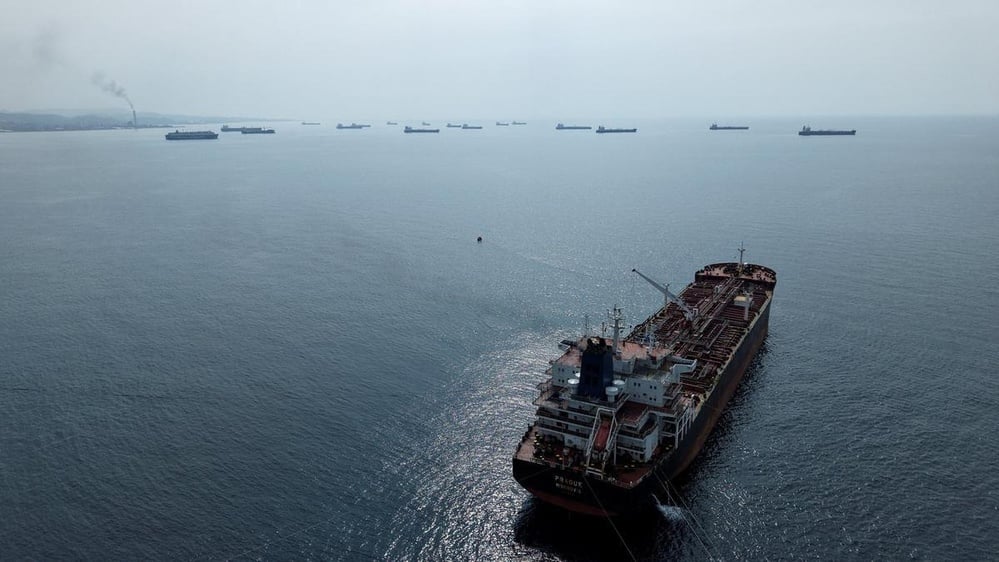


2026 © Helium Trades
Privacy Policy & Disclosure
* Disclaimer: Nothing on this website constitutes investment advice, performance data or any recommendation that any particular security, portfolio of securities, transaction or investment strategy is suitable for any specific person. Helium Trades is not responsible in any way for the accuracy
of any model predictions or price data. Any mention of a particular security and related prediction data is not a recommendation to buy or sell that security. Investments in securities involve the risk of loss. Past performance is no guarantee of future results. Helium Trades is not responsible for any of your investment decisions,
you should consult a financial expert before engaging in any transaction.
Helium Research Assistant

How can I help you today?
Ask any question about this page.


