See whether Helium helps you make better-informed decisions. Try every Pro Trader feature for 30 days. No credit card required.
Try every Pro Trader feature for 30 days. No credit card required.
August 31, 2026 · 0 shares
The coverage frames the disaster through escalating official casualty figures, urgent tunnel rescue imagery, and an attributed climate-change warning, yielding a crisis-focused but institutionally sourced account.
Hydropower schemes in Nepal’s Trishuli corridor involve long tunnels through mountainous terrain, so sudden flood surges can trap workers underground; glacier collapses can release glacial-lake outburst floods along rivers such as the Bhote Kashi/Trishuli.
Automated analysis; not human reviewed.
Limitations: The supplied text is a brief excerpt/summary, so full article context and additional sourcing details are unavailable.
·
5 of 54 available dimensions scored; omitted dimensions are not treated as neutral.
·
Verified supporting quotes for 4 of 5 scored dimensions.
Claim: Reporting is mostly sourced and factual but includes emotionally colored rescue language.
“The death toll in Nepal has climbed to 903, the country’s National Disaster Risk Reduction and Management Authority said Monday morning.” · exact text match
“are in a desperate race against time to rescue those trapped” · exact text match
Why: Core figures are attributed to a named authority, while 'desperate race against time' introduces a subjective urgency.
Claim: The article transmits dramatic facts without adopting sensationalist rhetoric.
“the tunnel is filled with water and rescuers received no response from anyone trapped inside, the Kathmandu Post reported” · exact text match
“Nepal’s flood deaths pass 900 and 4,200 remain missing as rescuers attempt to save those believed trapped in hydropower project tunnels” · exact text match
Why: Even the high-stakes rescue is described in sourced, matter-of-fact language rather than exaggerated or speculative terms.
Claim: The report emphasizes mounting deaths, unresolved missing people, and continuing flood danger.
“Nepal’s flood deaths pass 900 and 4,200 remain missing as rescuers attempt to save those believed trapped in hydropover project tunnels” · not found in supplied text
“The threat of flooding still looms over the affected areas.” · exact text match
Why: The narrative repeatedly foregrounds unresolved danger and unsuccessful contact with trapped people, with no countervailing hopeful developments.
Claim: Selected wording and quotations create a strongly sorrowful emotional tone.
“Our country has been facing an unimaginable and heartbreaking natural disaster” · exact text match
“are in a desperate race against time to rescue those trapped” · exact text match
Why: The publisher leads with terms like 'unimaginable and heartbreaking' and 'desperate,' and the casualty context reinforces a negative emotional frame.
Claim: The report attributes core figures and hedges its causal explanation.
“The death toll in Nepal has climbed to 903, the country’s National Disaster Risk Reduction and Management Authority said Monday morning.” · exact text match
“The floods were reportedly triggered by a glacier collapse on the Chinese side of the border” · exact text match
Why: Named agencies and officials are cited for key claims, and the trigger is marked as reported rather than established fact.
The supplied text is a brief excerpt/summary, so full article context and additional sourcing details are unavailable.
Framing emphasizes imminent catastrophe and alarm, using phrases such as 'another impending disaster,' 'havoc,' and 'entirely defenseless' while still citing officials and agencies.
Automated analysis; not human reviewed.
Limitations: The supplied text is polluted by a garbled JSON wrapper, related-link headlines, a promotional footer, and author-bio copy, and it lacks a publication date and dateline, limiting dating and precise attribution of 'as of today' claims.
·
8 of 54 available dimensions scored; omitted dimensions are not treated as neutral.
·
Verified supporting quotes for 7 of 8 scored dimensions.
Claim: The report mixes factual reporting with subjective, emotionally loaded descriptors.
“the destructive Nepal-China Himalayan floods” · exact text match
“Nepal’s infrastructure is entirely defenseless against these forms of “mud and ice tidal waves.”” · exact text match
Why: The wording 'destructive' and 'entirely defenseless' injects evaluation rather than neutral description.
Claim: The report uses alarmist and dramatic language to frame an already serious disaster as a looming catastrophe.
“Glaciers responsible for the destructive Nepal-China Himalayan floods are at risk of a major collapse, indicating another impending disaster.” · exact text match
“Fresh torrents of water are expected to cause further destruction and havoc.” · not found in supplied text
Why: Phrases like 'another impending disaster' and 'havoc' escalate beyond the confirmed facts and foreground catastrophe.
Claim: The overall outlook is pessimistic, emphasizing helplessness, further destruction, and impending risk.
“Nepal’s infrastructure is entirely defenseless against these forms of “mud and ice tidal waves.”” · exact text match
“A further breach could cause massive waves of floodwaters.” · exact text match
Why: The framing stresses defenselessness and possible additional disaster rather than recovery or mitigation.
Claim: The article repeatedly highlights risks of another disaster and uses menace-laden language.
“raising fears of another disaster” · exact text match
“This significantly increases the risk of a breach as water levels behind debris dams rise rapidly.” · exact text match
Why: It prominently frames the story through possibility of collapse, breach, and more destruction.
Claim: The report states an impending disaster and expected future destruction with more certainty than the conditional warnings support.
“indicating another impending disaster” · exact text match
“fresh torrents of water are expected to cause further destruction and havoc.” · exact text match
Why: Source warnings use 'risk' and 'could,' but the framing converts them into expected certainty.
Claim: The narrative uses emotionally charged imagery of victims, mass burials, and devastation.
“Floodwaters have swept away lives, homes, and infrastructure.” · exact text match
“In downstream cities, officials have begun mass burials of unidentified victims as they await international DNA kits to arrive.” · exact text match
Why: The concrete but emotionally weighted details evoke grief and alarm beyond a neutral account.
Claim: Many key figures and warnings are attributed to named institutions and official registries, and a disputed claim includes the denial.
“according to the official registry maintained by Nepal’s Tourism Department” · exact text match
“Nepal alleges that China has not shared vital real-time data on water levels and glacial risks, hampering its ability to conduct downstream evacuations.
China has denied such claims.”
· exact text match
Why: Attribution to official bodies and inclusion of China's denial improve the visible evidentiary quality, though some central numbers are not individually sourced.
Claim: The report makes forward-looking predictions about future flood impacts and possible breaches.
“A further breach could cause massive waves of floodwaters.” · exact text match
“fresh torrents of water are expected to cause further destruction and havoc.” · exact text match
Why: Both claims forecast future outcomes beyond confirmed events, with limited sourced basis.
The supplied text is polluted by a garbled JSON wrapper, related-link headlines, a promotional footer, and author-bio copy, and it lacks a publication date and dateline, limiting dating and precise attribution of 'as of today' claims.
September 04, 2026 · 0 shares
A neutral, wire-style humanitarian update centers official and family sources, using attributed statements and a rescued worker's quote without editorial commentary.
Automated analysis; not human reviewed.
Limitations: No external verification possible; the supplied text includes a duplicated structured block and sidebar links alongside the main report.
·
7 of 54 available dimensions scored; omitted dimensions are not treated as neutral.
·
Verified supporting quotes for 7 of 7 scored dimensions.
Claim: Reporting is politically neutral and issue-focused, using official and wire sources rather than partisan framing.
“A Nepali official says two people have been rescued alive from a hydropower tunnel nine days after devastating floods hit the country.” · exact text match
Why: No left/right positioning appears; the story is a humanitarian rescue update with official attribution.
Claim: The article is predominantly objective, relying on attributed statements and concrete details.
“Two people have been rescued alive from a hydropower tunnel in Nepal nine days after devastating floods hit the country.” · exact text match
“an aide to the energy minister told Reuters news agency.” · exact text match
Why: Facts are sourced to named officials, Reuters, and the army spokesperson; no editorializing voice.
Claim: The tone is measured and non-sensational despite the dramatic rescue.
“About 900 workers are missing from 12 hydropower projects in Nepal, with roughly 500 believed to be trapped in tunnels, according to local authorities.” · exact text match
Why: Casualties and missing counts are stated flatly without dramatic adjectives or emotional manipulation.
Claim: The article is descriptive, reporting events and statements without prescribing action.
“Sanjay Sah, a mechanical foreman, and Kabir Maharjan, a mechanical supervisor, have been taken to hospital in Kathmandu, Reuters reported.” · exact text match
Why: No recommendations, demands, or moral directives appear; it is a straightforward account.
Claim: The article is credible in visible sourcing, naming officials and agencies for the key claims.
“The office of Nepal's energy minister says two people have been rescued alive from a hydropower tunnel nine days after floods hit the area.” · exact text match
“China, as of late Wednesday, said 21 people were killed and 541 were missing on the Tibet side of the border.” · exact text match
Why: Specific figures, named offices, and attributed wire reporting support the main facts as reported.
Claim: The article is rational and empirically anchored, offering a cautious cause for the floods.
“The rescues come nine days after the August 26 floods, likely caused by a glacier collapse, that devastated towns and valleys in Nepal.” · exact text match
Why: It presents cause and effect with 'likely' hedging rather than supernatural or speculative explanation.
Claim: The reporting is transparent about sources and uncertainty.
“Amir Maharjan, Kabir's brother, said he has not received any news officially but has been told to go to the hospital.” · exact text match
“Reuters reported.” · exact text match
Why: It includes a family member's lack of official confirmation and consistently attributes information.
No external verification possible; the supplied text includes a duplicated structured block and sidebar links alongside the main report.
September 04, 2026 · 0 shares
Attribution-heavy, cautious reporting that foregrounds a hopeful rescue while grounding larger casualty counts in official and association figures.
Automated analysis; not human reviewed.
Limitations: Only the supplied article text was available; casualty figures are attributed to authorities and an association but were not independently verifiable.
·
2 of 54 available dimensions scored; omitted dimensions are not treated as neutral.
·
Verified supporting quotes for 1 of 2 scored dimensions.
Claim: The report is written in a neutral, fact-stating style with attribution and hedged language.
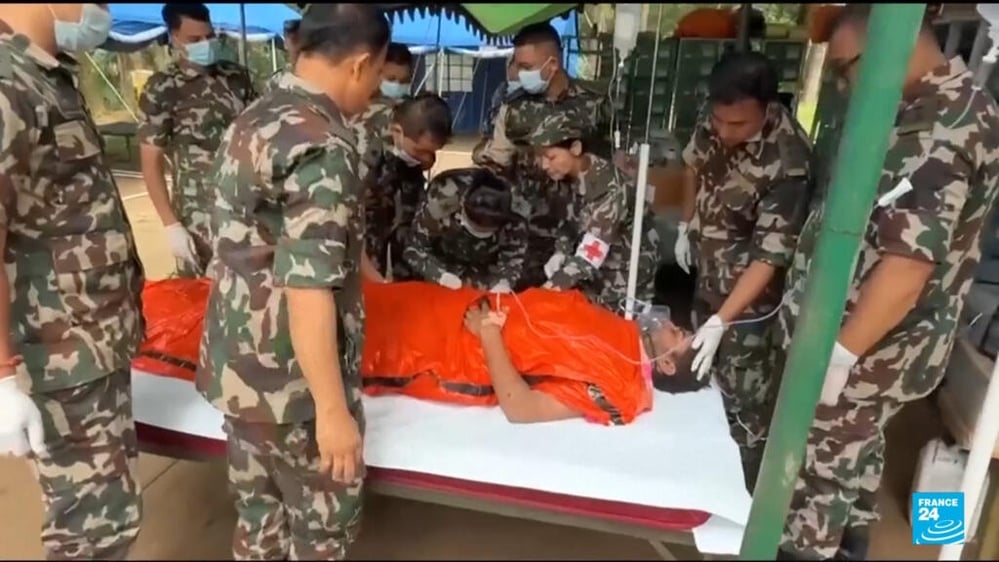
“Rescuers in Nepal pulled two workers alive from a hydropower tunnel on Friday as emergency teams continued an operation to reach others believed to be trapped inside, officials said.” · exact text match
Why: The sentence attributes the central claim to officials and uses hedged words such as 'believed,' showing objective reporting rather than editorializing.
Claim: The report's visible sourcing and attribution support high credibility.
“At least 557 workers are missing from the Trishuli 3A hydropower project, with about 115 believed to be trapped in the main tunnel, according to the Independent Power Producers Association of Nepal.” · not found in supplied text
“The men were named as Sanjay Shah, 30, a mechanical foreman, and Kabir Maharjan, 45, a mechanical supervisor, by Home Minister Sudan Gurung.” · exact text match
Why: Specific figures are attributed to a named association, individuals are named, and official statements are identified, giving the report strong visible sourcing.
Only the supplied article text was available; casualty figures are attributed to authorities and an association but were not independently verifiable.
September 04, 2026 · 0 shares
A neutral, wire-style humanitarian update centers official and family sources, using attributed statements and a rescued worker's quote without editorial commentary.
Automated analysis; not human reviewed.
Limitations: No external verification possible; the supplied text includes a duplicated structured block and sidebar links alongside the main report.
·
7 of 54 available dimensions scored; omitted dimensions are not treated as neutral.
·
Verified supporting quotes for 7 of 7 scored dimensions.
Claim: Reporting is politically neutral and issue-focused, using official and wire sources rather than partisan framing.
“A Nepali official says two people have been rescued alive from a hydropower tunnel nine days after devastating floods hit the country.” · exact text match
Why: No left/right positioning appears; the story is a humanitarian rescue update with official attribution.
Claim: The article is predominantly objective, relying on attributed statements and concrete details.
“Two people have been rescued alive from a hydropower tunnel in Nepal nine days after devastating floods hit the country.” · exact text match
“an aide to the energy minister told Reuters news agency.” · exact text match
Why: Facts are sourced to named officials, Reuters, and the army spokesperson; no editorializing voice.
Claim: The tone is measured and non-sensational despite the dramatic rescue.
“About 900 workers are missing from 12 hydropower projects in Nepal, with roughly 500 believed to be trapped in tunnels, according to local authorities.” · exact text match
Why: Casualties and missing counts are stated flatly without dramatic adjectives or emotional manipulation.
Claim: The article is descriptive, reporting events and statements without prescribing action.
“Sanjay Sah, a mechanical foreman, and Kabir Maharjan, a mechanical supervisor, have been taken to hospital in Kathmandu, Reuters reported.” · exact text match
Why: No recommendations, demands, or moral directives appear; it is a straightforward account.
Claim: The article is credible in visible sourcing, naming officials and agencies for the key claims.
“The office of Nepal's energy minister says two people have been rescued alive from a hydropower tunnel nine days after floods hit the area.” · exact text match
“China, as of late Wednesday, said 21 people were killed and 541 were missing on the Tibet side of the border.” · exact text match
Why: Specific figures, named offices, and attributed wire reporting support the main facts as reported.
Claim: The article is rational and empirically anchored, offering a cautious cause for the floods.
“The rescues come nine days after the August 26 floods, likely caused by a glacier collapse, that devastated towns and valleys in Nepal.” · exact text match
Why: It presents cause and effect with 'likely' hedging rather than supernatural or speculative explanation.
Claim: The reporting is transparent about sources and uncertainty.
“Amir Maharjan, Kabir's brother, said he has not received any news officially but has been told to go to the hospital.” · exact text match
“Reuters reported.” · exact text match
Why: It includes a family member's lack of official confirmation and consistently attributes information.
No external verification possible; the supplied text includes a duplicated structured block and sidebar links alongside the main report.
September 04, 2026 · 0 shares
A neutral, wire-style humanitarian update centers official and family sources, using attributed statements and a rescued worker's quote without editorial commentary.
Automated analysis; not human reviewed.
Limitations: No external verification possible; the supplied text includes a duplicated structured block and sidebar links alongside the main report.
·
7 of 54 available dimensions scored; omitted dimensions are not treated as neutral.
·
Verified supporting quotes for 7 of 7 scored dimensions.
Claim: Reporting is politically neutral and issue-focused, using official and wire sources rather than partisan framing.
“A Nepali official says two people have been rescued alive from a hydropower tunnel nine days after devastating floods hit the country.” · exact text match
Why: No left/right positioning appears; the story is a humanitarian rescue update with official attribution.
Claim: The article is predominantly objective, relying on attributed statements and concrete details.
“Two people have been rescued alive from a hydropower tunnel in Nepal nine days after devastating floods hit the country.” · exact text match
“an aide to the energy minister told Reuters news agency.” · exact text match
Why: Facts are sourced to named officials, Reuters, and the army spokesperson; no editorializing voice.
Claim: The tone is measured and non-sensational despite the dramatic rescue.
“About 900 workers are missing from 12 hydropower projects in Nepal, with roughly 500 believed to be trapped in tunnels, according to local authorities.” · exact text match
Why: Casualties and missing counts are stated flatly without dramatic adjectives or emotional manipulation.
Claim: The article is descriptive, reporting events and statements without prescribing action.
“Sanjay Sah, a mechanical foreman, and Kabir Maharjan, a mechanical supervisor, have been taken to hospital in Kathmandu, Reuters reported.” · exact text match
Why: No recommendations, demands, or moral directives appear; it is a straightforward account.
Claim: The article is credible in visible sourcing, naming officials and agencies for the key claims.
“The office of Nepal's energy minister says two people have been rescued alive from a hydropower tunnel nine days after floods hit the area.” · exact text match
“China, as of late Wednesday, said 21 people were killed and 541 were missing on the Tibet side of the border.” · exact text match
Why: Specific figures, named offices, and attributed wire reporting support the main facts as reported.
Claim: The article is rational and empirically anchored, offering a cautious cause for the floods.
“The rescues come nine days after the August 26 floods, likely caused by a glacier collapse, that devastated towns and valleys in Nepal.” · exact text match
Why: It presents cause and effect with 'likely' hedging rather than supernatural or speculative explanation.
Claim: The reporting is transparent about sources and uncertainty.
“Amir Maharjan, Kabir's brother, said he has not received any news officially but has been told to go to the hospital.” · exact text match
“Reuters reported.” · exact text match
Why: It includes a family member's lack of official confirmation and consistently attributes information.
No external verification possible; the supplied text includes a duplicated structured block and sidebar links alongside the main report.
September 04, 2026 · 0 shares
The framing is a straightforward rescue dispatch that foregrounds survival and relies on a named military source, without broader flood context.
Automated analysis; not human reviewed.
Limitations: The supplied text is a short excerpt, so full editorial context and independent verification are unavailable.
·
4 of 54 available dimensions scored; omitted dimensions are not treated as neutral.
·
Verified supporting quotes for 4 of 4 scored dimensions.
Claim: Reporting is factual and source-attributed, with no subjective evaluation or expressions of opinion.
“The workers were rescued during an operation at the Trishuli 3A tunnel, a hydropower project in one of the areas worst affected by last week’s floods, according to the army spokesperson Brig Gen Raja Ram Basnet.” · exact text match
Why: The sentence provides concrete location, time, and a named source rather than commentary.
Claim: The rescue is described plainly without sensational or hyperbolic embellishment.
“Two people have been pulled out alive from a hydropower tunnel in Nepal nine days after deadly flash floods buried the projects in deep mud and left them trapped.” · exact text match
Why: The wording is dramatic because the event itself is dramatic, but no speculative or exaggerated phrases appear.
Claim: The report is purely descriptive and offers no recommendations, calls to action, or policy judgments.
“The workers were rescued during an operation at the Trishuli 3A tunnel, a hydropower project in one of the areas worst affected by last week’s floods, according to the army spokesperson Brig Gen Raja Ram Basnet.” · exact text match
Why: It states who was rescued, where, and according to whom, with no imperative or prescriptive language.
Claim: The publisher names a specific official source and provides concrete operational details, supporting credibility.
“according to the army spokesperson Brig Gen Raja Ram Basnet” · exact text match
Why: Named-source attribution and specific details such as location and depth are visible credibility signals; no unsupported opinion is presented as fact.
The supplied text is a short excerpt, so full editorial context and independent verification are unavailable.
September 04, 2026 · 0 shares
Attribution-heavy, cautious reporting that foregrounds a hopeful rescue while grounding larger casualty counts in official and association figures.
Automated analysis; not human reviewed.
Limitations: Only the supplied article text was available; casualty figures are attributed to authorities and an association but were not independently verifiable.
·
2 of 54 available dimensions scored; omitted dimensions are not treated as neutral.
·
Verified supporting quotes for 1 of 2 scored dimensions.
Claim: The report is written in a neutral, fact-stating style with attribution and hedged language.
“Rescuers in Nepal pulled two workers alive from a hydropower tunnel on Friday as emergency teams continued an operation to reach others believed to be trapped inside, officials said.” · exact text match
Why: The sentence attributes the central claim to officials and uses hedged words such as 'believed,' showing objective reporting rather than editorializing.
Claim: The report's visible sourcing and attribution support high credibility.
“At least 557 workers are missing from the Trishuli 3A hydropower project, with about 115 believed to be trapped in the main tunnel, according to the Independent Power Producers Association of Nepal.” · not found in supplied text
“The men were named as Sanjay Shah, 30, a mechanical foreman, and Kabir Maharjan, 45, a mechanical supervisor, by Home Minister Sudan Gurung.” · exact text match
Why: Specific figures are attributed to a named association, individuals are named, and official statements are identified, giving the report strong visible sourcing.
Only the supplied article text was available; casualty figures are attributed to authorities and an association but were not independently verifiable.
September 04, 2026 · 0 shares
Framing is restrained and event-focused, centering on the successful rescue and the hedged hope it generates rather than emphasizing the disaster's broader toll.
Automated analysis; not human reviewed.
Limitations: The supplied text is truncated mid-sentence, so the full report and any later qualifications or context are unavailable.
·
4 of 54 available dimensions scored; omitted dimensions are not treated as neutral.
·
Verified supporting quotes for 4 of 4 scored dimensions.
Claim: The report is written as a factual news dispatch without editorial opinion.
“Rescuers in Nepal pulled two workers alive from an underground tunnel at a hydropower plant Friday” · exact text match
Why: The main clause states an event plainly, and the surrounding uncertainty is attributed with 'believed' rather than asserted as opinion.
Claim: The disaster and rescue are reported without sensationalist exaggeration.
“Rescuers in Nepal pulled two workers alive from an underground tunnel at a hydropower plant Friday” · exact text match
Why: The lead is a straightforward factual statement; the only emotionally suggestive phrase, 'raising hopes,' is immediately qualified by 'believed.'
Claim: The update has a modestly optimistic tone because of the successful rescue and expressed hope for more survivors.
“raising hopes of reaching dozens of others believed to be trapped” · exact text match
Why: 'Raising hopes' points toward a favorable outcome, though the qualifier 'believed' keeps the optimism restrained.
Claim: The text describes what happened and does not prescribe any action or policy.
“Rescuers in Nepal pulled two workers alive from an underground tunnel at a hydropower plant Friday” · exact text match
Why: No imperative, recommendation, or moral judgment appears; the report is limited to narration of events.
The supplied text is truncated mid-sentence, so the full report and any later qualifications or context are unavailable.
September 03, 2026 · 0 shares
Official-attributed hopeful framing leads, while the scale of missing workers remains in view.
Automated analysis; not human reviewed.
Limitations: The supplied text is a brief excerpt and appears to include at least one related-headline fragment, limiting analysis of the full article's framing.
·
3 of 54 available dimensions scored; omitted dimensions are not treated as neutral.
·
Verified supporting quotes for 3 of 3 scored dimensions.
Claim: The reporting is largely factual and attributed, with hedged language rather than subjective commentary.
“Nepal authorities have said they are “confident” that dozens of workers in Nepal’s Rasuwagadhi hydropower plant are still alive” · exact text match
“About 46 people believed to be trapped in ‘room-like’ structure inside hydro plant tunnel on Nepal-Tibet border” · exact text match
Why: The main claims are attributed to authorities and include uncertainty markers such as 'believed' and 'confident,' showing an objective news-reporting frame.
Claim: The headline and lead emphasize the possibility of survival, giving the report a mildly optimistic tone despite a deadly disaster.
“Dozens of trapped hydropower tunnel workers in Nepal could still be alive, official says” · exact text match
“Nepal authorities have said they are “confident” that dozens of workers in Nepal’s Rasuwagadhi hydropower plant are still alive” · exact text match
Counterevidence:
“At least 639 workers were still missing from hydropower plants built along Nepal’s Bhote Koshi and Triushuli rivers.” · not found in supplied text
Why: The selected lead features official reassurance of survival, but the article also reports hundreds missing, so the positive framing is cautious and attributable to officials.
Claim: The report shows visible sourcing, attribution, and uncertainty markers, supporting its credibility.
“Nepal authorities have said they are “confident” that dozens of workers in Nepal’s Rasuwagadhi hydropower plant are still alive” · exact text match
“About 46 people believed to be trapped in ‘room-like’ structure inside hydro plant tunnel on Nepal-Tibet border” · exact text match
Why: Attribution to authorities, explicit hedging, and quantified figures ('at least 639') indicate careful sourcing, though the excerpt is too brief to assess broader correction and verification practices.
The supplied text is a brief excerpt and appears to include at least one related-headline fragment, limiting analysis of the full article's framing.
Framing emphasizes imminent catastrophe and alarm, using phrases such as 'another impending disaster,' 'havoc,' and 'entirely defenseless' while still citing officials and agencies.
Automated analysis; not human reviewed.
Limitations: The supplied text is polluted by a garbled JSON wrapper, related-link headlines, a promotional footer, and author-bio copy, and it lacks a publication date and dateline, limiting dating and precise attribution of 'as of today' claims.
·
8 of 54 available dimensions scored; omitted dimensions are not treated as neutral.
·
Verified supporting quotes for 7 of 8 scored dimensions.
Claim: The report mixes factual reporting with subjective, emotionally loaded descriptors.
“the destructive Nepal-China Himalayan floods” · exact text match
“Nepal’s infrastructure is entirely defenseless against these forms of “mud and ice tidal waves.”” · exact text match
Why: The wording 'destructive' and 'entirely defenseless' injects evaluation rather than neutral description.
Claim: The report uses alarmist and dramatic language to frame an already serious disaster as a looming catastrophe.
“Glaciers responsible for the destructive Nepal-China Himalayan floods are at risk of a major collapse, indicating another impending disaster.” · exact text match
“Fresh torrents of water are expected to cause further destruction and havoc.” · not found in supplied text
Why: Phrases like 'another impending disaster' and 'havoc' escalate beyond the confirmed facts and foreground catastrophe.
Claim: The overall outlook is pessimistic, emphasizing helplessness, further destruction, and impending risk.
“Nepal’s infrastructure is entirely defenseless against these forms of “mud and ice tidal waves.”” · exact text match
“A further breach could cause massive waves of floodwaters.” · exact text match
Why: The framing stresses defenselessness and possible additional disaster rather than recovery or mitigation.
Claim: The article repeatedly highlights risks of another disaster and uses menace-laden language.
“raising fears of another disaster” · exact text match
“This significantly increases the risk of a breach as water levels behind debris dams rise rapidly.” · exact text match
Why: It prominently frames the story through possibility of collapse, breach, and more destruction.
Claim: The report states an impending disaster and expected future destruction with more certainty than the conditional warnings support.
“indicating another impending disaster” · exact text match
“fresh torrents of water are expected to cause further destruction and havoc.” · exact text match
Why: Source warnings use 'risk' and 'could,' but the framing converts them into expected certainty.
Claim: The narrative uses emotionally charged imagery of victims, mass burials, and devastation.
“Floodwaters have swept away lives, homes, and infrastructure.” · exact text match
“In downstream cities, officials have begun mass burials of unidentified victims as they await international DNA kits to arrive.” · exact text match
Why: The concrete but emotionally weighted details evoke grief and alarm beyond a neutral account.
Claim: Many key figures and warnings are attributed to named institutions and official registries, and a disputed claim includes the denial.
“according to the official registry maintained by Nepal’s Tourism Department” · exact text match
“Nepal alleges that China has not shared vital real-time data on water levels and glacial risks, hampering its ability to conduct downstream evacuations.
China has denied such claims.”
· exact text match
Why: Attribution to official bodies and inclusion of China's denial improve the visible evidentiary quality, though some central numbers are not individually sourced.
Claim: The report makes forward-looking predictions about future flood impacts and possible breaches.
“A further breach could cause massive waves of floodwaters.” · exact text match
“fresh torrents of water are expected to cause further destruction and havoc.” · exact text match
Why: Both claims forecast future outcomes beyond confirmed events, with limited sourced basis.
The supplied text is polluted by a garbled JSON wrapper, related-link headlines, a promotional footer, and author-bio copy, and it lacks a publication date and dateline, limiting dating and precise attribution of 'as of today' claims.
August 31, 2026 · 0 shares
Disaster coverage is framed through India-China geopolitical rivalry, with loaded language such as 'Chinese dictator' and 'snatch' shaping the account.
The flood hit the Nepal-Tibet border region, where Himalayan rivers are harnessed through hydropower tunnels; construction sites are exposed to sudden flash flooding.
Automated analysis; not human reviewed.
Limitations: The supplied text appears to be a partially structured or aggregated post with embedded metadata and inconsistent figures, limiting confidence about casualty scope and timeline.
·
5 of 54 available dimensions scored; omitted dimensions are not treated as neutral.
·
Verified supporting quotes for 5 of 5 scored dimensions.
Claim: The narration mixes reported facts with subjective characterizations of the actors and events.
“India’s sales pitch has been aggressive enough to snatch four Nepal hydropower projects away from Chinese firms” · exact text match
“Chinese dictator Xi Jinping visited Nepal in 2019.” · exact text match
Why: These subjective terms are presented as part of the article's own narration, not merely attributed to a source.
Claim: The disaster narrative uses dramatic, emotive language in the publisher's own voice.
“The water was moving much too fast on Wednesday as flash floods came roaring through the border region of Nepal and Tibet” · exact text match
Why: Phrases such as 'much too fast' and 'came roaring through' heighten drama beyond a plain factual account.
Claim: The article injects editorial opinion through loaded descriptions in otherwise factual reporting.
“India’s sales pitch has been aggressive enough to snatch four Nepal hydropower projects away from Chinese firms” · exact text match
“Chinese dictator Xi Jinping visited Nepal in 2019.” · exact text match
Why: The metaphor 'snatch' and the pejorative 'dictator' express evaluation rather than neutral description.
Claim: The report embeds the disaster in an India-China-Nepal geopolitical contest and uses politically loaded language.
“Chinese dictator Xi Jinping visited Nepal in 2019.” · exact text match
“Indian and Chinese firms have been vigorously competing to secure construction contracts in Nepal” · exact text match
Why: Calling Xi Jinping a 'dictator' and foregrounding the India-China contract rivalry makes geopolitical framing central to a rescue story.
Claim: The article uses loaded and pejorative words that steer readers' views of India and China within a news report.
“India’s sales pitch has been aggressive enough to snatch four Nepal hydropower projects away from Chinese firms” · exact text match
“Chinese dictator Xi Jinping visited Nepal in 2019.” · exact text match
Why: 'Snatch' and 'dictator' are evaluative, emotionally loaded framing devices rather than neutral descriptors.
The supplied text appears to be a partially structured or aggregated post with embedded metadata and inconsistent figures, limiting confidence about casualty scope and timeline.
August 31, 2026 · 0 shares
Disaster coverage is framed through India-China geopolitical rivalry, with loaded language such as 'Chinese dictator' and 'snatch' shaping the account.
The flood hit the Nepal-Tibet border region, where Himalayan rivers are harnessed through hydropower tunnels; construction sites are exposed to sudden flash flooding.
Automated analysis; not human reviewed.
Limitations: The supplied text appears to be a partially structured or aggregated post with embedded metadata and inconsistent figures, limiting confidence about casualty scope and timeline.
·
5 of 54 available dimensions scored; omitted dimensions are not treated as neutral.
·
Verified supporting quotes for 5 of 5 scored dimensions.
Claim: The narration mixes reported facts with subjective characterizations of the actors and events.
“India’s sales pitch has been aggressive enough to snatch four Nepal hydropower projects away from Chinese firms” · exact text match
“Chinese dictator Xi Jinping visited Nepal in 2019.” · exact text match
Why: These subjective terms are presented as part of the article's own narration, not merely attributed to a source.
Claim: The disaster narrative uses dramatic, emotive language in the publisher's own voice.
“The water was moving much too fast on Wednesday as flash floods came roaring through the border region of Nepal and Tibet” · exact text match
Why: Phrases such as 'much too fast' and 'came roaring through' heighten drama beyond a plain factual account.
Claim: The article injects editorial opinion through loaded descriptions in otherwise factual reporting.
“India’s sales pitch has been aggressive enough to snatch four Nepal hydropower projects away from Chinese firms” · exact text match
“Chinese dictator Xi Jinping visited Nepal in 2019.” · exact text match
Why: The metaphor 'snatch' and the pejorative 'dictator' express evaluation rather than neutral description.
Claim: The report embeds the disaster in an India-China-Nepal geopolitical contest and uses politically loaded language.
“Chinese dictator Xi Jinping visited Nepal in 2019.” · exact text match
“Indian and Chinese firms have been vigorously competing to secure construction contracts in Nepal” · exact text match
Why: Calling Xi Jinping a 'dictator' and foregrounding the India-China contract rivalry makes geopolitical framing central to a rescue story.
Claim: The article uses loaded and pejorative words that steer readers' views of India and China within a news report.
“India’s sales pitch has been aggressive enough to snatch four Nepal hydropower projects away from Chinese firms” · exact text match
“Chinese dictator Xi Jinping visited Nepal in 2019.” · exact text match
Why: 'Snatch' and 'dictator' are evaluative, emotionally loaded framing devices rather than neutral descriptors.
The supplied text appears to be a partially structured or aggregated post with embedded metadata and inconsistent figures, limiting confidence about casualty scope and timeline.
September 04, 2026 · 0 shares
A neutral, wire-style humanitarian update centers official and family sources, using attributed statements and a rescued worker's quote without editorial commentary.
Automated analysis; not human reviewed. Limitations: No external verification possible; the supplied text includes a duplicated structured block and sidebar links alongside the main report. · 7 of 54 available dimensions scored; omitted dimensions are not treated as neutral. · Verified supporting quotes for 7 of 7 scored dimensions.
Claim: Reporting is politically neutral and issue-focused, using official and wire sources rather than partisan framing.
“A Nepali official says two people have been rescued alive from a hydropower tunnel nine days after devastating floods hit the country.” · exact text match
Why: No left/right positioning appears; the story is a humanitarian rescue update with official attribution.
Claim: The article is predominantly objective, relying on attributed statements and concrete details.
“Two people have been rescued alive from a hydropower tunnel in Nepal nine days after devastating floods hit the country.” · exact text match
“an aide to the energy minister told Reuters news agency.” · exact text match
Why: Facts are sourced to named officials, Reuters, and the army spokesperson; no editorializing voice.
Claim: The tone is measured and non-sensational despite the dramatic rescue.
“About 900 workers are missing from 12 hydropower projects in Nepal, with roughly 500 believed to be trapped in tunnels, according to local authorities.” · exact text match
Why: Casualties and missing counts are stated flatly without dramatic adjectives or emotional manipulation.
Claim: The article is descriptive, reporting events and statements without prescribing action.
“Sanjay Sah, a mechanical foreman, and Kabir Maharjan, a mechanical supervisor, have been taken to hospital in Kathmandu, Reuters reported.” · exact text match
Why: No recommendations, demands, or moral directives appear; it is a straightforward account.
Claim: The article is credible in visible sourcing, naming officials and agencies for the key claims.
“The office of Nepal's energy minister says two people have been rescued alive from a hydropower tunnel nine days after floods hit the area.” · exact text match
“China, as of late Wednesday, said 21 people were killed and 541 were missing on the Tibet side of the border.” · exact text match
Why: Specific figures, named offices, and attributed wire reporting support the main facts as reported.
Claim: The article is rational and empirically anchored, offering a cautious cause for the floods.
“The rescues come nine days after the August 26 floods, likely caused by a glacier collapse, that devastated towns and valleys in Nepal.” · exact text match
Why: It presents cause and effect with 'likely' hedging rather than supernatural or speculative explanation.
Claim: The reporting is transparent about sources and uncertainty.
“Amir Maharjan, Kabir's brother, said he has not received any news officially but has been told to go to the hospital.” · exact text match
“Reuters reported.” · exact text match
Why: It includes a family member's lack of official confirmation and consistently attributes information.
No external verification possible; the supplied text includes a duplicated structured block and sidebar links alongside the main report.
September 04, 2026 · 0 shares
The framing is a straightforward rescue dispatch that foregrounds survival and relies on a named military source, without broader flood context.
Automated analysis; not human reviewed. Limitations: The supplied text is a short excerpt, so full editorial context and independent verification are unavailable. · 4 of 54 available dimensions scored; omitted dimensions are not treated as neutral. · Verified supporting quotes for 4 of 4 scored dimensions.
Claim: Reporting is factual and source-attributed, with no subjective evaluation or expressions of opinion.
“The workers were rescued during an operation at the Trishuli 3A tunnel, a hydropower project in one of the areas worst affected by last week’s floods, according to the army spokesperson Brig Gen Raja Ram Basnet.” · exact text match
Why: The sentence provides concrete location, time, and a named source rather than commentary.
Claim: The rescue is described plainly without sensational or hyperbolic embellishment.
“Two people have been pulled out alive from a hydropower tunnel in Nepal nine days after deadly flash floods buried the projects in deep mud and left them trapped.” · exact text match
Why: The wording is dramatic because the event itself is dramatic, but no speculative or exaggerated phrases appear.
Claim: The report is purely descriptive and offers no recommendations, calls to action, or policy judgments.
“The workers were rescued during an operation at the Trishuli 3A tunnel, a hydropower project in one of the areas worst affected by last week’s floods, according to the army spokesperson Brig Gen Raja Ram Basnet.” · exact text match
Why: It states who was rescued, where, and according to whom, with no imperative or prescriptive language.
Claim: The publisher names a specific official source and provides concrete operational details, supporting credibility.
“according to the army spokesperson Brig Gen Raja Ram Basnet” · exact text match
Why: Named-source attribution and specific details such as location and depth are visible credibility signals; no unsupported opinion is presented as fact.
The supplied text is a short excerpt, so full editorial context and independent verification are unavailable.
September 04, 2026 · 0 shares
Attribution-heavy, cautious reporting that foregrounds a hopeful rescue while grounding larger casualty counts in official and association figures.
Automated analysis; not human reviewed. Limitations: Only the supplied article text was available; casualty figures are attributed to authorities and an association but were not independently verifiable. · 2 of 54 available dimensions scored; omitted dimensions are not treated as neutral. · Verified supporting quotes for 1 of 2 scored dimensions.
Claim: The report is written in a neutral, fact-stating style with attribution and hedged language.
“Rescuers in Nepal pulled two workers alive from a hydropower tunnel on Friday as emergency teams continued an operation to reach others believed to be trapped inside, officials said.” · exact text match
Why: The sentence attributes the central claim to officials and uses hedged words such as 'believed,' showing objective reporting rather than editorializing.
Claim: The report's visible sourcing and attribution support high credibility.
“At least 557 workers are missing from the Trishuli 3A hydropower project, with about 115 believed to be trapped in the main tunnel, according to the Independent Power Producers Association of Nepal.” · not found in supplied text
“The men were named as Sanjay Shah, 30, a mechanical foreman, and Kabir Maharjan, 45, a mechanical supervisor, by Home Minister Sudan Gurung.” · exact text match
Why: Specific figures are attributed to a named association, individuals are named, and official statements are identified, giving the report strong visible sourcing.
Only the supplied article text was available; casualty figures are attributed to authorities and an association but were not independently verifiable.
August 31, 2026 · 0 shares
The coverage frames the disaster through escalating official casualty figures, urgent tunnel rescue imagery, and an attributed climate-change warning, yielding a crisis-focused but institutionally sourced account.
Hydropower schemes in Nepal’s Trishuli corridor involve long tunnels through mountainous terrain, so sudden flood surges can trap workers underground; glacier collapses can release glacial-lake outburst floods along rivers such as the Bhote Kashi/Trishuli.
Automated analysis; not human reviewed. Limitations: The supplied text is a brief excerpt/summary, so full article context and additional sourcing details are unavailable. · 5 of 54 available dimensions scored; omitted dimensions are not treated as neutral. · Verified supporting quotes for 4 of 5 scored dimensions.
Claim: Reporting is mostly sourced and factual but includes emotionally colored rescue language.
“The death toll in Nepal has climbed to 903, the country’s National Disaster Risk Reduction and Management Authority said Monday morning.” · exact text match
“are in a desperate race against time to rescue those trapped” · exact text match
Why: Core figures are attributed to a named authority, while 'desperate race against time' introduces a subjective urgency.
Claim: The article transmits dramatic facts without adopting sensationalist rhetoric.
“the tunnel is filled with water and rescuers received no response from anyone trapped inside, the Kathmandu Post reported” · exact text match
“Nepal’s flood deaths pass 900 and 4,200 remain missing as rescuers attempt to save those believed trapped in hydropower project tunnels” · exact text match
Why: Even the high-stakes rescue is described in sourced, matter-of-fact language rather than exaggerated or speculative terms.
Claim: The report emphasizes mounting deaths, unresolved missing people, and continuing flood danger.
“Nepal’s flood deaths pass 900 and 4,200 remain missing as rescuers attempt to save those believed trapped in hydropover project tunnels” · not found in supplied text
“The threat of flooding still looms over the affected areas.” · exact text match
Why: The narrative repeatedly foregrounds unresolved danger and unsuccessful contact with trapped people, with no countervailing hopeful developments.
Claim: Selected wording and quotations create a strongly sorrowful emotional tone.
“Our country has been facing an unimaginable and heartbreaking natural disaster” · exact text match
“are in a desperate race against time to rescue those trapped” · exact text match
Why: The publisher leads with terms like 'unimaginable and heartbreaking' and 'desperate,' and the casualty context reinforces a negative emotional frame.
Claim: The report attributes core figures and hedges its causal explanation.
“The death toll in Nepal has climbed to 903, the country’s National Disaster Risk Reduction and Management Authority said Monday morning.” · exact text match
“The floods were reportedly triggered by a glacier collapse on the Chinese side of the border” · exact text match
Why: Named agencies and officials are cited for key claims, and the trigger is marked as reported rather than established fact.
The supplied text is a brief excerpt/summary, so full article context and additional sourcing details are unavailable.
September 04, 2026 · 0 shares
A neutral, wire-style humanitarian update centers official and family sources, using attributed statements and a rescued worker's quote without editorial commentary.
Automated analysis; not human reviewed. Limitations: No external verification possible; the supplied text includes a duplicated structured block and sidebar links alongside the main report. · 7 of 54 available dimensions scored; omitted dimensions are not treated as neutral. · Verified supporting quotes for 7 of 7 scored dimensions.
Claim: Reporting is politically neutral and issue-focused, using official and wire sources rather than partisan framing.
“A Nepali official says two people have been rescued alive from a hydropower tunnel nine days after devastating floods hit the country.” · exact text match
Why: No left/right positioning appears; the story is a humanitarian rescue update with official attribution.
Claim: The article is predominantly objective, relying on attributed statements and concrete details.
“Two people have been rescued alive from a hydropower tunnel in Nepal nine days after devastating floods hit the country.” · exact text match
“an aide to the energy minister told Reuters news agency.” · exact text match
Why: Facts are sourced to named officials, Reuters, and the army spokesperson; no editorializing voice.
Claim: The tone is measured and non-sensational despite the dramatic rescue.
“About 900 workers are missing from 12 hydropower projects in Nepal, with roughly 500 believed to be trapped in tunnels, according to local authorities.” · exact text match
Why: Casualties and missing counts are stated flatly without dramatic adjectives or emotional manipulation.
Claim: The article is descriptive, reporting events and statements without prescribing action.
“Sanjay Sah, a mechanical foreman, and Kabir Maharjan, a mechanical supervisor, have been taken to hospital in Kathmandu, Reuters reported.” · exact text match
Why: No recommendations, demands, or moral directives appear; it is a straightforward account.
Claim: The article is credible in visible sourcing, naming officials and agencies for the key claims.
“The office of Nepal's energy minister says two people have been rescued alive from a hydropower tunnel nine days after floods hit the area.” · exact text match
“China, as of late Wednesday, said 21 people were killed and 541 were missing on the Tibet side of the border.” · exact text match
Why: Specific figures, named offices, and attributed wire reporting support the main facts as reported.
Claim: The article is rational and empirically anchored, offering a cautious cause for the floods.
“The rescues come nine days after the August 26 floods, likely caused by a glacier collapse, that devastated towns and valleys in Nepal.” · exact text match
Why: It presents cause and effect with 'likely' hedging rather than supernatural or speculative explanation.
Claim: The reporting is transparent about sources and uncertainty.
“Amir Maharjan, Kabir's brother, said he has not received any news officially but has been told to go to the hospital.” · exact text match
“Reuters reported.” · exact text match
Why: It includes a family member's lack of official confirmation and consistently attributes information.
No external verification possible; the supplied text includes a duplicated structured block and sidebar links alongside the main report.
September 04, 2026 · 0 shares
Attribution-heavy, cautious reporting that foregrounds a hopeful rescue while grounding larger casualty counts in official and association figures.
Automated analysis; not human reviewed. Limitations: Only the supplied article text was available; casualty figures are attributed to authorities and an association but were not independently verifiable. · 2 of 54 available dimensions scored; omitted dimensions are not treated as neutral. · Verified supporting quotes for 1 of 2 scored dimensions.
Claim: The report is written in a neutral, fact-stating style with attribution and hedged language.
“Rescuers in Nepal pulled two workers alive from a hydropower tunnel on Friday as emergency teams continued an operation to reach others believed to be trapped inside, officials said.” · exact text match
Why: The sentence attributes the central claim to officials and uses hedged words such as 'believed,' showing objective reporting rather than editorializing.
Claim: The report's visible sourcing and attribution support high credibility.
“At least 557 workers are missing from the Trishuli 3A hydropower project, with about 115 believed to be trapped in the main tunnel, according to the Independent Power Producers Association of Nepal.” · not found in supplied text
“The men were named as Sanjay Shah, 30, a mechanical foreman, and Kabir Maharjan, 45, a mechanical supervisor, by Home Minister Sudan Gurung.” · exact text match
Why: Specific figures are attributed to a named association, individuals are named, and official statements are identified, giving the report strong visible sourcing.
Only the supplied article text was available; casualty figures are attributed to authorities and an association but were not independently verifiable.
Framing emphasizes imminent catastrophe and alarm, using phrases such as 'another impending disaster,' 'havoc,' and 'entirely defenseless' while still citing officials and agencies.
Automated analysis; not human reviewed. Limitations: The supplied text is polluted by a garbled JSON wrapper, related-link headlines, a promotional footer, and author-bio copy, and it lacks a publication date and dateline, limiting dating and precise attribution of 'as of today' claims. · 8 of 54 available dimensions scored; omitted dimensions are not treated as neutral. · Verified supporting quotes for 7 of 8 scored dimensions.
Claim: The report mixes factual reporting with subjective, emotionally loaded descriptors.
“the destructive Nepal-China Himalayan floods” · exact text match
“Nepal’s infrastructure is entirely defenseless against these forms of “mud and ice tidal waves.”” · exact text match
Why: The wording 'destructive' and 'entirely defenseless' injects evaluation rather than neutral description.
Claim: The report uses alarmist and dramatic language to frame an already serious disaster as a looming catastrophe.
“Glaciers responsible for the destructive Nepal-China Himalayan floods are at risk of a major collapse, indicating another impending disaster.” · exact text match
“Fresh torrents of water are expected to cause further destruction and havoc.” · not found in supplied text
Why: Phrases like 'another impending disaster' and 'havoc' escalate beyond the confirmed facts and foreground catastrophe.
Claim: The overall outlook is pessimistic, emphasizing helplessness, further destruction, and impending risk.
“Nepal’s infrastructure is entirely defenseless against these forms of “mud and ice tidal waves.”” · exact text match
“A further breach could cause massive waves of floodwaters.” · exact text match
Why: The framing stresses defenselessness and possible additional disaster rather than recovery or mitigation.
Claim: The article repeatedly highlights risks of another disaster and uses menace-laden language.
“raising fears of another disaster” · exact text match
“This significantly increases the risk of a breach as water levels behind debris dams rise rapidly.” · exact text match
Why: It prominently frames the story through possibility of collapse, breach, and more destruction.
Claim: The report states an impending disaster and expected future destruction with more certainty than the conditional warnings support.
“indicating another impending disaster” · exact text match
“fresh torrents of water are expected to cause further destruction and havoc.” · exact text match
Why: Source warnings use 'risk' and 'could,' but the framing converts them into expected certainty.
Claim: The narrative uses emotionally charged imagery of victims, mass burials, and devastation.
“Floodwaters have swept away lives, homes, and infrastructure.” · exact text match
“In downstream cities, officials have begun mass burials of unidentified victims as they await international DNA kits to arrive.” · exact text match
Why: The concrete but emotionally weighted details evoke grief and alarm beyond a neutral account.
Claim: Many key figures and warnings are attributed to named institutions and official registries, and a disputed claim includes the denial.
“according to the official registry maintained by Nepal’s Tourism Department” · exact text match
“Nepal alleges that China has not shared vital real-time data on water levels and glacial risks, hampering its ability to conduct downstream evacuations. China has denied such claims.” · exact text match
Why: Attribution to official bodies and inclusion of China's denial improve the visible evidentiary quality, though some central numbers are not individually sourced.
Claim: The report makes forward-looking predictions about future flood impacts and possible breaches.
“A further breach could cause massive waves of floodwaters.” · exact text match
“fresh torrents of water are expected to cause further destruction and havoc.” · exact text match
Why: Both claims forecast future outcomes beyond confirmed events, with limited sourced basis.
The supplied text is polluted by a garbled JSON wrapper, related-link headlines, a promotional footer, and author-bio copy, and it lacks a publication date and dateline, limiting dating and precise attribution of 'as of today' claims.
August 31, 2026 · 0 shares
Disaster coverage is framed through India-China geopolitical rivalry, with loaded language such as 'Chinese dictator' and 'snatch' shaping the account.
The flood hit the Nepal-Tibet border region, where Himalayan rivers are harnessed through hydropower tunnels; construction sites are exposed to sudden flash flooding.
Automated analysis; not human reviewed. Limitations: The supplied text appears to be a partially structured or aggregated post with embedded metadata and inconsistent figures, limiting confidence about casualty scope and timeline. · 5 of 54 available dimensions scored; omitted dimensions are not treated as neutral. · Verified supporting quotes for 5 of 5 scored dimensions.
Claim: The narration mixes reported facts with subjective characterizations of the actors and events.
“India’s sales pitch has been aggressive enough to snatch four Nepal hydropower projects away from Chinese firms” · exact text match
“Chinese dictator Xi Jinping visited Nepal in 2019.” · exact text match
Why: These subjective terms are presented as part of the article's own narration, not merely attributed to a source.
Claim: The disaster narrative uses dramatic, emotive language in the publisher's own voice.
“The water was moving much too fast on Wednesday as flash floods came roaring through the border region of Nepal and Tibet” · exact text match
Why: Phrases such as 'much too fast' and 'came roaring through' heighten drama beyond a plain factual account.
Claim: The article injects editorial opinion through loaded descriptions in otherwise factual reporting.
“India’s sales pitch has been aggressive enough to snatch four Nepal hydropower projects away from Chinese firms” · exact text match
“Chinese dictator Xi Jinping visited Nepal in 2019.” · exact text match
Why: The metaphor 'snatch' and the pejorative 'dictator' express evaluation rather than neutral description.
Claim: The report embeds the disaster in an India-China-Nepal geopolitical contest and uses politically loaded language.
“Chinese dictator Xi Jinping visited Nepal in 2019.” · exact text match
“Indian and Chinese firms have been vigorously competing to secure construction contracts in Nepal” · exact text match
Why: Calling Xi Jinping a 'dictator' and foregrounding the India-China contract rivalry makes geopolitical framing central to a rescue story.
Claim: The article uses loaded and pejorative words that steer readers' views of India and China within a news report.
“India’s sales pitch has been aggressive enough to snatch four Nepal hydropower projects away from Chinese firms” · exact text match
“Chinese dictator Xi Jinping visited Nepal in 2019.” · exact text match
Why: 'Snatch' and 'dictator' are evaluative, emotionally loaded framing devices rather than neutral descriptors.
The supplied text appears to be a partially structured or aggregated post with embedded metadata and inconsistent figures, limiting confidence about casualty scope and timeline.
Nepali Government and Rescue Authorities
September 04, 2026 · 0 shares
Attribution-heavy, cautious reporting that foregrounds a hopeful rescue while grounding larger casualty counts in official and association figures.
Automated analysis; not human reviewed. Limitations: Only the supplied article text was available; casualty figures are attributed to authorities and an association but were not independently verifiable. · 2 of 54 available dimensions scored; omitted dimensions are not treated as neutral. · Verified supporting quotes for 1 of 2 scored dimensions.
Claim: The report is written in a neutral, fact-stating style with attribution and hedged language.
“Rescuers in Nepal pulled two workers alive from a hydropower tunnel on Friday as emergency teams continued an operation to reach others believed to be trapped inside, officials said.” · exact text match
Why: The sentence attributes the central claim to officials and uses hedged words such as 'believed,' showing objective reporting rather than editorializing.
Claim: The report's visible sourcing and attribution support high credibility.
“At least 557 workers are missing from the Trishuli 3A hydropower project, with about 115 believed to be trapped in the main tunnel, according to the Independent Power Producers Association of Nepal.” · not found in supplied text
“The men were named as Sanjay Shah, 30, a mechanical foreman, and Kabir Maharjan, 45, a mechanical supervisor, by Home Minister Sudan Gurung.” · exact text match
Why: Specific figures are attributed to a named association, individuals are named, and official statements are identified, giving the report strong visible sourcing.
Only the supplied article text was available; casualty figures are attributed to authorities and an association but were not independently verifiable.
September 03, 2026 · 0 shares
Official-attributed hopeful framing leads, while the scale of missing workers remains in view.
Automated analysis; not human reviewed. Limitations: The supplied text is a brief excerpt and appears to include at least one related-headline fragment, limiting analysis of the full article's framing. · 3 of 54 available dimensions scored; omitted dimensions are not treated as neutral. · Verified supporting quotes for 3 of 3 scored dimensions.
Claim: The reporting is largely factual and attributed, with hedged language rather than subjective commentary.
“Nepal authorities have said they are “confident” that dozens of workers in Nepal’s Rasuwagadhi hydropower plant are still alive” · exact text match
“About 46 people believed to be trapped in ‘room-like’ structure inside hydro plant tunnel on Nepal-Tibet border” · exact text match
Why: The main claims are attributed to authorities and include uncertainty markers such as 'believed' and 'confident,' showing an objective news-reporting frame.
Claim: The headline and lead emphasize the possibility of survival, giving the report a mildly optimistic tone despite a deadly disaster.
“Dozens of trapped hydropower tunnel workers in Nepal could still be alive, official says” · exact text match
“Nepal authorities have said they are “confident” that dozens of workers in Nepal’s Rasuwagadhi hydropower plant are still alive” · exact text match
Counterevidence:
“At least 639 workers were still missing from hydropower plants built along Nepal’s Bhote Koshi and Triushuli rivers.” · not found in supplied text
Why: The selected lead features official reassurance of survival, but the article also reports hundreds missing, so the positive framing is cautious and attributable to officials.
Claim: The report shows visible sourcing, attribution, and uncertainty markers, supporting its credibility.
“Nepal authorities have said they are “confident” that dozens of workers in Nepal’s Rasuwagadhi hydropower plant are still alive” · exact text match
“About 46 people believed to be trapped in ‘room-like’ structure inside hydro plant tunnel on Nepal-Tibet border” · exact text match
Why: Attribution to authorities, explicit hedging, and quantified figures ('at least 639') indicate careful sourcing, though the excerpt is too brief to assess broader correction and verification practices.
The supplied text is a brief excerpt and appears to include at least one related-headline fragment, limiting analysis of the full article's framing.
August 31, 2026 · 0 shares
Disaster coverage is framed through India-China geopolitical rivalry, with loaded language such as 'Chinese dictator' and 'snatch' shaping the account.
The flood hit the Nepal-Tibet border region, where Himalayan rivers are harnessed through hydropower tunnels; construction sites are exposed to sudden flash flooding.
Automated analysis; not human reviewed. Limitations: The supplied text appears to be a partially structured or aggregated post with embedded metadata and inconsistent figures, limiting confidence about casualty scope and timeline. · 5 of 54 available dimensions scored; omitted dimensions are not treated as neutral. · Verified supporting quotes for 5 of 5 scored dimensions.
Claim: The narration mixes reported facts with subjective characterizations of the actors and events.
“India’s sales pitch has been aggressive enough to snatch four Nepal hydropower projects away from Chinese firms” · exact text match
“Chinese dictator Xi Jinping visited Nepal in 2019.” · exact text match
Why: These subjective terms are presented as part of the article's own narration, not merely attributed to a source.
Claim: The disaster narrative uses dramatic, emotive language in the publisher's own voice.
“The water was moving much too fast on Wednesday as flash floods came roaring through the border region of Nepal and Tibet” · exact text match
Why: Phrases such as 'much too fast' and 'came roaring through' heighten drama beyond a plain factual account.
Claim: The article injects editorial opinion through loaded descriptions in otherwise factual reporting.
“India’s sales pitch has been aggressive enough to snatch four Nepal hydropower projects away from Chinese firms” · exact text match
“Chinese dictator Xi Jinping visited Nepal in 2019.” · exact text match
Why: The metaphor 'snatch' and the pejorative 'dictator' express evaluation rather than neutral description.
Claim: The report embeds the disaster in an India-China-Nepal geopolitical contest and uses politically loaded language.
“Chinese dictator Xi Jinping visited Nepal in 2019.” · exact text match
“Indian and Chinese firms have been vigorously competing to secure construction contracts in Nepal” · exact text match
Why: Calling Xi Jinping a 'dictator' and foregrounding the India-China contract rivalry makes geopolitical framing central to a rescue story.
Claim: The article uses loaded and pejorative words that steer readers' views of India and China within a news report.
“India’s sales pitch has been aggressive enough to snatch four Nepal hydropower projects away from Chinese firms” · exact text match
“Chinese dictator Xi Jinping visited Nepal in 2019.” · exact text match
Why: 'Snatch' and 'dictator' are evaluative, emotionally loaded framing devices rather than neutral descriptors.
The supplied text appears to be a partially structured or aggregated post with embedded metadata and inconsistent figures, limiting confidence about casualty scope and timeline.
August 31, 2026 · 0 shares
The coverage frames the disaster through escalating official casualty figures, urgent tunnel rescue imagery, and an attributed climate-change warning, yielding a crisis-focused but institutionally sourced account.
Hydropower schemes in Nepal’s Trishuli corridor involve long tunnels through mountainous terrain, so sudden flood surges can trap workers underground; glacier collapses can release glacial-lake outburst floods along rivers such as the Bhote Kashi/Trishuli.
Automated analysis; not human reviewed. Limitations: The supplied text is a brief excerpt/summary, so full article context and additional sourcing details are unavailable. · 5 of 54 available dimensions scored; omitted dimensions are not treated as neutral. · Verified supporting quotes for 4 of 5 scored dimensions.
Claim: Reporting is mostly sourced and factual but includes emotionally colored rescue language.
“The death toll in Nepal has climbed to 903, the country’s National Disaster Risk Reduction and Management Authority said Monday morning.” · exact text match
“are in a desperate race against time to rescue those trapped” · exact text match
Why: Core figures are attributed to a named authority, while 'desperate race against time' introduces a subjective urgency.
Claim: The article transmits dramatic facts without adopting sensationalist rhetoric.
“the tunnel is filled with water and rescuers received no response from anyone trapped inside, the Kathmandu Post reported” · exact text match
“Nepal’s flood deaths pass 900 and 4,200 remain missing as rescuers attempt to save those believed trapped in hydropower project tunnels” · exact text match
Why: Even the high-stakes rescue is described in sourced, matter-of-fact language rather than exaggerated or speculative terms.
Claim: The report emphasizes mounting deaths, unresolved missing people, and continuing flood danger.
“Nepal’s flood deaths pass 900 and 4,200 remain missing as rescuers attempt to save those believed trapped in hydropover project tunnels” · not found in supplied text
“The threat of flooding still looms over the affected areas.” · exact text match
Why: The narrative repeatedly foregrounds unresolved danger and unsuccessful contact with trapped people, with no countervailing hopeful developments.
Claim: Selected wording and quotations create a strongly sorrowful emotional tone.
“Our country has been facing an unimaginable and heartbreaking natural disaster” · exact text match
“are in a desperate race against time to rescue those trapped” · exact text match
Why: The publisher leads with terms like 'unimaginable and heartbreaking' and 'desperate,' and the casualty context reinforces a negative emotional frame.
Claim: The report attributes core figures and hedges its causal explanation.
“The death toll in Nepal has climbed to 903, the country’s National Disaster Risk Reduction and Management Authority said Monday morning.” · exact text match
“The floods were reportedly triggered by a glacier collapse on the Chinese side of the border” · exact text match
Why: Named agencies and officials are cited for key claims, and the trigger is marked as reported rather than established fact.
The supplied text is a brief excerpt/summary, so full article context and additional sourcing details are unavailable.
Chinese Government
September 04, 2026 · 0 shares
Attribution-heavy, cautious reporting that foregrounds a hopeful rescue while grounding larger casualty counts in official and association figures.
Automated analysis; not human reviewed. Limitations: Only the supplied article text was available; casualty figures are attributed to authorities and an association but were not independently verifiable. · 2 of 54 available dimensions scored; omitted dimensions are not treated as neutral. · Verified supporting quotes for 1 of 2 scored dimensions.
Claim: The report is written in a neutral, fact-stating style with attribution and hedged language.
“Rescuers in Nepal pulled two workers alive from a hydropower tunnel on Friday as emergency teams continued an operation to reach others believed to be trapped inside, officials said.” · exact text match
Why: The sentence attributes the central claim to officials and uses hedged words such as 'believed,' showing objective reporting rather than editorializing.
Claim: The report's visible sourcing and attribution support high credibility.
“At least 557 workers are missing from the Trishuli 3A hydropower project, with about 115 believed to be trapped in the main tunnel, according to the Independent Power Producers Association of Nepal.” · not found in supplied text
“The men were named as Sanjay Shah, 30, a mechanical foreman, and Kabir Maharjan, 45, a mechanical supervisor, by Home Minister Sudan Gurung.” · exact text match
Why: Specific figures are attributed to a named association, individuals are named, and official statements are identified, giving the report strong visible sourcing.
Only the supplied article text was available; casualty figures are attributed to authorities and an association but were not independently verifiable.
Framing emphasizes imminent catastrophe and alarm, using phrases such as 'another impending disaster,' 'havoc,' and 'entirely defenseless' while still citing officials and agencies.
Automated analysis; not human reviewed. Limitations: The supplied text is polluted by a garbled JSON wrapper, related-link headlines, a promotional footer, and author-bio copy, and it lacks a publication date and dateline, limiting dating and precise attribution of 'as of today' claims. · 8 of 54 available dimensions scored; omitted dimensions are not treated as neutral. · Verified supporting quotes for 7 of 8 scored dimensions.
Claim: The report mixes factual reporting with subjective, emotionally loaded descriptors.
“the destructive Nepal-China Himalayan floods” · exact text match
“Nepal’s infrastructure is entirely defenseless against these forms of “mud and ice tidal waves.”” · exact text match
Why: The wording 'destructive' and 'entirely defenseless' injects evaluation rather than neutral description.
Claim: The report uses alarmist and dramatic language to frame an already serious disaster as a looming catastrophe.
“Glaciers responsible for the destructive Nepal-China Himalayan floods are at risk of a major collapse, indicating another impending disaster.” · exact text match
“Fresh torrents of water are expected to cause further destruction and havoc.” · not found in supplied text
Why: Phrases like 'another impending disaster' and 'havoc' escalate beyond the confirmed facts and foreground catastrophe.
Claim: The overall outlook is pessimistic, emphasizing helplessness, further destruction, and impending risk.
“Nepal’s infrastructure is entirely defenseless against these forms of “mud and ice tidal waves.”” · exact text match
“A further breach could cause massive waves of floodwaters.” · exact text match
Why: The framing stresses defenselessness and possible additional disaster rather than recovery or mitigation.
Claim: The article repeatedly highlights risks of another disaster and uses menace-laden language.
“raising fears of another disaster” · exact text match
“This significantly increases the risk of a breach as water levels behind debris dams rise rapidly.” · exact text match
Why: It prominently frames the story through possibility of collapse, breach, and more destruction.
Claim: The report states an impending disaster and expected future destruction with more certainty than the conditional warnings support.
“indicating another impending disaster” · exact text match
“fresh torrents of water are expected to cause further destruction and havoc.” · exact text match
Why: Source warnings use 'risk' and 'could,' but the framing converts them into expected certainty.
Claim: The narrative uses emotionally charged imagery of victims, mass burials, and devastation.
“Floodwaters have swept away lives, homes, and infrastructure.” · exact text match
“In downstream cities, officials have begun mass burials of unidentified victims as they await international DNA kits to arrive.” · exact text match
Why: The concrete but emotionally weighted details evoke grief and alarm beyond a neutral account.
Claim: Many key figures and warnings are attributed to named institutions and official registries, and a disputed claim includes the denial.
“according to the official registry maintained by Nepal’s Tourism Department” · exact text match
“Nepal alleges that China has not shared vital real-time data on water levels and glacial risks, hampering its ability to conduct downstream evacuations. China has denied such claims.” · exact text match
Why: Attribution to official bodies and inclusion of China's denial improve the visible evidentiary quality, though some central numbers are not individually sourced.
Claim: The report makes forward-looking predictions about future flood impacts and possible breaches.
“A further breach could cause massive waves of floodwaters.” · exact text match
“fresh torrents of water are expected to cause further destruction and havoc.” · exact text match
Why: Both claims forecast future outcomes beyond confirmed events, with limited sourced basis.
The supplied text is polluted by a garbled JSON wrapper, related-link headlines, a promotional footer, and author-bio copy, and it lacks a publication date and dateline, limiting dating and precise attribution of 'as of today' claims.
Framing emphasizes imminent catastrophe and alarm, using phrases such as 'another impending disaster,' 'havoc,' and 'entirely defenseless' while still citing officials and agencies.
Automated analysis; not human reviewed. Limitations: The supplied text is polluted by a garbled JSON wrapper, related-link headlines, a promotional footer, and author-bio copy, and it lacks a publication date and dateline, limiting dating and precise attribution of 'as of today' claims. · 8 of 54 available dimensions scored; omitted dimensions are not treated as neutral. · Verified supporting quotes for 7 of 8 scored dimensions.
Claim: The report mixes factual reporting with subjective, emotionally loaded descriptors.
“the destructive Nepal-China Himalayan floods” · exact text match
“Nepal’s infrastructure is entirely defenseless against these forms of “mud and ice tidal waves.”” · exact text match
Why: The wording 'destructive' and 'entirely defenseless' injects evaluation rather than neutral description.
Claim: The report uses alarmist and dramatic language to frame an already serious disaster as a looming catastrophe.
“Glaciers responsible for the destructive Nepal-China Himalayan floods are at risk of a major collapse, indicating another impending disaster.” · exact text match
“Fresh torrents of water are expected to cause further destruction and havoc.” · not found in supplied text
Why: Phrases like 'another impending disaster' and 'havoc' escalate beyond the confirmed facts and foreground catastrophe.
Claim: The overall outlook is pessimistic, emphasizing helplessness, further destruction, and impending risk.
“Nepal’s infrastructure is entirely defenseless against these forms of “mud and ice tidal waves.”” · exact text match
“A further breach could cause massive waves of floodwaters.” · exact text match
Why: The framing stresses defenselessness and possible additional disaster rather than recovery or mitigation.
Claim: The article repeatedly highlights risks of another disaster and uses menace-laden language.
“raising fears of another disaster” · exact text match
“This significantly increases the risk of a breach as water levels behind debris dams rise rapidly.” · exact text match
Why: It prominently frames the story through possibility of collapse, breach, and more destruction.
Claim: The report states an impending disaster and expected future destruction with more certainty than the conditional warnings support.
“indicating another impending disaster” · exact text match
“fresh torrents of water are expected to cause further destruction and havoc.” · exact text match
Why: Source warnings use 'risk' and 'could,' but the framing converts them into expected certainty.
Claim: The narrative uses emotionally charged imagery of victims, mass burials, and devastation.
“Floodwaters have swept away lives, homes, and infrastructure.” · exact text match
“In downstream cities, officials have begun mass burials of unidentified victims as they await international DNA kits to arrive.” · exact text match
Why: The concrete but emotionally weighted details evoke grief and alarm beyond a neutral account.
Claim: Many key figures and warnings are attributed to named institutions and official registries, and a disputed claim includes the denial.
“according to the official registry maintained by Nepal’s Tourism Department” · exact text match
“Nepal alleges that China has not shared vital real-time data on water levels and glacial risks, hampering its ability to conduct downstream evacuations. China has denied such claims.” · exact text match
Why: Attribution to official bodies and inclusion of China's denial improve the visible evidentiary quality, though some central numbers are not individually sourced.
Claim: The report makes forward-looking predictions about future flood impacts and possible breaches.
“A further breach could cause massive waves of floodwaters.” · exact text match
“fresh torrents of water are expected to cause further destruction and havoc.” · exact text match
Why: Both claims forecast future outcomes beyond confirmed events, with limited sourced basis.
The supplied text is polluted by a garbled JSON wrapper, related-link headlines, a promotional footer, and author-bio copy, and it lacks a publication date and dateline, limiting dating and precise attribution of 'as of today' claims.
August 31, 2026 · 0 shares
The coverage frames the disaster through escalating official casualty figures, urgent tunnel rescue imagery, and an attributed climate-change warning, yielding a crisis-focused but institutionally sourced account.
Hydropower schemes in Nepal’s Trishuli corridor involve long tunnels through mountainous terrain, so sudden flood surges can trap workers underground; glacier collapses can release glacial-lake outburst floods along rivers such as the Bhote Kashi/Trishuli.
Automated analysis; not human reviewed. Limitations: The supplied text is a brief excerpt/summary, so full article context and additional sourcing details are unavailable. · 5 of 54 available dimensions scored; omitted dimensions are not treated as neutral. · Verified supporting quotes for 4 of 5 scored dimensions.
Claim: Reporting is mostly sourced and factual but includes emotionally colored rescue language.
“The death toll in Nepal has climbed to 903, the country’s National Disaster Risk Reduction and Management Authority said Monday morning.” · exact text match
“are in a desperate race against time to rescue those trapped” · exact text match
Why: Core figures are attributed to a named authority, while 'desperate race against time' introduces a subjective urgency.
Claim: The article transmits dramatic facts without adopting sensationalist rhetoric.
“the tunnel is filled with water and rescuers received no response from anyone trapped inside, the Kathmandu Post reported” · exact text match
“Nepal’s flood deaths pass 900 and 4,200 remain missing as rescuers attempt to save those believed trapped in hydropower project tunnels” · exact text match
Why: Even the high-stakes rescue is described in sourced, matter-of-fact language rather than exaggerated or speculative terms.
Claim: The report emphasizes mounting deaths, unresolved missing people, and continuing flood danger.
“Nepal’s flood deaths pass 900 and 4,200 remain missing as rescuers attempt to save those believed trapped in hydropover project tunnels” · not found in supplied text
“The threat of flooding still looms over the affected areas.” · exact text match
Why: The narrative repeatedly foregrounds unresolved danger and unsuccessful contact with trapped people, with no countervailing hopeful developments.
Claim: Selected wording and quotations create a strongly sorrowful emotional tone.
“Our country has been facing an unimaginable and heartbreaking natural disaster” · exact text match
“are in a desperate race against time to rescue those trapped” · exact text match
Why: The publisher leads with terms like 'unimaginable and heartbreaking' and 'desperate,' and the casualty context reinforces a negative emotional frame.
Claim: The report attributes core figures and hedges its causal explanation.
“The death toll in Nepal has climbed to 903, the country’s National Disaster Risk Reduction and Management Authority said Monday morning.” · exact text match
“The floods were reportedly triggered by a glacier collapse on the Chinese side of the border” · exact text match
Why: Named agencies and officials are cited for key claims, and the trigger is marked as reported rather than established fact.
The supplied text is a brief excerpt/summary, so full article context and additional sourcing details are unavailable.
Framing emphasizes imminent catastrophe and alarm, using phrases such as 'another impending disaster,' 'havoc,' and 'entirely defenseless' while still citing officials and agencies.
Automated analysis; not human reviewed. Limitations: The supplied text is polluted by a garbled JSON wrapper, related-link headlines, a promotional footer, and author-bio copy, and it lacks a publication date and dateline, limiting dating and precise attribution of 'as of today' claims. · 8 of 54 available dimensions scored; omitted dimensions are not treated as neutral. · Verified supporting quotes for 7 of 8 scored dimensions.
Claim: The report mixes factual reporting with subjective, emotionally loaded descriptors.
“the destructive Nepal-China Himalayan floods” · exact text match
“Nepal’s infrastructure is entirely defenseless against these forms of “mud and ice tidal waves.”” · exact text match
Why: The wording 'destructive' and 'entirely defenseless' injects evaluation rather than neutral description.
Claim: The report uses alarmist and dramatic language to frame an already serious disaster as a looming catastrophe.
“Glaciers responsible for the destructive Nepal-China Himalayan floods are at risk of a major collapse, indicating another impending disaster.” · exact text match
“Fresh torrents of water are expected to cause further destruction and havoc.” · not found in supplied text
Why: Phrases like 'another impending disaster' and 'havoc' escalate beyond the confirmed facts and foreground catastrophe.
Claim: The overall outlook is pessimistic, emphasizing helplessness, further destruction, and impending risk.
“Nepal’s infrastructure is entirely defenseless against these forms of “mud and ice tidal waves.”” · exact text match
“A further breach could cause massive waves of floodwaters.” · exact text match
Why: The framing stresses defenselessness and possible additional disaster rather than recovery or mitigation.
Claim: The article repeatedly highlights risks of another disaster and uses menace-laden language.
“raising fears of another disaster” · exact text match
“This significantly increases the risk of a breach as water levels behind debris dams rise rapidly.” · exact text match
Why: It prominently frames the story through possibility of collapse, breach, and more destruction.
Claim: The report states an impending disaster and expected future destruction with more certainty than the conditional warnings support.
“indicating another impending disaster” · exact text match
“fresh torrents of water are expected to cause further destruction and havoc.” · exact text match
Why: Source warnings use 'risk' and 'could,' but the framing converts them into expected certainty.
Claim: The narrative uses emotionally charged imagery of victims, mass burials, and devastation.
“Floodwaters have swept away lives, homes, and infrastructure.” · exact text match
“In downstream cities, officials have begun mass burials of unidentified victims as they await international DNA kits to arrive.” · exact text match
Why: The concrete but emotionally weighted details evoke grief and alarm beyond a neutral account.
Claim: Many key figures and warnings are attributed to named institutions and official registries, and a disputed claim includes the denial.
“according to the official registry maintained by Nepal’s Tourism Department” · exact text match
“Nepal alleges that China has not shared vital real-time data on water levels and glacial risks, hampering its ability to conduct downstream evacuations. China has denied such claims.” · exact text match
Why: Attribution to official bodies and inclusion of China's denial improve the visible evidentiary quality, though some central numbers are not individually sourced.
Claim: The report makes forward-looking predictions about future flood impacts and possible breaches.
“A further breach could cause massive waves of floodwaters.” · exact text match
“fresh torrents of water are expected to cause further destruction and havoc.” · exact text match
Why: Both claims forecast future outcomes beyond confirmed events, with limited sourced basis.
The supplied text is polluted by a garbled JSON wrapper, related-link headlines, a promotional footer, and author-bio copy, and it lacks a publication date and dateline, limiting dating and precise attribution of 'as of today' claims.
Geopolitical / India-China Rivalry Angle
August 31, 2026 · 0 shares
Disaster coverage is framed through India-China geopolitical rivalry, with loaded language such as 'Chinese dictator' and 'snatch' shaping the account.
The flood hit the Nepal-Tibet border region, where Himalayan rivers are harnessed through hydropower tunnels; construction sites are exposed to sudden flash flooding.
Automated analysis; not human reviewed. Limitations: The supplied text appears to be a partially structured or aggregated post with embedded metadata and inconsistent figures, limiting confidence about casualty scope and timeline. · 5 of 54 available dimensions scored; omitted dimensions are not treated as neutral. · Verified supporting quotes for 5 of 5 scored dimensions.
Claim: The narration mixes reported facts with subjective characterizations of the actors and events.
“India’s sales pitch has been aggressive enough to snatch four Nepal hydropower projects away from Chinese firms” · exact text match
“Chinese dictator Xi Jinping visited Nepal in 2019.” · exact text match
Why: These subjective terms are presented as part of the article's own narration, not merely attributed to a source.
Claim: The disaster narrative uses dramatic, emotive language in the publisher's own voice.
“The water was moving much too fast on Wednesday as flash floods came roaring through the border region of Nepal and Tibet” · exact text match
Why: Phrases such as 'much too fast' and 'came roaring through' heighten drama beyond a plain factual account.
Claim: The article injects editorial opinion through loaded descriptions in otherwise factual reporting.
“India’s sales pitch has been aggressive enough to snatch four Nepal hydropower projects away from Chinese firms” · exact text match
“Chinese dictator Xi Jinping visited Nepal in 2019.” · exact text match
Why: The metaphor 'snatch' and the pejorative 'dictator' express evaluation rather than neutral description.
Claim: The report embeds the disaster in an India-China-Nepal geopolitical contest and uses politically loaded language.
“Chinese dictator Xi Jinping visited Nepal in 2019.” · exact text match
“Indian and Chinese firms have been vigorously competing to secure construction contracts in Nepal” · exact text match
Why: Calling Xi Jinping a 'dictator' and foregrounding the India-China contract rivalry makes geopolitical framing central to a rescue story.
Claim: The article uses loaded and pejorative words that steer readers' views of India and China within a news report.
“India’s sales pitch has been aggressive enough to snatch four Nepal hydropower projects away from Chinese firms” · exact text match
“Chinese dictator Xi Jinping visited Nepal in 2019.” · exact text match
Why: 'Snatch' and 'dictator' are evaluative, emotionally loaded framing devices rather than neutral descriptors.
The supplied text appears to be a partially structured or aggregated post with embedded metadata and inconsistent figures, limiting confidence about casualty scope and timeline.
Rescue Engineering Experts
August 31, 2026 · 0 shares
Disaster coverage is framed through India-China geopolitical rivalry, with loaded language such as 'Chinese dictator' and 'snatch' shaping the account.
The flood hit the Nepal-Tibet border region, where Himalayan rivers are harnessed through hydropower tunnels; construction sites are exposed to sudden flash flooding.
Automated analysis; not human reviewed. Limitations: The supplied text appears to be a partially structured or aggregated post with embedded metadata and inconsistent figures, limiting confidence about casualty scope and timeline. · 5 of 54 available dimensions scored; omitted dimensions are not treated as neutral. · Verified supporting quotes for 5 of 5 scored dimensions.
Claim: The narration mixes reported facts with subjective characterizations of the actors and events.
“India’s sales pitch has been aggressive enough to snatch four Nepal hydropower projects away from Chinese firms” · exact text match
“Chinese dictator Xi Jinping visited Nepal in 2019.” · exact text match
Why: These subjective terms are presented as part of the article's own narration, not merely attributed to a source.
Claim: The disaster narrative uses dramatic, emotive language in the publisher's own voice.
“The water was moving much too fast on Wednesday as flash floods came roaring through the border region of Nepal and Tibet” · exact text match
Why: Phrases such as 'much too fast' and 'came roaring through' heighten drama beyond a plain factual account.
Claim: The article injects editorial opinion through loaded descriptions in otherwise factual reporting.
“India’s sales pitch has been aggressive enough to snatch four Nepal hydropower projects away from Chinese firms” · exact text match
“Chinese dictator Xi Jinping visited Nepal in 2019.” · exact text match
Why: The metaphor 'snatch' and the pejorative 'dictator' express evaluation rather than neutral description.
Claim: The report embeds the disaster in an India-China-Nepal geopolitical contest and uses politically loaded language.
“Chinese dictator Xi Jinping visited Nepal in 2019.” · exact text match
“Indian and Chinese firms have been vigorously competing to secure construction contracts in Nepal” · exact text match
Why: Calling Xi Jinping a 'dictator' and foregrounding the India-China contract rivalry makes geopolitical framing central to a rescue story.
Claim: The article uses loaded and pejorative words that steer readers' views of India and China within a news report.
“India’s sales pitch has been aggressive enough to snatch four Nepal hydropower projects away from Chinese firms” · exact text match
“Chinese dictator Xi Jinping visited Nepal in 2019.” · exact text match
Why: 'Snatch' and 'dictator' are evaluative, emotionally loaded framing devices rather than neutral descriptors.
The supplied text appears to be a partially structured or aggregated post with embedded metadata and inconsistent figures, limiting confidence about casualty scope and timeline.
September 04, 2026 · 0 shares
Attribution-heavy, cautious reporting that foregrounds a hopeful rescue while grounding larger casualty counts in official and association figures.
Automated analysis; not human reviewed. Limitations: Only the supplied article text was available; casualty figures are attributed to authorities and an association but were not independently verifiable. · 2 of 54 available dimensions scored; omitted dimensions are not treated as neutral. · Verified supporting quotes for 1 of 2 scored dimensions.
Claim: The report is written in a neutral, fact-stating style with attribution and hedged language.
“Rescuers in Nepal pulled two workers alive from a hydropower tunnel on Friday as emergency teams continued an operation to reach others believed to be trapped inside, officials said.” · exact text match
Why: The sentence attributes the central claim to officials and uses hedged words such as 'believed,' showing objective reporting rather than editorializing.
Claim: The report's visible sourcing and attribution support high credibility.
“At least 557 workers are missing from the Trishuli 3A hydropower project, with about 115 believed to be trapped in the main tunnel, according to the Independent Power Producers Association of Nepal.” · not found in supplied text
“The men were named as Sanjay Shah, 30, a mechanical foreman, and Kabir Maharjan, 45, a mechanical supervisor, by Home Minister Sudan Gurung.” · exact text match
Why: Specific figures are attributed to a named association, individuals are named, and official statements are identified, giving the report strong visible sourcing.
Only the supplied article text was available; casualty figures are attributed to authorities and an association but were not independently verifiable.
Helium Bias
Story Blindspots
Framing emphasizes imminent catastrophe and alarm, using phrases such as 'another impending disaster,' 'havoc,' and 'entirely defenseless' while still citing officials and agencies.
Automated analysis; not human reviewed. Limitations: The supplied text is polluted by a garbled JSON wrapper, related-link headlines, a promotional footer, and author-bio copy, and it lacks a publication date and dateline, limiting dating and precise attribution of 'as of today' claims. · 8 of 54 available dimensions scored; omitted dimensions are not treated as neutral. · Verified supporting quotes for 7 of 8 scored dimensions.
Claim: The report mixes factual reporting with subjective, emotionally loaded descriptors.
“the destructive Nepal-China Himalayan floods” · exact text match
“Nepal’s infrastructure is entirely defenseless against these forms of “mud and ice tidal waves.”” · exact text match
Why: The wording 'destructive' and 'entirely defenseless' injects evaluation rather than neutral description.
Claim: The report uses alarmist and dramatic language to frame an already serious disaster as a looming catastrophe.
“Glaciers responsible for the destructive Nepal-China Himalayan floods are at risk of a major collapse, indicating another impending disaster.” · exact text match
“Fresh torrents of water are expected to cause further destruction and havoc.” · not found in supplied text
Why: Phrases like 'another impending disaster' and 'havoc' escalate beyond the confirmed facts and foreground catastrophe.
Claim: The overall outlook is pessimistic, emphasizing helplessness, further destruction, and impending risk.
“Nepal’s infrastructure is entirely defenseless against these forms of “mud and ice tidal waves.”” · exact text match
“A further breach could cause massive waves of floodwaters.” · exact text match
Why: The framing stresses defenselessness and possible additional disaster rather than recovery or mitigation.
Claim: The article repeatedly highlights risks of another disaster and uses menace-laden language.
“raising fears of another disaster” · exact text match
“This significantly increases the risk of a breach as water levels behind debris dams rise rapidly.” · exact text match
Why: It prominently frames the story through possibility of collapse, breach, and more destruction.
Claim: The report states an impending disaster and expected future destruction with more certainty than the conditional warnings support.
“indicating another impending disaster” · exact text match
“fresh torrents of water are expected to cause further destruction and havoc.” · exact text match
Why: Source warnings use 'risk' and 'could,' but the framing converts them into expected certainty.
Claim: The narrative uses emotionally charged imagery of victims, mass burials, and devastation.
“Floodwaters have swept away lives, homes, and infrastructure.” · exact text match
“In downstream cities, officials have begun mass burials of unidentified victims as they await international DNA kits to arrive.” · exact text match
Why: The concrete but emotionally weighted details evoke grief and alarm beyond a neutral account.
Claim: Many key figures and warnings are attributed to named institutions and official registries, and a disputed claim includes the denial.
“according to the official registry maintained by Nepal’s Tourism Department” · exact text match
“Nepal alleges that China has not shared vital real-time data on water levels and glacial risks, hampering its ability to conduct downstream evacuations. China has denied such claims.” · exact text match
Why: Attribution to official bodies and inclusion of China's denial improve the visible evidentiary quality, though some central numbers are not individually sourced.
Claim: The report makes forward-looking predictions about future flood impacts and possible breaches.
“A further breach could cause massive waves of floodwaters.” · exact text match
“fresh torrents of water are expected to cause further destruction and havoc.” · exact text match
Why: Both claims forecast future outcomes beyond confirmed events, with limited sourced basis.
The supplied text is polluted by a garbled JSON wrapper, related-link headlines, a promotional footer, and author-bio copy, and it lacks a publication date and dateline, limiting dating and precise attribution of 'as of today' claims.
Framing emphasizes imminent catastrophe and alarm, using phrases such as 'another impending disaster,' 'havoc,' and 'entirely defenseless' while still citing officials and agencies.
Automated analysis; not human reviewed. Limitations: The supplied text is polluted by a garbled JSON wrapper, related-link headlines, a promotional footer, and author-bio copy, and it lacks a publication date and dateline, limiting dating and precise attribution of 'as of today' claims. · 8 of 54 available dimensions scored; omitted dimensions are not treated as neutral. · Verified supporting quotes for 7 of 8 scored dimensions.
Claim: The report mixes factual reporting with subjective, emotionally loaded descriptors.
“the destructive Nepal-China Himalayan floods” · exact text match
“Nepal’s infrastructure is entirely defenseless against these forms of “mud and ice tidal waves.”” · exact text match
Why: The wording 'destructive' and 'entirely defenseless' injects evaluation rather than neutral description.
Claim: The report uses alarmist and dramatic language to frame an already serious disaster as a looming catastrophe.
“Glaciers responsible for the destructive Nepal-China Himalayan floods are at risk of a major collapse, indicating another impending disaster.” · exact text match
“Fresh torrents of water are expected to cause further destruction and havoc.” · not found in supplied text
Why: Phrases like 'another impending disaster' and 'havoc' escalate beyond the confirmed facts and foreground catastrophe.
Claim: The overall outlook is pessimistic, emphasizing helplessness, further destruction, and impending risk.
“Nepal’s infrastructure is entirely defenseless against these forms of “mud and ice tidal waves.”” · exact text match
“A further breach could cause massive waves of floodwaters.” · exact text match
Why: The framing stresses defenselessness and possible additional disaster rather than recovery or mitigation.
Claim: The article repeatedly highlights risks of another disaster and uses menace-laden language.
“raising fears of another disaster” · exact text match
“This significantly increases the risk of a breach as water levels behind debris dams rise rapidly.” · exact text match
Why: It prominently frames the story through possibility of collapse, breach, and more destruction.
Claim: The report states an impending disaster and expected future destruction with more certainty than the conditional warnings support.
“indicating another impending disaster” · exact text match
“fresh torrents of water are expected to cause further destruction and havoc.” · exact text match
Why: Source warnings use 'risk' and 'could,' but the framing converts them into expected certainty.
Claim: The narrative uses emotionally charged imagery of victims, mass burials, and devastation.
“Floodwaters have swept away lives, homes, and infrastructure.” · exact text match
“In downstream cities, officials have begun mass burials of unidentified victims as they await international DNA kits to arrive.” · exact text match
Why: The concrete but emotionally weighted details evoke grief and alarm beyond a neutral account.
Claim: Many key figures and warnings are attributed to named institutions and official registries, and a disputed claim includes the denial.
“according to the official registry maintained by Nepal’s Tourism Department” · exact text match
“Nepal alleges that China has not shared vital real-time data on water levels and glacial risks, hampering its ability to conduct downstream evacuations. China has denied such claims.” · exact text match
Why: Attribution to official bodies and inclusion of China's denial improve the visible evidentiary quality, though some central numbers are not individually sourced.
Claim: The report makes forward-looking predictions about future flood impacts and possible breaches.
“A further breach could cause massive waves of floodwaters.” · exact text match
“fresh torrents of water are expected to cause further destruction and havoc.” · exact text match
Why: Both claims forecast future outcomes beyond confirmed events, with limited sourced basis.
The supplied text is polluted by a garbled JSON wrapper, related-link headlines, a promotional footer, and author-bio copy, and it lacks a publication date and dateline, limiting dating and precise attribution of 'as of today' claims.
September 04, 2026 · 0 shares
A neutral, wire-style humanitarian update centers official and family sources, using attributed statements and a rescued worker's quote without editorial commentary.
Automated analysis; not human reviewed. Limitations: No external verification possible; the supplied text includes a duplicated structured block and sidebar links alongside the main report. · 7 of 54 available dimensions scored; omitted dimensions are not treated as neutral. · Verified supporting quotes for 7 of 7 scored dimensions.
Claim: Reporting is politically neutral and issue-focused, using official and wire sources rather than partisan framing.
“A Nepali official says two people have been rescued alive from a hydropower tunnel nine days after devastating floods hit the country.” · exact text match
Why: No left/right positioning appears; the story is a humanitarian rescue update with official attribution.
Claim: The article is predominantly objective, relying on attributed statements and concrete details.
“Two people have been rescued alive from a hydropower tunnel in Nepal nine days after devastating floods hit the country.” · exact text match
“an aide to the energy minister told Reuters news agency.” · exact text match
Why: Facts are sourced to named officials, Reuters, and the army spokesperson; no editorializing voice.
Claim: The tone is measured and non-sensational despite the dramatic rescue.
“About 900 workers are missing from 12 hydropower projects in Nepal, with roughly 500 believed to be trapped in tunnels, according to local authorities.” · exact text match
Why: Casualties and missing counts are stated flatly without dramatic adjectives or emotional manipulation.
Claim: The article is descriptive, reporting events and statements without prescribing action.
“Sanjay Sah, a mechanical foreman, and Kabir Maharjan, a mechanical supervisor, have been taken to hospital in Kathmandu, Reuters reported.” · exact text match
Why: No recommendations, demands, or moral directives appear; it is a straightforward account.
Claim: The article is credible in visible sourcing, naming officials and agencies for the key claims.
“The office of Nepal's energy minister says two people have been rescued alive from a hydropower tunnel nine days after floods hit the area.” · exact text match
“China, as of late Wednesday, said 21 people were killed and 541 were missing on the Tibet side of the border.” · exact text match
Why: Specific figures, named offices, and attributed wire reporting support the main facts as reported.
Claim: The article is rational and empirically anchored, offering a cautious cause for the floods.
“The rescues come nine days after the August 26 floods, likely caused by a glacier collapse, that devastated towns and valleys in Nepal.” · exact text match
Why: It presents cause and effect with 'likely' hedging rather than supernatural or speculative explanation.
Claim: The reporting is transparent about sources and uncertainty.
“Amir Maharjan, Kabir's brother, said he has not received any news officially but has been told to go to the hospital.” · exact text match
“Reuters reported.” · exact text match
Why: It includes a family member's lack of official confirmation and consistently attributes information.
No external verification possible; the supplied text includes a duplicated structured block and sidebar links alongside the main report.
August 31, 2026 · 0 shares
The coverage frames the disaster through escalating official casualty figures, urgent tunnel rescue imagery, and an attributed climate-change warning, yielding a crisis-focused but institutionally sourced account.
Hydropower schemes in Nepal’s Trishuli corridor involve long tunnels through mountainous terrain, so sudden flood surges can trap workers underground; glacier collapses can release glacial-lake outburst floods along rivers such as the Bhote Kashi/Trishuli.
Automated analysis; not human reviewed. Limitations: The supplied text is a brief excerpt/summary, so full article context and additional sourcing details are unavailable. · 5 of 54 available dimensions scored; omitted dimensions are not treated as neutral. · Verified supporting quotes for 4 of 5 scored dimensions.
Claim: Reporting is mostly sourced and factual but includes emotionally colored rescue language.
“The death toll in Nepal has climbed to 903, the country’s National Disaster Risk Reduction and Management Authority said Monday morning.” · exact text match
“are in a desperate race against time to rescue those trapped” · exact text match
Why: Core figures are attributed to a named authority, while 'desperate race against time' introduces a subjective urgency.
Claim: The article transmits dramatic facts without adopting sensationalist rhetoric.
“the tunnel is filled with water and rescuers received no response from anyone trapped inside, the Kathmandu Post reported” · exact text match
“Nepal’s flood deaths pass 900 and 4,200 remain missing as rescuers attempt to save those believed trapped in hydropower project tunnels” · exact text match
Why: Even the high-stakes rescue is described in sourced, matter-of-fact language rather than exaggerated or speculative terms.
Claim: The report emphasizes mounting deaths, unresolved missing people, and continuing flood danger.
“Nepal’s flood deaths pass 900 and 4,200 remain missing as rescuers attempt to save those believed trapped in hydropover project tunnels” · not found in supplied text
“The threat of flooding still looms over the affected areas.” · exact text match
Why: The narrative repeatedly foregrounds unresolved danger and unsuccessful contact with trapped people, with no countervailing hopeful developments.
Claim: Selected wording and quotations create a strongly sorrowful emotional tone.
“Our country has been facing an unimaginable and heartbreaking natural disaster” · exact text match
“are in a desperate race against time to rescue those trapped” · exact text match
Why: The publisher leads with terms like 'unimaginable and heartbreaking' and 'desperate,' and the casualty context reinforces a negative emotional frame.
Claim: The report attributes core figures and hedges its causal explanation.
“The death toll in Nepal has climbed to 903, the country’s National Disaster Risk Reduction and Management Authority said Monday morning.” · exact text match
“The floods were reportedly triggered by a glacier collapse on the Chinese side of the border” · exact text match
Why: Named agencies and officials are cited for key claims, and the trigger is marked as reported rather than established fact.
The supplied text is a brief excerpt/summary, so full article context and additional sourcing details are unavailable.
September 04, 2026 · 0 shares
A neutral, wire-style humanitarian update centers official and family sources, using attributed statements and a rescued worker's quote without editorial commentary.
Automated analysis; not human reviewed. Limitations: No external verification possible; the supplied text includes a duplicated structured block and sidebar links alongside the main report. · 7 of 54 available dimensions scored; omitted dimensions are not treated as neutral. · Verified supporting quotes for 7 of 7 scored dimensions.
Claim: Reporting is politically neutral and issue-focused, using official and wire sources rather than partisan framing.
“A Nepali official says two people have been rescued alive from a hydropower tunnel nine days after devastating floods hit the country.” · exact text match
Why: No left/right positioning appears; the story is a humanitarian rescue update with official attribution.
Claim: The article is predominantly objective, relying on attributed statements and concrete details.
“Two people have been rescued alive from a hydropower tunnel in Nepal nine days after devastating floods hit the country.” · exact text match
“an aide to the energy minister told Reuters news agency.” · exact text match
Why: Facts are sourced to named officials, Reuters, and the army spokesperson; no editorializing voice.
Claim: The tone is measured and non-sensational despite the dramatic rescue.
“About 900 workers are missing from 12 hydropower projects in Nepal, with roughly 500 believed to be trapped in tunnels, according to local authorities.” · exact text match
Why: Casualties and missing counts are stated flatly without dramatic adjectives or emotional manipulation.
Claim: The article is descriptive, reporting events and statements without prescribing action.
“Sanjay Sah, a mechanical foreman, and Kabir Maharjan, a mechanical supervisor, have been taken to hospital in Kathmandu, Reuters reported.” · exact text match
Why: No recommendations, demands, or moral directives appear; it is a straightforward account.
Claim: The article is credible in visible sourcing, naming officials and agencies for the key claims.
“The office of Nepal's energy minister says two people have been rescued alive from a hydropower tunnel nine days after floods hit the area.” · exact text match
“China, as of late Wednesday, said 21 people were killed and 541 were missing on the Tibet side of the border.” · exact text match
Why: Specific figures, named offices, and attributed wire reporting support the main facts as reported.
Claim: The article is rational and empirically anchored, offering a cautious cause for the floods.
“The rescues come nine days after the August 26 floods, likely caused by a glacier collapse, that devastated towns and valleys in Nepal.” · exact text match
Why: It presents cause and effect with 'likely' hedging rather than supernatural or speculative explanation.
Claim: The reporting is transparent about sources and uncertainty.
“Amir Maharjan, Kabir's brother, said he has not received any news officially but has been told to go to the hospital.” · exact text match
“Reuters reported.” · exact text match
Why: It includes a family member's lack of official confirmation and consistently attributes information.
No external verification possible; the supplied text includes a duplicated structured block and sidebar links alongside the main report.
September 04, 2026 · 0 shares
Attribution-heavy, cautious reporting that foregrounds a hopeful rescue while grounding larger casualty counts in official and association figures.
Automated analysis; not human reviewed. Limitations: Only the supplied article text was available; casualty figures are attributed to authorities and an association but were not independently verifiable. · 2 of 54 available dimensions scored; omitted dimensions are not treated as neutral. · Verified supporting quotes for 1 of 2 scored dimensions.
Claim: The report is written in a neutral, fact-stating style with attribution and hedged language.
“Rescuers in Nepal pulled two workers alive from a hydropower tunnel on Friday as emergency teams continued an operation to reach others believed to be trapped inside, officials said.” · exact text match
Why: The sentence attributes the central claim to officials and uses hedged words such as 'believed,' showing objective reporting rather than editorializing.
Claim: The report's visible sourcing and attribution support high credibility.
“At least 557 workers are missing from the Trishuli 3A hydropower project, with about 115 believed to be trapped in the main tunnel, according to the Independent Power Producers Association of Nepal.” · not found in supplied text
“The men were named as Sanjay Shah, 30, a mechanical foreman, and Kabir Maharjan, 45, a mechanical supervisor, by Home Minister Sudan Gurung.” · exact text match
Why: Specific figures are attributed to a named association, individuals are named, and official statements are identified, giving the report strong visible sourcing.
Only the supplied article text was available; casualty figures are attributed to authorities and an association but were not independently verifiable.
September 04, 2026 · 0 shares
The framing is a straightforward rescue dispatch that foregrounds survival and relies on a named military source, without broader flood context.
Automated analysis; not human reviewed. Limitations: The supplied text is a short excerpt, so full editorial context and independent verification are unavailable. · 4 of 54 available dimensions scored; omitted dimensions are not treated as neutral. · Verified supporting quotes for 4 of 4 scored dimensions.
Claim: Reporting is factual and source-attributed, with no subjective evaluation or expressions of opinion.
“The workers were rescued during an operation at the Trishuli 3A tunnel, a hydropower project in one of the areas worst affected by last week’s floods, according to the army spokesperson Brig Gen Raja Ram Basnet.” · exact text match
Why: The sentence provides concrete location, time, and a named source rather than commentary.
Claim: The rescue is described plainly without sensational or hyperbolic embellishment.
“Two people have been pulled out alive from a hydropower tunnel in Nepal nine days after deadly flash floods buried the projects in deep mud and left them trapped.” · exact text match
Why: The wording is dramatic because the event itself is dramatic, but no speculative or exaggerated phrases appear.
Claim: The report is purely descriptive and offers no recommendations, calls to action, or policy judgments.
“The workers were rescued during an operation at the Trishuli 3A tunnel, a hydropower project in one of the areas worst affected by last week’s floods, according to the army spokesperson Brig Gen Raja Ram Basnet.” · exact text match
Why: It states who was rescued, where, and according to whom, with no imperative or prescriptive language.
Claim: The publisher names a specific official source and provides concrete operational details, supporting credibility.
“according to the army spokesperson Brig Gen Raja Ram Basnet” · exact text match
Why: Named-source attribution and specific details such as location and depth are visible credibility signals; no unsupported opinion is presented as fact.
The supplied text is a short excerpt, so full editorial context and independent verification are unavailable.
September 04, 2026 · 0 shares
A neutral, wire-style humanitarian update centers official and family sources, using attributed statements and a rescued worker's quote without editorial commentary.
Automated analysis; not human reviewed. Limitations: No external verification possible; the supplied text includes a duplicated structured block and sidebar links alongside the main report. · 7 of 54 available dimensions scored; omitted dimensions are not treated as neutral. · Verified supporting quotes for 7 of 7 scored dimensions.
Claim: Reporting is politically neutral and issue-focused, using official and wire sources rather than partisan framing.
“A Nepali official says two people have been rescued alive from a hydropower tunnel nine days after devastating floods hit the country.” · exact text match
Why: No left/right positioning appears; the story is a humanitarian rescue update with official attribution.
Claim: The article is predominantly objective, relying on attributed statements and concrete details.
“Two people have been rescued alive from a hydropower tunnel in Nepal nine days after devastating floods hit the country.” · exact text match
“an aide to the energy minister told Reuters news agency.” · exact text match
Why: Facts are sourced to named officials, Reuters, and the army spokesperson; no editorializing voice.
Claim: The tone is measured and non-sensational despite the dramatic rescue.
“About 900 workers are missing from 12 hydropower projects in Nepal, with roughly 500 believed to be trapped in tunnels, according to local authorities.” · exact text match
Why: Casualties and missing counts are stated flatly without dramatic adjectives or emotional manipulation.
Claim: The article is descriptive, reporting events and statements without prescribing action.
“Sanjay Sah, a mechanical foreman, and Kabir Maharjan, a mechanical supervisor, have been taken to hospital in Kathmandu, Reuters reported.” · exact text match
Why: No recommendations, demands, or moral directives appear; it is a straightforward account.
Claim: The article is credible in visible sourcing, naming officials and agencies for the key claims.
“The office of Nepal's energy minister says two people have been rescued alive from a hydropower tunnel nine days after floods hit the area.” · exact text match
“China, as of late Wednesday, said 21 people were killed and 541 were missing on the Tibet side of the border.” · exact text match
Why: Specific figures, named offices, and attributed wire reporting support the main facts as reported.
Claim: The article is rational and empirically anchored, offering a cautious cause for the floods.
“The rescues come nine days after the August 26 floods, likely caused by a glacier collapse, that devastated towns and valleys in Nepal.” · exact text match
Why: It presents cause and effect with 'likely' hedging rather than supernatural or speculative explanation.
Claim: The reporting is transparent about sources and uncertainty.
“Amir Maharjan, Kabir's brother, said he has not received any news officially but has been told to go to the hospital.” · exact text match
“Reuters reported.” · exact text match
Why: It includes a family member's lack of official confirmation and consistently attributes information.
No external verification possible; the supplied text includes a duplicated structured block and sidebar links alongside the main report.
September 04, 2026 · 0 shares
Event-led and neutral framing centers on the successful rescue of two workers, with the regional flood death toll used as context and no commentary or emotional appeal.
Automated analysis; not human reviewed. Limitations: The supplied text is a short, undated wire-style snippet with no byline, named sources, or additional context, limiting certainty and depth of framing analysis. · 4 of 54 available dimensions scored; omitted dimensions are not treated as neutral. · Verified supporting quotes for 4 of 4 scored dimensions.
Claim: The report is strictly descriptive and avoids subjective characterization.
“Nepal's emergency crews have pulled two workers out of a hydropower tunnel where they had been trapped for nine days.” · exact text match
Why: The sentence reports observable actions and duration without evaluative or judgmental wording.
Claim: The report leads with a specific rescue outcome and avoids exaggeration.
“The rescue comes more than a week after flash flooding along the Nepal-Tibet border killed more than 1,200 people.” · exact text match
Why: The death toll is supplied as restrained context rather than being amplified with graphic or emotional language.
Claim: The text is limited to describing what happened and does not call for action.
“Both men have injuries to their hands and legs and have been airlifted to a hospital in Kathmandu for treatment.” · exact text match
Why: The sentence states injuries and medical transport without recommendation or moral judgment.
Claim: The writing is emotionally neutral and does not use affective or evaluative language.
“Both men have injuries to their hands and legs and have been airlifted to a hospital in Kathmandu for treatment.” · exact text match
Why: Injuries and treatment are reported in a clinical, non-emotive way, supporting an emotionally neutral register.
The supplied text is a short, undated wire-style snippet with no byline, named sources, or additional context, limiting certainty and depth of framing analysis.
September 04, 2026 · 0 shares
Framing is restrained and event-focused, centering on the successful rescue and the hedged hope it generates rather than emphasizing the disaster's broader toll.
Automated analysis; not human reviewed. Limitations: The supplied text is truncated mid-sentence, so the full report and any later qualifications or context are unavailable. · 4 of 54 available dimensions scored; omitted dimensions are not treated as neutral. · Verified supporting quotes for 4 of 4 scored dimensions.
Claim: The report is written as a factual news dispatch without editorial opinion.
“Rescuers in Nepal pulled two workers alive from an underground tunnel at a hydropower plant Friday” · exact text match
Why: The main clause states an event plainly, and the surrounding uncertainty is attributed with 'believed' rather than asserted as opinion.
Claim: The disaster and rescue are reported without sensationalist exaggeration.
“Rescuers in Nepal pulled two workers alive from an underground tunnel at a hydropower plant Friday” · exact text match
Why: The lead is a straightforward factual statement; the only emotionally suggestive phrase, 'raising hopes,' is immediately qualified by 'believed.'
Claim: The update has a modestly optimistic tone because of the successful rescue and expressed hope for more survivors.
“raising hopes of reaching dozens of others believed to be trapped” · exact text match
Why: 'Raising hopes' points toward a favorable outcome, though the qualifier 'believed' keeps the optimism restrained.
Claim: The text describes what happened and does not prescribe any action or policy.
“Rescuers in Nepal pulled two workers alive from an underground tunnel at a hydropower plant Friday” · exact text match
Why: No imperative, recommendation, or moral judgment appears; the report is limited to narration of events.
The supplied text is truncated mid-sentence, so the full report and any later qualifications or context are unavailable.
August 31, 2026 · 0 shares
The coverage frames the disaster through escalating official casualty figures, urgent tunnel rescue imagery, and an attributed climate-change warning, yielding a crisis-focused but institutionally sourced account.
Hydropower schemes in Nepal’s Trishuli corridor involve long tunnels through mountainous terrain, so sudden flood surges can trap workers underground; glacier collapses can release glacial-lake outburst floods along rivers such as the Bhote Kashi/Trishuli.
Automated analysis; not human reviewed. Limitations: The supplied text is a brief excerpt/summary, so full article context and additional sourcing details are unavailable. · 5 of 54 available dimensions scored; omitted dimensions are not treated as neutral. · Verified supporting quotes for 4 of 5 scored dimensions.
Claim: Reporting is mostly sourced and factual but includes emotionally colored rescue language.
“The death toll in Nepal has climbed to 903, the country’s National Disaster Risk Reduction and Management Authority said Monday morning.” · exact text match
“are in a desperate race against time to rescue those trapped” · exact text match
Why: Core figures are attributed to a named authority, while 'desperate race against time' introduces a subjective urgency.
Claim: The article transmits dramatic facts without adopting sensationalist rhetoric.
“the tunnel is filled with water and rescuers received no response from anyone trapped inside, the Kathmandu Post reported” · exact text match
“Nepal’s flood deaths pass 900 and 4,200 remain missing as rescuers attempt to save those believed trapped in hydropower project tunnels” · exact text match
Why: Even the high-stakes rescue is described in sourced, matter-of-fact language rather than exaggerated or speculative terms.
Claim: The report emphasizes mounting deaths, unresolved missing people, and continuing flood danger.
“Nepal’s flood deaths pass 900 and 4,200 remain missing as rescuers attempt to save those believed trapped in hydropover project tunnels” · not found in supplied text
“The threat of flooding still looms over the affected areas.” · exact text match
Why: The narrative repeatedly foregrounds unresolved danger and unsuccessful contact with trapped people, with no countervailing hopeful developments.
Claim: Selected wording and quotations create a strongly sorrowful emotional tone.
“Our country has been facing an unimaginable and heartbreaking natural disaster” · exact text match
“are in a desperate race against time to rescue those trapped” · exact text match
Why: The publisher leads with terms like 'unimaginable and heartbreaking' and 'desperate,' and the casualty context reinforces a negative emotional frame.
Claim: The report attributes core figures and hedges its causal explanation.
“The death toll in Nepal has climbed to 903, the country’s National Disaster Risk Reduction and Management Authority said Monday morning.” · exact text match
“The floods were reportedly triggered by a glacier collapse on the Chinese side of the border” · exact text match
Why: Named agencies and officials are cited for key claims, and the trigger is marked as reported rather than established fact.
The supplied text is a brief excerpt/summary, so full article context and additional sourcing details are unavailable.
September 04, 2026 · 0 shares
A neutral, wire-style humanitarian update centers official and family sources, using attributed statements and a rescued worker's quote without editorial commentary.
Automated analysis; not human reviewed. Limitations: No external verification possible; the supplied text includes a duplicated structured block and sidebar links alongside the main report. · 7 of 54 available dimensions scored; omitted dimensions are not treated as neutral. · Verified supporting quotes for 7 of 7 scored dimensions.
Claim: Reporting is politically neutral and issue-focused, using official and wire sources rather than partisan framing.
“A Nepali official says two people have been rescued alive from a hydropower tunnel nine days after devastating floods hit the country.” · exact text match
Why: No left/right positioning appears; the story is a humanitarian rescue update with official attribution.
Claim: The article is predominantly objective, relying on attributed statements and concrete details.
“Two people have been rescued alive from a hydropower tunnel in Nepal nine days after devastating floods hit the country.” · exact text match
“an aide to the energy minister told Reuters news agency.” · exact text match
Why: Facts are sourced to named officials, Reuters, and the army spokesperson; no editorializing voice.
Claim: The tone is measured and non-sensational despite the dramatic rescue.
“About 900 workers are missing from 12 hydropower projects in Nepal, with roughly 500 believed to be trapped in tunnels, according to local authorities.” · exact text match
Why: Casualties and missing counts are stated flatly without dramatic adjectives or emotional manipulation.
Claim: The article is descriptive, reporting events and statements without prescribing action.
“Sanjay Sah, a mechanical foreman, and Kabir Maharjan, a mechanical supervisor, have been taken to hospital in Kathmandu, Reuters reported.” · exact text match
Why: No recommendations, demands, or moral directives appear; it is a straightforward account.
Claim: The article is credible in visible sourcing, naming officials and agencies for the key claims.
“The office of Nepal's energy minister says two people have been rescued alive from a hydropower tunnel nine days after floods hit the area.” · exact text match
“China, as of late Wednesday, said 21 people were killed and 541 were missing on the Tibet side of the border.” · exact text match
Why: Specific figures, named offices, and attributed wire reporting support the main facts as reported.
Claim: The article is rational and empirically anchored, offering a cautious cause for the floods.
“The rescues come nine days after the August 26 floods, likely caused by a glacier collapse, that devastated towns and valleys in Nepal.” · exact text match
Why: It presents cause and effect with 'likely' hedging rather than supernatural or speculative explanation.
Claim: The reporting is transparent about sources and uncertainty.
“Amir Maharjan, Kabir's brother, said he has not received any news officially but has been told to go to the hospital.” · exact text match
“Reuters reported.” · exact text match
Why: It includes a family member's lack of official confirmation and consistently attributes information.
No external verification possible; the supplied text includes a duplicated structured block and sidebar links alongside the main report.
August 31, 2026 · 0 shares
The coverage frames the disaster through escalating official casualty figures, urgent tunnel rescue imagery, and an attributed climate-change warning, yielding a crisis-focused but institutionally sourced account.
Hydropower schemes in Nepal’s Trishuli corridor involve long tunnels through mountainous terrain, so sudden flood surges can trap workers underground; glacier collapses can release glacial-lake outburst floods along rivers such as the Bhote Kashi/Trishuli.
Automated analysis; not human reviewed. Limitations: The supplied text is a brief excerpt/summary, so full article context and additional sourcing details are unavailable. · 5 of 54 available dimensions scored; omitted dimensions are not treated as neutral. · Verified supporting quotes for 4 of 5 scored dimensions.
Claim: Reporting is mostly sourced and factual but includes emotionally colored rescue language.
“The death toll in Nepal has climbed to 903, the country’s National Disaster Risk Reduction and Management Authority said Monday morning.” · exact text match
“are in a desperate race against time to rescue those trapped” · exact text match
Why: Core figures are attributed to a named authority, while 'desperate race against time' introduces a subjective urgency.
Claim: The article transmits dramatic facts without adopting sensationalist rhetoric.
“the tunnel is filled with water and rescuers received no response from anyone trapped inside, the Kathmandu Post reported” · exact text match
“Nepal’s flood deaths pass 900 and 4,200 remain missing as rescuers attempt to save those believed trapped in hydropower project tunnels” · exact text match
Why: Even the high-stakes rescue is described in sourced, matter-of-fact language rather than exaggerated or speculative terms.
Claim: The report emphasizes mounting deaths, unresolved missing people, and continuing flood danger.
“Nepal’s flood deaths pass 900 and 4,200 remain missing as rescuers attempt to save those believed trapped in hydropover project tunnels” · not found in supplied text
“The threat of flooding still looms over the affected areas.” · exact text match
Why: The narrative repeatedly foregrounds unresolved danger and unsuccessful contact with trapped people, with no countervailing hopeful developments.
Claim: Selected wording and quotations create a strongly sorrowful emotional tone.
“Our country has been facing an unimaginable and heartbreaking natural disaster” · exact text match
“are in a desperate race against time to rescue those trapped” · exact text match
Why: The publisher leads with terms like 'unimaginable and heartbreaking' and 'desperate,' and the casualty context reinforces a negative emotional frame.
Claim: The report attributes core figures and hedges its causal explanation.
“The death toll in Nepal has climbed to 903, the country’s National Disaster Risk Reduction and Management Authority said Monday morning.” · exact text match
“The floods were reportedly triggered by a glacier collapse on the Chinese side of the border” · exact text match
Why: Named agencies and officials are cited for key claims, and the trigger is marked as reported rather than established fact.
The supplied text is a brief excerpt/summary, so full article context and additional sourcing details are unavailable.
September 04, 2026 · 0 shares
A neutral, wire-style humanitarian update centers official and family sources, using attributed statements and a rescued worker's quote without editorial commentary.
Automated analysis; not human reviewed. Limitations: No external verification possible; the supplied text includes a duplicated structured block and sidebar links alongside the main report. · 7 of 54 available dimensions scored; omitted dimensions are not treated as neutral. · Verified supporting quotes for 7 of 7 scored dimensions.
Claim: Reporting is politically neutral and issue-focused, using official and wire sources rather than partisan framing.
“A Nepali official says two people have been rescued alive from a hydropower tunnel nine days after devastating floods hit the country.” · exact text match
Why: No left/right positioning appears; the story is a humanitarian rescue update with official attribution.
Claim: The article is predominantly objective, relying on attributed statements and concrete details.
“Two people have been rescued alive from a hydropower tunnel in Nepal nine days after devastating floods hit the country.” · exact text match
“an aide to the energy minister told Reuters news agency.” · exact text match
Why: Facts are sourced to named officials, Reuters, and the army spokesperson; no editorializing voice.
Claim: The tone is measured and non-sensational despite the dramatic rescue.
“About 900 workers are missing from 12 hydropower projects in Nepal, with roughly 500 believed to be trapped in tunnels, according to local authorities.” · exact text match
Why: Casualties and missing counts are stated flatly without dramatic adjectives or emotional manipulation.
Claim: The article is descriptive, reporting events and statements without prescribing action.
“Sanjay Sah, a mechanical foreman, and Kabir Maharjan, a mechanical supervisor, have been taken to hospital in Kathmandu, Reuters reported.” · exact text match
Why: No recommendations, demands, or moral directives appear; it is a straightforward account.
Claim: The article is credible in visible sourcing, naming officials and agencies for the key claims.
“The office of Nepal's energy minister says two people have been rescued alive from a hydropower tunnel nine days after floods hit the area.” · exact text match
“China, as of late Wednesday, said 21 people were killed and 541 were missing on the Tibet side of the border.” · exact text match
Why: Specific figures, named offices, and attributed wire reporting support the main facts as reported.
Claim: The article is rational and empirically anchored, offering a cautious cause for the floods.
“The rescues come nine days after the August 26 floods, likely caused by a glacier collapse, that devastated towns and valleys in Nepal.” · exact text match
Why: It presents cause and effect with 'likely' hedging rather than supernatural or speculative explanation.
Claim: The reporting is transparent about sources and uncertainty.
“Amir Maharjan, Kabir's brother, said he has not received any news officially but has been told to go to the hospital.” · exact text match
“Reuters reported.” · exact text match
Why: It includes a family member's lack of official confirmation and consistently attributes information.
No external verification possible; the supplied text includes a duplicated structured block and sidebar links alongside the main report.
September 04, 2026 · 0 shares
Attribution-heavy, cautious reporting that foregrounds a hopeful rescue while grounding larger casualty counts in official and association figures.
Automated analysis; not human reviewed. Limitations: Only the supplied article text was available; casualty figures are attributed to authorities and an association but were not independently verifiable. · 2 of 54 available dimensions scored; omitted dimensions are not treated as neutral. · Verified supporting quotes for 1 of 2 scored dimensions.
Claim: The report is written in a neutral, fact-stating style with attribution and hedged language.
“Rescuers in Nepal pulled two workers alive from a hydropower tunnel on Friday as emergency teams continued an operation to reach others believed to be trapped inside, officials said.” · exact text match
Why: The sentence attributes the central claim to officials and uses hedged words such as 'believed,' showing objective reporting rather than editorializing.
Claim: The report's visible sourcing and attribution support high credibility.
“At least 557 workers are missing from the Trishuli 3A hydropower project, with about 115 believed to be trapped in the main tunnel, according to the Independent Power Producers Association of Nepal.” · not found in supplied text
“The men were named as Sanjay Shah, 30, a mechanical foreman, and Kabir Maharjan, 45, a mechanical supervisor, by Home Minister Sudan Gurung.” · exact text match
Why: Specific figures are attributed to a named association, individuals are named, and official statements are identified, giving the report strong visible sourcing.
Only the supplied article text was available; casualty figures are attributed to authorities and an association but were not independently verifiable.
September 04, 2026 · 0 shares
Attribution-heavy, cautious reporting that foregrounds a hopeful rescue while grounding larger casualty counts in official and association figures.
Automated analysis; not human reviewed. Limitations: Only the supplied article text was available; casualty figures are attributed to authorities and an association but were not independently verifiable. · 2 of 54 available dimensions scored; omitted dimensions are not treated as neutral. · Verified supporting quotes for 1 of 2 scored dimensions.
Claim: The report is written in a neutral, fact-stating style with attribution and hedged language.
“Rescuers in Nepal pulled two workers alive from a hydropower tunnel on Friday as emergency teams continued an operation to reach others believed to be trapped inside, officials said.” · exact text match
Why: The sentence attributes the central claim to officials and uses hedged words such as 'believed,' showing objective reporting rather than editorializing.
Claim: The report's visible sourcing and attribution support high credibility.
“At least 557 workers are missing from the Trishuli 3A hydropower project, with about 115 believed to be trapped in the main tunnel, according to the Independent Power Producers Association of Nepal.” · not found in supplied text
“The men were named as Sanjay Shah, 30, a mechanical foreman, and Kabir Maharjan, 45, a mechanical supervisor, by Home Minister Sudan Gurung.” · exact text match
Why: Specific figures are attributed to a named association, individuals are named, and official statements are identified, giving the report strong visible sourcing.
Only the supplied article text was available; casualty figures are attributed to authorities and an association but were not independently verifiable.
September 04, 2026 · 0 shares
A neutral, wire-style humanitarian update centers official and family sources, using attributed statements and a rescued worker's quote without editorial commentary.
Automated analysis; not human reviewed. Limitations: No external verification possible; the supplied text includes a duplicated structured block and sidebar links alongside the main report. · 7 of 54 available dimensions scored; omitted dimensions are not treated as neutral. · Verified supporting quotes for 7 of 7 scored dimensions.
Claim: Reporting is politically neutral and issue-focused, using official and wire sources rather than partisan framing.
“A Nepali official says two people have been rescued alive from a hydropower tunnel nine days after devastating floods hit the country.” · exact text match
Why: No left/right positioning appears; the story is a humanitarian rescue update with official attribution.
Claim: The article is predominantly objective, relying on attributed statements and concrete details.
“Two people have been rescued alive from a hydropower tunnel in Nepal nine days after devastating floods hit the country.” · exact text match
“an aide to the energy minister told Reuters news agency.” · exact text match
Why: Facts are sourced to named officials, Reuters, and the army spokesperson; no editorializing voice.
Claim: The tone is measured and non-sensational despite the dramatic rescue.
“About 900 workers are missing from 12 hydropower projects in Nepal, with roughly 500 believed to be trapped in tunnels, according to local authorities.” · exact text match
Why: Casualties and missing counts are stated flatly without dramatic adjectives or emotional manipulation.
Claim: The article is descriptive, reporting events and statements without prescribing action.
“Sanjay Sah, a mechanical foreman, and Kabir Maharjan, a mechanical supervisor, have been taken to hospital in Kathmandu, Reuters reported.” · exact text match
Why: No recommendations, demands, or moral directives appear; it is a straightforward account.
Claim: The article is credible in visible sourcing, naming officials and agencies for the key claims.
“The office of Nepal's energy minister says two people have been rescued alive from a hydropower tunnel nine days after floods hit the area.” · exact text match
“China, as of late Wednesday, said 21 people were killed and 541 were missing on the Tibet side of the border.” · exact text match
Why: Specific figures, named offices, and attributed wire reporting support the main facts as reported.
Claim: The article is rational and empirically anchored, offering a cautious cause for the floods.
“The rescues come nine days after the August 26 floods, likely caused by a glacier collapse, that devastated towns and valleys in Nepal.” · exact text match
Why: It presents cause and effect with 'likely' hedging rather than supernatural or speculative explanation.
Claim: The reporting is transparent about sources and uncertainty.
“Amir Maharjan, Kabir's brother, said he has not received any news officially but has been told to go to the hospital.” · exact text match
“Reuters reported.” · exact text match
Why: It includes a family member's lack of official confirmation and consistently attributes information.
No external verification possible; the supplied text includes a duplicated structured block and sidebar links alongside the main report.
August 31, 2026 · 0 shares
Disaster coverage is framed through India-China geopolitical rivalry, with loaded language such as 'Chinese dictator' and 'snatch' shaping the account.
The flood hit the Nepal-Tibet border region, where Himalayan rivers are harnessed through hydropower tunnels; construction sites are exposed to sudden flash flooding.
Automated analysis; not human reviewed. Limitations: The supplied text appears to be a partially structured or aggregated post with embedded metadata and inconsistent figures, limiting confidence about casualty scope and timeline. · 5 of 54 available dimensions scored; omitted dimensions are not treated as neutral. · Verified supporting quotes for 5 of 5 scored dimensions.
Claim: The narration mixes reported facts with subjective characterizations of the actors and events.
“India’s sales pitch has been aggressive enough to snatch four Nepal hydropower projects away from Chinese firms” · exact text match
“Chinese dictator Xi Jinping visited Nepal in 2019.” · exact text match
Why: These subjective terms are presented as part of the article's own narration, not merely attributed to a source.
Claim: The disaster narrative uses dramatic, emotive language in the publisher's own voice.
“The water was moving much too fast on Wednesday as flash floods came roaring through the border region of Nepal and Tibet” · exact text match
Why: Phrases such as 'much too fast' and 'came roaring through' heighten drama beyond a plain factual account.
Claim: The article injects editorial opinion through loaded descriptions in otherwise factual reporting.
“India’s sales pitch has been aggressive enough to snatch four Nepal hydropower projects away from Chinese firms” · exact text match
“Chinese dictator Xi Jinping visited Nepal in 2019.” · exact text match
Why: The metaphor 'snatch' and the pejorative 'dictator' express evaluation rather than neutral description.
Claim: The report embeds the disaster in an India-China-Nepal geopolitical contest and uses politically loaded language.
“Chinese dictator Xi Jinping visited Nepal in 2019.” · exact text match
“Indian and Chinese firms have been vigorously competing to secure construction contracts in Nepal” · exact text match
Why: Calling Xi Jinping a 'dictator' and foregrounding the India-China contract rivalry makes geopolitical framing central to a rescue story.
Claim: The article uses loaded and pejorative words that steer readers' views of India and China within a news report.
“India’s sales pitch has been aggressive enough to snatch four Nepal hydropower projects away from Chinese firms” · exact text match
“Chinese dictator Xi Jinping visited Nepal in 2019.” · exact text match
Why: 'Snatch' and 'dictator' are evaluative, emotionally loaded framing devices rather than neutral descriptors.
The supplied text appears to be a partially structured or aggregated post with embedded metadata and inconsistent figures, limiting confidence about casualty scope and timeline.
Framing emphasizes imminent catastrophe and alarm, using phrases such as 'another impending disaster,' 'havoc,' and 'entirely defenseless' while still citing officials and agencies.
Automated analysis; not human reviewed. Limitations: The supplied text is polluted by a garbled JSON wrapper, related-link headlines, a promotional footer, and author-bio copy, and it lacks a publication date and dateline, limiting dating and precise attribution of 'as of today' claims. · 8 of 54 available dimensions scored; omitted dimensions are not treated as neutral. · Verified supporting quotes for 7 of 8 scored dimensions.
Claim: The report mixes factual reporting with subjective, emotionally loaded descriptors.
“the destructive Nepal-China Himalayan floods” · exact text match
“Nepal’s infrastructure is entirely defenseless against these forms of “mud and ice tidal waves.”” · exact text match
Why: The wording 'destructive' and 'entirely defenseless' injects evaluation rather than neutral description.
Claim: The report uses alarmist and dramatic language to frame an already serious disaster as a looming catastrophe.
“Glaciers responsible for the destructive Nepal-China Himalayan floods are at risk of a major collapse, indicating another impending disaster.” · exact text match
“Fresh torrents of water are expected to cause further destruction and havoc.” · not found in supplied text
Why: Phrases like 'another impending disaster' and 'havoc' escalate beyond the confirmed facts and foreground catastrophe.
Claim: The overall outlook is pessimistic, emphasizing helplessness, further destruction, and impending risk.
“Nepal’s infrastructure is entirely defenseless against these forms of “mud and ice tidal waves.”” · exact text match
“A further breach could cause massive waves of floodwaters.” · exact text match
Why: The framing stresses defenselessness and possible additional disaster rather than recovery or mitigation.
Claim: The article repeatedly highlights risks of another disaster and uses menace-laden language.
“raising fears of another disaster” · exact text match
“This significantly increases the risk of a breach as water levels behind debris dams rise rapidly.” · exact text match
Why: It prominently frames the story through possibility of collapse, breach, and more destruction.
Claim: The report states an impending disaster and expected future destruction with more certainty than the conditional warnings support.
“indicating another impending disaster” · exact text match
“fresh torrents of water are expected to cause further destruction and havoc.” · exact text match
Why: Source warnings use 'risk' and 'could,' but the framing converts them into expected certainty.
Claim: The narrative uses emotionally charged imagery of victims, mass burials, and devastation.
“Floodwaters have swept away lives, homes, and infrastructure.” · exact text match
“In downstream cities, officials have begun mass burials of unidentified victims as they await international DNA kits to arrive.” · exact text match
Why: The concrete but emotionally weighted details evoke grief and alarm beyond a neutral account.
Claim: Many key figures and warnings are attributed to named institutions and official registries, and a disputed claim includes the denial.
“according to the official registry maintained by Nepal’s Tourism Department” · exact text match
“Nepal alleges that China has not shared vital real-time data on water levels and glacial risks, hampering its ability to conduct downstream evacuations. China has denied such claims.” · exact text match
Why: Attribution to official bodies and inclusion of China's denial improve the visible evidentiary quality, though some central numbers are not individually sourced.
Claim: The report makes forward-looking predictions about future flood impacts and possible breaches.
“A further breach could cause massive waves of floodwaters.” · exact text match
“fresh torrents of water are expected to cause further destruction and havoc.” · exact text match
Why: Both claims forecast future outcomes beyond confirmed events, with limited sourced basis.
The supplied text is polluted by a garbled JSON wrapper, related-link headlines, a promotional footer, and author-bio copy, and it lacks a publication date and dateline, limiting dating and precise attribution of 'as of today' claims.
September 04, 2026 · 0 shares
A neutral, wire-style humanitarian update centers official and family sources, using attributed statements and a rescued worker's quote without editorial commentary.
Automated analysis; not human reviewed.
Limitations: No external verification possible; the supplied text includes a duplicated structured block and sidebar links alongside the main report.
·
7 of 54 available dimensions scored; omitted dimensions are not treated as neutral.
·
Verified supporting quotes for 7 of 7 scored dimensions.
Claim: Reporting is politically neutral and issue-focused, using official and wire sources rather than partisan framing.
“A Nepali official says two people have been rescued alive from a hydropower tunnel nine days after devastating floods hit the country.” · exact text match
Why: No left/right positioning appears; the story is a humanitarian rescue update with official attribution.
Claim: The article is predominantly objective, relying on attributed statements and concrete details.
“Two people have been rescued alive from a hydropower tunnel in Nepal nine days after devastating floods hit the country.” · exact text match
“an aide to the energy minister told Reuters news agency.” · exact text match
Why: Facts are sourced to named officials, Reuters, and the army spokesperson; no editorializing voice.
Claim: The tone is measured and non-sensational despite the dramatic rescue.
“About 900 workers are missing from 12 hydropower projects in Nepal, with roughly 500 believed to be trapped in tunnels, according to local authorities.” · exact text match
Why: Casualties and missing counts are stated flatly without dramatic adjectives or emotional manipulation.
Claim: The article is descriptive, reporting events and statements without prescribing action.
“Sanjay Sah, a mechanical foreman, and Kabir Maharjan, a mechanical supervisor, have been taken to hospital in Kathmandu, Reuters reported.” · exact text match
Why: No recommendations, demands, or moral directives appear; it is a straightforward account.
Claim: The article is credible in visible sourcing, naming officials and agencies for the key claims.
“The office of Nepal's energy minister says two people have been rescued alive from a hydropower tunnel nine days after floods hit the area.” · exact text match
“China, as of late Wednesday, said 21 people were killed and 541 were missing on the Tibet side of the border.” · exact text match
Why: Specific figures, named offices, and attributed wire reporting support the main facts as reported.
Claim: The article is rational and empirically anchored, offering a cautious cause for the floods.
“The rescues come nine days after the August 26 floods, likely caused by a glacier collapse, that devastated towns and valleys in Nepal.” · exact text match
Why: It presents cause and effect with 'likely' hedging rather than supernatural or speculative explanation.
Claim: The reporting is transparent about sources and uncertainty.
“Amir Maharjan, Kabir's brother, said he has not received any news officially but has been told to go to the hospital.” · exact text match
“Reuters reported.” · exact text match
Why: It includes a family member's lack of official confirmation and consistently attributes information.
No external verification possible; the supplied text includes a duplicated structured block and sidebar links alongside the main report.
September 04, 2026 · 0 shares
Framing is restrained and event-focused, centering on the successful rescue and the hedged hope it generates rather than emphasizing the disaster's broader toll.
Automated analysis; not human reviewed.
Limitations: The supplied text is truncated mid-sentence, so the full report and any later qualifications or context are unavailable.
·
4 of 54 available dimensions scored; omitted dimensions are not treated as neutral.
·
Verified supporting quotes for 4 of 4 scored dimensions.
Claim: The report is written as a factual news dispatch without editorial opinion.
“Rescuers in Nepal pulled two workers alive from an underground tunnel at a hydropower plant Friday” · exact text match
Why: The main clause states an event plainly, and the surrounding uncertainty is attributed with 'believed' rather than asserted as opinion.
Claim: The disaster and rescue are reported without sensationalist exaggeration.
“Rescuers in Nepal pulled two workers alive from an underground tunnel at a hydropower plant Friday” · exact text match
Why: The lead is a straightforward factual statement; the only emotionally suggestive phrase, 'raising hopes,' is immediately qualified by 'believed.'
Claim: The update has a modestly optimistic tone because of the successful rescue and expressed hope for more survivors.
“raising hopes of reaching dozens of others believed to be trapped” · exact text match
Why: 'Raising hopes' points toward a favorable outcome, though the qualifier 'believed' keeps the optimism restrained.
Claim: The text describes what happened and does not prescribe any action or policy.
“Rescuers in Nepal pulled two workers alive from an underground tunnel at a hydropower plant Friday” · exact text match
Why: No imperative, recommendation, or moral judgment appears; the report is limited to narration of events.
The supplied text is truncated mid-sentence, so the full report and any later qualifications or context are unavailable.
September 04, 2026 · 0 shares
The framing is a straightforward rescue dispatch that foregrounds survival and relies on a named military source, without broader flood context.
Automated analysis; not human reviewed.
Limitations: The supplied text is a short excerpt, so full editorial context and independent verification are unavailable.
·
4 of 54 available dimensions scored; omitted dimensions are not treated as neutral.
·
Verified supporting quotes for 4 of 4 scored dimensions.
Claim: Reporting is factual and source-attributed, with no subjective evaluation or expressions of opinion.
“The workers were rescued during an operation at the Trishuli 3A tunnel, a hydropower project in one of the areas worst affected by last week’s floods, according to the army spokesperson Brig Gen Raja Ram Basnet.” · exact text match
Why: The sentence provides concrete location, time, and a named source rather than commentary.
Claim: The rescue is described plainly without sensational or hyperbolic embellishment.
“Two people have been pulled out alive from a hydropower tunnel in Nepal nine days after deadly flash floods buried the projects in deep mud and left them trapped.” · exact text match
Why: The wording is dramatic because the event itself is dramatic, but no speculative or exaggerated phrases appear.
Claim: The report is purely descriptive and offers no recommendations, calls to action, or policy judgments.
“The workers were rescued during an operation at the Trishuli 3A tunnel, a hydropower project in one of the areas worst affected by last week’s floods, according to the army spokesperson Brig Gen Raja Ram Basnet.” · exact text match
Why: It states who was rescued, where, and according to whom, with no imperative or prescriptive language.
Claim: The publisher names a specific official source and provides concrete operational details, supporting credibility.
“according to the army spokesperson Brig Gen Raja Ram Basnet” · exact text match
Why: Named-source attribution and specific details such as location and depth are visible credibility signals; no unsupported opinion is presented as fact.
The supplied text is a short excerpt, so full editorial context and independent verification are unavailable.
September 04, 2026 · 0 shares
Event-led and neutral framing centers on the successful rescue of two workers, with the regional flood death toll used as context and no commentary or emotional appeal.
Automated analysis; not human reviewed.
Limitations: The supplied text is a short, undated wire-style snippet with no byline, named sources, or additional context, limiting certainty and depth of framing analysis.
·
4 of 54 available dimensions scored; omitted dimensions are not treated as neutral.
·
Verified supporting quotes for 4 of 4 scored dimensions.
Claim: The report is strictly descriptive and avoids subjective characterization.
“Nepal's emergency crews have pulled two workers out of a hydropower tunnel where they had been trapped for nine days.” · exact text match
Why: The sentence reports observable actions and duration without evaluative or judgmental wording.
Claim: The report leads with a specific rescue outcome and avoids exaggeration.
“The rescue comes more than a week after flash flooding along the Nepal-Tibet border killed more than 1,200 people.” · exact text match
Why: The death toll is supplied as restrained context rather than being amplified with graphic or emotional language.
Claim: The text is limited to describing what happened and does not call for action.
“Both men have injuries to their hands and legs and have been airlifted to a hospital in Kathmandu for treatment.” · exact text match
Why: The sentence states injuries and medical transport without recommendation or moral judgment.
Claim: The writing is emotionally neutral and does not use affective or evaluative language.
“Both men have injuries to their hands and legs and have been airlifted to a hospital in Kathmandu for treatment.” · exact text match
Why: Injuries and treatment are reported in a clinical, non-emotive way, supporting an emotionally neutral register.
The supplied text is a short, undated wire-style snippet with no byline, named sources, or additional context, limiting certainty and depth of framing analysis.
September 04, 2026 · 0 shares
The brief leads with a dramatic rescue, attributes the 'miracle' label to rescuers, and then lists stark disaster casualties.
Automated analysis; not human reviewed.
Limitations: The supplied text is a short brief, so the assessment is based on limited framing signals and no independent verification of figures.
·
2 of 54 available dimensions scored; omitted dimensions are not treated as neutral.
·
Verified supporting quotes for 2 of 2 scored dimensions.
Claim: The report is predominantly objective, with emotional wording confined to an attributed quote.
“Two workers pulled alive from Nepal hydropower tunnel more than a week after floods.” · exact text match
“Rescuers called it a 'miracle' after the disaster last Wednesday that killed at least 1,200 people and left more than 5,000 missing in China and Nepal.” · exact text match
Why: It states a rescue event and casualty figures without adopting the 'miracle' characterization as the report's own.
Claim: The brief is purely descriptive and gives no recommendations or value judgments.
“Two workers pulled alive from Nepal hydropower tunnel more than a week after floods.” · exact text match
“the disaster last Wednesday that killed at least 1,200 people and left more than 5,000 missing in China and Nepal.” · exact text match
Why: Both sentences report events and figures in declarative form, with no imperative, advocacy, or policy prescription.
The supplied text is a short brief, so the assessment is based on limited framing signals and no independent verification of figures.
Framing emphasizes imminent catastrophe and alarm, using phrases such as 'another impending disaster,' 'havoc,' and 'entirely defenseless' while still citing officials and agencies.
Automated analysis; not human reviewed.
Limitations: The supplied text is polluted by a garbled JSON wrapper, related-link headlines, a promotional footer, and author-bio copy, and it lacks a publication date and dateline, limiting dating and precise attribution of 'as of today' claims.
·
8 of 54 available dimensions scored; omitted dimensions are not treated as neutral.
·
Verified supporting quotes for 7 of 8 scored dimensions.
Claim: The report mixes factual reporting with subjective, emotionally loaded descriptors.
“the destructive Nepal-China Himalayan floods” · exact text match
“Nepal’s infrastructure is entirely defenseless against these forms of “mud and ice tidal waves.”” · exact text match
Why: The wording 'destructive' and 'entirely defenseless' injects evaluation rather than neutral description.
Claim: The report uses alarmist and dramatic language to frame an already serious disaster as a looming catastrophe.
“Glaciers responsible for the destructive Nepal-China Himalayan floods are at risk of a major collapse, indicating another impending disaster.” · exact text match
“Fresh torrents of water are expected to cause further destruction and havoc.” · not found in supplied text
Why: Phrases like 'another impending disaster' and 'havoc' escalate beyond the confirmed facts and foreground catastrophe.
Claim: The overall outlook is pessimistic, emphasizing helplessness, further destruction, and impending risk.
“Nepal’s infrastructure is entirely defenseless against these forms of “mud and ice tidal waves.”” · exact text match
“A further breach could cause massive waves of floodwaters.” · exact text match
Why: The framing stresses defenselessness and possible additional disaster rather than recovery or mitigation.
Claim: The article repeatedly highlights risks of another disaster and uses menace-laden language.
“raising fears of another disaster” · exact text match
“This significantly increases the risk of a breach as water levels behind debris dams rise rapidly.” · exact text match
Why: It prominently frames the story through possibility of collapse, breach, and more destruction.
Claim: The report states an impending disaster and expected future destruction with more certainty than the conditional warnings support.
“indicating another impending disaster” · exact text match
“fresh torrents of water are expected to cause further destruction and havoc.” · exact text match
Why: Source warnings use 'risk' and 'could,' but the framing converts them into expected certainty.
Claim: The narrative uses emotionally charged imagery of victims, mass burials, and devastation.
“Floodwaters have swept away lives, homes, and infrastructure.” · exact text match
“In downstream cities, officials have begun mass burials of unidentified victims as they await international DNA kits to arrive.” · exact text match
Why: The concrete but emotionally weighted details evoke grief and alarm beyond a neutral account.
Claim: Many key figures and warnings are attributed to named institutions and official registries, and a disputed claim includes the denial.
“according to the official registry maintained by Nepal’s Tourism Department” · exact text match
“Nepal alleges that China has not shared vital real-time data on water levels and glacial risks, hampering its ability to conduct downstream evacuations.
China has denied such claims.”
· exact text match
Why: Attribution to official bodies and inclusion of China's denial improve the visible evidentiary quality, though some central numbers are not individually sourced.
Claim: The report makes forward-looking predictions about future flood impacts and possible breaches.
“A further breach could cause massive waves of floodwaters.” · exact text match
“fresh torrents of water are expected to cause further destruction and havoc.” · exact text match
Why: Both claims forecast future outcomes beyond confirmed events, with limited sourced basis.
The supplied text is polluted by a garbled JSON wrapper, related-link headlines, a promotional footer, and author-bio copy, and it lacks a publication date and dateline, limiting dating and precise attribution of 'as of today' claims.
August 31, 2026 · 0 shares
Disaster coverage is framed through India-China geopolitical rivalry, with loaded language such as 'Chinese dictator' and 'snatch' shaping the account.
The flood hit the Nepal-Tibet border region, where Himalayan rivers are harnessed through hydropower tunnels; construction sites are exposed to sudden flash flooding.
Automated analysis; not human reviewed.
Limitations: The supplied text appears to be a partially structured or aggregated post with embedded metadata and inconsistent figures, limiting confidence about casualty scope and timeline.
·
5 of 54 available dimensions scored; omitted dimensions are not treated as neutral.
·
Verified supporting quotes for 5 of 5 scored dimensions.
Claim: The narration mixes reported facts with subjective characterizations of the actors and events.
“India’s sales pitch has been aggressive enough to snatch four Nepal hydropower projects away from Chinese firms” · exact text match
“Chinese dictator Xi Jinping visited Nepal in 2019.” · exact text match
Why: These subjective terms are presented as part of the article's own narration, not merely attributed to a source.
Claim: The disaster narrative uses dramatic, emotive language in the publisher's own voice.
“The water was moving much too fast on Wednesday as flash floods came roaring through the border region of Nepal and Tibet” · exact text match
Why: Phrases such as 'much too fast' and 'came roaring through' heighten drama beyond a plain factual account.
Claim: The article injects editorial opinion through loaded descriptions in otherwise factual reporting.
“India’s sales pitch has been aggressive enough to snatch four Nepal hydropower projects away from Chinese firms” · exact text match
“Chinese dictator Xi Jinping visited Nepal in 2019.” · exact text match
Why: The metaphor 'snatch' and the pejorative 'dictator' express evaluation rather than neutral description.
Claim: The report embeds the disaster in an India-China-Nepal geopolitical contest and uses politically loaded language.
“Chinese dictator Xi Jinping visited Nepal in 2019.” · exact text match
“Indian and Chinese firms have been vigorously competing to secure construction contracts in Nepal” · exact text match
Why: Calling Xi Jinping a 'dictator' and foregrounding the India-China contract rivalry makes geopolitical framing central to a rescue story.
Claim: The article uses loaded and pejorative words that steer readers' views of India and China within a news report.
“India’s sales pitch has been aggressive enough to snatch four Nepal hydropower projects away from Chinese firms” · exact text match
“Chinese dictator Xi Jinping visited Nepal in 2019.” · exact text match
Why: 'Snatch' and 'dictator' are evaluative, emotionally loaded framing devices rather than neutral descriptors.
The supplied text appears to be a partially structured or aggregated post with embedded metadata and inconsistent figures, limiting confidence about casualty scope and timeline.
August 31, 2026 · 0 shares
The coverage frames the disaster through escalating official casualty figures, urgent tunnel rescue imagery, and an attributed climate-change warning, yielding a crisis-focused but institutionally sourced account.
Hydropower schemes in Nepal’s Trishuli corridor involve long tunnels through mountainous terrain, so sudden flood surges can trap workers underground; glacier collapses can release glacial-lake outburst floods along rivers such as the Bhote Kashi/Trishuli.
Automated analysis; not human reviewed.
Limitations: The supplied text is a brief excerpt/summary, so full article context and additional sourcing details are unavailable.
·
5 of 54 available dimensions scored; omitted dimensions are not treated as neutral.
·
Verified supporting quotes for 4 of 5 scored dimensions.
Claim: Reporting is mostly sourced and factual but includes emotionally colored rescue language.
“The death toll in Nepal has climbed to 903, the country’s National Disaster Risk Reduction and Management Authority said Monday morning.” · exact text match
“are in a desperate race against time to rescue those trapped” · exact text match
Why: Core figures are attributed to a named authority, while 'desperate race against time' introduces a subjective urgency.
Claim: The article transmits dramatic facts without adopting sensationalist rhetoric.
“the tunnel is filled with water and rescuers received no response from anyone trapped inside, the Kathmandu Post reported” · exact text match
“Nepal’s flood deaths pass 900 and 4,200 remain missing as rescuers attempt to save those believed trapped in hydropower project tunnels” · exact text match
Why: Even the high-stakes rescue is described in sourced, matter-of-fact language rather than exaggerated or speculative terms.
Claim: The report emphasizes mounting deaths, unresolved missing people, and continuing flood danger.
“Nepal’s flood deaths pass 900 and 4,200 remain missing as rescuers attempt to save those believed trapped in hydropover project tunnels” · not found in supplied text
“The threat of flooding still looms over the affected areas.” · exact text match
Why: The narrative repeatedly foregrounds unresolved danger and unsuccessful contact with trapped people, with no countervailing hopeful developments.
Claim: Selected wording and quotations create a strongly sorrowful emotional tone.
“Our country has been facing an unimaginable and heartbreaking natural disaster” · exact text match
“are in a desperate race against time to rescue those trapped” · exact text match
Why: The publisher leads with terms like 'unimaginable and heartbreaking' and 'desperate,' and the casualty context reinforces a negative emotional frame.
Claim: The report attributes core figures and hedges its causal explanation.
“The death toll in Nepal has climbed to 903, the country’s National Disaster Risk Reduction and Management Authority said Monday morning.” · exact text match
“The floods were reportedly triggered by a glacier collapse on the Chinese side of the border” · exact text match
Why: Named agencies and officials are cited for key claims, and the trigger is marked as reported rather than established fact.
The supplied text is a brief excerpt/summary, so full article context and additional sourcing details are unavailable.
September 03, 2026 · 0 shares
Official-attributed hopeful framing leads, while the scale of missing workers remains in view.
Automated analysis; not human reviewed.
Limitations: The supplied text is a brief excerpt and appears to include at least one related-headline fragment, limiting analysis of the full article's framing.
·
3 of 54 available dimensions scored; omitted dimensions are not treated as neutral.
·
Verified supporting quotes for 3 of 3 scored dimensions.
Claim: The reporting is largely factual and attributed, with hedged language rather than subjective commentary.
“Nepal authorities have said they are “confident” that dozens of workers in Nepal’s Rasuwagadhi hydropower plant are still alive” · exact text match
“About 46 people believed to be trapped in ‘room-like’ structure inside hydro plant tunnel on Nepal-Tibet border” · exact text match
Why: The main claims are attributed to authorities and include uncertainty markers such as 'believed' and 'confident,' showing an objective news-reporting frame.
Claim: The headline and lead emphasize the possibility of survival, giving the report a mildly optimistic tone despite a deadly disaster.
“Dozens of trapped hydropower tunnel workers in Nepal could still be alive, official says” · exact text match
“Nepal authorities have said they are “confident” that dozens of workers in Nepal’s Rasuwagadhi hydropower plant are still alive” · exact text match
Counterevidence:
“At least 639 workers were still missing from hydropower plants built along Nepal’s Bhote Koshi and Triushuli rivers.” · not found in supplied text
Why: The selected lead features official reassurance of survival, but the article also reports hundreds missing, so the positive framing is cautious and attributable to officials.
Claim: The report shows visible sourcing, attribution, and uncertainty markers, supporting its credibility.
“Nepal authorities have said they are “confident” that dozens of workers in Nepal’s Rasuwagadhi hydropower plant are still alive” · exact text match
“About 46 people believed to be trapped in ‘room-like’ structure inside hydro plant tunnel on Nepal-Tibet border” · exact text match
Why: Attribution to authorities, explicit hedging, and quantified figures ('at least 639') indicate careful sourcing, though the excerpt is too brief to assess broader correction and verification practices.
The supplied text is a brief excerpt and appears to include at least one related-headline fragment, limiting analysis of the full article's framing.
August 31, 2026 · 0 shares
Disaster coverage is framed through India-China geopolitical rivalry, with loaded language such as 'Chinese dictator' and 'snatch' shaping the account.
The flood hit the Nepal-Tibet border region, where Himalayan rivers are harnessed through hydropower tunnels; construction sites are exposed to sudden flash flooding.
Automated analysis; not human reviewed.
Limitations: The supplied text appears to be a partially structured or aggregated post with embedded metadata and inconsistent figures, limiting confidence about casualty scope and timeline.
·
5 of 54 available dimensions scored; omitted dimensions are not treated as neutral.
·
Verified supporting quotes for 5 of 5 scored dimensions.
Claim: The narration mixes reported facts with subjective characterizations of the actors and events.
“India’s sales pitch has been aggressive enough to snatch four Nepal hydropower projects away from Chinese firms” · exact text match
“Chinese dictator Xi Jinping visited Nepal in 2019.” · exact text match
Why: These subjective terms are presented as part of the article's own narration, not merely attributed to a source.
Claim: The disaster narrative uses dramatic, emotive language in the publisher's own voice.
“The water was moving much too fast on Wednesday as flash floods came roaring through the border region of Nepal and Tibet” · exact text match
Why: Phrases such as 'much too fast' and 'came roaring through' heighten drama beyond a plain factual account.
Claim: The article injects editorial opinion through loaded descriptions in otherwise factual reporting.
“India’s sales pitch has been aggressive enough to snatch four Nepal hydropower projects away from Chinese firms” · exact text match
“Chinese dictator Xi Jinping visited Nepal in 2019.” · exact text match
Why: The metaphor 'snatch' and the pejorative 'dictator' express evaluation rather than neutral description.
Claim: The report embeds the disaster in an India-China-Nepal geopolitical contest and uses politically loaded language.
“Chinese dictator Xi Jinping visited Nepal in 2019.” · exact text match
“Indian and Chinese firms have been vigorously competing to secure construction contracts in Nepal” · exact text match
Why: Calling Xi Jinping a 'dictator' and foregrounding the India-China contract rivalry makes geopolitical framing central to a rescue story.
Claim: The article uses loaded and pejorative words that steer readers' views of India and China within a news report.
“India’s sales pitch has been aggressive enough to snatch four Nepal hydropower projects away from Chinese firms” · exact text match
“Chinese dictator Xi Jinping visited Nepal in 2019.” · exact text match
Why: 'Snatch' and 'dictator' are evaluative, emotionally loaded framing devices rather than neutral descriptors.
The supplied text appears to be a partially structured or aggregated post with embedded metadata and inconsistent figures, limiting confidence about casualty scope and timeline.
Framing emphasizes imminent catastrophe and alarm, using phrases such as 'another impending disaster,' 'havoc,' and 'entirely defenseless' while still citing officials and agencies.
Automated analysis; not human reviewed.
Limitations: The supplied text is polluted by a garbled JSON wrapper, related-link headlines, a promotional footer, and author-bio copy, and it lacks a publication date and dateline, limiting dating and precise attribution of 'as of today' claims.
·
8 of 54 available dimensions scored; omitted dimensions are not treated as neutral.
·
Verified supporting quotes for 7 of 8 scored dimensions.
Claim: The report mixes factual reporting with subjective, emotionally loaded descriptors.
“the destructive Nepal-China Himalayan floods” · exact text match
“Nepal’s infrastructure is entirely defenseless against these forms of “mud and ice tidal waves.”” · exact text match
Why: The wording 'destructive' and 'entirely defenseless' injects evaluation rather than neutral description.
Claim: The report uses alarmist and dramatic language to frame an already serious disaster as a looming catastrophe.
“Glaciers responsible for the destructive Nepal-China Himalayan floods are at risk of a major collapse, indicating another impending disaster.” · exact text match
“Fresh torrents of water are expected to cause further destruction and havoc.” · not found in supplied text
Why: Phrases like 'another impending disaster' and 'havoc' escalate beyond the confirmed facts and foreground catastrophe.
Claim: The overall outlook is pessimistic, emphasizing helplessness, further destruction, and impending risk.
“Nepal’s infrastructure is entirely defenseless against these forms of “mud and ice tidal waves.”” · exact text match
“A further breach could cause massive waves of floodwaters.” · exact text match
Why: The framing stresses defenselessness and possible additional disaster rather than recovery or mitigation.
Claim: The article repeatedly highlights risks of another disaster and uses menace-laden language.
“raising fears of another disaster” · exact text match
“This significantly increases the risk of a breach as water levels behind debris dams rise rapidly.” · exact text match
Why: It prominently frames the story through possibility of collapse, breach, and more destruction.
Claim: The report states an impending disaster and expected future destruction with more certainty than the conditional warnings support.
“indicating another impending disaster” · exact text match
“fresh torrents of water are expected to cause further destruction and havoc.” · exact text match
Why: Source warnings use 'risk' and 'could,' but the framing converts them into expected certainty.
Claim: The narrative uses emotionally charged imagery of victims, mass burials, and devastation.
“Floodwaters have swept away lives, homes, and infrastructure.” · exact text match
“In downstream cities, officials have begun mass burials of unidentified victims as they await international DNA kits to arrive.” · exact text match
Why: The concrete but emotionally weighted details evoke grief and alarm beyond a neutral account.
Claim: Many key figures and warnings are attributed to named institutions and official registries, and a disputed claim includes the denial.
“according to the official registry maintained by Nepal’s Tourism Department” · exact text match
“Nepal alleges that China has not shared vital real-time data on water levels and glacial risks, hampering its ability to conduct downstream evacuations.
China has denied such claims.”
· exact text match
Why: Attribution to official bodies and inclusion of China's denial improve the visible evidentiary quality, though some central numbers are not individually sourced.
Claim: The report makes forward-looking predictions about future flood impacts and possible breaches.
“A further breach could cause massive waves of floodwaters.” · exact text match
“fresh torrents of water are expected to cause further destruction and havoc.” · exact text match
Why: Both claims forecast future outcomes beyond confirmed events, with limited sourced basis.
The supplied text is polluted by a garbled JSON wrapper, related-link headlines, a promotional footer, and author-bio copy, and it lacks a publication date and dateline, limiting dating and precise attribution of 'as of today' claims.
August 31, 2026 · 0 shares
The coverage frames the disaster through escalating official casualty figures, urgent tunnel rescue imagery, and an attributed climate-change warning, yielding a crisis-focused but institutionally sourced account.
Hydropower schemes in Nepal’s Trishuli corridor involve long tunnels through mountainous terrain, so sudden flood surges can trap workers underground; glacier collapses can release glacial-lake outburst floods along rivers such as the Bhote Kashi/Trishuli.
Automated analysis; not human reviewed.
Limitations: The supplied text is a brief excerpt/summary, so full article context and additional sourcing details are unavailable.
·
5 of 54 available dimensions scored; omitted dimensions are not treated as neutral.
·
Verified supporting quotes for 4 of 5 scored dimensions.
Claim: Reporting is mostly sourced and factual but includes emotionally colored rescue language.
“The death toll in Nepal has climbed to 903, the country’s National Disaster Risk Reduction and Management Authority said Monday morning.” · exact text match
“are in a desperate race against time to rescue those trapped” · exact text match
Why: Core figures are attributed to a named authority, while 'desperate race against time' introduces a subjective urgency.
Claim: The article transmits dramatic facts without adopting sensationalist rhetoric.
“the tunnel is filled with water and rescuers received no response from anyone trapped inside, the Kathmandu Post reported” · exact text match
“Nepal’s flood deaths pass 900 and 4,200 remain missing as rescuers attempt to save those believed trapped in hydropower project tunnels” · exact text match
Why: Even the high-stakes rescue is described in sourced, matter-of-fact language rather than exaggerated or speculative terms.
Claim: The report emphasizes mounting deaths, unresolved missing people, and continuing flood danger.
“Nepal’s flood deaths pass 900 and 4,200 remain missing as rescuers attempt to save those believed trapped in hydropover project tunnels” · not found in supplied text
“The threat of flooding still looms over the affected areas.” · exact text match
Why: The narrative repeatedly foregrounds unresolved danger and unsuccessful contact with trapped people, with no countervailing hopeful developments.
Claim: Selected wording and quotations create a strongly sorrowful emotional tone.
“Our country has been facing an unimaginable and heartbreaking natural disaster” · exact text match
“are in a desperate race against time to rescue those trapped” · exact text match
Why: The publisher leads with terms like 'unimaginable and heartbreaking' and 'desperate,' and the casualty context reinforces a negative emotional frame.
Claim: The report attributes core figures and hedges its causal explanation.
“The death toll in Nepal has climbed to 903, the country’s National Disaster Risk Reduction and Management Authority said Monday morning.” · exact text match
“The floods were reportedly triggered by a glacier collapse on the Chinese side of the border” · exact text match
Why: Named agencies and officials are cited for key claims, and the trigger is marked as reported rather than established fact.
The supplied text is a brief excerpt/summary, so full article context and additional sourcing details are unavailable.
September 04, 2026 · 0 shares
A neutral, wire-style humanitarian update centers official and family sources, using attributed statements and a rescued worker's quote without editorial commentary.
Automated analysis; not human reviewed.
Limitations: No external verification possible; the supplied text includes a duplicated structured block and sidebar links alongside the main report.
·
7 of 54 available dimensions scored; omitted dimensions are not treated as neutral.
·
Verified supporting quotes for 7 of 7 scored dimensions.
Claim: Reporting is politically neutral and issue-focused, using official and wire sources rather than partisan framing.
“A Nepali official says two people have been rescued alive from a hydropower tunnel nine days after devastating floods hit the country.” · exact text match
Why: No left/right positioning appears; the story is a humanitarian rescue update with official attribution.
Claim: The article is predominantly objective, relying on attributed statements and concrete details.
“Two people have been rescued alive from a hydropower tunnel in Nepal nine days after devastating floods hit the country.” · exact text match
“an aide to the energy minister told Reuters news agency.” · exact text match
Why: Facts are sourced to named officials, Reuters, and the army spokesperson; no editorializing voice.
Claim: The tone is measured and non-sensational despite the dramatic rescue.
“About 900 workers are missing from 12 hydropower projects in Nepal, with roughly 500 believed to be trapped in tunnels, according to local authorities.” · exact text match
Why: Casualties and missing counts are stated flatly without dramatic adjectives or emotional manipulation.
Claim: The article is descriptive, reporting events and statements without prescribing action.
“Sanjay Sah, a mechanical foreman, and Kabir Maharjan, a mechanical supervisor, have been taken to hospital in Kathmandu, Reuters reported.” · exact text match
Why: No recommendations, demands, or moral directives appear; it is a straightforward account.
Claim: The article is credible in visible sourcing, naming officials and agencies for the key claims.
“The office of Nepal's energy minister says two people have been rescued alive from a hydropower tunnel nine days after floods hit the area.” · exact text match
“China, as of late Wednesday, said 21 people were killed and 541 were missing on the Tibet side of the border.” · exact text match
Why: Specific figures, named offices, and attributed wire reporting support the main facts as reported.
Claim: The article is rational and empirically anchored, offering a cautious cause for the floods.
“The rescues come nine days after the August 26 floods, likely caused by a glacier collapse, that devastated towns and valleys in Nepal.” · exact text match
Why: It presents cause and effect with 'likely' hedging rather than supernatural or speculative explanation.
Claim: The reporting is transparent about sources and uncertainty.
“Amir Maharjan, Kabir's brother, said he has not received any news officially but has been told to go to the hospital.” · exact text match
“Reuters reported.” · exact text match
Why: It includes a family member's lack of official confirmation and consistently attributes information.
No external verification possible; the supplied text includes a duplicated structured block and sidebar links alongside the main report.
August 31, 2026 · 0 shares
Disaster coverage is framed through India-China geopolitical rivalry, with loaded language such as 'Chinese dictator' and 'snatch' shaping the account.
The flood hit the Nepal-Tibet border region, where Himalayan rivers are harnessed through hydropower tunnels; construction sites are exposed to sudden flash flooding.
Automated analysis; not human reviewed. Limitations: The supplied text appears to be a partially structured or aggregated post with embedded metadata and inconsistent figures, limiting confidence about casualty scope and timeline. · 5 of 54 available dimensions scored; omitted dimensions are not treated as neutral. · Verified supporting quotes for 5 of 5 scored dimensions.
Claim: The narration mixes reported facts with subjective characterizations of the actors and events.
“India’s sales pitch has been aggressive enough to snatch four Nepal hydropower projects away from Chinese firms” · exact text match
“Chinese dictator Xi Jinping visited Nepal in 2019.” · exact text match
Why: These subjective terms are presented as part of the article's own narration, not merely attributed to a source.
Claim: The disaster narrative uses dramatic, emotive language in the publisher's own voice.
“The water was moving much too fast on Wednesday as flash floods came roaring through the border region of Nepal and Tibet” · exact text match
Why: Phrases such as 'much too fast' and 'came roaring through' heighten drama beyond a plain factual account.
Claim: The article injects editorial opinion through loaded descriptions in otherwise factual reporting.
“India’s sales pitch has been aggressive enough to snatch four Nepal hydropower projects away from Chinese firms” · exact text match
“Chinese dictator Xi Jinping visited Nepal in 2019.” · exact text match
Why: The metaphor 'snatch' and the pejorative 'dictator' express evaluation rather than neutral description.
Claim: The report embeds the disaster in an India-China-Nepal geopolitical contest and uses politically loaded language.
“Chinese dictator Xi Jinping visited Nepal in 2019.” · exact text match
“Indian and Chinese firms have been vigorously competing to secure construction contracts in Nepal” · exact text match
Why: Calling Xi Jinping a 'dictator' and foregrounding the India-China contract rivalry makes geopolitical framing central to a rescue story.
Claim: The article uses loaded and pejorative words that steer readers' views of India and China within a news report.
“India’s sales pitch has been aggressive enough to snatch four Nepal hydropower projects away from Chinese firms” · exact text match
“Chinese dictator Xi Jinping visited Nepal in 2019.” · exact text match
Why: 'Snatch' and 'dictator' are evaluative, emotionally loaded framing devices rather than neutral descriptors.
The supplied text appears to be a partially structured or aggregated post with embedded metadata and inconsistent figures, limiting confidence about casualty scope and timeline.
Framing emphasizes imminent catastrophe and alarm, using phrases such as 'another impending disaster,' 'havoc,' and 'entirely defenseless' while still citing officials and agencies.
Automated analysis; not human reviewed. Limitations: The supplied text is polluted by a garbled JSON wrapper, related-link headlines, a promotional footer, and author-bio copy, and it lacks a publication date and dateline, limiting dating and precise attribution of 'as of today' claims. · 8 of 54 available dimensions scored; omitted dimensions are not treated as neutral. · Verified supporting quotes for 7 of 8 scored dimensions.
Claim: The report mixes factual reporting with subjective, emotionally loaded descriptors.
“the destructive Nepal-China Himalayan floods” · exact text match
“Nepal’s infrastructure is entirely defenseless against these forms of “mud and ice tidal waves.”” · exact text match
Why: The wording 'destructive' and 'entirely defenseless' injects evaluation rather than neutral description.
Claim: The report uses alarmist and dramatic language to frame an already serious disaster as a looming catastrophe.
“Glaciers responsible for the destructive Nepal-China Himalayan floods are at risk of a major collapse, indicating another impending disaster.” · exact text match
“Fresh torrents of water are expected to cause further destruction and havoc.” · not found in supplied text
Why: Phrases like 'another impending disaster' and 'havoc' escalate beyond the confirmed facts and foreground catastrophe.
Claim: The overall outlook is pessimistic, emphasizing helplessness, further destruction, and impending risk.
“Nepal’s infrastructure is entirely defenseless against these forms of “mud and ice tidal waves.”” · exact text match
“A further breach could cause massive waves of floodwaters.” · exact text match
Why: The framing stresses defenselessness and possible additional disaster rather than recovery or mitigation.
Claim: The article repeatedly highlights risks of another disaster and uses menace-laden language.
“raising fears of another disaster” · exact text match
“This significantly increases the risk of a breach as water levels behind debris dams rise rapidly.” · exact text match
Why: It prominently frames the story through possibility of collapse, breach, and more destruction.
Claim: The report states an impending disaster and expected future destruction with more certainty than the conditional warnings support.
“indicating another impending disaster” · exact text match
“fresh torrents of water are expected to cause further destruction and havoc.” · exact text match
Why: Source warnings use 'risk' and 'could,' but the framing converts them into expected certainty.
Claim: The narrative uses emotionally charged imagery of victims, mass burials, and devastation.
“Floodwaters have swept away lives, homes, and infrastructure.” · exact text match
“In downstream cities, officials have begun mass burials of unidentified victims as they await international DNA kits to arrive.” · exact text match
Why: The concrete but emotionally weighted details evoke grief and alarm beyond a neutral account.
Claim: Many key figures and warnings are attributed to named institutions and official registries, and a disputed claim includes the denial.
“according to the official registry maintained by Nepal’s Tourism Department” · exact text match
“Nepal alleges that China has not shared vital real-time data on water levels and glacial risks, hampering its ability to conduct downstream evacuations. China has denied such claims.” · exact text match
Why: Attribution to official bodies and inclusion of China's denial improve the visible evidentiary quality, though some central numbers are not individually sourced.
Claim: The report makes forward-looking predictions about future flood impacts and possible breaches.
“A further breach could cause massive waves of floodwaters.” · exact text match
“fresh torrents of water are expected to cause further destruction and havoc.” · exact text match
Why: Both claims forecast future outcomes beyond confirmed events, with limited sourced basis.
The supplied text is polluted by a garbled JSON wrapper, related-link headlines, a promotional footer, and author-bio copy, and it lacks a publication date and dateline, limiting dating and precise attribution of 'as of today' claims.
August 31, 2026 · 0 shares
The coverage frames the disaster through escalating official casualty figures, urgent tunnel rescue imagery, and an attributed climate-change warning, yielding a crisis-focused but institutionally sourced account.
Hydropower schemes in Nepal’s Trishuli corridor involve long tunnels through mountainous terrain, so sudden flood surges can trap workers underground; glacier collapses can release glacial-lake outburst floods along rivers such as the Bhote Kashi/Trishuli.
Automated analysis; not human reviewed. Limitations: The supplied text is a brief excerpt/summary, so full article context and additional sourcing details are unavailable. · 5 of 54 available dimensions scored; omitted dimensions are not treated as neutral. · Verified supporting quotes for 4 of 5 scored dimensions.
Claim: Reporting is mostly sourced and factual but includes emotionally colored rescue language.
“The death toll in Nepal has climbed to 903, the country’s National Disaster Risk Reduction and Management Authority said Monday morning.” · exact text match
“are in a desperate race against time to rescue those trapped” · exact text match
Why: Core figures are attributed to a named authority, while 'desperate race against time' introduces a subjective urgency.
Claim: The article transmits dramatic facts without adopting sensationalist rhetoric.
“the tunnel is filled with water and rescuers received no response from anyone trapped inside, the Kathmandu Post reported” · exact text match
“Nepal’s flood deaths pass 900 and 4,200 remain missing as rescuers attempt to save those believed trapped in hydropower project tunnels” · exact text match
Why: Even the high-stakes rescue is described in sourced, matter-of-fact language rather than exaggerated or speculative terms.
Claim: The report emphasizes mounting deaths, unresolved missing people, and continuing flood danger.
“Nepal’s flood deaths pass 900 and 4,200 remain missing as rescuers attempt to save those believed trapped in hydropover project tunnels” · not found in supplied text
“The threat of flooding still looms over the affected areas.” · exact text match
Why: The narrative repeatedly foregrounds unresolved danger and unsuccessful contact with trapped people, with no countervailing hopeful developments.
Claim: Selected wording and quotations create a strongly sorrowful emotional tone.
“Our country has been facing an unimaginable and heartbreaking natural disaster” · exact text match
“are in a desperate race against time to rescue those trapped” · exact text match
Why: The publisher leads with terms like 'unimaginable and heartbreaking' and 'desperate,' and the casualty context reinforces a negative emotional frame.
Claim: The report attributes core figures and hedges its causal explanation.
“The death toll in Nepal has climbed to 903, the country’s National Disaster Risk Reduction and Management Authority said Monday morning.” · exact text match
“The floods were reportedly triggered by a glacier collapse on the Chinese side of the border” · exact text match
Why: Named agencies and officials are cited for key claims, and the trigger is marked as reported rather than established fact.
The supplied text is a brief excerpt/summary, so full article context and additional sourcing details are unavailable.
2026 © Helium Trades
Privacy Policy & Disclosure
* Disclaimer: Nothing on this website constitutes investment advice, performance data or any recommendation that any particular security, portfolio of securities, transaction or investment strategy is suitable for any specific person. Helium Trades is not responsible in any way for the accuracy
of any model predictions or price data. Any mention of a particular security and related prediction data is not a recommendation to buy or sell that security. Investments in securities involve the risk of loss. Past performance is no guarantee of future results. Helium Trades is not responsible for any of your investment decisions,
you should consult a financial expert before engaging in any transaction.
Helium Research Assistant

How can I help you today?
Ask any question about this page.