See whether Helium helps you make better-informed decisions. Try every Pro Trader feature for 30 days. No credit card required.
Try every Pro Trader feature for 30 days. No credit card required.
July 22, 2026 · 0 shares
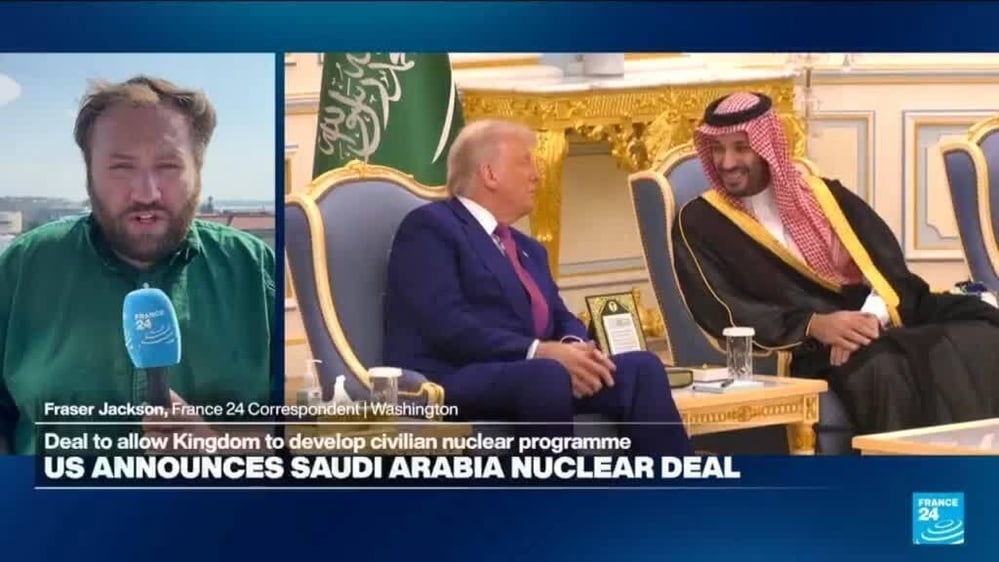
Neutral, fact-based dispatch uses official terms and named participants to report a US-Saudi civilian nuclear cooperation pact with no editorial framing.
Brief news item reporting a US-Saudi civilian nuclear cooperation pact and an accompanying bilateral safeguards agreement, with named signatories and a credited FRANCE 24 reporter.
Automated analysis; not human reviewed.
Limitations: Concise, case-specific limitations and plausible alternative interpretations.
·
1 of 52 available dimensions scored; omitted dimensions are not treated as neutral.
·
Verified supporting quotes for 1 of 1 scored dimensions.
Claim: Neutral political tilt with no evident liberal or conservative framing.
“US announces nuclear cooperation pact with Saudi Arabia.” · exact text match
“The United States on Wednesday announced that it had reached a civilian nuclear cooperation deal with Saudi Arabia, with Energy Secretary Chris Wright signing the pact and a separate bilateral safeguards deal alongside Saudi Energy Minister Prince Abdulaziz bin Salman.” · exact text match
Why: Formal, nonpartisan phrasing and named officials indicate neutrality.
Limited article length; lacks terms/implications context.
July 23, 2026 · 0 shares
Publisher presents a straightforward, source-based report of a US-Saudi 123 Agreement, foregrounding official statements and a NYT citation while highlighting a difference from the UAE 2009 pact.
Context: The article discusses a US-Saudi nuclear cooperation agreement under Section 123 of the Atomic Energy Act, citing official statements and a NYT source to indicate potential enrichment capabilities.
Automated analysis; not human reviewed.
·
1 of 52 available dimensions scored; omitted dimensions are not treated as neutral.
·
Verified supporting quotes for 0 of 1 scored dimensions.
July 22, 2026 · 0 shares
Neutral, fact-based dispatch uses official terms and named participants to report a US-Saudi civilian nuclear cooperation pact with no editorial framing.
Brief news item reporting a US-Saudi civilian nuclear cooperation pact and an accompanying bilateral safeguards agreement, with named signatories and a credited FRANCE 24 reporter.
Automated analysis; not human reviewed.
Limitations: Concise, case-specific limitations and plausible alternative interpretations.
·
1 of 52 available dimensions scored; omitted dimensions are not treated as neutral.
·
Verified supporting quotes for 1 of 1 scored dimensions.
Claim: Neutral political tilt with no evident liberal or conservative framing.
“US announces nuclear cooperation pact with Saudi Arabia.” · exact text match
“The United States on Wednesday announced that it had reached a civilian nuclear cooperation deal with Saudi Arabia, with Energy Secretary Chris Wright signing the pact and a separate bilateral safeguards deal alongside Saudi Energy Minister Prince Abdulaziz bin Salman.” · exact text match
Why: Formal, nonpartisan phrasing and named officials indicate neutrality.
Limited article length; lacks terms/implications context.
Publisher frames the U.S.-Saudi civil nuclear cooperation as a civilian, pro-market partnership grounded in official assurances and strategic alliance, while noting international alarm and Israel-related sensitivities.
Background context within the report emphasizes civilian intent, potential American economic and security benefits, and a framework that includes nonproliferation standards, while noting regional tensions and Israel-related concerns.
Automated analysis; not human reviewed.
Limitations: Analysis limited to the article's text; quotes reflect the publisher's framing and may not capture broader debate or independent verification.
·
1 of 52 available dimensions scored; omitted dimensions are not treated as neutral.
·
Verified supporting quotes for 0 of 1 scored dimensions.
Ambiguities: date is relative; relies on official sources; could reflect selective emphasis.
July 23, 2026 · 0 shares
Reporting presents the deal with favorable official framing while citing expert warnings and political opposition, producing a nuanced, balanced, and establishment-leaning portrayal.
News report on a landmark US-Saudi nuclear deal framed with official claims of safety and nonproliferation, while noting expert concerns and political scrutiny ahead of congressional review.
Automated analysis; not human reviewed. Limitations: Case-specific limitations and plausible alternative interpretations.
July 23, 2026 · 0 shares
Reporting presents the deal with favorable official framing while citing expert warnings and political opposition, producing a nuanced, balanced, and establishment-leaning portrayal.
News report on a landmark US-Saudi nuclear deal framed with official claims of safety and nonproliferation, while noting expert concerns and political scrutiny ahead of congressional review.
Automated analysis; not human reviewed. Limitations: Case-specific limitations and plausible alternative interpretations.
July 23, 2026 · 0 shares
Publisher presents a straightforward, source-based report of a US-Saudi 123 Agreement, foregrounding official statements and a NYT citation while highlighting a difference from the UAE 2009 pact.
Context: The article discusses a US-Saudi nuclear cooperation agreement under Section 123 of the Atomic Energy Act, citing official statements and a NYT source to indicate potential enrichment capabilities.
Automated analysis; not human reviewed.
·
1 of 52 available dimensions scored; omitted dimensions are not treated as neutral.
·
Verified supporting quotes for 0 of 1 scored dimensions.
July 22, 2026 · 0 shares
The reporting foregrounds nonproliferation safeguards and congressional oversight concerns regarding a Trump-era U.S.–Saudi nuclear deal, highlighting missing protections and official-comment gaps while presenting critics' views alongside potential economic justifications.
Concise, factful, accurate, balanced context for the article in one sentence.
Automated analysis; not human reviewed.
Limitations: Relies on a limited excerpt with unnamed sources and no official comment; full article context and corroboration unknown.
·
35 of 52 available dimensions scored; omitted dimensions are not treated as neutral.
·
Verified supporting quotes for 0 of 35 scored dimensions.
Claim: The reporting emphasizes nonproliferation safeguards and congressional scrutiny, indicating an oversight-oriented framing.
“"The proposed deal, expected to be submitted within days, would clear the way for U.S. companies to help Saudi Arabia build a multibillion-dollar civilian nuclear energy industry."” · not found in supplied text
“"But unlike previous U.S. nuclear agreements with some allies, it would not include restrictions that critics say are vital to preventing nuclear weapons development."” · not found in supplied text
Counterevidence:
“"Democrats and some Republicans have long argued that any U.S.-Saudi nuclear agreement should include strict nonproliferation safeguards."” · not found in supplied text
“"The missing safeguards are likely to fuel concerns in Congress because Saudi Crown Prince Mohammed bin Salman has previously linked the kingdom's nuclear ambitions to Iran."” · exact text match
Why: Safeguards-focused language and congressional concerns align with oversight-oriented framing, tempered by pro-business phrasing.
Claim: There is some normative language signaling subjective assessment (e.g., concerns, safeguards).
“"The missing safeguards are likely to fuel concerns in Congress"” · not found in supplied text
“"Democrats and some Republicans argue for strict nonproliferation safeguards"” · not found in supplied text
Counterevidence:
“"two people familiar with the matter"” · not found in supplied text
“"White House and Energy Department did not respond to requests for comment"” · not found in supplied text
Why: Normative phrasing about concerns introduces subjectivity beyond pure fact reporting.
Claim: The article largely preserves a fact-focused, non-sensational tone.
“"The White House and Energy Department did not respond to requests for comment."” · not found in supplied text
Counterevidence:
“"Trump's Saudi nuclear deal drops safeguards designed to stop bomb-making."” · not found in supplied text
Why: Factual detail and standard sourcing characterize the tone over sensationalism.
Claim: The coverage leans slightly hawkish by emphasizing safeguards and potential nonproliferation gaps.
“"strict nonproliferation safeguards"” · not found in supplied text
“"Gold Standard" and other guardrails omitted” · not found in supplied text
Counterevidence:
“"The proposed deal would clear the way for U.S. companies to help Saudi Arabia build a multibillion-dollar civilian nuclear energy industry."” · not found in supplied text
Why: Nonproliferation emphasis signals a security-forward stance without advocating policy changes.
Claim: There are occasional normative judgments about safeguards and oversight.
“"The missing safeguards are likely to fuel concerns in Congress"” · not found in supplied text
Counterevidence:
“"two people familiar with the matter"” · not found in supplied text
“"The White House and Energy Department did not respond to requests for comment."” · not found in supplied text
Why: Statements about concerns imply opinion embedded in reporting.
Claim: The piece foregrounds verifiable mechanisms and procedural details, suggesting a rational framing.
“"The agreement, known as a \"123 Agreement\" under the U.S. Atomic Energy Act"” · not found in supplied text
Counterevidence:
“"One of the sources said the proposed agreement creates a legal framework that could allow cooperation on parts of the nuclear fuel cycle, including uranium enrichment, although it does not require the United States to transfer enrichment technology."” · exact text match
Why: Inclusion of formal terms and timelines supports analytic framing over speculation.
Claim: The article demonstrates understanding of nuclear policy terms and mechanisms.
“"123 Agreement" under the U.S. Atomic Energy Act” · not found in supplied text
“"Gold Standard"” · not found in supplied text
“"Additional Protocol"” · not found in supplied text
Counterevidence:
“"The White House and Energy Department did not respond to requests for comment."” · not found in supplied text
Why: Use of specific policy terms indicates domain knowledge.
Claim: Some promotional framing may reflect virtue-signaling about editorial neutrality.
“"is trusted by Americans across the entire political spectrum.
And unlike many other quality news outlets, we choose not to lock Americans out of our reporting and analysis with paywalls."”
· not found in supplied text
Counterevidence:
“"Join thought-provoking conversations, follow other Independent readers and see their replies"” · exact text match
Why: Promotional statements about accessibility can resemble virtue signaling alongside neutral reporting.
limited context; quotes from unnamed sources; no official comment
July 22, 2026 · 0 shares
Balanced, fact-based coverage of a controversial U.S.-Saudi civil nuclear deal, citing official justification and safeguards while highlighting nonproliferation concerns and lawmakers' warnings.
Reuters reports a landmark civil nuclear power deal between the United States and Saudi Arabia, noting potential enrichment and safeguards while acknowledging nonproliferation concerns and legislative review.
July 22, 2026 · 0 shares
The reporting foregrounds nonproliferation safeguards and congressional oversight concerns regarding a Trump-era U.S.–Saudi nuclear deal, highlighting missing protections and official-comment gaps while presenting critics' views alongside potential economic justifications.
Concise, factful, accurate, balanced context for the article in one sentence.
Automated analysis; not human reviewed.
Limitations: Relies on a limited excerpt with unnamed sources and no official comment; full article context and corroboration unknown.
·
35 of 52 available dimensions scored; omitted dimensions are not treated as neutral.
·
Verified supporting quotes for 0 of 35 scored dimensions.
Claim: The reporting emphasizes nonproliferation safeguards and congressional scrutiny, indicating an oversight-oriented framing.
“"The proposed deal, expected to be submitted within days, would clear the way for U.S. companies to help Saudi Arabia build a multibillion-dollar civilian nuclear energy industry."” · not found in supplied text
“"But unlike previous U.S. nuclear agreements with some allies, it would not include restrictions that critics say are vital to preventing nuclear weapons development."” · not found in supplied text
Counterevidence:
“"Democrats and some Republicans have long argued that any U.S.-Saudi nuclear agreement should include strict nonproliferation safeguards."” · not found in supplied text
“"The missing safeguards are likely to fuel concerns in Congress because Saudi Crown Prince Mohammed bin Salman has previously linked the kingdom's nuclear ambitions to Iran."” · exact text match
Why: Safeguards-focused language and congressional concerns align with oversight-oriented framing, tempered by pro-business phrasing.
Claim: There is some normative language signaling subjective assessment (e.g., concerns, safeguards).
“"The missing safeguards are likely to fuel concerns in Congress"” · not found in supplied text
“"Democrats and some Republicans argue for strict nonproliferation safeguards"” · not found in supplied text
Counterevidence:
“"two people familiar with the matter"” · not found in supplied text
“"White House and Energy Department did not respond to requests for comment"” · not found in supplied text
Why: Normative phrasing about concerns introduces subjectivity beyond pure fact reporting.
Claim: The article largely preserves a fact-focused, non-sensational tone.
“"The White House and Energy Department did not respond to requests for comment."” · not found in supplied text
Counterevidence:
“"Trump's Saudi nuclear deal drops safeguards designed to stop bomb-making."” · not found in supplied text
Why: Factual detail and standard sourcing characterize the tone over sensationalism.
Claim: The coverage leans slightly hawkish by emphasizing safeguards and potential nonproliferation gaps.
“"strict nonproliferation safeguards"” · not found in supplied text
“"Gold Standard" and other guardrails omitted” · not found in supplied text
Counterevidence:
“"The proposed deal would clear the way for U.S. companies to help Saudi Arabia build a multibillion-dollar civilian nuclear energy industry."” · not found in supplied text
Why: Nonproliferation emphasis signals a security-forward stance without advocating policy changes.
Claim: There are occasional normative judgments about safeguards and oversight.
“"The missing safeguards are likely to fuel concerns in Congress"” · not found in supplied text
Counterevidence:
“"two people familiar with the matter"” · not found in supplied text
“"The White House and Energy Department did not respond to requests for comment."” · not found in supplied text
Why: Statements about concerns imply opinion embedded in reporting.
Claim: The piece foregrounds verifiable mechanisms and procedural details, suggesting a rational framing.
“"The agreement, known as a \"123 Agreement\" under the U.S. Atomic Energy Act"” · not found in supplied text
Counterevidence:
“"One of the sources said the proposed agreement creates a legal framework that could allow cooperation on parts of the nuclear fuel cycle, including uranium enrichment, although it does not require the United States to transfer enrichment technology."” · exact text match
Why: Inclusion of formal terms and timelines supports analytic framing over speculation.
Claim: The article demonstrates understanding of nuclear policy terms and mechanisms.
“"123 Agreement" under the U.S. Atomic Energy Act” · not found in supplied text
“"Gold Standard"” · not found in supplied text
“"Additional Protocol"” · not found in supplied text
Counterevidence:
“"The White House and Energy Department did not respond to requests for comment."” · not found in supplied text
Why: Use of specific policy terms indicates domain knowledge.
Claim: Some promotional framing may reflect virtue-signaling about editorial neutrality.
“"is trusted by Americans across the entire political spectrum.
And unlike many other quality news outlets, we choose not to lock Americans out of our reporting and analysis with paywalls."”
· not found in supplied text
Counterevidence:
“"Join thought-provoking conversations, follow other Independent readers and see their replies"” · exact text match
Why: Promotional statements about accessibility can resemble virtue signaling alongside neutral reporting.
limited context; quotes from unnamed sources; no official comment
July 21, 2026 · 0 shares
Cautious, risk-aware framing emphasizes nonproliferation concerns and procedural uncertainties around the U.S.-Saudi civil nuclear deal, signaling skepticism toward its benefits.
Concise, factful, balanced context for the article in one sentence.
Automated analysis; not human reviewed. Limitations: Limited to provided text; uses unnamed sources; lacks full policy details; the content may be part of a larger narrative not captured here.
Unnamed sources, incomplete details, potential missing docs.
July 22, 2026 · 0 shares
Balanced, fact-based coverage of a controversial U.S.-Saudi civil nuclear deal, citing official justification and safeguards while highlighting nonproliferation concerns and lawmakers' warnings.
Reuters reports a landmark civil nuclear power deal between the United States and Saudi Arabia, noting potential enrichment and safeguards while acknowledging nonproliferation concerns and legislative review.
Publisher frames the U.S.-Saudi civil nuclear cooperation as a civilian, pro-market partnership grounded in official assurances and strategic alliance, while noting international alarm and Israel-related sensitivities.
Background context within the report emphasizes civilian intent, potential American economic and security benefits, and a framework that includes nonproliferation standards, while noting regional tensions and Israel-related concerns.
Automated analysis; not human reviewed.
Limitations: Analysis limited to the article's text; quotes reflect the publisher's framing and may not capture broader debate or independent verification.
·
1 of 52 available dimensions scored; omitted dimensions are not treated as neutral.
·
Verified supporting quotes for 0 of 1 scored dimensions.
Ambiguities: date is relative; relies on official sources; could reflect selective emphasis.
July 21, 2026 · 0 shares
Cautious, risk-aware framing emphasizes nonproliferation concerns and procedural uncertainties around the U.S.-Saudi civil nuclear deal, signaling skepticism toward its benefits.
Concise, factful, balanced context for the article in one sentence.
Automated analysis; not human reviewed. Limitations: Limited to provided text; uses unnamed sources; lacks full policy details; the content may be part of a larger narrative not captured here.
Unnamed sources, incomplete details, potential missing docs.
Landmark US-Saudi nuclear deal framed as establishment-backed policy supported by official and industry voices, while acknowledging controversy and warnings from critics.
Concise, factful, accurate, balanced context for the article in one sentence.
Automated analysis; not human reviewed. Limitations: Case-specific: limited independent verification; heavy reliance on official statements and select critics.
Deal details unknown; relies on official sources; possible pro-establishment tilt.
July 22, 2026 · 0 shares
The reporting foregrounds nonproliferation safeguards and congressional oversight concerns regarding a Trump-era U.S.–Saudi nuclear deal, highlighting missing protections and official-comment gaps while presenting critics' views alongside potential economic justifications.
Concise, factful, accurate, balanced context for the article in one sentence.
Automated analysis; not human reviewed.
Limitations: Relies on a limited excerpt with unnamed sources and no official comment; full article context and corroboration unknown.
·
35 of 52 available dimensions scored; omitted dimensions are not treated as neutral.
·
Verified supporting quotes for 0 of 35 scored dimensions.
Claim: The reporting emphasizes nonproliferation safeguards and congressional scrutiny, indicating an oversight-oriented framing.
“"The proposed deal, expected to be submitted within days, would clear the way for U.S. companies to help Saudi Arabia build a multibillion-dollar civilian nuclear energy industry."” · not found in supplied text
“"But unlike previous U.S. nuclear agreements with some allies, it would not include restrictions that critics say are vital to preventing nuclear weapons development."” · not found in supplied text
Counterevidence:
“"Democrats and some Republicans have long argued that any U.S.-Saudi nuclear agreement should include strict nonproliferation safeguards."” · not found in supplied text
“"The missing safeguards are likely to fuel concerns in Congress because Saudi Crown Prince Mohammed bin Salman has previously linked the kingdom's nuclear ambitions to Iran."” · exact text match
Why: Safeguards-focused language and congressional concerns align with oversight-oriented framing, tempered by pro-business phrasing.
Claim: There is some normative language signaling subjective assessment (e.g., concerns, safeguards).
“"The missing safeguards are likely to fuel concerns in Congress"” · not found in supplied text
“"Democrats and some Republicans argue for strict nonproliferation safeguards"” · not found in supplied text
Counterevidence:
“"two people familiar with the matter"” · not found in supplied text
“"White House and Energy Department did not respond to requests for comment"” · not found in supplied text
Why: Normative phrasing about concerns introduces subjectivity beyond pure fact reporting.
Claim: The article largely preserves a fact-focused, non-sensational tone.
“"The White House and Energy Department did not respond to requests for comment."” · not found in supplied text
Counterevidence:
“"Trump's Saudi nuclear deal drops safeguards designed to stop bomb-making."” · not found in supplied text
Why: Factual detail and standard sourcing characterize the tone over sensationalism.
Claim: The coverage leans slightly hawkish by emphasizing safeguards and potential nonproliferation gaps.
“"strict nonproliferation safeguards"” · not found in supplied text
“"Gold Standard" and other guardrails omitted” · not found in supplied text
Counterevidence:
“"The proposed deal would clear the way for U.S. companies to help Saudi Arabia build a multibillion-dollar civilian nuclear energy industry."” · not found in supplied text
Why: Nonproliferation emphasis signals a security-forward stance without advocating policy changes.
Claim: There are occasional normative judgments about safeguards and oversight.
“"The missing safeguards are likely to fuel concerns in Congress"” · not found in supplied text
Counterevidence:
“"two people familiar with the matter"” · not found in supplied text
“"The White House and Energy Department did not respond to requests for comment."” · not found in supplied text
Why: Statements about concerns imply opinion embedded in reporting.
Claim: The piece foregrounds verifiable mechanisms and procedural details, suggesting a rational framing.
“"The agreement, known as a \"123 Agreement\" under the U.S. Atomic Energy Act"” · not found in supplied text
Counterevidence:
“"One of the sources said the proposed agreement creates a legal framework that could allow cooperation on parts of the nuclear fuel cycle, including uranium enrichment, although it does not require the United States to transfer enrichment technology."” · exact text match
Why: Inclusion of formal terms and timelines supports analytic framing over speculation.
Claim: The article demonstrates understanding of nuclear policy terms and mechanisms.
“"123 Agreement" under the U.S. Atomic Energy Act” · not found in supplied text
“"Gold Standard"” · not found in supplied text
“"Additional Protocol"” · not found in supplied text
Counterevidence:
“"The White House and Energy Department did not respond to requests for comment."” · not found in supplied text
Why: Use of specific policy terms indicates domain knowledge.
Claim: Some promotional framing may reflect virtue-signaling about editorial neutrality.
“"is trusted by Americans across the entire political spectrum.
And unlike many other quality news outlets, we choose not to lock Americans out of our reporting and analysis with paywalls."”
· not found in supplied text
Counterevidence:
“"Join thought-provoking conversations, follow other Independent readers and see their replies"” · exact text match
Why: Promotional statements about accessibility can resemble virtue signaling alongside neutral reporting.
limited context; quotes from unnamed sources; no official comment
July 22, 2026 · 0 shares
Balanced, fact-based coverage of a controversial U.S.-Saudi civil nuclear deal, citing official justification and safeguards while highlighting nonproliferation concerns and lawmakers' warnings.
Reuters reports a landmark civil nuclear power deal between the United States and Saudi Arabia, noting potential enrichment and safeguards while acknowledging nonproliferation concerns and legislative review.
July 22, 2026 · 0 shares
Neutral, fact-based dispatch uses official terms and named participants to report a US-Saudi civilian nuclear cooperation pact with no editorial framing.
Brief news item reporting a US-Saudi civilian nuclear cooperation pact and an accompanying bilateral safeguards agreement, with named signatories and a credited FRANCE 24 reporter.
Automated analysis; not human reviewed. Limitations: Concise, case-specific limitations and plausible alternative interpretations. · 1 of 52 available dimensions scored; omitted dimensions are not treated as neutral. · Verified supporting quotes for 1 of 1 scored dimensions.
Claim: Neutral political tilt with no evident liberal or conservative framing.
“US announces nuclear cooperation pact with Saudi Arabia.” · exact text match
“The United States on Wednesday announced that it had reached a civilian nuclear cooperation deal with Saudi Arabia, with Energy Secretary Chris Wright signing the pact and a separate bilateral safeguards deal alongside Saudi Energy Minister Prince Abdulaziz bin Salman.” · exact text match
Why: Formal, nonpartisan phrasing and named officials indicate neutrality.
Limited article length; lacks terms/implications context.
July 22, 2026 · 0 shares
Neutral, fact-based dispatch uses official terms and named participants to report a US-Saudi civilian nuclear cooperation pact with no editorial framing.
Brief news item reporting a US-Saudi civilian nuclear cooperation pact and an accompanying bilateral safeguards agreement, with named signatories and a credited FRANCE 24 reporter.
Automated analysis; not human reviewed. Limitations: Concise, case-specific limitations and plausible alternative interpretations. · 1 of 52 available dimensions scored; omitted dimensions are not treated as neutral. · Verified supporting quotes for 1 of 1 scored dimensions.
Claim: Neutral political tilt with no evident liberal or conservative framing.
“US announces nuclear cooperation pact with Saudi Arabia.” · exact text match
“The United States on Wednesday announced that it had reached a civilian nuclear cooperation deal with Saudi Arabia, with Energy Secretary Chris Wright signing the pact and a separate bilateral safeguards deal alongside Saudi Energy Minister Prince Abdulaziz bin Salman.” · exact text match
Why: Formal, nonpartisan phrasing and named officials indicate neutrality.
Limited article length; lacks terms/implications context.
July 23, 2026 · 0 shares
Publisher presents a straightforward, source-based report of a US-Saudi 123 Agreement, foregrounding official statements and a NYT citation while highlighting a difference from the UAE 2009 pact.
Context: The article discusses a US-Saudi nuclear cooperation agreement under Section 123 of the Atomic Energy Act, citing official statements and a NYT source to indicate potential enrichment capabilities.
Automated analysis; not human reviewed. · 1 of 52 available dimensions scored; omitted dimensions are not treated as neutral. · Verified supporting quotes for 0 of 1 scored dimensions.
July 23, 2026 · 0 shares
Reporting presents the deal with favorable official framing while citing expert warnings and political opposition, producing a nuanced, balanced, and establishment-leaning portrayal.
News report on a landmark US-Saudi nuclear deal framed with official claims of safety and nonproliferation, while noting expert concerns and political scrutiny ahead of congressional review.
Automated analysis; not human reviewed. Limitations: Case-specific limitations and plausible alternative interpretations.
July 23, 2026 · 0 shares
Publisher presents a straightforward, source-based report of a US-Saudi 123 Agreement, foregrounding official statements and a NYT citation while highlighting a difference from the UAE 2009 pact.
Context: The article discusses a US-Saudi nuclear cooperation agreement under Section 123 of the Atomic Energy Act, citing official statements and a NYT source to indicate potential enrichment capabilities.
Automated analysis; not human reviewed. · 1 of 52 available dimensions scored; omitted dimensions are not treated as neutral. · Verified supporting quotes for 0 of 1 scored dimensions.
Landmark US-Saudi nuclear deal framed as establishment-backed policy supported by official and industry voices, while acknowledging controversy and warnings from critics.
Concise, factful, accurate, balanced context for the article in one sentence.
Automated analysis; not human reviewed. Limitations: Case-specific: limited independent verification; heavy reliance on official statements and select critics.
Deal details unknown; relies on official sources; possible pro-establishment tilt.
July 22, 2026 · 0 shares
Balanced, fact-based coverage of a controversial U.S.-Saudi civil nuclear deal, citing official justification and safeguards while highlighting nonproliferation concerns and lawmakers' warnings.
Reuters reports a landmark civil nuclear power deal between the United States and Saudi Arabia, noting potential enrichment and safeguards while acknowledging nonproliferation concerns and legislative review.
July 22, 2026 · 0 shares
Neutral, fact-based dispatch uses official terms and named participants to report a US-Saudi civilian nuclear cooperation pact with no editorial framing.
Brief news item reporting a US-Saudi civilian nuclear cooperation pact and an accompanying bilateral safeguards agreement, with named signatories and a credited FRANCE 24 reporter.
Automated analysis; not human reviewed. Limitations: Concise, case-specific limitations and plausible alternative interpretations. · 1 of 52 available dimensions scored; omitted dimensions are not treated as neutral. · Verified supporting quotes for 1 of 1 scored dimensions.
Claim: Neutral political tilt with no evident liberal or conservative framing.
“US announces nuclear cooperation pact with Saudi Arabia.” · exact text match
“The United States on Wednesday announced that it had reached a civilian nuclear cooperation deal with Saudi Arabia, with Energy Secretary Chris Wright signing the pact and a separate bilateral safeguards deal alongside Saudi Energy Minister Prince Abdulaziz bin Salman.” · exact text match
Why: Formal, nonpartisan phrasing and named officials indicate neutrality.
Limited article length; lacks terms/implications context.
July 22, 2026 · 0 shares
The reporting foregrounds nonproliferation safeguards and congressional oversight concerns regarding a Trump-era U.S.–Saudi nuclear deal, highlighting missing protections and official-comment gaps while presenting critics' views alongside potential economic justifications.
Concise, factful, accurate, balanced context for the article in one sentence.
Automated analysis; not human reviewed. Limitations: Relies on a limited excerpt with unnamed sources and no official comment; full article context and corroboration unknown. · 35 of 52 available dimensions scored; omitted dimensions are not treated as neutral. · Verified supporting quotes for 0 of 35 scored dimensions.
Claim: The reporting emphasizes nonproliferation safeguards and congressional scrutiny, indicating an oversight-oriented framing.
“"The proposed deal, expected to be submitted within days, would clear the way for U.S. companies to help Saudi Arabia build a multibillion-dollar civilian nuclear energy industry."” · not found in supplied text
“"But unlike previous U.S. nuclear agreements with some allies, it would not include restrictions that critics say are vital to preventing nuclear weapons development."” · not found in supplied text
Counterevidence:
“"Democrats and some Republicans have long argued that any U.S.-Saudi nuclear agreement should include strict nonproliferation safeguards."” · not found in supplied text
“"The missing safeguards are likely to fuel concerns in Congress because Saudi Crown Prince Mohammed bin Salman has previously linked the kingdom's nuclear ambitions to Iran."” · exact text match
Why: Safeguards-focused language and congressional concerns align with oversight-oriented framing, tempered by pro-business phrasing.
Claim: There is some normative language signaling subjective assessment (e.g., concerns, safeguards).
“"The missing safeguards are likely to fuel concerns in Congress"” · not found in supplied text
“"Democrats and some Republicans argue for strict nonproliferation safeguards"” · not found in supplied text
Counterevidence:
“"two people familiar with the matter"” · not found in supplied text
“"White House and Energy Department did not respond to requests for comment"” · not found in supplied text
Why: Normative phrasing about concerns introduces subjectivity beyond pure fact reporting.
Claim: The article largely preserves a fact-focused, non-sensational tone.
“"The White House and Energy Department did not respond to requests for comment."” · not found in supplied text
Counterevidence:
“"Trump's Saudi nuclear deal drops safeguards designed to stop bomb-making."” · not found in supplied text
Why: Factual detail and standard sourcing characterize the tone over sensationalism.
Claim: The coverage leans slightly hawkish by emphasizing safeguards and potential nonproliferation gaps.
“"strict nonproliferation safeguards"” · not found in supplied text
“"Gold Standard" and other guardrails omitted” · not found in supplied text
Counterevidence:
“"The proposed deal would clear the way for U.S. companies to help Saudi Arabia build a multibillion-dollar civilian nuclear energy industry."” · not found in supplied text
Why: Nonproliferation emphasis signals a security-forward stance without advocating policy changes.
Claim: There are occasional normative judgments about safeguards and oversight.
“"The missing safeguards are likely to fuel concerns in Congress"” · not found in supplied text
Counterevidence:
“"two people familiar with the matter"” · not found in supplied text
“"The White House and Energy Department did not respond to requests for comment."” · not found in supplied text
Why: Statements about concerns imply opinion embedded in reporting.
Claim: The piece foregrounds verifiable mechanisms and procedural details, suggesting a rational framing.
“"The agreement, known as a \"123 Agreement\" under the U.S. Atomic Energy Act"” · not found in supplied text
Counterevidence:
“"One of the sources said the proposed agreement creates a legal framework that could allow cooperation on parts of the nuclear fuel cycle, including uranium enrichment, although it does not require the United States to transfer enrichment technology."” · exact text match
Why: Inclusion of formal terms and timelines supports analytic framing over speculation.
Claim: The article demonstrates understanding of nuclear policy terms and mechanisms.
“"123 Agreement" under the U.S. Atomic Energy Act” · not found in supplied text
“"Gold Standard"” · not found in supplied text
“"Additional Protocol"” · not found in supplied text
Counterevidence:
“"The White House and Energy Department did not respond to requests for comment."” · not found in supplied text
Why: Use of specific policy terms indicates domain knowledge.
Claim: Some promotional framing may reflect virtue-signaling about editorial neutrality.
“"is trusted by Americans across the entire political spectrum. And unlike many other quality news outlets, we choose not to lock Americans out of our reporting and analysis with paywalls."” · not found in supplied text
Counterevidence:
“"Join thought-provoking conversations, follow other Independent readers and see their replies"” · exact text match
Why: Promotional statements about accessibility can resemble virtue signaling alongside neutral reporting.
limited context; quotes from unnamed sources; no official comment
July 22, 2026 · 0 shares
Balanced, fact-based coverage of a controversial U.S.-Saudi civil nuclear deal, citing official justification and safeguards while highlighting nonproliferation concerns and lawmakers' warnings.
Reuters reports a landmark civil nuclear power deal between the United States and Saudi Arabia, noting potential enrichment and safeguards while acknowledging nonproliferation concerns and legislative review.
Publisher frames the U.S.-Saudi civil nuclear cooperation as a civilian, pro-market partnership grounded in official assurances and strategic alliance, while noting international alarm and Israel-related sensitivities.
Background context within the report emphasizes civilian intent, potential American economic and security benefits, and a framework that includes nonproliferation standards, while noting regional tensions and Israel-related concerns.
Automated analysis; not human reviewed. Limitations: Analysis limited to the article's text; quotes reflect the publisher's framing and may not capture broader debate or independent verification. · 1 of 52 available dimensions scored; omitted dimensions are not treated as neutral. · Verified supporting quotes for 0 of 1 scored dimensions.
Ambiguities: date is relative; relies on official sources; could reflect selective emphasis.
July 21, 2026 · 0 shares
Cautious, risk-aware framing emphasizes nonproliferation concerns and procedural uncertainties around the U.S.-Saudi civil nuclear deal, signaling skepticism toward its benefits.
Concise, factful, balanced context for the article in one sentence.
Automated analysis; not human reviewed. Limitations: Limited to provided text; uses unnamed sources; lacks full policy details; the content may be part of a larger narrative not captured here.
Unnamed sources, incomplete details, potential missing docs.
Helium Bias
July 22, 2026 · 0 shares
Neutral, fact-based dispatch uses official terms and named participants to report a US-Saudi civilian nuclear cooperation pact with no editorial framing.
Brief news item reporting a US-Saudi civilian nuclear cooperation pact and an accompanying bilateral safeguards agreement, with named signatories and a credited FRANCE 24 reporter.
Automated analysis; not human reviewed. Limitations: Concise, case-specific limitations and plausible alternative interpretations. · 1 of 52 available dimensions scored; omitted dimensions are not treated as neutral. · Verified supporting quotes for 1 of 1 scored dimensions.
Claim: Neutral political tilt with no evident liberal or conservative framing.
“US announces nuclear cooperation pact with Saudi Arabia.” · exact text match
“The United States on Wednesday announced that it had reached a civilian nuclear cooperation deal with Saudi Arabia, with Energy Secretary Chris Wright signing the pact and a separate bilateral safeguards deal alongside Saudi Energy Minister Prince Abdulaziz bin Salman.” · exact text match
Why: Formal, nonpartisan phrasing and named officials indicate neutrality.
Limited article length; lacks terms/implications context.
July 22, 2026 · 0 shares
Neutral, fact-based dispatch uses official terms and named participants to report a US-Saudi civilian nuclear cooperation pact with no editorial framing.
Brief news item reporting a US-Saudi civilian nuclear cooperation pact and an accompanying bilateral safeguards agreement, with named signatories and a credited FRANCE 24 reporter.
Automated analysis; not human reviewed. Limitations: Concise, case-specific limitations and plausible alternative interpretations. · 1 of 52 available dimensions scored; omitted dimensions are not treated as neutral. · Verified supporting quotes for 1 of 1 scored dimensions.
Claim: Neutral political tilt with no evident liberal or conservative framing.
“US announces nuclear cooperation pact with Saudi Arabia.” · exact text match
“The United States on Wednesday announced that it had reached a civilian nuclear cooperation deal with Saudi Arabia, with Energy Secretary Chris Wright signing the pact and a separate bilateral safeguards deal alongside Saudi Energy Minister Prince Abdulaziz bin Salman.” · exact text match
Why: Formal, nonpartisan phrasing and named officials indicate neutrality.
Limited article length; lacks terms/implications context.
July 22, 2026 · 0 shares
Balanced, fact-based coverage of a controversial U.S.-Saudi civil nuclear deal, citing official justification and safeguards while highlighting nonproliferation concerns and lawmakers' warnings.
Reuters reports a landmark civil nuclear power deal between the United States and Saudi Arabia, noting potential enrichment and safeguards while acknowledging nonproliferation concerns and legislative review.
July 23, 2026 · 0 shares
Reporting presents the deal with favorable official framing while citing expert warnings and political opposition, producing a nuanced, balanced, and establishment-leaning portrayal.
News report on a landmark US-Saudi nuclear deal framed with official claims of safety and nonproliferation, while noting expert concerns and political scrutiny ahead of congressional review.
Automated analysis; not human reviewed. Limitations: Case-specific limitations and plausible alternative interpretations.
July 22, 2026 · 0 shares
The reporting foregrounds nonproliferation safeguards and congressional oversight concerns regarding a Trump-era U.S.–Saudi nuclear deal, highlighting missing protections and official-comment gaps while presenting critics' views alongside potential economic justifications.
Concise, factful, accurate, balanced context for the article in one sentence.
Automated analysis; not human reviewed. Limitations: Relies on a limited excerpt with unnamed sources and no official comment; full article context and corroboration unknown. · 35 of 52 available dimensions scored; omitted dimensions are not treated as neutral. · Verified supporting quotes for 0 of 35 scored dimensions.
Claim: The reporting emphasizes nonproliferation safeguards and congressional scrutiny, indicating an oversight-oriented framing.
“"The proposed deal, expected to be submitted within days, would clear the way for U.S. companies to help Saudi Arabia build a multibillion-dollar civilian nuclear energy industry."” · not found in supplied text
“"But unlike previous U.S. nuclear agreements with some allies, it would not include restrictions that critics say are vital to preventing nuclear weapons development."” · not found in supplied text
Counterevidence:
“"Democrats and some Republicans have long argued that any U.S.-Saudi nuclear agreement should include strict nonproliferation safeguards."” · not found in supplied text
“"The missing safeguards are likely to fuel concerns in Congress because Saudi Crown Prince Mohammed bin Salman has previously linked the kingdom's nuclear ambitions to Iran."” · exact text match
Why: Safeguards-focused language and congressional concerns align with oversight-oriented framing, tempered by pro-business phrasing.
Claim: There is some normative language signaling subjective assessment (e.g., concerns, safeguards).
“"The missing safeguards are likely to fuel concerns in Congress"” · not found in supplied text
“"Democrats and some Republicans argue for strict nonproliferation safeguards"” · not found in supplied text
Counterevidence:
“"two people familiar with the matter"” · not found in supplied text
“"White House and Energy Department did not respond to requests for comment"” · not found in supplied text
Why: Normative phrasing about concerns introduces subjectivity beyond pure fact reporting.
Claim: The article largely preserves a fact-focused, non-sensational tone.
“"The White House and Energy Department did not respond to requests for comment."” · not found in supplied text
Counterevidence:
“"Trump's Saudi nuclear deal drops safeguards designed to stop bomb-making."” · not found in supplied text
Why: Factual detail and standard sourcing characterize the tone over sensationalism.
Claim: The coverage leans slightly hawkish by emphasizing safeguards and potential nonproliferation gaps.
“"strict nonproliferation safeguards"” · not found in supplied text
“"Gold Standard" and other guardrails omitted” · not found in supplied text
Counterevidence:
“"The proposed deal would clear the way for U.S. companies to help Saudi Arabia build a multibillion-dollar civilian nuclear energy industry."” · not found in supplied text
Why: Nonproliferation emphasis signals a security-forward stance without advocating policy changes.
Claim: There are occasional normative judgments about safeguards and oversight.
“"The missing safeguards are likely to fuel concerns in Congress"” · not found in supplied text
Counterevidence:
“"two people familiar with the matter"” · not found in supplied text
“"The White House and Energy Department did not respond to requests for comment."” · not found in supplied text
Why: Statements about concerns imply opinion embedded in reporting.
Claim: The piece foregrounds verifiable mechanisms and procedural details, suggesting a rational framing.
“"The agreement, known as a \"123 Agreement\" under the U.S. Atomic Energy Act"” · not found in supplied text
Counterevidence:
“"One of the sources said the proposed agreement creates a legal framework that could allow cooperation on parts of the nuclear fuel cycle, including uranium enrichment, although it does not require the United States to transfer enrichment technology."” · exact text match
Why: Inclusion of formal terms and timelines supports analytic framing over speculation.
Claim: The article demonstrates understanding of nuclear policy terms and mechanisms.
“"123 Agreement" under the U.S. Atomic Energy Act” · not found in supplied text
“"Gold Standard"” · not found in supplied text
“"Additional Protocol"” · not found in supplied text
Counterevidence:
“"The White House and Energy Department did not respond to requests for comment."” · not found in supplied text
Why: Use of specific policy terms indicates domain knowledge.
Claim: Some promotional framing may reflect virtue-signaling about editorial neutrality.
“"is trusted by Americans across the entire political spectrum. And unlike many other quality news outlets, we choose not to lock Americans out of our reporting and analysis with paywalls."” · not found in supplied text
Counterevidence:
“"Join thought-provoking conversations, follow other Independent readers and see their replies"” · exact text match
Why: Promotional statements about accessibility can resemble virtue signaling alongside neutral reporting.
limited context; quotes from unnamed sources; no official comment
July 21, 2026 · 0 shares
Cautious, risk-aware framing emphasizes nonproliferation concerns and procedural uncertainties around the U.S.-Saudi civil nuclear deal, signaling skepticism toward its benefits.
Concise, factful, balanced context for the article in one sentence.
Automated analysis; not human reviewed. Limitations: Limited to provided text; uses unnamed sources; lacks full policy details; the content may be part of a larger narrative not captured here.
Unnamed sources, incomplete details, potential missing docs.
Story Blindspots
July 21, 2026 · 0 shares
Cautious, risk-aware framing emphasizes nonproliferation concerns and procedural uncertainties around the U.S.-Saudi civil nuclear deal, signaling skepticism toward its benefits.
Concise, factful, balanced context for the article in one sentence.
Automated analysis; not human reviewed. Limitations: Limited to provided text; uses unnamed sources; lacks full policy details; the content may be part of a larger narrative not captured here.
Unnamed sources, incomplete details, potential missing docs.
July 22, 2026 · 0 shares
Balanced, fact-based coverage of a controversial U.S.-Saudi civil nuclear deal, citing official justification and safeguards while highlighting nonproliferation concerns and lawmakers' warnings.
Reuters reports a landmark civil nuclear power deal between the United States and Saudi Arabia, noting potential enrichment and safeguards while acknowledging nonproliferation concerns and legislative review.
July 23, 2026 · 0 shares
Reporting presents the deal with favorable official framing while citing expert warnings and political opposition, producing a nuanced, balanced, and establishment-leaning portrayal.
News report on a landmark US-Saudi nuclear deal framed with official claims of safety and nonproliferation, while noting expert concerns and political scrutiny ahead of congressional review.
Automated analysis; not human reviewed. Limitations: Case-specific limitations and plausible alternative interpretations.
Landmark US-Saudi nuclear deal framed as establishment-backed policy supported by official and industry voices, while acknowledging controversy and warnings from critics.
Concise, factful, accurate, balanced context for the article in one sentence.
Automated analysis; not human reviewed. Limitations: Case-specific: limited independent verification; heavy reliance on official statements and select critics.
Deal details unknown; relies on official sources; possible pro-establishment tilt.
Guardian briefing frames Trump's Iran policy as a costly miscalculation risking a broader regional crisis and economic fallout, foregrounding expert critique of regime-change aims, alleged disregard for international law, and the potential global impact on energy, while highlighting dissenting views within the U.S. and allied rhetoric.
A Guardian briefing analyzing the Iran conflict's trajectory, its effects on Hormuz Strait oil transport, and broader geopolitical and economic implications, featuring expert commentary and political context.
July 22, 2026 · 0 shares
Neutral, fact-based dispatch uses official terms and named participants to report a US-Saudi civilian nuclear cooperation pact with no editorial framing.
Brief news item reporting a US-Saudi civilian nuclear cooperation pact and an accompanying bilateral safeguards agreement, with named signatories and a credited FRANCE 24 reporter.
Automated analysis; not human reviewed. Limitations: Concise, case-specific limitations and plausible alternative interpretations. · 1 of 52 available dimensions scored; omitted dimensions are not treated as neutral. · Verified supporting quotes for 1 of 1 scored dimensions.
Claim: Neutral political tilt with no evident liberal or conservative framing.
“US announces nuclear cooperation pact with Saudi Arabia.” · exact text match
“The United States on Wednesday announced that it had reached a civilian nuclear cooperation deal with Saudi Arabia, with Energy Secretary Chris Wright signing the pact and a separate bilateral safeguards deal alongside Saudi Energy Minister Prince Abdulaziz bin Salman.” · exact text match
Why: Formal, nonpartisan phrasing and named officials indicate neutrality.
Limited article length; lacks terms/implications context.
July 23, 2026 · 0 shares
Publisher presents a straightforward, source-based report of a US-Saudi 123 Agreement, foregrounding official statements and a NYT citation while highlighting a difference from the UAE 2009 pact.
Context: The article discusses a US-Saudi nuclear cooperation agreement under Section 123 of the Atomic Energy Act, citing official statements and a NYT source to indicate potential enrichment capabilities.
Automated analysis; not human reviewed. · 1 of 52 available dimensions scored; omitted dimensions are not treated as neutral. · Verified supporting quotes for 0 of 1 scored dimensions.
July 22, 2026 · 0 shares
Neutral, fact-based dispatch uses official terms and named participants to report a US-Saudi civilian nuclear cooperation pact with no editorial framing.
Brief news item reporting a US-Saudi civilian nuclear cooperation pact and an accompanying bilateral safeguards agreement, with named signatories and a credited FRANCE 24 reporter.
Automated analysis; not human reviewed. Limitations: Concise, case-specific limitations and plausible alternative interpretations. · 1 of 52 available dimensions scored; omitted dimensions are not treated as neutral. · Verified supporting quotes for 1 of 1 scored dimensions.
Claim: Neutral political tilt with no evident liberal or conservative framing.
“US announces nuclear cooperation pact with Saudi Arabia.” · exact text match
“The United States on Wednesday announced that it had reached a civilian nuclear cooperation deal with Saudi Arabia, with Energy Secretary Chris Wright signing the pact and a separate bilateral safeguards deal alongside Saudi Energy Minister Prince Abdulaziz bin Salman.” · exact text match
Why: Formal, nonpartisan phrasing and named officials indicate neutrality.
Limited article length; lacks terms/implications context.
Publisher frames the U.S.-Saudi civil nuclear cooperation as a civilian, pro-market partnership grounded in official assurances and strategic alliance, while noting international alarm and Israel-related sensitivities.
Background context within the report emphasizes civilian intent, potential American economic and security benefits, and a framework that includes nonproliferation standards, while noting regional tensions and Israel-related concerns.
Automated analysis; not human reviewed. Limitations: Analysis limited to the article's text; quotes reflect the publisher's framing and may not capture broader debate or independent verification. · 1 of 52 available dimensions scored; omitted dimensions are not treated as neutral. · Verified supporting quotes for 0 of 1 scored dimensions.
Ambiguities: date is relative; relies on official sources; could reflect selective emphasis.
July 23, 2026 · 0 shares
Reporting presents the deal with favorable official framing while citing expert warnings and political opposition, producing a nuanced, balanced, and establishment-leaning portrayal.
News report on a landmark US-Saudi nuclear deal framed with official claims of safety and nonproliferation, while noting expert concerns and political scrutiny ahead of congressional review.
Automated analysis; not human reviewed. Limitations: Case-specific limitations and plausible alternative interpretations.
July 23, 2026 · 0 shares
Reporting presents the deal with favorable official framing while citing expert warnings and political opposition, producing a nuanced, balanced, and establishment-leaning portrayal.
News report on a landmark US-Saudi nuclear deal framed with official claims of safety and nonproliferation, while noting expert concerns and political scrutiny ahead of congressional review.
Automated analysis; not human reviewed. Limitations: Case-specific limitations and plausible alternative interpretations.
July 23, 2026 · 0 shares
Publisher presents a straightforward, source-based report of a US-Saudi 123 Agreement, foregrounding official statements and a NYT citation while highlighting a difference from the UAE 2009 pact.
Context: The article discusses a US-Saudi nuclear cooperation agreement under Section 123 of the Atomic Energy Act, citing official statements and a NYT source to indicate potential enrichment capabilities.
Automated analysis; not human reviewed. · 1 of 52 available dimensions scored; omitted dimensions are not treated as neutral. · Verified supporting quotes for 0 of 1 scored dimensions.
July 22, 2026 · 0 shares
Balanced, fact-based coverage of a controversial U.S.-Saudi civil nuclear deal, citing official justification and safeguards while highlighting nonproliferation concerns and lawmakers' warnings.
Reuters reports a landmark civil nuclear power deal between the United States and Saudi Arabia, noting potential enrichment and safeguards while acknowledging nonproliferation concerns and legislative review.
Landmark US-Saudi nuclear deal framed as establishment-backed policy supported by official and industry voices, while acknowledging controversy and warnings from critics.
Concise, factful, accurate, balanced context for the article in one sentence.
Automated analysis; not human reviewed. Limitations: Case-specific: limited independent verification; heavy reliance on official statements and select critics.
Deal details unknown; relies on official sources; possible pro-establishment tilt.
July 22, 2026 · 0 shares
The reporting foregrounds nonproliferation safeguards and congressional oversight concerns regarding a Trump-era U.S.–Saudi nuclear deal, highlighting missing protections and official-comment gaps while presenting critics' views alongside potential economic justifications.
Concise, factful, accurate, balanced context for the article in one sentence.
Automated analysis; not human reviewed. Limitations: Relies on a limited excerpt with unnamed sources and no official comment; full article context and corroboration unknown. · 35 of 52 available dimensions scored; omitted dimensions are not treated as neutral. · Verified supporting quotes for 0 of 35 scored dimensions.
Claim: The reporting emphasizes nonproliferation safeguards and congressional scrutiny, indicating an oversight-oriented framing.
“"The proposed deal, expected to be submitted within days, would clear the way for U.S. companies to help Saudi Arabia build a multibillion-dollar civilian nuclear energy industry."” · not found in supplied text
“"But unlike previous U.S. nuclear agreements with some allies, it would not include restrictions that critics say are vital to preventing nuclear weapons development."” · not found in supplied text
Counterevidence:
“"Democrats and some Republicans have long argued that any U.S.-Saudi nuclear agreement should include strict nonproliferation safeguards."” · not found in supplied text
“"The missing safeguards are likely to fuel concerns in Congress because Saudi Crown Prince Mohammed bin Salman has previously linked the kingdom's nuclear ambitions to Iran."” · exact text match
Why: Safeguards-focused language and congressional concerns align with oversight-oriented framing, tempered by pro-business phrasing.
Claim: There is some normative language signaling subjective assessment (e.g., concerns, safeguards).
“"The missing safeguards are likely to fuel concerns in Congress"” · not found in supplied text
“"Democrats and some Republicans argue for strict nonproliferation safeguards"” · not found in supplied text
Counterevidence:
“"two people familiar with the matter"” · not found in supplied text
“"White House and Energy Department did not respond to requests for comment"” · not found in supplied text
Why: Normative phrasing about concerns introduces subjectivity beyond pure fact reporting.
Claim: The article largely preserves a fact-focused, non-sensational tone.
“"The White House and Energy Department did not respond to requests for comment."” · not found in supplied text
Counterevidence:
“"Trump's Saudi nuclear deal drops safeguards designed to stop bomb-making."” · not found in supplied text
Why: Factual detail and standard sourcing characterize the tone over sensationalism.
Claim: The coverage leans slightly hawkish by emphasizing safeguards and potential nonproliferation gaps.
“"strict nonproliferation safeguards"” · not found in supplied text
“"Gold Standard" and other guardrails omitted” · not found in supplied text
Counterevidence:
“"The proposed deal would clear the way for U.S. companies to help Saudi Arabia build a multibillion-dollar civilian nuclear energy industry."” · not found in supplied text
Why: Nonproliferation emphasis signals a security-forward stance without advocating policy changes.
Claim: There are occasional normative judgments about safeguards and oversight.
“"The missing safeguards are likely to fuel concerns in Congress"” · not found in supplied text
Counterevidence:
“"two people familiar with the matter"” · not found in supplied text
“"The White House and Energy Department did not respond to requests for comment."” · not found in supplied text
Why: Statements about concerns imply opinion embedded in reporting.
Claim: The piece foregrounds verifiable mechanisms and procedural details, suggesting a rational framing.
“"The agreement, known as a \"123 Agreement\" under the U.S. Atomic Energy Act"” · not found in supplied text
Counterevidence:
“"One of the sources said the proposed agreement creates a legal framework that could allow cooperation on parts of the nuclear fuel cycle, including uranium enrichment, although it does not require the United States to transfer enrichment technology."” · exact text match
Why: Inclusion of formal terms and timelines supports analytic framing over speculation.
Claim: The article demonstrates understanding of nuclear policy terms and mechanisms.
“"123 Agreement" under the U.S. Atomic Energy Act” · not found in supplied text
“"Gold Standard"” · not found in supplied text
“"Additional Protocol"” · not found in supplied text
Counterevidence:
“"The White House and Energy Department did not respond to requests for comment."” · not found in supplied text
Why: Use of specific policy terms indicates domain knowledge.
Claim: Some promotional framing may reflect virtue-signaling about editorial neutrality.
“"is trusted by Americans across the entire political spectrum. And unlike many other quality news outlets, we choose not to lock Americans out of our reporting and analysis with paywalls."” · not found in supplied text
Counterevidence:
“"Join thought-provoking conversations, follow other Independent readers and see their replies"” · exact text match
Why: Promotional statements about accessibility can resemble virtue signaling alongside neutral reporting.
limited context; quotes from unnamed sources; no official comment
July 22, 2026 · 0 shares
Neutral, fact-based dispatch uses official terms and named participants to report a US-Saudi civilian nuclear cooperation pact with no editorial framing.
Brief news item reporting a US-Saudi civilian nuclear cooperation pact and an accompanying bilateral safeguards agreement, with named signatories and a credited FRANCE 24 reporter.
Automated analysis; not human reviewed. Limitations: Concise, case-specific limitations and plausible alternative interpretations. · 1 of 52 available dimensions scored; omitted dimensions are not treated as neutral. · Verified supporting quotes for 1 of 1 scored dimensions.
Claim: Neutral political tilt with no evident liberal or conservative framing.
“US announces nuclear cooperation pact with Saudi Arabia.” · exact text match
“The United States on Wednesday announced that it had reached a civilian nuclear cooperation deal with Saudi Arabia, with Energy Secretary Chris Wright signing the pact and a separate bilateral safeguards deal alongside Saudi Energy Minister Prince Abdulaziz bin Salman.” · exact text match
Why: Formal, nonpartisan phrasing and named officials indicate neutrality.
Limited article length; lacks terms/implications context.
July 22, 2026 · 0 shares
Neutral, fact-based dispatch uses official terms and named participants to report a US-Saudi civilian nuclear cooperation pact with no editorial framing.
Brief news item reporting a US-Saudi civilian nuclear cooperation pact and an accompanying bilateral safeguards agreement, with named signatories and a credited FRANCE 24 reporter.
Automated analysis; not human reviewed. Limitations: Concise, case-specific limitations and plausible alternative interpretations. · 1 of 52 available dimensions scored; omitted dimensions are not treated as neutral. · Verified supporting quotes for 1 of 1 scored dimensions.
Claim: Neutral political tilt with no evident liberal or conservative framing.
“US announces nuclear cooperation pact with Saudi Arabia.” · exact text match
“The United States on Wednesday announced that it had reached a civilian nuclear cooperation deal with Saudi Arabia, with Energy Secretary Chris Wright signing the pact and a separate bilateral safeguards deal alongside Saudi Energy Minister Prince Abdulaziz bin Salman.” · exact text match
Why: Formal, nonpartisan phrasing and named officials indicate neutrality.
Limited article length; lacks terms/implications context.
July 22, 2026 · 0 shares
The reporting foregrounds nonproliferation safeguards and congressional oversight concerns regarding a Trump-era U.S.–Saudi nuclear deal, highlighting missing protections and official-comment gaps while presenting critics' views alongside potential economic justifications.
Concise, factful, accurate, balanced context for the article in one sentence.
Automated analysis; not human reviewed. Limitations: Relies on a limited excerpt with unnamed sources and no official comment; full article context and corroboration unknown. · 35 of 52 available dimensions scored; omitted dimensions are not treated as neutral. · Verified supporting quotes for 0 of 35 scored dimensions.
Claim: The reporting emphasizes nonproliferation safeguards and congressional scrutiny, indicating an oversight-oriented framing.
“"The proposed deal, expected to be submitted within days, would clear the way for U.S. companies to help Saudi Arabia build a multibillion-dollar civilian nuclear energy industry."” · not found in supplied text
“"But unlike previous U.S. nuclear agreements with some allies, it would not include restrictions that critics say are vital to preventing nuclear weapons development."” · not found in supplied text
Counterevidence:
“"Democrats and some Republicans have long argued that any U.S.-Saudi nuclear agreement should include strict nonproliferation safeguards."” · not found in supplied text
“"The missing safeguards are likely to fuel concerns in Congress because Saudi Crown Prince Mohammed bin Salman has previously linked the kingdom's nuclear ambitions to Iran."” · exact text match
Why: Safeguards-focused language and congressional concerns align with oversight-oriented framing, tempered by pro-business phrasing.
Claim: There is some normative language signaling subjective assessment (e.g., concerns, safeguards).
“"The missing safeguards are likely to fuel concerns in Congress"” · not found in supplied text
“"Democrats and some Republicans argue for strict nonproliferation safeguards"” · not found in supplied text
Counterevidence:
“"two people familiar with the matter"” · not found in supplied text
“"White House and Energy Department did not respond to requests for comment"” · not found in supplied text
Why: Normative phrasing about concerns introduces subjectivity beyond pure fact reporting.
Claim: The article largely preserves a fact-focused, non-sensational tone.
“"The White House and Energy Department did not respond to requests for comment."” · not found in supplied text
Counterevidence:
“"Trump's Saudi nuclear deal drops safeguards designed to stop bomb-making."” · not found in supplied text
Why: Factual detail and standard sourcing characterize the tone over sensationalism.
Claim: The coverage leans slightly hawkish by emphasizing safeguards and potential nonproliferation gaps.
“"strict nonproliferation safeguards"” · not found in supplied text
“"Gold Standard" and other guardrails omitted” · not found in supplied text
Counterevidence:
“"The proposed deal would clear the way for U.S. companies to help Saudi Arabia build a multibillion-dollar civilian nuclear energy industry."” · not found in supplied text
Why: Nonproliferation emphasis signals a security-forward stance without advocating policy changes.
Claim: There are occasional normative judgments about safeguards and oversight.
“"The missing safeguards are likely to fuel concerns in Congress"” · not found in supplied text
Counterevidence:
“"two people familiar with the matter"” · not found in supplied text
“"The White House and Energy Department did not respond to requests for comment."” · not found in supplied text
Why: Statements about concerns imply opinion embedded in reporting.
Claim: The piece foregrounds verifiable mechanisms and procedural details, suggesting a rational framing.
“"The agreement, known as a \"123 Agreement\" under the U.S. Atomic Energy Act"” · not found in supplied text
Counterevidence:
“"One of the sources said the proposed agreement creates a legal framework that could allow cooperation on parts of the nuclear fuel cycle, including uranium enrichment, although it does not require the United States to transfer enrichment technology."” · exact text match
Why: Inclusion of formal terms and timelines supports analytic framing over speculation.
Claim: The article demonstrates understanding of nuclear policy terms and mechanisms.
“"123 Agreement" under the U.S. Atomic Energy Act” · not found in supplied text
“"Gold Standard"” · not found in supplied text
“"Additional Protocol"” · not found in supplied text
Counterevidence:
“"The White House and Energy Department did not respond to requests for comment."” · not found in supplied text
Why: Use of specific policy terms indicates domain knowledge.
Claim: Some promotional framing may reflect virtue-signaling about editorial neutrality.
“"is trusted by Americans across the entire political spectrum. And unlike many other quality news outlets, we choose not to lock Americans out of our reporting and analysis with paywalls."” · not found in supplied text
Counterevidence:
“"Join thought-provoking conversations, follow other Independent readers and see their replies"” · exact text match
Why: Promotional statements about accessibility can resemble virtue signaling alongside neutral reporting.
limited context; quotes from unnamed sources; no official comment
July 22, 2026 · 0 shares
Balanced, fact-based coverage of a controversial U.S.-Saudi civil nuclear deal, citing official justification and safeguards while highlighting nonproliferation concerns and lawmakers' warnings.
Reuters reports a landmark civil nuclear power deal between the United States and Saudi Arabia, noting potential enrichment and safeguards while acknowledging nonproliferation concerns and legislative review.
July 22, 2026 · 0 shares
The reporting foregrounds nonproliferation safeguards and congressional oversight concerns regarding a Trump-era U.S.–Saudi nuclear deal, highlighting missing protections and official-comment gaps while presenting critics' views alongside potential economic justifications.
Concise, factful, accurate, balanced context for the article in one sentence.
Automated analysis; not human reviewed. Limitations: Relies on a limited excerpt with unnamed sources and no official comment; full article context and corroboration unknown. · 35 of 52 available dimensions scored; omitted dimensions are not treated as neutral. · Verified supporting quotes for 0 of 35 scored dimensions.
Claim: The reporting emphasizes nonproliferation safeguards and congressional scrutiny, indicating an oversight-oriented framing.
“"The proposed deal, expected to be submitted within days, would clear the way for U.S. companies to help Saudi Arabia build a multibillion-dollar civilian nuclear energy industry."” · not found in supplied text
“"But unlike previous U.S. nuclear agreements with some allies, it would not include restrictions that critics say are vital to preventing nuclear weapons development."” · not found in supplied text
Counterevidence:
“"Democrats and some Republicans have long argued that any U.S.-Saudi nuclear agreement should include strict nonproliferation safeguards."” · not found in supplied text
“"The missing safeguards are likely to fuel concerns in Congress because Saudi Crown Prince Mohammed bin Salman has previously linked the kingdom's nuclear ambitions to Iran."” · exact text match
Why: Safeguards-focused language and congressional concerns align with oversight-oriented framing, tempered by pro-business phrasing.
Claim: There is some normative language signaling subjective assessment (e.g., concerns, safeguards).
“"The missing safeguards are likely to fuel concerns in Congress"” · not found in supplied text
“"Democrats and some Republicans argue for strict nonproliferation safeguards"” · not found in supplied text
Counterevidence:
“"two people familiar with the matter"” · not found in supplied text
“"White House and Energy Department did not respond to requests for comment"” · not found in supplied text
Why: Normative phrasing about concerns introduces subjectivity beyond pure fact reporting.
Claim: The article largely preserves a fact-focused, non-sensational tone.
“"The White House and Energy Department did not respond to requests for comment."” · not found in supplied text
Counterevidence:
“"Trump's Saudi nuclear deal drops safeguards designed to stop bomb-making."” · not found in supplied text
Why: Factual detail and standard sourcing characterize the tone over sensationalism.
Claim: The coverage leans slightly hawkish by emphasizing safeguards and potential nonproliferation gaps.
“"strict nonproliferation safeguards"” · not found in supplied text
“"Gold Standard" and other guardrails omitted” · not found in supplied text
Counterevidence:
“"The proposed deal would clear the way for U.S. companies to help Saudi Arabia build a multibillion-dollar civilian nuclear energy industry."” · not found in supplied text
Why: Nonproliferation emphasis signals a security-forward stance without advocating policy changes.
Claim: There are occasional normative judgments about safeguards and oversight.
“"The missing safeguards are likely to fuel concerns in Congress"” · not found in supplied text
Counterevidence:
“"two people familiar with the matter"” · not found in supplied text
“"The White House and Energy Department did not respond to requests for comment."” · not found in supplied text
Why: Statements about concerns imply opinion embedded in reporting.
Claim: The piece foregrounds verifiable mechanisms and procedural details, suggesting a rational framing.
“"The agreement, known as a \"123 Agreement\" under the U.S. Atomic Energy Act"” · not found in supplied text
Counterevidence:
“"One of the sources said the proposed agreement creates a legal framework that could allow cooperation on parts of the nuclear fuel cycle, including uranium enrichment, although it does not require the United States to transfer enrichment technology."” · exact text match
Why: Inclusion of formal terms and timelines supports analytic framing over speculation.
Claim: The article demonstrates understanding of nuclear policy terms and mechanisms.
“"123 Agreement" under the U.S. Atomic Energy Act” · not found in supplied text
“"Gold Standard"” · not found in supplied text
“"Additional Protocol"” · not found in supplied text
Counterevidence:
“"The White House and Energy Department did not respond to requests for comment."” · not found in supplied text
Why: Use of specific policy terms indicates domain knowledge.
Claim: Some promotional framing may reflect virtue-signaling about editorial neutrality.
“"is trusted by Americans across the entire political spectrum. And unlike many other quality news outlets, we choose not to lock Americans out of our reporting and analysis with paywalls."” · not found in supplied text
Counterevidence:
“"Join thought-provoking conversations, follow other Independent readers and see their replies"” · exact text match
Why: Promotional statements about accessibility can resemble virtue signaling alongside neutral reporting.
limited context; quotes from unnamed sources; no official comment
July 21, 2026 · 0 shares
Cautious, risk-aware framing emphasizes nonproliferation concerns and procedural uncertainties around the U.S.-Saudi civil nuclear deal, signaling skepticism toward its benefits.
Concise, factful, balanced context for the article in one sentence.
Automated analysis; not human reviewed. Limitations: Limited to provided text; uses unnamed sources; lacks full policy details; the content may be part of a larger narrative not captured here.
Unnamed sources, incomplete details, potential missing docs.
Landmark US-Saudi nuclear deal framed as establishment-backed policy supported by official and industry voices, while acknowledging controversy and warnings from critics.
Concise, factful, accurate, balanced context for the article in one sentence.
Automated analysis; not human reviewed. Limitations: Case-specific: limited independent verification; heavy reliance on official statements and select critics.
Deal details unknown; relies on official sources; possible pro-establishment tilt.
Publisher frames the U.S.-Saudi civil nuclear cooperation as a civilian, pro-market partnership grounded in official assurances and strategic alliance, while noting international alarm and Israel-related sensitivities.
Background context within the report emphasizes civilian intent, potential American economic and security benefits, and a framework that includes nonproliferation standards, while noting regional tensions and Israel-related concerns.
Automated analysis; not human reviewed. Limitations: Analysis limited to the article's text; quotes reflect the publisher's framing and may not capture broader debate or independent verification. · 1 of 52 available dimensions scored; omitted dimensions are not treated as neutral. · Verified supporting quotes for 0 of 1 scored dimensions.
Ambiguities: date is relative; relies on official sources; could reflect selective emphasis.
Landmark US-Saudi nuclear deal framed as establishment-backed policy supported by official and industry voices, while acknowledging controversy and warnings from critics.
Concise, factful, accurate, balanced context for the article in one sentence.
Automated analysis; not human reviewed. Limitations: Case-specific: limited independent verification; heavy reliance on official statements and select critics.
Deal details unknown; relies on official sources; possible pro-establishment tilt.
July 22, 2026 · 0 shares
The reporting foregrounds nonproliferation safeguards and congressional oversight concerns regarding a Trump-era U.S.–Saudi nuclear deal, highlighting missing protections and official-comment gaps while presenting critics' views alongside potential economic justifications.
Concise, factful, accurate, balanced context for the article in one sentence.
Automated analysis; not human reviewed. Limitations: Relies on a limited excerpt with unnamed sources and no official comment; full article context and corroboration unknown. · 35 of 52 available dimensions scored; omitted dimensions are not treated as neutral. · Verified supporting quotes for 0 of 35 scored dimensions.
Claim: The reporting emphasizes nonproliferation safeguards and congressional scrutiny, indicating an oversight-oriented framing.
“"The proposed deal, expected to be submitted within days, would clear the way for U.S. companies to help Saudi Arabia build a multibillion-dollar civilian nuclear energy industry."” · not found in supplied text
“"But unlike previous U.S. nuclear agreements with some allies, it would not include restrictions that critics say are vital to preventing nuclear weapons development."” · not found in supplied text
Counterevidence:
“"Democrats and some Republicans have long argued that any U.S.-Saudi nuclear agreement should include strict nonproliferation safeguards."” · not found in supplied text
“"The missing safeguards are likely to fuel concerns in Congress because Saudi Crown Prince Mohammed bin Salman has previously linked the kingdom's nuclear ambitions to Iran."” · exact text match
Why: Safeguards-focused language and congressional concerns align with oversight-oriented framing, tempered by pro-business phrasing.
Claim: There is some normative language signaling subjective assessment (e.g., concerns, safeguards).
“"The missing safeguards are likely to fuel concerns in Congress"” · not found in supplied text
“"Democrats and some Republicans argue for strict nonproliferation safeguards"” · not found in supplied text
Counterevidence:
“"two people familiar with the matter"” · not found in supplied text
“"White House and Energy Department did not respond to requests for comment"” · not found in supplied text
Why: Normative phrasing about concerns introduces subjectivity beyond pure fact reporting.
Claim: The article largely preserves a fact-focused, non-sensational tone.
“"The White House and Energy Department did not respond to requests for comment."” · not found in supplied text
Counterevidence:
“"Trump's Saudi nuclear deal drops safeguards designed to stop bomb-making."” · not found in supplied text
Why: Factual detail and standard sourcing characterize the tone over sensationalism.
Claim: The coverage leans slightly hawkish by emphasizing safeguards and potential nonproliferation gaps.
“"strict nonproliferation safeguards"” · not found in supplied text
“"Gold Standard" and other guardrails omitted” · not found in supplied text
Counterevidence:
“"The proposed deal would clear the way for U.S. companies to help Saudi Arabia build a multibillion-dollar civilian nuclear energy industry."” · not found in supplied text
Why: Nonproliferation emphasis signals a security-forward stance without advocating policy changes.
Claim: There are occasional normative judgments about safeguards and oversight.
“"The missing safeguards are likely to fuel concerns in Congress"” · not found in supplied text
Counterevidence:
“"two people familiar with the matter"” · not found in supplied text
“"The White House and Energy Department did not respond to requests for comment."” · not found in supplied text
Why: Statements about concerns imply opinion embedded in reporting.
Claim: The piece foregrounds verifiable mechanisms and procedural details, suggesting a rational framing.
“"The agreement, known as a \"123 Agreement\" under the U.S. Atomic Energy Act"” · not found in supplied text
Counterevidence:
“"One of the sources said the proposed agreement creates a legal framework that could allow cooperation on parts of the nuclear fuel cycle, including uranium enrichment, although it does not require the United States to transfer enrichment technology."” · exact text match
Why: Inclusion of formal terms and timelines supports analytic framing over speculation.
Claim: The article demonstrates understanding of nuclear policy terms and mechanisms.
“"123 Agreement" under the U.S. Atomic Energy Act” · not found in supplied text
“"Gold Standard"” · not found in supplied text
“"Additional Protocol"” · not found in supplied text
Counterevidence:
“"The White House and Energy Department did not respond to requests for comment."” · not found in supplied text
Why: Use of specific policy terms indicates domain knowledge.
Claim: Some promotional framing may reflect virtue-signaling about editorial neutrality.
“"is trusted by Americans across the entire political spectrum. And unlike many other quality news outlets, we choose not to lock Americans out of our reporting and analysis with paywalls."” · not found in supplied text
Counterevidence:
“"Join thought-provoking conversations, follow other Independent readers and see their replies"” · exact text match
Why: Promotional statements about accessibility can resemble virtue signaling alongside neutral reporting.
limited context; quotes from unnamed sources; no official comment
Landmark US-Saudi nuclear deal framed as establishment-backed policy supported by official and industry voices, while acknowledging controversy and warnings from critics.
Concise, factful, accurate, balanced context for the article in one sentence.
Automated analysis; not human reviewed. Limitations: Case-specific: limited independent verification; heavy reliance on official statements and select critics.
Deal details unknown; relies on official sources; possible pro-establishment tilt.
Publisher frames the U.S.-Saudi civil nuclear cooperation as a civilian, pro-market partnership grounded in official assurances and strategic alliance, while noting international alarm and Israel-related sensitivities.
Background context within the report emphasizes civilian intent, potential American economic and security benefits, and a framework that includes nonproliferation standards, while noting regional tensions and Israel-related concerns.
Automated analysis; not human reviewed. Limitations: Analysis limited to the article's text; quotes reflect the publisher's framing and may not capture broader debate or independent verification. · 1 of 52 available dimensions scored; omitted dimensions are not treated as neutral. · Verified supporting quotes for 0 of 1 scored dimensions.
Ambiguities: date is relative; relies on official sources; could reflect selective emphasis.
July 21, 2026 · 0 shares
Cautious, risk-aware framing emphasizes nonproliferation concerns and procedural uncertainties around the U.S.-Saudi civil nuclear deal, signaling skepticism toward its benefits.
Concise, factful, balanced context for the article in one sentence.
Automated analysis; not human reviewed. Limitations: Limited to provided text; uses unnamed sources; lacks full policy details; the content may be part of a larger narrative not captured here.
Unnamed sources, incomplete details, potential missing docs.
July 22, 2026 · 0 shares
The reporting foregrounds nonproliferation safeguards and congressional oversight concerns regarding a Trump-era U.S.–Saudi nuclear deal, highlighting missing protections and official-comment gaps while presenting critics' views alongside potential economic justifications.
Concise, factful, accurate, balanced context for the article in one sentence.
Automated analysis; not human reviewed. Limitations: Relies on a limited excerpt with unnamed sources and no official comment; full article context and corroboration unknown. · 35 of 52 available dimensions scored; omitted dimensions are not treated as neutral. · Verified supporting quotes for 0 of 35 scored dimensions.
Claim: The reporting emphasizes nonproliferation safeguards and congressional scrutiny, indicating an oversight-oriented framing.
“"The proposed deal, expected to be submitted within days, would clear the way for U.S. companies to help Saudi Arabia build a multibillion-dollar civilian nuclear energy industry."” · not found in supplied text
“"But unlike previous U.S. nuclear agreements with some allies, it would not include restrictions that critics say are vital to preventing nuclear weapons development."” · not found in supplied text
Counterevidence:
“"Democrats and some Republicans have long argued that any U.S.-Saudi nuclear agreement should include strict nonproliferation safeguards."” · not found in supplied text
“"The missing safeguards are likely to fuel concerns in Congress because Saudi Crown Prince Mohammed bin Salman has previously linked the kingdom's nuclear ambitions to Iran."” · exact text match
Why: Safeguards-focused language and congressional concerns align with oversight-oriented framing, tempered by pro-business phrasing.
Claim: There is some normative language signaling subjective assessment (e.g., concerns, safeguards).
“"The missing safeguards are likely to fuel concerns in Congress"” · not found in supplied text
“"Democrats and some Republicans argue for strict nonproliferation safeguards"” · not found in supplied text
Counterevidence:
“"two people familiar with the matter"” · not found in supplied text
“"White House and Energy Department did not respond to requests for comment"” · not found in supplied text
Why: Normative phrasing about concerns introduces subjectivity beyond pure fact reporting.
Claim: The article largely preserves a fact-focused, non-sensational tone.
“"The White House and Energy Department did not respond to requests for comment."” · not found in supplied text
Counterevidence:
“"Trump's Saudi nuclear deal drops safeguards designed to stop bomb-making."” · not found in supplied text
Why: Factual detail and standard sourcing characterize the tone over sensationalism.
Claim: The coverage leans slightly hawkish by emphasizing safeguards and potential nonproliferation gaps.
“"strict nonproliferation safeguards"” · not found in supplied text
“"Gold Standard" and other guardrails omitted” · not found in supplied text
Counterevidence:
“"The proposed deal would clear the way for U.S. companies to help Saudi Arabia build a multibillion-dollar civilian nuclear energy industry."” · not found in supplied text
Why: Nonproliferation emphasis signals a security-forward stance without advocating policy changes.
Claim: There are occasional normative judgments about safeguards and oversight.
“"The missing safeguards are likely to fuel concerns in Congress"” · not found in supplied text
Counterevidence:
“"two people familiar with the matter"” · not found in supplied text
“"The White House and Energy Department did not respond to requests for comment."” · not found in supplied text
Why: Statements about concerns imply opinion embedded in reporting.
Claim: The piece foregrounds verifiable mechanisms and procedural details, suggesting a rational framing.
“"The agreement, known as a \"123 Agreement\" under the U.S. Atomic Energy Act"” · not found in supplied text
Counterevidence:
“"One of the sources said the proposed agreement creates a legal framework that could allow cooperation on parts of the nuclear fuel cycle, including uranium enrichment, although it does not require the United States to transfer enrichment technology."” · exact text match
Why: Inclusion of formal terms and timelines supports analytic framing over speculation.
Claim: The article demonstrates understanding of nuclear policy terms and mechanisms.
“"123 Agreement" under the U.S. Atomic Energy Act” · not found in supplied text
“"Gold Standard"” · not found in supplied text
“"Additional Protocol"” · not found in supplied text
Counterevidence:
“"The White House and Energy Department did not respond to requests for comment."” · not found in supplied text
Why: Use of specific policy terms indicates domain knowledge.
Claim: Some promotional framing may reflect virtue-signaling about editorial neutrality.
“"is trusted by Americans across the entire political spectrum. And unlike many other quality news outlets, we choose not to lock Americans out of our reporting and analysis with paywalls."” · not found in supplied text
Counterevidence:
“"Join thought-provoking conversations, follow other Independent readers and see their replies"” · exact text match
Why: Promotional statements about accessibility can resemble virtue signaling alongside neutral reporting.
limited context; quotes from unnamed sources; no official comment
July 22, 2026 · 0 shares
Negative framing of a Saudi nuclear pact lacking safeguards, relying on unnamed sources and highlighting arms-control concerns, indicating cautious-to-critical coverage of the policy.
Report indicates the Trump administration plans to submit to Congress a 123 Agreement with Saudi Arabia to share nuclear power technology that does not include safeguards, according to two unnamed sources.
Automated analysis; not human reviewed. Limitations: The excerpt provides limited context; conclusions may shift with full article or more authoritative sources. · 4 of 52 available dimensions scored; omitted dimensions are not treated as neutral. · Verified supporting quotes for 1 of 4 scored dimensions.
Claim: Negative framing of the Saudi pact as lacking safeguards, suggesting a liberal-leaning critique of the policy.
“Trump to seek OK for Saudi nuclear pact that lacks safeguards, sources say.” · exact text match
“that does not include safeguards the U.S. has long said would stop materials being from used in nuclear weapons programs” · exact text match
“Saudi Arabia's Crown Prince Mohammed bin Salman has long said if Iran developed a nuclear weapon, Saudi Arabia would too, fueling concern among arms control advocates.” · not found in supplied text
Counterevidence:
“The two signed a preliminary agreement in Riyadh last year.” · exact text match
“In a time of misinformation and too much information, quality journalism is more crucial than ever.” · not found in supplied text
Why: Headline and description emphasize 'lacks safeguards' and concern, signaling negative framing; contextual quotes indicate reporting rather than opinion.
Claim: Geopolitical and nuclear-policy implications make the topic noteworthy.
“Trump to seek OK for Saudi nuclear pact that lacks safeguards, sources say.” · exact text match
“WASHINGTON – The Trump administration plans to submit to Congress a pact with Saudi Arabia to share nuclear power technology that does not include safeguards the U.S. has long said would stop materials being from used in nuclear weapons programs, two sources said.” · not found in supplied text
“The two signed a preliminary agreement in Riyadh last year.” · exact text match
Counterevidence:
“In a time of misinformation and too much information, quality journalism is more crucial than ever.” · not found in supplied text
Why: Policy and international relations content tends to be of higher interest without sensationalism.
Claim: Coverage conveys concern about the policy by citing arms-control advocates and safeguards issues.
“fueling concern among arms control advocates.” · exact text match
“that does not include safeguards the U.S. has long said would stop materials being from used in nuclear weapons programs” · exact text match
Counterevidence:
“The Trump administration plans to submit to Congress within days” · not found in supplied text
“The two signed a preliminary agreement in Riyadh last year.” · exact text match
Why: References to concern and lack of safeguards create a cautious tone without sensationalism.
Claim: The reporting emphasizes safeguards and concerns in a politically charged policy.
“Trump to seek OK for Saudi nuclear pact that lacks safeguards, sources say.” · exact text match
“fueling concern among arms control advocates.” · exact text match
“The Trump administration plans to submit to Congress within days” · not found in supplied text
Counterevidence:
“The two signed a preliminary agreement in Riyadh last year.” · exact text match
“In a time of misinformation and too much information, quality journalism is more crucial than ever.” · not found in supplied text
Why: Emphasis on safeguards and concerns signals framing around policy implications rather than neutral description.
Unnamed sources and limited context may affect interpretation.
Publisher frames the U.S.-Saudi civil nuclear cooperation as a civilian, pro-market partnership grounded in official assurances and strategic alliance, while noting international alarm and Israel-related sensitivities.
Background context within the report emphasizes civilian intent, potential American economic and security benefits, and a framework that includes nonproliferation standards, while noting regional tensions and Israel-related concerns.
Automated analysis; not human reviewed.
Limitations: Analysis limited to the article's text; quotes reflect the publisher's framing and may not capture broader debate or independent verification.
·
1 of 52 available dimensions scored; omitted dimensions are not treated as neutral.
·
Verified supporting quotes for 0 of 1 scored dimensions.
Ambiguities: date is relative; relies on official sources; could reflect selective emphasis.
July 23, 2026 · 0 shares
Reporting presents the deal with favorable official framing while citing expert warnings and political opposition, producing a nuanced, balanced, and establishment-leaning portrayal.
News report on a landmark US-Saudi nuclear deal framed with official claims of safety and nonproliferation, while noting expert concerns and political scrutiny ahead of congressional review.
Automated analysis; not human reviewed. Limitations: Case-specific limitations and plausible alternative interpretations.
July 22, 2026 · 0 shares
Neutral, fact-based dispatch uses official terms and named participants to report a US-Saudi civilian nuclear cooperation pact with no editorial framing.
Brief news item reporting a US-Saudi civilian nuclear cooperation pact and an accompanying bilateral safeguards agreement, with named signatories and a credited FRANCE 24 reporter.
Automated analysis; not human reviewed.
Limitations: Concise, case-specific limitations and plausible alternative interpretations.
·
1 of 52 available dimensions scored; omitted dimensions are not treated as neutral.
·
Verified supporting quotes for 1 of 1 scored dimensions.
Claim: Neutral political tilt with no evident liberal or conservative framing.
“US announces nuclear cooperation pact with Saudi Arabia.” · exact text match
“The United States on Wednesday announced that it had reached a civilian nuclear cooperation deal with Saudi Arabia, with Energy Secretary Chris Wright signing the pact and a separate bilateral safeguards deal alongside Saudi Energy Minister Prince Abdulaziz bin Salman.” · exact text match
Why: Formal, nonpartisan phrasing and named officials indicate neutrality.
Limited article length; lacks terms/implications context.
July 22, 2026 · 0 shares
Neutral, fact-based dispatch uses official terms and named participants to report a US-Saudi civilian nuclear cooperation pact with no editorial framing.
Brief news item reporting a US-Saudi civilian nuclear cooperation pact and an accompanying bilateral safeguards agreement, with named signatories and a credited FRANCE 24 reporter.
Automated analysis; not human reviewed.
Limitations: Concise, case-specific limitations and plausible alternative interpretations.
·
1 of 52 available dimensions scored; omitted dimensions are not treated as neutral.
·
Verified supporting quotes for 1 of 1 scored dimensions.
Claim: Neutral political tilt with no evident liberal or conservative framing.
“US announces nuclear cooperation pact with Saudi Arabia.” · exact text match
“The United States on Wednesday announced that it had reached a civilian nuclear cooperation deal with Saudi Arabia, with Energy Secretary Chris Wright signing the pact and a separate bilateral safeguards deal alongside Saudi Energy Minister Prince Abdulaziz bin Salman.” · exact text match
Why: Formal, nonpartisan phrasing and named officials indicate neutrality.
Limited article length; lacks terms/implications context.
Publisher frames the U.S.-Saudi civil nuclear cooperation as a civilian, pro-market partnership grounded in official assurances and strategic alliance, while noting international alarm and Israel-related sensitivities.
Background context within the report emphasizes civilian intent, potential American economic and security benefits, and a framework that includes nonproliferation standards, while noting regional tensions and Israel-related concerns.
Automated analysis; not human reviewed.
Limitations: Analysis limited to the article's text; quotes reflect the publisher's framing and may not capture broader debate or independent verification.
·
1 of 52 available dimensions scored; omitted dimensions are not treated as neutral.
·
Verified supporting quotes for 0 of 1 scored dimensions.
Ambiguities: date is relative; relies on official sources; could reflect selective emphasis.
Landmark US-Saudi nuclear deal framed as establishment-backed policy supported by official and industry voices, while acknowledging controversy and warnings from critics.
Concise, factful, accurate, balanced context for the article in one sentence.
Automated analysis; not human reviewed. Limitations: Case-specific: limited independent verification; heavy reliance on official statements and select critics.
Deal details unknown; relies on official sources; possible pro-establishment tilt.
July 22, 2026 · 0 shares
The reporting foregrounds nonproliferation safeguards and congressional oversight concerns regarding a Trump-era U.S.–Saudi nuclear deal, highlighting missing protections and official-comment gaps while presenting critics' views alongside potential economic justifications.
Concise, factful, accurate, balanced context for the article in one sentence.
Automated analysis; not human reviewed.
Limitations: Relies on a limited excerpt with unnamed sources and no official comment; full article context and corroboration unknown.
·
35 of 52 available dimensions scored; omitted dimensions are not treated as neutral.
·
Verified supporting quotes for 0 of 35 scored dimensions.
Claim: The reporting emphasizes nonproliferation safeguards and congressional scrutiny, indicating an oversight-oriented framing.
“"The proposed deal, expected to be submitted within days, would clear the way for U.S. companies to help Saudi Arabia build a multibillion-dollar civilian nuclear energy industry."” · not found in supplied text
“"But unlike previous U.S. nuclear agreements with some allies, it would not include restrictions that critics say are vital to preventing nuclear weapons development."” · not found in supplied text
Counterevidence:
“"Democrats and some Republicans have long argued that any U.S.-Saudi nuclear agreement should include strict nonproliferation safeguards."” · not found in supplied text
“"The missing safeguards are likely to fuel concerns in Congress because Saudi Crown Prince Mohammed bin Salman has previously linked the kingdom's nuclear ambitions to Iran."” · exact text match
Why: Safeguards-focused language and congressional concerns align with oversight-oriented framing, tempered by pro-business phrasing.
Claim: There is some normative language signaling subjective assessment (e.g., concerns, safeguards).
“"The missing safeguards are likely to fuel concerns in Congress"” · not found in supplied text
“"Democrats and some Republicans argue for strict nonproliferation safeguards"” · not found in supplied text
Counterevidence:
“"two people familiar with the matter"” · not found in supplied text
“"White House and Energy Department did not respond to requests for comment"” · not found in supplied text
Why: Normative phrasing about concerns introduces subjectivity beyond pure fact reporting.
Claim: The article largely preserves a fact-focused, non-sensational tone.
“"The White House and Energy Department did not respond to requests for comment."” · not found in supplied text
Counterevidence:
“"Trump's Saudi nuclear deal drops safeguards designed to stop bomb-making."” · not found in supplied text
Why: Factual detail and standard sourcing characterize the tone over sensationalism.
Claim: The coverage leans slightly hawkish by emphasizing safeguards and potential nonproliferation gaps.
“"strict nonproliferation safeguards"” · not found in supplied text
“"Gold Standard" and other guardrails omitted” · not found in supplied text
Counterevidence:
“"The proposed deal would clear the way for U.S. companies to help Saudi Arabia build a multibillion-dollar civilian nuclear energy industry."” · not found in supplied text
Why: Nonproliferation emphasis signals a security-forward stance without advocating policy changes.
Claim: There are occasional normative judgments about safeguards and oversight.
“"The missing safeguards are likely to fuel concerns in Congress"” · not found in supplied text
Counterevidence:
“"two people familiar with the matter"” · not found in supplied text
“"The White House and Energy Department did not respond to requests for comment."” · not found in supplied text
Why: Statements about concerns imply opinion embedded in reporting.
Claim: The piece foregrounds verifiable mechanisms and procedural details, suggesting a rational framing.
“"The agreement, known as a \"123 Agreement\" under the U.S. Atomic Energy Act"” · not found in supplied text
Counterevidence:
“"One of the sources said the proposed agreement creates a legal framework that could allow cooperation on parts of the nuclear fuel cycle, including uranium enrichment, although it does not require the United States to transfer enrichment technology."” · exact text match
Why: Inclusion of formal terms and timelines supports analytic framing over speculation.
Claim: The article demonstrates understanding of nuclear policy terms and mechanisms.
“"123 Agreement" under the U.S. Atomic Energy Act” · not found in supplied text
“"Gold Standard"” · not found in supplied text
“"Additional Protocol"” · not found in supplied text
Counterevidence:
“"The White House and Energy Department did not respond to requests for comment."” · not found in supplied text
Why: Use of specific policy terms indicates domain knowledge.
Claim: Some promotional framing may reflect virtue-signaling about editorial neutrality.
“"is trusted by Americans across the entire political spectrum.
And unlike many other quality news outlets, we choose not to lock Americans out of our reporting and analysis with paywalls."”
· not found in supplied text
Counterevidence:
“"Join thought-provoking conversations, follow other Independent readers and see their replies"” · exact text match
Why: Promotional statements about accessibility can resemble virtue signaling alongside neutral reporting.
limited context; quotes from unnamed sources; no official comment
July 22, 2026 · 0 shares
Negative framing of a Saudi nuclear pact lacking safeguards, relying on unnamed sources and highlighting arms-control concerns, indicating cautious-to-critical coverage of the policy.
Report indicates the Trump administration plans to submit to Congress a 123 Agreement with Saudi Arabia to share nuclear power technology that does not include safeguards, according to two unnamed sources.
Automated analysis; not human reviewed.
Limitations: The excerpt provides limited context; conclusions may shift with full article or more authoritative sources.
·
4 of 52 available dimensions scored; omitted dimensions are not treated as neutral.
·
Verified supporting quotes for 1 of 4 scored dimensions.
Claim: Negative framing of the Saudi pact as lacking safeguards, suggesting a liberal-leaning critique of the policy.
“Trump to seek OK for Saudi nuclear pact that lacks safeguards, sources say.” · exact text match
“that does not include safeguards the U.S. has long said would stop materials being from used in nuclear weapons programs” · exact text match
“Saudi Arabia's Crown Prince Mohammed bin Salman has long said if Iran developed a nuclear weapon, Saudi Arabia would too, fueling concern among arms control advocates.” · not found in supplied text
Counterevidence:
“The two signed a preliminary agreement in Riyadh last year.” · exact text match
“In a time of misinformation and too much information, quality journalism is more crucial than ever.” · not found in supplied text
Why: Headline and description emphasize 'lacks safeguards' and concern, signaling negative framing; contextual quotes indicate reporting rather than opinion.
Claim: Geopolitical and nuclear-policy implications make the topic noteworthy.
“Trump to seek OK for Saudi nuclear pact that lacks safeguards, sources say.” · exact text match
“WASHINGTON – The Trump administration plans to submit to Congress a pact with Saudi Arabia to share nuclear power technology that does not include safeguards the U.S. has long said would stop materials being from used in nuclear weapons programs, two sources said.” · not found in supplied text
“The two signed a preliminary agreement in Riyadh last year.” · exact text match
Counterevidence:
“In a time of misinformation and too much information, quality journalism is more crucial than ever.” · not found in supplied text
Why: Policy and international relations content tends to be of higher interest without sensationalism.
Claim: Coverage conveys concern about the policy by citing arms-control advocates and safeguards issues.
“fueling concern among arms control advocates.” · exact text match
“that does not include safeguards the U.S. has long said would stop materials being from used in nuclear weapons programs” · exact text match
Counterevidence:
“The Trump administration plans to submit to Congress within days” · not found in supplied text
“The two signed a preliminary agreement in Riyadh last year.” · exact text match
Why: References to concern and lack of safeguards create a cautious tone without sensationalism.
Claim: The reporting emphasizes safeguards and concerns in a politically charged policy.
“Trump to seek OK for Saudi nuclear pact that lacks safeguards, sources say.” · exact text match
“fueling concern among arms control advocates.” · exact text match
“The Trump administration plans to submit to Congress within days” · not found in supplied text
Counterevidence:
“The two signed a preliminary agreement in Riyadh last year.” · exact text match
“In a time of misinformation and too much information, quality journalism is more crucial than ever.” · not found in supplied text
Why: Emphasis on safeguards and concerns signals framing around policy implications rather than neutral description.
Unnamed sources and limited context may affect interpretation.
July 21, 2026 · 0 shares
Cautious, risk-aware framing emphasizes nonproliferation concerns and procedural uncertainties around the U.S.-Saudi civil nuclear deal, signaling skepticism toward its benefits.
Concise, factful, balanced context for the article in one sentence.
Automated analysis; not human reviewed. Limitations: Limited to provided text; uses unnamed sources; lacks full policy details; the content may be part of a larger narrative not captured here.
Unnamed sources, incomplete details, potential missing docs.
July 22, 2026 · 0 shares
Balanced, fact-based coverage of a controversial U.S.-Saudi civil nuclear deal, citing official justification and safeguards while highlighting nonproliferation concerns and lawmakers' warnings.
Reuters reports a landmark civil nuclear power deal between the United States and Saudi Arabia, noting potential enrichment and safeguards while acknowledging nonproliferation concerns and legislative review.
Landmark US-Saudi nuclear deal framed as establishment-backed policy supported by official and industry voices, while acknowledging controversy and warnings from critics.
Concise, factful, accurate, balanced context for the article in one sentence.
Automated analysis; not human reviewed. Limitations: Case-specific: limited independent verification; heavy reliance on official statements and select critics.
Deal details unknown; relies on official sources; possible pro-establishment tilt.
July 23, 2026 · 0 shares
Publisher presents a straightforward, source-based report of a US-Saudi 123 Agreement, foregrounding official statements and a NYT citation while highlighting a difference from the UAE 2009 pact.
Context: The article discusses a US-Saudi nuclear cooperation agreement under Section 123 of the Atomic Energy Act, citing official statements and a NYT source to indicate potential enrichment capabilities.
Automated analysis; not human reviewed.
·
1 of 52 available dimensions scored; omitted dimensions are not treated as neutral.
·
Verified supporting quotes for 0 of 1 scored dimensions.
July 22, 2026 · 0 shares
Neutral, fact-based dispatch uses official terms and named participants to report a US-Saudi civilian nuclear cooperation pact with no editorial framing.
Brief news item reporting a US-Saudi civilian nuclear cooperation pact and an accompanying bilateral safeguards agreement, with named signatories and a credited FRANCE 24 reporter.
Automated analysis; not human reviewed.
Limitations: Concise, case-specific limitations and plausible alternative interpretations.
·
1 of 52 available dimensions scored; omitted dimensions are not treated as neutral.
·
Verified supporting quotes for 1 of 1 scored dimensions.
Claim: Neutral political tilt with no evident liberal or conservative framing.
“US announces nuclear cooperation pact with Saudi Arabia.” · exact text match
“The United States on Wednesday announced that it had reached a civilian nuclear cooperation deal with Saudi Arabia, with Energy Secretary Chris Wright signing the pact and a separate bilateral safeguards deal alongside Saudi Energy Minister Prince Abdulaziz bin Salman.” · exact text match
Why: Formal, nonpartisan phrasing and named officials indicate neutrality.
Limited article length; lacks terms/implications context.
July 21, 2026 · 0 shares
Cautious, risk-aware framing emphasizes nonproliferation concerns and procedural uncertainties around the U.S.-Saudi civil nuclear deal, signaling skepticism toward its benefits.
Concise, factful, balanced context for the article in one sentence.
Automated analysis; not human reviewed. Limitations: Limited to provided text; uses unnamed sources; lacks full policy details; the content may be part of a larger narrative not captured here.
Unnamed sources, incomplete details, potential missing docs.
July 22, 2026 · 0 shares
Balanced, fact-based coverage of a controversial U.S.-Saudi civil nuclear deal, citing official justification and safeguards while highlighting nonproliferation concerns and lawmakers' warnings.
Reuters reports a landmark civil nuclear power deal between the United States and Saudi Arabia, noting potential enrichment and safeguards while acknowledging nonproliferation concerns and legislative review.
July 22, 2026 · 0 shares
The reporting foregrounds nonproliferation safeguards and congressional oversight concerns regarding a Trump-era U.S.–Saudi nuclear deal, highlighting missing protections and official-comment gaps while presenting critics' views alongside potential economic justifications.
Concise, factful, accurate, balanced context for the article in one sentence.
Automated analysis; not human reviewed.
Limitations: Relies on a limited excerpt with unnamed sources and no official comment; full article context and corroboration unknown.
·
35 of 52 available dimensions scored; omitted dimensions are not treated as neutral.
·
Verified supporting quotes for 0 of 35 scored dimensions.
Claim: The reporting emphasizes nonproliferation safeguards and congressional scrutiny, indicating an oversight-oriented framing.
“"The proposed deal, expected to be submitted within days, would clear the way for U.S. companies to help Saudi Arabia build a multibillion-dollar civilian nuclear energy industry."” · not found in supplied text
“"But unlike previous U.S. nuclear agreements with some allies, it would not include restrictions that critics say are vital to preventing nuclear weapons development."” · not found in supplied text
Counterevidence:
“"Democrats and some Republicans have long argued that any U.S.-Saudi nuclear agreement should include strict nonproliferation safeguards."” · not found in supplied text
“"The missing safeguards are likely to fuel concerns in Congress because Saudi Crown Prince Mohammed bin Salman has previously linked the kingdom's nuclear ambitions to Iran."” · exact text match
Why: Safeguards-focused language and congressional concerns align with oversight-oriented framing, tempered by pro-business phrasing.
Claim: There is some normative language signaling subjective assessment (e.g., concerns, safeguards).
“"The missing safeguards are likely to fuel concerns in Congress"” · not found in supplied text
“"Democrats and some Republicans argue for strict nonproliferation safeguards"” · not found in supplied text
Counterevidence:
“"two people familiar with the matter"” · not found in supplied text
“"White House and Energy Department did not respond to requests for comment"” · not found in supplied text
Why: Normative phrasing about concerns introduces subjectivity beyond pure fact reporting.
Claim: The article largely preserves a fact-focused, non-sensational tone.
“"The White House and Energy Department did not respond to requests for comment."” · not found in supplied text
Counterevidence:
“"Trump's Saudi nuclear deal drops safeguards designed to stop bomb-making."” · not found in supplied text
Why: Factual detail and standard sourcing characterize the tone over sensationalism.
Claim: The coverage leans slightly hawkish by emphasizing safeguards and potential nonproliferation gaps.
“"strict nonproliferation safeguards"” · not found in supplied text
“"Gold Standard" and other guardrails omitted” · not found in supplied text
Counterevidence:
“"The proposed deal would clear the way for U.S. companies to help Saudi Arabia build a multibillion-dollar civilian nuclear energy industry."” · not found in supplied text
Why: Nonproliferation emphasis signals a security-forward stance without advocating policy changes.
Claim: There are occasional normative judgments about safeguards and oversight.
“"The missing safeguards are likely to fuel concerns in Congress"” · not found in supplied text
Counterevidence:
“"two people familiar with the matter"” · not found in supplied text
“"The White House and Energy Department did not respond to requests for comment."” · not found in supplied text
Why: Statements about concerns imply opinion embedded in reporting.
Claim: The piece foregrounds verifiable mechanisms and procedural details, suggesting a rational framing.
“"The agreement, known as a \"123 Agreement\" under the U.S. Atomic Energy Act"” · not found in supplied text
Counterevidence:
“"One of the sources said the proposed agreement creates a legal framework that could allow cooperation on parts of the nuclear fuel cycle, including uranium enrichment, although it does not require the United States to transfer enrichment technology."” · exact text match
Why: Inclusion of formal terms and timelines supports analytic framing over speculation.
Claim: The article demonstrates understanding of nuclear policy terms and mechanisms.
“"123 Agreement" under the U.S. Atomic Energy Act” · not found in supplied text
“"Gold Standard"” · not found in supplied text
“"Additional Protocol"” · not found in supplied text
Counterevidence:
“"The White House and Energy Department did not respond to requests for comment."” · not found in supplied text
Why: Use of specific policy terms indicates domain knowledge.
Claim: Some promotional framing may reflect virtue-signaling about editorial neutrality.
“"is trusted by Americans across the entire political spectrum.
And unlike many other quality news outlets, we choose not to lock Americans out of our reporting and analysis with paywalls."”
· not found in supplied text
Counterevidence:
“"Join thought-provoking conversations, follow other Independent readers and see their replies"” · exact text match
Why: Promotional statements about accessibility can resemble virtue signaling alongside neutral reporting.
limited context; quotes from unnamed sources; no official comment
July 21, 2026 · 0 shares
Cautious, risk-aware framing emphasizes nonproliferation concerns and procedural uncertainties around the U.S.-Saudi civil nuclear deal, signaling skepticism toward its benefits.
Concise, factful, balanced context for the article in one sentence.
Automated analysis; not human reviewed. Limitations: Limited to provided text; uses unnamed sources; lacks full policy details; the content may be part of a larger narrative not captured here.
Unnamed sources, incomplete details, potential missing docs.
Landmark US-Saudi nuclear deal framed as establishment-backed policy supported by official and industry voices, while acknowledging controversy and warnings from critics.
Concise, factful, accurate, balanced context for the article in one sentence.
Automated analysis; not human reviewed. Limitations: Case-specific: limited independent verification; heavy reliance on official statements and select critics.
Deal details unknown; relies on official sources; possible pro-establishment tilt.
July 23, 2026 · 0 shares
Reporting presents the deal with favorable official framing while citing expert warnings and political opposition, producing a nuanced, balanced, and establishment-leaning portrayal.
News report on a landmark US-Saudi nuclear deal framed with official claims of safety and nonproliferation, while noting expert concerns and political scrutiny ahead of congressional review.
Automated analysis; not human reviewed. Limitations: Case-specific limitations and plausible alternative interpretations.
July 23, 2026 · 0 shares
Publisher presents a straightforward, source-based report of a US-Saudi 123 Agreement, foregrounding official statements and a NYT citation while highlighting a difference from the UAE 2009 pact.
Context: The article discusses a US-Saudi nuclear cooperation agreement under Section 123 of the Atomic Energy Act, citing official statements and a NYT source to indicate potential enrichment capabilities.
Automated analysis; not human reviewed. · 1 of 52 available dimensions scored; omitted dimensions are not treated as neutral. · Verified supporting quotes for 0 of 1 scored dimensions.
July 22, 2026 · 0 shares
The reporting foregrounds nonproliferation safeguards and congressional oversight concerns regarding a Trump-era U.S.–Saudi nuclear deal, highlighting missing protections and official-comment gaps while presenting critics' views alongside potential economic justifications.
Concise, factful, accurate, balanced context for the article in one sentence.
Automated analysis; not human reviewed. Limitations: Relies on a limited excerpt with unnamed sources and no official comment; full article context and corroboration unknown. · 35 of 52 available dimensions scored; omitted dimensions are not treated as neutral. · Verified supporting quotes for 0 of 35 scored dimensions.
Claim: The reporting emphasizes nonproliferation safeguards and congressional scrutiny, indicating an oversight-oriented framing.
“"The proposed deal, expected to be submitted within days, would clear the way for U.S. companies to help Saudi Arabia build a multibillion-dollar civilian nuclear energy industry."” · not found in supplied text
“"But unlike previous U.S. nuclear agreements with some allies, it would not include restrictions that critics say are vital to preventing nuclear weapons development."” · not found in supplied text
Counterevidence:
“"Democrats and some Republicans have long argued that any U.S.-Saudi nuclear agreement should include strict nonproliferation safeguards."” · not found in supplied text
“"The missing safeguards are likely to fuel concerns in Congress because Saudi Crown Prince Mohammed bin Salman has previously linked the kingdom's nuclear ambitions to Iran."” · exact text match
Why: Safeguards-focused language and congressional concerns align with oversight-oriented framing, tempered by pro-business phrasing.
Claim: There is some normative language signaling subjective assessment (e.g., concerns, safeguards).
“"The missing safeguards are likely to fuel concerns in Congress"” · not found in supplied text
“"Democrats and some Republicans argue for strict nonproliferation safeguards"” · not found in supplied text
Counterevidence:
“"two people familiar with the matter"” · not found in supplied text
“"White House and Energy Department did not respond to requests for comment"” · not found in supplied text
Why: Normative phrasing about concerns introduces subjectivity beyond pure fact reporting.
Claim: The article largely preserves a fact-focused, non-sensational tone.
“"The White House and Energy Department did not respond to requests for comment."” · not found in supplied text
Counterevidence:
“"Trump's Saudi nuclear deal drops safeguards designed to stop bomb-making."” · not found in supplied text
Why: Factual detail and standard sourcing characterize the tone over sensationalism.
Claim: The coverage leans slightly hawkish by emphasizing safeguards and potential nonproliferation gaps.
“"strict nonproliferation safeguards"” · not found in supplied text
“"Gold Standard" and other guardrails omitted” · not found in supplied text
Counterevidence:
“"The proposed deal would clear the way for U.S. companies to help Saudi Arabia build a multibillion-dollar civilian nuclear energy industry."” · not found in supplied text
Why: Nonproliferation emphasis signals a security-forward stance without advocating policy changes.
Claim: There are occasional normative judgments about safeguards and oversight.
“"The missing safeguards are likely to fuel concerns in Congress"” · not found in supplied text
Counterevidence:
“"two people familiar with the matter"” · not found in supplied text
“"The White House and Energy Department did not respond to requests for comment."” · not found in supplied text
Why: Statements about concerns imply opinion embedded in reporting.
Claim: The piece foregrounds verifiable mechanisms and procedural details, suggesting a rational framing.
“"The agreement, known as a \"123 Agreement\" under the U.S. Atomic Energy Act"” · not found in supplied text
Counterevidence:
“"One of the sources said the proposed agreement creates a legal framework that could allow cooperation on parts of the nuclear fuel cycle, including uranium enrichment, although it does not require the United States to transfer enrichment technology."” · exact text match
Why: Inclusion of formal terms and timelines supports analytic framing over speculation.
Claim: The article demonstrates understanding of nuclear policy terms and mechanisms.
“"123 Agreement" under the U.S. Atomic Energy Act” · not found in supplied text
“"Gold Standard"” · not found in supplied text
“"Additional Protocol"” · not found in supplied text
Counterevidence:
“"The White House and Energy Department did not respond to requests for comment."” · not found in supplied text
Why: Use of specific policy terms indicates domain knowledge.
Claim: Some promotional framing may reflect virtue-signaling about editorial neutrality.
“"is trusted by Americans across the entire political spectrum. And unlike many other quality news outlets, we choose not to lock Americans out of our reporting and analysis with paywalls."” · not found in supplied text
Counterevidence:
“"Join thought-provoking conversations, follow other Independent readers and see their replies"” · exact text match
Why: Promotional statements about accessibility can resemble virtue signaling alongside neutral reporting.
limited context; quotes from unnamed sources; no official comment
July 22, 2026 · 0 shares
Balanced, fact-based coverage of a controversial U.S.-Saudi civil nuclear deal, citing official justification and safeguards while highlighting nonproliferation concerns and lawmakers' warnings.
Reuters reports a landmark civil nuclear power deal between the United States and Saudi Arabia, noting potential enrichment and safeguards while acknowledging nonproliferation concerns and legislative review.
July 23, 2026 · 0 shares
Reporting presents the deal with favorable official framing while citing expert warnings and political opposition, producing a nuanced, balanced, and establishment-leaning portrayal.
News report on a landmark US-Saudi nuclear deal framed with official claims of safety and nonproliferation, while noting expert concerns and political scrutiny ahead of congressional review.
Automated analysis; not human reviewed. Limitations: Case-specific limitations and plausible alternative interpretations.

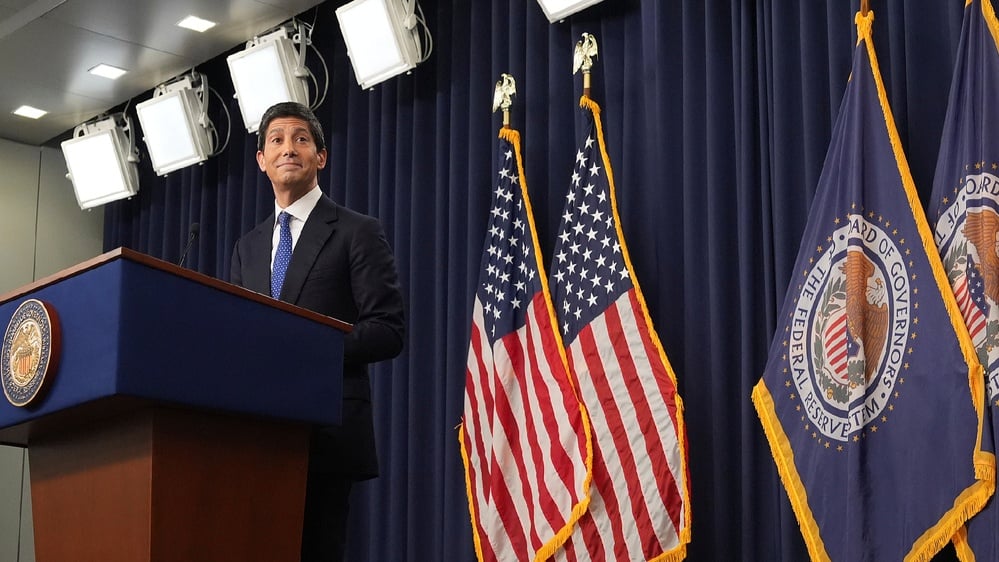

2026 © Helium Trades
Privacy Policy & Disclosure
* Disclaimer: Nothing on this website constitutes investment advice, performance data or any recommendation that any particular security, portfolio of securities, transaction or investment strategy is suitable for any specific person. Helium Trades is not responsible in any way for the accuracy
of any model predictions or price data. Any mention of a particular security and related prediction data is not a recommendation to buy or sell that security. Investments in securities involve the risk of loss. Past performance is no guarantee of future results. Helium Trades is not responsible for any of your investment decisions,
you should consult a financial expert before engaging in any transaction.
Helium Research Assistant

How can I help you today?
Ask any question about this page.