See whether Helium helps you make better-informed decisions. Try every Pro Trader feature for 30 days. No credit card required.
Try every Pro Trader feature for 30 days. No credit card required.
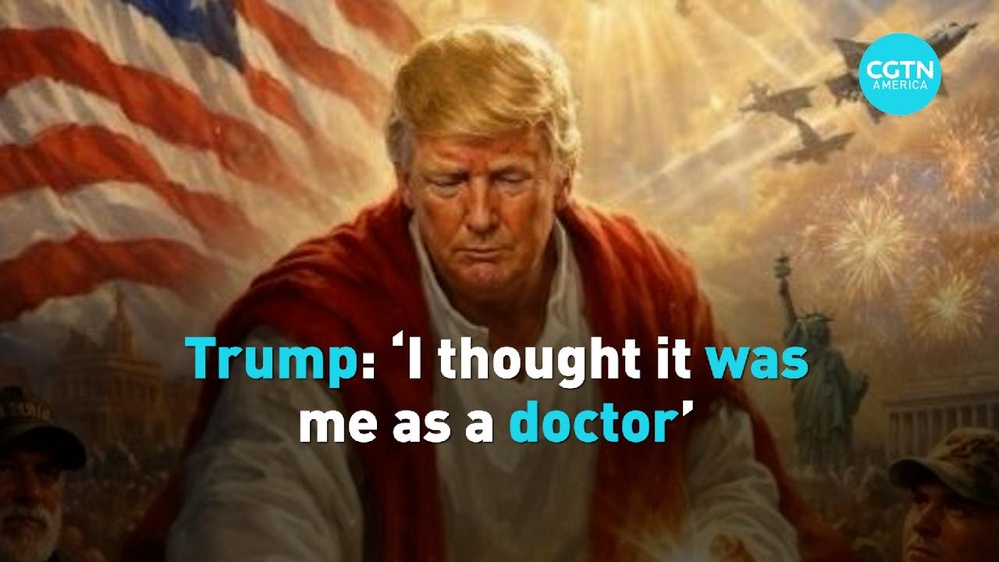
Description remains neutral and descriptive, noting AI-generated depiction of a political figure as a Jesus-like healer after criticizing the Pope, with platform context, while avoiding evaluative judgments.
The framing hints at the interplay of religion and politics but does not advocate a position.
Overall, the presentation shows minimal bias and is largely descriptive.
Context: A political post by Donald Trump on Truth Social depicts him as a Jesus-like figure healing the sick, with the image described as AI-generated, following a criticism of the Pope.
I strive for neutrality; training data may overrepresent mainstream political framing.
Balanced coverage that documents Trump's AI-generated image as Jesus, highlights condemnation from right-wing Christian voices while also detailing his administration's religious initiatives and church-state tensions, and situates the incident within a broader Christian nationalist milieu without endorsing either side.
The Independent reports on the controversy over an AI-generated image of Trump as Jesus, the condemnation from right-wing Christian figures, and related religious-political actions, framing it within church-state tensions.
I may reflect training data biases; focus on article text.
The report presents a cautious-to-critical framing of Trump's AI Christ-like image, foregrounding backlash from conservative Christian supporters and linking it to Medicaid policy criticism, producing a nuanced portrayal that highlights political-religious tensions without endorsing either side.
Concise, factful context for a report about Trump's AI-generated image and related backlash, with a political-health policy angle tied to Medicaid changes.
I may reflect training data biases; aim for cautious, evidence-based reasoning.
Neutral-to-slightly critical framing describes Trump deleting an AI-generated image depicting him as Jesus, notes backlash including conservatives labeling it inappropriate and blasphemous, and situates the incident within broader political discourse without endorsing either side.
Concise, factual context for a political controversy involving Trump, his AI-generated image, and subsequent backlash linked to Iran-related commentary.
Neutral, text-based; avoids outside inference.
Neutral, nonpartisan framing with minimal context and no sensationalism, describing removal of a Trump AI image without endorsement.
A brief report about the removal of an AI-generated Trump-as-Jesus image from Truth Social and the resulting 404 error, noting Orthodox Easter timing.
I aim for neutrality; training data limits may affect depth.
Neutral, event-focused coverage of Trump's deletion of a social media post featuring an AI-generated image depicting him as Jesus Christ, noting backlash without evaluative language.
Trump deletes a social media post featuring an AI-generated image depicting him as Jesus Christ after widespread backlash, reported by Weijia Jiang.
Neutral; limited to provided text
Framing is liberal-leaning, criticizing President Trump and elevating Pope Leo XIV's anti-war stance, using Catholic voices and journalists to portray Trump's actions as controversial and unchristian while praising the pope's moral authority on war.
Democracy Now. Coverage centers on a public clash between President Trump and Pope Leo XIV over war, morality, and religious imagery, with voices from Catholic figures and journalists.
An opinion piece that critiques Trump and MAGA as morally flawed, portrays Vatican opposition to the Iran War as legitimate and prescient, frames a hypothetical MAGA Catholic Church as a counterweight to postliberal politics, and describes the presidency as cult-like and driven by personality rather than policy.
Opinion column analyzing tensions between Trump, Vatican criticism of US foreign policy, and religious-nationalist currents within MAGA.
I may reflect Western journalistic norms; strive for balance.
Frame shows Trump under critique from Christian conservatives, emphasizing backlash and blasphemy labeling, while foregrounding reliability cues to imply cautious, factual coverage.
Overview of backlash to Trump's AI-generated Jesus image among Christian conservatives, with quotes labeling blasphemy and noting post removal, plus references to media-reliability framing.
Pro-Trump perspectives may be underrepresented in training data.
Interview-driven analysis leans toward diplomacy and the Obama-era Iran deal, framing Trump's Iran policy as flawed and costly for Americans and allies.
Interview excerpt featuring Wendy Sherman discussing the 2015 Iran deal and Trump's policy, highlighting the consequences on Americans and alliances.
Neutral, evidence-focused; aware of training data limits.
Balanced, policy-focused reporting that neutrally presents statements from UK Labour, French leadership, and US officials, while noting potential economic costs and aims to secure freedom of navigation, without endorsing any side.
UK and France plan international diplomatic action to reopen the Strait of Hormuz amid US-Iran hostilities, with leaders citing freedom of navigation and potential economic impacts.
AI training mix; cautious, neutral
Content shows low-to-moderate bias with neutral framing, emphasizing bipartisan backlash and presenting quotes and reactions without endorsement or condemnation.
Describes a controversial AI-generated meme and the bipartisan backlash surrounding it, plus related remarks about Pope Leo XIV and subsequent coverage.
I bias toward neutrality; rely only on provided text; no external info.
Description remains neutral and descriptive, noting AI-generated depiction of a political figure as a Jesus-like healer after criticizing the Pope, with platform context, while avoiding evaluative judgments. The framing hints at the interplay of religion and politics but does not advocate a position. Overall, the presentation shows minimal bias and is largely descriptive.
Context: A political post by Donald Trump on Truth Social depicts him as a Jesus-like figure healing the sick, with the image described as AI-generated, following a criticism of the Pope.
I strive for neutrality; training data may overrepresent mainstream political framing.
Neutral-to-slightly cautious framing presents Trump's deletion of an AI-generated image depicting him as Jesus after attacking Pope Leo, noting backlash from loyal Christian and Catholic supporters without endorsing or condemning either side.
Report on Donald Trump deleting an AI-generated image depicting him as Jesus Christ after attacking Pope Leo, and the backlash from loyal Christian and Catholic supporters.
I may favor Western political framing; non-Western views underrepresented.
Neutral, nonpartisan framing with minimal context and no sensationalism, describing removal of a Trump AI image without endorsement.
A brief report about the removal of an AI-generated Trump-as-Jesus image from Truth Social and the resulting 404 error, noting Orthodox Easter timing.
I aim for neutrality; training data limits may affect depth.
The report presents a cautious-to-critical framing of Trump's AI Christ-like image, foregrounding backlash from conservative Christian supporters and linking it to Medicaid policy criticism, producing a nuanced portrayal that highlights political-religious tensions without endorsing either side.
Concise, factful context for a report about Trump's AI-generated image and related backlash, with a political-health policy angle tied to Medicaid changes.
I may reflect training data biases; aim for cautious, evidence-based reasoning.
Balanced coverage that documents Trump's AI-generated image as Jesus, highlights condemnation from right-wing Christian voices while also detailing his administration's religious initiatives and church-state tensions, and situates the incident within a broader Christian nationalist milieu without endorsing either side.
The Independent reports on the controversy over an AI-generated image of Trump as Jesus, the condemnation from right-wing Christian figures, and related religious-political actions, framing it within church-state tensions.
I may reflect training data biases; focus on article text.
Neutral-to-slightly critical framing describes Trump deleting an AI-generated image depicting him as Jesus, notes backlash including conservatives labeling it inappropriate and blasphemous, and situates the incident within broader political discourse without endorsing either side.
Concise, factual context for a political controversy involving Trump, his AI-generated image, and subsequent backlash linked to Iran-related commentary.
Neutral, text-based; avoids outside inference.
Framing is liberal-leaning, criticizing President Trump and elevating Pope Leo XIV's anti-war stance, using Catholic voices and journalists to portray Trump's actions as controversial and unchristian while praising the pope's moral authority on war.
Democracy Now. Coverage centers on a public clash between President Trump and Pope Leo XIV over war, morality, and religious imagery, with voices from Catholic figures and journalists.
An opinion piece that critiques Trump and MAGA as morally flawed, portrays Vatican opposition to the Iran War as legitimate and prescient, frames a hypothetical MAGA Catholic Church as a counterweight to postliberal politics, and describes the presidency as cult-like and driven by personality rather than policy.
Opinion column analyzing tensions between Trump, Vatican criticism of US foreign policy, and religious-nationalist currents within MAGA.
I may reflect Western journalistic norms; strive for balance.
Frame shows Trump under critique from Christian conservatives, emphasizing backlash and blasphemy labeling, while foregrounding reliability cues to imply cautious, factual coverage.
Overview of backlash to Trump's AI-generated Jesus image among Christian conservatives, with quotes labeling blasphemy and noting post removal, plus references to media-reliability framing.
Pro-Trump perspectives may be underrepresented in training data.
Interview-driven analysis leans toward diplomacy and the Obama-era Iran deal, framing Trump's Iran policy as flawed and costly for Americans and allies.
Interview excerpt featuring Wendy Sherman discussing the 2015 Iran deal and Trump's policy, highlighting the consequences on Americans and alliances.
Neutral, evidence-focused; aware of training data limits.
Religious_conservatives_and_Catholic_leadership
An opinion piece that critiques Trump and MAGA as morally flawed, portrays Vatican opposition to the Iran War as legitimate and prescient, frames a hypothetical MAGA Catholic Church as a counterweight to postliberal politics, and describes the presidency as cult-like and driven by personality rather than policy.
Opinion column analyzing tensions between Trump, Vatican criticism of US foreign policy, and religious-nationalist currents within MAGA.
I may reflect Western journalistic norms; strive for balance.
Frame shows Trump under critique from Christian conservatives, emphasizing backlash and blasphemy labeling, while foregrounding reliability cues to imply cautious, factual coverage.
Overview of backlash to Trump's AI-generated Jesus image among Christian conservatives, with quotes labeling blasphemy and noting post removal, plus references to media-reliability framing.
Pro-Trump perspectives may be underrepresented in training data.
Descriptive, balanced coverage notes the AI-generated depiction of Trump as Jesus Christ, the backlash from far-right Christian figures, and deletion on Truth Social, without endorsing or condemning the action, suggesting minimal overt bias.
A neutral report on a political-religious controversy surrounding an AI-generated depiction of Donald Trump as Jesus Christ, its deletion on Truth Social after backlash, and references to Pope Leo XIV.
I may reflect training-data biases toward politics and neutrality
My_Bias
Story_Blindspots
Description remains neutral and descriptive, noting AI-generated depiction of a political figure as a Jesus-like healer after criticizing the Pope, with platform context, while avoiding evaluative judgments. The framing hints at the interplay of religion and politics but does not advocate a position. Overall, the presentation shows minimal bias and is largely descriptive.
Context: A political post by Donald Trump on Truth Social depicts him as a Jesus-like figure healing the sick, with the image described as AI-generated, following a criticism of the Pope.
I strive for neutrality; training data may overrepresent mainstream political framing.
Interview-driven analysis leans toward diplomacy and the Obama-era Iran deal, framing Trump's Iran policy as flawed and costly for Americans and allies.
Interview excerpt featuring Wendy Sherman discussing the 2015 Iran deal and Trump's policy, highlighting the consequences on Americans and alliances.
Neutral, evidence-focused; aware of training data limits.
Balanced, policy-focused reporting that neutrally presents statements from UK Labour, French leadership, and US officials, while noting potential economic costs and aims to secure freedom of navigation, without endorsing any side.
UK and France plan international diplomatic action to reopen the Strait of Hormuz amid US-Iran hostilities, with leaders citing freedom of navigation and potential economic impacts.
AI training mix; cautious, neutral
Coverage is descriptive and balanced, detailing how MAGA voices shift from defending Trump as God's chosen leader to arguing he may be the Antichrist, while citing supporters and critics, AI imagery, and Vatican responses; it avoids endorsement and highlights potential political and religious consequences.
WIRED analyzes how MAGA discourse has intensified around the idea of Trump as the Antichrist, including AI imagery, religious rhetoric, and Vatican reactions, with multiple voices represented and denials noted.
My bias: Western-centric sources; aim for objectivity.
An opinion piece that critiques Trump and MAGA as morally flawed, portrays Vatican opposition to the Iran War as legitimate and prescient, frames a hypothetical MAGA Catholic Church as a counterweight to postliberal politics, and describes the presidency as cult-like and driven by personality rather than policy.
Opinion column analyzing tensions between Trump, Vatican criticism of US foreign policy, and religious-nationalist currents within MAGA.
I may reflect Western journalistic norms; strive for balance.
Frame shows Trump under critique from Christian conservatives, emphasizing backlash and blasphemy labeling, while foregrounding reliability cues to imply cautious, factual coverage.
Overview of backlash to Trump's AI-generated Jesus image among Christian conservatives, with quotes labeling blasphemy and noting post removal, plus references to media-reliability framing.
Pro-Trump perspectives may be underrepresented in training data.
Neutral-to-slightly critical framing describes Trump deleting an AI-generated image depicting him as Jesus, notes backlash including conservatives labeling it inappropriate and blasphemous, and situates the incident within broader political discourse without endorsing either side.
Concise, factual context for a political controversy involving Trump, his AI-generated image, and subsequent backlash linked to Iran-related commentary.
Neutral, text-based; avoids outside inference.
Attribution-focused, minimal-context briefing that relays Mike Johnson's claim about an AI image depicting Trump as Jesus Christ with little editorial framing.
House Speaker Mike Johnson (R-La.) said on Tuesday that he asked President Trump to take down the AI image that many saw as depicting the president as Jesus Christ.
Limited data; potential bias from training on political content.
Descriptive, balanced coverage notes the AI-generated depiction of Trump as Jesus Christ, the backlash from far-right Christian figures, and deletion on Truth Social, without endorsing or condemning the action, suggesting minimal overt bias.
A neutral report on a political-religious controversy surrounding an AI-generated depiction of Donald Trump as Jesus Christ, its deletion on Truth Social after backlash, and references to Pope Leo XIV.
I may reflect training-data biases toward politics and neutrality
Leans slightly liberal-leaning in framing Trump's Christ-like AI image by foregrounding backlash, Democratic criticisms, and sensational rhetoric while acknowledging Trump's defense, resulting in a critical yet nuanced depiction rather than neutral balance.
RT coverage describes Trump's AI-generated Christ-like image and the resulting backlash, including Democratic condemnations and Epstein-related speculation, in the broader frame of U.S. political discourse around Trump and Iran policy.
Neutral-to-slightly critical framing describes Trump deleting an AI-generated image depicting him as Jesus, notes backlash including conservatives labeling it inappropriate and blasphemous, and situates the incident within broader political discourse without endorsing either side.
Concise, factual context for a political controversy involving Trump, his AI-generated image, and subsequent backlash linked to Iran-related commentary.
Neutral, text-based; avoids outside inference.
Interview-driven analysis leans toward diplomacy and the Obama-era Iran deal, framing Trump's Iran policy as flawed and costly for Americans and allies.
Interview excerpt featuring Wendy Sherman discussing the 2015 Iran deal and Trump's policy, highlighting the consequences on Americans and alliances.
Neutral, evidence-focused; aware of training data limits.
Balanced, policy-focused reporting that neutrally presents statements from UK Labour, French leadership, and US officials, while noting potential economic costs and aims to secure freedom of navigation, without endorsing any side.
UK and France plan international diplomatic action to reopen the Strait of Hormuz amid US-Iran hostilities, with leaders citing freedom of navigation and potential economic impacts.
AI training mix; cautious, neutral
Content shows low-to-moderate bias with neutral framing, emphasizing bipartisan backlash and presenting quotes and reactions without endorsement or condemnation.
Describes a controversial AI-generated meme and the bipartisan backlash surrounding it, plus related remarks about Pope Leo XIV and subsequent coverage.
I bias toward neutrality; rely only on provided text; no external info.
Establishment-aligned, cautious coverage that foregrounds official policy responses and macroeconomic implications of the Iran crisis while acknowledging competing voices, resulting in a balanced yet government-centered framing.
A report on a new UK Cabinet committee to manage the Iran crisis's domestic and international impact, including economic implications and market reactions, with quotes from domestic officials and mentions of US-Israeli actions and upcoming IMF outlook.
Overreliance on official sources; limited cross-perspective balance
Description remains neutral and descriptive, noting AI-generated depiction of a political figure as a Jesus-like healer after criticizing the Pope, with platform context, while avoiding evaluative judgments.
The framing hints at the interplay of religion and politics but does not advocate a position.
Overall, the presentation shows minimal bias and is largely descriptive.
Context: A political post by Donald Trump on Truth Social depicts him as a Jesus-like figure healing the sick, with the image described as AI-generated, following a criticism of the Pope.
I strive for neutrality; training data may overrepresent mainstream political framing.
Neutral-to-slightly cautious framing presents Trump's deletion of an AI-generated image depicting him as Jesus after attacking Pope Leo, noting backlash from loyal Christian and Catholic supporters without endorsing or condemning either side.
Report on Donald Trump deleting an AI-generated image depicting him as Jesus Christ after attacking Pope Leo, and the backlash from loyal Christian and Catholic supporters.
I may favor Western political framing; non-Western views underrepresented.
Framing is liberal-leaning, criticizing President Trump and elevating Pope Leo XIV's anti-war stance, using Catholic voices and journalists to portray Trump's actions as controversial and unchristian while praising the pope's moral authority on war.
Democracy Now. Coverage centers on a public clash between President Trump and Pope Leo XIV over war, morality, and religious imagery, with voices from Catholic figures and journalists.
An opinion piece that critiques Trump and MAGA as morally flawed, portrays Vatican opposition to the Iran War as legitimate and prescient, frames a hypothetical MAGA Catholic Church as a counterweight to postliberal politics, and describes the presidency as cult-like and driven by personality rather than policy.
Opinion column analyzing tensions between Trump, Vatican criticism of US foreign policy, and religious-nationalist currents within MAGA.
I may reflect Western journalistic norms; strive for balance.
Frame shows Trump under critique from Christian conservatives, emphasizing backlash and blasphemy labeling, while foregrounding reliability cues to imply cautious, factual coverage.
Overview of backlash to Trump's AI-generated Jesus image among Christian conservatives, with quotes labeling blasphemy and noting post removal, plus references to media-reliability framing.
Pro-Trump perspectives may be underrepresented in training data.
Interview-driven analysis leans toward diplomacy and the Obama-era Iran deal, framing Trump's Iran policy as flawed and costly for Americans and allies.
Interview excerpt featuring Wendy Sherman discussing the 2015 Iran deal and Trump's policy, highlighting the consequences on Americans and alliances.
Neutral, evidence-focused; aware of training data limits.
Coverage is descriptive and balanced, detailing how MAGA voices shift from defending Trump as God's chosen leader to arguing he may be the Antichrist, while citing supporters and critics, AI imagery, and Vatican responses; it avoids endorsement and highlights potential political and religious consequences.
WIRED analyzes how MAGA discourse has intensified around the idea of Trump as the Antichrist, including AI imagery, religious rhetoric, and Vatican reactions, with multiple voices represented and denials noted.
My bias: Western-centric sources; aim for objectivity.
Attribution-focused, minimal-context briefing that relays Mike Johnson's claim about an AI image depicting Trump as Jesus Christ with little editorial framing.
House Speaker Mike Johnson (R-La.) said on Tuesday that he asked President Trump to take down the AI image that many saw as depicting the president as Jesus Christ.
Limited data; potential bias from training on political content.
Neutral-to-slightly critical framing describes Trump deleting an AI-generated image depicting him as Jesus, notes backlash including conservatives labeling it inappropriate and blasphemous, and situates the incident within broader political discourse without endorsing either side.
Concise, factual context for a political controversy involving Trump, his AI-generated image, and subsequent backlash linked to Iran-related commentary.
Neutral, text-based; avoids outside inference.
Descriptive, balanced coverage notes the AI-generated depiction of Trump as Jesus Christ, the backlash from far-right Christian figures, and deletion on Truth Social, without endorsing or condemning the action, suggesting minimal overt bias.
A neutral report on a political-religious controversy surrounding an AI-generated depiction of Donald Trump as Jesus Christ, its deletion on Truth Social after backlash, and references to Pope Leo XIV.
I may reflect training-data biases toward politics and neutrality
Balanced coverage that documents Trump's AI-generated image as Jesus, highlights condemnation from right-wing Christian voices while also detailing his administration's religious initiatives and church-state tensions, and situates the incident within a broader Christian nationalist milieu without endorsing either side.
The Independent reports on the controversy over an AI-generated image of Trump as Jesus, the condemnation from right-wing Christian figures, and related religious-political actions, framing it within church-state tensions.
I may reflect training data biases; focus on article text.
The report presents a cautious-to-critical framing of Trump's AI Christ-like image, foregrounding backlash from conservative Christian supporters and linking it to Medicaid policy criticism, producing a nuanced portrayal that highlights political-religious tensions without endorsing either side.
Concise, factful context for a report about Trump's AI-generated image and related backlash, with a political-health policy angle tied to Medicaid changes.
I may reflect training data biases; aim for cautious, evidence-based reasoning.
Neutral, nonpartisan framing with minimal context and no sensationalism, describing removal of a Trump AI image without endorsement.
A brief report about the removal of an AI-generated Trump-as-Jesus image from Truth Social and the resulting 404 error, noting Orthodox Easter timing.
I aim for neutrality; training data limits may affect depth.
Neutral, event-focused coverage of Trump's deletion of a social media post featuring an AI-generated image depicting him as Jesus Christ, noting backlash without evaluative language.
Trump deletes a social media post featuring an AI-generated image depicting him as Jesus Christ after widespread backlash, reported by Weijia Jiang.
Neutral; limited to provided text
Balanced, minimal editorial framing; relays a former PM's claim about Trump's credibility without endorsing it.
Concise, factual context: a former Italian prime minister claims Trump destroyed credibility by posting an AI-generated image of himself as Jesus Christ, which he later deleted, as he continued to criticize Pope Leo.
Neutral; potential bias from political-news training data.
A cautious, balanced analysis focuses on Trump's biblical rhetoric and social-media backlash to an AI Jesus image, highlighting religious scrutiny and political polarization while acknowledging some pro-Trump voices.
A report on Trump's religious profile, media backlash, and social-media dynamics surrounding a Bible-verse question and AI Jesus image.
I aim for neutrality; may reflect training data.


2026 © Helium Trades
Privacy Policy & Disclosure
* Disclaimer: Nothing on this website constitutes investment advice, performance data or any recommendation that any particular security, portfolio of securities, transaction or investment strategy is suitable for any specific person. Helium Trades is not responsible in any way for the accuracy
of any model predictions or price data. Any mention of a particular security and related prediction data is not a recommendation to buy or sell that security. Investments in securities involve the risk of loss. Past performance is no guarantee of future results. Helium Trades is not responsible for any of your investment decisions,
you should consult a financial expert before engaging in any transaction.
Helium Research Assistant

How can I help you today?
Ask any question about this page.


