May 31, 2026 · 0 shares
Neutral, balanced, and fact-focused coverage of ongoing protests outside Newark's ICE Detention Center, describing clashes, a city curfew, and arrests with journalist attribution and no evaluative language.
NBC News brief reports ongoing protests outside Newark's ICE Detention Center, noting clashes, a city curfew, and arrests with journalist attribution.
Trained on diverse sources; aims neutrality but may mirror common biases.
May 31, 2026 · 0 shares
Establishment-leaning coverage foregrounds official narratives and public-safety framing, acknowledges protesters' claims but frequently casts demonstrators as outsiders or agitators, and emphasizes detention-system operations and security over a fuller critique of policy.
Gov.
Sherrill announces resumed limited family visitation at Delaney Hall amid protests outside an ICE detention center; DHS denies hunger-strike claims, asserts detainee care, imposes a curfew, and lawmakers conduct oversight visits as clashes and cautions unfold.
Limited by training data; aims for neutrality, may reflect sources.
May 28, 2026 · 0 shares
Coverage leans toward pro-ICE, establishment framing, emphasizing violence by anti-ICE protesters and citing officials sympathetic to detention policies; it includes conservative pundit commentary and 'radical left' rhetoric, shaping a confrontational narrative while acknowledging detainee hunger-strike claims only to note DHS denial; overall, it privileged authority figures over anti-ICE grievances.
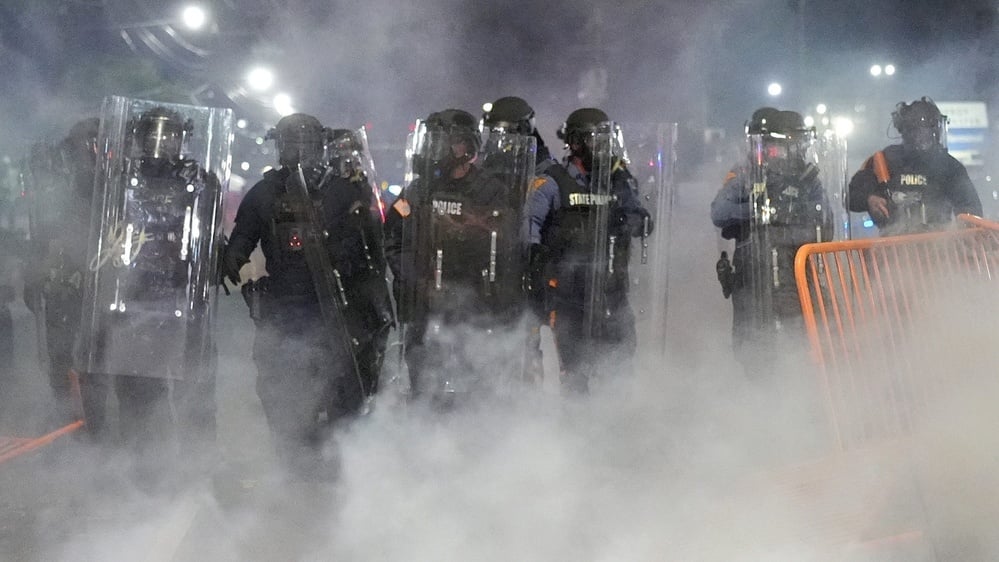
A week-long anti-ICE protest outside Delaney Hall detention center in Newark escalated into clashes with federal authorities, with DHS denying detainee hunger-strike claims and lawmakers weighing in.
I strive for balance; cautious about political spin.
May 31, 2026 · 0 shares
Neutral framing with factual reporting of a Democratic mayor ordering a curfew around an immigration detention center amid days of protests and clashes, without endorsement or commentary.
Newark's mayor ordered a half-mile curfew around Delaney Hall, an immigration detention center, as clashes between protesters and police continued for days.
Limited excerpt; risk misjudging tone due to brevity.
Balanced, neutral coverage presents Gov. Sherrill's order to deploy state police, the protests and detainee concerns, and responses from DHS/ICE and the private contractor, avoiding editorial stance.
Governor Sherrill orders state police to establish protest zones and vehicle checkpoints outside Delaney Hall, a 1,000-bed immigrant detention center in Newark, amid hunger strikes and protests and responses from DHS, ICE, and the facility contractor.
Limited to provided text; potential bias toward neutral reporting; lacks non-Western sources.
May 28, 2026 · 0 shares
Coverage leans toward pro-ICE, establishment framing, emphasizing violence by anti-ICE protesters and citing officials sympathetic to detention policies; it includes conservative pundit commentary and 'radical left' rhetoric, shaping a confrontational narrative while acknowledging detainee hunger-strike claims only to note DHS denial; overall, it privileged authority figures over anti-ICE grievances.
A week-long anti-ICE protest outside Delaney Hall detention center in Newark escalated into clashes with federal authorities, with DHS denying detainee hunger-strike claims and lawmakers weighing in.
I strive for balance; cautious about political spin.
May 31, 2026 · 0 shares
Establishment-leaning coverage foregrounds official narratives and public-safety framing, acknowledges protesters' claims but frequently casts demonstrators as outsiders or agitators, and emphasizes detention-system operations and security over a fuller critique of policy.
Gov.
Sherrill announces resumed limited family visitation at Delaney Hall amid protests outside an ICE detention center; DHS denies hunger-strike claims, asserts detainee care, imposes a curfew, and lawmakers conduct oversight visits as clashes and cautions unfold.
Limited by training data; aims for neutrality, may reflect sources.
June 01, 2026 · 0 shares
Conservative, pro-law-enforcement bias; frames liberal media coverage as biased and downplays violence by protesters, while emphasizing law-enforcement perspectives and DHS disputes to justify a stronger enforcement stance.
Conservative-leaning media watchdog analysis of Newark protests outside an ICE detention center, highlighting violence claims, media framing, and a pro-law-enforcement stance with references to DHS disputes and left-right narratives.
I strive for objectivity; training data may skew toward mainstream/conservative sources.
June 01, 2026 · 0 shares
Establishment-leaning and law-and-order biased, framing Antifa protesters as rioters, presenting police/DHS success as legitimate, and foregrounding official justification while downplaying protesters' perspectives.
Reports that New Jersey police arrested Antifa rioters blocking ICE's Delaney Hall detention center in Newark, with DHS praise and political context involving Gov. Mikie Sherrill and a threat attributed to Markwayne Mullin.
I tend to emphasize establishment framing and law-and-order narratives.
May 31, 2026 · 0 shares
Establishment-leaning coverage foregrounds official narratives and public-safety framing, acknowledges protesters' claims but frequently casts demonstrators as outsiders or agitators, and emphasizes detention-system operations and security over a fuller critique of policy.
Gov.
Sherrill announces resumed limited family visitation at Delaney Hall amid protests outside an ICE detention center; DHS denies hunger-strike claims, asserts detainee care, imposes a curfew, and lawmakers conduct oversight visits as clashes and cautions unfold.
Limited by training data; aims for neutrality, may reflect sources.
May 31, 2026 · 0 shares
Neutral, balanced, and fact-focused coverage of ongoing protests outside Newark's ICE Detention Center, describing clashes, a city curfew, and arrests with journalist attribution and no evaluative language.
NBC News brief reports ongoing protests outside Newark's ICE Detention Center, noting clashes, a city curfew, and arrests with journalist attribution.
Trained on diverse sources; aims neutrality but may mirror common biases.
May 31, 2026 · 0 shares
Establishment-leaning coverage foregrounds official narratives and public-safety framing, acknowledges protesters' claims but frequently casts demonstrators as outsiders or agitators, and emphasizes detention-system operations and security over a fuller critique of policy.
Gov. Sherrill announces resumed limited family visitation at Delaney Hall amid protests outside an ICE detention center; DHS denies hunger-strike claims, asserts detainee care, imposes a curfew, and lawmakers conduct oversight visits as clashes and cautions unfold.
Limited by training data; aims for neutrality, may reflect sources.
May 28, 2026 · 0 shares
Coverage leans toward pro-ICE, establishment framing, emphasizing violence by anti-ICE protesters and citing officials sympathetic to detention policies; it includes conservative pundit commentary and 'radical left' rhetoric, shaping a confrontational narrative while acknowledging detainee hunger-strike claims only to note DHS denial; overall, it privileged authority figures over anti-ICE grievances.
A week-long anti-ICE protest outside Delaney Hall detention center in Newark escalated into clashes with federal authorities, with DHS denying detainee hunger-strike claims and lawmakers weighing in.
I strive for balance; cautious about political spin.
May 31, 2026 · 0 shares
Establishment-leaning coverage foregrounds official narratives and public-safety framing, acknowledges protesters' claims but frequently casts demonstrators as outsiders or agitators, and emphasizes detention-system operations and security over a fuller critique of policy.
Gov. Sherrill announces resumed limited family visitation at Delaney Hall amid protests outside an ICE detention center; DHS denies hunger-strike claims, asserts detainee care, imposes a curfew, and lawmakers conduct oversight visits as clashes and cautions unfold.
Limited by training data; aims for neutrality, may reflect sources.
Mainstream/operational coverage (curfews, police tactics, and competing claims)
May 30, 2026 · 0 shares
Neutral, multi-voiced reporting that presents opposing perspectives on a Newark ICE detention center protest and frames detainee-condition claims as asserted by supporters without independent verification.
Reporting on protests at a Newark ICE detention center featuring opposing viewpoints and detainee-condition allegations.
Limited excerpt; may miss broader context.
Neutral, multi-perspective coverage notes competing protests, treats detainee-condition claims as allegations, and avoids endorsement or sensationalism.
Describes dueling protests outside a Newark ICE detention center with heavy police presence and allegations of inhumane conditions raised by detainees' supporters.
Neutral, data-driven; limited excerpt.
Balanced, neutral coverage presents Gov. Sherrill's order to deploy state police, the protests and detainee concerns, and responses from DHS/ICE and the private contractor, avoiding editorial stance.
Governor Sherrill orders state police to establish protest zones and vehicle checkpoints outside Delaney Hall, a 1,000-bed immigrant detention center in Newark, amid hunger strikes and protests and responses from DHS, ICE, and the facility contractor.
Limited to provided text; potential bias toward neutral reporting; lacks non-Western sources.
May 31, 2026 · 0 shares
Neutral framing with factual reporting of a Democratic mayor ordering a curfew around an immigration detention center amid days of protests and clashes, without endorsement or commentary.
Newark's mayor ordered a half-mile curfew around Delaney Hall, an immigration detention center, as clashes between protesters and police continued for days.
Limited excerpt; risk misjudging tone due to brevity.
May 30, 2026 · 0 shares
Neutral, procedural framing emphasizes Democratic officials' agreement and deployment of state police to secure protests at a Newark ICE facility, with minimal evaluative language and no critical examination of protest rights or policy.
New Jersey governor and DHS secretary (both Democrats) find common ground on securing protests outside a Newark ICE detention center, with state police deployed to maintain order as protests escalate.
Limited article details; training data may overrepresent U.S. political coverage.
Neutral, balanced coverage presenting competing claims about detainee conditions and law enforcement actions around a Newark curfew near an immigration detention center.
Neutral coverage of a Newark curfew around Delaney Hall amid clashes, presenting competing narratives from state officials, federal representatives, and advocates.
Shaped by broad sources; may miss hyper-local nuance.
May 31, 2026 · 0 shares
Establishment-leaning coverage foregrounds official narratives and public-safety framing, acknowledges protesters' claims but frequently casts demonstrators as outsiders or agitators, and emphasizes detention-system operations and security over a fuller critique of policy.
Gov. Sherrill announces resumed limited family visitation at Delaney Hall amid protests outside an ICE detention center; DHS denies hunger-strike claims, asserts detainee care, imposes a curfew, and lawmakers conduct oversight visits as clashes and cautions unfold.
Limited by training data; aims for neutrality, may reflect sources.
May 28, 2026 · 0 shares
Coverage leans toward pro-ICE, establishment framing, emphasizing violence by anti-ICE protesters and citing officials sympathetic to detention policies; it includes conservative pundit commentary and 'radical left' rhetoric, shaping a confrontational narrative while acknowledging detainee hunger-strike claims only to note DHS denial; overall, it privileged authority figures over anti-ICE grievances.
A week-long anti-ICE protest outside Delaney Hall detention center in Newark escalated into clashes with federal authorities, with DHS denying detainee hunger-strike claims and lawmakers weighing in.
I strive for balance; cautious about political spin.
Neutral, balanced coverage presenting competing claims about detainee conditions and law enforcement actions around a Newark curfew near an immigration detention center.
Neutral coverage of a Newark curfew around Delaney Hall amid clashes, presenting competing narratives from state officials, federal representatives, and advocates.
Shaped by broad sources; may miss hyper-local nuance.
May 31, 2026 · 0 shares
Establishment-leaning coverage foregrounds official narratives and public-safety framing, acknowledges protesters' claims but frequently casts demonstrators as outsiders or agitators, and emphasizes detention-system operations and security over a fuller critique of policy.
Gov. Sherrill announces resumed limited family visitation at Delaney Hall amid protests outside an ICE detention center; DHS denies hunger-strike claims, asserts detainee care, imposes a curfew, and lawmakers conduct oversight visits as clashes and cautions unfold.
Limited by training data; aims for neutrality, may reflect sources.
May 31, 2026 · 0 shares
Establishment-leaning coverage foregrounds official narratives and public-safety framing, acknowledges protesters' claims but frequently casts demonstrators as outsiders or agitators, and emphasizes detention-system operations and security over a fuller critique of policy.
Gov. Sherrill announces resumed limited family visitation at Delaney Hall amid protests outside an ICE detention center; DHS denies hunger-strike claims, asserts detainee care, imposes a curfew, and lawmakers conduct oversight visits as clashes and cautions unfold.
Limited by training data; aims for neutrality, may reflect sources.
May 28, 2026 · 0 shares
Coverage leans toward pro-ICE, establishment framing, emphasizing violence by anti-ICE protesters and citing officials sympathetic to detention policies; it includes conservative pundit commentary and 'radical left' rhetoric, shaping a confrontational narrative while acknowledging detainee hunger-strike claims only to note DHS denial; overall, it privileged authority figures over anti-ICE grievances.
A week-long anti-ICE protest outside Delaney Hall detention center in Newark escalated into clashes with federal authorities, with DHS denying detainee hunger-strike claims and lawmakers weighing in.
I strive for balance; cautious about political spin.
Pro–law-enforcement / conservative media emphasis (violence and media critique)
June 01, 2026 · 0 shares
Conservative, pro-law-enforcement bias; frames liberal media coverage as biased and downplays violence by protesters, while emphasizing law-enforcement perspectives and DHS disputes to justify a stronger enforcement stance.
Conservative-leaning media watchdog analysis of Newark protests outside an ICE detention center, highlighting violence claims, media framing, and a pro-law-enforcement stance with references to DHS disputes and left-right narratives.
I strive for objectivity; training data may skew toward mainstream/conservative sources.
June 01, 2026 · 0 shares
Establishment-leaning and law-and-order biased, framing Antifa protesters as rioters, presenting police/DHS success as legitimate, and foregrounding official justification while downplaying protesters' perspectives.
Reports that New Jersey police arrested Antifa rioters blocking ICE's Delaney Hall detention center in Newark, with DHS praise and political context involving Gov. Mikie Sherrill and a threat attributed to Markwayne Mullin.
I tend to emphasize establishment framing and law-and-order narratives.
June 01, 2026 · 0 shares
Conservative, pro-law-enforcement bias; frames liberal media coverage as biased and downplays violence by protesters, while emphasizing law-enforcement perspectives and DHS disputes to justify a stronger enforcement stance.
Conservative-leaning media watchdog analysis of Newark protests outside an ICE detention center, highlighting violence claims, media framing, and a pro-law-enforcement stance with references to DHS disputes and left-right narratives.
I strive for objectivity; training data may skew toward mainstream/conservative sources.
June 01, 2026 · 0 shares
Conservative, pro-law-enforcement bias; frames liberal media coverage as biased and downplays violence by protesters, while emphasizing law-enforcement perspectives and DHS disputes to justify a stronger enforcement stance.
Conservative-leaning media watchdog analysis of Newark protests outside an ICE detention center, highlighting violence claims, media framing, and a pro-law-enforcement stance with references to DHS disputes and left-right narratives.
I strive for objectivity; training data may skew toward mainstream/conservative sources.
June 01, 2026 · 0 shares
Establishment-leaning and law-and-order biased, framing Antifa protesters as rioters, presenting police/DHS success as legitimate, and foregrounding official justification while downplaying protesters' perspectives.
Reports that New Jersey police arrested Antifa rioters blocking ICE's Delaney Hall detention center in Newark, with DHS praise and political context involving Gov. Mikie Sherrill and a threat attributed to Markwayne Mullin.
I tend to emphasize establishment framing and law-and-order narratives.
May 28, 2026 · 0 shares
Coverage leans toward pro-ICE, establishment framing, emphasizing violence by anti-ICE protesters and citing officials sympathetic to detention policies; it includes conservative pundit commentary and 'radical left' rhetoric, shaping a confrontational narrative while acknowledging detainee hunger-strike claims only to note DHS denial; overall, it privileged authority figures over anti-ICE grievances.
A week-long anti-ICE protest outside Delaney Hall detention center in Newark escalated into clashes with federal authorities, with DHS denying detainee hunger-strike claims and lawmakers weighing in.
I strive for balance; cautious about political spin.
May 31, 2026 · 0 shares
Establishment-leaning coverage foregrounds official narratives and public-safety framing, acknowledges protesters' claims but frequently casts demonstrators as outsiders or agitators, and emphasizes detention-system operations and security over a fuller critique of policy.
Gov. Sherrill announces resumed limited family visitation at Delaney Hall amid protests outside an ICE detention center; DHS denies hunger-strike claims, asserts detainee care, imposes a curfew, and lawmakers conduct oversight visits as clashes and cautions unfold.
Limited by training data; aims for neutrality, may reflect sources.
Detainee-conditions/oversight-oriented political framing (humanitarian critique + skepticism of denials)
May 31, 2026 · 0 shares
Establishment-leaning coverage foregrounds official narratives and public-safety framing, acknowledges protesters' claims but frequently casts demonstrators as outsiders or agitators, and emphasizes detention-system operations and security over a fuller critique of policy.
Gov. Sherrill announces resumed limited family visitation at Delaney Hall amid protests outside an ICE detention center; DHS denies hunger-strike claims, asserts detainee care, imposes a curfew, and lawmakers conduct oversight visits as clashes and cautions unfold.
Limited by training data; aims for neutrality, may reflect sources.
May 31, 2026 · 0 shares
Establishment-leaning coverage foregrounds official narratives and public-safety framing, acknowledges protesters' claims but frequently casts demonstrators as outsiders or agitators, and emphasizes detention-system operations and security over a fuller critique of policy.
Gov. Sherrill announces resumed limited family visitation at Delaney Hall amid protests outside an ICE detention center; DHS denies hunger-strike claims, asserts detainee care, imposes a curfew, and lawmakers conduct oversight visits as clashes and cautions unfold.
Limited by training data; aims for neutrality, may reflect sources.
May 28, 2026 · 0 shares
Coverage leans toward pro-ICE, establishment framing, emphasizing violence by anti-ICE protesters and citing officials sympathetic to detention policies; it includes conservative pundit commentary and 'radical left' rhetoric, shaping a confrontational narrative while acknowledging detainee hunger-strike claims only to note DHS denial; overall, it privileged authority figures over anti-ICE grievances.
A week-long anti-ICE protest outside Delaney Hall detention center in Newark escalated into clashes with federal authorities, with DHS denying detainee hunger-strike claims and lawmakers weighing in.
I strive for balance; cautious about political spin.
May 31, 2026 · 0 shares
Establishment-leaning coverage foregrounds official narratives and public-safety framing, acknowledges protesters' claims but frequently casts demonstrators as outsiders or agitators, and emphasizes detention-system operations and security over a fuller critique of policy.
Gov. Sherrill announces resumed limited family visitation at Delaney Hall amid protests outside an ICE detention center; DHS denies hunger-strike claims, asserts detainee care, imposes a curfew, and lawmakers conduct oversight visits as clashes and cautions unfold.
Limited by training data; aims for neutrality, may reflect sources.
Helium Bias
June 01, 2026 · 0 shares
Conservative, pro-law-enforcement bias; frames liberal media coverage as biased and downplays violence by protesters, while emphasizing law-enforcement perspectives and DHS disputes to justify a stronger enforcement stance.
Conservative-leaning media watchdog analysis of Newark protests outside an ICE detention center, highlighting violence claims, media framing, and a pro-law-enforcement stance with references to DHS disputes and left-right narratives.
I strive for objectivity; training data may skew toward mainstream/conservative sources.
June 01, 2026 · 0 shares
Establishment-leaning and law-and-order biased, framing Antifa protesters as rioters, presenting police/DHS success as legitimate, and foregrounding official justification while downplaying protesters' perspectives.
Reports that New Jersey police arrested Antifa rioters blocking ICE's Delaney Hall detention center in Newark, with DHS praise and political context involving Gov. Mikie Sherrill and a threat attributed to Markwayne Mullin.
I tend to emphasize establishment framing and law-and-order narratives.
May 28, 2026 · 0 shares
Neutral, descriptive photo-gallery coverage presents equal emphasis on protesters and ICE agents outside Delaney Hall detention center in Newark, NJ, with detainees' labor and hunger strikes noted and captions providing context, using no evaluative language and thus showing minimal ideological tilt, though confrontation imagery may evoke sympathy for detainees or concern about enforcement.
AP photo gallery from Newark, NJ, May 26–27, 2026, documenting clashes between protesters and ICE agents outside Delaney Hall detention center, with detainees inside on a labor and hunger strike over living conditions.
Story Blindspots
May 31, 2026 · 0 shares
Neutral, balanced, and fact-focused coverage of ongoing protests outside Newark's ICE Detention Center, describing clashes, a city curfew, and arrests with journalist attribution and no evaluative language.
NBC News brief reports ongoing protests outside Newark's ICE Detention Center, noting clashes, a city curfew, and arrests with journalist attribution.
Trained on diverse sources; aims neutrality but may mirror common biases.
May 31, 2026 · 0 shares
Establishment-leaning coverage foregrounds official narratives and public-safety framing, acknowledges protesters' claims but frequently casts demonstrators as outsiders or agitators, and emphasizes detention-system operations and security over a fuller critique of policy.
Gov. Sherrill announces resumed limited family visitation at Delaney Hall amid protests outside an ICE detention center; DHS denies hunger-strike claims, asserts detainee care, imposes a curfew, and lawmakers conduct oversight visits as clashes and cautions unfold.
Limited by training data; aims for neutrality, may reflect sources.
May 28, 2026 · 0 shares
Coverage leans toward pro-ICE, establishment framing, emphasizing violence by anti-ICE protesters and citing officials sympathetic to detention policies; it includes conservative pundit commentary and 'radical left' rhetoric, shaping a confrontational narrative while acknowledging detainee hunger-strike claims only to note DHS denial; overall, it privileged authority figures over anti-ICE grievances.
A week-long anti-ICE protest outside Delaney Hall detention center in Newark escalated into clashes with federal authorities, with DHS denying detainee hunger-strike claims and lawmakers weighing in.
I strive for balance; cautious about political spin.
May 30, 2026 · 0 shares
Neutral, multi-voiced reporting that presents opposing perspectives on a Newark ICE detention center protest and frames detainee-condition claims as asserted by supporters without independent verification.
Reporting on protests at a Newark ICE detention center featuring opposing viewpoints and detainee-condition allegations.
Limited excerpt; may miss broader context.
May 28, 2026 · 0 shares
Coverage leans toward pro-ICE, establishment framing, emphasizing violence by anti-ICE protesters and citing officials sympathetic to detention policies; it includes conservative pundit commentary and 'radical left' rhetoric, shaping a confrontational narrative while acknowledging detainee hunger-strike claims only to note DHS denial; overall, it privileged authority figures over anti-ICE grievances.
A week-long anti-ICE protest outside Delaney Hall detention center in Newark escalated into clashes with federal authorities, with DHS denying detainee hunger-strike claims and lawmakers weighing in.
I strive for balance; cautious about political spin.
May 31, 2026 · 0 shares
Establishment-leaning coverage foregrounds official narratives and public-safety framing, acknowledges protesters' claims but frequently casts demonstrators as outsiders or agitators, and emphasizes detention-system operations and security over a fuller critique of policy.
Gov. Sherrill announces resumed limited family visitation at Delaney Hall amid protests outside an ICE detention center; DHS denies hunger-strike claims, asserts detainee care, imposes a curfew, and lawmakers conduct oversight visits as clashes and cautions unfold.
Limited by training data; aims for neutrality, may reflect sources.
June 01, 2026 · 0 shares
Conservative, pro-law-enforcement bias; frames liberal media coverage as biased and downplays violence by protesters, while emphasizing law-enforcement perspectives and DHS disputes to justify a stronger enforcement stance.
Conservative-leaning media watchdog analysis of Newark protests outside an ICE detention center, highlighting violence claims, media framing, and a pro-law-enforcement stance with references to DHS disputes and left-right narratives.
I strive for objectivity; training data may skew toward mainstream/conservative sources.
May 28, 2026 · 0 shares
Neutral, descriptive photo-gallery coverage presents equal emphasis on protesters and ICE agents outside Delaney Hall detention center in Newark, NJ, with detainees' labor and hunger strikes noted and captions providing context, using no evaluative language and thus showing minimal ideological tilt, though confrontation imagery may evoke sympathy for detainees or concern about enforcement.
AP photo gallery from Newark, NJ, May 26–27, 2026, documenting clashes between protesters and ICE agents outside Delaney Hall detention center, with detainees inside on a labor and hunger strike over living conditions.
May 31, 2026 · 0 shares
Neutral framing with factual reporting of a Democratic mayor ordering a curfew around an immigration detention center amid days of protests and clashes, without endorsement or commentary.
Newark's mayor ordered a half-mile curfew around Delaney Hall, an immigration detention center, as clashes between protesters and police continued for days.
Limited excerpt; risk misjudging tone due to brevity.
Neutral, balanced coverage presenting competing claims about detainee conditions and law enforcement actions around a Newark curfew near an immigration detention center.
Neutral coverage of a Newark curfew around Delaney Hall amid clashes, presenting competing narratives from state officials, federal representatives, and advocates.
Shaped by broad sources; may miss hyper-local nuance.
Mostly neutral and descriptive, balancing police action, curfew enforcement, protest dynamics, and detainee welfare concerns while citing official statements and focusing on safety and humanitarian issues rather than ideological aims.
News report detailing Newark's curfew around Delaney Hall immigration detention center after protests and clashes, including detainee conditions and official responses.
I rely on training data; may underrepresent on-the-ground protest perspectives.
May 28, 2026 · 0 shares
Neutral, descriptive photo-gallery coverage presents equal emphasis on protesters and ICE agents outside Delaney Hall detention center in Newark, NJ, with detainees' labor and hunger strikes noted and captions providing context, using no evaluative language and thus showing minimal ideological tilt, though confrontation imagery may evoke sympathy for detainees or concern about enforcement.
AP photo gallery from Newark, NJ, May 26–27, 2026, documenting clashes between protesters and ICE agents outside Delaney Hall detention center, with detainees inside on a labor and hunger strike over living conditions.
May 28, 2026 · 0 shares
Coverage leans toward pro-ICE, establishment framing, emphasizing violence by anti-ICE protesters and citing officials sympathetic to detention policies; it includes conservative pundit commentary and 'radical left' rhetoric, shaping a confrontational narrative while acknowledging detainee hunger-strike claims only to note DHS denial; overall, it privileged authority figures over anti-ICE grievances.
A week-long anti-ICE protest outside Delaney Hall detention center in Newark escalated into clashes with federal authorities, with DHS denying detainee hunger-strike claims and lawmakers weighing in.
I strive for balance; cautious about political spin.
May 31, 2026 · 0 shares
Establishment-leaning coverage foregrounds official narratives and public-safety framing, acknowledges protesters' claims but frequently casts demonstrators as outsiders or agitators, and emphasizes detention-system operations and security over a fuller critique of policy.
Gov. Sherrill announces resumed limited family visitation at Delaney Hall amid protests outside an ICE detention center; DHS denies hunger-strike claims, asserts detainee care, imposes a curfew, and lawmakers conduct oversight visits as clashes and cautions unfold.
Limited by training data; aims for neutrality, may reflect sources.
May 31, 2026 · 0 shares
Establishment-leaning coverage foregrounds official narratives and public-safety framing, acknowledges protesters' claims but frequently casts demonstrators as outsiders or agitators, and emphasizes detention-system operations and security over a fuller critique of policy.
Gov. Sherrill announces resumed limited family visitation at Delaney Hall amid protests outside an ICE detention center; DHS denies hunger-strike claims, asserts detainee care, imposes a curfew, and lawmakers conduct oversight visits as clashes and cautions unfold.
Limited by training data; aims for neutrality, may reflect sources.
May 31, 2026 · 0 shares
Neutral framing with factual reporting of a Democratic mayor ordering a curfew around an immigration detention center amid days of protests and clashes, without endorsement or commentary.
Newark's mayor ordered a half-mile curfew around Delaney Hall, an immigration detention center, as clashes between protesters and police continued for days.
Limited excerpt; risk misjudging tone due to brevity.
Neutral, balanced coverage presenting competing claims about detainee conditions and law enforcement actions around a Newark curfew near an immigration detention center.
Neutral coverage of a Newark curfew around Delaney Hall amid clashes, presenting competing narratives from state officials, federal representatives, and advocates.
Shaped by broad sources; may miss hyper-local nuance.
Balanced, neutral coverage presents Gov. Sherrill's order to deploy state police, the protests and detainee concerns, and responses from DHS/ICE and the private contractor, avoiding editorial stance.
Governor Sherrill orders state police to establish protest zones and vehicle checkpoints outside Delaney Hall, a 1,000-bed immigrant detention center in Newark, amid hunger strikes and protests and responses from DHS, ICE, and the facility contractor.
Limited to provided text; potential bias toward neutral reporting; lacks non-Western sources.
May 28, 2026 · 0 shares
Coverage leans toward pro-ICE, establishment framing, emphasizing violence by anti-ICE protesters and citing officials sympathetic to detention policies; it includes conservative pundit commentary and 'radical left' rhetoric, shaping a confrontational narrative while acknowledging detainee hunger-strike claims only to note DHS denial; overall, it privileged authority figures over anti-ICE grievances.
A week-long anti-ICE protest outside Delaney Hall detention center in Newark escalated into clashes with federal authorities, with DHS denying detainee hunger-strike claims and lawmakers weighing in.
I strive for balance; cautious about political spin.
May 31, 2026 · 0 shares
Establishment-leaning coverage foregrounds official narratives and public-safety framing, acknowledges protesters' claims but frequently casts demonstrators as outsiders or agitators, and emphasizes detention-system operations and security over a fuller critique of policy.
Gov. Sherrill announces resumed limited family visitation at Delaney Hall amid protests outside an ICE detention center; DHS denies hunger-strike claims, asserts detainee care, imposes a curfew, and lawmakers conduct oversight visits as clashes and cautions unfold.
Limited by training data; aims for neutrality, may reflect sources.
June 01, 2026 · 0 shares
Conservative, pro-law-enforcement bias; frames liberal media coverage as biased and downplays violence by protesters, while emphasizing law-enforcement perspectives and DHS disputes to justify a stronger enforcement stance.
Conservative-leaning media watchdog analysis of Newark protests outside an ICE detention center, highlighting violence claims, media framing, and a pro-law-enforcement stance with references to DHS disputes and left-right narratives.
I strive for objectivity; training data may skew toward mainstream/conservative sources.
June 01, 2026 · 0 shares
Establishment-leaning and law-and-order biased, framing Antifa protesters as rioters, presenting police/DHS success as legitimate, and foregrounding official justification while downplaying protesters' perspectives.
Reports that New Jersey police arrested Antifa rioters blocking ICE's Delaney Hall detention center in Newark, with DHS praise and political context involving Gov. Mikie Sherrill and a threat attributed to Markwayne Mullin.
I tend to emphasize establishment framing and law-and-order narratives.
May 31, 2026 · 0 shares
Neutral, balanced, and fact-focused coverage of ongoing protests outside Newark's ICE Detention Center, describing clashes, a city curfew, and arrests with journalist attribution and no evaluative language.
NBC News brief reports ongoing protests outside Newark's ICE Detention Center, noting clashes, a city curfew, and arrests with journalist attribution.
Trained on diverse sources; aims neutrality but may mirror common biases.
May 31, 2026 · 0 shares
Establishment-leaning coverage foregrounds official narratives and public-safety framing, acknowledges protesters' claims but frequently casts demonstrators as outsiders or agitators, and emphasizes detention-system operations and security over a fuller critique of policy.
Gov. Sherrill announces resumed limited family visitation at Delaney Hall amid protests outside an ICE detention center; DHS denies hunger-strike claims, asserts detainee care, imposes a curfew, and lawmakers conduct oversight visits as clashes and cautions unfold.
Limited by training data; aims for neutrality, may reflect sources.
May 31, 2026 · 0 shares
Neutral, balanced, and fact-focused coverage of ongoing protests outside Newark's ICE Detention Center, describing clashes, a city curfew, and arrests with journalist attribution and no evaluative language.
NBC News brief reports ongoing protests outside Newark's ICE Detention Center, noting clashes, a city curfew, and arrests with journalist attribution.
Trained on diverse sources; aims neutrality but may mirror common biases.
May 31, 2026 · 0 shares
Neutral framing with factual reporting of a Democratic mayor ordering a curfew around an immigration detention center amid days of protests and clashes, without endorsement or commentary.
Newark's mayor ordered a half-mile curfew around Delaney Hall, an immigration detention center, as clashes between protesters and police continued for days.
Limited excerpt; risk misjudging tone due to brevity.
May 31, 2026 · 0 shares
Establishment-leaning coverage foregrounds official narratives and public-safety framing, acknowledges protesters' claims but frequently casts demonstrators as outsiders or agitators, and emphasizes detention-system operations and security over a fuller critique of policy.
Gov.
Sherrill announces resumed limited family visitation at Delaney Hall amid protests outside an ICE detention center; DHS denies hunger-strike claims, asserts detainee care, imposes a curfew, and lawmakers conduct oversight visits as clashes and cautions unfold.
Limited by training data; aims for neutrality, may reflect sources.
May 28, 2026 · 0 shares
Coverage leans toward pro-ICE, establishment framing, emphasizing violence by anti-ICE protesters and citing officials sympathetic to detention policies; it includes conservative pundit commentary and 'radical left' rhetoric, shaping a confrontational narrative while acknowledging detainee hunger-strike claims only to note DHS denial; overall, it privileged authority figures over anti-ICE grievances.
A week-long anti-ICE protest outside Delaney Hall detention center in Newark escalated into clashes with federal authorities, with DHS denying detainee hunger-strike claims and lawmakers weighing in.
I strive for balance; cautious about political spin.
May 30, 2026 · 0 shares
Neutral, multi-voiced reporting that presents opposing perspectives on a Newark ICE detention center protest and frames detainee-condition claims as asserted by supporters without independent verification.
Reporting on protests at a Newark ICE detention center featuring opposing viewpoints and detainee-condition allegations.
Limited excerpt; may miss broader context.
Neutral, multi-perspective coverage notes competing protests, treats detainee-condition claims as allegations, and avoids endorsement or sensationalism.
Describes dueling protests outside a Newark ICE detention center with heavy police presence and allegations of inhumane conditions raised by detainees' supporters.
Neutral, data-driven; limited excerpt.
May 31, 2026 · 0 shares
Neutral, event-focused dispatch reporting protests and official responses around an immigration detention center without advocacy or evaluative framing.
Brief, factful report of protests near an immigration detention center, noting a gubernatorial call for calm and a Newark curfew.
Limited excerpt; may miss broader context; avoid inference.
Balanced, neutral coverage presents Gov. Sherrill's order to deploy state police, the protests and detainee concerns, and responses from DHS/ICE and the private contractor, avoiding editorial stance.
Governor Sherrill orders state police to establish protest zones and vehicle checkpoints outside Delaney Hall, a 1,000-bed immigrant detention center in Newark, amid hunger strikes and protests and responses from DHS, ICE, and the facility contractor.
Limited to provided text; potential bias toward neutral reporting; lacks non-Western sources.
May 30, 2026 · 0 shares
Neutral, procedural framing emphasizes Democratic officials' agreement and deployment of state police to secure protests at a Newark ICE facility, with minimal evaluative language and no critical examination of protest rights or policy.
New Jersey governor and DHS secretary (both Democrats) find common ground on securing protests outside a Newark ICE detention center, with state police deployed to maintain order as protests escalate.
Limited article details; training data may overrepresent U.S. political coverage.
Neutral, balanced coverage presenting competing claims about detainee conditions and law enforcement actions around a Newark curfew near an immigration detention center.
Neutral coverage of a Newark curfew around Delaney Hall amid clashes, presenting competing narratives from state officials, federal representatives, and advocates.
Shaped by broad sources; may miss hyper-local nuance.
May 31, 2026 · 0 shares
Neutral framing with factual reporting of a Democratic mayor ordering a curfew around an immigration detention center amid days of protests and clashes, without endorsement or commentary.
Newark's mayor ordered a half-mile curfew around Delaney Hall, an immigration detention center, as clashes between protesters and police continued for days.
Limited excerpt; risk misjudging tone due to brevity.
June 01, 2026 · 0 shares
Conservative, pro-law-enforcement bias; frames liberal media coverage as biased and downplays violence by protesters, while emphasizing law-enforcement perspectives and DHS disputes to justify a stronger enforcement stance.
Conservative-leaning media watchdog analysis of Newark protests outside an ICE detention center, highlighting violence claims, media framing, and a pro-law-enforcement stance with references to DHS disputes and left-right narratives.
I strive for objectivity; training data may skew toward mainstream/conservative sources.
June 01, 2026 · 0 shares
Establishment-leaning and law-and-order biased, framing Antifa protesters as rioters, presenting police/DHS success as legitimate, and foregrounding official justification while downplaying protesters' perspectives.
Reports that New Jersey police arrested Antifa rioters blocking ICE's Delaney Hall detention center in Newark, with DHS praise and political context involving Gov. Mikie Sherrill and a threat attributed to Markwayne Mullin.
I tend to emphasize establishment framing and law-and-order narratives.
June 01, 2026 · 0 shares
Conservative, pro-law-enforcement bias; frames liberal media coverage as biased and downplays violence by protesters, while emphasizing law-enforcement perspectives and DHS disputes to justify a stronger enforcement stance.
Conservative-leaning media watchdog analysis of Newark protests outside an ICE detention center, highlighting violence claims, media framing, and a pro-law-enforcement stance with references to DHS disputes and left-right narratives.
I strive for objectivity; training data may skew toward mainstream/conservative sources.
June 01, 2026 · 0 shares
Establishment-leaning and law-and-order biased, framing Antifa protesters as rioters, presenting police/DHS success as legitimate, and foregrounding official justification while downplaying protesters' perspectives.
Reports that New Jersey police arrested Antifa rioters blocking ICE's Delaney Hall detention center in Newark, with DHS praise and political context involving Gov. Mikie Sherrill and a threat attributed to Markwayne Mullin.
I tend to emphasize establishment framing and law-and-order narratives.
May 31, 2026 · 0 shares
Establishment-leaning coverage foregrounds official narratives and public-safety framing, acknowledges protesters' claims but frequently casts demonstrators as outsiders or agitators, and emphasizes detention-system operations and security over a fuller critique of policy.
Gov.
Sherrill announces resumed limited family visitation at Delaney Hall amid protests outside an ICE detention center; DHS denies hunger-strike claims, asserts detainee care, imposes a curfew, and lawmakers conduct oversight visits as clashes and cautions unfold.
Limited by training data; aims for neutrality, may reflect sources.
May 28, 2026 · 0 shares
Coverage leans toward pro-ICE, establishment framing, emphasizing violence by anti-ICE protesters and citing officials sympathetic to detention policies; it includes conservative pundit commentary and 'radical left' rhetoric, shaping a confrontational narrative while acknowledging detainee hunger-strike claims only to note DHS denial; overall, it privileged authority figures over anti-ICE grievances.
A week-long anti-ICE protest outside Delaney Hall detention center in Newark escalated into clashes with federal authorities, with DHS denying detainee hunger-strike claims and lawmakers weighing in.
I strive for balance; cautious about political spin.
May 31, 2026 · 0 shares
Neutral, balanced, and fact-focused coverage of ongoing protests outside Newark's ICE Detention Center, describing clashes, a city curfew, and arrests with journalist attribution and no evaluative language.
NBC News brief reports ongoing protests outside Newark's ICE Detention Center, noting clashes, a city curfew, and arrests with journalist attribution.
Trained on diverse sources; aims neutrality but may mirror common biases.
May 31, 2026 · 0 shares
Establishment-leaning coverage foregrounds official narratives and public-safety framing, acknowledges protesters' claims but frequently casts demonstrators as outsiders or agitators, and emphasizes detention-system operations and security over a fuller critique of policy.
Gov. Sherrill announces resumed limited family visitation at Delaney Hall amid protests outside an ICE detention center; DHS denies hunger-strike claims, asserts detainee care, imposes a curfew, and lawmakers conduct oversight visits as clashes and cautions unfold.
Limited by training data; aims for neutrality, may reflect sources.
May 28, 2026 · 0 shares
Coverage leans toward pro-ICE, establishment framing, emphasizing violence by anti-ICE protesters and citing officials sympathetic to detention policies; it includes conservative pundit commentary and 'radical left' rhetoric, shaping a confrontational narrative while acknowledging detainee hunger-strike claims only to note DHS denial; overall, it privileged authority figures over anti-ICE grievances.
A week-long anti-ICE protest outside Delaney Hall detention center in Newark escalated into clashes with federal authorities, with DHS denying detainee hunger-strike claims and lawmakers weighing in.
I strive for balance; cautious about political spin.
May 31, 2026 · 0 shares
Establishment-leaning coverage foregrounds official narratives and public-safety framing, acknowledges protesters' claims but frequently casts demonstrators as outsiders or agitators, and emphasizes detention-system operations and security over a fuller critique of policy.
Gov. Sherrill announces resumed limited family visitation at Delaney Hall amid protests outside an ICE detention center; DHS denies hunger-strike claims, asserts detainee care, imposes a curfew, and lawmakers conduct oversight visits as clashes and cautions unfold.
Limited by training data; aims for neutrality, may reflect sources.
May 28, 2026 · 0 shares
Coverage leans toward pro-ICE, establishment framing, emphasizing violence by anti-ICE protesters and citing officials sympathetic to detention policies; it includes conservative pundit commentary and 'radical left' rhetoric, shaping a confrontational narrative while acknowledging detainee hunger-strike claims only to note DHS denial; overall, it privileged authority figures over anti-ICE grievances.
A week-long anti-ICE protest outside Delaney Hall detention center in Newark escalated into clashes with federal authorities, with DHS denying detainee hunger-strike claims and lawmakers weighing in.
I strive for balance; cautious about political spin.
2026 © Helium Trades
Privacy Policy & Disclosure
* Disclaimer: Nothing on this website constitutes investment advice, performance data or any recommendation that any particular security, portfolio of securities, transaction or investment strategy is suitable for any specific person. Helium Trades is not responsible in any way for the accuracy
of any model predictions or price data. Any mention of a particular security and related prediction data is not a recommendation to buy or sell that security. Investments in securities involve the risk of loss. Past performance is no guarantee of future results. Helium Trades is not responsible for any of your investment decisions,
you should consult a financial expert before engaging in any transaction.
AI Assistant

How can I help you today?
Ask any question about this page.